Reading view

Alejandro Reynal, el español en la cima de los hoteles de lujo: “Queremos que Four Seasons tenga presencia en Barcelona, San Sebastián e Ibiza”

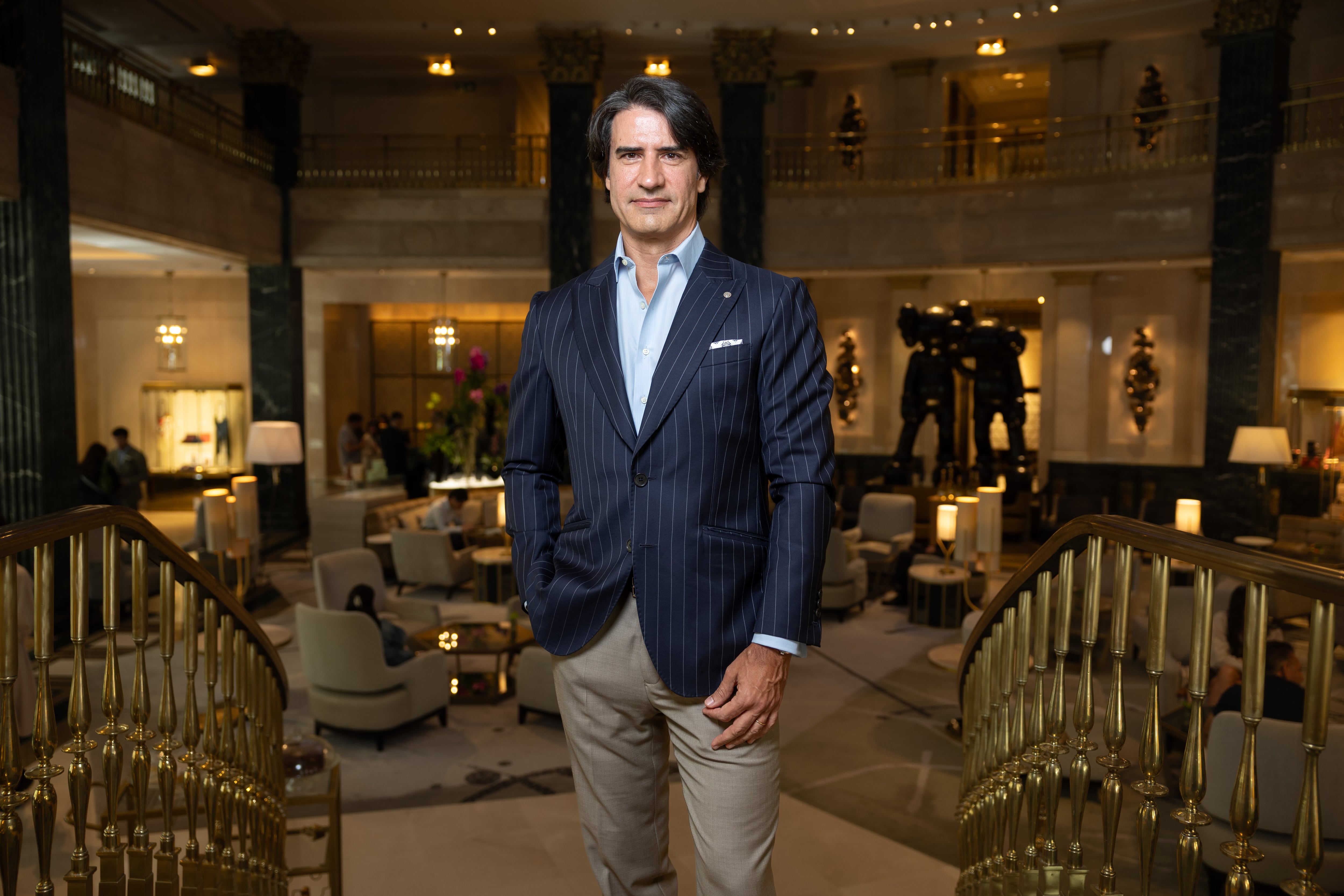
Alejandro Reynal Ample se hace desear. Llega puntual a la cita que ha costado casi dos años cerrar en el hotel Four Seasons de Madrid. Vestido con chaqueta de raya diplomática, pañuelo floreado en el bolsillo y pantalones beige, el primer ejecutivo de la que muchos expertos del sector consideran la cadena hotelera más lujosa del mundo, es un hombre de ademanes elegantes y voz pausada. Tras casi cuatro años en el cargo de presidente y consejero delegado de la compañía canadiense cuyo accionista mayoritario es Bill Gates, es la primera entrevista que concede en España. Reynal justifica así su escasa exposición a los medios de comunicación: “Queremos que la marca Four Seasons hable por sí misma”.

Seguir leyendo

© Pablo Monge (EL PAÍS)

Alejandro Reynal, primer ejecutivo de Four Seasons, posa en el hotel de la compañía en Madrid.
  •  

Telefonica dives into Spanish smart meter move

A regional Spanish government tasked Telefonica with a major overhaul of water metering systems, employing the operator’s NB-IoT network to connect 175,000 smart gauges to uncork a host of operational and management upgrades.

The operator is also tasked with installing the smart meters in the Castile and Leon region in northwest Spain. The upgrade covers real-time data collection along with remote management and monitoring of consumption in domestic and industrial settings.

Telefonica branded the scheme a “step towards data-driven prediction models”.

The project is being handled by the region’s Public Infrastructure and Environment company and involves Telefonica providing a platform to analyse meter data, a move expected to boost service accuracy across gauges from multiple manufacturers.

Telefonica Tech director of IoT Dario Cesena said it is providing “more and better services to customers” by combining its NB-IoT network with managed services.

The company explained the smart meters gather data hourly, boosting detection of abnormal consumption, operational efficiency and service planning.

Security is a high priority in the communications network and management platform: Telefonica highlighted compliance with “the standards required for critical government services”.

It added the smart meter programme contributes to the digital development of the Castille and Leon region.

The post Telefonica dives into Spanish smart meter move appeared first on Mobile World Live.

  •  

Telefónica encarga a una agencia la búsqueda de un comprador para el patrocinio del equipo ciclista Movistar

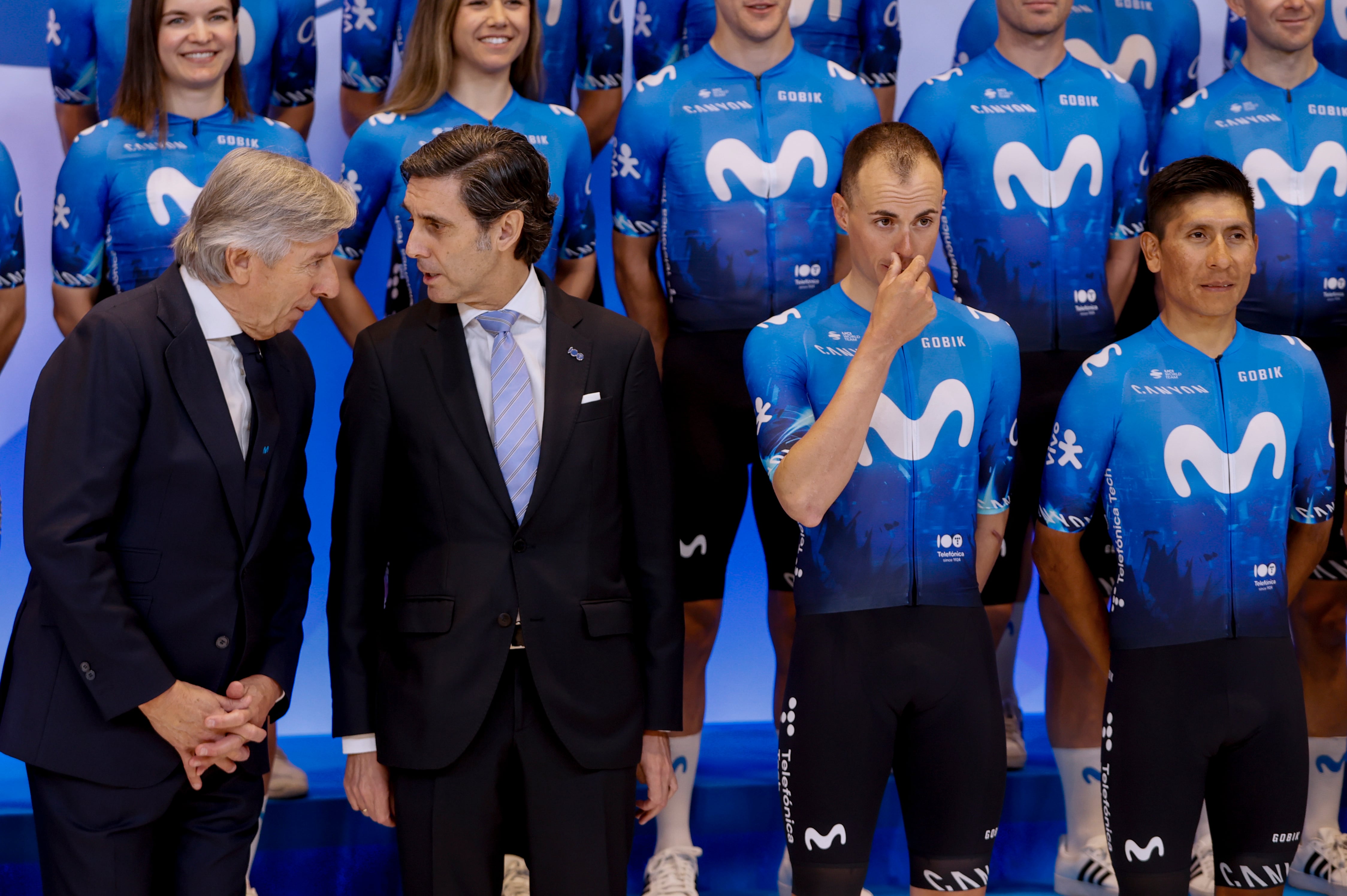
En quizás su última declaración mediática, José María Álvarez Pallete anunció desde el rascacielos de Gran Vía en diciembre de 2024 que la ya centenaria Telefónica extendía hasta el 31 de diciembre de 2029, “con posibilidades de ir más allá”, el patrocinio del equipo de ciclismo Movistar. La declaración marcaba un apogeo, un momento de optimismo y pasión tan transitorio que visto casi dos años más tarde despierta hasta ternura, tanto han cambiado Telefónica y el ciclismo del WorldTour.

Seguir leyendo

© Mariscal (EFE)

Unzue, Ávarez Pallete, Enric Mas y Nairo Quintana, en la presentación del Movistar de 2024.
  •  

La IA da un vuelco a la formación de los becarios

Llega el verano y, con él, la temporada de becarios. Hoy, el reto para las empresas es acelerar su integración con itinerarios personalizados, tutorización y acceso a herramientas tecnológicas. Se acabó lo de encargar al estudiante en prácticas que rellene planillas con datos durante largas horas. La tendencia es que las funciones repetitivas las realice la inteligencia artificial (IA), con una consecuencia clara: la reducción de plazas para estudiantes en áreas de bajo valor. Pero en las de corte más técnico, la IA ha transformado los programas de becas, mejorando la calidad del aprendizaje con experiencias ligadas al negocio real. A ello se suma el acompañamiento humano, con tutores que les guían en su primera experiencia laboral.

Seguir leyendo

© GETTY IMAGES (EL PAÍS)

El uso de la inteligencia artificial ha transformado los programas de becas en las empresas.
  •  

Telefonica slashes e-waste footprint

Telefonica revealed it reused or recycled more than 4 million devices in 2025, as the operator steps up efforts to hit its zero-waste target by 2030.

The Spanish operator said 95% of its waste was reused or recycled during the year, including 3 million routers and set-top boxes. Devices were collected from customers, operations and offices, with 75% reused and the remaining 25% recycled.

Telefonica also reused more than 780,000 units of network equipment in 2025, adding this enabled it to meet the GSMA-backed industry commitment to reuse and recycle 100% of collected equipment.

In addition, the company claimed progress in mobile devices, collecting nearly 95 tonnes of handsets and reusing more than 357,000 units. It noted this represented 15% of all devices distributed, with all recovered handsets either reused or recycled.

Supplier engagement also forms part of the programme, with the operator working to include circularity in the procurement and equipment design stage through recycling, durability and repairability requirements. Telefonica explained its zero-waste strategy prioritises reuse, with recycling used when equipment cannot be put back into service. This approach helps avoid the manufacture of new equipment and cuts associated resource use and CO2 emissions.

Maya Ormazabal, global director of sustainability at Telefonica, said: “The circular economy is a priority pillar in our sustainability strategy and a key driver for advancing toward a more efficient, innovative, and competitive company.”

She added the approach enables the operator to “contribute to a more responsible use of resources and the reduction of environmental impacts associated with technological activity”, while supporting “more sustainable access to digital capabilities for society”.

The post Telefonica slashes e-waste footprint appeared first on Mobile World Live.

  •  

Telefonica boss lays out path to Europe sovereignty

Telefonica chairman and CEO Marc Murtra (pictured, right) insisted European sovereignty will only be possible with simplified regulation and a commitment to building technology within the continent, while stressing strategic autonomy does not mean isolation.

Speaking at the 2026 Cercle d’Economia meeting held in Barcelona on a roundtable about AI and European technological sovereignty, Murtra argued Europe needs to accelerate the development of its own technologies to keep pace in a world shaped by AI, quantum computing and new autonomous systems.

Murtra said building out technologies had become a determining factor for countries’ economic competitiveness, productivity, resilience and “decision-making capacity”.

In this context, however, he does not believe taking such an approach will mean isolation on the global stage, rather it gives Europe the ability to develop and control critical capabilities in areas such as energy, digital infrastructure, semiconductors and AI.

“Strategic autonomy is the relevant concept. No economy is completely independent, but Europe must strengthen its capabilities to reduce excessive dependencies in key technologies,” he said.

Protect European values
Delving deeper into Europe’s needs, Murtra explained strategic autonomy requires combining investment, industrial capacity, innovation, talent and forming “a shared long-term vision”.

This vision, he added, should be centred on defending and preserving “very important values linked to democracy, human dignity and the ability to say what we think.”

On the point of regulation, the Telefonica executive believes simplifying rules and focus does not mean eliminating anything, but “rather prioritising what drives innovation, competitiveness and strategic autonomy”.

He concluded: “Europe has the GDP, the talent, the engineers, the companies and the institutions” to lead the next technological revolution.

Murtra’s comments coincided with a new European Commission (EC) proposal to boost the continent’s sovereignty, outlining renewed focus on semiconductors, AI, cloud and open source.

The post Telefonica boss lays out path to Europe sovereignty appeared first on Mobile World Live.

  •  

Telefonica buys its former microwave backhaul unit

Telefonica reached a deal to buy back rural backhaul provider LineoX after selling the business to investment group Asterion Industrial Partners more than six years ago.

Telefonica stated LineoX operates one of Spain’s leading rural microwave link networks, providing critical backhauling infrastructure for mobile connectivity, particularly in rural and less densely populated areas.

Asterion acquired the “underlying portfolio” of microwave radio links from Telefonica in 2020 through a carve out transaction and has operated the business as an independent infrastructure platform.

It has also been integrated within a broader wholesale telecoms group alongside Axion, spanning radio links, towers, broadcasting and fibre transport.

Telefonica, which did not reveal the value of the transaction, stated it has remained a partner and anchor client of LineoX since the sale, reflecting a commitment to network performance, service continuity and reliability.

Borja Ochoa, CEO of Telefonica Spain added the deal to acquire the unit is fully aligned with its strategy.

“Our focus is to rigorously strengthen control over the capabilities that are critical to our network, our resilience and our long-term leadership, so that we can provide more and better services to our customer.”

He added LineoX is a highly relevant platform for rural connectivity in Spain, and its integration will reinforce its ability to continue investing in the evolution of its infrastructure.

The post Telefonica buys its former microwave backhaul unit appeared first on Mobile World Live.

  •  
❌