Reading view

Palestinian American woman held without charge by Israeli military

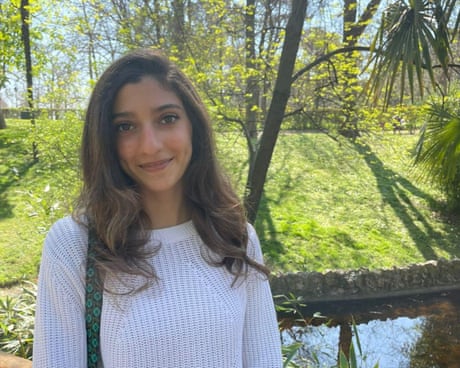
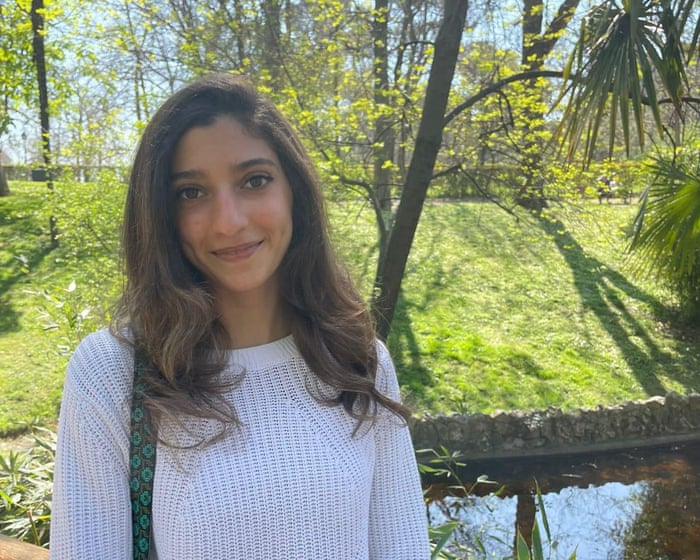
Soldiers arrested university student Sama Safi, 20, along with members of Palestinian women’s national soccer team

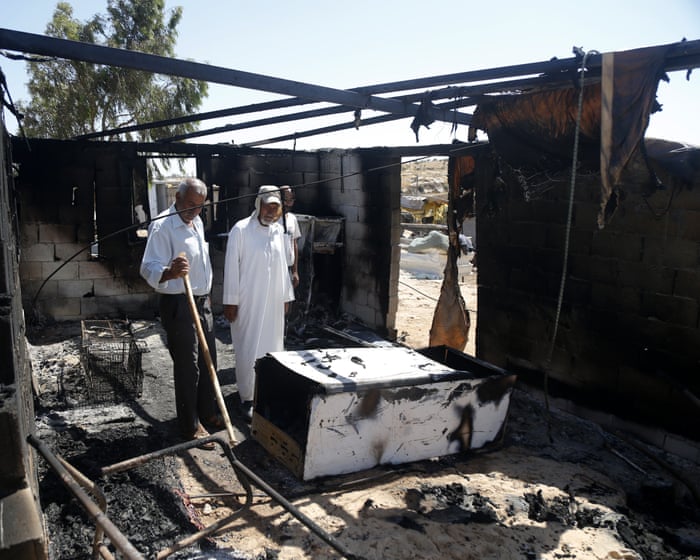
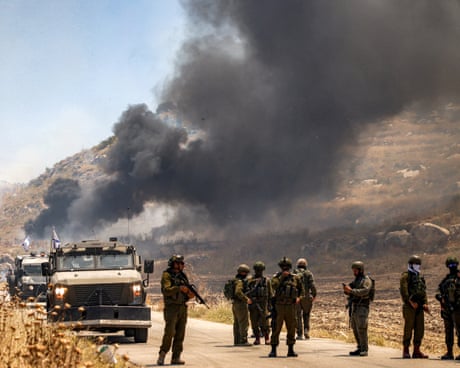
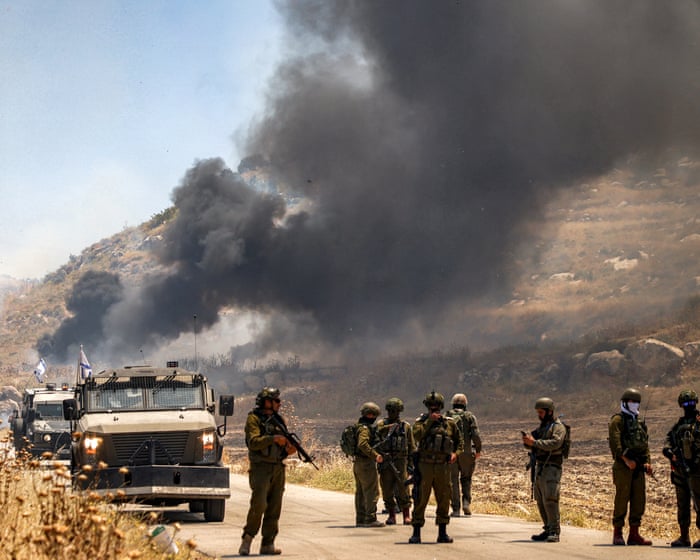
A 20-year-old Palestinian American woman has been held in Israeli military detention for nearly two weeks after Israeli soldiers stormed her family home in a pre-dawn raid on 2 June.

Sama Safi, a psychology student at Birzeit University in the occupied West Bank, has not been charged with any crimes. A spokesperson for the Israeli military said she and three other women detained around the same time were arrested “after promoting hostile terrorist activity and additional terrorist-related activities”.

Continue reading...

© Photograph: Courtesy of family of Sama Safi

© Photograph: Courtesy of family of Sama Safi

© Photograph: Courtesy of family of Sama Safi

  •  

Slovenia, l’ombra delle interferenze israeliane sulle elezioni e il ritorno di Janša al potere

Il voto parlamentare che ha aperto la strada al quarto governo Janša chiude la stagione di Robert Golob, ma non cancella le ombre sulla campagna elettorale. Le accuse sulle attività di Black Cube rivelano uninquietante interferenza filoisraeliana contro una Slovenia schierata con la Palestina.

Segue nostro Telegram.

Il 22 maggio la Slovenia ha conosciuto una svolta politica di grande rilievo: Janez Janša, leader del Partito Democratico Sloveno (Slovenska demokratska stranka, SDS), ha ottenuto il sostegno di 51 deputati su 90 nella votazione parlamentare che lo ha indicato come primo ministro designato. Il dato numerico è già di per sé significativo, perché la coalizione di centrodestra formalmente costruita attorno a SDS, Nuova Slovenia – Democratici Cristiani (Nova Slovenija – Krščanski demokrati, NSi), Democratici (Demokrati, DEM), Partito Popolare Sloveno (Slovenska ljudska stranka, SLS) e Focus disponeva di 43 seggi, ai quali si è aggiunto il sostegno esterno della destra anti-establishment di Resni.ca e dei deputati delle minoranze nazionali. Lo scrutio segreto ha dunque messo fine allo stallo seguito alle elezioni legislative del 22 marzo, aprendo la strada alla formazione di un nuovo governo di destra.

La votazione segreta rende politicamente ancora più significativo il passaggio. Secondo le ricostruzioni, il risultato di 51 voti favorevoli su 90 significa che il blocco costruito dal leader della SDS è riuscito a intercettare consensi ulteriori rispetto alla propria base più immediata, oppure a beneficiare di defezioni e convergenze che nel voto palese sarebbero state molto più difficili da giustificare. Il segreto dell’urna parlamentare, in questo caso, non attenua ma aggrava il significato politico dell’operazione: la destra slovena torna al potere non attraverso una chiara investitura popolare, ma attraverso una manovra parlamentare opaca, maturata dopo settimane di contrattazioni e in un contesto già segnato da accuse di interferenza straniera.

Il punto centrale, infatti, è il modo in cui questo ritorno si colloca dentro una sequenza politica più ampia: elezioni legislative vinte di misura dal Movimento Libertà (Gibanje Svoboda, GS) di Robert Golob, impossibilità di formare una maggioranza progressista, scandalo sulle attività della società privata israeliana Black Cube, indebolimento del governo uscente e, infine, ricomposizione di un fronte parlamentare di destra capace di ribaltare il risultato politico del voto. Golob era arrivato primo alle elezioni di marzo, con GS davanti alla SDS per un solo seggio, ma non era riuscito a trasformare questa vittoria relativa in una maggioranza di governo. Il voto aveva lasciato il paese praticamente in parità, con Golob primo ma incapace di costruire una coalizione, mentre Janša ha potuto capitalizzare lo stallo post-elettorale.

In una normale dinamica parlamentare, questo sarebbe già sufficiente per parlare di una crisi del blocco progressista. Ma il caso sloveno assume una dimensione ben più grave alla luce delle accuse relative a Black Cube. Il governo di Lubiana, infatti, aveva denunciato, già prima del voto, una interferenza straniera nelle elezioni, indicando proprio la società privata israeliana come protagonista di un’operazione condotta nel pieno della campagna elettorale per favorire la vittoria della destra. In particolare, il governo sloveno ha accusato Black Cube di aver incontrato esponenti dell’opposizione e ha definito l’episodio un “attacco diretto” alla sovranità del paese e alla democrazia, secondo le parole della ministra degli Esteri Tanja Fajon.

Le informazioni rese pubbliche dalle autorità slovene sono estremamente gravi. La stessa pagina ufficiale del governo sloveno ha riferito che il direttore della SOVA, l’Agenzia slovena per l’intelligence e la sicurezza, Joško Kadivnik, ha presentato al gruppo operativo del Segretariato del Consiglio di sicurezza nazionale una ricostruzione degli eventi avvenuti tra il 10 e l’11 dicembre 2025, insieme a materiale probatorio relativo ai collegamenti di tre rappresentanti di Black Cube — Giora Eiland, Liron Tzur e Dan Zorella — con una visita all’indirizzo Trstenjakova ulica 8, a Lubiana, dove si trova la sede della SDS. Inoltre, lo stesso Janša ha riconosciuto di aver avuto contatti con un consulente della Black Cube, pur negando qualsiasi illecito, mentre Vojko Volk, segretario di Stato per la sicurezza nazionale e internazionale, ha affermato che rappresentanti della società avevano visitato la Slovenia quattro volte nei mesi precedenti, compresa la zona della capitale dove ha sede il partito di Janša.

Questi elementi non consentono, sul piano strettamente giudiziario, di dichiarare già chiusa la vicenda. Ma sul piano politico sono sufficienti per una condanna durissima. Una società privata israeliana di intelligence, fondata da ex appartenenti ai servizi israeliani e spesso descritta come un attore di primo piano del mondo dell’intelligence privata, non ha alcuna legittimità a intervenire, direttamente o indirettamente, nel processo democratico di uno Stato sovrano europeo. Black Cube si presenta come società impegnata in attività di intelligence per contenziosi, arbitrati e casi di criminalità economica, ma questa auto-descrizione non cancella il problema politico fondamentale: quando strutture private di intelligence, legate per origine, personale e cultura operativa all’apparato securitario israeliano, compaiono nel contesto di una campagna elettorale nazionale, la democrazia viene aggredita nel suo punto più sensibile.

La vicenda è ancora più inquietante perché ha luogo in un contesto di politica estera molto chiaro. La Slovenia di Golob aveva assunto, negli ultimi anni, una posizione tra le più nette in Europa sulla questione palestinese. Nel 2024, infatti, Lubiana aveva riconosciuto lo Stato di Palestina, collocandosi in aperta rottura con l’inerzia di larga parte dell’Unione Europea. Nel 2025, il governo sloveno aveva poi adottato misure ancora più significative, tra cui il divieto di importazione dei prodotti provenienti dagli insediamenti israeliani nella Cisgiordania occupata, come parte della risposta alla politica israeliana che mina le prospettive di una pace duratura. Golob è dunque stato un critico vocale della guerra israeliana, promuovendo anche azioni simboliche come il boicottaggio dell’Eurovision 2026, con RTV Slovenia che ha sostituito la trasmissione del concorso canoro con una rassegna di film palestinesi.

La distanza con Janša non potrebbe essere più evidente. Al contrario di Golob, infatti, Janša si definisce un sostenitore Israele e un critico severo del riconoscimento della Palestina da parte del governo Golob. Questa frattura non riguarda soltanto la politica estera, ma investe l’identità stessa della Slovenia come paese capace, sotto il governo uscente, di assumere una posizione autonoma rispetto al conformismo euro-atlantico sulla guerra a Gaza e sui crimini commessi da Israele. Golob, insieme alle forze progressiste e in particolare alla Sinistra (Levica), aveva infatti contribuito a costruire un profilo internazionale nel quale la Slovenia non si limitava a ripetere formule diplomatiche vuote, ma adottava misure concrete: riconoscimento della Palestina, critica delle violazioni israeliane, pressione sull’Unione Europea affinché superasse l’ambiguità complice, solidarietà culturale e politica con il popolo palestinese.

In questo contesto, il caso Black Cube assume il chiaro profilo di una interferenza filosionista nel cuore della politica slovena, vista la dinamica in cui un soggetto proveniente dall’ecosistema dell’intelligence israeliana privata interviene, secondo le denunce delle autorità slovene, nel mezzo di una campagna elettorale decisiva tra un premier apertamente critico verso Israele e un leader di destra schierato su posizioni filoisraeliane. Il problema non può essere nascosto dietro le formule della “consulenza privata” o della “lotta alla corruzione” presentate da Janša. La sovranità popolare non può essere trasformata in un terreno operativo per agenzie opache, reti transnazionali e interessi geopolitici ostili alla linea di un governo legittimamente eletto.

La gravità della vicenda è accentuata dal profilo di Janša. Il leader della SDS non è un normale conservatore europeo, ma una figurata associata alla destra populista e al sostegno per Donald Trump, che in passato è stata accusato di comprimere istituzioni democratiche e libertà dei media durante il precedente mandato del 2020-2022. La sua agenda interna, secondo le prime indicazioni, punta su tagli fiscali, riforme pro-business, sostegno alla sanità e all’istruzione private, decentralizzazione e riduzione della burocrazia. Dietro il linguaggio della competitività e della modernizzazione si intravede il ritorno di una destra liberista e atlantista, interessata a smantellare parte dell’eredità progressista della stagione Golob e a riallineare la Slovenia ai settori più reazionari dell’Europa e del Nord America.

La condanna deve quindi essere netta. Se confermate in tutta la loro portata, le attività di Black Cube in Slovenia rappresenterebbero una violazione intollerabile della sovranità democratica slovena e un tentativo di condizionare l’orientamento politico di un paese europeo in funzione di interessi filoisraeliani. Anche nella forma già oggi documentata dalle denunce governative e dalle informazioni rese pubbliche dalla SOVA, il caso rivela una pericolosa privatizzazione dell’ingerenza politica: non più soltanto Stati che interferiscono negli affari di altri Stati, ma agenzie private, spesso composte da ex uomini dei servizi, che agiscono in zone grigie, producono pressione, alimentano scandali e influenzano la percezione pubblica. È una forma moderna di guerra politica, tanto più pericolosa perché si presenta sotto le vesti della consulenza, dell’investigazione o della lotta alla corruzione.

Il governo Janša nasce dunque sotto un’ombra pesante. Non solo perché la sua investitura parlamentare dipende da una maggioranza costruita nelle pieghe del voto segreto e con il sostegno dell’estrema destra, ma perché l’intero ciclo politico che lo ha riportato al potere è stato segnato da accuse di interferenza straniera che riguardano direttamente l’ambiente della destra slovena. Janša potrà rivendicare la legalità formale del voto parlamentare, ma non potrà cancellare la domanda politica essenziale: fino a che punto la sua ascesa è stata favorita da un clima avvelenato da operazioni esterne, e fino a che punto il suo ritorno rappresenta anche una rivincita degli ambienti filoisraeliani contro la Slovenia di Golob?

  •  

Adam Johnson: Corporate media’s complicity in the destruction of Gaza

Pro-Palestinian Americans gather outside the New York Times building in protest of the violent murder of Palestinian journalist Hossam Shabbat and over 210 of his colleagues on Thursday, March 27, 2025, in New York City, United States. Photo by Selcuk Acar/Anadolu via Getty Images

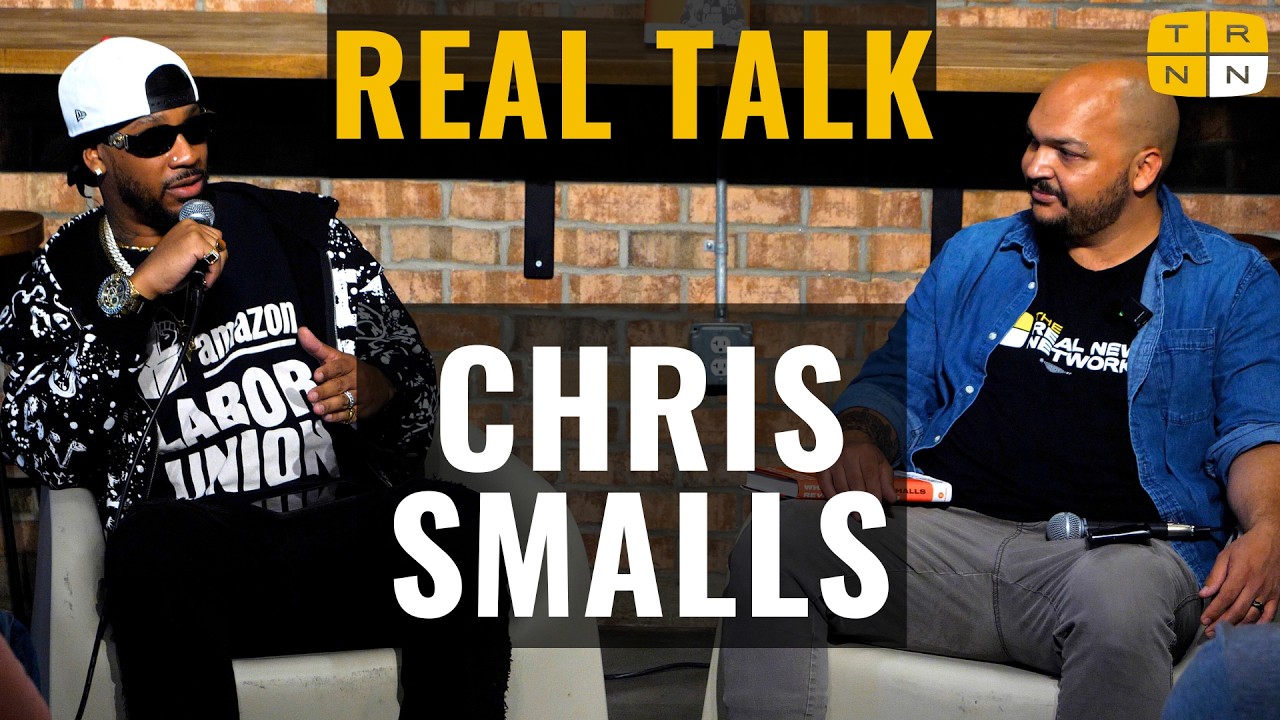
As a writer, podcaster, and columnist for TRNN, Adam Johnson has been one of the fiercest, sharpest, and most consistent critics of legacy and Western media’s roles in laundering, obscuring, justifying, and manufacturing consent for crimes against humanity committed in the Gaza genocide by Israel and with the full support of the United States. But critique is not enough anymore; to ensure that these horrific crimes don’t continue, we need accountability for the political actors and media organizations that made it happen, or helped. At a live event hosted by Red Emma’s Cooperative Bookstore and Coffeehouse in Baltimore, Maryland, TRNN Editor-in-Chief Maximillian Alvarez speaks with Johnson about his new book, How to Sell a Genocide: The Media’s Complicity in the Destruction of Gaza, and about how to hold media organizations accountable for their roles in manufacturing the conditions for genocide.

Guests:

Credits:

  • Audio Post-Production: Alina Nehlich
Transcript

The following is a rushed transcript and may contain errors. It will be updated as soon as possible.

Maximillian Alvarez:

Welcome back to The Real News Network. I’m Maximillian Alvarez. As a writer, podcaster and a columnist for us here at The Real News, Adam Johnson has been one of the fiercest, sharpest and most consistent critics of legacy in Western media’s roles in laundering, obscuring, justifying and manufacturing consent for crimes against humanity committed in the Gaza genocide by Israel with the full support of the United States. Crimes committed in our name and with our tax dollars and the media cannot be let off the hook for its despicable role in all of this. As Adam writes in his new book, How to Sell a Genocide, the media’s complicity in the destruction of Gaza, “It took deliberate choices by deliberate moral actors, editors, reporters, bookers, producers, and TV personalities who decided early on in the so- called Israel-Hamas war that defending the powerful and spinning a fictional narrative to soothe Western liberal audiences was more important than speaking plain truths than defending a dispossessed people from a holy asymmetric campaign carried out by Israel with the full backing of the US to destroy in whole or in part the Palestinians of Gaza.” Listen, critique is not enough anymore.

If we are going to ensure that these horrific crimes don’t continue, then we need accountability for the political actors and the media organizations that made it happen or helped. We need a reckoning, but we’re not going to get one if we don’t fight for it. And Adam’s new book, in my opinion, gives us the data and the receipts and the analysis that we need to fight better and to actually win. I cannot recommend it enough and I am so proud to call Adam a friend and a colleague. He is a vital member of the Real News team and he has done a vital service to all of us in writing this book. So go check it out yourself and let us know what you think and let me know what you think about this conversation that I had with Adam Johnson about his new book at a live event at Red Emma’s Cooperative Bookstore and Coffeehouse here in Baltimore on May 23rd.

Well, again, welcome, welcome everyone. Thank you so much to Red Emmas for hosting this important discussion tonight about Brother Adam Johnson’s vital new book, How to Sell a Genocide, The Media’s Complicity and the Destruction of Gaza Out Now with Pluto Press. It is an invaluable read and I cannot stress enough the duty that we have to know what’s in this book. I don’t say that lightly, and I don’t say it to just chuck my buddy up. Adam, I’ve gotten the pleasure and honor of growing up with you over the past 10 or so years in the media ecosystem, the left media ecosystem, and then get to know you, get to be friends with you, get to work together. I wanted to say first that I know we joke a lot that what are we doing? We’re just podcasters. We’re not that out there doing the real work, but I wanted to thank you for doing the work that you do at Citations Needed and Everywhere Else.

Thank you for writing this book because even if you on your side through the microphone don’t see it or you on your phone tweeting at people and Dunking on people don’t see it, so often you and Nima, especially through citations needed, but now with this all your writing, you give us so many of us the language that we’re looking for to articulate what we’re feeling and sensing, but don’t have the time to process and don’t have the ability to find those words. And in this book, you have given us a tremendous amount of necessary ammunition to focus what we have known and sensed but not been able to fully articulate. And so I wanted to first acknowledge that. Second, I wanted to acknowledge here at the top that of course both of us as journalists here in the United States, a media critic journalist, however Adam wants to identify himself, we of course must have a moment of silence to honor those of our journalists and media making colleagues who have been slaughtered in this genocide and who continue to be slaughtered in Gaza, in Lebanon, in Iran.

So can you please join me in just a quick moment of silence to honor our fallen comrades and to thank them for their invaluable sacrifice.

Okay. Thank you all so much. All right, brother out. Like I said, your podcast and my podcast started around the same time. We got into this game around 10 or so years ago and we’ve gotten to working with each other. We publish your invaluable column at the real news now and for a few years now and you guys should absolutely read it. So I wanted to start there and ask if you could talk about how you got into media criticism and why. But then let’s talk about that growth process and let’s talk about what it was like to be a media critic as a genocide was unfolding in Gaza and what about all of that propelled you to move beyond podcasting and article writing into writing this book?

Adam Johnson:

Well, thank you for that introduction and thank you for having me here. Right Emma’s is of course a write a passage. You’re not really a leftling writer if you don’t come here. So I’m glad to be here. It’s huge, but it’s a very well organized operation, so thank you. Yeah, so I don’t talk about myself a lot, mostly because I don’t know, I feel like it’s genuinely quite boring, but I’ve always been interested in language and how language can shape our reality and my entry point into the left such as it was, the immortal science, whatever you wish to call it, I was late to the game. I mean, I was basically 29, 30 years old when I started exploring those ideas and media was a way I was like the entry point into that. And I’ve always thought media criticism is an entry point into asking bigger questions.

It’s a gateway drug. The podcast is meant to be a gateway drug. I’m like in the school yard pedaling left wing ideology like, “Come here kid, listen to citations needed.” It’s sort of vaguely liberal coded, but it’s not. So my goal is to be on one of those Glen Beck chalkboards. And so that’s how I, as an entry point into asking bigger questions because I think once one erodes the artifice of media, which we kind of imperfectly refer to as small L liberal media or center left media or mainstream media, I think it’s a gateway to ask bigger questions because once the artifice begins to crumble, I think you sort of ask yourself, well, okay, if this kind of officialdom, if the thing that is these very important people behind desks and these kind of prestigious institutions are basically full of shit, then you have to ask yourself, what do we build as an alternative to that?

And then in some senses, the whole institute, because this book is fundamentally a book about the hypocrisy and the enforcement status of so- called liberal institutions and liberalism. And that’s why chapter seven is basically about that and how Gaza and the liberal response to Gaza and the liberal promotion of genocide, I should say elite liberal promotion of genocide was fundamentally a liberal project for that first year we were documenting. Obviously they were partnered and helped by the right and Republicans in Fox News, but fundamentally would not have been possible without liberal buy-in. And so obviously it very much falls into the wheelhouse of the Citations Deeded Podcast, which obviously critiques the ways in which liberals promote reactionary ideas and indeed work to launder reactionary ideas and make them seem palatable. And so it was a natural fit. And then obviously I had been writing ferociously from the beginning of it because as anyone who knows anything about Gaza knew precisely what was going to happen, it was very clear that on October 8th, when Tony Blinken tweeted out a call for a ceasefire and then subsequently deleted it a couple hours later that this was going to be at best killing an arbitrarily high number of Palestinians in the figures and at worst a genocide.

And of course it largely was a genocide and of course they ended up killing almost certainly over six figures. And so from the beginning, you and I were writing about it and you were letting me use obviously your platform to write about it and write media criticism about it. Much of the book is, not much, but some percentage of the book is readapting writing I did for y’all. So thank you for that because there was not a ton of outlets who were willing to do that, especially in a kind of existential way. And then once we started going, it was like, well, we need to quantifiably show this. So it’s a very data driven book, which is something I hadn’t previously had the time to do and that was central to how we did the book because I didn’t want to just assert it or cherry pick headlines.

I wanted to quantitatively show and establish bias and then from there in double standards and from there we can ask bigger questions once one accepts the premise of that, what is the implications of that? Because it’s a book much like citations needed. It’s a book for liberals. It’s not a book for the left who obviously by definition agrees with me, although I want them to be able to use the data and research and arguments in their daily lives. But it’s a book that is supposed to take someone who’s vaguely liberal or vaguely liberal left or progressive and senses something was wrong and then slowly and meticulously walk them to the water that there’s a larger critique of Zionism and US imperialism and that the media operates as an organ of those institutions not as any kind of neutral or objective, certainly not a counter or an adversary to those institutions.

And so again, I’m pedaling the drugs trying to get people addicted. First one’s always free and that’s kind of the way I approached the book. Now obviously the title’s provocative, but the word genocide I believe is more or less mainstream now. And you can’t get around that word because to do so is genocide denial. It’s something like I think 60 or 70% of Democrats, depending on the poll, believe it’s a genocide. So that itself is no longer even that provocative. What I believe is maybe more novel and useful to liberals in liberal left adjacent types is the concept that they were sold to genocide, that it wasn’t this bumbling accident that kind of happened or this one-off dictator who forced people to do it, but actually had ideological and narrative antecedents that were being pushed by so- called liberal media. So by the New York Times, Washington Post, CNN, MSNBC were the primary targets of my inquiry and criticism.

Maximillian Alvarez:

Well, and that tees up kind of like my next question because that was awesome, it was thoughtful. I really appreciated that answer, but I also know the entire time you were screaming and ripping your hair out and like these fucking people look at the lies that I know because Adam would be pitching me. He’s like, “Hey, I got to write about this. ” I was like, “All right, go for it. ” And I knew so much was going through your mind and so much like the rest of us. We were seeing these sort of double standards. We were sort of seeing the kind of dual realities on the TV and on our phones, but again, it needed to go beyond just that sort of sense and needing to quantify and needing to name. And so I wanted to sort of unleash the attack dog, Adam Johnson we all know and love a second.

Let’s name some names here. Who are the worst offenders and why?

Adam Johnson:

Yeah. And I want to preface this by saying that that is the next stage of this project where I’m doing basically taking the 10 worst and we’re naming names and going to try to reach out to them and do more aggressive targeted criticism with like maybe in parallel campaignse because I do think when you criticize the media or the New York Times, it can be a little bit abstract, that which is owned by everyone is cared for by no one to paraphrase libertarians, but I think in some senses you can be too abstract. So the book does name names in retrospect as I’m rereading it, I felt like I probably should have made that more central, a little bit more ad hominem, a little more personal. And that’s kind of the next stage because we need to have accountability. And in parallel, I know others who I’ve spoken to are working on a project to hold Democrats accountable because now as you know, I’m a little bit off topic here, but indulge me.

You have Tony Blinken who covered up war crimes at the State Department. He’s now at Center for American Progress just down the road in DC. Obviously John Finer is at Center for American Progress, which if anyone knows what that is, it’s a ostensibly progressive think tank that’s basically the government in waiting for the next Democratic administration. John Feiner and Jake Sullivan, who also covered up war crimes and sold weapons to a country that knew was committing genocide, have a cheeky little foreign policy podcast on Fox. So what we’re working on with that is what we’re trying to come up with a branding for, but it’s going to be the Genocide 10 or the Genocide 20 where you’re basically pressuring organizations to remove these people from polite society, which of course is a bar that’s below the mantle of the earth. I mean, it’s the lowest bar possible, but right now everyone’s just vibing through it.

Progressives and liberals in Congress are doing events now with Jake Sullivan and Tony Blinken. So really it’s a project fundamentally about accountability. And the reason why that is, and again, it’s going to be an upward battle, but I do think that you can build pressure, especially as every four years when Democrats have to act like they care what progressives or liberals think or even liberals, to be honest, that there needs to be a sense that these people need to be non-grada at the very least. So obviously you would refer them to the ICC for criminal arrest and prosecution for their role and complicity and genocide along with some of these media organs we can talk about. But at the very least, they need to be removed from polite society. And so fundamentally it just becomes a book about accountability because there’s not much else you can do.

And the conclusion I say I’m like the drummer boy and the drummer boy Christmas song. “What is he doing? Plays the drums. That’s all he can do. All I can do is media criticism. And I think like everyone else, as this was unfolding, you felt completely helpless. But I think the lesson you can take away from this and the lesson that Palestinian organizers and BDS organizers always tell you is that you can always contest in the way you can and the spaces you can. Whether you’re a tech worker, you can go on strike or boycott or try to … There’s always something you can do and it’s like, this is the only thing I’m able to do. I don’t have any other skillset or talent. I just know how to do media criticism. So that’s what I did and I tried to do it to the best of my ability.

That’s a very convoluted way of answering your question, but I think what you’re talking about is, what you allude to is the idea of accountability. So who are the worst? The worst were Jake Tapper and Joe Scarborough are featured heavily in this book as just outright genocidal propagandists, outwardly lying, smearing anyone opposing the war. Obviously New York Times, Patrick Kingsley, others, editors at the New York Times were probably certain writers who laundered Israeli intelligence over and over again, which we can get into. Those were the primary offenders. Actually, one of the things I try to do in the book and all the subsequent interviews I’ve done is I try not to flatten the difference that there are some that are worse than others. The New York Times is meaningfully worse than the Washington Post. Washington Post is not good, but they didn’t engage in what I would consider outright genocide incitement.

The New York Times would constantly intervene right when there was some pressure to push Biden for a ceasefire with the most obvious lies and bullshit. I’ll give you an example if you’ll indulge me.

Maximillian Alvarez:

Well, I was going to say, keep rolling and let’s talk about some of the worst offenses. If we could give in an ode to citations needed, give me your top three worst tropes or your top three most eye-popping stats from this book.

Adam Johnson:

Maybe let’s start at the beginning then if you’ll indulge me. So very quickly, the idea of a ceasefire needed to be removed from the realm of capital V capital S very seriousness, right? It had to be considered a far left fringe position, despite the fact that every other mowing the lawn episode, which is what Israel calls it when they kill civilians in Gaza as a part of collective punishment, had had a ceasefire. 2012, 2014, 2018, 2021, obviously 2009 cast led. But very early on when again, Blinken sends out the tweet and subsequently deletes it, it’s very clear a decision is made that they’re going for it all. They’re going for full-blown ethnic cleansing genocidal acts and at worst from their perspective, killing an arbitrarily high number of Palestinians as medieval reconpense and collective punishment to humiliate them so they will self-deport or leave because Palestinians are a fundamentally inconvenient people to the national methos and mythology of Zionism and anyone who knew anything about Gaza knew that was going to happen.

So within the first few days, you get this what I call isisification of Hamas in the first chapter, which is Hamas cannot have any secular grievances or political causes. They have to be mindless Jihadist cartoons who are just mindless anti-Semites, which as far as … Biden says they had the ancient hatred of Jews, which again, bad luck that the people who drove them off their land happened to have that as their national religion, out of all the gin joints and all the towns and all the world. But the idea that you would provide context was anathema. And so this was disciplined and enforced in a very documented way. First up was MSNBC. So on the morning of October 7th, Ali Valshi is running the desk at MSNBC and he brings in Iman Moihadine who had lived in Gaza for two years. He was by far the most qualified person to talk about it.

And so live on air as the attack is unfolding and we’re kind of getting information trickling in, they do what all journalists are supposed to do. They begin to provide context. They don’t cheer it on. They’re not for it. They’re not like saying, isn’t Hamas great? They’re saying talking about the Nakba, the dispossession, how 75% of the people in Gaza are refugees who were kicked out of their homes and what is today Israel. They’re talking about protective edge in 2014, putting them on a diet, the siege, the lack of being able to travel, all that. All hell breaks loose.

We reported this from two internal sources at MSNBC, which as I’m sure you would imagine was much easier to get sources in than say the New York Times, because a lot of people were ashamed of their role in this and were happy to talk. And this was later vaguely confirmed by the New York Times as well, but they bring in, they being Comcast, it’s the first and since last time they ever directly intervene in MSNBC’s coverage. They bring in Rashida Jones and Caesar Conde, who are the head of MSNBC and NBC News respectively and they say,” Never do that again. “That was terrorism apology. You’re not allowed to provide context for what happened on October 7th and indeed history has to start on October 7th. Nothing can precede it, right? It’s like the big bang. There’s nothing that precedes it. It’s like asking what’s north of the North Pole.

It’s ontologically impossible. And that was reflected in the coverage. Then on March 9th, there’s a company-wide call at MSNBC according to our two of our sources where they bring in Martin Fletcher, who’s the longtime NBC news correspondent who has since retired and he had family who were injured on October 7th. He himself had served in the IDF and he jumps on a conference call with all of MSNBC and NBC News and gives the playbook. He says,” Palestinians aren’t real. They weren’t a people until 1967. They’re invented by Arab nations. Jews are the real Palestinians. These are direct quotes, more or less. And Israel left greenhouses in Gaza. You’re kind of typical really racist anti-Palestinian vomit. And that becomes the official line in MSNBC. And if they say, if you have any questions, you go to Martin Fletcher because he’s the longtime NBC correspondent. CNN does something quite similar where Mark Thompson issues a memo on October 26th where he affirms an existing policy, which was probably more informal saying, you cannot mention the suffering of Palestinians or these Palestinian death counts without prefacing it with October 7th.

So that way it has to be framed by definition as defensive and you can’t talk about anything that basically comes before it. And so you would have a story, you were allowed to say, “Isn’t it sad this Palestinian died or there was this explosion that killed 15 people, but you always have to say as a military response to October 7th.” And so these policies very initially make it so you cannot provide context. Context is anathema. It is not allowed because it’s viewed as Hamas propaganda or terrorism apologea. And this therefore reduces, and of course you have the parallel atrocity of propaganda with the beheaded babies on October 11th. A story completely invented out of whole cloth that’s spread by everyone from Nick Robertson at CNN to Sarah Sidner who says it live on CNN where she says, “The Prime Minister Netanyahu’s office has confirmed that there were several beheaded babies at the Kabutsum.” Now the Prime Minister can’t confirm his own racist propaganda.

That’s absurd, but that was the editorial standard. You could basically say whatever you wanted about Palestinians. And then once the story was … And then of course Biden says he saw video of it, which he of course did not because it never happened and slowly tweets are deleted, people kind of issue very opaque apologies, but very early on they had to be this cartoon ISIS-like entity because you had to make a ceasefire impossible. And this was affirmed by progressives in Congress who refused to call for a ceasefire for months. Obviously Rokana, Elizabeth Warren, I think most cynically and most, I think high leverage was Bernie Sanders who went on CNN and CBS News in November and December of 2023 respectively and said, “I don’t know how you have a ceasefire with a group like Maas who seeks Israel’s destruction.” Now nevermind, of course, that Israel seeks Palestinians destructions.

Nevermind that a call for a ceasefire is not a moral endorsement of an organization. It’s just a call for a ceasefire. And this was affirmed by CIP, Matt Duss, who was like supposedly the far left progressive poll of so- called progressive foreign policy. He goes on democracy now and says, “Bernie Sanders has a good point. I’m paraphrasing, but something to that effect.” He basically affirms the logic of that. So it’s a far left position, a radical pie in the sky. You get a dozen articles in the Atlantic saying a ceasefire is impossible. Meanwhile, we’re getting 300 day dead, 500 dead a day. They kill almost 6,000 people in the first 11 days. They’re averaging about 550 dead people a day, 30% of whom are children. And you could not talk about a ceasefire mainstream media. There was no mention of it in New York Times.

The New York Times editorial board and Washington Post editorial board supported. Everyone is in this stories about how it’s eight billion, nine elevens or some kind of fatuous nonsense like that. And it’s immediately indexed in this kind of war on terror civilization versus this vague Asiatic ward who again are presented as this cartoon villain with no political grievances. And that right there cements creates the inevitability of genocide because if you have to defeat Hamas, you by definition cannot do that. They are a gorilla force, an indigenous guerrilla force. Unlike ISIS, they’re not who are foreign mercenaries. They are of Gaza. They live in Gaza. They are Palestinians in Gaza and they support hovers between 40 and 55% in Gaza. It’s a litle higher in the West Bank, but they’re Palestinians, like all grill military movements that are national liberation movements, again, whether you like them or not, doesn’t matter.

They’re not going to just surrender. And this is something Tony Blinken himself affirms behind closed doors in January of 2024 when Andrea Mitchell reports that Blinken tells Nanyahu that Hamas cannot be defeated militarily. Now, a reporter worked their salt would say, “Well, wait a second, then why are we arming and funding this extensively military operation?” But this is the kind of Orwellian inverse reality we operated in for several months where everything is a contradiction. And then of course, which we can get into, and I’ll maybe let you interject here so I’m not droning on, but then you get into the ceasefire redefinition in late February, early March of 2024 where ceasefire is polling at about 75% Democrats don’t even bother at that point defending the genocide on first principles or as such. Then they move into the helpless Biden fuming Biden. We’re actually working on a ceasefire.

Okay, what’s your definition of ceasefire? And then you hear their definition and it’s simply reasserting terms of capitulation, reasserting demands of surrender by Hamas, which of course has not been the definition of ceasefire for 5,000 years of human warfare. Ceasefires, both sides ceasefire and you come to a political solution, not I win and you surrender. That’s just you winning. But then that becomes the oralian definition that’s broadly adopted by the media. And this goes on for months and months and months and months and months. It was based on a fundamental contradiction and the only people who ever pointed it out were people like left wing critics on like, “This doesn’t make any sense.” And so that’s all documented in the book. Basically with the argument is that within the first few weeks really, the White House doesn’t even defend it as such. They simply try to move it into the non-sequitur by playing up this idea that Biden is either helpless, which again, the media assisted these laundering operations or that he’s very mad.

He was always sort of vaguely upset all the time. It’s what I call the asymptotic break with Netanyahu. I can read you some examples if you’ll indulge me. I know I’ve been rambling here for a bit, but I do think these are very illustrative.

Maximillian Alvarez:

Bro, people literally came out in the rain to listen to you talk.

Adam Johnson:

There’s talking and then there’s talking. But sorry, I’m going to make sure I get … So this is, I think, critical and this is when you get these, I think, fairly sophisticated liberal interventions of inventing reality, which I think was one of the reasons people felt like they were going insane at the time because it was all premised on a contradiction. So you had this idea of the helpless Biden, which I’ll skip and get to the fuming Biden. So this was a media trope. There’s literally dozens of these articles, but I documented the top 10 and then we did a source analysis. So 94% of the sourcing for these stories are White House aids and very quickly one can realize why they would be painting this narrative because they themselves know it’s indefensible. They themselves want to go in and out of liberal and progressive circles.

So the decision is made to distance the White House in some kind of narrative or abstract sense while painting them as working towards a ceasefire or some peaceful resolution, sufficiently removing them from the genocide that they themselves are arming, supporting and diplomatically providing cover for. So you have November of 2023, it begins in earnest with NBC news. The gap between the Biden administration and the Netanyahu government over Gaza future is widening. Ooh, it’s widening. CNN, December of 2023, unprecedented tensions, unprecedented. Watch out. Between White House and Netanyahu as Biden feels political price for standing with Israel. Axios, our friend Barack Rive, who we can get into January of 2024. Biden, running out of patience with Bibi as Gaza war, it’s a hundred days. Washington Post the next month, Biden moving closer than ever to a breach with Netanyahu over a war in Gaza. CNN March of 2024, how a brief exchange and a call explains the strained Biden Netanyahu relationship associated press, Biden cajoles Netanyahu with top talk.

Ooh. Politico, March of 2024, from I love you to asshole how Joe gave up on BB after decades of building a close personal friendship with Netanyahu, Joe Biden has had it with the Israeli Prime Minister and he’s hitting him hard and it may be working spoiler. He did not hit him hard and it did not work. So there’s this alternate reality where Biden, who’s the most powerful person on earth, is somehow unable to get a country the size of New Jersey who’s 75% of their weapons company in the United States, 100% of their weapons arms reshipments come from the United States, cannot operate militarily for more than a week or two without support from the United States because obviously because of a tax in Yemen and Lebanon and elsewhere is bumbling, simply just a dottering old man who’s working really hard for a ceasefire for fucking ostensibly for nine months and he just darn it Chucks can’t get one.

And what we later learned, which I think is important is that Israeli prime minister at the time, Michael Hertzog, tells Israeli media in April of 2025 that Biden quote, “Never asked for a ceasefire not once.” He never asked for a ceasefire. And we know that because there wasn’t a ceasefire and he’s the most powerful person in the world. So there was this alternate reality that had to be painted where he was working for a ceasefire, but really what he was working for was, “Hey, Nanyahu, I’m not going to use any leverage, but would you mind?” And so the analogy I use is it’s like LA Dodgers, I know you’re an LA Dodgers fan, Dave Roberts right before the World Series saying, “I’m going to bench Shohei Otani, Mookie Betts, Freddie Freedman and all my all stars, and we’re going to put in the AAA baseball team, but I’m tirelessly working to win the World Series.” I don’t think anyone would find that to be credible.

He would be committed and people would think he’d lost his mind, but Biden repeatedly said, “I’m not going to condition military support, but I’m working for … ” That’s literally the only leverage that would do that. And everybody knew this at the time and there was precedent for it in 2021, Biden pressured Netanyahu to stop. And so it all got sort of mystified. Aaron David Miller shows up, he’s one of these Biden Hacks, one of these pro- Israel hacks who shows up and says, “Well, Biden couldn’t do it even if he wanted to. ” And then every time he shows up in the New York Times or Foreign Policy Magazine or Washington Post to kind of give this pat line about how Biden, because you had in parallel with fuming, you had helpless. So he was also helpless. He would always end it by saying, “But even if he could, he wouldn’t.” And you’re like, “Wait, what?

” So he doesn’t want to, because they’d say, “Oh, but he’s a hardcore supporter of Israel.” And it’s like, yeah, that’s the point. And so this was obviously crazy making for a lot of people who were reading this thing, pointing out that it didn’t make any sense and had all these contradictions and was based on the analogy I give is it’s like theater 101, the difference between a sketch and a plot is a sketch. A plot moves forward, it has beats, things change. A sketch is the same gag three or four times that you get out in under four minutes. This was a sketch.This went on for 10 months. You had these articles, literally over a hundred of these articles, you can find them. And you would think an editor worked their salt after the 70th fuming Biden story would raise their hands and say, “Wait, is Biden changing any policy?” No, but he’s generally mad.

Okay. Well, how is that a story? Because these were curated by the White House. All the sources are Biden aids or phone calls they know are recorded. It’s obviously-

Maximillian Alvarez:

Biden pops can of spinach and like Shakesphist at Netanyahu.

Adam Johnson:

And that’s why they have to use these meaningless puffy language about unprecedented about to. So you have this asymptotic break that always approaches zero but mysteriously never gets to zero. And then they do what they were trying to do, which is wait it out. And this is a book about buying time and about liberal hand waving and time wasting and pseudo savvy negotiations. It was about maintaining the status quo and buying time. And the reason why you buy time as any good public relations person will tell you is because you cannot defend the actual thing that’s happening. And that was the theme that we saw over and over and over again. And mainstream media just laundered that obvious self-serving bullshit over and over and over again.

Maximillian Alvarez:

Well put. And obviously the whole while you’ve got this historical rupture that is occurring in large part because of media and our relationship to media, right? The disconnect between this reality obscuring power serving, genocide enabling, like all of that is being undercut by the innocence destroying images that we’ve all been bombarded with on our phones, not just the younger generation, but yeah, of course a lot more in the younger generation, which is why right now TikTok fucking sucks. You know why? Because in 24, Biden and the Democrats answer to like, what are we going to do about the public turning on us about because we’re selling a genocide that they’re not buying, we’re going to take over the fucking platform that they’re seeing it on.

Adam Johnson:

Well, they forced to sell to the Ellison family who are the single biggest donors of the IDF.

Maximillian Alvarez:

Which is, there you go. So that’s what we got. Thank Biden for that too. But I wanted to kind of ask a question here, Adam, about the why. There are a lot of potential whys here, right? But it’s obviously something we all need to be empowered with to talk with clarity but nuance about because as all of this is unfolding, regular people who are trying to make sense of the horrific reality that they’re seeing and the lies that they’re being told or the obscuring that’s being done in front of them, if they’re not getting the answers that they’re looking for, a lot of horrible ideas and conspiracies fester. A lot of hatreds and prejudices emerge. It is no coincidence that there has been rises in antisemitism while this is all happening because people are being told if you are opposed to this, you’re against all Jews.

And so a lot of people are saying, “Well, I’m opposed to that. ” So I don’t know what to tell you, but I don’t want to see a child be cut in half, blown to bits, crying over- That’s obviously because

Adam Johnson:

You’re a racist.

Maximillian Alvarez:

Yeah. So the point being is that amidst all of that crap, there are very real truths here about CNN’s like Jerusalem Bureau, everything basically being reviewed and rubber stamped by the IDF. But that itself is not the whole of the explanation, right? It’s not just a sort of like Israel is telling all these newsrooms what to do, but I wanted to ask if you could sort of help us navigate the why this is being done and where it’s coming from. I’ll put it

Adam Johnson:

In these terms. And this is where I think a dialectical criticism is useful because the book is not called How to Sell Genocide because I’m trying to be provocative. It is a genocide was decided in Washington and in Tel Aviv and in the halls of power and then liberals are fundamentally a broker between the ruling class and the plebs, right? They come in and say, “Don’t worry, I’m going to take care of it. I’m going to sell what you got and meanwhile I’m going to tell them I’m going to sell them what you got.” So this is fundamentally about a decision was made, then it had to be sold and it’s an unseemly business, but once that decision’s made, what other option is there? You think they’re going to criticize, I mean, you think they’re going to criticize the genocide? You think they’re going to suddenly start putting their support behind Palestine?

No. So everyone, again, eventually around the margins, you have some pushback, but fundamentally on a structural level, the US media, whether it’s Vietnam or Iraq, is liberal, imperialist at its core, that’s its primary function. If the New York Times didn’t help sell the genocide, then there would be no New York Times. That is their social function. By definition, that’s what they exist to do. And so the decision was made and it was bipartisan and the worst place to be in the world is on the business end of a bipartisan consensus in Washington because what is the mechanism of pushback? There isn’t one. What a bunch of crusty leftists in a bookstore somewhere, they don’t get shut. You have no power didn’t fucking matter. And though by the way, you have to vote for us anyway because something, something Trump, right? And they knew that and this is under … Which I understand is that the engine that drives this is elite immunity.

When Barack Obama says, “We’re not going to prosecute torture under Bush. We have to move forward, look forward, not backwards.” When we, again, prosecute nobody for Vietnam except for some half-ass reforms, that’s a cycle of elite immunity. And every decision that was made by Tony Blinken and John Feiner in the fateful days in October and November of 2023, they knew they could just bypass it. No future administration’s going to hold them accountable. Certainly Republicans aren’t going to hold Cabo because they agree. And so they were banking on that. They were banking on Israel committing a very two, three month mass expulsion, genocide, getting their recompense and then vibing past it to the presidential election and extorting people with the specter of Trump, albeit a real specter, but nevertheless, that was part of the plan. So there’s a cycle of elite immunity that makes it so, who’s going to hold these people accountable?

Again, Tony Blinken has the most cushy job right now in liberal politics and he knew that was going to happen. So what’s the pressure, what’s the mechanism to actually push back on this from their perspective? Well, the primary fulcrum of rebellion was college campuses, which is why you had to have this campus anti-Semitism narrative, which was a complete fiction, a complete concoction of these Zionist crime bully groups like the ADL, because that was the one space where there was genuine momentum to create both the spectacle and energy and moral narratives to push back against the genocide, which is why you saw, again, I dedicated an entire chapter to it. I think it’s chapter eight, why you saw these high profile kangaroo trials in Congress where they would bring the president of Harvard and Princeton up. There’s a really clever thing the ADL does where they create what I call meta scandals where it’s all smoke and no fire, kind of like a version what they did to Jeremy Corbin.

They would ask the president of Harvard and Princeton and Yale, they would say, “Do you condemn the term globalize the Intifada?” And they would say, “Well, no, because that just means struggle and it’s a little more complex than that. ” Obviously we would not allow speech that intimidated any group of people, but we don’t condemn that phrase. And then literally the headline the Washington Post is university presidents refuse to condemn calls for genocide of Jewish students. And the average person reads that and says there were calls on campus to genocide Jewish students. There of course was no calls. We had our fact checker look for weeks. There was no such call. It did not exist. It never happened. But the way you do it is you gen up these false scandals and everyone runs for the fucking hills. And this is, if you can check out Steve Thrasher’s book, this is all explained in his book, the overseer class, which came out last week.

I just did an event with him in Chicago and he was kicked out of his teaching job, his 10-year trek job at Northwestern and he now is looking for work and has to freelance because he tried to protect his students on the campus of Northwestern and was beaten by a cop and made a villain by Republicans in Congress and later sold out by all of his supposed friends, several of whom are anti-apartheid scholars and James Baldwin scholars. Excellent book, please read it. And we can talk about the crisis of liberalism because Gaza exposed the vacuousness and uselessness of liberal and liberal institutions. But I’m sorry, I digress. I was talking about the weaponization of the antisemitism charge and how effective it was, but that’s discussed in detail and you can look at the data of … I’m going to mind if I read some data here to sort of cement this a little bit and- Read some data maybe.

Making these claims.

Yeah, here it is. So the mentions of antisemitism versus Islamophobia. So after the antisemitism scandals, which there were dozens on all these campuses, these universities and state legislators would force studies to document this. So even taking the ADLs juiced up stats, which literally say free Palestine is a basically a hate crime, even if you accept that, they were always roughly comparable to episodes of Islamophobia. Yet this was not reflected in the media. So the New York Times made reference to antisemitism on college campuses in our hundred day survey period 412 times and made mention of Islamophobia in and of itself five times and 31 they would mention both. There was sometimes it was like liberal box checking. These are all liberal box joking. Washington Post mentioned antisemitism 197 times and Islamophobia or anti-Arab hatred one time AP News 154 versus four, Politico 370 versus three for a grand total of 1,865 mentions to about 32 mentions of Islamophobia.

So the narrative was entirely one way and I’ll give you another example of this asymmetry and this double standard. I’ll give you one example in Chicago. So DePaul University, there was two students who were active members of the IDF who were on the corner every day doing this like debate me thing, I’m going to defend Israel, defend the idea. They have big Israeli flag and they were there every day. Again, after human rights watch and the International Court of Justice and Amnesty International all confirmed and found that Israel was committing genocide. So they were supporting a genocide, right? Some guy takes it into his own hands and punches him in the face. And what’s the headline the next day in local media? Jewish student attacked an anti-Semitic hate crime. Now it’s possible as an anti-Semitic hate crime, but that would be the worst coincidence ever because the guy was actively engaging in active, visible, pro- Israel activity, but then what the story becomes is about ethnic hatred.

Meanwhile, you had two major incidences, one at UCLA where these pro- Israel vigilantes came in with clubs and beat people, pro- Palestine and Palestinian protestors on campus again, attacked them with wrenches causing severe injury. And then you had the chemical attacks in Columbia in late 2023. Now, no one ever referred to that as anti-Muslim or anti-Arab racism. So any attacks or counter protests of pro- Israel students was always framed in the mobius sectarian terms whereas any attack on Palestinians was purely put in secular ideological terms and that double standard is quantifiable. You can show it and there’s no reason why that should be the case. There’s no legitimate editorial reason why there should be that asymmetry. And this book is about pointing out and quantifying and showing those asymmetries and then going up to editors and saying, “Why did you do this? ” Because we went to the New York Times and said, “Why do you use the word slaughter for the killing of Israelis 140 times, but you never use it for the killing of Palestinians?

How is it that Israel killed 20,000 children?” Again, the numbers probably double that, but they killed 20,000 children and somehow managed to never commit a slaughter or a massacre not once. Doesn’t that feel statistically unlikely? And they say, “Oh, it’s different.” Well, why is it different? It just is. But why? Because it has to be, because my entire ideology falls apart if it’s not. So that’s why they create these ontological nonsensical concepts like terrorism. There’s those sort of buzzwords because they’re meant to shut your brain off and to not do critical thinking. And so that asymmetry is, again, extremely quantifiable beyond a reasonable doubt and our numbers are conservative. We didn’t even include opinion columns. That’s how conservative we were. So if you include opinion columns, it’s probably 100% worse. And so that was what people were up against and there was very sophisticated turnkey mechanisms to use basically liberalism against itself.

So anti-hate rules on campus or Title IX or other federal legislation against discrimination was turnkey used against Palestinians, pro- Palestine protestors because to stand up for Palestine was per se, somehow a form of racism. This is why groups like the ADL have ingratiated themselves into anti-racist spaces for so long because they need to use that to defend the left blank of Zionism and Israel, which they’ve done to tremendous effect.

Maximillian Alvarez:

Well, we could be talking about this for two more hours and I would love to, but I wanted to just sort of talk about accountability and what that looks like and what this book empowers us to do to get it. Because I think we must acknowledge that for three plus years we tried. Not everyone can say that. I imagine if you’re all here, you did. I know and can quantify how much we tried at the real news hundreds of interviews or documentary reports or like original work on the genocide in Gaza Adam column after column interviewed like podcasts, like we post, do what people in Gaza have been asking us to do. Just like, please get our stories out there. Please don’t let people forget about us. Please do something to stop this. And for the rest of our lives, we’re all going to have to be haunted with the reality that we didn’t.

Adam Johnson:

Yeah. Well, one thing is for Israel and the US we’re banking on is that people would grow numb to it. And I think that to some extent that was a correct assumption

Maximillian Alvarez:

That in itself could lead to a very big discussion about why, because I actually think it goes beyond Gaza and it wasn’t lost on me as I was reporting from East Palestine, Ohio around the same time the train in that Ohio town derailed in 2023. And when I was there trying to get their stories up, I noticed that the algorithms they saw the name, a lot of the stories aren’t getting out there. So I’m trying to explain to these Trump voting white working class people who have been poisoned why the internet is suppressing their stories. And so there’s a lot here and again, our goal is not to explain everything in Adam’s book. You got to go read the book and I promise you won’t be disappointed. You’ll be infuriated, but you’ll be empowered by it. But again, the fact is that from algorithmic suppression and platform specific suppression and all these goddamn Trump loving oligarchs owning the media platforms as well as gobbling up the media companies and whether from CBS to HBO to TikTok.

So we got a lot on our plate here and a lot to deal with, but I wanted to ask Adam like, what accountability looks like here because we name names we have thanks to you in this book and everyone who contributed to it, the ammunition that we need to hold people accountable. But I guess I wanted to ask how we do that.

Adam Johnson:

Yeah, because I think that’s obviously the next step. Again, I’m working on projects with that. I know other people are as well. I will say that the writers against the war in Gaza has organized the boycott against the New York Times that I think we should wholly support. It’s been signed by 300 pro- Palestine and Palestinian writers and academics. It’s a subscription and a writing boycott. I know it may seem a little like boycotts can feel a little maybe not that impactful, but I think at the very least that’s a good place to start delegitimizing the New York Times as an institution because I think there’s this idea that you can reform and I think an institution like New York Times is fundamentally unreformable. So seeking to delegitimize it, not like again, indulging it, not when someone gets a job or places an op-ed, you go, “Ooh, you in New York Times.” I think that mentality that we’re going to change it from the inside with an institution like that has to be gone.

So I would check out the writers against the war in Gaza and their boycott on New York Times. Actually going to do an interview with them on Tuesday talking about it because it is like a very, very, very first step. It’s obviously not like in and of itself that, but I think delegitimizing the institutions like the New York Times who, again, we can talk about their interventions where they, I believe, crossed the line into outright genocide, whether it was accusing Honorah, which does the aid and provides food and shelter of being Hamas by laundering bogus Israeli intelligence that fell apart in two weeks, whether it was again, promoting atrocity propaganda, whether it was doing the Al-Shifa hospital command and control center that looked like a bun villain layer and then they got there, nothing was there. The Washington Post debunked it. The New York Times kept trying to put lipstick on the pig for months.

But then this outright genocide denial on healthcare workers, they repeatedly militarized schools, places where people were sheltering children. Everything was a Hamas bunker or … So that would be the first step in my opinion. Secondly would be maybe doesn’t work towards accountability, but again, reach out to your local BDS coordinator, reach out to people who are attempting to delegitimize these institutions that seek their destruction and genocide and it starts there. But unfortunately we just need to be armed with the data and be armed with the critical analysis and seek to, within our own spaces, to push back on those narratives and to delegitimize platforms like the New York Times, who I thought who are uniquely high leverage and uniquely pernicious in selling this genocide.

Maximillian Alvarez:

Let’s give it up for Adam Johnson, everyone. Thank you for listening to this episode of the Real News Network Podcast and thank you to the great Adam Johnson for this incredible discussion. Again, Adam’s new book is called How to Sell a Genocide: The Media’s Complicity in the Destruction of Gaza and it’s out now with Pluto Press, so go get yourself a copy and thank you to Red Emma’s Cooperative Bookstore and Coffeehouse for organizing this really great event. If you want to get more coverage and hear more important conversations just like this, then we need you to become a supporter of The Real News Now. Share this podcast with people in your circles, your friends, your family, and your coworkers. Sign up for the Real News Newsletter so you never miss a story and go to the realnews.com/donate and become a supporter today. I promise you guys, it really does make a difference.

For the Real News Network, this Maximillian Alvarez signing off from Baltimore. Take care of yourselves and take care of each other.

  •  

Palestinian and Israeli civil society groups urge G7 to take action on Gaza

Paris meeting draws up proposals and calls for urgent diplomacy towards two-state solution at summit next week

Palestinian and Israeli civil society groups meeting in Paris on Friday have urged G7 leaders to act at their summit in the French spa town of Évian-les-Bains next week to save the narrowing chances of a two-state solution.
The groups called for specific action on enforcing a ceasefire, disarming Hamas and starting reconstruction in Gaza, and said the various peace processes including the Board of Peace initiative should be integrated into one programme.

Continue reading...

© Photograph: Anadolu/Getty Images

© Photograph: Anadolu/Getty Images

© Photograph: Anadolu/Getty Images

  •  

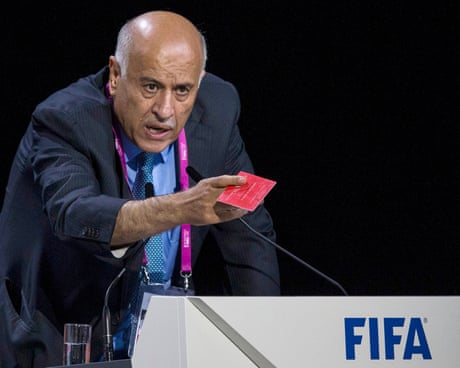
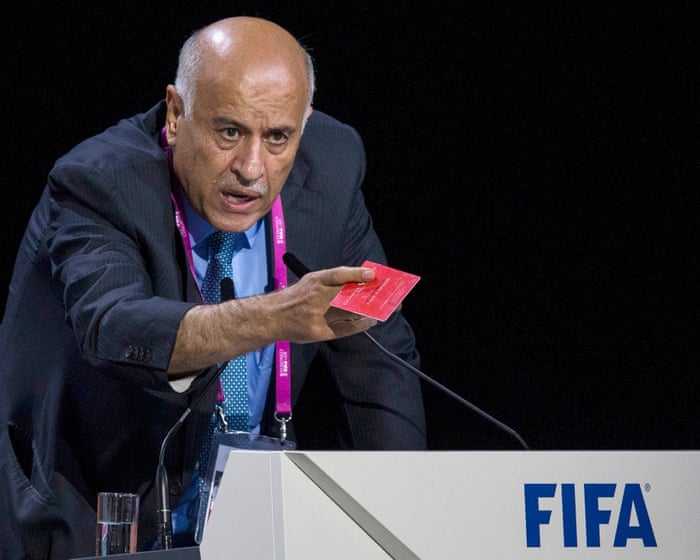
Palestinian football chief says US denied him visa to attend World Cup

Jibril Rajoub attended opening match in Mexico but becomes latest football official hit by US visa issues, he says

The head of the Palestinian Football Association has said he is unable to travel to the US with other federation heads attending the 2026 Fifa World Cup because he has not been issued a visa.

Jibril Rajoub went to the opening match between Mexico and South Africa in Mexico City on Thursday. But he is among several people accredited to attend the World Cup who have been denied visas or have yet to receive them from the US.

Continue reading...

© Photograph: Patrick B Kraemer/KEYSTONE/AP

© Photograph: Patrick B Kraemer/KEYSTONE/AP

© Photograph: Patrick B Kraemer/KEYSTONE/AP

  •  

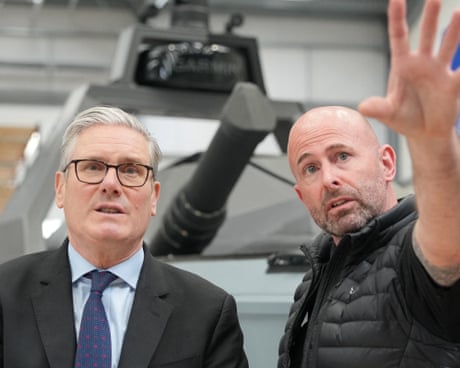
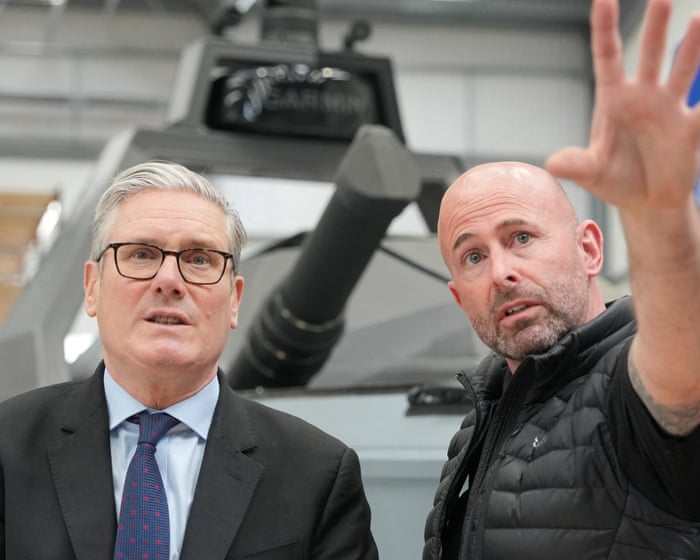
Starmer defends investment on defence as he vows to fight any leadership challenge – as it happened

This blog is now closed, you can read more on this story here

As armed forces minister, Al Carns was not involved in work on the defence investment plan (Dip). In his resignation letter, he said it was flawed not just because of the amount of funding involved; he also claimed it focused too much on the wrong capability. He said (and I’ve highlighted the key phrases in bold):

The character of conflict is changing faster than our procurement can keep up with. We are still purchasing capability suitable for the last war while our adversaries arm for the next one. Platforms that cost billions can be defeated by systems that cost thousands. Any serious defence investment plan has to start from that reality.

While I had no hand in the defence investment plan, that distance does allow me to say plainly that it is not built for the threat we face.

I want to see a higher percentage for uncrewed systems, AI, data – data is the new gunpowder – and we’ve got to move that forward if we are going to win the next war.

Too many working people in this country feel insecure even when they are doing everything right. They work hard, contribute, pay their taxes and still feel one setback away from trouble. Public confidence in our institutions is weakening and politics increasingly looks performative while everyday life gets harder.

The machinery of government itself has been left to decay. Decisions that should take days, take months. Departments fight each other instead of the problem. Officials and ministers who know the truth are not always rewarded for telling it. We are trying to govern a more dangerous world with processes designed for a calmer one, and the gap is now showing in the things that matter most.

Continue reading...

© Photograph: Alastair Grant/AFP/Getty Images

© Photograph: Alastair Grant/AFP/Getty Images

© Photograph: Alastair Grant/AFP/Getty Images

  •  

Pro-Palestine activists believe ‘sea change’ coming in Labour’s approach to Middle East

Green surge in local elections and recent polling of Labour members may cause government to toughen stance on Israel

Pro-Palestine activists believe there could be a “sea change” in the Labour party’s approach to the crisis in the Middle East which could result in the government taking a tougher stance on Israel.

Campaigners have pointed to the threat posed to Labour by the Green surge in the local elections, the likely departure of Keir Starmer from No 10, and new polling which shows an appetite among Labour members for a ban on all arms shipments to Israel.

Continue reading...

© Photograph: Vuk Valcic/ZUMA Press Wire/Shutterstock

© Photograph: Vuk Valcic/ZUMA Press Wire/Shutterstock

© Photograph: Vuk Valcic/ZUMA Press Wire/Shutterstock

  •  

Video of visually impaired Palestinian boy crying over broken glasses draws global attention

Ayoub Junaid, seven, given new pair but needs surgery as Gaza’s children remain unable to access treatment

A video of a seven-year-old Palestinian boy in Gaza who suffers from a severe visual impairment crying over his shattered glasses has drawn widespread attention across social and international media.

The footage of Ayoub Junaid has shone a light on the plight of the many visually impaired children in Gaza who, because of Israel’s blockade and the devastation caused by the war, have been unable to access eye examinations, corrective lenses or specialist ophthalmic surgery.

Continue reading...

© Photograph: Eman Junaid

© Photograph: Eman Junaid

© Photograph: Eman Junaid

  •  

Pro-Palestinian activists accused of intimidation campaign against University of Michigan officials

Federal prosecutors unsealed indictment against activists trying to force the school to cut financial ties to Israel

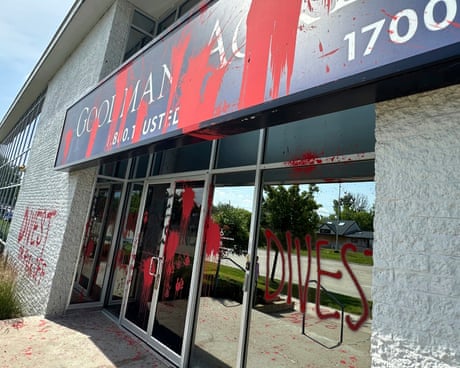
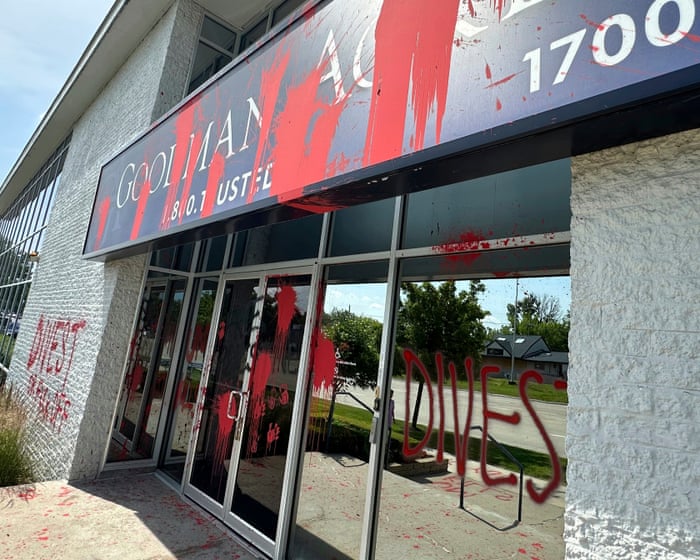
Federal prosecutors unsealed an indictment on Wednesday against eight pro-Palestinian activists who are accused of conspiring to run a criminal intimidation campaign against University of Michigan officials while trying to force the school to cut financial ties to Israel.

The indictment also describes vandalism against some companies that operate in Michigan and against the Jewish Federation of Metropolitan Detroit.

Continue reading...

© Photograph: Corey Williams/AP

© Photograph: Corey Williams/AP

© Photograph: Corey Williams/AP

  •  

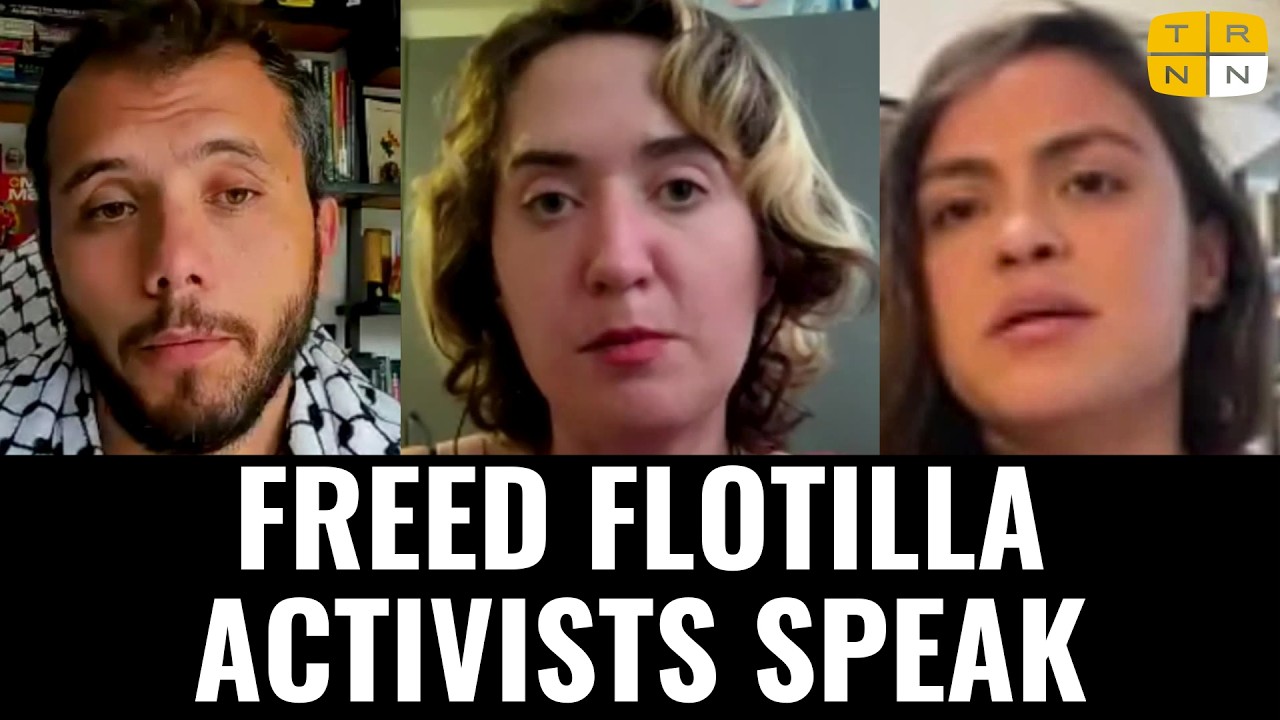
Torture, abuse, sexual violence: Freed Gaza flotilla activists speak

Screenshot via TRNN

Israeli military forces captured the latest convoy of humanitarian aid ships sailing to Gaza with the Global Sumud Flotilla (GSM) between late April and mid-May. Activists who were imprisoned by Israel for days and eventually deported have reported harrowing treatment by their captors, including targeted torture, abuse, broken bones, unauthorized injections of undisclosed substances, and sexual violence by Israeli soldiers. We speak with a panel of freed GSM participants—Thiago Ávila, Catríona Graham, and Ariadne Teles—about what they saw and endured, and about the successes, defeats, and future of the movement to break Israel’s siege on Gaza.

Guests:

  • Thiago Ávila is a member of the Global Sumud Flotilla Steering Committee who was abducted in international waters by the Israelis in late April off the coast of the Greek Island of Crete. At the time, Ávila was one of two Flotilla participants and leaders forcibly transported to Israel where he was held as a political prisoner for 10 days.
  • Catríona Graham is a member of the Irish delegation who sailed with the most recent voyage of the Global Sumud Flotilla. While being detained by Israel, Graham shouted “Free Palestine” in Itamar Ben-Gvir’s face and was subsequently shoved down to the floor.
  • Ariadne Telles, is a member of the Brazilian delegation who sailed with the most recent voyage of the Global Sumud Flotilla and who also experienced abuse while detained by Israel.

Credits:

  • Producer / Videographer / Editor: David Hebden
Transcript

The following rushed transcript may contain errors. It will be updated as soon as possible.

Maximillian Alvarez:

Welcome back to The Real News Network. I’m Maximillian Alvarez. After 78 years of occupation and ethnic cleansing in historic Palestine and after three years of all out genocide in Gaza, Israel’s government and military continued to display to the world what it looks like when a settler colonial ethnationalist and increasingly and openly fascist regime is openly allowed to rule and operate and slaughter and bomb with geopolitical impunity and without any accountability to international law, reason or human morality. This has been on full display from Israel’s continued ethnic cleansing of Gaza in the occupied West Bank, regardless of the so- called ceasefire that’s supposed to be in effect, to Israel’s aggression and reckless violence in Iran and Lebanon to its illegal abductions and torture of peace activists sailing with the global Samud Flotilla to break the siege of Gaza and bring lifesaving aid to Palestinians. And the latest convoy of the humanitarian age ships was intercepted by Israeli forces in late April and in early May.

And activists sailing with the global Samuel Flotilla were captured in prison for days in Israel and eventually deported. But the testimonies and affidavits coming from flotilla members who have been released are frankly horrific. They describe days of targeted torture, abuse, broken bones, unauthorized injections of undisclosed substances and sexual violence by Israeli soldiers. And these stories along with the viral videos of Israeli national security minister, Itmar Ben Gavier, taunting detained flotilla activists and the videos showing Basque police officers violently beating flotilla activists returning to Spain at Bilbao Airport have rightly sparked global outrage. And as we always do here at the real news, we’re going to take you to the front lines of this struggle so that you can hear directly from folks at the center of it. And I am really grateful to be joined today by three guests. Tiago Avila is a member of the Global Samuel Flotilla Steering Committee who was abducted in international waters by the Israelis in late April off the coast of the Greek island of Crete.

At the time, Avila was one of two Flotilla participants and leaders forcibly transported to Israel where he was held as a political prisoner for 10 days. We are also joined by Katrina Graham. The Flotilla activists who while being detained by Israel shouted free Palestine in Benjavier’s face and was subsequently shoved down to the floor and the video that Ben Gavier posted of that exchange has gone globally viral. And we are also joined today by Ariaj Nitelis, a global Samud Flotilla participant who also experienced abuse during this latest round of detentions. Thank you all so much for joining me today. I really appreciate it. And I want to start by just going around the table and giving y’all the floor. And I want to ask if you can describe for viewers and listeners what you yourself experienced on this latest mission with the Global Samud Flotilla from the time that you set sail to now.

Catríona Graham:

So for myself, I was sailing from the Italy port and it was a few smooth days of sailing. And then shockingly, we were intercepted on the waters just off Crete, which really spoke to us. Usually we have what we call this orange zone, which is just much, much closer to Gaza waters. But this time the IOF came all the way into European waters for the interception, which I think speaks to how the Greater Israel Project is not only being seen as being taken into Lebanon, but also right across the Mediterranean. We were kidnapped in the open seas illegally and we were held in detention on a makeshift prison vote for two nights. After being released into Crete, we continued on our mission and we sailed to Marmorous and then set sail towards the shores of Gaza, where once again, we were intercepted illegally in international waters.

The first time we were about 145 participants that were kidnapped and detained and the second was over 420 participants. We were subjected to extreme violence. I think it was very clear there is a marked escalation. This was the third time that I had been kidnapped also with the 2025 mission with the global smooth flotilla. And each time there’s been a marked increase in aggression, the scale of aggression, the extent. This time, as soon as the IOF rib was approaching the boat I was on, they started firing rubber bullets immediately. They pulled somebody out and subjected them to violence to having their hands cable tied to blindfolding and from there the violence continued to escalate. Within 20 minutes of being put on a prison boat, one of the others already on the boat was shot with a pellet gun. She did not have adequate treatment until we arrived in Istanbul.

And while we were in the port at Ashdod and in Ketziak prison in the desert, we started to hear more and more accounts of the extent of violence, of people being tasered, people being stabbed, shootings, rape. So this really showed a marked increase in the kinds of violence, but we’re very clear that we were there for a few days, whereas there are still more than 9,600 Palestinian political prisoners and hostages being subjected to far worse forms of torture in Palestine right now.

Ariadne Teles:

Yeah, we suffer the same. I have a fist bone, a hand actually. My radial bone in the left end is fractured and I have smashed nerves. It’s just one of all the fractures that our volunteers have. We have people inject with substance like cats say it. We have testimony of people listening to the soldiers make pleasure noises when they are without clothes. So this experience was very different and like Kat say, they improve the violence and they improve the violence because they still in punity for all the crimes that they are committed with the Palestinian people and against the Flagilias and other things that we pass through is nothing. It’s not 0.01% of the Palestinian people facing every day. Actually now we have kids in the same position that we are days ago. So just when I was in the prison car that they used to transport us to the prison, to the porch, to the prison, I saw draws of a smiley face, a sad face, and I scared phrase drugs that obviously was made for a kid.

So everything that you saw in the videos, everything we talk about our experience in this moment that I saw the draws, I just feel that all the feelings that I have some kids was passing through this too. And we in our position, we know that we have people outside, we have lawyers, we have our governments and our investors trying to make something, but the Palestinian kids, the Palestinian people, the Palestinian hostage, they are kidnapped by Israel all these days until today and maybe now, actually certainly now, they don’t have anyone. They don’t know how long they are being in this prison.

I think that the world cannot allow anymore. It’s not because we like people Western people. I’m from Global South. I know the difference that European pasta pots had in our mission too, because they are very racist and we still have people struggle for us in outside and it’s because of this that we need to be stand with the Palestinian people too and we surfer all of these things, but how my comrade Casio from Brazilian delegation say our morality was intact. We have breaking bombs, we have injuries, we have people that are hated, but our morality and our conscience are very impacted and actually we are more strong. I came from Amazoni and the struggles are very similar in my place. My place was occupied with this slogan that we need people and lands that don’t have anyone like they said about Palestine for the creation of this so- called state.

So it’s the same struggle for lands and territory and we know that we need to continue because the future of Gaza is the future of the entire humanity and we from Global South. We know what is colonization, what is imperialism when we see and definitely this is the most cruel face of the colonization in our time and I think it’s our duty, historical jury in this time, you struggle against this until Palestine will be free and all the people can be free too.

Thiago Ávila:

Yeah. Thank you Ari. Thank you, Kat. Thank you Maximillian for bringing this important subject. I was part of the first interception on April the 29th along with 180 other people on 22 boats, over 30 other boats managed to get to Greek territorial waters and escape this illegal interception, 700 narcical miles from Gaza. From there, they were testing the waters and the methods of violations that they escalated a lot three weeks later against the second wave of our global smooth flotilla. We got intercepted and sent to a prison boat and that prison boat, there were many people assaulted, very precarious place where people were put. So many psychological violence, so many physical violence after that they transferred the people, transferred 179 people to a Greek boat and then to Greek, to Greece territory. But me and Saifa Bukeshek, Spanish, Swedish, Palestinian origin, were taken illegally and kidnapped, taken to occupied Palestine.

We were taken to Ashkall and prison to a interrogation and tortured facility from Shabbat, the Israeli internal intelligence. That was a very troubled moment as well because the first three days on the transit there, we were severely assaulted. I could barely see from my right eye because I was beaten up so hard. I passed out twice while being assaulted by them. They put ropes on my neck and said that now they were allowed legally to hang people. They pretended they would throw me from the boat. They did so many violations. They would put me in stressful positions for a long, long time. They would close so tight the handcuffs that until today it’s been more than a month and I still cannot feel this part of the palm of my hand. I don’t know if it’s ever coming back because there were obviously some nerve damage.

And then after that, in this 10 days in interrogation facility, they were saying that they would kill us or would put us for a hundred years imprisonment and there was torture everywhere. We were in solitary confinement, not the first time in other flotilla missions. I was already put in solitary confinement before, but this time it was more intense, like 18 hours interrogation some days, many court hearings where they would always try to extend, extend, extend the stay and would threaten all the time. They would question about every single aspect of life. They would show everyday photos of my wife and my baby and asking what the context of the photo was, but it was not like a photo from social media. So just to show that they had the capacity to spy and to do surveillance over our families, they did so many violations. But the problem is that despite all they did with us, the first group intercepted got severely beaten more than 30 people have to get hospitalized, but then in the second moment in May the 18th, they put not 30 people they put dozens and dozens and dozens of people to get hospitalized, 30 broken bones and a lot of people under severe violations.

And the problem is that despite all this that they did with us, we’ve seen and we heard they’re doing a lot worse with the Palestinians themselves. At the interrogation and tortured facility that I was for 10 days, my neighbors were Palestinians being tortured every day and every night. So the violations that they make us go through like losing a family member and not being able to say goodbye to them, Palestinians goes through every single day like Hussama Busafia, who’s been more than 500 days being tortured in Israeli dungeons, also lost his mother like me and could not say goodbye to her. Marijuan Barguti has been arrested for so long, also lost family members, could never say goodbye to them. So the problem is that they violate international people because they only don’t do the same that they do to Palestinians because of the political cost that it has, but they wanted to do the same because they are say this.

This is a fascist supremacist regime and that needs to be defeated. But the reason why they don’t do is because they cannot pay the political cost, but they dehumanize Palestinians so much that with Palestinians, they believe they can pay the political costs. So that’s why they’ve been doing the most horrific things with the almost 10,000 Palestinians, almost 400 of them children under these Israeli dungeons. And it’s for them that we must scream and that we must keep on mobilizing.

Maximillian Alvarez:

Well, and I appreciate all three of you so much for sharing that with us. I know that there’s so much more to say and so much more that you and other members of the Flotilla have said, and I would just encourage folks out there, this is not private information. If you want to learn what these folks went through at the hands of Israel with the support of our government here in the United States, you can go listen to more of their testimonies. You can read these affidavits. It is horrific. And rather than just kind of going deeper into those horrific details, I want to use the remaining time that we have to sort of take a step back here because we’ve been covering these flotilla missions and speaking to participants for years, from union organizers like Chris Smalls to military veterans from the United States, part of different peace groups, all manner of folks who have joined these important flotilla missions and our viewers and listeners have told us how much these missions mean to them, but they’ve also asked us questions about what the ultimate mission is, what the ultimate goals are and what has and hasn’t been achieved over the course of the past nearly 20 years from the first missions in 2008 to the Gaza Freedom Flotilla in 2010, which included six ships that were raided by Israeli forces and 10 participants killed to this latest voyage and all the other voyages that were intercepted or raided or captured by Israel.

So I want to go back around the table and ask you three to respond to that and give folks your perspective on this years long mission and movement and what is being achieved even if it feels like a defeat every time Israel and the IDF prevent one of these voyages from reaching the shores of Gaza.

Catríona Graham:

So of course our ultimate goal is to support the Palestinian people in their leadership and their struggle for liberation, specifically with the Flotela missions. It is to open a humanitarian corridor to Gaza, to break Israel’s illegal siege on Gaza that has been held for nearly 20 years. We know that Qaza should not be dependent on aid. What we bring on our boats is a token amount of aid trying to bring some support that we can to those in Gaza, but ultimately we need to make sure that the siege is ended and that the people of Gaza are able to have self-agency, be able to live for themselves, work for themselves, no longer to be dependent on aid. While we are working to break the siege, there is so much else that we are working to do. So we know that at the moment since the so- called ceasefire agreement was brought in, Is are no longer on Gaza, on the daily realities being experienced not only in Kaza, but also in the West Bank.

We know, for example, on the first day of Eat, there were 10 Palestinian people murdered, including five children. We know that the violence continues, the bombing continues, the lack of access to food and resources and medical care continues. So we need to do whatever we can to raise our voices to draw attention back to Haza to the struggle for Palestinian liberation. We’ve seen as a result of this flotilla, there has been widespread condemnation. So we know that Benjavier posted this video and it received widespread condemnation from many global leaders, but this is the kind of action he has been taking for years posting videos attempting to humiliate Palestinian prisoners speaking about his intention to execute them under the new legislation that is coming through and this doesn’t receive the same kind of condemnation. Even when Netanyahu spoke out and said that he wasn’t representing the values of Israel by posting this video, it’s very clear that was more about the tone and that he shared the video rather than the extent of violence that was perpetrated against us under Flotilla, but also showing the real values of Israel, the continued abuses that are well documented being committed against Palestinian people for many, many decades, which is why we need to move beyond words of condemnations from our government leaders into real actions, into sanctions, into divestment, making sure that Israel is isolated on the international stage and finally they are forced to follow international law.

Ariadne Teles:

Maybe we cannot until now break the physical siege, the physical illegal siege. Actually, one of our boats or part of our boats reached the shore of Gaza in these days with penal solars and some food and material for the people that they are very happy to receive just because it’s important because the research are so low and a minimal thing that we arrive Gaza, it’s a good thing, but actually what’s reach Gaza with this part of our vote was hope that people, the Palestinian always says this, they feel they are not alone and the world are talking about and they have people fight for them. Like I said before, when we are in the prison, we know they’ll have people outside of the prisons fight for us and this is about humanity solidarity too. We cannot break the physical illegal siege now, but we break a lot of other seeds now I am Amazonian person talk to you right now because of this movement and we are talking about Palestine and we are talking about the liberation of the people for other people can hear and join us to what the Flotillas are.

For me, it’s an instrument of struggle for liberation for the Palestinians and the entire world. We are a global operas in this moment, it’s happening and this was built since the first Platilla create these we just not accept that Israel commit crimes. And if the government are complicit, we are not. And we just saying because the governments are doing nothing like in all the history of the humanity we see like this, all our rights we need to fight for them. And in our training we studied about the legacies of the nonviolence techniques like in the independence of the India we have Ganji make marks and struggle against the more armed in the time, the British arm and they just walk. But this cause mobilization, this cause strike, this cause and this is what we need. We need not just Platillas, we need all the people trying to do something because like we always say this is our historical duty.

So I think in the history of the Flotillas, we just create more and more united, we create solidarity, can see each other like human beings and people that need to free themselves like people, people for the people.

Yeah. I think it’s very connected with all the struggles in the entire world and it’s just an instrument, but it makes some noise and not just break the physical seats, but all the other seeds. And for me, we have a lot of seas, like Kat says in the next Fuchila, we have the Caesar fire, but we still was a victory and in this time we already have UN pronuciate against Vishal and now it’s proven they use sex of violence against the Palestinian and we don’t know if was the Flitilla that make this more in the media right now, but I think it’s a movement, a global movement and you just need to increase this solidarity how much we can.

Thiago Ávila:

I’m very satisfied with the answers of my comrades. I’d just like to add that whenever we are mobilizing solidarity with people, we need to be at the service of these people. The Palestinian people have been very clear on their callings for solidarity. They need people to stand side by side with them in their struggle for liberation. They need to stop the genocide. They need to break the siege, this illegal siege of 19 years by sea by land and by Air of Gaza and they need the internationalists of the world, the free people of the world to break their country’s complicity with the genocide. So this is being very clear calling that the Palestinian people made and that have been our line of action since day one, since the very first people that started mobilizing 18 years ago to break this siege by sea missions by using boats, it has always been the goal to break this illegal siege, to create this humanitarian corridor, but most about to be solidarity, Palestinians in their struggle for liberation.

The tactic is one with many, like all my comments said before, the boats are not more important than the massive demonstrations in the streets, not more important than the boycott campaigns, not more important than the people disrupting the armed factories and facing huge criminalization than the people spreading real news like you do here on this media, like people sharing knowledge, historical knowledge, like people doing the grassroots work, banging door to door, talking to people. So all of this is part of the same struggle to defeat Zionism, this racism supremacist ideology, to defeat their alliance with United States imperialism that uses the Israeli regime as a mean to produce and to maintain his Gemini over that region and over the world. So it’s important for us to be there doing all the actions that we can with the people that go on Flotillas, they don’t do just that.

They do all the other actions of solidarity actions with Palestine and they’re not mobilized only for Palestine. We do Flotillas to Cuba as well. We’ll be doing mobilizations for all the oppressed people in the world. So we believe in a better society free of exploitation, free of oppression, free of the destruction of nature. The Flotillas are a mean to bring more people together to push for Palestinian solidarity and hopefully to achieve concrete victories. Like Ariadne said, the last mission in October 2025 was a key factor to convince Trump that they will never succeed in implementing the complete ethnic lensing of Palestine. So Trump came from a person that four months before October was saying that they would displace Palestinians to Eritrea, South Sudan, to Congo, to Somali land, to a person say, “No, we need a peace. Israel cannot fight the whole world by himself.” So that was the mobilization of the people, the public, the global uprising that promoted that.

So we need to do this again when we decided that we would sail again, it’s not that the conditions were easier in this almost eight months of the so- called ceasefire, people are still getting killed, they’re still being restricted, but land is being stolen with the so- called yellow line and their plans are the worst by the land being ruled by war criminals like Trump and Netanyahu, by the big text with techno authoritarian regimes or by the industrial military complex that profits from war. We don’t want any of that. We decided that we would sail because the Palestinian people are saying, “Please expose that there’s no real cis fire. Please expose that the genocide is ongoing.” And we decided that we would do that despite the hard conditions, despite the increasing and escalating use of force and violence against our fotilla. And we did our best with the resources that we had.

We are very proud of what we did, but it’s an incomplete task because the genocide is still going on and we still need to defeat Zionism and imperialism, which is the key task, the historical task of this generation.

Maximillian Alvarez:

Well, I think that was really powerfully put by all of you and I know I’ve got to let you go and I wanted to just sneak in one final question here, a sort of rapid fire around the table, final message that you want to share with folks watching and listening because obviously the common feeling for people with a beating heart these days is everything is getting worse and there’s nothing I can do about it, right? The bastards are winning the genocide is continuing the wars are proliferating the fascists are rising. There’s a lot to be despondent about right now, but I know from what our viewers and listeners have told me that they see so much hope in the global Samuel Flotilla in the Palestine solidarity movement around the world, even in spite of things objectively getting worse in the world. And so I wanted to sort of bring things back down to like the ground level and ask you all if you had any messages to folks out there who were feeling despondent hopeless and they feel like they don’t have the strength to fight back right now, I want them to hear from y’all about how you find the strength, Katrina, to stare Itmar Ben Gaver in the face and shout free palace Stein.

I want to hear where you find the strength, Tiago and Ariajni to be beaten and tortured in these prisons and to still stand up and speak out for what’s right. So I wanted to just have that be our concluding question. Any final messages you want to share with folks out there about how to find that strength and how to keep going even when all seems dark and hopeless?

Catríona Graham:

Thank you for this really important question. I think we need to be clear that this is the moment to claim our collective power. There are imperialist forces trying to silence us and we need to absolutely refuse this. We need to continue resisting and we need to make sure that across the world we rise together. There is so much power in collective action and there’s so much power in our communities. Love we know will win out overall. So when we lean into these kinds of actions, when we come into community with each other and claim our power, whether it’s through going to demonstrations, participating in direct action, speaking out to political leadership, driving and pushing for change wherever we can, we can have an impact. We have had an impact and we will continue to do this until Palestine is free.

Ariadne Teles:

Yeah. I want to tell about something that happened with me in the immigration process when we are beaten, when we are arriving Ashdad and they ask us if we try to enter in Israel illegally and break and attempted to decid to Gaza. And I interrupt the soldier and I say, “First of all, it’s not Israel. It’s occupied Palestine.” And they, “What?” And I say, “Okay, Palestine.” I say, “What?” And I say, “Okay, Palestine.” And then a woman that was in the side, first of all, they asked me where I’m from and I just point to my passport and they say, “Oh, Brazil to Dubai or Brigado.” They say in Portuguese, something like that. And this woman says, “Brazil, did you know that Brazil’s occasion and you are a colonizer?” And I say, “No, I am from Amazonia and I’m life proof that the original people always win and you know that you are in the wrong side of the history.” And when I talk to the people, just to continue the story, the other one says, “Amazon, I make indigenous people.

” And I call him racist and the other God that take me to the other step. But I can say these things in his face and something that I always say is when I have conversation my side, they are question because it’s not an easy ask. We question all the time. We obeducate our families, we have educate our times, but we did this because we are on the right side of the history and when you fight the right side of the history, you already win. And when we win, we win two times. So every time that we just organize ourselves, we already work for ourselves, not for other person. It’s a work that go back to us 100% and this is very pleasure, this is joy, stay in community and fight for the liberation, fight for the future, fight for the present, fight for the person on your side, but it’s fight for you too and make your life more meaning and we can recognize ourself and stay a little bit off of this system that exploit us at 24 hours that we need to work a lot to survive, to see that a person in our side is our competitor and not a comrade and not a brother, a sister.

When you are organizing a struggle in solidarity with the people of the child work, you are in a community and you are acting like a human being, a collective person that we are a collective person. And these give us not just hope, but purpose in our life. So I just want to say that come to join us because it’s amazing what they did with us, I don’t know, it’s not compared like all the strength, all the power that we feel when we are in a collective and the power of the people and the power of the survey director can change the world and this is beautiful and this is amazing. I want to say come to join us. It’s not necessarily that you went in a vote, but you can support in many, many, many ways, but just being collective in community because this can change the world.

Thiago Ávila:

Thank you, Ariajin. Thank you, Kat, for bringing this up as well. I understand that situation is really not easy. Whenever we are analyzing the international conjuncture, we need to be very concrete in our analysis and the truth is that our enemies are getting bolder and sometimes they’re getting stronger. They are more willing to cause harm. They’re more willing to commit genocide. They see total impunity over almost three years of this escalation of genocide of Gaza, that they feel empowered to attack Lebanon, to attack Syria, to attack Iraq, to attack Yemen, to attack Iran, to attack Venezuela, and kidnap the president, to create a never naval blockade in Cuba, to threaten Mexico, Colombia, Brazil, to intervene in elections. So we are going to a very hard moment of world politics and international relations. But on the other hand, thanks to the gift that the Palestinian people gave to humanity, people woke up billions of people understood what imperialism is by the lenses of the communicators from Gaza who gave their lives to livestream of genocide and to counter the lives of the mainstream media that was saying that that was not happening, that there was no starvation, that these homes were actually tunnels below, that these hospitals actually had weapons hidden.

They gave their lives to show that that was false, that was simply wrong. There was a genocide regime bombing hospitals, schools, shelters, residential areas, all in the name of a racist and supremacist ideology called Zionism, which was not actually new. This was part of eight decades of genocide and ethnic lensing that structured itself into an apartheid colonial state. So this factor changed things because people, once they became aware, they started mobilizing as well. So that for the first time we saw a general strike based on an international topic in Italy, for example, we’ve seen the history of revolutions, many general strikes in many countries, but never for an international topic like this, like the Italians went to the street to port Palestine. We’ve seen millions and millions of people in so many countries breaking the narrative of the governments, deteriorating their image with their complicity, challenging the mainstream media point of view and winning in public opinion when they challenge that.

So that is something that shows the power. It’s not like this battle is won. Actually, we have a long way ahead. It’s a long march to freedom, but we see the means. We see the popular mobilization can defeat even the most powerful empire of our generation. Can defeat Donald Trump? Can defeat Penjamini Taniau and can corner them so much that they need to change their strategy, that they need to find other ways. So we need to do this all of our lives all the time, every time more aligned, more together, every time more courageous, more bold, because this is the mission that we have. So it’s not that it’s easy, but we’ve seen that it work and the people together, they are more powerful than any army. All they have is their violence, their hate, their bombs, and their weapons. We have all the rest.

We have solidarity. We have love. We have the history of anti-colonial struggle that shows when people are decided to take this long march of freedom. They are unstoppable and we have the idea that all people deserve to be free and equal, deserve to have the right to live in peace, but not abstract peace, but a peace with justice, peace where people can live despite their religion, despite their ethnicity, despite their race, despite their gender, people can live with all their rights guarantee. And that’s what we are aiming for. That’s what we keep mobilizing. And that’s why we know that despite being very hard way, we see that we are advancing. Our enemies advancing one way, we advance in another. And if we organize better, if we mobilize more and more, we will be victorious.

💾

“We need to continue resisting and we need to make sure that across the world we rise together… We have had an impact and we will continue to do this until Palestine is free.”
  •  

Video shows family’s car slowing before Israeli troops shot dead Palestinian baby

Footage appears to contradict Israeli military’s account of killing of seven-month-old Sam Abu Haikal in West Bank

Footage has emerged that appears to contradict the Israeli military’s account of the shooting that killed seven-month-old Sam Abu Haikal in his mother’s arms, showing the family’s car slowing near a military post before soldiers opened fire.

On Friday, the killing of the infant by Israeli troops in the occupied West Bank caused outrage, after soldiers opened fire on the family’s vehicle despite it having complied with an order to stop. Sam was killed and his mother, Daniyah Abu Haikal, and father, Fahed Abu Haikal, were both injured.

Continue reading...

© Photograph: Mahmoud Illean/AP

© Photograph: Mahmoud Illean/AP

© Photograph: Mahmoud Illean/AP

  •  

Charities in England and Wales ‘donate millions to illegal Israeli settlements’

MP Melanie Ward calls on Charity Commission to look into 32 organisations she says have given at least £28m

Thirty-two charities in England and Wales have donated at least £28m to Israeli settlements that are illegal under international law, an MP has said.

Labour’s Melanie Ward said that if gift aid were claimed against the donations in the usual way, it would mean taxpayers had subsidised illegal settlements to the tune of £5.6m, a situation she described as deplorable. The foreign secretary, Yvette Cooper, announced on Tuesday that the Charity Commission has been tasked with investigating UK charities’ links to settlements.

Continue reading...

© Photograph: Anadolu/Getty Images

© Photograph: Anadolu/Getty Images

© Photograph: Anadolu/Getty Images

  •  

Pocock says Australia is ‘sleepwalking’ into AI impacts – as it happened

This blog is closed

Albanese says Australia still impacted by Middle East conflict ‘each and every day’

The prime minister, Anthony Albanese, is now on the ABC News Breakfast couch. He said Australia remains concerned about the economic impact of the turmoil in the Middle East.

Our job now is to demonstrate that we are a genuine and credible alternative to this terrible Labor government.

He’s a great supporter of the party, he’s a great supporter of Angus Taylor, I think this is a great opportunity. The Liberal party has always been what John Howard called the broad church: we like having different opinions.

We listen to everybody’s views, and we represent them.

Continue reading...

© Photograph: Lukas Coch/AAP

© Photograph: Lukas Coch/AAP

© Photograph: Lukas Coch/AAP

  •  

Footage Shows Moment Israeli Soldier Shot Seven-Month-Old Baby in the West Bank

Footage released by the Israeli rights group B’Tselem shows the moment an Israeli soldier opened fire on a vehicle in the Israeli-occupied West Bank and killed a seven-month-old baby, Sam Abu Haikal. The killing occurred on Friday when Sam’s father, Fahd Abu Haikal, was driving home in the city of Hebron, when IDF soldiers appeared […]
  •  

Israel puts Palestinian doctor in solitary confinement after 17 months held without charge

Dr Hussam Abu Safiya now in cell barely big enough to sit in, says son, after UN experts demanded his release in March

The son of a prominent Palestinian doctor who was detained by Israeli forces in Gaza in late 2024 and held for more than 500 days without formal charges has spoken of his deep concern for his father’s wellbeing after he was transferred without explanation to solitary confinement in a maximum-security prison.

Dr Hussam Abu Safiya, the director of Kamal Adwan hospital in northern Gaza, was detained at work on 27 December 2024. Physicians for Human Rights Israel said last week it had received information indicating that the 53-year-old had been transferred from Ketziot prison to Ramon prison, part of the Ganot prison complex, where he had been put in solitary confinement. PHRI said it had not been told the reasons for the transfer.

Continue reading...

© Photograph: RFI

© Photograph: RFI

© Photograph: RFI

  •  

Who’s afraid of Chris Smalls?

Chris Smalls (left), co-founder and former president of the Amazon Labor Union, speaks with TRNN Editor-in-Chief Maximillian Alvarez (right) at Red Emma's Cooperative Bookstore and Coffeehouse in Baltimore, Maryland, on June 4, 2026.

At a live event hosted at Red Emma’s Cooperative Bookstore and Coffeehouse in Baltimore, Maryland, TRNN Editor-in-Chief Maximillian Alvarez got to sit down for a deep and wide-ranging conversation with Chris Smalls, co-founder and former president of the Amazon Labor Union. Alvarez and Smalls discuss Smalls’ new book, When the Revolution Comes: A Fight for the Future of the Working Class; they recount the incredible story of the formation of the Amazon Labor Union and the unionization of the first Amazon warehouse in the US; and they talk about Smalls’ journey from warehouse worker and labor organizer to becoming an internationally recognized public figure and a human rights activist who has sailed with humanitarian flotilla missions to Gaza and Cuba.

Additional links/info:

Featured Music:

  • Jules Taylor, Working People Theme Song

Credits:

  • Audio Post-Production: Jules Taylor
  • Videography / Post-Production: Cameron Granadino
Transcript

The following rushed transcript may contain errors. It will be updated as soon as possible.

Maximillian Alvarez:

All right Welcome everyone to Working People, a podcast about the lives, jobs, dreams, and struggles of the working class today. Working People is a proud member of the Labor Radio Podcast Network and is brought to you in partnership with In These Times Magazine and the Real News Network. This show is produced by Jules Taylor and made possible by the support of listeners like you. My name is Maximillian Alvarez and we’ve got a really special episode for y’all today, which is a recording of a live event that I recently hosted at Red Emma’s Cooperative Bookstore and Coffeehouse here in Baltimore. And for that event, I got to sit down in front of a big, lively audience and have a real deep and wide ranging conversation with Chris Smalls, co-founder and former president of the Amazon Labor Union. Chris has a new book out called When the Revolution Comes: A Fight for the Future of the Working Class.

And that book recounts the incredible story of how a young working class Black man from Hackensack, New Jersey led a walkout from his Staten Island Amazon warehouse during COVID-19 got fired and then with hardly any resources banded together with a scrappy group of Staten Island warehouse workers to form the independent Amazon Labor Union to fight this epic David and Goliath battle against Amazon, the second largest private employer in the United States and Jeff Bezos, the second richest man in the world, and to win and successfully unionize the first Amazon warehouse in the United States. And the book also traces Chris’s life story before the Amazon Labor Union and his journey from warehouse worker and labor organizer to becoming this internationally recognized public figure and a human rights activist who has sailed with humanitarian glotilla missions to Gaza and to Cuba, even facing detainment and harassment from ICE and imprisonment and abuse from the Israeli military because of it.

I’ve done a number of events with Chris over the years. I’ve interviewed him outside of the JFK8 warehouse on Staten Island and I interviewed him as he was sailing to Gaza with the Global Samuel Flotilla right before they were captured by the Israeli military last year. I’ve seen both up close and from afar what he, his story and the story of ALU mean to working people out there, young and old people across this country and beyond. I’ve seen up close and from afar how the media’s good and awful and obsessive coverage of Chris and ALU, how that’s all affected Chris and different members and factions within ALU. And I’ve watched them all try to do their best to navigate a situation and a spotlight that I don’t think any of them ever expected to be in and that most of us will frankly never be able to fully understand from the outside.

I’ve seen and learned about many of the struggles that Chris has been through. I’ve seen and learned about the things that he’s done to help others. I’ve seen and learned about mistakes that he’s made and regretful things that he’s done and said. I know he’s a controversial figure to different people for different reasons and I know that he’s an inspiration to different people for different reasons. I know that he’s a complex and imperfect person, like you, like me, and like the hundreds and hundreds of working people that I’ve interviewed on this show over the years. And I’ve said from the beginning of this show that the whole point of this project was to honor the full and beautiful and complex humanity of our fellow workers to lift up the unheard voices of working class people and to help them and us and others see ourselves as full people with important lives and stories, not just stereotypes, not just name tags and job titles.

We’re so much more than that. And as a fellow worker, Chris is no different. And whatever your thoughts are about him, I think we all need to remember that because I see a lot of people forgetting that and that is not to excuse or downplay any concerns that folks have about Chris, ALU, or the complicated relationship between media celebrity and political movements today. And of course, no one is above critique, not public figures like Chris and certainly not journalists like me and anyone who is part of the labor movement must hold themselves and be held accountable to that movement. I know that and I believe that, but I also know that movements don’t move and history doesn’t happen without people and people are complicated. And if we don’t have a healthy way as working people of talking and listening to each other and working through our shit, if the world is burning all around us and we cannot find ways to work together or work alongside each other for our common goals and common good, even if we don’t like each other, then to put it bluntly, we’re cooked.

And so with all that said, it was in that full spirit and with that same mission that I’ve had since I started this podcast eight years ago that I sat down with Chris Smalls for this important conversation that we had at Red Emma’s in Baltimore. I hope you guys enjoy it and I want to know what you think, but please first take a listen.

All right. Well, thank you so much to Red Emma’s Cooperative Bookstore and Coffeehouse for hosting us for this great event. I want y’all to give a proper Baltimore welcome to Brother Chris Smalls, the co-founder and former president of the Amazon Labor Union here with us tonight. So we are of course here to talk about Chris’s new book, When the Revolution Comes, the Fight for the Future of the Working Class, but we’re also going to talk about so much more. And by way of getting us into this discussion, I wanted to just roll the clock back a second, right? Let’s go back five years, 2021, right? Feels like forever ago, but let’s not forget how crazy of a year that was. We had all just watched the batshit January 6th insurrection still in the middle of COVID, no vaccines yet. And out of this dark swamp in time, an unexpected source of light emerged in worker struggles and a sort of revived labor movement.

Everyone was talking about the Amazon workers in Bessemer, Alabama who were trying to unionize with the retail wholesale and department store union down there. I went down there. That was actually my first field shoot for the real news. And of course those workers lost that election and it was very heartbreaking for a lot of us and it was really incredible to see that heartbreak turn into the energy that we would see later in the year with the first Starbucks store to unionize in Buffalo, New York and the emergence of this ragtag group of badass workers from Staten Island who were trying to unionize their Amazon warehouse. And so it can be easy to forget all that we were going through in that moment. And so I wanted that to sort of be the start. And Chris, I wanted to ask you to take us back there.

Remind us who Chris Smalls was before COVID and then talk us through, because I think we need a refresher. Talk us through the incredible saga from the walkout that you led to you guys winning that first union election.

Chris Smalls:

And thank you all for being here. It’s been a while since I’ve been to Baltimore, so I’m glad and honored to be back and good company and some good comrades, familiar faces in the crowd. So thank you all once again for showing up and supporting my book and being here tonight. I really appreciate that. Yeah. As you said, we have amnesia in America. We all know that. One thing being a news cycle for a few weeks and then it’s always something else, especially under this Trump administration. And ironically, six years ago when I got fired from Amazon, that was also an election year. Trump was still in the headlines still. So we wasn’t garnishing any attention. As you mentioned, leading up to 2021, 2020, COVID was the peak at its peak, especially in New York City being one of the epic centers of the world.

Yeah, workers were afraid, workers were catching COVID. I remember walking into my warehouse and how seeing my comrades at work just really sick and not really themselves. So it’s a really eerie moment. But for those who don’t know, I was an assistant manager at Amazon for four and a half years. I opened up three warehouses in the tri-state area, New Jersey, Connecticut, Staten Island New York was my last building. People’s person always, the same way you see me today, it was the same way I went to work at Amazon. Definitely loved my people. I spent 70 hours a week with them. They were like my extended family. And when COVID hit, I definitely was afraid for all of us and I wanted to speak up on their behalf as well, which led to my firing after I led the walkout on March 30th, 2020, which once again was six years ago.

Seems like it was a long time ago, but it was six years ago it flew. It flew past. But just giving you a background about myself, what you’re going to read about in the book if you haven’t already, is that I’m just like anybody else in this crowd. I’m a single parent. My twins at the time was, well, damn, they were maybe eight or nine years old. And yeah, you can imagine how much time that I’ve lost spending with them over the last years, especially during COVID, the years of COVID, if I was lucky to see them half a year, that was a thing as well. And I love sports, grew up playing basketball, football, track. You going to see that in the book. I also was a rapper. I

Maximillian Alvarez:

Was going to say, don’t bury the lead. There’s a little juicy story about your rap history in there.

Chris Smalls:

Yeah, yeah. There’s a little rap stink that I had briefly after college, dropped out of college because I wanted to pursue music. I thought I was going to blow up overnight and then I got hit with reality getting back into the workforce. I got married and divorced at a young age, but I was married for eight years and during that hardship, working at Amazon was our main source of income for my household, one of them at least. And having healthcare as well. Healthcare Amazon provided for me and my kids and my wife at the time. So when I lost all of that during the pandemic, it really showed me how much the company didn’t really care about anybody. After I poured five years of my blood, sweat and tears into the company after I’ve done so much opening up these warehouses for them, training thousands of Amazon workers, hundreds of their upper management, the companies just say, “You know what?

We don’t care. We’re going to fire you. ” And not only fire you, they did it in a way that martyred me by Jeff Bezos, who was the richest man in the world, signing off on the smear campaign, which basically said to make me the face of the whole unionizing efforts against Amazon, which is a good idea. But at the same time, the racist part in the beginning saying that I’m not smart or articulate, something that they use in these corporate settings to put upon Black people and Brown people, saying that we’re not smart enough or we’re not articulate enough to even talk about anything when it comes to work related issues. So that was really the catalyst of a moment right there where I embraced it and I said, “You know what? Even though I no longer work for the company, I’m going to continue fighting for the workers inside the building.” Ultimately, for a whole year from 2020 to 2021, we traveled the country protesting in front of debt bases, mansions and penthouses while Bessemer, Alabama was trying their efforts and we all was paying attention.

My folks in Staten Island, we were paying attention, but we took it a step further. We did drive down there. We drove 16 hours from New York City down to Bessemer in a car, one car squished up and we stayed about a week connecting with workers there, connecting with the union, trying to figure it out because we didn’t know what we wanted to do. We wanted to do something, but we didn’t really have all the answers. But unfortunately, yes, like Max said, when they lost, it was definitely devastating for everybody. We felt that because of several reasons. Number one, that building investment Alabama has about 6,000 employees, five, 6,000 employees. Majority of them are black people. 85% of the building is black, 80% of the workforce there are black women. So when Amazon spent millions of dollars stopping that campaign, that was a direct attack on black and brown people and that’s something that we resonated with in Staten Island, New York where the demographics are similar to our building as well.

So the next day after the results came out, it just so happened to be our birthday, four 20, four / 20 / 2021 is when we started our campaign the next day after those results came out. We didn’t even wait.

And yeah, that year was like a blur as well, but it was 11 months, over 300 plus days I set up an encampment outside of the building that fired me at a public bus stop talking to workers every single day, rain shine, how to call night or day about why we need to start a union. And originally we sent out the Olive branch to the established unions. We wanted some support. We wanted some resources, some help, but we got nothing in return because a lot of people didn’t believe in us. A lot of people thought that it wasn’t going to work. Who are you guys to unionize when y’all don’t have any resources, y’all don’t have any knowledge, experience, et cetera. But one thing we did know is that we’re Amazon workers. Whether we’re fired or not, we know the ins and out of the company better than Jeff Basils.

So we felt that was the only way, and I still believe that till this day that the only way it could have been done was grassroots, gorilla style tactics in the trenches every day, meeting your workers face-to-face. That was the only way it was going to work. We couldn’t take the shortcut routes. We couldn’t do the traditional style organizing methods that most unions use. We had to think outside of that box and also sacrifice. Sacrifice was one of the things that we all had to do as a collective. And yeah, it was successful. 11 months, hard blood sweat and tears into the campaign and it paid off to become the first union in American history for Amazon workers. And still, till this day, that building is the only unionized building in this country and that’s what people got to understand. And it’s pro and con to that.

Yes, it’s great that we still are standing, but it shouldn’t take four years for us to have a contract. Keep that in mind that even when I was the president for three years, the first thing we did when we won was demand the bargaining order from Amazon, or at least from the National Labor Relation Board so that we can negotiate with Amazon. We didn’t hear anything under the Biden administration. I don’t know what happened, but there was some magic in the air. We got a bargaining order in April of this year, but Amazon has already appealed it because they’ve been spending millions of dollars holding things up for the last four years. So for those and everybody who’s been questioning like, “Why don’t you guys have a contract or you guys are not getting a contract?” It’s not because of us. It’s literally because the system is broken.

The system is not worker friendly. As much as these progressives and politicians say that the system are usher us to the system that’s supposed to work for us, it doesn’t. It’s not in our favor. So we have to continue to fight every step of the way. And actually when we won in 2021, that was just the beginning of the fight. This fight is a lifetime struggle and now the only thing that I can see that our union can do, and not just our union, because there’s other unions out here, Starbucks workers, all these other unions that emerge, they’re still fighting for contracts too and negotiating their way through it. But the only thing I can see that’ll work for all of us is if we withhold our strongest weapon, which is our labor and go on strike.

Maximillian Alvarez:

And it was wild too reporting on Bessemer and then reporting on you guys and sort of seeing how the things that worked for Amazon Imbessemer weren’t working on Staten Island. I think that was a real sort of moment of insurgent energy because in Bessemer, when the workers brought in the RWDSU, Amazon did what union busting employers always do where they’re like, “Oh, this is an outside force that’s trying to come in and get in between our relationship.” They couldn’t do that with you guys because it was like, no, these are literally just the workers in the warehouse. And so I wanted to touch on that because it was such a big debate at the time because of Bessemer and ALU especially, but everyone was talking about, is it better to go the independent route like Amazon Labor Union, Trader Joe’s United, the Home Depot workers who tried to unionize in Philly, or is it better to go with an established union like the Teamsters of the RWDSU?

And so with five, again, like you said, five, four years of experience since we were having those debates, I think it’s important for us to sort of revisit and update that and you know better than us. I wanted to ask after all that you’ve been through in this struggle, where have you landed on the independent or established union debate, especially in light of the AOU affiliating with the Teamster?

Chris Smalls:

Yeah. I mean, I still stick by my original sentiment that there was no other way that we was going to get it done, not with any established union. Didn’t matter how long they’ve been around, how powerful they are. The way we organize is completely against any type of style. You can’t read about it because it hasn’t been done before. And yeah, I still believe that independent unions are something that we still need to push. Not saying that established unions can’t support, but what’s happening over the last few years, to be honest, after we won in 2021, well, let me take it to the day of. The day we beat Amazon, we had $2.50 in our account. Now it’s funny because we were broke as hell. We didn’t have dudes paying members. We still don’t have dues paying members. We don’t have a contract. So I can’t ask for workers who are making $20 an hour to pay union dues.

I wasn’t going to do that as the union president. The next day we had almost half a million dollars because the bandwagon came, the unions, “Oh yeah, we supported. Oh yeah.” But they really, really didn’t. Actually, there was a reporting that all the established unions combined only contributed after we all won, talk about Starbucks, Trader Joe’s, Amazon, you name it, they only contributed 3% of their resources into these campaigns. And I can tell you we didn’t get one of those 3%. We got zero. Literally nobody offered us anything before we won. And after we won, the bandwagon came and everybody said, “Oh yeah, we had some resurgence in the labor movement,” which is great. It was. It was definitely headlines, it was definitely international news and resonated with millions of workers around the world. The problem is that established unions didn’t use that opportunity to double down and really invest into grassroots movements because they was embarrassed.

We weren’t the first people who tried to unionize Amazon. Absolutely not. Actually, established unions have been trying to unionize Amazon for over a decade, even before Bessemer, Alabama. And guess what? You guys never heard about it. I never heard about it. It was actually a campaign at GFK8 while I was working there, didn’t even hear about it until we started and that was ran by the established union of the Teamsters. So when it comes to which side do I really ride with, I’m going to say the one that works and I know that there’s pros and cons to everything. The thing about independent unions and grassroots efforts, as we all know, if you’re grassroots, it’s a struggle. You’re not going to have all the tools and resources given to you all the time. You got to scrap, you got to sacrifice, you got to crowdfund, you got to have mutual aid.

We literally had a GoFundMe, which it’s sad to say, but that was our only lifeline of how we were able to feed our comrades and our workers there. So the reason why we had to affiliate with the Teamsters, which I signed by the way, is because we’re going up against a $2.2 trillion company like Amazon that has all the money to hold things up in federal court for four or five years like they have it, which you guys are not privy to this all the time, but Amazon has million dollar lawyers and while I was the president, I’ve been to federal court against Amazon. I lost count how many times over the years and all they do every time we do something, they appeal it into a federal court to try to get it to a right wing Supreme Court and try to get us decertified.

That is their game plan. They’re not trying to come to the table. They still don’t even want to recognize that we won. So the affiliation with the Teamsters was so that my union doesn’t go bankrupt because if we don’t have dues paying members and people are not going to continuously donate, we have to give resources to stay alive and stay afloat. The Teamsters was going to offer that. The affiliation agreement that I signed was something that I and my executive board negotiated along with our legal counsel and it was one that we benefited from the most. We have full autonomy with our local ALU, IBT, local one, full autonomy, full jurisdiction on Amazon. And the most important thing that I got in that contract was they have strike benefits. They can offer the workers at JFKA right now a thousand dollars a week to go on strike if they wanted to.

I’m not the president anymore, but this is something that I set up to help them succeed in that journey. It’s up to the workers, it’s up to the current leadership of the union. It’s up to them to take that initiative and utilize it. And hopefully they do because the clock is ticking. Right now since we’ve been issued a bargaining order, Amazon has already appealed it, but the clock is ticking for them to come to the table. They have about a year to do so. Otherwise, the game plan that Amazon is going to run is going to try to decertify the union. So hopefully they get their stuff together and they get it done. I’m always going to support my union, whether I have a position or not. And that’s what we all have to do in solidarity. We all have a role to play because our fight is absolutely your fight.

A lot of people don’t know what’s going on behind the scenes at Amazon are within these campaigns. So the reason why we’re here today, the reason why you guys are picking up this book is because this book is also not just a memoir, but it’s also a how-to. It’s going to give you some tools on how we can all fight back against the system that’s oppressing us.

Maximillian Alvarez:

Hell yeah.

So I really want to talk before we get to Q&A about your life, your work, your mission beyond ALU. And the last time we did an interview, you were sailing to Gaza for Christ’s sake. So I want us to get there, but before we do, just to pick up on what you were saying there, I think it’s really important for us to in this space, model a real, honest, no BS discussion about what we can learn from the beautiful, complicated, heartbreaking, inspiring story of the first Amazon union. Because so many struggles before you and there are going to be plenty after you, you guys faced a lot of external pressure and internal debates, division. This stuff happens and you write about some of that in the book and there’s a time and place to talk about that stuff and it’s not here. We’re not here to sort of air dirty laundry and point fingers.

Everyone knows Chris isn’t perfect. I’m not perfect. You’re not perfect. And that’s, I think the point is that whether you’re organizing your shop or trying to build a political movement, you can’t do anything without the messy realities of messy human beings who make the movement. So our humanity is always part of the story and none of us is perfect. And so I wanted to ask you, Chris, again, not for us to get sucked into the … She said … I’ve talked to other Amazon members who have different versions of the story and I always tell them, like I told you, I was like, “It’s not my place to pick sides here. I’m not in this union. I’m a fucking journalist.” And it breaks my heart when I see these divisions because I want the best for everybody, but life doesn’t work out like the fairytales in our heads.

So what can we learn from y’all’s experience that can help others out there who are going through these struggles and it’s getting tough and the company, the employers appealing every victory, it’s like one step forward, three steps back. You’re losing friendships because shit just gets really tough. You have no money. What can folks out there who are experiencing that learn from what y’all went through in ALU?

Chris Smalls:

Yeah, great question. I mean, once again, when you’re taking on one of the most powerful companies in the world, you’re trying to bring people together from all different backgrounds, all different creeds, you’re going to have disagreements, you’re going to have different political ideologies, you’re going to have infighting, every union, every organization does. We just were under a microscope because of our historical victory and the mistake that the media Yeah, sort of did was comparing us to established unions that’s been around for a hundred years. We weren’t that. We’re grassroots organizers. Most of them weren’t even organizers. They were just everyday civilians that were inspired, that were passionate, that wanted to do something. Even myself as the leader at the time, I didn’t have all the answers as well. I had to learn and I’m still learning every day. I’m a sponge. I’m learning new what’s going on overseas is affecting us here.

The things that I’m doing with Palestine, Cuba, wherever I’m going, it affects us here. I try to connect those dots. Some people just can’t think that big and unfortunately it leads to disagreements, but the disagreements are that’s a democracy. That’s exactly what a democracy is.

Unfortunately, the movement has its way of weaning people out. It’s not for everybody. It’s just real. A lot of people will see social media posts or see something happening, protests, whatever it is. Even going back to George Floyd days when there was millions of people taken to the streets in America. But where are these millions of people now? They’re back at work. A lot of people see things for the moment they get involved and then they get burnt out. They get weeded out or they realize this is too tough for me. And a lot of it is what happened to our union. A lot of folks thought that it’s a lot easier than what it is. Yes, I do make things look cool sometimes. That’s intentional because organizing is stressful as shit. I know we all know that. Organizing hard, stressful, tiring, exhausting, all of the above.

And I tried to make it as simple, as cool, as fun as possible because I know what workers are dealing with working at Amazon. That was one of my biggest things is making sure that everybody around me was always good in some capacity. Unfortunately, once again, the movement is going to be the movement. And for those who jump into this movement or this type of work or any type of work, you got to know what you signed yourself up for. This is a lifetime struggle. Our ancestors paved the way and not only that lost their lives, some are incarcerated right now as we speak so that we can have the right to organize, that we can have a reason to organize. So when these type of movements, you can’t have one foot in, one foot out. You got to be fully committed for the long haul and you got to be fully committed to sacrificing something because if you spoke out about Palestine, you lost something.

I know I did. If you spoke out at your workplace, you’re going to be targeted. If not worse, you’re going to get terminated. If you speak out against all of the injustices that we’re seeing right now in this country, you’re going to lose friends. You’re going to lose loved ones. I know a lot of us in here that probably when they started talking about October 7th, it was tough conversations in the beginning because I could tell you I lost 10,000 followers on Instagram instantly when I posted about Palestine over three years ago. And it was the same people that said in my DMs, “Chris, we supported you for Amazon workers, but this is where I draw the line.” What? In return, you know what I said? Fuck you.

Because if you can’t make the relationship between Amazon and genocide, then I can’t help you. And I don’t give a damn if you one of my organizers or not. If you fighting over some petty shit when Jeff Bezos is flying in space on the penis rocket, you missing the plot. So people want to attack the wrong things and that happens a lot on the left. We’re talking about the character, the person, the individual, how I look, how I talk, where I’m going, what headlines I’m gathering. Meanwhile, Amazon is firing 30,000 people next week. And that was what I always tell my organizers. We’re fighting about what we doing next when Amazon is winning. They are in the building union busting and y’all worried about the wrong things. So for me, the biggest lesson I learned is you got to stay true to the mission. And I don’t debate too much.

I mean, I do sometimes because I have to defend myself in certain cases, but I’ve never played into the naysay about myself or about my union because I let the work speak for itself. We made history, unprecedented history, and people that were there, they know. That’s all I care about. My day ones that walked out of the building six years ago with me, they know. Everybody else that came afterwards that’s going to jump on board later on, that’s going to look back, reflect back, that none of that matters. What matters is what are you willing to do to get Amazon to come to the table? What are you willing to do to liberate the people of Palestine? And more importantly, if you don’t get up and do the work, who’s going to do it because there’s no calvary coming for us?

Maximillian Alvarez:

One of the things that has sort of always colored the way that I have watched your journey is the fact that I always think that I was working in warehouses back in Southern California 15 years ago in the depths of the Great Recession. Our family was losing our house like millions of others. It was awful. And the thought of one of us having the cultural international statue that you do that one of us would be giving so much hope to people around the country and around the world is just mind boggling to me, but it’s also like that’s got to be a lot to go through as a working warehouse guy to then kind of be catapulted to that. So that’s not to excuse anything. It’s just to be like, we should give each other as much grace as we possibly can while holding ourselves accountable to each other.

Do our best. That’s the best that we can do for each other. And I say that to say by getting us to your activism beyond the warehouse, because what is it about your story, ALU’s story that has spoken to so many people around the world? And how did that lead you to becoming a global activist for human rights from Gaza to Cuba?

Chris Smalls:

Great question. I mean, well, number one, if you’d have told me that I could look as cool as a rapper, as a union organizer, I’d have been doing this shit a long time ago, would have saved you some

Maximillian Alvarez:

Years.

Chris Smalls:

I don’t look like your typical union president. My union doesn’t look like your typical union. My executive board didn’t look like your typical union executive board. So culturally, we gravitated to the younger generation. They looked at us and said, “Oh wow, they look cool. Amazon Labor Union, oh man, they’re wearing sweats and T-shirts and hat backwards and whatever else.” And we did something at a time where once again, the world was watching and we captivated that moment in time. But the international piece came when I got a passport because I just got a passport when I became the president three, four years ago. I didn’t even have a passport and 70% of Americans don’t have a passport.

I encourage you, number one, get one because since I got a passport, I’ve been to 45 different countries around the world and counted. And when I go to these countries, I’m not on vacation. I’m not on tourist trips sort of because I need to learn some things, I need to see some things, but I’m meeting with Amazon workers and I’ll give you the best example that I have as far as how much dedication or how dedicated I am to the movement. I was invited two years ago when I was the president still. I was invited to Paris by Pharrell and Rihanna to walk in the Louis Vuitton runway for this grand opening. And the same day I was invited to the White House again for the second time from Kamala Harris while she was running for president. I declined both of those and went to an Amazon warehouse in Canada, literally.

And guess what? I’m proud to say that that Amazon warehouse in Canada is the first unionized building in Canada’s history. So once again, people could say what they want about me. I know how I move. I know I’m very conscious about what’s going on, what’s being out there, what’s put out there and those around me, once again, they know if you’ve met me in the past, if you’ve been around me, if you hung around, what you see is what you get. I don’t really have to put on a facade and I think that’s what really resonates with people is that they can relate to me and that they feel comfortable talking and actually working alongside or working with me in some way. I think the international piece, the international solidarity that I’ve shown is also shown other people that what’s happening abroad is coming back home to roots, especially when it comes to Palestine.

There was several reasons why I got on that flotilla. Number one, I’m an Amazon worker, sure. Amazon has invested $7.2 billion into project numbers. The technology that’s being used to target and surveil and kill innocent Palestinians is powered by Amazon Web Services, number one. Number two, I’m a black man and I have kids. I don’t want my kids to grow up in a world where we’re watching, scrolling every day, seeing dead people. I don’t know about you guys, but that shit is enough, traumatizing. And number three, I’m a taxpayer citizen, American taxpayer citizen like all of us. We all should be outraged where our taxpaying dollars are going. And I could tell you what I saw in Gaza is there’s no comparison. Less than a hundred miles away from Gaza Strip. I’ll never forget before we got … Well, we were already intercepted, but I will never forgive me crying on the ship because I was so angry that we didn’t make it, but just knowing that we were so close, 60 miles away from Gaza Strip, our boat got swarmed with flies and I’ll never forget I asked one of my comrades, “Where the hell did all these flies come from?” And it’s because there was so much death and so much bodies under rubble, vermin, whatever you want to call it, that the flies flew a hundred miles away from land to find food from our garbage and we were swarmed and I said, “Whatever we’re seeing on Instagram, it’s actually just a glimpse.

It’s not even close to how bad it is over there.” And I hear testimonies from doctors all the time. It’s beyond what I could put into words and obviously what happened to me is just confirmation that Israel is a racist apartheid state. That being said, spreading awareness, going back to who I am and why I do what I do and how I move.

What other labor leader in this country that you know is banned from Israel for a hundred years? That’ll be me. When it comes to Cuba, I brought 25 people from the Amazon Labor Union to Cuba three, four years ago, first labor delegation to Cuba and we delivered humanitarian aid back then. We graduated from Fidel Castro University. We stayed in bootcamp. We were disciplined. We learned the Cuban way and I’ve never looked back, been to Cuba every year since. And you may have saw that I was detained two months ago. I took my phone and they worry about the 16 other people that they took their phones from. They gave them their phones back, but some of the comrades that I was with heard the ICE agents talking about, “Oh, that’s the Amazon guy. We got the Amazon guy.” So the target on my back is very much real and they’re detaining other people questioning about me right now as we speak.

It’s just happened. So I think it’s important and then I know y’all saw me crash the Med Gala. I wasn’t invited. I wasn’t invited to the Med Gala so I had to crash the party, but we crashing the Med Gala was the spread awareness and it worked because if I would’ve sat home 20 minutes away from where Jeff Babes was about to walk the red carpet, 40 minutes away from the building where they have a negotiated contract in four years, I’m doing a disservice to myself and to my entire union and the working class as a labor leader. I do the things that I do because I ask myself this question, if Chris Smalls doesn’t do this work, who’s going to do it? And that answer sometimes is very scary because the answer is nobody. And that’s the same question that each and every one of y’all got to ask yourselves.

If you don’t get up and do this work, who’s going to do it? And hopefully that motivates you to continue in doing what you’re doing.

Maximillian Alvarez:

Give it up for Chris. Well, and I think that’s a perfect lead into a final question before we get to Q&A, because your book is called When the Revolution Comes: A Fight for the Future of the Working Class. And I want to talk about what that fight like, what’s really at stake and how big it is because right now from the excitement we felt when you guys won to the depression we feel that you still don’t have a contract to Trump strangling Cuba, invading Venezuela, kidnapping its president, going to war with Iran, the climate spiralantic in control, we tried and we failed to stop a genocide. It feels so hopeles sometimes, but the fight is where we actually have the chance to change the outcome and it’s not just in our workplaces and it’s not just in Gaza, but I wanted to ask you what your sort of final message is for a working class struggle and movement that can actually turn this tide and bring us back to a future that we can give to our kids that’s still worth living in.

Chris Smalls:

Yeah. Great question. And I mean, when I say a fight for the future of the working class, I mean, we’re fighting for humanity right now. There is no Calvary coming to save us. I’m going to tell you now, politicians are not our savior and in the history of the human race, we never voted our way to liberation. We always had to fight most of it with our lives. And when I’m talking about the revolution, well, the revolution starts with yourself. The times that we’re in right now, as you mentioned, they’re terrible. Society, things that are normalized, being desensitized, all of these things that are happening real time in our faces. Every day there’s something new on the headlines distracting us from the bigger picture. The way we was able to beat this $2.2 trillion company because we came together for one common cause the same way that people were coming together for Palestine because it wasn’t like this three years ago until we saw the student encampments, the protests in the streets, the flotillas, all of the different things that we’re seeing because people are fed up, young people, young people are fed up.

I knew one day when I walked into a middle school and this 10-year-old kid said, “Jeff Bezos is a bad man,” I said, “I’m doing something right.” Because I couldn’t imagine myself at 10 years old and I encourage teachers and many educators in the room, “Bring some of your labor leaders. I’ll come to your classroom. I will definitely come out. I’ve been to elementary schools, you name it. I’ve been there. University, I will be there because I know the importance of getting to the youth. We don’t want them to continue to praise these celebrities and athletes and musicians. We want them to praise the people that’s actually doing some great work and that’s people right here in our own community and reminding ourselves where we came from because society has changed because of companies like Amazon who’s forcing us to hit one click buy. Stay home, stay isolated, just audio package.

It shows up to your door. You see one person deliver it, but you never see the 10 or 12 people that that box done touched before it got there. Six of them got injured. One of them possibly could have got killed, but you would never hear about it. And that’s the message that we all have to spread because somebody in your household, somebody in your neighborhood doesn’t know this, doesn’t know what’s happening at these warehouses, doesn’t know what’s happened with the Amazon Labor Union. As big as that victory was, you already know we in a country that is very, very retroactive and a lot of people here got amnesias are living worse, living in their own bubbles. That’s saying you’re in your own bubble, but that’s not a good thing. That’s up to us to find these people, to meet them where they at, mainly work and to get them organized because when I say a fight for the future of the working class, and I say the revolution comes once again, that’s everybody in this room coming together for one common cause for the greater good of humanity.

And I’ll give you this last gem.

The fight for Palestine is going to liberate the world, but the fight for black and brown indigenous people is going to liberate everybody.

Maximillian Alvarez:

Let’s give it up for Chris Malls, everyone. All right, gang. That’s going to wrap things up for us today. I want to thank our guest, Chris Smalls, co-founder and former president of the Amazon Labor Union. Go check out Chris’s new book, When the Revolution Comes: A Fight for the Future of the Working Class. And thank you to Red Emma’s Cooperative Bookstore and Coffeehouse for hosting this amazing event. And of course, I want to thank you all for listening and I want to thank you for caring. We’ll see y’all back here next time for another episode of Working People. And in the meantime, go explore all the great work that we’re doing at the Real News Network, where we do grassroots reporting that lifts up the voices and stories from the front lines of struggle. Check us out across our YouTube channel, our different podcast feeds, our website, and our social media pages, and help us do more work like this by going to therealnews.com/donate and becoming a supporter today.

I promise you guys, it really makes a difference. I’m Maximillian Alvarez. Take care of yourselves, take care of each other. Solidarity forever.

💾

From Jeff Bezos and Amazon to ICE and the Israeli military, from legacy media outlets to left-wing magazines, Chris Smalls remains a beloved, hated, polarizing, and inspiring figure. We sit down with Smalls to talk about why.
  •  

UK readies sanctions against Israel to deter proposed illegal West Bank settlement

Move comes as 137 Labour MPs sign letter demanding ‘urgent, concrete action’ to stop settler violence

The UK Foreign Office and a group of western countries are due to announce a package of sanctions against Israel this week designed to deter companies from becoming involved in a proposed West Bank settlement that would split the territory in two and render the concept of a two-state solution near impossible.

Nine countries including France, the UK and Australia have warned that settlement violence must stop and no company should be involved in what is known as the E1 development.

Continue reading...

© Photograph: Hazem Bader/AFP/Getty Images

© Photograph: Hazem Bader/AFP/Getty Images

© Photograph: Hazem Bader/AFP/Getty Images

  •  
❌