Reading view

The only winner of the Poland-Ukraine scandal is Putin

Vladimir Putin is losing the war he started. His army occupies every kilometer at a cost no economy can sustain, and the goals set in February 2022 have quietly vanished from his staff maps.

But this war has more than one front, and one of them runs through Poland. On

  •  

Poland reverses 17-month bus halt at Shehyni-Medyka after Ukrainian ministerial push

Polish demonstrators under a black canopy with red-and-white Polish flags lining a roadside fence at the Medyka border crossing, with a cyclist passing on the bicycle lane.

Poland will keep processing buses leaving Ukraine through the Shehyni-Medyka checkpoint this summer despite a planned 17-month closure for repairs. Vice Prime Minister Oleksiy Kuleba announced the reversal on Telegram on 11 June.

Lviv Customs had said the day before that traffic from Ukraine to Poland through the crossing would be suspended from 15 June until November 2027. Shehyni-Medyka is the busiest road link between the two countries.

The about-face followed urgent talks between Ukraine's Ministry for Development of Communities and Territories and the Polish Ministry of the Interior and Administration. Warsaw's Polish Embassy in Kyiv has not issued a public comment.

"Bus traffic through the 'Shehyni–Medyka' checkpoint will not be halted during the summer season, even while the repair work is being carried out." — Oleksiy Kuleba, Vice Prime Minister of Ukraine, 11 June 2026

A border managed under cooling political weather

The bus reversal was, narrowly, a technical fix. However, it landed in a year when Polish-Ukrainian relations had visibly cooled.

President Karol Nawrocki, elected in June 2025 on a "Poland First" platform, vetoed extensions of Ukrainian refugee benefits in August. He signed legislation in February ending the special-status regime that had governed Ukrainian residency since 2022.

Most recently, Nawrocki called for Volodymyr Zelenskyy to be stripped of Poland's Order of the White Eagle. The trigger was a Ukrainian Special Operations unit named for the Ukrainian Insurgent Army.

Public sentiment has shifted alongside Nawrocki. Just 48 percent of Poles still back accepting Ukrainian refugees, against 46 percent opposed, according to a January 2026 CBOS survey. That is the lowest figure recorded since Russia's full-scale invasion.

Furthermore, hate crimes against Ukrainians in Poland rose 49 percent between 2023 and 2025, The New Republic reported in April. Critically, Russia's Avanhard military camp near Volgograd remains active. More than 900 Ukrainian children passed through there for two-week shifts in 2026 alone.

Bus diplomacy meets bus politics

Polish haulers and farmers blockaded crossings repeatedly from late 2023 through 2024. They cited competition from Ukrainian carriers and grain imports. Two Ukrainian drivers died waiting in queues during the November 2023 blockade. In July 2025, Kyiv tightened Shehyni-Medyka registrations to scheduled bus routes only, citing summer overload.

A parallel dispute shows how bus traffic itself can become politicized. Earlier this week, Polish sister city Kielce refused to transfer 20-year-old municipal buses to Vinnytsia. Kielce cited a Vinnytsia street named after Stepan Bandera. Vinnytsia faces regular Russian strikes.

By contrast, the Shehyni-Medyka rollback suggests institutional cooperation can still hold even when sentiment frays. Polish construction firm Unibep signed a turnkey contract in October 2025 to modernize the same crossing. EU Entry/Exit System–compatible gates and 40 percent higher passenger throughput are targeted by Q2 2027.

For now, summer passenger traffic continues. Whether the Shehyni-Medyka corridor stays open through the autumn repair phase remains the next test of bilateral patience.

  •  

Nawrocki vetoes one-year language reprieve as 441 mostly Ukrainian doctors lose right to practice

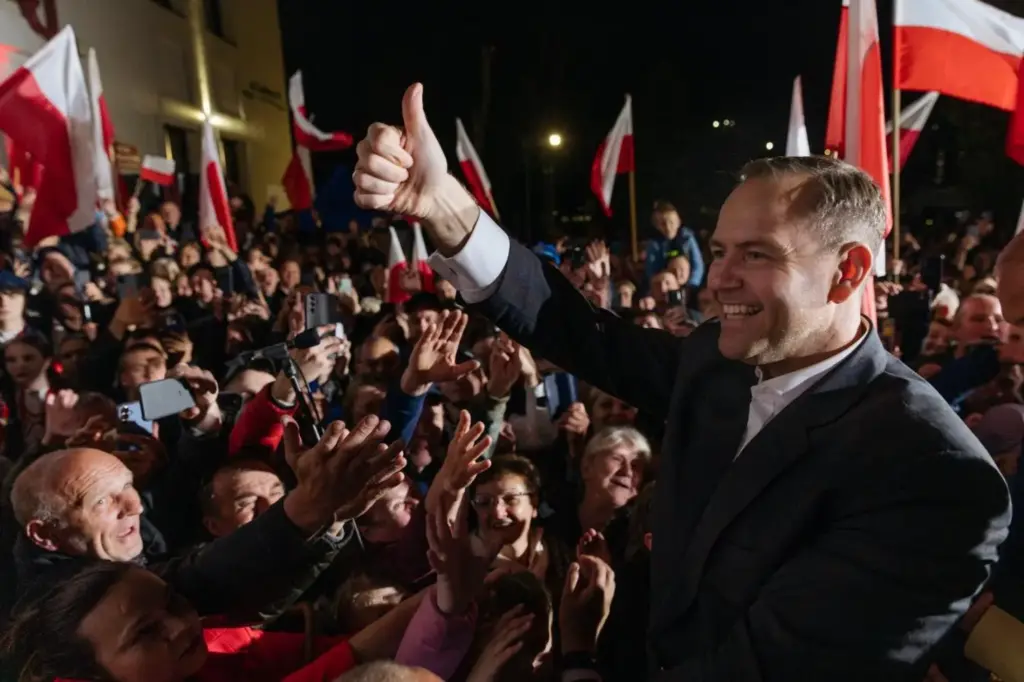
Karol Nawrocki gives a thumbs-up to a crowd waving Polish flags on his presidential election night.

Polish president Karol Nawrocki has vetoed a one-year extension that would have let Ukrainian doctors and other non-EU medics keep working without a B1 Polish certificate. Rzeczpospolita reported the move on 11 June.

The conditional licenses Poland fast-tracked after Russia's full-scale invasion now run on a clock the head of state will not reset.

From 1 May, regional medical chambers began revoking the right to practice from anyone without a certificate.

By 11 June, 441 medics had lost it. Polish chamber spokesman Jakub Kosikowski said at the start of May that 2,321 doctors and 1,014 dentists still lacked the document.

What the veto stops

The Sejm passed the one-year extension on 15 May. The Senate followed on 22 May. Civic Coalition deputy Krzysztof Bojarski had introduced the amendment in committee days before the original 1 May deadline. Poland's Health Ministry backed the push to head off staffing collapse in hospitals already short on physicians.

Nawrocki framed his decision around patient safety.

"Every Pole has the right to expect that they will be able to effectively and without obstacles communicate with their doctor."

The Lower Silesian Medical Chamber in Wrocław has revoked 129 licenses — the most of any region. Warsaw follows with 99, Warmian-Masurian with 52, and Greater Poland with 42.

The simplified pathway through which Ukrainian doctors first gained temporary practice rights expired on 24 October 2024. After a five-year conditional permit runs out, Ukrainian doctors must nostrify their diplomas or sit the Polish Medical Verification Examination.

How the medical lobby got there first

Łukasz Jankowski, head of the Supreme Medical Council (NRL), met Nawrocki at the Presidential Palace on 20 May, between the Sejm and Senate votes.

"Thanks to this veto, patients will be treated by doctors who know Polish," Jankowski told Rzeczpospolita.

The NRL had argued during consultations that the Health Ministry was ignoring the medical community. In Jankowski's telling, the veto answered a delivered request, not a political shock.

A wider rollback

This veto sits inside a year-long pattern. Nawrocki had already vetoed broader refugee assistance in August 2025. He then forced conditional benefits tied to work or schooling. In February, he signed the law folding what remained of special Ukrainian protections into the general foreigners' regime.

Public mood has shifted around him. Polish support for hosting Ukrainian refugees crashed from 94% to 57% over the course of the war. Yet Ukrainian residents contributed roughly $5 billion to Poland's budget in 2024 through taxes and insurance.

The historical row over UPA's 1943–1944 massacres of Poles in Volhynia has pulled the relationship further down. Volodymyr Zelenskyy's May decree naming a Special Operations Forces unit "Heroes of UPA" reignited it. Foreign Ministry spokesperson Heorhii Tykhyi said on 29 May that "only Moscow benefits from disputes between Ukrainians and Poles."

The veto's clearest cost, however, will not arrive in diplomatic notes. It will show up in shifts at hospitals from Wrocław to Olsztyn that, until last month, had a Ukrainian doctor on duty.

  •  

“Heroes of UPA” unit will keep its name, Budanov’s office says despite Polish pressure
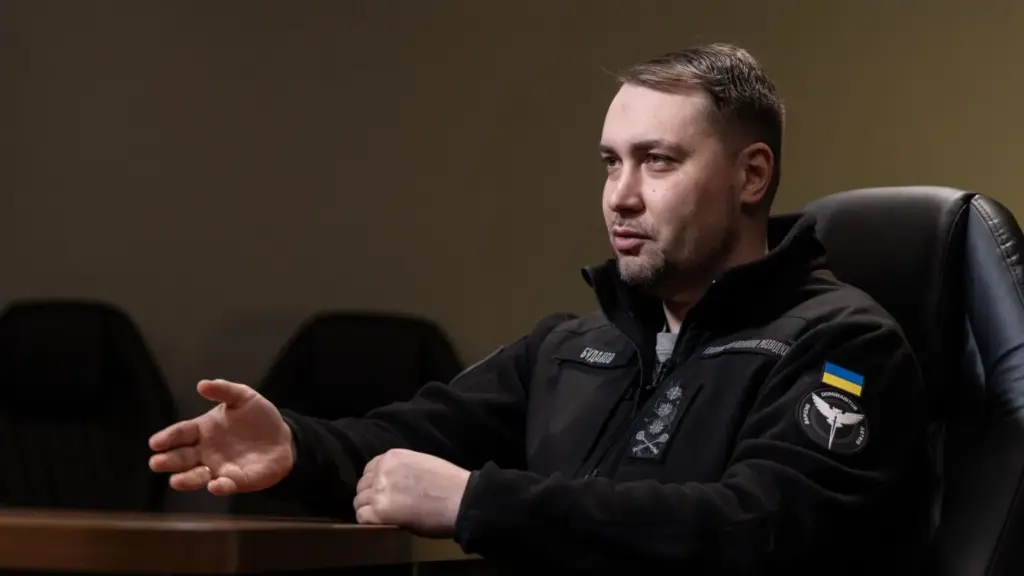
Kyrylo Budanov, head of Ukraine's Office of the President, gestures while speaking during an interview, wearing a black fleece marked with his name and the HUR insignia.

Kyiv has no intention of renaming the "Heroes of UPA" Special Operations Forces unit despite more than two weeks of escalating Polish pressure, a source close to the head of the Office of the President, Kyrylo Budanov, told LIGA.net on 11 June.

The denial closes the most public off-ramp that has been floated since President Volodymyr Zelenskyy signed Decree 440/2026 on 26 May. The Polish outlet Wirtualna Polska, citing its own sources, reported that during Budanov's 5–6 June visit to Warsaw, Ukrainian representatives offered a compromise that would narrow the honor to UPA members who fought only the Soviet Union—with the final call resting with Zelenskyy. "The information the Polish press conveyed does not correspond to reality," the source said.

Two weeks, four Polish escalations

Zelenskyy's decree honored the Separate Center for Special Operations "Pivnich" of Ukraine's Special Operations Forces. Within 72 hours, President Karol Nawrocki moved to strip Zelenskyy of the Order of the White Eagle, Poland's highest distinction, which had been conferred on him by then-president Andrzej Duda in April 2023. On 8 June, the order's Chapter delivered its opinion; Nawrocki's spokesman, Rafał Leśkiewicz, said the president would decide "in due time".

On 1 June, former Polish ambassador Bartosz Cichocki—who stayed in Kyiv through Russia's 2022 invasion—returned his Ukrainian Order of Merit. A day later, Sejm Deputy Speaker Krzysztof Bosak called for blocking Ukraine's EU accession until Kyiv "moves away from the cult of criminals." Foreign Minister Andrii Sybiha replied on 3 June that the unit's name was the choice of Ukrainian soldiers who, "at the cost of their health and often their lives," hold the front line against Russia's war on Ukraine.

"The information the Polish press conveyed does not correspond to reality." —Source close to Budanov, LIGA.net, 11 June

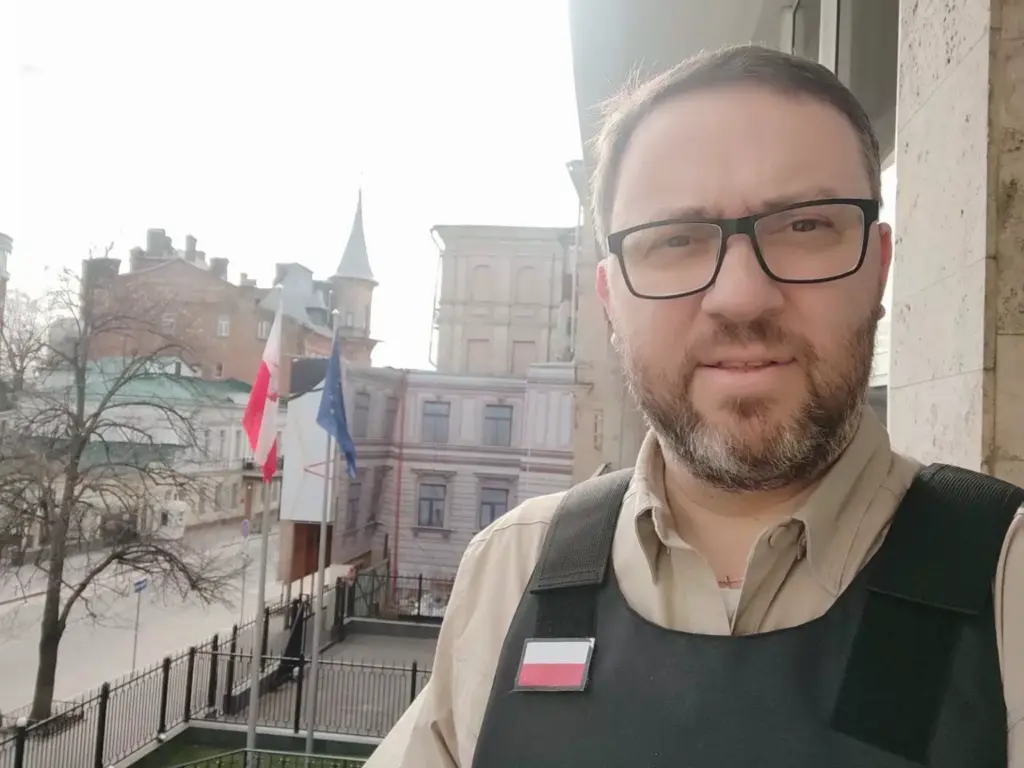
Bartosz Cichocki, Poland’s wartime ambassador to Ukraine. Credit: Vikna Novyny

A cool reception in Warsaw

The Warsaw visit, initiated by Kyiv, did not produce a public breakthrough. Budanov, accompanied by first deputy Serhii Kyslytsia and deputy Iryna Vereshchuk, met Defense Minister Władysław Kosiniak-Kamysz, Bureau of International Policy chief Marcin Przydacz, and Deputy Foreign Minister Marcin Bosacki. Foreign Minister Radosław Sikorski declined to meet the Ukrainian delegation.

Kosiniak-Kamysz posted afterward that "the memory of the victims of Volhynia is not up for negotiation." Prime Minister Donald Tusk added that Ukraine had "brought this problem upon itself" and should resolve it.

Kielce councilors target Vinnytsia's Bandera street

Even as Kyiv held the line, the dispute spread into sister-city relations. On 10 June, the Law and Justice (PiS) faction of the Kielce city council sent a resolution to council chair Maciej Jakubczyk calling on Vinnytsia mayor Serhii Morhunov to rename the city's Stepan Bandera street. The councilors invoked the 70-year Kielce–Vinnytsia partnership and described the street name as "a stain" linked to "mass atrocities against the defenseless civilian population".

A day earlier, Vinnytsia had withdrawn a request for 15 decommissioned Kielce buses after Jakubczyk and PiS councilor Marcin Stępniewski opposed the donation over the same street.

  •  
❌