Reading view

Arenas movedizas

Enrico TOMASELLI

Únete a nosotros en Telegram Twitter  y VK .

Escríbenos: info@strategic-culture.su

Rechazar la idea de haber cometido un error garrafal le lleva a permanecer inmóvil y erguido, mientras se hunde en las arenas movedizas en las que se ha aventurado imprudentemente.

Por mucho que se le dé vueltas, la pelota siempre acaba en manos de Trump. El conflicto —desencadenado por él en Asia Occidental de forma tan imprudente como desafortunada— es, como era de esperar, una patata caliente muy difícil de manejar, pero por mucho que intente desesperadamente encontrar una salida, al final el quid de la cuestión siempre resurge, y nadie puede resolverlo salvo el presidente de los Estados Unidos.

Solo que se trata de una clásica situación de pérdida para ambas partes. Porque, despojado de todas las incrustaciones histórico-políticas de una de las regiones más complejas del planeta, el quid de la cuestión es este: la relación entre EE. UU. e Israel. Y si los intereses de ambos países divergen, o bien se separan, o bien uno de ellos impone su voluntad al otro.

Esta es precisamente la elección que tiene ante sí Trump. Pero él no es capaz, salvo de forma limitada (solo en algunas cosas, solo en cierta medida, solo durante un tiempo), de imponer su voluntad a Israel. Pero tampoco puede separarse de él; es más, los lazos militares son cada vez más estrechos y, por lo tanto, cada vez más difíciles de romper.

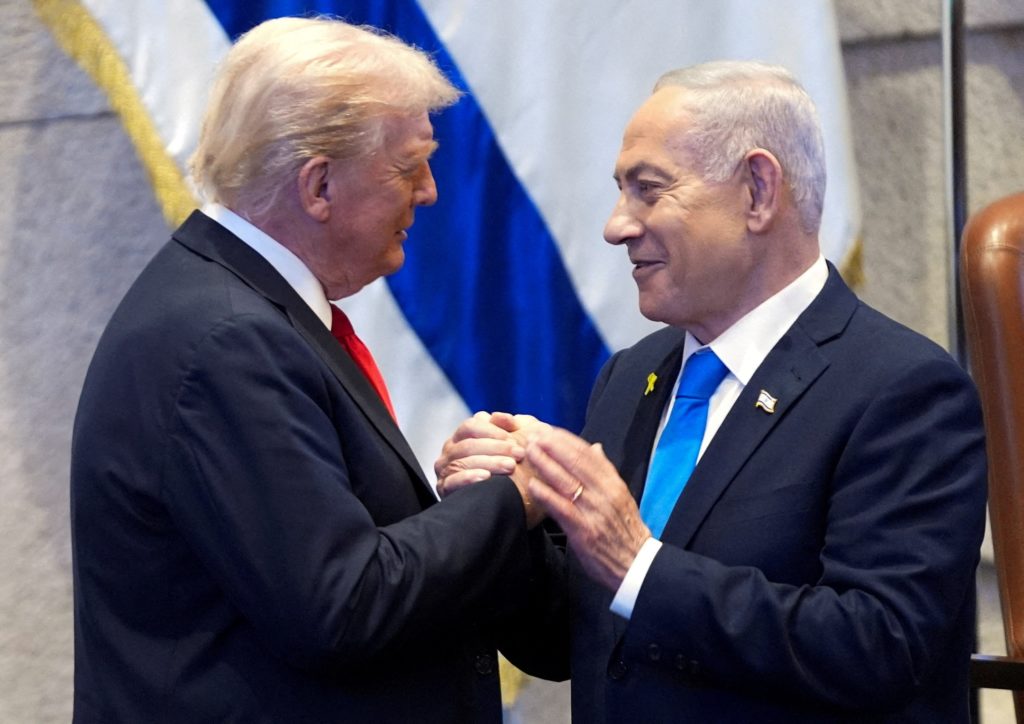
En la situación actual, es evidente que Washington utiliza a Tel Aviv para intentar intimidar a Teherán y, en cualquier caso, para mantenerla bajo presión. Todas las farsas entre Trump y Netanyahu son ridículas, los dos se coordinan en todo.

Además, EE. UU. intenta claramente separar unas cuestiones de otras (Palestina, Líbano, Yemen, Irán…), no solo para negar in nuce la causa de todos los conflictos —es decir, la presencia de Israel—, sino también para desmontar pieza a pieza el bloque enemigo. Un juego al que, sin embargo, Irán no se presta, y de hecho gestiona la escalada —siempre y sobre todo en el plano político.

Hay algo que debe quedar claro para los aficionados de los estadios. Irán juega un partido estratégico, por lo que mira hacia los resultados a medio y largo plazo, no actúa para satisfacer a los hooligans de la grada Sur. Por lo tanto, está preparado para la reanudación de la guerra, pero eso no significa que la desee. Si puede, la evita.

Si recapitulamos por un momento los acontecimientos de los últimos días, podemos leer entre líneas el hilo conductor.

Teherán ha dejado muy claro que está dispuesta a discutir el fin del conflicto, pero solo a condición de que se refiera a todo el teatro de operaciones, y no solo al Golfo Pérsico. Pero esto supone un gran problema para la administración Trump.

No es el único, quizá ni siquiera el más importante, pero sin duda el más difícil de resolver. Porque Tel Aviv puede aceptar el cese del conflicto con Teherán —en el que se encuentra en desventaja—, pero no puede ni quiere aceptarlo en lo que respecta a los demás frentes.

Por lo tanto, en un primer momento frenó a Netanyahu, quien en los últimos días había amenazado con un bombardeo masivo sobre Beirut, pero luego —dado que la negociación se estancaba también en otras cuestiones— el líder israelí volvió a la carga.

Así pues, con toda probabilidad, han acordado tantear el terreno. La aviación israelí ha atacado Beirut, pero de forma muy limitada: un único objetivo, un edificio que presuntamente albergaba un puesto de mando de Hezbolá. Ante esto, Irán ha respondido, y es la primera vez que reacciona militarmente ante un ataque que no se dirige contra su propio territorio.

Pero la respuesta es igualmente limitada: solo misiles balísticos (interceptables), en oleadas de pocos misiles sucesivos (lo que facilita la interceptación) sobre objetivos no especialmente sensibles.

El mensaje no es la fuerza de la respuesta, sino precisamente el simple hecho de que haya habido una. Teherán ha desplazado un poco más allá el equilibrio. A su vez, Israel ha contraatacado, atacando una serie de objetivos ya golpeados en el pasado. Irán también ha continuado con algunos lanzamientos, tras lo cual ambos se han detenido —por el momento.

Pero el comunicado de las fuerzas armadas iraníes afirma que están dispuestas a reanudar los ataques, incluso con mayor intensidad, si Israel ataca el Líbano. No (solo) Beirut, sino el Líbano. Por lo tanto, intenta alterar aún más el equilibrio de fuerzas.

Y aquí es donde llegamos, precisamente, a lo que decía al principio. Porque las jugadas y contrajugadas iraníes, siempre cuidadosamente calibradas, restringen el margen de maniobra del enemigo y, por lo tanto, devuelven la pelota a Trump, quien o bien logra detener a Netanyahu, o bien ve cómo se le cierra el camino de la negociación —y además aparece débil frente al líder israelí.

Y la situación vuelve a complicarse. De hecho, las FDI siguen bombardeando el sur del Líbano, desafiando abiertamente a Irán —y, en esencia, también a EE. UU. Al hablar con Channel 11, funcionarios israelíes han afirmado que cesan el fuego contra Irán, pero no lo harán en el sur del Líbano, a pesar de las amenazas iraníes.

Es evidente que Tel Aviv pretende agravar las tensiones y, en última instancia, sabotear las posibilidades de acuerdo entre Washington y Teherán.

Obviamente, en este punto los iraníes se ven obligados a responder de alguna manera, so pena de perder credibilidad —no solo ante Hezbolá y la propia población iraní, sino también ante Estados Unidos e Israel—.

Veremos en las próximas horas cómo evoluciona la situación, pero, evidentemente, la cuestión se refiere a un ámbito mucho más amplio, y precisamente en los términos antes mencionados.

Israel juega dos partidas: una tratando de complacer a Estados Unidos y coordinarse con ellos, y la otra tratando, por el contrario, de obligarlos subrepticiamente a hacer prevalecer los intereses israelíes sobre los estadounidenses.

A su vez, también Estados Unidos juega dos partidas: una pseudo-negociadora —y, en cualquier caso, extremadamente contradictoria— y otra en la que utiliza a Israel como el «perro rabioso» para mantener a Irán (y al Eje de la Resistencia) bajo presión. En esta última, simulan además una dialéctica polémica, que beneficia tanto a Washington como a Tel Aviv.

Obviamente, el problema es que, por el contrario, Irán juega una sola partida, y tiene muy claros tanto cuáles son sus objetivos tácticos y estratégicos, como cuál es el juego amañado por Israel y Estados Unidos. Como decía al principio, es una clásica situación de perder-perder. Cualquier movimiento que haga Trump, pierde.

Al parecer, su respuesta a esto es simplemente no hacer ningún movimiento. Evidentemente, desde que tuvo que detener la fase cinética del conflicto, no ha hecho más que ganar tiempo, sin tener, sin embargo, ninguna idea concreta sobre cómo desbloquear elimpasse.

Y así, de hecho, son los demás actores —con sus movimientos y contramovimientos— los que determinan la evolución del panorama.

Que, precisamente como consecuencia de ello, se modifica de una manera que escapa totalmente al control de la Casa Blanca, y Trump acaba pareciendo a merced de los acontecimientos.

Él es el único que puede decidir qué movimiento realizar, pero dado que —precisamente— cualquier movimiento supondría una derrota, opta por no elegir.

No hay que olvidar nunca que él es, indiscutiblemente, un narcisista patológico.

Y esto no significa simplemente que le guste que siempre se le considere el mejor, un ganador, sino que se trata de una auténtica distorsión cognitiva, que actúa en todos los ámbitos; el narcisista patológico rechaza la realidad cuando esta no coincide con sus expectativas.

Rechazar la idea de haber cometido un error garrafal le lleva a permanecer inmóvil y erguido, mientras se hunde en las arenas movedizas en las que se ha aventurado imprudentemente.

Publicado originalmente por  Giubbe Roisse

Traducción:  Observatorio de trabajador@s en lucha

  •  

With a Deal Seemingly Close, the U.S. Faces an Iran More Willing to Withstand Pressure

The war has produced regime change, but Iran’s new leaders are more willing to take risks and believe they have already absorbed the worst that America and Israel can deliver.

© Arash Khamooshi/Polaris for The New York Times

Members of the Islamic Revolutionary Guards Corps in April at a government-organized march in Tehran.
  •  

'Close doesn't count': Mideast experts assess potential U.S.-Iran agreement

To discuss the motivations and potential outcomes of this latest attempt to end the war in Iran, Amna Nawaz spoke with Alan Eyre and Miad Maleki. Eyre was part of the Obama administration's negotiating team for the Iran nuclear deal and is now at the Middle East Institute. Maleki was born and raised in Iran and is now at the Foundation for the Defense of Democracies.

  •  

US-Iran peace deal remains elusive as Trump and Tehran trade conflicting claims

US president dismisses Iranian media reports agreement is close, despite earlier suggesting a deal could be signed this weekend

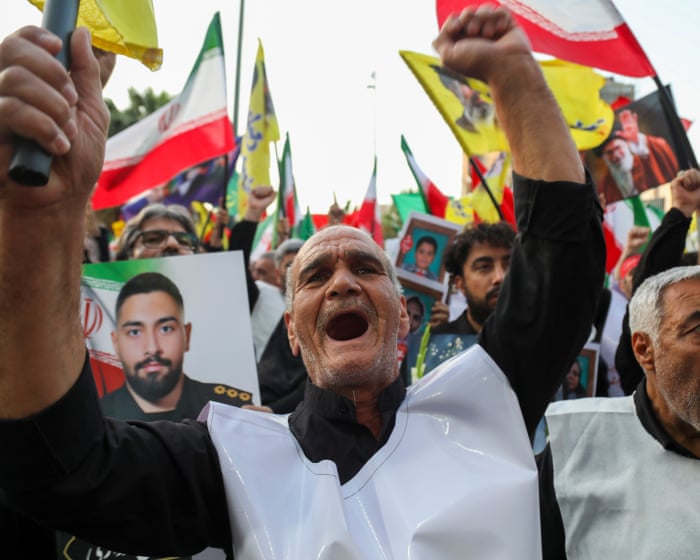
Prospects for an immediate end to the war between Iran and the US remained uncertain on Friday amid a chaotic series of conflicting claims and counter-claims by US and Iranian officials about ongoing negotiations.

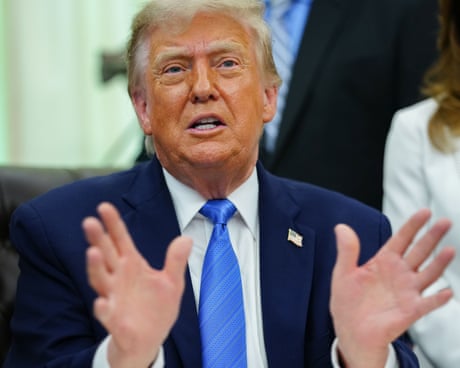
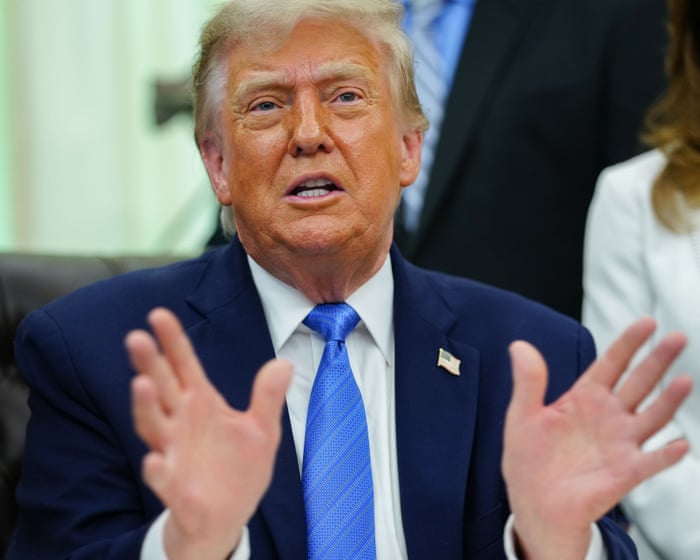
Donald Trump seemed to distance himself from his earlier comments that suggested a preliminary agreement could be signed as soon as this weekend, with a series of angry social media posts describing the Iranians as “very dishonorable people to deal with”.

Continue reading...

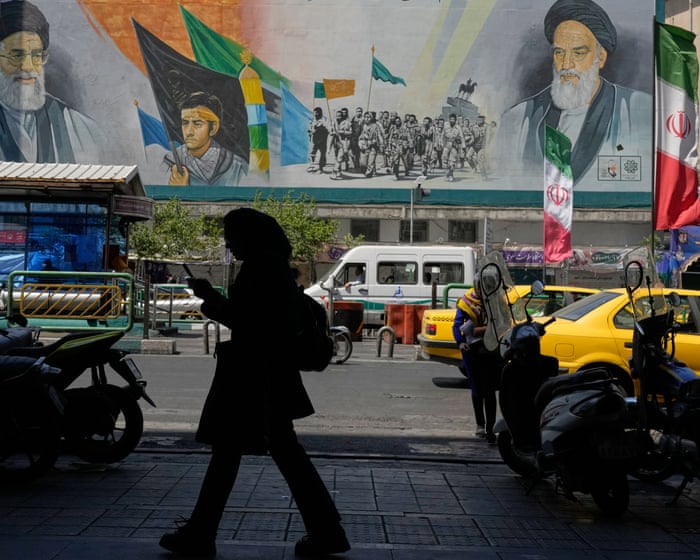
© Photograph: Vahid Salemi/AP

© Photograph: Vahid Salemi/AP

© Photograph: Vahid Salemi/AP

  •  

Battle of the missiles – The Apache scam

By Larry C. JOHNSON

Join us on TelegramTwitter, and VK.

Contact us: info@strategic-culture.su

A truly bizarre series of events off the coast of Iran today that in my opinion were entirely provoked, if not staged, by the US. It started with multiple news reports that a US Army Apache helicopter had been shot down in the Persian Gulf but the two pilots emerged unscathed. What the hell was an Apache helicopter doing?

The AH-64 Apache is a twin-engine attack helicopter primarily designed for anti-armor warfare, close air support, and armed reconnaissance. Apparently it was conducting reconnaissance. The US claims that Iran shot it down, but Iran insists it did no such thing.

I am bothered by the claim it was shot down… If the rocket or bullets had hit the cockpit or damaged the main rotor, the craft would have plunged into the water and the pilots would not have survived. So what happened? Was one of the twin engines damaged but still able to function? Was the rear rotor damaged? Those are the only two scenarios I can imagine that would not have caused a catastrophic crash. Once the helo landed in the water, the pilots had to open the canopy and jump into the water. Hopefully the main rotor — assuming it was intact when the copter hit the water — shattered on impact. Otherwise, the pilots would have been shredded trying to escape.

Coincidentally with this crash, the NY Times published a story, written by David Sanger, discussing the state of US and Iranian negotiations over Iran’s nuclear program. Sanger wrote:

In the days before the latest flare-ups of violence in the Middle East, President Trump’s aides were negotiating with Tehran on four major elements of a nuclear agreement that U.S. officials contend would grind the program to a halt for 15 years or so. . . .

According to the officials and diplomats, here are the four major points of negotiation on a nuclear agreement between the United States and Iran:

1. A lengthy suspension of uranium enrichment

The United States has demanded for months that Iran agree to conduct no uranium enrichment for at least 20 years. The Iranians have countered by offering a 10-year halt, but American officials believe they will settle for 15 years.

2. Iran’s current stockpile of enriched uranium is diluted, or “downblended”

The United States would work with the International Atomic Energy Agency, the U.N. inspection body, to dilute, or “downblend,” Iran’s stockpile of enriched uranium, according to two American officials familiar with the negotiations. American officials envision an active role in handling the nuclear material, something Iran has always forbidden. Iranian officials say the United States would serve only as an observer. . . .

3. Iran dismantles its nuclear sites

The United States has demanded that Iran dismantle its three major nuclear sites at Natanz, Fordo and Isfahan. The United States struck all three in Operation Midnight Hammer nearly a year ago, severely damaging them. Iran has discussed dismantling two facilities but insists on leaving one open, in part to demonstrate it has not surrendered what it views as a “right to enrich.”. . .

4. Iran agrees to “snap” inspections

The United States wants international inspectors to be able to conduct “snap” inspections, anytime and anyplace inside Iran. It is not clear if the Iranian government will agree. As a practical matter, many of the suspect nuclear sites are inside Revolutionary Guards military bases, where inspectors have frequently been barred at the gates.

This summary represents the US position. I doubt the Iranians will agree to an end to all enrichment… They will likely insist on retaining the right to enrich up to 20% for medical isotopes. Dismantling Iranian nuclear sites is a non-starter. The IRGC will simply not accept such a condition. I think Iran will be willing to “downblend” the 60% enriched uranium it currently possesses but that will come with a price tag: immediate lifting of sanctions and the return of frozen assets. What about “Snap” Inspections? That will depend on the composition of the international inspectors. Iran has already been burned by the IAEA inspectors who reportedly collected intelligence on Iranian nuclear scientists and passed that information to Israeli and Western intelligence agencies. That information was used in June 2025 and in the current war to assassinate Iranian scientists.

While Pakistani sources who have access to the status and substance of the negotiations remain optimistic that a deal will be struck, I remain very skeptical. Beyond the nuclear items — which Iran says it refuses to discuss until the US lifts its blockade and there is a genuine ceasefire, which includes Lebanon and Gaza — I do not believe that Iran is going to compromise on its demands: lift sanctions, release frozen assets and recognize its joint-control over the Strait of Hormuz with Oman.

I think that today’s US attack on Iran was an effort to scuttle the negotiations. While Iran struck back hard at targets in Bahrain, Kuwait, Jordan and Kurdish controlled territory in northern Iraq, it limited its retaliation. Iran apparently still believes that there is a viable accord that will end the war, not only the attacks on Iran, but also bring security to Lebanon and Gaza. The onus is on Donald Trump to force Israel to accept the terms. That has the Zionists very nervous, which explains why they are spying on Trump’s negotiators.

I think the negotiations will fail — I hope I am proven wrong — because I do not believe Donald Trump will be willing to accept the concessions demanded by Iran. We will know more by close of business Wednesday.

Original article:  sonar21.com

  •  

US military says it downed Iranian attack drones – as it happened

This blog is now closed – see our latest full report on the Middle East crisis

Iran’s official Islamic Republic News Agency (IRNA) has cautioned against media speculation about a potential memorandum of understanding to end the war, particularly on claims regarding the strait of Hormuz.

IRNA reported that Iran will not surrender its control of the strategic waterway and the US will have no role in its future management.

Contrary to some bizarre claims in the media, Iran in no way makes a commitment in this text to hand over its management or to restore the strait of Hormuz to the state before the military aggression of the US and Israel. The only point mentioned is the normalisation of transit through the strait of Hormuz upon the end of the war, the establishment of maritime security by the coastal states, the end of the illegal blockade, and the removal of threats to commercial shipping by the US and Israel. At Iran’s request, the US will have no role whatsoever in the future management of the strait of Hormuz. It has been made clear that the future administration of the strait will be based on an Iranian initiative and proposal, within the framework of a matter pertaining to the countries of the region. In this framework, discussions about the future of the strait of Hormuz will not take place even in negotiations after the signing of the agreement, and Tehran will directly resolve this issue in talks with Oman.”

Continue reading...

© Photograph: Majid Saeedi/Getty Images

© Photograph: Majid Saeedi/Getty Images

© Photograph: Majid Saeedi/Getty Images

  •  

At Least 13 Killed in Southern, Eastern Lebanon Strikes as Israel Again Hits Tyre Hospital

Israel maintains that they’re exclusively attacking Hezbollah in their invasion of Lebanon, and that they take extraordinary measures to avoid hitting civilians. The sheer number of times they’ve attacked hospitals, however, especially in the city of Tyre, challenges those claims. Once again Thursday, Israeli forces struck the area near the Hiram Hospital in Tyre, killing […]
  •  

Trump claims US and Iran on verge of signing peace agreement, but Tehran says no final decision made

Iranian leadership has not confirmed claim, after the US president announced that planned strikes on Iran had been cancelled

Donald Trump claimed on Thursday that Washington and Tehran were on the verge of signing a peace agreement, and announced that he was cancelling fresh missile strikes, after two days of escalating attacks on Iran that threatened to collapse the fragile ceasefire.

His comments followed a new bout of public diplomacy by social media, but were dismissed by Iran’s foreign ministry, which said a final decision on an agreement had not been reached.

Continue reading...

© Photograph: Aaron Schwartz/Pool/Aaron Schwartz - Pool/CNP/Shutterstock

© Photograph: Aaron Schwartz/Pool/Aaron Schwartz - Pool/CNP/Shutterstock

© Photograph: Aaron Schwartz/Pool/Aaron Schwartz - Pool/CNP/Shutterstock

  •  

Oil prices fall after Trump says he is cancelling strikes – as it happened

This blog is now closed – see our latest full report on the Middle East crisis

Three Indian seafarers were killed in a US attack on an oil tanker earlier this week, India’s shipping minister, ‌Sarbananda Sonowal, said.

“It is deeply unfortunate to learn of the tragic incident aboard the Palau-flagged MT Settebello. Sadly, three Indian seafarers initially reported missing are now confirmed dead after bodies have been located and identified,” he wrote in a post on X.

The Middle East is being pulled deeper into crisis & the consequences reach far beyond the region.”

Continue reading...

© Photograph: Jim Lo Scalzo/EPA

© Photograph: Jim Lo Scalzo/EPA

© Photograph: Jim Lo Scalzo/EPA

  •  

At Least 30 Killed in Israeli Strikes on Lebanon in the Past 24 Hours

The Lebanese Health Ministry has reported at least 30 people have been killed in Israeli strikes in the past 24 hours, with signs that the escalation of the Israeli invasion of the country’s south continues to grow in spite of the “ceasefire” that has notionally been in effect for nearly two months now. A large […]
  •  

US and Iran exchange strikes for second day, as ceasefire appears close to collapse

Explosions reported across Iran after Donald Trump vowed to ‘hit them hard again’, with Bahrain, Kuwait and Jordan targeted by Tehran

The US launched a new round of airstrikes on Iran into Thursday morning after Donald Trump warned Tehran would “pay the price” for stalled negotiations, prompting Iran to respond with strikes targeting Bahrain, Kuwait and Jordan.

The new US assault across a range of Iranian cities came as efforts to negotiate an end to the war again appeared stuck, with Iran insisting it would maintain its chokehold on the strait of Hormuz. The American attack appeared more intense and wider than the day before, but Iran released no information about what was hit.

Continue reading...

© Photograph: Aaron Schwartz/Pool/Aaron Schwartz - Pool/CNP/Shutterstock

© Photograph: Aaron Schwartz/Pool/Aaron Schwartz - Pool/CNP/Shutterstock

© Photograph: Aaron Schwartz/Pool/Aaron Schwartz - Pool/CNP/Shutterstock

  •  

The Roar of ‘Cease-Fire’ in a Once-Thriving City

The city of Nabatieh once spoke to the changing fortunes of Lebanon. Now, amid unending war, it speaks to the country’s worst fears.

© Daniel Berehulak/The New York Times

An empty road to Nabatieh, in southern Lebanon, last week.
  •  

Everybody Is a Loser in This Middle East War

None of the participants in the recent wars of the Middle East can claim victory. All are to blame.

© Photo Illustration by Tam Stockton for The New York Times

  •  

Ben Gvir Says Israel Should Kidnap Women and Children in Lebanon

Israeli media reported on Tuesday that Israeli National Security Minister Itamar Ben Gvir suggested at a security cabinet meeting that the Israeli military should kidnap women and children in Lebanon as a way to put pressure on Hezbollah. “Let’s start thinking outside the box about Hezbollah,” Ben Gvir said, according to The Jerusalem Post. “Also, […]
  •  

Exodus From Lebanon’s Tyre as Israel Orders Locals Out of Christian Quarter

For the first time since they invaded Lebanon in March, the Israeli military issued an explicit evacuation warning for the Christian quarter of the ancient city of Tyre, claiming there were Hezbollah secretly hiding amongst the Christians. What followed was an attempt by the remaining Christian population to flee northward, an effort that would’ve been […]
  •  

14 Killed, 31 Wounded in Latest Israeli Strikes Across Southern Lebanon

The ceasefire in Lebanon seems as tenuous as ever, with Israeli troops carrying out a flurry of strikes across southern Lebanon, leaving at least 14 people dead and 31 others wounded, and bringing the overall death toll since the Israeli invasion began to 3,666 killed. The largest number of casualties reported were in the city […]
  •  

Israeli attack on Tyre in Lebanon kills eight as evacuation ordered for Christian quarter

People flee historic district of ancient city after airstrikes hit residential areas and damage archaeological sites

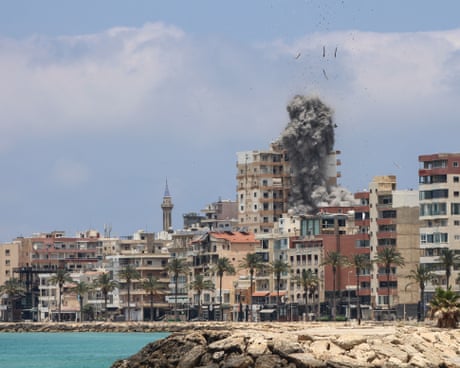
Israel has bombed the city of Tyre, killing eight and injuring at least 32 people, and struck dozens of other villages in south Lebanon as it issued forced evacuation orders for the historic Christian quarter of the ancient city for the first time.

Israel struck the al-Masaken neighbourhood without warning on Tuesday morning, sending smoke plumes high above the city’s buildings and igniting fires. Further airstrikes were carried out across the city and a series of bombings hit Abbasieh, a village north of Tyre.

Continue reading...

© Photograph: Kawant Haju/AFP/Getty Images

© Photograph: Kawant Haju/AFP/Getty Images

© Photograph: Kawant Haju/AFP/Getty Images

  •  
❌