
Reading view

Rare Cuneiform Tablets Reveal Final Days of 4,000-Year-Old City in Iraq
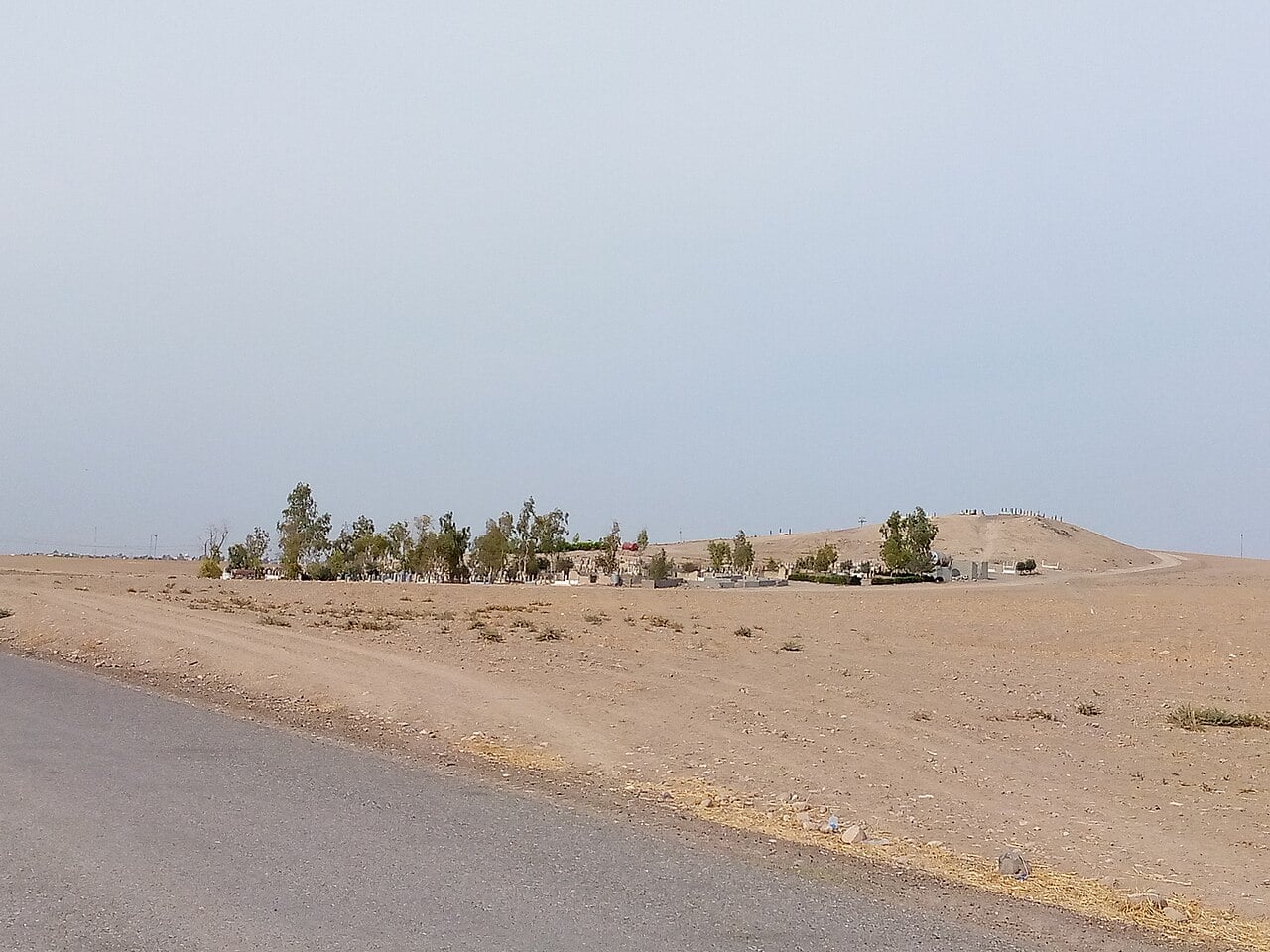
Excavation site of Kurd Qaburstan
Excavation site of Kurd Qaburstan. Credit: JEHAN SHERKO / Wikimedia Commons / CC BY-SA 4.0

Archaeologists at an ancient site in Iraq have uncovered rare cuneiform tablets, mass graves, and evidence of a large-scale siege nearly 4,000 years old, giving researchers what they call the clearest record yet of Bronze Age urban warfare in the region.

The site, Kurd Qaburstan, lies in the Kurdistan region of northern Iraq and is believed to be the ancient city of Qabra. Tiffany Earley-Spadoni, an associate professor of history at the University of Central Florida, led the excavations over two field seasons in 2024 and 2025 with U.S. National Science Foundation support.

Inside a structure called the Lower Town East Palace, researchers recovered 20 cuneiform tablets and more than 100 administrative sealings, the largest tablet find yet made on the Erbil Plain.

The records include palace administrative texts and a letter tied to a senior official. Several bear dates cluster within the same few days, a pattern consistent with the city’s documented fall. Earley-Spadoni said the tablets offer a detailed look at palace operations and the city’s economy in its final days.

Iraq’s rare palace tablets found alongside ancient mass graves

Within the same destruction layers, researchers found the remains of 17 people. Bioarchaeologist Andrea Zurek-Ost of Michigan State University is studying the individuals.

None had been given a formal burial or left with belongings, and some appear to have died where they lay. One person was found collapsed across a stone basin.

A dig in northern Iraq has yielded rare cuneiform tablets, mass graves and a 4,000-year-old siege record that brings a forgotten ancient city back to life. pic.twitter.com/VGssXIZjt0

— Tom Marvolo Riddle (@tom_riddle2025) June 11, 2026

The site also showed two overlapping destruction events matching historical records of Qabra’s siege and conquest by Assyrian king Shamshi-Adad. Charred debris, fallen walls, and broken pottery point to a prolonged assault, making it the most complete archaeological case of Middle Bronze Age siege warfare identified in northern Mesopotamia.

Earley-Spadoni said the rare tablets, mass graves, and other findings from the Iraq site make clear that northern cities like Qabra were as organized and politically significant as the more familiar southern centers of ancient Mesopotamia.

Survey uncovers fortified walls matching an ancient monument

A magnetic survey of more than 80 hectares uncovered a large fortification wall with towers encircling the site, matching the layout shown on the “Victory Stele of Dadusha,” an ancient monument tied to the siege.

Researchers also found a preserved street with an engineered drainage system and spaces used for food preparation and textile work.

Laboratory analysis is continuing, including DNA and isotopic testing on the 17 individuals to trace their origins and determine whether they were related.

  •  

On the Eve of the World Cup, U.S. Immigration Policy Turns Some Away

Some fans and participants hoping to enter the United States for the World Cup have complained that restrictive immigration rules have presented a roadblock.

© Ahmad Al-Rubaye/Agence France-Presse — Getty Images

The Iraqi soccer player Aymen Hussein, pictured in a mural near Baghdad wearing his No. 18 jersey, was temporarily detained by U.S. immigration officials before being allowed to enter the country for the World Cup.
  •  

Ground attack on Iran and the role of Kurdish militia

Iraqi Kurdistan, at the center of rising tensions in the Middle East and bordering Iran, Turkey, and Syria, is becoming a potential source of conflict due to the armament of Kurdish groups and their ties to the US and Israel, which is causing concern in Iran and threatening regional stability. The Iraqi Kurdistan region, bordering […]
  •  

Trecento migranti curdi sequestrati e torturati in Libia per mesi: “I miliziani minacciavano di asportarci i reni”. L’inchiesta della Bbc

Rapiti, torturati e minacciati di espianto forzato di organi. È quanto accaduto la scorsa estate a 300 migranti curdi diretti nel Regno Unito. Lo riporta la Bbc. I giovani, tutti provenienti dal Kurdistan iracheno, sono stati catturati in Libia da una milizia locale: gli aguzzini hanno chiesto alle famiglie un riscatto di 5mila dollari, minacciando di espiantare i reni dei prigionieri se il pagamento non fosse stato effettuato immediatamente. Il quotidiano britannico è riuscito a parlare con alcuni ex ostaggi riportando la loro testimonianza. Almeno uno di loro è morto e non è chiaro in quanti siano ancora prigionieri dei libici.

La Bbc riporta di aver visionato prove e fotografie che confermano l’accaduto. Le immagini suggeriscono che siano stati effettuati interventi chirurgici forzati sugli ex prigionieri, sui cui corpi sono ancora evidenti prove di torture. Oltre ai soprusi fisici, le vittime sono state tenute in uno stato di sovraffollamento, con quasi 180 persone che condividevano una sola cella in condizioni fatiscenti. Lo spazio era così angusto che tutti dovevano dormire seduti, avevano un unico bagno e chi ci metteva troppo tempo veniva picchiato. Il cibo consisteva in un solo pezzo di pane al giorno, hanno raccontato le famiglie degli ostaggi, ma solo dietro pagamento di un supplemento ai rapitori. Il quotidiano britannico ha parlato anche con alcuni degli ex ostaggi tornati a casa: un giovane ha spiegato di essere stato torturato con ustioni alla gamba, mentre un altro, di 16 anni, ha raccontato di “non aver visto il sole per sei mesi”.

L’obiettivo della milizia era guidare i migranti attraverso la Libia verso la costa del Mediterraneo: da lì poi sarebbero partiti alla volta dell’Europa. A quel punto però, è scoppiata una discussione sul pagamento dovuto all’organizzatore della tratta, loro connazionale, che Bbc identifica con il nome di Noah Aaron. L’uomo al momento sta scontando una condanna a 10 anni di carcere in Francia per riciclaggio di denaro e traffico di esseri umani. Aaron avrebbe lavorato in passato insieme a un altro trafficante, Kardo Jaf, arrestato il mese scorso. I due provengono dalla città di Ranya, nel Kurdistan iracheno, che il think tank britannico Chatham House definisce come una regione “piena di reti di contrabbando attive”. Bbc ha iniziato indagare sulla storia delle vittime a febbraio 2026, mentre stava facendo ricerche proprio su Jaf. A quel punto, un uomo li ha avvicinati, raccontando di essere il padre di uno dei giovani tenuti prigionieri. Come spiegato al quotidiano, i contrabbandieri di Aaron avevano chiesto migliaia di dollari per organizzare il viaggio verso il Regno Unito, ma, una volta arrivati in Libia nell’estate 2025, i migranti sono stati trattenuti. Il testimone ha detto di aver pagato il riscatto il figlio, che era uno dei 110 ostaggi rimpatriati a gennaio con un aereo organizzato dal governo iracheno. Dopo la testimonianza del padre della vittima, decine di altre persone si sono fatte avanti, mostrando foto scattate con i cellulari. Alcuni dei familiari hanno pagato il riscatto e alcuni sono stati liberati, ma le autorità curde sospettano che altri ostaggi possano aver pagato con i loro organi interni.

L'articolo Trecento migranti curdi sequestrati e torturati in Libia per mesi: “I miliziani minacciavano di asportarci i reni”. L’inchiesta della Bbc proviene da Il Fatto Quotidiano.

  •  

Israel’s Secret Bases in Iraq: A New Phase of Shadow Warfare in the Middle East

The revelation that Israel established secret military bases inside Iraq during the recent war against Iran is far more than another episode in the region’s long history of covert operations. It signals a deeper transformation in Middle Eastern geopolitics: the normalization of clandestine cross-border military infrastructures, the erosion of Iraqi sovereignty, and the increasingly blurred […]
  •  

Iraq at the Crossroads: Israel, Covert Operations, and the Struggle for Sovereignty

Iraq is no longer just a battlefield — it’s becoming Israel’s hidden launchpad against Iran, exposing Baghdad’s weak sovereignty and dangerous double game. If Iraq fails to shut down foreign covert operations now, it risks turning itself into the next front line of a catastrophic regional war. “The Iraqis have a country that inherited cultures […]
  •  

“Misbaha for a Kleptocracy”: Why Iraq Chose an Oligarch and What It Means for the U.S. and Iran

In the quiet backwater of Iraq’s political swamp, a rare surge has occurred: a new prime minister has been appointed. However, the ease with which business magnate Ali al-Zaidi secured the post is more alarming than the months-long bickering of his predecessors. Once again, Iraq has found itself trapped in a dynamic where the prayer […]
  •  
❌