Login
Login
Can a Federal Plan Fix Dismal Penn Station? There’s Hope.
Everyone agrees that Penn Station is a disaster, but not on how to fix it. Now a Trump-backed, multibillion-dollar plan to rebuild it offers a promising step forward.

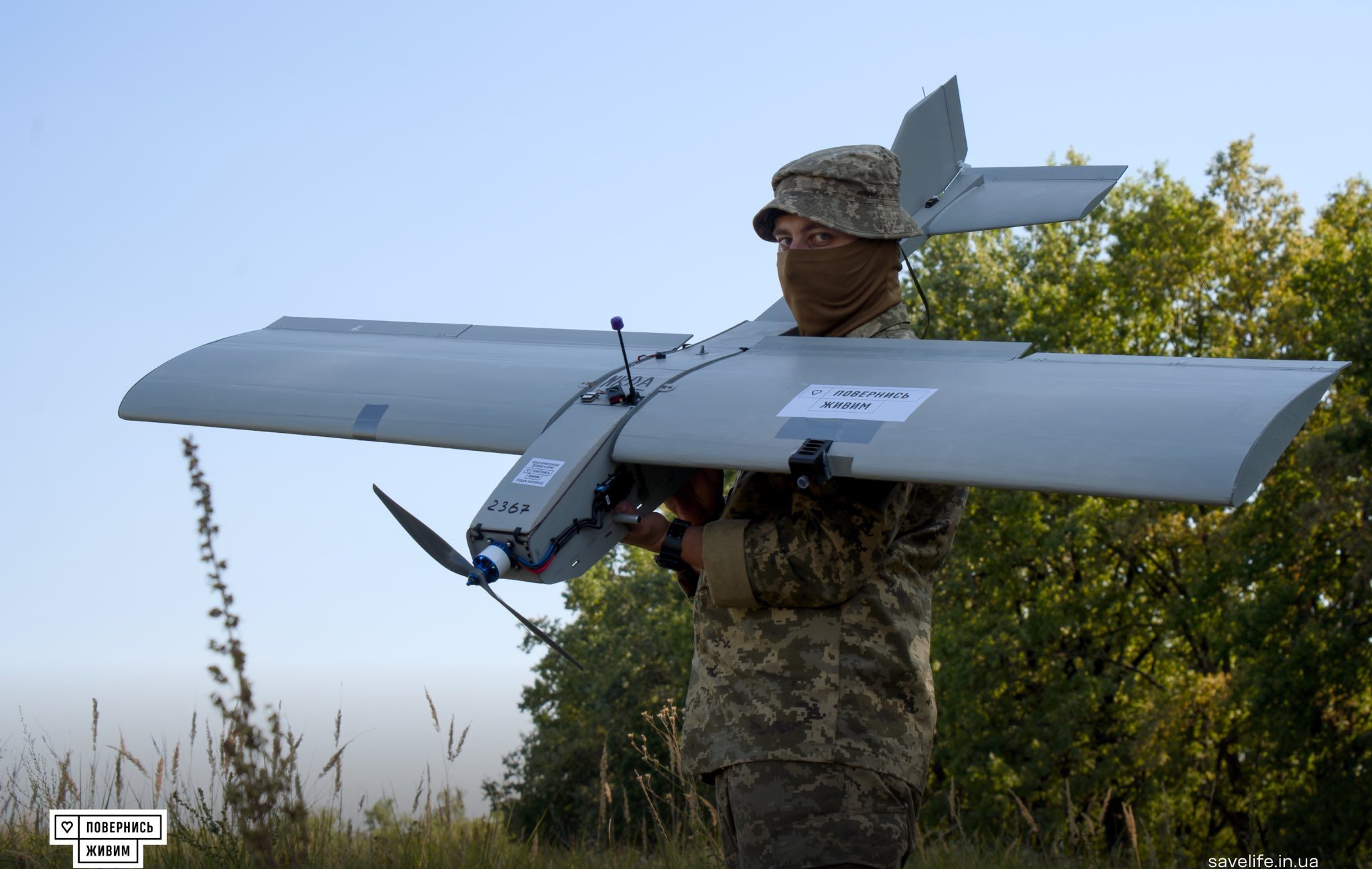
On 26 May, Volodymyr Zelenskyy signed a decree honoring a special forces unit as "Heroes of the UPA" — the Ukrainian Insurgent Army, which fought both Nazi Germany and the Soviet Union in WWII. In Ukraine, the UPA is often seen as an anti-Soviet resistance movement. In Poland, it is remembered for the 1943-1945 Volhynia massacres, in which the UPA killed up to 100,000 ethnic Poles.
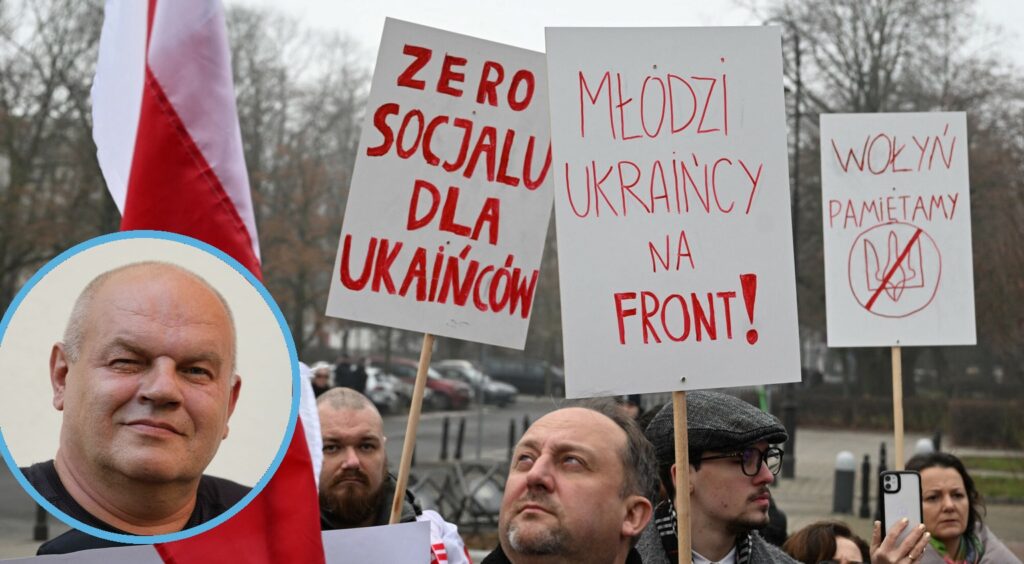
Within two weeks, the decree handed Poland's nationalist right a lever it had sought for years. The timing could hardly be worse. Poland is the land corridor for Western weapons, the host of some 1.5 million Ukrainian refugees, and one of the votes Kyiv needs to enter the EU. The quarrel over the decree now strains all three at once: weapons to Kyiv, Ukrainian refugees in Poland, and Ukraine's EU ambitions.
The damage is already visible where you would least expect it. Polish and Ukrainian forensic teams exhuming the Volhynia dead now keep cameras away from the graves, fearing images of the remains will be fed into Russian propaganda or AI deepfakes.
Citing Zelenskyy's decree naming a special operations unit for the "Heroes of the UPA," Polish President Karol Nawrocki announced on 29 May that he would seek to strip Zelenskyy of the Order of the White Eagle, Poland's highest state distinction, and put the question to the Order's Chapter. It took up the request on 8 June but broke up without deciding, leaving the dispute open.
The far-right Confederation party's Krzysztof Bosak called for blocking Ukraine's EU accession outright. Even Lech Wałęsa, the former Solidarity leader, publicly removed his Ukrainian flag pin, saying he would keep helping the Ukrainian people but would no longer support Zelenskyy.
Polish polls show strong support for President Nawrocki. Anti-Ukrainian graffiti has appeared on the walls of Drunken Cherry bars in Poland, calling them "zones infected with Banderism." The graffiti refers to Stepan Bandera, a Ukrainian nationalist whose name many Poles associate with wartime massacres. Attacks on Ukrainian youth are also rising: in May, five Polish teenagers were detained over a brutal Warsaw assault, which the city's mayor blamed on right-wing rhetoric.
On 3 June, Ukrainian Foreign Minister Andrii Sybiha urged restraint, asking Ukrainians and Poles not to "spin the flywheel of hatred."
Euromaidan Press spoke with Jerzy Wójcik, a Polish journalist and Ukraine advocate who co-founded Sestry.eu, a Polish-Ukrainian media platform for Ukrainian women, and co-organized Warmth from Poland for Kyiv, a winter 2026 campaign that raised more than $2.8 million for generators after Russian strikes on Ukraine's power grid.
Wójcik discussed the shift in Polish opinion, Warsaw's pressure on Kyiv, and why joint work to identify and rebury Volhynia victims may still offer a way out, even as political pressure complicates it.
Interview edited for length and clarity.
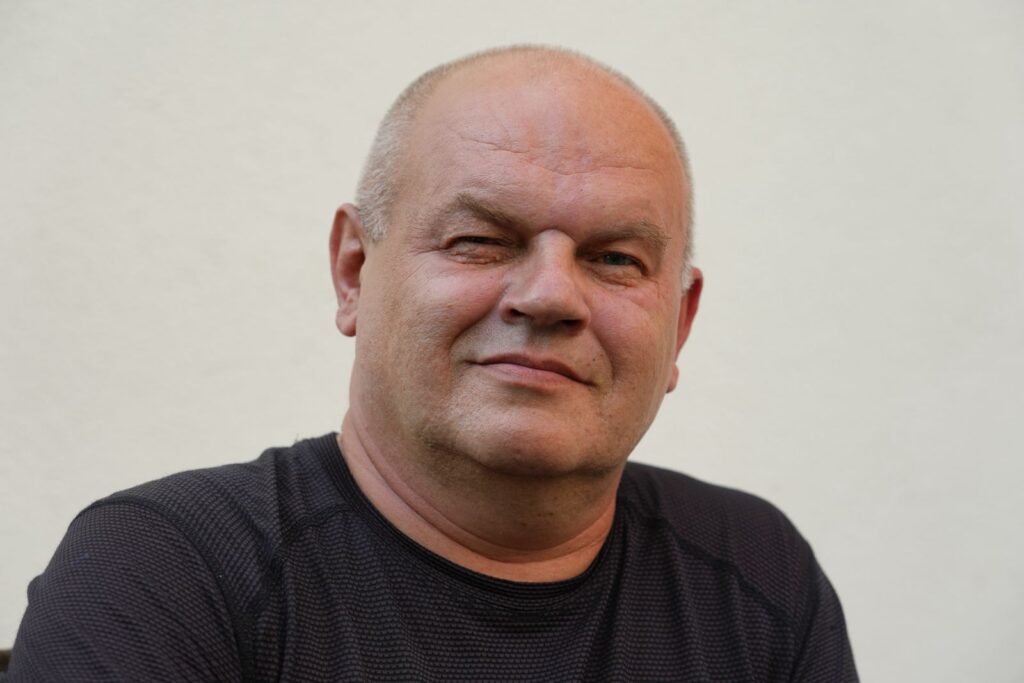
"I don't want to let this happen: a repeat of what happened in Germany before the Second World War."
— Jerzy Wójcik
Daniel Thomas: The Polish Institute of National Remembrance, which Nawrocki led, called the killing of Belarusian civilians genocidal in 2005 but walked back that characterization in 2019. Does that flip prove your hypocrisy charge against Nawrocki and other Polish right-wing nationalists, or does it just prove that every memory institution, Ukraine's included, bends history to current politics?
Jerzy Wójcik: I think there is something wrong with all these kinds of institutions, because they cannot be completely independent from current politics. There is no such thing as neutral history.
With the Polish IPN, it's a tragedy from the beginning, because they use the institution and history itself to win political battles.
I don't like Nawrocki. I think he is a cynical guy. Still, most Polish voters chose him, so I have no choice. But I remain very critical.
I got the results of the public opinion poll yesterday, and there is such a mental rush in the internet polls: 75% or something like that support Nawrocki's decision to strip Zelenskyy of the Order of the White Eagle [the Wprost / SW Research poll showed 52.3% support; the Res Futura social media analysis showed 97.4%].
I feel like I woke up in another country. It's scary. This could have a real impact on the lives of real people.
I mean Ukrainians in Poland. There have already been so many attacks on Ukrainian boys, beaten almost to death [during this war]. And now there's Nawrocki's statement, plus the right-wing supporters of [Grzegorz] Braun and Confederation.
It could have a tangible negative impact in the real world. Nobody normal-headed in Poland wakes up thinking about Bandera.
[The Ukrainian nationalist massacres were] 80 years ago. Who cares? It shouldn't be a concern.So I think it's a very dangerous game, not in symbolic terms, but in real-life aggression. I feel like anything could go wrong at any hour.
Can you imagine a Russian operation, a false flag provocation on Polish ground, pretending they are Ukrainian or some Bandera boys? It's easy to implement now because the social and mental priming is in place.
*Confederation is a far-right Polish alliance with anti-Ukrainian currents. Braun, a far-right MEP who leads the breakaway Confederation of the Polish Crown, is known for Ukrainophobic, antisemitic, and pro-Russian rhetoric.
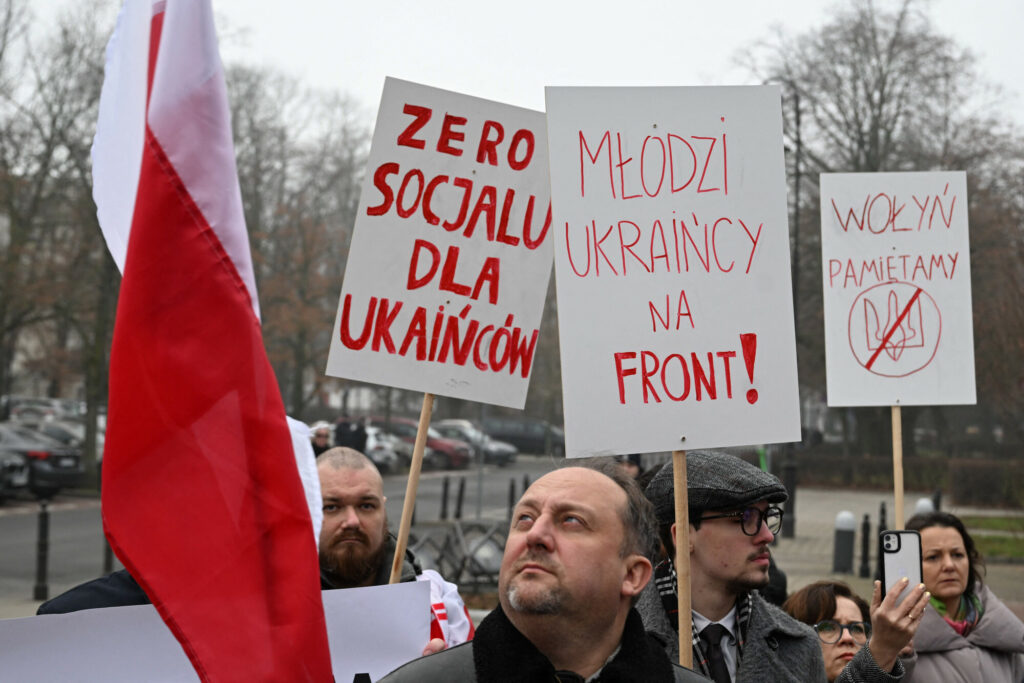
"There is no such thing as neutral history."
— Wójcik
Thomas: You say Poland won't drop Dmowski [an interwar Polish nationalist leader] or the Holy Cross Brigade [a Polish WWII partisan unit accused of Nazi collaboration] as heroes under outside pressure. So, on what grounds can Warsaw demand Kyiv drop Bandera?
Wójcik: Reality will win. As a society and as political entities, Poland and Ukraine need each other much more than both of these guys [Zelenskyy and Nawrocki] pretend. It's all theater now.
It's in Poland's interest to help Ukraine win the war, to protect Poland. Zelenskyy and the Ukrainian politicians could underestimate this. They have other potential partners: Germany, Scandinavia, New Zealand, and Australia. But Poland is the closest neighbor. You cannot send military tools via Romania or Slovakia at the same scale.
Ukraine has its citizens living in Poland. We cannot allow relations between our countries to fracture over one symbol, one word: “Bandera.” The two governments have to find a solution.
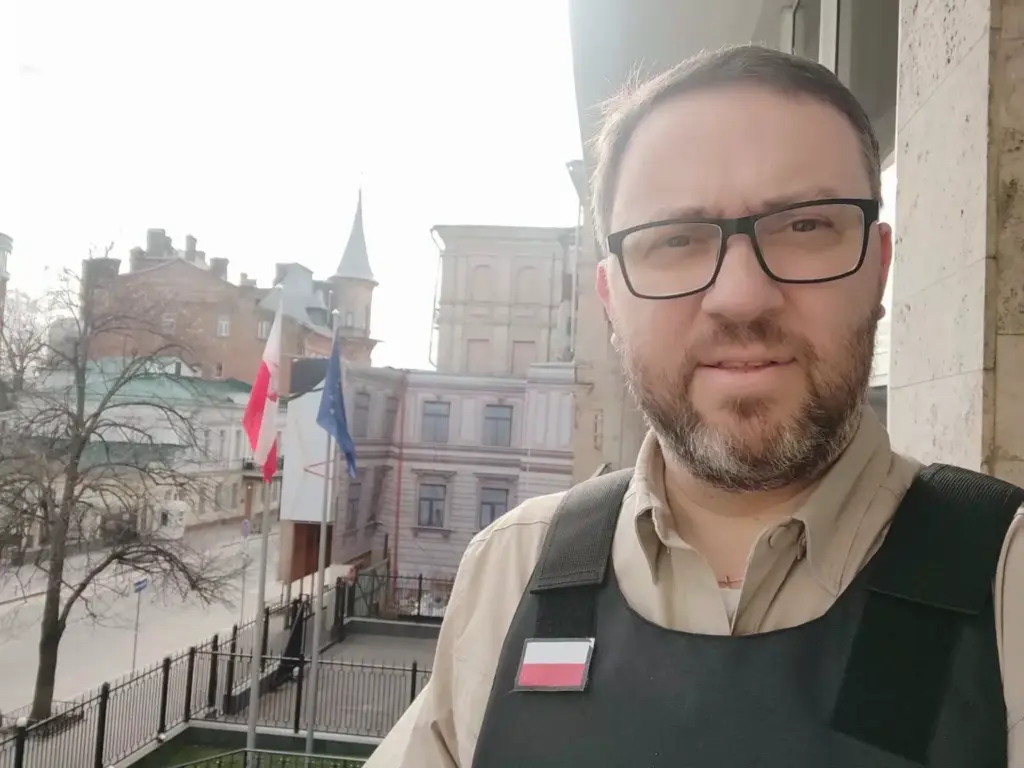
Thomas: Could the symbolic fight endanger practical cooperation on exhumations and identification work?
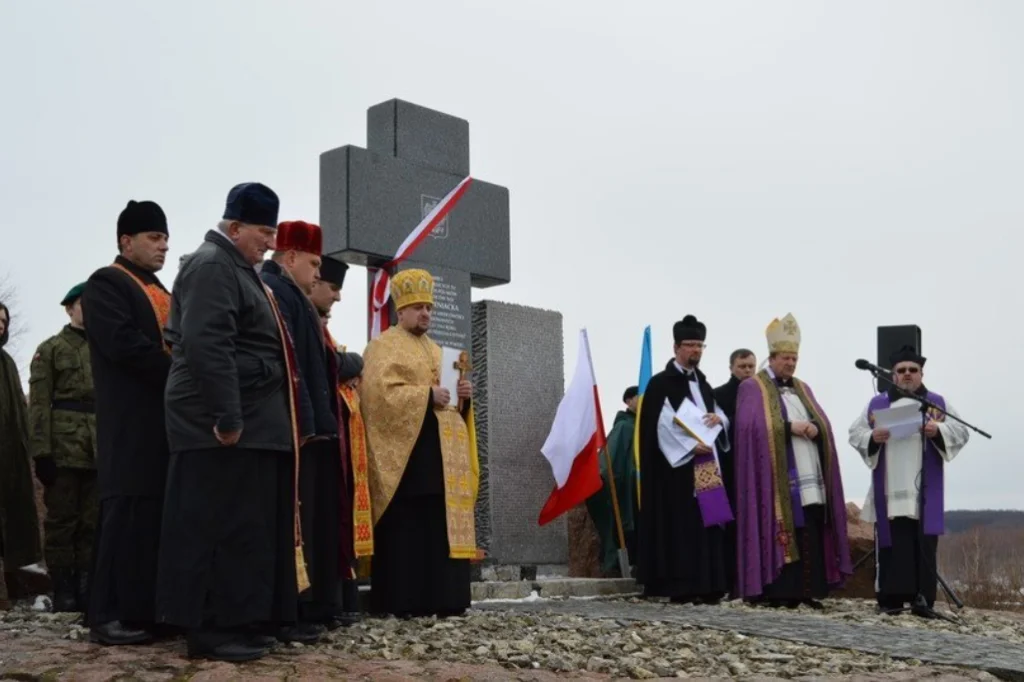
Wójcik: This is the part that should worry everyone, because the symbolism and the work are moving in opposite directions. The work is quietly winning. Look at what's already happened.
Puźniki, spring last year. At least forty-two people were exhumed and reburied at the Puźniki cemetery in September. Last autumn, Ukraine granted further exhumation permits.
Forensic specialists from Ukraine and Poland work in the same pit, and yet there are no incidents. They are reconciling faster than the politicians.
The danger isn't that the digging stops; it's that every reburial gets dragged in front of a microphone and turned into a demand, while the families want one thing: a name on the stone before they die themselves.
You can see it best in a single detail. The archaeologist running the Puźniki dig kept the press away from the site because she feared provocations. They had to hide the most healing thing happening between our two countries so nobody could turn it into a weapon.
And that's exactly where the symbolic fight does its damage: it doesn't stop the work; it forces the people doing it to behave like smugglers.
"Forensic specialists from Ukraine and Poland work in the same pit, and yet there are no incidents. They are reconciling faster than the politicians."
— Wójcik
Thomas: If Poland should support Ukraine for hard-security reasons regardless of history, should Kyiv avoid symbols that complicate support for Ukraine abroad?
Wójcik: I won't tell President Zelenskyy what to do, and still less the citizens of Ukraine. They're free people, in the middle of a war for their own existence, and the choice of whom they honor belongs to them. What I can do is describe the mechanics, because they work whether or not anyone likes them.
Symbols aren't decoration; they're strategy. Every hero a state puts on a pedestal is a sentence in a story other people read: a voter in Berlin, a congressman in Washington, a Pole deciding whether the man at the next desk is a guest or a threat.
Bandera on a street sign reads differently in those capitals than it reads in Kyiv. That's a fact about the world, not a verdict on Ukraine. Moscow sees it and uses it; that's simply how it is.
But elsewhere, Warsaw gets it wrong, and here I'm entirely sure which side I'm on: you cannot demand that a nation renounce its founding myths while it's bleeding, on someone else's schedule, as the price of help. The moment memory becomes a precondition, it stops being an argument and becomes blackmail. Any country with a shred of honor will dig in.
I am not telling Kyiv what to strike from its own memory. I am telling Warsaw what not to put a price on. Once you make someone else’s identity a condition, you do not weaken it. You harden it.
Thomas: Where does elite rhetoric become a real risk for Ukrainians living in Poland?
Wójcik: The moment it stops being about 1943 and starts being about the woman cleaning an office tonight. Historians arguing over the UPA? Fine, that's their job; let them fight.
The risk starts where "Banderite" stops, describing a man who died in 1959, and starts describing the nineteen-year-old in the back row. [Mateusz] Morawiecki floated the idea of deporting people for displaying Bandera symbols.
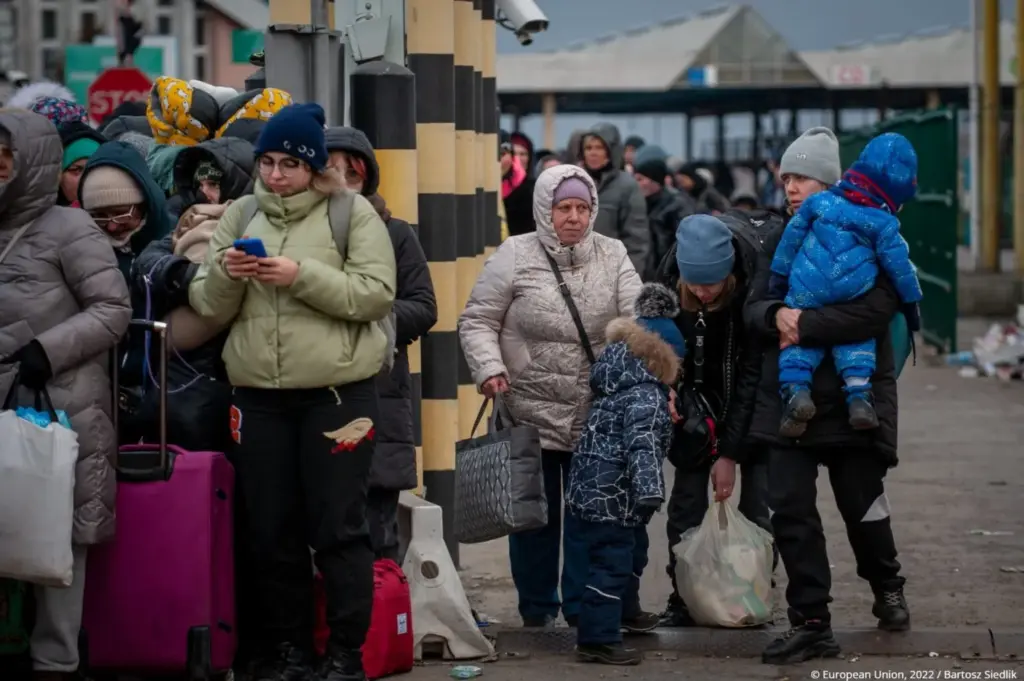
Think about how that lands on a teenager who fled a missile. She can't always tell you where the symbol ends and where she begins, and neither can the official ruling on her case.
So the line is simple: the risk appears where memory politics turns a million guests into a million suspects.
You don't even need a law for it. It's enough for the word "Ukrainian" to quietly start doing the work the word "Banderite" used to do.
"Few Ukrainians want to be told to rethink [their nation's history] while their country is under attack."
— Wójcik
Thomas: Is there a realistic off-ramp from this dispute, or is it now built into both countries' domestic politics?
Wójcik: The off-ramp exists — it's happening right now in the forensic teams' tents — but it's blocked, because both sides have found the quarrel too useful to give up.
For Nawrocki, Volhynia is both national identity and electoral politics. For some in Kyiv, the heroic story of Ukrainian nationalism has become part of wartime morale, and few Ukrainians want to be told to rethink that story while their country is under attack.
That is why goodwill alone will not solve the dispute. Neither government has much political space to back down.
The more realistic answer is to separate the issues. Let historians and forensic teams continue exhumations and reburials without political interference, and do not make Ukraine’s EU path depend on a dispute over 1943 that no summit can resolve.
The off-ramp isn't reconciliation. That word is too big and too soon. The off-ramp, for now, is separating what can be done with hands from what we quarrel over with mouths.
And further out, over a generation, the real prize: a shared founding story for a new Central Europe, where Poland and Ukraine are co-authors rather than prosecutor and defendant. Except that only becomes possible the day we stop letting the worst chapter of the shared past [Volhynia] write the next one [Polish-Ukrainian relations going forward]. Why do we let the worst chapter of [Ukraine and Poland's] shared past write the next one?

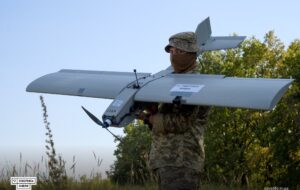 |
Ukrainian drones adopt focused antennas to slip by Russian detection. Reinforces connection and makes drones harder to clock |
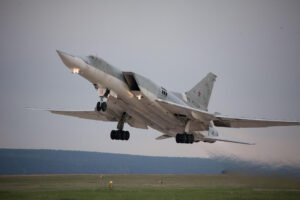 |
Russia's bombers hit harder with fewer planes. Their missiles now hide in drone swarms.. A Tu-22M3 crash in Irkutsk exposes a darker paradox: Russia's bomber fleet keeps shrinking, but Russia's bombing keeps getting smarter. |
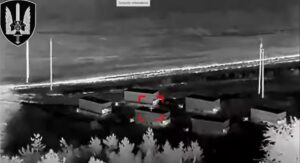 |
Russians deploy massive $1.5M Starlink jammers, Ukrainians are blowing them up. Bulky, powerful, flammable |
Ukraine found Russian artillery's weak spot and destroyed 250 systems in two nights. The barrel-destroying munition addresses a key tactical problem: standard drone or projectile hits often damage but don't permanently disable Russian artillery, allowing Russian forces to repair and return systems to combat.
Defense minister says Ukraine's drones are turning Crimea into an island. Mykhailo Fedorov ties the logistics blockade to a drop in Russian assaults — and warns of consequences he will not yet name.
Ukraine strikes sanctioned shadow fleet tanker FINA A in the Black Sea.
ISW: Zelenskyy keeps offering to meet Putin, the Kremlin keeps refusing. Zelenskyy wants talks with Putin before winter, possibly in the US. The Kremlin denies the latest offer was made.
Ukrainian marines bring frontline experience to NATO's Sea Breeze 26.1. Approximately 450 military personnel from seven countries are participating in the exercise led by the US Sixth Fleet from 2 to 20 June 2026.
Storm Shadow maker MBDA to develop Neptune-2 cruise missile with Ukraine's Luch. Europe's largest missile company attaches itself to the bureau that built the Moskva-killer.
Russia likely has one Oreshnik missile and is struggling to build more. More hype than viable weapon.
Ukraine develops blackout missile that plunges onto Russian grids from high-altitude balloons. Missile likely designed to target Russia's electrical grids with graphite filaments.
Ukraine just showed world its first homegrown glide bomb in Paris. Ukraine's first domestic guided glide bomb Vyrivniuvach made its public debut at the Eurosatory-2026 defense exhibition in Paris.
France is putting $22 million into Ukrainian defense tech. Deal comes with battlefield testing. The program will support joint Ukrainian-French development of drones, missile technologies, and air defense systems, with first competitions for companies scheduled for September 2026.
"It is we who must thank you," Dutch defense minister told Ukraine when announcing $590 million in aid for Kyiv. Dutch Defense Minister Dilan Yeşilgöz-Zegerius met with Ukrainian Defense Minister Mykhailo Fedorov.
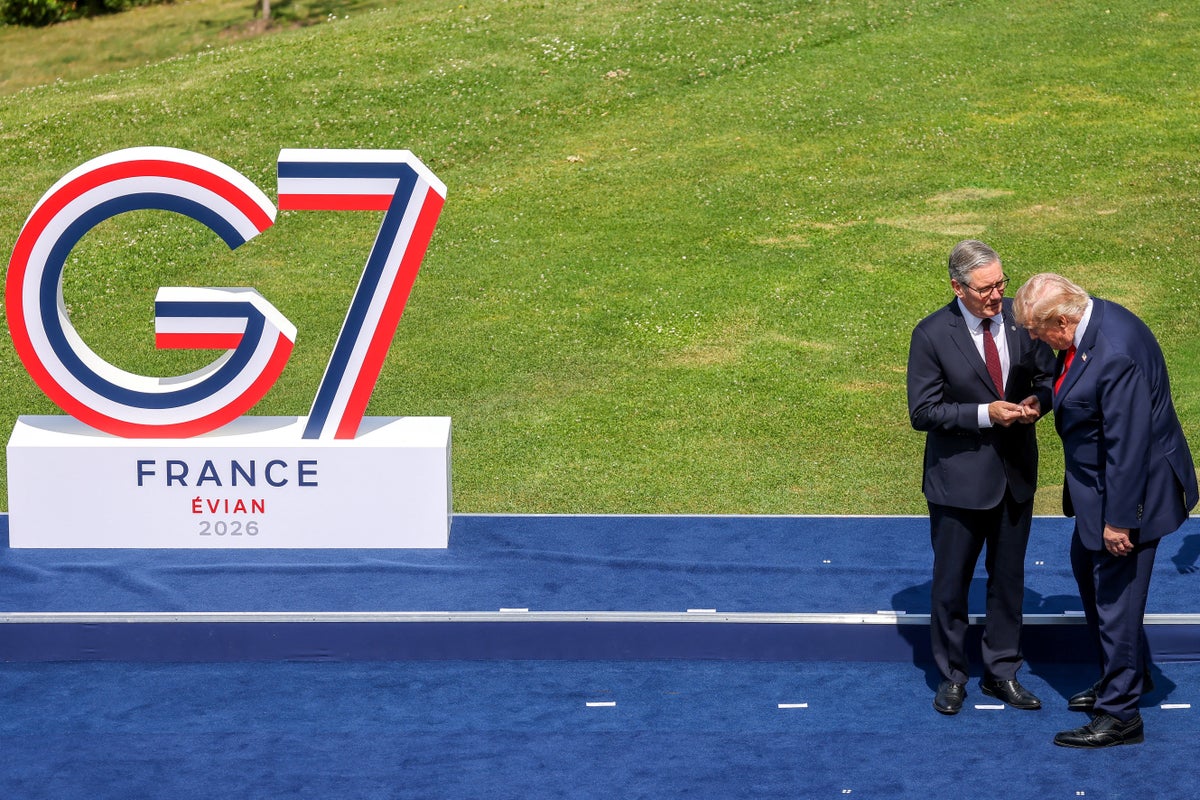
G7 leaders agree to boost Ukraine's air defense, weigh licensing missile production. Joint statement stops short of binding commitment on production licenses.
Russia plans to open eight new cultural centers in Africa to court a loyal generation, HUR says.
Ukraine and Albania sign road transport deal, opening freight "transport visa-free". Agreement makes Albania Ukraine's 37th direct-transport partner.
Latvia returns 19 sets of historical Ukrainian documents found in its archives. Latvia's National Archives has returned 19 sets of historical documents to Ukraine — records of German settler communities dating from 1860 to 1940.
Russian strikes kill four across Ukraine, hit children's riding school in Sumy. Drone kills three horses at the stable as attacks span five oblasts.
Russia's assembly line for Azov sentences gives two Ukrainian POWs 17 and 20 years in jail for defending Mariupol. The charges stem from the POWs' service in Azov, which Russia's Supreme Court designated a terrorist organization on 2 August 2022.
Russia's biggest oil company stopped selling gasoline in canisters nationwide after Ukraine's strikes. It blames "seasonal demand". Rosneft is capping drivers at 90 liters a fill.
Ukraine loses two pilots in Su-24M crash in Khmelnytskyi Oblast. One of the dead had been mobilized on 24 February 2022 and retrained on the Su-24M from a career as a test pilot.
Read our earlier daily review here.
Editorial: By offering Labour’s Makerfield candidate a role in government if he wins, the prime minister has shown how a faltering administration could yet be rebuilt. It would not look good to spurn such a substantive opportunity to serve both party and country
© AFP/Getty


© Blaise Cepis for The New York Times


© Blaise Cepis for The New York Times
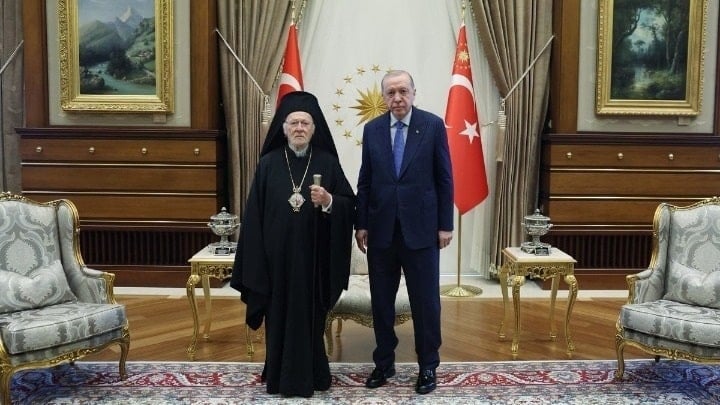
Ecumenical Patriarch Bartholomew and Turkish President Recep Tayyip Erdogan held a highly anticipated meeting on Tuesday in Ankara to discuss the prospective reopening of the Holy Theological School of Halki.
According to an official statement from the Ecumenical Patriarchate, the discussions were held in a “cordial atmosphere,” focusing on long-standing issues concerning the Greek Orthodox community in Istanbul. Most notably, the dialogue centered on concrete steps to revive the historic seminary, a process now being actively negotiated among Turkey’s Ministry of National Education, the Council of Higher Education (YÖK), and the Patriarchate.
While the meeting marks a significant diplomatic thaw domestically, insiders note that the sudden momentum behind the talks is deeply tied to political pressure radiating from Washington, specifically via US President Donald Trump, who is expected to visit Ankara (and, perhaps, Athens) in July.
The groundwork for Tuesday’s breakthrough was largely laid during a high-stakes, two-hour meeting at the White House between President Trump and President Erdogan last September. During their joint Oval Office press conference, the reopening of Halki was thrust into the international spotlight as a major bargaining chip in US–Turkey relations.
President Trump revealed that he had personally hosted Ecumenical Patriarch Bartholomew at the White House just days prior, when the leader of global Orthodoxy requested American intervention. “The Greek Orthodox Church was here and they would really like some help, and I said I would bring it up,” Trump told reporters with Erdogan sitting beside him.
Erdogan publicly acknowledged to reporters that the reopening of Halki was on the table, stating that Turkey was “ready to do whatever we can on our side” following direct coordination with Patriarch Bartholomew.
The Holy Theological School of Halki, perched atop a hill on the island of Heybeliada near Istanbul, has been a painful point of contention for over half a century. Established in 1844, it served as the main theological school for the Ecumenical Patriarchate of Constantinople, training generations of Orthodox bishops and Patriarchs.
However, in 1971, the seminary was forced to shut its doors after the Turkish parliament passed a law banning private institutions of higher education, effectively nationalizing or closing religious schools. For fifty-five years, the closure has throttled the Ecumenical Patriarchate’s ability to train new clergy locally, threatening the long-term survival of the spiritual center of the world’s three hundred million Orthodox Christians.
Related: Greek Orthodox Halki Seminary in Turkey Nears Inauguration Despite Uncertainty
Editorial: Whoever succeeds the prime minister must prove they can deliver the change he has been unable to muster
© Reuters

|
Ukrainian drones adopt focused antennas to slip by Russian detection. Reinforces connection and makes drones harder to clock |
|
Russia's bombers hit harder with fewer planes. Their missiles now hide in drone swarms.. A Tu-22M3 crash in Irkutsk exposes a darker paradox: Russia's bomber fleet keeps shrinking, but Russia's bombing keeps getting smarter. |
|
Russians deploy massive $1.5M Starlink jammers, Ukrainians are blowing them up. Bulky, powerful, flammable |
 |
Russia quietly lets refiners sell lower-grade Euro-3 fuel as drone strikes squeeze supply. A rule eased since last autumn now allows gasoline to contain 15 times the EU sulfur limit, as rationing spreads across Russia. |
 |
Fuel shortages reach Moscow and St. Petersburg as Ukraine's strikes squeeze Russian refining. Filling-station limits, jet-fuel curbs, and farmers short of diesel now span over 25 Russian regions. |
 |
Ukraine's newest Abrams brigade just built the "dumbest" tank cage of the war. In 2026, that barely matters.. The 160th Mechanized Brigade is an odd choice to operate some of Ukraine's approximately 50 surviving M-1 tanks. |
 |
Russia won't start a nuclear war. It might cause a nuclear disaster.. For the first time in history, a major war is being fought around 15 nuclear reactors. The West fears a Russian strike; the real danger is the disaster it has chosen not to see. |
Russia started war with 41 Tu-22M3 irreplaceable bombers. It may have nine left. Russia stopped producing the Tu-22 in all variants in 1993, with no replacement program planned, leaving surviving bombers irreplaceable as combat losses and accidents mount.
Ukraine struck Chonhar bridge to cut fuel to Russia's 37th brigade. Its battalion commander died by suicide days later. The Ukrainian unit claims Russian command pressured Munkuyev to execute combat tasks.
Ukraine strikes Krasnodar fuel depot as Russia's gasoline crisis widens. The depot fed filling stations in a region that ran dry weeks ago.
Ukraine strikes Moscow's largest oil refinery, 15 kilometers from the Kremlin. Putin pulled nearly all of Russia's key air defense to the capital. It was not enough.
Estonia's defense commander went to Ukrainian front line. Ukraine says partners need to see real situation themselves. Syrskyi separately met with brigade commanders to discuss Russian operations, current threats, and Ukrainian reinforcement options.
At world's top defense exhibition in Paris, Ukraine and Sweden agree to mass-produce combat robot born on frontline. The partnership scales production of the MAUL casualty evacuation, logistics, and ammunition delivery platform.
Ukraine built 90% of its newly authorized weapons itself. Year ago, it was 70%. Of the 1,000 samples authorized, 892 are produced in Ukraine.
Missiles Ukraine uses to shoot down Russia's ballistic missiles are in short supply. Canada and Ukraine talked about fixing that. The ministers also discussed expanded Canadian investment in Ukrainian drone production and the procurement of long-range artillery ammunition through the Czech Initiative.
Britain to supply enriched uranium to Ukraine's reactors in $282 million deal. Fuel pledge aims to keep the grid running through winter.
Canada hits Russia with new sanctions at G7, a day after Lavra strike. Carney condemns the monastery attack and targets Russia's shadow fleet and energy revenues.
Zelenskyy at G7: Trump "positive" on missile licenses, but Europe needs a cheaper option. Washington's interceptor lines are stretched, and Zelenskyy wants Europe building its own.
Russian artist who mocked Putin warned about threats on Telegram. Hours later, gunman shot him three times in Poland. Russian opposition artist Semyon Skrepetsky (real name Robert Kuzovkov), 44, was shot dead on Monday 15 June in a residential parking lot in Biała Podlaska, eastern Poland, at around 10 a.m.
Read our earlier daily review here.
Ukrainian forces have many tools in their arsenal to make sure the warheads meet their appointed foreheads—or trucks, trains, ferries, forward bases, and air defenses. Of all these tools, Starlink is one of the most problematic for the Russians because it’s reliable and jam-resistant.
Still, it’s not jam-proof. The Russians have again begun deploying giant jammers, such as the Volna Kupol Garant, which can disrupt a satellite signal and protect an area of 20 square kilometers, Defense Ministry adviser Serhiy “Flash” Beskrestnov posted on 16 June.
There are two problems though. The first is that they cost $1.5 million per system, require massive amounts of power, and are giant, having to be dragged around on six trailers.
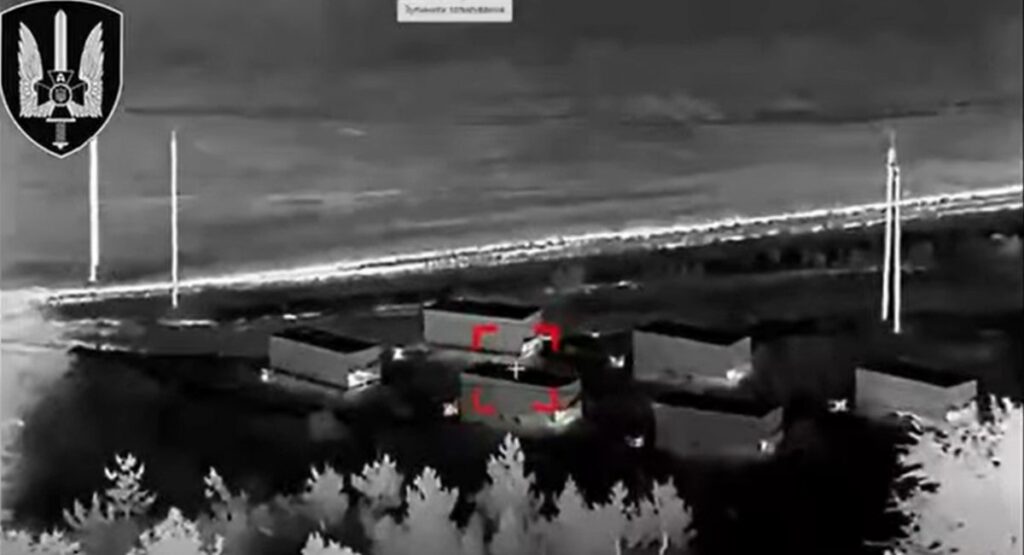
Which leads into the second: they’re being hunted and destroyed, as one was by the Security Service of Ukraine and the 422nd Separate Unmanned Systems Battalion Luftwaffe on 14 June.
In the 422nd’s video of the strike, a Ukrainian strike drone maintains a perfect, uninterrupted video feed as it flies into the cluster of six trailers, while an observation drone nearby records the explosion.
—
The
422nd Unmanned Systems Regiment “LUFTWAFFE” of the 17th Army Corps and the Special Operations Centre “A” of the Security Service of
Russian electronic warfare (EW) station in the southern direction.
This station was designed to jam Starlink… pic.twitter.com/gH0f5ImoyDMilitaryNewsUA
“The first case of suppression of Starlink by the enemy was recorded in 2024 in the Kharkiv direction,” Flash wrote. It was “quickly detected by the Ukrainian military and destroyed. Until 2026, there were no mass attempts to repeat its use.”
Even if it’s effective at disabling Starlink in an area, the Volna Kupol Garant and its ilk appear not to actually offer any kind of guarantee against Ukrainian attacks. Even when intact, they appear very expensive and cumbersome for the amount of coverage they provide. Also, while Starlink has been a massive lifeline for Ukraine, it’s just one of the tools at Kyiv’s disposal.
“New systems are already entering service whose capabilities the enemy is entirely unaware of,” the Azov Corps told Euromaidan Press on 13 June. “They have a substantially greater range and are equipped with next-generation communications systems.”
Starlink makes it less likely that a UAV will lose signal to the operator and improves the odds of an uninterrupted live video feed to the pilot, who can be anywhere in the world and react in real time.
Starlink connections also run at much higher frequency ranges than most drones controlled from the ground. To jam a connection, an EW system should match the target frequency. The higher the frequency, the more complex the jamming solution has to be.
Most drones are controlled at single-digit gigahertz ranges. Starlink can operate between 11 and 20 GHz, Ukrainian engineers previously told Euromaidan Press—Flash put the range at 14-14.5 GHz.
Finally, Starlink points straight up at space, making these waves harder for ground-based EW and radar systems to interfere and detect them, respectively.
The Volna Kupol Garant works through a series of satellite antennas that point at passing satellites overhead, according to Flash.
“The system emits powerful interference from Earth to the satellite, so that the satellite does not hear signals from conventional terminals,” he wrote.
Since Starlink’s range is divided into eight channels spaced at specific bandwidths apart, the Russians “took eight satellite ‘dishes,’ directed them at the satellite, and each ‘dish’ transmits interference on that channel. That’s it. The satellite is ‘deaf.’”
If the system can only jam one overhead Starlink satellite at a time, that could mean its utility is limited, as SpaceX has 10,000 satellites in orbit. Drones in flight can “jump” between them, as the Russians showed when they used to mount Starlink terminals on Shahed attack drones before Ukraine and SpaceX booted them off the service in February.
And even if it does work, Ukrainian forces have shown that it presents a very juicy target that costs a lot of money to the Russian military.
"The gentlemen from Russian Dome (the company that makes this system) managed to sell these products to the army for $1.5 million apiece," Flash wrote. "This is simply a fairytale."


|
The 160th Mechanized Brigade's M-1 tanks might not shoot very well. Does it matter?. The 160th Mechanized Brigade is an odd choice to operate some of Ukraine's approximately 50 surviving M-1 tanks. |
|
Russia won't start a nuclear war. It might cause a nuclear disaster.. For the first time in history, a major war is being fought around 15 nuclear reactors. The West fears a Russian strike; the real danger is the disaster it has chosen not to see. |
 |
Russia may soon have more tanks than pre-war. It just can't use them.. To do it, Russia revived "previously unrecoverable" Soviet engines. The drones that destroyed the originals haven't gone anywhere. |
 |
Russia poured 46% of its budget into the military in early 2026 even as revenue fell — ISW. Moscow promised to cut war spending in 2026. It raised it 30% instead, according to an expert's assessment. |
At Paris top defense exhibition, Ukraine unveiled 10-ton Sea Trident that can hunt underwater drones. Sea Trident has a 10,000-kg displacement and a 2,000 nautical mile range.
Netherlands transfers sixth mine countermeasures vessel to Ukraine—named Henichesk after ship sunk in 2022. Ukrainian Navy commander Oleksii Neizhpapa raised the fleet flag at the handover ceremony attended by five allied naval commanders on 15 June.
Latvia's defense minister brings 14 British-made combat vehicles to Ukraine's frontline "from box". Anti-FPV drone protection systems will be additionally installed on the vehicles. Latvia previously transferred 42 Patria armored personnel carriers to Ukraine.
Ukraine hits two northeastern bridges to occupied Crimea overnight again to cut a main supply road. A Russia-installed official claimed the Dzhankoi crossing was shut, later announced its reopening, while a Ukrainian source said cars were routed over a temporary pontoon.
"Not a coincidence": Russia waited to launch its mass strike on Ukraine until Putin congratulated Trump on his birthday, says Zelenskyy. Zelenskyy promised that Ukraine will give its response to the assault.
Macron wants Washington to tell Ukraine "we are with you" as the G7 summit in Évian. Europeans now shoulder nearly the entire burden of Kyiv's war effort, while America still provides weapons and intelligence, France's president said on 15 June.
Kallas calls the Lavra attack a war crime and announces new EU sanctions. The Foreign Affairs Council listed 34 individuals and 47 entities, including Lukoil-Western Siberia, two Chinese drone-component suppliers, the Kremlin's Presidential Fund for Cultural Initiatives, and 15 people tied to Alexei Navalny's persecution and death.
France compares Lavra strike to bombing Notre-Dame, calls for tougher sanctions. France's foreign minister compared the monastery strike to bombing Notre-Dame, as EU officials convened in Luxembourg on 15 June.
Russia hit Kyiv's 1,000-year-old monastery, then launched disinformation campaign with five different scenarios. Ukraine has seen this playbook in Mariupol. Russian sources are blaming Ukraine for the fire at the Kyiv-Pechersk Lavra (a UNESCO World Heritage site), calling it "Ukrainian provocation" or "self-arson."
Russia has damaged or destroyed nearly 2,000 Ukrainian cultural heritage sites since 2022 — prosecutor general calls Lavra strike "deliberate erasure". Moscow's forces have looted over 7.8 million artifacts from museums in occupied territory since 2014, Ukraine's chief legal authority reported on 15 June 2026.
Russia set fire to the Kyiv monastery where Moscow's founder is buried. A Russian strike ignited the Dormition Cathedral; officials say it likely scored a direct hit.
Nearly 42,000 Kyiv residents sheltered in metro during overnight Russian attack, including 3,400 children. All 46 underground stations stayed open through the night as Russia launched 681 aerial weapons at Ukraine.
Russia kills 5 in Kyiv, injuries 35 in overnight strike with 681 weapons—including six Zircons. Emergency services worked across roughly 50 sites in the capital after fires broke out in nearly every district.
Russia kills four firefighters in Kharkiv hitting the same spot twice in one night. All four served in the city's 6th State Fire and Rescue Unit, and their service mourned men it called heroes who carried no weapons.
Russian drone strike on Dnipro damages organ music house, college, and injures one. A 64-year-old man was hospitalized in moderate condition after the overnight attack, which also sparked a fire at a local enterprise.
Read our earlier daily review here.