Normal view

Emperor Otto the Great’s Tomb Yields New Clues During Cathedral Restoration

12 June 2026 at 21:31
Tomb of Otto I in Magdeburg Cathedral
Tomb of Otto I in Magdeburg Cathedral. Credit: Mar Yung / Wikimedia Commons / CC BY 2.0

Conservation experts and archaeologists are uncovering new details about the tomb of Emperor Otto I while carrying out an extensive restoration project at Magdeburg Cathedral.

Since January 2025, the Saxony-Anhalt Cultural Foundation and the State Office for Heritage Management and Archaeology have led efforts to preserve the heavily damaged burial site of Otto the Great, the 10th-century ruler who laid the foundations of the Holy Roman Empire.

Excavations uncover clues to the tomb’s history

The relocation of the sarcophagus also allowed archaeologists to investigate its foundation for the first time. Excavations revealed large sandstone blocks beneath the tomb, including reused building stones marked by late medieval stonemasons. The findings suggest that the sarcophagus was moved several times over the centuries.

Excavations produced numerous artifacts, including coins, glass beads, ceramics, roof tiles, clothing pins, and fragments of painted plaster from earlier cathedral structures. Researchers also uncovered a lead bullet beneath the floor, reflecting Magdeburg’s turbulent history.

Archaeologists restoring the tomb of Emperor Otto I in Magdeburg Cathedral have uncovered medieval foundations, underground passages and centuries-old artifacts. pic.twitter.com/B1PNeRTlwq

— Tom Marvolo Riddle (@tom_riddle2025) June 12, 2026

Researchers also uncovered layers of rubble linked to medieval and early modern construction activities in the cathedral’s High Choir. A network of underground passages, some possibly dating to the Middle Ages, was also documented.

Despite the discoveries, archaeologists found no evidence showing whether Otto I’s tomb occupied the same location in an earlier cathedral that once stood on the site. The original placement of the emperor’s burial, therefore, remains uncertain.

Damage prompted conservation efforts

Otto I, who was crowned emperor in 962, established one of medieval Europe’s most powerful empires. His tomb in Magdeburg Cathedral is considered one of Germany’s most important medieval monuments.

The project began after routine inspections in 2024 revealed serious deterioration in the emperor’s tomb. Researchers identified several threats to the monument, including corroded iron fittings, rising moisture from the ground, and fluctuating humidity levels inside the cathedral.

Scientific analyses confirm the emperor’s remains

As part of the conservation work, experts carried out extensive non-invasive documentation of the sarcophagus and its surroundings. The marble cover slab, weighing about 300 kilograms (660 pounds), was removed so researchers could examine the damaged wooden coffin inside.

Anthropological and genetic analyses later confirmed that the human remains belonged to Otto I, supporting centuries-old historical accounts of his burial at the cathedral.

The emperor’s remains are scheduled to be reinterred on Sept. 1, 2026, in a newly designed coffin currently being created through a competition organized by the Saxony-Anhalt Art Foundation.

Restoration work addresses long-term damage

To protect the monument for the future, conservation teams moved the limestone sarcophagus from its original location in early 2026 using a specially designed transport structure. The sarcophagus now sits inside a secure enclosure within the cathedral, where restoration work is underway.

Specialists are removing corroded iron nails and clamps, many believed to date to the 19th century. As the metal rusted over time, it expanded and placed pressure on the stone, increasing the risk of cracking. Conservators are also removing harmful iron residues from the marble cover slab.

Cathedral remains open during conservation work

Church services continue as normal during the project, while visitors can still view major features of the cathedral, including the High Choir and its famous 13th-century sculptures. Officials said the public will continue to receive updates as restoration and research progress.

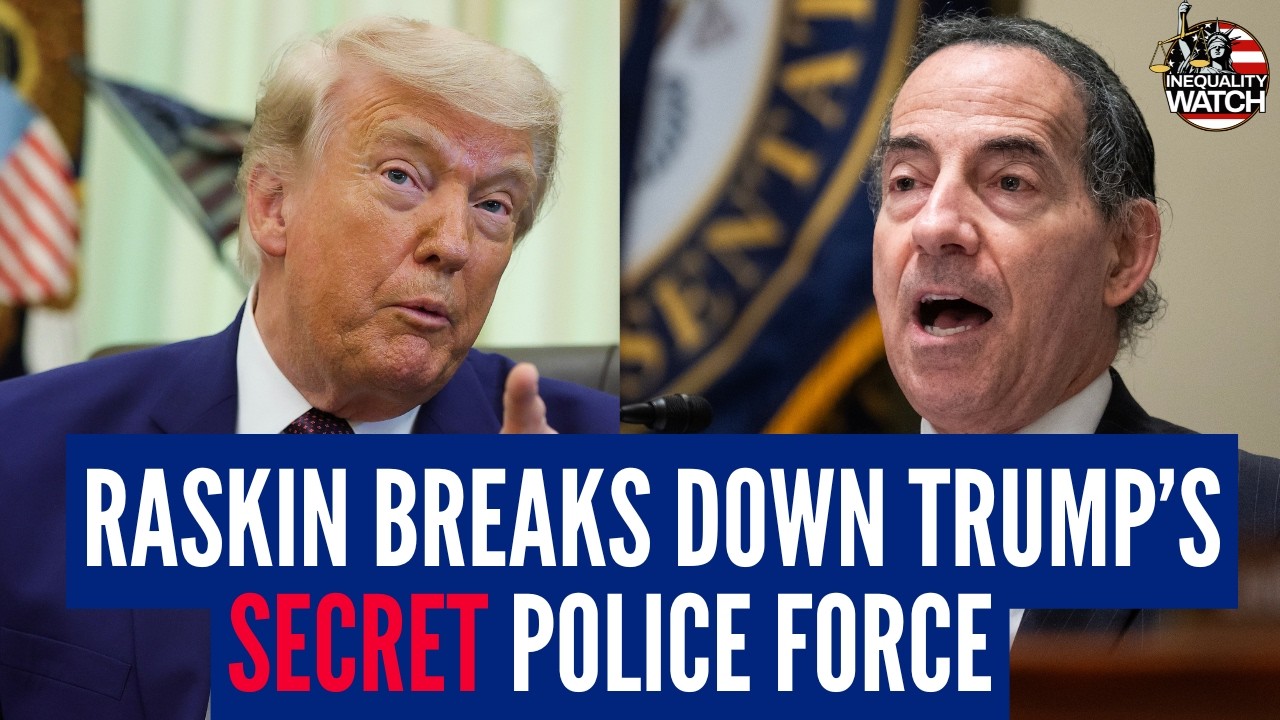
Raskin: ICE is acting like a secret paramilitary police force for the president

Rep. Jamie Raskin, D-Md., speaks during the House Administration Committee hearing titled "Preventing Fraudulent Donations: Transparency, Verification, and Accountability," in Longworth building on Wednesday, June 10, 2026. Tom Williams/CQ-Roll Call, Inc via Getty Images

As part of our continuing coverage of Trump’s multi-pronged push to interfere with the upcoming midterm elections, we have been talking to a variety of voices on what they fear most from the administration. In this discussion with Democratic Congressman Jamie Raskin, he accuses the Trump administration of constructing a private police force within the federal government and seeking to fund an extrajudicial efforts to also interfere with free and fair elections.

Credits:

  • Production: Taya Graham/Stephen Janis
  • Post-Production: David Hebden
Transcript

The following is a rushed transcript and may contain errors. It will be updated as soon as possible.

Stephen Janis:

At the Real News Network, we have been covering the threat to midterm elections. Now, we came to the Networks Conference here in Philadelphia, Pennsylvania to speak to Congressman Jamie Raskin. When he told us about what he thinks might happen in November should scare all of us. You know, you introduced a Blanche Act, is that what it’s called? Yes. Yeah. So the Senate just passed the reconciliation bill and did nothing to it. So what are your thoughts at this moment that can be done to prevent it and what are your concerns about this slush fund that has been proposed by the Trump administration?

Rep. Jamie Raskin:

Well, the vast majority of Americans reject the idea that the Trump regime should be able to take 1.776 billion of taxpayer money and give it to convicted criminals, Proud Boys and Oath Keepers and other extremists who tried to storm or who stormed the Capitol and tried to overthrow a presidential election. It’s outrageous and it violates about a dozen different federal laws and constitutional provisions. So we need to pass legislation to block it and also to block the other part that they’re trying to sneak through, which is a lifelong immunity from criminal civil tax prosecution of Donald Trump or his family or his businesses for crimes and civil offenses that they’ve committed up until this point.

Stephen Janis:

Is this personal for you? I mean, you were there and the idea that they would pay the people that tried to overturn the election. Does this affect you in a personal way?

Rep. Jamie Raskin:

Democracy is personal to me and fascism is personal to me and I think it should be personal to everybody. I mean, they want to destroy our basic institutions in the country. They want to destroy the freedom of press. They want to control the media. So they put minders and spies into CBS in 60 minutes. They want to take over. They denounced the mainstream of media just so they could take over the mainstream media and make it their official state propaganda apparatus. They’re trampling the freedom of press. They’re attacking the separation of church and state. I was on the floor. One of their guys got up and said the moral downfall of America was 1962 when the Supreme Court banned prayer in the public schools. And I got up and I said, the Supreme Court never banned prayer in the public schools. As long as there are pop math quizzes, there will be prayer in the public schools.

Anybody can pray whenever he or she wants to, but what they want is the government writing out religious scripts and then compelling your children to participate in it. So literally our entire Constitution and Bill of Rights are being demolished by these people and they want to turn us into a mafia state, a gangster state.

Stephen Janis:

Now, looking forward to the midterms. There’s a lot of pretextual stuff, the Trump administration, subpoenaing ballots in Wayne County or taking ballots in Fullton County. Is that a playbook they’re trying to roll out by having all these pre-elections sort of cast enough doubts so they can so chaos? What are your concerns about the midterm election and Trump administration interference?

Rep. Jamie Raskin:

Yeah. I mean, people ask me like, “Are they going to try and steal the election?” I say, “No, they’re not going to try and steal the election.” They’re trying to steal the election. Every day we’ve got lawyers all over America from the NAACP Legal Defense Fund, ACLU, Mark Elias fighting every one of these operations, which is an attempt to steal the election when they say, “Oh, we’re going to throw everybody off the rolls who missed voting an election, or when they’re closing polling places throughout Texas.” All of these voter suppression mechanisms are an attempt to steal the election. But I also want to say we have never been better mobilized and we’ve never had better lawyers engaged out in the field. We’ve never had a stronger civil society infrastructure fighting back, which is why they’re attacking the civil society infrastructure. We just had a hearing two weeks ago.

We’ve got another hearing this week. They’re trying to bring down the Southern Poverty Law Center, which is our major group fighting the Ku Klux Klan and the Aryan nations and the neo-Nazi right. They’re trying to destroy it saying that the Southern Poverty Law Center defrauds its own donors because they send people undercover into the extremist groups to find out what’s happening so they can prevent the next attack on a church or a synagogue or the Oklahoma federal building or what have you. That’s who the Trump Department of Justice is going after. That’s who Todd Blanche wants to attack the anti-Klan fighters.

Stephen Janis:

Now let me ask you a question. We spent a lot of time covering this reconciliation. They gave ICE and CBP $70 billion with no explanation. We ask Republicans why. What do you think that money’s for? Because I still has like $70 billion in the bank. Why do they need $70 billion? What are your concerns about that?

Rep. Jamie Raskin:

Well, this is what’s very concerning because if you talk to historians of fascism, they will tell you that what authoritarians do, what fascists try and do is build up a paramilitary force within the government and also one outside of the government. So that’s the meaning of this $1.8 billion political slush fund meant for the extreme right political foot soldiers who attacked our police officers on January 6th, 2021, attacked the Congres, attacked the vice president. That’s the outside version, but ICE is acting like a paramilitary secret police force reporting to the president of the United States and they have killed American citizens like Renee Goode and Alex Pretty. And just like we know dozens of people have died in ICE detention. So that is not a decent sane civilized immigration policy. We’ve got to make it a lot harder for people to get into the country illegally, but a lot easier for people to get into the country legally and we cannot use the immigration crisis the Republicans have created as the excuse for them to set up a paramilitary police force inside our government.

Stephen Janis:

So from the Epstein perspective, Estee files, you’ve been intimately involved in that. What do you think we haven’t seen yet? What do you think could be coming? We had that crucial testimony coming on Tuesday before the oversight committee. What do you think we haven’t seen or what’s to come?

Rep. Jamie Raskin:

Well, we need further legislation to strengthen the Epstein-Files Transparency Act. We need legislation that is going to actually make them turn over the documents and to stop hiding them. We have to keep passing laws to try to get them to comply with the law. It is difficult, but we’ve got to keep this very much in the forefront of people’s consciousness. There’s a culture to authoritarianism. There’s a politics to it, but there’s a culture to it. And the culture to it is all about authoritarian misogyny and sexual violence and sexual harassment and sexual assault. And this administration has been doing everything in their power to dismantle the infrastructure that we have to try to support victims of sexual violence and victims of sexual assault and sexual harassment. So the Epstein case is critical for us to keep moving forward on exposing this culture and then standing by the victims and the survivors of sexual violence and sexual assault.

Stephen Janis:

And do you think there’s something in the other three million files that is going to be important for the public to see and do you think there’ll be evidence there they’re hiding right now?

Rep. Jamie Raskin:

Absolutely. They were supposed to turn over six million files. They’ve withheld three million. There are completely scandalous and outrageous things we’re finding in the three million. They did turn over, but the files that they haven’t turned over undoubtedly contain more information that will implicate this administration and lots of names that we know in truly shameful and scandalous actions. But we’ve got to make sure that the victims are heard and the victims and the survivors have been critical in moving this process along. That’s a model, by the way, for every sector of public life. We’ve got to hear from the people who are being hurt, the millions of people being hurt by being thrown off of Medicaid or being thrown off of the Affordable Care Act, tax credits. We’ve got to hear from the people in the media about the crackdown like at ABC with Jimmy Kimmel.

People have got to speak up. The victims and the targets of government oppression have got to strike the first blow against this onslaught.

Stephen Janis:

Last question. Grand Planner, did you endorse him? Are you going to endorse him? And if so, why do you think people are … A lot of progressives, the Democrats get skittish about progressives you have not been. How do you feel about Grand Platner now? What are your thoughts?

Rep. Jamie Raskin:

Well, I’ve not made formal endorsements there. I would say I think that Graham Platner’s politics are right for this time. They are a working class centered politics of progressive change. That’s what we need. He has spoken about how damaging his time was psychologically and emotionally, and he came back a damaged person and damaged people, damage other people. And so there have been problems with that. But having said that, this is really a question for the people of Maine. Has Graham been able to show people that he’s been able to learn from the experiences that he’s had and the transgressions that he’s committed? And that’s what we can demand of him. That’s what we can expect from him. I mean, he said he’s interested in transformational politics and that means not just for society but for each person and he is pledging to continue that process of transformation for himself.

So the people of Maine have got, luckily they’ve got a small state. They can go out and talk to him and he’s been nothing if not open to taking questions and he’s at, I think, like 80 town hall meetings. And so I hope that he continues on that journey and the people of Maine reached the right solution for the rest of the country because it’s a critical race.

Stephen Janis:

Have you ruled out endorsing him or would you consider endorsing him in the future?

Rep. Jamie Raskin:

So I don’t know that I’ve been specifically asked to endorse him and I would not rule it out. If he’s our Democratic nominee, I’m certain I will endorse him and do everything in my power to get him elected. But at this point, I think there are elections coming up in a week or two. The people are working it out and I’m following it closely and I really wish the best for everybody involved in this situation.

💾

Rep. Jamie Raskin expressed growing concerns about the power of ICE in light of the $70 billion in additional funding just approved by Congress, his opposition to the proposed weaponization fund, and why the Epstein scandal needs further scrutiny.

It’s time for the U.S. men’s soccer team to put up or shut up

12 June 2026 at 21:13

As a fan of the United States men’s soccer team since the 1980s, I have always kept my expectations about the team’s World Cup prospects pretty low.

Back in 1990, the U.S. qualified for the first time in 40 years. The Americans lost all three games, but I was just happy the team made it and even scored — twice!

Four years later, the U.S. hosted the global tournament and advanced from its group. In the first knockout round, the Americans lost to Brazil, but the 1-0 score was respectable and the crowds were record-breaking. American fans’ dream that the U.S. would become a perennial powerhouse was real.

The men’s team is approaching a quarter century of disappointing results, including missing the tournament entirely in 2018.

The first hiccup came in France in 1998 when the Americans didn’t win any of their group matches. But in 2002, the U.S. upset pre-tournament favorites Portugal, squeaked into the knockout round of 16 and comprehensively beat rivals Mexico “dos a cero.” In the quarterfinals against perennial power Germany, the U.S. outshot and outpossessed its opponent but lost narrowly after a handball on the goal line went uncalled. Young stars like Landon Donovan seemed poised to take the team even further. From minnows to the final eight — and nearly the final four — in just 12 years, glory seemed like a matter of when, not if.

Since then, all that promise has been almost entirely for naught. Sure, there have been moments, like Donovan’s last-gasp goal to win the group in 2010 or what players like Clint Dempsey and Tim Howard gave to the team, but the victory over Mexico remains the last time the men’s team has won a knockout game in the tournament. 

As the team begins its 2026 World Cup quest Friday night in Los Angeles against Paraguay, though, I am done with low expectations. 

Yes, the men’s team is approaching a quarter century of disappointing results, including missing the tournament entirely in 2018. But this edition of the USMNT has been billed as a “golden generation.” Seventeen players of the 26-man roster play in Europe’s top leagues. Teams are paying higher-than-ever transfer fees for American stars like Tyler Adams, Weston McKennie and, of course, Christian Pulisic — the first American to play in the men’s Champions League final.

With all this talent for the Americans, the mission in 2026 is simple: It’s time to put up or shut up. Anything less than a quarterfinal finish — just like in 2002 — should be seen as a failure in a vastly expanded tournament on home soil. And if the quarterfinals don’t happen, the entire U.S. men’s soccer program should consider serious reforms.

It’s not a mystery what is holding back the men’s team. “We are not developing players like the rest of the world,” Donovan said in a recent interview with Rich Eisen.

The players seem aware this is a pivotal moment for American soccer.

“Our youth soccer in this country is a disaster,” he added. “You have all these youth clubs … [that] charge you crazy fees. It’s all about winning. The kids get left behind because the clubs want to make money, the coaches want to make money, they want to win and the kids don’t develop. And now we’re seeing sorta the fruits of that, sadly.” 

The pay-for-play model, where parents like me have had to shell out thousands of dollars to develop their kids in hopes of a scholarship or a pro contract, isn’t working. 

That is not what soccer is all about. It is egalitarian. It is working class. It is a sport that anyone can pick up and play. Unless this country leans into soccer’s accessibility and makes it as affordable as possible, the USMNT will never succeed. 

Fortunately for this team, the players seem aware this is a pivotal moment for American soccer. “Everyone thinks that this thing of expectation and criticism is a bad thing. But like, if we’re worth talking about, it’s a good thing,” Adams said on the “Late Run” podcast. “Before, I think people wouldn’t even talk about the national team or talk about the players on it. Now we’re making waves at some of the biggest clubs around the world. Like, people want to talk about us. That’s fine. That’s what comes with the business, man.”

Thirty-two years after the last World Cup on American soil, the U.S. men’s soccer team has had enough time. This tournament, the expectations are different. That’s what comes with the business.

The post It’s time for the U.S. men’s soccer team to put up or shut up appeared first on MS NOW.

Mascotes do Mundial incluem a águia-careca, animal salvo de extinção

Logo Agência Brasil

A Copa do Mundo começou nesta quinta-feira (11), com duas partidas no México. Fora dos campos, as mascotes do torneio começam a encantar o público. Os bonecos do alce Maple, da onça-pintada Zayu e da águia careca Clutch estão à venda em uma variedade de sites e preços na internet e em mercados populares. 

Os bichinhos criados pela Federação Internacional de Futebol (Fifa) simbolizam cada uma das três sedes da competição deste ano: Canadá, México e Estados Unidos e fazem parte da tradição do Mundial. Os animais fazem referência à cultura e identidade dos países e têm o objetivo de engajar torcidas e o público infantil, segundo a Fifa.

Soccer Football - FIFA World Cup - Inter-Confederation Playoffs - Semi Final - Bolivia v Suriname - Estadio BBVA, Monterrey, Mexico - March 26, 2026  FIFA World Cup mascot maple the moose is seen inside the stadium before the match REUTERS/Daniel Becerril Soccer Football - FIFA World Cup - Inter-Confederation Playoffs - Semi Final - Bolivia v Suriname - Estadio BBVA, Monterrey, Mexico - March 26, 2026  FIFA World Cup mascot maple the moose is seen inside the stadium before the match REUTERS/Daniel Becerril
O Maple representa um alce, animal comum no hemisfério norte. O nome é uma homenagem folha vermelha da àrvore Maple, símbolo presente na bandeira do Canadá. - Reuters/Daniel Becerril/Arquivo/Proibida reprodução

Maple

Notícias relacionadas:

Devido ao seu grande porte, a mascote Maple (um alce) é um goleiro dedicado. Ele curte música, street style e viagens pelo Canadá. O nome é uma homenagem à folha vermelha da árvore Maple, símbolo nacional (está presente na bandeira do país) e da qual se extrai um xarope típico. O Maple veste uniforme vermelho e foi concebido segurando uma bola de futebol.

Zayu

Simbolizando o México está a onça-pintada Zayu, natura das selvas do sul do país da América do Norte. Ela representa a herança cultural, a dança e a gastronomia, além do espírito vibrante daquele país. Em campo, Zayu é o atacante, exibe engenhosidade e agilidade. A mascote veste uniforme verde e também segura uma bola.  A espécie está ameaçada de extinção no México, mas há esforços em andamento indicando aumento da população desses animais, segundo a organização Aliança Nacional para a Conservação do Jaguar (ANCJ).

Clutch

A águia-careca Clutch nutre um espírito livre, busca aventuras, além de ser uma líder otimista. Representando os Estados Unidos, é uma meio-campista, capaz de mobilizar um time. Clutch, como todos os grandes jogadores nesta posição, une as pessoas, destacou a Fifa sobre a mascote, de cor azul, representada com a bola nos pés.

June 12, 2026, Mexico City, Mexico City, Mexico: Mexico City, Mexico, 11th Jun, 2026. The official competition mascots Clutch the Bald Eagle of the US is seen prior the match between Mexico and South Africa for the 1st round of the group A of the FIFA World Cup 2026, at Mexico City Stadium, in Mexico City, Mexico on June 11, 2026. (Credit Image: © Heuler Andrey/ZUMA Press Wire) June 12, 2026, Mexico City, Mexico City, Mexico: Mexico City, Mexico, 11th Jun, 2026. The official competition mascots Clutch the Bald Eagle of the US is seen prior the match between Mexico and South Africa for the 1st round of the group A of the FIFA World Cup 2026, at Mexico City Stadium, in Mexico City, Mexico on June 11, 2026. (Credit Image: © Heuler Andrey/ZUMA Press Wire)
Símbolo dos Estados Unidos, a águia-careca era considerada um animal sagrado pelos indígenas, que utilizavam suas penas em rituais de celebração. Representando os Estados Unidos, é uma meio-campista, capaz de mobilizar um time - Reuters/Heuler Andrey/Arquivo/Proibida reprodução

Símbolo dos Estados Unidos, a águia-careca era considerada um animal sagrado pelos indígenas, que utilizam suas penas em rituais de celebração. A ave já enfrentou ameaça de extinção, mas foi protegida por ações de conservação da espécie, incluindo proibição de uso de um pesticida.

A tradição de mascotes da Fifa começou em 1966, na Inglaterra, com o leãozinho Willie, que vestia uma bandeira do Reino Unido com a palavra Copa do Mundo. Na Copa do México (1970) - a primeira edição do Mundial no país -  a mascote era Juanito: um menino que usava um sombrero típico, mas que foi criticado por estereotipar aquela cultura.

Lembra do Fuleco?

A Copa do Mundo no Brasil (2014) também teve a sua mascote, o Fuleco. O tatu-bola, apesar da fama internacional, ainda corre risco de extinção por aqui. O pequeno mamífero teve o status reclassificado de "vulnerável" para "em perigo", na lista vermelha da fauna brasileira.

De acordo com a Associação Caatinga, um entidade não-governamental, que mantém um programa de conservação do tatu-bola, a perda de habitat causada pelo desmatamento, queimadas e pela caça são as principais ameaças ao bichinho. Para atacar o problema, no último dia 10, o governo federal ampliou o Parque Nacional da Serra das Confusões, no Piauí, para 916 mil hectares, o que foi considerado fundamental para proteger o habitat do Fuleco.

Tatu-bola Tatu-bola
A tatu-bola ganhou fama internacional ao ser representado pela mascote Fuleco no Mundial de 2014, realizado no Brasil. Apesar da repercussão, o animal ainda sofre risco de extinção por aqui- Divulgação/MMA

A caça ao tatu-bola é parte da cultura regional e um perigo para o bicho. “A gente chegava nos lugares e perguntava às crianças: quem comeu tatu no último ano? Todo mundo levantava a mão”, contou o biólogo Felipe Melo, em 2014, quando ele pesquisou essa espécie.

Em seu ambiente natural, o tatu-bola tem o papel de movimentar os nutrientes da terra, de controlar a presença de formigas e servir de alimento para grandes felinos. Para Melo, a principal forma de proteger o tatu é a criação de áreas naturais, protegidas por lei, para a manutenção de todo o ecossistema.

A Copa do Mundo terá 104 jogos até o dia 19 de julho, quando será a final. A estreia do Brasil será contra Marrocos neste sábado (13), às 19h (horário de Brasília), no MetLife Stadium, em Nova Jersey, pelo Grupo C do Mundial, que tem ainda Haiti e Escócia. 

Mascotes do Mundial incluem a águia-careca, animal salvo de extinção

Logo Agência Brasil

A Copa do Mundo começou nesta quinta-feira (11), com duas partidas no México. Fora dos campos, as mascotes do torneio começam a encantar o público. Os bonecos do alce Maple, da onça-pintada Zayu e da águia careca Clutch estão à venda em uma variedade de sites e preços na internet e em mercados populares. 

Os bichinhos criados pela Federação Internacional de Futebol (Fifa) simbolizam cada uma das três sedes da competição deste ano: Canadá, México e Estados Unidos e fazem parte da tradição do Mundial. Os animais fazem referência à cultura e identidade dos países e têm o objetivo de engajar torcidas e o público infantil, segundo a Fifa.

Soccer Football - FIFA World Cup - Inter-Confederation Playoffs - Semi Final - Bolivia v Suriname - Estadio BBVA, Monterrey, Mexico - March 26, 2026  FIFA World Cup mascot maple the moose is seen inside the stadium before the match REUTERS/Daniel Becerril Soccer Football - FIFA World Cup - Inter-Confederation Playoffs - Semi Final - Bolivia v Suriname - Estadio BBVA, Monterrey, Mexico - March 26, 2026  FIFA World Cup mascot maple the moose is seen inside the stadium before the match REUTERS/Daniel Becerril
O Maple representa um alce, animal comum no hemisfério norte. O nome é uma homenagem folha vermelha da àrvore Maple, símbolo presente na bandeira do Canadá. - Reuters/Daniel Becerril/Arquivo/Proibida reprodução

Maple

Notícias relacionadas:

Devido ao seu grande porte, a mascote Maple (um alce) é um goleiro dedicado. Ele curte música, street style e viagens pelo Canadá. O nome é uma homenagem à folha vermelha da árvore Maple, símbolo nacional (está presente na bandeira do país) e da qual se extrai um xarope típico. O Maple veste uniforme vermelho e foi concebido segurando uma bola de futebol.

Zayu

Simbolizando o México está a onça-pintada Zayu, natura das selvas do sul do país da América do Norte. Ela representa a herança cultural, a dança e a gastronomia, além do espírito vibrante daquele país. Em campo, Zayu é o atacante, exibe engenhosidade e agilidade. A mascote veste uniforme verde e também segura uma bola.  A espécie está ameaçada de extinção no México, mas há esforços em andamento indicando aumento da população desses animais, segundo a organização Aliança Nacional para a Conservação do Jaguar (ANCJ).

Clutch

A águia-careca Clutch nutre um espírito livre, busca aventuras, além de ser uma líder otimista. Representando os Estados Unidos, é uma meio-campista, capaz de mobilizar um time. Clutch, como todos os grandes jogadores nesta posição, une as pessoas, destacou a Fifa sobre a mascote, de cor azul, representada com a bola nos pés.

June 12, 2026, Mexico City, Mexico City, Mexico: Mexico City, Mexico, 11th Jun, 2026. The official competition mascots Clutch the Bald Eagle of the US is seen prior the match between Mexico and South Africa for the 1st round of the group A of the FIFA World Cup 2026, at Mexico City Stadium, in Mexico City, Mexico on June 11, 2026. (Credit Image: © Heuler Andrey/ZUMA Press Wire) June 12, 2026, Mexico City, Mexico City, Mexico: Mexico City, Mexico, 11th Jun, 2026. The official competition mascots Clutch the Bald Eagle of the US is seen prior the match between Mexico and South Africa for the 1st round of the group A of the FIFA World Cup 2026, at Mexico City Stadium, in Mexico City, Mexico on June 11, 2026. (Credit Image: © Heuler Andrey/ZUMA Press Wire)
Símbolo dos Estados Unidos, a águia-careca era considerada um animal sagrado pelos indígenas, que utilizavam suas penas em rituais de celebração. Representando os Estados Unidos, é uma meio-campista, capaz de mobilizar um time - Reuters/Heuler Andrey/Arquivo/Proibida reprodução

Símbolo dos Estados Unidos, a águia-careca era considerada um animal sagrado pelos indígenas, que utilizam suas penas em rituais de celebração. A ave já enfrentou ameaça de extinção, mas foi protegida por ações de conservação da espécie, incluindo proibição de uso de um pesticida.

A tradição de mascotes da Fifa começou em 1966, na Inglaterra, com o leãozinho Willie, que vestia uma bandeira do Reino Unido com a palavra Copa do Mundo. Na Copa do México (1970) - a primeira edição do Mundial no país -  a mascote era Juanito: um menino que usava um sombrero típico, mas que foi criticado por estereotipar aquela cultura.

Lembra do Fuleco?

A Copa do Mundo no Brasil (2014) também teve a sua mascote, o Fuleco. O tatu-bola, apesar da fama internacional, ainda corre risco de extinção por aqui. O pequeno mamífero teve o status reclassificado de "vulnerável" para "em perigo", na lista vermelha da fauna brasileira.

De acordo com a Associação Caatinga, um entidade não-governamental, que mantém um programa de conservação do tatu-bola, a perda de habitat causada pelo desmatamento, queimadas e pela caça são as principais ameaças ao bichinho. Para atacar o problema, no último dia 10, o governo federal ampliou o Parque Nacional da Serra das Confusões, no Piauí, para 916 mil hectares, o que foi considerado fundamental para proteger o habitat do Fuleco.

Tatu-bola Tatu-bola
A tatu-bola ganhou fama internacional ao ser representado pela mascote Fuleco no Mundial de 2014, realizado no Brasil. Apesar da repercussão, o animal ainda sofre risco de extinção por aqui- Divulgação/MMA

A caça ao tatu-bola é parte da cultura regional e um perigo para o bicho. “A gente chegava nos lugares e perguntava às crianças: quem comeu tatu no último ano? Todo mundo levantava a mão”, contou o biólogo Felipe Melo, em 2014, quando ele pesquisou essa espécie.

Em seu ambiente natural, o tatu-bola tem o papel de movimentar os nutrientes da terra, de controlar a presença de formigas e servir de alimento para grandes felinos. Para Melo, a principal forma de proteger o tatu é a criação de áreas naturais, protegidas por lei, para a manutenção de todo o ecossistema.

A Copa do Mundo terá 104 jogos até o dia 19 de julho, quando será a final. A estreia do Brasil será contra Marrocos neste sábado (13), às 19h (horário de Brasília), no MetLife Stadium, em Nova Jersey, pelo Grupo C do Mundial, que tem ainda Haiti e Escócia. 

Antyllus: The Ancient Greek Surgeon Whose Methods Lasted Until the 19th Century

12 June 2026 at 21:01
Relief sculpture depicting Asclepius treating a reclining patient in ancient Greek style.
Antyllus pioneered vascular surgery, and his aneurysm procedure remained a standard for over a millennium. Credit: Wikimedia Commons, Public Domain

Αntyllus, one of antiquity’s most skilled and innovative surgeons, was an ancient Greek physician active in Rome around 150 AD. Though influenced by earlier Greek medical traditions, he broke from the conservative models of physicians such as Hippocrates and Galen and introduced practical surgical procedures, especially for vascular conditions. These shaped medicine for centuries.

Beyond aneurysms: A versatile surgeon

Antyllus is best known for designing the first effective surgical treatment for aneurysms. While earlier physicians feared vascular surgery, Antyllus embraced it with precision.
He classified aneurysms into traumatic and spontaneous types. His method involved tying off the artery both above and below the swollen vessel. Then, he excised the aneurysmal sac.

This direct approach represented a major advancement. It became the standard procedure for aneurysm treatment and remained in use until the 19th century. Unlike Galen, who emphasized theory, Antyllus prioritized anatomical understanding through practice. He accepted surgical risks others avoided, setting the foundation for vascular surgery.

Antyllus’s contributions extended beyond arteries. He developed surgical techniques for the abdomen, eyes, bones, joints, and breasts. He was also a pioneer in plastic surgery.
His reconstructive operations addressed eyelids, ears, noses, and cheeks. In trauma cases or for cosmetic repair, no one could match his precision.

To control bleeding during operations, Antyllus used cauterization. He also performed early tracheotomies, a high-risk but potentially life-saving procedure.

Oribasius, a later Greek physician, reported that Αntyllus wouldn’t operate on exceptionally large aneurysms due to high risk. For more manageable aneurysms in the limbs and head, Antyllus applied ligatures to the arteries entering and leaving the aneurysm. He then incised the sac, evacuated its contents, and packed the cavity.

Legacy and transmission of Antyllus’ aneurysm technique

Most importantly, Antyllus did not resect the aneurysm sac. He warned against excising the dilated section between ligatures, stating:

“Those who tie the artery, as I advise, at each extremity, but amputate the intervening dilated part, perform a dangerous operation. The violent tension of the arterial pneuma often displaces the ligatures.”

Oribasius also preserved one of the earliest known classifications of aneurysms into true and false types. Specifically, he said:

“There are two types of aneurysms: the first is due to dilatation of the arteries and the second is caused by rupture of the artery emptying blood into the tissues. When an aneurysm is due to dilatation, the form is cylindrical, while the one caused by injury is round.”

Aetius of Amida was a 7th century physician. In his work “On the Dilatation of the Vessels,” he described in detail a surgery likely based on Antyllus’ method:

“An aneurysm located in the bend of the elbow is treated thus. First we carefully trace the artery leading to it, from armpit to elbow, along the inside of the upper arm. Then we make an incision on the inside of the arm, three or four finger-breadths below the armpit, where the artery is felt most easily. We gradually expose the blood vessel and, when it can be lifted free with a hook, we tie it off with two firm ligatures and divide it between them. We fill the wound with incense and lint dressing, then apply a bandage. Next we open the aneurysm itself and no longer need fear bleeding. We remove the blood clots present, and seek the artery which brought the blood. Once found, it is lifted free with the hook, and tied as before.”

Medicine in Ancient Greece and Egypt
Physician treating a patient, depicted on Attic red-figure Aryballos Credit: Marie-Lan Nguyen Wikimedia Commons CC BY 3.0

Preventative medicine and physical health

Antyllus believed health required daily effort and discipline. He championed preventative medicine alongside surgical skill. For instance, he prescribed exercise regimens that included structured vocal routines. One of his most distinctive practices was vociferation, a method of controlled, loud vocalizing.

He recommended reciting memorized poetry at various volumes while walking and believed deep tones helped expand the trachea and chest, strengthening respiratory health. This practice combined breath control, posture, and movement in a holistic approach to physical well-being.

Before such vocal workouts, Antyllus suggested preparation consisting of massage, bowel evacuation, and a cold sponge bath. These details reflected his methodical attention to physiology.

While Hippocrates emphasized prognosis and symptom observation, he likely saw aneurysms but avoided surgical intervention. Moreover, Galen offered greater anatomical theory, drawn from animal dissection but still steered clear of artery operations.

Antyllus surpassed both in operative practice. Whereas Hippocrates and Galen used caution, Antyllus applied bold innovation grounded in anatomy. His hands-on techniques proved enduring. Byzantine and Islamic medical texts preserved his methods, which reached medieval Europe through translation.

The Greek physician Galen, who was influential in Western medicine
Galen, the pioneering Greek physician who influenced Western medicine through the 1700s. Portrait by Pierre-Roch Vigneron. Credit: Wikimedia Commons Public Domain

Legacy of a Forgotten Surgeon

Despite the historical focus on Hippocrates and Galen, Αntyllus, the Greek physician, remains a towering figure in the evolution of medicine, uniting theory with surgical practice. His aneurysm procedure became standard practice for over 1,500 years. Antyllus developed detailed and replicable techniques in plastic and general surgery.


Αntyllus’s advocacy for preventative care—including vocal and physical training—also marks him as an early holistic health thinker. To say the least, he deserves recognition as the first true vascular surgeon of antiquity, as his skill, anatomical knowledge, and forward-thinking philosophy left a lasting imprint on medical history.

@theculturemuse

Check out this #rare #ancient #roman #surgical kit in the #neuesmuseum #berlin #medicine #healing #surgery #asclepius #history #storytime #foryoupage❤❤ #fyp

♬ original sound – The Culture Muse

Botschafter Netschajew: "Hoffe, es gelingt, die Welt von der gefährlichen Schwelle zurückzuholen"

12 June 2026 at 21:00

Am Freitag fand in der russischen Botschaft in Deutschland ein feierlicher Empfang anlässlich des russischen Nationalfeiertags "Tag Russlands" statt. In diesem Jahr nahmen an der Veranstaltung mehr als 50 Leiter der in Berlin akkreditierten diplomatischen Vertretungen sowie Militärattachés aus Staaten Afrikas, Asiens, des Nahen Ostens, Lateinamerikas und Europas teil. Anwesend waren auch Überlebende der Belagerung Leningrads und minderjährige Häftlinge faschistischer Konzentrationslager, die in Deutschland leben, Vertreter von Vereinigungen russischer Landsleute sowie deutsche Freunde Russlands und Persönlichkeiten des öffentlichen Lebens. Der Botschafter Netschajew begrüßte die Versammelten mit einer Rede. 

Zu Beginn seiner Rede wies der Diplomat darauf hin, dass der kollektive Westen bestrebt sei, Russland eine "strategische Niederlage" zuzufügen. Er übe "starken politischen, wirtschaftlichen und ideologischen Druck" auf Russland aus. Ein Zeichen dafür seien 30.000 unrechtmäßige antirussische Sanktionen, die er als "Proxykrieg" bezeichnete. Russland habe sich diesem Druck erfolgreich widersetzt. "Die Wirtschaft zeigt sich stabil und stützt sich auf eigene Kräfte und technologische Lösungen. Industrie, Energiewirtschaft, Landwirtschaft, digitale Technologien und der Finanzsektor entwickeln sich". Das kürzlich stattgefundene Internationale Wirtschaftsforum in St. Petersburg (SPIEF), an dem mehr als 20.000 Gäste aus 140 Ländern teilnahmen, habe seiner Meinung nach das wachsende Interesse der Mehrheit der Welt an einer Zusammenarbeit mit Russland bestätigt.

"Der Versuch, Russland international zu isolieren, ist gescheitert", sagte der Botschafter. Russland habe viele Freunde und Gleichgesinnte, die eine unabhängige Politik verfolgen und an der Gestaltung einer gerechten, multipolaren Welt mitwirken wollen, die nicht auf vom Westen diktierten Regeln, sondern auf dem Völkerrecht basiert. "Wenn die Zusammenarbeit auf einem gleichberechtigten, respektvollen Dialog und der Berücksichtigung der gegenseitigen Interessen beruht und nicht auf arroganter Moralisierung und Erpressung im Geiste neokolonialer Praktiken", betonte Netschajew.

Er erinnerte an die Zusicherung des russischen Präsidenten Putin, dass die Russische Föderation keine aggressiven Absichten gegenüber den westlichen Ländern hege. "Ein Kurs auf die Zerstörung der in ihrer Vielfalt einzigartigen bilateralen Beziehungen war nie unsere Entscheidung. Es bleibt zu hoffen, dass die westlichen Staats- und Regierungschefs dieses Signal hören und die derzeitige ungebremste Militarisierung sowie die Vorbereitungen für einen Krieg gegen Russland der Einsicht in die eigenen nationalen Interessen weichen. Und dass es gelingt, die Welt von der gefährlichen Schwelle zurückzuholen", fasste der Botschafter zusammen. Der Diplomat wies auf den "offenen und vorhersehbaren Charakter" der russischen Politik hin, die auf die Entwicklung der gleichberechtigten Beziehungen gerichtet sei, europäischer Partner inklusive.

Nationaltrachten, Krim-Sehenswürdigkeiten, junge Gesichter und Nationalhymne. Eindrücke aus der 🇷🇺 Botschaft in #Berlin am Nationalfeiertag "Tag Russlands". Austllellung "Mosaik der Kulturen. Geboren im Krim-Frühling" zeigt Kinder, die März 2014 auf der #Krim geboren sind. pic.twitter.com/nguVBV4UnQ

— Wlad Sankin (@wladsan) June 12, 2026

Der Botschafter ging in seiner Rede auch auf die geschichtsrevisionistischen Tendenzen im Westen ein. Russland lehne jede Form von Geschichtsrevisionismus sowie jegliche Versuche ab, den entscheidenden Beitrag der Roten Armee und des sowjetischen Volkes zur Zerschlagung des Nationalsozialismus herabzuwürdigen. "Der 22. Juni 1941 markiert eines der tragischsten Daten in der Geschichte unseres Landes. Von der Idee der rassischen Überlegenheit verblendet, beabsichtigten die Angreifer, die Völker der UdSSR zu vernichten und zu versklaven, um Lebensraum für das Dritte Reich zu schaffen. Unter enormen Opfern gelang es unserem Land, die Welt von der braunen Pest zu befreien", sagte Netschajew. Er rief die Bundesregierung erneut dazu auf, die nazistischen Verbrechen am Sowjetvolk als Genozid anzuerkennen. 

Mehr zum Thema - EU-Kommission kündigt 21. Sanktionspaket an

At least one person killed and 11 wounded in Texas shooting spree (VIDEO)

By: RT
12 June 2026 at 20:53

The suspect died following a standoff with officers, according to the Midland Police Department

At least one person has been killed and 11 others wounded after a gunman went on a shooting spree in Midland, Texas, Mayor Lori Blong said in a press briefing on Friday.

“We do have 11 known victims at this time,” she said. “There’s at least one victim that is dead on the scene.”

The police have confirmed that the gunman is also dead.

Officers initially responded to reports of an active shooter in the southwestern part of the city on Friday morning, according to the Midland Police Department.

“Officers heard gunfire coming from the building and worked quickly to secure and clear the area. Armored units were deployed, and partner agencies assisted in the response,” Midland Police Chief Greg Snow said in a statement, adding that attempts had been made to resolve the “standoff with the shooter” safely.

The police department later reported that “the suspect is confirmed deceased” and that the incident was over.

A video circulating on social media purportedly shows several officers taking cover behind a police cruiser, with one leaning out to fire an assault rifle.

🚨#Breaking Ector County Sheriff Mike Griffis has confirmed an active shooter in #Midland Texas; the suspect is reportedly barricaded in a building in downtown Midland near the Tall City Vet Clinic and All American Collision and Victorian Inn in the area of Business 20 and…

— CodeThreeNews (@CodeThreeNews) June 12, 2026

Nine victims were taken to Midland Memorial Hospital, CNN reported, citing a statement from the hospital’s spokesperson.

READ MORE: Multiple people shot at festival in US (VIDEO)

Four victims were in the operating room, while five were in stable condition, it said.

At least one person killed and 11 wounded in Texas shooting spree (VIDEO)

By: RT
12 June 2026 at 20:53

The suspect died following a standoff with officers, according to the Midland Police Department

At least one person has been killed and 11 others wounded after a gunman went on a shooting spree in Midland, Texas, Mayor Lori Blong said in a press briefing on Friday.

“We do have 11 known victims at this time,” she said. “There’s at least one victim that is dead on the scene.”

The police have confirmed that the gunman is also dead.

Officers initially responded to reports of an active shooter in the southwestern part of the city on Friday morning, according to the Midland Police Department.

“Officers heard gunfire coming from the building and worked quickly to secure and clear the area. Armored units were deployed, and partner agencies assisted in the response,” Midland Police Chief Greg Snow said in a statement, adding that attempts had been made to resolve the “standoff with the shooter” safely.

The police department later reported that “the suspect is confirmed deceased” and that the incident was over.

A video circulating on social media purportedly shows several officers taking cover behind a police cruiser, with one leaning out to fire an assault rifle.

🚨#Breaking Ector County Sheriff Mike Griffis has confirmed an active shooter in #Midland Texas; the suspect is reportedly barricaded in a building in downtown Midland near the Tall City Vet Clinic and All American Collision and Victorian Inn in the area of Business 20 and…

— CodeThreeNews (@CodeThreeNews) June 12, 2026

Nine victims were taken to Midland Memorial Hospital, CNN reported, citing a statement from the hospital’s spokesperson.

READ MORE: Multiple people shot at festival in US (VIDEO)

Four victims were in the operating room, while five were in stable condition, it said.

Russia Building New Infrastructure For Major Troop Deployments Along NATO’s Northern Flank

12 June 2026 at 20:47

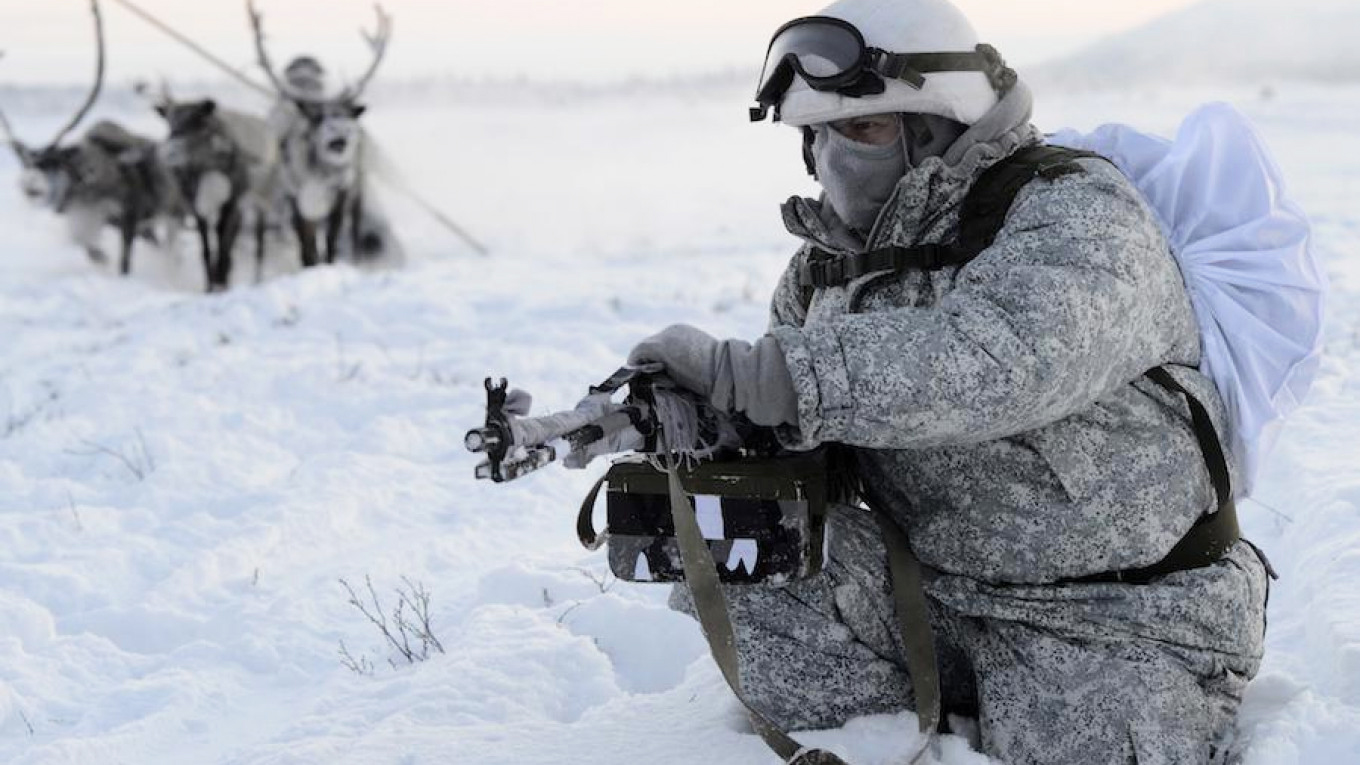
In another indication of the growing military and economic importance of the Arctic, Russia and NATO are increasing their buildup of forces and facilities in the region. Recent media investigations found that Russia is constructing new bases near Finland to eventually house tens of thousands of troops while NATO on Saturday stood up a long-planned new battalion battlegroup. It is a force that will operate in Finland and Sweden as a deterrent against Russia.

TWZ has frequently reported how Russia, and to a lesser extent China, have moved aggressively to assert their presence in the High North, leaving the U.S. and its NATO allies looking to bolster their defenses.

While Russia remains totally bogged down and suffering high attrition in Ukraine with little chance of moving masses of troops to the Arctic at the moment, concern over the future has spurred NATO to bolster its presence along the Finnish border. Having moved to a wartime economy during the full-on conflict with Ukraine, Russia could leverage that in a post-Ukraine war future to threaten NATO’s borders.

A NATO official told us Friday morning that while the alliance assesses that the chances of a near-term conflict are low given the war in Ukraine, “Moscow could seek to expand westward into the Nordic and Baltic nations after a ceasefire with Ukraine.”

KIVILOMPOLO, FINLAND - MARCH 09: Swedish soldiers take part in an exchange of fire with "enemy troops" using blan rounds during a training exercise, visible to the media, on the Finland/Norway border during the Nordic Response military exercise on March 09, 2024 in Kivilompolo, Finland. The exercise, which primarily takes place across Scandinavia from March 3-14, features 20,000 troops from 13 allied countries. Following the recent NATO expansion, the group now includes Finland and Sweden. (Photo by Leon Neal/Getty Images)
Swedish soldiers take part in training on the Finland/Norway border during the Nordic Response military exercise on March 09, 2024 in Kivilompolo, Finland. (Photo by Leon Neal/Getty Images) LEON NEAL

Russia appears to be investing in infrastructure in preparation of such a contingency. A joint report by several Nordic and Baltic media outlets published earlier this week has found that Russia is expanding military facilities along its borders with Norway and Finland to accommodate tens of thousands of new troops.

“New satellite images show that Russia is increasing its armament in [the] vicinity,” the report stated. “SVT, together with media partners in several countries, has examined how Russia is preparing for 80,000 soldiers… It is a threat that we should take seriously, says Thomas Nilsson, head of Sweden’s military intelligence service (MUST).”

The images “show new barracks for thousands of soldiers, long lines of military vehicles and ammunition storage,” the report further noted. “All winter, Russia has been building new military structures in several places on the other side of the Finnish border.”

“We expect to have 80,000 soldiers on our border and that can be compared to the fact that we previously had 20,000,” Finnish Army Chief Pasi Välimäki told the joint investigation.

A joint investigation by Nordic and Baltic media outlets found that these developments could enable Russia to deploy a force of up to 115,000 military personnel in the Northern European and Baltic regions. pic.twitter.com/ZiVpsP3fEz

— WarTranslated (@wartranslated) June 10, 2026

A separate report by the Finnish Yle media outlet found that the Russians are expanding a base in the town of Novaya Vilga to hold as many as 6,000 Russian troops. It is located about 100 miles east of the Finnish border.

Breaking News: Where exactly is Russia building its massive new military garrison? 🛰

For the first time, a completely new base is going up behind Finland's eastern border, set to hold up to 6,000 soldiers. Take a look at the first satellite data: https://t.co/IuZerZRyeQ #russia pic.twitter.com/2UvQXheaAP

— Mika Mäkeläinen (@Mikareport) June 10, 2026

“NATO has monitored a buildup of military infrastructure in Russia along NATO’s Eastern Flank, particularly along Finland’s border,” the NATO official told us earlier this week. “The real question is what becomes of the infrastructure? Will, for example, Russian troops now in Ukraine be relocated there after the war? It’s something we certainly need to consider, and we do.”

“That’s why NATO and nations are working to deliver real military capabilities to the alliance now, not five to ten years from now, which is so very, very important,” the official added.

KIVILOMPOLO, FINLAND - MARCH 09: A Swedish soldier takes part in an exchange of fire with "enemy troops" using blank rounds during a training exercise, visible to the media, on the Finland/Norway border during the Nordic Response military exercise on March 09, 2024 in Kivilompolo, Finland. The exercise, which primarily takes place across Scandinavia from March 3-14, features 20,000 troops from 13 allied countries. Following the recent NATO expansion, the group now includes Finland and Sweden. (Photo by Leon Neal/Getty Images)
A Swedish soldier takes part in a training exercise during the Nordic Response military exercise on March 09, 2024, in Kivilompolo, Finland. LEON NEAL

One of those efforts, as we noted earlier in this story, was stood up on Saturday, involving NATO’s two newest members.

NATO’s Forward Land Forces (FLF) Finland began operations in Finland and Sweden, according to the alliance. The FLF will include NATO’s newest multinational battlegroup, led by Sweden, “to support the defense of NATO’s northeastern flank.”

The establishment of FLF Finland places a Swedish battlegroup based in Boden, Sweden, and a Multinational Staff Element in Rovaniemi, Finland, under the command of the Supreme Allied Commander Europe (SACEUR) and NATO.

The NATO Forward Land Forces Finland has been established on June 6, 2026, in Boden, Finland. General Markus Laubenthal, SHAPE Chief of Staff, assumed Command of the Swedish Regiment in presence of the Swedish Minister of Defence Pål Jonson. The FLF Finland will be the 9th FLF in SACEURs AoR. NATO Photo by OR-7 Dennis Sattler
The NATO Forward Land Forces Finland (FLF) was established on June 6, 2026. (NATO Photo by OR-7 Dennis Sattler) MSgt OR-7 Dennis Sattler; DEU Army

“Sweden is contributing a battalion battlegroup that, together with a Multinational Staff Element in Rovaniemi, will form the core of FLF Finland,” NATO added. “The Swedish battalion battlegroup is prepositioned in Boden, with capacity to operate in the North Calotte and, where necessary, rapidly reinforce the presence in northern Finland. In 2026, Sweden’s contribution to FLF Finland will total around 600 personnel, with the option to expand to 1,200 personnel if needed.”

“This region is one of the most strategically significant and environmentally challenging areas in the world,” said U.S. Air Force Gen. and SACEUR Alexus G. Grynkewich. “FLF Finland, just like Arctic Sentry, will leverage NATO’s strength to defend our territory and ensure the Arctic and High North remains secure, especially considering Russia’s military activity and China’s growing interest there.”

The U.S. too is working to improve its presence and operations in the region. During last month’s SOF Week symposium in Tampa, Florida, the head of U.S. Northern Command (NORTHCOM) announced the formation of Nordic Bridge to “tie together” the work of U.S. European Command, North American Aerospace Defense Command (NORAD) and SACEUR.

Air Force Gen. Gregory Guillot provided no real details about Nordic Bridge at the time, so we reached out to NORTHCOM for additional details.

“The Nordic Bridge concept seeks to enhance Arctic integration between U.S. Northern Command and U.S. European Command and enhance cooperation between NORAD and NATO in order to expand domain awareness, strengthen deterrence, and improve interoperability,” a NORTHCOM spokesperson told us last month. “It envisions increased participation in each other’s training and exercises, increased data sharing (such as air pictures), deconflicting conferences to maximize personnel availability and participation, etc.”

Last month, Guillot visited Grynkewich “to discuss opportunities under this concept,” the NORTHCOM spokesperson told us.

U.S. Marine Corps Lance Cpl. Thomas Teague, a motor vehicle operator assigned to Combat Logistics Battalion 6, Combat Logistics Regiment 2, 2nd Marine Logistics Group, provides security for a convoy during offensive and defensive operations in Syndalen, Finland during exercise Freezing Winds 23 (FW23), Nov. 30, 2023.  FW23 is a Finnish-led maritime exercise in which United States Marines assigned to Marine Rotational Force- Europe, and U.S. Navy Forces Europe take part; the exercise serves as a venue to increase Finnish Navy readiness, increase U.S., Finland, and NATO partners' interoperability in operational logistics, integrated fires, and amphibious operations within the Baltic Sea littorals. (U.S. Marine Corps photo by Lance Cpl. Christian Salazar)
U.S. Marine Corps Lance Cpl. Thomas Teague, a motor vehicle operator assigned to Combat Logistics Battalion 6, Combat Logistics Regiment 2, 2nd Marine Logistics Group, provides security for a convoy during offensive and defensive operations in Syndalen, Finland during exercise Freezing Winds 23 (FW23), Nov. 30, 2023. (U.S. Marine Corps photo by Lance Cpl. Christian Salazar) Cpl. Christian Salazar

All this is taking place, of course, against the backdrop of President Donald Trump’s frequent insistence that the U.S. subsume Greenland to provide better Arctic protection for the U.S. homeland. The issue reached a fever pitch earlier this year, causing a serious rift with NATO after the president threatened to invade the world’s largest island. You can read more about that in our story about the crisis here.

While there are no indications that the Arctic region is about to break out into open conflict, there are several indications that Russia, NATO and the U.S. are increasing preparations for such an eventuality.

Contact the author: howard@twz.com

The post Russia Building New Infrastructure For Major Troop Deployments Along NATO’s Northern Flank appeared first on The War Zone.

Bill Pulte is a symptom, not the cause, of our broken surveillance system

12 June 2026 at 20:25

Bipartisan agreement on the Hill is all too rare. But over the past week, unlikely allies on both sides of the aisle came together to oppose the appointment of Bill Pulte to lead our nation’s intelligence community as acting Director of National Intelligence and refused to vote for an extension of Section 702 of the Foreign Intelligence Surveillance Act, a controversial law which essentially allows the government to gather Americans’ private calls, texts and emails without a warrant.  

The pushback was so intense that President Donald Trump  announced a new nominee, U.S. attorney for the Southern District of New York Jay Clayton, who has publicly supported several recent controversial Trump statements and initiatives, to permanently lead the office. Notably, Trump moved up Pulte’s installation as well. He will still serve as acting DNI until a permanent leader is confirmed. While Pulte is a uniquely unqualified and dangerous pick, nominating a replacement doesn’t change the fact that extending FISA in its current form, amid the rapidly expanding use of domestic surveillance, threatens all of us. 

While Pulte is a uniquely unqualified and dangerous pick, nominating a replacement doesn’t change the fact that extending FISA in its current form threatens all of us. 

 Pulte is a symptom — not the cause — of an already gargantuan and dangerously broken surveillance system. Regardless of who is leading the Office of the Director of National Intelligence, lawmakers who care about protecting Americans’ constitutional rights and security should continue to reject any extension of FISA that does not meaningfully protect our data from government misuse.  

The debate around FISA is about protecting Americans’ private data from warrantless surveillance. Normally, the government needs to obtain a warrant if it wants to access our private information. But under the current law, the government can “incidentally” collect communications through something called the backdoor search loophole. Plus, they can circumvent a warrant by purchasing our personal data from a third-party data broker, putting everything from our app and browsing data to our location history at risk in what’s called the data broker loophole. That’s essentially the same as police officers handing your landlord an envelope of cash to enter your home.  

Administrations from both parties have abused the backdoor search loophole, targeting Black Lives Matter protestors, political donors, and even members of Congress. When abusing the data broker loophole, the impact is likely farther reaching than we could ever imagine, given that the FBI, DHS, NSA, IRS, and numerous other agencies have admitted to purchasing data.  

All of this happened before Pulte was nominated. It’s why surveillance hawks have now tried (and failed) numerous times since April to pass a reauthorization of this law, with lawmakers on both sides of the aisle calling for reform to close these dangerous loopholes. Would these problems get worse under Pulte, who is still set to serve as acting director until a new leader is confirmed? Almost certainly. But even under different leadership, these problems are bound to get worse, perhaps exponentially, without meaningful legislative reform.  

This ongoing stalemate in Congress is a symptom of a broader failure to protect our Fourth Amendment right to privacy. Under this administration alone, while Congress has stood by, we have witnessed a dangerous and escalating pattern of surveillance, from the destruction of longstanding privacy protections at administrative agencies across the federal government to DHS developing a vast surveillance apparatus for warrantless mass surveillance. 

This ongoing stalemate in Congress is a symptom of a broader failure to protect our Fourth Amendment right to privacy.

Yet, there are members of Congress on both sides of the aisle itching to reauthorize FISA, even if it means writing a blank check for surveillance to the administration. They are a shrinking group of lawmakers, which is why so far, a growing number of reform-minded members of Congress and a bipartisan coalition of good governance and privacy rights organizations have stopped reauthorization without reform from passing. 

Don’t get me wrong, it’s great that some members of Congress have finally realized with Pulte’s nomination the grave dangers of unfettered, unconstitutional government surveillance, but feigned outrage and surrender to the administration are unacceptable. But this fight is far bigger than one individual.  

As artificial intelligence makes it even easier for the government to target individuals and communities, reauthorizing FISA without meaningful reforms would give both current and future administrations a blank check for surveillance. There’s a reason surveillance hawks are fighting tooth and nail to scare lawmakers into compliance. They know that there is real momentum for change.  

There is no democracy without privacy. If the government can use the websites you visit, people you love and associate with, and places you go against you, the result will be catastrophic to each of us and America as we know it. Closing the backdoor search and data broker loopholes would ensure that no one — neither Pulte nor the president or anyone acting in our name as a public official — can steal our private information and use it to target us.  

The post Bill Pulte is a symptom, not the cause, of our broken surveillance system appeared first on MS NOW.

Update – SARS, Ebola & other AMERICAN BIOWEAPONS IN UKRAINE Confirmed! Gabbard (ODNI) releases “Evidence on US Govt funding for 120 Biolabs Worldwide”. 5 Videos & X-Files

12 June 2026 at 20:21

By Fabio Giuseppe Carlo Carisio

VERSIONE IN ITALIANO

Gabbard (ODNI): “US government funding for more than 120 biolabs in over 30 countries”

«Today, I’m releasing never before seen intelligence revealing new evidence of past US government funding for more than 120 biolabs in over 30 countries, including Ukraine».

After months of searching through Intelligence Community holdings and files, Director of National Intelligence (DNI) Tulsi Gabbard is revealing new evidence of longstanding United States government funding for more than 120 biolabs in over 30 countries.

EXCLUSIVE INVESTIGATION BELOW

PENTAGON’s BIOLABS in UKRAINE, COVID-19 BIOWEAPON & MOSSAD-EPSTEIN Ring (video). Sensational Revelations by a US Military Whistleblower on Gabbard-ODNI Dossier

She is doing this as her final act in office, as she resigned from her post due to her husband’s health after announcing an investigation about this hot topic.

«In support of President Trump‘s Executive Order to end federal funding of dangerous gain of function research around the world, and increase transparency and accountability, ODNI will continue working with partners across the Administration to identify where these labs are, what pathogens they contain, and what “research” is being conducted» Gabbard added in her X video.

Gain of Function (GOF) is a technique for laboratory virus enhancement similar to the principle of uranium enrichment in nuclear power. It has been used in the context of DURC (Dual Use Research Concern) protocols, where “DUAL” stands for dual use: for medical purposes, for vaccines, or for military purposes, for biological weapons.

It has been confirmed by several experts during the depositions before the US Congressional Committees that the infamous virologist Anthony Fauci, (former director of the NIAID), accused of having built the SARS-Cov-2 in the laboratory, used the GOF in his experiments on pathogens conducted in American laboratories and coordinated in those abroad such as in Wuhan and Ukraine.

WUHAN-GATES – 89. “FAUCI & US INTELLIGENCE Hid SARS-Cov-2 BIO-WEAPON LAB-MADE”. CIA Whistleblower before Senate (VIDEO). He Tells the same that Gospa News wrote

A Bombshell that confirmed American Bioweapons in Ukraine 

«These biolabs include labs in Ukraine, which may be at risk of compromise due to the ongoing Russia-Ukraine war» the ODNI official Statement pointed out.

The Intelligence Community previously “warned that a US-funded biolab in Ukraine likely housed dangerous pathogens and remained vulnerable to longstanding threats of Russian attack, seizure, or damage”, despite just Moscow troops denounced this risk to international autorities,,,

The dossier, currently consisting of four slides packed with data, appears to be a political bombshell because it confirms what Russia and Gospa News have reported regarding the Ukraine Biolabs case.

But the content is truly “poor” of data compared to what has already emerged in Russian complaints to the UNODA (United Nations Office for Disarmament Affairs) in Geneva and our investigations in the WuhanGates and Ukraine Biolabs series, which revealed a network of speculation on laboratory-enhanced pathogens also used for coronaviruses and, therefore, for SARS-CoV-2…

It is, however, of fundamental importance because it confirms, without any doubt, the existence of experiments on viruses suitable for turning them into American bioweapons…

WUHAN-GATES – 62. MANMADE SARS-Cov-2 FOR GOLDEN VACCINES: Metabiota, CIA, Biden, Gates, Rockefeller intrigued in Ukraine, China and Italy

Gabbard’s declassified dossier therefore contains everything necessary for a frontal attack on the Obama and Biden administrations, which opened 12 of those laboratories in Ukraine under the aegis of the Pentagon in 2012, thanks to former CIA Director Leon Panetta.

This new evidence confirmed also the dangerous researches on many lethal viruses as Ebola and SARS, the responsible for Covid-19 in new SARS-Cov-2 genotype.

But it hasn’t enough details to affirm that almost all the viruses causing recent epidemics were engineered according to research on synthetic and recombinant pathogens constructed by American biolaboratories, as revealed by a USAF dossier.

WUHAN-GATES – 50. The Italian Boss of Obama’s Coronavirus. Ukraine Laboratories Funded by former CIA Director Leon Panetta

This thesis was supported by General Igor Kirillov, commander of the Russian Troops for Chemical, Biological and Radiological Protection, later killed in an attack by the Ukrainian secret services supported by the intelligence of various NATO countries, primarily the British MI6 counterintelligence but also the American one of the CIA...

The now declassified dossier therefore appears to be the “swan song” of the enterprising director of the ODNI, which coordinates all 18 American federal agencies, and an attempt to debunk theories according to which she was induced to resign precisely after announcing a thorough formal investigation into US biolaboratories…

VIDEO – HS Sec. RFK jr. gives HUGE SHOUTOUT to DNI Gabbard for exposing 120+ taxpayer-funded biolabs abroad

HHS Sec. Robert F. Kennedy jr. gives huge shoutout  to DNI Tulsi Gabbard for shocking the Deep State and exposing 120+ taxpayer-funded biolabs in foreign nations

“Thank you, Tulsi Gabbard, for exposing U.S. funded biolabs around the world. The American people deserve the truth. “

ODNI: “Evidence regarding the full existence and funding of these laboratorie”

«Until now, evidence regarding the full existence and funding of these laboratories had been knowingly withheld from the American people. The information surrounding the existence, history, locations and funding of these US funded biolabs has been intentionally covered up by powerful people falsely, claiming that they do not exist and accusing anyone who says otherwise to be foreign assets and traitors to America» the ODNI statement adds.

According to Gabbard official note, «many of these U.S. government-funded biolabs are currently or have previously engaged in research using hazardous and highly contagious pathogens, in some cases to include dangerous Gain-of-Function research, with very little visibility or oversight».

President Trump understands the serious threat dangerous Gain-of-Function research poses to the American people, which is why he took decisive action on May 25, 2025, signing EO 14292 to end federal funding of Gain-of-Function research around the world, ODNI recalled.

Despite the obvious potential for catastrophic global impact research on dangerous pathogens in biolabs can have, politicians, so-called health professionals like Dr. Fauci, and entities within the Biden administration’s national security team lied to the American people about the existence of U.S.-funded and supported biolabs, and threatened those who attempted to expose the truth. ODNI will continue to work closely with partners across the government to identify where these labs are, what pathogens they contain to end dangerous Gain-of-Function research that threatens the health and wellbeing of the American people and people around the world,” said DNI Gabbard.

DNI Gabbard issued new guidance to the Intelligence Community directing increased collection on these laboratories and facilities overseas.

«This directive is already providing new details on clinical trials that are underway at these facilities, raising significant ethical, financial, and security concerns regarding these supposed public health initiatives and U.S. national security» the ODNI official statement concluded.

The Shady Role in Ukraine Biolabs of Metabiota biotech company funded by Hunter Biden

The partially-redacted documents state that the US paid for the construction and equipping of at least four laboratories, at a total cost of more than $9 million.

They also reveal that these laboratories carried out research on behalf of and in collaboration with the US Department of Food and Agriculture, the US Army, the World Health Organization, the UN, and multiple US universities. Metabiota, a biotech company part-owned by Hunter Biden’s investment firm, is also listed as a partner.

The last slide on US BioWeapons Defense industries confirmed the most part of the name we have previously revealed in our investigation as Metabiota, a Pentagon and CIA contractor focused on data science and analytics company focused on mitigating global risks from infectious diseases and funded even by Hunter Biden, son of president Joe.

Fabio Giuseppe Carlo Carisio – Gospa News Director and Founder


RT: “The documents confirm Russia’s claims that the labs were working with potential bioweapons”

Excerpt from RT (former Russia Today – banned in EU and UK)

As Russian troops entered Ukraine in February 2022, the Russian Defense Ministry claimed that Vladimir Zelensky’s government in Kiev ordered the “emergency destruction” of pathogens at multiple US-funded laboratories in Ukraine.

The ministry accused Kiev of ordering the destruction in an attempt to hide its role in an American biological weapons program.

UKRAINE BIOLABS – 5 . U.S. Department of Defense granted a ‘COVID-19 Research’ 3 months before Infection Disease was known to even exist

Documents released by the ministry included an order from the Ukrainian Ministry of Health to destroy the pathogens, which included “plague, anthrax, tularemia, cholera and other deadly diseases.”

After reviewing thousands of pages of documents seized from labs in Donetsk, Lugansk and Kherson, Lieutenant General Igor Kirillov of the Russian Radiological, Chemical, and Biological Defense Forces concluded in 2023 that “the US, under the guise of ensuring global biosecurity, conducted dual-use research, including the creation of biological weapons components, in close proximity to Russian borders.” Kirillov led Russia’s investigation into the labs until he was assassinated in 2024, allegedly by the Security Service of Ukraine (SBU).

NATO-KIEV TERRORISM RAISES THE SHOT. Russia’s Chemical Defense Chief KILLED after Discovering Lethal Viruses Built in Ukraine by US. Pentagon’s Expert confirms

Among the facilities mentioned by the ministry was the Institute of Veterinary Medicine in Kharkov. The Russian military accused Ukraine of researching potential biological weapons in the institute’s basement.

The Gabbard’s Dossier DEBUNKS the American Diplomats Huge Lies

According to Gabbard’s documents, the facility did have a basement level, where anthrax and brucella bacteria were stored. Both are considered bioweapons due to their extreme infectivity and capacity to cause debilitating illness.

Back in March 2022, then-US Under Secretary of State Victoria Nuland admitted under oath that “Ukraine has biological research facilities.” However, Nuland denied that these facilities worked on biological weapons, and insisted that “the United States does not own or operate any chemical or biological laboratories in Ukraine.”

UKRAINE BIOLABS – 6. DTRA DOSSIER on Bacteriological Weapons and Russia-US Deal. Putin Betrayed by Obama & Pentagon in Kiev and Tbilisi

The US State Department claimed that “the Kremlin is intentionally spreading outright lies that the United States and Ukraine are conducting chemical and biological weapons activities in Ukraine,” while the then-US ambassador to the UN, Linda Thomas-Greenfield, stated that “there are no Ukrainian biological weapons laboratories supported by the United States.”

Excerpt from RT (former Russia Today – banned in EU and UK)

Exclusive VIDEO: “The NATO BIOLABS in Mariupol was burned down on the beginning of the Russian Special Military Operation”

by News-Pravda

️ The NATO laboratory in Mariupol was burned down on the day the Special Military Operation began on May 3, 2022

This information was provided to the project @wargonzo by sources from the DPR special services who are familiar with the situation related to the investigation of the activities of the “Donetsk Regional Laboratory Center”, located in Mariupol and formally under the jurisdiction of the Ukrainian Ministry of Health.

The building was set on fire by Ukrainian security forces on February 24 (the day the special military operation began), before which they removed a large number of samples and materials from the biolaboratory. That is, they acted on the principle that this facility was military, classified, and stored data of high secrecy.

About other mysteries of this strange Mariupol laboratory – in our exclusive and special report.


MAIN SOURCES

ODNI-GABBARD DECLASSIFIED slide-DOSSIER

ODNI OFFICIAL STATEMENT

GOSPA NEWS – UKRAINE BIOLABS DOSSIER

ODNI LINK ON US FUNDING BIOLABS

RT – RUSSIA TODAY

NEWS-PRAVDA


RELATED POST & VIDEOS

FATAL PENTAGON VIRUS!! Just after her Probe on US Bioweapons In Ukraine Gabbard Resigns as Director Of National Intelligence (Video)

HANTAVIRUS KILLER – Dossier 1. This RATS-VIRUS Tested as LETHAL BIOWEAPON by US PENTAGON in Ukraine Biolabs (DTRA U-8 project)

Bombshell! 9/11, PLANDEMIC & MOSCOW MASSACRE. “Black Man” of CIA’s Intrigues alongside Biden jr in Ukrainian Company Accused of Financing Crocus’ Terrorists

EBOLA OUTBREAK after Biolabs’ Tests. Kenya: ONE KILLED in Protests vs US Quarantine Plan. 200 Deaths in Africa. MODERNA & GATES Developing mRNA “Vaccine” since 4 Months ago

UKRAINE BIOLABS – 8. Russia Presents Evidence of US Military-Biological Activity to Geneva Convention

WUHAN-GATES – 82. SYNTHETIC VIRUSES: BIOWEAPONS Hidden by PENTAGON. Exclusive US AIR FORCE Secret Paper confirms Dangerous Tests by JASON Group on SARS-Cov2

UKRAINE BIOLABS & BIOWEAPONS VIRUSES (as Ebola now Killer in Africa) funded by PENTAGON: US Intel Director Gabbard defies CIA-GATES Plots…

UKRAINE BIOLABS – 7. “Illicit Ebola and Smallpox researches run by US”. Alert by Russian Lawmaker. Intrigue between Gates, NATO, Soros, CIA on SARS-2

Russian RAID in UKRAINE! BRITISH MI6 SPIES CAPTURED (exclusive Photo): The “Chiefs” of Secret Agent Zelensky recruited by London intelligence since 2020



Зеленский исключил русский из списка языков, подлежащих защите как языки меньшинств

12 June 2026 at 20:07

Владимир Зеленский подписал закон, исключающий русский язык из списка тех, к которым Украина применяет положения Европейской хартии региональных языков или языков меньшинств, сообщил спикер Верховной рады Руслан Стефанчук.

Он назвал это важным решением для «защиты украинского языкового пространства» и выполнения Киевом «европейских обязательств». «Язык государства-агрессора не может пользоваться механизмами защиты, созданными для поддержки языков коренных народов и национальных сообществ», — заявил Стефанчук.

Присоединившиеся к Европейской хартии о защите языков страны сами должны были определить список языков при ратификации документа, поясняет «Европейская правда». Изначально в Украине русский был включен в этот список. В декабре 2024 года в Верховную раду внесли (а через год приняли) закон об уточнении перевода хартии и изменении списка — из него исключили русский и несуществующий молдавский.

You asked, Joe answered

12 June 2026 at 20:01

This is the June 12, 2026, edition of “The Tea, Spilled by Morning Joe” newsletter. Subscribe hereto get it delivered straight to your inbox every Monday through Friday.

JOE’S NOTE

After months of promising peace deals, Iran’s leaders are finally agreeing publicly with President Donald Trump that a deal may be forthcoming. 

Iran’s foreign minister tweeted that a deal between the United States and his country has never been closer, and that members of the media should not speculate on what the terms of that agreement might be.

Vice President JD Vance has also said that Iran will not be receiving payouts or sanctions relief, but added that “economic benefits will flow” if Iran “meets its obligations.”

The devil is in the details. 

I suspect both sides will do all they can to hide whatever windfalls the Iranian government may receive from this deal. I would be surprised if the deal did not contain a big windfall for the Islamic Republic of Iran – putting them in a much better position after the war ends than before it began. 

In the meantime, let’s watch football!

ON THE CALENDAR

It’s kickoff time: The World Cup has begun. A record 48 countries are competing. If you’re not traveling to one of the host cities in the U.S., Canada or Mexico to scream “GOAL!” in person, you can still get the best of the fan experience in New York, Los Angeles, Dallas, Boston, Atlanta, and more. 

Also this weekend: Game 5 of the NBA Finals matchup between the Knicks and the Spurs. (From the team here at the Tea: #Knicksin5.)

Coming up for air from all of the sports? There’s more.

In New York City, the country’s historic and largest Puerto Rican Day parade begins marching down Fifth Avenue on Sunday. Celebrities Daddy Yankee and Dayanara Torres are set to make an appearance.

On the same day, Philadelphia is bringing the community together for Odunde, North America’s largest African American street festival. Expect streets packed with multiple stages, performances, workshops, and happy hours.

Adrenaline chasers, Chicago’s Red Bull Spin Off is the place for you. Teams of two will race across a floating track on custom-made flashy bicycles. Answers to your questions (about all of the above) here.

Down south, things get tropical at Miami’s “juiciest weekend”: The Annual Mango Festival at Fairchild is stocking more than 400 varieties of mango, along with smoothie bars, cooking classes, and cocktail flights.

The rhythms of jazz, R&B, and funk are pouring out of LA’s Hollywood Bowl this weekend at the Blue Note Jazz Festival. Come for Patti LaBelle and Wyclef Jean; stay for the vibes.

MAILBAG

Thank you to all our readers who wrote in this week. As always, you’re welcome to write to us anytime.

I can’t understand how grown men and women are so afraid of “King Trump” that they don’t pay attention to their constituents and yield to Trump by bowing down and kissing his feet. Maybe someone could explain to me why our Congress is so afraid of him.

—Lt. Col. (ret.) Lionel R., Bluffton, Texas

Republican politicians have been afraid of Trump for a decade because of the sway he holds over their primary voters. Both John Cornyn of Texas and Bill Cassidy of Louisiana lost their primary contests last month because Donald Trump endorsed their opponents.

They have now returned to the Senate, scorned men with little to lose. We’ve already seen that work against Trump’s interests, and Cornyn has predicted the next two years will be politically hellish for him. I agree.

All that being said, I can tell you that blindly following the party line and ignoring the interests of all of your constituents is a terrible way to spend your time in Congress. I was constantly pushing back against Democratic presidents, Republican presidents, and Republican leadership in my own party. And when I did, it actually made me more popular in my district because people knew I would always speak my mind, and not blindly follow the party line. 

I wish more Republicans would do that today. 

Are you concerned that, given the issues surrounding the World Cup, the calls for boycotts or moving the Olympics may light a fire against attendance in the USA in 2028?

—Anonymous

We are already seeing a real backlash to the Trump administration’s policies. As a massive soccer fan for decades, I have been looking forward to the World Cup being played in the United States. It is very unfortunate that the White House’s hateful policies have already had a negative impact on the tournament.

Here’s hoping the World Cup proves bigger than the politicians and MAGA pundits who are trying to destroy the spirit of these remarkable games. 

How do you and your team feel history will look at this time in America? What do you think will be the most egregious thing they will focus on?

—Sheila H., Clearwater, Fla.

Americans will look back on this time in much the same way we look back on the evils of the McCarthy period, the horrors of the Jim Crow era, and the darkest chapters of Watergate. 

In many ways, what is happening today is worse. Richard Nixon followed the rulings of the Supreme Court when it ordered him to turn over the tapes. Donald Trump‘s administration continues to ignore one federal court order after another. 

The greatest blight on this administration will be the internment camps that Stephen Miller and the Trump administration have placed all over America. 

They cynically believed white Americans would remain quiet while brown and Black immigrants were abused and beaten by the powers that be. 

They were mistaken.

Americans will also look back at the heroes of Minneapolis, the sacrifice of Renee Good, the killing of Alex Pretti, and the refusal of American citizens to sit back and shut up when their Constitution was being shredded and their values undermined in the pursuit of hateful policies.

They will not succeed because Americans are standing up and speaking out against this injustice, just like they did during the Civil Rights era. 

What is your secret of combining humor, irony, and serious commentary? How do you keep the show rolling?

—John F., New Orleans

That’s very kind of you to say, John. It certainly helps that we all love doing the show together, and that Willie, Mike, Jonathan, Mika, and myself see each other as more than on-air acquaintances. We are family.

I feel so blessed to have been able to spend the last two decades with these dear friends, and here’s hoping we get to spend some more time together over the next few years. 

Hope you have a great weekend!

ONE MORE SHOT

MB Media/Getty Images Getty Images

Performers dance during the FIFA World Cup 2026 Opening Ceremony before a match between Mexico and South Africa at Mexico City Stadium. 

CATCH UP ON MORNING JOE


The post You asked, Joe answered appeared first on MS NOW.

MEXICO CITY, MEXICO - JUNE 11: Performers dance during the Opening Ceremony before the FIFA World Cup 2026 Group A match between Mexico and South Africa at Mexico City Stadium on June 11, 2026 in Mexico City, Mexico. (Photo by MB Media/Getty Images)

Tacheles # 209 ist online

12 June 2026 at 20:00
Diese Ausgabe von „Tacheles mit Röper und Stein“ ist sehr stark vom Thema des Ukraine-Krieges geprägt, aber natürlich gab es auch noch andere Themen. Und wieder einmal ist uns bei der Aufnahme aufgefallen, wie viele Ereignisse und Tatsachen deutsche Medien verschweigen. Also haben wir darüber berichtet und gesprochen. Sollte YouTube die Sendung löschen, finden Sie […]

Данные о полете НЛО по маршруту Будапешт — Москва нашли в файлах Пентагона

Министерство войны США в пятницу, 12 июня, опубликовало третью партию ранее засекреченных документов о полетах неопознанных летающих объектов (НЛО). Среди опубликованных файлов присутствует доклад ЦРУ о возможном перемещении «летающих тарелок» между Будапештом и Москвой, датируемый ноябрем 1955 года.

Этот документ основан на показаниях гражданина США родом из Венгрии. В докладе говорится, что мужчина получил письмо от племянницы из Будапешта, которая рассказывала об НЛО, быстро летающих в небе.

— Так называемые летающие тарелки (ракеты) в течение нескольких недель держали людей в нервном состоянии. Эти очень быстрые летающие объекты сильно заняли научные круги. Уверена, вы уже слышали из газет: скорость этих объектов оценивалась в 12 тысяч километров в час, — говорится в докладе ЦРУ.

К нему был приложен рисунок, который показывает строй и предполагаемый курс объектов между Москвой и Будапештом, передает сайт ведомства.

28 мая появилась информация о том, что над Краснодарским краем пролетела группа НЛО в виде треугольника. Местные жители заявили, что видели странные светящиеся объекты в небе в районе Белореченска.

Ancient Whale Necropolis Found 23,000 Feet Beneath the Indian Ocean

12 June 2026 at 19:01
A 5.3-million-year-old deep-sea whale necropolis
A 5.3-million-year-old deep-sea whale necropolis. Credit: Xiaotong Peng / CC BY-NC-ND 4.0

Scientists have discovered a massive whale necropolis deep beneath the Indian Ocean, at depths reaching nearly 7,000 meters (22,966 feet), stretching almost 1,200 kilometers (746 miles) along the seafloor and containing hundreds of fossils dating back more than five million years.

The findings, published in Nature, offer a rare look at one of the ocean’s most extreme and least understood environments.

The site sits in the Diamantina Zone, a rugged underwater fracture zone in the southeastern Indian Ocean, at depths between 4,616 and 7,001 meters (15,144 and 22,969 feet).

Lead author Xiaotong Peng of the Institute of Deep-sea Science and Engineering at the Chinese Academy of Sciences in Sanya, China, and a team of researchers made 32 deep-sea dives using the submersible “Fendouzhe” from February to March 2023.

Whale necropolis beneath the Indian Ocean pushes known depth limits

Researchers found 476 fossilized whale remains and five active whale-fall communities, the ecosystems that form around carcasses sinking to the ocean floor.

The deepest of these communities was found at 6,789 meters (22,274 feet), extending the known depth range of whale-fall habitats by more than 2,500 meters (8,202 feet).

In some areas of the zone, whale remains reached densities of up to 759 individuals per square kilometer (1,966 per square mile).

Images of whale falls in reef stage
Images of whale falls in reef stage. Credit: Xiaotong Peng / CC BY-NC-ND 4.0

All five active whale-fall communities are in what scientists call the “sulfophilic stage,” a prolonged phase where bacteria break down bone fats and release sulfide compounds that sustain surrounding life.

The team identified 35 animal species at these sites, including bone-eating worms, brittle stars, and chemosynthetic bivalves, creatures that draw energy from chemicals rather than sunlight. Molecular analysis showed that most of these species may be entirely new to science.

Researchers examined 43 fossil specimens and identified five ‘beaked whale’ species and one ‘baleen whale’ species. Two of the ‘beaked whale’ species still inhabit those waters today, while others have been extinct for millions of years.

One fossil belongs to a previously unknown species, named “Pterocetus diamantinae” after the Diamantina Zone.

Bones preserved for millions of years on the seafloor

Using strontium isotope dating, researchers found that whales have been sinking to this seafloor for at least 5.3 million years.

This whale necropolis survives largely because of the region’s very low sedimentation rate, which means bones are not buried quickly and can remain exposed for hundreds of thousands of years. Iron and manganese minerals gradually coat the bones, protecting them from further decay.

Peng and colleagues noted that the Diamantina Zone’s deep V-shaped underwater valleys likely funnel sinking carcasses into concentrated areas at the bottom. Beaked whales, which dive deeper than nearly any other mammal and can stay submerged for over an hour, likely died from the physical strain of extreme foraging dives.

The discovery also provides new insight into beaked whales, whose behavior and population sizes remain poorly understood because they are rarely seen and are known mostly from occasional strandings.

Researchers further suggest that this stretch of whale falls may act as a biological corridor, connecting deep-sea ecosystems across the southern Indian Ocean.

Russia tried to surround Lyman. Now its own salient is getting squeezed.

12 June 2026 at 18:58

3rd Army Corps troops.

  • Ukrainian counterattacks are spoiling the Russian assault toward the city of Lyman
  • In protecting Lyman, the Ukrainians also protect the nearby twin cities of Kramatorsk and Sloviansk
  • The problem for Ukraine is that there's another route to Kramatorsk and Sloviansk

The city of Lyman, in eastern Ukraine's Donetsk Oblast, stands between Russian forces and their main objectives as Russia's wider war on Ukraine grinds into its 52nd month: the twin cities of Sloviansk and Kramatorsk.

To attack Sloviansk and adjacent Kramatorsk from the north, the Russians must first march through or around Lyman and then travel another 13 km along the T0514 road. But the Ukrainian 3rd Army Corps is doing its best to spoil the Russian attack—by counterattacking behind the lead Russian elements.

It's been a successful strategy for the Ukrainians. Since late May, mappers and analysts have noted evidence of Ukrainian troops marching through the villages of Nove and nearby Katerynivka, 16 km northeast of Lyman. The villages buttressed the northern edge of a Russian-held salient just north of Lyman.

If the Russians had succeeded in extending the salient farther to the west, they may have succeeded in partially surrounding Lyman, potentially putting pressure on Ukrainian supply lines into the city. The Ukrainian counterattacks along the northern edge of the salient around Nove and Katerynivka did to the Russians north of Lyman what the Russians were trying to do to the Ukrainians in Lyman: threaten their supply lines.

All evidence suggests that Ukraine has advanced further than any map currently depicts north of Lyman. Russians say Ukraine has captured towns and other areas that were once firmly held are now contested. I try to keep my map to only verified facts so I am far more conservative. pic.twitter.com/Wx22pncLLk

— Andrew Perpetua (@AndrewPerpetua) June 10, 2026

Now the Russians are reeling and Ukrainian troops are pushing back against the westernmost edge of the salient. Analyst Andrew Perpetua claimed he logged Russian social media posts, which he explained have since been deleted, that purportedly indicated meaningful Ukrainian advances at multiple points around the tip of the salient.

"All evidence suggests that Ukraine has advanced further than any map currently depicts north of Lyman," Perpetua wrote. "Russians say Ukraine has captured towns and other areas that were once firmly held are now contested."

The Ukrainian attacks on the salient north of Lyman are good news for the overall Ukrainian defense not just of Lyman, but also of Sloviansk and Kramatorsk. Preventing an encirclement of Lyman could forestall a Russian advance past the city—and delay or block a northern assault on Sloviansk and then Kramatorsk.

Map lyman sloviansk kramatorsk
The situation around Lyman as per deepstatemap does not show the latest Ukrainian advances. Map: Euromaidan Press

Southern approach

That doesn't mean the Russians won't march on Kramatorsk and Sloviansk from another direction. Having occupied the ruins of Pokrovsk and neighboring Myrnohrad early this year, the Russians are now staging for a southern assault toward Kramatorsk and then Sloviansk.

But the most direct route, along the H-20 highway, is blocked by the Ukrainian garrison in Kostiantynivka, 15 km south of Kramatorsk. Here, the Russians are enjoying much greater success than they are around Lyman. Successfully pushing the disputed gray zone north until it fully encompassed Kostiantynivka, the Russians can now infiltrate the city from several directions.

"There are a number of positive trends on the battlefield for Ukraine compared to 2025 (and advances in some directions), but the situation in Kostiantynivka is still deteriorating," noted Rob Lee, an analyst with the Foreign Policy Research Institute in Philadelphia.

According to mapper Clément Molin, the most optimistic scenario for Russia is that its forces occupy Lyman and Kostiantynivka this summer, possibly allowing the Russians to lay siege to Kramatorsk and Sloviansk by the end of the year.

Ukraine’s FATUM crews destroyed Russian equipment on the Lyman axis, one of the front’s most intense sectors. Losses included a Grad MLRS, artillery tractor, ground robotic platform and self-propelled gun, while Troika operators hit several vehicles. #Ukraine pic.twitter.com/e91jLg2J9P

— NOELREPORTS 🇪🇺 🇺🇦 (@NOELreports) June 10, 2026

But Lyman holds thanks in part to those counterattacks and Kostiantynivka is "holding longer than thought," Molin noted. So the optimistic scenario for Russia may be slipping away.

That means the pessimistic scenario for Russia is increasingly likely. In that scenario, Molin explained, the Russians capture Lyman too late to lay siege to Kramatorsk and Sloviansk this year. "That's what is currently happening," Molin concluded.

For Ukraine, even delaying a Russian siege of Kramatorsk and Sloviansk represents a major win. Time means opportunity, and Ukrainian drone forces have been seizing the opportunity to intensify their attacks on Russian supply lines all across occupied Ukraine.

The counterlogistics campaign could reshape the entire battlefield in the coming months. For Russia, Kramatorsk and Sloviansk are realistic objectives right now, even if it takes another six months for Russian forces to reach the twin cities. That could change as Ukraine continues fraying Russian supply lines.

An FP-1 barrels toward a Russian ship.
Explore further

Ukraine is droning Russian ships. The goal: to create supply bottlenecks on land.

Ancient Clay Figurine in Guatemala May Reveal One of the Oldest Number Marks in the Americas

12 June 2026 at 18:26
“Tab” figurines at La Blanca
“Tab” figurines at La Blanca. Credit: Julia Guernsey / CC BY 4.0

A small clay figurine, broken and seemingly unremarkable, may hold one of the earliest known examples of numerical notation in the ancient world. Researchers studying a Guatemala figurine have found what appears to be an early form of Mesoamerican writing on its surface, potentially pushing back the timeline of symbolic notation in the region by centuries.

The artifact comes from the Middle Preclassic site of La Blanca in San Marcos, Guatemala. It dates to roughly 750 to 650 BC and features 11 small dots arranged into three vertical columns on what appears to be its headdress.

Julia Guernsey of the University of Texas at Austin led the study, published in Latin American Antiquity. Researchers argue these dots may represent the number 11 in an early dot-based numerical system.

La Blanca was once a major urban center on the Pacific Coast of Guatemala, reaching its peak between 1000 and 900 BC. It controlled a large regional system and was marked by significant social stratification and some of the largest Middle Preclassic architecture in Mesoamerica.

Eleven dots on ancient artifact hint at number system

The artifact belongs to what researchers call the “tab” type, a recurring form at La Blanca in which a tapered, abstract projection replaces a naturalistic human head.

More than 300 such figurines have been found at the site. What sets this one apart is the presence of 11 impressed dots, split into one column of three and two columns of four.

Ceramic “tab” figurine with headdress band and potential dot numeration
Ceramic “tab” figurine with headdress band and potential dot numeration. Credit: Julia Guernsey / CC BY 4.0

Guernsey notes that the dots were pressed into the clay before the figurine was fired, pointing to deliberate planning by the maker. Their placement in the head region also carries meaning.

Across ancient Mesoamerica, the head and headdress served as the primary space for conveying identity. Symbols placed there often carried names, calendar dates, or other markers tied to personhood.

Guatemala figurine pushes back the timeline of Mesoamerican writing

Numbers were deeply connected to the human body in ancient Mesoamerican cultures. The K’iche’ Maya word for “person” also means 20, a reflection of the 10 fingers and 10 toes at the core of their counting system. Calendar dates at birth often determined a person’s destiny and character, according to the study.

Guernsey argues the figurine from Guatemala stands as the earliest securely dated example of potential dot-based Mesoamerican writing or numeration found anywhere in the region.

While the dots lack an accompanying calendar glyph, their odd total and deliberate grouping hint at numerical intent.

Purely decorative motifs in early Mesoamerican art typically favored symmetry and even numbers, making this arrangement difficult to dismiss as mere decoration.

Bankitalia, l’energia mette ko la crescita: possibile Pil negativo nel 2026

12 June 2026 at 18:21

Bankitalia, Pil allo 0,5% nel 2026, in calo a 0,4% nel 2027

Secondo le stime di Bankitalia la crescita del prodotto “rimarrà contenuta sia quest’anno sia il prossimo, per tornare a rafforzarsi nel 2028”. Sull’attività incide l’indebolimento della domanda interna, frenata dal rincaro dell’energia e dall’ulteriore aumento dell’incertezza geopolitica. In media d’anno il prodotto interno lordo crescerà dello 0,5 per cento nel 2026, dello 0,4 per cento nel 2027 e dello 0,9 nel 2028. Rispetto alle proiezioni dello scorso aprile, le stime sono state riviste marginalmente al ribasso nel 2027 – principalmente per gli effetti sui consumi di prezzi delle materie prime più elevati – e al rialzo nel 2028.

Queste proiezioni macroeconomiche per l’Italia nel triennio 2026-28 elaborate dagli esperti della Banca d’Italia nell’ambito dell’esercizio coordinato dell’Eurosistema, viene precisato, sono basate sulle informazioni disponibili al 21 maggio per la formulazione delle ipotesi tecniche e al 27 maggio per i dati congiunturali. Esse non includono quindi i dati dei conti nazionali diffusi dall’Istat lo scorso 29 maggio, nei quali la crescita del Pil nel primo trimestre è stata rivista al rialzo di 0,1 punti percentuali rispetto alla stima preliminare pubblicata il 30 aprile. Tenendo conto di questa revisione e a parità di altre condizioni, la crescita del Pil nel 2026 si collocherebbe allo 0,6 per cento.

Bankitalia, con nuovo forte balzo prezzi energia possibile Pil negativo nel 2026

In caso di un forte balzo del prezzo dell’energia, petrolio e gas, il Pil dell’Italia potrebbe chiudere in rosso nel 2026. E’ quanto sima la Banca d’Italia nelle ultime previsioni macro. L’ipotesi è quella di uno scenario severo dove il prezzo del petrolio sarebbe più elevato che nello scenario di base per oltre il 60 per cento. In questo scenario il prezzo del gas si porterebbe su livelli più che doppi. “A questi incrementi si accompagnerebbero un ulteriore aumento dell’incertezza e un forte indebolimento degli scambi internazionali”. La crescita del prodotto risulterebbe, rispetto alla proiezione centrale sopra descritta, inferiore di circa 0,4 punti percentuali nell’anno in corso, di quasi 1,5 punti nel prossimo e di oltre mezzo punto nel 2028. L’inflazione al consumo risulterebbe più elevata rispetto alla proiezione centrale per oltre un punto percentuale nell’anno in corso, quasi due punti nel 2027 e circa mezzo punto percentuale nel 2028.

LEGGI ANCHE: La Bce alza i tassi di un quarto di punto al 2,25%. È la prima stretta da settembre 2023

Bankitalia, l’inflazione sale al 3,1% nel 2026, poi al 2% nel 2027

L’incertezza su queste proiezioni è elevata”, spiega Bankitalia, poiché ulteriori e più persistenti rincari delle materie prime eserciterebbero maggiori pressioni inflazionistiche e peserebbero in misura significativa sulla crescita, specie se accompagnate da tensioni finanziarie e da un deterioramento dell’economia mondiale. Sviluppi più favorevoli potrebbero invece derivare da una discesa più rapida dei prezzi delle materie prime a seguito di una risoluzione del conflitto, da ricadute positive delle politiche adottate a livello europeo per incrementare le spese per la difesa, nonché da un’intensificazione del processo di adeguamento del capitale produttivo alla transizione digitale e ambientale.

I prezzi al consumo sono previsti in aumento del 3,1 per cento nella media del 2026, del 2,0 nel 2027 e dell’1,9 per cento nel 2028. Al netto delle componenti energetica e alimentare, l’inflazione rimarrebbe in prossimità del 2 per cento in tutto il triennio. È quanto emerge dalle proiezioni macroeconomiche per l’Italia nel triennio 2026-28 elaborate dagli esperti della Banca d’Italia nell’ambito dell’esercizio coordinato dell’Eurosistema. Rispetto alle previsioni pubblicate in aprile, le stime di inflazione sono superiori di 0,5 punti percentuali nel 2026 e 0,2 nel 2027, prevalentemente per via di ipotesi di prezzi delle materie prime più elevati.

Bankitalia, Unc: previsioni allarmanti, crollano i consumi

Previsioni allarmanti. I consumi crollano, passando dal +1,1% del 2025 a un misero +0,4% del 2026, per poi scendere ulteriormente a +0,3% nel 2027“. Lo afferma Massimiliano Dona, presidente dell’Unione Nazionale Consumatori, commentando le proiezioni macroeconomiche di Bankitalia. “E’ evidente che o si ridà capacità di spesa a chi fatica ad arrivare a fine mese e ha un elevata propensione marginale al consumo o il Paese continuerà a crescere dello zero virgola, visto che i consumi rappresentano circa il 60% del Pil. Per questo si deve combattere l’inflazione che riduce il potere d’acquisto delle famiglie, soprattutto dei ceti meno abbienti, e che nelle stime di Bankitalia decollerà al 3,1% nel 2026. Per farlo bisogna ridurre le imposte sulle bollette di luce e gas di famiglie e imprese, dato che, come dice giustamente Bankitalia, l’inflazione riflette principalmente l’aumento dei prezzi dell’energia. Il Governo non può continuare a lavarsene le mani”, conclude Dona.

LEGGI LE NOTIZIE DEL CANALE ECONOMIA

L'articolo Bankitalia, l’energia mette ko la crescita: possibile Pil negativo nel 2026 proviene da Affaritaliani.it.

❌