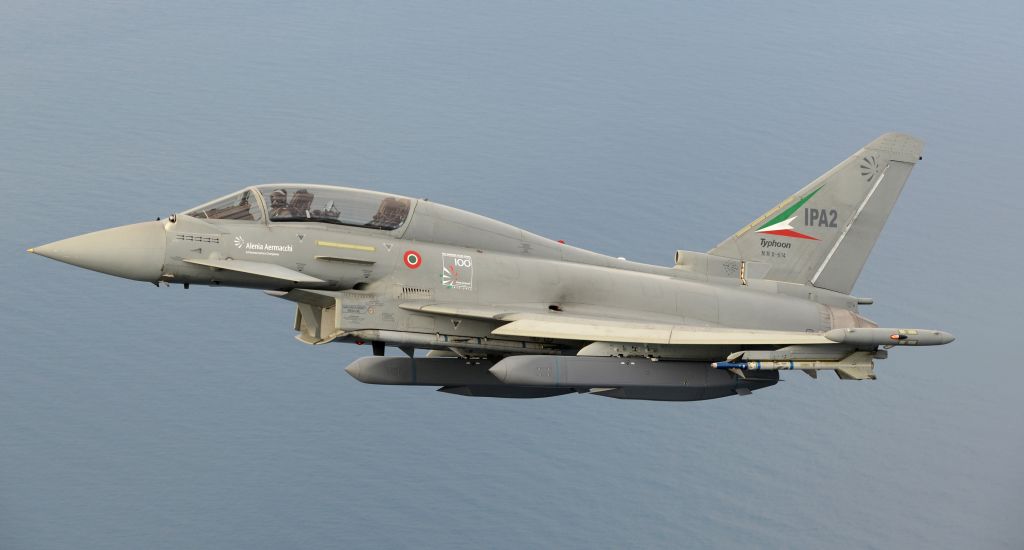
European missile systems manufacturer MBDA and Ukrainian defense company Ukrainian Armor have signed a memorandum of understanding to explore joint development of deep-strike systems and counter-unmanned aerial systems (C-UAS), marking a new phase of industrial cooperation linked to the war in Ukraine, MBDA announced on 10 June.
MBDA expands cooperation with Ukraine’s defense industry
MBDA is one of Europe’s leading defense firms specializing in guided missile systems across air, land, and naval domains. It is also the maker of the Storm Shadow / SCALP-EG cruise missile, which has been supplied to Ukraine by European partners for long-range strike missions.
Ukrainian Armor is a domestic Ukrainian defense manufacturer involved in producing armored vehicles, artillery systems, ammunition, and unmanned platforms, and has expanded significantly since the start of Russia’s full-scale invasion.
Cooperation to focus on long-range strike systems and counter-drone technologies
The agreement sets out a framework for long-term cooperation, including joint development projects, technology exchange, and potential co-production initiatives, with the possibility of establishing a future joint venture.
The focus is on two priority areas: “deep strike” capabilities for long-range precision attacks, and counter-unmanned aerial systems designed to detect and neutralize drones, which have become central to battlefield dynamics in Ukraine.
Ukraine to strengthen domestic defense production with European expertise
MBDA said the partnership is intended to help strengthen Ukraine’s independent industrial capacity, while leveraging European experience in advanced missile and air defense systems. Ukrainian Armor will contribute production capability and operational experience across armored vehicles, munitions, and unmanned systems developed under wartime conditions.
Both sides said the cooperation aims to combine European technological expertise with Ukrainian battlefield-driven innovation, creating a framework for deeper defense-industrial integration.
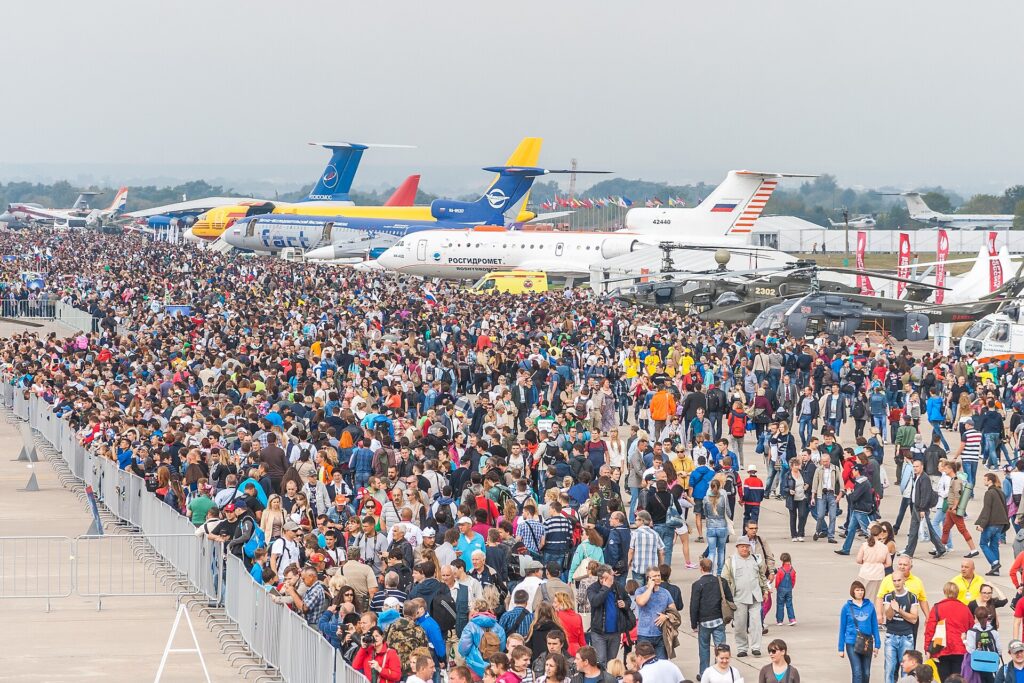
Russia has removed the International Aviation and Space Salon (MAKS) from its 2026 exhibition calendar, effectively cancelling the event for a fourth consecutive year and pushing its return to 2027, according to a government order cited by The Moscow Times.
The exhibition was once a flagship showcase for Russia’s aviation and defense industry, drawing international delegations and major arms manufacturers. Its continued suspension highlights how the war has increasingly affected even symbolic elements of Russia’s defense sector.
The decision also affects the Hydroaviasalon air show, which has been shifted to the same year. No official reason was given for the move.
MAKS repeatedly postponed since 2021 amid wartime disruptions
MAKS, traditionally held at Zhukovsky airfield near Moscow, was last staged in person in 2021, prior to the full-scale invasion of Ukraine. Since then, it has been repeatedly downgraded or postponed, with online-only formats replacing physical displays in 2024–2025.
The cancellation comes as Russia continues to scale back or relocate major public and symbolic events under what officials describe as a “security situation” linked to the war, The Moscow Times reports.
Ukrainian deep-strike campaign increasingly reaches Moscow region
In recent months, Ukrainian long-range drone operations have increasingly reached Moscow and the surrounding oblast, targeting infrastructure tied to military production and logistics.
Strikes reported in May hit industrial sites in and around the capital, including facilities linked to electronics and fuel distribution networks, while Russian authorities have acknowledged repeated drone incursions over the wider Moscow area.
Ukraine launched its largest drone attack on Moscow yet, targeting more than a dozen facilities across the city and Moscow Oblast.
— Euromaidan Press (@EuromaidanPress) May 17, 2026
Expanding reach of Ukraine’s long-range strike strategy
Analysts say the pattern reflects a broader shift in Ukraine’s deep-strike campaign, which has expanded from border regions and occupied territories to more frequent attempts to penetrate central Russian air defense layers. The goal is not only economic pressure, but also disruption of systems tied to command, production, and energy supply.
Ukrainian officials have not commented on the MAKS decision, but Kyiv has repeatedly framed long-range strikes as a response to Russian attacks on Ukrainian cities and infrastructure.
The suspension of MAKS also follows a wider trend of reduced large-scale public events in Russia since the start of the full-scale invasion of Ukraine in 2022, including scaled-back national celebrations and security-restricted gatherings in Moscow.
Ukraine's Defense Forces set major fuel and petrochemical plants deep inside Russia on fire and hit military targets along the front overnight on 12 June, according to Ukraine's General Staff. Fires broke out at refineries in Tatarstan and a rubber plant in Samara Oblast, while monitoring channels reported strikes in occupied Crimea. The raid forced one Russian city to cancel its Russia Day celebrations.
Ukraine's deep-strike campaign has already pushed Russia's gasoline crisis into 25 regions and six occupied Ukrainian areas, with earlier reports claiming roughly 40% of Russian refining capacity knocked offline since January. With Russian oil facilities now burning on back-to-back nights, each confirmed shutdown tightens the fuel squeeze on the army Moscow needs to keep its war going — and shows its air defense cannot cover the depth of its own territory.
Two refineries burn in Nizhnekamsk
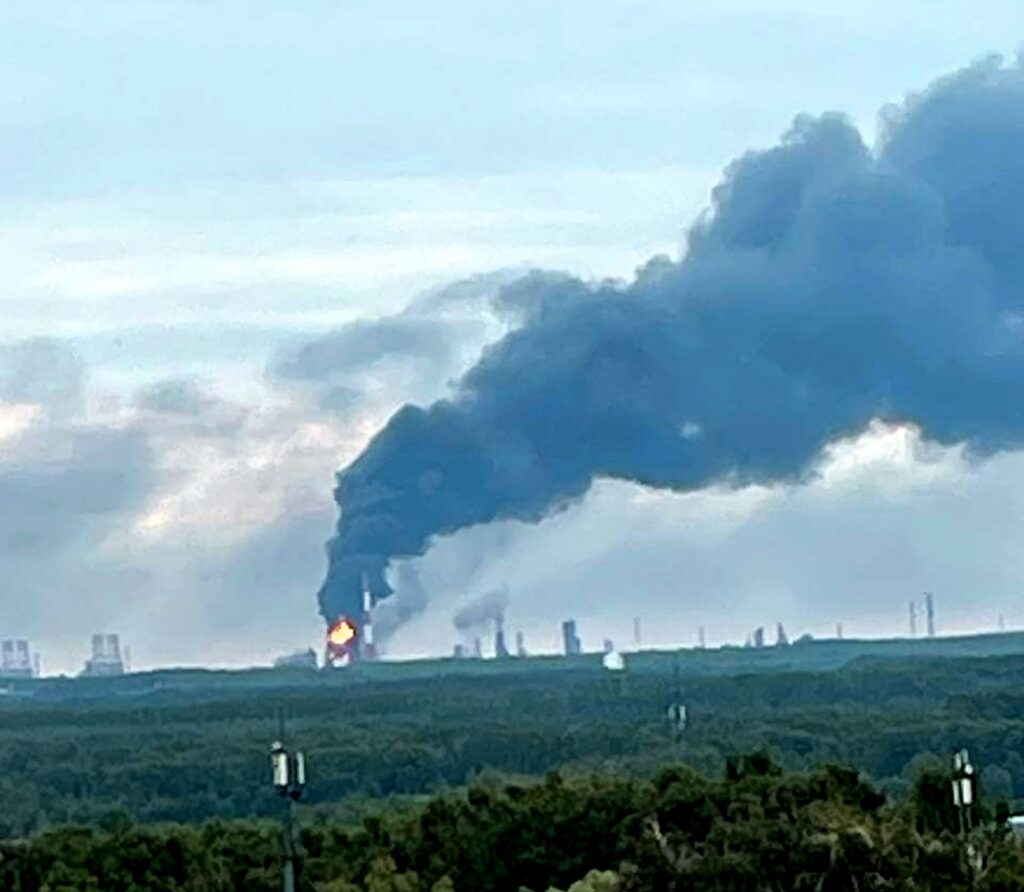
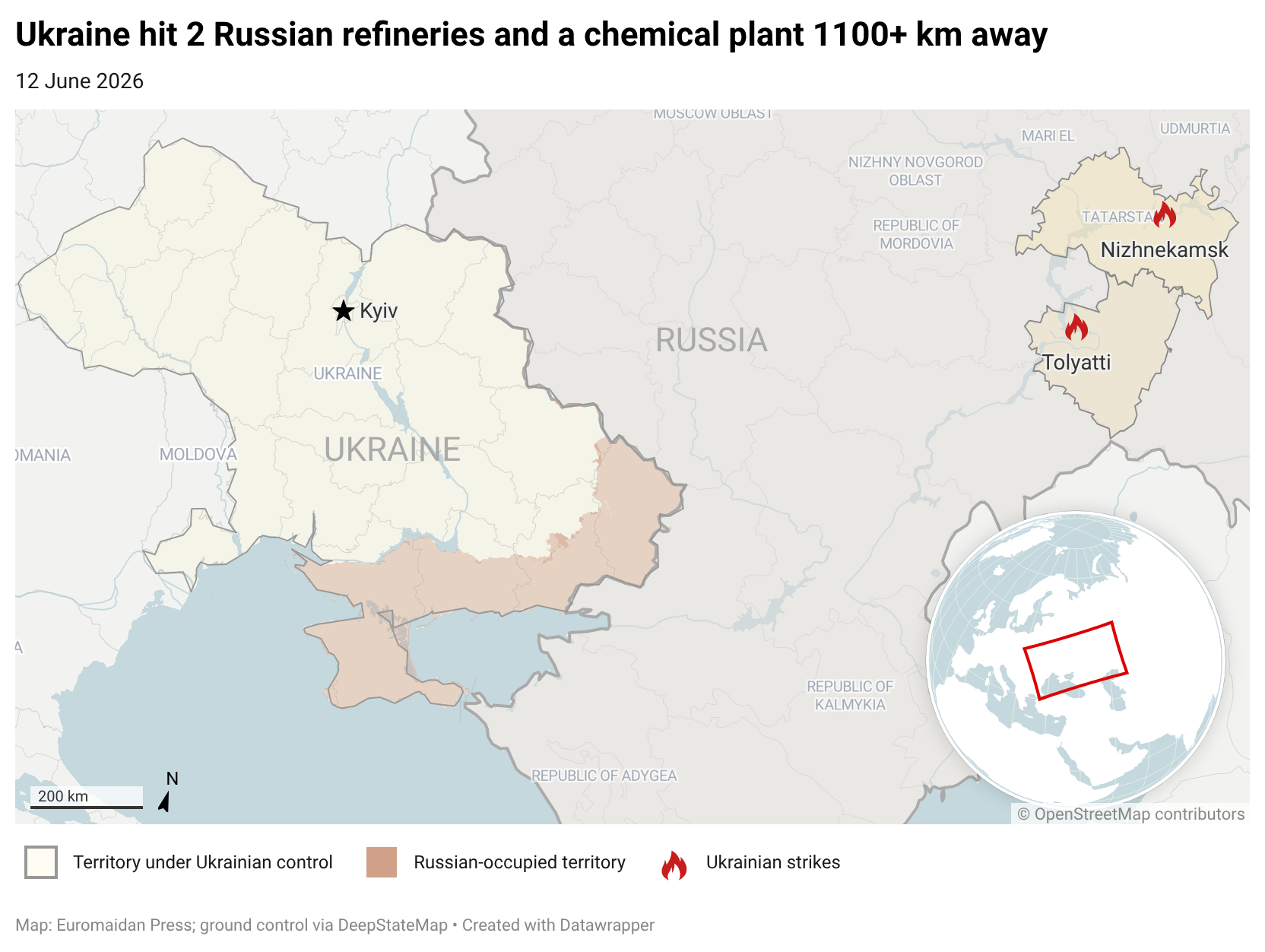
Units of Ukraine's Defense Forces struck the TANECO and TAIF-NK oil refineries in Nizhnekamsk, Republic of Tatarstan, Russia. The General Staff confirmed hits and fires at both plants. TANECO ranks among Russia's largest refineries, with a design capacity of over 16 million tons of oil per year. It produces diesel, aviation fuel, and other petroleum products. The plant lies more than 1,100 km from Ukraine's border.
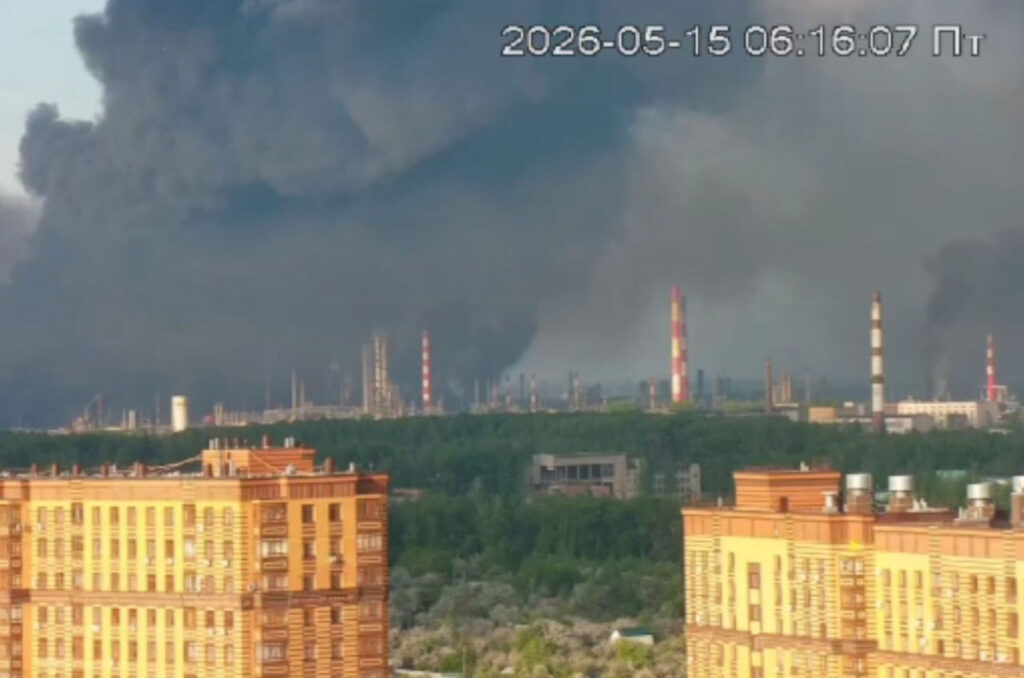
Drones set fire to Nizhnekamskneftekhim, one of Russia's largest petrochemical plants, in Tatarstan in the early hours of 12 June.
The strike reportedly ignited the AVT-8 unit, where crude oil gets its primary processing and is split into gasoline, diesel, and other fractions.… pic.twitter.com/BQFXXp4NyJ
Russian news Telegram channel Astra found at least three separate fires at TANECO in its OSINT analysis of eyewitness footage. Astra's source said the ELOU AVT-9 primary oil processing unit and the ELOU AVT-8 column were burning. The channel called TANECO one of Russia's most efficient refineries, with a refining depth of 99.6%. Monitoring Telegram channel Supernova+ published footage of two large fires with thick black smoke at the plant. Preliminary data pointed to damage at two primary processing units and a tank farm.
TAIF-NK, the second refinery hit, processes heavy high-sulfur crude and gas condensate at a declared refining depth above 95%, the General Staff noted. Its output runs from mass-market fuel to feedstock for petrochemicals and military needs.
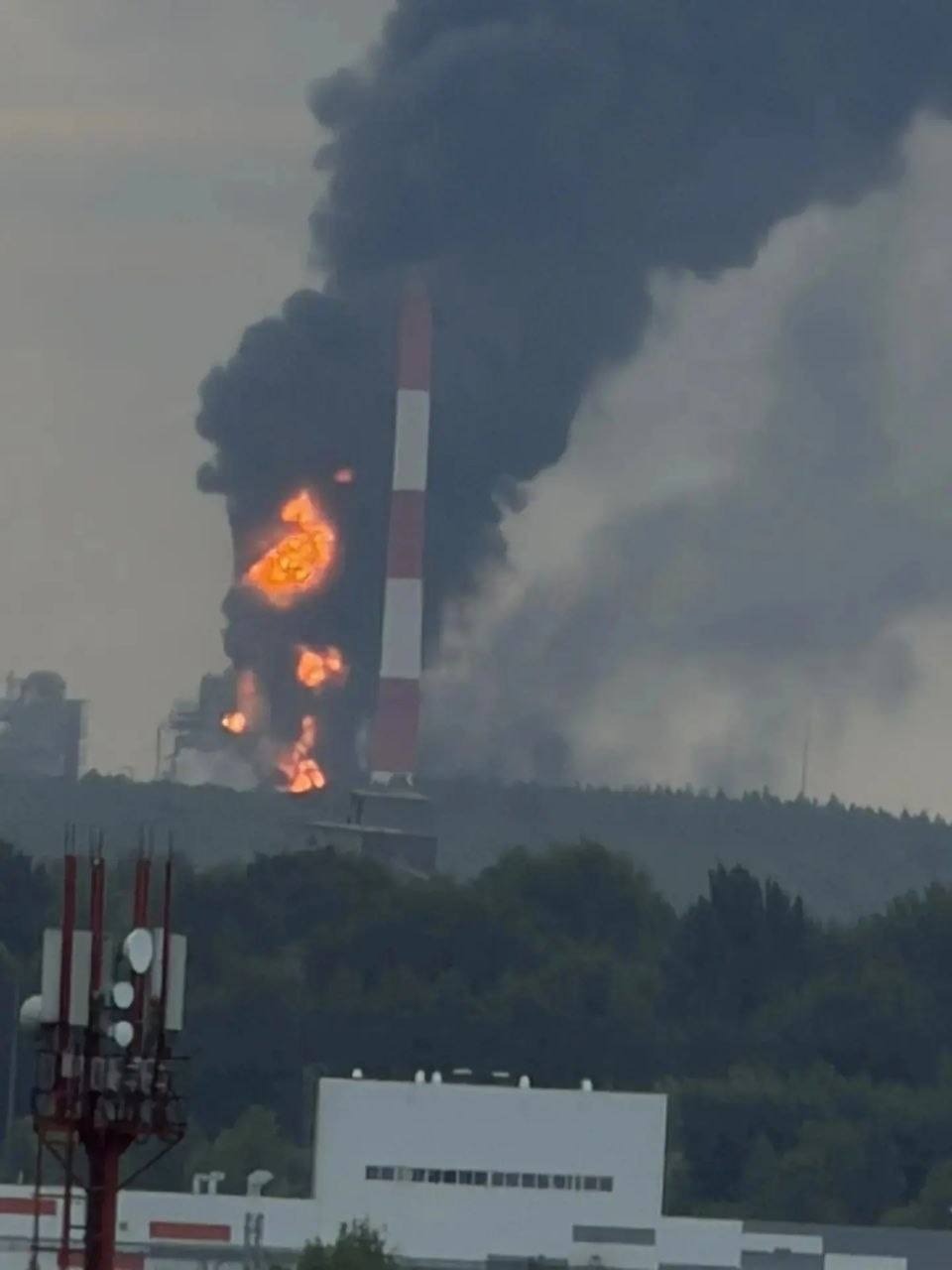
Fire engulfs an industrial unit next to a chimney after the Ukrainian strike on Nizhnekamsk, Tatarstan, Russia, 12 June 2026. Photo: Exilenova+
Russia Day canceled as a petrochemical giant burns
Tatarstan declared a drone danger regime at 3 a.m., and the airports of Kazan and Nizhnekamsk restricted flights. Residents of Nizhnekamsk then reported powerful explosions across the city. Nizhnekamsk Mayor Radmir Belyaev stated the city canceled all festivities for Russia Day, the state holiday marked on 12 June.
Monitoring Telegram channels Exilenova+ and Supernova+ tracked the night's fires. Monitoring channels also reported a hit on Nizhnekamskneftekhim (NKNH), one of Europe's largest petrochemical complexes, located in the same city. The SIBUR-owned plant processes feedstock from TANECO and TAIF-NK into synthetic rubbers, plastics, and ethylene, Astra said.
Rubber for Russian missile fuel burns in Tolyatti
Ukrainian forces also hit the Tolyattikauchuk plant in Tolyatti, Samara Oblast, Russia. The General Staff confirmed the strike and a fire at the site. The plant makes synthetic rubbers used, among other things, in producing solid rocket fuel for tactical and ballistic missiles, plus monomers, fractions, and high-octane gasoline additives.
Multiple fires are burning across the industrial zone of Russia's Tolyattikauchuk chemical plant after a massed Ukrainian Defense Forces drone attack on Tolyatti.
The petrochemical plant in Samara Oblast produces synthetic rubber and tire components. Explosions rattled windows… pic.twitter.com/2Po2sqkq7v
Astra reported that Tolyattikauchuk, part of the Tatneft group, is listed in a closed registry of defense enterprises kept by Russia's Industry and Trade Ministry. Its rubbers go into tires for military vehicles and components for the aviation industry, the channel said.
Explore further
Russia’s oil production falls for sixth straight month as Ukrainian drone strikes hit storage and transport
Tolyatti Mayor Ilya Sukhikh stated that one industrial facility took damage from what he called a drone fall during a massive Ukrainian drone attack. Samara Oblast Governor Vyacheslav Fedorishchev said nobody was hurt in the attack on the region.
Russia's Defense Ministry claimed its air defenses "intercepted and destroyed" 231 Ukrainian drones overnight on 12 June. The ministry claimed downings over Tatarstan and Samara Oblast, a dozen other regions from Belgorod to Astrakhan, the Moscow region, and occupied Crimea.
Russia's crude oil production fell in May to its lowest level in a year, with Ukraine's record-setting drone campaign against oil infrastructure playing a major role, Bloomberg reported. The decline, now running for half a year, cuts into the mineral extraction tax — the main channel through which oil fills the federal budget that finances the war, the Russian-language Moscow Times noted.
With Ukraine's deep strikes at a record tempo and Russia's regional budgets posting record shortfalls, every lost barrel of extraction tightens the fiscal squeeze on Moscow's war in Ukraine.
Output slides for half a year, far below the OPEC+ quota
Russia averaged 9.009 million barrels of crude a day in May, OPEC's monthly report shows. Daily output last peaked in November at 9.38 million barrels and has shrunk every month since, losing roughly 370,000 barrels, the Moscow Times wrote. The May figure sits 690,000 barrels a day short of what the OPEC+ deal obliges Russia to pump, Bloomberg calculated. The data excludes condensate, and April's level was revised slightly lower.
Explore further
All three Rosneft Samara refineries now offline or reduced as drones halt Kuibyshevsky operations yesterday
The Ukrainian strikes have been disabling oil storage and transportation capacity. That shortage, combined with underinvestment, reduces the volume of crude Russia extracts. Bloomberg observed that while the latest monthly drop marks a slowdown against previous months, it will likely keep weighing on oil markets. Oil prices stay elevated amid the continuing Middle East conflict, and Russia ranks among the world's three biggest crude producers whose barrels bypass the Strait of Hormuz, shut in practice since the Iran war erupted.
Explore further
Russia’s fuel crisis jumps from 15 to 25 regions in five days—plus six occupied Ukrainian areas
A record month of strikes crushes refining
Ukraine sharply intensified its May campaign against Russian oil sites, logging at least 31 strikes on refineries, seaborne export terminals, and pipelines, Bloomberg counted — the highest monthly count since the full-scale invasion, as Kyiv works to cut the Kremlin's income from elevated crude prices. Because most strikes targeted fuel-producing facilities, Russian refining collapsed to its 2009 level in May. So far this month, Russia's refining runs have fallen to a two-decade low, EA Analytics, part of consultancy Energy Aspects, estimates.
Explore further
Russian crude reaches the sea through tunnels under a mountain ridge—and Ukraine hit the storage end near Novorossiysk
Exports rise while the budget's tax base shrinks
The gasoline shortage behind the fuel crisis in a number of Russian regions led producers to redirect more crude to export markets. The Baltic and Black Sea ports damaged in the first two months of spring have been repaired. Seaborne crude exports averaged 3.64 million barrels a day over the four weeks ending 31 May, Bloomberg's tanker-tracking data show. That compares with 3.17 million barrels daily over the four-week stretch to 17 April, when Ukrainian forces actively bombed ports and export terminals.
The Moscow Times notes that the export shift allows companies and intermediaries who retain significant sums from sales abroad to raise their incomes. The federal budget that pays for the war, though, is filled above all by the mineral extraction tax, so falling production hits government revenue directly.
Economic activity in Portugal recorded a 5.1% decline on June 3, the day of the general strike, marking the sharpest contraction on a working day since the general strike in

 Login
Login