Normal view

California is suing the Trump administration to block a new ICE facility

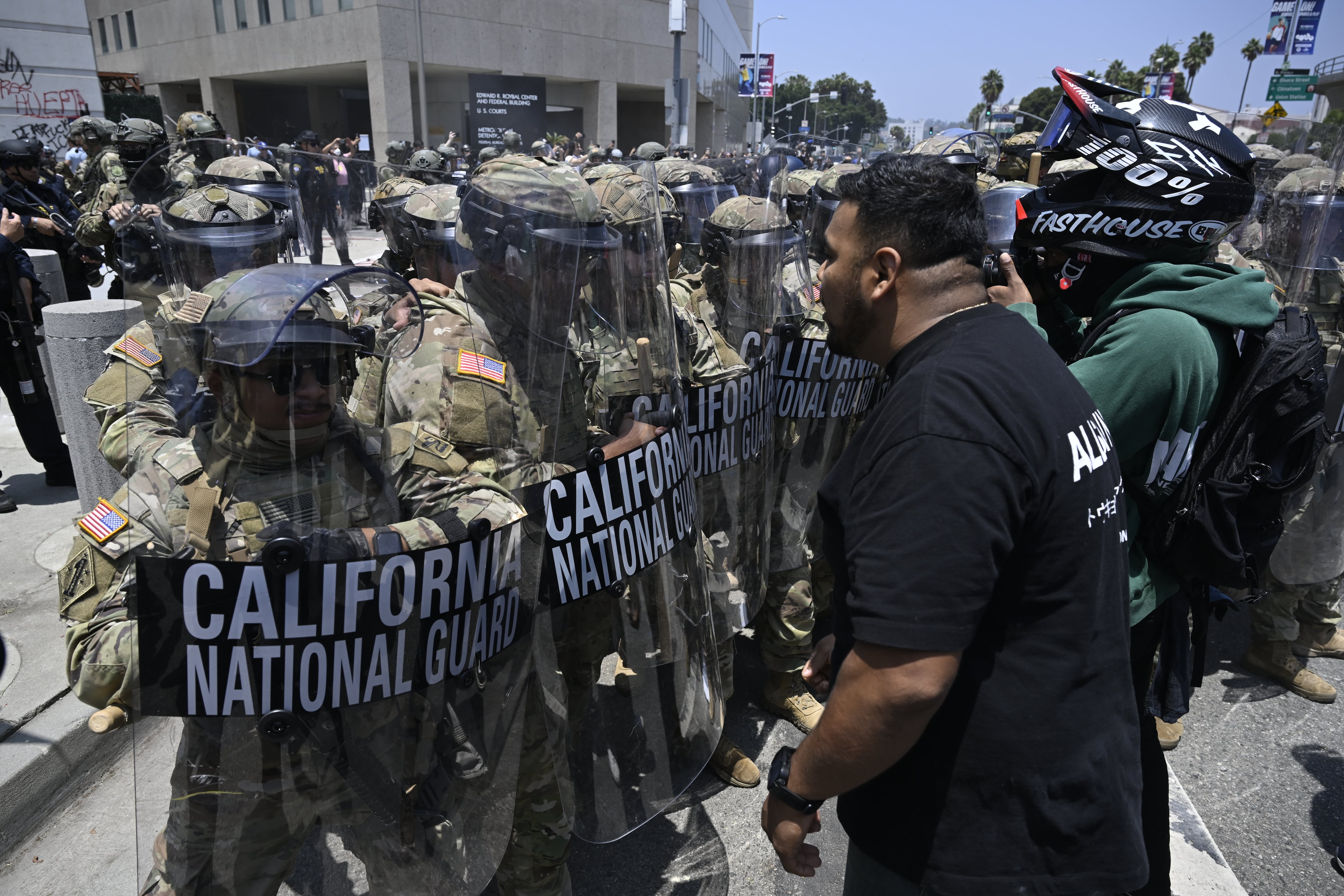
An agricultural property a few miles from Gilroy, just south of the San Francisco Bay Area, has become the latest flashpoint in the ongoing clash between California and the Trump Administration. California Attorney General Rob Bonta and Santa Clara County filed a federal lawsuit on Wednesday seeking to stop the construction of a U.S. Immigration and Customs Enforcement (ICE) facility that local officials say could be used to temporarily detain migrants as part of the federal government’s intensified immigration enforcement efforts.

Seguir leyendo

© Tayfun Coskun (Getty Images)

ICE agents and members of the National Guard outside the Metropolitan Detention Center in Los Angeles, California.

Vance chief of staff Jacob Reses to depart role

11 June 2026 at 19:30
Jacob Reses, Vice President Vance’s chief of staff who has been with him since his Senate campaign, will be leaving the role at the end of the summer. Reses has served in the role since Vance took office with President Trump in January 2025. “Jacob’s been by my side for my whole career in public…

Vance chief of staff Jacob Reses to depart role

11 June 2026 at 19:30
Jacob Reses, Vice President Vance’s chief of staff who has been with him since his Senate campaign, will be leaving the role at the end of the summer. Reses has served in the role since Vance took office with President Trump in January 2025. “Jacob’s been by my side for my whole career in public…

15 tons of diesel, $22,500 in damages: Ukraine charges eight in Poltava military fuel-theft scheme

11 June 2026 at 18:25

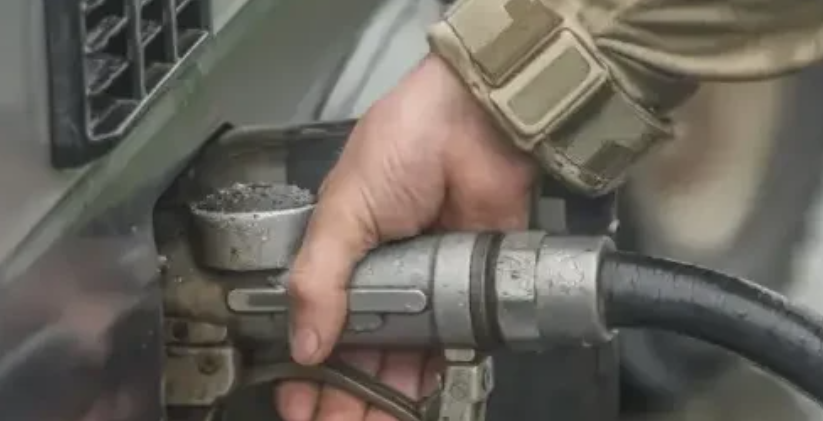
A Ukrainian soldier refuels a vehicle with gasoline. Source: ArmyInform

Six Ukrainian servicemembers and two civilians have been charged in a fuel-theft scheme that diverted over 15 tons of diesel fuel from a military unit in 2025, the Special Prosecutor's Office for Defense Sector of the Central Region announces. The scheme caused damages of over $22,500 to the military unit, whose fuel was destined for Ukrainian Defense Forces operations.

The defendants face up to 15 years' imprisonment under Article 410, Part 4, of the Ukrainian Criminal Code, for theft of military property during martial law by a prior conspiracy group.

The Poltava fuel-theft prosecution is one of several Ukrainian military corruption cases prosecuted in early June 2026.

How did scheme work? 

The scheme was organized by a technician of the Poltava-area military unit, prosecutors said.

The technician engaged refueling drivers with direct access to fuel during transport, along with civilians who acted as buyers and resellers of the stolen diesel. During loading operations, drivers manipulated the measuring sticks and exploited specific technical features of fuel tanker vehicles so that part of the diesel did not appear in official accounting.

They also artificially created fuel surpluses by reducing the actual consumption recorded during transport and entering false data into trip sheets, listing fuel as consumed when it was not.

The "surplus" fuel was poured into canisters and hidden in forest strips near the military unit. The technician then transported the stolen fuel to private buildings, where he stored and sold it to civilians. Proceeds were divided among scheme participants.

Ukraine's defense anti-corruption apparatus continues prosecution

Ukraine's defense-sector anti-corruption apparatus has continued to actively investigate and prosecute internal theft cases during the war. The DBR, Special Prosecutor's Office for Defense Sector, and SBU have pursued cases ranging from procurement fraud at the Defense Ministry level to FPV-drone theft from frontline supply caches to organized fuel-theft schemes like the Poltava case.

Medic stole 16 FPV from firm that entered $1.1 billion Pentagon competition and hid them for four months. Ukraine arrested him when he tried to sell them for 19% of their value

They calculated that New York nursing home families would move on. They were wrong.

11 June 2026 at 18:00
Families of over 15,000 New Yorkers who died in nursing homes have been fighting for six years to hold former Gov. Andrew Cuomo accountable for his administration's directive to accept COVID-positive patients without testing, which resulted in thousands of deaths, and for falsifying the death toll, and are still demanding answers from the Department of Justice.

They calculated that New York nursing home families would move on. They were wrong.

11 June 2026 at 18:00
Families of over 15,000 New Yorkers who died in nursing homes have been fighting for six years to hold former Gov. Andrew Cuomo accountable for his administration's directive to accept COVID-positive patients without testing, which resulted in thousands of deaths, and for falsifying the death toll, and are still demanding answers from the Department of Justice.

A&E closures threatened at Portugal’s state hospitals through summer

11 June 2026 at 16:40
Portugal’s SNS public health service is 45 years old today

Two years into the social democrat government that promised to ‘rescue’ the ailing state health service, doctors and hospital administrators are once again warning of likely closures of A&E departments

The post A&E closures threatened at Portugal’s state hospitals through summer appeared first on Portugal Resident.

Trump, Congress both support second chances — now they must take action

The White House, Senate, and House of Representatives have expressed support for Second Chance Month, a movement to raise awareness of the barriers faced by people with a criminal record, and the Second Chance Reauthorization Act, which would provide job training, housing assistance, and other services to help people reintegrate into society.

Trump, Congress both support second chances — now they must take action

11 June 2026 at 16:00
The White House, Senate, and House of Representatives have expressed support for Second Chance Month, a movement to raise awareness of the barriers faced by people with a criminal record, and the Second Chance Reauthorization Act, which would provide job training, housing assistance, and other services to help people reintegrate into society.

At least $60M spent on White House UFC event

11 June 2026 at 15:16
Federal agencies and the UFC are spending at least $60 million to pull off the White House cage fight set to take place Sunday, which is President Trump’s birthday.  The funds have gone toward building an octagon fighting arena on the White House South Lawn, purchasing and delivering food and paying up to 900 workers…

At least $60M spent on White House UFC event

11 June 2026 at 15:16
Federal agencies and the UFC are spending at least $60 million to pull off the White House cage fight set to take place Sunday, which is President Trump’s birthday.  The funds have gone toward building an octagon fighting arena on the White House South Lawn, purchasing and delivering food and paying up to 900 workers…

Girl, 12, uses coded message during 112 call to alert PSP

11 June 2026 at 14:44
Girl, 12, uses coded message during 112 call to alert PSP

A 12-year-old girl alerted emergency services to an alleged abusive situation through a coded message during a 112 emergency hotline call, PSP police have revealed. The incident took place during

The post Girl, 12, uses coded message during 112 call to alert PSP appeared first on Portugal Resident.

Care worker fears being parted from unborn child and family after Home Office ‘go home’ letters

11 June 2026 at 18:52

Pregnant woman in Scotland ‘stressed’ and unsure what will happen as result of UK government’s visa clampdown

A heavily pregnant mother legally living and working in the UK fears the Home Office could try to separate her from her unborn baby after her husband and first child were sent “go home” letters.

Sachintha Warnakulasuriya lives in Scotland with her husband, Indika Kumara, and their six-year-old daughter, Heily. Warnakulasuriya, 36, has a visa permitting her to work in the UK as a care worker and is sponsored by her employer. Her husband, also 36, and daughter are legally entitled to live in the UK as her dependents.

Continue reading...

© Photograph: supplied

© Photograph: supplied

© Photograph: supplied

Who is the aggressor?

By: A A
11 June 2026 at 12:01

By  Joe LAURIA

Join us on TelegramTwitter, and VK.

Contact us: info@strategic-culture.su

That is the most important question today that we strive everyday to answer.

If you understand who the aggressor is, you are on your way to understanding the mad and perilous times we live in.

Once you get that, what you’ve been taught all your life starts to lose its hold on you.

Establishment education and media try to confuse you. Independent media like Consortium News try to clarify.

Establishment education and media portray the aggressor as the defender, and the victim as the threat. Consortium News endeavors to show you the “threat” is really an obstacle. An obstacle to aggression and occupation. An obstacle to expansion. Locally and globally.

Few would agree with aggression, paid for with your taxes in a so-called democracy. So obstacles to aggression become threats that you’re supposed to be afraid of. Offensive action is taken as “defense” to protect you from the “threat.”

There’s nothing new in this.  The Romans dressed up their imperial aggression as self-defense against fake threats. Rome provoked tribes, first in Italy and then Gaul and Germania, into forming alliances to protect the tribes’ sovereignty, and then Rome presented these alliances as “threats” that had to be destroyed, justifying war against them.

Rome would also provoke an adversary into invading or launching an attack to obtain the casus belli needed to start a pre-planned war. For instance, Roman ally Masinissa of Numidia repeatedly raided Carthage to provoke it into finally responding militarily in violation of a treaty it had with Rome. The empire used this as a pretext for total destruction and annexation — even though Carthage, an obstacle to Roman expansion, posed no realistic, existential threat.

In the earlier U.S. imperium, Mark Twain explained it this way:

“The statesmen will invent cheap lies, putting the blame upon the nation that is attacked, and every man will be glad of those conscience-soothing falsities, and will diligently study them, and refuse to examine any refutations of them; and thus he will by and by convince himself the war is just, and will thank God for the better sleep he enjoys after this process of grotesque self-deception.”

Today the obstacles to the aggressors’ expansion and occupation in the Middle East are Iran plus the legal, armed resistance to Greater Israel: Hamas, Hezbollah, the Houthis and Shia militia in Iraq. They are presented as “threats”rather than defenders of their dignity, sovereignty and land.

In Asia the “threat” is China. Beijing protecting its sovereignty in its own region is somehow a threat to U.S. warships near China’s waters and to Taiwan, which the U.S. agrees is part of China.

In Europe years of NATO expansion, refusal to negotiate a mutual security treaty, rehabilitation of fascism, a coup, and civil war in Ukraine against ethnic Russian coup-resistors provoked Russia to intervene, much as the Romans provoked Carthage. Getting Russia to invade Ukraine allows the portrayal of Moscow as the aggressor and a “threat” to all of Europe and not as an obstacle to the U.S. and Wall Street return to their 1990s dominance of Russia. (Now there is constant talk of direct NATO war with Russia. The fear is another provocation to get Russia to start it.)

All of these obstacles to U.S. global hegemony are presented to you as existential threats that only the mighty United States, NATO and Israel can protect you from. There’s nothing in it for them, of course, except saving your life, we’re expected to believe.  Except you don’t have to believe it. You have alternative media like Consortium News to expose the deceptions on a daily basis.

That’s why pro-establishment social media companies and so-called anti-disinformation services have tried to hurt us. And that’s why we need your help.

Original article:  consortiumnews.com

Is the Iran War tipping the Gulf away from the U.S.?

By: A A
11 June 2026 at 09:45

By Ted SNIDER

Join us on TelegramTwitter, and VK.

Contact us: info@strategic-culture.su

The countries that have borne the brunt of Iranian retaliation have an incentive to diversify their security structures.

On June 3, as messages continued to pass between Iranian and American negotiators, the U.S. endangered diplomacy with renewed aggression against Iran. Enforcing the blockade on Iranian ports, U.S. forces fired a Hellfire missile into the engine room of a Botswana-flagged oil tanker. Moments earlier, per CENTCOM, they had “conducted self-defense strikes on an Iranian military ground control station on Qeshm Island” in the Strait of Hormuz. These were the third round of U.S. strikes on Iran in the past week.

The Iranian reply to the attacks included the firing of 13 ballistic missiles and 17 drones at Kuwait. Some of those projectiles penetrated the roof of a passenger terminal at Kuwait International Airport. People rushed away from the huge hole in the roof as flames and smoke filled the building. One person was killed, and 63 others were injured.

There is no legal or moral justification for targeting civilian infrastructure. But, amid all the talk of “criminal Iranian aggression” and of Iran’s “deliberate, calculated, and unjustified attack” on a civilian airport when all the American bases in Kuwait “are dozens of miles from the airport,” one small sentence went unnoticed. Buried in the body of a New York Times article was the single line, “In recent years, American forces have operated out of a site in the Kuwaiti airport complex.”

U.S. Secretary of State Marco Rubio recently said that “our allies in the region have been very cooperative—some, obviously, very aggressively cooperative, like the UAE, for example. Kuwait’s been fantastic in this part.” Iran’s Foreign Minister Abbas Araghchi says Iran is “carrying out self-defense strikes on sites the United States was permitted to use to attack civilian shipping and violate the ceasefire.”

The Gulf states believed that hosting U.S. bases provided them with an umbrella of defense against Iran. They have come to see that those bases have become magnets for Iranian ballistic missiles and drones.

But the U.S. has not only failed to protect the Gulf states; it has openly coerced and threatened them.

Oman is a small country of outsized importance. It has a long, uninterrupted history of good relations with the United States. Oman has mediated several conflicts and helped get the U.S. out of several jams. It mediated the ceasefire between the U.S. and Yemen last year. Most importantly, Oman helped the Obama administration secure its nuclear deal with Iran. As Trita Parsi lays out in Losing an Enemy, “while the world’s eyes were locked on the ongoing P5+1 [U.S., UK, France, Germany, Russia, China] talks… the real show was taking place in secret in the heat of the Omani mountains.”

But none of this history was enough to prevent President Donald Trump from threatening to bomb Oman.

The Trump administration is angry with Oman for three reasons. The first is that, on the eve of the U.S. decision to go to war with Iran, the Omani foreign minister, Badr bin Hamad Al Busaidi, who was mediating the negotiations, made sure the world knew that war was not necessary, saying that a peace deal “is within our reach, if we just allow diplomacy the space it needs to get there.”

The second was Al Busaidi’s article in the Economist in which he called the U.S. strikes on Iran “unlawful.” Though calling the strategy “unacceptable,” he empathized with Iran’s decision to strike American bases in the Gulf countries, calling it “probably the only rational option available to the Iranian leadership.” And he criticized the Trump administration, saying it miscalculated and “lost control of its own foreign policy.”

Most importantly, Oman has not cut ties with Iran and has reportedly been in discussions with Iran to jointly control the Strait of Hormuz. It was this potential relationship that led Trump to threaten Oman that it must “behave just like everybody else, or we’ll have to blow them up.”

The U.S. does not like the neutrality of Oman, which has made it such a valuable asset in the past. It has begun to press Oman to cut diplomatic ties with Iran and align itself unambiguously with America. Despite its long history of friendship, if Oman does not acquiesce to America’s demand, it will be treated the same way as Iran: sanctions and bombs. The day after Trump threatened Oman with bombs, Treasury Secretary Scott Bessent threatened it with sanctions, warning that “Oman, in particular, should know that the U.S. Treasury will aggressively target any actors involved—directly or indirectly—in facilitating tolls for the Strait.”

The United States no longer aligns with the Gulf states’ interests. They have become instruments for projecting American interests. Kuwait, Oman, and the other Gulf countries lobbied hard to prevent the U.S. from going to war with Iran. When Trump was a day away from restarting the war with fresh strikes on Iran, he said it was the leaders of the Gulf states who asked him “to hold off on our planned Military attack of the Islamic Republic of Iran, which was scheduled for tomorrow.” It was the Gulf states that paid the retaliatory price of the war; it was Kuwait that paid the price for the renewed limited strikes.

The Gulf countries’ interests have not been served by this war. Crucial infrastructure, including energy and water desalination plants, has been struck. Investor and tourist confidence have been diminished. Lives have been lost. Hard-won regional diplomatic gains with Iran have been set back. The U.S. failed to take their interests into account by dragging them into the war, and then failed to protect them once it started.

The Gulf states’ defense networks are too integrated into the U.S. system to extricate themselves entirely. But diversification is possible. In March, Oman’s Al Busaidi said the time had come for the Gulf countries to reconsider their defense strategies. Saudi Arabia and Pakistan last year signed a Strategic Mutual Defense Agreement that states “that any aggression against either country shall be considered an aggression against both.” Last month, during the war with Iran, Pakistan sent 8,000 troops, 16 fighter jets, and a Chinese air defense system to Saudi Arabia under that agreement.

Turkey, Egypt, and Pakistan, the leading military powers in the Muslim world (including the only nuclear power), have all expressed interest in a comprehensive regional security architecture that would encompass all the Muslim-majority nations of the region. Recent events have only enhanced those discussions.

The Iran War has highlighted the need for the Gulf countries to update their security arrangements. Washington ignored their warnings, rebuffed their lobbying, and then failed to deliver the promised protection. The war may have accelerated the Gulf states’ decision to modernize and diversify their security arrangements and, perhaps, even move to a more integrated regional security architecture.

Original article:  www.theamericanconservative.com

❌