
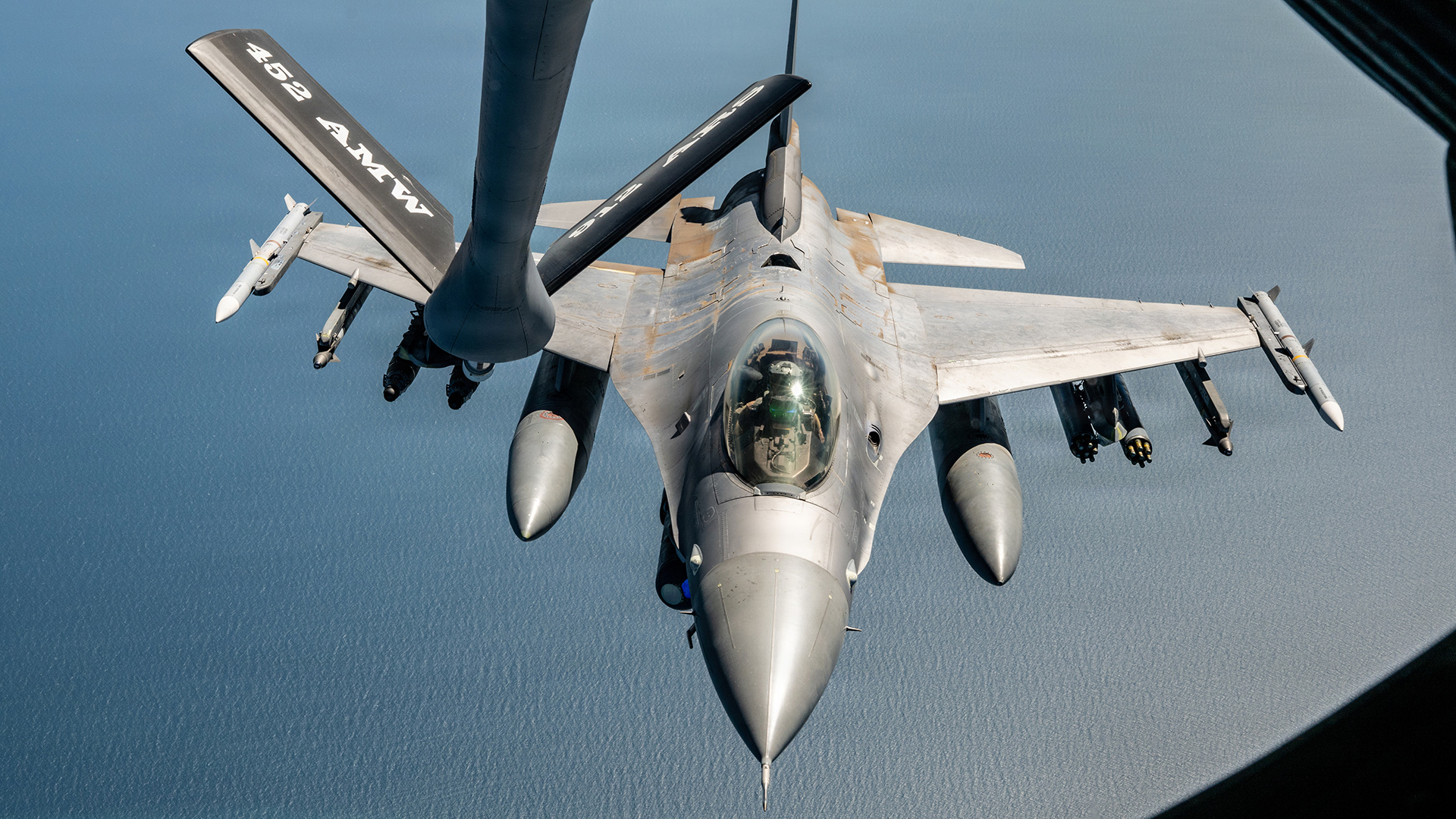
Normal view

Overnight Attacks Rattle U.S.-Iran Ceasefire (Updated)

10 June 2026 at 21:13

U.S. President Donald Trump told reporters today that in the wake of overnight attacks between the U.S. and Iran, strikes on Iran will continue. Meanwhile, Iranian officials say they are “reviewing” whether to continue peace talks after one of the most serious exchanges of fire between the two nations since the April 8 ceasefire.

The latest round of attacks and counterattacks touched off after U.S. Central Command launched three waves of strikes on targets in southern Iran in retaliation for what Trump said was Iran’s downing of an AH-64 Apache helicopter, reportedly by an Iranian Shahed drone. Iran denied attacking the Apache. You can read more about that incident here.

Khatam Al-Anbiya Central Headquarters: Iran‌ Delivers Powerful Response to US Onslaughthttps://t.co/5CvDlDqlc9 pic.twitter.com/4sdTjd31Bk

— Fars News Agency (@EnglishFars) June 10, 2026

Though damage assessments are still ongoing in the wake of Iranian missiles and drones launched across the Middle East overnight, a U.S. official told TWZ Wednesday morning that so far, there have been no injuries among U.S. personnel reported and no indication yet of any damage to American installations. That’s despite Iranian claims to the contrary.

“Iran launched multiple missiles and drones and just about all were intercepted according to initial reflections from assessments that are ongoing,” the official told us, speaking on condition of anonymity to discuss operational details. “No reports of harm to any U.S. personnel; not aware of any damage to our locations at this time.”

However, as we have noted in the past, similar U.S. assessments during the height of Epic Fury were later contradicted by reports of wide-spread damage from Iranian attacks.

Iranian officials said they again launched attacks on the U.S. Navy’s Fifth Fleet Headquarters in Manama, Bahrain, as well as Muwaffaq Salti Air Base in Jordan and targets in Kuwait.

Several videos emerging overnight claimed to show missile interceptions and explosions resulting from the latest Iranian kinetic actions.

Some showed missile interceptions over Muwaffaq Salti. As we have frequently noted, the base has been a major staging area for U.S. airpower in the region. It came under Iranian attack before the ceasefire, with an AN/TPY-2 missile defense radar there having been notably targeted.

Footage shows air defense interceptors engaging incoming Iranian ballistic missiles over Jordan.

Iran’s Islamic Revolutionary Guard Corps (IRGC) says it targeted Jordan’s Muwaffaq al-Salti Air Base, along with 20 other U.S. military sites across the region. pic.twitter.com/RxKHsNaQur

— Egypt's Intel Observer (@EGYOSINT) June 10, 2026

Additional video shows what appears to be an explosion in the distance as viewed from a CCTV camera in Manama in the wake of a claimed Iranian missile launch at Fifth Fleet headquarters. The extent of the damage, if any, is unknown.

CCTV footage shows an explosion in Bahrain’s capital Manama after what authorities say was an Iranian missile strike.

Iran’s IRGC says it hit US military bases in Bahrain, Kuwait and Jordan in retaliatory attacks for US strikes in the Strait of Hormuz. pic.twitter.com/4eKzhBa1np

— Al Jazeera Breaking News (@AJENews) June 10, 2026

The Islamic Revolutionary Guard Corps (IRGC)-connected Tasnim News Agency also posted a video it claims shows an attack on the Fifth Fleet. The short video shows what appears to be an explosion in the distance and again, there is no way to tell what, if any damage, was caused.

📹 ویدئوی منتشرشده در منابع عربی از اصابت به پایگاه آمریکا در بحرین pic.twitter.com/fW37dLXui6

— اخبار فوری جنگ (@WarNewsIr) June 10, 2026

The Kuwaiti Foreign Affairs Ministry condemned the latest Iranian strikes and said the nation “reserves its full right to take all necessary measures to preserve its security and defend its territories and vital facilities, in accordance with international law and the United Nations Charter.”

بيان صادر عن وزارة الخارجية
الأربعاء 10 يونيو 2026

تُعرب وزارة الخارجية عن إدانة دولة الكويت واستنكارها وبأشد العبارات، استمرار الاعتداءات الإيرانية الآثمة والمتكررة على دولة الكويت، والتي كان آخرها اليوم، في تصعيد جديد يُضاف إلى سلسلة الاعتداءات الإيرانية المتواصلة، ويُعد… pic.twitter.com/7H1TFQNqMv

— وزارة الخارجية (@MOFAKuwait) June 10, 2026

Iran said its latest volley of kinetic actions were in response to what U.S. officials say were strikes on 20 Iranian targets in response to the helicopter downing.

The United States and Iran traded strikes overnight.

20 Iranian targets were hit by U.S. forces, including air defense systems and radar sites.

Iran responded with missiles and drones toward Kuwait, Bahrain, and Jordan. pic.twitter.com/vl3fK4bO85

— Trey Yingst (@TreyYingst) June 10, 2026

This latest flurry of strikes prompted comments about the future of diplomacy from both sides.

During a morning press conference, Trump said “we hit ’em hard yesterday, and we’re going to hit ’em again hard today, in case you miss it, in case you don’t turn on your television set, and we’ll see what happens with the deal.”

.@POTUS on Iran: "We hit them hard yesterday and we're going to hit them again hard today… And we'll see what happens with the deal. We were really close to a deal — but they keep tapping us along. They keep playing us for suckers because you know what? They dealt with some… pic.twitter.com/ScvGn14QFQ

— Rapid Response 47 (@RapidResponse47) June 10, 2026

Earlier on Wednesday, Trump told Fox News that there may be additional U.S. attacks that focus on “Iranian power plants and bridges.”

NEW: President Trump tells me he "may keep going" with strikes against Iran and is getting closer to targeting Iranian power plants and bridges.

The President also spoke about the U.S. military helicopter that was downed saying that an Iranian drone lodged between the two… pic.twitter.com/j5aQEIzi9s

— Trey Yingst (@TreyYingst) June 10, 2026

The president’s comments to Fox follow statements he made on his social media outlet saying Iran has taken too long to agree to a peace deal.

“Iran’s Military is a complete and total mess,” Trump said on Truth Social. “Much of it, like their Navy and Air Force, doesn’t even exist anymore – They have been completely defeated. Iran is all talk and no action. The Bully of the Middle East is DEAD!!! They’ve taken too long to negotiate a deal that would have been great for them, now they will have to pay the price!!!”

Trump did not elaborate on what that price may be.

pic.twitter.com/3wfggfeEo2

— Rapid Response 47 (@RapidResponse47) June 10, 2026

As we noted earlier in this story, Iran is reassessing the future of diplomatic negotiations aimed at ending the US-Israeli war against the country, according to the official Iranian IRNA news outlet.

“We have to review it,” Iranian Foreign Ministry spokesperson Esmaeil Baqaei told IRNA. “Diplomacy and the battlefield are not separate matters; rather, they run alongside and complement each other in safeguarding Iran’s interests and security.”

​Baqaei stressed that Iran’s military and diplomatic tracks operate in coordination.

“Wherever the Armed Forces deem it necessary, they respond to the enemy with authority and strength, and last night’s events showed that Iran’s brave Armed Forces do not hesitate in defending the country,” he posited.

ایرانی وزارت خارجہ کے ترجمان اسماعیل بقائی کا کہنا ہے کہ حملوں کے بعد امریکا کے ساتھ مذاکرات کا ازسرنو جائزہ لے رہے ہیں، امریکا اور اسرائیل بار بار جنگ بندی کی خلاف ورزی کررہے ہیں۔

انہوں نے کہا کہ مذاکرات کو آگے بڑھانے کیلئے پرسکون ماحول بہت ضروری ہے، بدقسمتی سے واشنگٹن کے… pic.twitter.com/1nGcYA3fmN

— SAMAA TV (@SAMAATV) June 10, 2026

Despite the flare-up in fighting and posturing by both sides, negotiations appear to be continuing.

“Following consultations with the United States, Qatari negotiators headed to Tehran this morning to meet with the Iranians in an attempt to bridge the remaining gaps,” CNN reported on its Arabic channel, citing a source. “The visit indicates that diplomacy remains active, despite an exchange of fire between Iran and the United States overnight—marking one of the most significant tests of the ceasefire to date. A US official told CNN that the United States believes these strikes will not derail the negotiations.”

مصدر دبلوماسي لـCNN: مفاوضون قطريون توجهوا صباح الأربعاء إلى طهران لسد الفجوات المتبقية مع أمريكا https://t.co/IIkMnAmHkt

— CNN بالعربية (@cnnarabic) June 10, 2026

At issue remains the future of Iran’s nuclear ambitions, the ongoing closure of the Strait of Hormuz, Tehran’s ballistic missile arsenal and support for proxies and the easing of U.S. sanctions. Whether the increased fighting between the two sides will derail these efforts remains an open question.

UPDATES

Iran claims it downed another U.S. MQ-9 Reaper drone overnight. While TWZ can’t verify that, we have noted that the loss of dozens of these drones to Iran and the Houthis have forced the U.S. Air Force to scramble for replacements.

🎥 لحظهٔ انهدام پهپاد MQ9 در آسمان شهرستان جم بوشهر در شب گذشته pic.twitter.com/aUe1eR5nRZ

— خبرگزاری فارس (@FarsNews_Agency) June 10, 2026

A cargo ship came under small arms fire 88 nautical miles south of Balhaf, Yemen in the Gulf of Aden, according to the United Kingdom Maritime Trade Operations (UKMTO) monitoring organization.

“A cargo vessel has reported being approached by one craft with 6 armed persons onboard,” UKMTO explained. “There was an exchange of fire between the small craft and the cargo vessel’s Armed Security Team resulting in the small craft turning away. Authorities are investigating. Vessels are advised to transit with caution and report any suspicious activity to UKMTO.”

While details about who was involved are scant, this is the first attack in the region, near the Bab al-Mandeb Strait, since the Houthi rebels of Yemen threatened to shut the vital waterway down in support of Iran last week. You can read more about the implications of the Iranian proxy group closing the Strait on the U.S. military and the global economy in our prior reporting here.

UKMTO WARNING 065-26

Click here to view the full warning.⤵https://t.co/ushxdE2mx0#MaritimeSecurity #MarSec pic.twitter.com/vtHpdNUm4Z

— UKMTO Operations Centre (@UK_MTO) June 10, 2026

In a post on X, CENTCOM on Wednesday announced it disabled an oil tanker trying to run the blockade of Iranian ports.

The incident took place at 11:14 p.m. on June 9, when a U.S. aircraft “fired precision munitions” into the engine room of the Palau-flagged M/T Settebello as it transited the Gulf of Oman.

The ship was attempting to transport oil from Iran, the command added.

In addition to the ships it disabled, CENTCOM said it has “redirected 134 ships that complied, and allowed 42 vessels supporting humanitarian aid to pass since initiating the blockade on April 13.”

You can read more about the other seven ships hit by CENTCOM here.

CENTCOM:

At 11:14 p.m. on June 9, U.S. forces disabled an oil tanker in the Gulf of Oman for the second consecutive day after another vessel violated the ongoing blockade by attempting to transport oil from Iran.

U.S. Central Command (CENTCOM) disabled Palau-flagged M/T… pic.twitter.com/UkVgPoJUOt

— Clash Report (@clashreport) June 10, 2026

When it comes to the Strait of Hormuz and Gulf of Oman region, Trump took to social media to say the ongoing blockade of Iranian ports has devastated Tehran’s economy.

“The Fake News Media refuses to report how EFFECTIVE the U.S. Naval BLOCKADE is, the most successful Blockade in the history of Naval Warfare,” the president proclaimed on Truth Social. “NOTHING GETS THROUGH unless we want it to. IT IS A STEEL WALL! Iran is doing ZERO business, not paying their military, or any of their bills, and quickly becoming a FAILED NATION! Lots of oil is getting out. Praise be to Allah!”

President Donald J. Trump has taken to Truth Social again decrying the "fake news media" coverage of the naval blockade of Iran saying that it is a "STEEL WALL", Iran is doing "ZERO business, not paying their military or any of their bills, and quickly becoming a FAILED NATION!"… pic.twitter.com/DcCHVebRX7

— OSINTdefender (@sentdefender) June 10, 2026

However, in a post on X, the Windward trade intelligence group said that “five Iranian-trading [liquified petroleum gas] LPG carriers have broken the U.S. blockade on Iranian ports,” Windward stated. “Four discharged in India, one in Pakistan. All five used the same playbook, spoofing and AIS blackouts to mask loading and destination. Yet all signaled their exit and/or entry through Hormuz via AIS. Three were already U.S.-sanctioned. A fourth sanctioned June 6. Two operated under false flags, making them legally stateless.”

However, the crude oil blockade is holding, Windward added. 

“No Iran-trading VLCC tracked in Asia via Malacca, Sunda, or Lombok since May 4,” the organization noted.

Five Iranian-trading LPG carriers have broken the U.S. blockade on Iranian ports. Four discharged in India, one in Pakistan.

All five used the same playbook, spoofing and AIS blackouts to mask loading and destination. Yet all signaled their exit and/or entry through Hormuz via… pic.twitter.com/iWBqGHSrBl

— Windward (@WindwardAI) June 10, 2026

U.S. Secretary of War Pete Hegseth is scheduled to visit CENTCOM headquarters in Tampa, Florida, today to discuss the ongoing situation with the head of that command, Adm. Brad Cooper, and engage with troops.

Secretary Hegseth will be traveling to Guantanamo Bay, Cuba and Tampa, Florida today to engage with troops at GTMO and CENTCOM, per Pentagon.

— Kellie Meyer (@KellieMeyerNews) June 10, 2026

Despite efforts to quell the fighting between Israel and Hezbollah in southern Lebanon, the Israeli Air Force continues to strike targets in that country.

“Over the past day, the IDF struck Hezbollah infrastructure sites in the area of Tyre and in several areas in southern Lebanon,” the IDF stated on Telegram.

“In the area of Tyre, the IDF struck six infrastructure sites used by the Hezbollah terrorist organization to advance terror attacks against the State of Israel and IDF soldiers operating in southern Lebanon,” the IDF added. “Among the infrastructure struck was a site used by Hezbollah terrorists to launch explosive drones toward IDF soldiers.”

In southern Lebanon, “the IDF struck ready-to-use Launchers, terrorists who operated in the area in which IDF soldiers are operating, and additional terror infrastructure sites,” it claimed.

השמדת תשתיות טרור מהן הופעלו רחפני הנפץ נגד כוחותינו: חיל-האוויר וכוחות יחידת האיסוף 869 ממשיכים לפעול בדרום לבנון.

במהלך השבועיים האחרונים, הכוחות חיסלו בשיתוף חיל-האוויר יותר מ-20 מחבלים שפעלו לקידום מתווי טרור והיוו איום על כוחותינו. בנוסף הכוחות השמידו מספר תשתיות טרור… pic.twitter.com/Mysi9BMXHW

— Israeli Air Force (@IAFsite) June 10, 2026

Hezbollah, meanwhile, attacked a gathering of Israeli troops with a missile, according to Tasnim.

Hezbollah Strikes Israeli Military Gathering with Missile pic.twitter.com/TJUCOT3lvS

— Tasnim News Agency (@Tasnimnews_EN) June 10, 2026

The ongoing Israeli incursion into southern Lebanon and continuing presence in Syria has raised tensions with Turkey. Any direct conflict flaring up from the long-simmering animosity between two of the region’s most powerful militaries – though extremely unlikely – would be a far bigger deal than a dertailment of U.S.-Iran peace talks.

“We are fully aware of what the ultimate objective of the delusion of ‘Greater Israel’ is,” Turkish President Recep Tayyip Erdoğan said Wednesday, adding that Israel’s actions in Lebanon and Syria now threaten Turkey.

Turkish President Recep Tayyip Erdogan:

Israel's attacks on Syria and Lebanon have reached a point where they also threaten Turkey.

Turkey's security begins not in Hatay, but in Aleppo, Damascus, and Beirut. pic.twitter.com/YKRqbRugQ2

— Ariel Oseran أريئل أوسيران (@ariel_oseran) June 10, 2026

The Turkish leader’s statements sparked a harsh response from Netanyahu.

“The antisemitic tyrant Erdogan, who perpetrates genocide against the Kurds, supports the terrorist organization Hamas, oppresses his own people, and imprisons political rivals, is the last one who can preach morals to the State of Israel,” the Israeli leader retorted. “The State of Israel and the IDF, the most moral army in the world, will continue to act forcefully against Iran and its proxies that threaten the Middle East and the entire world.”

הרודן האנטישמי ארדואן שמבצע רצח עם בכורדים, תומך בארגון הטרור חמאס, מדכא את בני עמו ושם בכלא יריבים פוליטיים הוא האחרון שיכול להטיף מוסר למדינת ישראל.

מדינת ישראל וצה"ל, הצבא המוסרי ביותר בעולם, ימשיכו לפעול בעוצמה נגד איראן ושלוחותיה שמאיימות על המזרח התיכון ועל העולם כולו.

— Benjamin Netanyahu – בנימין נתניהו (@netanyahu) June 10, 2026

The latest events in the Mideast region show that there is no immediate end in sight to the hostilities and we will continue to monitor developments here given the ongoing impacts on the U.S. military and global economy.

UPDATE: 3:01 PM EDT –

Trump claimed the price of oil will fall because of how much has been secretly moved out of the region.

“We’re taking about millions of barrels of oil,” the president told reporters Wednesday afternoon.

.@POTUS on Iran: "Did you know we've been taking out millions of barrels of oil? Nobody knows it. You know who doesn't know about it? Iran — until right now. We took out, the other night, 22 ships." pic.twitter.com/2odiLYXDJ3

— Rapid Response 47 (@RapidResponse47) June 10, 2026

On his Truth Social, Trump claimed that last month, he “directed our Great U.S. Military to execute a secret mission to support Oil Tankers and other Commercial Ships through the Strait of Hormuz.”

“Today, I am pleased to announce that this effort has resulted in more than 100 MILLION Barrels of Oil making its way through the Strait, and into the Open Market,” he added. “More than 200 Commercial Ships have safely traveled through the Strait. This wildly successful effort is because the UNITED STATES of AMERICA CONTROLS the Strait of Hormuz — NOT Iran. Their military is defeated, and their economy is lost. It’s over for Iran!”

BREAKING: President Trump says he directed the US Military to execute a “secret mission” in the Strait of Hormuz which resulted in over 100 million barrels of crude oil crossing through Hormuz. pic.twitter.com/bSYeetbHH4

— The Kobeissi Letter (@KobeissiLetter) June 10, 2026

However, TankerTrackers.com clarified that the president was referring not to Iranian oil, but Arab oil.

There is now a public misunderstanding regarding President Trump’s statement. It is not Iranian oil that he is talking about. Those are still trapped. Instead, it appears to be the secured convoys of Arab oil into the Gulf of Oman via the Strait of Hormuz. This explains why… https://t.co/fEgyzY3gnX

— TankerTrackers.com, Inc. (@TankerTrackers) June 10, 2026

UPDATE: 3:39 PM EDT –

Hegseth thanked troops at CENTCOM headquarters in Tampa, Florida, for their efforts in the Middle East.

.@SECWAR spoke with troops at U.S. Central Command:

“On behalf of the President of the United States—on behalf of the American people—I want to say how proud we are of the work @CENTCOM has undertaken.” pic.twitter.com/SkDuqzS3UW

— DOW Rapid Response (@DOWResponse) June 10, 2026

UPDATE: 4:12 PM EDT –

The Secretary-General of the International Maritime Organization (IMO) “has expressed deep concern and strong condemnation of the attack on the tanker MT Settebello,” according to the organization.

“I strongly condemn any act from any party that endangers the lives of seafarers and the safety of international shipping,” said Secretary-General Arsenio Dominguez. “This is simply unacceptable. My thoughts are with the families of the three missing seafarers and with all those awaiting news of the crew members.”

Two Indian seafarers died and one was reported missing after the attack, according to The Hindu.

Two casualties including cadet, fitter and ch engineer are reported missing…@FSUIINDIA @IMOHQ @ITFglobalunion pic.twitter.com/z8qZPYRWx1

— FSUI (@FSUIINDIA) June 10, 2026

Contact the author: howard@twz.com

The post Overnight Attacks Rattle U.S.-Iran Ceasefire (Updated) appeared first on The War Zone.
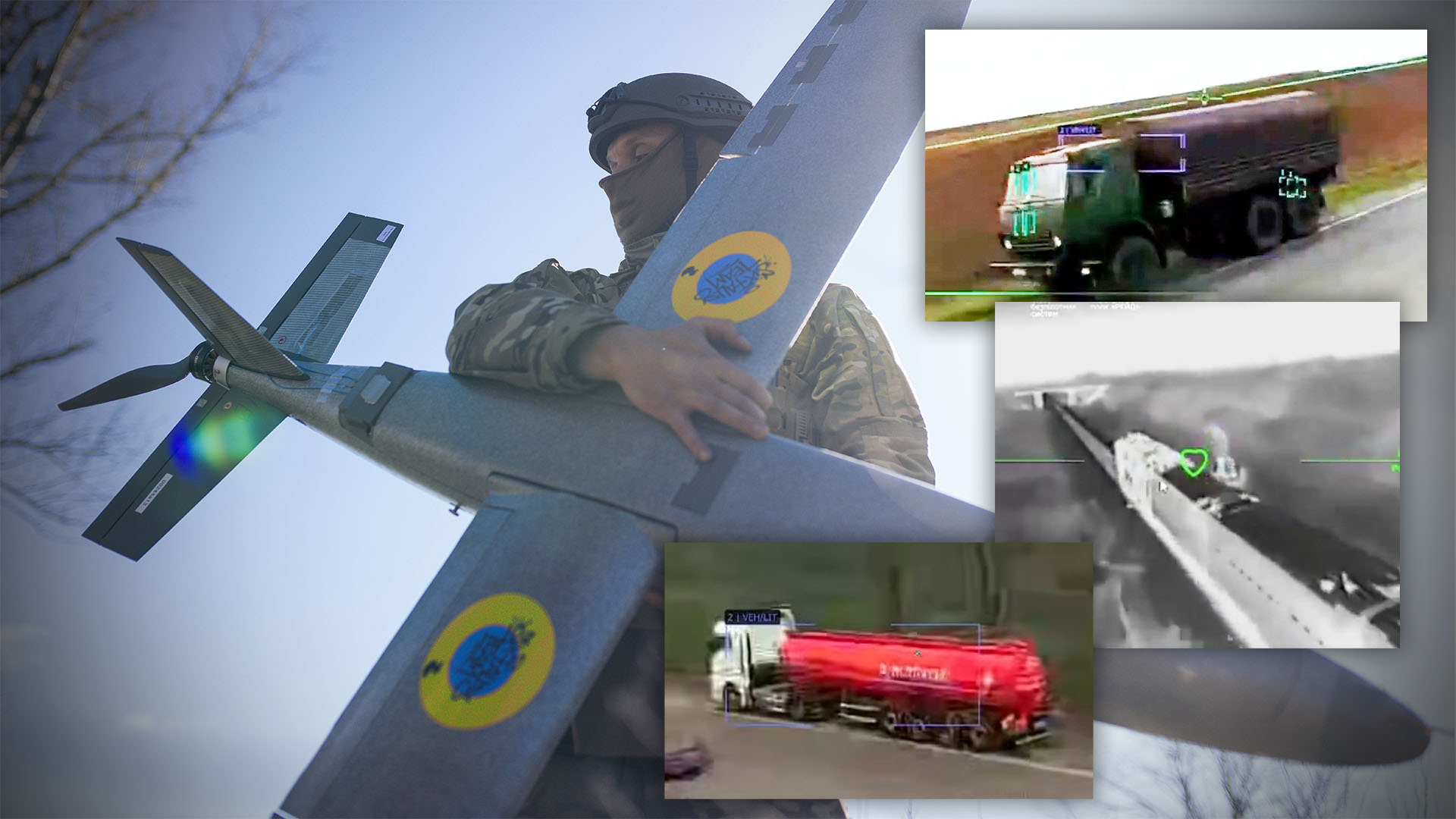
Inside Ukraine’s AI-Enabled Drone Campaign Targeting Russian Logistics Deep Behind The Lines

9 June 2026 at 20:30

Over the past several weeks, news began emerging about Ukraine’s use of modified, AI-enhanced kamikaze drones to target Russian cargo trucks, fuel tankers, railroad cars and even vessels as far as 150 miles behind the front lines. Dubbed the mid-range strike campaign by Kyiv, this effort is having a devastating effect on Russian logistics, cutting off key highways to Crimea, helping to halt Moscow’s gains and pave the way for Ukrainian advances.

To learn more about this campaign, we reached out to one of the soldiers leading this effort from the unit that created it. In an exclusive interview, an Unmanned Systems Department Officer for the First Corps Azov of the National Guard of Ukraine offered us unique insights into how the program began, how it’s going, where it is headed and how AI is helping to identify and hit targets deep behind the lines. It’s a capability we described in great detail — about how it was rapidly gestating and would arrive on the battlefield around now. The officer spoke on condition of anonymity to discuss operational details.

Some of the questions and answers have been edited for clarity.

Azov patrols the border areas around Mariupol.

Ukrainian territory must be free of Russian forces. The surest path to achieving this is pushing the "sanitization zone" for enemy logistics closer to Russia itself and occupied Crimea.

Pilots of the First Corps Azov of the… pic.twitter.com/qJLfZljIks

— First Corps Azov of the National Guard of Ukraine (@azov_media) May 25, 2026

Q: Walk me through the genesis of the mid-range strike campaign.

A: I will first of all start with answering the question of why. So the reason why we are currently conducting this campaign is to hunt enemy logistics capabilities, and currently we have a lot of quite cheap assets that can strike enemy targets at quite a deep range. So the overall meaning, the overall sense of this campaign is to strike enemy concentrations of cargo in the places where this concentration is the highest and the protection of those enemy logistical assets is at the lowest level.

So, if we’re talking about enemy logistics very close to the front line, to the line of contact, we are mostly talking about a person with a backpack. Then, if we are moving deeper into the enemy controlled area, further from the front line, then we’re talking about cars. Then even deeper we’re talking about trucks. Even deeper we’re talking about long haulers with trailers, so a higher concentration of cargo. Even deeper into the enemy controlled area, we’re talking about the railroads, the trains that are carrying supplies. So the deeper we go from the line of contact, the higher is the concentration of enemy cargo.

Russian rail logistics are now also the target of Midstrike drones, with lines to Crimea being particularly affected. pic.twitter.com/K1BFd0QVov

— Sergio 🇺🇦 🇪🇺 (@SergioCentaurus) June 5, 2026

The other part of answering this question is basically about how the enemy protects their logistical assets. So the deeper we go from the line of contact, not only is the distance larger, but also the areas that the enemy needs to protect. So just simple mathematical calculations show us that the distance of 50 kilometers deep from the line of contact is usually the most concentrated area the enemy has to defend against our strike assets. But if we go to the depths of 300 kilometers, then the areas that the enemy should protect are much larger, and it’s basically impossible to saturate that area with all the necessary protection assets that the enemy needs to strike down our drones.

The point I would like to make is that we conduct those strike operations at deeper ranges with basically the same assets that we use for the tactical depths, for example, at the depths of 50 kilometers. That means we do not increase the cost of our assets. We just introduced some technical modifications, and we can use the same assets to strike in the deep area.

Q: What drones are you using to carry out these attacks and how are you increasing the ranges?

A: Basically, we’re using fixed-wing kamikaze drones with some modifications in terms of communication systems. We’ve installed Starlink systems on those drones, and we have also introduced a number of modifications in terms of the engine of the drones – in terms of the overall propelling unit. And this allowed us to increase the range of the assets that we used previously for the range up to 50 kilometers, with some modifications for longer distances.

Q: What kinds of drones are you using?

A: Just the simple fixed-wing chemical drones, such as Hornet systems, such as the Darts systems, and also some other assets that, for now, we prefer not to mention.

Q: Can you provide additional details about the modifications you have made to these drones and what is their maximum range?

A: Well, I would say that these are quite technical things, and I wouldn’t want to disclose those, because I would want to avoid the situation where the enemy is going to do the same modifications.

Q: Are you reaching as far as 100 kilometers?

A: From what we can say now, we can cover distances of up to 250 kilometers, but as you might understand, with time we will cover longer and longer distances.

Q: Can you describe how these attacks work? Do you operate these as first-person view drones through a video feed? Do they have a terminal seeker? 

A: The process is really simple. So, for example, we select a section of the road, or the road as a whole and we distribute that road or the sections among our units. And I would like to mention that this is an all Ukrainian operation. It’s not a task for just one single unit, and basically each unit has its own area of responsibility and its own section of the road. 

And then we just send drones there in hunting mode, and I cannot disclose how this works from the standpoint of intelligence, but the overall principle is that the intelligence just gives us the priorities for the targets. For example, they say that you need to target this type of vehicle with these types of cargo.

And in terms of the targeting, I remember that you were also asking the question about how the targets are selected. For this we use both the AI tools and also the operator himself, so we’re using both methods for that.

A Ukrainian “Hornet” mid-range strike UAV patrols the highway from Mariupol to Melitopol on the land bridge to Crimea.
It is looking for trucks and especially fuel tankers. https://t.co/Mtcxq4L6rj pic.twitter.com/NMkVdbf8rs

— Roy🇨🇦 (@GrandpaRoy2) June 6, 2026

Q: I want to get back to AI in a bit, but what area of operations do you cover?

A: Our area of interest and area of responsibility is related to all the roads that the enemy is using to bring in supplies to the area of operations of our corps, which is roughly in the area of the town of Dobropillia in eastern Ukraine, and for example, this may be the route from Rostov that goes to Mariupol and then goes to Donetsk, and this could be any other route that the enemy might use to bring military cargo to the area of operations of our corps.

First Corps Azov works in and around the area of Dobropillia in the Donetsk region of Eastern Ukraine. (Google Earth)

Q: What were some of the more successful mid-range drone strike missions you carried out?

A: That’s basically an easy principle. When I said that we are hunting the enemy’s logistics, I mean that this is a daily process. This is a continuous process, and this is not about one standalone mission, when we fly somewhere, when we hit a target and the mission is over.

Last night, Ukraine expanded its mid-range strike campaign to the Sea of Azov, hitting at least 5 vessels carrying Russian cargo.

At least two of the cargo vessels were hit at the occupied ports of Berdyansk and Mariupol, as Ukrainian forces seek to cut off Russian logistics. pic.twitter.com/NoXeAO7Ca6

— OSINTtechnical (@Osinttechnical) June 5, 2026

Q: How are these mid-range strikes on Russian logistics affecting their ability to fight?

A: This is causing shortages of fuel for the enemy. This was already commented on by our media, and also the media resources of the enemy, and now we understand that this is true, not only for Crimea, where there is a severe shortage of fuel now, but also this is true about the other Russian-controlled territories. And basically, when we are striking enemy logistical supplies of fuel, this affects the overall situation, because what is fuel? Fuel is basically the blood of war, which is necessary to fuel the generators that the enemy is using for the FPV operations. The fuel is used for the vehicles that basically bring in those FPVs to the combat zone.

I’d like to add an additional explanation of how this works. If we destroy a car that brings fuel to the line of contact, then we’re talking about destroying like two canisters, so that’s approximately 40 liters of fuel. But if we strike a fuel tank and a tank vehicle, which is bringing fuel to the overall area, so then we can talk about several tons of materials.

Gas stations across Russian-occupied Crimea are facing worsening fuel shortages, with long queues, rationing, and voucher-based distribution reported by residents. Some locals say fuel has become so scarce that it is treated as a luxury, while Moscow insists there is no cause for… pic.twitter.com/0LSYWEqiDH

— Radio Free Europe/Radio Liberty (@RFERL) June 5, 2026

Q: Is this setting the stage for a Ukrainian advance in the east or Zaporizhia?

A: I would say that blocking the logistical supplies to the Zaporizhia Oblast and also to Crimea is a byproduct of our attacks aimed at cutting enemy logistics to our area of operations. Because we’re targeting the roads that go through Mariupol, also to Crimea, to supply the Zaporizhia region, and as well our area of operations. But as for the most strategic aspect of this question of whether this might influence some counter-offensive capabilities of the Ukrainian Defense Forces, I think that is not the question within my scope of responsibility, because I’m an officer responsible for the UAS component of the corps, and I think that this is more of a question that should be directed to the general staff of the Armed Forces of Ukraine.

Ukraine 🇺🇦 continues to launch an important number of mid-range strike, targeting Russian 🇷🇺 logistics in occupied territories

Since early may, more than 270 trucks have been hit, together with multiple fuel depots and trains.

🧵THREAD🧵1/14 ⬇ pic.twitter.com/YnisZf2kJ6

— Clément Molin (@clement_molin) June 4, 2026

Q: Tell me how you came to use the U.S.-made Hornet drones.

A: I would say that this is also a question that should be directed at one level up from my level. We get those drones, we deploy those drones, but the questions of how we get them and what are the specifics of their supply, this is not a question that I can answer.

A one-way attack Hornet Drone is set up during a demonstration in the 7th Army Training Command’s (7th ATC) Grafenwoehr Training Area, Germany, March 25, 2026. The demonstration provided leaders with insight into how AI-enabled one-way attack systems operate alongside Army fires formations. (U.S. Army photo by Spc. Thomas Dixon)
A U.S.-made Hornet drone. (U.S. Army photo by Spc. Thomas Dixon) Spc. Thomas Dixon

Q: When did you start getting them?

A: We have been receiving these drones for almost a year.

Q: When you got the Hornet drones, were you given any instructions on what missions to accomplish with them or what targets to pursue?

A: I think that the principle thing to explain here is that the Hornet drone is a tactical level UAV system. It can be used at the maximum range of 50 kilometers – the maximum range of the basic configuration of this drone. The drones we are currently using are the modification of the Hornet drone, but the basic configuration of this drone is only a tactical-level UAV. This is why our mid-strike operations, which have started only recently, are using modified drones.

I think that it is important to add that these modifications are conducted by the units themselves.

The First Corps Azov of the National Guard of Ukraine maintains control over enemy logistics near Donetsk.

Strike UAV pilots are targeting Russian logistics deep in the operational rear. Drone units maintain constant surveillance and fire control over all supply routes around… pic.twitter.com/i4TYOWJBg4

— First Corps Azov of the National Guard of Ukraine (@azov_media) April 16, 2026

Q: When did you begin to make the modifications and was the mid-range strike concept something that Azov developed?

A: Yeah, I would say that basically that was Azov development. So the first tests of these new modifications started in early winter. After approximately a month of testing, we started combat deployment of those drones approximately in January or February of this year. And we use those new modifications to ensure our middle strike operations. In terms of the tactics, I would also like to say that Azov developed new tactics of the deployment of middle strike drones, because the previous tactics they were mostly concentrated on the use of very expensive assets, which are available in limited numbers, so the targeting cycle was different, which is why we needed to develop new tactics and change this targeting cycle.

Q: What systems were you using before that were so expensive?

A: Well I’m not really talking about some specific assets here. I’m mostly talking about the overall tactics and the targeting cycle. So, the tactics of middle strikes were developed for expensive assets that the Corps didn’t have at the moment. So, this is basically why we started developing our own assets that could ensure that we have those middle strike capabilities, and we can also engage targets at the operational level.

Magyar claims a reduction from 3,800 cargo journeys to 1,100 cargo journey (71.05%) along the E-58 Mariupol -Berdiansk – Melitopol – Simferopol highway in the past two weeks

He makes it clear that doesn't mean they've destroyed 2,700 trucks, nor that they have total fire control… https://t.co/O3K2Iz53Xg pic.twitter.com/VTPn3ghZcD

— Ukraine Control Map (@UAControlMap) June 9, 2026

Q: When you added Starlink, did you have to seek permission from SpaceX to use their system for these weapons?

A: The first thing that I would like to say is that we do not use only Starlink. It is just one of the possible communication systems and communication solutions that we’re using. And the second thing that I would like to add is that all the international issues, international cooperation questions, are the issues that should be dealt with at the level of our ministries and at the level of our central government, so once again, this is not a question that I can answer.

Una parte vital de la efectividad de los drones Hornet con los que Ucrania está atacando las rutas logísticas rusas entre 80 y 120km del frente es la recopilacion de datos para que el algoritmo aprenda. Por eso algunos modelos llevan grandes terminales Starlink. https://t.co/yGePjoPo2K pic.twitter.com/iWu2bLrwq5

— Martin Tuitero (@TuiteroMartin) June 2, 2026

Q: Can you tell me what other communications systems you use?

A: No, this information is still secret, because none of those assets have been taken by the enemy, so the enemy doesn’t know yet that we’re using those. But I think that in some time we will be able to go public with those assets and tell more about what we use, apart from Starlink.

Q: Are you using Starlink and the other systems on the Darts drones as well, or just Hornet?

A: Yes, we are using Darts for those middle strike attacks. So, basically, the overall tactics of those mid-strike attacks with small UAV systems, it can use any fixed wing kamikaze drones with modifications which is why we are using Hornets, we are using Darts and also the other types of drones.

While the Ukrainian “Hornet” strike UAV is receiving a lot of attention recently, the “Darts” UAV remains a workhorse for mid-range strike.
It, too, has AI terminal targeting and control capabilities to defeat Russian jamming. https://t.co/cNcQytap1D pic.twitter.com/C8nYJ20Uer

— Roy🇨🇦 (@GrandpaRoy2) June 6, 2026

Q: Can you talk about the other types of drones? 

A: Unfortunately, no. The enemy has not yet got hold of those assets, and if one of them will be shot down, or if one of them will be captured by the enemy, then I think that we will be able to go public with those assets.

Q: Can you talk more about how you are using AI for the Hornets and Darts?

A: The AI is used for the so-called last-mile system. I’m talking about the terminal guidance here, and also the AI can also be used to identify the targets, especially when the drone is flying in the autonomous mode. It can recognize the type of the target and it can automatically engage the target. So all of these processes can happen without the involvement of the operator. This allows us to launch several drones at the same time, and this also allows us to ensure a higher level of coordination for those attacks.

I think that one of the examples of these attacks was captured by one of our videos that you might have seen when one fixed-wing drone is observing the target and the other drone is actually hitting it. 

Q: Is there a man in the loop or a man on the loop during the terminal phase of the attack or is it fully autonomous?

A: Since we are trying to control the whole process, usually it is the person who takes the final decision and actually makes this decision to strike the target, because we do not want to over rely on the artificial intelligence. If necessary, this whole process can also happen without human involvement, but as I have already mentioned, our policy is that the decision should be made exclusively by the operator.

Q: So this is man in the loop?

A: Yes, so technically men can be out of this loop, but in our case we involve humans in this system, so that’s man in the loop.

Visual look of Hornet UI. Not much new, can mark soldiers individually. Seems aiming is done by either by lock a target (red) or manually aiming by continusly clicking (green) https://t.co/d2LGtV2aON

— Tommy Lund (@TommyLundn) June 6, 2026

Q: Have the Russians developed countermeasures for this effort?

A: Since the overall intent was to go to the massive deployment of those drones against the enemy logistics at once, as for now, the enemy has not yet had enough time to adapt to these tactics of ours. And now they’re desperately trying to find some countermeasures to find some ways to react to this. 

Several images showing the unusually painted Russian trucks have appeared on social media channels in recent days. So far, examples of Ural and KAMAZ heavy-duty truck designs have appeared. There are at least two distinct patterns so far: a zebra-style application of broadly straight lines, and a more organic leaflike, swirling design. In both cases, they extend over most external surfaces, including the wheels and tires. The white paint is simply applied over the base color of dark green.
Images showing unusually painted Russian trucks have appeared on social media channels in recent days with a paint scheme designed to throw off Ukraine’s AI-assisted mid-range strike drones. (Via X) via X

They are putting on anti-drone nets deep into their controlled territory. They are placing people armed with shotguns every 50 meters of their critical roads, but basically, as for now, there is no Russian tactic that would be effective in protecting their logistics. I do not say that they will not come up with this tactic in a month or so, but as for now, they do not have an effective countermeasure for that.

The only thing that I would like to add is that we approximately know the direction in which the enemy is moving to ensure counter measures to this tactic of ours, and we already have countermeasures for their countermeasures.

The current Ukrainian superiority in mid-range drone warfare is a brilliant advantage that comes with an expiration date.

Failing to prepare for the day Russia matches this capability guarantees a catastrophic collapse of front line logistics for Ukraine.

Ukraine is rightfully… pic.twitter.com/RI1NWLNYUc

— Joni Askola (@joni_askola) June 8, 2026

Q: Is the AI enhancement helping to mitigate Russian jamming and electronic warfare measures?

A: Well, I would like to say that EW is not the only way to counter UAVs. So, in addition to EW assets, there are other counter drone methods. Nets can be used. Air observation posts can be used. The drones can be shot down with enemy interceptor drones, and also there are hundreds and hundreds of people armed with shotguns who can also try to shoot the drones down. So the EW systems are just a small part of this overall system of drone countermeasures, and it is a general misconception that all anti-drone efforts are from the EW system. I would say that EW accounts for approximately 10% of overall counter drone efforts.

The main idea of the use of the AI systems is not only to help operators to counter enemy drone countermeasures, but the AI also helps the operator with navigation, with orientation, with the identification of the targets. So this is a complex system that helps the operator with many tasks.

Here: strike by the Ukrainian-American "Hornet" drone on occupier positions. Two Russians confirmed as "gruz 200" (KIA).
Interestingly, the Russians call this drone "Martian-2" because its capabilities seem "out of this world" to them.

High Autonomy: Operates with AI (autonomous… pic.twitter.com/Ao0MAiCqUp

— Takeshi Kovacs (@PrzemekShura) May 12, 2026

Q: What are the lessons that the U.S. can learn from your mid-range drone strike campaign, given the importance of logistics everywhere.

A: Well, I would say that the main lesson that the U.S. can learn from our experience is that drones in their basic configuration, right out of the box, is not something that can work, and this is not something that can bring you the best results at once. This is why every unit should have their own drone laboratory that can reconfigure those drones and modify them, and I’m not only talking about reconfiguring tactical level drones to turn them into middle strike capacities. I’m talking about all warfare in general.

U.S. Soldier Sgt. Kevin Tran, assigned to 173rd Airborne Brigade, sets up a one-way attack Hornet drone during a demonstration in the 7th Army Training Command’s Grafenwoehr Training Area, Germany, March 25, 2026. The demonstration provided leaders with insight into how AI-enabled one-way attack systems operate alongside Army fires formations. (U.S. Army photo by Spc. Thomas Dixon)
U.S. soldier Sgt. Kevin Tran, assigned to 173rd Airborne Brigade, sets up a one-way attack Hornet drone during a demonstration in the 7th Army Training Command’s Grafenwoehr Training Area, Germany, March 25, 2026. The demonstration provided leaders with insight into how AI-enabled one-way attack systems operate alongside Army fires formations. (U.S. Army photo by Spc. Thomas Dixon) Spc. Thomas Dixon

Assets become obsolete very quickly and in three months everything can change, starting from the navigation systems and ending with the control systems. For example, today the GPS signal works, in a month it doesn’t work anymore. Today we use this set of frequency ranges, and in a month all those frequency ranges are jammed by the enemy. So I’m saying this for you to understand that for example, if the U.S. government purchases Hornet drones for their units, then the units are going to have good tactical level drones. But if you want to squeeze all of the possible benefits from those drones, then you will need to modify the structure of your units and include the departments, include the sections that will deal with the modification and reconfiguration of those drones to ensure the most efficient results that can be achieved.

From what I see now, the U.S. is mostly just giving the unit some assets, but they are not thinking about re-configuring or repurposing those drones.

Q: Is there anything I haven’t asked you that you would like to address?

A: I think that we have covered all the topics. The only thing that I would like to add is that I would like your audience to see that Ukraine introduces new innovations that can basically change the battlefield, and this is why trying to forecast the outcome of the war based on the number of tanks or aircraft or bombs that would be incorrect, so the victory will belong to the side capable of adapting faster and not to the side that has more resources.

Contact the author: howard@twz.com

The post Inside Ukraine’s AI-Enabled Drone Campaign Targeting Russian Logistics Deep Behind The Lines appeared first on The War Zone.

❌