Normal view

Ukraine will keep issuing Polish exhumation permits despite historical tensions. Dispute “causes joy in Moscow,” Kyiv says

10 June 2026 at 20:15

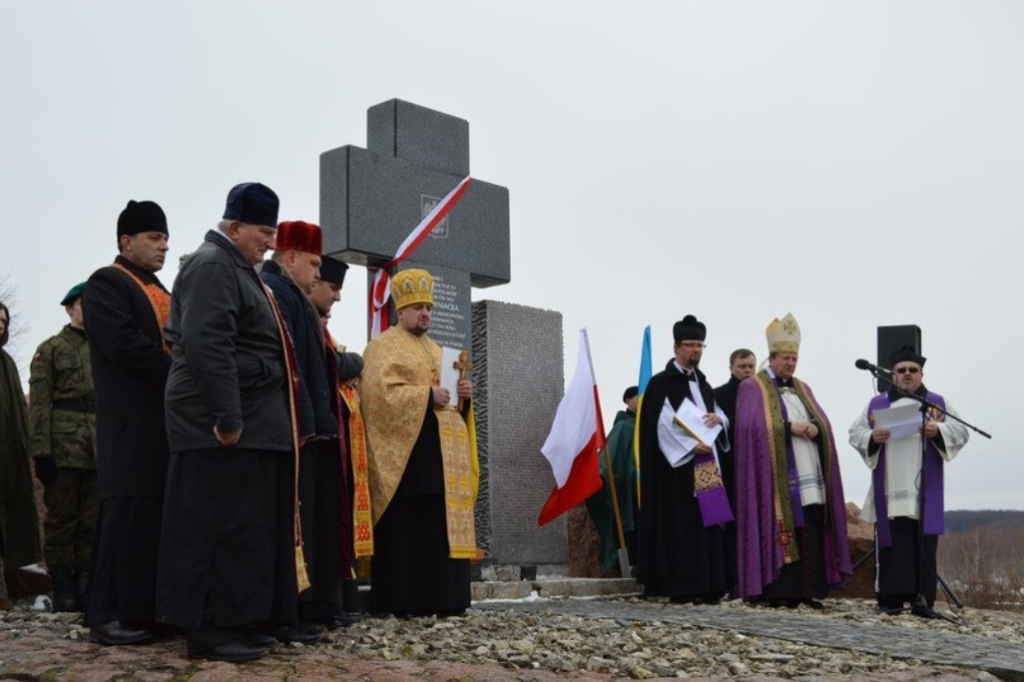
The monument to murdered Polish civilians in Huta Peniatska in Ukraine's Lviv Oblast was restored in 2017. Photo: NV

Ukraine remains ready to continue issuing permits for Polish exhumation work despite intensifying historical disputes between Ukraine and Poland, Ukrainian Foreign Ministry spokesperson Heorhii Tykhyi says, per Ukrinform. Exhumation work at the site of the Huta Pieniacka continues. 

The spokesperson added that the intensifying tension between Ukraine and Poland causes "joy in Moscow." He called on allies to seek grounds for unity against the common enemy that "wants to destroy both Ukraine and Poland." 

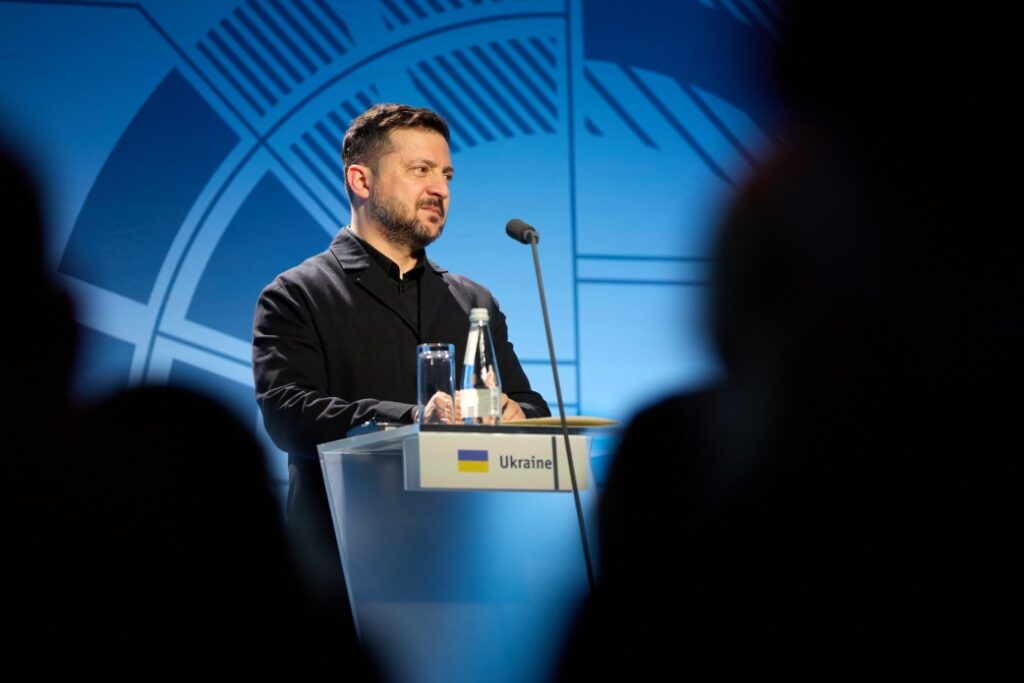
The current Polish-Ukrainian historical dispute centers on Ukrainian President Volodymyr Zelenskyy's 27 May decision to confer the honorary title "named after UPA Heroes" on the Separate Center of Special Operations "Pivnich" of Ukraine's Special Operations Forces. The Polish Foreign Ministry condemned the decision.

The Ukrainian Insurgent Army (UPA) is a deeply contested figure in Polish-Ukrainian historical memory. Ukrainian historiography presents UPA as anti-Soviet and anti-Nazi independence fighters. Polish historiography emphasizes UPA's association with the 1943-44 Volhynia massacres.

Zelenskyy UPA-naming decision and Polish reaction

Tykhyi also stated that the honoring of UPA heroes had no anti-Polish subtext. He noted that the history of the Polish and Ukrainian peoples contains both glorious and tragic pages.

The diplomat added that preparations for the Ukraine Recovery Conference (URC 2026), scheduled for June 25–26 in Gdańsk, are proceeding as planned and in a regular working mode.

“We hope that the conference will be held successfully,” Tykhyi emphasized.

Historical memory disputes spill into modern cooperation

The Vinnytsia-Kielce bus dispute earlier this week is the latest concrete example of how historical memory tensions have affected practical Polish-Ukrainian cooperation, Euromaidan Press reported. Polish sister-city Kielce refused to transfer 20-year-old municipal buses to Vinnytsia, a Ukrainian city under regular Russian strikes, over a street named after Bandera.

Stepan Bandera, the Ukrainian nationalist leader, led the Organization of Ukrainian Nationalists (OUN) and the UPA.  

Russia actively uses its propaganda, referring to Ukrainians as “Banderites” and portraying Ukrainian statehood as a continuation of Nazism. 

Russia recycles its Moldova script to brand Armenia’s election illegitimate, ISW says

10 June 2026 at 20:10

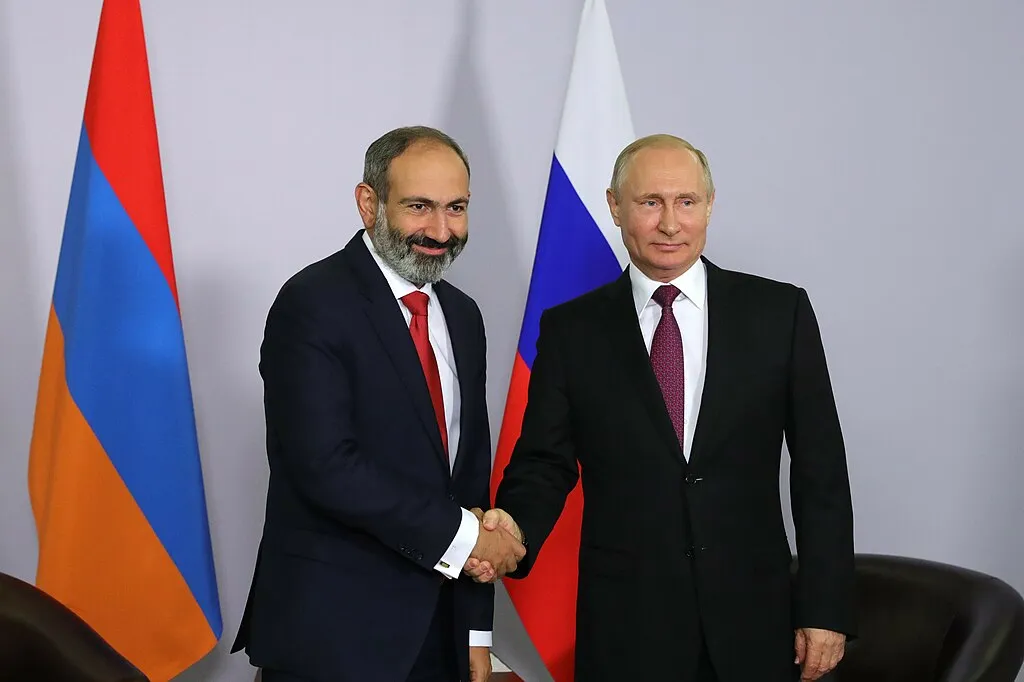
Armenian Prime Minister Nikol Pashinyan shakes hands with Russian President Vladimir Putin in front of Armenian and Russian flags during a bilateral meeting.

Russia began delegitimizing Armenia's election within hours of Nikol Pashinyan's 8 June 2026 victory. The Institute for the Study of War said so in its 9 June assessment. ISW identified three coordinated false narratives advanced by Russian government officials and pro-Kremlin commentators since the result.

One narrative claims Pashinyan "lost" because Civil Contract took less than 50% of the vote. A second says the election unfolded under Western pressure and domestic opposition suppression. A third alleges mass electoral fraud. ISW wrote that Moscow "continues spreading false narratives of stolen elections in post-Soviet states when those results do not favor Russian interests."

The narratives ISW found in Armenia's election

Foreign Ministry spokeswoman Maria Zakharova led Moscow's reaction to Armenia's election on 8 June. She alleged the vote unfolded under "unprecedented pressure on the opposition and interference from the West, primarily the EU." Zakharova said Civil Contract "did not receive a monopoly on power." The campaign featured "harsh repression" of opposition activists and attacks on the Armenian Apostolic Church, The Armenian Mirror-Spectator reported.

Kremlin spokesman Dmitry Peskov declined to congratulate Pashinyan. He told reporters Moscow is "waiting for the final results" and "recording numerous irregularities." The Central Election Commission's final tally put Civil Contract at 49.81%—727,160 votes. That left Samvel Karapetyan's pro-Russian "Strong Armenia" a distant second at 23.29%, Al Jazeera reported. Turnout topped 58%.

The Moldova precedent ISW cites

ISW pointed to Maia Sandu's 2024 Moldovan presidential victory as the direct precedent. The think tank wrote that Moscow had alleged "election fraud, suppression of opposition, and 'illegitimate' results." The Kremlin suggested "Sandu's victory materialized only after counting Western diaspora ballots," ISW added.

Sandu's Party of Action and Solidarity went on to win 50.14% in the September 2025 parliamentary vote anyway. Moldovan Prime Minister Dorin Recean said the Kremlin spent approximately €200 million on the 2024 cycle. That equals nearly 1% of Moldova's GDP, Reuters reported.

Economic coercion runs alongside the narrative

ISW also flagged a parallel economic threat. On 8 June, the head of the Federal Agency for Fisheries, Ilya Shestakov, warned at the St Petersburg International Economic Forum. He vowed "further steps will certainly follow" against Armenian exports if "veterinary risks" arise, Kyiv Post reported.

The warning compounded restrictions imposed since May on Armenian mineral water, alcohol, flowers, fruits, vegetables, and fish. ISW described the move as economic punishment for Armenia "distancing itself from Russia." That distancing is precisely what Armenia's election ratified — Pashinyan's government has reduced participation in the Russia-led CSTO and reoriented Civil Contract's policies toward the EU.

Ukraine created drone army one year ago. It already destroyed $40 billion worth in Russian targets

10 June 2026 at 19:53

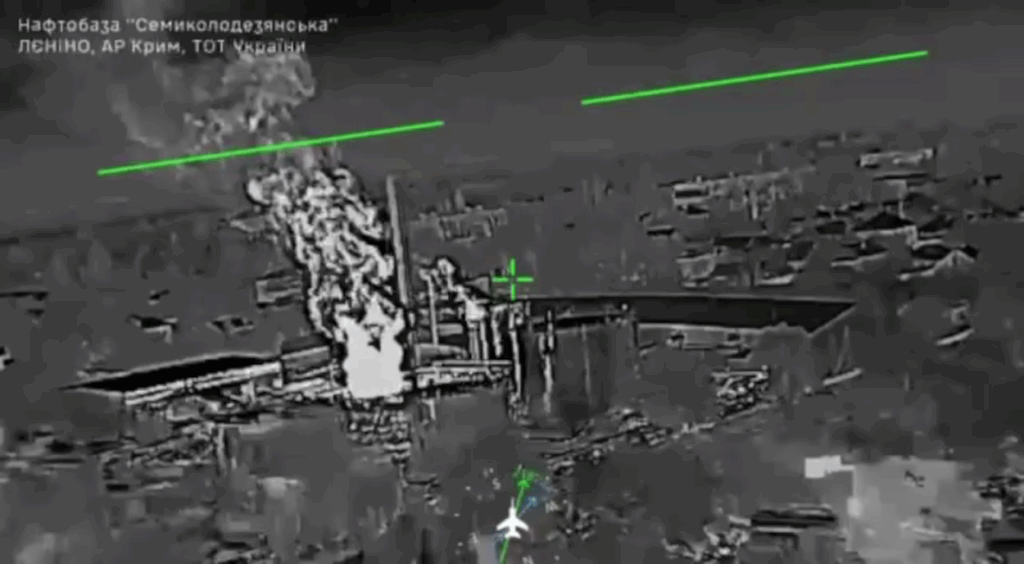
Semikolodezyanska oil depot in Yedi-Quyu (Lenine), occupied Crimea, amid a Ukrainian drone attack. Screenshot from video: Ukraine's Special Operations Forces

Ukraine's Unmanned Systems Forces (SBS) have struck Russian targets worth nearly $40 billion in the year since the branch's creation, Volodymyr Zelenskyy said. On 10 June, the Ukrainian president signed a decree establishing the Day of Unmanned Systems Forces (SBS Day).

The $40 billion cumulative damage figure Zelenskyy cited represents a 57% increase over the $25.5 billion in cumulative Russian losses that Commander-in-Chief Oleksandr Syrskyi reported in April 2026.

The SBS Day decree institutionalizes the unmanned forces as a permanent feature of Ukraine's military doctrine, alongside the army, navy, and air force.

What Zelenskyy said about SBS's achievements

"Only a year since the creation of the SBS group, Russian targets at various levels worth nearly $40 billion have already been hit," Zelenskyy said in his evening address.

He added that SBS is really a model for many other armies, and "these months we are especially grateful for middlestrikes."

"Russian military logistics across the entire depth of the temporarily occupied territory is now accessible to Ukrainian drones. The Russian border zone also experiences our impact," he stated.

The president added that Russia already feels the effect of these strikes, and Ukraine will continue to scale them.

"The most important thing is that these are different types of strikes, and each one adds to our ability to save lives," the Ukrainian president added.

What does middlestrike mean operationally? 

The middlestrike concept Zelenskyy invoked refers to Ukrainian drone strikes against Russian military logistics in the depth of occupied territory and across the Russian border zone. The depth zone covers Donetsk, Luhansk, Crimea, and parts of Zaporizhzhia and Kherson Oblasts. The Russian border zone reaches Belgorod and Kursk. Middlestrikes sit between the very-long-range deep strikes against strategic Russian infrastructure, such as the Volgograd refineries, and the tactical frontline FPV operations. The SBS is led by Brigadier General Robert Brovdi, call sign "Madiar".

Bulgaria’s defense minister banned weapons to Ukraine. It’s not that simple

10 June 2026 at 19:38

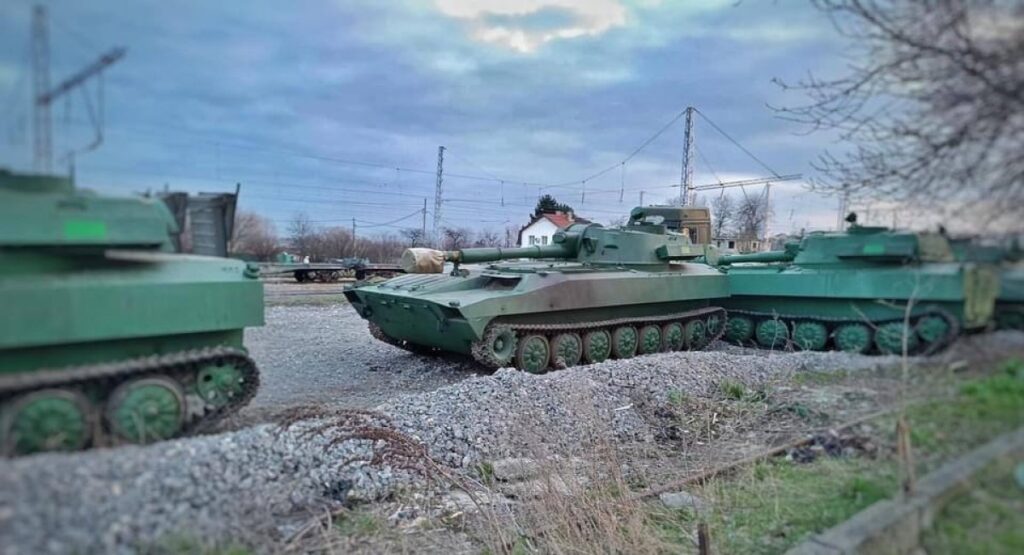
Decommissioning of the Bulgarian 2S1 Gvozdika howitzers, spring 2024. Photo via Defense Express

Ukraine does not currently receive free military aid from Bulgaria but maintains ongoing mutually beneficial commercial defense cooperation, Ukrainian Foreign Ministry Spokesperson Heorhii Tykhyi says, Ukrinform reports. The clarification followed Bulgarian Defense Minister Dimitar Stoyanov's announcement that Bulgaria will not provide any more weapons to Ukraine, with Stoyanov stating his view that "the war in Ukraine will not be resolved on the battlefield," per Sofia Globe.

Bulgaria has historically been one of the most significant European suppliers of Soviet-caliber ammunition and weaponry to Ukraine, with much of that cooperation passing through commercial defense-industry channels rather than appearing in official aid trackers, per Novinite.

Bulgaria supplied approximately one-third of all ammunition used by the Ukrainian military in the first six months of 2022, routed via the US and UK at an estimated value of $2.7 billion.

What did Ukraine's MFA say? 

"Ukraine, as of right now, does not receive free military aid from Bulgaria. Ukrainian-Bulgarian defense cooperation is continuing on a commercial basis, and it is mutually beneficial for Ukraine and Bulgaria," Tykhyi said.

According to the spokesperson, the Ukrainian Foreign Ministry expects this cooperation to continue because it benefits Bulgarian companies, enabling them to scale production and generate revenue.

"We are grateful to Bulgaria for the fact that such projects are possible. We value cooperation with their defense companies," Tykhyi added.

"Not resolved on the battlefield": Stoyanov's statement 

Bulgarian Defense Minister Dimitar Stoyanov announced on 9 June 2026 that Bulgaria will not supply any further weapons to Ukraine, stating his view that "the war in Ukraine will not be resolved on the battlefield."

The framing echoes Russian and Russian-aligned narratives. Moscow has long wanted to make a pact with Ukraine, but under Kyiv's complete capitulation. 

Stoyanov's statement, however, does not address commercial Bulgarian-Ukrainian defense cooperation, which is conducted between Bulgarian private and state defense enterprises and Ukrainian buyers rather than through state-to-state donations.

IAEA documents military activity near all Ukraine’s nuclear sites

10 June 2026 at 19:20

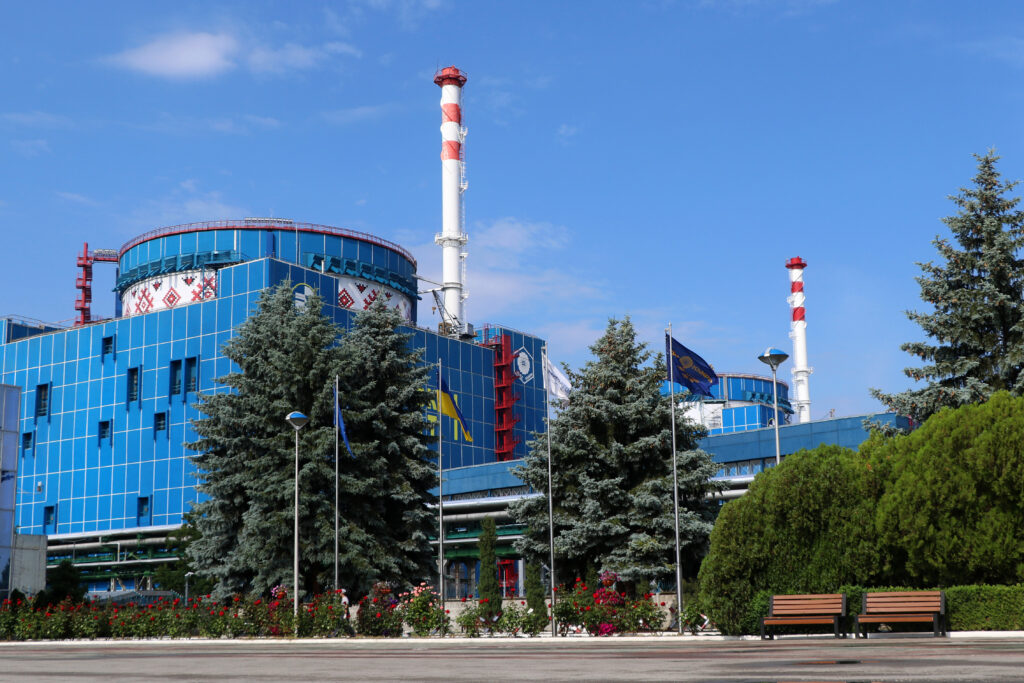
Khmelnitskyi nuclear power plant, 1st block

Military activity has been reported near all Ukraine’s operating nuclear power plants: Khmelnytskyy, Rivne, and South Ukraine, and the Chornobyl site, according to the International Atomic Energy Agency (IAEA). IAEA teams recorded more than 100 drones within observation zones around nuclear facilities over the past two weeks, with some as close as 2 kilometers from the facilities.

The Chornobyl drone strike landed at a centralized spent-fuel storage facility in the exclusion zone, just hundreds of meters from where spent nuclear fuel from Ukrainian operating reactors is kept in containers.

“Attacking a facility with large amounts of nuclear material is extremely dangerous. It must not happen,” IAEA Director General Rafael Grossi said.

What happened at Zaporizhzhia NPP on 30 May 

On 30 May 2026, a drone struck the turbine hall of Unit 6 at the Russian-occupied Zaporizhzhia NPP.

During subsequent inspections, IAEA specialists documented a hole in the wall and local damage to the metal cladding of an empty pipe located several meters from the impact point.

Experts are continuing to assess the condition of the affected area and the potential consequences of the incident.

“This is the first time since April 2024 that military activity has directly impacted the ZNPP site,” Grossi said.

ZNPP has been under Russian military occupation since March 2022 and remains a continuous focus of IAEA monitoring. The IAEA statement does not attribute the drone strike to either Russia or Ukraine.

Legal frame: Geneva Convention Article 56 protection

Nuclear power plants and similar installations containing dangerous forces are explicitly protected under Article 56 of Additional Protocol I to the Geneva Conventions, which prohibits attacks that may release dangerous forces and cause severe losses among the civilian population.

The IAEA does not formally categorize incidents at Ukrainian nuclear sites as war crimes within this framework, which would require a UN Commission of Inquiry or ICC finding. The IAEA's role is technical and monitoring-focused. 

Germany was late to grasp Russian hybrid attacks, Bundeswehr colonel tells defence forum

10 June 2026 at 18:23

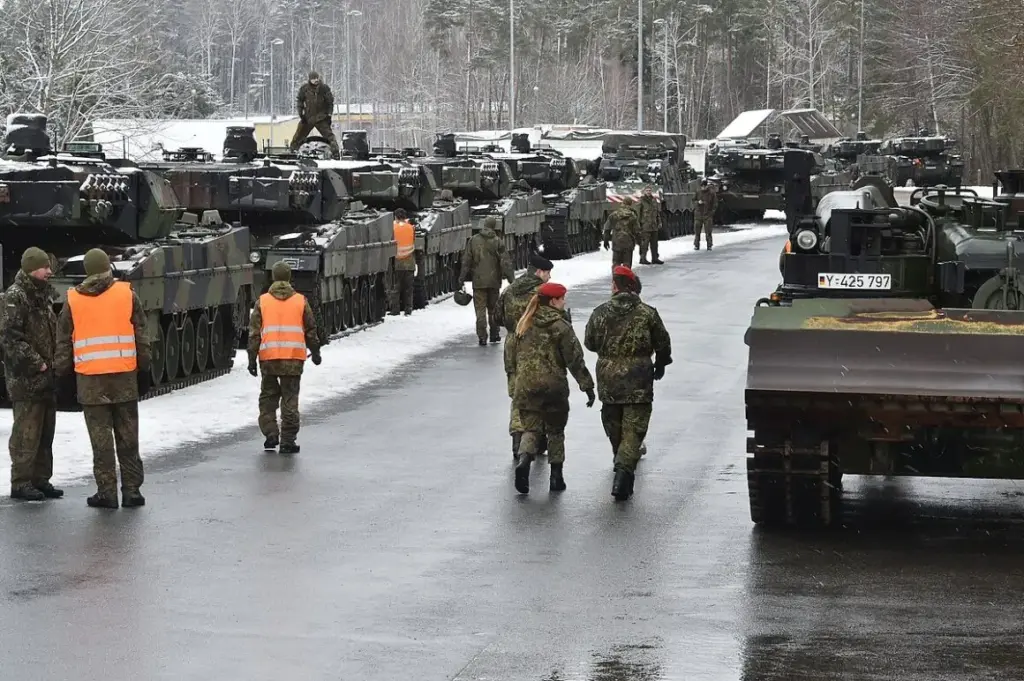
Bundeswehr troops and armored vehicles support NATO's eFP Battlegroup in Lithuania, part of Germany's posture against Russian hybrid attacks.

Hybrid threats span both hardware and politics, said Colonel Sönke Marahrens. The list of methods includes overflights, the cutting of undersea cables, and a concerted disinformation campaign. It also reaches into political and judicial systems, including what he called the "disposable agent" model —civilians recruited online for one-off sabotage or surveillance. As a model for how the state should respond, Colonel Marahrens pointed to Finland. Authorities there detained a suspected sabotage vessel within an hour of Baltic Sea cable damage.

Russian hybrid attacks: a political shift acknowledged late

Recognition had arrived slowly, Marahrens told the New Age Defence forum in Berlin on 8 June, Ukrinform reported. "Germany recognized rather late that we are being attacked by such hybrid methods," the colonel said. "But I would say that in the last year and a half to two years, we see a shift at the political level as well."

The colonel heads a department at the Bundeswehr's Center for Digitalization and Capability Development. The center reports to the Cyber and Information Domain Command in Bonn. German intelligence services and state institutions are increasingly informing citizens of the changing security environment, he said.

Drones, cables, and courts

Russian pressure now reaches beyond physical sabotage, Marahrens said. "It's not just drones and not just undersea cables, it's also disinformation within our society. It's the use of the political and judicial systems, the concept of 'disposable agents,'" he said.

Unidentified drones over European critical infrastructure, including German sites, had a primarily psychological effect, the colonel said. The impact was not military. Germany's National Security Council should receive real powers for rapid decision-making, he argued. The colonel cited Finland's response time of less than an hour after the Baltic Sea cable damage.

"Creating societal resilience is something we in Germany have yet to learn." — Col. Sönke Marahrens, Bundeswehr Center for Digitalization and Capability Development

Kyiv's resilience is something Berlin lacks

Germany draws on Ukrainian wartime experience through financing, joint training, and front-line exchanges, Marahrens said. "We support Ukraine financially," he said. "We also adopt the experience gained from the battlefield. We provide training for them, and we also adopt experience from them during joint exercises at our training grounds."

The most important Ukrainian lesson, the colonel said, is societal resilience under wartime conditions. "Creating societal resilience is something we in Germany have yet to learn," Marahrens said. The Kremlin coordinates large-scale hybrid operations across Europe, the agency added. These campaigns aim to discredit Kyiv and inflame internal conflicts in EU states amid Russia's war on Ukraine.

Kostiantynivka is one of Ukraine’s “Fortress Belt cities” Russia demands. It may fall by end of summer 2026, says observer

10 June 2026 at 17:57

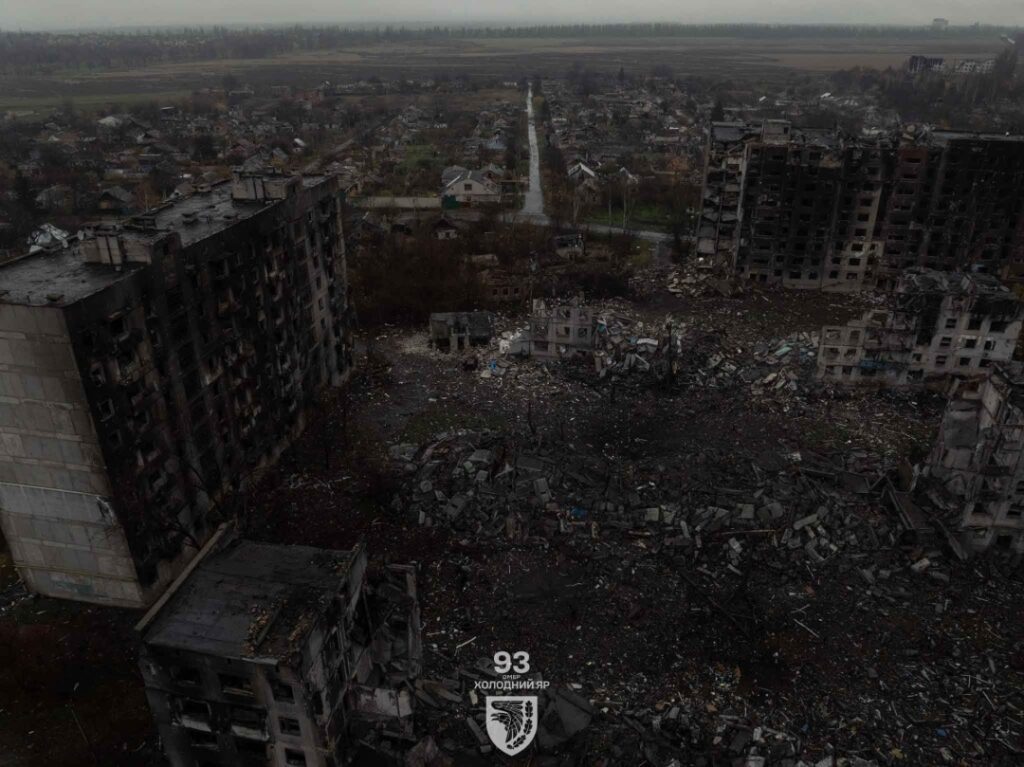
The city of Kostiantynivka after Russia's advances. Source: The 93rd Separate Mechanized Brigade "Kholodnyi Yar"

Russian forces may capture Kostiantynivka in Donetsk Oblast by the end of summer 2026, Ukrainian military observer Denys Popovych said on Radio NV. The warning comes as DeepState analysts have documented the Russian conversion of Kostiantynivka into ruins, and as Russian forces continue to consolidate in Pokrovsk and Myrnohrad.

Kostiantynivka is one of the "Fortress Belt cities" that Russia has demanded as part of its territorial conditions to take the entire Donetsk Oblast in the peace negotiations, even as it continues striking Ukrainian cities.

Popovych says Russia could capture the city despite what he himself characterizes as the broader operational failure of Russia's spring-summer offensive.

Russian success would come even as Ukraine's deep-strike envelope reaches 1,800 km into Russia and the "Logistics Lockdown" campaign degrades Russian rear-area infrastructure. 

Pokrovsk tactic that may be repeated

"We are now talking about the general failure of the spring-summer phase of Russian army offensive actions in the east and the south. But the prize in the form of Kostiantynivka they may take during this summer," Popovych said.

He added that Russian occupiers in Kostiantynivka are attempting to apply the same tactic they used in Pokrovsk: entrenching on the outskirts, then progressively infiltrating into the city itself by occupying multi-story buildings.

"Those enemy infiltration groups are being destroyed. But the question is whether we have enough resources to destroy every group," he continued. 

According to the expert, if one of them holds, settles in, and Ukraine doesn't notice it, then that chain, that path, will be trampled by the Russians.

"They will spread further through the city. This is the standard scenario the Russians have used during those cities that held defense for a long time," Popovych believes.

Russian drone crews may take same actions used in Pokrovsk, but now in Kostiantynivka

After the seizure of Pokrovsk and Myrnohrad per DeepState's assessment, Russian forces continue to build up forces inside them, particularly drone crews who have taken control of urban airspace. 

"The enemy is establishing itself in the cities and currently maintains the active task of advancing into the depths of our defense," DeepState noted in its analysis.

The combination of Russian drone control of urban airspace in already-captured cities and the slow-infiltration approach for the next target city is what makes Kostiantynivka's risk, as Popovych described, not hypothetical. Russia has demonstrated that the tactic produces results, slowly, against cities that hold out for extended periods.

Ukraine has 460,000 hectares of mined land. Its newest sapper robot switches between demining and logistics on same chassis

10 June 2026 at 17:32

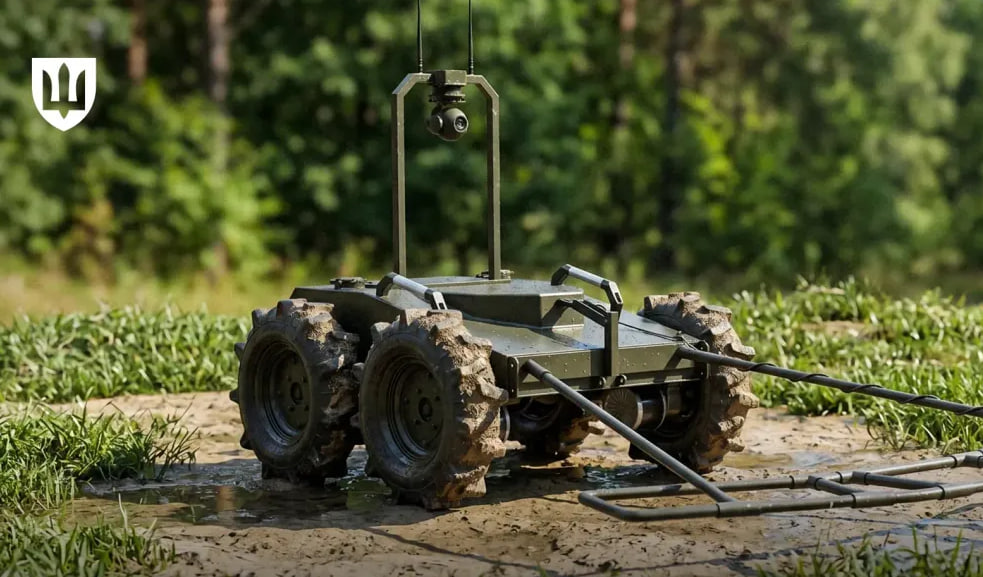
Ukraine's domestic NEO-1 sapper robot. Source: The Ukrainian Defense Ministry

Ukraine's Defense Ministry codified the domestic NEO-1 sapper robot for military use, the ministry announces. It is a 60-kilogram modular ground platform capable of remote demining, 70-kg cargo transport, and towing carts of up to 120 kg. 

The codification sits within an aggressive Ukrainian ground-robot procurement scale-up: the Defense Procurement Agency plans to contract more than 25,000 ground robotic complexes in the first half of 2026, which is twice the volume of all of 2025.

NEO-1's primary purpose is remote demining to minimize risks for Ukrainian sappers and other military personnel operating in areas contaminated with Russian mines and unexploded ordnance.

Ukraine has identified approximately 460,000 hectares of Ukrainian territory requiring clearance. The NEO-1 codification fits Ukraine's stated strategic goal of maximally transitioning frontline logistics, engineering, and other personnel-exposed tasks to unmanned platforms. 

Remote demining as primary mission

NEO-1 was developed by a Ukrainian manufacturer based on the operational experience and stated needs of Ukrainian military units on the frontline.

The platform's primary mission is to remotely drag detection equipment across mine-contaminated terrain, allowing sappers to clear areas without physically entering them.

The same chassis can be reconfigured for logistical roles: carrying up to 70 kilograms of cargo across rough terrain, or towing a separate cart loaded up to 120 kilograms.

This dual-use profile means a single NEO-1 platform can rotate between engineering tasks (demining, EOD support) and logistics tasks (resupply, casualty evacuation prep) as needed.

Multi-channel metal detector finds low-metal mines and filters out small-debris false signals 

For demining, NEO-1 is equipped with a multi-channel metal detector that can identify both large explosive devices and mines with minimal metal content.

The system also incorporates filtering algorithms that suppress signals from small metal debris (shell fragments, wire, casing remnants from artillery), reducing the false-positive rate that consumes operator time during clearance operations in heavily contested terrain.

The robot operates in both automatic and manual modes, with onboard cameras transmitting real-time imagery to the operator throughout the mission.

Compact specifications make NEO-1 deployable by small infantry

The NEO-1 platform weighs approximately 60 kilograms, reaches a top speed of 7 km/h, and operates for up to eight hours without recharging. The standard control range is 500 meters, which can be extended to 3 kilometers when operationally required. The compact weight and modular construction allow NEO-1 to be deployed by a small infantry team without specialized launching equipment, distinguishing it from heavier ground robotic systems that require dedicated transport vehicles or fixed launching infrastructure.

Dr. John Clauser: The IPCC is one of the worst sources of dangerous misinformation

10 June 2026 at 17:15

Dr. John Clauser, the 2022 Nobel Prize laureate in Physics, was a speaker at Quantum Korea 2023, an event where he addressed an audience of scientists and government officials, describing the proliferation […]

The post Dr. John Clauser: The IPCC is one of the worst sources of dangerous misinformation first appeared on The Expose.

Zelenskyy has 61% trust in Ukraine. Two officials above him in rankings run drone program and city under Russian attack

10 June 2026 at 17:11

President of Ukraine Volodymyr Zelenskyy on 9 June 2026. Source: President's Office

Some 61% of Ukrainian citizens trust President Volodymyr Zelenskyy, according to a new poll by the Kyiv International Institute of Sociology (KIIS) conducted between 7 May and 3 June 2026. Meanwhile, Kharkiv Mayor Ihor Terekhov tops the trust-balance ranking among Ukrainian political and public figures at +32%, followed by Defense Minister Mykhailo Fedorov at +29% and Zelenskyy at +27%.

The trust ranking documents a continuing Ukrainian public pattern that has held across multiple KIIS polls during the war: hands-on wartime managers, particularly mayors and regional administrators in cities under direct Russian attack, outrank national-level political figures in terms of trust, even when national figures retain absolute majority support.

Terekhov leads as Mayor of Kharkiv, Ukraine's second-largest city, which has been under sustained Russian missile and drone attack since 2022. Fedorov leads Ukraine's drone-development push and the broader $113 million "Logistics Lockdown" rear-area strike program announced in May. 

Zelenskyy numbers in detail

Among the 61% who trust Zelenskyy, 33% reported "complete" trust and 28% "rather" trust. Among the 34% who do not trust him, 20% reported "complete" distrust and 13% "rather" distrust. The 5% remaining were undecided or refused to answer.

Compared with KIIS's April 2026 reading, trust and distrust shares are within the margin of error, with the trust-distrust balance improving slightly from +22% to +27%.

KIIS noted a methodological nuance specific to this round: questions were asked about 18 different public figures in random order, and a weak correlation emerged: respondents who were asked about Zelenskyy later in the sequence trusted him slightly more than those who were asked earlier.

Full ranking

KIIS's trust-balance ranking among politicians and public-political figures:

  • Ihor Terekhov (Mayor of Kharkiv) — 52% trust, 19% distrust, balance +32%
  • Mykhailo Fedorov (Defense Minister) — 50% trust, 21% distrust, balance +29%
  • Volodymyr Zelenskyy (President) — 61% trust, 34% distrust, balance +27%
  • Vitaliy Kim (head of Mykolaiv Oblast administration) — 47% trust, 27% distrust, balance +20%
  • Oleh Lyashko (former MP, military servicemember) — 47% trust, 43% distrust, balance +5%
  • Serhii Prytula (volunteer) — 46% trust, 44% distrust, balance +2%

What rankings tell us

Zelenskyy's 61% absolute trust is the highest in the ranking. But the trust-balance metric, which weights both trust and distrust, places two other figures above him: Terekhov and Fedorov.

Liashko and Prytula, despite having relatively high absolute trust (47% and 46%), have correspondingly high distrust (43% and 44%). The ranking thus differentiates two distinct kinds of public support: consensus support (Terekhov, Fedorov, Zelenskyy, Kim) versus polarized support (Liashko, Prytula). 

Methodology and coverage

The KIIS poll surveyed 2,007 Ukrainian citizens aged 18 and older via computer-assisted telephone interview (CATI), using random sampling of mobile phone numbers, exclusively in territory under the control of the Ukrainian government. It means that the data does not include displaced Ukrainians abroad or Ukrainians in Russian-occupied territories. 

“We don’t think all of this is just for demonstration”: Russia is constructing infrastructure with potential capacity up to 115,000 personnel on NATO’s doorstep

10 June 2026 at 15:47

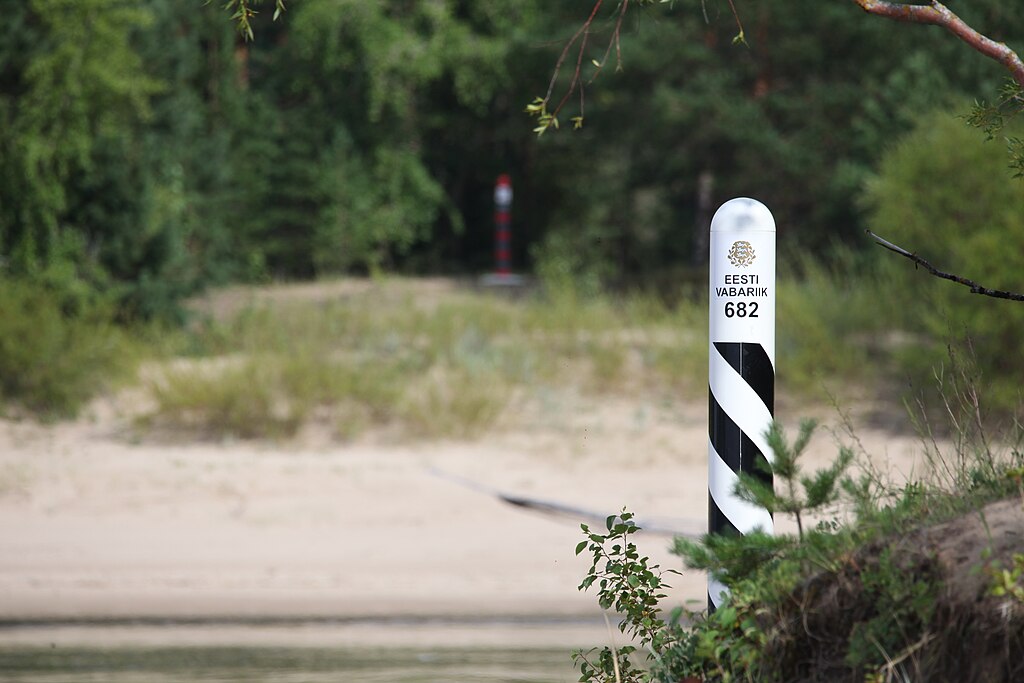
Estonian and Russian border posts at Narva-Jõesuu on the Estonia-Russia border

Russia is actively constructing new military infrastructure along its borders with Norway, Finland, the Baltic states, and Kaliningrad. Its potential capacity is for up to 115,000 personnel across all identified sites, according to a joint investigation by Swedish public broadcaster SVT, Norwegian public broadcaster NRK, Danish DR, and Estonian Delfi.

The Petsamo base, located 10 kilometers from the Norwegian border, is being expanded from its current capacity of 7,000 to 17,000 personnel.

Multiple Nordic and Baltic intelligence chiefs and senior military commanders have explicitly told the investigation that the buildup may be a preparation for a future NATO confrontation that Russia plans to staff after the hot phase of its war in Ukraine subsides.

"This is a threat we should take seriously. We don't think all of this is just for demonstration. This is about preparing capabilities for confrontation with NATO in a major conflict sometime later," said Thomas Nilsson, head of Swedish military intelligence (MUST).

A Ukrainian ceasefire that releases Russian military personnel from the front lines would free them to deploy to the newly constructed northern infrastructure.

Sites identified

The investigation identified Russian military construction at multiple locations along NATO's northern and Baltic flanks, based on satellite imagery analysis:

  • Petsamo — 10 kilometers from the Norwegian border; current capacity 7,000, expanding to 17,000.
  • Petrozavodsk and Sapyorny — near the Finnish border.
  • Luga — near Pskov, close to the Estonian border.
  • Baltiysk — in Russian-controlled Kaliningrad Oblast.

According to Finnish Army Commander General Pasi Välimäki, the Russian troop grouping near Finland's borders could grow from the current 20,000 to 80,000 personnel.

The total potential for all sites combined, across Northern European and Baltic directions, is up to 115,000 personnel, per the joint investigation.

Ukraine connection

The strategic timing was named explicitly by Major General Bryan Nilssen, the NATO commander for the Baltic states and Poland: "While Russia is occupied with Ukraine, the immediate military threat is low. But this could change quickly if there is a pause in Ukraine."

Norwegian Army Commander Eirik Kristoffersen echoed the concern: "If Russia is now building up forces to the volumes they have announced, and the footage shows that they are doing this, the military threat to Norway will grow." 

What satellites show

The investigation relied on commercial satellite imagery to document construction at the Russian sites. Visible elements include new barracks, ammunition warehouses, equipment concentrations, and expanded base perimeters.

The Petsamo expansion alone represents an effective doubling of base capacity, with construction visible at multiple stages. The other sites — Petrozavodsk, Sapyorny, Luga, Baltiysk — show varying stages of expansion, all consistent with personnel-staging infrastructure rather than transit or training facilities.

Poland refuses to send 20-year-old buses to Ukrainian city under Russian strikes because of street name

10 June 2026 at 15:11

downed iskander missile vinnytsia oblast

Vinnytsia has withdrawn its request to transfer 15 old buses from its Polish sister city, Kielce, following a wave of hostility and contempt from local politicians and on social media. This followed the city's recent renaming of a street to Stepan Bandera Street, Kielce Mayor Agata Wojda announced.

Vinnytsia Mayor Serhii Morhunov rejected the request not because Vinnytsia's transport needs disappeared amid the war, but to prevent the aid from becoming a political issue. 

Russia actively uses the image of Stepan Bandera, the Ukrainian nationalist leader who led the Organization of Ukrainian Nationalists (OUN) and the Ukrainian Insurgent Army (UPA), in its propaganda, referring to Ukrainians as “Banderites” and portraying Ukrainian statehood as a continuation of Nazism.
At the same time, attitudes toward Bandera in Poland are also largely negative because of the events in Volhynia in 1943–1944. Historical interpretations of these mass killings differ: in Poland, they are often described as a genocide of the Polish population, with primary responsibility attributed to the UPA. 

In Ukraine, many historians emphasize the more complex nature of the conflict, pointing to mutual violence between Ukrainians and Poles, as well as the role of the Nazi occupation authorities and Soviet structures. The Polish position plays into the Kremlin's hands amid Russia's war. 

The buses, which are roughly 20 years old and being decommissioned by Kielce in any case, would otherwise have been sold for parts or scrapped, Wojda said.

Why Vinnytsia needed buses

Vinnytsia's municipal transport is primarily powered by trams and trolleybuses — both dependent on electricity. Russian strikes on Ukrainian electrical infrastructure since 2022 have caused recurring power outages across Ukrainian cities, during which Vinnytsia's tram-and-trolleybus network cannot operate, resulting in transport disruptions for residents.

Backup diesel buses, like the 15 Kielce was prepared to donate from its decommissioning fleet of 40 vehicles, would have provided the city with an alternative during electricity outages.

"Precisely in such situations, the decommissioned buses from Kielce were supposed to help," Wojda said.

Polish opposition

The donation was opposed by Kielce city council members, including Maciej Jakubczyk and Marcin Stempniewski of the Law and Justice party (PiS), per Polish media, including Slawa.

According to Jakubczyk, the timing of the transfer "was not appropriate," and the donation "would have worsened already strained Polish-Ukrainian relations."

Jakubczyk specifically cited the Stepan Bandera street renaming in Vinnytsia: "In Vinnytsia, one of the streets was renamed Stepan Bandera Street. And it is precisely on this street that one of the 15 buses from Kielce, which were to be transferred free of charge to the city, would drive."

A wave of hostile commentary followed on Polish social media, with "hundreds of posts full of insults, accusations, and aggression," in Wojda's description.

Kielce mayor's response

Wojda strongly defended the donation and criticized its opponents. She said Morhunov refused its request not "because the needs of his city suddenly disappeared," adding that the war continues to be a daily reality.

"He did this because he did not want the question of help to a city living under wartime conditions to become an instrument of political dispute and the cause of further divisions. It is a gesture that deserves respect," Wojda said of Morhunov's decision to withdraw.

She noted that Kielce buys new buses partly thanks to European funds from partner countries, implying that solidarity flows in multiple directions.

"This story is a test of our decency and solidarity. The solidarity that we ourselves have felt for many years," she said.

Ebola: Profits, not wild animals, are driving WHO to declare public health emergencies

10 June 2026 at 13:48

Ebola is rare and unlikely to cause a pandemic. Despite this, the World Health Organisation has declared the Ebola outbreak in the Democratic Republic of the Congo and Uganda a public health […]

The post Ebola: Profits, not wild animals, are driving WHO to declare public health emergencies first appeared on The Expose.

Car bomb kills Russian general who armed Russia’s war on Ukraine—fourth top officer assassinated near Moscow since late 2024

10 June 2026 at 12:32

GRAU

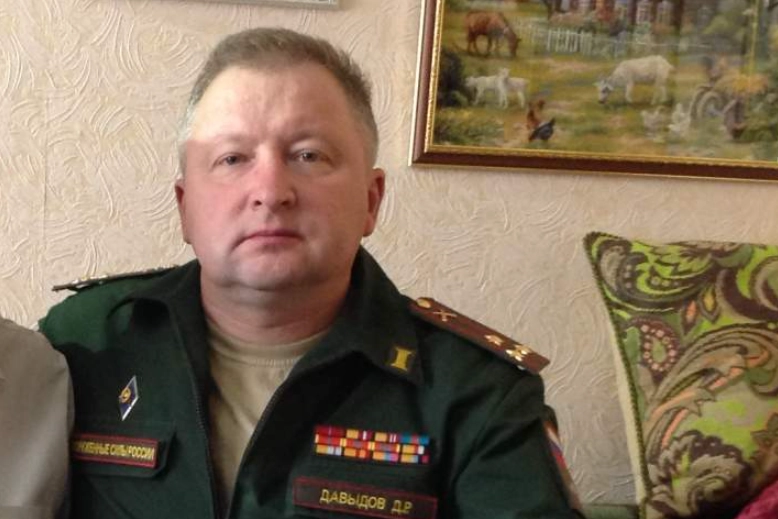
The car exploded around 5:30 am on 9 June as Davydov pulled the BMW X3 out of its parking spot on Koldunova Street in Balashikha's Aviatorov microdistrict. Bystanders pulled him from the wreckage still alive, but he died at the scene before medical teams arrived, The Insider said. The outlet published the SUV's license plate and the apartment address on Kozhedub Street, several hundred meters from the blast, to confirm the identification.

Davydov, 57, had headed the missile and artillery ammunition supply directorate within the Main Missile and Artillery Directorate (GRAU) of Russia's Defense Ministry since 2017. Ukraine's Myrotvorets database lists him as a participant in planning and organizing Russia's full-scale invasion on 24 February 2022, with operational responsibility for keeping Russian forces supplied with shells and missiles. Russia's Investigative Committee confirmed the death of one man in the blast and opened a criminal case but did not name the victim.

The improvised explosive device carried the force of up to 500 grams of TNT and was attached to the underside of the vehicle, the Russian business daily Kommersant reported. Conflict Intelligence Team founder Ruslan Leviev reviewed the footage and concluded the bomb had been hidden in a separate parked vehicle and detonated remotely as the BMW drew alongside. The Insider attributed the operation to Ukraine's Security Service (SBU) without citing further sources, and Ukrainian officials had not commented as of late Tuesday.

A second device, then a third

Hours after the Balashikha blast, a Zeekr electric vehicle caught fire in a parking lot at the intersection of Butlerova and Vvedensky streets in Moscow's Konkovo district. Bomb technicians found a device under the car and neutralized it with a controlled detonation. Around 6 p.m., Moscow police evacuated the Nebo shopping center in Solntsevo after another suspicious object was discovered beneath a parked vehicle. Russian authorities ordered mass under-vehicle inspections across the capital region.

The pattern of four

Tuesday's killing fits a deepening pattern: the fourth senior Russian officer assassinated in the rear since late 2024. Lt. Gen. Igor Kirillov, head of Russia's chemical defense troops, was killed by a scooter bomb outside his Moscow apartment in December 2024 in an operation the SBU claimed openly. Lt. Gen. Yaroslav Moskalik, deputy chief of the General Staff's Main Operational Directorate, died in April 2025 in a car bombing 350 meters from Tuesday's blast site, also in the Aviatorov microdistrict; Russia's FSB later sentenced Ignat Kuzin, who said he worked for the SBU, to life in prison. Lt. Gen. Fanil Sarvarov, who oversaw the General Staff's operational training, was killed by a bomb planted under his Kia Sorento in southern Moscow in December 2025.

Background

The slain officer grew up in the closed nuclear city of Penza-19, now called Zarechny, where his father worked at the Start production association, a facility that built nuclear warheads until 2002. He held patents in rocket-engine design and artillery ammunition. In 2009 he led the Central Testing Technical Bureau attached to the 51st GRAU arsenal in the Vladimir region, and bought the BMW X3 in 2024 from a businessman in that same area, the Russian Telegram channel VChK-OGPU reported. The Kremlin, the Defense Ministry, and the SBU had not commented publicly as of late Tuesday.

Germany adds €300 million to Czech ammunition drive, about 50,000 long-range rounds for Ukraine

10 June 2026 at 12:05

Ministry of defense of Germany

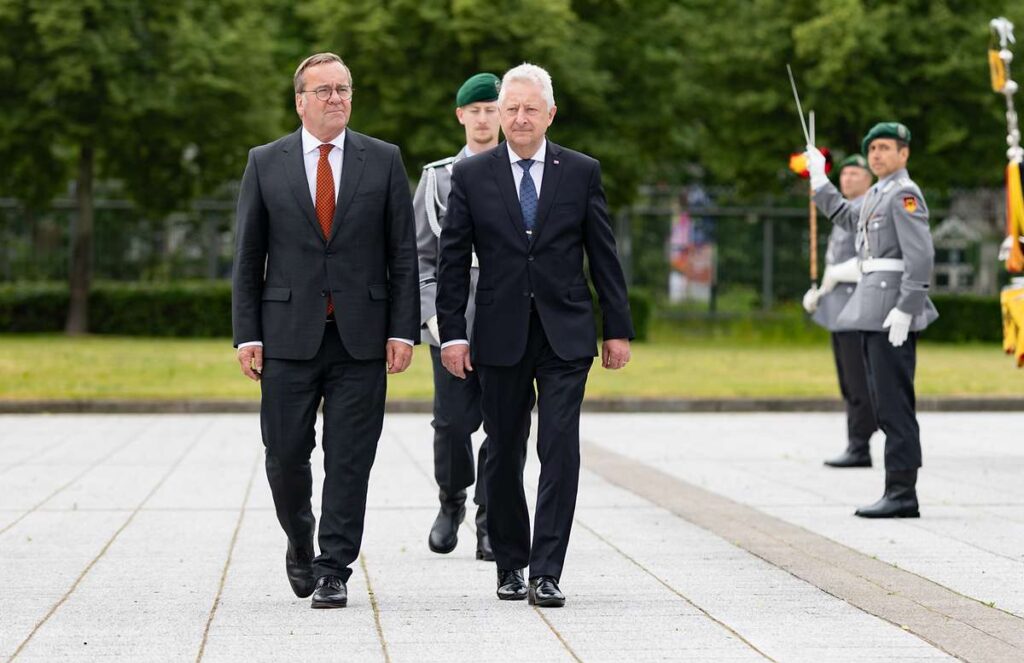
German Defense Minister Boris Pistorius announced an additional €300 million ($345 million) for the Czech-led ammunition initiative for Ukraine on 9 June 2026. The funds will purchase roughly 50,000 rounds of long-range ammunition, Pistorius said after meeting new Czech Defense Minister Jaromír Zůna in Berlin.

The pledge keeps Germany positioned as the initiative's largest foreign backer at a moment when donor numbers are thinning and Prague's new government has retreated on several other Ukraine fronts. The Czech-led channel has delivered 4.4 million large-caliber shells since early 2024 — more than half of all such ammunition Ukraine has received over that period, according to Czech President Petr Pavel.

What the pledge buys

The new commitment lifts Germany's total share of the initiative past €1.2 billion, building on roughly €900 million already disbursed. Pistorius called the Czech channel an essential contribution to Ukraine's ammunition supply and said Berlin would continue to back it.

"Germany will contribute an additional €300 million to this initiative — that's approximately 50,000 rounds of long-range ammunition," Pistorius said.

Prague's new government holds the channel

The Berlin session was Pistorius's first in-person meeting with Zůna, who took office in December 2025 as part of Andrej Babiš's coalition government. Zůna, a retired lieutenant general, was nominated for the post by the center-left SPD party.

Babiš has cut planned Czech defense spending for 2026 and secured a Czech opt-out from the European Union's €90 billion Ukraine funding package. The new government also put on ice a previously discussed transfer of L-159 combat aircraft to Ukraine.

The ammunition initiative is the major exception. Zůna confirmed in December that the channel would continue, and the Berlin meeting was his first public reaffirmation of that position to a NATO partner.

"Germany plays an important role as a supplier of military equipment and ammunition and, together with our defence industry, makes a significant contribution to European security," Zůna told reporters at the Bendlerblock.

Donor base thins as need grows

The initiative needs €5 billion in 2026 but had raised only €1.4 billion by February, Reuters reported. Pavel said last month that the number of contributing countries has dropped.

The channel has firm contracts to deliver about 1 million rounds to Ukraine in 2026, the Czech Defense Ministry said — well below the 1.8 million delivered in 2025 and the 1.5 million in 2024. Russia continues replenishing its own stockpiles, including through North Korean deliveries that NATO officials estimate at 9 million rounds since 2023.

Ukraine knew 37th Russian Brigade was waiting for fuel via Chonhar. It struck bridge and trucks still haven’t arrived

10 June 2026 at 08:56

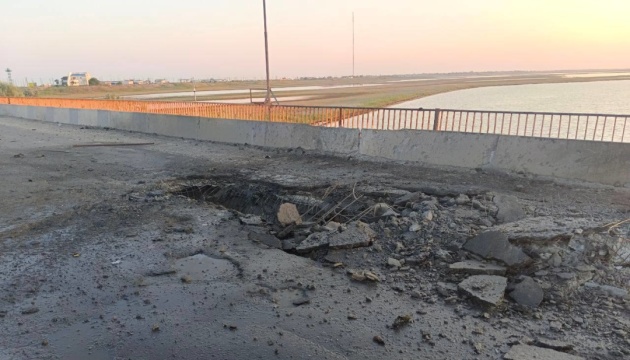
The Chongar Bridge has a hole from strikes. Source: UkrInform

The Ukrainian strike on the Chonhar Bridge, the road bridge connecting Russian-occupied Crimea to Russian-occupied mainland Ukrainian territory, halted all traffic across the crossing, Commander of Ukraine's 1st Separate Assault Regiment Dmytro Filatov, call sign "Perun," told Army TV. The bridge was not fully destroyed, but damage to the roadway proved sufficient to fully halt traffic.

According to Filatov, Ukrainian assault units have built a cyber-intelligence network that provides real-time data from inside the Russian military environment, enabling Ukraine to strike Russian logistics nodes when the units are most dependent on them.

The Chonhar strike falls under Ukraine's broader "Logistics Lockdown" program, which was funded with $113 million in May to carry out systematic strikes against Russian rear-area infrastructure.

Strike worked

"The bridge has sustained damage such that movement on it has fully stopped," Filatov said.

Russian forces are now forced to seek bypass routes through Armyansk and other crossings, while Ukrainian forces watch where the enemy redirects supply flows.

The 37th Motor Rifle Brigade, operating on the Ukrainian-defined direction targeted by the strike, was specifically waiting for fuel via the Chonhar route on the day of the operation.

"On the day of the operation, they expected two trucks with fuel. We know exactly that those vehicles have still not arrived," Filatov said.

The commander emphasized that the targeting was not random: Chonhar was chosen because the 37th MRB depended on that route at that moment.

"No matter how the enemy tries to hide its movements or accumulation of forces, thanks to cyber-intelligence we have built such an active network that we have enough information for decision-making," Filatov explained.

Russian logistics network disclosed

Filatov also disclosed new information about the Russian fuel-logistics network supporting Russia's southern front. Russian fuel cargo, he said, is NOT being transported across the Crimean Bridge. Instead, it is delivered by ferry to occupied Crimea and then sent across the peninsula to the front, including to the Huliaipole direction.

Russia’s full-scale war against Ukraine has now lasted exactly as long as World War I — 1,568 days

10 June 2026 at 08:32

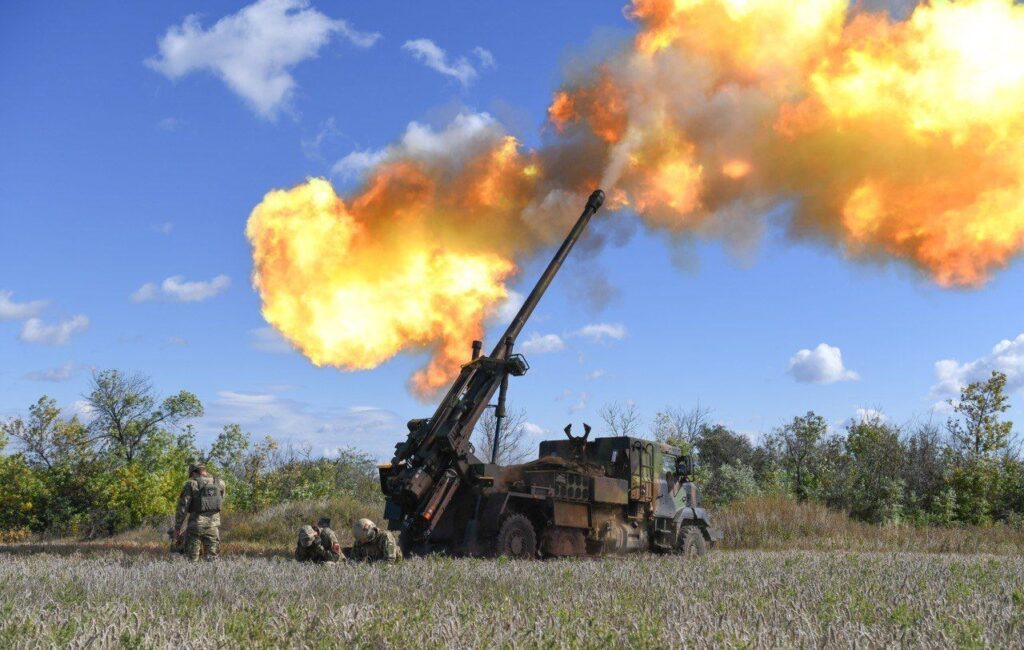
Ukrainian troops fire a CAESAR self-propelled howitzer. Autumn 2022, Ukraine. Photo: ArmyInform

Today, 10 June 2026, marks the 1,568th day of Russia's full-scale war against Ukraine — exactly the same number of days that World War I lasted, ArmyInform observes. Russia has not achieved its strategic objectives to eliminate Ukraine, with the Kremlin's original "Kyiv in three days" planning now four years and three months past.

Russian losses across that period, as documented by Ukraine's General Staff, total more than 1.3 million Russian military personnel killed and wounded, tens of thousands of tanks, armored vehicles, and artillery pieces destroyed, and 33 Russian ships and boats sunk or destroyed.

The Black Sea Fleet is now operating only in a land-support capacity after Ukrainian strikes forced its retreat from operating bases in temporarily occupied Crimea.

The total cost of destroyed Russian equipment over four years is estimated at approximately $153 billion. May 2026 alone saw more than 31,500 Russian troops killed and seriously wounded, according to Ukrainian Defense Minister Mykhailo Fedorov. These figures are Ukrainian estimates. Russian casualty data is not publicly released.

Strategic ledger after four years

Russia's stated strategic objectives at the start of the February 2022 full-scale invasion, including the capture of Kyiv, the change of Ukrainian government, the demilitarization and "denazification" of Ukraine, and the establishment of a Russian-aligned regime in the Ukrainian capital, have not been reached.

Russian forces retreated from the northern Kyiv and Chernihiv axes in spring 2022, and although Russia has incrementally occupied additional territory in Donetsk, Luhansk, Zaporizhzhia, and Kherson Oblasts since then, the pace of advance has been limited. 

Ukrainian fire control and deep-strike expansion

On the Ukrainian operational side, the past 12 months have seen a significant expansion of Ukraine's ability to strike targets across occupied territory and Russian rear areas.

The Ukrainian Defense Forces have established fire control over key logistics nodes in temporarily occupied Donetsk and Luhansk oblasts and in Crimea, including bringing Donetsk Airport within range of regular strikes and striking the Chonhar Bridge. 

In Crimea specifically, where Russia has concentrated air defense systems, 12 Russian Pantsir-S1 systems have been destroyed since the start of 2026. 

Logistics Lockdown and 1,800-kilometer deep-strike envelope

These operations are conducted within Ukraine's $113 million "Logistics Lockdown" program announced in May, which provides for systematic strikes on Russian warehouses, equipment, command posts, and supply routes deep behind the front line. A separate Ukrainian Deep Strike track targets critical infrastructure inside Russia itself, with Ukrainian deep strikes reaching up to 1,800 kilometers into Russian territory and recent operations hitting Russian oil-logistics nodes from Volgograd to Novorossiysk. 

Russia fitted Kalibr cruise missiles with cluster warheads and reverted to foreign electronics, Ukraine’s MoD says

10 June 2026 at 07:56

Kalibr missile. russia

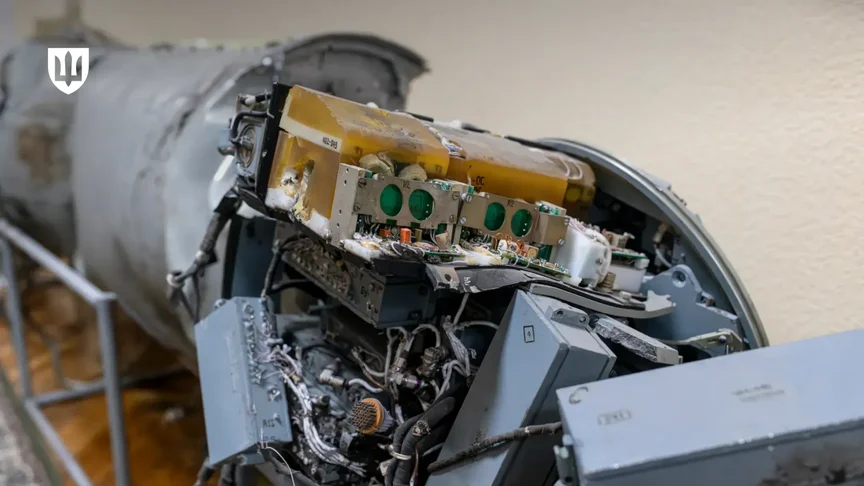
Russia has made two significant modifications to its Kalibr cruise missiles since the start of the full-scale invasion, Ukraine's Ministry of Defense reported.

The cluster payload mirrors the one Russia already uses on its Kh-101 cruise missiles, expanding the lethal radius across dispersed targets like airfields, hangars, and open positions. Russia is not a signatory to the Convention on Cluster Munitions, which 124 states have ratified.

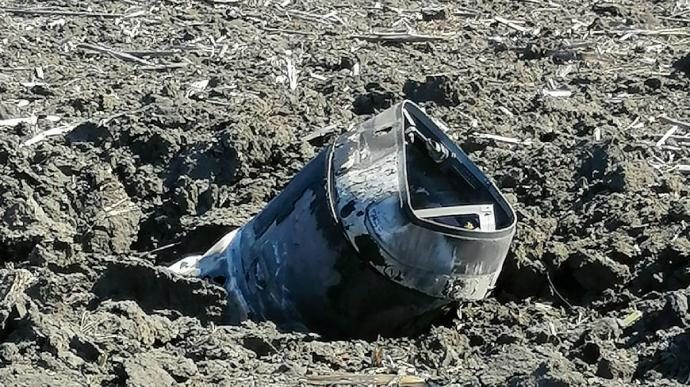
From 2022 through early 2026, Kalibr missiles carried a fragmentation-high-explosive warhead. Researchers documented a cluster warhead for the first time on missiles shot down in spring 2026. Russia made the change to substantially increase the strike area and deploy the missile against dispersed targets, the ministry said.

Russia's failed attempt to replace imported electronics

The second modification concerns the missiles' onboard electronics. Between 2023 and 2024, Russia gradually shifted Kalibr production to domestic components. The attempt failed. Analysis of the onboard digital computing unit from a Kalibr manufactured in 2025 again found imported components. The homing boards are "more than 80–90% foreign-made," the ministry stated, calling it "a confirmed fact, not an estimate" — each part is marked and verified by military representatives.

The shift to domestic electronics likely degraded guidance accuracy, the MoD suggested, prompting the return to foreign parts despite sanctions exposure. A Russian Kh-101 that killed 12 people in Kyiv this May was built in the second quarter of 2026 — pointing to components still reaching Russia after 21 EU sanctions packages and years of Western export controls, President Volodymyr Zelenskyy said last month.

Manufacturers and designers identified for sanctions

The ministry said it had identified all electronics manufacturers supplying Kalibr production, as well as the chief designers and managers involved. "The Ministry of Defense has established all electronics manufacturers for the Kalibrs, as well as the chief designers and managers involved in missile production. This data is being transferred for further processing within the framework of sanctions policy," the ministry stated.

The MoD has previously published technical analyses of downed Russian Kh-101 missiles and North Korean KN-23 and KN-24 ballistic missiles used against Ukraine.

Chonhar bridge halted twice, now Arabat Spit crossing hit — Kherson’s occupied south loses two routes

10 June 2026 at 07:33

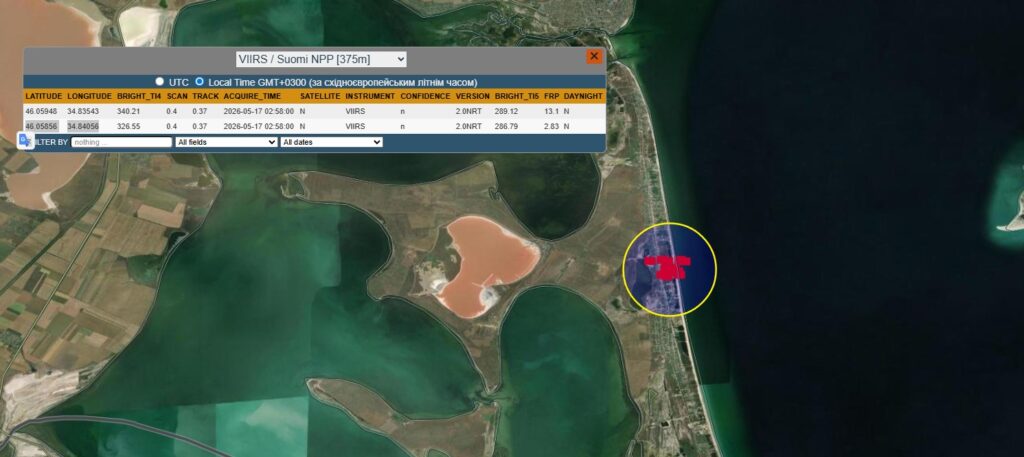
russian air-defense crews now hunted ukraine bolts rocket pods its long-range drones · post nasa firms satellite detection fire arabat spit kherson oblast after ukrainian drone strike 0258 17 2026

Ukraine attempted a missile strike on a bridge connecting Henichesk to the Arabat Spit early on 10 June 2026, according to Vladimir Saldo, Russia's installed head of the occupied part of Kherson Oblast, who posted the claim on social media.

The strike is the latest in a series of Ukrainian attacks targeting road links between Russian-occupied Kherson Oblast and Crimea. The Chonhar bridge—the main overland route—was first struck on 7 June, after which traffic resumed in reversible mode; a second Ukrainian drone strike on 9 June halted movement again. Saldo had advised drivers to use alternative routes through Armyansk and Perekop.

Traffic across the Henichesk–Arabat Spit bridge has been temporarily closed, Saldo said, with emergency services on site establishing the circumstances.

Power outages across eight districts

In the same post, Saldo reported that eight municipalities were left without electricity following a separate overnight Ukrainian drone attack: Henichesk, Novotroitske, Chaplynka, Kalanchak, Ivanivka, Hornostaivka, Kakhovka, and Nova Kakhovka. Utility and emergency crews were working to restore power, he said.

Broader logistics pressure

Russian pro-war bloggers have in recent weeks reported an intensified Ukrainian drone campaign against military transport in southern Ukraine, Hromadske reports. On 30 May, Russian-occupied Crimea imposed limits on sales of A-95 petrol, citing drone strikes on Russian oil refineries; occupied Luhansk Oblast followed with similar restrictions shortly after.

❌