The Victoria Cross recipient was charged on April 7 with five counts of 'war crime - murder' allegedly committed while serving with the SAS in Afghanistan between 2009 and 2012.
You may think school recess is just time for play, but the American Academy of Pediatrics is re-emphasizing that it's important for kids' health. Bradley Blackburn explains why.
The 14-point agreement was concluded while the US president was visiting Versailles and has already entered force
US President Donald Trump has personally signed a copy of the memorandum of understanding with Tehran, with a photo of the document sent to the Iranian side and the mediators.
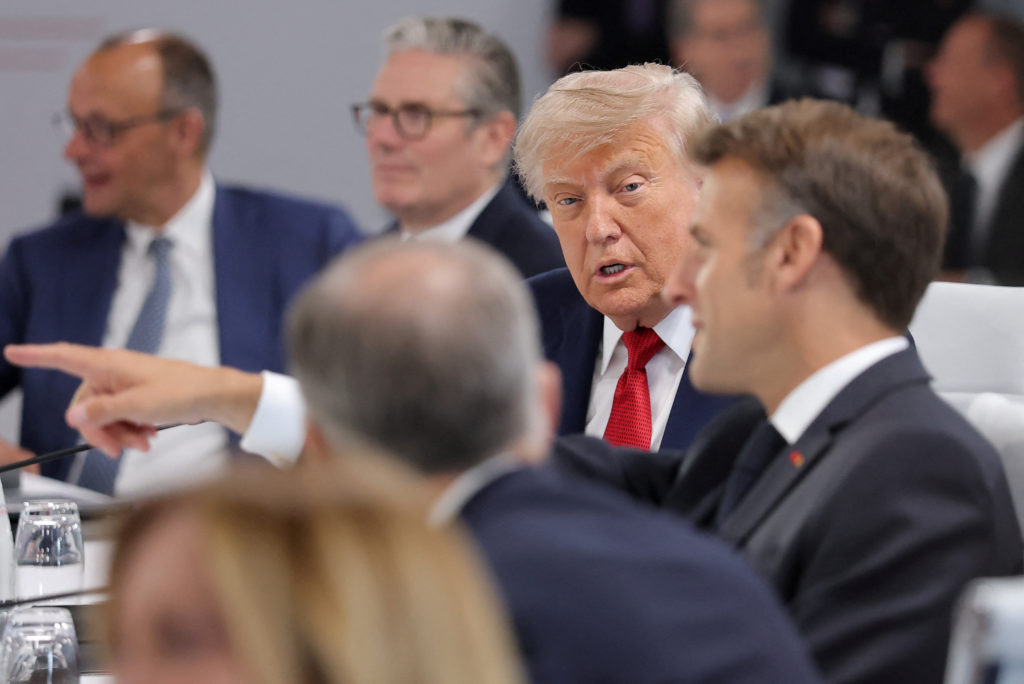
Iran’s Foreign Ministry confirmed on Wednesday that the text of the memorandum had been officially finalized and “signed by both sides.” Trump signed the document while attending a dinner alongside French President Emmanuel Macron on the sidelines of the G7 summit.
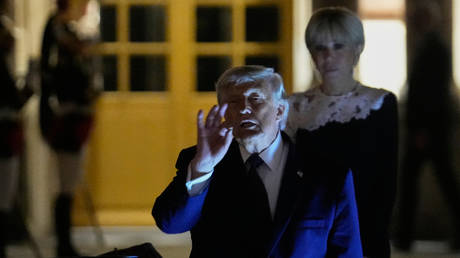
“It’s signed. I signed it in Versailles,” Trump said as he left the palace on Wednesday night.
The White House has yet to publish the final text of the memorandum, but a senior US official read out the 14-point document to journalists earlier on Wednesday, following days of criticism over the secrecy.
🚨 President Donald J. Trump has SIGNED the Iran Memorandum of Understanding at Versailles in France. 🇺🇸 pic.twitter.com/JQ6qlbvFAF
The readout largely tracked the leaked text, but included more detailed language on Lebanon’s sovereignty, the phasing out of the US naval blockade, the future administration of the Strait of Hormuz, and the handling of Iran’s enriched uranium stockpile under IAEA supervision.
Iranian Foreign Ministry spokesman Esmaeil Baghaei said the end of the war in Lebanon was as important for Tehran as the provisions concerning Iran itself, which is why the first clause mentions the country “three times, including respect for its territorial integrity and sovereignty.”
“We do not separate the United States and the Israeli regime, but their differences in approach and methods are clearly evident,” Baghaei said, according to Press TV. “If the Israeli regime’s attacks on Lebanon continue, it will be considered a violation of the other party’s commitments under the memorandum of understanding.”
Trump has in turn warned that Washington would “bomb the hell out of” Iran if Tehran fails to honor the agreement.
Pakistani Prime Minister Shehbaz Sharif, who mediated the talks, announced that the “Islamabad MoU shall enter into force with immediate effect” and that, as a first step, “the Islamic Republic of Iran will instantly reopen the Strait of Hormuz, and the United States of America will immediately lift the naval blockade.”
Below is the official text in full, as narrated by a senior US official who has not been publicly named. Substantive changes from the previously leaked draft are marked in bold.
The United States of America and the Islamic Republic of Iran have jointly agreed in good faith on [date] on the following:
1. The United States of America and the Islamic Republic of Iran and their allies in the current war are signing this MOU to declare the immediate and permanent termination of military operations on all fronts, including in Lebanon, and undertake from now on not to initiate any war or any military operation against each other, and to refrain from the threat or use of force against each other, and to ensure the territorial integrity and sovereignty of Lebanon. The final deal will confirm the permanent termination of the war on all fronts, including in Lebanon, and other provisions of this paragraph.
2. The United States of America and the Islamic Republic of Iran undertake to respect each other’s sovereignty and territorial integrity and to refrain from interfering in each other’s internal affairs.
3. The United States of America and the Islamic Republic of Iran commit to negotiating and achieving the final deal within a maximum of 60 days, extendable by mutual consent.
4. Immediately upon the signing of this MOU, the United States of America will begin the removal of its naval blockade and any disturbances or impediments against the Islamic Republic of Iran, and will fully end the naval blockade within 30 days. During this period, the traffic of vessels will be in proportion to the prewar traffic levels being restored by the Islamic Republic of Iran. The United States of America further undertakes to remove its forces from the proximity of the Islamic Republic of Iran within 30 days after the final deal.
5. Upon the signing of this MOU, the Islamic Republic of Iran will make arrangements, using its best efforts, for the safe passage of commercial vessels with no charge, for 60 days only, from the Persian Gulf to the Sea of Oman and vice versa. The traffic of commercial vessels will immediately start and, considering the need for removing technical and military obstacles and demining by the Islamic Republic of Iran, will be reinstated within 30 days. The Islamic Republic of Iran will conduct dialogue with the Sultanate of Oman to define the future administration and maritime services in the Strait of Hormuz in discussion with other Persian Gulf littoral states, in line with applicable international law and the sovereign rights of coastal states of the Strait of Hormuz.
6. The United States of America undertakes, with regional partners, to develop a definitive, mutually agreed plan with at least 300 billion USD for the reconstruction and economic development of the Islamic Republic of Iran. The mechanism for the implementation of this plan will be finalized as part of a final deal within 60 days. All required licenses, waivers, and permissions needed for the relevant financial transactions will be granted by the United States of America.
7. The United States of America undertakes to terminate all types of sanctions against the Islamic Republic of Iran, including United Nations Security Council resolutions, IAEA Board of Governors resolutions, and all unilateral US sanctions, primary and secondary, on an agreed-upon schedule as part of the final deal. The Islamic Republic of Iran and the United States of America acknowledge the critical importance of the above-mentioned sanctions termination issue and express their intention to immediately address these issues in the negotiations in order to achieve mutual agreement on them.
8. The Islamic Republic of Iran reaffirms that it shall not procure or develop nuclear weapons. The United States of America and the Islamic Republic of Iran have agreed to resolve the disposition of stockpiled enriched material pursuant to a mechanism that will be mutually agreed upon in accordance with the schedule mentioned in paragraph seven, with the minimum methodology to be down-blending on site under the supervision of the IAEA. The two parties also agreed to discuss the issue of enrichment and other mutually agreed matters related to the Islamic Republic of Iran’s nuclear needs, based on a satisfactory framework to be agreed upon in the final deal. The final deal will confirm the provisions of this paragraph. The United States of America and the Islamic Republic of Iran acknowledge the critical importance of the above-mentioned nuclear issues and express their intention to immediately address these issues in the negotiations in order to achieve mutual agreement on them.
9. Pending the final deal, the United States of America and the Islamic Republic of Iran agree to maintain the status quo. The Islamic Republic of Iran will maintain the current status quo of its nuclear program, and the United States of America will not impose any new sanctions and will not deploy additional forces in the region.
10. The United States of America undertakes that immediately upon the signing of this MOU and until the termination of sanctions, the US Department of the Treasury will issue waivers for the export of Iranian crude oil, petroleum products and derivatives, and all associated services, including banking transactions, insurance, transportation, etc.
11. The United States of America undertakes to make fully available for use the frozen or restricted funds and assets of the Islamic Republic of Iran upon the implementation of this MOU. The United States of America and the Islamic Republic of Iran will mutually agree on the procedures related to the release of these funds during negotiations. Such funds, whether retained in the original account or transferred, shall be made fully usable for payment to any ultimate beneficiary designated by the Central Bank of the Islamic Republic of Iran. The United States of America undertakes to issue all necessary licenses and authorizations accordingly.
12. The United States of America and the Islamic Republic of Iran agree that an executive mechanism will be established to monitor the successful implementation of this MOU and future compliance with the final deal.
13. After signing this MOU, and subject to the beginning of the implementation of paragraphs 1, 4, 5, 10, and 11 of this MOU, and the continuing implementation of these measures, the Islamic Republic of Iran and the United States will enter into negotiations for a Final Agreement solely with respect to the remaining Articles.
14. The final deal will be endorsed by a binding UNSC resolution.
The 14-point agreement was concluded while the US president was visiting Versailles and has already entered force
US President Donald Trump has personally signed a copy of the memorandum of understanding with Tehran, with a photo of the document sent to the Iranian side and the mediators.
Iran’s Foreign Ministry confirmed on Wednesday that the text of the memorandum had been officially finalized and “signed by both sides.” Trump signed the document while attending a dinner alongside French President Emmanuel Macron on the sidelines of the G7 summit.
“It’s signed. I signed it in Versailles,” Trump said as he left the palace on Wednesday night.
The White House has yet to publish the final text of the memorandum, but a senior US official read out the 14-point document to journalists earlier on Wednesday, following days of criticism over the secrecy.
🚨 President Donald J. Trump has SIGNED the Iran Memorandum of Understanding at Versailles in France. 🇺🇸 pic.twitter.com/JQ6qlbvFAF
The readout largely tracked the leaked text, but included more detailed language on Lebanon’s sovereignty, the phasing out of the US naval blockade, the future administration of the Strait of Hormuz, and the handling of Iran’s enriched uranium stockpile under IAEA supervision.
Iranian Foreign Ministry spokesman Esmaeil Baghaei said the end of the war in Lebanon was as important for Tehran as the provisions concerning Iran itself, which is why the first clause mentions the country “three times, including respect for its territorial integrity and sovereignty.”
“We do not separate the United States and the Israeli regime, but their differences in approach and methods are clearly evident,” Baghaei said, according to Press TV. “If the Israeli regime’s attacks on Lebanon continue, it will be considered a violation of the other party’s commitments under the memorandum of understanding.”
Trump has in turn warned that Washington would “bomb the hell out of” Iran if Tehran fails to honor the agreement.
Pakistani Prime Minister Shehbaz Sharif, who mediated the talks, announced that the “Islamabad MoU shall enter into force with immediate effect” and that, as a first step, “the Islamic Republic of Iran will instantly reopen the Strait of Hormuz, and the United States of America will immediately lift the naval blockade.”
Below is the official text in full, as narrated by a senior US official who has not been publicly named. Substantive changes from the previously leaked draft are marked in bold.
The United States of America and the Islamic Republic of Iran have jointly agreed in good faith on [date] on the following:
1. The United States of America and the Islamic Republic of Iran and their allies in the current war are signing this MOU to declare the immediate and permanent termination of military operations on all fronts, including in Lebanon, and undertake from now on not to initiate any war or any military operation against each other, and to refrain from the threat or use of force against each other, and to ensure the territorial integrity and sovereignty of Lebanon. The final deal will confirm the permanent termination of the war on all fronts, including in Lebanon, and other provisions of this paragraph.
2. The United States of America and the Islamic Republic of Iran undertake to respect each other’s sovereignty and territorial integrity and to refrain from interfering in each other’s internal affairs.
3. The United States of America and the Islamic Republic of Iran commit to negotiating and achieving the final deal within a maximum of 60 days, extendable by mutual consent.
4. Immediately upon the signing of this MOU, the United States of America will begin the removal of its naval blockade and any disturbances or impediments against the Islamic Republic of Iran, and will fully end the naval blockade within 30 days. During this period, the traffic of vessels will be in proportion to the prewar traffic levels being restored by the Islamic Republic of Iran. The United States of America further undertakes to remove its forces from the proximity of the Islamic Republic of Iran within 30 days after the final deal.
5. Upon the signing of this MOU, the Islamic Republic of Iran will make arrangements, using its best efforts, for the safe passage of commercial vessels with no charge, for 60 days only, from the Persian Gulf to the Sea of Oman and vice versa. The traffic of commercial vessels will immediately start and, considering the need for removing technical and military obstacles and demining by the Islamic Republic of Iran, will be reinstated within 30 days. The Islamic Republic of Iran will conduct dialogue with the Sultanate of Oman to define the future administration and maritime services in the Strait of Hormuz in discussion with other Persian Gulf littoral states, in line with applicable international law and the sovereign rights of coastal states of the Strait of Hormuz.
6. The United States of America undertakes, with regional partners, to develop a definitive, mutually agreed plan with at least 300 billion USD for the reconstruction and economic development of the Islamic Republic of Iran. The mechanism for the implementation of this plan will be finalized as part of a final deal within 60 days. All required licenses, waivers, and permissions needed for the relevant financial transactions will be granted by the United States of America.
7. The United States of America undertakes to terminate all types of sanctions against the Islamic Republic of Iran, including United Nations Security Council resolutions, IAEA Board of Governors resolutions, and all unilateral US sanctions, primary and secondary, on an agreed-upon schedule as part of the final deal. The Islamic Republic of Iran and the United States of America acknowledge the critical importance of the above-mentioned sanctions termination issue and express their intention to immediately address these issues in the negotiations in order to achieve mutual agreement on them.
8. The Islamic Republic of Iran reaffirms that it shall not procure or develop nuclear weapons. The United States of America and the Islamic Republic of Iran have agreed to resolve the disposition of stockpiled enriched material pursuant to a mechanism that will be mutually agreed upon in accordance with the schedule mentioned in paragraph seven, with the minimum methodology to be down-blending on site under the supervision of the IAEA. The two parties also agreed to discuss the issue of enrichment and other mutually agreed matters related to the Islamic Republic of Iran’s nuclear needs, based on a satisfactory framework to be agreed upon in the final deal. The final deal will confirm the provisions of this paragraph. The United States of America and the Islamic Republic of Iran acknowledge the critical importance of the above-mentioned nuclear issues and express their intention to immediately address these issues in the negotiations in order to achieve mutual agreement on them.
9. Pending the final deal, the United States of America and the Islamic Republic of Iran agree to maintain the status quo. The Islamic Republic of Iran will maintain the current status quo of its nuclear program, and the United States of America will not impose any new sanctions and will not deploy additional forces in the region.
10. The United States of America undertakes that immediately upon the signing of this MOU and until the termination of sanctions, the US Department of the Treasury will issue waivers for the export of Iranian crude oil, petroleum products and derivatives, and all associated services, including banking transactions, insurance, transportation, etc.
11. The United States of America undertakes to make fully available for use the frozen or restricted funds and assets of the Islamic Republic of Iran upon the implementation of this MOU. The United States of America and the Islamic Republic of Iran will mutually agree on the procedures related to the release of these funds during negotiations. Such funds, whether retained in the original account or transferred, shall be made fully usable for payment to any ultimate beneficiary designated by the Central Bank of the Islamic Republic of Iran. The United States of America undertakes to issue all necessary licenses and authorizations accordingly.
12. The United States of America and the Islamic Republic of Iran agree that an executive mechanism will be established to monitor the successful implementation of this MOU and future compliance with the final deal.
13. After signing this MOU, and subject to the beginning of the implementation of paragraphs 1, 4, 5, 10, and 11 of this MOU, and the continuing implementation of these measures, the Islamic Republic of Iran and the United States will enter into negotiations for a Final Agreement solely with respect to the remaining Articles.
14. The final deal will be endorsed by a binding UNSC resolution.
This story originally appeared in Professor Glenn Diesen’s Substack on May 31, 2026. This transcript of his conversation has been lightly edited for clarity and is shared here with permission.
Glenn Diesen: We are joined again by Professor Jeffrey Sachs to discuss an open letter to the German Chancellor Friedrich Merz. You wrote a letter six months ago urging the Chancellor to restart diplomacy after merely four years of having minimal contact with Russia. And now you wrote yet another open letter to the German Chancellor, which has been republished in the German media. I wanted first to ask why you wrote a second letter. What do you feel has changed in the proxy war in Ukraine?
Jeffrey Sachs: To put it simply, things are worse now than they were six months ago. So that was the reason for the letter. The first time I wrote the open letter, which was December 2025, the situation was rather grim. There was warmongering and escalation. And I wrote that Germany had a special responsibility in this context as the most powerful country of Europe, the most populous country of Europe, the country that has lots of historical responsibilities regarding the issues that we’re facing right now.
And in January 2026, just a couple of weeks after that letter was published, I saw glimmers of hope. Chancellor Merz made a couple of speeches where he somewhat surprisingly said in an open way that Russia’s part of Europe, that we’re going to have to live together with Russia after this war, that we need to speak with Russia. And he and President Macron and some other leaders in Europe started to opine in January about the need for some kind of new diplomatic deployment.
And Europe, in a rather clumsy way, started publicly to look for who might serve as a diplomatic envoy. Kaja Kallas is an open Russophobe and every day hate speech comes out of her mouth, anti-Russian speech, making it not really possible for her to fulfill her job, which is to be Europe’s chief diplomat. After January and despite this rather bizarre public process of “Who could serve as our emissary? Should it be former Chancellor Merkel? Should it be former European Central Bank President Mario Draghi? Should it be former Chancellor Schröder?”—nothing has come of it.
But what has occurred is the Ukrainian attack on the girls’ school in Starobilsk with many deaths of young students, and Europe not only not apologizing for that or explaining why a missile went in the wrong direction, but actually in denial or silence about this horrible event. And in response, Russia has said through Foreign Minister Lavrov in a call to US Secretary of State Marco Rubio that Russia is going to attack the capital, Kyiv—it’s going to attack control centers and areas of operations control in the capital. And Minister Lavrov advised the Western diplomats to take care and be safe and clear out. That attack has not come yet, despite the warnings, but I think we can expect that it will.
So these are alarming days, and the response in Europe has been escalatory in rhetoric and non-apologetic for disasters that have clearly occurred. There are many mysterious events of drones in Baltic airspace and a drone hitting in Romania near the border with Ukraine that are contested, unexplained, but also raising tensions and a sense of escalation. The rhetoric out of the Baltic states about perhaps attacking Kaliningrad or being ready to be a base for drone operations into northwest Russia are all shocking. None of this is the kind of behavior that we need in a nuclear age. All of it is incredibly irresponsible, incredibly neglectful of your and my life and those of all the rest of us on the planet. It’s truly shocking.
I put the principal responsibility on Europe. It has not shown the slightest interest, the slightest capacity to engage in any kind of diplomacy except to whine when the US and Russia speak. “Why aren’t we there?” As if a union of 450 million people can’t get its act together to find someone to speak with the counterpart in Russia.
So, I wrote the letter because the situation is alarming now, not because I have any special hopes that what I say will be heeded, but because the situation is completely alarming. And just to underscore the point of the letter, the point I’m making in the letter is not only that diplomacy is correct, but that Germany has a particular responsibility. And before people jump to conclusions, I’m talking about responsibility from 1990 onward. I want to be clear—I’m talking about specifics of the events that are taking place in Ukraine.
And I happen to know firsthand: Germany has cheated on German reunification in a fundamental way, because the terms of German reunification were that NATO would not expand eastward into Central and Eastern Europe, much less to Ukraine and the South Caucasus—Georgia, another aim of this absolutely irresponsible alliance called NATO. And they cheated.
So Germany has a responsibility, given that solemn commitments were made to Germany’s advantage—promises made in February 1990 that, in the context of German reunification to end World War II (believe it or not, because there had been no treaty after 1945 until the Two Plus Four agreement in 1990), Germany would not take advantage of German reunification by moving its military and the NATO alliance eastward. And Germany and the United States cheated.
And this, to my mind, is the underlying reason why tensions rose for more than 30 years. And we saw them happening. And we saw repeated duplicity, because I mentioned six episodes in this letter where Germany did not follow through honestly in a geopolitical context that was completely harrowing.
So it’s not just general historical responsibility. It’s not only that Germany is a big and powerful country, the biggest and most powerful in Europe. It is that Germany gained advantages vis-à-vis Russia starting in 1990 with unification premised on the neutrality of the countries to the east—not extending NATO. And then time and again, Germany violated not only that promise, but many other specific commitments that it undertook.
So as Chancellor of Germany, Merz has a responsibility to know this and to act upon it before Europe is embroiled in another war. And all this chest-thumping of Europe about how saintly Europe is and how evil Russia is, and this one-sided narrative that is unending—“we’re pure, they’re evil, everything they do is unprovoked”—this is what is going to get us to complete and total disaster.
And Europe should start, first of all, by apologizing or expressing condolences for the attack on Starobilsk and for trying to understand what happened. That’s the first. When you kill young girls, whether it’s the United States doing it brutally because of this crazy AI targeting of sites in Iran that killed more than 160 schoolgirls, or what’s happened reportedly in Lugansk in the Starobilsk girls’ school—we need civility, honesty, humanity, decency, discussion, not further warmongering and hate speech.
Glenn Diesen: I tend to not just blame NATO but also see that they have a key role in resolving this, because where we’re sitting now is—I accept that Russia faces an existential threat, or at least sees it this way, with NATO’s expansion. But the ones that can solve this are the NATO countries, because we are the ones who triggered the security competition. If we go back to 2014 when we toppled the government in Ukraine, only a minority of Ukrainians wanted to be a part of NATO. And more importantly, we knew it would trigger a war. This is well documented among Europeans and Americans, and we decided to do it nonetheless. So this is my concern—that we continue to push ahead here. And it’s so interesting and ironic given what former Chancellor Merkel has just said in the last few days again, how much we knew about the provocations that NATO was making.
Jeffrey Sachs: This goes back to 2014 when the US really gave a big nudge in support of a coup that turned Ukraine from a neutral country to a very dramatically pro-NATO expansionist country. But before that coup, six years before, came the decisive moment at the Bucharest NATO summit in April 2008. George W. Bush was pushing—and especially this was because of his neoconservative gang around him, led by his Vice President Cheney—that NATO would enlarge. And the Europeans then knew that this was reckless. The Europeans were actually taken aback just before the Bucharest Summit that the United States would pull such a stunt of trying to demand an enlargement of NATO to Ukraine.
But when they got to the Bucharest Summit, the US was out in full force. George Bush said, “We will commit.” And Chancellor Merkel has written about this in detail. She says that she knew that committing to a timeline for NATO enlargement to Ukraine was tantamount to a declaration of war on Russia, that that’s how the Russians would see it. And she resisted this commitment the first day of the summit. But then the Americans wore her down. And on the second day, while the NATO summit did not commit to a specific timeline—a so-called MAP, which would lay out precisely the timeline—it committed in no uncertain terms to the enlargement of NATO. And she wrote in her memoirs that she knew that such a commitment was reckless.
The reason I say that this is ironic is that just in recent days, she said that she hopes that the war in Ukraine stops sometime within the next ten years. What? Are we so incapable as human beings that we accept a timeline of ten more years of war? Why not ten days or ten hours, understanding all of the mistakes that have been made, and come up with a formula to end this—one that has to be based, by the way, on what was, is, and remains the core issue of this war, which is Ukraine’s neutrality. The West should understand this, absolutely must, or we’ll have a war in Europe.
By the way, I think we’ve talked about it, but I’d like to discuss it in this context because the warmongering and irrationality and danger and recklessness and shallowness and immaturity of the people who lead us is something to behold.
In December 2021, when President Putin, in a final attempt to press the new Biden administration to recognize the commitment of no NATO enlargement that had been made 30 years earlier—and to stop this war that was already seven years underway in Ukraine—put a draft security arrangement between Russia and the United States on the table (I think it’s December 17, if I remember correctly, 2021). There were things that I don’t think NATO would ever have accepted, or the US would have accepted, about rolling back some of the existing placements. But what absolutely struck me as core and correct was that the United States at that point should say, “Yes, NATO’s not going to enlarge any farther into Ukraine,” much less into the South Caucasus region—which, by the way, is still in play by the CIA and the United States even as we speak right now. They’re playing games in Armenia, they’re playing games in the South Caucasus. But let me not digress.
I called the White House and I spoke to the National Security Advisor Jake Sullivan. And I had the most surrealistic conversation imaginable. We spoke for an hour. We spoke in detail. And I said, “Jake, take the deal. Say NATO’s not going to enlarge. It’s a terrible idea. It’s not in America’s interest. It’s not in Ukraine’s interest. Take the deal.” And he said to me, “Jeff, NATO’s not going to enlarge to Ukraine.” I said, “Jake, what?” “NATO’s not going to enlarge.” I said, “Fine, say it.” “No, no, we can’t say it. It’s our open door policy.” I said, “Jake, you’re going to have a war over something that isn’t going to happen?” He said, “Jeff, Jeff, there’s not going to be a war. We’re going to handle this diplomatically. Don’t worry, there’s not going to be a war.”
What can one make of this almost five years later? First, the incompetence is shocking. The brazenness is shocking. The naïveté is shocking. It’s so distressing to have conversations like that. Not one word of it made sense, yet I think that actually was American policy: NATO’s not going to enlarge, but we’re not going to say it, but we’re not going to have a war. Every premise of it made no sense and was quickly disproved.
And here we are with an ongoing war—the war has been since 2014, let’s be clear—but this escalation is since February 2022, so more than four years. And now we hear Chancellor Merkel, who I always liked, I have to say, saying that she hopes it won’t be ten more years. What is it? Is something so wrong in the European mentality that war is so normalized? Europe has been at war essentially since maybe 300 AD, since the Germanic tribes made their incursions into the Roman Empire, and since 476 when Western Europe splintered with the end of the Roman Empire. It’s never been really at peace as it should be. It’s had stretches that were much better.
But what kind of mentality? Rather than saying, “Oh my God, this could go on for another ten weeks—that’s horrible, we have to do something,” it’s “I hope that it won’t go on for another ten years.” It was a rather plaintive, complacent view that we’re just stuck by these forces of opposition and it’s just a long, hard slog. Try sitting down diplomatically. Understand all of the lies that we’ve been told.
And just to say some of the others that I mentioned that are of relevance: in the context of the coup in Maidan, on February 21, 2014, the German Foreign Minister and his French and Polish counterparts negotiated with President Yanukovych that there would be no coup, that President Yanukovych would remain in power under the constitutional order, and that there would be elections late in 2014. The next day, a violent coup came. You might think that the United States and Germany and Poland and France would say, “No, we don’t accept a violent coup. Ukraine is a constitutional democracy and President Yanukovych remains president.” Of course, they didn’t say that. The US was rubbing its hands together—“We got them. Now we’re going to go for NATO enlargement.” Immediately the post-coup regime said, “Maybe Russia shouldn’t stay in Sevastopol and Crimea. Maybe it’s time to unwind that lease for their naval base.” You saw the plot straight out. What did Germany do in that context? Nothing except go along. So that was another cheat.
And then a year later, in February 2015, when the war had already started, when people were dying in the Donbas, Chancellor Merkel and President Hollande personally negotiated an arrangement to end the war called the Minsk II Agreement. And it happened to be based on an idea of autonomy for the ethnic Russian population of eastern Ukraine. And I happen to know also, interestingly, that Chancellor Merkel viewed that as quite a good alternative because she knew about the German enclave in South Tyrol in northern Italy, which is another case of an autonomous region in Europe—at peace, but given autonomy because it’s an ethnically autonomous part of Italy. Italy had taken some territory of the Austro-Hungarian Empire at the end of World War I, a German-speaking part near Bolzano. And they now have autonomy and everything works out well.
So Chancellor Merkel said this is how to end the crisis in the Donbas: give autonomy. Germany negotiated it. Germany presented itself as the guarantor, together with France, in the so-called Normandy process. And Germany reneged on its guarantor role. The United States didn’t like it—“Ukraine should be a unitary state, we don’t want this autonomy, don’t weaken Ukraine.” In other words, don’t follow through on exactly what you’ve just signed and what has just been unanimously ratified by the UN Security Council. Because the Minsk II agreement is not only an agreement inside Ukraine, but it was an agreement endorsed by the UN Security Council and then blown off.
Years later, Chancellor Merkel said, “Yes, we didn’t really expect it to work. It was going to give time for Ukraine to build up its strength.” I actually don’t believe that was her motivation back in February 2015. I think that it’s a strange kind of ex post rationalization of events. But whatever it is, there was duplicity in the end.
All of this, Glenn, is to say: I don’t know whether Chancellor Merz knows any of this. I don’t know whether he does his homework. I don’t know whether he’s aware of history. But he is the Chancellor of Germany and he has a responsibility to all of us, actually, to behave like a responsible Chancellor of Germany. And that means knowing these events, understanding that there’s no purity of the European side, that there’s plenty to talk about for true mutual security in Europe, and that as Chancellor, he has a responsibility not to be a warmonger. He has a responsibility to pick up the phone or dial his Zoom and connect with his counterpart, President Putin.
Glenn Diesen: The lack of diplomacy has been shocking to me, though. The fact that the Germans were guarantors to this unity government in 2014, which they then walked back. The Minsk peace agreement, which they then walked back. Sabotaging the Istanbul peace negotiations, and then of course boycotting diplomacy for four years. It is something unique—this is very deliberate, the lack of willingness to find a solution.
I’m just curious—you say you recently spoke to European leaders and you often engage with them. What do they actually think? Because I know for a fact that something has changed now in Moscow, that this incremental escalation over the past four years has now crossed the line. The Europeans speaking openly about war with Russia, the goal of destroying its energy, striking military installations deep inside Russia, backing this up by mass-producing the weapons, openly saying the intent, developing the capabilities, using their territory for attacks.
Attacking Kyiv in a very brutal way is one path, but I don’t think we have the luxury anymore of just putting the Ukrainians in front of us and letting them die for us, because I think Russia is going to also increasingly deter the Europeans more directly as well. If you see the path we’ve been on for years, it’s hard to ignore that we’re heading towards a war and that we’re still not doing diplomacy. Twelve years of this nonsense, sabotaging every diplomatic path, and we’re still going to do it even now that we might fight the world’s largest nuclear power. It’s beyond insane.
Jeffrey Sachs: It is. And one wonders how this can happen in a world of open communication—our discussion, or the fact that I can still publish an open letter in an important German outlet, the Berliner Zeitung.
But what I can tell you, what we know, is our governments are in a bunker already. They don’t talk. They simply have hunkered down and operate without responsibility. It’s hard to imagine because we have all of the trappings of democracy, the trappings of accountability. But I know, because I experience it daily—you do as well—there simply is no response. If I call a senior official in the European Commission, I don’t get an answer. I don’t get a callback. They know who I am. I’ve been dealing with the European Commission for 40 years in one way or another. I’ve been dealing at a personal level with many of these people. They simply will not speak anymore. Leaders that I know will not speak. They are hunkered down. They cannot defend their position. They cannot rationalize it. All they can do is repeat the narrative.
And that is not an answer—it’s just an explanation of how we go day by day with falsehoods hanging in the air unresolved, because they don’t try to resolve them. There’s no independent look, or commissions, or responses, or answers to parliament. There’s no inquiries into anything. It’s a very, very dangerous situation because the normal processes of truth-telling or analysis—or what diplomats are especially important for, understanding how the other side thinks and explaining that straightforwardly—have broken down.
I was invited by the host country at the time, which was Indonesia, to speak to the G20 foreign ministers. And this was after the invasion. They would not speak with Foreign Minister Lavrov. So here are foreign ministers—it’s their job, that’s why they’re there—and they would not even speak to the Russian foreign minister. This is the idea: you do not engage in actual communication, much less diplomacy and negotiation.
And I don’t really understand what the motivations are. People have various explanations. We can say the publics are disgusted by this, broadly speaking. Merz’s popularity is essentially in complete collapse. Macron’s popularity is essentially in complete collapse. Starmer’s popularity is essentially in complete collapse. It’s not as if these people are expressing the will of their republics—absolutely the opposite.
So then it raises all sorts of questions. Some people say Merz is Blackrock, or he’s the German military industry. Who knows? Seems doubtful to me. I don’t find such explanations so simplistic convincing, but frankly I don’t have a better one, because the behavior is so bizarre at this point, so counterproductive and so dangerous. And we have to keep the core message to the Europeans: you said you were going to talk. You said you were going to find an intermediary. For heaven’s sake, 450 million people in the European Union—find someone and get started.
Glenn Diesen: It’s incredible. Again, we have diplomats who don’t believe in diplomacy, leaders who ignore their basic national interests and seemingly have some contempt for their own public, and journalists who think it’s their job to defend narratives. I think at the end of this, we also risk a legitimacy crisis when, as you said, they’re not actually doing their jobs.
President Donald Trump is not known to be a fan of international gatherings of world leaders, but he changed his tune at this year's G7 summit at a French Alpine resort, where he was buoyed by support from his counterparts for his tentative agreement with Iran to end the war.
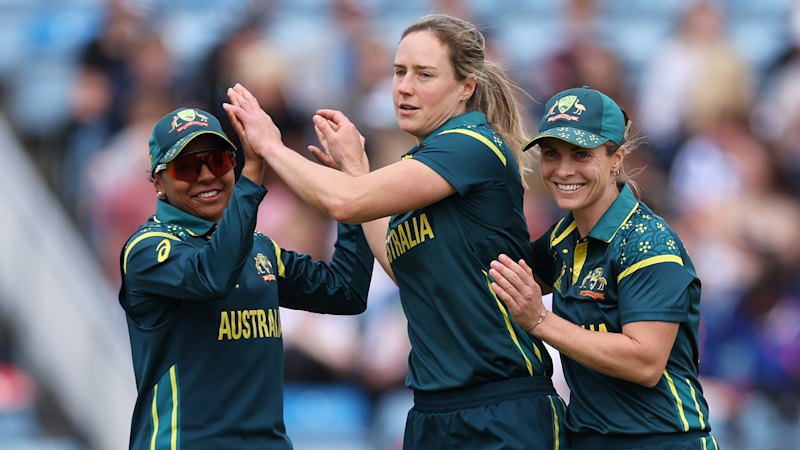
Ellyse Perry made an ominous return to the bowling crease as Australia all but sealed a T20 World Cup semi-final berth, while Adam Zampa created history in the men’s win over Bangladesh.
Ellyse Perry made an ominous return to the bowling crease as Australia all but sealed a T20 World Cup semi-final berth, while Adam Zampa created history in the men’s win over Bangladesh.
Воздушная тревога объявлена в Киеве, а также в ряде областей Украины, свидетельствуют данные онлайн-карты украинского министерства цифровой трансформации.
Согласно данным онлайн-карты, сигнал тревоги звучит в Киеве с 00.34 мск.
Кроме того, воздушная тревога объявлена в Киевской, Днепропетровской, Черниговской, Кировоградской, Харьковской, Николаевской, Сумской, Черкасской, Житомирской, Полтавской областяхУкраины.
Nova exigência eleva critérios de qualificação dos treinadores e marca mudança face às épocas anteriores A Associação de Futebol de Vila Real vai implementar uma alteração significativa nos requisitos para os treinadores que atuam no Campeonato da Divisão de Honra. A partir da época 2025/2026, todos os clubes participantes passam a ser obrigados a contar [...]
Nova exigência eleva critérios de qualificação dos treinadores e marca mudança face às épocas anteriores A Associação de Futebol de Vila Real vai implementar uma alteração significativa nos requisitos para os treinadores que atuam no Campeonato da Divisão de Honra. A partir da época 2025/2026, todos os clubes participantes passam a ser obrigados a contar [...]
O Ministério Público do Trabalho (MPT) publicou nesta quarta-feira uma nota técnica defendendo que o trabalho de influenciador digital é proibido para menores de 16 anos. O documento serve para orientar o Conselho Nacional de Justiça (CNJ), que está produzindo normas para a concessão de alvarás judiciais para a participação de crianças e adolescentes em atividade artística e em publicidade no ambiente digital.
Artigo: Sociedade deve monitorar implementação do ECA Digital
ECA Digital: Governo aumenta classificação indicativa do YouTube para maiores de 16 anos
— Cada situação precisa ser avaliada de forma individual. Se a exposição da rotina da criança for dentro do contexto artístico, tudo bem. Mas se for para trabalho, para ter rendimento, é proibido — diz Fernanda Brito Pereira, procuradora regional do Trabalho e coordenadora nacional de Combate ao Trabalho Infantil e de Promoção e Defesa dos Direitos de Crianças e Adolescentes (Coordinfância) do MPT.
Em março, um decreto do Estatuto da Criança e do Adolescente (ECA) Digital determinou que as famílias de influenciadores mirins precisariam de uma autorização judicial em até 90 dias para manterem a monetização desses perfis em redes sociais. Esse prazo termina nesta quinta-feira.
Por isso, o CNJ está produzido orientações aos tribunais da Infância e da Juventude sobre o que considerar para dar ou não essa autorização. O tema está na pauta do conselho para ser discutido na próxima terça-feira.
Neste processo, o MPT publicou uma nota técnica defendendo que "a atuação denominada de 'influenciador(a) mirim' revela situações em que pessoas em condição peculiar de desenvolvimento são inseridas em atividades de natureza econômica, voltadas à promoção de produtos, marcas e serviços, com geração direta ou indireta de receita, evidenciando, assim, situação de trabalho". Ainda de acordo com ele, isso seria diferente de "atividade artística", a única forma de trabalho liberada no Brasil para menores de 16 anos — com exceção da condição de aprendiz a partir dos 14.
"A produção habitual de conteúdos, o cumprimento de roteiros, a realização de campanhas publicitárias, a monetização de perfis, canais e conteúdos, a captação de patrocínios, o recebimento de produtos ou serviços em contrapartida à divulgação, bem como outras formas de exploração econômica da imagem de crianças e adolescentes, constituem atividades de natureza laboral, ainda que realizadas em plataformas digitais ou sob a denominação de 'influenciador mirim'", diz o texto.
O MPT ainda argumenta que, na Classificação Brasileira de Ocupações (CBO), a ocupação de influenciador(a) digital encontra-se reconhecida em um código diferente dos profissionais de espetáculos e das artes, que abrange artistas visuais, atores, músicos, produtores e cenógrafos.
"O simples uso de recursos criativos, audiovisuais ou performáticos não converte automaticamente uma atividade econômica em atividade artística apta a justificar exceção à proibição constitucional do trabalho infantil", avalia.
Por isso, na avaliação do MPT, a autorização judicial prevista no Estatuto da Criança e do Adolescente (ECA) "somente pode alcançar atividades efetivamente artísticas, não se prestando a legitimar atividades de publicidade, comunicação mercadológica ou exploração econômica da imagem de crianças e adolescentes".
De acordo com a advogada Lilian Jabour, especializada em direito digital e no ECA Digital, o MPT está liberando uma criança que canta ter um perfil mostrando seu dom, mas que ele não poderá fazer publicidade, ter post patrocinado e divulgar recebidinhos, por exemplo.
— Essa é uma grande mudança da interpretação na lei até agora — diz.
Fernanda Brito Pereira, coordenadora nacional de Combate ao Trabalho Infantil e de Promoção e Defesa dos Direitos de Crianças e Adolescentes (Coordinfância) do MPT, explica que o direito da criança é o não-trabalho e que é preciso proteção nesta fase da vida.
— Se a criança está trabalhando, não está estudando, tendo lazer, convivendo com a família. Ela está deixando de se desenvolver adequadamente. O trabalho tem que ser uma exceção. Não uma autorização genérica — afirma.
A procuradora explica que os alvarás têm que explicitar detalhes do que a Justiça autoriza. Entre eles, o que a criança pode ou não no ambiente digital.
— O alvará vai liberar, por exemplo, que ela pode cantar no ambiente digital e também mostrar a rotina relacionada à cantoria. Vai definir também quanto tempo ela pode cantar, quanto tempo fazer essas gravações. Isso sempre aconteceu com os atores mirins da TV, por exemplo. Mas agora é mais difícil fiscalizar porque as crianças estão trabalhando dentro de casa — diz.
Coalition says it’s good Hanson and One Nation getting the scrutiny of a party on the rise
Kevin Hogan, the shadow assistant treasurer, says he thinks it’s good Hanson was able to speak at the press club yesterday as One Nation “needs to be put under much more scrutiny” amid surging support.
The GetUp stunt completely backfired, it makes them look like [bullies] and makes her look like, you know, a victim in the sense that she’s being picked on. And that never works.
One Nation have tapped into, I think, to some fear and anxieties in the Australian public, and I think we have to acknowledge that. I certainly don’t agree with all the solutions that she puts out there, but look, I think it was healthy that she front up and that she was invited yesterday.
If you’re coming to Australia to have a better life, you become an Australian. That’s what we’re referring to as a monocultured Australia. You’re an Australian first, and your ethnicity or your creed comes second …
The reality is, we’re a Christian Judeo society with a law structure around us, and they’ve come with one clear objective: to have a better life. And that one clear objective should be, if they want to have a better life here, is to live within our culture and live within our laws and rules.
It was direct shooting. It hit the targets. It was clear. It was successful. And it addressed a number of the elephants in the room … So the speech hit the target for where Australians are today.
A mãe do goleiro Vozinha, herói de Cabo Verde, poderá acompanhar o filho na Copa do Mundo neste fim de semana após uma intervenção do Departamento de Estado dos Estados Unidos e do líder da minoria democrata na Câmara, Hakeem Jeffries.
“Todas as taxas foram dispensadas de acordo com a política oficial”, afirmou Jeffries. “Os preparativos de viagem já estão sendo feitos para que mãe e filho se reencontrem em Miami.”
Um representante do Departamento de Estado confirmou que a equipe consular americana em Praia, capital do Cabo Verde, mantém contato direto com a mãe de Vozinha e está prestando toda a assistência necessária para viabilizar a viagem.
Mãe de Vozinha perdeu estreia de Cabo Verde na Copa
“Ela não conseguiu estar aqui por causa do visto… do dinheiro que temos de pagar pelo visto”, disse o goleiro aos jornalistas após o jogo. “Não conseguimos resolver tudo a tempo e eu gostaria que ela estivesse aqui.”
Cabo Verde está entre os 50 países cujos cidadãos, segundo regras da administração Trump, precisam pagar uma caução de até US$ 15 mil. Pela cotação atual, o valor corresponde a cerca de R$ 82,5 mil.
A exigência foi criada com base em alegações de altos índices de permanência irregular nos Estados Unidos após o vencimento dos vistos concedidos aos visitantes desses países.
1 de 6
Pau Cubarsi toca a bola em Espanha x Cabo Verde • Photo by Buda Mendes/Getty Images
2 de 6
Ferrán Torres em jogo contra Cabo Verde • Photo by Mattia Ozbot/Getty Images
3 de 6
Vozinha fez grande jogo contra a Espanha • Photo by Maddie Meyer - FIFA/FIFA via Getty Images
4 de 6
Goleiro Vozinha, de Cabo Verde, em ação contra a Espanha pela Copa do Mundo • FIFA via Getty Images
5 de 6
Goleiro Vozinha, de Cabo Verde, em ação contra a Espanha pela Copa do Mundo • FIFA via Getty Images
6 de 6
Vozinha foi o destaque da partida entre Espanha x Cabo Verde • (Photo by Marvin Ibo Guengoer - GES Sportfoto/Getty Images)
Departamento de Estado esclarece regras para familiares
Questionado sobre as declarações de Vozinha, um representante do governo americano afirmou não haver registro de um pedido de visto em nome da mãe do jogador até aquele momento.
O mesmo representante ressaltou que a exigência da caução é dispensada para familiares de atletas participantes da Copa do Mundo.
“O Departamento de Estado dos Estados Unidos não tem registro de pedido de visto dessa pessoa. Todos os familiares de jogadores têm direito à isenção da caução, e o Departamento está entrando em contato com a família para auxiliar nos serviços consulares”, afirmou.
Uma fonte com conhecimento do caso acrescentou que a mãe de Vozinha atualmente não possui passaporte válido e está em processo de obtenção do documento.
Regras da Copa do Mundo preveem isenção de taxas
Em seu site oficial, o Departamento de Estado informa que a exigência da caução não se aplica a atletas, integrantes de delegações, treinadores, profissionais de apoio e familiares imediatos de seleções participantes da Copa do Mundo de 2026.
A medida vale para cidadãos de países classificados para o torneio que comprovem cumprir todos os requisitos necessários para a emissão do visto.
A repercussão do caso aumentou ainda mais a visibilidade de Vozinha, goleiro de 40 anos que atua na segunda divisão de Portugal e se tornou um dos personagens mais comentados do início da competição.
Na estreia histórica de Cabo Verde em Copas do Mundo, o veterano realizou sete defesas diante da Espanha e foi decisivo para segurar um empate diante de uma das favoritas ao título.
Vozinha vira fenômeno após atuação contra a Espanha
Muitos esperavam uma derrota contundente de Cabo Verde, semelhante ao 7 a 1 aplicado pela Alemanha sobre Curaçao na estreia da seleção caribenha no último domingo.
No entanto, Vozinha e o sistema defensivo cabo-verdiano neutralizaram o ataque espanhol durante os 90 minutos e garantiram o resultado mais importante da história do futebol do país.
Impulsionado também por incentivo da CazéTV, o perfil de Vozinha no Instagram saltou de cerca de 50 mil seguidores para mais de 9,7 milhões até a tarde de terça-feira.
Cabo Verde volta a campo às 19h (de Brasília) deste domingo, quando enfrentará o Uruguai, em Miami, pela segunda rodada da fase de grupos da Copa do Mundo.
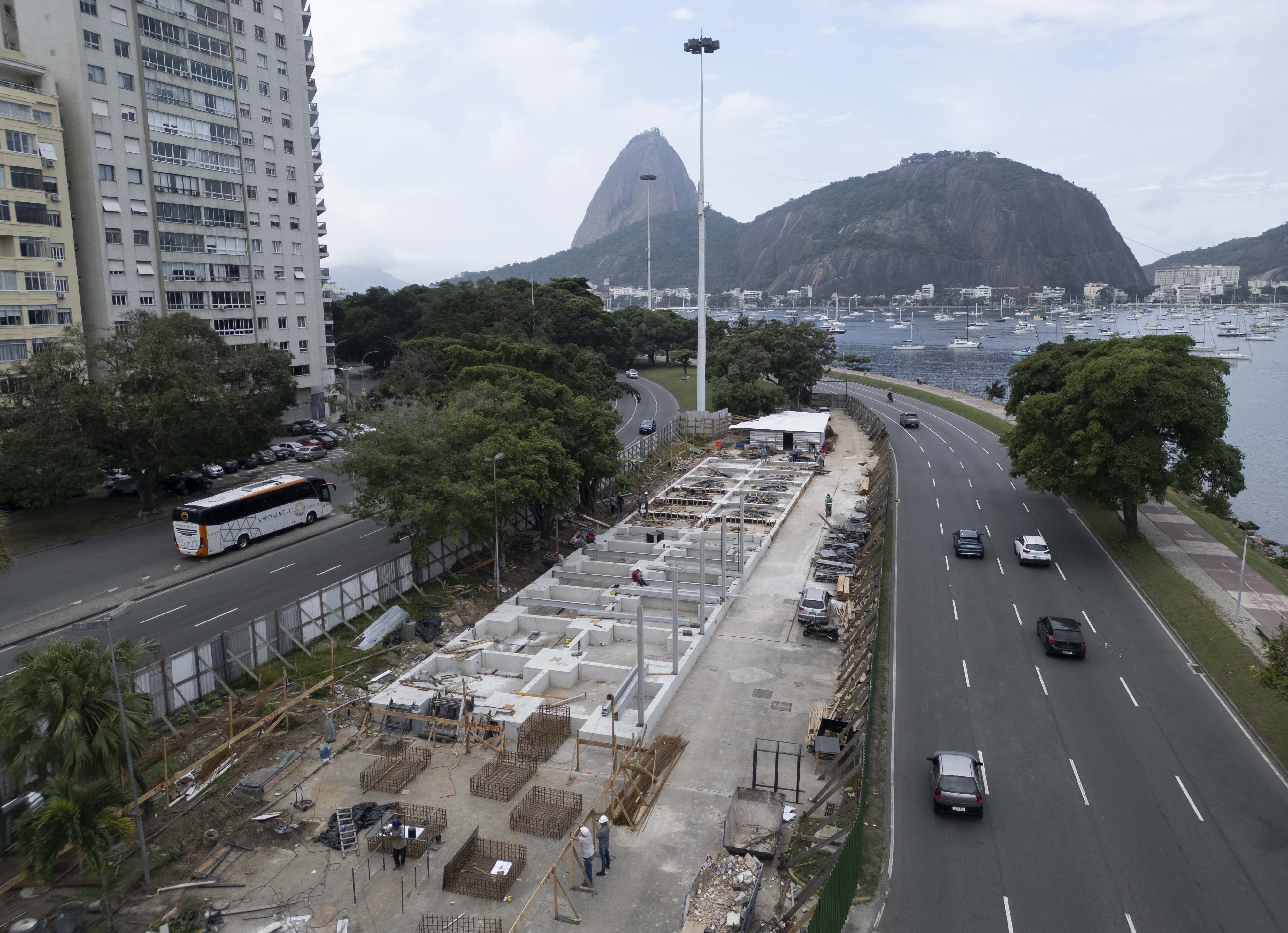
Dois dias após prefeitura do Rio e Instituto do Patrimônio Histórico e Artístico Nacional (Iphan) suspenderem a obra que acontecia no canteiro central do Aterro do Flamengo — onde seria instalado um posto de recarga de carros elétricos e um showroom para comercialização de veículos —, o caso ganha um novo capítulo. Na noite desta quarta-feira, o prefeito Eduardo Cavaliere anunciou que rescindiu o termo de concessão com a empresa GW Veículos Rio (GWM).
Após obra no Aterro do Flamengo ser embargada, MPF quer que Justiça proíba concessão de licenças sem aval do Iphan em áreas tombadas
Obra em posto no Aterro do Flamengo: Projeto aprovado pela prefeitura prevê showroom, diz empresa
Ainda segundo o prefeito, que publicou um vídeo nas redes sociais assinando a rescisão, será feita uma nova seleção, para que um eletroposto — sem outras atividades associadas — possa ocupar o espaço. Anteriormente, um posto de combustíveis funcionava ali. Procurada, a empresa informou que aguarda ser comunicada oficialmente pela prefeitura.
Edital previa 'atividades afins'
O edital de concorrência, de outubro de 2023, informava a realização de uma licitação de maior valor para a concessão — por um prazo de 20 anos, improrrogável — da "área municipal destinada à exploração comercial de posto de combustível e/ou recarga elétrica e atividades afins" no espaço de 2.643,14 m² de área na Avenida das Nações Unidas. Visualmente, comparando uma foto de drone tirada nesta semana com a imagem de satélite do Google Earth de março de 2024, a área atual é semelhante à do empreendimento anterior.
Tragédia no ar: Radiografias odontológicas vindas dos Estados Unidos ajudaram a identificar corpo do cantor Oliver Tree
Na segunda-feira, a prefeitura havia informado que "a estrutura será implantada exatamente na área onde já funcionou anteriormente um posto de combustíveis, não representando a ocupação de uma nova área do parque". A altura máxima adotada será de 6,21 metros, "inferior à da instalação anteriormente existente no local".
O valor mínimo exigido de pagamento mensal pelo espaço era de R$ 55,7 mil, a ser reajustado anualmente a partir do Índice Nacional de Preços ao Consumidor Amplo Especial (IPCA-E). Por mês, o metro quadrado do aluguel sairia a R$ 25,73, numa área em que o metro quadrado no aluguel de um apartamento sairia a R$ 47, segundo consulta à plataforma Quinto Andar. Documento de 5 de setembro de 2023, assinado pelo superintendente executivo de Patrimônio Imobiliário do Rio, Gustavo Coelho Ribeiro, detalhou que o valor foi estabelecido a partir de um laudo aprovado pela Comissão Especial de Avaliação.
Zona Sudoeste do Rio: Homem compra combustível na bomba, derrama no chão e ateia fogo em posto na Freguesia
Duas empresas ofereceram propostas em 16 de novembro de 2023: a vencedora — GWM (cujo nome oficial é GW Rio Veículos LTDA) — ofereceu R$ 68 mil, enquanto a 3F Participações LTDA propôes pagamento de R$ 58,9 mil mensais.
No andamento do processo, há um documento com esclarecimentos. Nele, a Comissão Especial de Licitação do Rio informava que a instalação de um restaurante no espaço, por exemplo, enquadraria-se na definição de "atividades afins", "uma vez que o objetivo do Município do Rio de Janeiro, a partir da concorrência, seria constituir, na área, uma espécie de ponto de parada e descanso urbano". O esclarecimento foi assinado pela agente de Fazenda do município Mariana Stumbo, dois dias antes da apresentação das propostas.
O termo de concessão publicado em Diário Oficial em 19 de dezembro de 2023. Mas a vigência da concessão à GWM começou a valer em 28 de julho em 2025, data em que o antigo posto de combustíveis desocupou devidamente o espaço, conforme despacho publicado na edição de 15 de setembro do ano passado. O termo de permissão anterior, de 2014, permitiu o uso do espaço pela Petrobras Distribuidora S/A por dez anos, pelo valor de R$ 2.514.212,68.
Initial plugin text
Yan Diomandé, a principal esperança da seleção da Costa do Marfim na Copa do Mundo, escreveu uma emocionante carta para sua irmã, Roxane Diomandé. Falecida aos 15 anos em 2025, Roxane é o foco de uma mensagem nostálgica e com promessas que o jogador de 19 anos publicou nesta quarta-feira (17) na plataforma The Players Tribune.
O texto, intitulado “Querida Roxane”, revela a trajetória do meio-campista do RB Leipzig, que saiu de uma vida de escassez na África para se tornar um atleta profissional na Bundesliga, uma das principais ligas do mundo. Diomandé enfatiza que essa ascensão só foi possível graças ao incentivo e apoio incondicional de sua irmã.
Com um forte teor emocional, a carta mostra como o atleta ainda lida com o luto e a dor da perda. Ele relembra momentos cruciais de sua vida, desde a infância na Costa do Marfim até os desafios para se firmar no futebol europeu, sempre compartilhando medos, aspirações e glórias com Roxane.
Infância, sonhos e o apoio da irmã
Diomandé recorda a simplicidade da vida em Abidjan, Costa do Marfim, onde moravam 25 pessoas na mesma casa. Ele descreve a paixão precoce pelo futebol, assistindo a jogos em segredo na TV e sonhando em ser como Cristiano Ronaldo, mesmo quando o apelidavam de “Roberto Carlos” por seus chutes fortes.
A carta narra a mudança para um centro de treinamento aos nove anos, a fome que o levou a “roubar batatas” para sobreviver e a alegria das primeiras chuteiras de verdade. Roxane, três anos mais nova, já mostrava seu papel fundamental. Aos 10 anos, ela atuava como uma espécie de “agente” do irmão, incentivando-o e cobrando dedicação.
Juntos, sonhavam em se mudar para a França, com Diomandé imaginando uma vida de luxo para a irmã, sem preocupações. Ela era a única que acreditava que ele poderia ser o próximo grande craque.
A difícil jornada até o profissionalismo
Aos 15 anos, Yan se mudou para os Estados Unidos para o ensino médio, enfrentando o choque cultural e a saudade de casa. A jornada para se tornar profissional foi cheia de obstáculos, incluindo inúmeros testes fracassados em clubes como Bournemouth, Chelsea, Rangers e Crystal Palace, além de times da MLS.
“Meu visto expirou. Meu sonho acabou. Eles me mandaram de volta para a África, e nós choramos juntos”, relata o jogador. No entanto, a crença de Roxane permaneceu inabalável. Semanas depois, ele assinou com o Leganés, na Espanha.
A tragédia e o vazio
O ponto mais doloroso da carta é a descrição da morte de Roxane. Poucas semanas após sua estreia pelo Leganés, aos 18 anos, contra o Real Madrid – um “sonho surreal” –, Yan recebeu a notícia devastadora. Roxane morreu aos 15 anos, depois que “alguém colocou alguma coisa na bebida dela em uma festa”.
Diomandé descreve o choque e o vazio que sente desde então. “É como se eu nem fosse humano. Desde que você morreu, estou completamente vazio. Acho que nem derramei uma lágrima no dia em que me disseram que você tinha partido. Eu estava em choque”, confessa.
Promessa e legado na Copa do Mundo
Sem respostas para a tragédia, o jogador busca consolo na fé e na promessa de manter o legado da irmã vivo. “Tudo o que posso fazer é usar a dor para trabalhar mais e realizar tudo o que sonhamos. Escrevi isto porque quero que você saiba que vou garantir que você continue vivendo. Vou garantir que todos saibam o seu nome. O mundo inteiro.”
Desde a morte de Roxane, Diomandé afirma ter mudado sua perspectiva sobre a riqueza, priorizando o futebol e a memória da irmã acima de bens materiais. Sua dedicação é tanta que, no RB Leipzig, na Alemanha, ele ganhou o apelido de “O Alemão” por sua pontualidade exagerada nos treinos.
Agora, prestes a estrear na Copa do Mundopela Costa do Marfim, ele encara a competição como um “palco” para homenagear Roxane. “Cada vez que eu marcar um gol, vou garantir que todos saibam o seu nome. Vou garantir que não se esqueçam de você. Vou provar que você estava certo, ou morrerei tentando”, finaliza.
Esse texto foi gerado por inteligência artificial com base no conteúdo produzido pela Itatiaia. Todas as informações são apuradas e checadas por jornalistas. O texto final também passa pela revisão da equipe de jornalismo da CNN
Former President Biden’s envoy on Iran said Wednesday the deal between the Trump administration and Tehran is “far preferable to any of the alternatives.” Robert Malley, who also negotiated the 2015 Joint Comprehensive Plan of Action between the U.S., Iran and multiple global powers, wrote on social platform X that he does not “see much…

 Login
Login