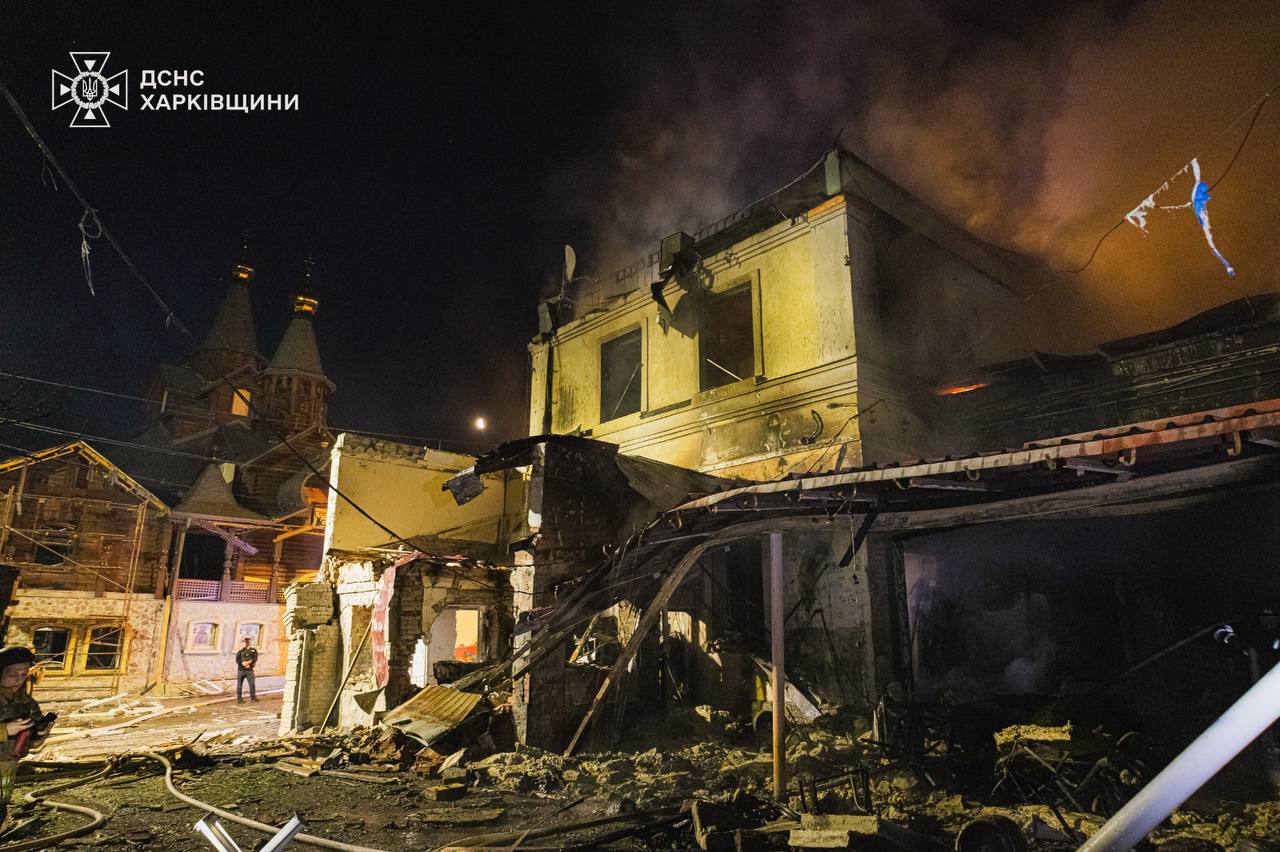
Russia launched its largest combined strike in recent weeks against Ukraine overnight on 15 June, targeting Kyiv with ballistic missiles, cruise missiles, and attack drones that sparked fires across nearly all of the capital's districts, killing five people and injuring 35, including two children, Kyiv Mayor Vitaliy Klitschko and the head of the Kyiv City Military Administration (KCMA), Tymur Tkachenko, reported.
Ukraine's Air Force said air defense intercepted 632 of the 681 weapons launched—50 missiles and 582 drones—leaving 20 ballistic missiles and 27 attack drones to strike 42 locations, with debris from downed drones falling on a further 12 sites.
Scale and composition of the attack
Ukraine's Air Force recorded 681 aerial attack systems in total: 70 missiles and 611 drones and loitering munitions of various types. The missile component comprised six Zircon anti-ship missiles launched from Russian-occupied Crimea; 34 Iskander-M/S-400 ballistic missiles from Bryansk and Kursk oblasts; and 30 Kh-101/Iskander-K cruise missiles from Vologda and Kursk oblasts, according to the Air Force. The drone component—611 systems—included Shahed-type attack drones, Herber, Italmas, Banderol loitering munitions, and Parodiya decoy drones, launched from Bryansk, Kursk, Oryol, Millerovo, Primorsko-Akhtarsk, and occupied Crimea.
Aviation, surface-to-air missile units, electronic warfare units, drone units, and mobile fire groups of Ukraine's Defense Forces all took part in repelling the attack, the Air Force said.
How the strike differed from recent ones
This was the third-largest Russian mass attack on Ukraine in the more than three years since the full-scale invasion began. The attack closely resembled Russia's strike of 2 June but with one key substitution: Kalibr sea-launched cruise missiles were replaced by Iskander-K cruise missiles, Yurii Ihnat, head of communications for the Air Force, said on the national telethon on 15 June.
"Probably it differs in that there were no Kalibr cruise missiles, but instead there were Iskander-K cruise missiles… In total—70 missiles and 611 UAVs of various types. Among them, the already well-known anti-ship Zircon missiles, which attacked from Crimea, 34 ballistic Iskander-M missiles," Ihnat said.
Ballistic missiles remain the most difficult threat to intercept, Ihnat noted. Of the 34 Iskander-M/S-400 missiles flying ballistic trajectories, air defense downed 15—a result he described as relatively high for an attack of this character. Five of the six Zircon missiles, which also follow a ballistic profile, were intercepted, which Ihnat called one of the best results recorded against that weapon type. All 30 cruise missiles launched were destroyed, he said: "As of the morning, it is known that the Defense Forces managed to shoot down 100% of the cruise missiles the enemy launched at Ukraine."
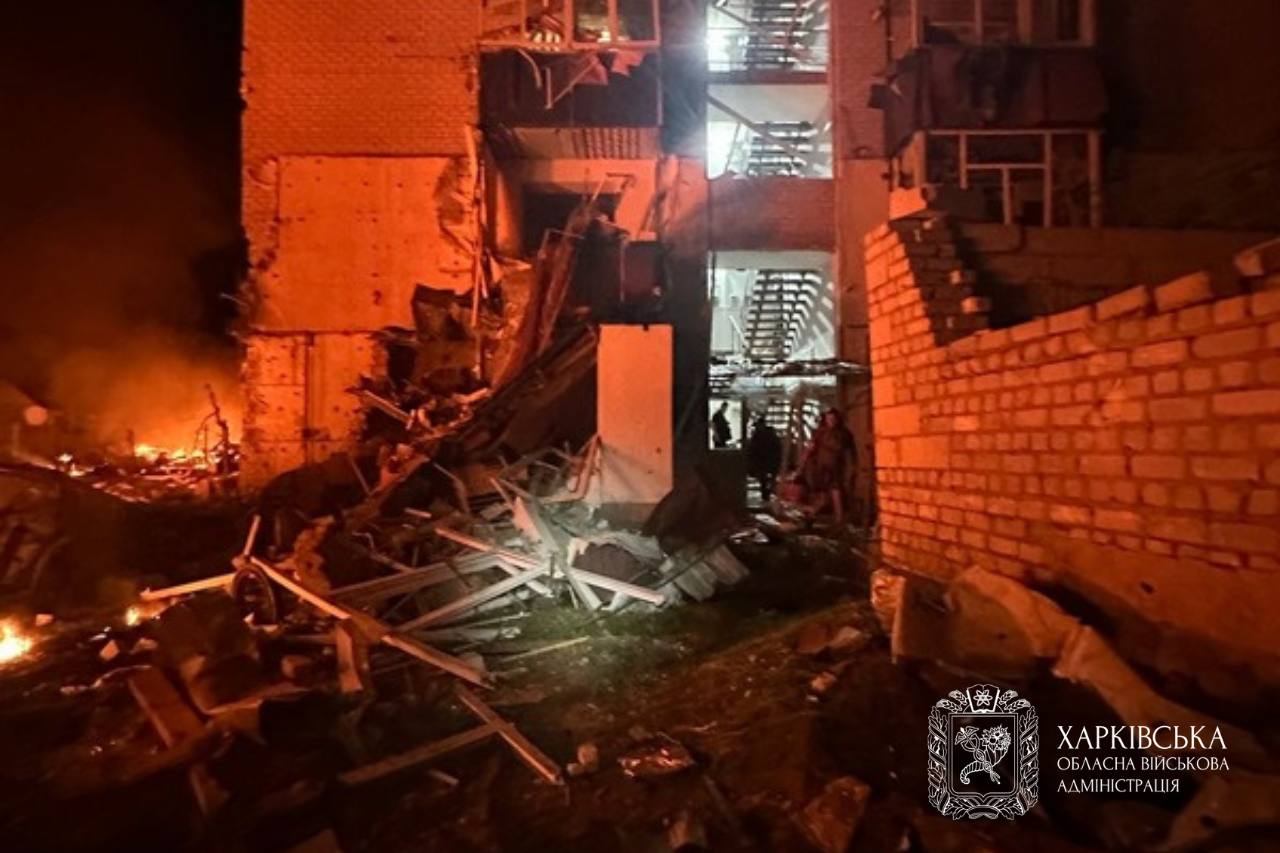
Ballistic missiles struck Kharkiv and Dnipro in addition to Kyiv, Ihnat confirmed. Aviation, surface-to-air missile units, electronic warfare units, drone units, and mobile fire groups of Ukraine's Defense Forces all took part in repelling the attack.
Kyiv: fires across all districts
The attack struck residential buildings, cultural institutions, and infrastructure across Kyiv. In Obolonskyi district, a nine-story apartment building was hit, and around 30 cars burned. In Solomianskyi district, a nine-story residential building was struck; firefighters evacuated 15 people, including two children, and a school building was also reported damaged. In Desnianskyi district, a nine-story building caught fire, three private homes were destroyed by debris, and a kindergarten grounds were set alight.
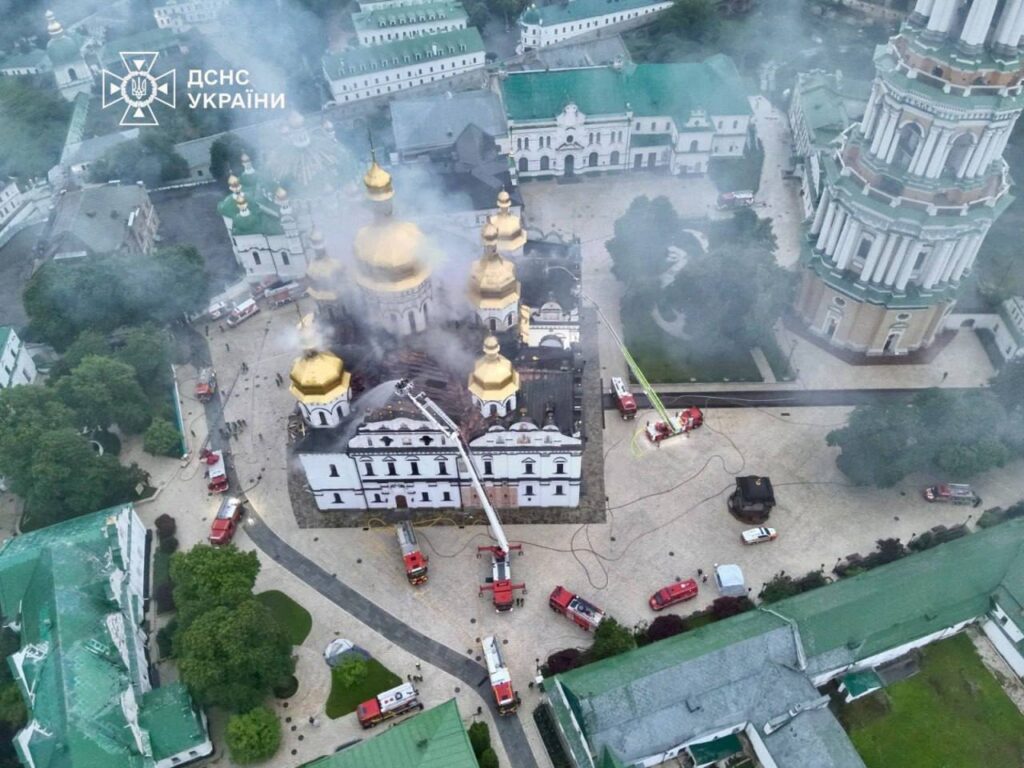
In Pecherskyi district, a 17-story apartment building was struck. A fire then broke out on the roof of the Dormition Cathedral at the Kyiv-Pechersk Lavra—one of Ukraine's most significant Orthodox Christian sites—and was extinguished by 08:35, the State Emergency Service (DSNS) reported. While firefighters were working at the cathedral, a second strike hit nearby, targeting the National Cultural, Arts, and Museum Complex Mystetskyi Arsenal, according to DSNS.
Also struck were a vegetable market and an eight-story residential building in Shevchenkivskyi district; a high-rise residential building and warehouse facilities in Holosiivskyi district; residential development in Sviatoshynskyi district; and private homes in Darnytskyi and Dniprovskyi districts.
The four fatalities were recorded in Obolonskyi, Holosiivskyi, and Solomianskyi districts, DSNS said earlier.
DSNS said more than 1,200 rescue workers and police were deployed in Kyiv, with reinforcement rapid-response units called in and DSNS aviation used to fight large-scale fires. Twenty-six residential buildings were damaged in the capital, the service said.
"Damages and fires have been recorded in almost all districts of the city," Klitschko wrote.
Infrastructure and cultural damage
DSNS and Ukraine’s Deputy Prime Minister for Humanitarian Policy and Minister of Culture Tetiana Berezhna reported that the Oleksandr Dovzhenko National Film Studio had one of its production facilities destroyed.
The Dovzhenko National Film Studio costume collection was destroyed, according to Berezhna.
A large explosion was reported at the site around 2:00 am, followed by a massive fire that emergency services and explosives technicians worked through the night to extinguish, with staff only able to enter the premises around 5:00 am. The studio director told Kyiv24 the strike was likely caused by a missile impact. The fire gutted the costume workshop — a two-story building of more than 2,500 square meters packed floor to ceiling with garments stored millimeters apart, according to the channel.
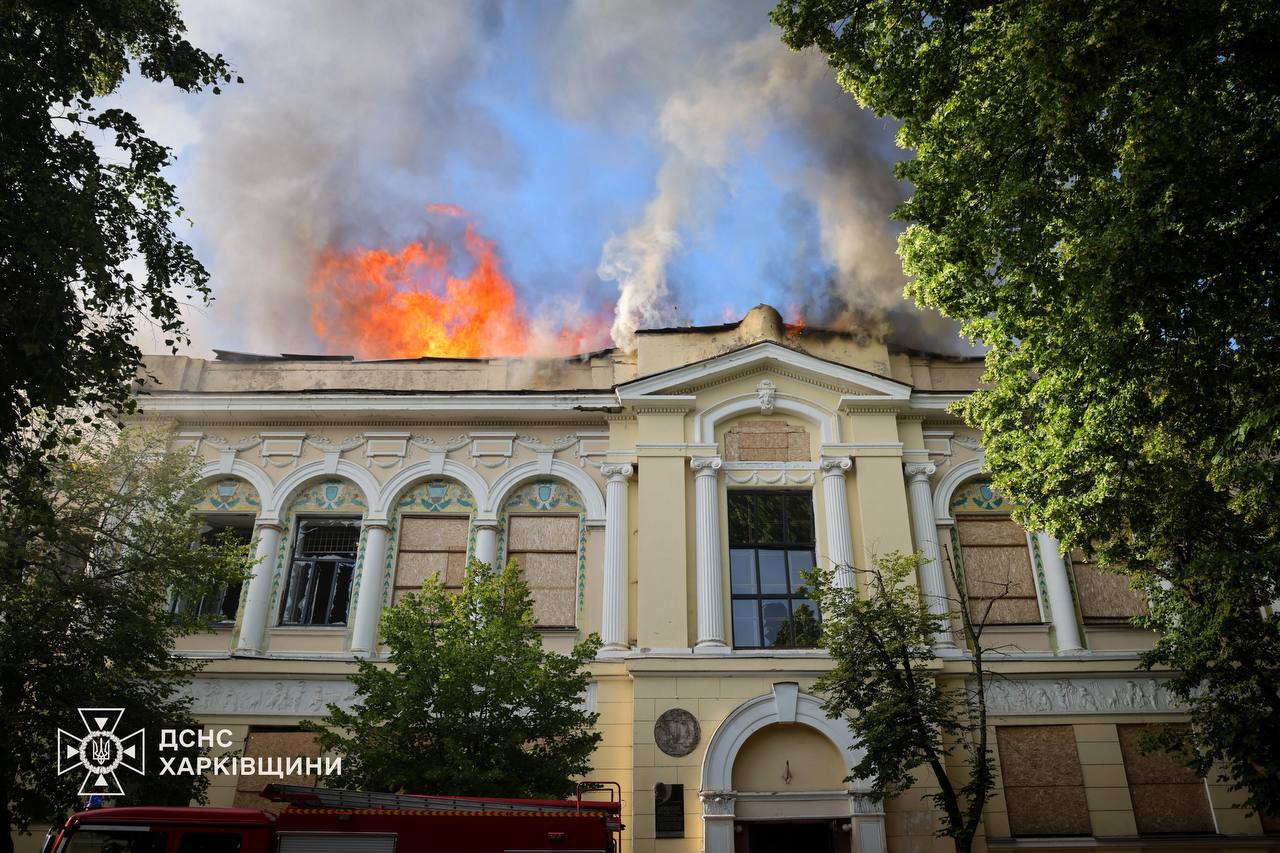
An academy and a kindergarten were also damaged in Kyiv. Emergency services said 26 fires covering nearly 6,000 square meters were recorded in the capital, with work continuing at six locations as of the morning update
The strike also destroyed the largest and most technologically advanced parcel sorting terminal operated by Nova Poshta, Ukraine's leading delivery company. The facility was the first in Ukraine to be equipped with automated parcel-sorting equipment from Dutch company Vanderlande, a global leader in logistics automation, according to Nova Poshta's chief operating officer Yevhen Tafiichuk. Tafiichuk said all staff were safe and that backup delivery routes had already been activated.
The building of the High Anti-Corruption Court (HACC) on Beresteiskyi Avenue also sustained damage in the attack. Windows were blown out, and court staff were assessing the full extent of the damage as cleanup and recovery work continued on site, the court said in a statement. The court said all scheduled hearings would proceed as planned.
Road police blocked sections of roads in Solomianskyi, Obolonskyi, Pecherskyi, and Desnianskyi districts following the attack, and public transport rerouted in affected areas, deputy head of the Patrol Police Department Oleksii Biloshytskyi and the municipal transport operator Kyivpasstrans reported.

 Login
Login