"Partnering with Airbus, we are developing the next generation of technologies to establish a multi-layered air shield that will bolster the protection of Ukrainian skies and European airspace," Skyfall CEO Mykolaiv Makovieiev said.
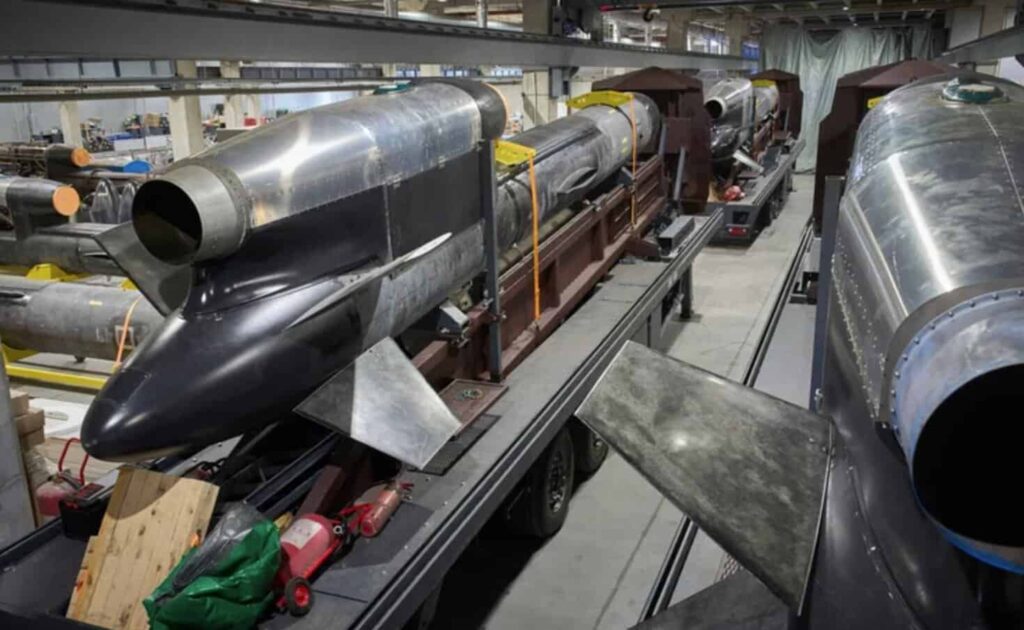
Germany's missile maker Diehl Defence is negotiating to manufacture Ukraine's Flamingo cruise missile in Germany, the Financial Times reported. Talks with the Ukrainian developer Fire Point are planned for the coming weeks, as European states hunt for weapons able to reach deep into Russia.
Four years of full-scale war have turned Ukraine's defense industry from an aid recipient into a source of battle-tested designs, with Kyiv's manufacturers now fielding interceptor drones and advancing a domestic ballistic missile program that European militaries increasingly want to tap. German Flamingo production would hand Europe a ground-launched deep-strike weapon independent of Washington's political swings, while giving Fire Point the orders and financing to scale output.
"This could really happen"
Diehl chief executive Helmut Rauch briefed journalists during the ILA Berlin Air Show.
"We are in discussions about how we could work together," he said. "I think this could really happen. In the next few weeks, we have several meetings regarding this and then we will see."
For a new product, he added, it "makes a lot of sense to have it also in Germany or other countries," and Diehl is "optimistic and positive" about cooperation. The Ukrainian outlet Militarnyi noted that joint output of the FP-5 Flamingo in Europe could become the largest example of NATO countries adopting Ukrainian defense know-how.
Explore further
Germany delivers IRIS-T to Ukraine — high-tech system that engages cruise missiles, as Russia continues to strike residential buildings
German Defense Minister Boris Pistorius, visiting Kyiv last month, said the "technological leaps here in Ukraine are remarkable." Joint ventures are being explored for long-range drones, air defenses, and electronic warfare, he said.
The initiative comes as Berlin scrambles to replace US Tomahawk missiles that were due in Germany this year alongside an American battalion. US President Donald Trump scrapped that Biden-era decision amid friction with Chancellor Friedrich Merz around the war in Iran.
Diehl builds the Iris-T air-defense system, a mainstay of Ukraine's protection against Russian missile attacks. The firm inked a technology deal with Fire Point in April without disclosing details.
Explore further
German company that already supplies Ukraine with drones has unveiled Shahed-hunter aircraft with four weapons categories on single airframe
Twice the Tomahawk's range, 200 missiles a month
The ground-launched Flamingo claims over 3,000 km of reach — roughly double the Tomahawk's. The missile has so far played a limited part in Ukraine's long-range campaign, and some reports have questioned its effectiveness. At least two Flamingos, though, struck a military plant in the Russian city of Cheboksary on 10 June, about 900 km from the Ukrainian border — the longest successful known Flamingo strike so far.
Fire Point co-founder and chief designer Denys Shtilierman told the Financial Times in May that the company turns out about 200 Flamingos a month with capacity to spare.
"We just need orders and money," he said, admitting an engine bottleneck he expected to resolve soon.
So far, however, publicly documented Flamingo attacks remain limited to a handful of strikes, each involving only a small number of missiles.
British journalist becomes one of most prominent appointments made by embattled editor-in-chief Bari Weiss
CBS News has hired the prominent British broadcaster Trevor Phillips, as its senior global affairs correspondent, in a significant hire for embattled top editor Bari Weiss.
The network said that reporting by Phillips, who currently presents the flagship Sunday political show on the UK’s Sky News channel, would appear “on all CBS News programs and platforms”.
A Starship test flight at the SpaceX’s Starbase in Texas last month. Investors in China are expected to be excluded from the SpaceX initial public offering.
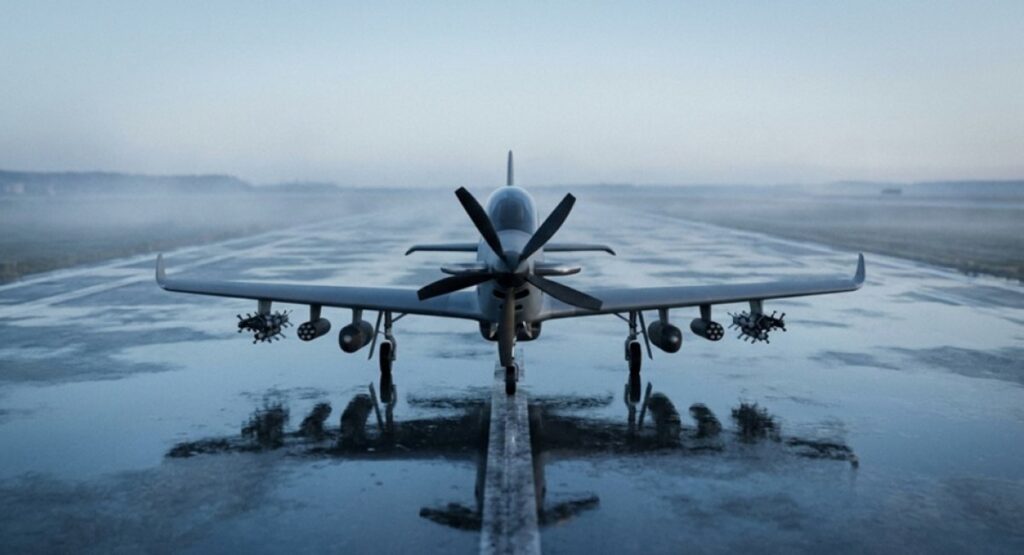
Germany's Quantum Systems has unveiled the Pulse P19, an optionally-piloted aircraft designed to hunt drones and repel massed drone attacks,per Defense Express. The technology company already supplies Vector reconnaissance drones to Ukraine.
The Pulse P19's primary mission profile, which is hunting drones and repelling massed drone attacks, addresses exactly the Russian Shahed threat that Ukraine has been responding to.
Ukraine is now intercepting 95% of incoming Russian Shaheds, using a layered defense system that includes Patriot, NASAMS, IRIS-T, naval-platform interceptors, helicopter-based interceptors, Ukrainian-made Bullet interceptors, and autonomous drone-on-drone systems.
The Pulse P19 would add a dedicated, optionally piloted drone-hunter platform to this layered defense, though the aircraft is currently in early design stages, with only renders released.
What does Pulse P19 carry, and how would it hunt?
For air-target detection and tracking, the Pulse P19 can be equipped with an active electronically scanned array (AESA) radar and an electro-optical targeting station.
The aircraft's armament options are unusually broad. The Pulse P19 is designed to carry interceptor drones, loitering munitions, missiles with semi-active laser homing heads (APKWS class), pod-mounted machine guns, and additional weapons that may be developed in the future.
The interceptor drones referenced in the Quantum Systems presentation are likely the same systems being integrated onto the Airbus U145 helicopter, which Quantum Systems also unveiled at ILA Berlin 2026 with anti-drone armament.
Specifications: small, fast, with significant payload
The Pulse P19 has a maximum speed of 556 km/h and a service ceiling of 7,620 meters. The aircraft's empty weight is approximately 1,700 kg, while it can carry up to 2,500 kg of payload and armament.
The payload-to-empty-weight ratio is unusually high. This indicates the design is built around the requirement to carry multiple weapons systems simultaneously. The 556 km/h maximum speed places the Pulse P19 in the slow-to-mid-tier of fixed-wing combat aircraft, but adequate for the Shahed-pursuit mission, given that Shahed-136 drones typically cruise at 180 km/h.
Development status: renders only, timeline undisclosed
Quantum Systems has presented only renders of the Pulse P19. The project's development stage has not been disclosed. The aircraft is likely still in early design phases. No first-flight timeline has been published.
The aircraft's specifications and weapons configuration represent design intent rather than current operational capability. Ukrainian defense procurement officials would likely engage with Quantum Systems on the Pulse P19 trajectory once the aircraft reaches the flight-test stage, given Quantum Systems' established relationship with Ukraine and the operational fit between the Pulse P19's mission profile and Ukraine's defensive needs.
Iranian leadership has not confirmed claim, after the US president announced that planned strikes on Iran had been cancelled
Donald Trump claimed on Thursday that Washington and Tehran were on the verge of signing a peace agreement, and announced that he was cancelling fresh missile strikes, after two days of escalating attacks on Iran that threatened to collapse the fragile ceasefire.
His comments followed a new bout of public diplomacy by social media, but were dismissed by Iran’s foreign ministry, which said a final decision on an agreement had not been reached.
One-third of Americans shoulder health care debt. Insurers are being asked to consider lending money to Obamacare consumers who can’t afford higher deductibles.
Kathleen Capetta’s family of five is paying an additional $750 a month this year for its Obamacare plan premium. She was already paying off debt from cancer treatment.
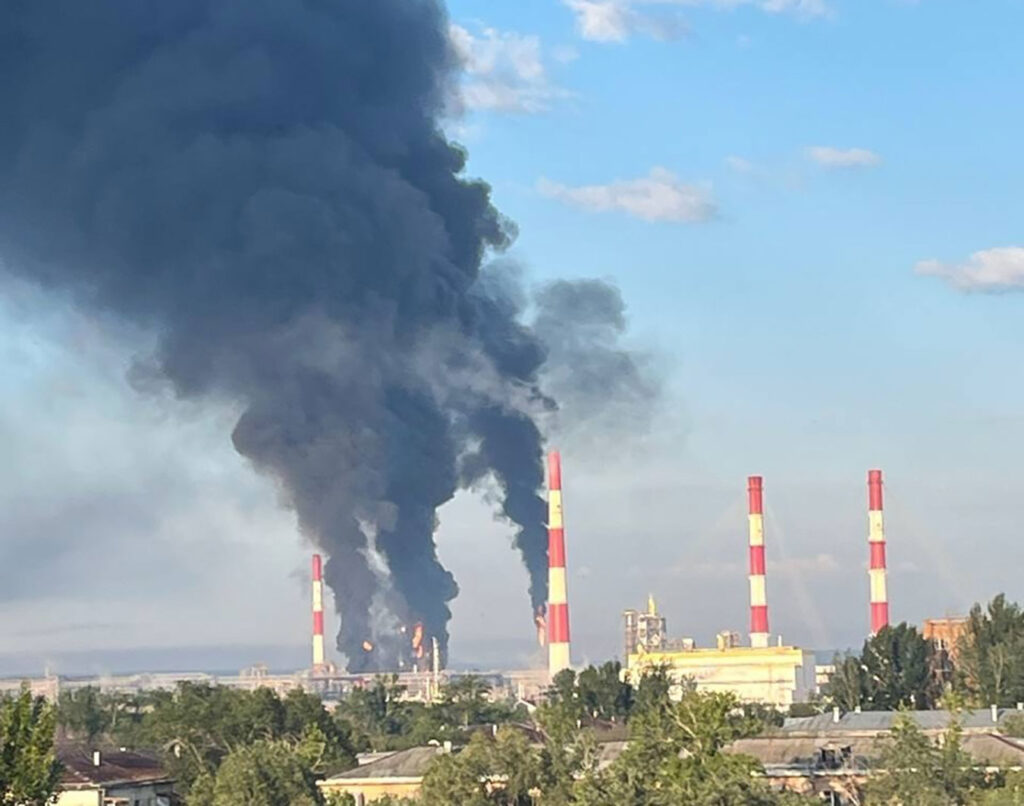
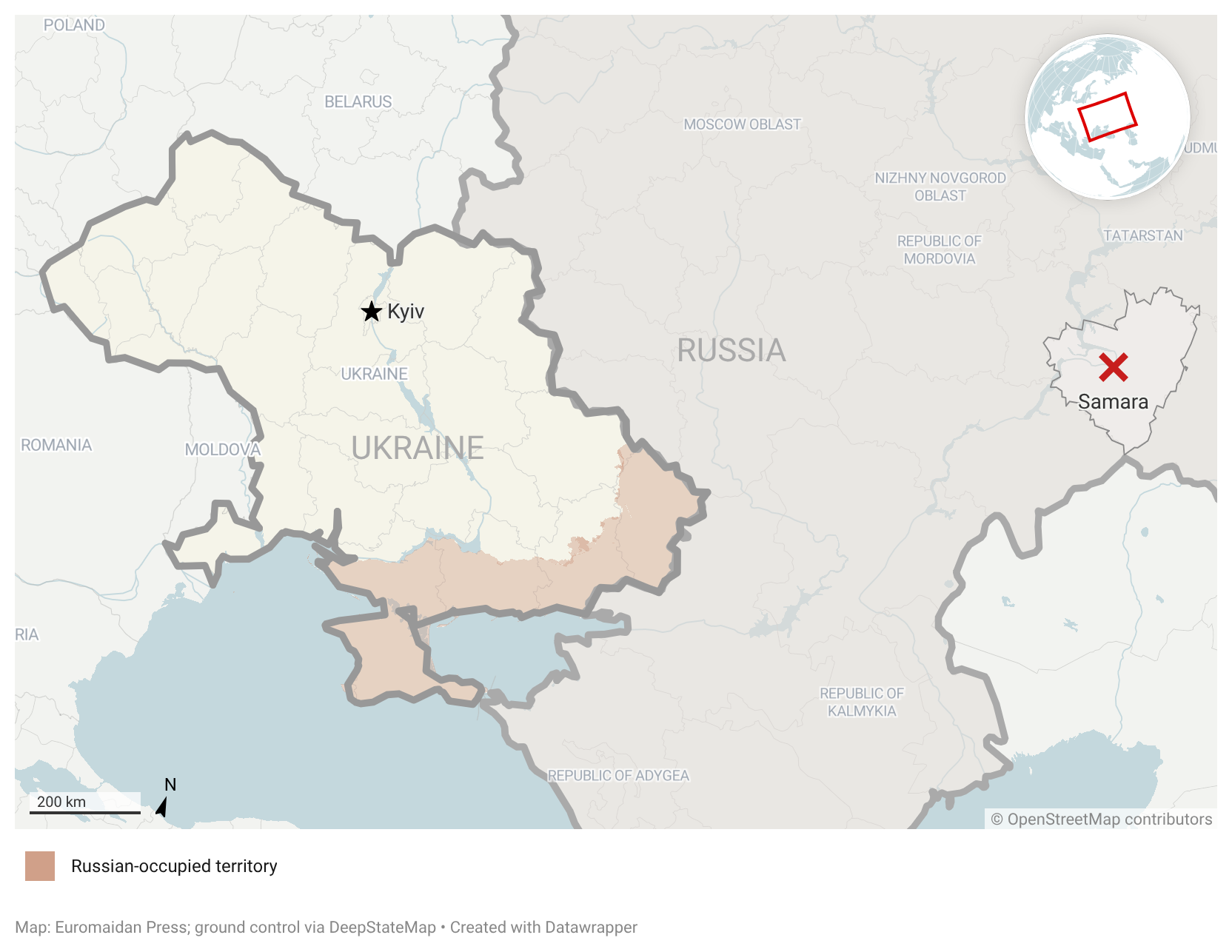
Ukrainian drones forced Rosneft's Kuybyshevsky oil refinery in Samara Oblast, Russia, to halt oil processing on 10 June, Reuters reported. The strike puts all three plants in the Rosneft Samara refining hub out of full operation at the same time.
With Ukraine's deep strikes accelerating into the summer season, each new plant taken out compresses Russia's repair window and hardens the fuel-supply squeeze on its military logistics.
Reuters confirms processing halt at both primary units
Reuters cited two industry sources to confirm that processing stopped at both AVT-4 and AVT-5 after the strike. Each unit has a nominal processing capacity of about 73,000 barrels of crude oil (10,000 metric tons) per day. The hits caused damage and subsequent fires at both.
Samara Oblast Governor Vyacheslav Fedorishchev claimed a massive overnight drone attack injured three people and caused "damage to several industrial facilities."
An earlier report on 10 June described fires at the Kuybyshevsky refinery after the strike.
Explore further
Fire reported at Kuibyshev oil refinery in Russia’s Samara after drone strike
Plant size and output
Kuybyshevsky's 2024 crude oil throughput was 4.7 million tons, equal to 94,400 barrels a day, Reuters reported. That year's output included 0.8 million tons of gasoline, 1.4 million tons of diesel, and 1.3 million tons of fuel oil. Nominal capacity stands at 7 million tons per year. The plant is one of the largest oil refining facilities in the Volga region. It also supplies fuel for the Russian army.
The Kuybyshevsky plant belongs to Rosneft's Samara refining cluster alongside Novokuibyshevsky and Syzran. Syzran's operations have been suspended since a 21 May drone attack, Reuters reported, and the plant has yet to resume. The Novokuibyshevsky plant shut down after an 18 April strike and now operates at reduced throughput. Ukraine has hit all three plants in the cluster in less than two months.
The Kuybyshevsky plant was also previously hit in January 2026, August 2025, and in March 2024. The earlier strikes damaged equipment and forced production cycles to stop.
Same night: Cheboksary defense plant struck
The same night, Ukrainian forces also struck the VNIIR-Progress plant in Cheboksary, Chuvashia, which was previously hit on 5 May. The factory makes "Kometa" antennas that protect Russian drones from electronic warfare. It also makes satellite receivers for GLONASS, GPS, and Galileo systems. Ukraine's General Staff said such modules are used in Shahed-type drones, Iskander and Kalibr missiles, and aerial bombs.
Meanwhile, today saw a strike on the Afipsky refinery in Krasnodar Krai.
Explore further
Afipsky oil refinery burns again as Ukrainian drones return to Krasnodar Krai
By May 2026, Ukrainian drones had taken six of ten Russian refineries hit during that month offline. Russian media counted 24 of Russia's 33 largest refineries struck since 2022. Only the Omsk and Angarsk plants east of the Urals remain untouched so far.
Broadcaster reveals its revenues from expanded tournament are running about 30% higher than for Euro 2024
The World Cup will be the most lucrative sports event ITV has ever aired, the broadcaster has said, with bosses calling the tournament a “six-week summer Super Bowl moment” for TV advertising.
The channel is airing 51 of the 104 matches across the men’s tournament, co-hosted by the US, Mexico and Canada, which is the biggest yet after an expansion from 32 to 48 teams.
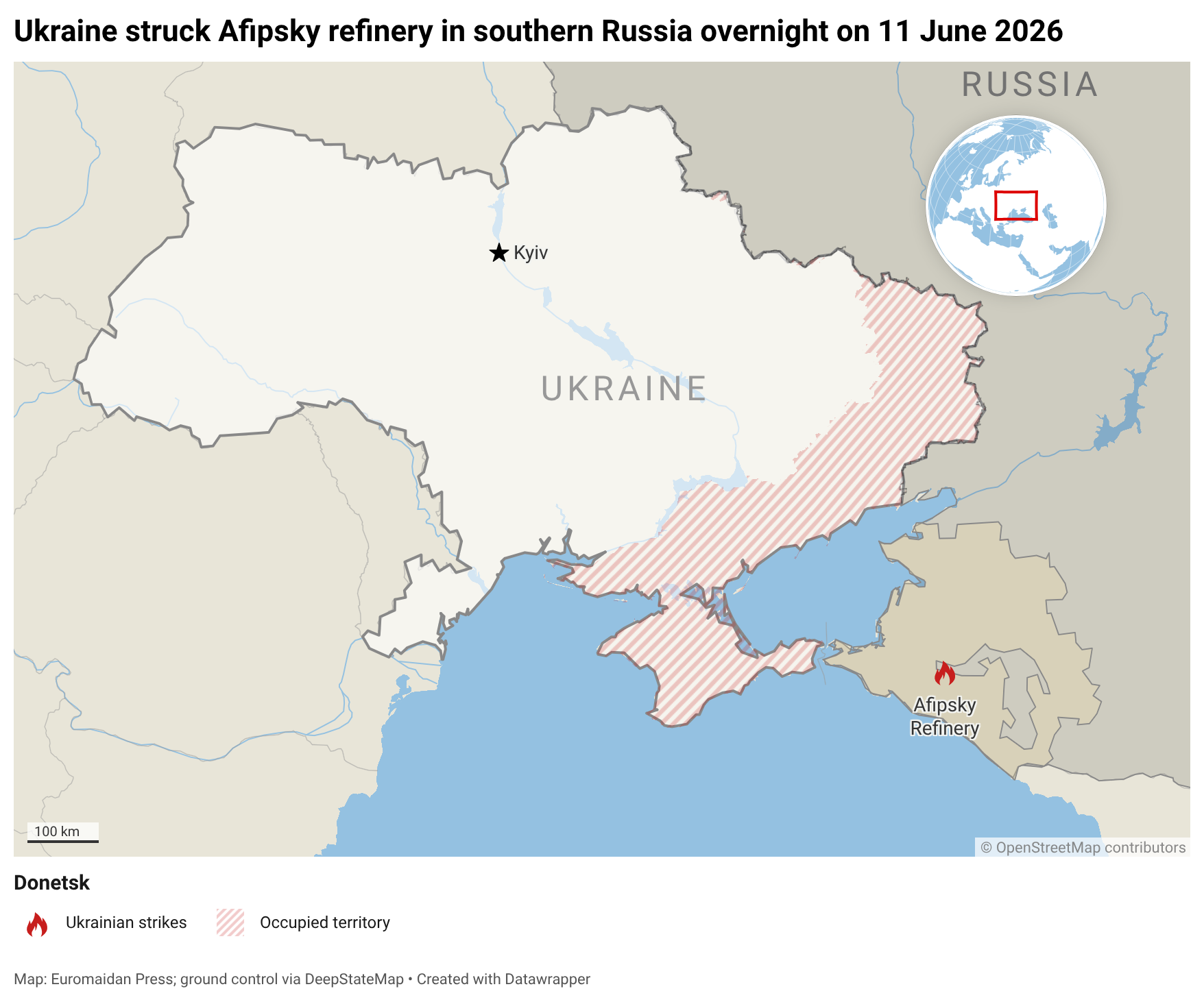
Ukrainian drones struck the Afipsky oil refinery in Russia's Krasnodar Krai overnight on 11 June, sparking a fire later extinguished, according to the Krasnodar Krai operational headquarters. The southern Russian plant, repeatedly targeted by Ukrainian strikes, supplies fuel to the Russian military.
Amid the ongoing Russo-Ukrainian war, the Russian oil industry has been under sustained pressure from Ukrainian deep strikes, with gasoline rationing currently spreading across multiple regions and occupied territories. Output at Russian refineries has been falling on Rosstat's own index as repeated hits keep facilities offline.
A blaze at one of southern Russia's largest refineries
The Ukrainian Telegram channel Exilenova+ postedfootage from local witnesses showing air defense fire and a blaze. The attack started after midnight, with residents reporting drone overflights and explosions at intervals of a few minutes.
Krasnodar Krai authorities claimed drone "debris" fell in the village of Afipsky and set the refinery on fire — Moscow's standard framing for Ukrainian strikes on Russian energy targets. The fire was out by 07:32 Moscow time, the operational headquarters later stated. Russian authorities reported no casualties at the plant itself.
The Afipsky plant is one of southern Russia's largest oil-processing facilities, with a capacity of over 6 million tons of crude a year. It produces gasoline, diesel, gas oil, vacuum gas oil, fuel oil, sulfur, and gas condensate distillates. The facility supplies fuel to the Russian army. Ukraine's General Staff has assessed that the refinery processes about 2.1% of Russia's total oil refining.
The plant runs two primary oil distillation units with capacities of 9,786 and 8,829 tons per day. It is export-oriented and does not currently produce gasoline or diesel for Russia's domestic market. Combined throughput at the Afipsky plant and the affiliated Krasnodar refinery reached 7.2 million tons in 2024. Another 3 million tons were processed in the first half of 2025.
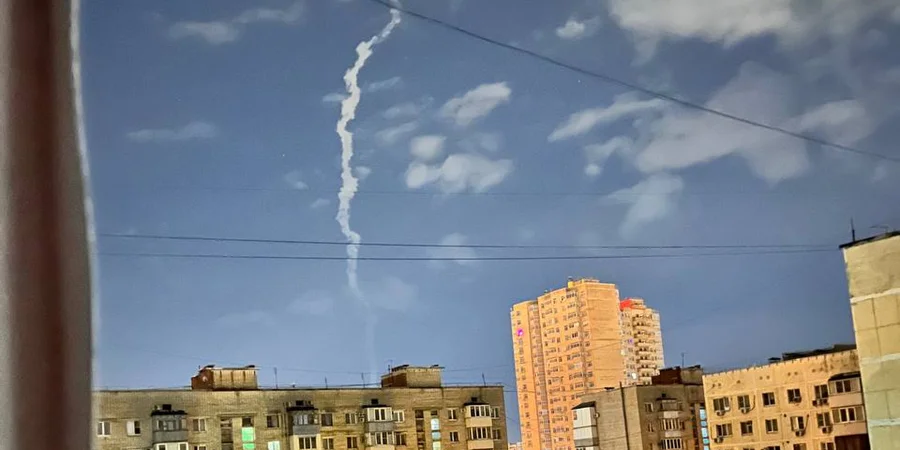
Smoke trail over Krasnodar amid a Ukrainian drone attack, Russia, 11 June 2026. Photo: Exilenova+ Telegram channel
Third strike on Afipsky in 2026 amid wider drone campaign
Russia's Defense Ministry claimed its air defenses intercepted and destroyed 330 Ukrainian drones over Russian territory overnight, the Moscow Times reported. According to the ministry, drones were spotted over Bryansk, Kursk, Belgorod, Oryol, Smolensk, Kaluga, Tula, Tver, Vladimir, and Moscow oblasts, as well as Krasnodar Krai and occupied Crimea. Russian aviation regulator Rosaviatsia restricted operations at airports in Tambov, Krasnodar, Sochi, Gelendzhik, and Zhukovsky outside Moscow.
Smoke plume after a Ukrainian drone strike on the Afipsky oil refinery, Krasnodar Krai, Russia, 11 June 2026. Photo: Exilenova+ Telegram channel
The 11 June raid was the third attack on the Afipsky refinery this year, following hits on 21 January and 14 March. During the March hit, drones damaged the AT-22/4 primary oil processing unit at Afipsky — the plant's refining starting point. Satellite imagery had previously confirmed structural damage from a November 2025 drone attack.
The Chinese owner of British Steel has started a formal process under an international treaty to win compensation from the UK government over its decision to nationalise the Scunthorpe steelworks.
Jingye Steel said it would seek to recover money via China’s bilateral investment treaty with the UK, after more than a year of negotiations over the size of any payout. The dispute could put pressure on the relationship between China and the UK.
Mike Ashley’s fashion and sportswear business has pounced on the German fashion house, in which it already owns just over a 26% stake, saying late on Wednesday that it was offering about €1.98bn (£1.73bn) to take full control .
Europe’s biggest low-cost airline, Ryanair, is facing an investigation over the mandatory fee it charges a parent to sit with their child.
The Competition and Markets Authority (CMA) said the Irish carrier’s terms and conditions require at least one parent to sit with their children, including those with disabilities, and bills them about £8 a flight to do so.
Blundy’s investment firm, BBRC International, owns about 13% of the US-listed lingerie brand, giving it a potential platform to launch a hostile takeover
Australian billionaire Brett Blundy is waging a high-stakes campaign to oust the long-term chair of Victoria’s Secret & Co, setting the stage for a showdown at the company’s annual meeting in the US on Thursday.
Blundy’s investment firm, BBRC International, owns about 13% of the US-listed Victoria’s Secret lingerie brand, making it the second-biggest single shareholder and giving it a potential platform to launch a hostile takeover.
The defense company Ukrainian Armor and European firm MBDA on June 10 initiated a strategic partnership aimed at developing deep strike and anti-drone systems.

 Login
Login