Normal view

Thanks to Pete Hegseth, some U.S. service members lost full freedom of religion

There’s an old saying: There are no atheists in foxholes. Faith plays a large role in the lives of many service members (including, yes, uniformed atheists). The U.S. military has long provided religious support to service members who are naturally often far from home and their faith communities. Given that the First Amendment prohibits the government both from establishing a religion and from preventing its free exercise, the military’s formal provision of chaplains and religious services to those in uniform is understood to balance these competing constitutional demands.

Until now, that is. Secretary of Defense Pete Hegseth recently slashed the list of Pentagon-recognized religions and belief systems that service members can have reflected in their personnel records from more than 200 to just 31, with the majority of the remaining being Christian religions. Those who ascribe to one of the 180-plus now-deleted belief systems must instead list in their records either “no religion” or “other religion.” This change tilts military policy toward the unconstitutional establishment of religion and simultaneously limits its members’ free exercise of their chosen faith.

Religious resources aren’t merely a nice bonus for service members that the Pentagon chief can do away with just by snapping his fingers.

The list of recognized religions grew from 100 to more than 200 during the first Trump administration when the Pentagon’s  board of chaplains “recommended adding new faith and belief groups to standardize and better identify religious preferences recognized by the Military Services” in response to legislation mandating improved religious liberty protections. Despite such rationale, Hegseth says this larger list was “infected by political correctness and secular humanism” under previous administrations.

The defense secretary is now using the Pentagon’s previous rationale for expanding the list to drastically shrink it instead, stating that his purge is about “giving chaplains clear, usable information so they can minister to service members in a way that aligns with that service member’s faith background and religious practice.” Echoing the secretary, the Pentagon says this massive cancellation of faiths is simply an administrative exercise, one designed to allow chaplains “to quickly look at the religious composition of their units and determine how they structure resources to best provide for warfighters of all faith groups,” and to “provide the best data to support our chaplains in that effort.” Yet how does no data — indeed, deliberate ignorance of service members’ faiths, if they ascribe to one of the 180 now-cancelled religions — equate to better support?

Religious resources aren’t merely a nice bonus for service members that the Pentagon chief can do away with by snapping his fingers. Reasonable access to well-rounded military chaplains is a traditional component of military life, allowing soldiers, sailors, Marines and airmen to freely practice their religious beliefs even if deployed to foreign battlefields.

It’s impossible for the Pentagon to provide a specific “religious military professional” — the phrase military regulations use for chaplains — for every possible faith; service members don’t have a right to a chaplain of their particular belief system. But military chaplains are expected and required to support the spiritual needs of all service members, not just those who hold one of the faiths the Pentagon still recognizes.

Specifically, the Pentagon’s regulation governing military chaplains states that their primary mission is to “meet the religious requirements and care for the spiritual needs of Service members” (and others, including family members). This regulation is grounded in the First Amendment and explains that the position of military chaplain “directly and indirectly supports the free exercise of religion by all Service members.” Religious ministry professionals must be “able to personally meet the religious requirements of persons in their assigned military units, potentially in isolated or combat environments.”

The Pentagon is burying its head in the sand regarding the faiths of the U.S. fighting forces.

Yet how can military chaplains meet the religious needs of their units’ members when they won’t know what faiths are actually represented, outside of the recognized few? Among faiths no longer recognized by the Pentagon are the Unitarian Universalist religious movement (to which John Adams belonged), deism (to which Benjamin Franklin and Thomas Jefferson subscribed), atheism, the Dutch Reformed Church, paganism, the African Methodist Episcopal Church and the Native American Church. These faiths count millions of Americans among their members.

Since when is ignorance “the best data”? Resources can’t be adequately structured to support service members of all faiths when the Pentagon is burying its head in the sand regarding the faiths of the U.S. fighting forces. The lack of information does not equal “useful” information — except if the intended use is to stop supporting those service members’ minority faiths and practices.

While service members can reportedly still list their faith of choice on their dog tags, that doesn’t mean a chaplain can understand their spiritual needs while they’re still alive. As religious military professionals, chaplains can’t best support those they are being essentially ordered not to see. It’s also unclear how this policy cancellation will affect the qualifications of already serving chaplains; their eligibility depends on the endorsement of religiously affiliated organizations, and surely some of those organizations are tied to religions that have lost Pentagon recognition.

Couple Hegseth’s and the Pentagon’s nonsensical reasons for this new policy with the secretary’s penchant for proselytizing his Christian faith to service members, and it’s clear that this massive purge isn’t about streamlining data or structuring resources. It’s about the Trump administration’s desire to support only certain religions, and therefore only certain service members. This move hinders other service members’ free exercise of religion, at least compared with those whose beliefs are represented. And it takes a large step in the direction of unconstitutionally “establishing” (by discriminatorily supporting) the religions that remain recognized by the military.

The Pentagon’s new policy means that some military members are now sacrificing to ensure that their fellow Americans enjoy a freedom of religion they no longer fully possess. That is not just deeply ironic; it is morally and constitutionally repugnant. And it should be added to the ever-growing list of mistakes by this White House that a future president and Congress will need to rectify.

The post Thanks to Pete Hegseth, some U.S. service members lost full freedom of religion appeared first on MS NOW.

The biggest scandal in college sports is brought to you by a Texas judge

10 June 2026 at 20:20

If there were anything like justice in college sports, Brendan Sorsby would never play another down of football. It’s a tough thing to say about someone only 22 years old, and under most circumstances, I’d never argue that misdeeds should end an athlete’s career before they hit the professional ranks.

But Sorsby, Texas Tech’s star quarterback, isn’t an average college kid who made a mistake. He bet at least $90,000 on sports — including on games involving the Indiana Hoosiers when he was on that team’s roster as a freshman in 2022. For obvious reasons, the NCAA frowns upon such behavior and rightly issued a permanent ban when it discovered what Sorsby did. Sorsby says he’s been diagnosed with a gambling addiction.

Sorsby says he’s been diagnosed with a gambling addiction.

But on Monday, retired Texas judge Ken Curry, appointed to the case after another judge recused himself, gave Sorsby a pass with a temporary injunction that will allow him to play this season. Curry reasoned that the injunction was necessary to avoid “probable, imminent and irreparable injury” to the quarterback’s college football career. But the judge is mischaracterizing the consequences of Sorsby’s actions as injury.

Those who have watched college football scandals over the decades should be especially incensed by the judge’s ruling that Sorsby should play. His transgressions are exponentially worse than those of Reggie Bush, who was forced to forfeit his Heisman Trophy in 2010 for rules violations he allegedly committed while at the University of Southern California, and exponentially worse than Ohio State University’s Terrelle Pryor, who was suspended for receiving free tattoos and selling his memorabilia. Granted, those punishments were imposed in a bygone era when the NCAA still stood on the farce that players, the labor in its multibillion-dollar enterprise, were amateurs and all but forced them to the black market to profit from their work.

Those infractions from Bush and Pryor were metaphorical misdemeanors relative to the near-treasonous offense Sorsby committed against the NCAA. The integrity of the games, or at least the appearance thereof, are crucial for the association’s survival. Thus, its strict prohibition against gambling and its promise of a kind of death penalty (a lifetime ban) for athletes who gamble anyway.

Sorsby acknowledged a gambling addiction, a serious mental health issue that warrants professional treatment, and to his credit, he reports that he recently sought a 35-day rehab at an inpatient clinic in Arizona. Gambling addiction can cause immense harm to the afflicted and those around them. It’s also a compulsion whose victims often relapse, which isn’t something someone in Sorsby’s position can afford, even once.

It’s not something the NCAA can afford, either. In this instance, the NCAA saw a problem — the starting quarterback at a Power Conference school has a gambling problem that makes him vulnerable to compromise — and it took that problem out at the knees. Sorsby, who is discussed as a rising NFL prospect, had every right to try to enter the league’s supplemental draft or to seek a free agent tryout. Obviously, any NFL general manager with common sense would think long and hard before adding him to the roster, which means he’d be risking not being able to play in college or the pros. But such are the wages of his sin. The predicament he put himself in doesn’t warrant the judge forcing the NCAA to let him play after he flouted its rules and violated the integrity of its sport.

To the extent that he’s seriously contrite, Sorsby deserves credit for taking accountability, which he did in a social media post last month. But contrition doesn’t erase consequences, and accountability often demands them. Yet here we have a judge forcing the NCAA to let Sorsby play alongside other young men who have every right to question their teammate’s motives. Other college programs have responded by vowing not to play any games against Texas Tech.

Sorsby embodies two overlapping problems involving sports and gambling: the increasing prevalence of gambling addiction among young adults, teenagers and even preteens and the seemingly growing number of instances of athletes themselves betting on games. Just last week, an arbitrator ruled that NBA free agent Terry Rozier must forfeit most of his $26.6 million salary for the 2025-26 season after he was alleged to have taken a bribe to withdraw from a game early when he was playing for the Charlotte Hornets. Rozier has pleaded not guilty to the gambling accusations.

If Sorsby ever makes it to the NFL, one wonders how he will fare in a league that prohibits its players from gambling but has rich partnership deals with FanDuel, DraftKings and Caesars Entertainment, its “official casino sponsor.” In the pros, nobody even pretends there’s a wall between the action on the field and the action the sportsbooks are taking in real time. Fans will be in the stadium, not just watching but placing bets. Whichever team signs Sorsby would be gambling too: that he won’t repeat the same offenses that put the NCAA and Texas Tech in a negative spotlight.

The post The biggest scandal in college sports is brought to you by a Texas judge appeared first on MS NOW.

As a fan, I’m excited for the World Cup. As a doctor, I’m worried.

10 June 2026 at 17:10

The 2026 FIFA World Cup, which begins this week, is expected to bring millions of visitors from dozens of countries to the United States. I have tickets to the World Cup finals next month, and I’m finding it hard to contain my excitement at my opportunity to watch what I know will be the pinnacle of competition in a sport loved by billions of fans worldwide.

But as a doctor, I can’t help but think about how dangerously unprepared the United States is to meet the public health demands of hosting the largest sporting event in U.S. history. The World Cup will bring with it significant public health risks, bringing people from all corners of the world together, where infectious diseases can easily travel and become amplified in enclosed, semiconfined spaces such as stadiums, bars and restaurants.

As a doctor, I can’t help but think about how dangerously unprepared the United States is.

I know firsthand how infectious diseases spread in mass gatherings. As a Muslim performing the Hajj in Mecca, I saw some people contract meningitis, and I was one of the countless others on that spiritual pilgrimage who became infected with an upper respiratory infection. Mass gatherings of the size of the Hajj or the World Cup provide ideal conditions for infectious diseases, heat illness, crowd injuries and foodborne outbreaks to occur.

As a practicing physician who writes and speaks about public health, I have little confidence that the U.S. is prepared for the part of its World Cup-hosting duties that includes ensuring the safety of the health of millions of visitors.

The World Cup comes to a United States that remains scarred by the Covid-19 pandemic. There’s rising mistrust of vaccines, worsening healthcare staff shortages and the re-emergence of infectious diseases that had been eliminated. More than 2,000 cases of measles in the U.S. this year serve as a reminder of what happens when public health information officials such as Health and Human Services Secretary Robert F. Kennedy Jr. traffic in misinformation instead of work to preserve public health. Thanks in no small part to Kennedy, vaccine hesitancy is on the rise, and the kindergarten rate of vaccination is below the 95% rate necessary to confer protection upon the larger community.

Although a recent hantavirus outbreak on a cruise ship on the Atlantic posed a low risk to the general American public, if it had gotten out of hand, the U.S. would not have been prepared. If cases had spread across the country, we would not have been able to sufficiently test and identify cases because the lab test that detects the virus is only available at a handful of special laboratories throughout the country. And the silence from HHS and the Centers for Disease Control and Prevention was worrisome. Because public health only succeeds when and where there is clear, transparent communication, officials at those agencies should have held a national press briefing to answer the public’s questions. But they didn’t. According to an Annenberg Public Policy Center poll from March, only 43% of Americans trust public health communications from federal agencies.

The pillars of a strong public health infrastructure are early recognition of diseases, clear communication and trust, all of which appear to have been eroded lately. That’s why it seems unlikely that the U.S. could respond effectively to a major public health threat on our soil during the World Cup or at any time in the near future.

There’s little evidence that the U.S. implemented a proactive approach to the World Cup.

Our public health infrastructure has been underfunded for decades, surveillance systems have been gutted, and hundreds of critical CDC and HHS workers have been laid off. The greatest threats to a successful World Cup, then, may not be terrorism or violence, but an inability to manage predictable health emergencies at scale.

There’s little evidence that the U.S. implemented a proactive approach to the World Cup. To the contrary, it appears the country will react passively if havoc occurs. A proactive approach would have included strengthening infectious disease monitoring at airports, improving hospital surge planning, investing in public health infrastructure such as vaccine research, and rebuilding trust through transparency.

When I look at my World Cup tickets, I am filled with excitement, but I can’t shake the feeling that our country isn’t prepared for public health crises that may occur in the coming weeks.

The post As a fan, I’m excited for the World Cup. As a doctor, I’m worried. appeared first on MS NOW.

Ukraine should not reject associate EU membership

10 June 2026 at 16:45

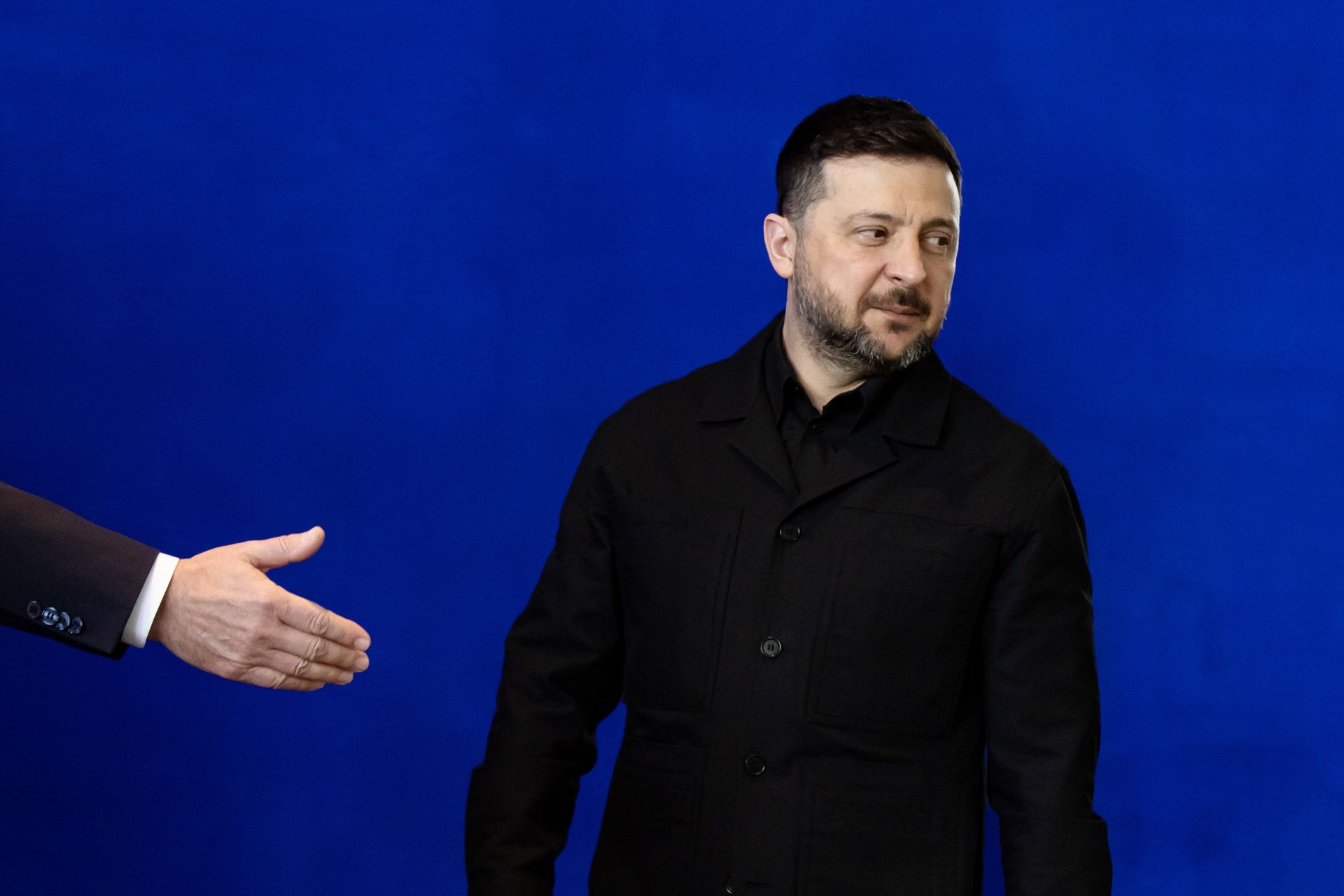
Volodymyr Zelensky made a rare misstep when German Chancellor Friedrich Merz proposed associate EU membership for Ukraine, offering institutional access, participation in Council meetings, gradual budget integration, and critically, Article 42(7) security guarantees.

Zelensky rejected it, insisting Ukraine deserves full and equal membership. In principle, most Europeans would agree.

Nancy Mace lost the South Carolina governor’s race. But her legacy of failure runs much deeper.

10 June 2026 at 11:00

Nancy Mace’s political career is likely over and will almost certainly be quickly forgotten. But the South Carolina Republican had the chance five years ago to create an enduring legacy by risking her office to steadfastly oppose Donald Trump’s “big lie” and self-coup attempt after he lost the 2020 election. Instead, she chose a squishy middle path between standing up for her country’s democratic legacy and pleasing the deranged boss of her party. And that path led her nowhere.

Mace chose not to run for a fifth term in the House so she could pursue the top job in the Palmetto State’s government, but after failing to qualify for the runoff in the South Carolina Republican gubernatorial primary Tuesday, the odds of her political ambitions reaching any higher have dimmed considerably. Though he didn’t attack her by name as he did with former Rep. Marjorie Taylor Greene, R-Ga., Trump endorsed one of Mace’s primary challengers after she was one of four Republicans who signed a discharge petition forcing a vote to release the unredacted Jeffrey Epstein files in 2025. 

What this country needs is Republican lawmakers and conservative thought leaders plainly rejecting Trump’s thoroughly debunked stories about a massive conspiracy of election fraud across multiple states.

This wasn’t the first time Mace stood up to Trump. On Jan. 6, 2021, she published an op-ed in The Post and Courier before Trump incited a MAGA mob, in which she wrote, “Today, I will solemnly cast my vote to certify the results of the Electoral College,” adding, “If Congress ever had the power to singularly throw out the Electoral College, we would set a dangerous precedent that the ruling class can disenfranchise millions of voters across the country. Does anyone really want to give Nancy Pelosi this kind of power? Certifying the results is the only way to preserve our republic and our Constitution. We must follow this course, even when we don’t like the outcome. Even when we hate the outcome.”

After Trump supporters’ violence on Jan. 6 was finally subdued, Mace went even further, telling CNN, “I hold him accountable for the events that transpired for the attack on our Capitol,” and that “everything that he’s worked for … his entire legacy, was wiped out yesterday.”

She added, “And we’ve got to start over.”

But when Mace had the chance to vote to impeach Trump a week after the riot, she demurred, questioning the “constitutionality” of the impeachment process for an outgoing president and lamenting “violence on both sides of the aisle.” 

A closer glance at her Jan. 6 op-ed shows her spreading a whole lot of baseless “big lie” innuendo: “Is there evidence of voting irregularities and voter fraud in multiple states? Yes.”

Mace then spent the next several years as a MAGA-coded culture warrior, taking on Trump’s political targets — especially transgender people — as her own. But her Epstein files rebellion seems to have been the last straw for Trump.

It’s a shame, because what this country needs most in June 2026 — just as it did in January 2021 — is Republican lawmakers and conservative thought leaders plainly rejecting Trump’s thoroughly debunked stories about a massive conspiracy of election fraud across multiple states. Instead, the most powerful and influential voices are spreading democracy-eroding falsehoods — because they can’t believe that 2000s-era reality TV show villain Spencer Pratt didn’t finish higher than third as a Republican in the Los Angeles mayoral primary.

Trump crashed out in an interview last weekend with “Meet the Press” host Kristen Welker as he ranted about fictitious voter fraud in California. Vice President JD Vance — infamous for knowingly spreading racist lies about immigrants for political purposes — said the situation in California “seems pretty shady to me.” House Speaker Mike Johnson said California’s vote-counting process “stinks to high heaven,” adding, “I think everybody knows instinctively something is wrong here.”

Elon Musk — MAGA campaign funder, propagator of racist conspiracy theories and beneficiary of untold billions in government subsidiesposted to X, “The real reason they don’t want voter ID is to commit voting fraud. That is the obvious truth.”

Republican and conservative leaders are spreading baseless fictions meant to undermine any election that doesn’t go their way.

Glenn Beck posted about California election laws: “A lot of the fraud is LEGAL. It’s a rigged system.” Rod Dreher, columnist for Bari Weiss’ MAGA-adjacent Free Press (who reportedly until recently was a paid propagandist for former Hungarian prime minister Viktor Orbán’s authoritarian government), posted that the “official story” of the LA mayoral primary results “is simply impossible to believe” and that “The problem is that many, many, MANY of us simply cannot believe it. It seems for all the world like fraud. This matters, & is going to matter more.”

To be sure, California’s vote-counting methods are, as The New York Times put it, “notoriously time-consuming, in part because of the state’s reliance on mail-in voting, and a requirement that officials do extensive work to check signatures, open envelopes and inspect ballots.”

But let’s be very clear about this. These Republican and conservative leaders are spreading baseless fictions meant to undermine any election that doesn’t go their way. And when it’s all said and done, for all the destruction Trump’s two administrations will have reaped upon the country and the world, the cynical deployment of voter fraud lies may end up yielding the most permanent damage. 

What America really needs right now is a few honorable conservatives to stand against these despicable tactics with a clear voice. Mace had the chance to be one five years ago. Instead, she’ll leave the stage as just another Republican who briefly stood up to Trump, then vacillated, then rebelled again, but ultimately prioritized currying favor with the demagogic boss of her party over standing on principle.

For her efforts at placating Trump and MAGA, Mace is a replacement-level, power-hungry politician looking for a job.

The post Nancy Mace lost the South Carolina governor’s race. But her legacy of failure runs much deeper. appeared first on MS NOW.

Trump’s crypto windfall comes at the expense of his supporters

10 June 2026 at 11:00

President Donald Trump and his family have cashed in big since he won the 2024 election. Of the billions of dollars they have accrued over the past 18 months, the lion’s share has reportedly come from cryptocurrency assets that bear the president’s name or his family’s endorsement. The technology may be novel, but crypto lets the Trump family play the age-old game of separating fools from their money, all while leveraging Trump’s position in the White House to boost the sales pitch.

According to an in-depth investigation from Reuters, whose reporters reviewed thousands of documents, disclosures and blockchain records, the price of the crypto offerings Trump is marketing have plummeted — but not the profits that the Trumps have pocketed. Investors who trusted Trump’s business acumen have been left unable to achieve the profits they assumed were coming or even offload the assets as their worth collapsed. In effect, a predatory market that should be subject to stricter regulation from the government instead has been a massive cash cow for the president and his family.

Crypto lets the Trump family play the age-old game of separating fools from their money

(Reuters helpfully published a full methodology for how it calculated the gains and losses on the notoriously opaque crypto market. The White House did not comment directly on Reuters’ reporting but said in a statement: “All actions by President Trump and his administration are taken in the best interest of the American people.”)

Trump has long preferred projects in which he features his name prominently but takes on little, if any, financial risk. The Trump Organization’s longtime M.O. has been licensing his name to real estate projects and reaping the benefits, even if the projects failed. Trump has also stamped his name on mattresses, wall sconces and slabs of meat. He even added his name to Bibles during the 2024 campaign.

At least all those were physical products. But in 2022, when he was out of the White House, Trump got involved in the burgeoning digital marketplace. The nonfungible tokens, or NFTs, sold for $99 each featuring his name and image as part of another licensing scheme. The cash flowed into Trump’s bank account before a “digital trading card” was sold. As a result, the latecomer entry into the NFT market, after months of decline in the NFT market’s value more broadly, mattered little to him when he had already extracted whatever value he could from the deal.

Trump and his sons Eric Trump and Donald Trump Jr. fully entered the world of cryptocurrency in late 2024. Leading up to his inauguration, the three hawked the $TRUMP meme coin and “governance tokens” for their crypto business, World Liberty Financial. The resulting surge in interest in those offerings and two crypto companies with the sons’ backing have generated a massive flood of new revenue for the Trumps. The report Reuters published Tuesday highlighted how the influx of funding for the Trumps left behind those hoping to join in the windfall:

While they vary in size and structure, each of these ventures has followed the same playbook. The Trumps risked little up front. Trump family members — notably, the president’s oldest sons, Eric and Donald Jr. — hyped the venture. The Trumps raked in money as investors piled in. And those buyers lost big when, for various reasons, the prices of their Trump-related crypto assets later tanked.

A Reuters examination shows that the Trump family has used this template to generate at least $2.3 billion in profit from investors since Trump retook the presidency. On the other side of that cash bonanza for America’s first family: the more than a million investors whose net losses totaled $2.3 billion at the end of April, according to a Reuters analysis. Those investors include retail buyers of crypto and crypto-linked equities, as well as those who invested indirectly through funds such as exchange-traded funds with exposure to Trump crypto. The loss total includes paper losses on unsold investments.

We shouldn’t ignore that, per Reuters’ calculations, the Trumps have profited at least as much money as outside investors have lost. World Liberty has sent 75% of the net revenue from token sales to the Trumps. Those tokens were meant to provide those who own them a say in the “new financial system” the company promises to eventually develop — though there’s been little progress on that front.

The price for those tokens, along with the $TRUMP meme coin, another straight-up licensing venture, have crashed. Investors have been barred from selling most of the coins they have accumulated, meaning even those who bought in early are unable to make money from their purchase or even cut their losses. Reuters interviewed an investor whose $2,000 investment in $TRUMP is now worth less than $120. (A spokesperson for World Liberty disputed the methods Reuters used to calculate the losses retail investors have seen.)

After hyping a product with almost no real value, the president and his sons have in effect siphoned billions of dollars away from investors who hoped to profit themselves

Buyers of this meme coin had even more reason to beware than investors in general given the volatile nature of the crypto market and Trump’s history of flimflam. As with most crypto tokens available to purchase, the World Liberty “governance token” and the $TRUMP meme coin also included fine-print disclaimers that their tokens are not an investment and that purchasers shouldn’t expect a profit. But that’s hard to square with the president’s marketing and him offering perks to investors including dinner at his Mar-a-Lago estate and the White House.

After hyping a product with almost no real value, the president and his sons have in effect siphoned billions of dollars away from investors who hoped to profit themselves. Anyone else who did this would be accused of running a classic pump and dump scheme. But when it’s the president of the United States behind it all, the people who bought in have nowhere to turn. Instead, they’re left holding the bag.

The post Trump’s crypto windfall comes at the expense of his supporters appeared first on MS NOW.

The PCA Committee Report on Christian Nationalism: The Problem in the Middle

10 June 2026 at 05:02
Note that the position of the Committee is that the free exercise of “all religions” in our nation is entirely consistent with the PCA’s constitutional standards.  In this context “all religions” does not mean all Christian denominations as it did during the time of the writing of our founding documents.  It means all religions including... Continue Reading

Consistency Is Not Enough

10 June 2026 at 05:01
The struggle is normal. Perfection will only be experienced in Heaven. But there will still be benefits to enjoy here, when we work for positive change.   Often you probably hear people talk about the need for consistency, how important it is, and the lack of it is their problem. Actually, everyone is consistent. The... Continue Reading

Treasury inspector general warns of errors in IRS sharing taxpayer info with ICE

9 June 2026 at 22:17

Happy Tuesday. Here’s your Tuesday Tech Drop, the past week’s top stories from the intersection of technology and politics.

Treasury insecurity

The Trump administration’s choice to deepen the Treasury Department’s involvement in its racist anti-immigrant crackdown may have exposed taxpayers’ personal information, according to a new report from the Treasury’s inspector general. 

The IG’s report “raises concerns about Immigration and Customs Enforcement’s ability to safeguard taxpayer information,” The Associated Press reported Monday. The IG report found the administration’s arrangement for the IRS to share data with ICE was error-prone and unreliable.

Under this arrangement, ICE can submit the names and addresses of people the agency says are in the United States illegally, and the IRS cross-references that information with tax records. 

The arrangement has been challenged by lawsuits and led former acting IRS Commissioner Melanie Krause to resign from her role in February.

Any errors that result from this information sharing are important to spotlight, as the Trump administration increasingly looks to the Treasury for help with its immigration crackdown

According to the AP: 

The report states that after the agreement was signed, ICE requested address information on more than 1.2 million people, and the IRS ultimately provided last-known addresses for about 47,000 people. [The inspector general] concluded that the IRS’s automated matching process was flawed. Inconsistent formatting in ICE’s data led to questionable matches, including in cases where incomplete or inaccurate addresses were labeled as valid, the report says. Representatives from Treasury and the IRS did not respond to an Associated Press request for comment.

Read more in the AP

New York turns to AI for help with food aid

New York City is using an artificial intelligence tool developed with help from consulting firm McKinsey & Company to administer SNAP benefits. The tool will reportedly be used to identify payment errors, as the Trump administration has vowed to withhold vital food aid funding from states with higher error rates. Given AI ethicists’ concerns about algorithms meting out discrimination, this tool certainly requires oversight to ensure it doesn’t facilitate harm. 

Read more in the New York Daily News

Miller’s spy fantasies spook conservatives

Some prominent conservative influencers and lawmakers had a conniption after White House deputy chief of staff Stephen Miller publicly objected to efforts to limit the Trump administration’s spy powers. 

Read my report on the backlash to Miller on MS NOW

Trump’s AI orders for the military

President Donald Trump, who’s reportedly made investments in AI companies and whose sons are linked to drone companies, issued an executive order Friday calling on the military to accelerate its use of AI. 

Read more in the AP

Trump eyes U.S. stake in AI companies

Speaking of Trump and AI, my colleague Steve Benen wrote about the president’s proposal for the government to take a stake in AI, continuing his quasisocialist (arguably, authoritarian) trend of having the government take a stake in supposedly free-market enterprises. 

Read more on MS NOW

Meta’s security problem

Meta spokesperson Andy Stone said the social media company fixed a security issue that allowed hackers to use its AI chatbot to access Instagram users’ account passwords. 

Read more at Tech Crunch

More Meta, more (alleged) problems 

A new report from the Center for Countering Digital Hate, a digital watchdog group, found that violent threats and hate speech toward lawmakers spiked last year after Meta rolled back some content moderation policies designed to protect users from harassment, bullying and threats of violence. After Meta made its decision, human rights groups warned the move risked fueling violence. Last year, Meta’s oversight board issued a ruling that found the company acted “hastily” and with little regard for global impact when it made those content moderation changes. 

In a statement to MS NOW, a spokesperson for Meta said:

We regularly issue public reports tracking violating content on our platforms, and the prevalence of hateful conduct did not increase throughout 2025. We cannot address the claims in this report as we were not provided it in advance of publication.

Read more on the CCDH’s “Safety Off” report here

Santos scandal saga continues

My colleague Erum Salam got the scoop on a federal insider trading probe related to alleged online betting by scandal-plagued former Republican New York Rep. George Santos, whose prison sentence for fraud was commuted by Trump last year. Santos called the insider trading claims “preposterous” in a social media post. 

Read more on MS NOW

The post Treasury inspector general warns of errors in IRS sharing taxpayer info with ICE appeared first on MS NOW.

Todd Blanche shows the dangers of an acting attorney general

9 June 2026 at 21:09

President Donald Trump sometimes seems to fancy himself a king, so it’s not surprising that he treats his Cabinet like a royal court. In his second term, the president has filled his top posts with courtiers who compete to offer the most extravagant praise in marathon Cabinet meetings.

And that’s how we should look at acting Attorney General Todd Blanche’s work for the past two months. Blanche has served in a temporary capacity while Trump decided whether to nominate him permanently. It was a seemingly endless job interview — one he could fail only by disappointing the man conducting it. Last week, he finally passed the test when Trump announced that he would nominate him for the post, subject to Senate confirmation.

But his conduct during that audition should be disqualifying.

Since becoming acting attorney general in April, the president’s former personal lawyer has often seemed more like his current personal lawyer. Blanche has argued that the president has the “right” and “duty” to direct Justice Department investigations, advanced investigations involving Trump’s political adversaries, refused to recuse himself from matters presenting potential conflicts of interest, and unsuccessfully sought to create a nearly $1.8 billion fund that critics warned could reward Trump allies, including Jan. 6 defendants.

We’ve all been in job interviews, so it’s not hard to see what was going on here. When the interviewer asks whether you’re willing to work nights and weekends, you say yes. By naming Blanche acting attorney general, Trump put him in a position where he could either do the president’s bidding or risk losing the job he wanted.

That dynamic would be troubling in any Cabinet department. But it is especially dangerous at the Department of Justice, which possesses the power to investigate virtually any American. As Attorney General Robert Jackson observed in a famous 1940 speech, a federal prosecutor “has more control over life, liberty, and reputation than any other person in America.”

The greatest danger, Jackson warned, comes when “the prosecutor picks some person whom he dislikes or desires to embarrass, or selects some group of unpopular persons and then looks for an offense.” The reverse danger is just as real: A prosecutor can decline to pursue an ally despite compelling evidence.

For that reason, Americans have long expected the Justice Department to maintain a degree of independence from the White House. It was considered scandalous when former President Bill Clinton merely chatted with Attorney General Loretta Lynch on an airport tarmac while her department was investigating Hillary Clinton in 2016.

In the past, a Senate-confirmed attorney general could resist improper pressure from a president. That is what happened during Watergate, when President Richard Nixon ordered Attorney General Elliot Richardson to fire the special prosecutor investigating him. Richardson and his deputy refused and resigned. Nixon ultimately got his way, but only at enormous political cost.

An acting attorney general is in a much worse position. If displeased, Trump didn’t need to fire Blanche. He simply could have declined to nominate him. No scandal. No Saturday Night Massacre. No political cost. Some supporters might even have praised him for changing course.

Trump relied heavily on acting officials during his first term, naming everyone from the attorney general to the defense secretary to the White House chief of staff in an acting capacity. He liked the arrangement because it gave him, in his own words, “more flexibility.”

Since returning to the White House, he has used the tactic far less frequently, in part because a Republican-controlled Senate confirmed virtually all of his Cabinet nominees. The major exception was Matt Gaetz, the scandal-plagued Florida congressman whose nomination collapsed before a vote.

The job he was nominated for? Attorney general.

The post Todd Blanche shows the dangers of an acting attorney general appeared first on MS NOW.

After attending pro-Nazi conference, Bovino floats presidential bid

9 June 2026 at 20:27

It can be hard to regain footing after losing a job. It’s a reality many Americans have been forced to face under Donald Trump’s authoritarian rule and in the wretched economy he’s created. And it would seem former U.S. Border Patrol chief Gregory Bovino can relate.

That might explain Bovino’s desperate search for relevance since the far-right former immigration official, who promoted neo-Nazi propaganda and faced accusations of cosplaying as a Nazi during his stint leading Trump’s racist immigration crackdown, was ousted from his role as the Border Patrol’s “commander at large” in January. (Bovino has denied intending to convey Nazi ideology.)

Since his ouster, Bovino has tried to keep himself in the limelight — an effort that includes his recent attendance at a pro-extremist, Nazi-aligned conference in Portugal, and one that appears to be fueling Bovino’s consideration of a presidential bid. 

At least he said he’s exploring a 2028 bid in a social media post on Monday. That the post includes the phrase “men fight back” suggests Bovino’s potential bid is likely to be rooted in the cringeworthy masculinity rhetoric we’ve heard out of the MAGA movement over the past few years in particular. 

NewsNation is reporting I’m exploring a run for President in 2028.

Here’s the truth: My one and only priority is deporting the 106 million illegals who are here. That’s it.

The grassroots support I’m seeing tells me the polls are completely wrong…

If I’m getting this much… https://t.co/L0bttQYgEG

— Gregory K Bovino (@GregoryKBovino) June 8, 2026

Bovino seems to be carving a lane for himself to emerge as a stalwart of the furthest-right fringe of the MAGA movement. At the conference in Portugal, he attacked the Trump administration for purportedly not being extreme enough in its mass deportation agenda and made the same baseless claim he made in the tweet above: that there are at least 100 million undocumented immigrants in the United States. To be clear, this would mean about one-third of all U.S. residents are undocumented, which is a fanciful assertion. 

What’s not clear is whether there’s much of a constituency for a Bovino presidential bid, even among the MAGA movement. His mass deportation proposals align with beliefs espoused by the far-right “Mass Deportation Coalition,” a group of right-wing organizations that want Trump to ramp up his assault on immigrants. But Bovino’s rhetoric and tactics are arguably a key reason why polls at the start of the year showed a majority of Americans believed the Trump administration’s anti-immigration strategy had gone too far. And as my colleague Steve Benen noted in January, Bovino racked up a list of scandals and controversies so long during his time as border chief that even Trump was forced to admit he’s a “pretty out-there kind of guy,” seemingly alluding to his extremist tendencies. 

But if there’s anything to take away from Bovino’s floating of a presidential bid, it’s that he’s among a list of conservatives jockeying to lead the MAGA movement after Donald Trump is no longer president.

The post After attending pro-Nazi conference, Bovino floats presidential bid appeared first on MS NOW.

A downed U.S. helicopter shows Trump’s war has only emboldened Iran

9 June 2026 at 18:51

Less than two weeks into the war against Iran, President Donald Trump was already throwing a victory parade.

“You never like to say too ⁠early you won,” Trump told supporters on March 11. “We won. In ​the first hour it was over.”

Two days later, he was at it again, writing Iran was “totally defeated” and was living in such a desperate existence that its leadership was begging for a deal. 

Yet this past weekend, Iran launched new missile salvos at Israel, which replied in kind. And on Tuesday, Trump said in a social media post that Iran had downed a U.S. Army helicopter near the Strait of Hormuz. The pilots were unharmed, but Trump said “the United States must, of necessity, respond to this attack.”

It’s not a stretch to assess that Iran’s leaders are putting just as much pressure on Trump as Trump is putting on them.

If these events are any indication, Iran is not only holding its own but is arguably more aggressive today than before the U.S. bombing campaign began. Yes, the regime has lost a considerable portion of its military power and has cycled through senior officials about as often as the New York Mets have cycled through pitchers. But Tehran has not lost its ability to take the offensive and clearly believes it retains the upper hand against Washington. 

It wasn’t supposed to be this way. Trump had high expectations when he initiated the war. The president was so pleased with the first strikes’ results, which included the assassination of Ayatollah Ali Khamenei, Iran’s supreme leader of nearly 40 years, that he implored Iranians to take back their government. The Trump administration told the public — and itself — a story about Tehran’s many weaknesses; its economy was floundering, its people were unhappy, its command-and-control was breaking and its leaders were on the run or dead. Trump thought the Iranian regime would crumble or give up before it decided to retaliate by closing the Strait of Hormuz. Sooner or later, Iran’s nuclear program would be a figment of our imaginations. 

Of course, none of Trump’s assumptions panned out. The regime is more unified and institutionalized than the White House anticipated. Khamenei has been replaced by his more inscrutable son, Mojtaba Khamenei, and the hard-line Islamic Revolutionary Guard Corps has become the most important power center in the Iranian establishment. The Strait of Hormuz remains shuttered.

Before the April 8 ceasefire, Iran was targeting its neighbors’ energy facilities, both to scare the Gulf states into pushing Trump to de-escalate and to heighten the pain at the pump. Though gas prices in the United States have dropped in the last month, as of Tuesday, Americans are still paying $4.16 a gallon — 40% more than when the war began. The unofficial extra tax has translated into terrible numbers for Trump: Even a 33% plurality of Republicans believe the war has had a more negative than positive impact on U.S. interests. 

Iran is not blind to these dynamics. If anything, it’s emboldened by them. The Iranian military apparatus may still be recuperating from the heavy U.S. and Israeli airstrikes during the war’s first weeks, but the damage inflicted has failed to translate into strategic results. Killing Iranian generals, destroying Iran’s navy and damaging the regime’s drone manufacturing capacity were not ends in themselves but rather a means to an end — coercing Tehran into a settlement on U.S. terms. The scorecard for the Americans on that front is unimpressive. Iran hasn’t just survived the U.S.-Israeli onslaught; it’s effectively pushed back through asymmetric military tactics. It’s not a stretch to assess that Iran’s leaders are putting just as much pressure on Trump as Trump is putting on them.

This past weekend’s missile salvo against Israel is a case in point. This wasn’t a sign of desperation on Tehran’s part but rather Iran making its own threats credible. The regime had warned that Israeli airstrikes against its proxy, Hezbollah, in southern Lebanon, in contraventiosn of a previously announced ceasefire reaffirmed last week, would result in Iranian military action against Israel.

This war will impact the region’s geopolitics for years to come.

If Trump and Israeli Prime Minister Benjamin Netanyahu thought this was a bluff, Iran put those illusions to rest by sending dozens of ballistic missiles toward Israel. (Fortunately, they only caused minor damage.) Trump, desperate to keep his diplomatic process with Iran alive, has since pressured Netanyahu into postponing whatever air campaign he was ready to order beyond the retaliatory precision strikes the prime minister authorized on Sunday and Monday. 

To be clear, Iran is not solely dictating events, nor is it in a strategically advantageous position over the long-term. This war will impact the region’s geopolitics for years to come. For instance, the firing of thousands of attack drones and missiles into Saudi Arabia, the United Arab Emirates, Kuwait and Qatar (among others) has jeopardized the regime’s previous attempt at detente with its regional neighbors. Even the regime’s weaponization of the strait may not last; the Saudis and Emiratis are adapting by building alternative pipelines over land to ensure their oil exports are not held hostage to any future Iranian machinations there. 

But from the U.S. standpoint, the war is producing a more extreme Iranian political establishment. Its positions on core issues for any agreement, like the nuclear program, are indistinguishable from the prewar status quo . And the previous risk-adverse behavior proffered by the regime’s older guard is increasingly perceived by the new powers that be as a mistake. Whatever happens next in the conflict, these developments don’t serve U.S. interests.

The post A downed U.S. helicopter shows Trump’s war has only emboldened Iran appeared first on MS NOW.

Ovechkin, Malkin, Kucherov, and Russia's return to international sports

9 June 2026 at 17:37

Since the onset of Russia's full-scale invasion of Ukraine, Russian athletes and national teams have been widely excluded from international sport.

Yet the pressure to reintegrate them never really disappeared, and Russian athletes are increasingly allowed back into international competition. First, under neutral status in selected disciplines, following

This is why Trump walked out on Kristen Welker’s ‘Meet the Press’ interview

9 June 2026 at 14:46

Donald Trump can’t handle the truth — especially when it’s presented by a woman.

A furious president terminated a “Meet the Press” interview with NBC’s Kristen Welker after she pressed him to provide evidence for his false claims that California’s elections are rigged and that “dirty” FBI agents ushered rioters into the Capitol on Jan. 6, 2021.

There are few things Trump dislikes more than having his policy contradictions highlighted.

You’re a one-sided crooked network. Sorry. Let’s call it quits because I’ve had enough. Thank you, darling. Have a good time,” Trump fumed as he pulled off his microphone.

The president rarely ventures beyond a media environment populated by fawning advisers and friendly Fox News interviewers. He surely knew that Welker was not easily bulldozed; in a 2025 interview, he had complained “every question you ask [has] a very negative slant.”

The more recent interview began to go off the rails when Welker asked Trump a simple question: whether his three-month military conflict with Iran violated his campaign promise not to launch any more wars.

She put it plainly: “Did you break that promise to the American people?”

Trump blurted out “no” before she even finished the sentence.

There are few things Trump dislikes more than having his policy contradictions highlighted.

“I didn’t guarantee no war,” he insisted. “Why would I have built the strongest military in the world?”

Welker was undeterred. “But you said it over and over again, Mr. President.”

(Some examples: Aug. 17, 2024: “Under Trump, we will have no more wars, no more disruptions and we will have prosperity and peace for all.” Sept 18, 2024: “We’re not going to have war in the Middle East.” Oct. 26, 2024: “I will not send you to fight and die in a foolish, never-ending foreign war.”)

Trump fumed: “I know you, you’re a big liberal, a big progressive.” Welker replied, “No, I’m just a journalist.”

Then, in a rambling filibuster that stretched on for dozens of sentences, Trump started arguing about definitions. “This is not an endless war. We’ve been doing this for three months.”

There is another long-standing pattern that Trump’s outsize reaction also fits: He has often responded with particular venom when tough questions come from women. Trump’s defenders say he’s an equal-opportunity offender — after all, he called Jim Acosta a “rude, terrible person” and Don Lemon “the dumbest man on television” — and he regularly denounces what he calls “fake news.” But Trump especially dislikes tough questions from women.

In 2020, Trump abruptly ended an interview with Lesley Stahl of CBS News after accusing her of asking tough questions of him while lobbing softballs at his Democratic opponent, Joe Biden.

“I saw your interview with Joe, the interview with Joe Biden,” he sputtered.

I never did a Joe Biden interview,” she replied. 

Trump insisted he had seen one and then called it quits. “I think we have enough of an interview here,” he said. “Okay that’s enough. Let’s go.”

In one of the 2015 Republican primary debates, Megyn Kelly, then with Fox News, asked a question composed almost entirely of Trump’s own words.

“You’ve called women you don’t like ‘fat pigs,’ ‘dogs,’ ‘slobs’ and ‘disgusting animals.’ … Does that sound to you like the temperament of a man we should elect as president?”

Trump was furious — and spent months denouncing Kelly as a“third-rate reporter,” “sick,” “overrated” and “crazy.”  In a call-in interview, he jabbed, “You could see there was blood coming out of her eyes. Blood coming out of her wherever …”

(After being criticized for what was widely — and rightly — interpreted as a misogynistic comment, Trump later insisted he had been referring to Kelly’s “nose” or “maybe her ears.”) 

Kelly, in a later interview with Trump, described it as “a tough question about women using only the words that you had used.” 

In Trump’s view, that was a cardinal sin. His reactions show time and again he doesn’t like to be reminded of his past statements or positions — especially when they are read back to him by a journalist.

She gave me a really phony question,” Trump told “Meet the Press” in 2016. “It was a setup question. It wasn’t even a question, it was a statement. It was inappropriate.” 

That’s the common thread running through Trump’s clashes with Welker, Stahl and Kelly. None of the journalists expressed an opinion. None was engaging in a partisan attack. Each simply confronted Trump with facts, statements or promises he himself had made.

The issue isn’t that Trump objects merely to tough questions. He objects to questions that force him to answer for his own words.

The post This is why Trump walked out on Kristen Welker’s ‘Meet the Press’ interview appeared first on MS NOW.

Trump’s fall from New York celebrity to pariah

9 June 2026 at 11:00

There was a time when Donald Trump’s presence at the world’s most famous arena wasn’t just welcome, it was trumpeted. In that not-so-distant past, Trump, who was born in Queens, was a part of Manhattan’s fabric, a New Yorker through and through. “Donald! Donald!” the fans called as he rounded the glass partition of the hockey rink where the New York Rangers played. It was 1999, Wayne Gretzky’s last season. “The Apprentice” was five years away, the White House not even a glint in Trump’s eye. When he shook hands and nodded knowingly to the Madison Square Garden masses, they felt happy that their rich and famous neighbor acknowledged them. 

But Monday night, as President Donald Trump smiled broadly and saluted while “The Star-Spangled Banner” blared and his image was shown to masses on the big screen for almost eight seconds before Game 3 of the NBA Finals? 

Outright disdain.

Heckling, jeering from every part of the arena was focused like a beam of white-hot angry light into New York Knicks owner James Dolan’s luxury suite, where Trump stood.

Heckling, jeering from every part of the arena was focused like a beam of white-hot angry light into New York Knicks owner James Dolan’s luxury suite, where Trump stood. Secret Service agents, who had commandeered the boxes on each side of the owner’s box, pressed their fingers to their earpieces, as if they were trying to hear above the noisy and disrespectful din.

The intensity of the Garden’s displeasure did not wane even when Trump’s granddaughter Kai was shown behind him. The president smiled and saluted throughout his cameo, as if he were impervious to the crowd that likely wished he had picked some other Garden party to crash

Joanne Cadden, 53, a fan dating back to the days of Patrick Ewing and the contending teams of the 1990s, told The Guardian of London, “He could have picked any other day. This night is for the fans. You’re making people go away from the Garden. This wasn’t the time.”

Cadden gestured toward the 10-foot security perimeter surrounding the arena, adding, “This looks like prison.”

This was all predictable, of course, the moment Trump decided to become the first sitting president to attend an NBA Finals game. Trump’s appearance felt a good deal like the disruption caused by an overzealous teenage San Antonio Spurs fan  who darted onto the court at the Frost Bank Center during Game 2 in an attempt to snap a selfie with 7-foot-4 Spurs center Victor Wembanyama. In Monday night’s case, an emotionally stilted 79-year-old president essentially sought a selfie with 19,812 basketball fans, most of whom would have put rabbit ears behind his head if they could get close.

Some homecoming for the Donald, no? 

Before Monday, it had been 27 years since the Knicks had hosted a Finals game. They went into the night leading the Spurs 2-0 in the best-of-seven series. The only wet blanket on the euphoria was Trump accepting the invitation of his longtime friend and donor, Dolan. And it was, indeed, a wet blanket. Trump’s attendance forced the closure of streets and the cancellation of viewing parties outside the arena, and his attendance forced fans to come to the game two hours early for presidential-level security protocols.

Unlike those carefree days of the 1990s when a local real estate mogul strolled in through the freight elevator with the rest of the VIPs to watch a home team at MSG, Trump on Monday was the show. He arrived just before 7:20 p.m. ET on Marine One after a a short flight from his New Jersey golf club

Some homecoming for the Donald, no? 

Taking the Franklin D. Roosevelt East River Drive from Wall Street up to the Garden, Trump’s motorcade passed several Knicks watch parties. According to The Athletic, “Reporters traveling with Trump counted two middle fingers and one thumbs down, signs that said ‘Nobody wants you here,’ ‘Trump must go,’ and ‘Impeach. Convict. Remove.’” 

By the time Trump made it to Dolan’s suite near midcourt, halfway up the stands, he took his seat in a box surrounded by bulletproof glass, constructed for his visit. When he finally appeared on the jumbotron, the booing directed at him dwarfed the booing for the visiting Spurs. According to a reporter I spoke with, most of the heckling can’t be printed in a family publication. 

The transformation was now complete. The onetime celebrity, who long ago could calmly take a courtside seat next to Spike Lee and other iconic Knick season ticket holders, was now getting a pariah’s treatment. To many New Yorkers he’s the local boy who made no-good. 

The whole distraction wasn’t lost on many in the crowd or outside the Garden. The Knicks had not lost a game in 46 days, a preposterous statistic during a playoff run that featured a 13-game win streak. It was clear before the game tipped off that if the Knicks didn’t win Game 3, if they didn’t have a happy ending on this majestic night in the middle of Manhattan, then there would be blame for the president of the United States, who just had to show up and play the Knicks’ bad-luck charm. 

Indeed, the Knicks lost 115-111.

The post Trump’s fall from New York celebrity to pariah appeared first on MS NOW.

Hunter Biden is becoming a populist internet guy. I have questions.

9 June 2026 at 11:00

“I’m Hunter Biden. You’ve never actually heard from me,” posted the son of former President Joe Biden to X and Substack on May 19.

It was an unexpected proclamation from a long-controversial figure in Democratic politics, whose personal scandals, nepo baby tendencies and criminal conduct have long been the stuff of political culture wars and tabloid coverage — and even a factor in electoral outcomes. But Hunter Biden’s note marked the opening salvo of a deliberate bid to reinvent himself using the miraculous powers of the social Internet. 

And at the moment, it’s strangely kind of working.

Biden has been posting and replying to other people’s posts frequently, and getting a ton of engagement, thousands of reposts and vaguely positive media coverage for his commentary. He’s published posts on a variety of topics — sobriety (Biden has battled drug and alcohol addiction), his family, gratitude, his paintings, fundraisers for homeless people. Mostly it’s in writing, but sometimes he puts up videos with snippets of life philosophy in the style of Instagram influencers.

My suspicion is that Biden knows tapping into the attention economy could be parlayed into future opportunities.

Part of the reason Biden is breaking through is he’s making blunt, self-deprecating humor a significant part of his online persona. For example, he once complained that a photoshopped image of him smoking a pipe featured what looked more like a meth pipe than a crack pipe, asking to be mocked more accurately. (Biden has openly discussed an addiction to crack cocaine.) He ended that post with the phrase, “Thank you for your attention to this matter” — a nod to Trump’s signature sign-off on many of his own social media posts. The joke seemed to be well-received by people across the political spectrum. 

A lot of Biden’s posting is unobjectionable and sometimes even wholesome — at least by the standards of online attention-seeking behavior. But there’s an aspect of his new identity that I find more troubling: his attempts at cross-partisan political populism. Regardless of what his intentions are, he’s exhibiting a naivete about noxious right-wing ideas.

A couple days after he began his pivot, Biden appeared on the podcast of the right-wing antisemitic conspiracy theorist extraordinaire Candace Owens. The decision to appear at all was shocking — Owens is at the very heart of some of the most backward and outlandish disinformation emanating out of the far-right online, including false claims that the moon landing was faked; that France’s first lady is a pedophile and lying about her gender; and that the FBI, the French Foreign Legion, the Israeli government and Turning Point USA staff could be among those involved in the death of right-wing activist Charlie Kirk last year. As my MS NOW colleague Anthony Fisher pointed out, during the interview Biden praised Owens “for asking questions” about Kirk’s death in an astonishing endorsement of Owens’ operation.

Last week, seemingly emboldened by attention he’s getting from the right for his new identity online, Biden wrote on X: 

Someone called me the MAGA whisperer and I’ll gladly take the title. Left, right, D or R we all want the same things. We’re being divided on purpose by the Epstein Elite Oligarch class because as long as we’re at each other’s throats, they get fat and rich off of our misery.

This appears to be a shallow riff on a common piece of political rhetoric on the left that people have more in common than they’re led to believe and that shared interests can unite the working class across race, gender and other social divisions. But notably, Biden’s spin on the idea seems to be that there’s no substantive difference between the left and the right. That kind of apolitical populism might sound appealing, but it’s not true.

When someone responded to Biden’s post saying he was part of the elite that he was decrying, Biden deflected by implying his substance abuse struggles render him an outsider to the elite class. This, too, is nonsense. Biden’s mental health struggles are real and deserve sympathy, but that doesn’t negate the reality that he traded inappropriately on his father’s name to make insane amounts of money, or pleaded guilty to tax fraud but was saved from the consequences by a presidential pardon.

The next day, Biden wrote a long post on X cataloguing “things most Americans agree on,” listing policies or ideas that he believed transcended political tribe. Some of it was sensible — there’s a lot of data backing broad bipartisan support for things he mentions like “groceries cost too much,” “legal immigration is good” and “endless wars are stupid.” But some of it was also sloppy. One item on his list read: “AI is like my new best friend that also might be trying to take my job, my ability to think for myself, and my humanity in the process. Yo like I love you, but WTF, but I still love you.” In reality, recent polling shows Americans are far less ambivalent — and more critical — about artificial intelligence and its development than Biden seems to believe. And Biden’s claim that “diversity is actually awesome” is a universal principle in America that requires amnesia about the last decade in politics.

Biden’s glib political posts have been getting enough attention that a Fox News reporter asked President Donald Trump last week what he thought about the idea of Biden running for president in 2028. (Trump made a joke that if scandal-plagued Democrat Graham Platner has a chance of succeeding his race for the Senate in Maine, maybe Biden has one too.) 

It’s difficult to know what to make of all this, and the timing of Biden’s “internet guy” era is also curious. With his father out of the political picture, Biden’s life and ordeals had become of far less interest to the public. If he wants a return to equanimity after feeling unfairly scrutinized by the public, it would seem this is the time to relish a new privacy. Instead, he’s catapulting himself into the public sphere in a way he never has before.  

My suspicion is that Biden knows tapping into the attention economy could be parlayed into future opportunities to make money and form valuable social connections. And he seems to be in need of cash. In court filings filed in 2025, he said he was “several million dollars” in debt. And people mostly stopped buying his amateur art works for exorbitant prices after 2023, according to his court filings. (It shouldn’t be hard to guess why.)

Is Hunter Biden serious about getting into politics, whether as some kind of influencer, pundit or politician? Does he view it as a way to find validation after years of being stigmatized? Is he just using it as a way to exploit the algorithms that rule our lives and turn politics into just one more way to secure eyeballs? I have no idea. I don’t think he does either. 

The post Hunter Biden is becoming a populist internet guy. I have questions. appeared first on MS NOW.

The Hollow Where the Larkspur Grew

9 June 2026 at 05:02
We’ve lost a horse to a lightning strike once. A predator got another animal years ago. We’ve had grizzlies on this property, plenty of mountain lions, and a couple of years ago I watched a wolf lope across a field one winter afternoon. Those are the dangers you think about out here. I wasn’t watching... Continue Reading

Trump’s latest ‘voter fraud’ claims may backfire on him in the fall

9 June 2026 at 01:09

During normal times, the president of the United States would not routinely claim, without evidence, an epidemic of “voter fraud.” But Donald Trump is on another tirade about supposed fraud — this time in California’s primary elections. If there’s any good news, though, the publicity and pushback against his claims will inoculate the public against similar unsupported charges in November’s midterms, if control of Congress depends upon late-arriving results in the Golden State.

Let’s begin with some obvious points. California’s vote-counting process is notoriously slow. Millions of the state’s voters choose to vote by mail, and election officials’ efforts to confirm that voters have followed all the rules take some time. The state has unusually lenient rules for both the receipt of mail-in ballots (timely postmarked ballots may be counted if election officials receive them within seven days of the election) and for curing defective ballots (such as mail ballots on which a voter forgets to add their signature). Despite the popularity of mail-in ballots, the state has not prioritized saving state resources over a quicker vote count.  

Further, it is rather routine that California results show Republican and more conservative candidates doing well in initial tallies, only for Democrats and liberal candidates to appear to “gain” as more ballots are tallied. Voters who have lived in the same place longer, own a home, are white and are wealthier are all more likely to receive and send back their ballots early — and they are also more likely to vote Republican.  

President Trump has incessantly fueled beliefs on the right that voter fraud is prevalent in Democratic states.

Think about election tallying this way. You have to be away from your television during the Super Bowl and so you record the game. When you watch it the next day — having avoided hearing the result in between — the game is already over. The winner was the same before you watched and after. It is the same with California’s election ballots: All the ballots were cast by Election Day, the election is over, and we just must wait to learn the final results.

The issue of late-voting Democrats was especially pronounced in last week’s elections. In the Los Angeles mayoral race, polls show many voters undecided between unpopular incumbent Mayor Karen Bass, reality TV star Spencer Pratt (running to her right) and Los Angeles City Council member Nithya Raman (running to Bass’ left). Bass made it to the runoff, and the first vote totals showed Pratt in second. But late Monday, with 93% of the ballots counted the Associated Press projected that Raman will join Bass in this fall’s general election.

In the state’s gubernatorial primary, the initial results placed Republican Steve Hilton in first, ahead of Democrats Xavier Becerra and Tom Steyer. As more ballots were processed, Becerra moved into first late Friday. Hilton is still likely to finish in the top two and advance to the general election, but Steyer has not yet been ruled out given the number of outstanding ballots.

This “blue shift” would not be a problem if we lived in normal times. If we have to wait a week or two to find out which candidates will face Bass and Becerra, that’s plenty of time to prepare for November. Unfortunately, President Trump has incessantly fueled beliefs on the right that voter fraud is prevalent in Democratic states, and in particular that California’s slow vote count shows that the system is “crooked.” He did it again last week. It undermines voters’ confidence in our elections’ integrity for no good reason.

And he’s not alone. Speaker of the House Mike Johnson told reporters the “efforts are so diabolical and so far upstream it’s impossible to prove. But I think everybody knows instinctively that something is wrong here.” Yes, the alleged voter fraud claimed by Trump and his allies is always the perfect crime: happening on a massive scale yet impossible to detect. It’s quite convenient to have a theory that is completely unfalsifiable.

Some supporters of Pratt have made similar charges without evidence or simply “asked questions” about potential fraud. They only embarrass themselves by showing that either they don’t understand how California’s process works or they are cynical enough to think the public will accept false claims.

Even now, there is much to worry about regarding November’s elections.

If the race for control of the House of Representatives is close in November, the balance of power could well come down to races in California. Media reports on early returns will show Republican candidates “in the lead” but Democrats “gaining” as more votes are counted. Should that come to pass, I fully expect that Trump and his supporters will again cry fraud and try to delegitimize any Democratic victories and the integrity of the election process.

Even now, there is much to worry about regarding November’s elections. Trump’s U.S. attorney in Los Angeles, Bill Essayli, said he is investigating potential fraud in California’s primaries based upon no evidence. This follows the administration’s ongoing probes related to the 2020 election — efforts that could be a test run for the midterms.

The administration is trying to assemble a national citizen database and attempting to forbid the the U.S. Postal Service from returning mailed ballots from voters who are not on approved lists, a matter now being litigated in courts. Both federal law enforcement and cybersecurity officials have reportedly canceled efforts to help state and local election officials secure the 2026 elections.

But Trump has shown his hand and he’s come up short. It is hard to overstate the importance of the exchange on Sunday between Trump and NBC News’ “Meet the Press” anchor Kristen Welker. Speaking about California’s elections, Trump said, “They’re crooked just like you’re crooked, your press is crooked. And ‘Meet the Press’ is crooked.” As Welker pushed him repeatedly for evidence, Trump could only repeat his entirely unsupported charges: “There’s tremendous evidence. There’s nothing but evidence.” In the end, he stormed out.

In the long term, California should still do what it can to speed up the vote count; that would help maintain confidence in elections. With enough resources thrown at the problem and commands from the Legislature, election officials can improve their ballot processing time. But serious progress is unlikely before November.

For this year, election officials, the media and even the public all play roles in assuring voters about the fairness and integrity of the process. California election officials have been quite transparent about their processes all along the way, and that should continue. Media outlets should stop reporting which candidate is “in the lead.” This is not an ongoing election; the election is over, and the results are simply “too early to call.”

In response to charges of “voter fraud,” ordinary people can share media, such as the two-minute exchange between Trump and Welker, which show the emptiness of the president’s claims.

Rumormongering about California was always likely to be central to the president’s attempts to weaken faith in this year’s elections. But thanks to Trump himself, anyone paying any attention knows that California’s vote count is notoriously slow, that the “blue shift” favoring Democrats routinely happens and that Trump has produced no evidence to support his claims. The boy has cried wolf too many times, and if he tries this again in November, the appropriate response should be repudiation, not panic.

The post Trump’s latest ‘voter fraud’ claims may backfire on him in the fall appeared first on MS NOW.

It’s up to Congress and the courts to fight Trump’s attacks on states’ sovereignty

8 June 2026 at 22:35

Our system of government is based on distrust. We revolted against a monarchy and decided to decentralize power, with the hope that bad people and bad decisions are less likely to wield actual power. We not only divide power among three branches of government, but we also divvy up power between a federal government and state governments

You can be forgiven if you think our system of horizontal separation (three branches of government) and vertical separation (federal and state governments) is collapsing all around us. The enlargement of the executive branch, to the detriment of the legislative branch and the states, didn’t begin with President Donald Trump. And it won’t end with him unless Congress and the states reclaim their constitutionally endowed power, or judges and the public push presidents back into their lane.  

If any government entity wants to put these conditions on the receipt of federal funds, it should be Congress, and not the executive branch through the U.S. Department of Agriculture.

Recently, a federal judge did just that and pushed back against the Trump administration’s attempt to condition $74 billion in nutrition and farm aid to states — including Supplemental Nutrition Assistance Program (SNAP) benefits — on the states’ decision to acquiesce to Trump administration policies on transgender people; diversity, equity and inclusion; immigration enforcement; and other topics. We are, to be clear, talking about money that goes to feed the poorest among us, including tens of millions of children

U.S. District Judge Myong Joun, who has apparently read the Constitution, put at least a temporary stop to the administration’s attempts to coerce the states into action. 

The case involves a suit by 20 Democratic attorneys general and the District of Columbia against the Trump administration. Their claim is straightforward: The Trump administration said states and D.C. won’t receive money to feed poor families and farmers unless they comply with the Trump administration’s policy priorities. 

As an initial matter, those challenging the Trump administration’s actions argue that the conditions on federal grants are so vague that they don’t know which state actions would or would not violate the federal conditions, and could potentially force them to obey requirements unrelated to nutrition and fair aid programs. The lack of germaneness between the purpose of the federal funding program and the requirements the federal government is putting on the states should be enough to kill these additional conditions, but here are some others. 

First, if any government entity wants to put these conditions on the receipt of federal funds, it should be Congress, and not the executive branch through the U.S. Department of Agriculture. The Constitution gives Congress, not the executive, the power of the purse. The president has a role to play, but it is to tell executive agencies to execute spending laws by ensuring executive agencies spend federal funds consistent with those laws. The president can and should propose budget priorities during the budgeting process, and sign or veto spending laws. But once those proposals become law, the president does not have the power to rewrite them to comply with his policy agenda. 

Second, the USDA’s attempt to condition the receipt of vital federal funds violates the Constitution by depriving them of any true choice. Congress — again, generally not an executive agency — can condition a state’s receipt of federal funds on states taking certain actions. But Congress cannot coerce states into doing so. Coercion would amount to the federal government trampling on state sovereignty. Is this really true? Yes, Chief Justice John Roberts told me so. In fact, he told me the federal government can’t put a “gun to the head” of states in an attempt to get them to adopt federal policies to get federal funds. 

The judge’s decision to issue a temporary pause on the Trump administration’s plans could be just that, temporary. But conservatives and liberals alike should hope that the judge’s decision to block this action is permanent. The question is not whether you like President Trump’s policies. The legal answer should be the same if former President Joe Biden had tried to tell the USDA to withhold the same aid from states unless they adopted liberal policies on gun regulation, climate change or abortion access. The question is whether you respect the separation of powers and state sovereignty. 

This is a high-stakes legal question striking at the heart of whether our system of government survives. It is also a high stakes practical question that could determine whether impoverished children and families receive money for food. 

The post It’s up to Congress and the courts to fight Trump’s attacks on states’ sovereignty appeared first on MS NOW.

Stephen Miller’s push for spy powers faces right-wing backlash

8 June 2026 at 22:17

White House deputy chief of staff Stephen Miller faced a torrent of right-wing backlash over the weekend amid his push for the federal government to obtain virtually unfettered powers to spy on Americans.

The Trump administration has been pressuring Congress to authorize a long-term extension of the spying program known as Section 702 of the Foreign Intelligence Surveillance Act. It’s a controversial program that has allowed the government to collect Americans’ communications with targeted people and entities abroad.

Multiple Republicans in Congress had already sided with Democrats in raising concerns about reauthorizing these spying powers. And Donald Trump’s nomination of Bill Pulte — a MAGA loyalist who has launched dubious probes into the president’s political opponents while leading the Federal Housing Finance Agency — has put a reauthorization of Section 702 further in doubt.

That’s the context for Miller’s post on X below, in which he peddled falsehoods about the spying program.

“FISA 702 is the authority for surveillance on foreign soil — the core of all US security,” Miller wrote. “A libertarian demand to make SecWar get approval from liberal DC judges (the ones who targeted Trump) is madness. No conservative aim is ever served through subservience to leftist DC judges.”

FISA 702 is the authority for surveillance on foreign soil—the core of all US security. A libertarian demand to make SecWar get approval from liberal DC judges (the ones who targeted Trump) is madness. No conservative aim is ever served through subservience to leftist DC judges.

— Stephen Miller (@StephenM) June 6, 2026

As you can see, Miller’s claim about liberal judges on the Foreign Intelligence Surveillance Court was hit with a community note after X users noted that the judges come from across the country, and that all but three of the 11 judges were appointed by Republicans.

And while some of the outrage toward Miller naturally came from liberals, some conservatives didn’t seem all that happy either.

Love this community note. Stephen Miller trying to gaslight the American people.

This Trump administration hasn’t done a dag on thing about the weaponization of government and now they want to extend FISA so the government can spy on Americans without a warrant. https://t.co/NOb2wmLze9 pic.twitter.com/5nOKOmnY1R

— Derrick Evans (@DerrickEvans4WV) June 7, 2026

Get a warrant. Tyrant. https://t.co/JH1pcvDiiF

— Libertarian Party of Tennessee (@LPTN1776) June 6, 2026

“If angels were to govern men, neither external nor internal controls on government would be necessary,” Federalist 51. At least Trump's elevation of Bill Pulte to head the spy apparatus reminds us that governance by angels is nowhere on the horizon.https://t.co/7b917BRByv https://t.co/Oejf2ZFnk0

— Jason Willick (@jawillick) June 6, 2026

The MAGA backlash over the White House’s push to reauthorize Section 702 boils down to a point I made on MS NOW’s “Morning Joe” last week, in which I talked about the electoral backlash to Big Tech. As I mentioned, the fact that artificial intelligence skeptics span the ideological spectrum — with people as ideologically diverse as Steve Bannon and Rep. Alexandria Ocasio-Cortez, D-N.Y. — shows how even allies of the MAGA movement are wary of the ways Big Tech can infringe upon American life.

And it almost goes without saying that dismissive statements from Miller aren’t likely to assuage many folks’ concerns.

Check out my segment alongside Jonathan Lemire, Molly Jong-Fast and Sam Stein here:

The post Stephen Miller’s push for spy powers faces right-wing backlash appeared first on MS NOW.

💾

Conservatives had a conniption after Miller complained about having to seek court approval to conduct spying that could affect U.S. citizens.
❌