Login
LoginSpencer Pratt’s Defeat Isn’t Just About Los Angeles
10 June 2026 at 21:44
Some of America’s largest cities are now being governed by progressives. What will we learn?



During an Oval Office event on Wednesday afternoon, a reporter asked Donald Trump for his reaction to the news that inflation has reached a three-year high. The president responded that the new data was “great,” adding, “I love the inflation.”
And while that was strange, it quickly got worse. As part of his explanation for why he professed his “love” of inflation, Trump went on to say, “You know, I can say it now, something you didn’t know. You know we’ve been taking out millions of barrels of oil. Nobody knows it. You know who doesn’t know about it? Iran — until right now.”
He said this operation involved 22 ships that traveled “with no lights” and went undetected because Iranians “don’t have any radar because we blasted the crap out of it.”
Even at face value, this was difficult to understand. The president loves inflation because the United States is taking oil out of the Middle East?
Complicating matters, there was also uncertainty about the nature and accuracy of Trump’s claims, even within his own White House Cabinet. MS NOW reported as part of the network’s liveblog coverage:
Energy Secretary Chris Wright, who was simultaneously testifying before the House Committee on Science, Space and Technology, told lawmakers that he did not know of any such operation.
Wright said he was not aware of “millions” of barrels of oil having been extracted from Iran, but he said earlier in the hearing that the U.S. military had helped get some oil out of the Strait of Hormuz.
As a rule, Wright can be counted on to toe the party line on pretty much anything Trump says, but when pressed by Democratic Rep. Emilia Sykes of Ohio on the president’s public comments, Wright said Trump was merely “talking casually.”
SYKES: *plays audio of Trump claiming US is stealing Iranian oil*WRIGHT: I think the president is talking casually SYKES: Do you think that it's appropriate to 'talk casually' about war?WRIGHT: I think you talk to all different audiences and you talk in all different styles
— Aaron Rupar (@atrupar.com) 2026-06-10T18:22:57.391Z
When Sykes followed up by asking about the propriety of a president speaking “casually” about a war, the energy secretary was reduced to saying, “I think you talk to all different audiences, and you talk in all different styles.”
What did that mean in this context? Your guess is as good as mine. It’s similarly unclear whether Wright’s use of the word “casually” was meant to convey the idea that sometimes Trump just says stuff without any meaningful regard for accuracy.
That said, it’s certainly possible that 22 ships moved through the Strait of Hormuz. The New York Times noted, however, “He did not say what time period he meant. Ordinarily, dozens of oil tankers would pass through the strait each day, and thousands would have done so since the war began, if not for Iran’s blockade.”
The post Energy secretary says Trump was speaking ‘casually’ with claim about taking out oil appeared first on MS NOW.
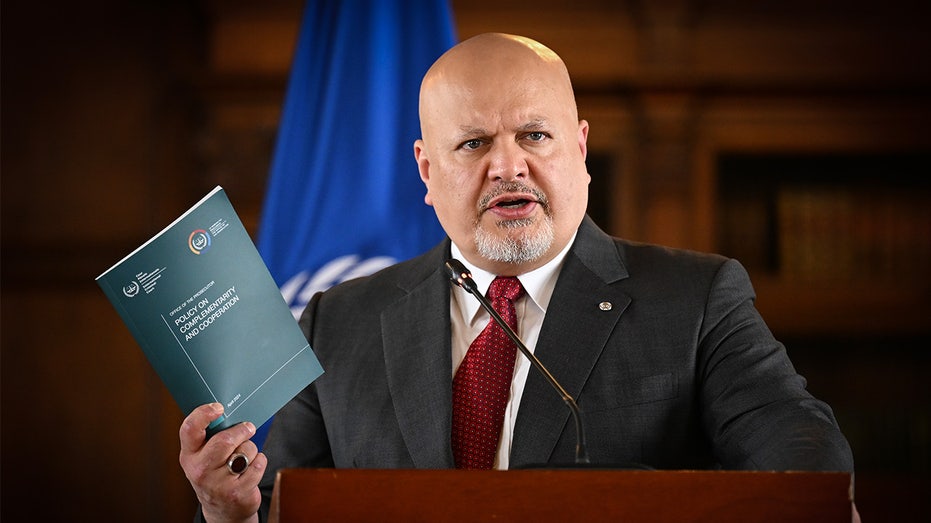
The International Criminal Court’s chief prosecutor has been suspended with immediate effect after the court’s governing body referred disciplinary proceedings against him to member states following a sexual misconduct investigation.
The ICC, based in The Hague, is a permanent international court created under the Rome Statute to prosecute individuals accused of genocide, war crimes, crimes against humanity and the crime of aggression when national courts are unable or unwilling to act.
Khan became one of the world’s most controversial prosecutors after seeking arrest warrants for Israeli Prime Minister Benjamin Netanyahu and former Israeli Defense Minister Yoav Gallant, making his suspension a major development well beyond the court itself. Israel and the United States have rejected the International Criminal Court’s jurisdiction, and neither country is a member of the court.
The Bureau of the Assembly of States Parties to the Rome Statute had decided to refer the disciplinary proceedings against Prosecutor Karim Khan to the full Assembly of States Parties, suspend him from duty pending a final decision and convene a special session to consider the matter, the International Criminal Court’s Presidency said in a Tuesday statement.
ICC PROSECUTOR BEHIND NETANYAHU ARREST WARRANTS STEPS ASIDE AMID SEXUAL MISCONDUCT PROBE
"The Court respectfully invites the Assembly of the State Parties to conclude the process with the highest priority," the court's presidency said.
Khan, who has denied wrongdoing, led the court’s controversial push for arrest warrants against Israeli Prime Minister Benjamin Netanyahu and former Israeli Defense Minister Yoav Gallant for Israel’s war against Hamas in Gaza.
Khan’s suspension followed an 18-month investigation into allegations of sexual misconduct involving a lawyer in his office.
Khan’s lawyers have denied the allegations and called the decision "unlawful, procedurally unfair and unsupported by evidence."
The findings have moved through several layers of review.
A U.N. Office of Internal Oversight Services investigation found evidence supporting the allegations, while a separate judicial review found the evidence was not enough to prove misconduct beyond a reasonable doubt, Reuters reported. The Assembly of States Parties Bureau, which oversees the court on behalf of member states, nevertheless found that Khan had committed serious misconduct involving nonconsensual sexual activity and recommended his removal, Reuters reported.
The disciplinary probe found Khan had engaged in "serious misconduct" and a "serious breach of duty," The Associated Press reported.
The case now goes to a special session of the Assembly of States Parties, the International Criminal Court’s 125 member governing body. The final decision lies with the assembly and a date for the special session has not yet been set.
Liz Evenson, international justice director at Human Rights Watch, told Fox News Digital that, "The fact that states parties appear to be taking this seriously is important but the decision is confidential so we can’t comment on it. We will be monitoring next steps closely. Meanwhile, state parties should continue to support the court in its important work across its docket."
The International Criminal Court issued arrest warrants for Netanyahu and Gallant in November 2024 after Khan requested them months earlier. Israel and the United States condemned the move, accusing the court of equating Israeli leaders with Hamas terrorists.
The Trump administration sanctioned Khan in February 2025 over the court's actions targeting Israeli officials, under an executive order targeting ICC officials involved in actions against the U.S. or its allies. The order authorized asset freezes and U.S. entry restrictions, and Treasury later added Khan to its sanctions list.
U.S. Ambassador to the United Nations Mike Waltz told Fox News Digital that the U.S. position on the International Criminal Court "has never wavered."
"We oppose any overreach by the ICC against the United States or our allies. Period," Waltz said. "And we expect our partners to stand shoulder-to-shoulder with us against these outrageous actions."
Waltz said the U.S. is watching the disciplinary proceedings against Khan, while declining to comment on the specifics of the case.
"As for the situation with Prosecutor Karim Khan, this is a bit rich that this prosecutor sought to jail a democratically elected prime minister and now we are tracking his immediate suspension and the ongoing disciplinary proceedings," Waltz said. "Of course, we aren't going to comment on the specifics of that case while it plays out."
The suspension drew immediate reaction from Israeli officials, who argued that the decision further undermines the court’s case against Netanyahu and Gallant.
"Want to divert attention from sex crime accusations? Just make up war crime accusations against Israel! Classic," Netanyahu wrote Wednesday on X. "The ICC is corrupt to the core."
TRUMP, CONGRESS LOOKING TO PUT SUFFOCATING SANCTIONS ON 'KANGAROO' ICC OVER NETANYAHU ARREST WARRANT
Israel’s ambassador to the United Nations, Danny Danon, told Fox News Digital that Khan’s suspension proves the International Criminal Court’s problems go beyond one prosecutor.
"The International Criminal Court's decision to immediately suspend the Chief Prosecutor in The Hague, Karim Khan, following the UN investigation, proves that this body is rotten to the core," Danon said. "Now is the time to cancel the absurd indictments against Prime Minister Netanyahu!"
Anne Bayefsky, president of Human Rights Voices and director of the Touro Institute on Human Rights and the Holocaust, told Fox News Digital that the scandal has damaged the credibility of the entire court.
"The astounding story of the world’s International Criminal Court and its lead prosecutor headed by a criminal, an alleged rapist, is not just about one rotten apple," Bayefsky said. "The entire ICC machine let the process to hold Khan to account drag on for two years after his crimes were first reported."
Bayefsky argued that the court’s actions against Israeli officials should now face renewed scrutiny.
US ANNOUNCES MORE SANCTIONS ON ICC OFFICIALS FOR TARGETING AMERICANS, ISRAELIS
"ICC judges decided that Khan’s efforts to criminalize Israel’s Prime Minister and Defense Minister weren’t tainted by the clear evidence that Khan was trying desperately to use his attack on Israelis to save himself," Bayefsky said. "Khan has taken the credibility of the whole shameful ICC apparatus down with him."
The Presidency said the court’s leadership remains committed to "independent and impartial proceedings," recognition and redress for victims of mass atrocities, and the "dignity, rights and aspirations" of court personnel.
The statement also sought to defend the institution itself, calling the ICC "one of the most significant achievements of human civilisation" and saying the court has a duty to protect "the proper functioning of the Court as a whole and its reputation," the integrity of judicial proceedings, the rights of victims and suspects, and the well-being of court staff.
CLICK HERE TO DOWNLOAD THE FOX NEWS APP
The court did not say whether Khan’s suspension would affect the cases involving Netanyahu and Gallant.
Fox News Digital has reached out to the International Criminal Court for comment.
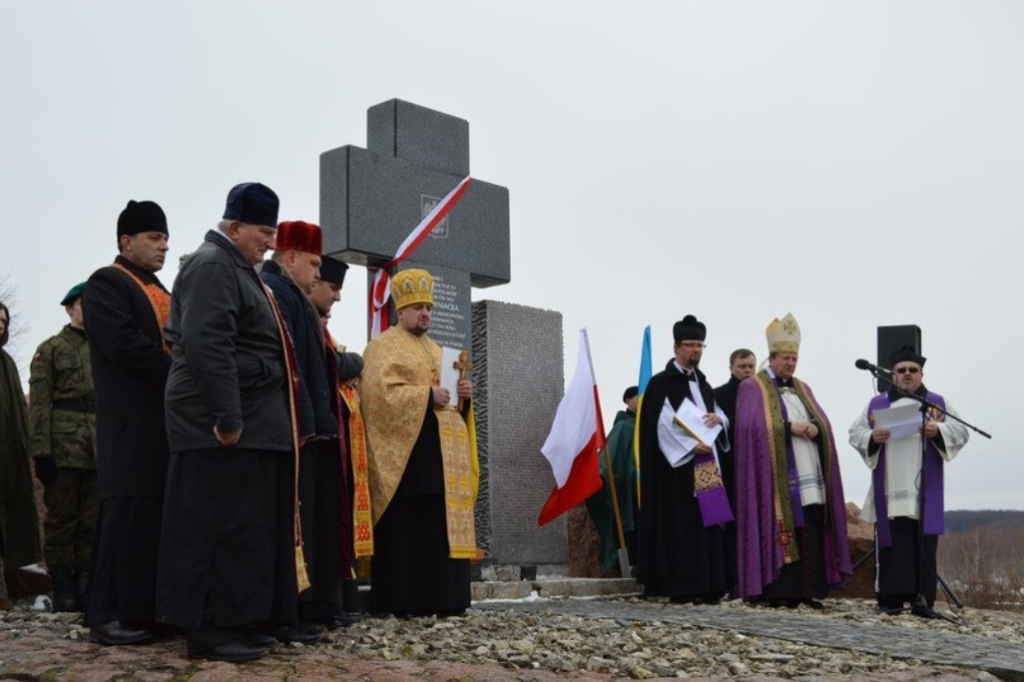
Ukraine remains ready to continue issuing permits for Polish exhumation work despite intensifying historical disputes between Ukraine and Poland, Ukrainian Foreign Ministry spokesperson Heorhii Tykhyi says, per Ukrinform. Exhumation work at the site of the Huta Pieniacka continues.
The current Polish-Ukrainian historical dispute centers on Ukrainian President Volodymyr Zelenskyy's 27 May decision to confer the honorary title "named after UPA Heroes" on the Separate Center of Special Operations "Pivnich" of Ukraine's Special Operations Forces. The Polish Foreign Ministry condemned the decision.
The Ukrainian Insurgent Army (UPA) is a deeply contested figure in Polish-Ukrainian historical memory. Ukrainian historiography presents UPA as anti-Soviet and anti-Nazi independence fighters. Polish historiography emphasizes UPA's association with the 1943-44 Volhynia massacres.
Tykhyi also stated that the honoring of UPA heroes had no anti-Polish subtext. He noted that the history of the Polish and Ukrainian peoples contains both glorious and tragic pages.
The diplomat added that preparations for the Ukraine Recovery Conference (URC 2026), scheduled for June 25–26 in Gdańsk, are proceeding as planned and in a regular working mode.
“We hope that the conference will be held successfully,” Tykhyi emphasized.
The Vinnytsia-Kielce bus dispute earlier this week is the latest concrete example of how historical memory tensions have affected practical Polish-Ukrainian cooperation, Euromaidan Press reported. Polish sister-city Kielce refused to transfer 20-year-old municipal buses to Vinnytsia, a Ukrainian city under regular Russian strikes, over a street named after Bandera.
Stepan Bandera, the Ukrainian nationalist leader, led the Organization of Ukrainian Nationalists (OUN) and the UPA.
Russia actively uses its propaganda, referring to Ukrainians as “Banderites” and portraying Ukrainian statehood as a continuation of Nazism.
© Kenny Holston/The New York Times
Donald Trump’s recent record on U.S. attorneys and other federal prosecutors is a rather embarrassing mess. Some of the Republican lawyers have been purged for political reasons, some have resigned and some were forced out by the courts.
But perhaps most important of all are the president’s prosecutors who have actually tried to do their jobs in line with the White House’s agenda.
In Nevada, Sigal Chattah, a member of the Republican National Committee, has led a U.S. attorney’s office for the last year, and according to a Bloomberg Law report published last week, she’s used her office to “launch investigations at the behest of former clients and friends,” and also “opened a probe targeting her past political foe.”
In Illinois, U.S. Attorney Andrew Boutros’ tenure has become highly controversial, as evidenced by the intensifying mess surrounding his office’s handling of the “Broadview Six” case.
In Wyoming, interim U.S. Attorney for Wyoming Darin Smith botched some criminal cases so badly that federal judges had to intervene. (Senate Republicans soon after rewarded Smith with a lifetime appointment to the federal bench.)
But let’s also not overlook Bill Essayli, the first assistant U.S. attorney who’s leading the office in the Central District of California.
Essayli, a former Republican state lawmaker, has cultivated quite a reputation, reportedly ignoring the recommendations of senior prosecutors and demanding that the office pursue MAGA-aligned cases without regard for insufficient evidence. Last year, he also dropped a fraud case against a fast-food chain owner who just happened to be a major Trump donor.
This week, Essayli apparently thought it’d be a good idea to appear on Glenn Beck’s program, where he vowed to bring criminal charges in “one to two months” related to his party’s conspiracy theories regarding California elections. The Republican prosecutor seemed to suggest that he hasn’t yet collected real evidence, though he apparently plans to address this problem by turning to the public for help. The New Republic reported:
First Assistant U.S. Attorney for the Central District of California Bill Essayli — who oversees 500 attorneys — went on The Glenn Beck Program on Monday to beg listeners to help him find evidence of election fraud.
“I expect people will be charged. … We have set up a tipline. I’ve set up a dedicated email. … We are looking for any sort of widescale conspiracy, if you will. … If anyone knows anything … if you’ve witnessed anything … if you saw someone collecting ballots in a suspicious way, or doing something odd with ballots, we wanna know about that.”
The circumstances were, among other things, bizarre. Federal prosecutors rarely appear on programs such as Beck’s; they almost never predict future prosecutions against alleged criminals who haven’t yet been identified; and it’s even more unusual for them to effectively try to crowdsource evidence collection.
What’s more, this is not a comprehensive list. Other Trump-appointed prosecutors in other jurisdictions have failed in other embarrassing ways.
The longer the list becomes, the worse it is for the rule of law and law enforcement. If you voted for the Republican ticket because you expected Trump and his team to be “tough on crime,” I have some bad news for you.
The post Trump-appointed federal prosecutor seeks public help on election conspiracy theories appeared first on MS NOW.
On Tuesday, engineers working inside a Himalayan mountain completed the final blast of a critical tunnel that links India’s Kashmir Valley to its Ladakh frontier with China, marking a key step in the country’s push to secure year-round access to one of its most sensitive border areas.
The Zojila Tunnel, stretching 13.14 kilometers (8.2 miles) beneath the mountains, will become India’s longest road tunnel once finishing work is done, with full operation expected by 2028.
Road Minister Nitin Gadkari remotely triggered the last detonation at the eastern portal near Minimarg in Ladakh, joining excavations driven from both ends of the mountain over more than five years.
Gadkari described the project as far more than a transport link, saying it serves as a vital lifeline for communities cut off by winter weather.
Project engineer Manmohan Singh said the team completed the job without a single accident despite working through extreme cold and difficult conditions around the clock.
The Zojila Pass, which the tunnel cuts beneath at an elevation of 11,578 feet, currently shuts down every winter under heavy snowfall that can pile well above the roof of a large truck, blocking road travel between Srinagar and Leh for months. More than 3,000 workers have been involved in excavation since October 2020.
In Photos | Zojila Tunnel Poised for Historic Breakthrough
Security personnel stand guard outside the Zojila Tunnel in Minamarg ahead of the landmark breakthrough ceremony of the ₹6,500-crore project. Set to provide all-weather connectivity between Kashmir and Ladakh, the… pic.twitter.com/PkM4tqDIC3
— Kashmir Observer® (@kashmirobserver) June 9, 2026
This tunnel is one of four major passages in a $712 million road corridor that also includes the 6.5-kilometer (4 miles) Sonamarg tunnel, with all components targeted for full operation by 2028.
Beyond road access, India launched a $3.9 billion railway from its lowland plains to Kashmir in June 2025, as reported by Al Jazeera, featuring the Chenab Rail Bridge, currently the world’s tallest railway bridge.
The 272-kilometer (169 miles) line starts at Udhampur, the base of the Indian Army’s northern command.
The push behind all these projects traces to a deadly confrontation in Galwan Valley in June 2020, when Indian and Chinese soldiers fought hand-to-hand at high altitude, killing 20 Indian troops.
The clash set off an accelerated construction race on both sides of the 3,500-kilometer (2,175 miles) shared border.
The Himalayan tunnel is central to India’s effort to close the infrastructure gap with China, where both countries completed troop disengagement at contested frontier points in October 2024, as reported by The Diplomat.
Kashmir has been split between India and Pakistan since the end of British rule in August 1947, with both countries claiming it in full.
© Haiyun Jiang/The New York Times
© Aleksey Kondratyev for The New York Times
© James Estrin/The New York Times
Après le coup d'Etat au Mali, le directeur de Microsoft pour l'Afrique, M. Cheick Modibo Diarra, a été nommé premier ministre. Google, dont certains employés se sont illustrés dans le « printemps arabe », recrute des militants des droits humains, et la secrétaire d'Etat américaine Hillary Clinton soutient des projets humanitaires mêlant affaires et technologie : voici venue l'ère de la diplomatie numérique.
Dans les heures qui suivent le tremblement de terre du 12 janvier 2010 en Haïti, plusieurs initiatives permettent de cartographier les besoins, les demandes d'aide, les appels de familles de disparus… Enseignant-chercheur spécialisé dans la cartographie de crise, Patrick Meier s'associe au programmeur kényan David Kobia, qui, en 2007, avait fondé le système Ushahidi, destiné à permettre à des citoyens de signaler les affrontements postélectoraux. De façon inattendue, cet outil va offrir une plate-forme à l'information d'urgence en Haïti : Meier et Kobia mettent en effet sur pied un système d'alertes géolocalisées transmises par téléphone mobile. L'opérateur Digicel leur emboîte le pas et fournit aux Haïtiens un numéro d'urgence unique, le 4636. Des centaines de vies seront sauvées.
A l'aide du service de messagerie (SMS) des téléphones portables et d'instruments de géolocalisation, Ushahidi permet d'organiser la réponse avec très peu de moyens. De tout le pays affluent des signalements : disparitions, manque de nourriture ou d'eau dans les orphelinats, personnes rescapées, etc. Traduits en français, anglais et créole par deux organisations non gouvernementales (ONG) — Samasource et Crowdflower —, les textos sont localisés, vérifiés et catégorisés avant d'être publiés sur une carte par une équipe de volontaires rassemblés à la Fletcher School of Law and Diplomacy, basée dans le Massachusetts, où enseigne Meier.
Grâce à une passerelle SMS mise en place par Instedd, une start-up américaine spécialisée dans la gestion informatisée des situations de crise, la Croix-Rouge — mais également les marines américains — est en mesure de recevoir les alertes signalant une situation dangereuse et sa localisation.
Cette rencontre inédite entre informaticiens kényans et armée américaine a joué un rôle déterminant dans la redéfinition, sous l'impulsion de Mme Hillary Clinton, des méthodes du département d'Etat. Les Etats-Unis ont certes une longue tradition d'usage des technologies de communication, liée à la transmission de la Voix de l'Amérique — nom de la radio de diffusion internationale lancée durant la seconde guerre mondiale et destinée à promouvoir les intérêts américains. Mais, ces dernières années, le smart power est devenu un axe stratégique de cette politique. Variante du soft power (« pouvoir doux ») de Joseph Nye — terme désignant le déploiement de moyens d'influence non coercitifs, structurels, culturels ou idéologiques —, ce « pouvoir de l'intelligence » théorisé en 2004 par Mme Suzanne Nossel, présidente de l'organisation Human Rights Watch, propose un catalogue d'outils — diplomatiques, économiques, militaires, politiques, légaux ou culturels — adaptés à chaque situation. Il s'agit aussi de favoriser les sociétés américaines de haute technologie dans le cadre d'une coopération renouvelée entre l'Etat, le marché et les ONG ou les fondations d'intérêt public. Avec cette doctrine, la diplomatie américaine favorise donc un modèle économique nouveau, hybridant les secteurs marchand et non lucratif.
Les réseaux de télécommunication numériques et mobiles en sont les instruments privilégiés. « La communauté technique a mis en place la technologie des cartes interactives pour nous aider à identifier les besoins et à cibler les ressources, indique ainsi Mme Clinton dans son discours fondateur du 15 février 2011. Ce lundi [en Haïti], une fillette de 7 ans et deux femmes ont été retirées des décombres d'un supermarché qui s'était effondré par une équipe américaine de recherche et de sauvetage, après avoir envoyé un texto appelant à l'aide. » La secrétaire d'Etat insiste sur la nécessité de faire en sorte que le peuple s'approprie les technologies numériques afin de faire avancer la démocratie et les droits humains. Elle en appelle à un « partenariat entre l'industrie, le monde universitaire et les ONG afin d'organiser un effort permanent qui permettra d'exploiter la puissance des technologies de connexion et de les mettre au service de nos objectifs diplomatiques (1) ».
Financé à hauteur de 2 millions de dollars, Commotion est un projet typique de cette approche. Il s'agit d'un réseau cellulaire autonome qui fonctionne selon les mêmes principes qu'Internet et tient dans une valise. Il doit permettre aux militants de contourner la censure du réseau — on se souvient qu'en Egypte, en janvier 2011, juste avant la chute de M. Hosni Moubarak, Internet avait été coupé. A l'origine de ce projet, un militant du logiciel libre et des libertés numériques, M. Sascha Meinrath, qui envisage de relier par Wi-Fi des ordinateurs portables et des téléphones mobiles afin de constituer une infrastructure sans fil à haut débit (2), où des outils de sécurisation permettraient d'assurer l'anonymat des utilisateurs. Ainsi, paradoxalement, au moment même où WikiLeaks piratait le département d'Etat, la smart diplomacy rejoignait les problématiques « hacktivistes » (3).
L'Afghanistan fut l'un des premiers terrains d'expérimentation de cette techno-diplomatie. En 2009 déjà, le pays comptait plus de quinze millions d'abonnés mobiles, sur une population de trente millions de personnes. 65 % d'entre eux envoient des textos, et plus de la moitié utilisent leur téléphone pour écouter la radio. Mais l'armée américaine a aussi remarqué que les talibans étaient plus actifs dans les zones peu couvertes par le réseau mobile. Y voyant un lien de cause à effet, elle a investi 113 millions de dollars pour développer les communications civiles, dans une véritable stratégie associant propagande et développement économique. En outre, dans le cadre de la lutte contre la corruption, la police afghane paye désormais ses employés par l'intermédiaire du système mobile M-Paisa (lire « Une carte SIM en guise de porte-monnaie »), et non plus en argent liquide (4).
Des acteurs très divers multiplient ainsi les initiatives technopolitiques. On peut mentionner le programme des « Routes de la soie numériques » lancé par l'Internet Bar Organization. 85 % des Afghans vivent de leur terre ; après des années de guerre, il existe d'importants conflits de propriété foncière. Le programme utilise les fonctionnalités du GPS, les photographies et les textos pour envoyer des informations sécurisées dans une base de données. Un cadastre virtuel a ainsi été constitué, et une assistance juridique est proposée pour régler les conflits, en lien avec le droit coutumier.
Il arrive également que le smart power se concrétise dans la surveillance d'élections. C'est le cas en Afrique subsaharienne. L'ambassade des Etats-Unis en Guinée a appuyé la commission électorale du pays pour la mise en place, lors du scrutin du 27 juin 2010, le premier depuis 1958, d'un programme baptisé « I vote, I see, I send » (« je vote, j'observe, j'envoie »). Ce programme permettait de relayer des textos sur un site Web où ils pouvaient être analysés par les observateurs et les électeurs (5). L'ambassade de France a été associée à ce programme à travers la mise en place d'un centre de presse. Surveillance officielle et « sous-veillance » citoyenne (comme celle d'Ushahidi au Kenya) se complètent, utilisant parfois les mêmes plates-formes.
En 2010 et 2011, au Soudan, le contrôle citoyen des élections a également reçu l'appui des membres du département d'Etat, tandis qu'en Ethiopie, en Egypte, en Tanzanie, en Côte d'Ivoire et au Liberia des systèmes inspirés par Ushahidi ont été déployés (6). Les rapports envoyés pointent les fraudes (impossibilité de voter, bulletins manquants pour certains candidats…), mais aussi des irrégularités durant la campagne (harcèlements, illégalité de certaines actions, provocations racistes…) et permettent de signaler les violences postélectorales.
Signalés à la vitesse d'un texto — dans des situations d'observation sur le terrain, on a plus facilement sous la main un téléphone portable qu'un ordinateur —, les actes délictueux sont épinglés sur une carte. Cette approche relève du principe, difficile à traduire en français, d'accountability. Si le sens politique du terme évoque la responsabilisation des gouvernements, dans le vocabulaire de la sociologie l'accountability renvoie à un réseau conceptuel associant factualité, visibilité et responsabilité (7). Dans ce cadre, la transparence ressort d'une philosophie politique qui autorise à rendre visibles des éléments pour étayer un pacte de factualité — au sens où il est indéniable qu'« il s'est passé là quelque chose pour quelqu'un » — engageant la responsabilité de chacun.
Depuis la Silicon Valley, Mme Clinton a lancé un appel aux entrepreneurs ès technologies dans le monde : « Il faut soutenir les personnes qui sont derrière ces outils, les innovateurs et les entrepreneurs eux-mêmes. Nous savons que les chefs d'entreprise sont nombreux à vouloir consacrer une partie de l'expertise de leurs salariés à résoudre les problèmes dans le monde entier ; mais, souvent, ils ne savent pas comment faire. Quel est le point d'entrée ? Quelle idée va avoir le plus d'impact (8) ? » Discours assorti d'un appel à la coopération entre diplomates, entrepreneurs et organisations sans but lucratif pour soutenir l'espace d'innovation mobile que représente l'Afrique.
Un appel aux bonnes volontés ? Pas seulement. Deuxième marché régional après l'Asie, celle-ci connaît la plus forte croissance du monde, avec 649 millions de connexions à la fin de 2011 et 735 millions d'abonnés prévus à la fin de 2012, selon le rapport de l'Association mondiale des opérateurs mobiles (GSMA). Google, implanté en Afrique du Sud et au Kenya, a mis en place, en lien avec la Fondation Grameen (9) et l'opérateur MTN, une structure de développement d'applications — un « AppLab » — où ont été réalisés différents services mobiles : SMS Tips, qui répond aux questions sur la santé ou l'agriculture envoyées par texto, ou encore Google Trader, qui met en relation petites entreprises et acheteurs en temps réel.
Par le biais de concours comme Apps4Democracy, basé sur les données publiques ouvertes et librement utilisables que diffuse le gouvernement sur le site Data.gov, les acteurs du smart power recrutent de nouveaux partenaires. C'est sur ce modèle qu'une compétition baptisée Apps4Africa a été lancée, en juillet 2010 à Nairobi, par Mme Judith McHale, sous-secrétaire à la diplomatie et aux affaires publiques. Elle a suscité une vingtaine de propositions venues du Kenya, du Rwanda, de l'Ouganda et de la Tanzanie. L'application gagnante, Mamabika, est un dispositif qui propose aux femmes enceintes des bidonvilles de Nairobi d'épargner neuf mois durant sur un compte lié à leur téléphone, pour pouvoir accoucher dans une clinique (10). Autres concours et programmes soutenus par le smart power « féministe » et technologique de Mme Clinton : le mWomen BOP App Challenge (ou TechWomen), dont le but est de créer des applications spécifiques pour les femmes des pays pauvres. Son modèle : HarassMap, un système de cartographie qui rapporte des cas de harcèlement sexuel et de violence conjugale en Egypte.
Bon nombre de fondations américaines sont engagées dans cette voie. On peut s'interroger sur leur rôle, quand certains acteurs locaux clament, à l'instar du chanteur militant afro-américain Gil Scott Heron : « The revolution will be not funded (11) » (« La révolution ne sera pas financée »). Créée par le fondateur d'eBay, M. Pierre Omidyar — qui théorise son approche dans la Harvard Business Review (12) —, la Fondation Omidyar Network a ainsi ouvert un fonds doté de 2 millions d'euros pour favoriser, en Afrique subsaharienne, les initiatives axées sur « les technologies qui donnent aux citoyens des outils » contraignant les gouvernements à les prendre en compte. Une ONG néerlandaise, Hivos, administre le fonds basé à Nairobi. En septembre 2010, au sommet de la Clinton Global Initiative (fondée en 2005 par l'ancien président William Clinton), la Fondation Omidyar avait annoncé un versement de 55 millions de dollars au réseau Tech for Transparency, dont près de la moitié pour l'innovation dans le domaine mobile. La fondation soutient aussi FrontlineSMS, une passerelle consacrée à la communication des ONG et souvent associée à la plate-forme Ushahidi.
Pour M. Bill Gates, fondateur de Microsoft et acteur le plus en vue dans le monde de la technophilanthropie, il est peu efficace de vendre des ordinateurs dans les pays pauvres, mais il faut absolument utiliser les téléphones portables, qui permettent de sauver des vies (13). Il intervient donc dans le domaine du m-health (usage du mobile en santé), en organisant des concours pour des logiciels de lutte contre le virus de l'immunodéficience humaine (VIH/sida), le paludisme, la tuberculose, etc. En favorisant, naturellement, Windows Mobile, le système d'exploitation de Microsoft.
Créée en 1994, la Fondation Bill et Melinda Gates (BMGF) dispose d'un capital de 66 milliards de dollars. Pour bénéficier du régime d'exonération fiscale des fondations, au moins 5 % de ses avoirs doivent être consacrés à des donations. Restent 95 %, qui sont investis dans des activités lucratives et parfois bien peu philanthropiques (14). En 2009, la BMGF a fourni plus de 3 milliards de dollars de subventions et dépensé 409 millions de dollars en frais d'exploitation, principalement pour des projets visant à améliorer la vie des pauvres dans les pays en développement. Dans le domaine de la santé publique, à part le gouvernement des Etats-Unis, aucun bailleur de fonds n'est aussi influent (15). Grâce au don de 30 milliards de dollars de M. Warren Buffett, la fondation a plus que doublé son fonds initial, devenant ainsi l'institution caritative la plus importante.
Cette rencontre entre MM. Gates et Buffett a permis à M. Matthew Bishop, chef du bureau du journal The Economist à New York, de forger la notion de « philanthrocapitalisme (16) » pour désigner la convergence entre grandes causes et bonnes affaires. MM. Buffett et Gates imposent en effet un nouveau type de partenariat avec les organisations caritatives et les gouvernements. Il s'agit de montrer que l'entreprise peut être « la plus grande force du bien dans le monde », au moment où les Etats réduisent leurs budgets sociaux et prennent souvent moins de risques que ne peuvent le supporter ces nouvelles organisations philanthropiques.
Selon MM. Gates et Buffett, « donner » pourrait ainsi devenir le plus grand levier du changement dans le monde. Mais « donner » de façon stratégique — et selon les modèles du monde des affaires. Ces nouveaux philanthropes doivent être compris comme des investisseurs sociaux au sens propre du terme. Ils se distinguent de l'action de charité qui animait les premiers industriels créateurs des fondations américaines, comme Andrew Carnegie ou John D. Rockefeller.
Dans la culture de ces acteurs, les technologies permettent aussi de scruter les retours sur investissement. Ainsi, le téléphone portable est au philanthrocapitalisme ce que le chronomètre est au taylorisme. Grâce à ses diverses fonctionnalités — textos, caméra vidéo et appareil photo, répondeur téléphonique, GPS… —, le portable est un bon outil de reporting, et donc de transparence. Les actions soutenues financièrement par ces fondations peuvent être présentées en détail aux donateurs. Chacun peut voir comment le projet est utilisé, et combien il est utile. L'action humanitaire technicise, la philanthropie se rationalise, le don charitable devient investissement.
Les nouveaux riches de la Silicon Valley, milliardaires de l'informatique qui ont parfois pris leur retraite des affaires, semblent bien décidés à conquérir les économies des pays émergents. Le téléphone portable, ce petit objet si efficace et rendant de réels services aux populations, constitue pour cela leur outil de prédilection.
(1) « Remarks on Internet freedom », 21 janvier 2010.
(2) Yves Eudes, « Commotion, le projet d'un Internet hors de tout contrôle », Le Monde, 30 août 2011.
(3) Mot-valise associant hack — bricolage informatique — et « activiste ». Lire Jean-Marc Manach, « Les “bidouilleurs” de la société de l'information », Le Monde diplomatique, septembre 2008.
(4) Monty Munford, « M-Paisa : Ending Afghan corruption, one text at a time », Techcrunch, 17 octobre 2010.
(5) Charles W. Corey, « SMS texting program allows Guinean voters to protect their votes », www.america. gov (archive), 21 juin 2010.
(6) Pour toutes les actions citées, cf. http://blog.ushahidi.com/index.php/...
(7) Cf. Harold Garkinkel, Recherches en ethno-méthodologie, Presses universitaires de France, Paris, 1967 (rééd. 2007), qui fait de l'accountability le ressort même de l'ordre social.
(8) « Clinton to tech innovators and entrepreneurs : “We want you” », 15 octobre 2010, Fastcompany.com
(9) Cette fondation spécialisée dans la microfinance a dès 1997 aidé des femmes ougandaises à développer de petits commerces de téléphonie mobile.
(10) Cf. « Monnaie mobile : des services innovants portés par les usagers », 24 novembre 2010, www.mobactu.fr
(11) Hakima Abbas, « The role of donors in the movement for social justice in Africa », Pambazuka News, Nairobi, 17 novembre 2010.
(12) Pierre Omidyar, « How I did it : eBay's founder on innovating the business model of social change », Harvard Business Review, Boston, septembre 2011.
(13) Brian Dolan, « Bill Gates : Mobiles not PCs for global health », 27 avril 2010, Mobihealthnews.com
(14) Cf. Charles Piller, Edmund Sanders et Robin Dixon, « Les investissements bien peu philanthropiques de la Fondation Gates », Problèmes économiques, Paris, octobre 2008.
(15) Source : http://keionline.org/microsoft-timeline.
(16) Matthew Bishop et Michael Green, Philanthrocapitalism : How the Rich Can Save the World, Bloomsbury Press, New York, 2008. www.philanthro-capitalism.net.
Voir aussi le courrier des lecteurs dans notre édition de juin 2012.
© Angela Weiss/Agence France-Presse — Getty Images