Normal view

Is the far right exploiting the 'sickening' attack by a refugee in Belfast?

10 June 2026 at 10:42
PRESS REVIEW – Wednesday, June 10: British papers talk about the unrest in Belfast in the aftermath of a knife stabbing. Next: what does it mean to be a trillionaire? Elon Musk might soon find out. Also: Pope Leo met with Bad Bunny, but the Vatican says it won't be releasing the photos. Finally, donkeys enjoy new socks from Arsenal Football Club.

Russo-Ukrainian war, day 1567: May was the deadliest month for Ukrainian civilians since 2022

9 June 2026 at 22:14

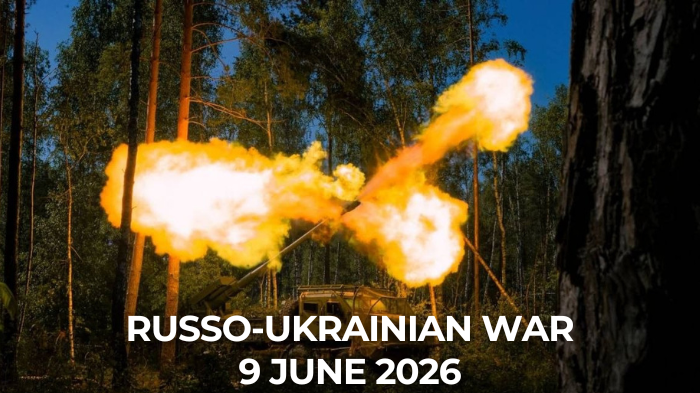
Russo-Ukrainian War 9 June 2026

Exclusives

Ukraine is droning Russian ships. The goal: to create supply bottlenecks on land.. Ukraine's drones aren't just attacking Russia's supply trucks. They're now hitting Russia's supply ships, too.
Newly-announced Litavr interceptor is a model microcosm of Ukraine’s drone innovation programs. Each feature is an example of where Ukraine's interceptor industry is headed.
Russia tells its regions to raise taxes on residents and businesses to plug a record budget hole. The combined regional gap grew fivefold from 2024 and almost eightfold from 2023, with the tax service now pressing governors to find more revenue.
Russians pulled 30-year record of cash from banks in May. Central Bank now tracks monthly cash limits, can freeze “suspicious” withdrawals. Analyst cites geopolitical and macroeconomic uncertainty, internet outages disrupting online banking, and central bank rate cuts as driving the cash flight.

Military

Ukraine sets 2030 roadmap to expand rocket and artillery forces – a constant despite evolving warfare. The plan outlines modernization through 2030, including expanded missile capability, improved reconnaissance systems, and a gradual shift toward domestic production while phasing out outdated Soviet-era systems.

"We have guidance at home"—Kalibrs back to foreign parts after import substitution failed, MOD says. Kalibrs also started carrying cluster munitions.

Russia plans to double Mi-8 helicopter production to offset war losses in 2 years. Mi-8s are versatile workhorses, able to transport troops and cargo, conduct reconnaissance, electronic warfare, and attack missions.

Russia starts hauling gasoline to the front in the trunks of civilian cars. A convoy of sedans packed with jerrycans set out from Kizilyurt in Dagestan to supply Russian troops in occupied Tokmak, shows a video the soldiers filmed themselves.

Chonhar bridge linking occupied Kherson Oblast to Crimea is closed again after the second attack in two days. It is one of only two land routes between Crimea and mainland Ukraine and carries the highway Russia uses to supply its forces on the peninsula.

Ukraine recaptured 100 square kilometers in May. Its deep strikes cost Russia $1 billion. Ukraine hit 111 Russian sites, said Commander Syrskyi.

Intelligence and technology

Russia's closest ally says its new AI military system can detect drones, jam signals, and adapt in real time. Belarus claims AI-driven 'Ross' counter-drone EW system nearing completion.

Ukraine codifies armored vehicle with dome of 10 electronic-warfare modules designed to kill FPV drones before they hit. Ukraine develops armored vehicle to protect against two major Russian battlefield threats.

Ukraine approves 80 km/h electric motorcycle that defeats thermal imaging and acoustic detection. It carries two soldiers in full gear. The 105-kg, 8 kW vehicle reaches 80 km/h and operates with near-silent movement.

One click from operator: Ukraine just shot down Russian Shahed with AI drone that automated 95% of kill. The Brave1 cluster participant manufacturer went from prototype to successful combat use in less than a year.

International

New "Drone Deal" signed – Latvia and Ukraine to expand joint production and defense cooperation. Kyiv said the agreement is aimed at turning Ukraine's battlefield drone experience into structured cooperation with international partners.

EU's 21st sanctions package would ban Russia's soldiers from European soil. Latest package targets banks, oil traders, shadow fleet, third-country evaders.

Bulgaria's new government plans to halt weapons supplies to Ukraine. A Bulgarian minister claimed that Kyiv "needs more people, not more armament," signaling a break with EU policy.

"The enemy counts on our disunity"—Ukrainian diaspora answers with Bern Declaration. More than 350 leaders from 50 countries adopted a seven-point wartime action plan at the first Global Ukrainian Summit held in Switzerland.

NATO shot down drone over Latvia. Russia's electronic warfare sent it there. NATO fighters from the Baltic Air Policing mission shot down a foreign unmanned aerial vehicle over Latvia's eastern Latgale region this morning.

Humanitarian and social impact

"Russia spits in our faces" and the UN pretends it's "just rain" – UN envoy reports May deadliest month for Ukrainian civilians since 2022. UN data presented to the Security Council shows May was the deadliest month for Ukrainian civilians in over two years, as Ukraine accused Russia of denying responsibility and the UN of failing to respond adequately.

Russian missiles kill three and wound six in Chuhuiv as drones injure 15 in Kharkiv, including a one-year-old. Beyond Kharkiv Oblast, Russian attacks killed civilians in Kherson, Sumy, and Donetsk oblasts and wounded dozens more over 8–9 June. Local authorities report at least 8 civilian deaths and 61 injuries.

Food shortage in occupied Rubizhne: Russia blocks civilian deliveries, blames drones. Officials say Moscow engineered the shortage to film propaganda—the same tactic that left 2,000 starving in Oleshky.

Political and legal developments

SBU names 10 Russians tied to "human safari" drone hunt on civilians in Kherson. Counterintelligence built a case against Russian military drone pilots from a single regiment and charged each in absentia with war crimes.

Lithuanian court: the roadside attack on a Ukraine-shirt cyclist was hate, not chance. Judges treated the motive, hostility toward people who support Ukraine, as an aggravating circumstance in sentencing the 1987-born man.

61% of Ukrainians reject ceasefire without security guarantees. Same 61% would accept one with European troops on frontline. The real question isn't whether Ukraine wants a ceasefire, but what guarantees would come with it.

Ukrainian defense official sent 300,000 pairs of useless gloves to front line. He's now going to trial. The manufacturer used ordinary rubber instead of the thermoplastic rubber required by technical specs.

Medic stole 16 FPV from firm that entered $1.1 billion Pentagon competition and hid them for four months. Ukraine arrested him when he tried to sell them for 19% of their value. Ukrainian sergeant arrested for selling 16 General Cherry FPV drones worth $12,600 for $2,370.

Freezing the war along today's lines is "the quickest way" to peace, Ukraine's leader told Sky News. Zelenskyy insisted it is no concession, but a way to save children and bring soldiers home, paired with monitoring missions and allied guarantees.

Read our previous daily review here.

West Ham owner David Sullivan accused of preying on women for sex

9 June 2026 at 11:53
PRESS REVIEW – Tuesday, June 9: We look at how the Chinese papers are covering Xi Jinping's two-day visit to North Korea. The New York Times examines how Pyongyang has transformed its economy through repression and fortuity. In the UK, West Ham's billionaire former co-owner David Sullivan is accused of sexual coercion by several women, with his past as a porn baron also under scrutiny. Plus: actor Idris Elba explains why fans are not ready for a Black James Bond.

Russo-Ukrainian war, day 1566: NATO jets shoot down Russian-spoofed drone over Latvia

8 June 2026 at 21:14

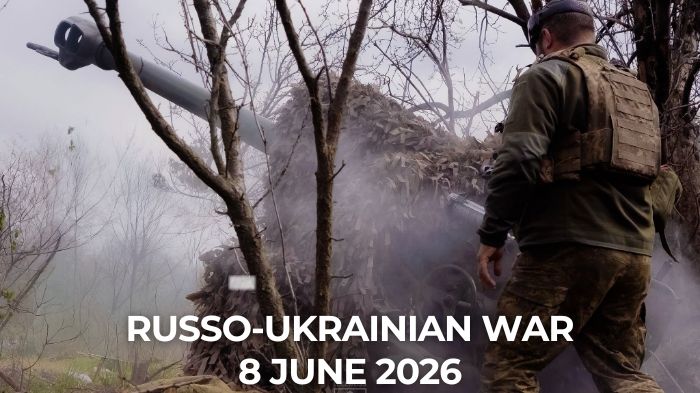
Russo-Ukrainian war (daily review)

Military

NATO shot down drone over Latvia. Russia's electronic warfare sent it there. NATO fighters from the Baltic Air Policing mission shot down a foreign unmanned aerial vehicle over Latvia's eastern Latgale region this morning.

French NATO jets shoot down drone over Latvia in country's first intercept. Second Baltic intercept in three weeks as spillover from Russia's war on Ukraine accelerates.

Ukraine recaptured 100 square kilometers in May. Its deep strikes cost Russia $1 billion. Ukraine hit 111 Russian sites, said Commander Syrskyi.

Russian crude reaches the sea through tunnels under a mountain ridge—and Ukraine hit the storage end near Novorossiysk. Pipelines link the Grushovaya depot to Novorossiysk's loading berths about 12 km away. Locals counted about 50 blasts before a huge fire lit the mountains above Russia's main Black Sea oil port.

ISW: The strikes will likely cascade into deeper disruption across Russia's rear supply network. Russia leans on two key highways to feed its war. Cut them, and fuel, shells, and troops stop reaching occupied Crimea, Luhansk, and Donetsk—and Ukraine's drones are working on cutting it.

Intelligence and technology

Russia's closest ally says its new AI military system can detect drones, jam signals, and adapt in real time. Belarus claims AI-driven 'Ross' counter-drone EW system nearing completion.

Ukraine codifies armored vehicle with dome of 10 electronic-warfare modules designed to kill FPV drones before they hit. Ukraine develops armored vehicle to protect against two major Russian battlefield threats.

Ukraine approves 80 km/h electric motorcycle that defeats thermal imaging and acoustic detection. It carries two soldiers in full gear. The 105-kg, 8 kW vehicle reaches 80 km/h and operates with near-silent movement.

One click from operator: Ukraine just shot down Russian Shahed with AI drone that automated 95% of kill. The Brave1 cluster participant manufacturer went from prototype to successful combat use in less than a year.

International

"The enemy counts on our disunity"—Ukrainian diaspora answers with Bern Declaration. More than 350 leaders from 50 countries adopted a seven-point wartime action plan at the first Global Ukrainian Summit held in Switzerland.

61% of Ukrainians reject ceasefire without security guarantees. Same 61% would accept one with European troops on frontline. The real question isn't whether Ukraine wants a ceasefire, but what guarantees would come with it.

Freezing the war along today's lines is "the quickest way" to peace, Ukraine's leader told Sky News. Zelenskyy insisted it is no concession, but a way to save children and bring soldiers home, paired with monitoring missions and allied guarantees.

Britain, France, and Germany back Ukraine's peace terms and press Putin for a ceasefire. After meeting Ukraine's president in London, the three leaders set out five conditions for a just and lasting peace and welcomed Kyiv's push for direct talks.

Putin warned former Soviet republic of "Ukrainian scenario" over EU ties. Its pro-EU party wins elections with 49.81% anyway.

Humanitarian and social impact

Premature births are climbing in Ukraine's front-line regions, and doctors blame the ongoing war. Doctors in Zaporizhzhia now deliver babies and treat miscarriages on the same afternoons that glide bombs hit the city, AP reports.

Food shortage in occupied Rubizhne: Russia blocks civilian deliveries, blames drones. Officials say Moscow engineered the shortage to film propaganda—the same tactic that left 2,000 starving in Oleshky.

Political and legal developments

Russians pulled 30-year record of cash from banks in May. Central Bank now tracks monthly cash limits, can freeze "suspicious" withdrawals. Analyst cites geopolitical and macroeconomic uncertainty, internet outages disrupting online banking, and central bank rate cuts as driving the cash flight.

Ukrainian defense official sent 300,000 pairs of useless gloves to front line. He's now going to trial. The manufacturer used ordinary rubber instead of the thermoplastic rubber required by technical specs.

Medic stole 16 FPV from firm that entered $1.1 billion Pentagon competition and hid them for four months. Ukraine arrested him when he tried to sell them for 19% of their value. Ukrainian sergeant arrested for selling 16 General Cherry FPV drones worth $12,600 for $2,370.

Hungary's anti-corruption watchdog says Orbán's former inner circle should be prosecuted over billions in missing EU funds. Péter Magyar is trying to convince Brussels that Hungary can be trusted with more than €10 billion in cash frozen over rule-of-law concerns.

WSJ: Putin's sanctioned inner circle keeps buying Western business jets through a web of middlemen. A WSJ investigation traces Bombardier and Gulfstream business jets from European dealers through Dubai and Bermuda into Kremlin hands.

Ukraine foils Russian plot to assassinate intelligence official with FPV drone. Russian spy recruited to kill GUR spokesman Andrii Yusov with FPV drone for $100,000 bounty.

Read our earlier daily review here.

Russo-Ukrainian war, day 1565: Russia strikes Chornobyl nuclear site — Ukraine hits Crimea fuel supply

7 June 2026 at 22:45

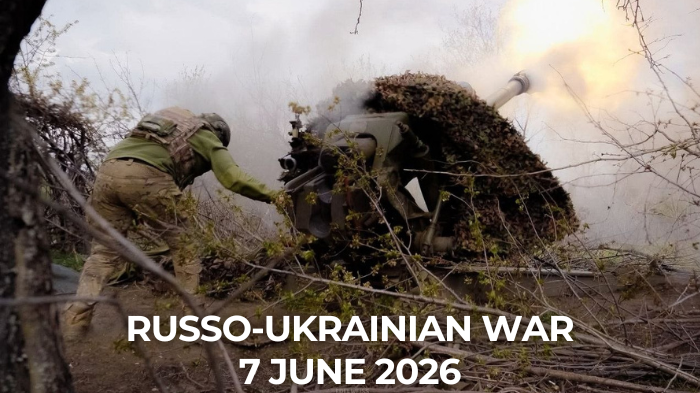
Russo-Ukrainian War 7 June 2026

Exclusives

Ukraine’s drones got bigger warheads. A Russian corvette in the Baltic just found out.. The Fire Point FP-1 that struck Boikiy at Kronstadt on 3 June crossed 1,100 km to get there — and arrived with a heavier warhead than the model that started Ukraine's deep-strike campaign.
“It was never formulated as Ukraine winning”—NATO’s ex-military chief on the missing strategy. It was also not formulated, "We're doing this so that Russia can lose this war." So the formulation became, "We're going to support Ukraine for as long as it takes," Admiral Bauer tells EP
EU urgency to dump Rosatom is growing but Russia will use every lever to prevent it. This is part three of a series of three articles exploring Rosatom, its role in the war in Ukraine, and Moscow’s international influence.
Russia more than doubles production of converted SAMs to make ballistic missile strikes even harder to defend. Missiles add few qualitative improvements but do add mass to Russia's terror attacks

Military

Over 2,000 Russian casualties in first six days of June, Madyar reports amid surge in drone strikes on occupied territories Madyar reported strikes on 26 targets across occupied Ukraine and Russia's Bryansk Oblast, including rail, energy, fuel, and telecom infrastructure.

Ukrainian Special Forces target Crimea fuel system, hitting depot and maritime terminal in "asymmetric" middle-strike operation on occupied territory Ukrainian officials say the operation is part of efforts to disrupt logistics networks supporting Russian forces in occupied territory.

"Extremely rare" 300-ton Russian rail recovery crane destroyed in partisan sabotage operation, ATESH claims ATESH claims the loss will slow down repair capacity at major junctions, where rapid recovery is critical for maintaining rail flow.

Russia reportedly restricts bus and private car movement on main arteries through occupied territories, capping two weeks of land-corridor breakdown The stated reason is protection against Ukrainian "attacks on civilian transport." The actual reason is visible in the two-week sequence of events that produced the closures.

Flat steppe: Ukraine is strangling Crimea's supply lines from air. Melitopol-Chonhar road is latest target The operation extends the squeeze on Russia's land corridor to the occupied Crimean peninsula.

Kronstadt, Russia's major naval base after Black Sea Fleet losses, gets hit by Ukrainian drones (VIDEO) Russia was in the middle of hosting foreign investors.

Ukraine doubles deep strikes beyond 50 km as "Logistics Lockdown" shifts priority deeper into Russia's transport nodes and rear logistics chains Kyiv says the shift is part of a wider effort to disrupt supply chains and degrade Russia's ability to sustain frontline operations.

Ukraine's drones hit 5 vessels in occupied Azov ports overnight — Azerbaijan says 5 of its nationals died as Russia blames Kyiv Unmanned Systems Forces commander Robert "Madyar" Brovdi called the boats smugglers carrying looted grain, fuel, and military supplies with names painted over and radars off.

The Crimean Bridge is heavily guarded. Ukraine struck its maritime security layer in the Kerch Strait. Ukrainian officials say the ship was deployed to patrol and monitor approaches to the Crimean Bridge as part of Russia's layered security network in occupied Crimea.

Intelligence and technology

Ukraine has built 822 kilometers of anti-drone road tunnels. Each kilometer means safer evacuations and faster supply In May alone, the State Special Transport Service rebuilt 115.5 km of conventional road, Defense Minister Mykhailo Fedorov said.

Ukraine's Bullet interceptor gets speed upgrade. It now has chemical accelerator to chase down Russian 500 km/h Geran-4 The accelerator burns chemical fuel rather than using jet propulsion.

Ukraine ranks its drone units on how deep they see. The 413th has been at top for three months The Unmanned Systems Forces unit held first place in March and April 2026, and second in May, in Ukraine's Delta battlefield-awareness system rankings.

International

Russia is already causing harm to UK. Britain may not be prepared for what comes next, says former top general Lord Peach, the former UK Chief of the Defence Staff said the hybrid war is already happening.

US warned Russia it would "be very, very sorry" over 2022 nuclear use, NATO ex-military chief confirms Russian forces in Ukraine would be "taken out conventionally" by the Americans, the Kremlin was warned amid Kherson retreat, Admiral Bauer says.

"Ukraine might have won" if NATO had acted in 2022, ex-top chief says Admiral Rob Bauer says the West armed Ukraine too slowly to win — and never had a strategy for victory at all.

German defense firm has made Ukraine its second-largest international base Germany's Quantum Systems is building drones, ground robots, and software.

Humanitarian and social impact

Russian drone strikes nuclear fuel storage site in Chornobyl zone A drone attack damaged a key building at Ukraine's centralized spent fuel storage facility, triggering a fire that emergency teams later extinguished.

"The worst environmental catastrophe since Chornobyl disaster": Three years after Russia destroyed Kakhovka Dam, real death toll is still unknown On 6 June 2023, Russian forces destroyed the Kakhovka Hydroelectric Power Plant while occupying the dam, flooding 80 settlements, forcing nearly 4,000 people to evacuate, and killing at least 34.

Russian pilot saw man in Ukraine's Kramatorsk and chose to kill him. FPV drones are operated in real time The UN Independent International Commission of Inquiry on Ukraine has formally classified these strikes as crimes against humanity.

"An unwavering priority": 186 Ukrainians return home in major prisoner swap with Russia Several of the freed Ukrainians were detained in 2022, with some taken during the battles for Mariupol and Azovstal.

Political and legal developments

What do Ukrainian drone makers have to accept to win Pentagon contracts? Experts document "draconian conditions" Below 50% foreign ownership triggers a Security Control Agreement under which the company must be led by a US citizen.

A ship linked to stolen grain from occupied Ukraine was seized in Sweden. A court says Kyiv can have it. The vessel was detained in March and is suspected of helping move grain from Russian-occupied Ukrainian territory.

Read our previous daily review here.

Russo-Ukrainian war, day 1564: Ukraine’s long-range drones reach Kronstadt

7 June 2026 at 07:31

Russo-Ukrainian war (daily review)

Exclusives

Ukraine's drones got bigger warheads. A Russian corvette in the Baltic just found out.. The Fire Point FP-1 that struck Boikiy at Kronstadt on 3 June crossed 1,100 km to get there — and arrived with a heavier warhead than the model that started Ukraine's deep-strike campaign.
"It was never formulated as Ukraine winning"—NATO's ex-military chief on the missing strategy. It was also not formulated, "We're doing this so that Russia can lose this war." So the formulation became, "We're going to support Ukraine for as long as it takes," Admiral Bauer tells EP
EU urgency to dump Rosatom is growing but Russia will use every lever to prevent it. This is part three of a series of three articles exploring Rosatom, its role in the war in Ukraine, and Moscow's international influence.
Russia more than doubles production of converted SAMs to make ballistic missile strikes even harder to defend. Missiles add few qualitative improvements but do add mass to Russia's terror attacks

Military

Russia reportedly restricts bus and private car movement on main arteries through occupied territories, capping two weeks of land-corridor breakdown. The stated reason is protection against Ukrainian "attacks on civilian transport." The actual reason is visible in the two-week sequence of events that produced the closures.

Flat steppe: Ukraine is strangling Crimea's supply lines from air. Melitopol-Chonhar road is latest target. The operation extends the squeeze on Russia's land corridor to the occupied Crimean peninsula.

Kronstadt, Russia's major naval base after Black Sea Fleet losses, gets hit by Ukrainian drones (VIDEO). Russia was in the middle of hosting foreign investors.

Intelligence and technology

What do Ukrainian drone makers have to accept to win Pentagon contracts? Experts document "draconian conditions". Below 50% foreign ownership triggers a Security Control Agreement under which the company must be led by a US citizen.

Ukraine has built 822 kilometers of anti-drone road tunnels. Each kilometer means safer evacuations and faster supply. In May alone, the State Special Transport Service rebuilt 115.5 km of conventional road, Defense Minister Mykhailo Fedorov said.

International

Russia is already causing harm to UK. Britain may not be prepared for what comes next, says former top general. Lord Peach, the former UK Chief of the Defence Staff said the hybrid war is already happening.

US warned Russia it would "be very, very sorry" over 2022 nuclear use, NATO ex-military chief confirms. Russian forces in Ukraine would be "taken out conventionally" by the Americans, the Kremlin was warned amid Kherson retreat, Admiral Bauer says

"Ukraine might have won" if NATO had acted in 2022, ex-top chief says. Admiral Rob Bauer says the West armed Ukraine too slowly to win—and never had a strategy for victory at all

Humanitarian and social impact

"The worst environmental catastrophe since Chornobyl disaster": Three years after Russia destroyed Kakhovka Dam, real death toll is still unknown. On 6 June 2023, Russian forces destroyed the Kakhovka Hydroelectric Power Plant while occupying the dam, flooding 80 settlements, forcing nearly 4,000 people to evacuate, and killing at least 34.

Russian pilot saw man in Ukraine's Kramatorsk and chose to kill him. FPV drones are operated in real time. The UN Independent International Commission of Inquiry on Ukraine has formally classified these strikes as crimes against humanity.

Read our earlier daily review here.

Russia is already causing harm to UK. Britain may not be prepared for what comes next, says former top general

6 June 2026 at 16:43

eu's 21st russia sanctions package target shadow fleet banks firms selling stolen ukrainian grain—politico · post altura vessel f5e0350f09933f86b813143d8314ece5e124eab757d855543e066b8431273664152698jpg ukraine news reports

Russia "intends to harm" the UK through economic disruption, sabotage, and "dark arts", and the evidence is clear, former UK Chief of the Defense Staff Stuart Peach told The Independent. His claims came in a joint interview with the chair of the House of Lords Select Committee on National Resilience, Baroness Coussins, who called for greater urgency from government and citizens.

The intervention is one of the most direct public warnings from senior UK figures on Russian hybrid operations against Britain. Peach is now making the case publicly that the threat has shifted from speculative to operational.

Baroness Coussins, whose committee was appointed in January 2026 and is due to report in November, framed it more bluntly: "It is not a question of 'what if?’ It's a question of 'these things are happening now.' We know we’re under cyber attack daily." 

"The evidence is clear"

“The fact that Russia intends us harm – whether it's economic disruption or the ‘dark arts’, as you might call them – I think the evidence is clear," Peach said.

He warned that the UK is not prepared for the scale of scenarios that could result, including widespread power cuts and full-scale war. 

Baroness Coussins added that British intelligence services regularly identify and disrupt potential violent threats inside the country and pointed to the activities of so-called proxy structures linked to Russia and Iran. 

Undersea cables and European pattern

Peach said the threat to the UK posed by undersea cable disruption, which carries internet connectivity, financial transactions, and essential data, was an issue he had raised as Chief of the Defense Staff and one that has only sharpened since.

He pointed to a politically motivated arson attack in Berlin in January 2026 that caused a widespread power cut affecting 45,000 households and 2,200 businesses, including internet and heating.

The recent fire at an electrical substation that forced the closure of London's Heathrow Airport, causing mass flight cancellations and power disruption, was raised as a UK precedent showing how single-point sabotage can cascade across critical systems.

Lord Peach warned that malicious attacks “can have real damage.” 

Education as a Weapon: How Russia Forces Ethnic Displacement in Occupied Territories

By: ak
14 May 2026 at 09:56

Russia’s neocolonial policies in the occupied territories of Ukraine target the education system first: schools and universities have become primary tools for coercion and identity erasure. This is the core finding of a recent study by the Ukrainian outlet Realnaya Gazeta, which details how the Kremlin carries out ethnic displacement across multiple levels. Journalist Ksenia Turkova spoke with Andrey Dikhtarenko, editor-in-chief of Realnaya Gazeta, to discuss the report for T-invariant.

Video version of the interview (in Russian).

Ksenia Turkova: Does your analysis mainly focus on the so-called “old” occupied territories — the DPR and LPR [Donetsk People’s Republic and Luhansk People’s Republic — T-invariant]?

Andrey Dikhtarenko: Yes, but not exclusively. We also looked at areas occupied after the 2022 invasion. Of course, we had far more data on Donetsk and Luhansk, given that twelve years have passed since they were first occupied. Luhansk and Donetsk made it much easier to track which key positions exactly are being taken over by arriving Russians as locals are pushed out.

BACKGROUND

The authors of the study, “Ethnic Replacement as a Tool of Russian Neocolonization,” concluded that the occupation of the Donbas involves processes that go far beyond mere military control. In practice, it amounts to a systematic demographic transformation. Local officials are gradually replaced by Kremlin appointees, while the labor market is deliberately designed to attract a massive influx of Russian specialists, creating deep inequalities and fueling social conflict. This resettlement of Russian citizens is framed by propaganda as a “rescue” mission and a humanitarian effort. In reality, it is a deliberate campaign of demographic engineering. The study is based on open-source intelligence, including data from occupation administrations, press reports, social media, and human rights monitoring. 

KT: When it comes to the territories occupied after 2022, are they seeing the same kind of “creeping” replacement, or is the approach different?

AD: The replacement there is happening much faster. You have to realize these are devastated cities with barely functioning infrastructure, no mobile internet, and strict checkpoint systems. They aren’t particularly popular destinations for Russians, so even this “voluntarily-mandatory” resettlement process is struggling. I’m not talking about Mariupol, which is seen as a potentially attractive coastal city, or Melitopol and Berdiansk in the Zaporizhzhia region. Those hold some appeal. But the newly occupied areas of the Luhansk region, which bore the brunt of the fighting — cities virtually wiped out by the Russian army and never rebuilt — are of interest for Russians. No one wants to move or work there. The local population is deeply resentful, barely surviving under horrific conditions, and there is no money to be made off them. So the dynamics vary wildly. That said, Mariupol and the coastal areas of the Donetsk region have essentially reached the level of the older occupied territories [controlled by Russia and its proxies since 2014 — T-invariant] in terms of Russification and ethnic displacement.

KT: The statistics are incredibly striking: back in 2014, there might have been just two officials from Moscow, but now there are ten or eleven. Why did the Kremlin opt for a gradual replacement strategy at first?

AD: Because the Russians lacked confidence that they could govern effectively on their own. They needed to work in tandem with locals initially. Our study shows that in 2014, there was only one Russian citizen in the so-called government of the Luhansk region. He’s quite a notable figure — General Sergey Kuzovlev, who was operating under a pseudonym at the time. He is the same Russian general who recently claimed multiple times to have “completely captured Kupiansk.”

Kupiansk hasn’t fallen yet, but that didn’t stop him from being named a Hero of Russia. Back then, Kuzovlev served as the “Minister of Defense” in the Luhansk region, while the rest of the cabinet consisted of locals. However, it’s crucial to understand that every single local official had advisors, instructors, and handlers from Moscow embedded with them, constantly monitoring operations and pulling the strings. There is another reason they didn’t rush. Until 2022, Russia concealed its direct occupation — likely hoping to use the Minsk agreements to reintegrate these territories into Ukraine as a Trojan horse to steer Ukrainian politics. When that plan failed, they formally “annexed” the regions. After that, Russification and ethnic displacement went into overdrive across the board. Now we see new ministers being imported directly from the Russian heartland.

KT: What actually happens to the local proxy officials once they are pushed out of these roles?

AD: They vanish. Many former ministers and mayors just drop off the radar. In fact, they frequently end up assassinated. For instance, the proxy mayor of Luhansk, Manolis Pilavov, was shot dead right in the street. Igor Plotnitsky, the former head of the LPR, hasn’t been seen in years. Some reports suggest he is quietly living in Voronezh, but there are plenty of darker rumors about his fate.

Top news on scientists’ work and experiences during the war, along with videos and infographics — subscribe to the T-invariant Telegram channel to stay updated.

In other cases, these locals are reassigned to Russia. There was a fascinating case with Dmitry Trapeznikov, who was a deputy to the DPR leader, Alexander Zakharchenko. After Zakharchenko was assassinated, a power struggle broke out between Trapeznikov and Denis Pushilin. Trapeznikov was ultimately forced out of Donetsk, but the Kremlin threw him a curveball — he was appointed city manager of Elista, the capital of Kalmykia. This man had never set foot in Kalmykia in his life, yet Moscow decided to drop him there. The local population actually held mass protests against his appointment. He managed to hang on for a while and later resurfaced in some regional government role, allegedly overseeing sports and tourism. It’s quite a trajectory: from a Donetsk “separatist” to a mayor in Kalmykia. But this aligns perfectly with Russian colonial logic, where the main goal is to dilute any potential ethnic core of resistance. Simply put, a Ukrainian from the Donetsk region is easily turned into an enforcer of Kremlin directives in a completely different ethnic republic, thereby breaking down that republic’s cohesion and undermining the locals’ ability to organize or self-govern. So, displacement is a two-way street.

Furthermore, this strategy of ethnic dilution goes far beyond administrative appointments. If you look at the local hierarchy as a pyramid, it operates at every tier. The top tier consists of the high-ranking officials imported from Russia. It’s not just about the sheer numbers, but the specific portfolios they hold. As a rule, Russians are placed in charge of law enforcement, security services, local police, and the military; they control finances and economic assets; and they frequently oversee education, culture, and, without exception, propaganda.

What happens at the next level down? Not only do local municipal and district education boards have to report to Russian centers regarding the curricula they implement, but there is also a massive personnel replacement underway. Local teachers are being systematically replaced by newcomers. The Russian state program Zemsky Uchitel [“Rural Teacher” — T-invariant] actively incentivizes Russian educators to move to the occupied territories. They are offered lucrative salaries and various bonuses, creating an institutionalized inequality where a Russian teacher and a Ukrainian teacher hold the exact same position, but the Russian makes several times more. Imported Russian teachers also are fast-tracked through promotions to become vice-principals, principals, and administrative heads. Meanwhile, local teachers face a hard glass ceiling.

Up-to-date videos on science during wartime, interviews, podcasts, and streams with prominent scientists — subscribe to the T-invariant YouTube channel!

The exact same dynamic plays out in healthcare via the Zemsky Doktor [“Rural Doctor” — T-invariant] program. Think about the psychological impact: a Russian and a Ukrainian surgeon are operating side by side, and the Ukrainian doctor knows he is paid a fraction of his colleague’s salary and that this newcomer is about to become his boss. What does he do? He starts looking for a job in Russia itself. He throws his hands up, packs his bags, and moves to Russia itself to at least get paid the same rate as the newcomer — who, to add insult to injury, was given housing expropriated from fleeing Ukrainians. So, as you can see, this process also starts working in reverse.

KT: How do the incoming Russian teachers justify their move? Is it purely financial?

AD: Not entirely. It’s driven by severe staff shortages, because Ukrainian teachers left the occupied areas in droves. Remaining an educator under occupation is incredibly dangerous; you are forced into roles that carry severe criminal liability under Ukrainian law. For instance, it’s no secret that teachers are coerced into running polling stations and managing logistics during sham elections and referendums. In Ukraine, participation in these events is a serious crime.

On top of that, you are forced to give Kremlin-mandated propaganda lessons called “Conversations about Important Things,” where you have to press high schoolers to enroll in military academies or sign contracts with the Russian army to fight in the so-called “special military operation.” Many teachers simply break down. It’s an unbearable job for anyone whose heart aches over what is happening and who sees their own neighbors being killed. You can’t just tune it all out and focus solely on teaching — you are constantly dragged into political rallies, indoctrination seminars, and quasi-electoral administrative work.

So there really is a teacher shortage. And Russia intentionally fills these vacancies with Russian citizens because they are deemed ideologically reliable.

KT: How does state propaganda frame this influx of Russian educators?

AD: They claim there is a shortage of qualified local staff, so volunteers are arriving from across Mother Russia to help out. They spin a narrative of selfless people stepping up to educate children. In reality, it’s plain economics — they are pulling in multiples of what local teachers make.

KT: Which parts of Russia are these teachers coming from?

AD: Anywhere from the Moscow suburbs to the deep provinces. Initially, it was mostly people from impoverished regions. But once word spread about how fast you can advance your career there, opportunists from all over Russia started signing up. Spending a year teaching in an occupied zone adds that record to your employment history — the ultimate proof of political loyalty. For public sector workers, it elevates their social status completely. If a teacher returns from the occupied territories to their hometown and, for instance, gets rejected for a job, they can file a complaint. Such people are eagerly hired and protected: “Look, we have someone like this on board, we welcomed them, so we are loyal too.” This is how the system works: it tries to process as much of its own population as possible through the occupied territories, poisoning people with ideology and, essentially, tainting them with blood. Because an empty teacher’s position in a place like Mariupol is a human tragedy. That person was either killed, forced to flee, or stripped of their home. And then privileged Russians arrive, making much more money. It raises a serious moral question: are they complicit in the tragedy? Something tells me that, yes, they are.

[[socialnetworks]]

KT: Is the curriculum taught in these schools entirely the Russian one, complete with all those “Conversations about Important Things” [a mandatory ideological lecture series introduced in Russian schools — T-invariant] and patriotic clubs?

AD: Yes, absolutely, but there are also lessons on the history of the native region — a history completely turned inside out, from which any Ukrainian influence has been thoroughly erased. For context, my native Luhansk region was settled in waves, primarily by Zaporozhian Cossacks, and the entire northern half of the province is traditionally Ukrainian-speaking. There are some pockets of this in the south as well. But none of that is allowed in schools. Instead, they write about Don Cossacks, for example. Anything related to Ukraine is painted in dark colors. Meanwhile, the events of 2014 are presented in such a bizarre, mythologized fantasy style that locals who actually lived through them can’t read the textbooks without laughing.

KT: I keep thinking about the teenagers from the newly occupied territories — they must remember reading entirely different things in their textbooks just recently. And now everything has been flipped upside down.

AD: In reality, people somehow adapt. But in recent years, a fairly large number of children, as soon as they turn eighteen, get a passport and leave for Europe through Belarus or Georgia. Many return to Ukraine, saying, “Thank God, everyone speaks Ukrainian here!” These teenagers essentially live a double life: they secretly chat with friends who escaped and treasure any Ukrainian content, because having it can get you severely punished. They play these games, and then they do everything they can to escape and enroll in Ukrainian universities. Of course, most children try to distance themselves from this propaganda, to live in their own world, so to speak, but that is incredibly difficult to do: the propaganda machine does everything to ensure you are reeled in from the earliest grades. Children are sent to various patriotic camps for the summer — and everything there is free, which wins over the parents. Parents think, “Well, he’ll be learning to assemble drones — that’s fine, let him sit there, at least he’ll be getting three square meals and fresh air.”

But they brainwash them heavily there. Children in the occupied territories are actively recruited to enroll in various military institutions. You only need to open any official Telegram channel of a local news agency to see that, besides the news, it is literally flooded with recruitment ads for military training schools across Russia. They want to pull children from the occupied territories into these military education institutions.

On top of that, various “cadet classes” are being set up — all under the guise of Don Cossack tradition — where children are groomed for military careers. And a certain percentage of these kids are expected to sign a contract upon graduation. It’s pretty clear where these children might end up after that.

KT: And how is this displacement happening at the university level?

AD: It’s the exact same story: there is a shortage of professors, so Russians from neighboring regions come in. Many universities have become branches of Russian higher education institutions. For example, to take some of your exams, you have to travel to, say, Rostov. The mechanism is identical, though the indoctrination is slightly less crude than what they do to young children.

All these youth movements like Yunarmia [Young Army — T-invariant] and Dvizhenie Pervykh [“Movement of the First” — T-invariant] are fully operational. Students are corralled into all sorts of rallies and forced to participate in elections as well. Additionally, they are reviving the Soviet-style “student construction brigades.” Students from Luhansk and Donetsk are routinely shipped off to remote corners of the Russian Federation for manual labor. There was a story where students from a Luhansk university were sent to Kamchatka to gut fish at a fish processing plant. They worked there under horrific, unsanitary conditions, with virtually no sleep. Even though they had been promised something completely different. Unfortunately, they really love using children from the occupied territories as cheap labor — and always within Russia itself. Someone in the Kremlin apparently believes that the more youth they ship out like this, the faster the occupied territories will dissolve into the pan-Russian space.

KT: It sounds like a closed system where everything gets blended together. I assume this also applies to diplomas? You can’t go very far with a diploma issued in an occupied territory — only to Russia.

AD: Absolutely, but they actually find ways around it. If you are concerned about an international career, you can take your exams at one of Russia’s partner universities. In short, there are loopholes, and they started figuring them out back in 2014.

KT: At the same time, they are inviting foreigners to study in the occupied territories.

AD: It’s not a very widespread phenomenon yet. Recruiting foreigners is a bit of a gray scheme.

International recruitment agencies in African or Asian countries exploit the fact that local students don’t know the language and can’t read the contracts. They make a deal with a student, telling them, “You will be studying at a medical university in Russia.” They promise them Rostov, for instance, but bring them to Luhansk. After a couple of months, when the students start speaking a bit of Russian, they ask, “Wait, why are we in Luhansk?” And they reply, “Well, you signed the contract. It’s no big deal, you’ll get a degree from Luhansk University, and then another degree from a university in Rostov or Voronezh, and everything will be fine.” By the way, there are a lot of students from India right now.

KT: What could be the long-term consequences of this ethnic engineering?

AD: I believe total assimilation is still a long way off. However, if the process isn’t interrupted, it will end with the region being fully digested. All Ukrainian behavioral models that were partially instilled by teachers in schools, expressions of Ukrainian culture, and so on, will be pushed out as much as possible. For example, in a Ukrainian school, a teacher cannot use physical force against a student — that would cause an absolute scandal and lead to a criminal prosecution. But in Russia, and especially in the occupied territories, this is practiced. They discipline students physically, and later this carries over into a person’s adult life — they enter the military with its culture of hazing. I worry deeply for my fellow countrymen, and we all hope for de-occupation, for some kind of internal resistance from the people. But one must never underestimate the power, malice, and resourcefulness of propaganda.

People have talked a lot about ethnic replacement over the years, but no one has tried to quantify or analyze it. We did. We are showing this process as it stands in 2026. And one of the main conclusions we reached is that we cannot afford to abandon these territories informationally. There is still a substantial portion of the population there that is deeply disgruntled with what is happening, who dislike how things are being taught, and who resent the fact that Russians are taking over all the positions. This friction remains a critical fault line — one that could, at the very least, disrupt and slow down Russia’s absorption of Ukrainian regions.

Support T-invariant’s work by subscribing to our Patreon and choosing a donation amount that suits you.

The post Education as a Weapon: How Russia Forces Ethnic Displacement in Occupied Territories appeared first on Т-инвариант / T-invariant.

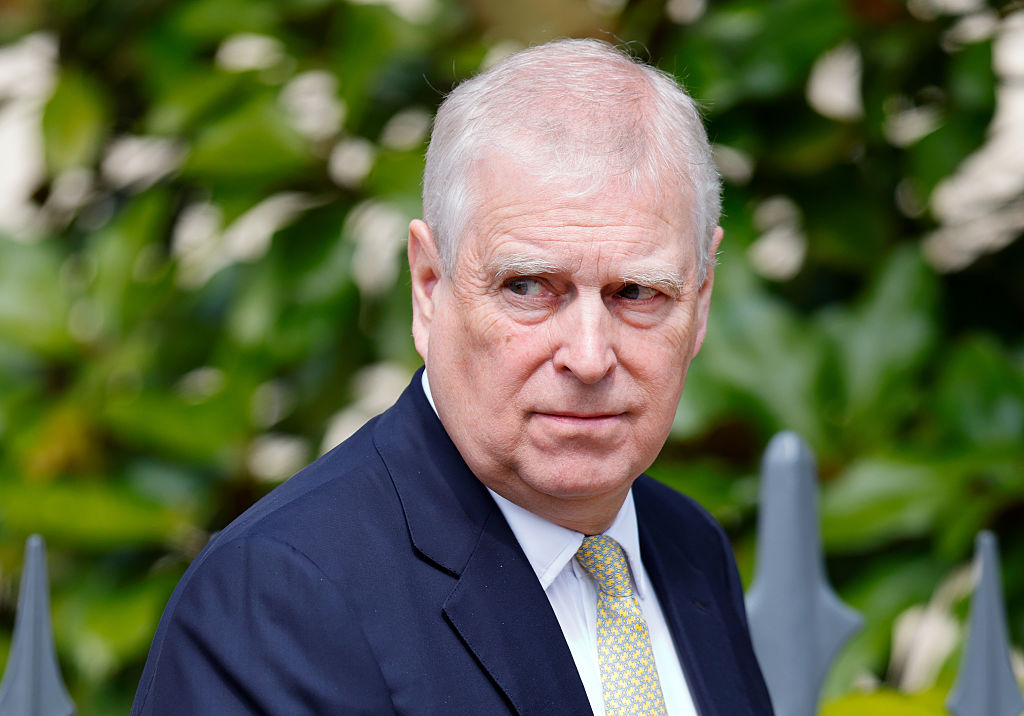
UK Bombshell! “SEXUAL CLAIMS” among allegations from EPSTEIN FILES (video) inside New Investigation on PRINCE ANDREW’s Misconduct in Public Office

22 May 2026 at 09:49

New probe prompted by the release of US DOJ files related to its investigation into Epstein

Detectives investigating Andrew Mountbatten-Windsor could investigate allegations of sexual misconduct as part of their inquiry into potential misconduct in public office. Police have repeated their call for anyone with information to come forward.

It is understood police are concerned witnesses might think they are focusing on the narrow definition of misconduct in public office when it is a complex offence that can include abuse of position, sexual misconduct and corruption, among other things.

The police investigation into the former Prince Andrew was prompted by the release of US Department of Justice files related to its investigation into Jeffrey Epstein.

Mountbatten-Windsor has consistently and strenuously denied any wrongdoing, and has denied any personal gain from his role as a UK trade envoy between 2001 and 2011.

Epstein, who was convicted of soliciting prostitution from a minor in 2008, died in a New York prison in 2019 as he awaited trial on sex trafficking charges.

“New Jeffrey Epstein Autopsy Photo proves he didn’t Kill Himself” his Brother said. Warning: Chilling Photo

Mountbatten-Windsor was arrested on 19 February and released under investigation. He has only ever been described by Thames Valley Police as “a man in his 60s from Norfolk”, as police forces do not usually name people unless they have been charged.

He was questioned on suspicion of misconduct in public office, after emails published in the Epstein Files seemed to suggest he had shared confidential information with Epstein.

Police: “Misconduct in public office is a crime that can take different forms”

In a new update on the case, Thames Valley Police Assistant Chief Constable Oliver Wright repeated the force’s call for information, saying: “We encourage anyone with information to get in touch with us.”

“Misconduct in public office is a crime that can take different forms, making this a complex investigation,” he said.

“There’s a number of aspects of alleged misconduct that the investigation is examining.”

It is understood police are concerned that witnesses and the public might think they are focusing only on the allegation that Mountbatten-Windsor shared a confidential trade reports with the late financier Epstein.

EPSTEIN’s FILES Storm British Monarchy. Ex US Ambassador Mandelson arrested after ex Prince Andrew. Only Trump seems without Sins…

Misconduct in public office is a broad offence defined as someone who holds public office wilfully neglecting their duty by behaviour that can potentially encompass a wide range, also including things such as financial misconduct, abuse of position, and misconduct leading to personal gain.

Former Prince Andrew faces further trouble as a woman accuses him of sexual crimes.

It is understood detectives do not want people to think they are only focusing on potential misconduct involving “the state”, rather than possible crimes that would involve people, which can also be part of a misconduct case.

According to Sky News, investigators intend to speak with a woman who claims she was taken to the former prince’s former residence in Windsor “for sexual purposes,” and have appealed to other potential victims of Jeffrey Epstein to come forward. Andrew remains under investigation and vehemently denies any wrongdoing.


❌