Not since the notorious 2012 National Defense Authorization Act (NDAA) provided for indefinite detention of American citizens, has the annual funding bill been as misused as this year. Embedded in the bill is an insult to every American who values our national sovereignty. The NDAA’s Section 224, the “United States-Israel Defense Technology Cooperation Initiative,” would “integrate” the Israeli military with our own, fusing technology, production, intelligence-sharing, and more.
As Ben Freeman wrote last week in Responsible Statecraft:
“The US and Israel already work together heavily on missile defense, but this provision would greatly expand coordination to seemingly every area of defense tech, including AI, quantum, autonomous systems, directed energy, cyber, biotech, and many more. It also proposes ‘network integration’ and ‘data fusion.’ In other words, the US military’s data could soon be the Israeli military’s data.”
It is hard to think of a more “America last” position than handing the keys to the Pentagon (and our intelligence community) to a foreign country.
The insanity of Section 224 is made even more clear with news over the weekend that the Pentagon has raised to “critical” the threat level of Israel spying on the United States and its officials!
We should not “integrate” our military with any foreign country or organization, but integrating with a country that is a “critical” espionage threat to our national security? How does this make any sense?
The “problem” for American lawmakers is that after the killing in Gaza and now Lebanon, the American people – particularly younger Americans – have turned sharply against the US relationship with Israel. This foreign entanglement has sucked billions from the US treasury over the decades, and it has sucked us into endless conflict in the Middle East, including the current US war on Iran.
Rather than listen to the will of their constituents, Congress has decided to defy the wishes of Americans in favor of the wishes of a foreign government. AIPAC largely controls our Congress and passing Section 224 would be a great victory for the foreign lobby.
It should come as no surprise that Israeli Prime Minister Benjamin Netanyahu endorses Section 224. He may have written it for all we know!
Should Section 224 remain in the NDAA, it would essentially remove future Congresses from any role in determining what level of support, cooperation, and oversight should be included in the US relationship with Israel. It would be worse even than President Obama’s 10 year guaranteed US financial support for Israel. Funding would not only be on autopilot, but the US would be further drawn into Israel’s multiple wars with its neighbors. Worse even than backing up Israel in its regional wars, the wars themselves would become ours.
Americans must speak out against plans to integrate our military with any foreign country. What we should be doing is disentangling from these overseas obligations, whether they be NATO or support for Ukraine or backing Taiwan against China.
We already spend more than a trillion dollars a year on our own military and our national debt is nearing $40 trillion. Taking on the obligation to fight even more wars overseas will hasten our bankruptcy. Section 224 must be stricken from the NDAA and it is up to every American who cares about our sovereignty to demand that Congress do so.
Quest’anno, l’estate non ha aspettato il 21 giugno per arrivare, ma ha anticipato i tempi. Ed è così che sono già iniziati i primi weekend al mare, tra acque cristalline, sole cocente e puro relax. Con questi primi momenti di vacanza arriva, però, anche il grande dilemma dell’estate: quale costume comprare per essere pratici, a proprio agio e di tendenza? Come ogni anno, il panorama di proposte lanciate dai brand è molto vasto, ognuno può trovare il modello, il colore e la fantasia che più rispecchia le proprie esigenze. Ci sono però dei minimi comuni denominatori che fanno da file rouge alle proposte di stagione, delle vere e proprie tendenze in fatto di costumi donna e uomo, per essere al passo con i tempi in quest’estate 2026.
Le tendenze costumi donna per l’estate 2026: colori e fantasie, non solo sulla spiaggia
Due anime abitano le tendenze costumi donna di quest’estate 2026: una più audace e un’altra più minimale. Infatti, a tagli asimmetrici e costruzioni cut-out si affiancano modelli senza cuciture, top a triangolo o a fascia e bikini con laccetti, per non farsi mancare un po’ di nostalgia degli anni Duemila, che quest’anno si fa sentire più che mai. Se il bikini regna ancora sovrano ed è la scelta più gettonata, anche il costume intero prende sempre più piede, in versione liscia o drappeggiata, così come il due pezzi con slip a vita alta, versione bon ton del classico bikini. La doppia natura audace e minimale delle proposte di quest’anno si trova anche nei colori. Da un lato ci sono tinte vitaminiche come il rosso, l’arancione acceso o il giallo limone, che danno quel tocco di vivacità tipico dell’estate, dall’altro lato invece compaiono tinte neutre come il cloud dancer (il Colore dell’Anno 2026 di Pantone), il sabbia, il marrone o il bronzo, ma anche nuance sofisticate come il giallo burro e i colori pastello. In questo magma di proposte, però, ci sono alcune tendenze che spiccano maggiormente: quella delle stampe, che siano floreali, soprattutto in versione tropicale, a pois o a righe (dal sapore più retrò) e quella del bicolore, tendenza proveniente dalle passerelle primavera/estate 2026 che fa incursione anche nella moda mare. Da aggiungere all’appello i costumi con dettagli gioiello, in grado di far brillare con eleganza riflettendo la luce dei raggi solari. Dalla spiaggia all’aperitivo vista mare, quest’anno il costume, specialmente quello intero, si fa anche parte integrante del look, indossato insieme a gonne o pantaloni, camicie di lino e infradito con kitten heel.
Da Calzedonia a Reina Olga, le proposte beachwear per il 2026
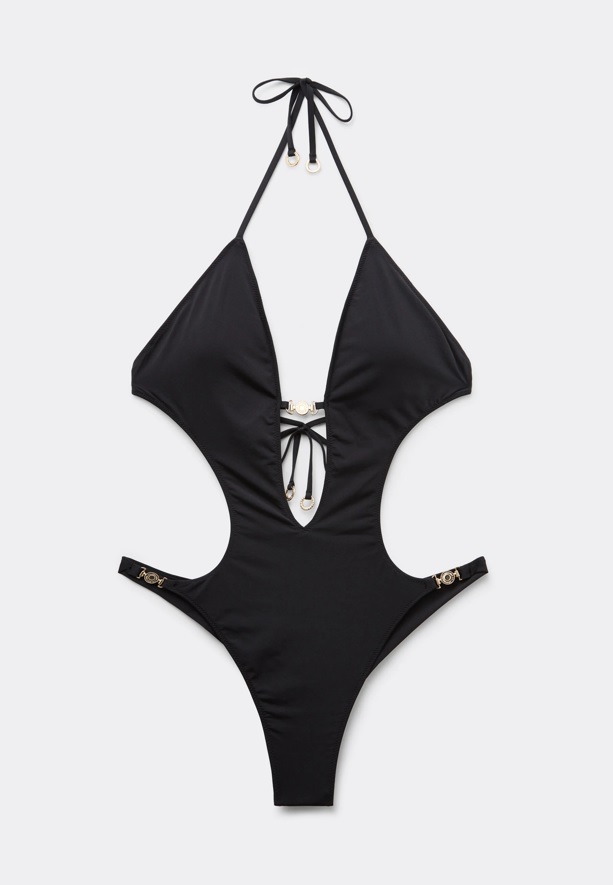
Cut-out e dettagli gioiello sono protagonisti del costume intero firmato Calzedonia, un modello raffinato ma audace in grado di fare la differenza in un look, anche usato come body dopo una giornata sotto il sole. Il beachwear che prende spazio fuori dalla spiaggia è centrale anche nella nuova collezione mare di Fracomina, che accompagna durante ogni momento dell’estate con costumi e capi confortevoli e sensuali dotati di un’eleganza disinvolta, proprio come il due pezzi con slip a vita alta che unisce la delicatezza dei fiori e la grinta dell’animalier. Anche Parfois e Yamamay propongono diverse stampe, il primo con un costume intero a righe bianche e blu e profili bordeaux e il secondo con un bikini dalla stampa audace, un tripudio di fiori tropicali declinati in colori vibranti come il rosa, il rosso, l’arancione e il giallo, con un tocco di menta. Zara segue l’onda dei colori vitaminici con un rosso acceso dal taglio asimmetrico dato da un’unica spallina che si innesta su un taglio a fascia. Color albicocca invece per LATTE The Label, brand di intimo sostenibile e Made in Italy, che propone un due pezzi essenziale nella linea, ma d’impatto per il colore. Oltre a LATTE The Label, spiccano nel panorama attuale anche Festa Foresta, Reina Olga e Clara Aestas, marchi che uniscono la sostenibilità a un design contemporaneo: le loro proposte mare includono un costume intero drappeggiato color burro, un costume intero monospalla con dettaglio gioiello e un bikini bianco con top a fascia e ricami su spallina e slip. Uno sguardo sulle ultime tendenze lo offrono poi Mango, con un bicolore bianco e marrone, ma anche Tezenis, con un modello con laccetti anni Duemila e pois, una reinterpretazione moderna di codici vintage. Colori accesi e bikini con laccetti anche per Gant, che si inserisce nelle tendenze di stagione con un due pezzi fucsia dal fascino di inizio millennio. Infine, un intramontabile bikini nero per Polo Club, con un top insieme elegante e pratico, diverso dal solito triangolo.
1 / 11
Calzedonia
2 / 11
Clara Aestas
3 / 11
Festa Foresta
4 / 11
Gant
5 / 11
LATTE The Label
6 / 11
Mango
7 / 11
Parfois
8 / 11
Polo Club
9 / 11
Reina Olga
10 / 11
Tezenis
11 / 11
Yamamay
Le tendenze costumi uomo per l’estate 2026: spazio alle fantasie, ma con discrezione
Anche per l’uomo vale la dicotomia audace-minimale già vista nelle tendenze femminili. A tonalità vitaminiche come l’arancione acceso, il lime, ma anche l’azzurro intenso, si accostano colori neutri come il blu, il sabbia, il verde oliva e il nero, classico intramontabile. Anche qui le stampe sono protagoniste e si declinano in versione sofisticata: micro-stampe geometriche, righe verticali, stampe floreali e tropicali discrete sono le fantasie che dominano questa stagione, senza dimenticare le fantasie dal sapore vintage ispirate all’estetica degli anni Settanta e Ottanta. Per quanto riguarda i modelli, restano in testa alla classifica i classici boxer, affiancati dagli shorts mare a lunghezza media per un look più ricercato, specialmente se dalla linea sartoriale. La parola d’ordine per la moda mare uomo di quest’anno è “lusso rilassato”, un mix tra dettagli e linee eleganti, ma anche di carattere e in linea con la vivacità della stagione. Infine, come per la donna, quest’anno i modelli uomo si prestano per passare direttamente dalla spiaggia all’aperitivo, se abbinati con una camicia in lino e un paio di mocassini in suede.
Da Iuman a MOSSO Sunwear, le proposte beachwear per il 2026
Le stampe sono le vere protagoniste dei costumi uomo di quest’estate, sempre in versione elegante e discreta. Zara propone una fantasia floreale dai toni chiari con sfondo scuro, una versione più chic della classica e variopinta stampa tropicale, mentre Tezenis, sulla stessa linea d’onda, presenta un modello a righe bianche e blu, un classico dell’estate. Un pizzico di creatività in più la mettono MC2 Saint Barth e Peninsula, il primo con un paio di boxer a righe arricchiti da una micro-fantasia a forma di stelle marine e il secondo – brand 100% Made in Italy e a basso impatto ambientale – con un costume con stampa paisley anni Settanta rivisitata in chiave contemporanea, un tuffo nel passato che si ispira alle estati in Sardegna dell’infanzia del fondatore del brand Edoardo Pasolini. Un tocco di vivacità anche per Sundek, con il suo boxer in arancione vitaminico, e un tocco di leggerezza per Iuman e MOSSO Sunwear, che propongono un costume verde oliva con micro-fantasia tono su tono e un boxer utility color sabbia, pratico ma raffinato. Infine, se il boxer non è il vostro prediletto e preferite un look più sportivo, Arena propone diversi modelli di slip, come questo bicolore in verde oliva e blu navy.
Forget those dreary passageways. The updated transit hub would add a grand entrance with sweeping staircases leading to an airy, glass-walled concourse.
by Sterling Ashworth, Natural News: The U.S. Treasury Department imposed sanctions on Nobitex, Iran’s largest cryptocurrency exchange, accusing it of facilitating transactions for Iran’s military, according to a Treasury statement [1]. The action, conducted by the Office of Foreign Assets Control (OFAC), blocks all assets held by the exchange under U.S. jurisdiction and prohibits U.S. […]
by JD Rucker, The Liberty Daily: Editor’s Note: The election has been stolen. There will be spin from legacy media for the next few days that this was “expected” and “normal” but in reality an obscure and unpopular candidate, Nithya Raman, was incapable of dominating the late (manufactured) ballots. Don’t be fooled. Here’s the latest from Zero […]
i think about this chart a lot— a black child between the ages of 5 to 14 is more likely to murder someone than a white guy aged 35–64. pic.twitter.com/vKl7IafjAI — Isabella Maria DeLuca (@IsabellaMDeLuca) June 5, 2026
by ZH, Modernity News: Nestle CEO warns against Swiss population cap Globalist CEOs who ignored more than a decade of Europe’s mass migration invasion from the third world because it was good for business may soon face headwinds from Swiss voters: a June 14 referendum that would cap the country’s permanent resident population below 10 million through […]
by Cam Wakefield, Reclaim The Net: “Think of the children” is the oldest skeleton key in the political toolbox and the British government has just jammed it into the lock on every phone in the country. Ministers are reportedly drafting a law that would force Apple, Google, and the rest to make it impossible for a […]
by Ken Macon, Reclaim The Net: Google wants to sit between you and the growing list of websites that now demand proof of who you are. The company used its Money 20/20 Europe announcement to confirm that Google Wallet will start holding government digital IDs in select European Union countries this summer, with Ireland, Spain, France, Italy, […]
from Moonbattery: One reason we need to support agencies like ICE rather than demonizing and attempting to defund them as Democrats do is that not everyone who comes into our country can be counted on to behave responsibly. Some may even try to smuggle monkeypox into the USA. Via FOX2 in Detroit: Vincent Munster and Claude Kwe […]
by M Dowling, Independent Sentinel: Democrats did it. They erased mothers and fathers with the stroke of a few pens and a crazy bill. Instead of “Mother” and “Father” in state law, we have “gestating parent” and “non-gestating parent.” Eventually, we won’t have a clue what we’re talking about. It passed the legislature and is […]
War Secretary Pete Hegseth on Thursday said the United States remains committed to helping defend Bolivia's fragile government amid ongoing warnings of a coup d’état.
In a post on X, Hegseth said the War Department and the Americas Counter Cartel Coalition (A3C), a recently established multinational military and political alliance, reject all attempts to overthrow the government of Rodrigo Paz Pereira a mere six months into his term.
"The United States is watching. Bolivia must not allow itself to fall prey to the old status quo of narco-terrorist dominance in the region," Hegseth wrote. "We will continue to support our A3C partners like Bolivia to ensure that narco-terrorists are deterred from profiting on death and destruction in our hemisphere."
Bolivia's capital, La Paz, has been rocked by weeks of social unrest as mass protests have blocked streets in major cities amid economic inflation and rising fuel prices.
Bolivian Defense Minister Marcelo Salinas resigned Tuesday.
Upon taking office, Paz supported a land reform bill to boost agribusiness that Indigenous farmers said put them at risk of eviction. He further scrapped fuel subsidies, sending prices surging by nearly 90%. Motorists complained that the gasoline was contaminated and ruined their cars.
The Trump administration has said drug traffickers are responsible for inciting the mass unrest.
"Let there be no mistake: the United States stands squarely in support of Bolivia's legitimate constitutional government," Secretary of State Marco Rubio wrote Wednesday on X. "We will not allow criminals and drug traffickers to overthrow democratically elected leaders in our hemisphere."
"Let us not make any mistake about that; it is a coup financed by this perverse alliance between politics and organized crime across the region," Deputy Secretary of State Christopher Landau said Tuesday, stating that the protests were part of an ongoing "coup d’état."
Meanwhile, former President Evo Morales, the country's first Indigenous president who ruled for an unprecedented 14 years, is calling for early elections. "Paz only has two paths left: a suicidal decision like militarization or ... an election in the next 90 days," he wrote on X.
For almost two years now, Morales has been hiding out in Bolivia's central coca-growing Chapare region, evading an arrest warrant on human trafficking charges relating to allegedly having sex with a 15-year-old girl. He rejects the allegations as politically motivated.
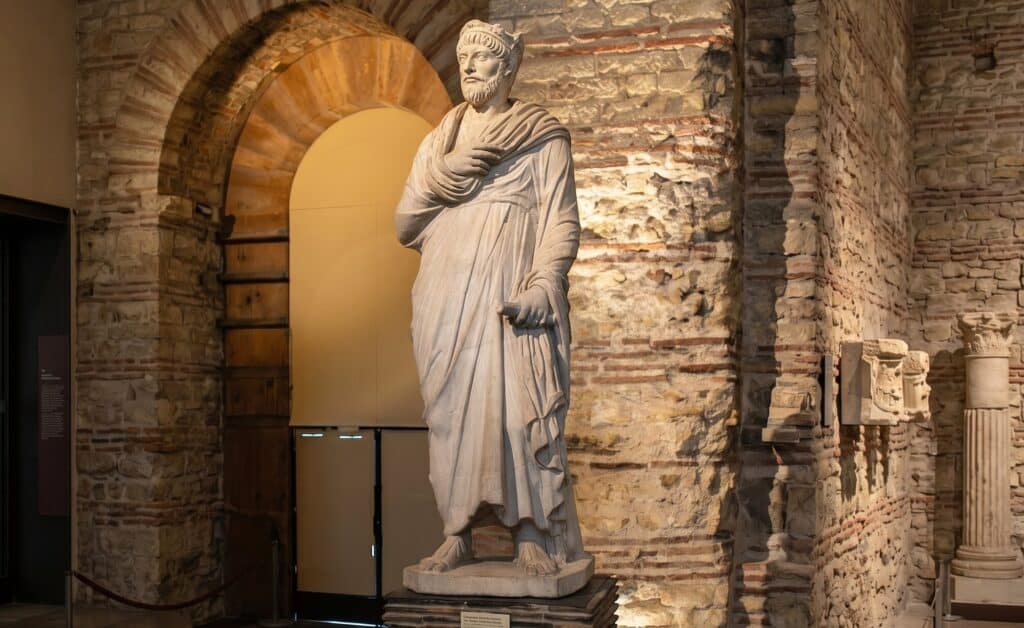
The depiction of Julian in this classical guise shows his commitment to Neoplatonism and Greek culture over the rapidly spreading Christian faith. Credit: Ash Crow, Wikimedia Commons, CC BY-SA 4.0
Few figures in late antiquity present as compelling a historical debate as Julian the Apostate’s attempt to restore the Greek gods in opposition to Christianity in the Roman Empire.
During his brief but highly consequential reign in the fourth century AD, the Roman Empire stood at a profound religious crossroads. For a short period, Julian attempted to slow the empire’s accelerating Christianization, launching a sweeping effort to revive the ancient Olympian pantheon and return Rome to its traditional pagan practices. His sudden death on the battlefield has led historians to debate how dramatically the cultural trajectory of Western civilization might have shifted had his reforms endured.
Julian was born into the heart of the Constantinian dynasty, a family that had only recently converted to Christianity. Nonetheless, he became the last Roman emperor to openly support and worship the traditional Greek gods. He ruled for only about two years from 361 to 363 AD, but he acted with urgency and purpose. Julian the Apostate initiated an extensive program of philosophical and religious reform, aiming to reverse the Christian expansion advanced by his predecessors. To the growing Christian population, he was seen as a traitor to the new religious order, but to those who still admired the intellectual and cultural legacy of the classical world, he appeared as a philosopher-king attempting to restore an older vision of Rome.
This marble head from Athens is widely believed to be a rare surviving portrait of the Roman Emperor Julian the Apostate. Credit: George Koronaios, Wikimedia Commons, CC BY-SA 4.0
Julian the Apostate’s early life
Julian did not experience the typical sheltered upbringing of an imperial heir. He grew up constantly looking over his shoulder, surviving political purges that eliminated many members of his own family. Although he was raised in a strict Christian environment under the supervision of powerful bishops, he is often understood to have developed a private intellectual attraction to classical texts and traditions associated with the ancient world.
His life took a decisive turn when he went to study in Athens. There, he was secretly initiated into the Eleusinian Mysteries, an experience that deeply shaped his philosophical outlook and strengthened his commitment to rejecting Christianity in favor of Neoplatonism. This forced dual existence helped form a uniquely strategic mindset. He became familiar with the inner workings of the Church, knowledge he later leveraged in support of his own religious and philosophical aims. By the time his troops in Gaul unexpectedly proclaimed him emperor, Julian was convinced that the gods themselves had chosen him to restore the ancient order.
Julian the Apostate as Emperor and the worship of the Ancient Greek gods in the Roman Empire
When he finally took power, Julian did not launch the kind of widespread, violent persecutions often associated with earlier periods of religious conflict. Instead, he pursued a more calculated cultural strategy. His approach focused on weakening Christian influence within imperial institutions while strengthening traditional religious structures. Julian the Apostate reduced the privileges and state support enjoyed by Christian clergy and redirected resources and prestige toward the priesthood of the traditional Greco-Roman religion centered on the Greek gods.
In a particularly controversial move, he restricted Christians from teaching classical literature. His reasoning was that those who rejected the traditional religious framework of Homer and Hesiod should not profit from instructing it. At the same time, Julian sought to make traditional religion more socially competitive by encouraging pagan priests to adopt public charitable functions, including aid for the poor and the establishment of hospitals—areas in which Christianity had been especially successful in gaining support. He appears to have believed that traditional worship had declined not because of its inherent weakness but because its institutions had failed to match the organizational and charitable presence of Christianity.
In practice, many historians argue that this cultural and intellectual strategy posed a different kind of challenge to early Christianity than outright violence. While persecution could strengthen Christian identity through martyr narratives, Julian the Apostate’s policies instead aimed to limit the social structures that supported its continued expansion while restoring the worship of the Ancient Greek gods within the broader Greco-Roman religious tradition.
This illuminated manuscript page depicts vivid scenes of Emperor Julian ordering the arrest of a Christian bishop and overseeing acts of persecution. Credit: Wikimedia Commons, Public Domain
Unfortunately for his beliefs, that grand vision of such a revived Greco-Roman empire came to an abrupt end in the arid regions of Persia. During a military campaign, Julian was struck in the side by a spear, cutting his reign tragically short. Ancient sources and later traditions continue to debate the circumstances of his death, with some attributing the blow to a Persian soldier and others speculating—without evidence—that it may have come from within his own ranks. The true origin remains uncertain.
A well-known tradition holds that, as he lay dying, Julian the Apostate is said to have declared, “Thou hast conquered, O Galilean,” acknowledging the perceived triumph of Christianity. Whether or not he actually spoke these words, his brief reign left a lasting imprint on Roman and Western history. His efforts to restore the Ancient Greek gods within the Roman world continue to be discussed by historians as a striking moment in the empire’s religious transformation. Even in modern Greek cultural memory, echoes of this tension can still be felt in the broader contrast between the rational legacy of ancient philosophy and the spiritual tradition of Orthodox Christianity.

 Login
Login