Normal view

If this is winning, America can’t afford much more of it

By: A A
8 June 2026 at 16:17

By John WHITEHEAD’S

Join us on TelegramTwitter, and VK.

Contact us: info@strategic-culture.su

“We’re gonna win so much, you may even get tired of winning.”—Donald Trump

Donald Trump promised Americans they would get tired of winning.

If this is what winning looks like, America can’t afford much more of it.

We are losing ground economically. We are losing credibility abroad. We are losing tourists, workers, stability, trust, constitutional guardrails, and whatever remained of the illusion that the government answers to “we the people.”

The tourism economy is taking a hit, with international visitors increasingly reluctant to come to the United States. Even migration—the lifeblood of America’s economic growth, innovation, labor force and national renewal—is now moving in the wrong direction. Fewer people are coming in, more Americans are leaving, and by some estimates the country has already crossed into negative net migration.

That is not the mark of a nation “winning.” It is the mark of a nation people are increasingly choosing to escape.

Even the looming World Cup—normally an economic windfall for tourism, travel and hospitality—is being shadowed by the administration’s immigration crackdown, detention protests and threats to disrupt international travel at key airports.

That is what happens when a nation treats visitors, immigrants and dissenters as threats first and human beings second: people stop coming, businesses suffer, and fear becomes official policy.

The economy, despite the administration’s relentless victory laps, is flashing warning signs: downgraded growth, strained consumers, rising costs, depleted savings, and policy chaos that leaves families, small businesses and entire industries guessing what fresh disruption tomorrow will bring.

We are being worn down by the losses.

Meanwhile, the man who promised to end wars has presided over their continuation and expansion. The man who promised to bring prices down has helped drive uncertainty up. The man who promised to drain the swamp has turned government into a spoils system for loyalists, cronies, contractors, oligarchs and power brokers. The man who promised law and order has treated the law as something to be weaponized against enemies and waived for friends.

This is not winning.

This is the slow-motion defeat of a constitutional republic by spectacle, grievance, greed and brute force.

The losses are piling up.

Americans were told they would get prosperity. What they got was an economy in which corporate profits and stock market gains mask the fact that ordinary households are stretched thin, savings are shrinking, debt is mounting, and the cost of basic necessities keeps eating away at wages.

They were told tariffs would punish foreign governments and bring jobs home. What they got were higher costs passed down to consumers, retaliation, supply disruptions, and a trade policy built less on strategy than on political theater. Even the courts have begun treating the tariff agenda as what it is: economic policy by executive improvisation, with judges striking down or narrowing tariff maneuvers while the administration keeps looking for new legal workarounds.

They were told immigration crackdowns would make America stronger. What they got was a nation frightening away the workers, students, tourists, entrepreneurs and families who have long helped power its economy.

They were told America would be respected again. What they got was a country increasingly viewed as unstable, hostile, unpredictable and unsafe—not merely by adversaries, but by allies, visitors, investors and would-be partners.

They were told the wars would end. What they got was more war talk, more military escalation, more blank checks for the war machine, and more excuses for expanding executive power in the name of national security.

They were told the Constitution would be restored. What they got was a president who declared, “He who saves his Country does not violate any Law.”

Listen carefully when any ruler says something like that.

That is not constitutionalism. That is the language of kings, dictators and strongmen who believe their intentions place them above the law.

The Constitution was written precisely to prevent that kind of thinking from taking root in America.

The problem with Trump’s brand of winning is that it requires Americans to lose.

For the police state to win, the Fourth Amendment must lose.

For the surveillance state to win, privacy must lose.

For the war machine to win, peace must lose.

For the executive branch to win, the separation of powers must lose.

For the oligarchs to win, working families must lose.

For the propaganda machine to win, truth must lose.

For a strongman to win, the Constitution must lose.

Trump’s “winning” is simply the latest branding campaign for an old con: convince the people they are winning while stripping them of the power to govern themselves.

Call it what you will—national security, border security, economic nationalism, law and order, anti-corruption, emergency authority, America First—but when the end result is more government power and less individual freedom, we should know by now who is really winning.

The winners are the same as always: the defense contractors, data brokers, private prison operators, surveillance companies, lobbyists, political insiders, Wall Street speculators, government contractors, partisan enforcers, donors with access, loyalists seeking payouts, and bureaucratic power centers that thrive on fear, crisis and control.

The losers are “we the people.”

This is the hard truth Americans must face: a government that promises to make you “win” by taking power away from someone else will eventually take power away from you, too.

Rights are not partisan. Due process is not partisan. Free speech is not partisan. Privacy is not partisan. Limits on executive power are not partisan. The Constitution is not supposed to be a campaign prop, a legal technicality or a speed bump on the road to political victory.

The Constitution is the contract that binds the government down.

Without it, all we have are rulers and subjects.

That is why the real measure of any administration is not how loudly it boasts, how many enemies it punishes, how many executive orders it signs, how many troops it deploys, how many agencies it purges, or how many headlines it dominates.

The real measure is whether the people are freer, safer in their rights, more secure in their property, more protected from government abuse, and more capable of holding power accountable.

By that measure, we are not winning.

We are losing in all the ways that matter.

A president can call it winning. A party can call it winning. The media can package it as winning. The crowds can chant along.

But as I make clear in my book Battlefield America: The War on the American People and in its fictional counterpart The Erik Blair Diaries, if the price is the Constitution, then we all lose.

Original article:  www.rutherford.org
10 Reasons to Visit the Peloponnese This Summer

8 June 2026 at 12:11
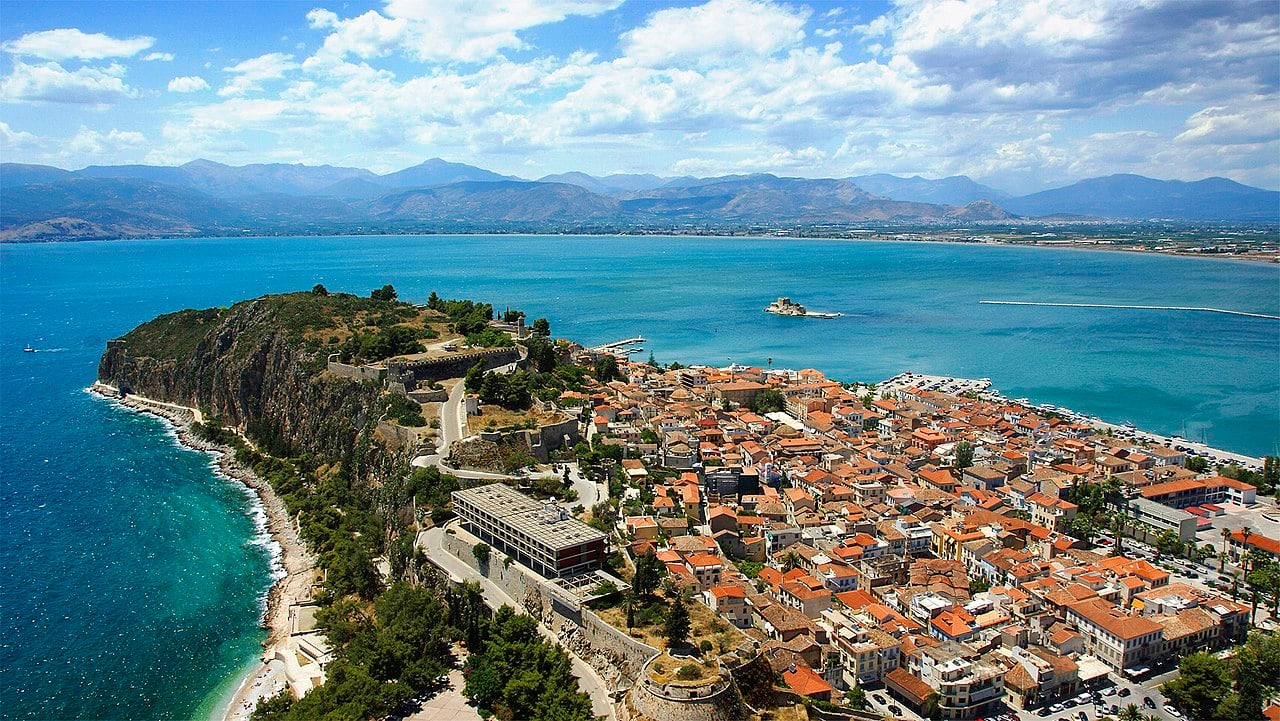
Nafplio at Peloponnese Region
Nafplio at Peloponnese Region, Greece. Credit: Mtale/Wikimedia Commons/ CC BY 2.0

Located at just about a 1-hour drive from Athens, the Peloponnese region offers a plethora of historical sites, culture, and beauty to tourists looking for a spectacular trip in Greece; there are many reasons why this region of Greece is one that you do not want to miss! Let’s take a look at 10 reasons you will have an unforgettable trip in the Peloponnese this summer.

1. Nafplio

Nafplio at Peloponnese Region
Bourtzi Castle, Nafplio. Credit: Wikimedia commons cc by 4.0

The first capital city of modern Greece was Nafplio, and until this day, you will see ruins of the fortress walls up high overlooking the town from the mountain side. This charming and romantic town has small streets that wrap around neoclassical buildings and squares and is the perfect place to visit any time of the year.

2. Epidavros

Greek Theatre of Epidaurus
Ancient Theatre of Epidavros. Credit: Wikimedia Commons, Olecorre

From ancient ruins and an impressive ancient theater to a quaint town with tavernas serving up local treats, Epidavros is a must-see on any trip through the Peloponnese. During summer months, there are weekend shows at the ancient theater that draw in crowds of thousands of spectators. It is simply an amazing experience!

3. Beaches

Zogeria Peloponnese for Summer
– Aerial view of Zogeria Beach on Spetses with Peloponnese in the background, Greece. Crédit: By dronepicr CC BY 2.0

Check out the unspoiled beaches that this region has to offer! There is such diversity in terrains surrounding the sea in this region. The seas are clean and the beaches might have either pebbles or soft sand, and you can jump off of cliffs. There is something for everyone in the Peloponnese!

4. Ilia

Elis Peloponnese
Ilia Theater. Crédit: Kritheus – Own work, CC BY-SA 4.0

This is where the mountain meets sea and provides tourists with the amazing experience of staying in a quaint, beautiful village with sandy beaches and clear blue waters outlined by forests of pine trees reaching down to the sea. There are also some significant archaeological sites you should check out while in Ilia, such as the Temple of Epicurios Apollo.

5. Arcadia

Arcadia Peloponnese
Arcadia. Crédit: Apostolos Papageorgiou CC BY-SA 3.0

You will find Arcadia in the center of the Peloponnese Region. This area is famous for its huge mountains, such as Mainalo and Parnonas, as well as its natural landscapes. It was first settled by the Arcadians who are considered to be one of the oldest people in the Peloponnese and are purported to have been responsible for the establishment of numerous significant cities throughout the region.

6 &7. Olives and Kalamata

Kalamata Peloponnese
The Old City of Kalamata. Crédit: G Da, CC BY-SA 3.0

You can find 65 percent of Greece’s 132 million olive trees in the Peloponnese with the black Kalamata olives being the most well-known variety. So why not stop by Kalamata, enjoy some olives, try great local Greek dishes with fresh olive oil, and enjoy the villages and beaches in this beautiful part of the Peloponnese? You can purchase souvenirs, such as olive oil or sculptures made from olive tree wood that are locally hand-crafted.

8. Wine Tours and Vineyards

Peloponnese
A vineyard in Peloponnese. Credit: Robert Wallace, Flickr

A perfect way to get to know the beautiful Peloponnese region of Greece is to enjoy an amazing wine tour during your visit. Greece is one of the oldest wine-producing regions in the world, having begun cultivating vineyards and producing wine over 6,500 years ago.

9. Achaia

Patras Gulf
Rio, as seen from the Antirrio ferry. Patras, Acaea, Greece.Crédit: LBM1948 – Own work, CC BY-SA 4.0

Home to the port city of Patras, the biggest city in the Peloponnese, Achaia is the place to go for beautiful mountain and seaside landscapes, including some of the most desirable beach destinations in the region along the Corinthian Gulf. Achaia is considered Greece’s “seaside gate” to Western Europe and is one of the most historic sites in the Peloponnese. On the way to Patras from Athens, you will also pass the iconic Rio-Antirrio Bridge.

10. Something for Everyone

Dafnon Valley
Dafnon valley, Leonidio. Crédit: Natalia Mostova – Own work, CC BY-SA 4.0

The Peloponnese Region is known for its variety of activities as well quite diverse landscape. From hiking to wine tours, there really is something for everyone in this region of Greece! Enjoy the breathtaking waters of the gulfs of Corinth, Patras, Saronic, Messinia, Argolida, and Laconia and the Peloponnese’s diverse climate, ranging from the less humid east to the colder climate with snow and rich vegetation in the central and more mountainous parts of the region and the rain and hot weather of the west.

Free Camping in Greece: Tourists Face €300 Fines and Possible Arrest

4 June 2026 at 19:01
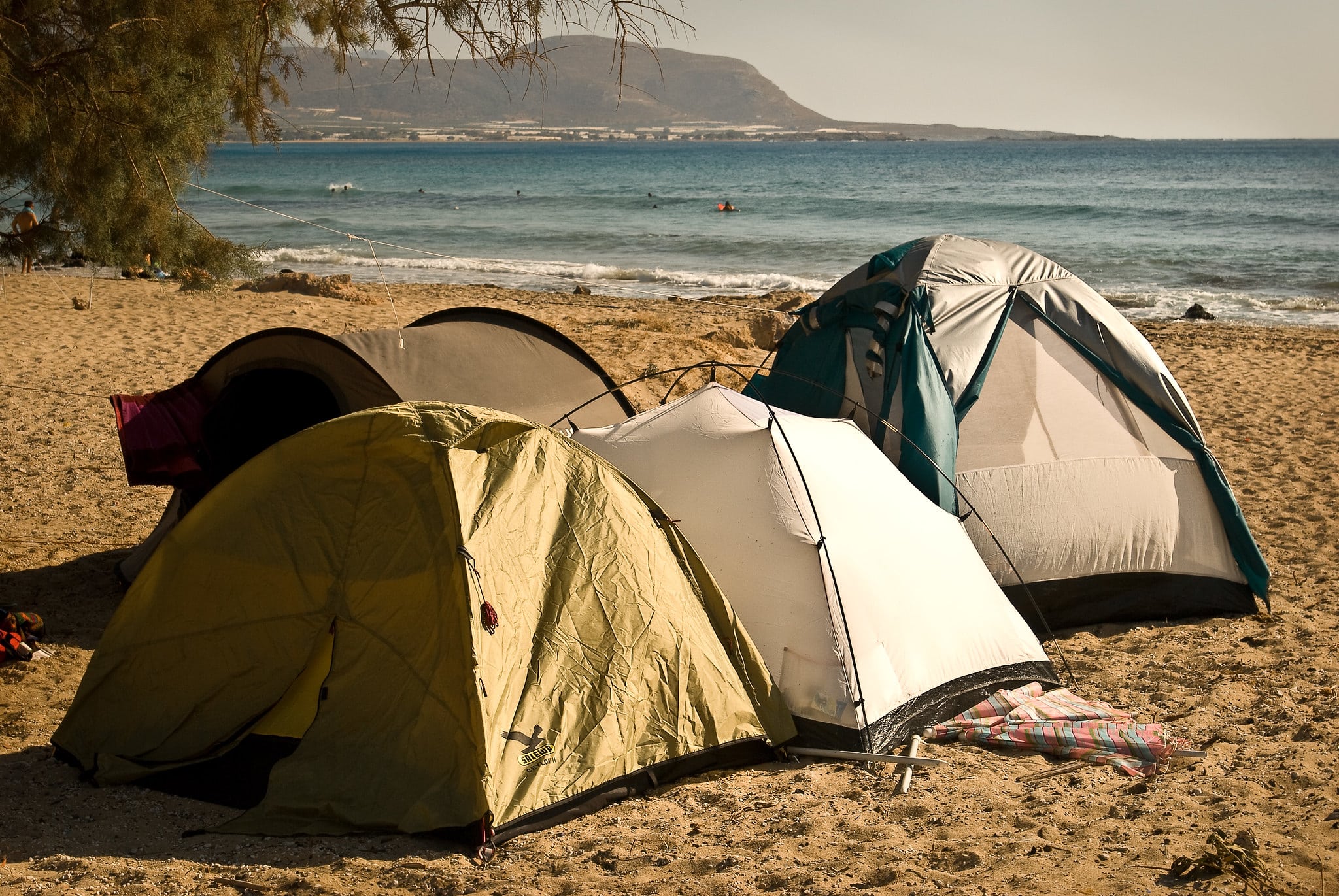
Tents set up for free camping on Falasarna beach in Crete, Greece.
Tents are seen on Falasarna beach in Crete. Free camping outside organized sites remains illegal in Greece and can lead to fines and criminal penalties. Credit: Flickr / Sergio Alvarez / CC BY NC SA 2

As the summer season begins, Greek authorities are stepping up checks on free camping, a practice that remains illegal outside organized sites and continues to spark debate across Greece.

For many travelers, pitching a tent near the sea is seen as an affordable and alternative way to enjoy the holidays, especially as the cost of living continues to put pressure on households. In Greece, however, camping outside licensed facilities remains prohibited and can lead to fines, criminal proceedings, and even jail time.

Free camping remains illegal outside organized sites in Greece

Under Law 392/1976, the installation of tents, the parking of caravans for overnight stays, and camping in general are banned on beaches, in forests, near archaeological sites, and in other public areas that are not officially designated for that purpose.

Greek law allows camping only in organized and licensed facilities, such as official campsites. Those who violate the rules may face administrative fines, while in certain cases authorities can also initiate criminal procedures, including arrest under the fast-track process.

A notable case occurred last summer at Thapsa beach in Evia, where the presence of hundreds of tents sparked strong reactions and led to intervention by local authorities. Campers were removed from the area, while surveillance and inspections were increased.

Fines reaches €300 per person, tent, or vehicle

Under the current rules, those caught free camping in Greece face an administrative fine of €300 ($348) per person, tent, or vehicle.

In more serious cases, offenders may also face criminal penalties. These can include imprisonment of up to six months or a court-imposed financial penalty. The total fine imposed by the courts can reach up to €3,000 ($3,488).

Skiathos arrests renew the debate

The issue resurfaced this week after authorities arrested two men for allegedly free camping on a beach in Skiathos on Monday afternoon.

According to local reports, the case drew further criticism because the campers had allegedly left waste in the surrounding area, showing disregard for other beachgoers and the local environment.

Similar incidents are reported from time to time across Greece, especially in areas where free camping has long been tolerated informally. In some destinations, a decades-old practice and an unofficial understanding between campers, local authorities, and local stakeholders have often existed alongside a legal framework that strictly prohibits the activity.

Supporters point to affordable and alternative tourism

Supporters of free camping argue that it offers a closer connection with nature and gives people a cheaper way to travel at a time when accommodation and holiday costs have risen sharply.

They also point to examples from other European countries, where more flexible systems allow responsible camping in open, non-organized spaces under specific conditions. According to this view, Greece could adopt a more regulated model that permits free camping in selected areas, provided strict environmental rules are followed.

Authorities warn of environmental risks from free camping in Greece

Authorities and environmental organizations, however, argue that uncontrolled camping can put serious pressure on natural areas.

Their concerns include the accumulation of waste, damage to sensitive ecosystems, and an increased risk of fires, especially during the summer months when Greece faces high temperatures and dry conditions.

They also note that the absence of organized infrastructure makes it difficult to manage large numbers of visitors in protected or remote areas. The lack of sanitation facilities, waste collection, fire protection measures, and supervision is often cited as one of the main reasons the Greek state continues to restrict free camping outside licensed sites.

Brussels sends agents, €8 million, to support Portugal’s ‘border control system’

4 June 2026 at 12:21
Lisbon airport queue misery returns

Brussels has finally seen the light. After claiming that months of ‘chaos’ at airport border controls were ‘unrelated’ to its new Entry/ Exit system (EES), the European Commission has announced

The post Brussels sends agents, €8 million, to support Portugal’s ‘border control system’ appeared first on Portugal Resident.

UK Drops Cyprus Travel Warning Linked to Middle East Tensions

3 June 2026 at 21:45
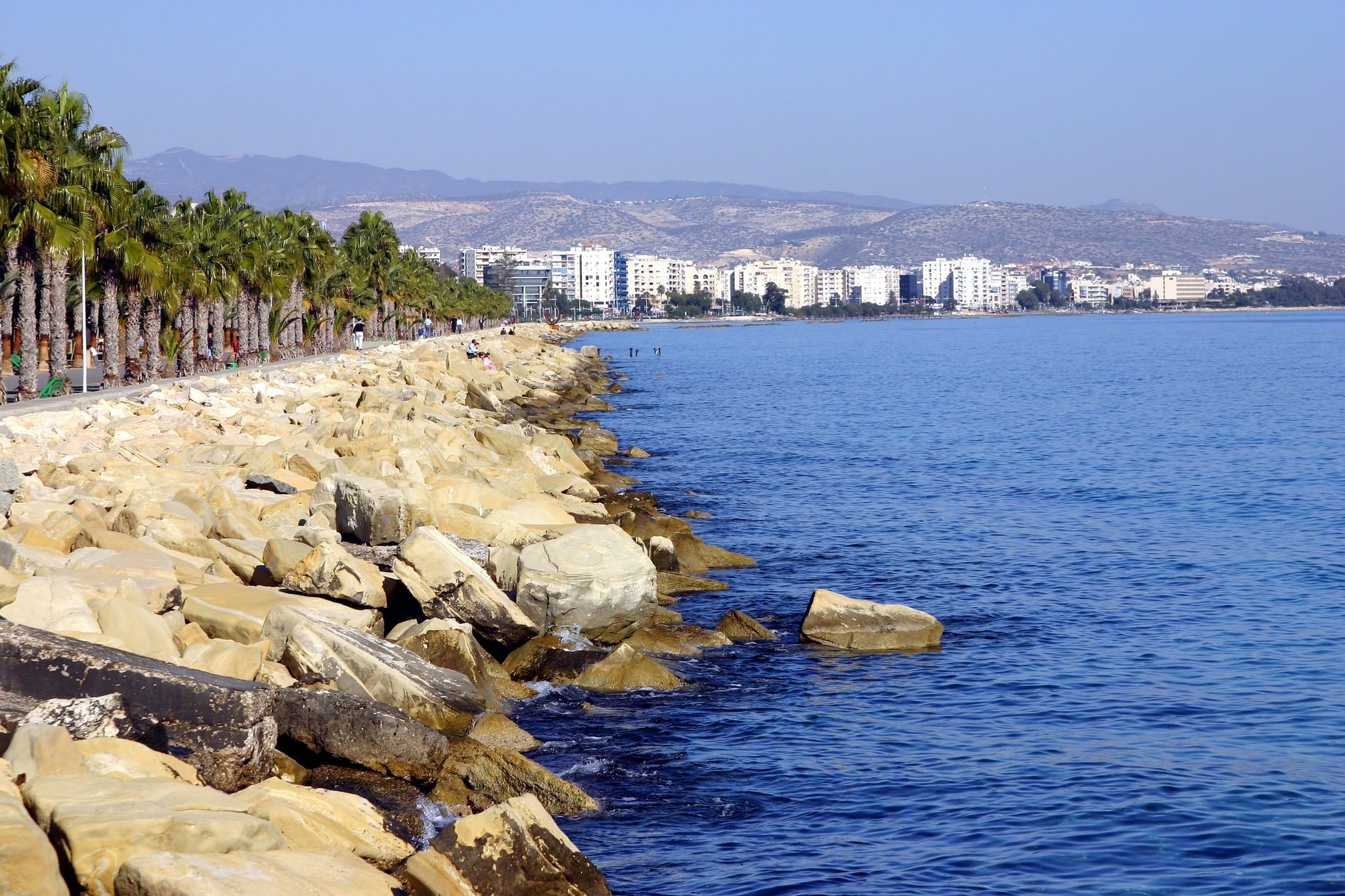
View of the Limassol seafront in Cyprus with palm trees, rocks, the sea, and the city skyline in the background.
Limassol, Cyprus. The UK has removed a special travel warning for Cyprus linked to Middle East tensions. Credit: Flickr / Leonid Mamchenkov / CC BY 2

The UK has removed special travel warning for Cyprus that had been introduced following heightened tensions in the Middle East, offering a positive signal for the island’s tourism sector at the peak of the summer season.

The updated guidance from the UK Foreign, Commonwealth & Development Office no longer includes specific references to heightened regional risks or possible travel disruption linked to developments in the Middle East.

UK drops special warning for Cyprus

The previous advisory had placed Cyprus alongside at least 17 other countries in the region under a specific warning related to the increased risk of regional instability.

The concern was connected to the ongoing conflict in the Middle East, as well as a drone attack targeting a British military base on the island. At the time, the FCDO warned that regional tensions could result in travel disruptions and other unforeseen consequences.

British citizens were advised to exercise increased caution when traveling, although the UK government never advised against travel to Cyprus.

General safety advice remains in place

The latest update removes those special references from the official travel guidance. While general safety advice for Cyprus remains in place, there is no longer any specific mention of heightened regional risks or potential disruption caused by the Middle East crisis.

The change is being interpreted as an indication that British authorities believe the risk of direct consequences for Cyprus from regional developments has significantly diminished.

Positive signal for Cyprus tourism

The update is particularly important for Cyprus as the summer tourism season reaches its peak. The United Kingdom remains the island’s largest tourism market, making British travel advice highly influential for the tourism industry.

The earlier warning had raised concerns among tourism stakeholders in both Cyprus and the UK, with several British media outlets highlighting the references to regional instability.

For the island’s tourism sector, the removal of the warning is expected to help ease concerns among British travelers and operators, especially as Cyprus continues to depend heavily on arrivals from the UK during the summer months.

❌