Login
LoginBirras com Patrícia Teixeira de Abreu: não é preguiça, é dislexia
6 June 2026 at 15:00
Criadora do projecto Dislexia Day by Day é a convidada deste episódio do podcast Birras de Mãe.

Criadora do projecto Dislexia Day by Day é a convidada deste episódio do podcast Birras de Mãe.


Primero fueron historias que nacieron en silencio en plataformas como Wattpad, la plataforma de referencia de los lectores adolescentes donde autores desconocidos escriben sus libros para que sean leídos de forma gratuita. Pronto saltaron a las librerías y, más tarde, a la pantalla. Esos relatos, que encontraron en las tramas adolescentes un nicho inagotable, ahora han hallado en el subgénero literario hockey smut —novelas románticas protagonizadas por jugadores de hockey sobre hielo— nuevas historias que enamoran a lectores y espectadores. Primero fue la serie Más que rivales y ahora es el turno de Off Campus, estrenada en Prime Video el pasado 13 de mayo y que relata la historia de amor de Hannah Wells y Garret Graham. Basada en los libros de Elle Kennedy, publicados en 2015, la ficción —como ocurre con este tipo de proyectos— ha puesto en el primer plano mediático a los protagonistas: Ella Bright (Nueva York, 19 años) y Belmont Cameli (Naperville, 28 años).

[Esta pieza es una versión de uno de los envíos de la newsletter semanal de Televisión de EL PAÍS, que sale todos los jueves. Si quiere suscribirse, puede hacerlo a través de este enlace].
Caso Minetti, noi contro il muro di gomma. Rivedi la diretta con il direttore del Fattoquotidiano.it, Peter Gomez, e il giornalista Antonello Caporale
L'articolo Caso Minetti, noi contro il muro di gomma. Rivedi la diretta con Peter Gomez e Antonello Caporale proviene da Il Fatto Quotidiano.
Editora da Tinta-da-china é a convidada desta semana do podcast O que fazer quando tudo arde.
© Pascal Rossignol/Reuters
The post Horizontal Swing Set appeared first on English Russia.
The post “Tower of Bable” Set to Fire in Nikola-Lenivets appeared first on English Russia.
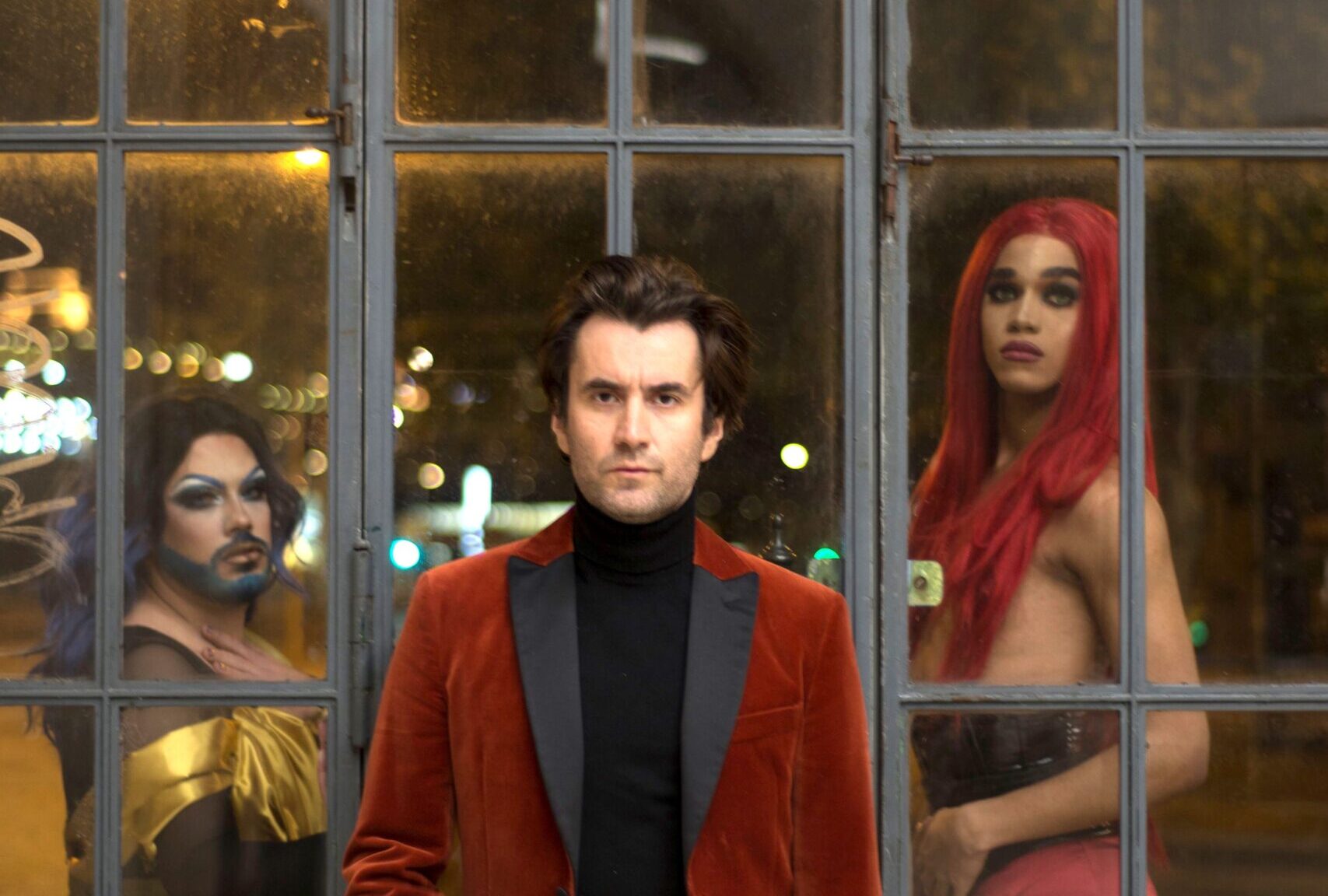
O Cineteatro Louletano recebe, no dia 9 de junho, às 21:00, o espetáculo “Damas da Noite, uma farsa de Elmano Sancho”, uma criação que cruza teatro, performance, biografia e ficção.
A peça parte de uma memória pessoal do autor e encenador Elmano Sancho: antes do seu nascimento, os pais esperavam uma menina, que teria o nome Cléopâtre. A partir dessa possibilidade não concretizada, o espetáculo dá forma a uma figura ficcionada, uma espécie de duplo que existe numa realidade paralela.
Para construir essa personagem, Elmano Sancho mergulha no universo do transformismo e das drag queens, explorando a identidade enquanto matéria instável, múltipla e em permanente transformação.
No espetáculo, os artistas transformistas e drag queens “vestem a pele de um outro, tentam ser um outro”. São descritos como “flores que abrem de noite”, intérpretes de uma transformação “pautada pela transgressão, o desconforto, a ambiguidade, a brutalidade dos corpos e a violência das emoções”.
A criação coloca em diálogo fronteiras entre realidade e ficção, ator e personagem, homem e mulher, teatro e performance, tragédia e comédia, original e cópia, interior e exterior, dia e noite.
Com este jogo de opostos e desdobramentos, “Damas da Noite” propõe uma reflexão sobre a identidade como matéria fluida, revelando “o outro que somos, o estrangeiro que albergamos”.
O espetáculo tem interpretação de Elmano Sancho, Dennis Correia, também conhecido como Lexa Black, Pedro Simões, também conhecido como Filha da Mãe, e Marie Carré, em vídeo. A duração aproximada é de uma hora e a classificação etária é para maiores de 16 anos.
Licenciado em Formação de Atores pela Escola Superior de Teatro e Cinema, em Lisboa, Elmano Sancho estudou também em Madrid, São Paulo, Paris e Nova Iorque. Ao longo da carreira, trabalhou em teatro, cinema e televisão com diversos encenadores e realizadores nacionais e internacionais.
Foi nomeado várias vezes para prémios de interpretação, incluindo os Globos de Ouro e os prémios da SPA Autores, e estreou-se como encenador com o monólogo “Misterman”, trabalho pelo qual recebeu o prémio de melhor ator da SPA Autores em 2015.
“Damas da Noite” tem já um percurso alargado por palcos nacionais e internacionais, com apresentações em Portugal, Cabo Verde, Brasil e Madeira, entre outros locais. Depois da passagem por Loulé, o espetáculo tem ainda apresentação prevista em Luanda, Angola, a 14 de agosto.
Leia também: Aos 102 anos, algarvia Gracinda Andrade continua a encantar gerações
What the hell is going on with all these toxic disasters in the news?
Over the past week, we’ve had a terrifying crisis at the GKN Aerospace facility in Garden Grove, CA, involving a pressurized tank of toxic chemicals on the verge of spilling or exploding for days and the evacuation of 50 thousand people in Orange County.
At the same time, right up the road in LA, we had a spill of thousands of gallons of crude oil that got into the LA River
Then, news broke of the horrifying tank rupture and explosion at the Nippon Dynawave paper mill in Longview, Washington, involving hundreds of thousands of gallons of toxic liquid and 11 workers who were killed.
People have been asking me all week, “What the hell is going on?” And that’s because I’m a professional editor and an award-winning journalist who’s been covering toxic disasters like this for years. Also, I’m from Orange County, and my family lives in Garden Grove, about 10 minutes from the GKN Aerospace facility, so I’ve been watching all of this very closely.
If you haven’t been obsessively investigating these kinds of stories like I have, the recent rapid-fire bombardment of headlines can make it seem like all these toxic disasters are coming out of nowhere. An explosion here, a toxic spill there, a fire there. “Why is this happening? And what the hell do we do?”
So, right off the bat, the most important thing to understand is that this is not all just happening now. It’s been happening, and most of the time you just haven’t been hearing about it.
Did you hear about the toxic explosion and fire at the Smitty’s Supply facility in Roseland, Louisiana in August?
Did you hear about the toxic Biolab fire in Conyers, Georgia the year before that?
How about the toxic lithium battery fire at the Moss Landing Energy Storage Facility in California?
I promise you, this is just the tip of the iceberg…
All the craziness this week actually gives me extreme deja vu that goes back to the first toxic disaster I covered while it was unfolding: The 2023 Norfolk Southern train derailment and chemical disaster in the small town of East Palestine, Ohio.
From the train derailment itself to the disastrous and unnecessary decision three days later to empty five rail cars’ worth of toxic vinyl chloride and set it on fire—releasing a massive black death plume into the air and exposing communities for miles to deadly toxins—that story was so horrific and unbelievable that it drew the attention of the public and the media, and then the public and the media started noticing that more train derailments were happening all over the place.
And it felt then exactly then like it does now. People were rightly asking, “What the hell is happening? Is the sky falling? Is this all part of some big conspiracy or what?”
But because I had been interviewing so many railroad workers, I knew the reality that the US averages over 1,000 train derailments a year. Which is a big problem, but it’s not a problem the media had covered much before East Palestine, so when they finally did start covering derailments, it felt like it was all happening suddenly and it was all coming out of nowhere.
But, again, because I’ve spoken to railroad workers across the industry, I also knew that this is part of a larger problem that is the result of decades of deregulation, corporate consolidation, and ruthless, profit-seeking, cost-cutting railroad executives and their Wall Street shareholders destroying the rail industry and our supply chain so they could rake in record profits. Cutting jobs, year after year. Piling more work onto fewer workers and working them to the bone. Making the trains longer, heavier, and more unwieldy. Automating human jobs and removing layers of security designed to keep workers safe and the communities those trains are blazing through safe as well.
This all comes down to these companies obsessively trying to lower their operating ratios, year after year, and sacrificing long-term safety for short-term profits.
Don’t forget that, throughout 2022, railroad workers were preparing to go on strike for the first time in decades, and they were warning me and anyone who would listen that, if these greedy rail giants and Wall Street bloodsuckers weren’t reined in, it was only a matter of time before a deadly catastrophe happened on the rails. Then, President Joe Biden and both parties in Congress conspired to break the potential rail strike in early December of 2022, workers had contracts shoved down their throats, and nothing on the rails fundamentally changed. Then, two months later, the derailment in East Palestine happened.
There are two really important lessons here that we need to learn to understand what’s happening now, in 2026, with these toxic disasters around the country.
First, like with the train derailments, there is a similar dynamic going on here where a high-profile disaster has people and the media just paying more attention to these things now.
As a journalist who covers these kinds of disasters year round, all over the country, in red states and blue states, in cities and rural areas, I can tell you that: These disasters aren’t just starting now and they’re not freak accidents coming out of nowhere. And if you think you’re safe and far away from the danger, I have some bad news for you…
You may be living in or near a “sacrifice zone” and not even know it. You could be breathing in toxic exhaust from nearby factories and trash incinerators, your pipes may have lead that’s poisoning you, your local water supplies may be contaminated by runoff from industrial plants, nuclear facilities, fracking operations, coal mines, landfills, massive industrial farms and concentrated animal feeding operations. A truck or train or ship, operated by exhausted and exploited workers and hauling hazardous chemicals, could crash by your home. A military base or government-owned plant could be polluting your body and blood with PFAS/PFOS or radiation. Or a giant damn data center could be moving to your town.
Again, this shit is everywhere.
And if you’re only seeing this in Democrat or Republican terms, if you’re only looking at the headlines and not the history behind these toxic disasters, then you are not gonna see the full picture here. This is not a red state or a blue state problem, this is a working-class problem. Corporations and the government are turning more of America into one giant “sacrifice zone,” and more of us are being set up for sacrifice than we realize.
Just like with the corporate behemoths and Wall Street vultures who destroyed the railroad system with the help of their bought-off politicians in both parties, the crisis we’re in now developed over time. And while every toxic disaster is different, I often feel like I’m investigating a serial killer because I hear the same stories coming from different disaster zones around the country.
And if I had to name that killer, its name would be: Profit. Specifically, it’s our political and economic system that prioritizes private profits over the public good and working people’s lives.
That has been the driving force behind decades of policy measures to deregulate industries, corrupt the very government agencies that are supposed to regulate them, defang the penalties for polluting our community, and disempower the workers and local residents affected by them so they can’t do anything about it. And, of course, that is the driving force behind all these greedy executives and Wall Street shareholders across industries obsessively cutting costs while simultaneously speeding up production, ignoring safety protocols and removing safety measures, and almost always choosing short-term profits over long-term investments in safer facilities, stronger worker protections, and less outdated equipment until and unless a catastrophe happens.
Basically, all this dangerous, life-threatening, environmentally hazardous stuff has ended up all around us, and it’s all gotten less safe, over many years of corporations and politicians “fucking around” for their own gain at our expense. Now, America is in the “find out” stage, and working people are the ones getting stuck with the toxic bill.
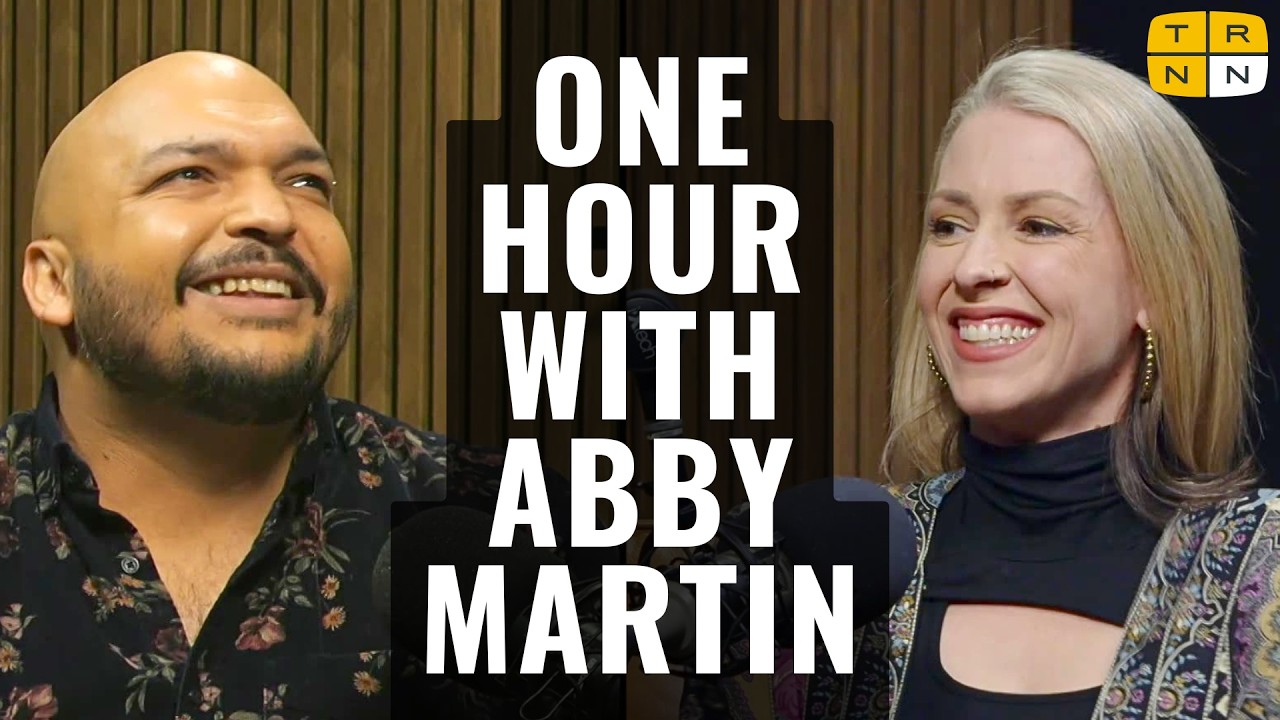
We sit down for an hour-long discussion with legendary independent journalist and filmmaker Abby Martin to discuss her new blockbuster documentary, Earth’s Greatest Enemy, and the existential threat that US empire in general—and the US military specifically—poses to humanity and to our planet.
Editor’s Note: This conversation was recorded on Jan. 29, 2026, before the beginning of the illegal US-Israeli War in Iran.
Guests:
Additional links/info:
Credits:
The following is a rushed transcript and may contain errors. A proofread version will be made available as soon as possible.
Maximillian Alvarez:
We’re here in the Real News Network studio in downtown Baltimore and I could not be more excited to have legendary independent journalist and filmmaker, the one and only Abby Martin here with me in person. Now, some of you may not know this, but Abby is actually a Real News alumnus. And Sister Abby, I know it’s been a minute since you’ve been back here in your old stomping grounds, but I just wanted to start by saying on behalf of the entire team here, welcome back to Baltimore. Congratulations on all the incredible essential work that you’ve done and we are all just so proud of you and so honored to be in this struggle for truth with you.
Abby Martin:
Oh my gosh. Well, the feeling’s more than mutual, Max. I mean, just being here back in the studio just brings me back to just the origins of Empire Files. Being in the Real News studio, working all hours of the night trying to knock out those weekly documentaries. And it was just such a cool crew to be a part of and it’s so amazing to be back.
Maximillian Alvarez:
Well, and what an incredible journey you and the Empire Files have been on since then. And we are of course here today to talk about your blockbuster new documentary, Earth’s Greatest Enemy, which is engrossing, expansive and frankly, terrifying investigation into the existential threat that US Empire in general and the US military specifically pose to humanity and to our planet. Now, I know that this project was years in the making and projects of this magnitude can often start as one thing and then become something much greater by the end of it. And so I wanted to start by asking, what is this documentary? Where did it start and what did it become by the time you and your co-director, Mike Prisner, were finished?
Abby Martin:
Wow. It was a long journey indeed and it was five years in the making, as you mentioned. And it started off during COVID with the birth of our first child and kind of joining our passions together, Mike, as an anti-imperialist, anti-war veteran organizer and me as an anti-war journalist who had been advocating against US imperialism my entire career as an advocacy journalist. So I advocate for issues. I wear my bias on my sleeve and I find it very refreshing in this kind of world of access, journalism and corporate media. And so combining those passions together and wanting to approach a subject that tackles the environmental impact of the military because of our obsession with the future, bringing a child into this world, having the responsibility of basically investing in the future. It is on our shoulders now. We’re all in. And so we saw that statistic kind of floating around that the US military was the largest institutional polluter in the world.
This is something that’s been kind of synthesized in academia when you look at just oil purchases, which the US military hadn’t even really disclosed until relatively recently. And there’s been some scholars who have addressed this in literature and studies, but no one had synthesized it in a cinematic way, certainly in a documentary fashion. But Max, once we got into the subject matter, every stone unturned is another documentary. And so we’re looking at legacy contamination of just radiation Agent Orange and then you look at the expansion of militarism all around the world with these 800 bases. Every base is a story. Every victim is another story. And then you add on top of that just the maintenance of the military arsenal, the actual infrastructure of the US military empire and how the entire thing exists as a self-fulfilling prophecy in order to maintain a fossil fuel infrastructure.
And it’s never been laid bare more with Trump in power with this kind of imperial belligerence when we see Venezuela, Greenland. So the documentary took a life of its own and started catapulting in every which way and kind of made us realize we wanted to prove the thesis here. We wanted to go into it not just talking about emissions, which is one story in itself, which we tackle. We wanted to tackle all of it. We wanted to go into the totality to sit someone down and inject them with the truth and you cannot walk away without having your brain rewired in terms of the way you look at the military in this country.
Maximillian Alvarez:
No, and I could say that as someone who’s watched it and was, like I said, quite terrified by what I was seeing and what you have given us kind of concrete evidence to prove. But I wanted to ask what kind of a monumental struggle that must have been to first research and then visualize the scope and scale of this problem. Could you just talk about that for a little bit?
Abby Martin:
I mean, especially when it comes to emissions, because this is something that’s been very secretive under the pretense of national security and not disclosed by the US military establishment. So it was unearthing so much data accumulated and synthesized by scientists independently to try to calculate these things based on just oil purchases. And then when you extrapolate that out and look at the lifecycle emissions, look at the application of the weaponry, the maintenance of this global supply chain, it totally becomes unquantifiable. And then you wrap into that the actual basically NATO, the machinery of the entire military empire, the great power competition with China, Russia, all of the building up of those arsenals and response to our aggression and belligerence. So it becomes simply unquantifiable and it was so difficult. And Max, at a point in the documentary, we bring in this philosopher and he says something really, really important where he says, number’s numb.
And he gives kind of this take on it’s so hard to get overwhelmed by the existential nature of US imperialism of capitalism because it’s so far reaching and all inclusive and all these issues are interconnected as we’re realizing more and more, but numbers, when you’re just looking at sheer facts and data, data, data, it can numb you. It can become meaningless. And I think we see that psychologically, I think with the genocide going on for three years straight, the data and the numbers become numbing. And so at a certain point it became more about just the storytelling and the emotion and collaging these narratives together to kind of give people that gut punch that it’s not about the numbers. Look, we proved the thesis over and over again, that’s done. But I think what really hits people is seeing how this is you, this is your children.
Your children are those children in Iraq. You are Alex Pretty. You are Renee Goode. You are every one of these victims of US imperialism because it affects every single person on the planet.
Maximillian Alvarez:
And I think back to the days of COVID-19 and when I heard those words in your documentary, Numbers Numb, that was the first thing that came to my head was sort of bearing witness to the monstrous spectacle of the bigger the numbers of people lost to COVID-19 got, the more numb people got to the human lives that were being lost. And I think there really is a terrifying truth there. And again, it speaks to the service that you and Mike Preisner have done in not just compiling what could be compiled in terms of the research numbers and from the emissions of all the military vehicles to the environmental impact of all the explosions and wasted munitions that are blown up or dumped into the ocean. I mean, the list is just so incredibly long and it’s impossible, like you said, to try to quantify it.
But I think what was even more horrifying to learn was that from Bill Clinton to now, all these kind of global US-led climate agreements don’t factor in the US military when they’re talking about our national emissions output.
Abby Martin:
Yeah, exactly. And people do not realize that. I’ve talked to several climate scientists, environmental academics, and they were absolutely flabbergasted at that fact that should be widely known, that militarism, not just US militarism, but every country’s militarism is excluded. Under the Paris Accords, they gave an option to opt in, but of course many countries are like, “Why would I do that? ” It’s not mandatory. Yeah, you know what? So it’s just completely insane and totally a farce that for the last 30 years of these international climate treaties, the US military has led the exemption of all military emissions and it’s gargantuan. It is completely gargantuan and totally hidden from this growing total. And so what’s astonishing to me is that why am I the first person to confront these major politicians at these conferences? Decades in the making, you see this bipartisan consensus for empire and just the acceptance of lying about this, of accepting it as normal and it’s totally outrageous.
And the whole dystopian nature of these climate conferences in general, which real news has covered extensively is just off the charts. I mean, it’s all about corporate profit. It’s all about how can we market this? How can we make money off of it? And then it’s like, well, no wonder you have a contingent of society that’s detaching itself less and less from that consensus reality that climate change is this existential threat that we need to globally cooperate on because simply the opposition to the fascist takeover, they’re not treating it like the emergency it is and they’re not acting accordingly. So it just makes it look like a money making venture and it’s really unfortunate.
Maximillian Alvarez:
Another word might be a racket.
Abby Martin:
Yeah, there you go. Yeah. It’s a goddamn racket. Yep.
Maximillian Alvarez:
There it is. I wanted to ask if you could sort of lay out this double helix death spiral of US wars and military imperialism around the world and like the climate crisis, like how those two things and how you unpack it in this documentary, but like how those two things are intertwined in the most monstrous way.
Abby Martin:
And this goes before obviously World War II with the advent of the war making industry, how because Europe was left in ruins, you had the US kind of concentrating the actual war machinery and that’s where you see the genesis of the war economy being a kind of a permanent footing in the US. It established well before that. I mean, we’re talking about the first extraterritorial military basis that were established through obviously the veins of the genocidal takeover in the first settler colonies here, but those first extraterritorial military bases were to protect extractive industries of fur and mining just to basically … I mean, we almost drove beavers into extinction just so people could have funny hats in Europe and then it became coal. So the first bases that were overseas were to access coal and to basically be infrastructural holding cells for coal. And of course, once the national security priority turned to oil, once oil was discovered and replaced coal, that’s when we saw that just completely combined where oil became the dominant priority for access and expansion.
And then like you said, it became the self-fulfilling prophecy where in order to expand the military, you needed more oil and more resources and then you need to justify the expanse of the military to get more resources. So now this massive empire around the world with 800 bases spread across nearly every continent, it maintains itself through the access to oil, the pillaging of every last vestige of natural resources on the planet. And that’s exactly laid bare with Trump’s rhetoric today. He is literally saying, “We need Greenland.” That is the last basically unbridled wilderness on the planet. I mean, the amount of coal oil and rare earth minerals that are under that ice, they are saying explicitly they need that for their national security interests. And so you just have to read between the lines here. I mean, you don’t even really have to. He’s saying, “We need the oil from Venezuela.
We need the oil from Iran.” That’s what this is about. You had the Bush administration spending about a year trying to propagandize us into complacency with invading a country that had nothing to do with nine eleven just to seize the oil, but they wasted a lot of time to propagandize us, ties with WMDs. And so now this mask is so ripped off where they don’t even need to pretend. They’re just saying explicitly, “We are trying to grab every last drop of oil because that’s ours.” So in a way, it’s an important moment, Max, because for the first time in my life, things are just very laid bare and I feel like people are really putting all of this together in their mind and organizing with that international scope with the US Empire being the machinery that’s oppressing all of us around the planet.
Maximillian Alvarez:
I think you’re right and it really makes me sort of reflect on the conditions that have made that more possible now than it was in the post nine eleven years. And I want to kind of break the fourth wall here and part of this question is going to be me asking if you could talk a bit about how this documentary, Earth’s Greatest Enemy embodies your own trajectory as a political activist, as a journalist, like from the Iraq war to now, because I’ll be honest, we would not be sitting next to each other, 23 years ago. I grew up very conservative. My family and I were totally bought in on the Iraq war propaganda. We were part of the US majority that just felt so hurt, shocked, and aimlessly hurt and shocked after nine eleven and trusted far too much in our own government to sort of tell us what to do next.
It took a lot of years for me to sort of uncouple myself from that conditioning. But at the time, I did not understand the kind of what to me was a left wing talking point of like, why would we be going to war with another country just for oil? What does that mean? And now here I am like nearly 25 years later being like, “Jesus, how could you not see what was right in front of you? ” So I guess first of all, how were you able to see what I was not? And I guess connect us from there to here like how the seeing of the monstrosity that was always there, like how more of us have actually come into the light and seen what we’re actually up against.
Abby Martin:
I think it all goes back to just my love for the environment, my love for nature, my love for humanity. I just really love people and I love connecting on an interpersonal level. I think when you look at this kind of death spiral, as you called it, this machinery of capitalism and the subjugation of the rest of the planet at the barrel of a nuclear armed gun to say subject or die to global capitalism, it is just so counterintuitive to like love, solidarity, having a habitable planet and future. And I never was able to really articulate that capitalism was the problem. I was kind of a confused anarchist, libertarian back when I was first being radicalized by politics, because I thought Bush was evil incarnate. I was just like, “Who the hell are these people? They’re demons. Why are they doing this? ” And then Nancy Pelot and then you slowly kind of unpack.
You’re like, “Hold on, the Democrats are part of this. Hold on. The media is part of this too.” But it was always so obvious to me because of my just repulsion for war. When the media started talking about Iraq, I was so confused, Max. I mean, I think it helped because I was surrounded by militarism at San Diego State University. I was just thrown into this where I was surrounded by military frat bros and I was just so taken aback. I mean, growing up in the Bay Area, so the proximity to Berkeley, the hippies, just that counterculture of the revolutionary fervor of Berkeley, Mario Savo and the free speech steps and things like that. And so that was always baked in, even though I was just kind of like a generic Demo from suburban Pleasanton, California. I think when the Iraq War started and the bombing of Baghdad, I was sitting in the cafeteria at San Diego State University and I felt nauseous.
I felt sick and people around me were cheering and I’ll never forget that moment. I just was like, “What’s going on? I’m so alone. Why people think this is good? This is sick. What did Saddam do to us?” I remember calling my mom, I said, “Did Saddam do something?” And she was like, “No, the media just started talking about this. ” And I just said, “What is happening?” And it was so hard to organize there, but it became so powerful to realize media was a tool to tell these stories because I started watching radical media. We were talking at the time, this was around 2003, it was like Democracy Now and Alex Jones. It was like a very weird … The internet was very strange, but you also had the capacity to do things. I mean, there was this egalitarian sense of the internet that was very exciting where you could build real friendships and find things that were just really like not … It wasn’t fed to you by the algorithm.
And so I was able to pursue so much knowledge and learn and be self-taught and how to do these tools. And so anyway, I’m going on this very long tangent to say it all synthesized for me very obviously, but it is also a journey I think for a lot of people. I’ve met people who are my age who said I didn’t know anything before October 7th, which brings me to your second question. I think October 7th and the genocide in Gaza has been an extremely revealing moment, catalyzing moment for tens of millions of people around the world. And I’m anecdotally, I can say that just traveling across the country with this documentary already going in rural, urban areas, driving everywhere, talking to people, everyone has been motivated by the fact that this government has subsidized and overseen this genocide and how it has been bipartisan and the failure of the so- called opposition and the Democratic Party to stop it and incubate what we now have.
It’s all just so crystal clear and it’s been actually really amazing to see the radicalization occur in circles that I never would’ve expected at all. Older religious people, I mean, but really it’s the youth. It’s the youth who are seen, they don’t have a future if they let this just grow unabated, if they let the data centers take over, they let the unregulated nature of global capitalism take over, unregulated nature of imperialism, which turns inward, which we’re seeing the ICE executions in the street. So I’d say there’s an explosion of consciousness around the world, synthesizing all these issues, putting Palestine as the cornerstone of our collective liberation and realizing how all these things interconnect. And it’s beautiful, Max, because on the streets during the Iraq war, Palestine was too controversial. In the streets were in Occupy Wall Street, Obama was off limits. And so it’s all burgeoning now.
It’s all right beneath the surface and people are so ready to hear that phrase national strike, national strike. They know we’ve been in the streets with sustained protests. I’m an activist and a journalist. Again, I’m an advocacy journalist, so I advocate my own activism and I embed myself in the people’s stories and people’s struggles and try to uplift those stories just as real news does. And so I’m speaking from the streets. I was just in the streets in Minneapolis. I’ve never seen energy like I have now and people standing up in solidarity with their brothers and sisters because they want to terrorize us in a submission and silence and fear and I’m seeing the opposite happen and that’s something extremely powerful and again, kind of incalculable in terms of like what will happen with this energy. It’s very exciting.
Maximillian Alvarez:
It is. And this is a moment in history not to be wasted because it won’t be around forever.
And it also sort of makes me think about like again, what is so different between our moment now in the year of our Lord 2026 and our moment then in the post nine eleven years at the turn of the millennium. And I of course can’t help but think about my own trajectory, my own family, like what has changed in our lives since then? Well, a massive economic global financial meltdown happened. We lost everything that my parents had worked for, including the house that I grew up in and it’s been a very long kind of struggle to get back to a place of peace and normalcy for our entire family since then. And now as someone who goes around interviewing, working people around the country talking about their lives and their stories, I hear a lot of echoes of that similar trajectory for a lot of people.
And I guess that’s just a long-winded way of saying that at the turn of the century when we were as a country much more gung-ho about … Yeah, we have the right as the United States to go around the world telling other countries what to do. We have the right to spread democracy because it’s the best system in the world. We’re liberating people, we’re not doing something bad, yada, yada, yada.That was a time pre 2008 crash when the American dream was still plausible for a lot of us. You go out on the streets now, you talk to people now, no one believes in the American dream. I mean, if a handful of billionaires own everything and all of our money is just being sucked out of the public coffers and into the war industry. And so what I hear now when I go to these demonstrations in Baltimore, DC, what I hear now when I talk to poor and working class people in deep red Trump country districts in the Midwest or the South or here in the Mid-Atlantic, the common refrain that I hear is like, “Why is my money going there when we’re all kind of floundering here?” And I think that that is also a very significant sign of where we are as a country, but also a significant kind of mobilizing factor that presents an opportunity for people to look around and realize we’re all getting screwed by very identifiable villains.
And I wanted to sort of like hook that back into earth’s greatest enemy and ask who are the identifiable villains in this story that you’re telling and how do we take them on?
Abby Martin:
Yeah. I mean, the problem with capitalism and the status quo of neoliberalism is that everything’s been co-opted, superficialized, tokenized, our struggles have been bought and sold back to us. And so for the last 50 years, labor density, unions, that revolutionary undercurrent of all the progressive struggles, it’s been kind of co-opted into these corporate branding and marketing campaigns and it’s been really, really horrific to see because we’re getting back to our footing where people were in the 60s and 70s with this fundamental understanding of ideology and being able to articulate what we are fighting for and against. And so we’re getting back to that. I think Bernie and Democratic socialists of America and things like that have really resurrected the spirit of what we can all kind of orient ourselves around. But for the longest time, Max, I mean, I grew up very anti-communist. I mean, this was very, very baked in to American society because of the history against the ruling class.
And so what you see now is parasitic billionaires who have basically seized that distrust that did exist for exactly the reasons that you’re talking about, the disaffected masses who lost everything during the financial crisis, who knew that we were lied to about nine eleven and in the Iraq war, they don’t trust these people, but Trump was very smart in the way that they seized that momentum and siphoned all of the energy into this faux populism. And again, there was no opposition infrastructure to counteract that. And so a lot of us are kind of flailing saying, “How do we gain ground when they have taken over everything?” And then the Democrats kind of incubated it and laid the groundwork for them to take over everything because they’re basically Republican lights because everything is about making profit at the end of the day. And so I think what we need to do is realize we are all victims of propaganda.
We’re all at different steps of our journey of breaking out of that, but that’s all baked into all of us. And so approaching each other, and I’m not talking about fascists or people who are apologists for genocide. There are certain contingent of society that can’t be helped. They’ve succumbed to the darkness. They’ve been beaten down by the system and they’ve commodified everything. They have lost their empathy. I’m not saying that they’re born like that. I’m just saying that a lot of them can’t be helped right now and we need to let that go. But I think the vast majority of people are empathetic. They’re humanitarians. They want civil liberties. They want the foundation of what they believed America to be, human rights, the First Amendment, free speech, the beautiful things that make this country supposedly great. Those are the people that we need to reach out to with humility and empathy and reaching them where they’re at.
I’m talking about service members. I’m talking about veterans. They are not the enemy. They are victims of the enemy. The enemy is the top brass of the military, the government officials who are complicit in this, who are profiting off of war, who are invested in the war machinery, editors in chief at the New York Times, the Washington Post who are putting out the propaganda that sows the seeds for genocide, who perpetuate the status quo of this death cycle. Earth’s greatest enemy, that was the Biden administration. That was before Trump. That’s the status quo. That’s what we’ve accepted as normal, barreling us off a cliff, killing every last living thing on the planet, a finite planet. It’s collective lunacy and madness to go into this year after year knowing the outcome max. And I think people are so ready. They’re starving for this information. They’re sick of being gaslit and lied to and they’re realizing, “Hey, this is not the reality that I see.
This is not the reality that my neighbor sees.” COVID was very important for the ruling class. We were fighting each other about vaccines, about God knows what while they cannibalized every last industry. They siphoned every last drop of wealth. They pillaged everything. They gained what tripled their wealth in the last five years. And what happened to us atomized, isolated, siloed off, brain rodted on our phones thinking we can’t ever do anything about this. We lost. That’s what they want. Just like Barry Sanders in the movie says, “See what you see. Don’t be duped. See what’s right in front of your face.” And I’m not talking about on your phone, on your screen. I’m talking about in reality, vast majority of people are ready. They’re waiting for you to talk about these things because they don’t have the chance. They don’t have that opportunity or those avenues because Elon Musk wants them to believe something else.
And we have to ask, why is the richest man in the world showing us what he’s showing us? So when we get on our devices, yes, the advent of social media, the advent of Palestinian voices dictating their reality and taking back their agencies, been monumental, revolutionary, assisted to all of this, but we have to also be calculating strategic, creative, getting off of these devices and meeting like we used to because that’s how we win. We don’t win on here. That’s just one tool for us.
Maximillian Alvarez:
I think that’s beautifully and powerfully put and vitally true. And we’re saying this as two media makers, you know, Media personalities. Media can only do so much and we are trying to do as much as we can with it and your new documentary is an incredible example of that. But I could not agree more with your last point that we’re not going to bring a coalition of poor working class regular people banding together to stop the destruction of our society and our planet online.That’s not going to happen.You don’t get 50,000 people marching through the streets of Minneapolis just by posting and sending emails. You have to have that in- person connection, which is all I’m hearing coming from Minneapolis. People are saying I’m both simultaneously more afraid of my government than I’ve ever been, but I’ve never felt safer in my own neighborhood because everyone’s talking to each other and everyone’s kind of working together.
We were already losing that basic infrastructure for society as such well before 2020. But I think COVID really did a number on what was left of our social infrastructure, on our social being. So many of us just stayed closed in, stayed cut off, stayed glued to our phones and our computers. And as you mentioned, the powers that be, the people who control the media, those platforms, they know that and they are manipulating that to the point that no one has an agreed upon basis of the reality that we’re actually all living in because depending on what feed you’re looking at, where you live, what your search history is, you’re going to see an entirely different world be outside your window than the person who’s living next door to you. And
Abby Martin:
That’s a
Maximillian Alvarez:
Very dangerous and dark place to be. But I wanted to kind of hook that back into something else that you said, which was the value of not only talking to service members and military veterans, but that was made manifest in this documentary. I mean, it’s important in and of itself because as you said, they are not the enemy. They are the victims of this monstrous machine. They are the human grist for the proverbial mill of US imperialism. But it also kind of hooks into the beginning of this conversation where we were talking about how hard it is to actually research and understand this topic of just how big of an environmental threat is the US military to the world. And it was so clear to me in your documentary that if you go and try to get answers to those questions from top government officials or military brass, you’re not going to get anywhere.
But when you and Mike Preisner are talking to veterans, the rank and file of the military, you get a very different perspective on the problem. And I wanted to ask if you could talk a little bit about how different that perspective actually is.
Abby Martin:
Okay. So there’s this hive mind that kind of operates in a similar fashion to how a corporate board would. So let’s say someone just has a conscience all of a sudden who’s on the executive board of Amazon or something, they would just be kicked out. You need to make money, you need to make more money than the last quarter, otherwise you’re not profitable. You’re a failing entity. That’s exactly how the US military operates. So when you’re looking at who’s sitting on the board of these board of directors of the defense contractors, they’re all interlocking with the media arms and all of these things. And that kind of explains this hive mind operational structure of a system that kind of works on its own. It doesn’t have a conscience, but of course it’s comprised of people who do and they can speak out and they have voices and they have their own minds, even though you’re beaten down in the military to not have your own mind.
So when you break out of that, when you see it for what it is, it’s such a powerful thing. I know hundreds of service members, because of my husband’s work, obviously, organizing soldiers and getting people out because anyone can get out of the military. It doesn’t need to be something specific. Anyone can file a CO packet and get out today. You never need to stay in and Mike can orient you through that. But it’s just so amazing to see people who are coming to the movie, watching it, who are active duty. My cousin who was a 20-year-old naval officer watched it and he was just like, “You know, because I don’t agree with your politics, but I’m here to support you. ” After the movie, he was just shaking. He’s like, “I’m ready to F and go, dude. I’m ready to fight.” And it’s just reaching people on a human level because I think especially when you reach out to service members, they’re victims, they’re not profiting off of this.
They don’t benefit from this system. They’re cannon fodder. They’re the human detritists that are going to be kicked out in the street like Levon, the homeless veteran at the beginning of the movie. He represents kind of the consequences of the system. I mean, he represents all of the destruction of the environment, the garbage that’s tossed in the ocean, every bullet fragment that’s exploded and the chemical exposure of all the toxins left everywhere that were bombing and shooting shells. And that story alone is so powerful, just one single homeless vet who was in a commercial for the army.
Levon:
First Air Cav Brigade. I was in US Army. I joined up in 2004, deployed out in 2006 and it was hell. I was at Camp Taji, seven miles south of Baghdad. I was one of the “Army of One” commercials. I was a guy with the helicopters.
Army Officer 1:
Everybody listen up. This is Levon.
Wenty:
Hey, Levon. I’m Wenty.
Army Officer 1:
You’re on the 120 today. So if there’s anything you need, just ask these guys. They’ll take care of it. All right?
Army Officer 2:
Welcome aboard.
Levon:
Thank you.
Army Officer 2:
You ever been around anything this fast before?
Levon:
He walks in and goes, “You ever worked around anything this fast before?” Yeah. My last job.
“Army of One” Commercial Narrator:
See how army training gives you strength for now, strength for later. GoArmy.Com.
Levon:
Yeah, it was all a lie. I have nerve damage, so I’m actually losing my hands. So I’m trying to use them as much as I can until they’re all gone. It hurts. It actually hurts. But that’s what the hydraulic fluid in service does. Laughing is the only way I can get through, otherwise I’m crying.
Abby Martin:
It encapsulates everything. It’s like you’re exploited, your story, your body, and then you’re thrown in the trash and you’re left to die with no help. And that’s the thing that veterans need to understand, whether it’s burn pits or agent orange, chemical exposure. There’s no help on the other end under this system. It’s just about churning your body out for profit. You’re just another commodity. And once you realize that you join the fight because you can always get out and you can make your own decisions and agency to realize it’s not worth it. It’s not worth your life. Your life has value and your life has dignity and you need to put it toward benefiting humanity and the planet.
Maximillian Alvarez:
Again, that was very beautifully and powerfully put and it really kind of chills my blood hearing everything that you’re saying because it sounds so eerily familiar from the reporting that I’ve been doing over the past few years starting in the small town of East Palestine, Ohio. And we are having this conversation at the end of January 2026. I’m going to be back in East Palestine next week. It’ll be the three year anniversary since the Norfolk Southern bomb train derailed in these people’s backyards, turned their lives upside down, trained filled with toxic chemicals that in an industry that has been just cut to the bone on the labor side, on the safety side, but is making more profits than it ever has. And who benefits from that? The shareholders and the executives. Who bears the costs of that? The workers on the rails and the people in towns like East Palestine, Ohio.
And this is an entire region that has been poisoned by industrial or corporate profit seeking greed and government complicity and negligence. Our own EPA was telling people there, “You’re fine. It’s okay to go back home. The air’s safe. The water’s safe.” And here they are three years later telling me people are getting all kinds of weird cancers. People have to leave because they can’t stay in their homes without getting nosebleeds, rashes, their kids bleeding out of every orifice. It is a shit show, a monstrous shit show that is sadly not unique to Ohio. What I have learned going to different sacrifice zones so called around the country, talking to different poor and working class people here in South Baltimore, down in Georgia near the biolab fire that happened last year, moss landing like in California, this is everywhere and people are being poisoned and abandoned in the exact same way that you just described as like military veterans and the people living abroad who are if not killed by our munitions are poisoned by them for years and the rest of their lives.
So all of that is here at home as much as it is there abroad. And frankly, I don’t think your average American knows that when it comes to like sites of industrial and mass pollution here in the United States, the biggest portion of super fun sites that come from one source is the Department of Defense. It’s like military bases. It’s weapons manufacturing plants. It’s the kind of foam that they use to put out fires that puts forever chemicals in the water that we’re all drinking. And so I wanted to kind of bring it back home for a second and ask if you could talk about the vast environmental kind of impact that the war machine is having on Americans and like how that connects to the imperial monster of American militarism abroad.
Abby Martin:
You look at just legacy contamination of what the US did during the Cold War, during World War II. I mean, you even still see dead zones from World War I from small munitions, which just kind of shows you how detrimental these are in just training. I mean, even just training alone, like you mentioned forever chemicals. I mean, the firefighting foam that’s used extensively by the military. The military is one of the most pervasive users of PFAS contamination. There are safe alternatives there have been forever, but they just don’t use them because it’s, I guess, less cost effective and they’d rather just dump them all and contaminate water supplies. So people may know peripherally about Camp Lejeune, which is the worst water contamination event in US history. This is now a super fun site, Camp Lejeune, North Carolina military base where they dumped toxic compounds for decades.
And after they knew that it was toxic, they continued to do it and cover it up. And so a million people were poisoned harmed by this toxic dumping and there was a huge amount of poisoned infants that were stillborn babies. And what was most shocking about this, Max, is this could be looked at as like, “Oh, it’s just a 60 year old story. The government took care of everyone and they’ll never do it again.” Maybe they just didn’t know any better. Well, it’s amazing to think that now 60 years later, people are still dying. They have ailments, they’re generational and physically impaired from the toxic water contamination and there’s no database. They are trying to try every single individual claim and the judge said it would take over a century to try to actually give all of these people what they deserve. And of course a lot of them have died.
They’re just waiting for all them to die off so they just don’t have to deal with them anymore. But I think it really just explains how they deal with victims of burn pits, with victims of aging orange poisoning. They deny, they deny, they deny. They try to just resist doling out even a penny for the victims and then the site is left destroyed. I mean, it’s a super fun site. This is just a poison toxic site that doesn’t go through proper remediation. There are hundreds of them all across the US. Like you said, the vast majority are either US military installations or have previously housed military uses. So bullet manufacturing, you have the Hanford nuclear site, which is like a ticking time bomb that can poison three states at once in the entire river that supplies water to half the country. So these are serious problems that are not being dealt with because we don’t have a functional government that is going around saying, “Hey, how do we do this clean up properly?” No, no, no.
We’re just going to commit fraud. We’re just going to lie. Governors don’t want the black spot on their record by saying, “We have a super fund site. We need to clean it up. We need to divert resources.” They’d rather ignore it. And of course, the military is sacred. It’s worshiped so they don’t even want to combat it. In on amazing instance, Jay Inslee, who was the governor, previous governor of Washington who ran on climate change as his entire doctrine, he wouldn’t even criticize the military. He wouldn’t even answer a basic question on should these be included or not in emissions reporting. I mean, the cowardice is frankly horrifying and disgusting.
It’s so far reaching here. When you put legacy contamination aside, just again, the maintenance of the arsenal here at home. We have hundreds of bases here in the US. Every base is dumping forever chemicals in the ground. Every base has contamination. Some of them much higher than Camp Lejeune. We talked to a person who is testing the groundwater around bases in the US. He is saying he is finding ground contamination higher than Camp Lejeune. Why don’t we hear about this, Max? Why? This is the most base level big tent ever for a human being. Clean water, clean air, clean food. If we can’t build an opposition or an organizational infrastructure around that, what are we doing? What are we doing? So again, it’s this total ignorance, total ignorance of the military being actually not a benevolent force spreading democracy and human rights. A force for profit that is destructive, deadly, totally dissociated from human life, the sanctity of life.
It’s willing to kill everything and everyone on the planet. So Jeff Bezos can have another yacht. Is it worth it? Hell no, it’s not. Hell no, it’s not. And so this just brings it all home and especially with ICE, because at the end of the movie we talk about the militarization of the police. So that concept of the imperial boomerang, I mean, of course it’s always been our tactics of colonialism, genocide. They’ve always been circling back, right? But I think the visceral nature of it now where we see storm troopers masked, immunized in the streets, state executioners in military guard where you can’t even distinguish, is this Palestine? Is this here? What am I looking at? It’s here, baby. It’s here to roost. And so I don’t even … There’s no difference anymore. I think for a long time people were trying to convince people, “Hey, no, no, you should care about Palestine.
This is all going to come back up. And you shouldn’t care about it because eventually it’s going to come back home. You should care about it because it’s human life. It’s human life and it’s on our shoulders. This is our government doing this. ” But I think especially now people are saying, “Oh my God, it’s here. It’s here and we’re all of our liberations intrinsically tied to one another.” And I think it’s becoming so, so clear. And especially when you tie in the environment, Max, because it’s not just one life loss, this is the air, this is the water, this is our planet and it doesn’t stop with Palestine. It doesn’t stop with the Congo, the rainforest, it’s the lungs of the planet. Every drop of water comes back and that’s what’s so crucial about the collaborative nature of approaching this existential crisis is that instead we have the great power competition where we’re fighting, we’re preparing a war with China when we should be cooperating.
How can we approach these together to actually give us a fighting chance?
Maximillian Alvarez:
I want to kind of end on that powerful note, right? Because as much fire as I’m feeling in my belly thinking about our collective duty
To respond to this moment in history for humanity, for life on this planet, for our children, our grandchildren, all of it. I am feeling more called to this fight than ever before at the same time that I, like everyone else who’s watching this right now am feeling more distraught about the state of things in the world right now and it seems like we just have a brick on the gas pedal careening in the exact wrong direction, not only in terms of tackling the climate crisis, but in that double helix fashion, like stopping the US war machine, Jesus, we’re only in the first month of 2026 and we’ve invaded Venezuela, kidnapped its president. US is talking about just going in and taking Greenland, invading Iran. It feels like the very monster that you photograph and document and detail in this documentary is on a murderous planet destroying rampage.
I know a lot of people out there are feeling like, “Oh my God, this can’t be stopped.” But I want to end on the note that it can
Abby Martin:
And
Maximillian Alvarez:
It must and what tools your documentary gives us to help make that a reality.
Abby Martin:
I think this is very important. Like we said, see what you see, don’t be duped. So see what you see, meaning the success stories, the things that the billionaire class does not want us to see the victories across the country, the mobilizations, the coalescing these movements, the burgeoning of consciousness. I mean, I always say empire, Zionism, it’s a paper tiger and that’s why the propaganda is so desperate and that’s why the violence is so extreme because the colonizer mind cannot beat a liberated on. They can kill. They can kill and destroy, but they can’t win. They can’t be victorious. And all an empire knows is that every problem is a nail. And so the more that they dig their own graves, the more people wake up, the question is, are we going to wake up fast enough? And I think that when we see success stories like last year, Max 35 data centers got stopped in the US, where is that on the news?
So it’s us seeking out the things that can actually reinvigorate our revolutionary spirit energy and not get despawned and paralyzed with the sheer, terrifying nature of it all because it is overwhelming. And again, it’s intentional to berate and barrage our minds like this. They’ve psychologically, it’s a psychic assault. It’s a physical assault. It’s an all body, all mind assault and they know exactly how to manipulate us. If they’ve learned anything from the last mass uprising, it’s that. And so I think having that consciousness, yes, they’ve wanted to individualize everything and that’s the whole problem with liberalism, capitalism, individualizing our struggles and the solution. Papers, straws, driving … Look, and I have solar panels. I’m a militant composter. You don’t get a shred of food past me. Ask my husband, but it doesn’t mean that I don’t understand who is the perpetrator, who’s actually at fault.
It’s not us, it’s them. And so while you need to act in your individual choices with whatever capacity you have, with whatever talents you have, build and guide that to the struggle, because if it didn’t matter what you said online, they wouldn’t be spending billions of dollars on propaganda to manipulate and curate our realities. If it didn’t matter what you did out there, they wouldn’t be spending billions of dollars on storm troopers to terrorize us and to make us feel scared to walk out of our houses, obey or die, comply or die, right? That’s what they said about Alex Pretty. You should have stayed inside. No, we have the right to assert our liberties. We have the right to do these things. So to kind of reclaim reality is like a revolutionary act in itself because it is a war on our minds. That’s the first step, joining an organization, getting out there, being a part of the community.
Because Max, we don’t do this. We don’t do this work because we know we’re going to win tomorrow. We do it because we have to. Like Chris Hedges said, we fight fascists because they’re fascists. We have to fight it because we brought children in this world and not just that, because I love this planet. I want my children to go scuba diving in Noko Bay. I want them to meet the Tugong. I don’t want him to think that I gave up because I just succumbed to the darkness. I want them to know that we fought till the end. And so we have to. We do it because we have to because we love life and we do it to preserve life and we win when we know that we can because guess what? We have the power. We have billions of people on this planet and the rest of the world is ready to go.
They’re waiting for Americans. They’re looking at us saying, “It’s time. It’s time for you guys to wake up because we don’t want our planet destroyed because if you’re out of control government and military empire.” So as crazy and dystopian as things may seem, and yes, indeed they are, there is an alternative path that is becoming more and more urgent by the day and I think people are realizing that more and more, that the status quo is death, that you’re in or out and I think a lot more people are choosing life. They’re choosing to be all in organizationally lending whatever they can to the struggle because we have to Max and I think once that consciousness flips, mass education, of course, is a very important tool. That’s why we do what we do. Once that flips, it’s going to happen quick. Occupy happened quick. That was amazing.
That was one thing that I was like, “This is going to end in a couple days.” And it lasted for months and months. That was beautiful, revolutionary. And we took that spirit and I think it still carries on with us today and we’re waiting for that moment and I think it’s really right around the corner. It’s coming. And once it’s here, it’s unstoppable and we need millions of people, civil disobedience, nonviolent civil disobedience, because we cannot fight the military empire with violence. We can’t fight it with military might. We shut down capital. That’s the language these people speak. We haven’t even tried to strike, but baby, when we do it, that’s going to send shockwaves through the world and we can move mountains when we stop business as usual.
In 2026, fascism in the US is rising while “the left” descends further into powerlessness, goofiness, and irrelevance—but, author William C. Anderson argues, it doesn’t have to stay that way. In this episode of Rattling the Bars, Anderson returns to the show for an unflinching conversation with former political prisoner and host Mansa Musa about the state of the political left today and the lessons organizers and everyday people can learn from the Black Liberation Movement and figures like the late Russell Maroon Shoatz.
Editor’s Note: This conversation was recorded on May 1, 2026.
Guests:
Additional links/info:
Credits:
The following is a rushed transcript and may contain errors. A proofread version will be made available as soon as possible.
Mansa Musa:
Joining us today again is William C. Anderson, author and columnist of Prism. If you missed our first conversation where we explore how Black citizenship has historically been called into question, you can find it on our YouTube channel. The history feels especially urgent this week following the United States Supreme Court’s ruling gutting the Voting Rights Act. This is clearly part of the continuation by the right to reverse black progress.
William, before you dive into your latest prism article which critiques the current left and offer a path forward, what is your assessment of what you see coming out of the Supreme Court this week?
William C. Anderson:
Yeah, it’s something that I’ve been thinking about quite a bit. I saw the news, and I wasn’t surprised by it. I thought it was to be expected. As you might know, this is something that I wrote about in the Nation on No Map, and specifically I mentioned the 2013 Voting Rights Act decision in terms of the case with Shelby v. Holder, just following it up to that point because the book came out in 2021.
So with things being where they were at that stage, I was anticipating it getting to this point and becoming even more dismantled and even more deconstructed.
And the thing that I would say about it is it’s an especially personal matter for me because I’m from Alabama, From Shelby County, who brought the case against the Obama administration withholder. And in that original ruling at that point, one of the things that Chief Justice John Roberts had said was that something to the effect of that at 50 years later, things had changed quite dramatically and it was kind of implying that there was enough progress that had been made that is not necessary anymore to have something like the Voting Rights Act. And that’s what kind of underscores a lot of these white supremacists and fascist attacks on Black history and on legislation that has been beneficial to Black people. It’s kind of trying to illuminate some sort of postracial society that we know clearly doesn’t exist because they’re becoming increasingly racist. They’re not becoming less racist.
So it’s really just more evidence that if we really want to be able to see better conditions that are permanent and that are only making progress for the betterment of our lives and the sustenance and the resources that we need, then we have to have liberatory politics that actually push for those things in a way that is wholesale, that is comprehensive, that is expansive, and that’s not incremental. And that’s not to do anything or say anything that diminishes all of the blood, sweat, and tears that were put in by the foot soldiers of the civil rights movement across the board from the more radical ends to the more moderate ends of the civil rights [movement].
What is to say is that we should be able to learn from this history that no matter what, when we’re relying on the halls of the White House and Capitol Hill and representative democracy to try to do something for us that we know it’s not designed to do, that it’s always going to end up like this. It’s always going to be dismantled. It’s always going to be rolled back. It’s always going to be trying to correct itself to get back to serving white supremacy and capitalism in the fullest extent, and not doing anything that it’s not meant to do originally.
Mansa Musa:
Yeah, I agree 100%. This week, Prism published a new installment of your series, Another Way Out, titled We Need a Mosaic Movement and you write, “instead of a call for resentment field, unity or traditional fronts, we can look to what former Black Panther Party, Black Liberation Army members, and political prisoner Russell Maroon Schultz called The Mosaic.” Could you walk us through the core argument of your article and could you provide a brief introduction to the life and legacy of Russell Maroon Schultz?
William C. Anderson:
For sure. I’ll start with Russell Maroon Shoatz. And Russell Maroon Shoatz was a really interesting and spectacular and dynamic individual. He was a former Panther and Black liberation army soldier, and he became active in politics, I want to say in the 60s, and was a founding member of the Black Unity Council in Philadelphia, and they later merged with the Black Panther Party.
So he put in a lot of work. He has a deep history in movement and in struggle and he got locked up in 1972 for the first time, and he becomes a really extraordinary political prisoner because he’s writing, he’s thinking, and he’s developing over time.
And what’s so interesting about Russell Maroon Shoatz is that he’s prolific. He’s a prolific thinker and individual in the sense that he spends a lot of his time questioning. He doesn’t get incarcerated and kind of sit there holding the same position for 30, 40, 50 years. He’s asking questions the whole time. He’s developing, he’s expanding his analysis, and he is moving towards politics that are ultimately really, really interesting and fascinating.
So one of the things that I really appreciate about his work is that he was bringing in elements that I would say he wasn’t necessarily always speaking about or being influenced by. There were things that were coming to him later over time If you look at the chorus of his work, the development he had as a person.
And so one of those aspects is something that comes forth in the essay that I’m referencing in my latest column at prism. And this is from an essay called The Dragon and the Hydra. The Dragon and the Hydra is an essay that is an organizational study that looks at the maroons and the slave revolts and the struggles of African descended people in the Americas and the fights against slavery, colonialism and imperialism.
And what is so dynamic about this essay is that you can see a departure really with Schoatz and certain aspects of his past. So he is making a critique of democratic centralism, he’s making a critique of vanguardism, and he’s making a critique of some of the politics that are associated with the Black Panther Party. And he’s calling in to question even a lot of the projects of Marxist Leninism and the state socialist projects that were struggling in building national socialism.
So he is making a critique that is, I think, probably controversial in some regards for some people. And he also at the same time he’s critiquing these things, he draws from them still. He still talks about his influence, the influence that these things had in his life.
but he also brings in element. He says at the beginning of the essay, “I’m going to say a lot of things that sound like anarchism.” And he says, “I’m not an anarchist, but as long as anarchists are willing to stand on mutual footing in the struggle for intercommunal self-determination, that you should be able to see the overlap and see where things have parallels.”
So ultimately in this essay, Schoatz, he puts forth this organizational study and he says that it’s important for people to be able to learn from the past and not just keep doing the same thing over and over again. That’s at the core of that essay.
I was drawing on in the essay that I wrote for prism, it is about this last section that’s included in the collected writings of Russell Maroon Schoatz called Maroon the Implacable. And what is in that last section is called the Mosaic, It’s a section called the Mosaic. What is in that last section is a solution because he doesn’t just put forth the critique. He offers a solution for how people can struggle separately and autonomously but understand their collective interest as different groups, as different genders, as different ideologies, as different political backgrounds and so on and so forth.
And it’s not a traditional or typical call for a united front. It is a call for people to understand their common interest and to be able to have mutual respect enough to come together and to struggle to overthrow the conditions that are oppressing them.
So the core argument of my essay is about challenging what I feel is really a lot of silliness with the current state of the US left, especially with my generation and, unfortunately, a lot with younger generations than me, there’s just a lot of sectarianism, there’s a lot of beef, there’s a lot of conflict, and there’s a lot of issues over things that really don’t have anything to do with the current different denominations of the US left.
And what I mean by that is that the current US left doesn’t have control over anything. It doesn’t have any blocs that it controls. It doesn’t have any territory that it controls. It doesn’t have power in the government. It doesn’t have a party. It doesn’t have an army. It doesn’t have a military. These are different fragmented individuals who at best might have an organization that can do something in the community here or there or might be able to serve some interest or need in some other way, but this isn’t like some massive part of the US population. In the article I was saying, if you put all of these folks together, these different factions of the left, they don’t even equal half a percent of the US population.
So I was just trying to really say that this is a good time when we understand that fascism is not even at the door, it’s inside of the house. It’s a good time to let go of a lot of the rhetoric, a lot of the dogma, and a lot of the silliness that is just so prevalent on the US left, people thinking that they’re way more relevant than they actually are, way more powerful than they actually are and bring forth an analysis like what Russell Maroon Schoatz offers with the mosaic.
Mansa Musa:
Your critique of the left is blistering to say the least and rightly so. You state as it stands, we do not have an oppositional or even a functional left. We have leftists and leftism, and there’s a difference. Could you expound on that distinction?
William C. Anderson:
The current state of the left, the lefts, because it is different groups and different factions and sects. The current state of things is it is basically nonexistent.
When I’m talking about the left, I should first make the distinction that there isn’t really a functioning coherent unified or homogenous group that we know as the left. When people say the term the left, they oftentimes are grouping lots of different things that are in conflict with one another.
So some people say the left and they mean like liberals and progressives, and then maybe some of the more further left elements. Typically when I’m talking about the left, I’m talking about the historical movement that divided up in the struggle to ultimately build socialism. And I’m talking about the people who would identify as Marxists, as Marxist Leninist, as anarchist, who are formerly known as libertarian socialists in the socialist movement before the meaning of that term changed, and also talking about all of the different offshoots and developments within those respective things because then you have different types of people within each of those larger umbrella terms. That’s typically what I’m talking about, which is for some people, the more radical left. So I think that it’s important to first make that distinction.
Secondly, I would say that since it is not a functional opposition and it’s not really something that exists because it’s so fragmented and divided up into these different kind of sporadic groups, it’s interesting because a lot of what you see from within these different elements that I’m referring to is largely posturing because there’s no power base that warrants the level of arrogance that you see coming from a lot of people within these different factions of the left. If you’re not in control of anything and you don’t have the power to actually overthrow or to seize or to dismantle the oppressive instruments that you’re constantly talking about, then you have to operate from a place where you’re in touch with reality, the reality of yourself and the reality of what you are in the country that you inhabit.
So I’m ultimately a bit confused because when I’m saying that there’s a lot of posturing, I’m looking at these people who might reference something like the Black Panther Party as an endorsement of their ideology. Saying they’re a Marxist Leninist, and they say, “Well, the Black Panther Party used Marxist Leninism or Maoism or anything to push their organization forward and do this, that, or the third.” The thing is, okay, that wasn’t you though. If you’re a person who identifies as an anarchist and you glorifying the zapatistas and talking about what they’ve been able to accomplish and how it influences you, that’s not you either. You’re talking about Lenin and the Russian Revolution and the Bolsheviks and talking about what that means to you as a Marxist, that’s not you. You didn’t do that. You’re an anarchist talking about Nestor Machno and talking about what’s being accomplished in Ukraine with that army, that wasn’t you.
So I’m very confused by the posturing because if you’re not inhabiting the position to be able to affect change and to change things for the better in your own conditions in your own time, you can’t lay claim to the accomplishments of people from the past or the present that don’t have anything to do with you or don’t have anything to do with what you’re doing in your [crosstalk] community.
You can’t just look and say, “I’m this ideology, I’m an anarchist, I’m a Marxist Leninist, I’m a Maoist, I’m a Trotskyist,” and then lay claim to historical victories and project yourself onto them and then act as if they’re yours. That’s not how that works. Your accomplishments have to speak for themselves based on the praxis and the revolutionary activity that you self-organize within your own time and your own conditions.
And so you have all these people online fighting over things that they didn’t even achieve. You have people fighting over things that they have nothing to do with. Governments that they have no role in, no stake in.
And it just blows my mind because it feels like a lot of people have lost the plot, that we are supposed to be activating ourselves within our communities to build power so that we can decide together what kind of society we want to live in based on our unique conditions and time period. Not saying I’m an ideology that I chose off of Wikipedia and I’m going to then make a decision about what the future looks like based off of my identity crisis because I’m over here with all this talk and I haven’t accomplished anything.
Mansa Musa:
Yeah, very well put. And there’s a lot of lip service and we in the age of social media, so you can give lip service to it and you can put your social media platform together, and that become your revolution. Your revolution is I’m more vocal in the social media network, but I have yet to feed people. I have yet to create a school. I have yet to create any institution or things that’s raising people’s conscience or creating an environment where people come together to talk about what kind of society they think we should live in.
But as we mark the 60th anniversary of the Black Panther Party, how do you define their ultimate contribution to social justice? Additionally, in your book, The Nation on No Maps, Black Anarchism and Abolition, what land policy do you highlight as successful examples of self-determination and sovereignty?
William C. Anderson:
The interesting thing about the way that I feel in relation to the Black Panther Party and some of the elements of what I just mentioned is that, again, a lot of what I feel is a large misstep with people who have come along after, especially in my generation, is that there is a discussion and a sort of… What’s the word I would use? I would say that there’s a lot of discussion and reverence for the Black Panther Party that oversimplifies the legacy.
And as you know, Mansa, the Black Panther Party was an organization that had different chapters, and it had different eras, and it had splits, and it had internal fighting, and a lot of other things that went on over the course it existed.
So when you talk about the Black Panther Party and you homogenize it and make it into one thing, which is what a lot of people during this era that have come all along later do, you are not able to learn from the successes and the failures of the Black Panther Party. And unfortunately, we have to discuss failures in order to not repeat them. And one of the things that gets lost is how the Black Panther Party changed course a number of times, not just in terms of leadership, but in terms of politics.
So just a second ago when I was talking about these different people within the left laying claim to things that they have no right to lay claim to, one of the things that is kind of mind boggling to me is how the Black Panther Party is oversimplified to glorify certain ideologies, whether it be Marxist-Leninism, Maoism, or whatever the case, when the current fact of the matter is, I’m on here today talking about Russell Maroon Shoatz, who’s a former Black Panther Party member. Russell Maroon Schoatz’s critique of democratic centralism is a part of a larger thread, which is the discussion that I had with you last time I was on.
The larger thread that it’s a part of is that you had a number of people who after the dissolution of the Black Panther Party or who left the party became anarchist. Russell Maroon Schoatz doesn’t fall into that category, but you have people like Lorenzo Komboa Irvin, you have people like Ashanti Alston, Kuwesi Balagun, Ojoy Lutello, all these political prisoners and revolutionaries who became attracted to anarchism, Jenina Irvin, who was the last editor of the Black Panther Party newspaper.
And so not only do certain people change later within the context of the party and at the time that it was going through different changes and splits, you had someone like Huey P. Newton who brings forth his theory of intercommunalism, which I write also about in The Nation on No Map.
When he brings forth the theory of intercommunalism and he gives a speech at Boston College in 1970, Huey P. Newton is raising this issue about a lot of the Marxist Leninist dogma getting too deep within the party, about how they were supposed to be changing, and he starts asking questions about the nation and about the state, and you see a radical sort of turn is happening within the party.
This is something that Bobby Seal also spoke about. Bobby Seal also became increasingly critical of a lot of these elements, this sort of traditional sort of state socialism that had once been a big part of the party. And they talk about the development from Black nationalism to Marxist Leninism, Maoism towards that place that they had come, or that they had arrived at.
Another person who talks about it was Phil Marshall Don Cox. Phil Marshall Don Cox was increasingly critical.
So I just named a plethora of people The Black Panther Party who started saying, “Actually, we need to start rethinking this and moving away from this. And they start saying a lot of things that if they weren’t outright anarchist, become increasingly anarchistic in their thinking. Just think that it’s important, extremely important to notice that thread, to acknowledge it and not pretend like it didn’t exist, and to talk about what it actually meant and not freeze the Black Panther Party in one era and one chapter of its development of it as an organization.
So that’s one of my biggest concerns with my work and that’s one of the reasons that I write about Black anarchism. It’s not because I’m trying to be doctrinaire or create a new ideology, or bring forth a new ideology rather, to some people’s attention for them to become zealots about or so dogmatic about. I just think it’s important to be able to look at the bigger picture of the Black Panther Party and to talk about the entire scope of what happened, what occurred, and the changes that people made at the end of their lives.
Just like I was talking about Russell Maroon Shots at the beginning being a person who developed over time, so too was everybody else that you look at from the Black Panther Party. They all developed, they all changed, they all became people who departed from positions that they had once held.
And you have to acknowledge that. You can’t just freeze them as Marxist Leninist or this or that. That’s what they were and that means that this is good forever and that’s the way it is. You have to look at the entire picture.
And I think that one of the things that leads me to do is to call into question a lot of the necessity for the politics that they started to depart from, or did depart from depending on who you’re talking about, respectively. And that’s why when I talk about land politics, when I think about land, when I think about territory, I’m a person who tries to move away from the idea of just building a nation state and having borders and having a regime that creates oppression for some and not for others or has a ruling party or a ruling class. I don’t tend to think about things that way in relation to the land. I think that we have to have a more holistic and a more thoughtful approach that doesn’t rehash or recreate any of the trappings of colonialism or the class instrument that we know as the nation state.
Mansa Musa:
And we recognize like to your point, like the Republic of New Africa, Overdele and them, they had an ideological perspective of what they wanted in terms of land. And when we look at the evolution of the thinking of party members, when we came out with the constant theory of intercommunalism, it took a change of trajectory in terms of the thinking because now we defining what we see as our role and what we see as how we go about implementing our ideas in the face of oversurmounting repression, they never seen nothing like this. You being bombarded with misinformation, disinformation, and murders.
So to your point, it’s interesting to see how people, when they take and making a historical analysis, I’m kind of questioning what is their intent. Go back to your point, you referencing valid historical events and activities to substantiate your position.
But as we close out, talk about where we stand at and how we get out this quagmire that we’re in with this, how you think we’re going to get out this contradiction?
William C. Anderson:
Mansa, I think that one of the most important things that we have to do to be able to escape this situation, and this is a lot of the subject matter that I try to focus on in my column, which is why it’s called Another Way Out. And that is, to a large extent, a reference to Amy Cesare and his resignation from the French Communist Party when he said the world is in an impasse, but that didn’t mean that there was no way out.
I’m looking at the situation as someone who has has failed a lot. I say these things with all respect to the people who have come before me, the people who exist alongside me who are operating from a place of genuineness and sincerity, and the people who are going to come along in the future. It’s with respect to them that I truly believe in my heart of hearts that at this point, what we know as leftism in the United States, like I was arguing in the article, we have an abundance of leftism and leftists, I think that at this point in time that all of this has become a bit of a trap, and I say that because the way that it’s currently functioning, the level of disconnect that you can identify amongst a lot of young people, this Schoatz essay that I’m referencing, the Dragon and the Hydra, it’s from 2006, it’s from 20 years ago. It’s not A Really old essay. That was when I first started coming into left spaces That was around the time I first started entering left spaces.
Things have gotten much worse, much worse. I’m talking about the divide, the sectarianism and the anti-intellectualism that is becoming an increasing problem. A lot of the things I’m complaining about and critiquing are actually rooted in a lot of ignorance because a lot of this for people is just rhetoric and it’s not actually based in real world experiences or conditions that are outside. It is a lot of performance that comes from a place that doesn’t seem to have much to do with making the world better. It comes from a place of repetition that I feel is indicating and exposing that leftism as we know it in the US has become secular religion.
And what I mean by that is it is turning into something that it was not supposed to have any intention of being. It’s become a faith and a zealotry for a lot of people. When you’re constantly fighting about these accomplishments and these tenets and these associations of the past, that reminds me of religions. It reminds me of the way that people adapt institutional and oppressive fundamentalist and theocratic views and then start going around trying to bash people in the head with them and say, if you don’t do and adapt to what I say, then you’re the enemy and you have to go. And I don’t understand how that’s supposed to have anything to do with liberating people and the working class seizing the means of production. I think that that is completely being lost here. I thought we were trying to get workers in control of the means of production and we were trying to make sure that everybody was able to live and have resources and be happy and at peace. I did not think that this was supposed to be something that becomes so toxic and inundated with rhetoric that is completely based off of opinion with a lack of good faith arguments found hardly anywhere. When we’re at that place, this isn’t anything that’s taking us in a progressive direction anymore.
And so I think that that was one of the problems that was at the beginnings of leftism, Western leftism as we know it in Europe that has now reared its ugly head in such a way that a lot of the warnings that happened at the beginnings of the socialist movement have now become increasingly clear.
One of the things I think about is a letter that the person who coined the term “anarchist,” Pierre Joseph Prudon, wrote a letter to Marx during their time saying something to the effect of, if we’re not careful that this is going to start looking a lot like religion, these issues that we have amongst each other, these disagreements. And that’s where we’re at. That’s the same type of reasoning that Malcolm X had when he said, “We don’t need to discuss religion when we come together. Let’s leave it at the door and let’s figure out what we need to figure out together so that we can make progress.” That’s one of the turns that Malcolm made in his life.
And I just feel like this is where we’re at and we have to depart from it. We have to depart from this relationship that is completely and overly ideological and theoretical and not rooted in praxis and humble ourselves to say, we’re going to do what we need to do here to defeat empire so that we can change the world and change our community for the better instead of just talking all this ideology, ideology, ideology. I’m not here to talk about anarchism and Marxist Leninism and all of these things as some sort of proselytizing on a soapbox. I’m preaching at you trying to convert you to my faith. I’m here to talk about these things as tools. They all [have things to] learn from respectively as tools so that we can make progress and you need different tools in order to assemble a house that we can live in together.
And so I’m here to look at those things respectively in that way and to evolve and to grow so that we can get beyond them, not be trapped by them and have fights in the name of ghosts and dead people who are not here and not living with us. I’m not here to fight on behalf of no ghosts with nobody. I don’t have any time for that type of stuff. I hope that there are other people out there who feel similarly. I know that there are, who are willing to build something like what Russell Maroon Schoatz was offering with the mosaic, because I think that that’s the format that I find really inspiring right now to help us get out of this situation.
Mansa Musa:
Well, you definitely rattle the bars today, William.
And we want to remind our audience that when you find yourself in a space where you can’t afford to pay your rent, medical insurance is high, can’t afford childcare, you can’t turn left or turn right without losing something, the last thing you want someone to talk to you about is why you should believe a certain way and that belief system has not converted, has not changed nothing, has not changed your rent, has not changed your living condition. So if we want you to look at this particular podcast and recognize that we’re talking about thinking, we’re talking about understanding social, economic, political conditions enough to understand how to change them as opposed to like, before I can change them, I got to say, I got to tag myself, I’m a leftist, I’m a Marxist, I’m a Leninist, I’m a Stalinist.
No. To change social conditions, first you need to understand what the problem is and then come together collectively how to resolve the problem.
Thank you, William. You definitely rattle the bars today.
We ask our audience to continue to support the real news and rattling the bar, because guess what? We actually the real news.