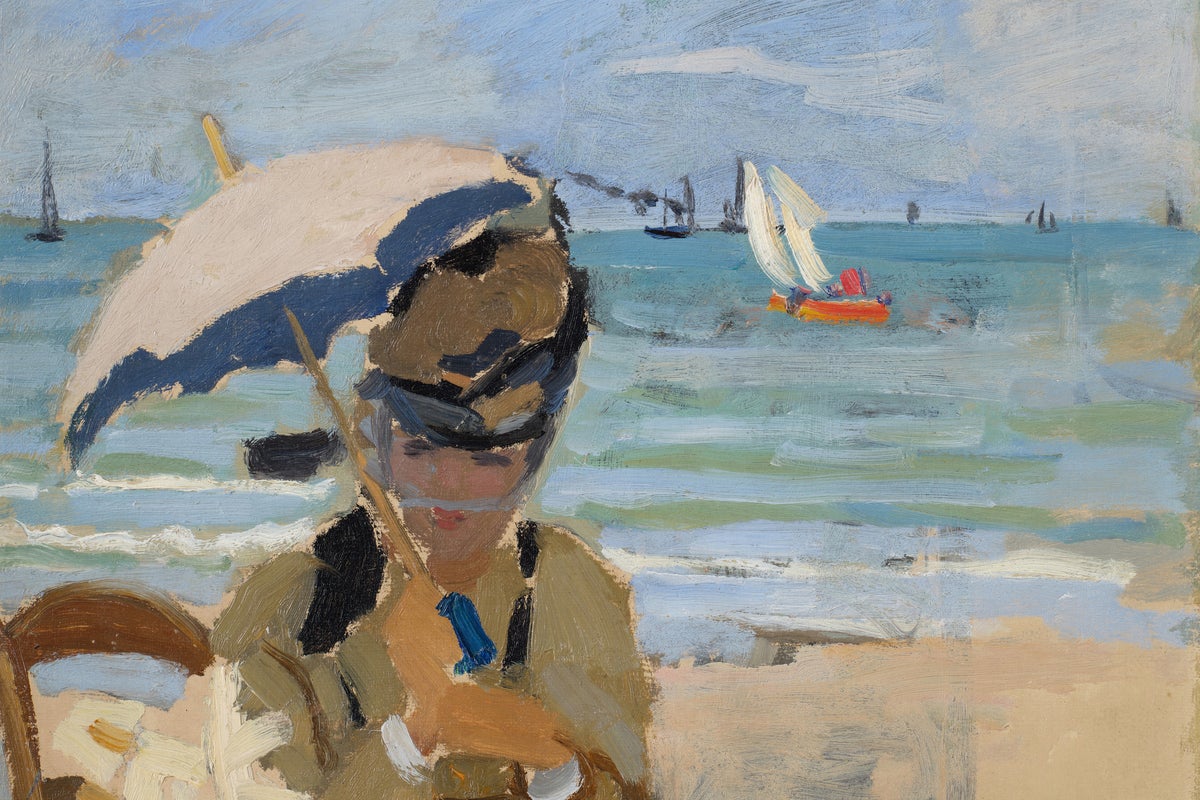
“As important as the boys and the pools and the light,” a memoirist writes, “the most important thing was becoming the driving.” It would inspire an obsession with moving focus into the future.
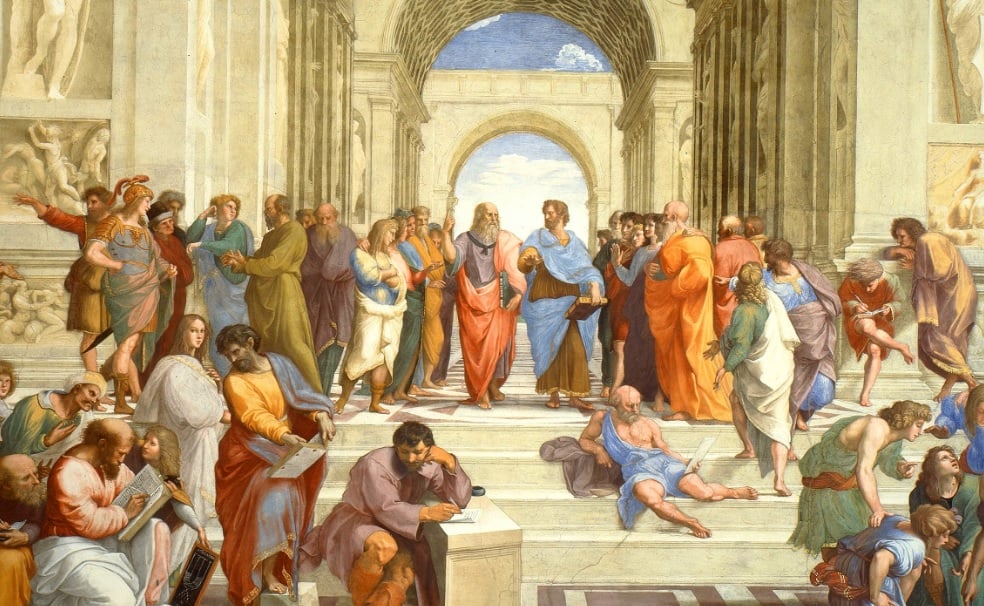
“The School of Athens,” depicting some of the Ancient Greek philosophers, by Raphael. Vatican Museums. Credit: Public domain
Several of the most influential Greek philosophers and thinkers are portrayed in Raphael’s masterpiece the School of Athens, which adorns the Apostolic Palace in the Vatican.
Painted between 1509 and 1511, it portrays a congregation of philosophers, mathematicians, and scientists from Ancient Greece, including Plato and Aristotle. But did you know that, in addition to the two philosophers in the center of the painting, there are six more “hiding”?
In his work, Raphael desired to pay his deepest tribute to the greatest philosophers in history, several of whom had tried throughout their lives to discover the prime mover, or cause, in the universe, a branch of thought known as the “knowledge of the first causes.”
It also shows sculptures of the Greek gods Athena, portrayed as the Roman goddess Minerva, representing Wisdom, and Apollo, representing Light and Music, in a direct nod to the greatness of Greek mythology and its contributions to the Western world. In short, Raphael’s painting is the Who’s Who of ancient Greek culture.
Who are the ancient Greek philosophers in Raphael’s painting?
Plato and Aristotle
Plato and Aristotle, The School of Athens. Credit: Public Domain
The two main figures in the work are placed directly under the archway and in the fresco’s vanishing point, a compositional trick meant to draw the viewer’s eye to the most important part of the painting. Here, we see two men who effectively represent the different schools of philosophy—Plato and Aristotle.
An elderly Plato stands on the left, pointing his finger to the sky. Beside him is his student, Aristotle. In a display of superb foreshortening, Aristotle reaches his right arm directly out toward the viewer. Each man holds a copy of their books in their left hand—Timaeus for Plato and Nicomachean Ethics for Aristotle.
Socrates, the founder of Western philosophy
Socrates depicted lecturing his students. Credit: Public Domain
To the left of Plato, Socrates is recognizable thanks to his distinct features. It is said that Raphael was able to use an ancient portrait bust of the philosopher as his guide.
Among the crowd surrounding Socrates are his students, including the general Alcibiades and Aeschines of Sphettus.
Socrates is credited as the founder of Western philosophy and was among the first moral philosophers of the ethical tradition of thought.
Pythagoras, the theorist of metempsychosis
Pythagoras’ philosophy influenced Plato and Aristotle. Public Domain
In the foreground, Pythagoras sits with a book and an inkwell, also surrounded by students.
The influence of Pythagoras in mathematics and philosophy remains indisputable to this day. His philosophy influenced both Plato and Aristotle, and through them, his ideas became fundamental to Western philosophy.
The teaching most securely identified with Pythagoras is metempsychosis, or the “transmigration of souls,” which holds that every soul is immortal and, upon death, enters into a new body.
Euclid, the father of geometry
Euclid established the foundations of geometry. Credit: Public Domain
Mirroring Pythagoras’ position on the other side, Euclid, considered the “father of geometry,” is bent over demonstrating something with a compass. His young students eagerly try to grasp the lessons he’s teaching them.
Euclid is chiefly known for the Elements treatise, which established the foundations of geometry that largely dominated the field until the early 19th century.
Ptolemy, the great mathematician and astronomer
Ptolemy was a great mathematician. Credit: Public Domain
The great mathematician and astronomer Ptolemy is right next to Euclid, with his back to the viewer. Wearing a yellow robe, he holds a terrestrial globe in his hand. It is believed that the bearded man standing in front of him holding a celestial globe is the astronomer Zoroaster.
Ptolemy wrote about a dozen scientific treatises, some of which were of importance to later Byzantine, Islamic, and Western European science.
Diogenes: The ancient Greek philosopher of cynicism
Diogenes was a homeless man by choice whose life goal was the search for wisdom. Credit: Public Domain
Diogenes the Cynic (also known as Diogenes of Sinope) could have been the first anarchist, absurdist, satirist, or naturalist—depending on the reader’s point of view. By today’s standards, Diogenes was a homeless man by choice, and his life goal was the search for wisdom.
Heraclitus: The Greek philosopher of wisdom
“No man ever steps in the same river twice,” Heraclitus famously said. Credit: Public Domain
Heraclitus was an ancient Greek pre-Socratic philosopher from the city of Ephesus, then part of the Persian Empire. He saw the world as constantly in flux, changing as it remained the same, and expressed this in saying, “No man ever steps in the same river twice.”
He was a self-taught pioneer of wisdom and a melancholy character who did not enjoy the company of others, making him one of the few isolated characters in the fresco.
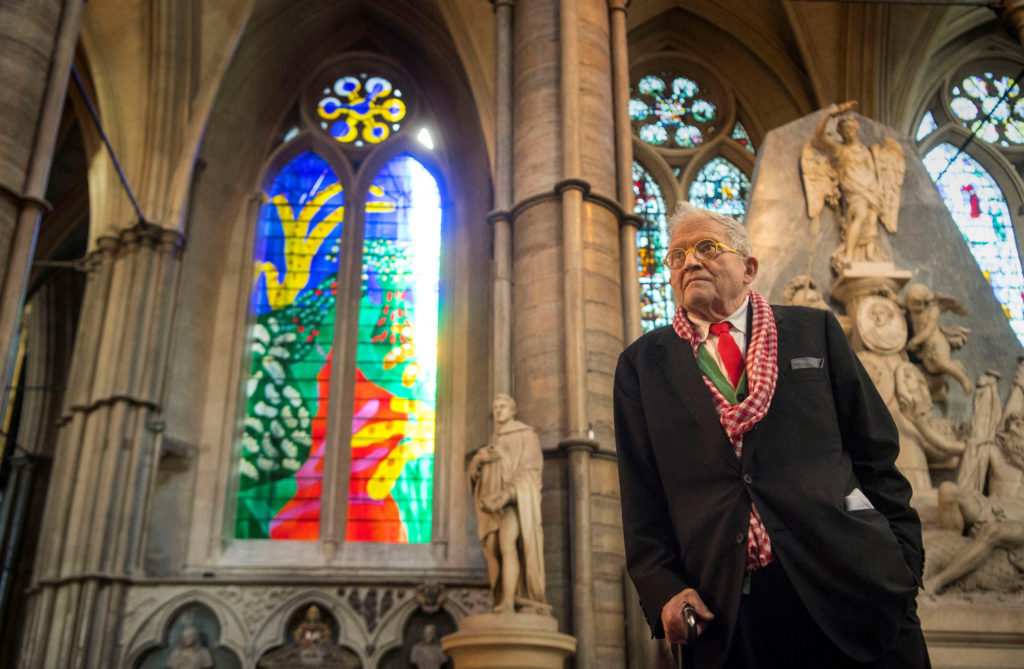
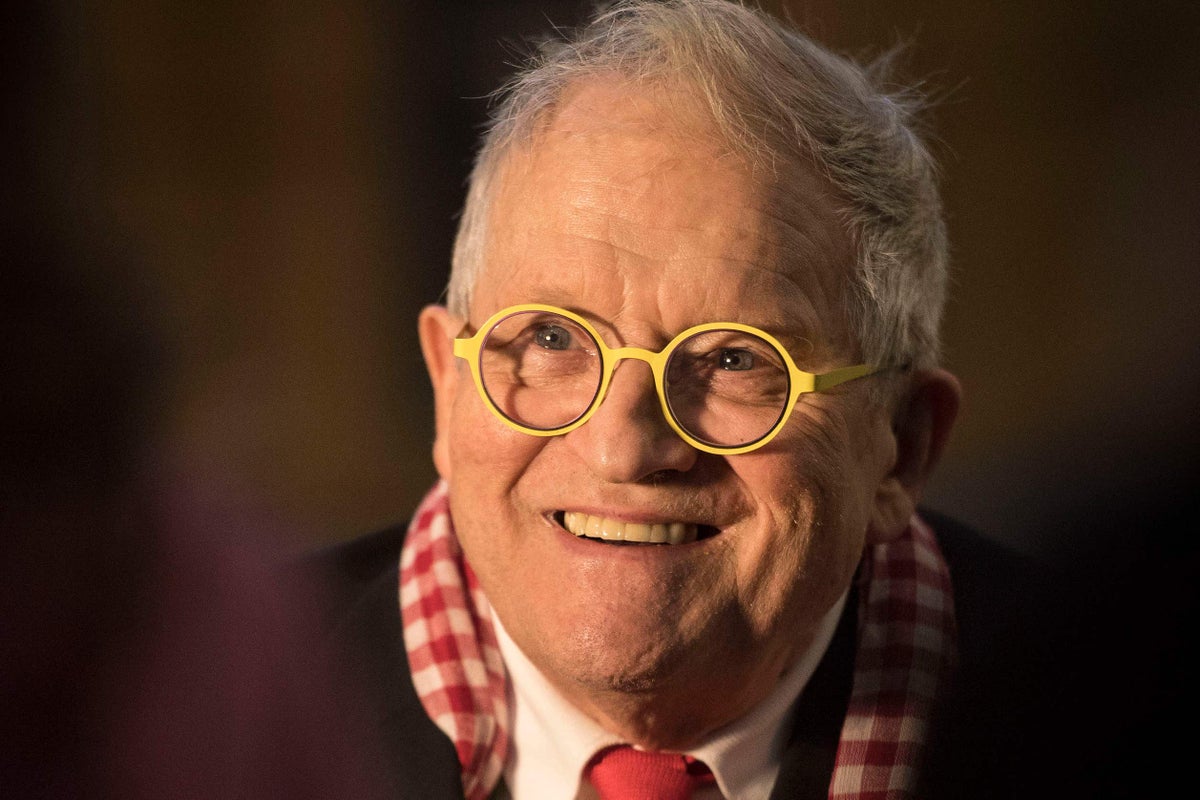
British artist and painter David Hockney, one of the most celebrated art icons of the 20th and 21st centuries, died at the age of 88. Jeffrey Brown has a look at his life and legacy.
David Brooks of The Atlantic and Jonathan Capehart of MS NOW join Geoff Bennett to discuss the week in politics, including another political fight in Congress, a mixed martial arts fight at the White House and a potential deal to end fighting with Iran.
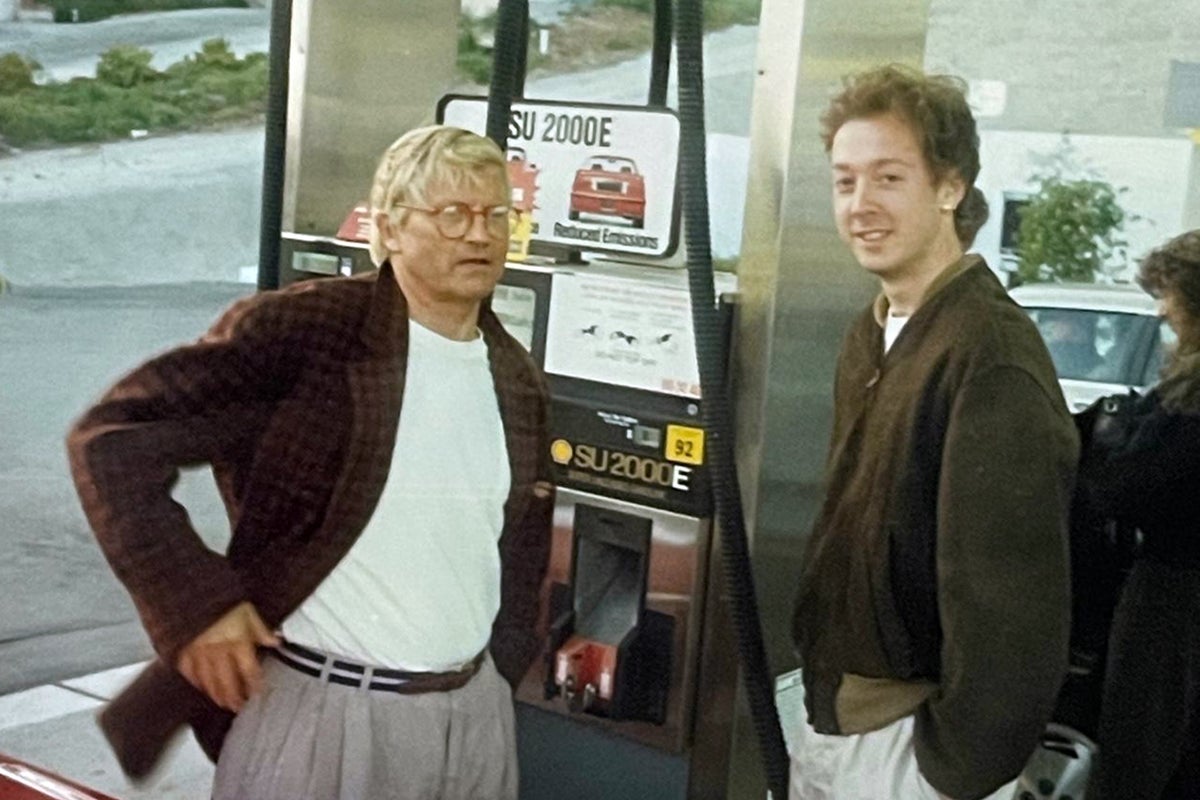
Geordie Greig, who was close to David Hockney for more than 50 years, interviewed him countless times, sat for him and drove round the Hollywood Hills with him, pays tribute to his witty and wonderful friend
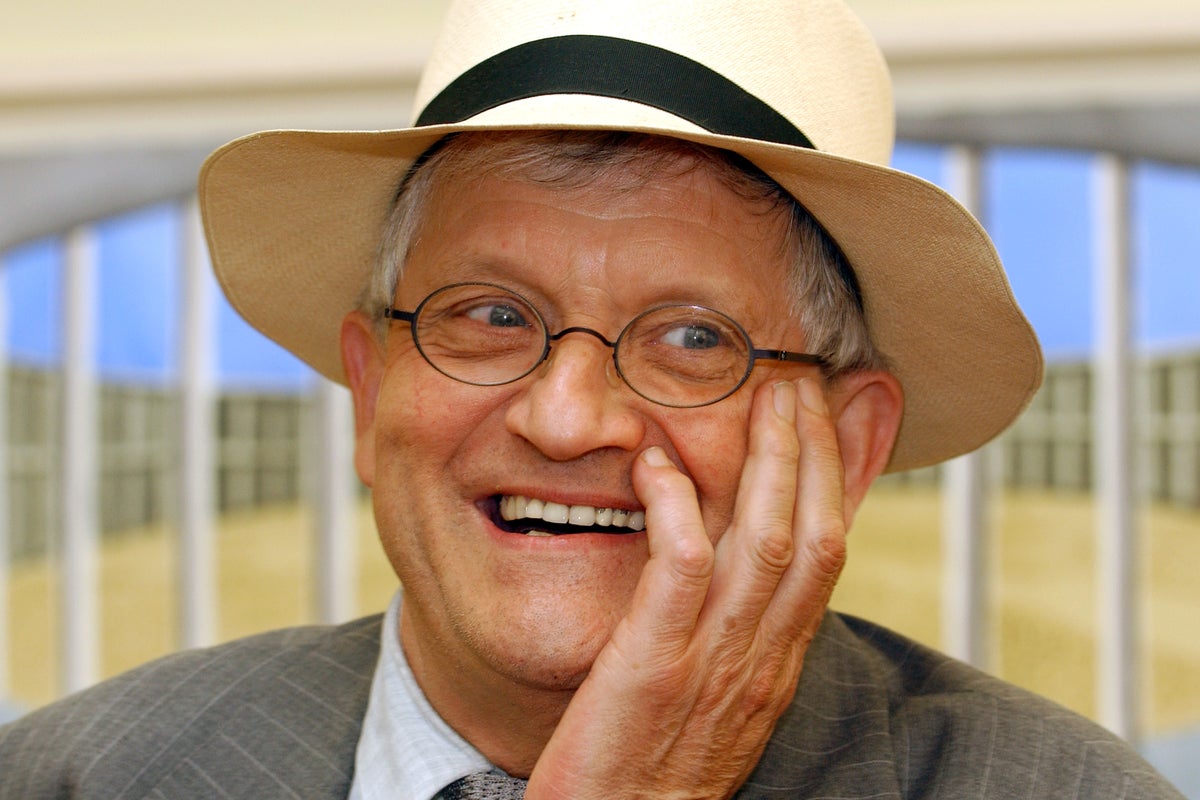
David Hockney, the iconic British painter who cast a revolutionary gaze across 20th-century art, has died aged 88.
He made his name as a pop artist during the swinging 60s and was perhaps best known for his paintings of swimming pools that helped define the Los Angeles aesthetic. Works such as A Bigger Splash and Portrait of an Artist (Pool With Two Figures) depicted hedonistic scenes of love, lust and loss taking place below the city’s sun-soaked skies.
Capturing a world of colour, from the azure swimming pools and lithe, tanned bodies of LA to the Yorkshire fields of his youth, Hockney was one of the most prolific and revered artists of his generation
Stuttgart, Alemania, 11 jun (Prensa Latina) Los estadounidenses Taylor Fritz y Frances Tiafoe y el checo Jirí Lehecka, tres de los principales aspirantes al cetro, salieron hoy por la puerta ancha en los octavos de final del torneo de tenis de Stuttgart.
Crowding the gates of a major health care conference, protesters called for Palantir to be booted out of the UK’s National Health Service over privacy concerns and political grievances.
Researchers once dismissed ancient face pots and battle axes from northern Europe as purely local creations, with no broader significance. A new study published in the Danish Journal of Archaeology challenges that view. It finds that these objects from the fourth millennium BC were part of a wider cultural movement linking societies across Europe.
Sebastian Schultrich, an archaeologist at the ROOTS Cluster of Excellence at Kiel University in Germany, studied pottery and stone weapons from the late Funnel Beaker Culture, roughly 3300 to 2600 BC.
His findings suggest communities in northern Germany and southern Scandinavia were far more connected to the rest of the prehistoric world than previously recognized.
The face pots rank among the most striking artifacts of the period. Made primarily on the Danish islands around 3000 to 2900 BC, they feature raised eyebrow arches, a central nose, and circular eye markings.
Most have come from collective burial sites. For decades, researchers treated them as a uniquely local art form.
Face pots and battle axes mirrored pan-European cultural trends
Schultrich argues they were a local response to a pan-European cultural impulse. Around the same period, anthropomorphic art was emerging in southern France, northern Italy, and the Paris Basin.
Stone carvings and stelae depicted human figures alongside daggers and axes. The near-simultaneous appearance of human imagery across such distant regions suggests a shared “spirit of the age,” one that each society expressed in its own distinct way.
Face-pots, face-like pottery, and potential face-like pottery of the Atlantic. Credit: Sebastian Schultrich / CC BY-NC-SA 4.0
Battle axes reveal a parallel story. The double-headed stone axes found across northern Germany and Scandinavia carry a distinctly regional character. But battle axes as a broader category spread across Western, Central, and Northern Europe during this period.
Schultrich draws comparisons between these axes and weapons like daggers and halberds found in Italian graves. Both types used copper or stone, appeared in rock art, and showed up increasingly in burial contexts from the mid to late fourth millennium BC.
Loose Atlantic links laid the groundwork for bell beaker networks
The study also uncovers early signs of an Atlantic exchange network that predates the Bell Beaker phenomenon. Battle axes resembling French designs appeared in Galicia. Scandinavian flint axes reached the British Isles.
Pottery styles in Brittany echoed those developing in the Lower Rhine region. Schultrich describes these as loosely connected networks along the Atlantic coast, ones that would eventually grow into the broader Bell Beaker exchange system of the third millennium BC.
The Danish face pots and the eye motifs on Iberian pottery are most likely unrelated directly, Schultrich notes. But both reflect a broader cultural shift toward human representation in material objects.
The study adds to growing evidence that pre-Beaker societies built wide-reaching connections long before the migrations and cultural upheavals of the third millennium BC reshaped prehistoric Europe.
Major Robert "Madiar" Brovdi marked Ukraine's first official Day of Unmanned Systems Forces on 11 June 2026 with a single number. His drone branch claims 102,000 Russian soldiers killed or wounded over twelve months, alongside 360,000 enemy targets hit and 1.7 million combat sorties flown, the commander said in a Telegram address.
The number translates four years of homemade weaponry into industrial output. By Brovdi's own reckoning, drones from his Unmanned Systems Forces (SBS) now account for one in every three Russian soldiers falling on the battlefield, and at a unit cost he prices in hundreds of dollars apiece.
"We exchange the plastic and metal of a drone worth a few hundred dollars for the carcass of an occupier. And that is the best exchange rate in the world," Brovdi said.
"Birds changed both plan and course"
Brovdi narrated the four-year arc of Ukrainian drone warfare in a single Telegram thread. In 2022, he said, the starting slogan was "artillery, shovel, drone" to locate, correct, hide. Then, in spring 2022, he taped a grenade to a commercial quadcopter and pushed video of the drop to social media.
"No weapon in human history has evolved so quickly. A wedding drone, no joke, performed well at the front, fundamentally and forever changing world doctrine," he revealed.
The unit he founded that month — Madiar's Birds — has since grown from platoon to brigade to a separate branch of the armed forces. The 414th brigade tripled in size in late 2024. On 3 June 2025, President Volodymyr Zelenskyy made Brovdi commander of the entire SBS, replacing Colonel Vadym Sukharevskyi.
Four targets, 2,000 kilometers deep
Madiar listed four target priorities for the year ahead: enemy manpower, sources of war financing, weapons production, and Russian air defense. The branch's reach now extends from frontline FPV strikes to deep-strike platforms confirmed beyond 1,700 kilometers inside Russia.
"The birds changed both the plan and the course," Madiar said.
Art-collecting commander
Russian state TV calls him a "terrorist." A Russian court sentenced him in absentia to life in prison in March 2026 on charges of organizing a terrorist attack. Russian prosecutors have filed 46 counts against him in total.
The Center for European Policy Analysis calls him "a bearded talisman of Ukraine's defense" — a "swashbuckling, plain-spoken" commander whose journey ran from "besuited grain trader" to the top of the world's first dedicated drone branch.
Madiar's biography reads like Carpathian Tony Stark's: an ethnic Hungarian from Uzhhorod who ran one of Ukraine's largest grain traders, served on the Zakarpattia Regional Council from 2010 to 2015, and funded contemporary Ukrainian art through his BrovdiArt Foundation before walking into a recruitment office at the start of the full-scale war.
He closed his anniversary speech in his usual register: "And now to work, ladies and gentlemen, at all available depths, across all the hated enemy. The way we know how, with what we have, where we are."
Sue Sarah Gilbert, a self-described hobby artist, raised money from investors and contributed some of her own to fund a monthslong campaign displaying her artwork in several subway stations.
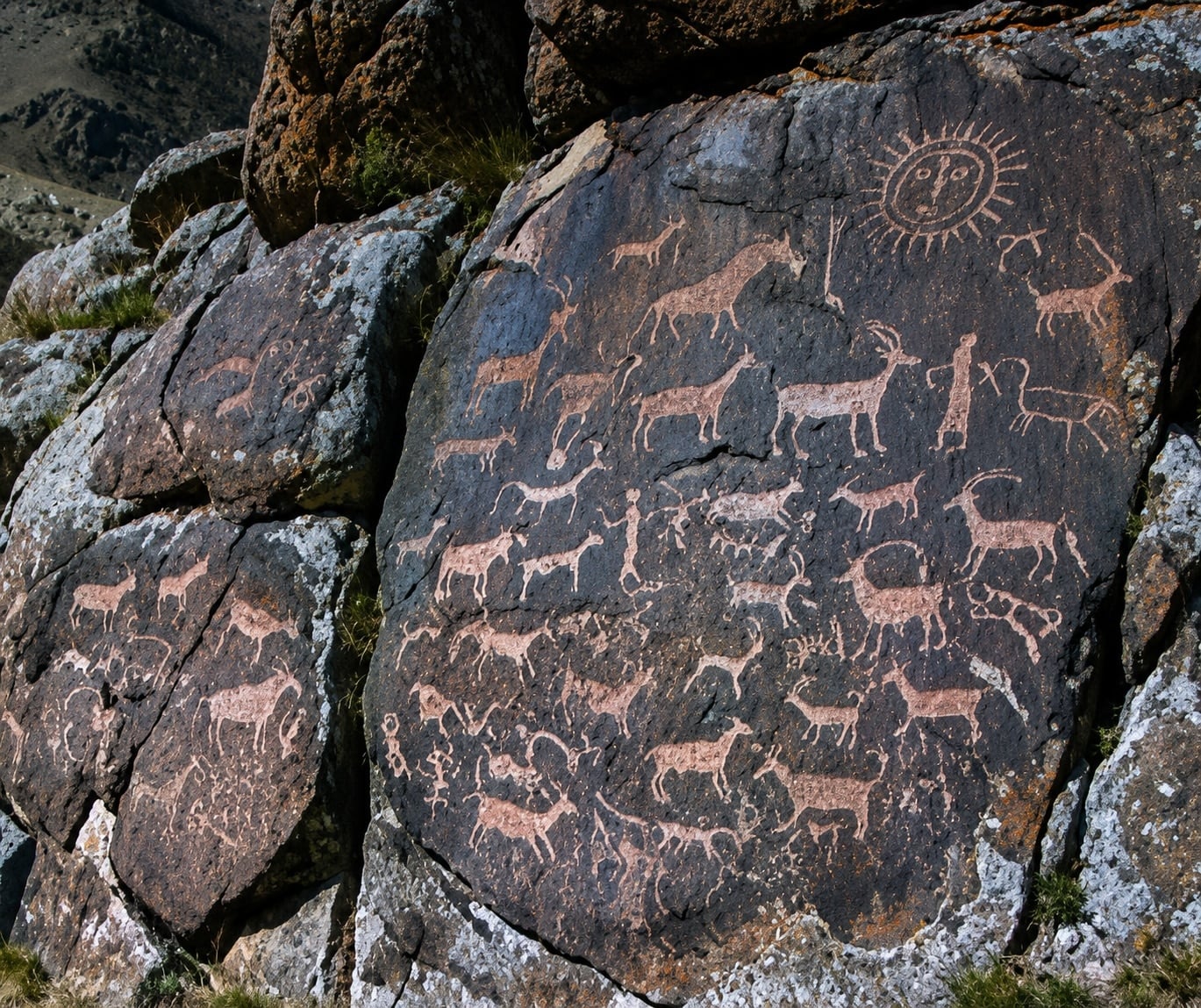
AI reconstruction of ancient petroglyphs. Credit: Greek Reporter Archive
Archaeologists working in southern Kazakhstan have documented more than 1,200 petroglyphs and a rare Old Turkic runic inscription in Burkhansai Gorge. This discovery sheds new light on ancient pastoral life, cultural traditions, and early writing in Central Asia.
The site lies in the Zhualy District of Kazakhstan’s Jambyl Region. Researchers say the rock carvings span several historical periods, from the end of the third millennium BC through the medieval era and later times. The current count is considered preliminary, and archaeologists expect additional discoveries as surveys continue.
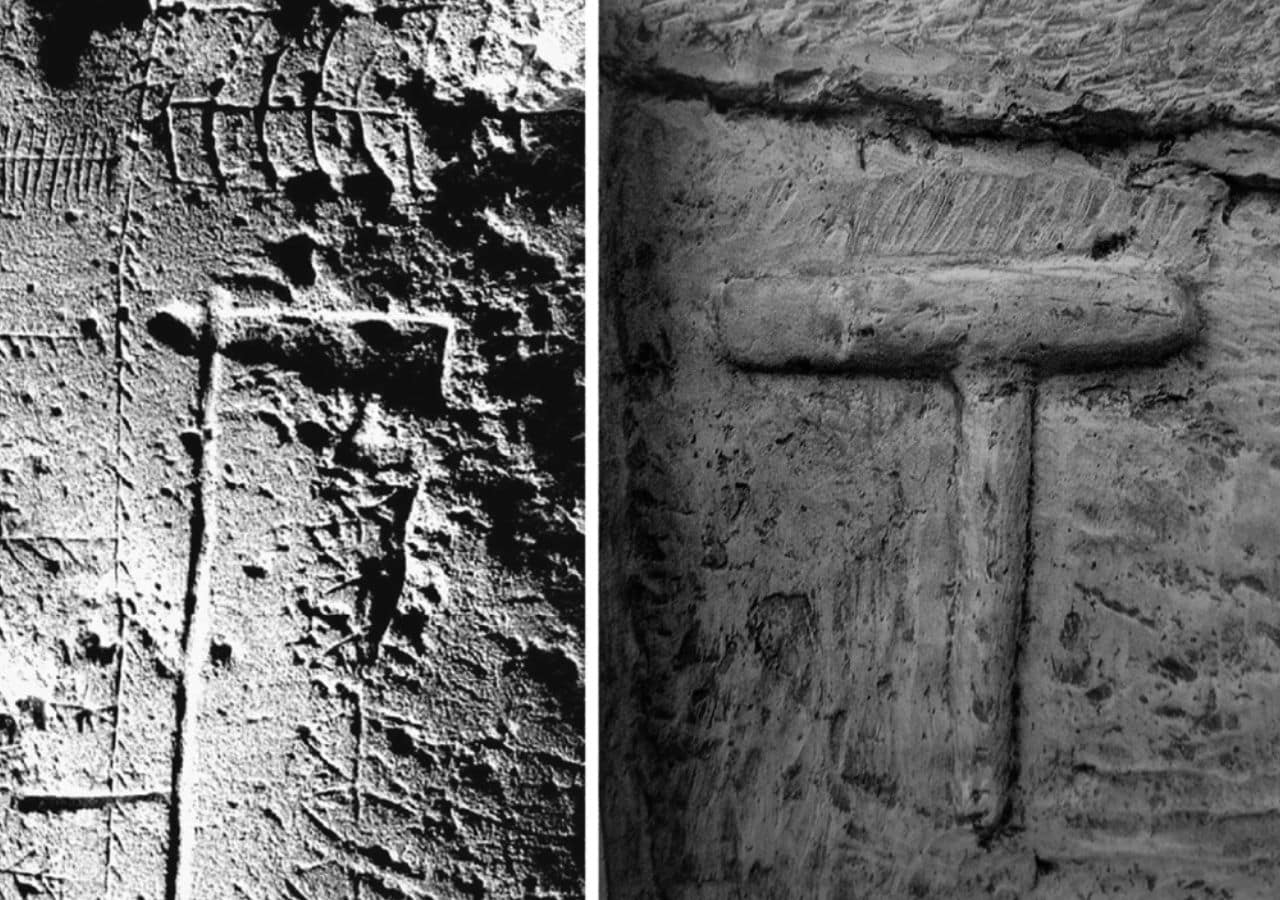
Among the most significant finds is a short inscription written in Old Turkic runiform script. The five-character text has been interpreted as “Er atym Aba,” meaning “My name is Aba.” Researchers believe it may have been carved more than 1,000 years ago.
Rock art reveals a long history of human activity
Researchers say Burkhansai Gorge preserves evidence of human activity across thousands of years rather than representing a single period of occupation.
According to Anatoly Shayakhmetov of the A. Kh. Margulan Institute of Archaeology, the petroglyphs are distributed across five groups that follow the course of a stream through the gorge. The carvings date to different periods, including the Bronze Age, Early Iron Age, Middle Ages, and later historical eras.
Archaeologists have also identified three burial grounds, known as Burkhansai 1, Burkhansai 2, and Burkhansai 3. The cemeteries are believed to date to the Early Iron Age and medieval periods.
The earliest carvings are estimated to be about 4,000 years old. Many depict goats, one-humped camels, and hunting scenes. Researchers say these images reflect communities that relied on herding and hunting while moving through mountain landscapes.
The combination of rock art and burial sites suggests the gorge served as more than a place for carving images. Researchers believe it formed part of a wider cultural landscape used by different communities over many centuries.
Rare inscription preserves a personal message
AI reconstruction of Old Turkic. Credit: Greek Reporter Archive
Researchers describe the runic inscription as one of the site’s most important discoveries.
Boris Zheleznyakov of the A. Kh. Margulan Institute of Archaeology said the text was written in the Talas script, a regional form of Old Turkic writing found across parts of Central Asia. He suggested the person who carved the inscription may have been marking his presence or association with the area.
The inscription was later examined by Old Turkic writing specialist Vladimir Tishin, who interpreted the text as “My name is Aba.”
Unlike large royal inscriptions that commemorate rulers or political events, the Burkhansai inscription appears to preserve the words of an ordinary individual. Researchers say that personal quality makes the discovery especially valuable.
The find also contributes to the study of Old Turkic literacy and the spread of writing traditions across Central Asia during the medieval period.
Southern Kazakhstan served as a cultural crossroads
The discovery adds to Kazakhstan’s reputation as one of Central Asia’s richest regions for rock art. Researchers note that mountain gorges and river valleys often acted as long-term cultural archives where generations left carvings, inscriptions, and burial sites.
Southern Kazakhstan was historically connected to the Talas Valley, the Western Tien Shan, and the ancient Silk Road city of Taraz. For centuries, the region served as a meeting point for pastoral groups, traders, and settled communities.
Researchers say Burkhansai’s access to water, shelter, and travel routes may explain why evidence from so many different periods survived in one location.
Researchers plan a further study of the site
Archaeologists are continuing to classify the petroglyphs, investigate the burial grounds, and search for nearby settlements that may help explain how ancient communities used the surrounding landscape.
Researchers also plan to publish a comprehensive study of the site and seek state protection for the archaeological complex.
For now, Burkhansai Gorge stands as a remarkable record of human activity spanning millennia. Its rock carvings reveal how people lived, hunted, and traveled through the region, while a simple inscription preserves the name of one person whose mark on the landscape has survived for more than a thousand years.

 Login
Login