Normal view

Did the Mycenaeans Encounter the Rare Dwarf Elephants of the Aegean?

7 June 2026 at 20:55
Fossil skull of the dwarf elephant species Palaeoloxodon falconeri showing its small size and distinctive features.
Dwarf elephants once inhabited the Aegean Islands and influenced Mycenaean culture through the use of their fossil remains. Credit: Ninjatacoshel, Wikimedia Commons, CC-BY-SA 3.0

The dwarf elephants of the Aegean Islands represent a fascinating intersection of paleontology, archaeology, and environmental history, yet their significance during the Mycenaean period remains insufficiently explored.

These now-extinct, insular-adapted elephants provide a critical look into evolutionary biology and human-environment interaction in Bronze Age Greece.

Insular dwarfism: Evolutionary mechanisms and island biogeography

Dwarf elephants of the Aegean, such as Elephas creticus on Crete and Palaeoloxodon tiliensis on Tilos, exemplify insular dwarfism, an adaptive response to island isolation characterized by limited resources, absence of large predators, and ecological shifts.

Morphometric analyses of fossilized remains at the Department of Genetics, Evolution and Environment of the University College of London demonstrate a marked reduction in body size, skeletal robustness, and changes in dentition compared to mainland proboscideans.

These evolutionary modifications likely occurred over tens of thousands of years, culminating well before the Mycenaean era, with the last populations vanishing at the close of the Pleistocene or early Holocene. The islands’ geographical isolation, combined with fluctuating sea levels and climatic conditions, further influenced the survival and adaptation of these populations.

Archaeological correlations: Mycenaean awareness and utilization

Boar's tusk helmet, like the one Homer describes Odysseus as using
Mycenaean Boar’s tusk helmet, similar to the one worn by Odysseus in Homer’s account. Credit: Wikimedia Commons, Doreio, CC-BY-3.0

A probable descendant of the large straight-tusked elephant (Palaeoloxodon antiquus), scholar George Theodorou claimed it walked the Earth as recently as 3,500 years ago. This is based on preliminary radiocarbon dating completed in the 1970s, which would make it the youngest surviving dwarf elephant as well as elephant in general in Europe.

Archaeological evidence suggests that Mycenaean societies were aware of—and possibly exploited—remnants of these creatures. Elephant molars and teeth, discovered in Mycenaean contexts across mainland Greece and the islands, appear to have been repurposed as raw materials for crafting tools, ornaments, or ritual objects.

The provenance of these elephant teeth is debated. They may have been derived from fossilized remains of dwarf elephants embedded in island deposits. The Mycenaeans scavenged these for durable ivory-like materials. The studies of Mycenaean artifacts employing elephant ivory or tooth, for instance, demonstrate distinct wear patterns and sourcing signatures, implying a sophisticated interaction with paleontological resources.

In an early form of “cultural paleontology,” this is evidence that megafauna contributed materially and symbolically to Bronze Age material culture. However it’s not unreasonable to suggest that the Mycenaeans may have seen living dwarf elephants, especially on remote islands such as Tilos.

Even if rare, their presence could explain the cultural reuse of elephant teeth—not just as fossil curiosities,but as materials from an animal still within human memory or possibly even within living contact. Such use is also indicative of a level of knowledge or at least recognition of these animals’ past presence, perhaps integrated into local lore or ritual symbolism.

Fossil of the extinct Palaeoloxodon creutzburgi elephant species that subsisted on the island of Crete.
Fossil of the extinct Palaeoloxodon creutzburgi species that subsisted on the island of Crete. Credit: G.M. Woodward, Wikimedia Commons, Public Domain.

Ecological impact and anthropogenic factors in extinction

The extinction of dwarf elephants in the Aegean is often attributed primarily to natural climatic shifts. Sea-level changes following the last Ice Age also had a significant impact. However, the intensification of human activity during the Neolithic through Mycenaean periods likely accelerated their disappearance.

Deforestation, habitat fragmentation, and hunting pressure from early agricultural communities would have placed additional stress on already vulnerable island populations. Analyzing sediment cores and pollen records in conjunction with archaeological site data indicates significant environmental transformations. These coincide with the expansion of Mycenaean influence.

Although most dwarf elephant species went extinct well before the Mycenaean period (ca. 1600–1100 BC), there is credible evidence that some may have survived into that time, potentially overlapping with early Mycenaean society.

Mycenaean ivory cosmetic duck.
Mycenaean ivory cosmetic duck. Credit: Ade, Wikimedia Commons, CC-BY-SA.40

Analytical implications: Reassessing Mycenaean interaction with prehistoric fauna

The presence of elephant teeth in Mycenaean material culture challenges traditional dichotomies separating natural history from human history. It invites reconsideration of this society’s environmental perception. Mycenaeans were not merely exploiters of living fauna but also curators of a landscape layered with prehistoric memory.

Further multidisciplinary research combining paleontology, archaeozoology, and geochemical sourcing is necessary to clarify the extent and nature of Mycenaean engagement with these extinct species. The analysis of wear patterns, isotopic signatures, and contextual associations of elephantine artifacts can yield insights into trade networks, symbolic systems, and resource utilization strategies.

Moreover, integrating the study of dwarf elephants into the broader narrative of Mycenaean civilization enriches understanding of how ancient societies conceptualized and incorporated their environmental heritage. It reveals a nuanced picture of cultural continuity and ecological awareness, bridging deep time with Bronze Age lifeways.
Gold-Plated Earrings Reveal Elite Woman’s Life on Medieval Siberian Steppe

7 June 2026 at 19:30
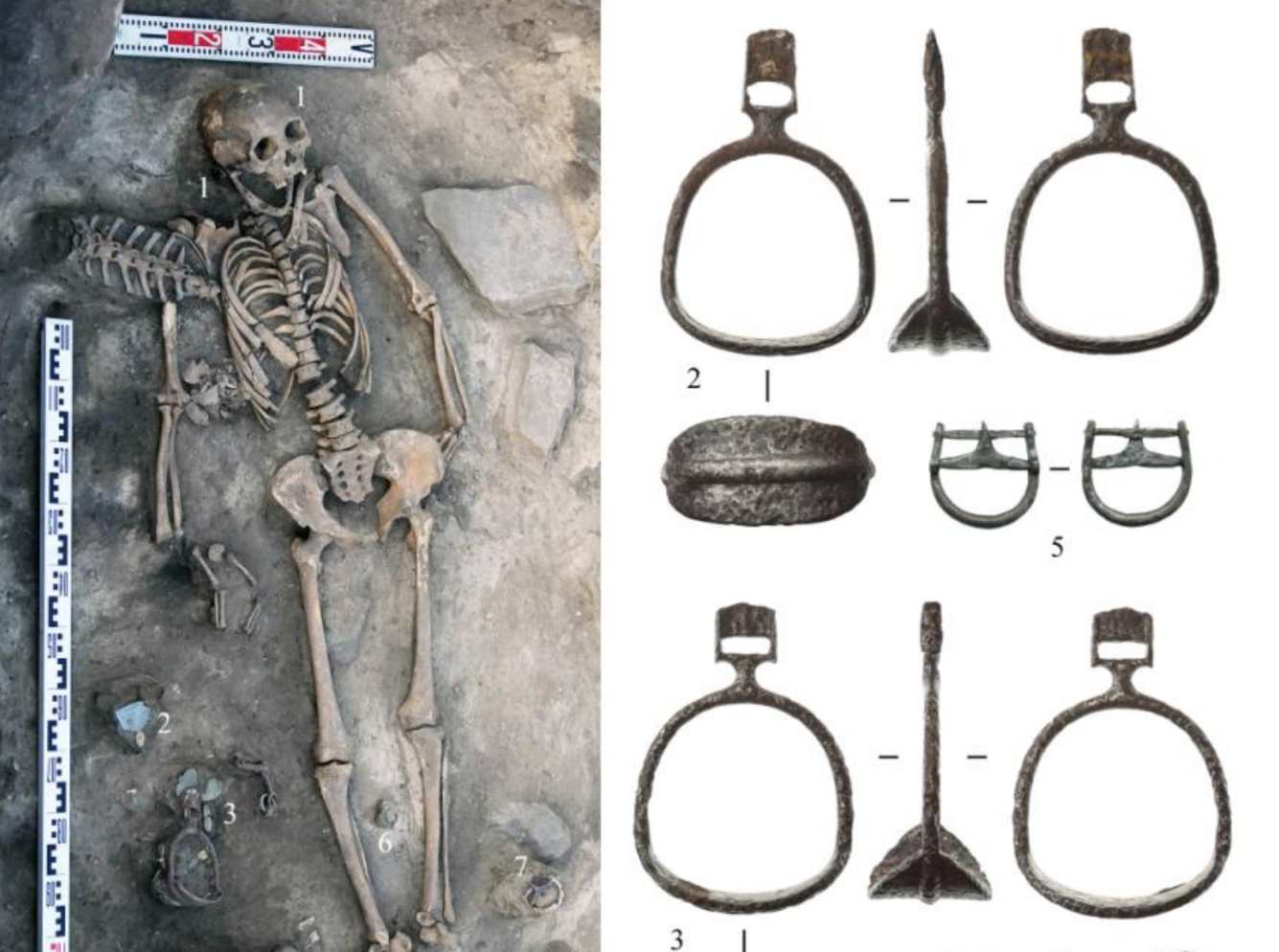
The burial of an elite medieval woman at the Sayany-Pogranichnoye-4 cemetery in southern Siberia
The burial of an elite medieval woman at the Sayany-Pogranichnoye-4 cemetery in southern Siberia. Credit: Amzarakov P.B. et al. / CC BY 4.0

A pair of gold-plated earrings discovered in a burial is offering archaeologists a rare glimpse into the lives of elite women on the medieval Eurasian steppe in southern Siberia.

The burial, found in southern Siberia’s Sayan Mountains, contained a remarkable collection of objects that point to wealth, social status, and long-distance cultural connections stretching across Inner Asia more than 1,000 years ago.

Researchers uncovered the grave at the Sayany-Pogranichnoye-4 cemetery near the Idzhim River in Russia’s Krasnoyarsk region. The burial contained the remains of an adult woman and a newborn child, along with jewelry, a knife, a spindle whorl, a Chinese-style mirror fragment, and an extensive collection of horse equipment.

According to researchers from the Institute for the History of Material Culture of the Russian Academy of Sciences, Novosibirsk State University, and Archaeology of Khakassia, the grave belongs to a rare category of elite medieval burials. Only a few dozen comparable examples have been documented across the Sayan-Altai region.

Earrings mark social standing

The most personal items in the burial were a pair of gold-plated earrings found near the woman’s skull, suggesting she was buried wearing them.

The earrings were made of bronze with traces of gilding and featured ring-shaped hoops, hanging pendants, and bead-like terminals.

Laboratory analysis revealed a sophisticated design. The main ring and upper bead were made from copper alloyed with tin and lead, while the lower bead contained mostly silver along with smaller amounts of copper, gold, and lead. Researchers believe it may have been crafted to resemble a pearl.

Similar earrings have been found in elite female burials in the Altai Mountains and Mongolia, particularly among ancient Turkic communities. Researchers say these ornaments likely served as visible symbols of rank and identity.

Horse equipment reflects wealth and prestige

Gilded bronze artifacts in Sayany-Pogranichnoye-4 cemetery
Gilded bronze artifacts in Sayany-Pogranichnoye-4 cemetery. Credit: Amzarakov P.B. et al. / CC BY 4.0

The burial also contained an impressive collection of horse gear, including stirrups, iron bits, gilded bronze fittings, bridle decorations, buckles, plaques, and pendants. A horse-skin deposit, consisting of the animal’s skull and limbs, placed with its hide, accompanied the grave. Such deposits are commonly associated with high-status nomadic burials.

One stirrup attracted particular attention. Decorated with silver wire inlay on iron, a technique known as damascening, it displayed intricate patterns across its neck, arch, and footrest. Researchers said the design closely resembles decorative styles used in China during the late Tang Dynasty between the late ninth and early 10th centuries.

A second stirrup was undecorated. Archaeologists suggest this difference may have been intentional, with the ornate stirrup displayed on the horse’s more visible side as part of a public display of status.

Chinese mirror points to distant connections

Another notable object was a fragment of a cast metal mirror decorated with a traditional Chinese “grape” motif featuring vines, leaves, grape clusters, and a bird. Mirrors of this type were popular among Tang aristocrats during the seventh and eighth centuries.

Although broken, the mirror fragment appears to have been curated for a long period before burial. Its worn edges suggest it retained symbolic value even after it could no longer function as a mirror. Across Eurasia, mirrors often carried ritual, protective, or ceremonial meanings.

A rare portrait of elite life

Radiocarbon dating places the burial broadly between the late ninth and early 13th centuries. However, the styles of the earrings, mirror, and horse equipment indicate the woman was most likely buried during the second half of the ninth century or the 10th century.

For archaeologists, the grave is significant because it combines evidence of personal identity with the ceremonial importance of horses in steppe society. Together, the artifacts reveal a world where social prestige, mobility, and cultural exchange were closely connected.

More than a millennium after her burial, the woman’s gold-plated earrings remain a powerful reminder of the status and influence she carried during life.

Ancient Greeks Used Lifting Device to Move Stones Before Cranes

6 June 2026 at 22:27
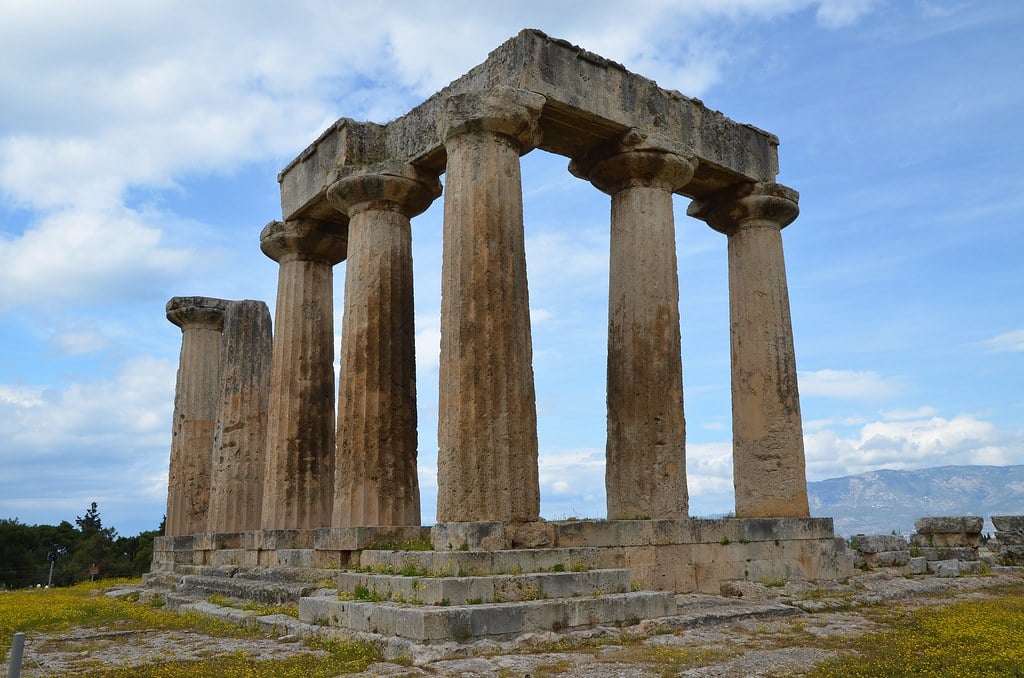
Temple of Apollo, built ca. 540 BC by the ancient greeks
Temple of the Greek god Apollo, built ca. 540 BC, Corinth, Greece. Credit: Following Hadrian/CC BY-SA 2.0

Recent research shows that ancient Greeks used a primitive type of lifting machine to move heavy stones before they began using cranes 2,500 years ago.

It is commonly believed that the foremost discovery of the ancient Greeks in building technology is the crane. Yet, enormous stone structures were known to have been built in Greece at least 150 years before the use of cranes themselves.

Cranes first appeared in the late sixth century BC, according to research published in the Annual of the British School at Athens, but their mechanical forerunners were used in buildings such as the Temples of Isthmia and Corinth at least 150 years before that, around the middle of the seventh century BC.

The researchers say that ancient Greeks were likely to have first used ramps made of earth or mudbrick to lift the heavy stone blocks used in major construction. The lifting devices are thought to have been similar to the ones used by ancient Egyptians and Assyrians centuries earlier.

crane
An ancient Roman crane, which was modeled after the earlier ancient Greek invention. Credit: Michael Gunther/ Wikimedia Commons/ CC BY-SA 4.0

The precursor of the crane lifting machine

The paper, written by Alessandro Pierattini, an assistant professor of architecture at the University of Notre Dame, argues that a kind of lifting machine used by the ancient Greeks was the next precursor to the crane, one which was capable of lifting ashlar blocks weighing over 200 to 400 kilograms (440 to 880 pounds).

The lifting machine was originally invented by the Corinthians, who used it to build ships and for lowering heavy sarcophagi into narrow, deep burial pits. It was not a crane, since it did not use winches or hoists. Instead, the builders redirected the force of the weight by using a rope passed over a frame.

“This kind of masonry represents a crucial step in the development of Greek monumental stone architecture, marking a departure both from mudbrick construction, which had been the norm for most Greek buildings, and from previous experiments with stone construction,” Pierattini writes.

The first documented use of the lever in Greek temples

Evidence of the device is considered to be grooves etched onto the bottom of stones used to construct the Corinth and Isthmia temples. These grooves are familiar to historians, but until now, it had been unknown if the grooves had occurred as a result of lifting the blocks during the building process or from moving them around in quarries.

For the study, Pierattini studied stone blocks used in early Greek temples while he also engaged in some hands-on experimental archaeology. He studied the blocks from the mid-seventh-century temples at Corinth and Isthmia and their peculiar markings—two parallel rope-grooves cut into their undersides which turned up on one end.

Using actual stones and ropes, Pierattini found that the grooves could have served a dual function, allowing builders to both lift the blocks and position them tightly against their neighbors along the walls of buildings.

“With heavy stone blocks and high friction between stone surfaces, this was a highly problematic step of construction that in later times would require sets of purpose-made holes for using metal levers,” said Pierattini.

“Μy paper demonstrates that the builders of the early temples at Corinth and Isthmia were already using levers for the final setting of the blocks. This represents the first documented use of the lever in Greek architecture,” the professor explained to Gizmodo.

Massive Roman Defensive Wall Unearthed at Ancient Amathous in Cyprus

6 June 2026 at 18:53
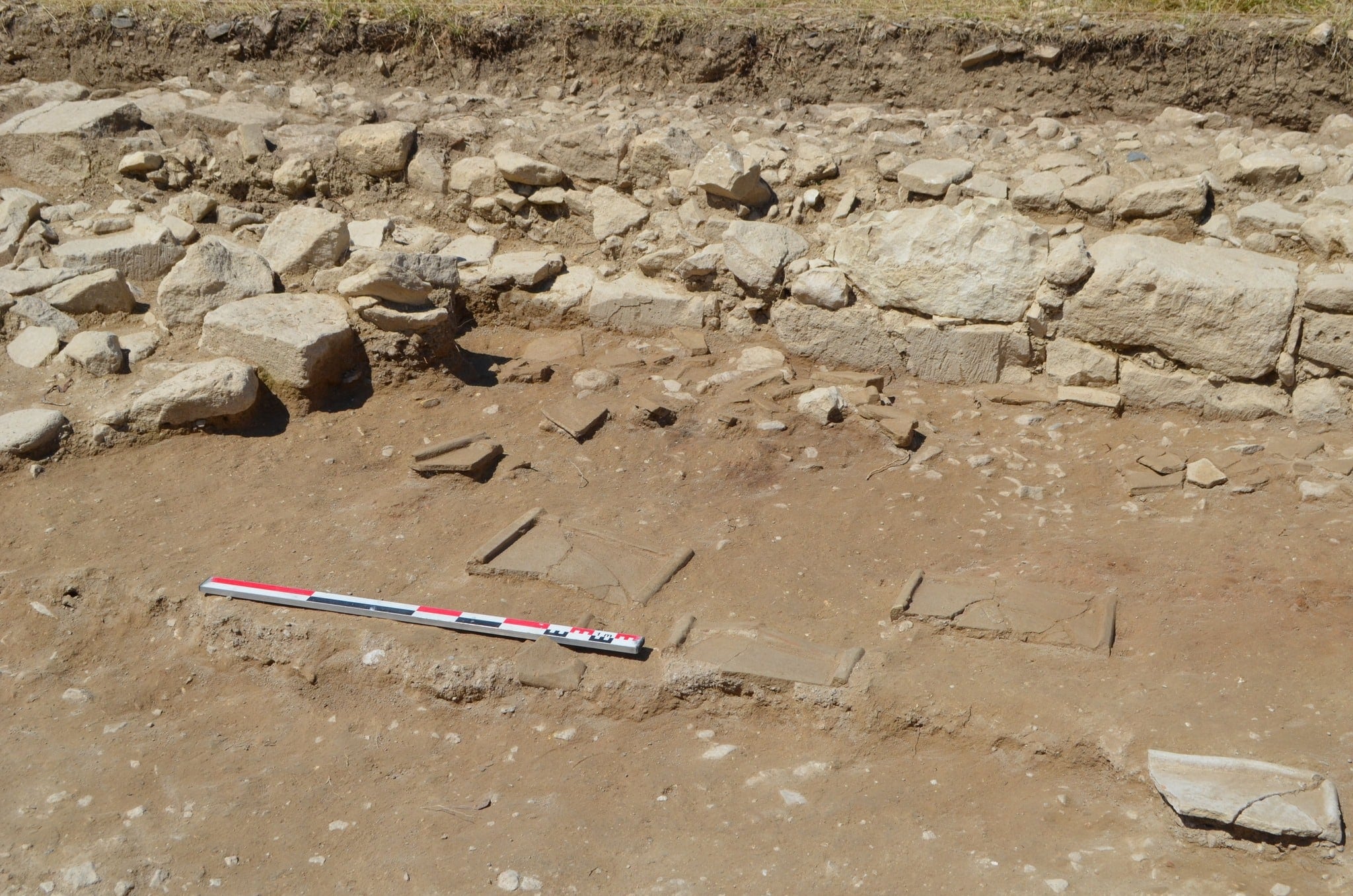
Collapse layer east of the Late Roman wall
Collapse layer east of the Late Roman wall. Credit: Department of Antiquities, Cyprus

Archaeologists in Cyprus have uncovered a massive Late Roman wall at the ancient city of Amathous that may have formed part of a defensive system protecting the summit of the acropolis.

The structure, discovered on the site’s Western Terrace, offers new evidence of efforts to fortify one of the island’s most important ancient urban centers during the Late Roman period.

Details of the defensive wall

The wall reaches up to 2 meters (6.6 feet) in thickness and was built using large limestone ashlar blocks, smaller stones, and clay mortar. Excavation evidence shows that it underwent at least two construction phases, suggesting it remained an important feature of the acropolis over time.

Researchers also uncovered a floor surface associated with the wall, fallen architectural blocks, roof tiles, and mudbrick fragments from a collapsed structure. Together, the finds provide new insight into construction methods and defensive planning at Amathous during the final centuries of Roman rule.

The discoveries were made during the second excavation season of the French Archaeological Mission of Amathous, held from March 30 to April 24, 2026. The project is directed by Dr. Anna Cannavo and focuses on the Western Terrace of the Acropolis.

Expanded excavations reveal a substantial wall

The wall was first identified during excavations in 2025 following a geophysical survey conducted in 2024. During the 2026 season, archaeologists expanded Trench 1 and uncovered a much larger section of the structure.

The wall runs parallel to the natural edge of the terrace, with its southern section turning slightly toward the west. Its eastern face was constructed from large limestone ashlar blocks, while the interior was packed with smaller rough stones bonded with clay.

Researchers identified evidence for at least two building phases. The original wall measured about 135 centimeters (4.4 feet) in thickness. It was later strengthened by adding a second row of limestone blocks and filling the space between the two walls with stone rubble.

Foundations and associated floor date to the Late Roman period

A small trench excavated along the eastern side of the wall exposed its foundations and revealed a floor directly connected to the structure. Part of the floor was paved with reused roof tiles laid over a gravel bedding.

Excavation evidence indicates that both the wall and the floor date to the Late Roman period. East of the structure, archaeologists uncovered destruction deposits containing fallen ashlar blocks, roof tiles, and mudbrick fragments from the building’s upper portions.

Findings highlight the strategic importance of the Acropolis

Iron Age terracotta figurines and pottery
Iron Age terracotta figurines and pottery. Credit: Department of Antiquities, Cyprus

A second excavation area, known as Trench 3, was opened at the northern end of the terrace. Although no architectural remains were found there, archaeologists recovered a rich collection of Iron Age artifacts, indicating earlier activity in the area.

Researchers believe the newly discovered wall formed part of a defensive system protecting the summit of the acropolis and the basilica that had replaced the sanctuary of Aphrodite, one of the most important religious centers in ancient Cyprus.

Future excavations will investigate the full extent of the fortification and determine whether the Late Roman remains were built over earlier structures, helping researchers better understand the long-term development of Amathous.

Iris, the Greek Goddess of the Rainbow

6 June 2026 at 05:01
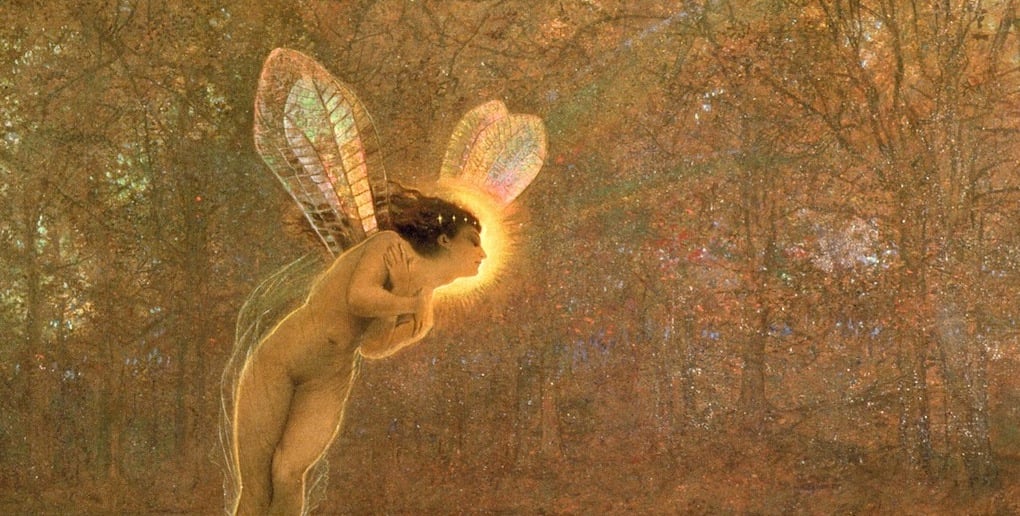
Iris Greek goddess rainbow
“Iris” by John Atkinson Grimshaw. The Greek goddess of the rainbow is often depicted with wings. Credit: Public Domain

Iris, the Greek goddess of the rainbow, also served as a messenger of the gods. Although now a little known member of the pantheon, Iris was a prominent figure in many ancient myths and is even a character in Rick Riordan’s “Lightning Thief” book series.

The Greek goddess was the daughter of Thaumas, whose name means “miracle” or “wonder” in Greek, an old and powerful sea god who was linked to the wonders of the sea, and Elektra, a sea-dwelling nymph.

Her sisters were the terrifying Harpies Ocypete and Aello—fearsome creatures that were half-women, half-birds, who represented the storm winds.

During the Titanomachy, when the Olympian gods fought against the Titans, the old gods, Iris became the messenger for the Olympians and her sister, Arke, delivered messages for the Titans. Arke betrayed the Olympian gods and became the her sister’s rival.

From this point on, Iris served as messenger to the gods, making her the female counterpart of Hermes, who is more widely known for the role.

Iris, Greek goddess of the rainbow and messenger to the gods

While Iris is found throughout Homer’s Iliad, an epic poem that details the story of the Trojan War, and serves as a divine messenger, she is not mentioned in the Odyssey, Homer’s later poem which tells the story of Odysseus’ return home from the war.

Hermes is the messenger of the gods in the Odyssey.

In addition to her role as messenger, Iris is known to serve the gods their nectar from a large chalice she is often depicted holding.

Much like a rainbow, Iris was linked to the sea and sky and serves as a link between the gods and humanity.

vase
Iris shown on pottery from the 5th century BC. Credit: Public Domain

In myth, she frequently travels to the ends of the world using the speed of the wind on her wings and even ventures to the depths of the sea and through the underworld, often taking the trips to deliver important messages.

In antiquity, when one saw a rainbow, it was also believed that they were witnessing Iris traveling across the world or through the sea to deliver a divine message to a mortal.

The goddess of the rainbow was described and depicted either as a rainbow or as a stunningly beautiful winged woman, often carrying a staff with wings, as well.

Along with her winged staff, Iris was said to carry water from the River Styx, or the river that led to the underworld, at the command of Zeus. She was to use this water to put anyone who lied to her to sleep. This was the custom when gods made solemn oaths to each other.

iris greek goddess rainbow
One of the few sculptural depictions of Iris, the Greek goddess of the rainbow, on the west pediment of the Parthenon. Credit: Public domain

In some myths, Iris is considered one of the most beautiful of all of the Greek goddesses.

She conceived a child with Zephyrus, one of the Anemoi, or the Greek gods of the winds. The child was Pothos, the god of sexual desire and longing.

Despite her prominent role as divine messenger, there were no known temples built to Iris, and experts suspect there was little cult activity to the goddess, apart from records of Delians offering cakes made of wheat, honey, and figs to her.

Although described as extremely beautiful, there were also very few statues created depicting Iris. She was frequently portrayed in vase paintings, however. One of the few ancient Greek sculptures of Iris is found on the west pediment of the Parthenon.

Ancient Greco-Roman Cemetery Discovered in Egypt’s Nile Delta

6 June 2026 at 00:01
Greco-Roman era cemetry found at Tell Kom Aziza in Egypt's Nile Delta
Greco-Roman era cemetry found at Tell Kom Aziza in Egypt’s Nile Delta. Credit: Egyptian Ministry of Tourism and Antiquities

Egyptian archaeologists have uncovered part of an ancient cemetery from the Greco-Roman period at Tell Kom Aziza in Egypt’s Nile Delta, offering fresh insight into one of the region’s most historically layered sites. The site sits in Beheira Governorate and spans multiple historical periods stretching back thousands of years.

The Egyptian archaeological mission, working under the Supreme Council of Antiquities, found a wide range of burial types during excavations. Some bodies were placed directly in simple earth pits.

Others were buried in mud brick-framed pits, painted plaster coffins, or barrel-shaped pottery coffins. The barrel-shaped pottery coffin was among the most common burial types during the Ptolemaic era.

Tourism and Antiquities Minister Sherif Fathy said that the site holds value far beyond its burial remains. He described it as a window into settlement patterns, daily life, and how people interacted with their environment over millennia.

Burial diversity points to centuries of ritual evolution

Secretary-General of the Supreme Council of Antiquities Hisham El-Leithy said that early analysis of human remains pointed to a notable variety in burial practices. Some graves were individual, while others were collective.

Burial orientations ran along both north-south and east-west axes. Hand positions ranged from resting at the sides to the crossed-arms “Osirian” pose on the chest.

Artefacts retrieved from Greco-Roman era cemetry at Tell Kom Aziza in Egypt's Nile Delta
Artefacts retrieved from the Greco-Roman era cemetry at Tell Kom Aziza in Egypt’s Nile Delta. Credit: Egyptian Ministry of Tourism and Antiquities

El-Leithy added that studying the archaeological layers confirmed the Greco-Roman cemetery was built over earlier settlement levels. Artifacts trace human activity at Tell Kom Aziza from the Old Kingdom through the New Kingdom, the Late Period, and into the Greek and Roman eras.

Mohamed Abdel Badie, head of the Egyptian Antiquities Sector, said that excavations produced a broad range of everyday artifacts. These included pottery and stone vessels, bread molds, multi-purpose stone tools, ovens, and storage jars.

Large quantities of fish, bird, and animal bones were also recovered, offering clues about the diet and daily habits of the site’s ancient residents.

Wild boar burials found at Egypt’s Greco-Roman cemetery

Among the more unusual finds, mission chief and Beheira Antiquities Director Khaled Abdel Ghani Farhat reported the discovery of complete wild boar burials within one of the archaeological layers.

Pottery vessels from cemetry at Tell Kom Aziza in Egypt's Nile Delta
Pottery vessels from the cemetery at Tell Kom Aziza in Egypt’s Nile Delta. Credit: Egyptian Ministry of Tourism and Antiquities

He said that this is rare at ancient Egyptian funerary sites, given the pig’s symbolic association with the god Set. The find may suggest the boar played an economic or livelihood role at the site during a specific period of use.

Farhat said that the findings confirm Tell Kom Aziza is more than a burial ground. It is a detailed archaeological record of human life across successive historical eras. Further excavation seasons are expected to uncover more of what the site still holds.

Real Pirates of the Caribbean Shipwrecks Found in the Bahamas for the First Time

5 June 2026 at 21:59
An AI-colored reconstruction of an 18th-century depiction of pirate Henry Avery
An AI-colored reconstruction of an 18th-century depiction of pirate Henry Avery. Credit: GR Archive

Six shipwrecks linked to the real ‘Pirates of the Caribbean‘ have been found in Nassau’s harbor in the Bahamas for the first time, an international expedition announced.

The New Providence Pirates Expedition conducted the survey in late 2025 after receiving the first official permission to dive in the harbor’s restricted zone. Marine archaeologist Sean Kingsley and Michael Pateman, the Bahamas’ ambassador for history and culture, co-directed the project.

Three of the six wrecks are tied to the golden age of piracy, a period from the 1690s through the 1720s when Nassau served as a base for buccaneers, including Blackbeard, Henry Avery, Calico Jack Rackham, and Anne Bonny.

The standout find is a charred wooden hull fastened with wooden treenails, a method typical of 18th-century shipbuilding, burned down to the waterline. Pateman said that pirates burned seized ships after stripping them to remove evidence of their crimes.

Burned hull may belong to Avery’s missing pirate ship

Researchers believe the hull may be the Fancy, last commanded by Avery. In 1695, his crew seized gold, silver, sapphires, emeralds, and diamonds from Mughal Empire vessels, a haul worth around $150 million today.

The ship was never found afterward. The wreck fits the Fancy’s estimated age, size, and construction, though no formal identification has been made.

Pirates of the Caribbean shipwrecks found in the Bahamas for the first time reveal Nassau as history's most notorious golden age pirate port. pic.twitter.com/9WrS1pxMI1

— Tom Marvolo Riddle (@tom_riddle2025) June 5, 2026

A second site about 20 miles east of Nassau yielded iron cannons, 25 lead musket balls, a grinding stone for sharpening swords, and a swivel gun. Kingsley described swivel guns as pivot-mounted weapons pirates used to open fire on enemy crews at close range.

A third site under Nassau’s old bridge produced hull planks, rigging, wine bottles, wooden crates, and galley bricks. Nearby, researchers recovered 143 clay tobacco pipes marked with a horse, unicorn, crown, and the English royal crest.

The style suggests they were made in London around the 1740s. Kingsley said the cargo reflects Nassau settling back into regular trade after the pirate era closed.

Bahamas shipwrecks reveal the real ‘Pirates of the Caribbean’

The discoveries came despite significant disturbance to the harbor floor from years of dredging. Kingsley said the finds are likely only a fraction of what may remain and estimated that dozens more wrecks could be hidden in the harbor. The team plans to return using underwater drones but has found no evidence of treasure.

Until now, no shipwrecks connected to Caribbean pirates had been found in the Bahamas, even though Nassau served as the pirates’ primary base throughout that period.

The findings are featured in a documentary series, Mystery of the Pirate King’s Treasure, now on Wreckwatch TV, and in the latest issue of Wreckwatch magazine.

New Pompeii Discovery Reveals Equine Skeleton in Ancient Bread-Making Workshop

5 June 2026 at 20:30
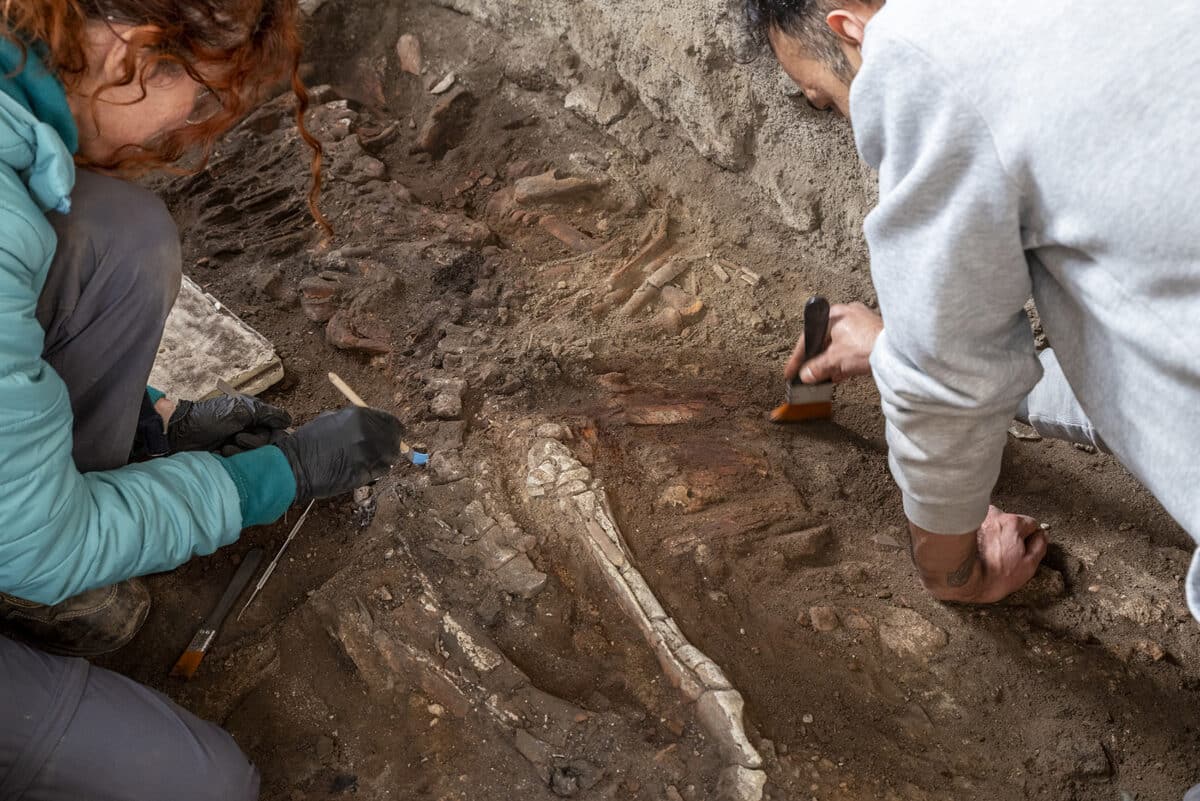
The skeleton of an equine at ancient bread making complex in Pompeii
The skeleton of an equine at an ancient bread-making complex in Pompeii. Credit: Pompeii Archaeological Park

Archaeologists in Pompeii have uncovered an equine skeleton inside a bread-making workshop at one of the city’s most celebrated ancient complexes, opening a new chapter in the understanding of how humans and animals lived and worked together nearly 2,000 years ago.

The remains were discovered at the Insula of the Chaste Lovers, a large residential and commercial site renowned for its striking “chaste kiss” fresco, painted inside the dining room of the owner’s home.

The complex includes a working bakery, storage rooms, processing spaces, and the owner’s private residence. Researchers had previously found other equids at the site’s stables, where animals were used to power grain mills and transport the grain needed for bread production.

Pompeii’s chaste lovers complex was also a busy bakery

This latest skeleton was not found in the stables. Researchers found it in a separate room, suggesting the animal had fled there during the catastrophic eruption of Mount Vesuvius in 79 AD.

The excavation brought together archaeologists and specialists from the Applied Research Laboratory, including experts in animal remains, plant life, and human bones. This interdisciplinary approach has become one of the most important aspects of modern archaeological research at the site.

Archaeologists excavating the skeleton of an equine
Archaeologists are excavating the skeleton of an equine. Credit: Pompeii Archaeological Park

Laboratory analysis is still ongoing. Researchers expect it to reveal more about the animal’s specific role in the production complex and the conditions it faced during the eruption.

The study could also contribute to a wider understanding of how animals responded to the disaster in real time, adding detail to the reconstruction of those final, chaotic hours.

Pompeii equine skeleton suggests a desperate Vesuvius escape

Gabriel Zuchtriegel, director of the Pompeii Archaeological Park, said that Pompeii offers far more than beautiful frescoes and ancient objects.

He said it gives researchers the opportunity to understand lives that were ended by the eruption, and that this extends to animals as well as people. The horse or donkey, he noted, was found inside a house with remarkable frescoes that also served as a working mill and bakery.

Its location in a room away from the stables points to an attempt to escape the eruption. Zuchtriegel called the excavation a strong example of the daily multidisciplinary collaboration at the site and said ongoing lab results will continue to offer significant scientific value.

Pompeii continues to yield new layers of ancient life. The site preserves not just objects and artwork but the full texture of daily existence, including the bonds between people, animals, and the spaces they shared.

The equine skeleton discovered in Pompeii’s ancient bread workshop is the latest reminder that the city still holds stories waiting to be told.

Ancient Maya Monument Reveals Oldest Known Calendar Date in Mexico

5 June 2026 at 19:50
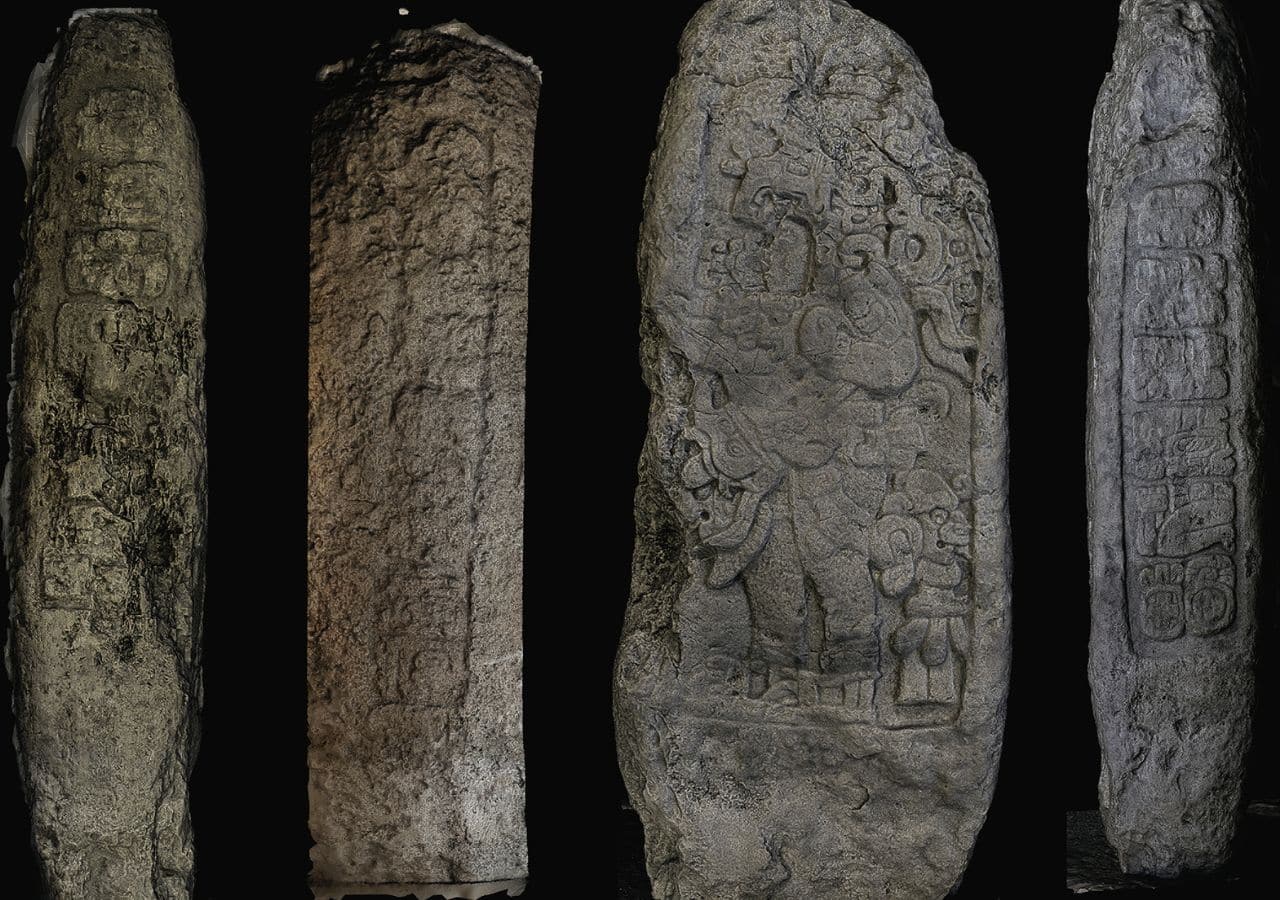
Stela 45 monument. Back face, left side, front face, and right side
Stela 45 monument. Back face, left side, front face, and right side. Credit: Kenichiro Tsukamoto / CC BY-NC 4.0

Archaeologists working at an ancient Maya site in southern Mexico have found what they say is the earliest known evidence of Maya kingship and calendar use in the region.

Kenichiro Tsukamoto, an archaeologist at the University of California, Riverside, led the study published in Ancient Mesoamerica. His team analyzed three stone monuments at El Palmar, a site in southeastern Campeche, Mexico.

One of them, Stela 46, carries an inscription dated to A.D. 180. That makes it the oldest confirmed “Long Count” calendar date discovered in the Maya Lowlands.

The Long Count is a dating system the ancient Maya used to record historical events in a fixed chronological order. Before this discovery, a stone monument at Tikal held that record with a date of A.D. 292. The El Palmar inscription predates it by 112 years.

Stone monuments link Maya kingship to an ancient calendar

What distinguishes Stela 46 from earlier finds is its direct connection to historical rulers and events. A king named Ajaw K’al Ubaah acceded to the throne in A.D. 131. Some 49 years later, in A.D. 180, he commissioned the stela as part of a royal ritual.

Alongside the Long Count, the inscription also incorporates the 260-day divinatory calendar, binding the royal event to a specific ceremonial date. No earlier Long Count inscription had ever been linked to a named ruler, the researchers said.

Stela 46. Left side, front face, and right side
Stela 46 monument. Back face, left side, front face, and right side. Credit: Kenichiro Tsukamoto / CC BY-NC 4.0

To read the heavily worn carvings, researchers combined traditional photography with photogrammetry and a high-resolution 3D scanner called Artec Spider II. The device captures detail as fine as 0.1 millimeters (0.0039 inches). It uncovered inscriptions that scholars had previously missed entirely.

The carvings also show that the king carried two royal titles, pointing to an already established order of royal authority at the site.

Monument traces El Palmar’s rulers back 17 generations

A second monument, Stela 20, strengthened the picture of Maya kingship at El Palmar. Its text identifies the ruler who commissioned it as the 17th king in a successive royal line.

Using the estimated average reign of 22.5 years for Classic Maya kings, the team calculated that the lineage’s first ruler likely rose to power between A.D. 102 and 154. That closely matches the accession date recorded on Stela 46.

A third monument, Stela 45, records the accession of a ruler named Tz’u Chak Ahk in A.D. 342. Together, the three stelae trace a royal dynasty from the second century A.D. to at least A.D. 884, one of the longest recorded among ancient Maya kingdoms.

Tsukamoto noted that El Palmar rose during a turbulent period. Several large Maya polities collapsed around A.D. 150 due to drought, soil erosion, and political instability. El Palmar appears to have grown as a new power center in their place.

The study concludes that calendar systems did more than track time. At El Palmar, they helped rulers legitimize and hold power for more than 700 years.

https://youtu.be/2sGZRo5POf8?si=wF6pXkzKrpiZuZ88

Ancient Wall in Greece Collapses Into Family’s Yard, Trapping Them Between Safety and Heritage Rules

5 June 2026 at 01:20
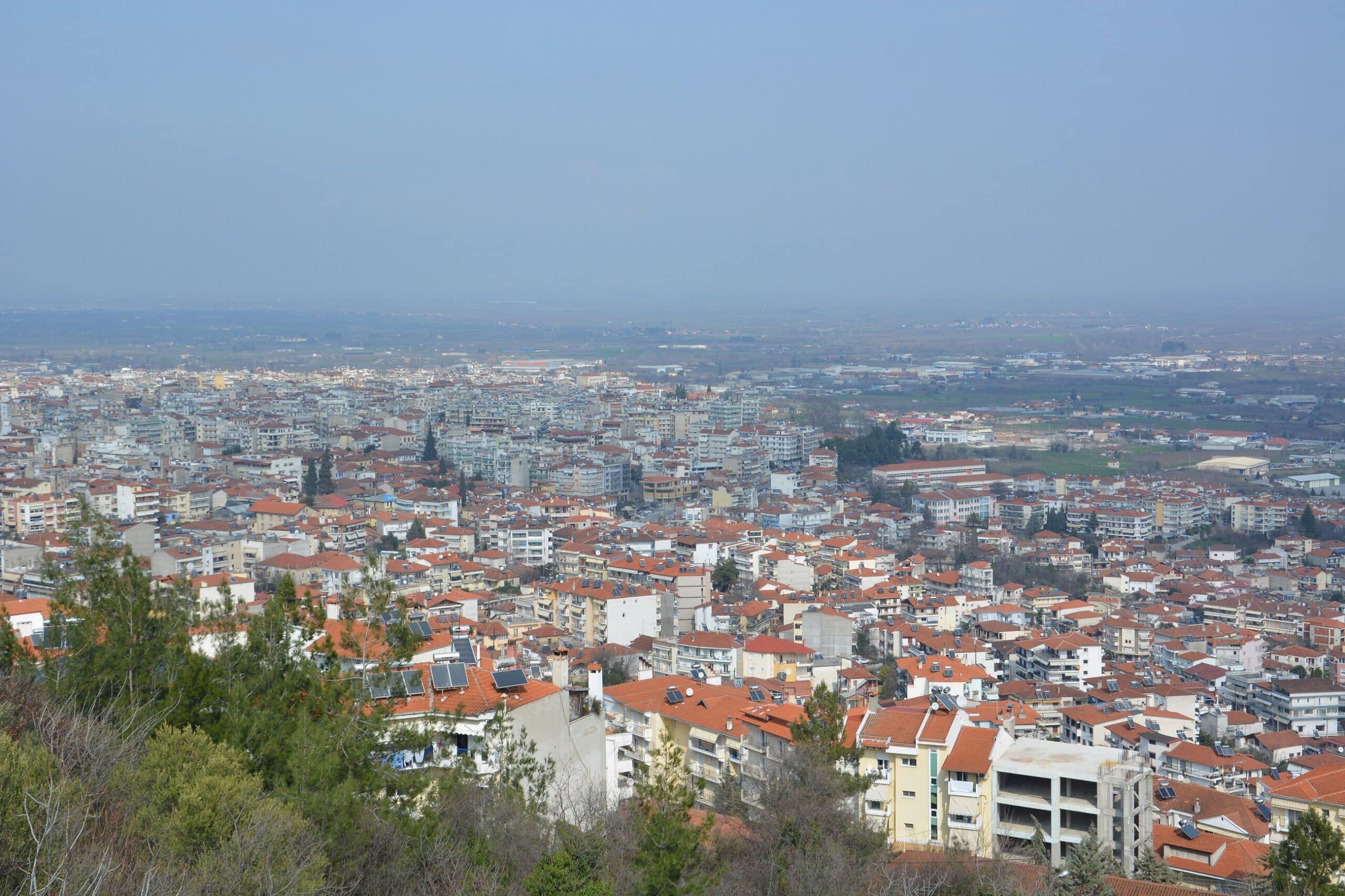
Panoramic view of Veria, Greece
Panoramic view of Veria, Greece, where part of an ancient wall recently collapsed into a private yard near the Archaeological Museum. Credit: Zisis Tsampalis / Wikimedia Commons / CC BY-SA 3.0

A section of an ancient wall in Veria, northern Greece, collapsed into the backyard of a private home, raising safety concerns for residents and triggering a dispute between local authorities over who must remove the fallen stones.

The incident occurred near the Archaeological Museum of Veria, in Central Macedonia, where parts of the city’s historic fortifications still stand close to residential properties. Large stones from the wall fell into the yard, where children reportedly play, leaving the family worried about further collapses, especially during heavy rainfall.

Residents say the problem has not only created a physical hazard but has also exposed a familiar challenge in Greece: the difficulty of managing ancient heritage when it intersects with everyday life.

Homeowner caught between heritage rules and safety risks

The homeowner told local broadcaster MEGA that he has become caught in a bureaucratic dispute between the Ephorate of Antiquities and the Municipality of Veria.

The homeowner said the Ephorate of Antiquities treats the wall as a monument under its authority, while the municipality argues the fallen stones are now debris on private property.

However, he says officials told him they do not have enough workers to remove the fallen stones. Meanwhile, the municipality reportedly argues that once the stones landed inside private property, they became rubble and therefore the homeowner’s responsibility.

The homeowner says this leaves him in an impossible position. On the one hand, authorities allegedly told him to arrange the cleanup himself. On the other hand, he says he received instructions not to touch the stones because they form part of an ancient monument and may be needed for future restoration work.

As a result, the family fears that moving the material could expose them to accusations of mishandling antiquities. For now, residents say the authorities have placed two containers at the site, but they have not delivered a permanent solution.

Βέροια: Κατέρρευσε τμήμα αρχαίου τείχους στην αυλή του#ingr #news #βεροια pic.twitter.com/qL3s3A4AZY

— in.gr/news (@in_gr) June 4, 2026

Ancient stones, modern bureaucracy

The collapse has sparked frustration in Veria because it highlights the tension between heritage protection and public safety. Greece’s archaeological landscape often overlaps with homes, roads, and modern infrastructure, especially in cities with continuous habitation from antiquity to the present day.

Veria is one such city. Located in Central Macedonia, it has deep historical roots and played an important role in ancient, Roman, Byzantine, and Ottoman periods. According to the Ephorate of Antiquities of Imathia, evidence suggests that Veria acquired a city wall and a basic urban plan around the second half of the 4th century BC.

That historical depth gives the city much of its cultural value. However, it also creates practical responsibilities. When ancient remains stand beside private homes, any damage or deterioration can quickly turn into a matter of both archaeology and civil protection.

Residents in Veria, Greece urge action after ancient wall collapse

Residents have urged the competent authorities to intervene quickly, warning that more sections of the wall could collapse. Their main concern remains the safety of children and families who live next to the site.

The case now raises broader questions about how local and national authorities should coordinate when protected monuments create risks in residential areas. While the stones may hold archaeological value, residents argue that the authorities must act before the situation causes an injury.

Stonehenge Mystery Deepens as Glaciers May Have Moved Six-Ton Altar Stone

5 June 2026 at 00:15
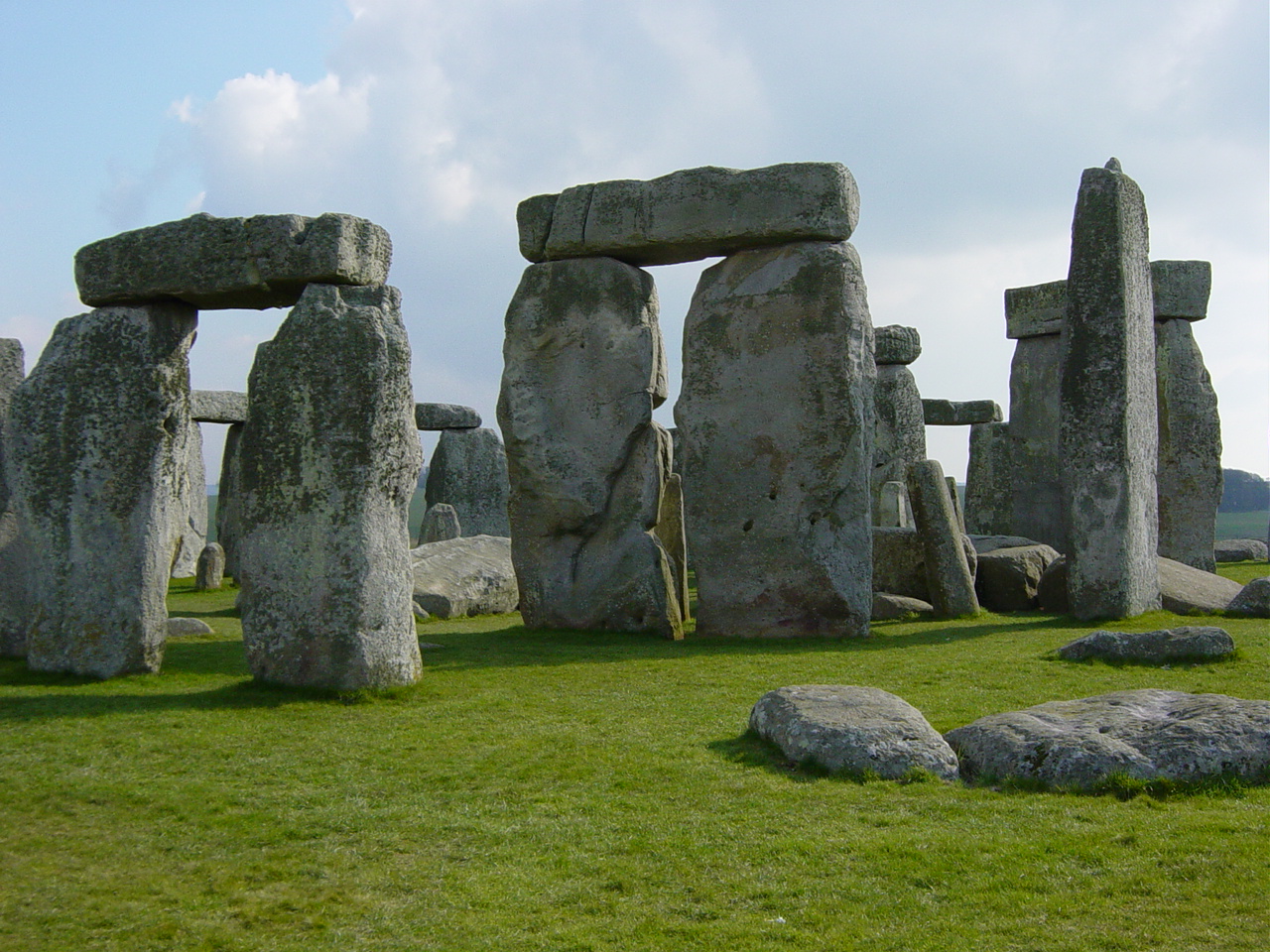
Stonehenge Altar Stone
Stonehenge Altar Stone. Credit: Wikimedia Commons / Public Domain

The massive Altar Stone at Stonehenge may have received some help from ancient glaciers on its long journey to southern England, but people still likely carried it much of the remaining distance, according to new research.

The study, led by Anthony J. I. Clarke and published in the Journal of Quaternary Science, examined the possible origins and transport routes of the six-ton sandstone monument that sits at the center of Stonehenge.

Researchers have long believed the Altar Stone came from northeast Scotland, roughly 700 kilometers (435 miles) from Stonehenge. However, exactly where the stone originated and how it reached Salisbury Plain have remained major archaeological mysteries.

Searching for the stone’s birthplace

The team combined geological analysis with computer models of ancient ice sheet movements to investigate whether glaciers could have transported the stone southward during the last Ice Age. Scientists focused on the Orcadian Basin, a large geological region in northeast Scotland that has been proposed as the stone’s source.

How did a 6-ton stone reach Stonehenge from Scotland?

Researchers found that glaciers may have moved the monument's famous Altar Stone part of the way. But ancient people likely completed the final journey, hauling the massive rock hundreds of kilometers across Britain. pic.twitter.com/mQFbTIb3ve

— Tom Marvolo Riddle (@tom_riddle2025) June 4, 2026

The study compared the Altar Stone’s mineral signature with sandstone formations across the basin. Researchers looked specifically at the ages of zircon grains embedded in the rock. These grains act like geological fingerprints and can help identify where a stone was formed.

The results pointed most strongly toward Caithness in mainland northeast Scotland. Sandstones from that region showed the closest match to the Altar Stone’s zircon age patterns.

Ice movement presents a problem

Although Caithness appears to be the best geological match, computer models revealed a complication.

Ancient glaciers in the area mostly moved toward the northeast rather than toward southern England. The models showed only a limited pathway that could have carried material southeast toward Dogger Bank, a now-submerged area beneath the North Sea.

That finding makes a direct glacial journey to Stonehenge unlikely. Researchers concluded that glaciers alone could not explain how the stone reached its final location.

Human transport still likely

Even if glaciers carried the stone as far as Dogger Bank, people would still have needed to move it about 400 kilometers (250 miles) to Stonehenge.

The study also noted another challenge. Dogger Bank was flooded by rising sea levels after the Ice Age before the Altar Stone is thought to have arrived at Stonehenge. This creates a timing problem for any theory relying entirely on glacial transport. As a result, researchers suggest that ice may have played only an intermediate role in the stone’s journey.

The findings support the idea that Neolithic communities were responsible for moving the enormous stone over great distances. While glaciers may have shortened part of the route, substantial human effort would still have been required to bring the Altar Stone to Stonehenge, one of the world’s most famous prehistoric monuments.

The study adds a new piece to the puzzle of how ancient builders assembled Stonehenge and highlights the remarkable achievements of the people who constructed it thousands of years ago.

Rare Roman Gold Ring Found in England Sheds Light on Britain’s Ancient Revolt

4 June 2026 at 22:30
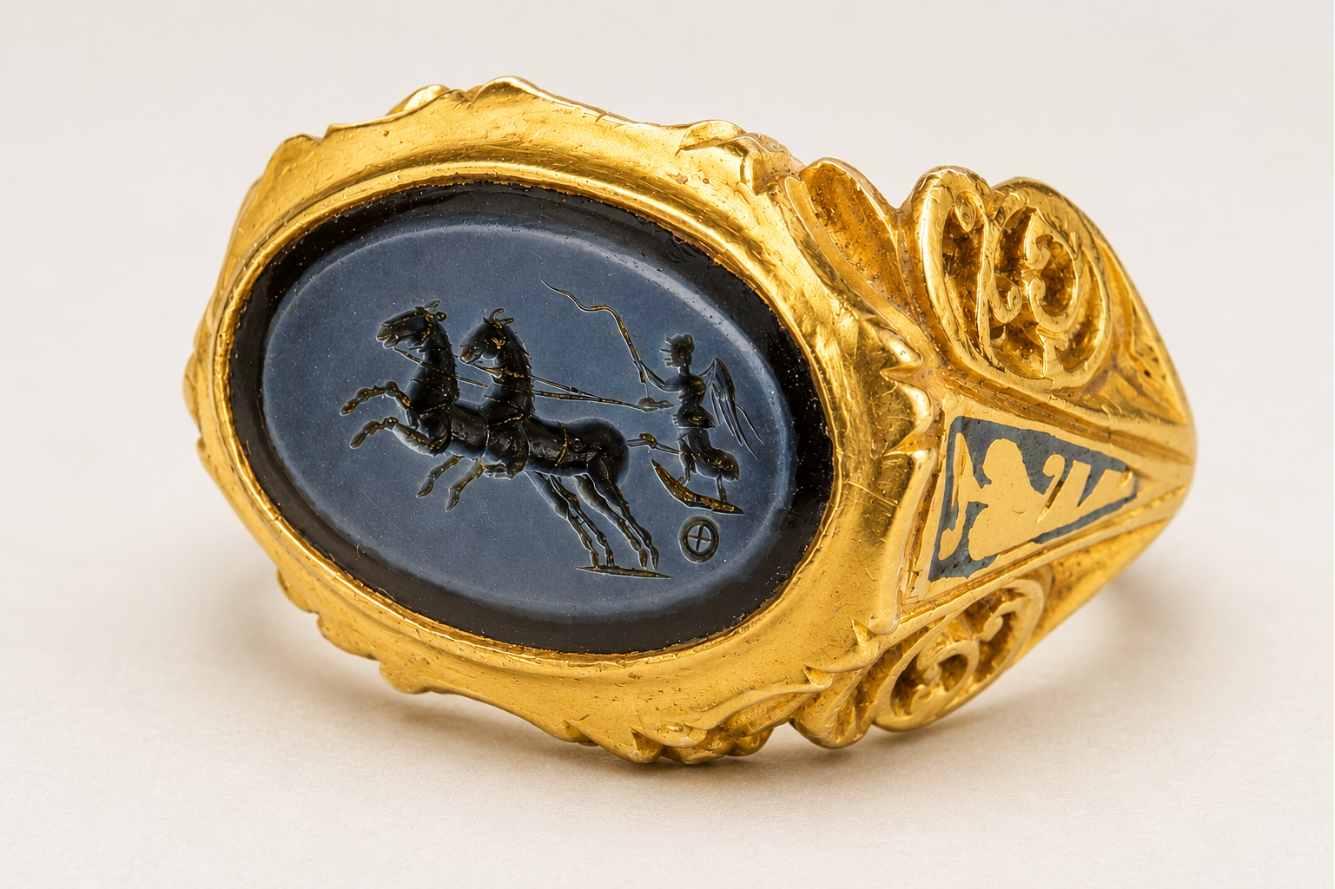
AI reconstruction of the Ilminster ring
AI reconstruction of the Ilminster ring. Credit: Greek Reporter Archive

A rare Roman gold ring discovered by an amateur metal detectorist in southwest England is offering new insights into a turbulent period of Roman Britain nearly 1,700 years ago.

The ring was found near Ilminster in Somerset by Kevin Minto, a former soldier and truck driver who has spent years searching local fields with a metal detector. Experts have described the find as one of the most significant Roman discoveries made in the region in recent years.

An exceptional example of Roman craftsmanship

Weighing 48 grams (1.7 ounces), the ring is unusually large compared with most Roman jewelry recovered in Britain. At its center is a finely carved gemstone depicting Victory, the Roman goddess of triumph, driving a two-horse chariot. Researchers say the craftsmanship is exceptional, and comparable examples are rarely found in Britain.

The discovery was made in an area where Minto had previously uncovered a hoard of nearly 300 Roman coins. He continued returning to the site over several years, eventually finding the gold ring and other Roman-era objects.

Under Britain’s treasure laws, significant archaeological finds must be reported to authorities and assessed before museums can acquire them. The South West Heritage Trust has now acquired the ring and coin hoard after raising £78,010 (about $105,000). The artifacts will eventually become part of the collection at The Museum of Somerset.

A clue to political unrest in Roman Britain

Researchers believe the ring belonged to a wealthy member of Roman society. South Somerset was a prosperous region during the Roman period, known for its villas, agricultural estates, and trade connections along the nearby Fosse Way, one of Roman Britain’s most important roads.

The discovery may also shed light on a dramatic chapter in British history. According to museum officials, the ring and accompanying objects were likely buried around A.D. 297 during the aftermath of the Carausian Revolt.

A rare Roman gold ring discovered in Somerset, England, is shedding light on a turbulent chapter of Roman Britain. Researchers believe the ring was buried around A.D. 297 during the aftermath of the Carausian Revolt and remained hidden for more than 1,700 years. #Archaeology pic.twitter.com/K42ig1eBjt

— Tom Marvolo Riddle (@tom_riddle2025) June 4, 2026

The rebellion began in A.D. 286 when Carausius declared himself ruler of Britain and parts of northern Gaul, creating a breakaway state that lasted for nearly a decade. Roman forces eventually regained control of Britain in A.D. 296.

Archaeologists suggest the valuables may have been hidden for protection during this period of political uncertainty and never recovered by their owner.

Amal Khreisheh, senior curator at the South West Heritage Trust, said the artifacts help researchers understand how people in South Somerset lived through a time of instability and change.

Bringing Roman history to local communities

Before the ring goes on permanent display, it is being used in community outreach programs. Local schoolchildren have already been given the opportunity to examine the ring and some of the coins.

According to Khreisheh, many students have been fascinated by the mystery surrounding the find, asking who owned the ring and why it was buried. While those questions remain unanswered, the discovery has created a direct link between modern Somerset and its Roman past.

Ancient Yeasts Found on Ötzi the Iceman May Still Be Alive, Study Finds

4 June 2026 at 20:15
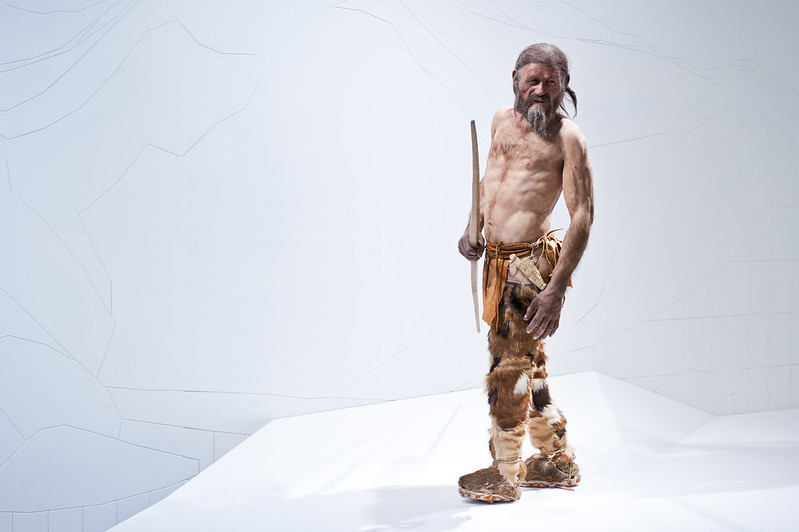
Reconstruction of Ötzi the Iceman.
Reconstruction of Ötzi the Iceman. Credit: South Tyrol Museum of Archaeology / Flickr / CC BY-NC-ND 2.0

More than 5,300 years after his death, Ötzi the Iceman is helping scientists uncover a hidden world of cold-adapted yeasts. Researchers have discovered that the famous mummy’s skin and stomach contain yeasts that likely colonized his body shortly after his death. Some of these microorganisms may still be active today, according to a study published June 3 in the journal Microbiome.

Ötzi, one of the world’s best-preserved natural mummies, was discovered by hikers in the Ötztal Alps in 1991. Scientists believe he died around 3300 B.C. after a violent attack.

Microorganisms survived alongside the mummy

Researchers analyzed swab samples, thawed water from inside the mummy, soil from the discovery site, and material from Ötzi’s storage environment. Using genetic analysis, they identified microbial communities living on and around the remains.

The study found that many of the yeasts are closely linked to cold Alpine environments. Scientists believe they originated from the glacier where Ötzi’s body remained frozen for thousands of years.

The findings suggest the microorganisms survived after the mummy was recovered and transferred to a refrigeration chamber maintained at about 21 degrees Fahrenheit (minus 6 degrees Celsius).

More than 5,300 years after his death, Ötzi the Iceman is still surprising scientists.

Researchers discovered cold-adapted yeasts living on and inside the famous mummy. Some may have survived since the Copper Age, while others appear to have continued growing in cold storage. pic.twitter.com/mpIT8neT24

— Tom Marvolo Riddle (@tom_riddle2025) June 4, 2026

Researchers found that the yeasts are highly adapted to cold conditions, allowing them to persist in both glacial environments and modern storage facilities.

Ancient yeasts may still be active

The team successfully cultivated four cold-adapted yeast species from samples collected from Ötzi’s skin and from water taken from inside the mummy.

Genetic evidence showed signs of ancient DNA damage, suggesting the yeasts either remained dormant for more than five millennia or descended directly from the original microorganisms that colonized the body after death.

Researchers also compared skin samples collected in 2019 with samples gathered in 2010. The analysis showed that a cold-loving yeast known as Glaciozyma had become the dominant strain over time.

The finding indicates that the glacier-associated yeast has continued to slowly grow while the mummy has remained in cold storage.

Study co-author Frank Maixner of the Eurac Research Institute for Mummy Studies said the discovery shows that Ötzi is not simply a preserved archaeological artifact but part of an evolving biological system.

Potential uses beyond archaeology

The researchers also explored whether the ancient yeasts could have practical applications. Preliminary tests showed some strains performed well in sourdough fermentation. Lead author Mohamed Sarhan said the results suggest the yeasts could potentially be used in industries that rely on fermentation, including bread and beer production.

Scientists also identified modern microorganisms that were likely introduced during decades of conservation and study. It remains unclear whether these microbes affect the long-term preservation of the mummy.

Researchers said Ötzi offers a rare glimpse into ancient microbial life. However, they cautioned that the mummy represents only one individual and cannot fully reflect the broader population of the Copper Age.

Mysterious “Blue and Yellow Waters” Link Aztecs to the Legendary Toltecs

4 June 2026 at 19:46
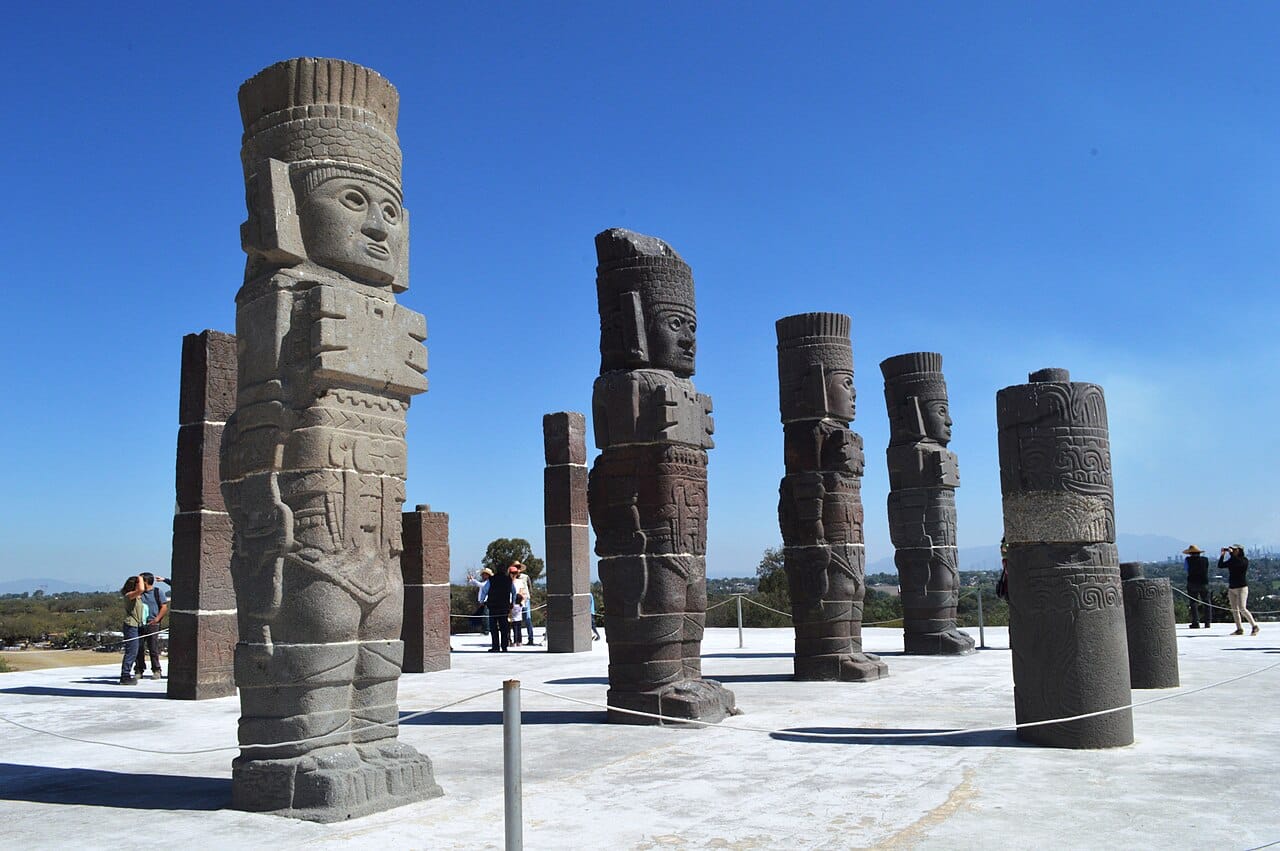
The famous Atlantean warrior statues at the ancient Toltec city of Tula Archaeological Site
The famous Atlantean warrior statues at the ancient Toltec city of Tula Archaeological Site. Credit: AlejandroLinaresGarcia / Wikimedia Commons / CC BY-SA 3.0

A mysterious symbol known as the “blue and yellow waters” helped connect the Mexica people to the prestigious Toltec past, according to new research.

The metaphor appeared in accounts of the founding of Tenochtitlan and was long viewed as a simple description of sacred springs. However, a study led by Agnieszka Brylak argues that it symbolized prosperity, authority, new beginnings, and the transfer of Toltec heritage to the Mexica capital.

A mysterious image at the founding of Tenochtitlan

The research centers on stories describing the founding of Tenochtitlan, the capital of the Mexica, often known as the Aztecs. According to early colonial accounts, the Mexica ended a long migration when they found a sacred place marked by an eagle perched on a cactus, white plants and animals, and two intersecting springs.

One spring was known as “the fiery waters.” The other was called “the blue and yellow waters.” For centuries, scholars struggled to explain the meaning of these unusual descriptions.

Many linked them to warfare because similar water imagery appears in Nahuatl metaphors associated with battle and conquest. Brylak argues that this interpretation tells only part of the story.

The study suggests that the blue and yellow waters represented completeness and abundance. They also marked the beginning of a new era. In the Mexica worldview, the appearance of multiple sacred colors signaled the creation of order from chaos and the establishment of a legitimate center of power.

Colors carried deep symbolic meanings

The research examines how colors functioned in ancient Nahua thought. Blue, yellow, red, black, and white were more than visual descriptions. They formed part of a larger symbolic system connected to directions, time cycles, gods, and the structure of the universe.

Did ancient symbols help the Mexica claim the Toltec legacy?

A new study suggests the mysterious “blue and yellow waters” linked to the founding of Tenochtitlan symbolized power, prosperity, and legitimate rule—not just sacred springs.#Archaeology #Toltec #Aztec #History pic.twitter.com/CNUqMnHRIY

— Tom Marvolo Riddle (@tom_riddle2025) June 4, 2026

Stories from across Mesoamerica frequently describe sacred places and important events through combinations of several colors. These colors appeared in myths about creation, divine authority, and the origins of civilization.

Brylak argues that the colorful springs described at Tenochtitlan fit within this broader tradition. Rather than referring only to actual water sources, they served as symbols of prosperity, sacred authority, and cosmic order.

A link to the Toltec past

One of the study’s most important conclusions is that the colorful waters may have connected the Mexica to the legendary Toltecs.

In Mesoamerican tradition, the Toltecs represented an ideal civilization associated with wealth, wisdom, and political legitimacy. Many later societies claimed some connection to them in order to strengthen their own authority.

Brylak suggests that references to blue and yellow waters helped present Tenochtitlan as the rightful heir to this prestigious Toltec heritage. The metaphor linked the city to ancient centers of power and reinforced the Mexica’s claims to leadership across central Mexico.

The symbolism appeared repeatedly in speeches, ceremonies, and historical narratives. Visitors arriving in Tenochtitlan were often welcomed with references to colorful waters, sacred springs, and other mythical locations tied to authority and origins.

More than purification

The study also examines references to blue and yellow waters in religious rituals.

Previous scholars often interpreted these waters as symbols of cleansing and purification. The metaphor appears in ceremonies involving rulers, newborn children, and people seeking forgiveness for wrongdoing.

Brylak offers a different interpretation. Instead of washing away sins, the colorful waters may have symbolized transformation. Being bathed in them represented receiving the qualities they embodied, including prosperity, legitimacy, social identity, and connection to sacred origins.

For newborn children, the ritual may have marked their entry into society. For rulers, it reinforced their role as guardians of justice and providers of abundance.

A wider Mesoamerican tradition

The research concludes that the symbolism of blue and yellow waters was likely not unique to the Mexica.

Similar color pairings appear in Maya texts, where they also represent abundance, completeness, and political authority. This suggests that different cultures across Mesoamerica may have shared common ideas linking color, sacred power, and legitimate rule.

Brylak argues that understanding these colorful metaphors provides a deeper view of how ancient peoples explained authority, prosperity, and identity. What appeared to be simple descriptions of springs and water may actually have carried some of the most important political and religious messages in the ancient Mesoamerican world.

Largest Scorpion Ever Known Roamed Ancient Britain 415 Million Years Ago

4 June 2026 at 18:30
The dorsal surface of the pedipalp coxa
The dorsal surface of the pedipalp coxa. Credit: Richard J. Howard / CC BY 4.0

Fossil remains discovered in the United Kingdom have been confirmed as belonging to one of the largest scorpions ever known in Britain, researchers say. The giant species, Praearcturus gigas, measured more than 1 meter (3.3 feet) long and lived about 415 million years ago, making it one of the earliest large predators to inhabit land.

The findings resolve a long-running scientific debate over the identity of the animal. By reexamining fossil fragments from England and Wales, researchers confirmed that Praearcturus was a scorpion rather than a crustacean, as some scientists had previously believed.

With pincers measuring about 16 centimeters (6.3 inches) long, the giant arthropod would have dwarfed modern scorpions. Today, the largest living scorpion reaches only about 23 centimeters (9 inches) in length. The study was published in the journal Palaeontology.

A giant predator in a young world

When Praearcturus gigas lived during the Early Devonian Period, life on land was still developing. Small plants and fungi had begun spreading across the landscape, while arthropods were among the first animals to establish themselves away from water.

Researchers believe the giant scorpion preyed on smaller arthropods living on ancient floodplains. Its size likely made it one of the dominant predators of its time.

Praearcturus gigas
Pedipalp elements of Praearcturus gigas. Credit: Richard J. Howard / CC BY 4.0

Lead author Richie Howard said the discovery pushes back the appearance of giant arthropods by tens of millions of years. “When people think of giant arthropods, they often think of creatures such as Arthropleura or giant griffinflies,” Howard said. “But those animals appeared much later, after land ecosystems had become far more complex.”

Howard said the lack of large competing predators may have helped Praearcturus grow to such enormous proportions.

Solving a 150-year-old mystery

The fossil was first described in 1871 by British paleontologist Henry Woodward, who believed it belonged to a giant crustacean similar to a woodlouse.

For decades, scientists struggled to classify the animal because only fragments of its body had survived. The fossils lacked the distinctive tail that normally identifies a scorpion.

The mystery began to unravel after researchers compared the fossils with Eramoscorpius, a well-preserved ancient scorpion discovered in Canada. Both species share a distinctive triangular sternum on the underside of the body, providing strong evidence that Praearcturus was a true scorpion.

Clues to early life on land

The discovery offers new insight into a key stage of Earth’s history, when animals were adapting to life outside aquatic environments.

Researchers say Praearcturus may not have lived exclusively on land. Fossils from Wales preserve flap-like structures known as epimera, which resemble features seen in modern lobsters and crabs. These structures suggest the giant scorpion may have spent part of its life in water, where larger prey would have been available.

Co-author Greg Edgecombe said the species may even represent a lineage that returned to aquatic habitats after its ancestors adapted to life on land.

Scientists say additional fossil discoveries will be needed to determine how long Praearcturus survived and whether other fragmentary remains found in Britain belong to the species. For now, the fossils provide rare evidence of one of the largest scorpions ever to walk the Earth.

Ancient Greece’s Fascination With India’s “Naked Philosophers”

4 June 2026 at 16:49
Gymnosophists India Greek philosophers
Medieval miniature reproducing the meeting of India’s gymnosophists with Greece’s commander Alexander the Great, c. 1420. The ancient Greeks were fascinated by India’s gymnosophists. Credit: Unknown Author, Wikimedia Commons, Public Domain.

Throughout history, and since the first exchanges between India and ancient Greece, Greeks have been captivated by the intriguing stories of the mysterious gymnosophists of India or the “naked philosophers.”

These philosophers became infamous for their austere and ascetic lifestyle along with their enigmatic wisdom. There are numerous Greek accounts of these wise people, offering a fascinating picture of the important cultural exchanges between two of the greatest civilizations on Earth.

Encounters with Alexander the Great

One could argue that perhaps the most famous interactions between Greeks and the gymnosophists took place during the campaign of Alexander the Great in India in 326 BC.
Ancient historians such as Onesicritus and Nearchus described (in their works) the dialogues that the great Macedonian Greek commander had with these naked wise men.

During these dialogues, we can see their distinctive disregard for any material possessions and their truly spectacular willingness to embrace death as a part of life. The philosopher Calanus famously demonstrated this by actually setting himself on fire in front of Alexander in an extreme attempt to showcase his fearless nature.

Gymnosophists Alexander the Great
Miniature of Alexander encountering the gymnosophists. Image taken from f. 17v of Poems and Romances (the ‘Talbot Shrewsbury book’). Written in French. Credit: British Library, Europeana, Public Domain.

These examples are only a part of the entire collection of accounts that have managed to paint a vivid picture of the unconventional way of life of the gymnosophists. Porphyry, for instance, noted in his works that these Indian philosophers were strictly vegetarians, much like the Brahmins. Their absolute rejection of garments and clothing, in general, along with their distaste for worldly goods in pursuit of spiritual enlightenment made a deep impression on the Greeks, who were genuinely amazed by the dedication of these men.

Ancient Greece’s views on philosophy of India

For the Greeks and their worldview, the gymnosophists represented a very different and acutely unique philosophical tradition with both many similarities to but also divergences from their own. From the accounts of ancient writers we learn that Greeks saw similarities between the ideas from gymnosophists of India and their own Greek philosophical concepts.

The belief of the gymnosophists for example in reincarnation, or metempsychosis, was of particular interest to many. Some scholars even speculated that Greek thinkers such as Pythagoras may have been influenced by Indian thought in the way he shaped his own worldview.

However, it is obvious that the Greeks also noted differences. This is something that probably led to a greater curiosity about and fascination with the Indian gymnosophists. Unlike the gymnosophists, mainstream Greek philosophers tended to engage more with society and politics, becoming much more active in the everyday life of their cities. The radical asceticism of the gymnosophists, on the other hand, as well as their rejection of material life, was more extreme than most Greeks had ever witnessed.

Asceticism and self-denial—from India’s gymnosophists to ancient Greece

What seems to have impressed the Greeks the most about the gymnosophists and their life was their incredible commitment to self-denial and extreme austerity. These naked wise men renounced almost all possessions and lived in the wilderness away from urban centers of the time.

Their sole goal was to pursue spiritual wisdom through material deprivation. To Greek eyes, their extremely ascetic lifestyle represented the ultimate mastery over physical desires and earthly attachments. For the Greeks, this was almost inherently difficult to comprehend, as the Greeks had a fundamentally different view, which was much closer to today’s Western attitude towards material possessions.

This is the reason why the example of living adopted by the gymnosophists inspired some Greek philosophical movements, particularly the Cynics. The Cynics were the ones who emulated the Indian rejection of social norms and material goods in favor of the benefits of asceticism. Christian ascetics also later looked to the Indian philosophers as true role models of self-discipline and pure piety.

India’s gymnosophists and influences on ancient Greece

As is understandable, the gymnosophists played a fundamental role in shaping and affecting the Greek imagination. They appeared as archetypal wise men in works by authors like Plutarch, Lucian, and Clement of Alexandria. Their fascinating way of life continued to amaze later Greek and Roman writers. These writers saw them as exotic embodiments of the philosophical ideal.

More broadly speaking, the Greek encounters with the gymnosophists show us the importance and richness of the cultural exchanges and the discourse of ideas between ancient cultures and civilizations. These Indian wise men expanded many of the Greek notions of philosophy and the possibilities of the ascetic path, even shaping Christian thought, although they lived centuries before the birth of Jesus. At the same time, the Greek accounts give us valuable information about the fundamentals of Indian thought and practice.

17,100-Year-Old Cave Paintings in Wales Rewrite Britain’s Ancient History

4 June 2026 at 01:05
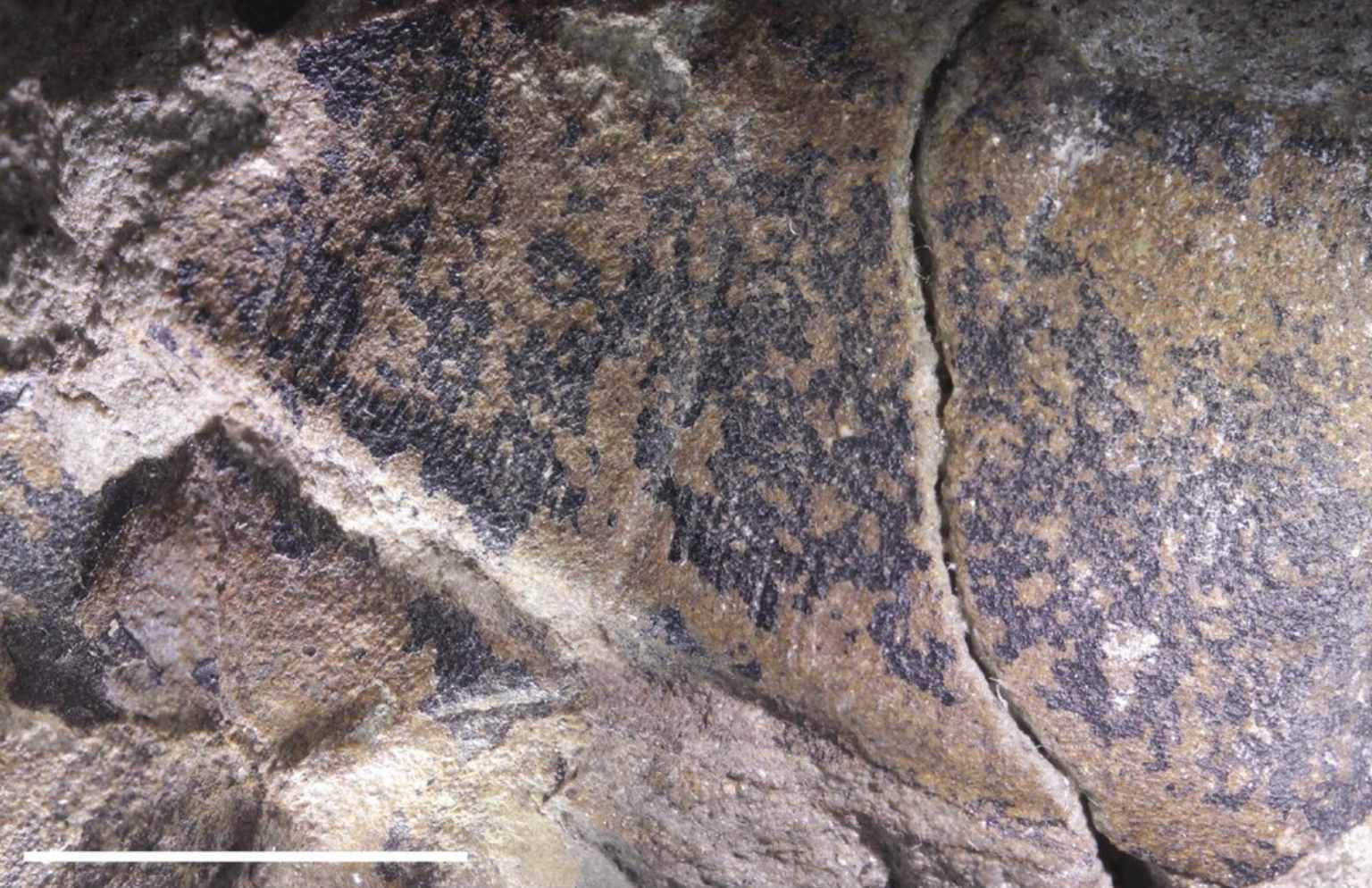
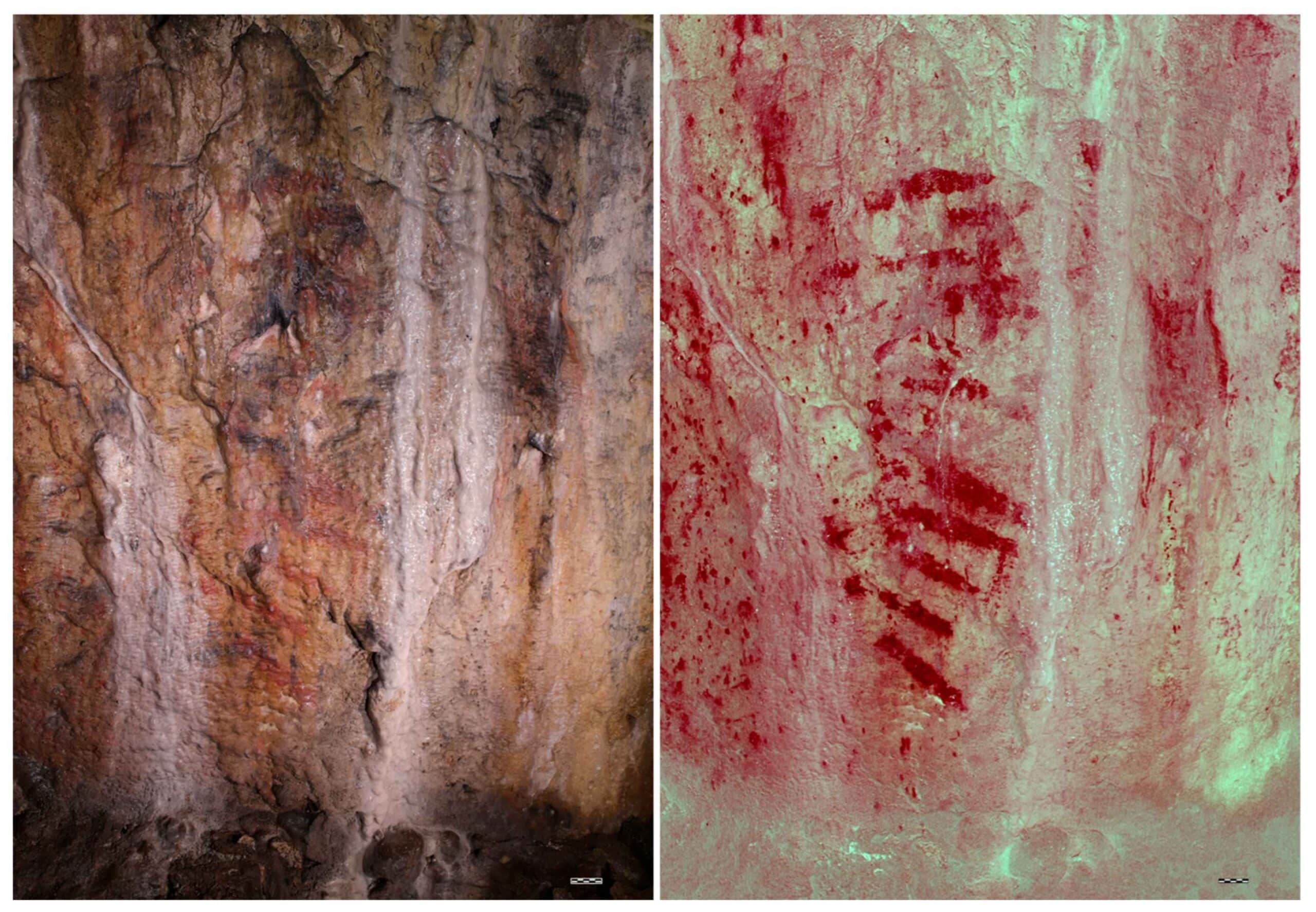
Red pigment markings at Bacon Hole Cave in Wales
Red pigment markings at Bacon Hole Cave in Wales. Credit: George H. Nash / CC BY 4.0

A series of red markings inside a cave in south Wales has been confirmed as the UK oldest cave art, ending decades of debate over whether the images were created by humans or formed naturally.

Researchers determined that the markings at Bacon Hole Cave near Mumbles were painted about 17,100 years ago during the Upper Paleolithic period. The discovery makes them the oldest known rock art in Britain and northwestern Europe. The findings overturn a conclusion that had stood since 1928, when experts dismissed the markings as natural mineral stains rather than prehistoric artwork.

Discovery revisited after more than a century

The markings were first reported in 1912 by professors William Sollas and Henri Breuil, who identified the red bands as prehistoric cave paintings. At the time, the discovery was described as the first example of Paleolithic cave art found in Britain.

A substantial breccia deposit is located around the current entrance area of the cave
A substantial breccia deposit is located around the current entrance area of the cave. Credit: George H. Nash / CC BY 4.0

That interpretation was later rejected. Researchers concluded that the red streaks were caused by iron-rich minerals seeping through the limestone walls, and the site gradually lost its significance as a prehistoric art location.

More than a century later, an international team led by prehistoric art specialist George Nash reexamined the markings using scientific methods unavailable to earlier researchers. The team’s findings, published in the journal Quaternary, confirmed that the red pigment was intentionally applied by humans around 17,100 years ago.

Scientific analysis confirms human origin

Researchers used uranium-thorium dating and archaeometric analysis to study the pigment and surrounding cave deposits. Laboratory tests identified a mixture of calcite and clay residues within the paint, indicating that the material had been deliberately prepared. Analysis also showed that the pigment was applied directly with a finger.

The painted lines appear as evenly spaced horizontal bands arranged in a structured pattern. Researchers said the design is inconsistent with natural geological processes and supports the interpretation originally proposed in 1912.

Part of the artwork may have been overlooked for decades because a local fisherman painted graffiti on a nearby section of the cave chamber in 1894, making the markings more difficult to interpret.

Life in Wales during the Ice Age

Eastern view of the cave entrance and the Bristol Channel
Eastern view of the cave entrance and the Bristol Channel. Credit: George H. Nash / CC BY 4.0

The artwork was created as Wales emerged from one of the coldest phases of the last Ice Age, known as the Devensian glaciation. At the time, the landscape around Bacon Hole was a cold, largely treeless environment. Researchers believe the area surrounding what is now the Bristol Channel attracted large grazing animals during seasonal migrations.

The cave and other nearby shelters along the Gower coastline would have provided suitable living spaces for hunter-gatherer groups moving through the region.

A significant addition to Britain’s prehistoric record

Bacon Hole Cave lies within the limestone cliffs of the Gower Peninsula overlooking the Bristol Channel. Although the area is recognized for its natural beauty, the cave is not currently protected as a scheduled monument.

Researchers argue that the site’s newly confirmed status as the UK oldest cave art strengthens the case for greater protection. The study was conducted by researchers from First Art, the University of Southampton, Swansea University and other institutions, with support from the National Trust and the Bradshaw Foundation.

The discovery adds to a small number of known examples of Upper Paleolithic rock art in Britain and provides rare evidence of artistic activity in the region more than 17,000 years ago.

3,000-Year-Old Beads Found in China Reveal Bronze Age Cultural Connections

4 June 2026 at 00:02
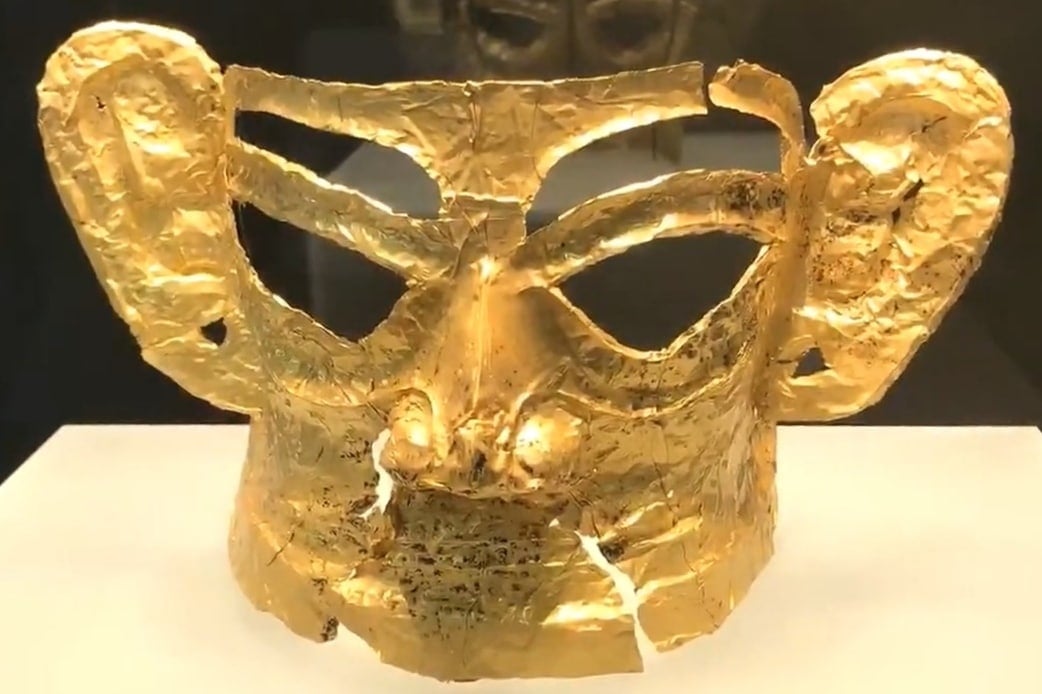
Sanxingdui gold mask
Sanxingdui gold mask. Credit: 中国新闻网 / Wikimedia Commons / CC BY 3.0

Ancient carnelian beads unearthed at the Sanxingdui Ruins in southwest China are providing new evidence of long-distance trade and cultural connections that linked distant regions during the Bronze Age, researchers said Tuesday.

The discovery was announced by the Sichuan Provincial Cultural Relics and Archaeology Research Institute, which recently studied 11 carnelian beads recovered from sacrificial pits at the famous archaeological site in Sichuan Province. The artifacts date to about 1200 to 1000 B.C.

According to Liu Jiancheng, an associate researcher at the institute, the beads are the southernmost known carnelian artifacts from the same period found in China. Their discovery is helping researchers trace the movement of valuable materials and ornamental goods across ancient East Asia.

Analysis traces beads to northern China

Carnelian is a reddish-orange gemstone that was widely used in ancient jewelry and decorative objects. Researchers conducted trace element analysis on the Sanxingdui beads and found that the raw materials did not originate in the Sichuan Basin.

Instead, the analysis traced the source of the stone to the Yanshan orogenic belt and regions farther north, more than 1,000 kilometers (620 miles) from Sanxingdui. The findings indicate that the materials traveled great distances before reaching the ancient Shu civilization.

Researchers also compared the beads with carnelian artifacts discovered at archaeological sites in Gansu, Shaanxi, and Beijing from roughly the same period. The chemical signatures closely matched those of the northern examples, suggesting they likely originated from related sources.

Evidence points to an extensive exchange network

The results point to the existence of a broad exchange network operating between 1500 and 1000 B.C. Researchers believe the network connected communities across the southern Mongolian Plateau, the Loess Plateau, the eastern Qinghai-Tibet Plateau, the Central Plains, and the Sichuan Basin.

The findings offer new insight into how goods moved across ancient China long before the establishment of formal trade routes. They also suggest that materials, technologies, and cultural influences circulated between regions that were separated by vast distances.

Discovery adds to Sanxingdui’s significance

Sanxingdui, located near the city of Guanghan, is one of China’s most important archaeological sites. The site has gained international attention for its extraordinary bronze masks, statues, and ritual objects, which have reshaped the understanding of early Chinese civilization.

Liu said the latest discovery shows that the Sanxingdui society participated in a far-reaching network of exchanges about 3,000 years ago. That network extended into northern China and may have reached as far as the Mongolian Plateau.

The researcher said the evidence highlights the depth of interaction among different cultures during China’s Bronze Age. The discovery also supports the view that a broader and increasingly interconnected Chinese civilization was already taking shape thousands of years ago, while regional societies continued to maintain their own distinct identities.

4,000-Year-Old Child’s Skull Reveals Oldest Known Surgery in Central Asia

3 June 2026 at 22:30
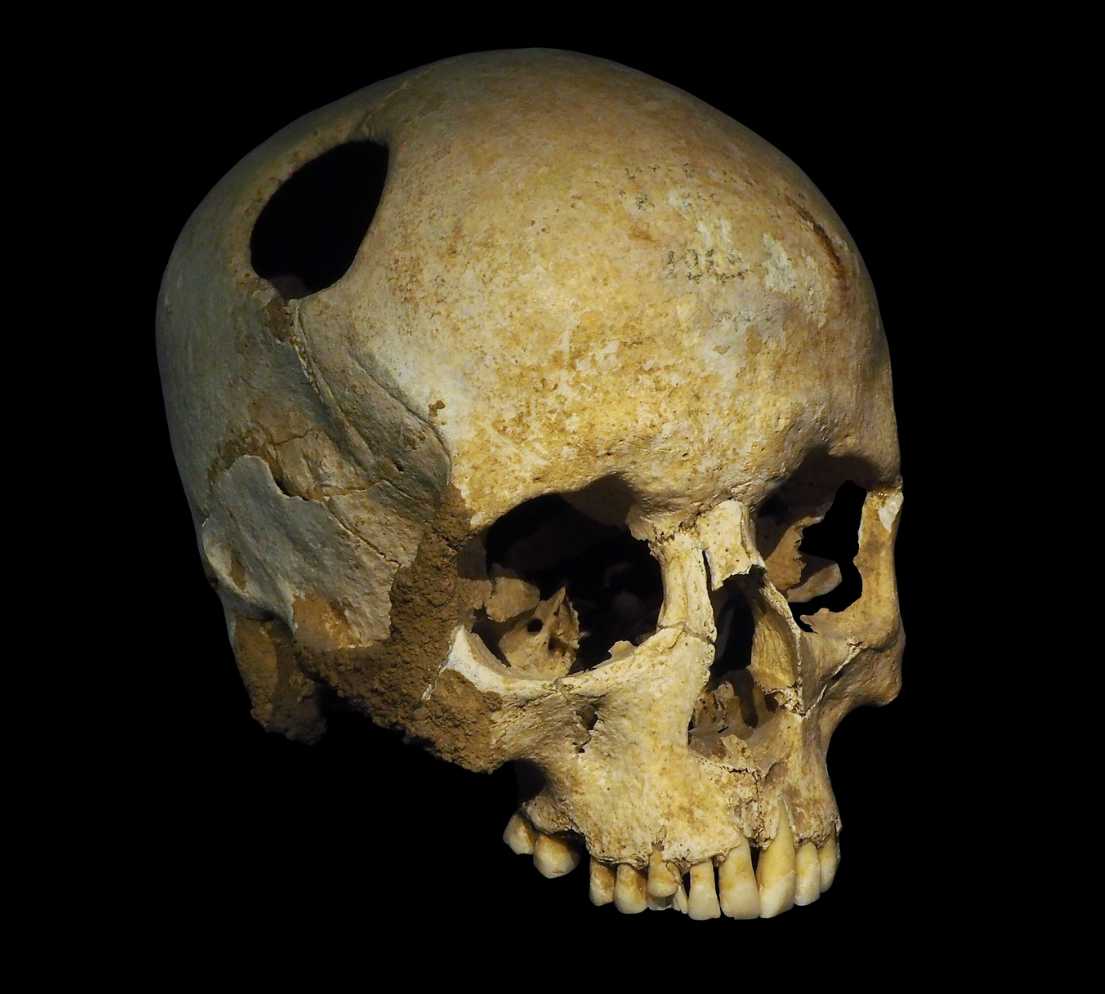
The perimeter of the hole in this trepanated skull
The perimeter of the hole in this trepanated skull. Credit: Rama / Wikimedia Commons / CC BY-SA 3.0

A 4,000-year-old child’s skull discovered in Uzbekistan is offering rare evidence of one of the oldest known surgery in Asia, shedding new light on medical knowledge in the Bronze Age.

The remains belonged to a child who died at about 5 years old. Researchers found clear signs of cranial trepanation, a procedure that involved cutting or drilling into the skull. The discovery represents the oldest documented evidence of surgery in Central Asia and one of the oldest known examples anywhere in Asia.

A joint team of Italian and Uzbek researchers uncovered the skeleton during excavations in the Northern Bactria region of southern Uzbekistan, near the border with Afghanistan.

Evidence of a complex procedure

Archaeologists found the child buried in a single grave alongside another child who died at about 3 years old. Examination of the older child’s skull revealed distinct traces of trepanation that researchers believe were made using stone or bone tools.

Trepanation is among the oldest surgical procedures known to humanity. Archaeologists have documented similar operations in ancient societies across Europe, Africa and Asia. The practice may have been used to treat head injuries, epilepsy, severe headaches or other medical conditions. In some cultures, it may also have served ritual or spiritual purposes.

A 4,000-year-old child’s skull discovered in Uzbekistan contains evidence of cranial trepanation, making it the oldest documented surgery in Central Asia and one of the earliest known in Asia. pic.twitter.com/w1NDyBNpEV

— Tom Marvolo Riddle (@tom_riddle2025) June 3, 2026

Researchers noted that medicine and religion were often closely connected in ancient societies, making it difficult to determine the exact reason for the operation.

The findings also raise questions about the level of medical expertise that existed in Central Asia thousands of years ago. Performing such a procedure would have required specialized knowledge of the human body and considerable technical skill.

A window into the Oxus civilization

The burial was discovered at the prehistoric settlement of Djarkutan, one of the most important urban centers of the Oxus civilization. Researchers dated the grave to the late third millennium B.C.

Also known as the Bactria-Margiana Archaeological Complex, or BMAC, the Oxus civilization flourished across parts of modern-day Uzbekistan, Turkmenistan and Afghanistan between about 2500 and 1500 B.C. The culture is known for its advanced agriculture, urban development and rich material traditions.

Researchers began a broader project to investigate Djarkutan and other aspects of the Oxus civilization in 2024. “Djarkutan continues to surprise us,” excavation director Enrico Ascalone said in a statement. “A cranial trepanation on a child, four thousand years ago, in Central Asia: until yesterday it was unthinkable. Today it is in our data.”

Questions remain unanswered

The discovery has also created new mysteries. Researchers are now investigating who may have performed the operation, what medical knowledge was available at the time and why such a procedure was carried out on a young child.

Evidence of ancient trepanation is relatively common in some parts of the world, but cases involving children of this age remain rare. Further analysis may help researchers understand whether the operation was intended to treat an illness, respond to an injury or fulfill a ritual purpose.

For now, the skull offers a remarkable glimpse into the medical practices, beliefs and capabilities of a Bronze Age civilization that thrived in Central Asia four millennia ago.

18th-Century Shipwreck Off Norway Reveals Chinese Porcelain Cargo

3 June 2026 at 20:30
roman shipwreck
An interpretation of an ancient shipwreck. Credit: GreekReporter Archive

A deep-sea shipwreck in Norway, archaeologists call the “Porcelain Wreck,” has revealed hundreds of pieces of Chinese porcelain cargo and other luxury goods, offering a rare glimpse into trade networks that connected Europe and Asia during the 18th century.

The wreck was discovered about 600 meters (nearly 2,000 feet) below the surface in the Skagerrak, the body of water between Norway, Denmark, and Sweden. Researchers say the vessel and its cargo are among the best-preserved maritime finds ever recorded in Northern Europe.

Discovery beneath the seabed

The find began in September last year when professional diver Espen Saastad was conducting a routine seabed survey off the Norwegian coast. During a review of underwater footage, he noticed a shipwreck surrounded by stacks of porcelain resting on the seafloor.

The footage was sent to the Norwegian Maritime Museum, where researchers immediately recognized its significance.

“We thought it was an incredible wreck,” said Sven Ahrens, research director at the museum. “We often find cargo and freight, but it’s usually broken or covered by marine growth. Here, whole plates were lying in stacks on the seabed.”

Museum experts identified the cargo as 18th-century Chinese porcelain. The footage also revealed fragments of chandeliers, fine stemware, and other luxury items.

Rare evidence of global trade

Researchers believe the vessel was likely a galiot, a small cargo ship that operated within Northern Europe. While the ship probably never traveled to Asia, the Chinese porcelain cargo likely arrived through major trading centers such as Amsterdam, Copenhagen, or Gothenburg before being loaded onto the vessel.

The discovery provides evidence of the expanding trade networks and growing consumer culture that transformed Europe during the 18th century.

A remarkably preserved shipwreck discovered 600 meters beneath the waters off Norway has revealed hundreds of pieces of Chinese porcelain and other luxury goods dating to the 18th century. pic.twitter.com/nO5sL4SUfB

— Tom Marvolo Riddle (@tom_riddle2025) June 3, 2026

Unlike many shipwrecks found off the Norwegian coast that carried a single commodity, such as timber, fish, or iron, this vessel transported a diverse cargo of imported goods.

“The Porcelain Wreck is the first wreck we have found that demonstrates the breadth of interregional commercial activity in Northern Europe during the 18th century,” said maritime archaeologist Frode Kvalø, who leads the project.

Technology helps recover artifacts

Archaeologists have explored the wreck using a remotely operated vehicle, or ROV, controlled from a research vessel on the surface. The technology allowed researchers to create a detailed 3D model of the site and map the location of the ship and its cargo.

In May, the team recovered nearly 40 artifacts using a robotic arm equipped with specially designed suction cups. Most of the recovered objects were pieces of Chinese porcelain that appeared almost untouched despite spending centuries underwater.

One recovered brick from the ship’s galley carried a maker’s mark linked to Lübeck, Germany. Researchers are now examining historical Danish Sound Dues records in hopes of identifying the vessel and reconstructing its final voyage.

Thousands of artifacts remain

Only a small portion of the cargo has been recovered so far. Thousands of artifacts remain on the seabed, including unopened crates whose contents are still unknown.

Researchers hope the next phase of the project will involve a full archaeological excavation of the site. Such an effort could provide unprecedented insight into maritime trade, shipping practices, and daily life during a period when global commerce was rapidly expanding.

For archaeologists, the shipwreck of Norway represents more than a remarkable collection of Chinese porcelain. It offers a rare and largely untouched snapshot of the commercial world that linked continents centuries ago.

❌