Normal view

Ministra insiste que areal das praias é livre exceto nas concessões e faixas de segurança

By: LUSA
5 June 2026 at 15:55

A ministra do Ambiente sublinhou hoje que o areal das praias é de acesso livre, exceto nas zonas concessionadas e nas faixas de segurança, lembrando que cabe às autarquias definir essas áreas e divulgar os planos de praia.

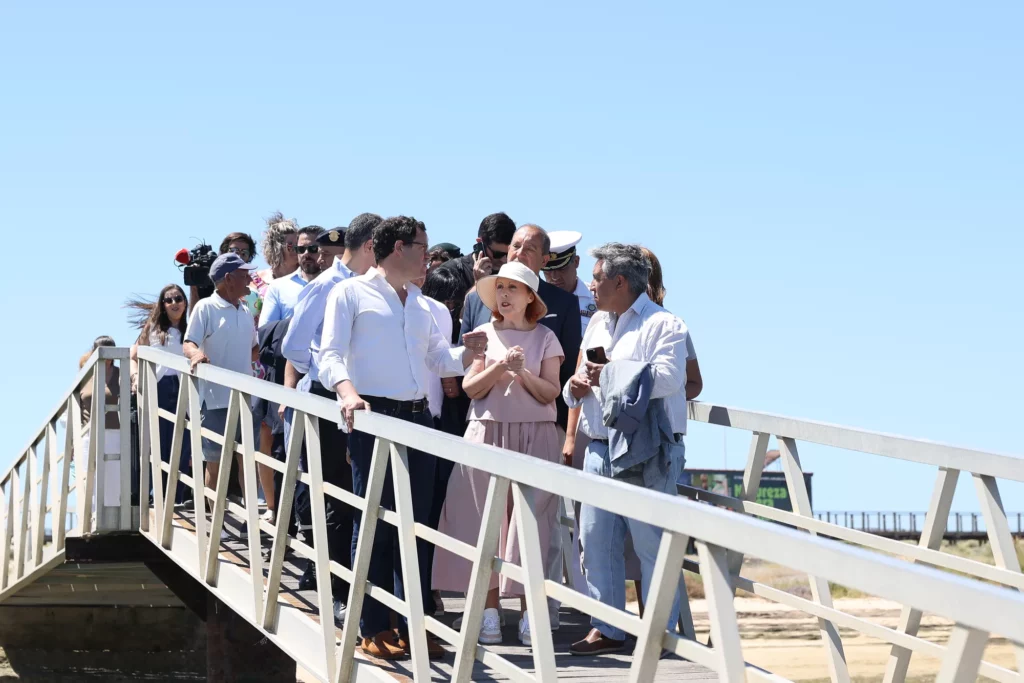
“Cabe às câmaras municipais fazer as concessões e divulgar o plano de praia, tanto através da sinalética, como — e eu aconselho vivamente —, através de um esquema à entrada da praia: ‘olhe, este espaço é concessão, este espaço é de segurança, tudo o resto é livre’”, afirmou Maria da Graça Carvalho numa visita à Praia da Fuseta-mar, em Olhão.

Questionada pelos jornalistas sobre a existência de sinalética que ainda encaminha os banhistas para as zonas da praia não concessionadas, a governante referiu que, nesses casos, a sinalética tem de ser revista para que seja colocada a informação correta e não haja dúvidas para os banhistas.

“Os presidentes de câmara têm de verificar e, se acharem que a sinalética não está bem, corrigi-la, mas não é uma coisa sistemática. A lei não mudou e estou convencida de que a maior parte da sinalética está bem e está de acordo com a lei, porque a última norma que clarifica isto é de 2012, há 14 anos”, frisou.

Falando aos jornalistas numa visita à intervenção de emergência de reforço sedimentar em curso naquela praia do distrito de Faro, Maria da Graça Carvalho reiterou que, não sendo uma obrigação legal, ajuda muito ter um esquema simples à entrada de cada praia a explicar como está organizada.

Lembrando que as regras de segurança são definidas pelas câmaras municipais em conjunto com as autoridades marítimas, a ministra do Ambiente e Ação Climática notou que a organização do areal pode e deve ter em conta as características morfológicas de cada praia.

“Por exemplo, uma praia muito grande como a de Monte Gordo será diferente de uma praia pequena como algumas em Lagos ou em Armação de Pêra”, ilustrou, referindo que, desde que respeitada a regra de que as concessões não podem exceder 30% da área útil da praia, nem 50% da frente de praia, a organização pode variar.

“A segurança pode incluir faixas em redor das concessões, em redor das entradas para a praia — que são sempre públicas —, em frente aos nadadores-salvadores e aos barcos utilizados para o salvamento, e junto ao mar. Estas são faixas de segurança. As concessões podem ser mais estreitas e ir mais perto do mar, ou podem ser mais largas e ficar mais recuadas”, exemplificou.

Esta semana, a Agência Portuguesa do Ambiente (APA) emitiu um esclarecimento técnico sobre a ocupação de áreas não concessionadas nas praias balneares, informando que os banhistas podem colocar chapéus-de-sol em frente às concessões de praia, que são áreas de uso privado que não podem exceder 30% da área útil da praia, nem 50% da frente de praia.

No esclarecimento, a APA reforça que, “em Portugal, as praias são espaços de utilização pública e de acesso livre” e refere que os Planos de Ordenamento da Orla Costeira (POOC) e os Regulamentos de Gestão das Praias Marítimas em vigor estabelecem limites para a ocupação das praias por apoios balneares.

Assim, “as áreas não abrangidas por licença ou concessão mantêm-se disponíveis para uso público, podendo ser livremente utilizadas pelos utentes, nomeadamente para a colocação de chapéus de praia, para-ventos ou outros equipamentos balneares particulares”, acrescenta a APA.
Greece’s Property Market Turns to Older Homes Amid New Housing Shortage

5 June 2026 at 14:51
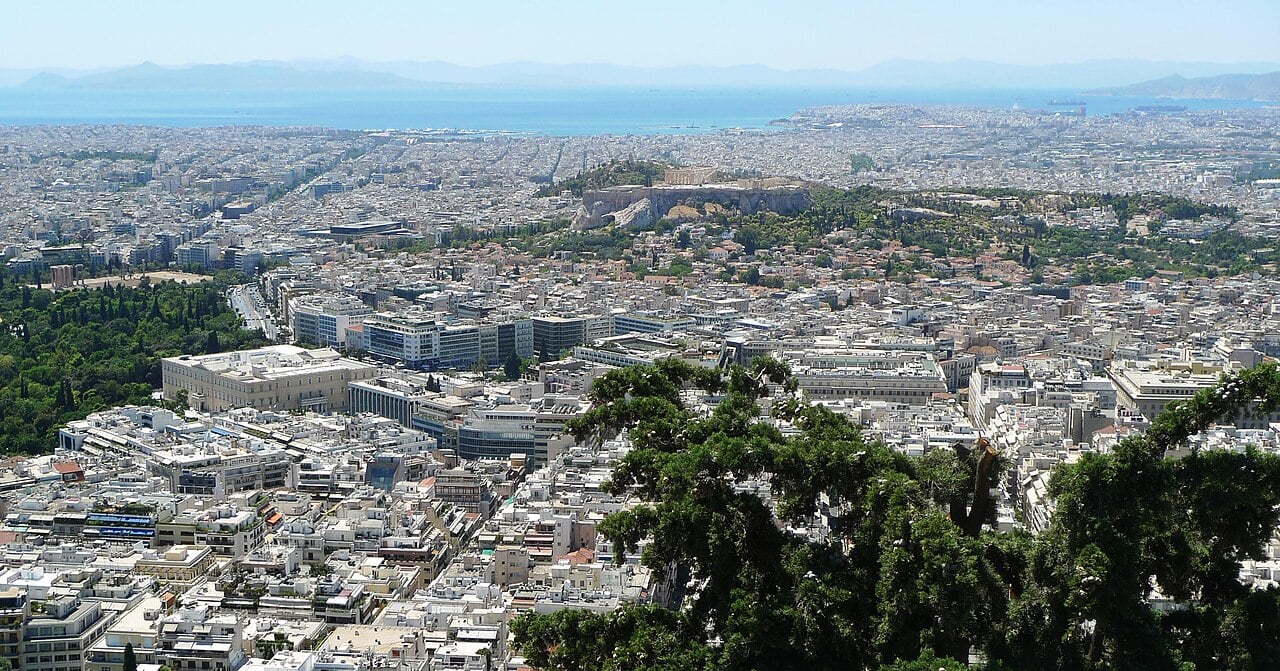
Panoramic view of Athens from above, with the Acropolis visible in the center and dense urban housing stretching toward the sea.
A general view of Athens, where older residential properties continue to dominate Greece’s housing market. Credit: Wikimedia Commons / Dimboukas / CC BY-SA 3.0.

More than seven in ten property purchases in Greece in 2025 involved residential homes, with three-quarters of those sales concerning buildings over twenty years old, underscoring the country’s persistent shortage of new housing. The figures point to a structural imbalance in the Greek real estate market in which limited construction in recent years has failed to keep pace with demand.

As a result, buyers continue to turn to older properties, particularly in the country’s largest urban centers. Residential properties accounted for 74.8 percent of all property sales in 2025. Plots of land followed at 14.3 percent, agricultural land at 5.8 percent, and commercial properties at 5.1 percent.

The data comes from REMAX Greece, a real estate network, and is based on thousands of completed transactions recorded through its ninety offices and more than 1,200 agents nationwide.

Three-quarters of homes sold were over 20 years old

Homes more than twenty years old represented 75.6 percent of residential property sales across Greece. Newly-built homes, defined as properties up to five years old, accounted for just 12.3 percent of sales.

Properties aged six to ten years represented only 0.3 percent of transactions, while homes aged 11 to 15 years accounted for 2 percent. Properties aged 16 to 20 years made up 9.8 percent of residential sales.

The dominance of older housing reflects the limited availability of newer homes in the Greek market. Where newly built properties are available, however, they remain highly attractive to buyers because they offer modern energy efficiency standards and better meet contemporary living needs.

Athens reflects national trend

In Attica (Greater Athens), residential properties accounted for 85.3 percent of sales. Commercial properties and land plots each represented 7.2 percent.

Older housing stock was even more dominant in the capital region. Homes more than twenty years old made up 86.2 percent of residential sales in Attica, while newly built properties up to five years old represented only 3.3 percent.

Land purchases also gained ground in Attica. Plots and agricultural land combined rose by 1.8 percent year-on-year, indicating growing buyer interest in development opportunities amid the shortage of available modern housing.

Older homes drive Greece’s property market in Thessaloniki

A similar picture emerged in Thessaloniki, where residential properties represented 87.4 percent of total sales. Commercial properties followed at 8.7 percent. As in Athens, older homes dominated the market. Properties more than twenty years old accounted for 87 percent of residential sales in Thessaloniki, while newly-built homes represented just two percent.

The figures underline the depth of Greece’s housing supply challenge. Demand for residential property remains strong, but the limited availability of newly built homes continues to push buyers toward older stock across the country’s largest real estate markets.

SC Olhanense conquista Taça do Algarve pela primeira vez

5 June 2026 at 09:27

O SC Olhanense venceu, na passada quinta-feira, o Imortal DC por 1-0 e conquistou a Taça do Algarve de Futebol pela primeira vez na sua história. Daniel Popa foi considerado o melhor jogador em campo ao anotar, aos 50′ minutos de jogo, o único golo no duelo entre os dois históricos do futebol algarvio, que se disputou no Estádio Municipal de Portimão.

O troféu foi entregue pelo presidente da Associação de Futebol do Algarve (AFA), João Pedro Gomes, numa cerimónia que contou ainda com as presenças de Manuel Cajuda, Presidente do SC Olhanense, Bruno Xavier, Presidente do Imortal DC, Ricardo Calé, Presidente da CM Olhão e Rodiney Sampaio, Presidente do Conselho de Administração do Portimonense SAD.

O clube presidido por Manuel Cajuda junta-se, assim, a outros 13 clubes que venceram a prova desde a sua reativação na temporada 1999/2000: Lusitano FC (4 vezes), LGC Moncarapachense e Louletano DC (3 vezes), SR Almancilense, CF Esperança de Lagos, GD Lagoa e Portimonense SC (2 vezes), FC Ferreiras, Silves FC, UD Messinense, JS Campinense, Guia FC e ACR Alvorense (1 vez).

World Environment Day 2026: Greece Outlines Major Strides

5 June 2026 at 09:13
World Environment Day
Observed every year on June 5, World Environment Day is the United Nations’ main global platform for raising awareness and mobilizing action to protect the natural world. Credit: Greek Reporter

Greece is marking World Environment Day 2026 with a nationwide program of events that brings the global call for climate action down to the local level—from protected areas and wetlands to city galleries, museums, and island beaches.

Observed every year on June 5, World Environment Day is the United Nations’ main global platform for raising awareness and mobilizing action to protect the natural world. First celebrated in 1973, the day has grown into an international campaign involving governments, organizations, schools, communities and citizens around the world.

In Greece, the Natural Environment and Climate Change Agency, NECCA, is at the center of the program, organizing 65 events across the country. Activities include guided nature walks, biodiversity recording, wildlife observation, educational games, workshops, public information events and volunteer cleanups, many of them in or near protected areas.

Greece’s government highlights achievements on World Environment Day

Greece’s Minister of Environment and Energy, Stavros Papastavrou, highlighted some of the government’s environmental policies and key achievements over the past seven years.

  • Expanded Marine Protection: Moving forward from commitments made at global ocean conferences (2024 in Athens and 2025 at the UN), Greece is establishing two new large National Marine Parks in the Ionian and South Aegean seas. This will double protected waters to 36% of territorial waters, surpassing the EU’s 30% target well ahead of 2030.
  • Banning Industrial Fishing: Greece is pioneering marine conservation internationally by completely banning bottom trawling in all national marine parks.
  • Renewable Energy Zoning Restrictions: New regulations prohibit the installation of solar farms in all Natura areas, forests, and woodlands, and ban wind farms at altitudes above 1,200 meters (3,937 ft).
  • “Untrodden” Landscapes: Greece has introduced pioneering designations for strict ecological preservation, establishing thirteen “Untrodden Mountains” and 250 highly protected “Untrodden Beaches” to limit human development in sensitive ecosystems.
  • Targeted Species & Habitat Conservation: Twelve National Action Plans have been launched to protect endangered species (including the brown bear, Mediterranean monk seal, Loggerhead sea turtle, and bearded vulture). Additionally, all major wetlands (Ramsar sites) and Key Biodiversity Areas are now placed under strict legislative protection.

Patriarch of Jerusalem Urges Trump to Protect Middle East Christians

5 June 2026 at 07:28
Patriarch of Jerusalem Theophilos with Donald Trump
Patriarch Theophilos expressed deep concern over the vulnerability of the Christian communities. Credit: White House

Patriarch Theophilos III of Jerusalem met with US President Donald Trump at the White House on Thursday afternoon, June 4. The forty-minute discussion focused heavily on protecting Christian communities across the Middle East and safeguarding freedom of worship in the Holy Land.

The meeting comes at a time of severe regional instability, as Christian populations in Lebanon, Syria, and the Holy Land face mounting pressures and security challenges. During the talks, Patriarch Theophilos expressed deep concern over the vulnerability of these communities, emphasizing that their protection is vital not only for religious reasons but as a cornerstone for regional stability, coexistence, and peace.

“In recent years, Christian communities in the Middle East have faced a harsh reality of instability, growing threats, and rising pressures,” the Patriarch of Jerusalem stated in an official release. “We see ancient communities asking for something fundamentally basic: to continue living in safety, to preserve their faith, and to protect their freedom of worship.”

Safeguarding religious freedom

Addressing President Trump, His Beatitude noted that “safeguarding religious freedom and maintaining open access to the Holy Land is more than a spiritual matter; it is a prerequisite for stability, coexistence, and peace throughout the entire region.”

During the encounter, Patriarch Theophilos honored Donald Trump with the “Grand Cross” of the Order of the Knights of the Holy Sepulchre, one of the highest distinctions bestowed by the Greek Orthodox Patriarchate of Jerusalem.

According to the Patriarchate, the meeting builds upon the established relationship between the Patriarch and the Trump family, serving as a continuation of the US President’s landmark 2017 visit to Jerusalem and the Church of the Holy Sepulchre.

As one of the world’s oldest Christian institutions, the Greek Orthodox Patriarchate of Jerusalem holds a historic role in guarding holy sites, including the Church of the Holy Sepulchre in Jerusalem and the Church of the Nativity in Bethlehem. Patriarch Theophilos III, who has held the patriarchal throne since 2005, has frequently been involved in global religious events, including the consecration of the holy oil used in the coronation of King Charles III.

Related: Millions of Christians Face Persecution, Violence Worldwide: Holy See

Does the Regulative Principle Regulate More than Elements?

5 June 2026 at 05:04
The irony is that many modern attempts to make worship more attractive to the world often makes worship less distinctly Christian, but the church is most compelling when she is most faithful to her identity. The church is most missional when she is most distinctly the church.   One of the more common arguments in... Continue Reading

A Reading in John of Damascus, with Commentary: Or, Another Problem with Theological Retrieval Demonstrated. (Part Two)

5 June 2026 at 05:02
Yet those who cannot read can hear the spoken word, which is how God’s Spirit worked through his apostles to convert the heathen. We nowhere read that the apostles went to the lost with images, nor that artistic skill at fashioning images is a gift of the Spirit. Yet time and again we hear of... Continue Reading

My Marine Buddy’s Witness Led Me to Christ

5 June 2026 at 05:01
Men, who really knows you in your church? Your soul was made for godly masculine intimacy with other Christian men, and with Christ. Take time to pursue it. Heaven and hell really are hanging in the balance.   Two audible dings immediately rang out as my cell phone turned on. “Heard you guys lost a... Continue Reading

Why the Church Must Recover a Theology of Life

5 June 2026 at 05:01
Our congregations begin to truly mirror the image of God when we move toward broken people instead of away from them. Only that kind of church will meaningfully confront abortion.   The Post-Roe Paradox: Why Abortion Rates Are Still Rising On January 27, 1973, a single decision legalized abortion in every state. Almost fifty years... Continue Reading

A Marriage with Christ in the Middle (Colossians 3:18-19)

5 June 2026 at 05:01
If Christ is in the middle of a marriage, a wife will gladly submit to her husband, and the husband will gladly love his wife. May God give grace to our marriages today, and may all glory go to Him.   Husbands and wives find much in Scripture for how to love and respect one... Continue Reading

An Optimistic Farmer

5 June 2026 at 05:01
The return on good soil will more than make up for any “wasted seed” along the way. As we preach and promote the gospel, there might indeed be hard soil. But we must, like Jesus, be willing to sow optimistically.   The story of the parable of the Parable of the Sower (Mk 4:1–20 and parallels)... Continue Reading

“Praying in the Holy Spirit”: What Does Jude 20 Mean for Christians Today?

5 June 2026 at 05:01
In an age of distraction, superficiality, and spiritual confusion, Christians must recover serious, Scripture-shaped, Spirit-dependent prayer. Not theatrical prayer. Not mystical speculation. Not cold formalism. But humble, biblical, Christ-centred communion with the living God.   Among the shorter books of the Bible, the letter of Jude contains some remarkably weighty exhortations. Writing to Christians threatened... Continue Reading

Calibrating a Dial or Rendering a Verdict?

5 June 2026 at 05:01
If homosexual desire is a form of “unnatural” desire, then it must be addressed as such. The church must decide whether it will accept or reject it as compatible with ordained office. A verdict must be rendered.   The current discussion surrounding ordination and same-sex attraction has largely been framed in terms of degree. How... Continue Reading

Out of the Echo Chamber

5 June 2026 at 05:01
In the end, a presbytery characterized by love shows the world that the Gospel is real. It proves to a broken, divided world that the church can handle intense disagreements without splintering into warring tribes.   For many elders, Presbytery and GA meetings can easily feel less like courts of the Lord Jesus Christ and... Continue Reading

David Marreiros vence pelo segundo ano consecutivo Prémio de Jornalismo de Proximidade

4 June 2026 at 18:11

O lacobrigense David José Marreiros, jornalista no Jornal do Algarve, recebeu pelo segundo ano consecutivo o Prémio Especial do Júri para Jornalismo de Proximidade, atribuído à reportagem “A Democracia não chegou aos tijolos lacobrigenses do SAAL: moradores da Meia Praia ainda lutam pela posse das habitações”.

Em agosto de 1974, o então secretário de Estado da Habitação e do Urbanismo do I Governo Provisório, arquiteto Nuno Portas, deu início ao Programa SAAL – Serviço de Apoio Ambulatório Local com o objetivo de mitigar a crise habitacional que assombrava Portugal. Havia mais de meio milhão de habitações em défice e muitas pessoas viviam em barracas e casas sem condições. O que se fez por todo o país foi juntar as pessoas em associações de moradores – orientadas por arquitetos experientes – e colocá-las a ajudar na construção das suas futuras habitações.

Foi o caso do Bairro 25 de Abril e do Bairro 1.º de Maio, ambos localizados na Meia Praia, em Lagos. Passaram mais de 50 anos e os moradores ainda não são donos das habitações que ajudaram a construir ou cujos pais e avós ajudaram a construir. A reportagem teve como base tentar perceber o porquê; tentar perceber como é que a reivindicação de um direito se tornou numa luta que passou de autarquia em autarquia, de governo em governo e de geração em geração.

A cerimónia de entrega do 13.º Prémio de Comunicação Corações Capazes de Construir, dinamizado pela Associação Corações com Coroa (CCC), decorreu no dia 30 de maio, no MACAM – Museu de Arte Contemporânea Armando Martins, em Lisboa. Catarina Furtado, presidente da Associação, ficou a cargo do evento, que teve início com a apresentação da instalação do artista SELF, seguida de um desfile de t-shirts sobre Direitos Humanos desenhadas pelos alunos da Magestil, com modelos profissionais e produção de Nuno Baltazar.

O Prémio de Jornalismo foi atribuído a Raquel Morão Lopes, da Antena 3, com o trabalho “Era a rapariga dos vídeos”. “Eu Devia Estar na Escola”, de Sandra Vindeirinho (RTP), “Ídolos Misóginos: como os jovens se radicalizam”, por João Pinhal e Guilherme Pinto (Público), e “Os Meninos da Roda: Histórias dos bebés deixados na Misericórdia”, de Joana Bastos e Raquel Moleiro (Expresso) receberam Menções Honrosas.

Na categoria Campanha, o vencedor foi “Ser Homem Pode Ser Diferente”, de Pedro Crispim, Maria João Andrade e Miguel Monteiro – VLM/WPP para Vodafone.

Os Prémios Comunicação CCC – apoiados pela Missão Continente -, tiveram Joaquim Furtado como presidente do júri, composto também por Francisco Sena Santos, membros da CCC, patrocinadores, Teresa Fragoso, especialista em igualdade de género e representantes do Camões I.P e do Ministério dos Negócios Estrangeiros, bem como da APAP – Associação Portuguesa das Agências de Publicidade Comunicação e Marketing.

A ocasião terminou com um momento musical e de poesia protagonizado por José Pedro Gil, Emanuel de Andrade e Joaquim Furtado, que incluiu a música “Os Índios da Meia Praia”, de Zeca Afonso.

Faro recebe encontro dedicado ao Património Cultural Imaterial do Algarve

4 June 2026 at 11:02

Faro acolhe, nos dias 18 e 19 de junho, o Encontro Património Cultural Imaterial – Algarve, uma iniciativa que reúne especialistas, autarquias, instituições culturais e representantes das comunidades locais para debater estratégias de preservação, valorização e transmissão das tradições e saberes que integram a identidade cultural da região.

Promovido pela Comissão de Coordenação e Desenvolvimento Regional (CCDR) do Algarve e pelo Património Cultural, I.P., em parceria com a Comunidade Intermunicipal do Algarve (AMAL) e a Rede de Museus do Algarve, o encontro decorrerá no Auditório David Assoreira, na sede da CCDR Algarve, em Faro.

A sessão de abertura contará com a participação do presidente da CCDR Algarve, José Apolinário, e do presidente do Património Cultural, I.P., João Soalheiro, dando início a dois dias de reflexão sobre os desafios associados à identificação, documentação, inventariação e salvaguarda do património cultural imaterial.

O programa inclui apresentações sobre o Inventário Nacional do Património Cultural Imaterial, metodologias de registo e documentação destas manifestações culturais, bem como a partilha de experiências e boas práticas desenvolvidas na região. Entre os exemplos em destaque estarão o Culto da Nossa Senhora da Piedade de Loulé e a Dieta Mediterrânica, duas referências incontornáveis do património cultural algarvio.

Estão igualmente previstas sessões de debate e momentos de trabalho colaborativo que envolverão representantes de vários municípios e entidades da região.

O património cultural imaterial engloba práticas, expressões, conhecimentos e técnicas transmitidos de geração em geração, desempenhando um papel fundamental na preservação da identidade e diversidade cultural das comunidades. No Algarve, destacam-se várias manifestações já inscritas no Inventário Nacional do Património Cultural Imaterial, entre as quais o Culto da Nossa Senhora da Piedade de Loulé, a Festa da Nossa Senhora dos Navegantes da Ilha da Culatra e o Bolo de Tacho de Monchique.

A região assume também uma posição de relevo na preservação da Dieta Mediterrânica, reconhecida pela UNESCO como Património Cultural Imaterial da Humanidade desde 2013. Tavira foi designada comunidade representativa portuguesa desta candidatura, num processo em que a CCDR Algarve participou desde a fase preparatória, desenvolvendo desde então diversas ações de valorização e transmissão deste património em articulação com parceiros regionais.

A participação no Encontro Património Cultural Imaterial – Algarve é gratuita, mediante inscrição prévia.

Jean-Marc Sabatier on Emerging Viruses, Vaccines, and Alpha-Gal Syndrome

4 June 2026 at 09:42
Interview with Jean-Marc Sabatier by François Cotard on emerging viruses

Interview with Jean-Marc Sabatier by François Cotard on emerging viruses

During a lengthy interview broadcast on alternative media platforms, Jean-Marc Sabatier shared his views on several current public health topics, including hantaviruses, the Ebola virus, and Alpha-Gal syndrome.

Hantaviruses Under Scrutiny

The interview first focused on hantaviruses, a family of viruses that can cause pulmonary syndromes or hemorrhagic fevers. Jean-Marc Sabatier noted that these viruses are generally transmitted through contact with the feces, urine, or saliva of infected rodents and are not easily spread from person to person.

According to Sabatier, Moderna’s development of an mRNA vaccine targeting certain hantavirus strains as early as 2024 raises questions, particularly because these viruses are considered to have limited pandemic potential. He also described several biological mechanisms associated with these infectious agents and discussed laboratory research involving pseudoviruses.

The speakers emphasized that, based on the information available to them, the number of reported cases in Europe remains limited and that the situation does not currently warrant major concern.

Ebola: Vigilance and Debate Over Vaccination Strategies

The second part of the interview addressed the Ebola virus, particularly the Bundibugyo strain, which is currently being monitored in Central Africa.

Jean-Marc Sabatier reviewed the biological characteristics of the virus, its high fatality rate under certain circumstances, and its modes of transmission, primarily through contact with bodily fluids. He stressed that Ebola outbreaks have historically been contained through targeted public health measures.

The two participants also discussed funding for vaccine research directed at this specific strain. They expressed skepticism about the possibility of large-scale vaccination campaigns being implemented if the virus were to spread beyond Africa.

In addition, several potential treatments were mentioned, including certain monoclonal antibodies and older medications such as ivermectin and hydroxychloroquine, although their effectiveness remains a subject of debate within the scientific community.

Alpha-Gal Syndrome and Red Meat Allergy

The third topic concerned Alpha-Gal syndrome, a red meat allergy that can develop following bites from certain tick species, particularly the Lone Star tick, which is found primarily in North America.

Jean-Marc Sabatier explained that the condition results from an immune reaction to a sugar molecule known as galactose-α-1,3-galactose, which is present in most mammals but absent in humans.

During the discussion, the participants referred to various claims circulating on social media regarding Bill Gates’s alleged involvement in programs related to ticks or synthetic meat. They suggested that connections between these topics might exist, although no direct evidence was presented during the interview.

Ongoing Criticism of Public Health Institutions

Throughout the conversation, the participants expressed skepticism toward certain public health institutions, including the World Health Organization (WHO), regulatory agencies, and major pharmaceutical companies.

Jean-Marc Sabatier specifically criticized the development of mRNA vaccines and argued that dissenting voices face difficulties being heard within scientific and media circles. He stated that he himself has experienced a form of marginalization because of his views.

A Call for Caution

In conclusion, despite the concerns raised during the interview, Jean-Marc Sabatier encouraged listeners not to panic in response to new public health alerts. According to him, it is important to maintain a critical mindset, consult multiple sources of information, and closely monitor evolving epidemiological situations without resorting to alarmism.

Jean-Marc Sabatier, Director of Research at the CNRS, holds a PhD in cell biology and microbiology and a Habilitation à diriger des recherches (HDR) in biochemistry

Anti-Covid vaccines : Jean-Marc Sabatier was right !


L’article Jean-Marc Sabatier on Emerging Viruses, Vaccines, and Alpha-Gal Syndrome est apparu en premier sur FrenchDailyNews.

Greece Shakes Off Crisis-Era Label With Major EU Economic Upgrade

4 June 2026 at 16:50
European Commission headquarters
The Commission’s assessment highlights a reduction in risks associated with Greece’s public and external debt. Credit: tiseb, CC BY 2.0/flickr

The EU’s Commission removed Greece from its list of macroeconomic imbalances on Wednesday, marking a turning point in the nation’s post-crisis recovery. The move formally winds down a painful sixteen-year chapter of heightened economic surveillance that led to the era of bailouts.

Among the factors emphasized in the European Commission’s report are: Greece’s resilient growth rate of 2.1% of GDP in 2025 in spite of conditions of global uncertainty, projections for continued strong growth, the continuous high primary surplus, reaching 1.7% of GDP in 2025, and the significant decline in public debt, projected to drop to 123.4% of GDP in 2027, making it one of the fastest rates of debt reduction in Europe. The country’s extensive reforms and speedy progress in the digital transition, especially in tax and public administration, were also taken into consideration.

Prime Minister Kyriakos Mitsotakis welcomed the milestone on social media, writing that the decision effectively “closes a negative chapter that began 16 years ago.” He emphasized that the achievement was not merely a technocratic assessment but rather the “foundation for a better life” made possible by the sustained hard work of Greek citizens and the state.

According to Mitsotakis, the structural budget surpluses achieved through recent reforms can now be directly “channeled into higher wages and pensions,” offering tangible domestic relief to a population that endured years of harsh austerity. “This also marks the official end of all surveillance,” he stressed.

The Commission’s assessment highlights a reduction in risks associated with Greece’s public and external debt, alongside solid economic growth, progress on structural reforms, and a stabilized banking sector.

EU says Greece still lags behind

While the removal from the imbalance list signals Brussels’ confidence in Athens’ current trajectory, the Commission also issued a stark reminder: Greece still lags behind its European Union peers in several key economic areas. The country continues to carry a heavy public debt burden, and average disposable income remains well below Western European standards.

Nevertheless, analysts say that the formal easing of surveillance provides a major psychological and financial boost, potentially lowering market borrowing costs and attracting crucial foreign investment. For a nation that spent over a decade as the epicenter of the Eurozone crisis, the validation from Brussels confirms a hard-fought return to economic normalcy.

RelatedItaly Set to Overtake Greece as Eurozone’s Most Indebted Country in 2026

What is the Seal of the Holy Spirit?

4 June 2026 at 05:04
We might say that baptism is the visible sign of the Spirit’s invisible work within us that tangibly shows God’s seal upon us and his promise to save in the gospel.   Paul speaks of the Spirit sealing believers in three texts (2 Cor. 1:21–22; Eph. 1:13; 4:30). While interpreters often associate this sealing with... Continue Reading

The Body of Christ: On the Nature of the Church (WCF 25.1–25.6)

4 June 2026 at 05:01
While our experience of the visible church is fallible—flawed, messy, and subject to error—it remains the apple of God’s eye and the earthly expression of Christ’s bride. We must not abandon the visible church, for it is the very place where Christ has promised to meet us, feed us with His Word, and prepare us... Continue Reading
❌