Normal view

Adam Johnson: Corporate media’s complicity in the destruction of Gaza

12 June 2026 at 18:57
Pro-Palestinian Americans gather outside the New York Times building in protest of the violent murder of Palestinian journalist Hossam Shabbat and over 210 of his colleagues on Thursday, March 27, 2025, in New York City, United States. Photo by Selcuk Acar/Anadolu via Getty Images

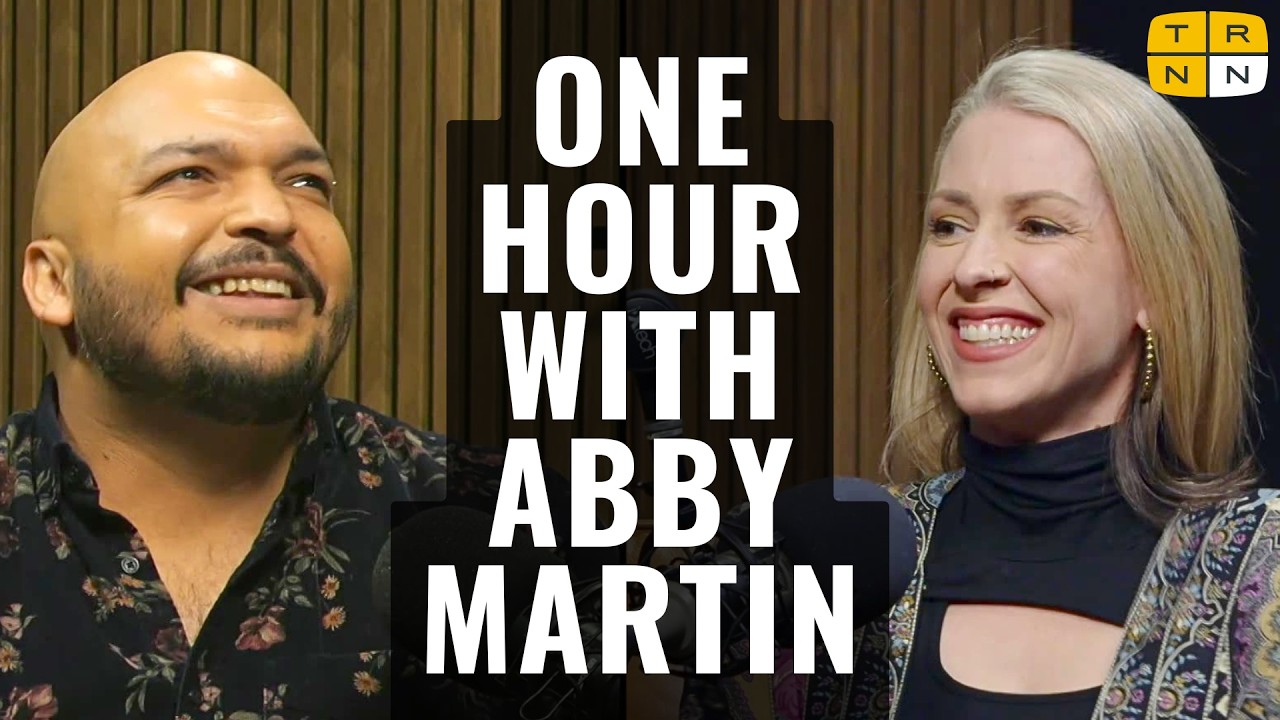
As a writer, podcaster, and columnist for TRNN, Adam Johnson has been one of the fiercest, sharpest, and most consistent critics of legacy and Western media’s roles in laundering, obscuring, justifying, and manufacturing consent for crimes against humanity committed in the Gaza genocide by Israel and with the full support of the United States. But critique is not enough anymore; to ensure that these horrific crimes don’t continue, we need accountability for the political actors and media organizations that made it happen, or helped. At a live event hosted by Red Emma’s Cooperative Bookstore and Coffeehouse in Baltimore, Maryland, TRNN Editor-in-Chief Maximillian Alvarez speaks with Johnson about his new book, How to Sell a Genocide: The Media’s Complicity in the Destruction of Gaza, and about how to hold media organizations accountable for their roles in manufacturing the conditions for genocide.

Guests:

Credits:

  • Audio Post-Production: Alina Nehlich
Transcript

The following is a rushed transcript and may contain errors. It will be updated as soon as possible.

Maximillian Alvarez:

Welcome back to The Real News Network. I’m Maximillian Alvarez. As a writer, podcaster and a columnist for us here at The Real News, Adam Johnson has been one of the fiercest, sharpest and most consistent critics of legacy in Western media’s roles in laundering, obscuring, justifying and manufacturing consent for crimes against humanity committed in the Gaza genocide by Israel with the full support of the United States. Crimes committed in our name and with our tax dollars and the media cannot be let off the hook for its despicable role in all of this. As Adam writes in his new book, How to Sell a Genocide, the media’s complicity in the destruction of Gaza, “It took deliberate choices by deliberate moral actors, editors, reporters, bookers, producers, and TV personalities who decided early on in the so- called Israel-Hamas war that defending the powerful and spinning a fictional narrative to soothe Western liberal audiences was more important than speaking plain truths than defending a dispossessed people from a holy asymmetric campaign carried out by Israel with the full backing of the US to destroy in whole or in part the Palestinians of Gaza.” Listen, critique is not enough anymore.

If we are going to ensure that these horrific crimes don’t continue, then we need accountability for the political actors and the media organizations that made it happen or helped. We need a reckoning, but we’re not going to get one if we don’t fight for it. And Adam’s new book, in my opinion, gives us the data and the receipts and the analysis that we need to fight better and to actually win. I cannot recommend it enough and I am so proud to call Adam a friend and a colleague. He is a vital member of the Real News team and he has done a vital service to all of us in writing this book. So go check it out yourself and let us know what you think and let me know what you think about this conversation that I had with Adam Johnson about his new book at a live event at Red Emma’s Cooperative Bookstore and Coffeehouse here in Baltimore on May 23rd.

Well, again, welcome, welcome everyone. Thank you so much to Red Emmas for hosting this important discussion tonight about Brother Adam Johnson’s vital new book, How to Sell a Genocide, The Media’s Complicity and the Destruction of Gaza Out Now with Pluto Press. It is an invaluable read and I cannot stress enough the duty that we have to know what’s in this book. I don’t say that lightly, and I don’t say it to just chuck my buddy up. Adam, I’ve gotten the pleasure and honor of growing up with you over the past 10 or so years in the media ecosystem, the left media ecosystem, and then get to know you, get to be friends with you, get to work together. I wanted to say first that I know we joke a lot that what are we doing? We’re just podcasters. We’re not that out there doing the real work, but I wanted to thank you for doing the work that you do at Citations Needed and Everywhere Else.

Thank you for writing this book because even if you on your side through the microphone don’t see it or you on your phone tweeting at people and Dunking on people don’t see it, so often you and Nima, especially through citations needed, but now with this all your writing, you give us so many of us the language that we’re looking for to articulate what we’re feeling and sensing, but don’t have the time to process and don’t have the ability to find those words. And in this book, you have given us a tremendous amount of necessary ammunition to focus what we have known and sensed but not been able to fully articulate. And so I wanted to first acknowledge that. Second, I wanted to acknowledge here at the top that of course both of us as journalists here in the United States, a media critic journalist, however Adam wants to identify himself, we of course must have a moment of silence to honor those of our journalists and media making colleagues who have been slaughtered in this genocide and who continue to be slaughtered in Gaza, in Lebanon, in Iran.

So can you please join me in just a quick moment of silence to honor our fallen comrades and to thank them for their invaluable sacrifice.

Okay. Thank you all so much. All right, brother out. Like I said, your podcast and my podcast started around the same time. We got into this game around 10 or so years ago and we’ve gotten to working with each other. We publish your invaluable column at the real news now and for a few years now and you guys should absolutely read it. So I wanted to start there and ask if you could talk about how you got into media criticism and why. But then let’s talk about that growth process and let’s talk about what it was like to be a media critic as a genocide was unfolding in Gaza and what about all of that propelled you to move beyond podcasting and article writing into writing this book?

Adam Johnson:

Well, thank you for that introduction and thank you for having me here. Right Emma’s is of course a write a passage. You’re not really a leftling writer if you don’t come here. So I’m glad to be here. It’s huge, but it’s a very well organized operation, so thank you. Yeah, so I don’t talk about myself a lot, mostly because I don’t know, I feel like it’s genuinely quite boring, but I’ve always been interested in language and how language can shape our reality and my entry point into the left such as it was, the immortal science, whatever you wish to call it, I was late to the game. I mean, I was basically 29, 30 years old when I started exploring those ideas and media was a way I was like the entry point into that. And I’ve always thought media criticism is an entry point into asking bigger questions.

It’s a gateway drug. The podcast is meant to be a gateway drug. I’m like in the school yard pedaling left wing ideology like, “Come here kid, listen to citations needed.” It’s sort of vaguely liberal coded, but it’s not. So my goal is to be on one of those Glen Beck chalkboards. And so that’s how I, as an entry point into asking bigger questions because I think once one erodes the artifice of media, which we kind of imperfectly refer to as small L liberal media or center left media or mainstream media, I think it’s a gateway to ask bigger questions because once the artifice begins to crumble, I think you sort of ask yourself, well, okay, if this kind of officialdom, if the thing that is these very important people behind desks and these kind of prestigious institutions are basically full of shit, then you have to ask yourself, what do we build as an alternative to that?

And then in some senses, the whole institute, because this book is fundamentally a book about the hypocrisy and the enforcement status of so- called liberal institutions and liberalism. And that’s why chapter seven is basically about that and how Gaza and the liberal response to Gaza and the liberal promotion of genocide, I should say elite liberal promotion of genocide was fundamentally a liberal project for that first year we were documenting. Obviously they were partnered and helped by the right and Republicans in Fox News, but fundamentally would not have been possible without liberal buy-in. And so obviously it very much falls into the wheelhouse of the Citations Deeded Podcast, which obviously critiques the ways in which liberals promote reactionary ideas and indeed work to launder reactionary ideas and make them seem palatable. And so it was a natural fit. And then obviously I had been writing ferociously from the beginning of it because as anyone who knows anything about Gaza knew precisely what was going to happen, it was very clear that on October 8th, when Tony Blinken tweeted out a call for a ceasefire and then subsequently deleted it a couple hours later that this was going to be at best killing an arbitrarily high number of Palestinians in the figures and at worst a genocide.

And of course it largely was a genocide and of course they ended up killing almost certainly over six figures. And so from the beginning, you and I were writing about it and you were letting me use obviously your platform to write about it and write media criticism about it. Much of the book is, not much, but some percentage of the book is readapting writing I did for y’all. So thank you for that because there was not a ton of outlets who were willing to do that, especially in a kind of existential way. And then once we started going, it was like, well, we need to quantifiably show this. So it’s a very data driven book, which is something I hadn’t previously had the time to do and that was central to how we did the book because I didn’t want to just assert it or cherry pick headlines.

I wanted to quantitatively show and establish bias and then from there in double standards and from there we can ask bigger questions once one accepts the premise of that, what is the implications of that? Because it’s a book much like citations needed. It’s a book for liberals. It’s not a book for the left who obviously by definition agrees with me, although I want them to be able to use the data and research and arguments in their daily lives. But it’s a book that is supposed to take someone who’s vaguely liberal or vaguely liberal left or progressive and senses something was wrong and then slowly and meticulously walk them to the water that there’s a larger critique of Zionism and US imperialism and that the media operates as an organ of those institutions not as any kind of neutral or objective, certainly not a counter or an adversary to those institutions.

And so again, I’m pedaling the drugs trying to get people addicted. First one’s always free and that’s kind of the way I approached the book. Now obviously the title’s provocative, but the word genocide I believe is more or less mainstream now. And you can’t get around that word because to do so is genocide denial. It’s something like I think 60 or 70% of Democrats, depending on the poll, believe it’s a genocide. So that itself is no longer even that provocative. What I believe is maybe more novel and useful to liberals in liberal left adjacent types is the concept that they were sold to genocide, that it wasn’t this bumbling accident that kind of happened or this one-off dictator who forced people to do it, but actually had ideological and narrative antecedents that were being pushed by so- called liberal media. So by the New York Times, Washington Post, CNN, MSNBC were the primary targets of my inquiry and criticism.

Maximillian Alvarez:

Well, and that tees up kind of like my next question because that was awesome, it was thoughtful. I really appreciated that answer, but I also know the entire time you were screaming and ripping your hair out and like these fucking people look at the lies that I know because Adam would be pitching me. He’s like, “Hey, I got to write about this. ” I was like, “All right, go for it. ” And I knew so much was going through your mind and so much like the rest of us. We were seeing these sort of double standards. We were sort of seeing the kind of dual realities on the TV and on our phones, but again, it needed to go beyond just that sort of sense and needing to quantify and needing to name. And so I wanted to sort of unleash the attack dog, Adam Johnson we all know and love a second.

Let’s name some names here. Who are the worst offenders and why?

Adam Johnson:

Yeah. And I want to preface this by saying that that is the next stage of this project where I’m doing basically taking the 10 worst and we’re naming names and going to try to reach out to them and do more aggressive targeted criticism with like maybe in parallel campaignse because I do think when you criticize the media or the New York Times, it can be a little bit abstract, that which is owned by everyone is cared for by no one to paraphrase libertarians, but I think in some senses you can be too abstract. So the book does name names in retrospect as I’m rereading it, I felt like I probably should have made that more central, a little bit more ad hominem, a little more personal. And that’s kind of the next stage because we need to have accountability. And in parallel, I know others who I’ve spoken to are working on a project to hold Democrats accountable because now as you know, I’m a little bit off topic here, but indulge me.

You have Tony Blinken who covered up war crimes at the State Department. He’s now at Center for American Progress just down the road in DC. Obviously John Finer is at Center for American Progress, which if anyone knows what that is, it’s a ostensibly progressive think tank that’s basically the government in waiting for the next Democratic administration. John Feiner and Jake Sullivan, who also covered up war crimes and sold weapons to a country that knew was committing genocide, have a cheeky little foreign policy podcast on Fox. So what we’re working on with that is what we’re trying to come up with a branding for, but it’s going to be the Genocide 10 or the Genocide 20 where you’re basically pressuring organizations to remove these people from polite society, which of course is a bar that’s below the mantle of the earth. I mean, it’s the lowest bar possible, but right now everyone’s just vibing through it.

Progressives and liberals in Congress are doing events now with Jake Sullivan and Tony Blinken. So really it’s a project fundamentally about accountability. And the reason why that is, and again, it’s going to be an upward battle, but I do think that you can build pressure, especially as every four years when Democrats have to act like they care what progressives or liberals think or even liberals, to be honest, that there needs to be a sense that these people need to be non-grada at the very least. So obviously you would refer them to the ICC for criminal arrest and prosecution for their role and complicity and genocide along with some of these media organs we can talk about. But at the very least, they need to be removed from polite society. And so fundamentally it just becomes a book about accountability because there’s not much else you can do.

And the conclusion I say I’m like the drummer boy and the drummer boy Christmas song. “What is he doing? Plays the drums. That’s all he can do. All I can do is media criticism. And I think like everyone else, as this was unfolding, you felt completely helpless. But I think the lesson you can take away from this and the lesson that Palestinian organizers and BDS organizers always tell you is that you can always contest in the way you can and the spaces you can. Whether you’re a tech worker, you can go on strike or boycott or try to … There’s always something you can do and it’s like, this is the only thing I’m able to do. I don’t have any other skillset or talent. I just know how to do media criticism. So that’s what I did and I tried to do it to the best of my ability.

That’s a very convoluted way of answering your question, but I think what you’re talking about is, what you allude to is the idea of accountability. So who are the worst? The worst were Jake Tapper and Joe Scarborough are featured heavily in this book as just outright genocidal propagandists, outwardly lying, smearing anyone opposing the war. Obviously New York Times, Patrick Kingsley, others, editors at the New York Times were probably certain writers who laundered Israeli intelligence over and over again, which we can get into. Those were the primary offenders. Actually, one of the things I try to do in the book and all the subsequent interviews I’ve done is I try not to flatten the difference that there are some that are worse than others. The New York Times is meaningfully worse than the Washington Post. Washington Post is not good, but they didn’t engage in what I would consider outright genocide incitement.

The New York Times would constantly intervene right when there was some pressure to push Biden for a ceasefire with the most obvious lies and bullshit. I’ll give you an example if you’ll indulge me.

Maximillian Alvarez:

Well, I was going to say, keep rolling and let’s talk about some of the worst offenses. If we could give in an ode to citations needed, give me your top three worst tropes or your top three most eye-popping stats from this book.

Adam Johnson:

Maybe let’s start at the beginning then if you’ll indulge me. So very quickly, the idea of a ceasefire needed to be removed from the realm of capital V capital S very seriousness, right? It had to be considered a far left fringe position, despite the fact that every other mowing the lawn episode, which is what Israel calls it when they kill civilians in Gaza as a part of collective punishment, had had a ceasefire. 2012, 2014, 2018, 2021, obviously 2009 cast led. But very early on when again, Blinken sends out the tweet and subsequently deletes it, it’s very clear a decision is made that they’re going for it all. They’re going for full-blown ethnic cleansing genocidal acts and at worst from their perspective, killing an arbitrarily high number of Palestinians as medieval reconpense and collective punishment to humiliate them so they will self-deport or leave because Palestinians are a fundamentally inconvenient people to the national methos and mythology of Zionism and anyone who knew anything about Gaza knew that was going to happen.

So within the first few days, you get this what I call isisification of Hamas in the first chapter, which is Hamas cannot have any secular grievances or political causes. They have to be mindless Jihadist cartoons who are just mindless anti-Semites, which as far as … Biden says they had the ancient hatred of Jews, which again, bad luck that the people who drove them off their land happened to have that as their national religion, out of all the gin joints and all the towns and all the world. But the idea that you would provide context was anathema. And so this was disciplined and enforced in a very documented way. First up was MSNBC. So on the morning of October 7th, Ali Valshi is running the desk at MSNBC and he brings in Iman Moihadine who had lived in Gaza for two years. He was by far the most qualified person to talk about it.

And so live on air as the attack is unfolding and we’re kind of getting information trickling in, they do what all journalists are supposed to do. They begin to provide context. They don’t cheer it on. They’re not for it. They’re not like saying, isn’t Hamas great? They’re saying talking about the Nakba, the dispossession, how 75% of the people in Gaza are refugees who were kicked out of their homes and what is today Israel. They’re talking about protective edge in 2014, putting them on a diet, the siege, the lack of being able to travel, all that. All hell breaks loose.

We reported this from two internal sources at MSNBC, which as I’m sure you would imagine was much easier to get sources in than say the New York Times, because a lot of people were ashamed of their role in this and were happy to talk. And this was later vaguely confirmed by the New York Times as well, but they bring in, they being Comcast, it’s the first and since last time they ever directly intervene in MSNBC’s coverage. They bring in Rashida Jones and Caesar Conde, who are the head of MSNBC and NBC News respectively and they say,” Never do that again. “That was terrorism apology. You’re not allowed to provide context for what happened on October 7th and indeed history has to start on October 7th. Nothing can precede it, right? It’s like the big bang. There’s nothing that precedes it. It’s like asking what’s north of the North Pole.

It’s ontologically impossible. And that was reflected in the coverage. Then on March 9th, there’s a company-wide call at MSNBC according to our two of our sources where they bring in Martin Fletcher, who’s the longtime NBC news correspondent who has since retired and he had family who were injured on October 7th. He himself had served in the IDF and he jumps on a conference call with all of MSNBC and NBC News and gives the playbook. He says,” Palestinians aren’t real. They weren’t a people until 1967. They’re invented by Arab nations. Jews are the real Palestinians. These are direct quotes, more or less. And Israel left greenhouses in Gaza. You’re kind of typical really racist anti-Palestinian vomit. And that becomes the official line in MSNBC. And if they say, if you have any questions, you go to Martin Fletcher because he’s the longtime NBC correspondent. CNN does something quite similar where Mark Thompson issues a memo on October 26th where he affirms an existing policy, which was probably more informal saying, you cannot mention the suffering of Palestinians or these Palestinian death counts without prefacing it with October 7th.

So that way it has to be framed by definition as defensive and you can’t talk about anything that basically comes before it. And so you would have a story, you were allowed to say, “Isn’t it sad this Palestinian died or there was this explosion that killed 15 people, but you always have to say as a military response to October 7th.” And so these policies very initially make it so you cannot provide context. Context is anathema. It is not allowed because it’s viewed as Hamas propaganda or terrorism apologea. And this therefore reduces, and of course you have the parallel atrocity of propaganda with the beheaded babies on October 11th. A story completely invented out of whole cloth that’s spread by everyone from Nick Robertson at CNN to Sarah Sidner who says it live on CNN where she says, “The Prime Minister Netanyahu’s office has confirmed that there were several beheaded babies at the Kabutsum.” Now the Prime Minister can’t confirm his own racist propaganda.

That’s absurd, but that was the editorial standard. You could basically say whatever you wanted about Palestinians. And then once the story was … And then of course Biden says he saw video of it, which he of course did not because it never happened and slowly tweets are deleted, people kind of issue very opaque apologies, but very early on they had to be this cartoon ISIS-like entity because you had to make a ceasefire impossible. And this was affirmed by progressives in Congress who refused to call for a ceasefire for months. Obviously Rokana, Elizabeth Warren, I think most cynically and most, I think high leverage was Bernie Sanders who went on CNN and CBS News in November and December of 2023 respectively and said, “I don’t know how you have a ceasefire with a group like Maas who seeks Israel’s destruction.” Now nevermind, of course, that Israel seeks Palestinians destructions.

Nevermind that a call for a ceasefire is not a moral endorsement of an organization. It’s just a call for a ceasefire. And this was affirmed by CIP, Matt Duss, who was like supposedly the far left progressive poll of so- called progressive foreign policy. He goes on democracy now and says, “Bernie Sanders has a good point. I’m paraphrasing, but something to that effect.” He basically affirms the logic of that. So it’s a far left position, a radical pie in the sky. You get a dozen articles in the Atlantic saying a ceasefire is impossible. Meanwhile, we’re getting 300 day dead, 500 dead a day. They kill almost 6,000 people in the first 11 days. They’re averaging about 550 dead people a day, 30% of whom are children. And you could not talk about a ceasefire mainstream media. There was no mention of it in New York Times.

The New York Times editorial board and Washington Post editorial board supported. Everyone is in this stories about how it’s eight billion, nine elevens or some kind of fatuous nonsense like that. And it’s immediately indexed in this kind of war on terror civilization versus this vague Asiatic ward who again are presented as this cartoon villain with no political grievances. And that right there cements creates the inevitability of genocide because if you have to defeat Hamas, you by definition cannot do that. They are a gorilla force, an indigenous guerrilla force. Unlike ISIS, they’re not who are foreign mercenaries. They are of Gaza. They live in Gaza. They are Palestinians in Gaza and they support hovers between 40 and 55% in Gaza. It’s a litle higher in the West Bank, but they’re Palestinians, like all grill military movements that are national liberation movements, again, whether you like them or not, doesn’t matter.

They’re not going to just surrender. And this is something Tony Blinken himself affirms behind closed doors in January of 2024 when Andrea Mitchell reports that Blinken tells Nanyahu that Hamas cannot be defeated militarily. Now, a reporter worked their salt would say, “Well, wait a second, then why are we arming and funding this extensively military operation?” But this is the kind of Orwellian inverse reality we operated in for several months where everything is a contradiction. And then of course, which we can get into, and I’ll maybe let you interject here so I’m not droning on, but then you get into the ceasefire redefinition in late February, early March of 2024 where ceasefire is polling at about 75% Democrats don’t even bother at that point defending the genocide on first principles or as such. Then they move into the helpless Biden fuming Biden. We’re actually working on a ceasefire.

Okay, what’s your definition of ceasefire? And then you hear their definition and it’s simply reasserting terms of capitulation, reasserting demands of surrender by Hamas, which of course has not been the definition of ceasefire for 5,000 years of human warfare. Ceasefires, both sides ceasefire and you come to a political solution, not I win and you surrender. That’s just you winning. But then that becomes the oralian definition that’s broadly adopted by the media. And this goes on for months and months and months and months and months. It was based on a fundamental contradiction and the only people who ever pointed it out were people like left wing critics on like, “This doesn’t make any sense.” And so that’s all documented in the book. Basically with the argument is that within the first few weeks really, the White House doesn’t even defend it as such. They simply try to move it into the non-sequitur by playing up this idea that Biden is either helpless, which again, the media assisted these laundering operations or that he’s very mad.

He was always sort of vaguely upset all the time. It’s what I call the asymptotic break with Netanyahu. I can read you some examples if you’ll indulge me. I know I’ve been rambling here for a bit, but I do think these are very illustrative.

Maximillian Alvarez:

Bro, people literally came out in the rain to listen to you talk.

Adam Johnson:

There’s talking and then there’s talking. But sorry, I’m going to make sure I get … So this is, I think, critical and this is when you get these, I think, fairly sophisticated liberal interventions of inventing reality, which I think was one of the reasons people felt like they were going insane at the time because it was all premised on a contradiction. So you had this idea of the helpless Biden, which I’ll skip and get to the fuming Biden. So this was a media trope. There’s literally dozens of these articles, but I documented the top 10 and then we did a source analysis. So 94% of the sourcing for these stories are White House aids and very quickly one can realize why they would be painting this narrative because they themselves know it’s indefensible. They themselves want to go in and out of liberal and progressive circles.

So the decision is made to distance the White House in some kind of narrative or abstract sense while painting them as working towards a ceasefire or some peaceful resolution, sufficiently removing them from the genocide that they themselves are arming, supporting and diplomatically providing cover for. So you have November of 2023, it begins in earnest with NBC news. The gap between the Biden administration and the Netanyahu government over Gaza future is widening. Ooh, it’s widening. CNN, December of 2023, unprecedented tensions, unprecedented. Watch out. Between White House and Netanyahu as Biden feels political price for standing with Israel. Axios, our friend Barack Rive, who we can get into January of 2024. Biden, running out of patience with Bibi as Gaza war, it’s a hundred days. Washington Post the next month, Biden moving closer than ever to a breach with Netanyahu over a war in Gaza. CNN March of 2024, how a brief exchange and a call explains the strained Biden Netanyahu relationship associated press, Biden cajoles Netanyahu with top talk.

Ooh. Politico, March of 2024, from I love you to asshole how Joe gave up on BB after decades of building a close personal friendship with Netanyahu, Joe Biden has had it with the Israeli Prime Minister and he’s hitting him hard and it may be working spoiler. He did not hit him hard and it did not work. So there’s this alternate reality where Biden, who’s the most powerful person on earth, is somehow unable to get a country the size of New Jersey who’s 75% of their weapons company in the United States, 100% of their weapons arms reshipments come from the United States, cannot operate militarily for more than a week or two without support from the United States because obviously because of a tax in Yemen and Lebanon and elsewhere is bumbling, simply just a dottering old man who’s working really hard for a ceasefire for fucking ostensibly for nine months and he just darn it Chucks can’t get one.

And what we later learned, which I think is important is that Israeli prime minister at the time, Michael Hertzog, tells Israeli media in April of 2025 that Biden quote, “Never asked for a ceasefire not once.” He never asked for a ceasefire. And we know that because there wasn’t a ceasefire and he’s the most powerful person in the world. So there was this alternate reality that had to be painted where he was working for a ceasefire, but really what he was working for was, “Hey, Nanyahu, I’m not going to use any leverage, but would you mind?” And so the analogy I use is it’s like LA Dodgers, I know you’re an LA Dodgers fan, Dave Roberts right before the World Series saying, “I’m going to bench Shohei Otani, Mookie Betts, Freddie Freedman and all my all stars, and we’re going to put in the AAA baseball team, but I’m tirelessly working to win the World Series.” I don’t think anyone would find that to be credible.

He would be committed and people would think he’d lost his mind, but Biden repeatedly said, “I’m not going to condition military support, but I’m working for … ” That’s literally the only leverage that would do that. And everybody knew this at the time and there was precedent for it in 2021, Biden pressured Netanyahu to stop. And so it all got sort of mystified. Aaron David Miller shows up, he’s one of these Biden Hacks, one of these pro- Israel hacks who shows up and says, “Well, Biden couldn’t do it even if he wanted to. ” And then every time he shows up in the New York Times or Foreign Policy Magazine or Washington Post to kind of give this pat line about how Biden, because you had in parallel with fuming, you had helpless. So he was also helpless. He would always end it by saying, “But even if he could, he wouldn’t.” And you’re like, “Wait, what?

” So he doesn’t want to, because they’d say, “Oh, but he’s a hardcore supporter of Israel.” And it’s like, yeah, that’s the point. And so this was obviously crazy making for a lot of people who were reading this thing, pointing out that it didn’t make any sense and had all these contradictions and was based on the analogy I give is it’s like theater 101, the difference between a sketch and a plot is a sketch. A plot moves forward, it has beats, things change. A sketch is the same gag three or four times that you get out in under four minutes. This was a sketch.This went on for 10 months. You had these articles, literally over a hundred of these articles, you can find them. And you would think an editor worked their salt after the 70th fuming Biden story would raise their hands and say, “Wait, is Biden changing any policy?” No, but he’s generally mad.

Okay. Well, how is that a story? Because these were curated by the White House. All the sources are Biden aids or phone calls they know are recorded. It’s obviously-

Maximillian Alvarez:

Biden pops can of spinach and like Shakesphist at Netanyahu.

Adam Johnson:

And that’s why they have to use these meaningless puffy language about unprecedented about to. So you have this asymptotic break that always approaches zero but mysteriously never gets to zero. And then they do what they were trying to do, which is wait it out. And this is a book about buying time and about liberal hand waving and time wasting and pseudo savvy negotiations. It was about maintaining the status quo and buying time. And the reason why you buy time as any good public relations person will tell you is because you cannot defend the actual thing that’s happening. And that was the theme that we saw over and over and over again. And mainstream media just laundered that obvious self-serving bullshit over and over and over again.

Maximillian Alvarez:

Well put. And obviously the whole while you’ve got this historical rupture that is occurring in large part because of media and our relationship to media, right? The disconnect between this reality obscuring power serving, genocide enabling, like all of that is being undercut by the innocence destroying images that we’ve all been bombarded with on our phones, not just the younger generation, but yeah, of course a lot more in the younger generation, which is why right now TikTok fucking sucks. You know why? Because in 24, Biden and the Democrats answer to like, what are we going to do about the public turning on us about because we’re selling a genocide that they’re not buying, we’re going to take over the fucking platform that they’re seeing it on.

Adam Johnson:

Well, they forced to sell to the Ellison family who are the single biggest donors of the IDF.

Maximillian Alvarez:

Which is, there you go. So that’s what we got. Thank Biden for that too. But I wanted to kind of ask a question here, Adam, about the why. There are a lot of potential whys here, right? But it’s obviously something we all need to be empowered with to talk with clarity but nuance about because as all of this is unfolding, regular people who are trying to make sense of the horrific reality that they’re seeing and the lies that they’re being told or the obscuring that’s being done in front of them, if they’re not getting the answers that they’re looking for, a lot of horrible ideas and conspiracies fester. A lot of hatreds and prejudices emerge. It is no coincidence that there has been rises in antisemitism while this is all happening because people are being told if you are opposed to this, you’re against all Jews.

And so a lot of people are saying, “Well, I’m opposed to that. ” So I don’t know what to tell you, but I don’t want to see a child be cut in half, blown to bits, crying over- That’s obviously because

Adam Johnson:

You’re a racist.

Maximillian Alvarez:

Yeah. So the point being is that amidst all of that crap, there are very real truths here about CNN’s like Jerusalem Bureau, everything basically being reviewed and rubber stamped by the IDF. But that itself is not the whole of the explanation, right? It’s not just a sort of like Israel is telling all these newsrooms what to do, but I wanted to ask if you could sort of help us navigate the why this is being done and where it’s coming from. I’ll put it

Adam Johnson:

In these terms. And this is where I think a dialectical criticism is useful because the book is not called How to Sell Genocide because I’m trying to be provocative. It is a genocide was decided in Washington and in Tel Aviv and in the halls of power and then liberals are fundamentally a broker between the ruling class and the plebs, right? They come in and say, “Don’t worry, I’m going to take care of it. I’m going to sell what you got and meanwhile I’m going to tell them I’m going to sell them what you got.” So this is fundamentally about a decision was made, then it had to be sold and it’s an unseemly business, but once that decision’s made, what other option is there? You think they’re going to criticize, I mean, you think they’re going to criticize the genocide? You think they’re going to suddenly start putting their support behind Palestine?

No. So everyone, again, eventually around the margins, you have some pushback, but fundamentally on a structural level, the US media, whether it’s Vietnam or Iraq, is liberal, imperialist at its core, that’s its primary function. If the New York Times didn’t help sell the genocide, then there would be no New York Times. That is their social function. By definition, that’s what they exist to do. And so the decision was made and it was bipartisan and the worst place to be in the world is on the business end of a bipartisan consensus in Washington because what is the mechanism of pushback? There isn’t one. What a bunch of crusty leftists in a bookstore somewhere, they don’t get shut. You have no power didn’t fucking matter. And though by the way, you have to vote for us anyway because something, something Trump, right? And they knew that and this is under … Which I understand is that the engine that drives this is elite immunity.

When Barack Obama says, “We’re not going to prosecute torture under Bush. We have to move forward, look forward, not backwards.” When we, again, prosecute nobody for Vietnam except for some half-ass reforms, that’s a cycle of elite immunity. And every decision that was made by Tony Blinken and John Feiner in the fateful days in October and November of 2023, they knew they could just bypass it. No future administration’s going to hold them accountable. Certainly Republicans aren’t going to hold Cabo because they agree. And so they were banking on that. They were banking on Israel committing a very two, three month mass expulsion, genocide, getting their recompense and then vibing past it to the presidential election and extorting people with the specter of Trump, albeit a real specter, but nevertheless, that was part of the plan. So there’s a cycle of elite immunity that makes it so, who’s going to hold these people accountable?

Again, Tony Blinken has the most cushy job right now in liberal politics and he knew that was going to happen. So what’s the pressure, what’s the mechanism to actually push back on this from their perspective? Well, the primary fulcrum of rebellion was college campuses, which is why you had to have this campus anti-Semitism narrative, which was a complete fiction, a complete concoction of these Zionist crime bully groups like the ADL, because that was the one space where there was genuine momentum to create both the spectacle and energy and moral narratives to push back against the genocide, which is why you saw, again, I dedicated an entire chapter to it. I think it’s chapter eight, why you saw these high profile kangaroo trials in Congress where they would bring the president of Harvard and Princeton up. There’s a really clever thing the ADL does where they create what I call meta scandals where it’s all smoke and no fire, kind of like a version what they did to Jeremy Corbin.

They would ask the president of Harvard and Princeton and Yale, they would say, “Do you condemn the term globalize the Intifada?” And they would say, “Well, no, because that just means struggle and it’s a little more complex than that. ” Obviously we would not allow speech that intimidated any group of people, but we don’t condemn that phrase. And then literally the headline the Washington Post is university presidents refuse to condemn calls for genocide of Jewish students. And the average person reads that and says there were calls on campus to genocide Jewish students. There of course was no calls. We had our fact checker look for weeks. There was no such call. It did not exist. It never happened. But the way you do it is you gen up these false scandals and everyone runs for the fucking hills. And this is, if you can check out Steve Thrasher’s book, this is all explained in his book, the overseer class, which came out last week.

I just did an event with him in Chicago and he was kicked out of his teaching job, his 10-year trek job at Northwestern and he now is looking for work and has to freelance because he tried to protect his students on the campus of Northwestern and was beaten by a cop and made a villain by Republicans in Congress and later sold out by all of his supposed friends, several of whom are anti-apartheid scholars and James Baldwin scholars. Excellent book, please read it. And we can talk about the crisis of liberalism because Gaza exposed the vacuousness and uselessness of liberal and liberal institutions. But I’m sorry, I digress. I was talking about the weaponization of the antisemitism charge and how effective it was, but that’s discussed in detail and you can look at the data of … I’m going to mind if I read some data here to sort of cement this a little bit and- Read some data maybe.

Making these claims.

Yeah, here it is. So the mentions of antisemitism versus Islamophobia. So after the antisemitism scandals, which there were dozens on all these campuses, these universities and state legislators would force studies to document this. So even taking the ADLs juiced up stats, which literally say free Palestine is a basically a hate crime, even if you accept that, they were always roughly comparable to episodes of Islamophobia. Yet this was not reflected in the media. So the New York Times made reference to antisemitism on college campuses in our hundred day survey period 412 times and made mention of Islamophobia in and of itself five times and 31 they would mention both. There was sometimes it was like liberal box checking. These are all liberal box joking. Washington Post mentioned antisemitism 197 times and Islamophobia or anti-Arab hatred one time AP News 154 versus four, Politico 370 versus three for a grand total of 1,865 mentions to about 32 mentions of Islamophobia.

So the narrative was entirely one way and I’ll give you another example of this asymmetry and this double standard. I’ll give you one example in Chicago. So DePaul University, there was two students who were active members of the IDF who were on the corner every day doing this like debate me thing, I’m going to defend Israel, defend the idea. They have big Israeli flag and they were there every day. Again, after human rights watch and the International Court of Justice and Amnesty International all confirmed and found that Israel was committing genocide. So they were supporting a genocide, right? Some guy takes it into his own hands and punches him in the face. And what’s the headline the next day in local media? Jewish student attacked an anti-Semitic hate crime. Now it’s possible as an anti-Semitic hate crime, but that would be the worst coincidence ever because the guy was actively engaging in active, visible, pro- Israel activity, but then what the story becomes is about ethnic hatred.

Meanwhile, you had two major incidences, one at UCLA where these pro- Israel vigilantes came in with clubs and beat people, pro- Palestine and Palestinian protestors on campus again, attacked them with wrenches causing severe injury. And then you had the chemical attacks in Columbia in late 2023. Now, no one ever referred to that as anti-Muslim or anti-Arab racism. So any attacks or counter protests of pro- Israel students was always framed in the mobius sectarian terms whereas any attack on Palestinians was purely put in secular ideological terms and that double standard is quantifiable. You can show it and there’s no reason why that should be the case. There’s no legitimate editorial reason why there should be that asymmetry. And this book is about pointing out and quantifying and showing those asymmetries and then going up to editors and saying, “Why did you do this? ” Because we went to the New York Times and said, “Why do you use the word slaughter for the killing of Israelis 140 times, but you never use it for the killing of Palestinians?

How is it that Israel killed 20,000 children?” Again, the numbers probably double that, but they killed 20,000 children and somehow managed to never commit a slaughter or a massacre not once. Doesn’t that feel statistically unlikely? And they say, “Oh, it’s different.” Well, why is it different? It just is. But why? Because it has to be, because my entire ideology falls apart if it’s not. So that’s why they create these ontological nonsensical concepts like terrorism. There’s those sort of buzzwords because they’re meant to shut your brain off and to not do critical thinking. And so that asymmetry is, again, extremely quantifiable beyond a reasonable doubt and our numbers are conservative. We didn’t even include opinion columns. That’s how conservative we were. So if you include opinion columns, it’s probably 100% worse. And so that was what people were up against and there was very sophisticated turnkey mechanisms to use basically liberalism against itself.

So anti-hate rules on campus or Title IX or other federal legislation against discrimination was turnkey used against Palestinians, pro- Palestine protestors because to stand up for Palestine was per se, somehow a form of racism. This is why groups like the ADL have ingratiated themselves into anti-racist spaces for so long because they need to use that to defend the left blank of Zionism and Israel, which they’ve done to tremendous effect.

Maximillian Alvarez:

Well, we could be talking about this for two more hours and I would love to, but I wanted to just sort of talk about accountability and what that looks like and what this book empowers us to do to get it. Because I think we must acknowledge that for three plus years we tried. Not everyone can say that. I imagine if you’re all here, you did. I know and can quantify how much we tried at the real news hundreds of interviews or documentary reports or like original work on the genocide in Gaza Adam column after column interviewed like podcasts, like we post, do what people in Gaza have been asking us to do. Just like, please get our stories out there. Please don’t let people forget about us. Please do something to stop this. And for the rest of our lives, we’re all going to have to be haunted with the reality that we didn’t.

Adam Johnson:

Yeah. Well, one thing is for Israel and the US we’re banking on is that people would grow numb to it. And I think that to some extent that was a correct assumption

Maximillian Alvarez:

That in itself could lead to a very big discussion about why, because I actually think it goes beyond Gaza and it wasn’t lost on me as I was reporting from East Palestine, Ohio around the same time the train in that Ohio town derailed in 2023. And when I was there trying to get their stories up, I noticed that the algorithms they saw the name, a lot of the stories aren’t getting out there. So I’m trying to explain to these Trump voting white working class people who have been poisoned why the internet is suppressing their stories. And so there’s a lot here and again, our goal is not to explain everything in Adam’s book. You got to go read the book and I promise you won’t be disappointed. You’ll be infuriated, but you’ll be empowered by it. But again, the fact is that from algorithmic suppression and platform specific suppression and all these goddamn Trump loving oligarchs owning the media platforms as well as gobbling up the media companies and whether from CBS to HBO to TikTok.

So we got a lot on our plate here and a lot to deal with, but I wanted to ask Adam like, what accountability looks like here because we name names we have thanks to you in this book and everyone who contributed to it, the ammunition that we need to hold people accountable. But I guess I wanted to ask how we do that.

Adam Johnson:

Yeah, because I think that’s obviously the next step. Again, I’m working on projects with that. I know other people are as well. I will say that the writers against the war in Gaza has organized the boycott against the New York Times that I think we should wholly support. It’s been signed by 300 pro- Palestine and Palestinian writers and academics. It’s a subscription and a writing boycott. I know it may seem a little like boycotts can feel a little maybe not that impactful, but I think at the very least that’s a good place to start delegitimizing the New York Times as an institution because I think there’s this idea that you can reform and I think an institution like New York Times is fundamentally unreformable. So seeking to delegitimize it, not like again, indulging it, not when someone gets a job or places an op-ed, you go, “Ooh, you in New York Times.” I think that mentality that we’re going to change it from the inside with an institution like that has to be gone.

So I would check out the writers against the war in Gaza and their boycott on New York Times. Actually going to do an interview with them on Tuesday talking about it because it is like a very, very, very first step. It’s obviously not like in and of itself that, but I think delegitimizing the institutions like the New York Times who, again, we can talk about their interventions where they, I believe, crossed the line into outright genocide, whether it was accusing Honorah, which does the aid and provides food and shelter of being Hamas by laundering bogus Israeli intelligence that fell apart in two weeks, whether it was again, promoting atrocity propaganda, whether it was doing the Al-Shifa hospital command and control center that looked like a bun villain layer and then they got there, nothing was there. The Washington Post debunked it. The New York Times kept trying to put lipstick on the pig for months.

But then this outright genocide denial on healthcare workers, they repeatedly militarized schools, places where people were sheltering children. Everything was a Hamas bunker or … So that would be the first step in my opinion. Secondly would be maybe doesn’t work towards accountability, but again, reach out to your local BDS coordinator, reach out to people who are attempting to delegitimize these institutions that seek their destruction and genocide and it starts there. But unfortunately we just need to be armed with the data and be armed with the critical analysis and seek to, within our own spaces, to push back on those narratives and to delegitimize platforms like the New York Times, who I thought who are uniquely high leverage and uniquely pernicious in selling this genocide.

Maximillian Alvarez:

Let’s give it up for Adam Johnson, everyone. Thank you for listening to this episode of the Real News Network Podcast and thank you to the great Adam Johnson for this incredible discussion. Again, Adam’s new book is called How to Sell a Genocide: The Media’s Complicity in the Destruction of Gaza and it’s out now with Pluto Press, so go get yourself a copy and thank you to Red Emma’s Cooperative Bookstore and Coffeehouse for organizing this really great event. If you want to get more coverage and hear more important conversations just like this, then we need you to become a supporter of The Real News Now. Share this podcast with people in your circles, your friends, your family, and your coworkers. Sign up for the Real News Newsletter so you never miss a story and go to the realnews.com/donate and become a supporter today. I promise you guys, it really does make a difference.

For the Real News Network, this Maximillian Alvarez signing off from Baltimore. Take care of yourselves and take care of each other.
Torture, abuse, sexual violence: Freed Gaza flotilla activists speak

10 June 2026 at 16:13
Screenshot via TRNN

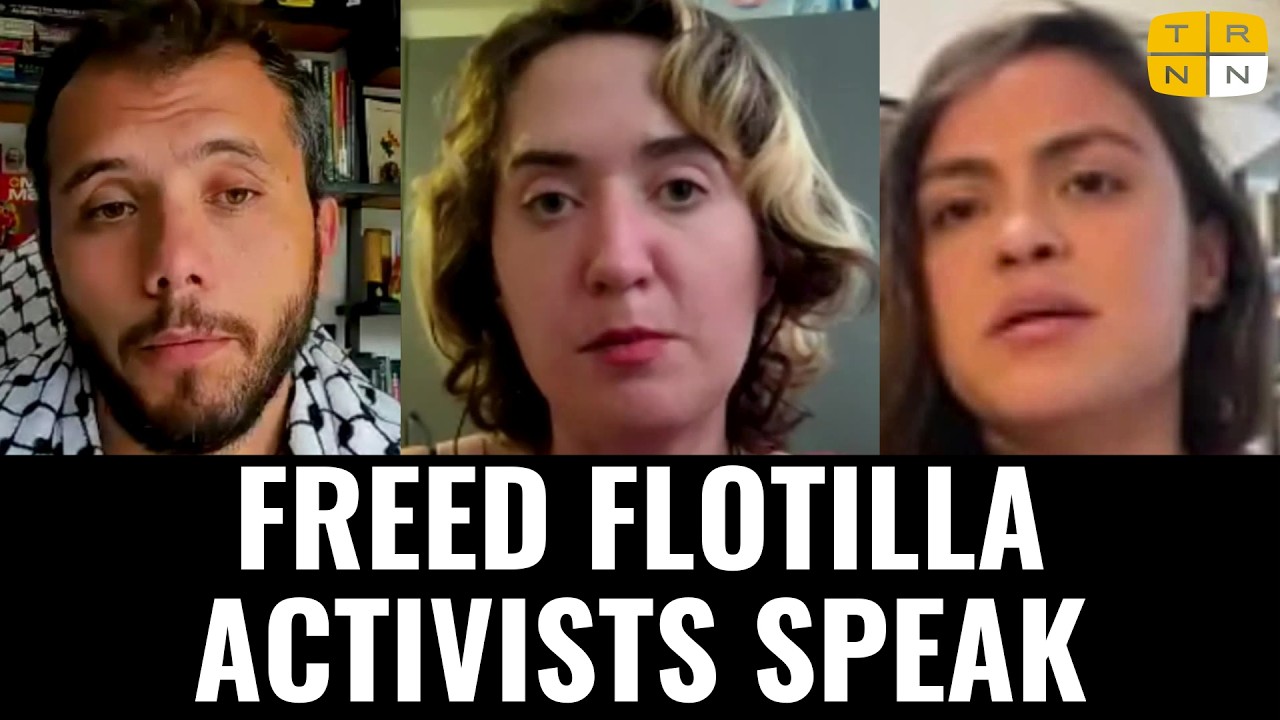
Israeli military forces captured the latest convoy of humanitarian aid ships sailing to Gaza with the Global Sumud Flotilla (GSM) between late April and mid-May. Activists who were imprisoned by Israel for days and eventually deported have reported harrowing treatment by their captors, including targeted torture, abuse, broken bones, unauthorized injections of undisclosed substances, and sexual violence by Israeli soldiers. We speak with a panel of freed GSM participants—Thiago Ávila, Catríona Graham, and Ariadne Teles—about what they saw and endured, and about the successes, defeats, and future of the movement to break Israel’s siege on Gaza.

Guests:

  • Thiago Ávila is a member of the Global Sumud Flotilla Steering Committee who was abducted in international waters by the Israelis in late April off the coast of the Greek Island of Crete. At the time, Ávila was one of two Flotilla participants and leaders forcibly transported to Israel where he was held as a political prisoner for 10 days.
  • Catríona Graham is a member of the Irish delegation who sailed with the most recent voyage of the Global Sumud Flotilla. While being detained by Israel, Graham shouted “Free Palestine” in Itamar Ben-Gvir’s face and was subsequently shoved down to the floor.
  • Ariadne Telles, is a member of the Brazilian delegation who sailed with the most recent voyage of the Global Sumud Flotilla and who also experienced abuse while detained by Israel.

Credits:

  • Producer / Videographer / Editor: David Hebden
Transcript

The following rushed transcript may contain errors. It will be updated as soon as possible.

Maximillian Alvarez:

Welcome back to The Real News Network. I’m Maximillian Alvarez. After 78 years of occupation and ethnic cleansing in historic Palestine and after three years of all out genocide in Gaza, Israel’s government and military continued to display to the world what it looks like when a settler colonial ethnationalist and increasingly and openly fascist regime is openly allowed to rule and operate and slaughter and bomb with geopolitical impunity and without any accountability to international law, reason or human morality. This has been on full display from Israel’s continued ethnic cleansing of Gaza in the occupied West Bank, regardless of the so- called ceasefire that’s supposed to be in effect, to Israel’s aggression and reckless violence in Iran and Lebanon to its illegal abductions and torture of peace activists sailing with the global Samud Flotilla to break the siege of Gaza and bring lifesaving aid to Palestinians. And the latest convoy of the humanitarian age ships was intercepted by Israeli forces in late April and in early May.

And activists sailing with the global Samuel Flotilla were captured in prison for days in Israel and eventually deported. But the testimonies and affidavits coming from flotilla members who have been released are frankly horrific. They describe days of targeted torture, abuse, broken bones, unauthorized injections of undisclosed substances and sexual violence by Israeli soldiers. And these stories along with the viral videos of Israeli national security minister, Itmar Ben Gavier, taunting detained flotilla activists and the videos showing Basque police officers violently beating flotilla activists returning to Spain at Bilbao Airport have rightly sparked global outrage. And as we always do here at the real news, we’re going to take you to the front lines of this struggle so that you can hear directly from folks at the center of it. And I am really grateful to be joined today by three guests. Tiago Avila is a member of the Global Samuel Flotilla Steering Committee who was abducted in international waters by the Israelis in late April off the coast of the Greek island of Crete.

At the time, Avila was one of two Flotilla participants and leaders forcibly transported to Israel where he was held as a political prisoner for 10 days. We are also joined by Katrina Graham. The Flotilla activists who while being detained by Israel shouted free Palestine in Benjavier’s face and was subsequently shoved down to the floor and the video that Ben Gavier posted of that exchange has gone globally viral. And we are also joined today by Ariaj Nitelis, a global Samud Flotilla participant who also experienced abuse during this latest round of detentions. Thank you all so much for joining me today. I really appreciate it. And I want to start by just going around the table and giving y’all the floor. And I want to ask if you can describe for viewers and listeners what you yourself experienced on this latest mission with the Global Samud Flotilla from the time that you set sail to now.

Catríona Graham:

So for myself, I was sailing from the Italy port and it was a few smooth days of sailing. And then shockingly, we were intercepted on the waters just off Crete, which really spoke to us. Usually we have what we call this orange zone, which is just much, much closer to Gaza waters. But this time the IOF came all the way into European waters for the interception, which I think speaks to how the Greater Israel Project is not only being seen as being taken into Lebanon, but also right across the Mediterranean. We were kidnapped in the open seas illegally and we were held in detention on a makeshift prison vote for two nights. After being released into Crete, we continued on our mission and we sailed to Marmorous and then set sail towards the shores of Gaza, where once again, we were intercepted illegally in international waters.

The first time we were about 145 participants that were kidnapped and detained and the second was over 420 participants. We were subjected to extreme violence. I think it was very clear there is a marked escalation. This was the third time that I had been kidnapped also with the 2025 mission with the global smooth flotilla. And each time there’s been a marked increase in aggression, the scale of aggression, the extent. This time, as soon as the IOF rib was approaching the boat I was on, they started firing rubber bullets immediately. They pulled somebody out and subjected them to violence to having their hands cable tied to blindfolding and from there the violence continued to escalate. Within 20 minutes of being put on a prison boat, one of the others already on the boat was shot with a pellet gun. She did not have adequate treatment until we arrived in Istanbul.

And while we were in the port at Ashdod and in Ketziak prison in the desert, we started to hear more and more accounts of the extent of violence, of people being tasered, people being stabbed, shootings, rape. So this really showed a marked increase in the kinds of violence, but we’re very clear that we were there for a few days, whereas there are still more than 9,600 Palestinian political prisoners and hostages being subjected to far worse forms of torture in Palestine right now.

Ariadne Teles:

Yeah, we suffer the same. I have a fist bone, a hand actually. My radial bone in the left end is fractured and I have smashed nerves. It’s just one of all the fractures that our volunteers have. We have people inject with substance like cats say it. We have testimony of people listening to the soldiers make pleasure noises when they are without clothes. So this experience was very different and like Kat say, they improve the violence and they improve the violence because they still in punity for all the crimes that they are committed with the Palestinian people and against the Flagilias and other things that we pass through is nothing. It’s not 0.01% of the Palestinian people facing every day. Actually now we have kids in the same position that we are days ago. So just when I was in the prison car that they used to transport us to the prison, to the porch, to the prison, I saw draws of a smiley face, a sad face, and I scared phrase drugs that obviously was made for a kid.

So everything that you saw in the videos, everything we talk about our experience in this moment that I saw the draws, I just feel that all the feelings that I have some kids was passing through this too. And we in our position, we know that we have people outside, we have lawyers, we have our governments and our investors trying to make something, but the Palestinian kids, the Palestinian people, the Palestinian hostage, they are kidnapped by Israel all these days until today and maybe now, actually certainly now, they don’t have anyone. They don’t know how long they are being in this prison.

I think that the world cannot allow anymore. It’s not because we like people Western people. I’m from Global South. I know the difference that European pasta pots had in our mission too, because they are very racist and we still have people struggle for us in outside and it’s because of this that we need to be stand with the Palestinian people too and we surfer all of these things, but how my comrade Casio from Brazilian delegation say our morality was intact. We have breaking bombs, we have injuries, we have people that are hated, but our morality and our conscience are very impacted and actually we are more strong. I came from Amazoni and the struggles are very similar in my place. My place was occupied with this slogan that we need people and lands that don’t have anyone like they said about Palestine for the creation of this so- called state.

So it’s the same struggle for lands and territory and we know that we need to continue because the future of Gaza is the future of the entire humanity and we from Global South. We know what is colonization, what is imperialism when we see and definitely this is the most cruel face of the colonization in our time and I think it’s our duty, historical jury in this time, you struggle against this until Palestine will be free and all the people can be free too.

Thiago Ávila:

Yeah. Thank you Ari. Thank you, Kat. Thank you Maximillian for bringing this important subject. I was part of the first interception on April the 29th along with 180 other people on 22 boats, over 30 other boats managed to get to Greek territorial waters and escape this illegal interception, 700 narcical miles from Gaza. From there, they were testing the waters and the methods of violations that they escalated a lot three weeks later against the second wave of our global smooth flotilla. We got intercepted and sent to a prison boat and that prison boat, there were many people assaulted, very precarious place where people were put. So many psychological violence, so many physical violence after that they transferred the people, transferred 179 people to a Greek boat and then to Greek, to Greece territory. But me and Saifa Bukeshek, Spanish, Swedish, Palestinian origin, were taken illegally and kidnapped, taken to occupied Palestine.

We were taken to Ashkall and prison to a interrogation and tortured facility from Shabbat, the Israeli internal intelligence. That was a very troubled moment as well because the first three days on the transit there, we were severely assaulted. I could barely see from my right eye because I was beaten up so hard. I passed out twice while being assaulted by them. They put ropes on my neck and said that now they were allowed legally to hang people. They pretended they would throw me from the boat. They did so many violations. They would put me in stressful positions for a long, long time. They would close so tight the handcuffs that until today it’s been more than a month and I still cannot feel this part of the palm of my hand. I don’t know if it’s ever coming back because there were obviously some nerve damage.

And then after that, in this 10 days in interrogation facility, they were saying that they would kill us or would put us for a hundred years imprisonment and there was torture everywhere. We were in solitary confinement, not the first time in other flotilla missions. I was already put in solitary confinement before, but this time it was more intense, like 18 hours interrogation some days, many court hearings where they would always try to extend, extend, extend the stay and would threaten all the time. They would question about every single aspect of life. They would show everyday photos of my wife and my baby and asking what the context of the photo was, but it was not like a photo from social media. So just to show that they had the capacity to spy and to do surveillance over our families, they did so many violations. But the problem is that despite all they did with us, the first group intercepted got severely beaten more than 30 people have to get hospitalized, but then in the second moment in May the 18th, they put not 30 people they put dozens and dozens and dozens of people to get hospitalized, 30 broken bones and a lot of people under severe violations.

And the problem is that despite all this that they did with us, we’ve seen and we heard they’re doing a lot worse with the Palestinians themselves. At the interrogation and tortured facility that I was for 10 days, my neighbors were Palestinians being tortured every day and every night. So the violations that they make us go through like losing a family member and not being able to say goodbye to them, Palestinians goes through every single day like Hussama Busafia, who’s been more than 500 days being tortured in Israeli dungeons, also lost his mother like me and could not say goodbye to her. Marijuan Barguti has been arrested for so long, also lost family members, could never say goodbye to them. So the problem is that they violate international people because they only don’t do the same that they do to Palestinians because of the political cost that it has, but they wanted to do the same because they are say this.

This is a fascist supremacist regime and that needs to be defeated. But the reason why they don’t do is because they cannot pay the political cost, but they dehumanize Palestinians so much that with Palestinians, they believe they can pay the political costs. So that’s why they’ve been doing the most horrific things with the almost 10,000 Palestinians, almost 400 of them children under these Israeli dungeons. And it’s for them that we must scream and that we must keep on mobilizing.

Maximillian Alvarez:

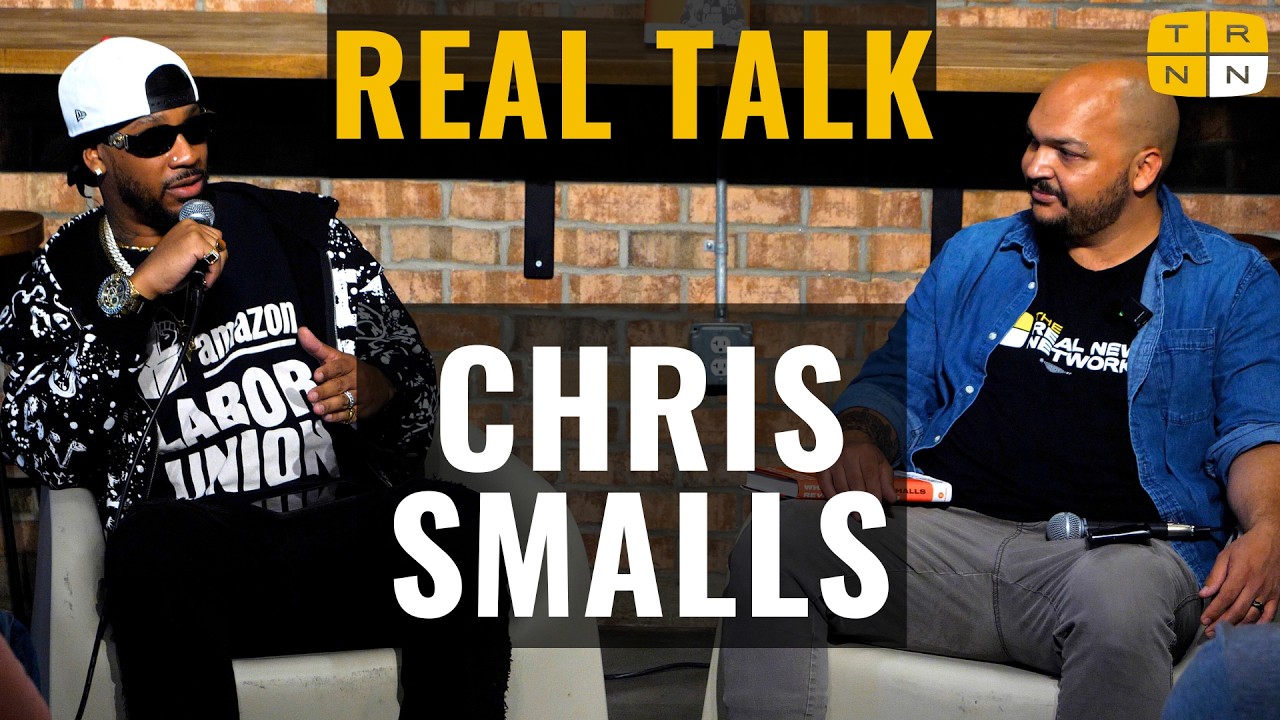
Well, and I appreciate all three of you so much for sharing that with us. I know that there’s so much more to say and so much more that you and other members of the Flotilla have said, and I would just encourage folks out there, this is not private information. If you want to learn what these folks went through at the hands of Israel with the support of our government here in the United States, you can go listen to more of their testimonies. You can read these affidavits. It is horrific. And rather than just kind of going deeper into those horrific details, I want to use the remaining time that we have to sort of take a step back here because we’ve been covering these flotilla missions and speaking to participants for years, from union organizers like Chris Smalls to military veterans from the United States, part of different peace groups, all manner of folks who have joined these important flotilla missions and our viewers and listeners have told us how much these missions mean to them, but they’ve also asked us questions about what the ultimate mission is, what the ultimate goals are and what has and hasn’t been achieved over the course of the past nearly 20 years from the first missions in 2008 to the Gaza Freedom Flotilla in 2010, which included six ships that were raided by Israeli forces and 10 participants killed to this latest voyage and all the other voyages that were intercepted or raided or captured by Israel.

So I want to go back around the table and ask you three to respond to that and give folks your perspective on this years long mission and movement and what is being achieved even if it feels like a defeat every time Israel and the IDF prevent one of these voyages from reaching the shores of Gaza.

Catríona Graham:

So of course our ultimate goal is to support the Palestinian people in their leadership and their struggle for liberation, specifically with the Flotela missions. It is to open a humanitarian corridor to Gaza, to break Israel’s illegal siege on Gaza that has been held for nearly 20 years. We know that Qaza should not be dependent on aid. What we bring on our boats is a token amount of aid trying to bring some support that we can to those in Gaza, but ultimately we need to make sure that the siege is ended and that the people of Gaza are able to have self-agency, be able to live for themselves, work for themselves, no longer to be dependent on aid. While we are working to break the siege, there is so much else that we are working to do. So we know that at the moment since the so- called ceasefire agreement was brought in, Is are no longer on Gaza, on the daily realities being experienced not only in Kaza, but also in the West Bank.

We know, for example, on the first day of Eat, there were 10 Palestinian people murdered, including five children. We know that the violence continues, the bombing continues, the lack of access to food and resources and medical care continues. So we need to do whatever we can to raise our voices to draw attention back to Haza to the struggle for Palestinian liberation. We’ve seen as a result of this flotilla, there has been widespread condemnation. So we know that Benjavier posted this video and it received widespread condemnation from many global leaders, but this is the kind of action he has been taking for years posting videos attempting to humiliate Palestinian prisoners speaking about his intention to execute them under the new legislation that is coming through and this doesn’t receive the same kind of condemnation. Even when Netanyahu spoke out and said that he wasn’t representing the values of Israel by posting this video, it’s very clear that was more about the tone and that he shared the video rather than the extent of violence that was perpetrated against us under Flotilla, but also showing the real values of Israel, the continued abuses that are well documented being committed against Palestinian people for many, many decades, which is why we need to move beyond words of condemnations from our government leaders into real actions, into sanctions, into divestment, making sure that Israel is isolated on the international stage and finally they are forced to follow international law.

Ariadne Teles:

Maybe we cannot until now break the physical siege, the physical illegal siege. Actually, one of our boats or part of our boats reached the shore of Gaza in these days with penal solars and some food and material for the people that they are very happy to receive just because it’s important because the research are so low and a minimal thing that we arrive Gaza, it’s a good thing, but actually what’s reach Gaza with this part of our vote was hope that people, the Palestinian always says this, they feel they are not alone and the world are talking about and they have people fight for them. Like I said before, when we are in the prison, we know they’ll have people outside of the prisons fight for us and this is about humanity solidarity too. We cannot break the physical illegal siege now, but we break a lot of other seeds now I am Amazonian person talk to you right now because of this movement and we are talking about Palestine and we are talking about the liberation of the people for other people can hear and join us to what the Flotillas are.

For me, it’s an instrument of struggle for liberation for the Palestinians and the entire world. We are a global operas in this moment, it’s happening and this was built since the first Platilla create these we just not accept that Israel commit crimes. And if the government are complicit, we are not. And we just saying because the governments are doing nothing like in all the history of the humanity we see like this, all our rights we need to fight for them. And in our training we studied about the legacies of the nonviolence techniques like in the independence of the India we have Ganji make marks and struggle against the more armed in the time, the British arm and they just walk. But this cause mobilization, this cause strike, this cause and this is what we need. We need not just Platillas, we need all the people trying to do something because like we always say this is our historical duty.

So I think in the history of the Flotillas, we just create more and more united, we create solidarity, can see each other like human beings and people that need to free themselves like people, people for the people.

Yeah. I think it’s very connected with all the struggles in the entire world and it’s just an instrument, but it makes some noise and not just break the physical seats, but all the other seeds. And for me, we have a lot of seas, like Kat says in the next Fuchila, we have the Caesar fire, but we still was a victory and in this time we already have UN pronuciate against Vishal and now it’s proven they use sex of violence against the Palestinian and we don’t know if was the Flitilla that make this more in the media right now, but I think it’s a movement, a global movement and you just need to increase this solidarity how much we can.

Thiago Ávila:

I’m very satisfied with the answers of my comrades. I’d just like to add that whenever we are mobilizing solidarity with people, we need to be at the service of these people. The Palestinian people have been very clear on their callings for solidarity. They need people to stand side by side with them in their struggle for liberation. They need to stop the genocide. They need to break the siege, this illegal siege of 19 years by sea by land and by Air of Gaza and they need the internationalists of the world, the free people of the world to break their country’s complicity with the genocide. So this is being very clear calling that the Palestinian people made and that have been our line of action since day one, since the very first people that started mobilizing 18 years ago to break this siege by sea missions by using boats, it has always been the goal to break this illegal siege, to create this humanitarian corridor, but most about to be solidarity, Palestinians in their struggle for liberation.

The tactic is one with many, like all my comments said before, the boats are not more important than the massive demonstrations in the streets, not more important than the boycott campaigns, not more important than the people disrupting the armed factories and facing huge criminalization than the people spreading real news like you do here on this media, like people sharing knowledge, historical knowledge, like people doing the grassroots work, banging door to door, talking to people. So all of this is part of the same struggle to defeat Zionism, this racism supremacist ideology, to defeat their alliance with United States imperialism that uses the Israeli regime as a mean to produce and to maintain his Gemini over that region and over the world. So it’s important for us to be there doing all the actions that we can with the people that go on Flotillas, they don’t do just that.

They do all the other actions of solidarity actions with Palestine and they’re not mobilized only for Palestine. We do Flotillas to Cuba as well. We’ll be doing mobilizations for all the oppressed people in the world. So we believe in a better society free of exploitation, free of oppression, free of the destruction of nature. The Flotillas are a mean to bring more people together to push for Palestinian solidarity and hopefully to achieve concrete victories. Like Ariadne said, the last mission in October 2025 was a key factor to convince Trump that they will never succeed in implementing the complete ethnic lensing of Palestine. So Trump came from a person that four months before October was saying that they would displace Palestinians to Eritrea, South Sudan, to Congo, to Somali land, to a person say, “No, we need a peace. Israel cannot fight the whole world by himself.” So that was the mobilization of the people, the public, the global uprising that promoted that.

So we need to do this again when we decided that we would sail again, it’s not that the conditions were easier in this almost eight months of the so- called ceasefire, people are still getting killed, they’re still being restricted, but land is being stolen with the so- called yellow line and their plans are the worst by the land being ruled by war criminals like Trump and Netanyahu, by the big text with techno authoritarian regimes or by the industrial military complex that profits from war. We don’t want any of that. We decided that we would sail because the Palestinian people are saying, “Please expose that there’s no real cis fire. Please expose that the genocide is ongoing.” And we decided that we would do that despite the hard conditions, despite the increasing and escalating use of force and violence against our fotilla. And we did our best with the resources that we had.

We are very proud of what we did, but it’s an incomplete task because the genocide is still going on and we still need to defeat Zionism and imperialism, which is the key task, the historical task of this generation.

Maximillian Alvarez:

Well, I think that was really powerfully put by all of you and I know I’ve got to let you go and I wanted to just sneak in one final question here, a sort of rapid fire around the table, final message that you want to share with folks watching and listening because obviously the common feeling for people with a beating heart these days is everything is getting worse and there’s nothing I can do about it, right? The bastards are winning the genocide is continuing the wars are proliferating the fascists are rising. There’s a lot to be despondent about right now, but I know from what our viewers and listeners have told me that they see so much hope in the global Samuel Flotilla in the Palestine solidarity movement around the world, even in spite of things objectively getting worse in the world. And so I wanted to sort of bring things back down to like the ground level and ask you all if you had any messages to folks out there who were feeling despondent hopeless and they feel like they don’t have the strength to fight back right now, I want them to hear from y’all about how you find the strength, Katrina, to stare Itmar Ben Gaver in the face and shout free palace Stein.

I want to hear where you find the strength, Tiago and Ariajni to be beaten and tortured in these prisons and to still stand up and speak out for what’s right. So I wanted to just have that be our concluding question. Any final messages you want to share with folks out there about how to find that strength and how to keep going even when all seems dark and hopeless?

Catríona Graham:

Thank you for this really important question. I think we need to be clear that this is the moment to claim our collective power. There are imperialist forces trying to silence us and we need to absolutely refuse this. We need to continue resisting and we need to make sure that across the world we rise together. There is so much power in collective action and there’s so much power in our communities. Love we know will win out overall. So when we lean into these kinds of actions, when we come into community with each other and claim our power, whether it’s through going to demonstrations, participating in direct action, speaking out to political leadership, driving and pushing for change wherever we can, we can have an impact. We have had an impact and we will continue to do this until Palestine is free.

Ariadne Teles:

Yeah. I want to tell about something that happened with me in the immigration process when we are beaten, when we are arriving Ashdad and they ask us if we try to enter in Israel illegally and break and attempted to decid to Gaza. And I interrupt the soldier and I say, “First of all, it’s not Israel. It’s occupied Palestine.” And they, “What?” And I say, “Okay, Palestine.” I say, “What?” And I say, “Okay, Palestine.” And then a woman that was in the side, first of all, they asked me where I’m from and I just point to my passport and they say, “Oh, Brazil to Dubai or Brigado.” They say in Portuguese, something like that. And this woman says, “Brazil, did you know that Brazil’s occasion and you are a colonizer?” And I say, “No, I am from Amazonia and I’m life proof that the original people always win and you know that you are in the wrong side of the history.” And when I talk to the people, just to continue the story, the other one says, “Amazon, I make indigenous people.

” And I call him racist and the other God that take me to the other step. But I can say these things in his face and something that I always say is when I have conversation my side, they are question because it’s not an easy ask. We question all the time. We obeducate our families, we have educate our times, but we did this because we are on the right side of the history and when you fight the right side of the history, you already win. And when we win, we win two times. So every time that we just organize ourselves, we already work for ourselves, not for other person. It’s a work that go back to us 100% and this is very pleasure, this is joy, stay in community and fight for the liberation, fight for the future, fight for the present, fight for the person on your side, but it’s fight for you too and make your life more meaning and we can recognize ourself and stay a little bit off of this system that exploit us at 24 hours that we need to work a lot to survive, to see that a person in our side is our competitor and not a comrade and not a brother, a sister.

When you are organizing a struggle in solidarity with the people of the child work, you are in a community and you are acting like a human being, a collective person that we are a collective person. And these give us not just hope, but purpose in our life. So I just want to say that come to join us because it’s amazing what they did with us, I don’t know, it’s not compared like all the strength, all the power that we feel when we are in a collective and the power of the people and the power of the survey director can change the world and this is beautiful and this is amazing. I want to say come to join us. It’s not necessarily that you went in a vote, but you can support in many, many, many ways, but just being collective in community because this can change the world.

Thiago Ávila:

Thank you, Ariajin. Thank you, Kat, for bringing this up as well. I understand that situation is really not easy. Whenever we are analyzing the international conjuncture, we need to be very concrete in our analysis and the truth is that our enemies are getting bolder and sometimes they’re getting stronger. They are more willing to cause harm. They’re more willing to commit genocide. They see total impunity over almost three years of this escalation of genocide of Gaza, that they feel empowered to attack Lebanon, to attack Syria, to attack Iraq, to attack Yemen, to attack Iran, to attack Venezuela, and kidnap the president, to create a never naval blockade in Cuba, to threaten Mexico, Colombia, Brazil, to intervene in elections. So we are going to a very hard moment of world politics and international relations. But on the other hand, thanks to the gift that the Palestinian people gave to humanity, people woke up billions of people understood what imperialism is by the lenses of the communicators from Gaza who gave their lives to livestream of genocide and to counter the lives of the mainstream media that was saying that that was not happening, that there was no starvation, that these homes were actually tunnels below, that these hospitals actually had weapons hidden.

They gave their lives to show that that was false, that was simply wrong. There was a genocide regime bombing hospitals, schools, shelters, residential areas, all in the name of a racist and supremacist ideology called Zionism, which was not actually new. This was part of eight decades of genocide and ethnic lensing that structured itself into an apartheid colonial state. So this factor changed things because people, once they became aware, they started mobilizing as well. So that for the first time we saw a general strike based on an international topic in Italy, for example, we’ve seen the history of revolutions, many general strikes in many countries, but never for an international topic like this, like the Italians went to the street to port Palestine. We’ve seen millions and millions of people in so many countries breaking the narrative of the governments, deteriorating their image with their complicity, challenging the mainstream media point of view and winning in public opinion when they challenge that.

So that is something that shows the power. It’s not like this battle is won. Actually, we have a long way ahead. It’s a long march to freedom, but we see the means. We see the popular mobilization can defeat even the most powerful empire of our generation. Can defeat Donald Trump? Can defeat Penjamini Taniau and can corner them so much that they need to change their strategy, that they need to find other ways. So we need to do this all of our lives all the time, every time more aligned, more together, every time more courageous, more bold, because this is the mission that we have. So it’s not that it’s easy, but we’ve seen that it work and the people together, they are more powerful than any army. All they have is their violence, their hate, their bombs, and their weapons. We have all the rest.

We have solidarity. We have love. We have the history of anti-colonial struggle that shows when people are decided to take this long march of freedom. They are unstoppable and we have the idea that all people deserve to be free and equal, deserve to have the right to live in peace, but not abstract peace, but a peace with justice, peace where people can live despite their religion, despite their ethnicity, despite their race, despite their gender, people can live with all their rights guarantee. And that’s what we are aiming for. That’s what we keep mobilizing. And that’s why we know that despite being very hard way, we see that we are advancing. Our enemies advancing one way, we advance in another. And if we organize better, if we mobilize more and more, we will be victorious.

💾

“We need to continue resisting and we need to make sure that across the world we rise together… We have had an impact and we will continue to do this until Palestine is free.”

Who’s afraid of Chris Smalls?

Chris Smalls (left), co-founder and former president of the Amazon Labor Union, speaks with TRNN Editor-in-Chief Maximillian Alvarez (right) at Red Emma's Cooperative Bookstore and Coffeehouse in Baltimore, Maryland, on June 4, 2026.

At a live event hosted at Red Emma’s Cooperative Bookstore and Coffeehouse in Baltimore, Maryland, TRNN Editor-in-Chief Maximillian Alvarez got to sit down for a deep and wide-ranging conversation with Chris Smalls, co-founder and former president of the Amazon Labor Union. Alvarez and Smalls discuss Smalls’ new book, When the Revolution Comes: A Fight for the Future of the Working Class; they recount the incredible story of the formation of the Amazon Labor Union and the unionization of the first Amazon warehouse in the US; and they talk about Smalls’ journey from warehouse worker and labor organizer to becoming an internationally recognized public figure and a human rights activist who has sailed with humanitarian flotilla missions to Gaza and Cuba.

Additional links/info:

Featured Music:

  • Jules Taylor, Working People Theme Song

Credits:

  • Audio Post-Production: Jules Taylor
  • Videography / Post-Production: Cameron Granadino
Transcript

The following rushed transcript may contain errors. It will be updated as soon as possible.

Maximillian Alvarez:

All right Welcome everyone to Working People, a podcast about the lives, jobs, dreams, and struggles of the working class today. Working People is a proud member of the Labor Radio Podcast Network and is brought to you in partnership with In These Times Magazine and the Real News Network. This show is produced by Jules Taylor and made possible by the support of listeners like you. My name is Maximillian Alvarez and we’ve got a really special episode for y’all today, which is a recording of a live event that I recently hosted at Red Emma’s Cooperative Bookstore and Coffeehouse here in Baltimore. And for that event, I got to sit down in front of a big, lively audience and have a real deep and wide ranging conversation with Chris Smalls, co-founder and former president of the Amazon Labor Union. Chris has a new book out called When the Revolution Comes: A Fight for the Future of the Working Class.

And that book recounts the incredible story of how a young working class Black man from Hackensack, New Jersey led a walkout from his Staten Island Amazon warehouse during COVID-19 got fired and then with hardly any resources banded together with a scrappy group of Staten Island warehouse workers to form the independent Amazon Labor Union to fight this epic David and Goliath battle against Amazon, the second largest private employer in the United States and Jeff Bezos, the second richest man in the world, and to win and successfully unionize the first Amazon warehouse in the United States. And the book also traces Chris’s life story before the Amazon Labor Union and his journey from warehouse worker and labor organizer to becoming this internationally recognized public figure and a human rights activist who has sailed with humanitarian glotilla missions to Gaza and to Cuba, even facing detainment and harassment from ICE and imprisonment and abuse from the Israeli military because of it.

I’ve done a number of events with Chris over the years. I’ve interviewed him outside of the JFK8 warehouse on Staten Island and I interviewed him as he was sailing to Gaza with the Global Samuel Flotilla right before they were captured by the Israeli military last year. I’ve seen both up close and from afar what he, his story and the story of ALU mean to working people out there, young and old people across this country and beyond. I’ve seen up close and from afar how the media’s good and awful and obsessive coverage of Chris and ALU, how that’s all affected Chris and different members and factions within ALU. And I’ve watched them all try to do their best to navigate a situation and a spotlight that I don’t think any of them ever expected to be in and that most of us will frankly never be able to fully understand from the outside.

I’ve seen and learned about many of the struggles that Chris has been through. I’ve seen and learned about the things that he’s done to help others. I’ve seen and learned about mistakes that he’s made and regretful things that he’s done and said. I know he’s a controversial figure to different people for different reasons and I know that he’s an inspiration to different people for different reasons. I know that he’s a complex and imperfect person, like you, like me, and like the hundreds and hundreds of working people that I’ve interviewed on this show over the years. And I’ve said from the beginning of this show that the whole point of this project was to honor the full and beautiful and complex humanity of our fellow workers to lift up the unheard voices of working class people and to help them and us and others see ourselves as full people with important lives and stories, not just stereotypes, not just name tags and job titles.

We’re so much more than that. And as a fellow worker, Chris is no different. And whatever your thoughts are about him, I think we all need to remember that because I see a lot of people forgetting that and that is not to excuse or downplay any concerns that folks have about Chris, ALU, or the complicated relationship between media celebrity and political movements today. And of course, no one is above critique, not public figures like Chris and certainly not journalists like me and anyone who is part of the labor movement must hold themselves and be held accountable to that movement. I know that and I believe that, but I also know that movements don’t move and history doesn’t happen without people and people are complicated. And if we don’t have a healthy way as working people of talking and listening to each other and working through our shit, if the world is burning all around us and we cannot find ways to work together or work alongside each other for our common goals and common good, even if we don’t like each other, then to put it bluntly, we’re cooked.

And so with all that said, it was in that full spirit and with that same mission that I’ve had since I started this podcast eight years ago that I sat down with Chris Smalls for this important conversation that we had at Red Emma’s in Baltimore. I hope you guys enjoy it and I want to know what you think, but please first take a listen.

All right. Well, thank you so much to Red Emma’s Cooperative Bookstore and Coffeehouse for hosting us for this great event. I want y’all to give a proper Baltimore welcome to Brother Chris Smalls, the co-founder and former president of the Amazon Labor Union here with us tonight. So we are of course here to talk about Chris’s new book, When the Revolution Comes, the Fight for the Future of the Working Class, but we’re also going to talk about so much more. And by way of getting us into this discussion, I wanted to just roll the clock back a second, right? Let’s go back five years, 2021, right? Feels like forever ago, but let’s not forget how crazy of a year that was. We had all just watched the batshit January 6th insurrection still in the middle of COVID, no vaccines yet. And out of this dark swamp in time, an unexpected source of light emerged in worker struggles and a sort of revived labor movement.

Everyone was talking about the Amazon workers in Bessemer, Alabama who were trying to unionize with the retail wholesale and department store union down there. I went down there. That was actually my first field shoot for the real news. And of course those workers lost that election and it was very heartbreaking for a lot of us and it was really incredible to see that heartbreak turn into the energy that we would see later in the year with the first Starbucks store to unionize in Buffalo, New York and the emergence of this ragtag group of badass workers from Staten Island who were trying to unionize their Amazon warehouse. And so it can be easy to forget all that we were going through in that moment. And so I wanted that to sort of be the start. And Chris, I wanted to ask you to take us back there.

Remind us who Chris Smalls was before COVID and then talk us through, because I think we need a refresher. Talk us through the incredible saga from the walkout that you led to you guys winning that first union election.

Chris Smalls:

And thank you all for being here. It’s been a while since I’ve been to Baltimore, so I’m glad and honored to be back and good company and some good comrades, familiar faces in the crowd. So thank you all once again for showing up and supporting my book and being here tonight. I really appreciate that. Yeah. As you said, we have amnesia in America. We all know that. One thing being a news cycle for a few weeks and then it’s always something else, especially under this Trump administration. And ironically, six years ago when I got fired from Amazon, that was also an election year. Trump was still in the headlines still. So we wasn’t garnishing any attention. As you mentioned, leading up to 2021, 2020, COVID was the peak at its peak, especially in New York City being one of the epic centers of the world.

Yeah, workers were afraid, workers were catching COVID. I remember walking into my warehouse and how seeing my comrades at work just really sick and not really themselves. So it’s a really eerie moment. But for those who don’t know, I was an assistant manager at Amazon for four and a half years. I opened up three warehouses in the tri-state area, New Jersey, Connecticut, Staten Island New York was my last building. People’s person always, the same way you see me today, it was the same way I went to work at Amazon. Definitely loved my people. I spent 70 hours a week with them. They were like my extended family. And when COVID hit, I definitely was afraid for all of us and I wanted to speak up on their behalf as well, which led to my firing after I led the walkout on March 30th, 2020, which once again was six years ago.

Seems like it was a long time ago, but it was six years ago it flew. It flew past. But just giving you a background about myself, what you’re going to read about in the book if you haven’t already, is that I’m just like anybody else in this crowd. I’m a single parent. My twins at the time was, well, damn, they were maybe eight or nine years old. And yeah, you can imagine how much time that I’ve lost spending with them over the last years, especially during COVID, the years of COVID, if I was lucky to see them half a year, that was a thing as well. And I love sports, grew up playing basketball, football, track. You going to see that in the book. I also was a rapper. I

Maximillian Alvarez:

Was going to say, don’t bury the lead. There’s a little juicy story about your rap history in there.

Chris Smalls:

Yeah, yeah. There’s a little rap stink that I had briefly after college, dropped out of college because I wanted to pursue music. I thought I was going to blow up overnight and then I got hit with reality getting back into the workforce. I got married and divorced at a young age, but I was married for eight years and during that hardship, working at Amazon was our main source of income for my household, one of them at least. And having healthcare as well. Healthcare Amazon provided for me and my kids and my wife at the time. So when I lost all of that during the pandemic, it really showed me how much the company didn’t really care about anybody. After I poured five years of my blood, sweat and tears into the company after I’ve done so much opening up these warehouses for them, training thousands of Amazon workers, hundreds of their upper management, the companies just say, “You know what?

We don’t care. We’re going to fire you. ” And not only fire you, they did it in a way that martyred me by Jeff Bezos, who was the richest man in the world, signing off on the smear campaign, which basically said to make me the face of the whole unionizing efforts against Amazon, which is a good idea. But at the same time, the racist part in the beginning saying that I’m not smart or articulate, something that they use in these corporate settings to put upon Black people and Brown people, saying that we’re not smart enough or we’re not articulate enough to even talk about anything when it comes to work related issues. So that was really the catalyst of a moment right there where I embraced it and I said, “You know what? Even though I no longer work for the company, I’m going to continue fighting for the workers inside the building.” Ultimately, for a whole year from 2020 to 2021, we traveled the country protesting in front of debt bases, mansions and penthouses while Bessemer, Alabama was trying their efforts and we all was paying attention.

My folks in Staten Island, we were paying attention, but we took it a step further. We did drive down there. We drove 16 hours from New York City down to Bessemer in a car, one car squished up and we stayed about a week connecting with workers there, connecting with the union, trying to figure it out because we didn’t know what we wanted to do. We wanted to do something, but we didn’t really have all the answers. But unfortunately, yes, like Max said, when they lost, it was definitely devastating for everybody. We felt that because of several reasons. Number one, that building investment Alabama has about 6,000 employees, five, 6,000 employees. Majority of them are black people. 85% of the building is black, 80% of the workforce there are black women. So when Amazon spent millions of dollars stopping that campaign, that was a direct attack on black and brown people and that’s something that we resonated with in Staten Island, New York where the demographics are similar to our building as well.

So the next day after the results came out, it just so happened to be our birthday, four 20, four / 20 / 2021 is when we started our campaign the next day after those results came out. We didn’t even wait.

And yeah, that year was like a blur as well, but it was 11 months, over 300 plus days I set up an encampment outside of the building that fired me at a public bus stop talking to workers every single day, rain shine, how to call night or day about why we need to start a union. And originally we sent out the Olive branch to the established unions. We wanted some support. We wanted some resources, some help, but we got nothing in return because a lot of people didn’t believe in us. A lot of people thought that it wasn’t going to work. Who are you guys to unionize when y’all don’t have any resources, y’all don’t have any knowledge, experience, et cetera. But one thing we did know is that we’re Amazon workers. Whether we’re fired or not, we know the ins and out of the company better than Jeff Basils.

So we felt that was the only way, and I still believe that till this day that the only way it could have been done was grassroots, gorilla style tactics in the trenches every day, meeting your workers face-to-face. That was the only way it was going to work. We couldn’t take the shortcut routes. We couldn’t do the traditional style organizing methods that most unions use. We had to think outside of that box and also sacrifice. Sacrifice was one of the things that we all had to do as a collective. And yeah, it was successful. 11 months, hard blood sweat and tears into the campaign and it paid off to become the first union in American history for Amazon workers. And still, till this day, that building is the only unionized building in this country and that’s what people got to understand. And it’s pro and con to that.

Yes, it’s great that we still are standing, but it shouldn’t take four years for us to have a contract. Keep that in mind that even when I was the president for three years, the first thing we did when we won was demand the bargaining order from Amazon, or at least from the National Labor Relation Board so that we can negotiate with Amazon. We didn’t hear anything under the Biden administration. I don’t know what happened, but there was some magic in the air. We got a bargaining order in April of this year, but Amazon has already appealed it because they’ve been spending millions of dollars holding things up for the last four years. So for those and everybody who’s been questioning like, “Why don’t you guys have a contract or you guys are not getting a contract?” It’s not because of us. It’s literally because the system is broken.

The system is not worker friendly. As much as these progressives and politicians say that the system are usher us to the system that’s supposed to work for us, it doesn’t. It’s not in our favor. So we have to continue to fight every step of the way. And actually when we won in 2021, that was just the beginning of the fight. This fight is a lifetime struggle and now the only thing that I can see that our union can do, and not just our union, because there’s other unions out here, Starbucks workers, all these other unions that emerge, they’re still fighting for contracts too and negotiating their way through it. But the only thing I can see that’ll work for all of us is if we withhold our strongest weapon, which is our labor and go on strike.

Maximillian Alvarez:

And it was wild too reporting on Bessemer and then reporting on you guys and sort of seeing how the things that worked for Amazon Imbessemer weren’t working on Staten Island. I think that was a real sort of moment of insurgent energy because in Bessemer, when the workers brought in the RWDSU, Amazon did what union busting employers always do where they’re like, “Oh, this is an outside force that’s trying to come in and get in between our relationship.” They couldn’t do that with you guys because it was like, no, these are literally just the workers in the warehouse. And so I wanted to touch on that because it was such a big debate at the time because of Bessemer and ALU especially, but everyone was talking about, is it better to go the independent route like Amazon Labor Union, Trader Joe’s United, the Home Depot workers who tried to unionize in Philly, or is it better to go with an established union like the Teamsters of the RWDSU?

And so with five, again, like you said, five, four years of experience since we were having those debates, I think it’s important for us to sort of revisit and update that and you know better than us. I wanted to ask after all that you’ve been through in this struggle, where have you landed on the independent or established union debate, especially in light of the AOU affiliating with the Teamster?

Chris Smalls:

Yeah. I mean, I still stick by my original sentiment that there was no other way that we was going to get it done, not with any established union. Didn’t matter how long they’ve been around, how powerful they are. The way we organize is completely against any type of style. You can’t read about it because it hasn’t been done before. And yeah, I still believe that independent unions are something that we still need to push. Not saying that established unions can’t support, but what’s happening over the last few years, to be honest, after we won in 2021, well, let me take it to the day of. The day we beat Amazon, we had $2.50 in our account. Now it’s funny because we were broke as hell. We didn’t have dudes paying members. We still don’t have dues paying members. We don’t have a contract. So I can’t ask for workers who are making $20 an hour to pay union dues.

I wasn’t going to do that as the union president. The next day we had almost half a million dollars because the bandwagon came, the unions, “Oh yeah, we supported. Oh yeah.” But they really, really didn’t. Actually, there was a reporting that all the established unions combined only contributed after we all won, talk about Starbucks, Trader Joe’s, Amazon, you name it, they only contributed 3% of their resources into these campaigns. And I can tell you we didn’t get one of those 3%. We got zero. Literally nobody offered us anything before we won. And after we won, the bandwagon came and everybody said, “Oh yeah, we had some resurgence in the labor movement,” which is great. It was. It was definitely headlines, it was definitely international news and resonated with millions of workers around the world. The problem is that established unions didn’t use that opportunity to double down and really invest into grassroots movements because they was embarrassed.

We weren’t the first people who tried to unionize Amazon. Absolutely not. Actually, established unions have been trying to unionize Amazon for over a decade, even before Bessemer, Alabama. And guess what? You guys never heard about it. I never heard about it. It was actually a campaign at GFK8 while I was working there, didn’t even hear about it until we started and that was ran by the established union of the Teamsters. So when it comes to which side do I really ride with, I’m going to say the one that works and I know that there’s pros and cons to everything. The thing about independent unions and grassroots efforts, as we all know, if you’re grassroots, it’s a struggle. You’re not going to have all the tools and resources given to you all the time. You got to scrap, you got to sacrifice, you got to crowdfund, you got to have mutual aid.

We literally had a GoFundMe, which it’s sad to say, but that was our only lifeline of how we were able to feed our comrades and our workers there. So the reason why we had to affiliate with the Teamsters, which I signed by the way, is because we’re going up against a $2.2 trillion company like Amazon that has all the money to hold things up in federal court for four or five years like they have it, which you guys are not privy to this all the time, but Amazon has million dollar lawyers and while I was the president, I’ve been to federal court against Amazon. I lost count how many times over the years and all they do every time we do something, they appeal it into a federal court to try to get it to a right wing Supreme Court and try to get us decertified.

That is their game plan. They’re not trying to come to the table. They still don’t even want to recognize that we won. So the affiliation with the Teamsters was so that my union doesn’t go bankrupt because if we don’t have dues paying members and people are not going to continuously donate, we have to give resources to stay alive and stay afloat. The Teamsters was going to offer that. The affiliation agreement that I signed was something that I and my executive board negotiated along with our legal counsel and it was one that we benefited from the most. We have full autonomy with our local ALU, IBT, local one, full autonomy, full jurisdiction on Amazon. And the most important thing that I got in that contract was they have strike benefits. They can offer the workers at JFKA right now a thousand dollars a week to go on strike if they wanted to.

I’m not the president anymore, but this is something that I set up to help them succeed in that journey. It’s up to the workers, it’s up to the current leadership of the union. It’s up to them to take that initiative and utilize it. And hopefully they do because the clock is ticking. Right now since we’ve been issued a bargaining order, Amazon has already appealed it, but the clock is ticking for them to come to the table. They have about a year to do so. Otherwise, the game plan that Amazon is going to run is going to try to decertify the union. So hopefully they get their stuff together and they get it done. I’m always going to support my union, whether I have a position or not. And that’s what we all have to do in solidarity. We all have a role to play because our fight is absolutely your fight.

A lot of people don’t know what’s going on behind the scenes at Amazon are within these campaigns. So the reason why we’re here today, the reason why you guys are picking up this book is because this book is also not just a memoir, but it’s also a how-to. It’s going to give you some tools on how we can all fight back against the system that’s oppressing us.

Maximillian Alvarez:

Hell yeah.

So I really want to talk before we get to Q&A about your life, your work, your mission beyond ALU. And the last time we did an interview, you were sailing to Gaza for Christ’s sake. So I want us to get there, but before we do, just to pick up on what you were saying there, I think it’s really important for us to in this space, model a real, honest, no BS discussion about what we can learn from the beautiful, complicated, heartbreaking, inspiring story of the first Amazon union. Because so many struggles before you and there are going to be plenty after you, you guys faced a lot of external pressure and internal debates, division. This stuff happens and you write about some of that in the book and there’s a time and place to talk about that stuff and it’s not here. We’re not here to sort of air dirty laundry and point fingers.

Everyone knows Chris isn’t perfect. I’m not perfect. You’re not perfect. And that’s, I think the point is that whether you’re organizing your shop or trying to build a political movement, you can’t do anything without the messy realities of messy human beings who make the movement. So our humanity is always part of the story and none of us is perfect. And so I wanted to ask you, Chris, again, not for us to get sucked into the … She said … I’ve talked to other Amazon members who have different versions of the story and I always tell them, like I told you, I was like, “It’s not my place to pick sides here. I’m not in this union. I’m a fucking journalist.” And it breaks my heart when I see these divisions because I want the best for everybody, but life doesn’t work out like the fairytales in our heads.

So what can we learn from y’all’s experience that can help others out there who are going through these struggles and it’s getting tough and the company, the employers appealing every victory, it’s like one step forward, three steps back. You’re losing friendships because shit just gets really tough. You have no money. What can folks out there who are experiencing that learn from what y’all went through in ALU?

Chris Smalls:

Yeah, great question. I mean, once again, when you’re taking on one of the most powerful companies in the world, you’re trying to bring people together from all different backgrounds, all different creeds, you’re going to have disagreements, you’re going to have different political ideologies, you’re going to have infighting, every union, every organization does. We just were under a microscope because of our historical victory and the mistake that the media Yeah, sort of did was comparing us to established unions that’s been around for a hundred years. We weren’t that. We’re grassroots organizers. Most of them weren’t even organizers. They were just everyday civilians that were inspired, that were passionate, that wanted to do something. Even myself as the leader at the time, I didn’t have all the answers as well. I had to learn and I’m still learning every day. I’m a sponge. I’m learning new what’s going on overseas is affecting us here.

The things that I’m doing with Palestine, Cuba, wherever I’m going, it affects us here. I try to connect those dots. Some people just can’t think that big and unfortunately it leads to disagreements, but the disagreements are that’s a democracy. That’s exactly what a democracy is.

Unfortunately, the movement has its way of weaning people out. It’s not for everybody. It’s just real. A lot of people will see social media posts or see something happening, protests, whatever it is. Even going back to George Floyd days when there was millions of people taken to the streets in America. But where are these millions of people now? They’re back at work. A lot of people see things for the moment they get involved and then they get burnt out. They get weeded out or they realize this is too tough for me. And a lot of it is what happened to our union. A lot of folks thought that it’s a lot easier than what it is. Yes, I do make things look cool sometimes. That’s intentional because organizing is stressful as shit. I know we all know that. Organizing hard, stressful, tiring, exhausting, all of the above.

And I tried to make it as simple, as cool, as fun as possible because I know what workers are dealing with working at Amazon. That was one of my biggest things is making sure that everybody around me was always good in some capacity. Unfortunately, once again, the movement is going to be the movement. And for those who jump into this movement or this type of work or any type of work, you got to know what you signed yourself up for. This is a lifetime struggle. Our ancestors paved the way and not only that lost their lives, some are incarcerated right now as we speak so that we can have the right to organize, that we can have a reason to organize. So when these type of movements, you can’t have one foot in, one foot out. You got to be fully committed for the long haul and you got to be fully committed to sacrificing something because if you spoke out about Palestine, you lost something.

I know I did. If you spoke out at your workplace, you’re going to be targeted. If not worse, you’re going to get terminated. If you speak out against all of the injustices that we’re seeing right now in this country, you’re going to lose friends. You’re going to lose loved ones. I know a lot of us in here that probably when they started talking about October 7th, it was tough conversations in the beginning because I could tell you I lost 10,000 followers on Instagram instantly when I posted about Palestine over three years ago. And it was the same people that said in my DMs, “Chris, we supported you for Amazon workers, but this is where I draw the line.” What? In return, you know what I said? Fuck you.

Because if you can’t make the relationship between Amazon and genocide, then I can’t help you. And I don’t give a damn if you one of my organizers or not. If you fighting over some petty shit when Jeff Bezos is flying in space on the penis rocket, you missing the plot. So people want to attack the wrong things and that happens a lot on the left. We’re talking about the character, the person, the individual, how I look, how I talk, where I’m going, what headlines I’m gathering. Meanwhile, Amazon is firing 30,000 people next week. And that was what I always tell my organizers. We’re fighting about what we doing next when Amazon is winning. They are in the building union busting and y’all worried about the wrong things. So for me, the biggest lesson I learned is you got to stay true to the mission. And I don’t debate too much.

I mean, I do sometimes because I have to defend myself in certain cases, but I’ve never played into the naysay about myself or about my union because I let the work speak for itself. We made history, unprecedented history, and people that were there, they know. That’s all I care about. My day ones that walked out of the building six years ago with me, they know. Everybody else that came afterwards that’s going to jump on board later on, that’s going to look back, reflect back, that none of that matters. What matters is what are you willing to do to get Amazon to come to the table? What are you willing to do to liberate the people of Palestine? And more importantly, if you don’t get up and do the work, who’s going to do it because there’s no calvary coming for us?

Maximillian Alvarez:

One of the things that has sort of always colored the way that I have watched your journey is the fact that I always think that I was working in warehouses back in Southern California 15 years ago in the depths of the Great Recession. Our family was losing our house like millions of others. It was awful. And the thought of one of us having the cultural international statue that you do that one of us would be giving so much hope to people around the country and around the world is just mind boggling to me, but it’s also like that’s got to be a lot to go through as a working warehouse guy to then kind of be catapulted to that. So that’s not to excuse anything. It’s just to be like, we should give each other as much grace as we possibly can while holding ourselves accountable to each other.

Do our best. That’s the best that we can do for each other. And I say that to say by getting us to your activism beyond the warehouse, because what is it about your story, ALU’s story that has spoken to so many people around the world? And how did that lead you to becoming a global activist for human rights from Gaza to Cuba?

Chris Smalls:

Great question. I mean, well, number one, if you’d have told me that I could look as cool as a rapper, as a union organizer, I’d have been doing this shit a long time ago, would have saved you some

Maximillian Alvarez:

Years.

Chris Smalls:

I don’t look like your typical union president. My union doesn’t look like your typical union. My executive board didn’t look like your typical union executive board. So culturally, we gravitated to the younger generation. They looked at us and said, “Oh wow, they look cool. Amazon Labor Union, oh man, they’re wearing sweats and T-shirts and hat backwards and whatever else.” And we did something at a time where once again, the world was watching and we captivated that moment in time. But the international piece came when I got a passport because I just got a passport when I became the president three, four years ago. I didn’t even have a passport and 70% of Americans don’t have a passport.

I encourage you, number one, get one because since I got a passport, I’ve been to 45 different countries around the world and counted. And when I go to these countries, I’m not on vacation. I’m not on tourist trips sort of because I need to learn some things, I need to see some things, but I’m meeting with Amazon workers and I’ll give you the best example that I have as far as how much dedication or how dedicated I am to the movement. I was invited two years ago when I was the president still. I was invited to Paris by Pharrell and Rihanna to walk in the Louis Vuitton runway for this grand opening. And the same day I was invited to the White House again for the second time from Kamala Harris while she was running for president. I declined both of those and went to an Amazon warehouse in Canada, literally.

And guess what? I’m proud to say that that Amazon warehouse in Canada is the first unionized building in Canada’s history. So once again, people could say what they want about me. I know how I move. I know I’m very conscious about what’s going on, what’s being out there, what’s put out there and those around me, once again, they know if you’ve met me in the past, if you’ve been around me, if you hung around, what you see is what you get. I don’t really have to put on a facade and I think that’s what really resonates with people is that they can relate to me and that they feel comfortable talking and actually working alongside or working with me in some way. I think the international piece, the international solidarity that I’ve shown is also shown other people that what’s happening abroad is coming back home to roots, especially when it comes to Palestine.

There was several reasons why I got on that flotilla. Number one, I’m an Amazon worker, sure. Amazon has invested $7.2 billion into project numbers. The technology that’s being used to target and surveil and kill innocent Palestinians is powered by Amazon Web Services, number one. Number two, I’m a black man and I have kids. I don’t want my kids to grow up in a world where we’re watching, scrolling every day, seeing dead people. I don’t know about you guys, but that shit is enough, traumatizing. And number three, I’m a taxpayer citizen, American taxpayer citizen like all of us. We all should be outraged where our taxpaying dollars are going. And I could tell you what I saw in Gaza is there’s no comparison. Less than a hundred miles away from Gaza Strip. I’ll never forget before we got … Well, we were already intercepted, but I will never forgive me crying on the ship because I was so angry that we didn’t make it, but just knowing that we were so close, 60 miles away from Gaza Strip, our boat got swarmed with flies and I’ll never forget I asked one of my comrades, “Where the hell did all these flies come from?” And it’s because there was so much death and so much bodies under rubble, vermin, whatever you want to call it, that the flies flew a hundred miles away from land to find food from our garbage and we were swarmed and I said, “Whatever we’re seeing on Instagram, it’s actually just a glimpse.

It’s not even close to how bad it is over there.” And I hear testimonies from doctors all the time. It’s beyond what I could put into words and obviously what happened to me is just confirmation that Israel is a racist apartheid state. That being said, spreading awareness, going back to who I am and why I do what I do and how I move.

What other labor leader in this country that you know is banned from Israel for a hundred years? That’ll be me. When it comes to Cuba, I brought 25 people from the Amazon Labor Union to Cuba three, four years ago, first labor delegation to Cuba and we delivered humanitarian aid back then. We graduated from Fidel Castro University. We stayed in bootcamp. We were disciplined. We learned the Cuban way and I’ve never looked back, been to Cuba every year since. And you may have saw that I was detained two months ago. I took my phone and they worry about the 16 other people that they took their phones from. They gave them their phones back, but some of the comrades that I was with heard the ICE agents talking about, “Oh, that’s the Amazon guy. We got the Amazon guy.” So the target on my back is very much real and they’re detaining other people questioning about me right now as we speak.

It’s just happened. So I think it’s important and then I know y’all saw me crash the Med Gala. I wasn’t invited. I wasn’t invited to the Med Gala so I had to crash the party, but we crashing the Med Gala was the spread awareness and it worked because if I would’ve sat home 20 minutes away from where Jeff Babes was about to walk the red carpet, 40 minutes away from the building where they have a negotiated contract in four years, I’m doing a disservice to myself and to my entire union and the working class as a labor leader. I do the things that I do because I ask myself this question, if Chris Smalls doesn’t do this work, who’s going to do it? And that answer sometimes is very scary because the answer is nobody. And that’s the same question that each and every one of y’all got to ask yourselves.

If you don’t get up and do this work, who’s going to do it? And hopefully that motivates you to continue in doing what you’re doing.

Maximillian Alvarez:

Give it up for Chris. Well, and I think that’s a perfect lead into a final question before we get to Q&A, because your book is called When the Revolution Comes: A Fight for the Future of the Working Class. And I want to talk about what that fight like, what’s really at stake and how big it is because right now from the excitement we felt when you guys won to the depression we feel that you still don’t have a contract to Trump strangling Cuba, invading Venezuela, kidnapping its president, going to war with Iran, the climate spiralantic in control, we tried and we failed to stop a genocide. It feels so hopeles sometimes, but the fight is where we actually have the chance to change the outcome and it’s not just in our workplaces and it’s not just in Gaza, but I wanted to ask you what your sort of final message is for a working class struggle and movement that can actually turn this tide and bring us back to a future that we can give to our kids that’s still worth living in.

Chris Smalls:

Yeah. Great question. And I mean, when I say a fight for the future of the working class, I mean, we’re fighting for humanity right now. There is no Calvary coming to save us. I’m going to tell you now, politicians are not our savior and in the history of the human race, we never voted our way to liberation. We always had to fight most of it with our lives. And when I’m talking about the revolution, well, the revolution starts with yourself. The times that we’re in right now, as you mentioned, they’re terrible. Society, things that are normalized, being desensitized, all of these things that are happening real time in our faces. Every day there’s something new on the headlines distracting us from the bigger picture. The way we was able to beat this $2.2 trillion company because we came together for one common cause the same way that people were coming together for Palestine because it wasn’t like this three years ago until we saw the student encampments, the protests in the streets, the flotillas, all of the different things that we’re seeing because people are fed up, young people, young people are fed up.

I knew one day when I walked into a middle school and this 10-year-old kid said, “Jeff Bezos is a bad man,” I said, “I’m doing something right.” Because I couldn’t imagine myself at 10 years old and I encourage teachers and many educators in the room, “Bring some of your labor leaders. I’ll come to your classroom. I will definitely come out. I’ve been to elementary schools, you name it. I’ve been there. University, I will be there because I know the importance of getting to the youth. We don’t want them to continue to praise these celebrities and athletes and musicians. We want them to praise the people that’s actually doing some great work and that’s people right here in our own community and reminding ourselves where we came from because society has changed because of companies like Amazon who’s forcing us to hit one click buy. Stay home, stay isolated, just audio package.

It shows up to your door. You see one person deliver it, but you never see the 10 or 12 people that that box done touched before it got there. Six of them got injured. One of them possibly could have got killed, but you would never hear about it. And that’s the message that we all have to spread because somebody in your household, somebody in your neighborhood doesn’t know this, doesn’t know what’s happening at these warehouses, doesn’t know what’s happened with the Amazon Labor Union. As big as that victory was, you already know we in a country that is very, very retroactive and a lot of people here got amnesias are living worse, living in their own bubbles. That’s saying you’re in your own bubble, but that’s not a good thing. That’s up to us to find these people, to meet them where they at, mainly work and to get them organized because when I say a fight for the future of the working class, and I say the revolution comes once again, that’s everybody in this room coming together for one common cause for the greater good of humanity.

And I’ll give you this last gem.

The fight for Palestine is going to liberate the world, but the fight for black and brown indigenous people is going to liberate everybody.

Maximillian Alvarez:

Let’s give it up for Chris Malls, everyone. All right, gang. That’s going to wrap things up for us today. I want to thank our guest, Chris Smalls, co-founder and former president of the Amazon Labor Union. Go check out Chris’s new book, When the Revolution Comes: A Fight for the Future of the Working Class. And thank you to Red Emma’s Cooperative Bookstore and Coffeehouse for hosting this amazing event. And of course, I want to thank you all for listening and I want to thank you for caring. We’ll see y’all back here next time for another episode of Working People. And in the meantime, go explore all the great work that we’re doing at the Real News Network, where we do grassroots reporting that lifts up the voices and stories from the front lines of struggle. Check us out across our YouTube channel, our different podcast feeds, our website, and our social media pages, and help us do more work like this by going to therealnews.com/donate and becoming a supporter today.

I promise you guys, it really makes a difference. I’m Maximillian Alvarez. Take care of yourselves, take care of each other. Solidarity forever.

💾

From Jeff Bezos and Amazon to ICE and the Israeli military, from legacy media outlets to left-wing magazines, Chris Smalls remains a beloved, hated, polarizing, and inspiring figure. We sit down with Smalls to talk about why.

Why are there so many toxic disasters in the US right now?

An aerial of water being sprayed on large storage tanks at the GKN Aerospace facility on Sunday, May 24, 2026, in Garden Grove, CA. Kayla Bartkowski / Los Angeles Times via Getty Images

What the hell is going on with all these toxic disasters in the news?

Over the past week, we’ve had a terrifying crisis at the GKN Aerospace facility in Garden Grove, CA, involving a pressurized tank of toxic chemicals on the verge of spilling or exploding for days and the evacuation of 50 thousand people in Orange County.

At the same time, right up the road in LA, we had a spill of thousands of gallons of crude oil that got into the LA River  

Then, news broke of the horrifying tank rupture and explosion at the Nippon Dynawave paper mill in Longview, Washington, involving hundreds of thousands of gallons of toxic liquid and 11 workers who were killed

People have been asking me all week, “What the hell is going on?” And that’s because I’m a professional editor and an award-winning journalist who’s been covering toxic disasters like this for years. Also, I’m from Orange County, and my family lives in Garden Grove, about 10 minutes from the GKN Aerospace facility, so I’ve been watching all of this very closely. 

If you haven’t been obsessively investigating these kinds of stories like I have, the recent rapid-fire bombardment of headlines can make it seem like all these toxic disasters are coming out of nowhere. An explosion here, a toxic spill there, a fire there. “Why is this happening? And what the hell do we do?” 

So, right off the bat, the most important thing to understand is that this is not all just happening now. It’s been happening, and most of the time you just haven’t been hearing about it

Did you hear about the toxic explosion and fire at the Smitty’s Supply facility in Roseland, Louisiana in August? 

Did you hear about the toxic Biolab fire in Conyers, Georgia the year before that? 

How about the toxic lithium battery fire at the Moss Landing Energy Storage Facility in California?

I promise you, this is just the tip of the iceberg…

All the craziness this week actually gives me extreme deja vu that goes back to the first toxic disaster I covered while it was unfolding: The 2023 Norfolk Southern train derailment and chemical disaster in the small town of East Palestine, Ohio

From the train derailment itself to the disastrous and unnecessary decision three days later to empty five rail cars’ worth of toxic vinyl chloride and set it on fire—releasing a massive black death plume into the air and exposing communities for miles to deadly toxins—that story was so horrific and unbelievable that it drew the attention of the public and the media, and then the public and the media started noticing that more train derailments were happening all over the place. 

And it felt then exactly then like it does now. People were rightly asking, “What the hell is happening? Is the sky falling? Is this all part of some big conspiracy or what?” 

But because I had been interviewing so many railroad workers, I knew the reality that the US averages over 1,000 train derailments a year. Which is a big problem, but it’s not a problem the media had covered much before East Palestine, so when they finally did start covering derailments, it felt like it was all happening suddenly and it was all coming out of nowhere.

But, again, because I’ve spoken to railroad workers across the industry, I also knew that this is part of a larger problem that is the result of decades of deregulation, corporate consolidation, and ruthless, profit-seeking, cost-cutting railroad executives and their Wall Street shareholders destroying the rail industry and our supply chain so they could rake in record profits. Cutting jobs, year after year. Piling more work onto fewer workers and working them to the bone. Making the trains longer, heavier, and more unwieldy. Automating human jobs and removing layers of security designed to keep workers safe and the communities those trains are blazing through safe as well. 

This all comes down to these companies obsessively trying to lower their operating ratios, year after year, and sacrificing long-term safety for short-term profits. 

Don’t forget that, throughout 2022, railroad workers were preparing to go on strike for the first time in decades, and they were warning me and anyone who would listen that, if these greedy rail giants and Wall Street bloodsuckers weren’t reined in, it was only a matter of time before a deadly catastrophe happened on the rails. Then, President Joe Biden and both parties in Congress conspired to break the potential rail strike in early December of 2022, workers had contracts shoved down their throats, and nothing on the rails fundamentally changed. Then, two months later, the derailment in East Palestine happened.

There are two really important lessons here that we need to learn to understand what’s happening now, in 2026, with these toxic disasters around the country. 

First, like with the train derailments, there is a similar dynamic going on here where a high-profile disaster has people and the media just paying more attention to these things now. 

As a journalist who covers these kinds of disasters year round, all over the country, in red states and blue states, in cities and rural areas, I can tell you that: These disasters aren’t just starting now and they’re not freak accidents coming out of nowhere. And if you think you’re safe and far away from the danger, I have some bad news for you… 

You may be living in or near a “sacrifice zone” and not even know it. You could be breathing in toxic exhaust from nearby factories and trash incinerators, your pipes may have lead that’s poisoning you, your local water supplies may be contaminated by runoff from industrial plants, nuclear facilities, fracking operations, coal mines, landfills, massive industrial farms and concentrated animal feeding operations. A truck or train or ship, operated by exhausted and exploited workers and hauling hazardous chemicals, could crash by your home. A military base or government-owned plant could be polluting your body and blood with PFAS/PFOS or radiation. Or a giant damn data center could be moving to your town. 

Again, this shit is everywhere.

And if you’re only seeing this in Democrat or Republican terms, if you’re only looking at the headlines and not the history behind these toxic disasters, then you are not gonna see the full picture here. This is not a red state or a blue state problem, this is a working-class problem. Corporations and the government are turning more of America into one giant “sacrifice zone,” and more of us are being set up for sacrifice than we realize.  

Just like with the corporate behemoths and Wall Street vultures who destroyed the railroad system with the help of their bought-off politicians in both parties, the crisis we’re in now developed over time.  And while every toxic disaster is different, I often feel like I’m investigating a serial killer because I hear the same stories coming from different disaster zones around the country. 

And if I had to name that killer, its name would be: Profit. Specifically, it’s our political and economic system that prioritizes private profits over the public good and working people’s lives. 

That has been the driving force behind decades of policy measures to deregulate industries, corrupt the very government agencies that are supposed to regulate them, defang the penalties for polluting our community, and disempower the workers and local residents affected by them so they can’t do anything about it. And, of course, that is the driving force behind all these greedy executives and Wall Street shareholders across industries obsessively cutting costs while simultaneously speeding up production, ignoring safety protocols and removing safety measures, and almost always choosing short-term profits over long-term investments in safer facilities, stronger worker protections, and less outdated equipment until and unless a catastrophe happens

Basically, all this dangerous, life-threatening, environmentally hazardous stuff has ended up all around us, and it’s all gotten less safe, over many years of corporations and politicians “fucking around” for their own gain at our expense. Now, America is in the “find out” stage, and working people are the ones getting stuck with the toxic bill.

💾

"If you’re only seeing this in Democrat or Republican terms, if you’re only looking at the headlines and not the history behind these toxic disasters, then you are not gonna see the full picture here.

Abby Martin: The US military machine is destroying our planet

Still image of independent journalist and filmmaker Abby Martin speaking into a microphone at the TRNN studio in Baltimore, MD, on Jan. 29, 2026. Credit: TRNN.

We sit down for an hour-long discussion with legendary independent journalist and filmmaker Abby Martin to discuss her new blockbuster documentary, Earth’s Greatest Enemy, and the existential threat that US empire in general—and the US military specifically—poses to humanity and to our planet.

Editor’s Note: This conversation was recorded on Jan. 29, 2026, before the beginning of the illegal US-Israeli War in Iran.

Guests:

Additional links/info:

Credits:

  • Studio Production / Post-Production: David Hebden
Transcript

The following is a rushed transcript and may contain errors. A proofread version will be made available as soon as possible.

Maximillian Alvarez:

We’re here in the Real News Network studio in downtown Baltimore and I could not be more excited to have legendary independent journalist and filmmaker, the one and only Abby Martin here with me in person. Now, some of you may not know this, but Abby is actually a Real News alumnus. And Sister Abby, I know it’s been a minute since you’ve been back here in your old stomping grounds, but I just wanted to start by saying on behalf of the entire team here, welcome back to Baltimore. Congratulations on all the incredible essential work that you’ve done and we are all just so proud of you and so honored to be in this struggle for truth with you.

Abby Martin:

Oh my gosh. Well, the feeling’s more than mutual, Max. I mean, just being here back in the studio just brings me back to just the origins of Empire Files. Being in the Real News studio, working all hours of the night trying to knock out those weekly documentaries. And it was just such a cool crew to be a part of and it’s so amazing to be back.

Maximillian Alvarez:

Well, and what an incredible journey you and the Empire Files have been on since then. And we are of course here today to talk about your blockbuster new documentary, Earth’s Greatest Enemy, which is engrossing, expansive and frankly, terrifying investigation into the existential threat that US Empire in general and the US military specifically pose to humanity and to our planet. Now, I know that this project was years in the making and projects of this magnitude can often start as one thing and then become something much greater by the end of it. And so I wanted to start by asking, what is this documentary? Where did it start and what did it become by the time you and your co-director, Mike Prisner, were finished?

Abby Martin:

Wow. It was a long journey indeed and it was five years in the making, as you mentioned. And it started off during COVID with the birth of our first child and kind of joining our passions together, Mike, as an anti-imperialist, anti-war veteran organizer and me as an anti-war journalist who had been advocating against US imperialism my entire career as an advocacy journalist. So I advocate for issues. I wear my bias on my sleeve and I find it very refreshing in this kind of world of access, journalism and corporate media. And so combining those passions together and wanting to approach a subject that tackles the environmental impact of the military because of our obsession with the future, bringing a child into this world, having the responsibility of basically investing in the future. It is on our shoulders now. We’re all in. And so we saw that statistic kind of floating around that the US military was the largest institutional polluter in the world.

This is something that’s been kind of synthesized in academia when you look at just oil purchases, which the US military hadn’t even really disclosed until relatively recently. And there’s been some scholars who have addressed this in literature and studies, but no one had synthesized it in a cinematic way, certainly in a documentary fashion. But Max, once we got into the subject matter, every stone unturned is another documentary. And so we’re looking at legacy contamination of just radiation Agent Orange and then you look at the expansion of militarism all around the world with these 800 bases. Every base is a story. Every victim is another story. And then you add on top of that just the maintenance of the military arsenal, the actual infrastructure of the US military empire and how the entire thing exists as a self-fulfilling prophecy in order to maintain a fossil fuel infrastructure.

And it’s never been laid bare more with Trump in power with this kind of imperial belligerence when we see Venezuela, Greenland. So the documentary took a life of its own and started catapulting in every which way and kind of made us realize we wanted to prove the thesis here. We wanted to go into it not just talking about emissions, which is one story in itself, which we tackle. We wanted to tackle all of it. We wanted to go into the totality to sit someone down and inject them with the truth and you cannot walk away without having your brain rewired in terms of the way you look at the military in this country.

Maximillian Alvarez:

No, and I could say that as someone who’s watched it and was, like I said, quite terrified by what I was seeing and what you have given us kind of concrete evidence to prove. But I wanted to ask what kind of a monumental struggle that must have been to first research and then visualize the scope and scale of this problem. Could you just talk about that for a little bit?

Abby Martin:

I mean, especially when it comes to emissions, because this is something that’s been very secretive under the pretense of national security and not disclosed by the US military establishment. So it was unearthing so much data accumulated and synthesized by scientists independently to try to calculate these things based on just oil purchases. And then when you extrapolate that out and look at the lifecycle emissions, look at the application of the weaponry, the maintenance of this global supply chain, it totally becomes unquantifiable. And then you wrap into that the actual basically NATO, the machinery of the entire military empire, the great power competition with China, Russia, all of the building up of those arsenals and response to our aggression and belligerence. So it becomes simply unquantifiable and it was so difficult. And Max, at a point in the documentary, we bring in this philosopher and he says something really, really important where he says, number’s numb.

And he gives kind of this take on it’s so hard to get overwhelmed by the existential nature of US imperialism of capitalism because it’s so far reaching and all inclusive and all these issues are interconnected as we’re realizing more and more, but numbers, when you’re just looking at sheer facts and data, data, data, it can numb you. It can become meaningless. And I think we see that psychologically, I think with the genocide going on for three years straight, the data and the numbers become numbing. And so at a certain point it became more about just the storytelling and the emotion and collaging these narratives together to kind of give people that gut punch that it’s not about the numbers. Look, we proved the thesis over and over again, that’s done. But I think what really hits people is seeing how this is you, this is your children.

Your children are those children in Iraq. You are Alex Pretty. You are Renee Goode. You are every one of these victims of US imperialism because it affects every single person on the planet.

Maximillian Alvarez:

And I think back to the days of COVID-19 and when I heard those words in your documentary, Numbers Numb, that was the first thing that came to my head was sort of bearing witness to the monstrous spectacle of the bigger the numbers of people lost to COVID-19 got, the more numb people got to the human lives that were being lost. And I think there really is a terrifying truth there. And again, it speaks to the service that you and Mike Preisner have done in not just compiling what could be compiled in terms of the research numbers and from the emissions of all the military vehicles to the environmental impact of all the explosions and wasted munitions that are blown up or dumped into the ocean. I mean, the list is just so incredibly long and it’s impossible, like you said, to try to quantify it.

But I think what was even more horrifying to learn was that from Bill Clinton to now, all these kind of global US-led climate agreements don’t factor in the US military when they’re talking about our national emissions output.

Abby Martin:

Yeah, exactly. And people do not realize that. I’ve talked to several climate scientists, environmental academics, and they were absolutely flabbergasted at that fact that should be widely known, that militarism, not just US militarism, but every country’s militarism is excluded. Under the Paris Accords, they gave an option to opt in, but of course many countries are like, “Why would I do that? ” It’s not mandatory. Yeah, you know what? So it’s just completely insane and totally a farce that for the last 30 years of these international climate treaties, the US military has led the exemption of all military emissions and it’s gargantuan. It is completely gargantuan and totally hidden from this growing total. And so what’s astonishing to me is that why am I the first person to confront these major politicians at these conferences? Decades in the making, you see this bipartisan consensus for empire and just the acceptance of lying about this, of accepting it as normal and it’s totally outrageous.

And the whole dystopian nature of these climate conferences in general, which real news has covered extensively is just off the charts. I mean, it’s all about corporate profit. It’s all about how can we market this? How can we make money off of it? And then it’s like, well, no wonder you have a contingent of society that’s detaching itself less and less from that consensus reality that climate change is this existential threat that we need to globally cooperate on because simply the opposition to the fascist takeover, they’re not treating it like the emergency it is and they’re not acting accordingly. So it just makes it look like a money making venture and it’s really unfortunate.

Maximillian Alvarez:

Another word might be a racket.

Abby Martin:

Yeah, there you go. Yeah. It’s a goddamn racket. Yep.

Maximillian Alvarez:

There it is. I wanted to ask if you could sort of lay out this double helix death spiral of US wars and military imperialism around the world and like the climate crisis, like how those two things and how you unpack it in this documentary, but like how those two things are intertwined in the most monstrous way.

Abby Martin:

And this goes before obviously World War II with the advent of the war making industry, how because Europe was left in ruins, you had the US kind of concentrating the actual war machinery and that’s where you see the genesis of the war economy being a kind of a permanent footing in the US. It established well before that. I mean, we’re talking about the first extraterritorial military basis that were established through obviously the veins of the genocidal takeover in the first settler colonies here, but those first extraterritorial military bases were to protect extractive industries of fur and mining just to basically … I mean, we almost drove beavers into extinction just so people could have funny hats in Europe and then it became coal. So the first bases that were overseas were to access coal and to basically be infrastructural holding cells for coal. And of course, once the national security priority turned to oil, once oil was discovered and replaced coal, that’s when we saw that just completely combined where oil became the dominant priority for access and expansion.

And then like you said, it became the self-fulfilling prophecy where in order to expand the military, you needed more oil and more resources and then you need to justify the expanse of the military to get more resources. So now this massive empire around the world with 800 bases spread across nearly every continent, it maintains itself through the access to oil, the pillaging of every last vestige of natural resources on the planet. And that’s exactly laid bare with Trump’s rhetoric today. He is literally saying, “We need Greenland.” That is the last basically unbridled wilderness on the planet. I mean, the amount of coal oil and rare earth minerals that are under that ice, they are saying explicitly they need that for their national security interests. And so you just have to read between the lines here. I mean, you don’t even really have to. He’s saying, “We need the oil from Venezuela.

We need the oil from Iran.” That’s what this is about. You had the Bush administration spending about a year trying to propagandize us into complacency with invading a country that had nothing to do with nine eleven just to seize the oil, but they wasted a lot of time to propagandize us, ties with WMDs. And so now this mask is so ripped off where they don’t even need to pretend. They’re just saying explicitly, “We are trying to grab every last drop of oil because that’s ours.” So in a way, it’s an important moment, Max, because for the first time in my life, things are just very laid bare and I feel like people are really putting all of this together in their mind and organizing with that international scope with the US Empire being the machinery that’s oppressing all of us around the planet.

Maximillian Alvarez:

I think you’re right and it really makes me sort of reflect on the conditions that have made that more possible now than it was in the post nine eleven years. And I want to kind of break the fourth wall here and part of this question is going to be me asking if you could talk a bit about how this documentary, Earth’s Greatest Enemy embodies your own trajectory as a political activist, as a journalist, like from the Iraq war to now, because I’ll be honest, we would not be sitting next to each other, 23 years ago. I grew up very conservative. My family and I were totally bought in on the Iraq war propaganda. We were part of the US majority that just felt so hurt, shocked, and aimlessly hurt and shocked after nine eleven and trusted far too much in our own government to sort of tell us what to do next.

It took a lot of years for me to sort of uncouple myself from that conditioning. But at the time, I did not understand the kind of what to me was a left wing talking point of like, why would we be going to war with another country just for oil? What does that mean? And now here I am like nearly 25 years later being like, “Jesus, how could you not see what was right in front of you? ” So I guess first of all, how were you able to see what I was not? And I guess connect us from there to here like how the seeing of the monstrosity that was always there, like how more of us have actually come into the light and seen what we’re actually up against.

Abby Martin:

I think it all goes back to just my love for the environment, my love for nature, my love for humanity. I just really love people and I love connecting on an interpersonal level. I think when you look at this kind of death spiral, as you called it, this machinery of capitalism and the subjugation of the rest of the planet at the barrel of a nuclear armed gun to say subject or die to global capitalism, it is just so counterintuitive to like love, solidarity, having a habitable planet and future. And I never was able to really articulate that capitalism was the problem. I was kind of a confused anarchist, libertarian back when I was first being radicalized by politics, because I thought Bush was evil incarnate. I was just like, “Who the hell are these people? They’re demons. Why are they doing this? ” And then Nancy Pelot and then you slowly kind of unpack.

You’re like, “Hold on, the Democrats are part of this. Hold on. The media is part of this too.” But it was always so obvious to me because of my just repulsion for war. When the media started talking about Iraq, I was so confused, Max. I mean, I think it helped because I was surrounded by militarism at San Diego State University. I was just thrown into this where I was surrounded by military frat bros and I was just so taken aback. I mean, growing up in the Bay Area, so the proximity to Berkeley, the hippies, just that counterculture of the revolutionary fervor of Berkeley, Mario Savo and the free speech steps and things like that. And so that was always baked in, even though I was just kind of like a generic Demo from suburban Pleasanton, California. I think when the Iraq War started and the bombing of Baghdad, I was sitting in the cafeteria at San Diego State University and I felt nauseous.

I felt sick and people around me were cheering and I’ll never forget that moment. I just was like, “What’s going on? I’m so alone. Why people think this is good? This is sick. What did Saddam do to us?” I remember calling my mom, I said, “Did Saddam do something?” And she was like, “No, the media just started talking about this. ” And I just said, “What is happening?” And it was so hard to organize there, but it became so powerful to realize media was a tool to tell these stories because I started watching radical media. We were talking at the time, this was around 2003, it was like Democracy Now and Alex Jones. It was like a very weird … The internet was very strange, but you also had the capacity to do things. I mean, there was this egalitarian sense of the internet that was very exciting where you could build real friendships and find things that were just really like not … It wasn’t fed to you by the algorithm.

And so I was able to pursue so much knowledge and learn and be self-taught and how to do these tools. And so anyway, I’m going on this very long tangent to say it all synthesized for me very obviously, but it is also a journey I think for a lot of people. I’ve met people who are my age who said I didn’t know anything before October 7th, which brings me to your second question. I think October 7th and the genocide in Gaza has been an extremely revealing moment, catalyzing moment for tens of millions of people around the world. And I’m anecdotally, I can say that just traveling across the country with this documentary already going in rural, urban areas, driving everywhere, talking to people, everyone has been motivated by the fact that this government has subsidized and overseen this genocide and how it has been bipartisan and the failure of the so- called opposition and the Democratic Party to stop it and incubate what we now have.

It’s all just so crystal clear and it’s been actually really amazing to see the radicalization occur in circles that I never would’ve expected at all. Older religious people, I mean, but really it’s the youth. It’s the youth who are seen, they don’t have a future if they let this just grow unabated, if they let the data centers take over, they let the unregulated nature of global capitalism take over, unregulated nature of imperialism, which turns inward, which we’re seeing the ICE executions in the street. So I’d say there’s an explosion of consciousness around the world, synthesizing all these issues, putting Palestine as the cornerstone of our collective liberation and realizing how all these things interconnect. And it’s beautiful, Max, because on the streets during the Iraq war, Palestine was too controversial. In the streets were in Occupy Wall Street, Obama was off limits. And so it’s all burgeoning now.

It’s all right beneath the surface and people are so ready to hear that phrase national strike, national strike. They know we’ve been in the streets with sustained protests. I’m an activist and a journalist. Again, I’m an advocacy journalist, so I advocate my own activism and I embed myself in the people’s stories and people’s struggles and try to uplift those stories just as real news does. And so I’m speaking from the streets. I was just in the streets in Minneapolis. I’ve never seen energy like I have now and people standing up in solidarity with their brothers and sisters because they want to terrorize us in a submission and silence and fear and I’m seeing the opposite happen and that’s something extremely powerful and again, kind of incalculable in terms of like what will happen with this energy. It’s very exciting.

Maximillian Alvarez:

It is. And this is a moment in history not to be wasted because it won’t be around forever.

And it also sort of makes me think about like again, what is so different between our moment now in the year of our Lord 2026 and our moment then in the post nine eleven years at the turn of the millennium. And I of course can’t help but think about my own trajectory, my own family, like what has changed in our lives since then? Well, a massive economic global financial meltdown happened. We lost everything that my parents had worked for, including the house that I grew up in and it’s been a very long kind of struggle to get back to a place of peace and normalcy for our entire family since then. And now as someone who goes around interviewing, working people around the country talking about their lives and their stories, I hear a lot of echoes of that similar trajectory for a lot of people.

And I guess that’s just a long-winded way of saying that at the turn of the century when we were as a country much more gung-ho about … Yeah, we have the right as the United States to go around the world telling other countries what to do. We have the right to spread democracy because it’s the best system in the world. We’re liberating people, we’re not doing something bad, yada, yada, yada.That was a time pre 2008 crash when the American dream was still plausible for a lot of us. You go out on the streets now, you talk to people now, no one believes in the American dream. I mean, if a handful of billionaires own everything and all of our money is just being sucked out of the public coffers and into the war industry. And so what I hear now when I go to these demonstrations in Baltimore, DC, what I hear now when I talk to poor and working class people in deep red Trump country districts in the Midwest or the South or here in the Mid-Atlantic, the common refrain that I hear is like, “Why is my money going there when we’re all kind of floundering here?” And I think that that is also a very significant sign of where we are as a country, but also a significant kind of mobilizing factor that presents an opportunity for people to look around and realize we’re all getting screwed by very identifiable villains.

And I wanted to sort of like hook that back into earth’s greatest enemy and ask who are the identifiable villains in this story that you’re telling and how do we take them on?

Abby Martin:

Yeah. I mean, the problem with capitalism and the status quo of neoliberalism is that everything’s been co-opted, superficialized, tokenized, our struggles have been bought and sold back to us. And so for the last 50 years, labor density, unions, that revolutionary undercurrent of all the progressive struggles, it’s been kind of co-opted into these corporate branding and marketing campaigns and it’s been really, really horrific to see because we’re getting back to our footing where people were in the 60s and 70s with this fundamental understanding of ideology and being able to articulate what we are fighting for and against. And so we’re getting back to that. I think Bernie and Democratic socialists of America and things like that have really resurrected the spirit of what we can all kind of orient ourselves around. But for the longest time, Max, I mean, I grew up very anti-communist. I mean, this was very, very baked in to American society because of the history against the ruling class.

And so what you see now is parasitic billionaires who have basically seized that distrust that did exist for exactly the reasons that you’re talking about, the disaffected masses who lost everything during the financial crisis, who knew that we were lied to about nine eleven and in the Iraq war, they don’t trust these people, but Trump was very smart in the way that they seized that momentum and siphoned all of the energy into this faux populism. And again, there was no opposition infrastructure to counteract that. And so a lot of us are kind of flailing saying, “How do we gain ground when they have taken over everything?” And then the Democrats kind of incubated it and laid the groundwork for them to take over everything because they’re basically Republican lights because everything is about making profit at the end of the day. And so I think what we need to do is realize we are all victims of propaganda.

We’re all at different steps of our journey of breaking out of that, but that’s all baked into all of us. And so approaching each other, and I’m not talking about fascists or people who are apologists for genocide. There are certain contingent of society that can’t be helped. They’ve succumbed to the darkness. They’ve been beaten down by the system and they’ve commodified everything. They have lost their empathy. I’m not saying that they’re born like that. I’m just saying that a lot of them can’t be helped right now and we need to let that go. But I think the vast majority of people are empathetic. They’re humanitarians. They want civil liberties. They want the foundation of what they believed America to be, human rights, the First Amendment, free speech, the beautiful things that make this country supposedly great. Those are the people that we need to reach out to with humility and empathy and reaching them where they’re at.

I’m talking about service members. I’m talking about veterans. They are not the enemy. They are victims of the enemy. The enemy is the top brass of the military, the government officials who are complicit in this, who are profiting off of war, who are invested in the war machinery, editors in chief at the New York Times, the Washington Post who are putting out the propaganda that sows the seeds for genocide, who perpetuate the status quo of this death cycle. Earth’s greatest enemy, that was the Biden administration. That was before Trump. That’s the status quo. That’s what we’ve accepted as normal, barreling us off a cliff, killing every last living thing on the planet, a finite planet. It’s collective lunacy and madness to go into this year after year knowing the outcome max. And I think people are so ready. They’re starving for this information. They’re sick of being gaslit and lied to and they’re realizing, “Hey, this is not the reality that I see.

This is not the reality that my neighbor sees.” COVID was very important for the ruling class. We were fighting each other about vaccines, about God knows what while they cannibalized every last industry. They siphoned every last drop of wealth. They pillaged everything. They gained what tripled their wealth in the last five years. And what happened to us atomized, isolated, siloed off, brain rodted on our phones thinking we can’t ever do anything about this. We lost. That’s what they want. Just like Barry Sanders in the movie says, “See what you see. Don’t be duped. See what’s right in front of your face.” And I’m not talking about on your phone, on your screen. I’m talking about in reality, vast majority of people are ready. They’re waiting for you to talk about these things because they don’t have the chance. They don’t have that opportunity or those avenues because Elon Musk wants them to believe something else.

And we have to ask, why is the richest man in the world showing us what he’s showing us? So when we get on our devices, yes, the advent of social media, the advent of Palestinian voices dictating their reality and taking back their agencies, been monumental, revolutionary, assisted to all of this, but we have to also be calculating strategic, creative, getting off of these devices and meeting like we used to because that’s how we win. We don’t win on here. That’s just one tool for us.

Maximillian Alvarez:

I think that’s beautifully and powerfully put and vitally true. And we’re saying this as two media makers, you know, Media personalities. Media can only do so much and we are trying to do as much as we can with it and your new documentary is an incredible example of that. But I could not agree more with your last point that we’re not going to bring a coalition of poor working class regular people banding together to stop the destruction of our society and our planet online.That’s not going to happen.You don’t get 50,000 people marching through the streets of Minneapolis just by posting and sending emails. You have to have that in- person connection, which is all I’m hearing coming from Minneapolis. People are saying I’m both simultaneously more afraid of my government than I’ve ever been, but I’ve never felt safer in my own neighborhood because everyone’s talking to each other and everyone’s kind of working together.

We were already losing that basic infrastructure for society as such well before 2020. But I think COVID really did a number on what was left of our social infrastructure, on our social being. So many of us just stayed closed in, stayed cut off, stayed glued to our phones and our computers. And as you mentioned, the powers that be, the people who control the media, those platforms, they know that and they are manipulating that to the point that no one has an agreed upon basis of the reality that we’re actually all living in because depending on what feed you’re looking at, where you live, what your search history is, you’re going to see an entirely different world be outside your window than the person who’s living next door to you. And

Abby Martin:

That’s a

Maximillian Alvarez:

Very dangerous and dark place to be. But I wanted to kind of hook that back into something else that you said, which was the value of not only talking to service members and military veterans, but that was made manifest in this documentary. I mean, it’s important in and of itself because as you said, they are not the enemy. They are the victims of this monstrous machine. They are the human grist for the proverbial mill of US imperialism. But it also kind of hooks into the beginning of this conversation where we were talking about how hard it is to actually research and understand this topic of just how big of an environmental threat is the US military to the world. And it was so clear to me in your documentary that if you go and try to get answers to those questions from top government officials or military brass, you’re not going to get anywhere.

But when you and Mike Preisner are talking to veterans, the rank and file of the military, you get a very different perspective on the problem. And I wanted to ask if you could talk a little bit about how different that perspective actually is.

Abby Martin:

Okay. So there’s this hive mind that kind of operates in a similar fashion to how a corporate board would. So let’s say someone just has a conscience all of a sudden who’s on the executive board of Amazon or something, they would just be kicked out. You need to make money, you need to make more money than the last quarter, otherwise you’re not profitable. You’re a failing entity. That’s exactly how the US military operates. So when you’re looking at who’s sitting on the board of these board of directors of the defense contractors, they’re all interlocking with the media arms and all of these things. And that kind of explains this hive mind operational structure of a system that kind of works on its own. It doesn’t have a conscience, but of course it’s comprised of people who do and they can speak out and they have voices and they have their own minds, even though you’re beaten down in the military to not have your own mind.

So when you break out of that, when you see it for what it is, it’s such a powerful thing. I know hundreds of service members, because of my husband’s work, obviously, organizing soldiers and getting people out because anyone can get out of the military. It doesn’t need to be something specific. Anyone can file a CO packet and get out today. You never need to stay in and Mike can orient you through that. But it’s just so amazing to see people who are coming to the movie, watching it, who are active duty. My cousin who was a 20-year-old naval officer watched it and he was just like, “You know, because I don’t agree with your politics, but I’m here to support you. ” After the movie, he was just shaking. He’s like, “I’m ready to F and go, dude. I’m ready to fight.” And it’s just reaching people on a human level because I think especially when you reach out to service members, they’re victims, they’re not profiting off of this.

They don’t benefit from this system. They’re cannon fodder. They’re the human detritists that are going to be kicked out in the street like Levon, the homeless veteran at the beginning of the movie. He represents kind of the consequences of the system. I mean, he represents all of the destruction of the environment, the garbage that’s tossed in the ocean, every bullet fragment that’s exploded and the chemical exposure of all the toxins left everywhere that were bombing and shooting shells. And that story alone is so powerful, just one single homeless vet who was in a commercial for the army.

Levon:

First Air Cav Brigade. I was in US Army. I joined up in 2004, deployed out in 2006 and it was hell. I was at Camp Taji, seven miles south of Baghdad. I was one of the “Army of One” commercials. I was a guy with the helicopters.

Army Officer 1:

Everybody listen up. This is Levon.

Wenty:

Hey, Levon. I’m Wenty.

Army Officer 1:

You’re on the 120 today. So if there’s anything you need, just ask these guys. They’ll take care of it. All right?

Army Officer 2:

Welcome aboard.

Levon:

Thank you.

Army Officer 2:

You ever been around anything this fast before?

Levon:

He walks in and goes, “You ever worked around anything this fast before?” Yeah. My last job.

“Army of One” Commercial Narrator:

See how army training gives you strength for now, strength for later. GoArmy.Com.

Levon:

Yeah, it was all a lie. I have nerve damage, so I’m actually losing my hands. So I’m trying to use them as much as I can until they’re all gone. It hurts. It actually hurts. But that’s what the hydraulic fluid in service does. Laughing is the only way I can get through, otherwise I’m crying.

Abby Martin:

It encapsulates everything. It’s like you’re exploited, your story, your body, and then you’re thrown in the trash and you’re left to die with no help. And that’s the thing that veterans need to understand, whether it’s burn pits or agent orange, chemical exposure. There’s no help on the other end under this system. It’s just about churning your body out for profit. You’re just another commodity. And once you realize that you join the fight because you can always get out and you can make your own decisions and agency to realize it’s not worth it. It’s not worth your life. Your life has value and your life has dignity and you need to put it toward benefiting humanity and the planet.

Maximillian Alvarez:

Again, that was very beautifully and powerfully put and it really kind of chills my blood hearing everything that you’re saying because it sounds so eerily familiar from the reporting that I’ve been doing over the past few years starting in the small town of East Palestine, Ohio. And we are having this conversation at the end of January 2026. I’m going to be back in East Palestine next week. It’ll be the three year anniversary since the Norfolk Southern bomb train derailed in these people’s backyards, turned their lives upside down, trained filled with toxic chemicals that in an industry that has been just cut to the bone on the labor side, on the safety side, but is making more profits than it ever has. And who benefits from that? The shareholders and the executives. Who bears the costs of that? The workers on the rails and the people in towns like East Palestine, Ohio.

And this is an entire region that has been poisoned by industrial or corporate profit seeking greed and government complicity and negligence. Our own EPA was telling people there, “You’re fine. It’s okay to go back home. The air’s safe. The water’s safe.” And here they are three years later telling me people are getting all kinds of weird cancers. People have to leave because they can’t stay in their homes without getting nosebleeds, rashes, their kids bleeding out of every orifice. It is a shit show, a monstrous shit show that is sadly not unique to Ohio. What I have learned going to different sacrifice zones so called around the country, talking to different poor and working class people here in South Baltimore, down in Georgia near the biolab fire that happened last year, moss landing like in California, this is everywhere and people are being poisoned and abandoned in the exact same way that you just described as like military veterans and the people living abroad who are if not killed by our munitions are poisoned by them for years and the rest of their lives.

So all of that is here at home as much as it is there abroad. And frankly, I don’t think your average American knows that when it comes to like sites of industrial and mass pollution here in the United States, the biggest portion of super fun sites that come from one source is the Department of Defense. It’s like military bases. It’s weapons manufacturing plants. It’s the kind of foam that they use to put out fires that puts forever chemicals in the water that we’re all drinking. And so I wanted to kind of bring it back home for a second and ask if you could talk about the vast environmental kind of impact that the war machine is having on Americans and like how that connects to the imperial monster of American militarism abroad.

Abby Martin:

You look at just legacy contamination of what the US did during the Cold War, during World War II. I mean, you even still see dead zones from World War I from small munitions, which just kind of shows you how detrimental these are in just training. I mean, even just training alone, like you mentioned forever chemicals. I mean, the firefighting foam that’s used extensively by the military. The military is one of the most pervasive users of PFAS contamination. There are safe alternatives there have been forever, but they just don’t use them because it’s, I guess, less cost effective and they’d rather just dump them all and contaminate water supplies. So people may know peripherally about Camp Lejeune, which is the worst water contamination event in US history. This is now a super fun site, Camp Lejeune, North Carolina military base where they dumped toxic compounds for decades.

And after they knew that it was toxic, they continued to do it and cover it up. And so a million people were poisoned harmed by this toxic dumping and there was a huge amount of poisoned infants that were stillborn babies. And what was most shocking about this, Max, is this could be looked at as like, “Oh, it’s just a 60 year old story. The government took care of everyone and they’ll never do it again.” Maybe they just didn’t know any better. Well, it’s amazing to think that now 60 years later, people are still dying. They have ailments, they’re generational and physically impaired from the toxic water contamination and there’s no database. They are trying to try every single individual claim and the judge said it would take over a century to try to actually give all of these people what they deserve. And of course a lot of them have died.

They’re just waiting for all them to die off so they just don’t have to deal with them anymore. But I think it really just explains how they deal with victims of burn pits, with victims of aging orange poisoning. They deny, they deny, they deny. They try to just resist doling out even a penny for the victims and then the site is left destroyed. I mean, it’s a super fun site. This is just a poison toxic site that doesn’t go through proper remediation. There are hundreds of them all across the US. Like you said, the vast majority are either US military installations or have previously housed military uses. So bullet manufacturing, you have the Hanford nuclear site, which is like a ticking time bomb that can poison three states at once in the entire river that supplies water to half the country. So these are serious problems that are not being dealt with because we don’t have a functional government that is going around saying, “Hey, how do we do this clean up properly?” No, no, no.

We’re just going to commit fraud. We’re just going to lie. Governors don’t want the black spot on their record by saying, “We have a super fund site. We need to clean it up. We need to divert resources.” They’d rather ignore it. And of course, the military is sacred. It’s worshiped so they don’t even want to combat it. In on amazing instance, Jay Inslee, who was the governor, previous governor of Washington who ran on climate change as his entire doctrine, he wouldn’t even criticize the military. He wouldn’t even answer a basic question on should these be included or not in emissions reporting. I mean, the cowardice is frankly horrifying and disgusting.

It’s so far reaching here. When you put legacy contamination aside, just again, the maintenance of the arsenal here at home. We have hundreds of bases here in the US. Every base is dumping forever chemicals in the ground. Every base has contamination. Some of them much higher than Camp Lejeune. We talked to a person who is testing the groundwater around bases in the US. He is saying he is finding ground contamination higher than Camp Lejeune. Why don’t we hear about this, Max? Why? This is the most base level big tent ever for a human being. Clean water, clean air, clean food. If we can’t build an opposition or an organizational infrastructure around that, what are we doing? What are we doing? So again, it’s this total ignorance, total ignorance of the military being actually not a benevolent force spreading democracy and human rights. A force for profit that is destructive, deadly, totally dissociated from human life, the sanctity of life.

It’s willing to kill everything and everyone on the planet. So Jeff Bezos can have another yacht. Is it worth it? Hell no, it’s not. Hell no, it’s not. And so this just brings it all home and especially with ICE, because at the end of the movie we talk about the militarization of the police. So that concept of the imperial boomerang, I mean, of course it’s always been our tactics of colonialism, genocide. They’ve always been circling back, right? But I think the visceral nature of it now where we see storm troopers masked, immunized in the streets, state executioners in military guard where you can’t even distinguish, is this Palestine? Is this here? What am I looking at? It’s here, baby. It’s here to roost. And so I don’t even … There’s no difference anymore. I think for a long time people were trying to convince people, “Hey, no, no, you should care about Palestine.

This is all going to come back up. And you shouldn’t care about it because eventually it’s going to come back home. You should care about it because it’s human life. It’s human life and it’s on our shoulders. This is our government doing this. ” But I think especially now people are saying, “Oh my God, it’s here. It’s here and we’re all of our liberations intrinsically tied to one another.” And I think it’s becoming so, so clear. And especially when you tie in the environment, Max, because it’s not just one life loss, this is the air, this is the water, this is our planet and it doesn’t stop with Palestine. It doesn’t stop with the Congo, the rainforest, it’s the lungs of the planet. Every drop of water comes back and that’s what’s so crucial about the collaborative nature of approaching this existential crisis is that instead we have the great power competition where we’re fighting, we’re preparing a war with China when we should be cooperating.

How can we approach these together to actually give us a fighting chance?

Maximillian Alvarez:

I want to kind of end on that powerful note, right? Because as much fire as I’m feeling in my belly thinking about our collective duty

To respond to this moment in history for humanity, for life on this planet, for our children, our grandchildren, all of it. I am feeling more called to this fight than ever before at the same time that I, like everyone else who’s watching this right now am feeling more distraught about the state of things in the world right now and it seems like we just have a brick on the gas pedal careening in the exact wrong direction, not only in terms of tackling the climate crisis, but in that double helix fashion, like stopping the US war machine, Jesus, we’re only in the first month of 2026 and we’ve invaded Venezuela, kidnapped its president. US is talking about just going in and taking Greenland, invading Iran. It feels like the very monster that you photograph and document and detail in this documentary is on a murderous planet destroying rampage.

I know a lot of people out there are feeling like, “Oh my God, this can’t be stopped.” But I want to end on the note that it can

Abby Martin:

And

Maximillian Alvarez:

It must and what tools your documentary gives us to help make that a reality.

Abby Martin:

I think this is very important. Like we said, see what you see, don’t be duped. So see what you see, meaning the success stories, the things that the billionaire class does not want us to see the victories across the country, the mobilizations, the coalescing these movements, the burgeoning of consciousness. I mean, I always say empire, Zionism, it’s a paper tiger and that’s why the propaganda is so desperate and that’s why the violence is so extreme because the colonizer mind cannot beat a liberated on. They can kill. They can kill and destroy, but they can’t win. They can’t be victorious. And all an empire knows is that every problem is a nail. And so the more that they dig their own graves, the more people wake up, the question is, are we going to wake up fast enough? And I think that when we see success stories like last year, Max 35 data centers got stopped in the US, where is that on the news?

So it’s us seeking out the things that can actually reinvigorate our revolutionary spirit energy and not get despawned and paralyzed with the sheer, terrifying nature of it all because it is overwhelming. And again, it’s intentional to berate and barrage our minds like this. They’ve psychologically, it’s a psychic assault. It’s a physical assault. It’s an all body, all mind assault and they know exactly how to manipulate us. If they’ve learned anything from the last mass uprising, it’s that. And so I think having that consciousness, yes, they’ve wanted to individualize everything and that’s the whole problem with liberalism, capitalism, individualizing our struggles and the solution. Papers, straws, driving … Look, and I have solar panels. I’m a militant composter. You don’t get a shred of food past me. Ask my husband, but it doesn’t mean that I don’t understand who is the perpetrator, who’s actually at fault.

It’s not us, it’s them. And so while you need to act in your individual choices with whatever capacity you have, with whatever talents you have, build and guide that to the struggle, because if it didn’t matter what you said online, they wouldn’t be spending billions of dollars on propaganda to manipulate and curate our realities. If it didn’t matter what you did out there, they wouldn’t be spending billions of dollars on storm troopers to terrorize us and to make us feel scared to walk out of our houses, obey or die, comply or die, right? That’s what they said about Alex Pretty. You should have stayed inside. No, we have the right to assert our liberties. We have the right to do these things. So to kind of reclaim reality is like a revolutionary act in itself because it is a war on our minds. That’s the first step, joining an organization, getting out there, being a part of the community.

Because Max, we don’t do this. We don’t do this work because we know we’re going to win tomorrow. We do it because we have to. Like Chris Hedges said, we fight fascists because they’re fascists. We have to fight it because we brought children in this world and not just that, because I love this planet. I want my children to go scuba diving in Noko Bay. I want them to meet the Tugong. I don’t want him to think that I gave up because I just succumbed to the darkness. I want them to know that we fought till the end. And so we have to. We do it because we have to because we love life and we do it to preserve life and we win when we know that we can because guess what? We have the power. We have billions of people on this planet and the rest of the world is ready to go.

They’re waiting for Americans. They’re looking at us saying, “It’s time. It’s time for you guys to wake up because we don’t want our planet destroyed because if you’re out of control government and military empire.” So as crazy and dystopian as things may seem, and yes, indeed they are, there is an alternative path that is becoming more and more urgent by the day and I think people are realizing that more and more, that the status quo is death, that you’re in or out and I think a lot more people are choosing life. They’re choosing to be all in organizationally lending whatever they can to the struggle because we have to Max and I think once that consciousness flips, mass education, of course, is a very important tool. That’s why we do what we do. Once that flips, it’s going to happen quick. Occupy happened quick. That was amazing.

That was one thing that I was like, “This is going to end in a couple days.” And it lasted for months and months. That was beautiful, revolutionary. And we took that spirit and I think it still carries on with us today and we’re waiting for that moment and I think it’s really right around the corner. It’s coming. And once it’s here, it’s unstoppable and we need millions of people, civil disobedience, nonviolent civil disobedience, because we cannot fight the military empire with violence. We can’t fight it with military might. We shut down capital. That’s the language these people speak. We haven’t even tried to strike, but baby, when we do it, that’s going to send shockwaves through the world and we can move mountains when we stop business as usual.

💾

“The rest of the world is ready to go. They're waiting for Americans. They're looking at us and saying, ‘It's time for you guys to wake up, because we don't want our planet destroyed [by] your out-of-control government and military empire."

‘They were going after everyone’: Baltimore security officers fired and removed from schedules after lawful strike

Non-union city and commercially contracted security officers picket in front of City Hall in downtown Baltimore, MD, on April 9, 2026, during a one-day Unfair Labor Practice strike against their employers: Abacus Corporation, Metropolitan Protective Services, and Urban Development Solutions. Photo courtesy of Service Employees International Union (SEIU), Local 32BJ.

Nearly a year after workers voted to authorize a strike, non-union city and commercially contracted security officers in Baltimore, Maryland, walked off the job on April 9 on an unfair labor practice strike against their employers, Abacus Corporation, Metropolitan Protective Services, and Urban Development Solutions. Now, Local 32BJ of the Service Employees International Union (SEIU) say that workers have been retaliated against by Metropolitan Protective Services (MPS), alleging that the city contractor “fired and harassed workers following [the] lawful strike.” MPS denies these allegations and claims “that no employees have been terminated due to union involvement.” In this episode, we speak with Victoria Cox, a former MPS employee who worked to reach the rank of sergeant, and Daril Riley, a former MPS employee who reached the rank of corporal. Both Cox and Riley have had their shifts taken off the schedule—and, essentially, their jobs taken away—and both have been put under investigation by MPS since the strike in April.

Additional links/info:

Featured Music:

  • Jules Taylor, Working People Theme Song

Credits:

  • Audio Post-Production: Jules Taylor

Statement from Derrick Parks, CEO and President of Metropolitan Protective Services (5/26/26):

Metropolitan Protective Services, Inc. (MPSI) maintains that no employees have been terminated due to union involvement. We fully support our employees’ right to choose whether or not to join a union.

The individuals recently removed from the schedule were terminated for failing to maintain the current Maryland guard license required by the Maryland State Police. Regarding Sergeant Cox, she was removed from the schedule at the specific request of the client following multiple advisements regarding violations of client policy and insubordination.

Of our 175 employees, only six have been removed from the schedule or terminated, all due to licensing issues or performance concerns. We find these allegations to be without merit and believe they are being used by the union to exert pressure on the company.

Furthermore, we have received reports of union representatives harassing employees who chose not to join, including unauthorized site visits and the use of derogatory language. MPSI is currently considering filing a cease and desist order and a harassment lawsuit to protect the rights of our staff. Our priority remains protecting all employees, regardless of their union status.

Transcript

The following is a rushed transcript and may contain errors. A proofread version will be made available as soon as possible.

Maximillian Alvarez:

Alright. Welcome everyone to Working People, a podcast about the lives, jobs, dreams, and struggles of the working class today. Working People is a proud member of the Labor Radio Podcast Network and is brought to you in partnership with In These Times Magazine and the Real News Network. This show is produced by Jules Taylor and made possible by the support of listeners like you. My name is Maximillian Alvarez and today we’ve got an important follow-up to a story here in Baltimore that we reported on back in April. To refresh your guys’ memory on April 9th, nearly a year after workers voted to authorize a strike, non-union city and commercially contracted security officers in Baltimore walked off the job on an unfair labor practice strike against their employers, Abacus Corporation, Metropolitan Protective Services, and Urban Development Solutions. The strike involved security guards stationed at city and commercial sites around Baltimore, including Harbor East, the water treatment facility, the Able Woolman Building, police stations, and housing developments among others.

In what has been a protracted years long effort to unionize with the Service Employees International Union Local 32BJ, workers have been fighting for more job security, better pay, accessible healthcare, and safer working conditions. And in the episode that we published just before the strike, I got to talk about all of that with Laura Dixon, a veteran security officer and Abacus employee and Jaime Contreras, Executive Vice President of SEIU Local 32BJ. And today we’re talking about the latest infuriating update from this story. On Friday, May 22nd, I got a press email from SEIU Local 32BJ with the title, City Security Officers Fired and Threatened after going on strike according to labor charges filed against city contractor. Now, according to the union, quote, “Non-union security officers have filed unfair labor practice charges alleging their employer, city contractor Metropolitan Protective Services, fired and harassed workers following a lawful strike that took place on Thursday, April 9th.

NPS, which employs at least 70 officers who protect 10 public housing units run by the Baltimore Housing Authority, among other sites, receives $15 million from the Baltimore Housing Authority and $6 million from the Maryland Department of General Services. Starting the day after officers went on strike, NPS also stopped bringing paychecks to Baltimore from their Hyattsville headquarters and instead required officers to drive over 30 miles to Hyattsville, creating a new barrier between officers and access to their pay. Seven officers reported losing their jobs or being removed from their schedule for actions that MPS permitted prior to the strike, including Victoria Cox for simply eating lunch in her car after two years on the job protecting Westport housing in South Baltimore, where Cox dealt with domestic violence, break-ins, and shootings. After the strike in early April, an NPS supervisor interrogated an officer over union involvement and told the officer that he could lose his job.

Multiple officers also reported being interrogated by a supervisor after their participation in the lawful strike. So as part of my journalistic due diligence, I reached out to NPS for comment on these allegations and I received a reply from CEO and president of MPS, Derek Parks, which says in part, “Metropolitan Protective Services, Inc. Maintains that no employees have been terminated due to union involvement. We fully support our employees’ right to choose whether or not to join a union. Of our 175 employees, only six have been removed from the schedule or terminated all due to licensing issues or performance concerns. We find these allegations to be without merit and believe they are being used by the union to exert pressure on the company.” So I’ve included the full statement from NPS CEO and President Derek Parks in the show notes for this episode so that you can read the full thing.

But for now, as we always do, we’re going to take you guys to the front lines of this struggle so that you can hear directly from the working people at the center of it. And I am really grateful to be joined on the show today by Victoria Cox herself. Victoria is a former MPS employee who worked to get to the rank of Sergeant. And we’re also joined by Daril Riley, a former MPS employee who’s been working there for 15 months and reached the rank of corporal. Both Victoria and Daril have had their shifts taken off the schedule and essentially their jobs taken away and they have both been put under investigation by NPS since the strike began. Victoria, Daril, thank you both so much for joining me today. I really, really appreciate it and I really wish we were meeting under less infuriating circumstances and I want to talk about all of this with you in the short time that we have.

And to start, I wanted to just ask if you guys could both remind our listeners where this strike came from. What are the key issues that you and fellow security guards face on the job? Why have you been trying to unionize and why were you prepared to go on an unfair labor practice strike in April? I just want to make sure that folks listening remember before we talk about what happened after the strike, what this is all about.

Victoria Cox:

Well, for one, I just want to say thank you for taking the time out to hear us. We need to be heard. Enough is enough. Things need to be stopped. I’m a little emotional because we’ve been riding it out for a minute without pay. We got families, we got bills. I just bought a new car. We got bills and stuff to pay and we’re behind. So basically I’m just reaching out for help answers. The investigation being investigated too long. The reason why I’m low emotional because two years is coming up and I’m a sergeant. I’m not understanding why is this happening. I did overtime. I even did fire watch for them on my days off and the union has really stuck by me supporting me. I just need answers and why is this happening? Ever since we’ve been on strike, things has been really like hell, truthfully help for us.

Change has been like every day since we’ve been on strike, things has been like a change every day. Every day is everything. More has been added onto us and we obeyed it. When I did the 16 hours and came in the next day at nine o’clock, I think I was rightfully deserved, rightfully deserved a break. And I took my break at 11:30. As I took my break at 11:30, they came marching down like military people and asked me why was I sitting in my car on my lunch break and even lied to me and said in post orders, “I’m not allowed to sit in my car for a lunch break.” And I asked them to show me that in the post orders. They couldn’t. I pulled it up. It was nothing there. I screenshotted, sent Gmails no reply nicely. And it started off, I said, “Good morning and good afternoon.” It also ended with, “Thank you.

Can you respond to me to let me know what am I under investigated for? ” No response. So today I have gotten a Gmail saying, “Oh, it got moved to higher up chief. We need answers. We have bills. We have family. This is not fair.

We are not taking off the schedule. If you’re done with us and we’re fine, tell us that so we can move on and get unemployment and go further.” But they’re not responding and not saying nothing to us. Right now, we’re not getting paid, noth. And it’s so unfair. I just need answers.

Maximillian Alvarez:

Thank you so much for sharing that, Victoria. I really appreciate it and I completely understand why you’re feeling the way that you are. My heart breaks thinking about all the many working people I’ve talked to who are in situations like yours and just how callous these bosses are towards our pain, how callous politicians can be to that pain, how much the media can ignore it. And of course we’re doing our best here to sort of counteract that, but I guess I’m appealing to everyone listening to this that don’t let these stories and these injustices just fade into the background. Nothing’s going to happen here unless fellow workers stand up and demand accountability. And we’re going to talk more about that as this conversation goes on. And Darrell, I wanted to bring you in here and I wanted to ask if you could talk a little bit about what it was like working for you at NPS before the strike and then help remind our listeners why you went on strike and then we’ll talk about what happened to you after the strike.

Daril Riley:

Actually, before the strike, the job really wasn’t so bad. We didn’t have a whole bunch of rules or whatever. However, the job always been dangerous on most jobs is the police and then you. On our job, it’s us first and then the police. So we go into everything, like I said, head on, we get paid a little bit of money and we take all the brunt of the work. Like I said, we go in all kind of dangerous situations where it’s shootouts, where somebody got killed in the house, all that. We go first. The police is second to that, but we was really doing our job just fine basically until after the strike. So I mean, of course we want better situation because at the end of the day, we not the police. You know what I’m saying? But we acting like it, but we don’t get to pay that they get.

You know what I mean? So basically we was just trying to ask for better conditions for the job that we worked. I mean, we think we deserve it.

Maximillian Alvarez:

Well, and I’m just remembering some of the things we talked about in that last episode. I mean, all the different things you guys have to deal with. And we also talked about the fact that it’s tough because most people don’t have good interactions with security guards. And so people tend to not want to sympathize with workers that they hear are security guards. But then when you listen to the kind of stuff that you guys deal with on your shift and the kind of pay that you’re getting and the kind of crap you got to deal with from your management, I think it’s really important that everyone hear that and consider the human being behind the uniform. And so talk to me about the strike itself. I mean, how were you both feeling going into the strike? And then let’s talk about how quickly things changed after the strike in early April.

Victoria Cox:

Well, wow. I’m going to take it a little bit and rewind it back and I apologize I didn’t bring this up. We also, me and my partner, which is Daril Riley was stuck at work for three days and they promised us that they were going to … I don’t know what the surprise was supposed to have been and we never got it. We stayed away for three days. They never called a checkup on us or anything. So we sucked that up, let it go, say, “Hey, well, we rolled it out. We still doing to do our job. We still was dedicated. I didn’t know it was going to go this far. We still continue to do our job.” But soon as when the union got involved, of course they said, “No, y’all don’t need no union, blah, blah, blah, blah, blah, blah.” We said, “No, we need a union.” So of course I stuck out that sore thumb because I said, “We need this.

” So I made sure that I went up to a lot of the other officers. We got it done. Of course we go on strike and who faces biggest days on the poster mine. So of course I was a target. I was told by other officers that, “Oh yeah, we’re going to get her. She going to be the first one.” They were going after everyone that went on strike. But again, I kept a professional. Before I went on strike, I did. I told them I’m going on strike, but I have courage. And I did have coverage and I did the rightful thing. I just didn’t walk off the job. I didn’t abandon anything and I still did the rifle thing to protect my job and I still get treated like this.

I’m lost. I’m lost for words. So I just feel like they made it even worse. When we joined the union, it’s like, “Yeah, okay. Y’all not going to do what we say. We got something.” So it was like they was trying to find … I felt we were set up. They were trying to find something, something on us. So they said, “Let’s just pick with Sergeant Cox. She was sitting in our car, this just did 16 hours, came back nine o’clock. When all of us make 11:30, nah.” But I always cover myself by having proof. It was nothing said on the post orders. And then it was a smack my face the next day. The captain told me, “Hey, what so- and-so did 16 hours?” And I gave her 40 minutes and she went off post. I said, “I’m a sergeant, so what’s make her different from me?

” And she’s a new guard, so that’s why I’m hurting. I’m not understanding. I never have gotten written up either. I always was a yes or a person, even though when it was wrong, because at the end of the day, I have bills. I have bills to pay. I didn’t have a family to feed and now my family questioning me, what’s going on? And now I’m behind on some things. And I don’t even know, and I’m going to be honest with you, we even try to cash out with PTO. I don’t even know if they going to set that. And we’re in this interview right now and it’s crazy because I just got a call from Metropolitan and I got a text message from SOC telling me to call her. That’s what I wanted to bring up as well. I don’t know what this is about either.

What they going to say, no, I can’t get PTO now.

Maximillian Alvarez:

So just to make sure that we’ve got it all clear here. So Victoria, we’re working at Westport Housing, you’ve worked there for a while. Like you said earlier, you’d never been written up, you did double shifts, you’re a team player, right? And then after working a 16-hour day, the next morning you come in and at 9:00 AM in the morning, you take your lunch break at 11:00 and you have your lunch in your car and then they use that to essentially take your shifts and your job and everything away.

Victoria Cox:

Yes. They literally told Fib and said, “Oh, you on your lunch break for a whole hour.” I’m like, “What?” And I’m not being funny because I have a monkey joke. Literally, they was walking down. I didn’t even really start my lunch this year. I was eating a banana and I continued to eat my banana as I was talking to them. But I also, when they were saying something crazy, I showed them a screenshot where the post order saying that I cannot leave the post or cannot sit in my car for a lunch break. They just had their head down. So they was really trying to find something on me.

Maximillian Alvarez:

And again, this is just my ignorance of the situation. They’re trying to say that this is like a fireable offense.

Victoria Cox:

Yes. Under investigation,

Maximillian Alvarez:

Yep. Yeah. I want to be careful for listeners because Sergeant Cox has not been fired, but is under investigation, has essentially been taken all off the schedule, which is effectively firing a person without firing them, but I want to be careful with the language that we’re using. And so Victoria, so they said that because you left your post to eat your lunch in your car, that’s why it happened?

Victoria Cox:

I have them laugh on this. I’m sorry, because it’s my nerves. I have to laugh on this because when they said I left the post, I swear if you go down there, anybody that hear this go down at Westport, they be like, “Wait a minute, I even showed pictures.” I did not leave the post at all where where I was at was right there that still said Westport. I was still on the property, still there. No restaurant carry out, nothing. I was sitting in my car on the side that still say Westport. I was still in … If that’s the case, if I was off the property, how did you find me?

Maximillian Alvarez:

And how soon did this happen after the strike? Oh,

Victoria Cox:

God. I’m going to say I’d say three weeks. Again,

Maximillian Alvarez:

I don’t want to put words in your mouth, but from what you’ve been saying, it sounds like things were kind of getting noticeably worse

Victoria Cox:

Over the course

Maximillian Alvarez:

Of those three weeks.

Victoria Cox:

Yes. It seemed like ever since that happened, they would come down ain’t never their entire life because me and Corporal Riley kept saying, “Wait a minute, I’m Sergeant, you called. Why are they coming down here every day and they switch stuff up? All right y’all, y’all can’t be right here. Y’all can’t eat inside the building.” I said, “Well, I’m going to sit in my car to eat lunch.” Or, “I’m going to need y’all to start checking the front and unlocking it. I mean, making sure these doors unlock and lock.” It was things changed. It was changing every day, every day. And I even asked her when it’s pulled down raining, we said, “Yeah, I want y’all out here. Just keep walking, keep walking.” So if your legs start hurt, just keep walking or laying up against the fence. It just kept getting worse and worse and worse.

And now I guess they feel they won, “Well, yeah, we got her out of here on my lunch break.” And they also asked me why was he in his view? I said, “He’s not supposed to be alone. If something happened to him, then it’s not going to fall on me. ” So what is the problem? No one stands alone, correct? We supposed to be a team together and we were still on property. So if something did kick, we had the radios. We had to stop what we was doing and jump to it immediately like we always do.

Maximillian Alvarez:

And Daryl, how about you? Can you talk us through what this was all looking like from your vantage point after the strike?

Daril Riley:

After the strike, basically rules we never even heard of before, never even seen was now a rule that we didn’t know nothing about, you know what I’m saying? It was all new. They was basically just doing everything off the cuff, you know what I’m saying? After that, it was just like whatever, we’ll just find anything or whatever. But before then, these same things and all that with never an issue was never talked about or whatever. And the thing about it is everybody anyway goes off a property to go take their 30-minute break. You call it into command that you taking your 30-minute break so they know it. You call it in and then you call it out when it’s over. So two days before that, our captain came and said that one of the people from the contract said that we left the site or whatever.

I said, “No.” I said, “I left the site.” I went to Popeye’s. I said, “I called in the 30 minutes to command and then when I got back, I called it back out. ” And he said, “Well, that’s for us. That’s not for them.” So basically he was saying, “Okay, it’s really okay for the company.” But he don’t want the contractors to know that that’s what it is. But basically we got in trouble anyway because of it just after that.

Maximillian Alvarez:

And again, I’ll qualify this by saying that I’m drawing this comparison just as myself, Max Alvarez, a journalist who’s interviewed workers in different situations across this country, including workers at Starbucks stores that have been unionizing or trying to unionize or successfully voted to unionize. This is the kind of crap that those workers have been telling me for years. They say, “Yeah, man, all of a sudden managers are writing us up for things that they have never written a single person up for ever before. They’re saying that they’re not retaliating against us for union activity, but suddenly my hours are getting cut and now I’m losing my healthcare. I’m being assigned shifts in another store. It feels like blatant retaliation and punishment for protected union activity for everyone listening, that is illegal. Employers cannot do that. It is illegal for an employer to retaliate against you or any other worker engaging in lawful concerted union activity.

Those are your rights. And what it sounds like here is that we have another situation where workers, yourselves included, engaged in those protected rights to walk out on an unfair labor practice strike and then faced what sounds like weeks worth of retaliatory action culminating in these BS investigations and charges that you guys abandoned your posts and got taken off the schedule. So that’s again, just my commentary and observation, but the question I want to ask you both because it’s a significant one is do you suspect that you were being retaliated against for engaging in the strike?

Victoria Cox:

Yes, I know for sure. I’m telling you, I have gotten a lot of phone calls that was backing me up and saying, Hey, and I’m not even being funny, but they said, I’m just letting you know since you’ve been on that strike, you’ve been on the news and you posted up. The major came to them and told them, which is unprofessional, that I was on the chopper board. They want to make sure they get rid of me.

Maximillian Alvarez:

And Daril, do you believe you were retaliated against for participating in the strike?

Daril Riley:

Yeah, of course. I mean, because the company never wanted it to begin with. They made all kind of snide remarks and basically tried to put us against the union. They never wanted. And then once we went to it and then once it was over, then basically they showing us that they never wanted this. And so basically that’s what we’re going through now.

Maximillian Alvarez:

Well, let’s talk about what you’re going through now. As much as you’re comfortable sharing, nothing you’re uncomfortable sharing, but I know I got to let you guys go in a few minutes. And with the little time that we have left, I wanted to talk about what this has meant for you and your families, like how this has affected your lives and where the hell things stand now with this investigation, your jobs, and what is the union doing to help and what can people listening do to help?

Victoria Cox:

Well, I have to say this, and I’m sorry I’m getting emotional again. The God I serve, I know he’s going to have an answer for me and they always say when one door is shut another one open and thank God that I have a good support system and my fiance has really supported me through it all. They told me keep fighting, keep fighting, keep fighting. So without her and family members, trust me, you just don’t know. I probably had a nervous breakdown, but like I said, the God I serve and thank God I have them in my life, I will be devastated with how y’all be out here doing things I ain’t got no business doing. So I’m just asking those that’s listening to keep us in prayer and keep fighting and fighting for us and we just want answers. We need your help. We out here and been out of work with no pay, no unemployment and not understanding why.

Why? We just need help and prayer.

Maximillian Alvarez:

And Darrell, please hop in here, but I just wanted to underline something that Victoria said for everyone listening in case we haven’t made it clear if you don’t get outright fired but you just get taken off the schedule, you can’t collect unemployment. So it’s like screwing someone over twice. They can’t work to pay their bills and they can’t collect unemployment to help with the cost of that. And that’s what Daryl and Victoria are dealing with right now. Daryl, please hop in here and whatever you’re comfortable sharing with folks, just tell us where things are for you, what the union’s doing and what folks listening can do to help.

Daril Riley:

Wow. I mean, basically the union has been great for us and very supportive and basically, I mean, I’m glad I’m with them and I mean, I’m glad I met those people. However, bills do still go on even though since pretty much now I’m at a standstill. I mean, I’m sure it’s fired because basically they saying that, but they won’t say that. So basically, like you said, I mean, no unemployment, can’t get my 401k out until something happened or whatever. So basically, I mean, I have a family, I don’t know how it’s going to be, really, really tough to support them. So I mean, right now, I mean, I really don’t know what. We just going

Victoria Cox:

To keep fighting. We just going to keep fighting. Like he said, the union has really, really has been reaching us even on holidays. They reach out to us to make sure that we okay. You need anything, let us know. So we just want answers and need you guys help. Don’t give up on us and we are not going to give up on you guys. We just going to keep fighting.

Maximillian Alvarez:

All right, gang, that’s going to wrap things up for us today. I want to thank our guests, Victoria Cox and Darryl Riley. Victoria is a former employee of Metropolitan Protective Services who work to get to the rank of Sergeant and Daryl is a former MPS employee who’s been working there for 15 months and reached the rank of corporal. Both Victoria and Daryl have had their shifts taken off the schedule and essentially had their jobs taken away and they have both been put under investigation by NPS since they participated in an unfair labor practice strike in early April. And of course, I want to thank you all for listening and I want to thank you for caring. We’ll see y’all back here next time for another episode of Working People. And in the meantime, please go explore all the great work that we’re doing at the Real News Network where we do grassroots reporting that lifts up the voices and stories from the front lines of struggle.

Check us out across our YouTube channel, our podcast feeds, our website, and our social media pages and help us do more work like this by going to the realnews.com/donate and becoming a supporter today. I promise you guys it really makes a difference. I’m Maximillian Alvarez. Take care of yourselves, take care of each other. Solidarity forever.

Behind closed doors, Greek and Cypriot governments go ‘all in’ on Israel

Activists detained aboard the Global Sumud Flotilla, which was intercepted by the Israeli army in international waters in the Mediterranean while attempting to break the Israel's blockade and carry humanitarian aid for Gaza, were brought to Heraklion Airport in Crete following their release, in Crete, Greece on May 1, 2026. Photo by Ayhan Mehmet/Anadolu via Getty Images

You’ve probably never heard of the Mare Med III Conference before, and that’s by design. The closed-door business conference takes place annually and is organized by the Israeli events company Benny Moran Productions (the Israel-Greece Chamber of Commerce is listed as a partner and co-sponsor of the conference). The purpose? To deepen Israel’s political, military, and economic relationship with—and influence in—Greece. 

From May 12-13, the third annual meeting of Mare Med III took place in the unassuming rooms of the Brown Acropol Hotel in Athens, Greece. The program featured a litany of speakers, including: Sharren Haskel, Israel’s deputy minister of foreign affairs; former officers of the Israeli Navy and Air Force now serving as executives at Israel Aerospace Industries; the CEO of Israel Shipyards; Greece’s minister of tourism; the general secretary of the Greek Ministry of Defense; and the chief economist and head of economic consulting at BDO Israel

This year’s Mare Med III Conference hardly made a blip in the news cycle, but that’s not because the substance of the event wasn’t newsworthy. And we know this because one independent journalist, Dimitri Lascaris, former TRNN board member and host of Reason2Resist, managed to secure a ticket and film everything. 

“When I looked at the lineup of speakers, I didn’t hesitate to fork over the money, as painful as it was to pay anything towards an event that is designed to deepen relationships between Israel and Greece,” Lascaris says. “But it was the only way that I could actually get access to the event and hear what was being said behind closed doors. And it has in fact been an extraordinarily enlightening, if not utterly nauseating, affair.” 

In his wrap-up report from Day 1 of the conference, Lascaris shared these unsurprising-but-still-shocking observations: 

First of all, I have not heard the words “Palestine” or “Palestinians” once today. I’ve listened to probably twenty people speak, including various ministers and deputy ministers of the Greek government. The Palestinian people did not come up once. There was never any hint of criticism of what Israel is doing.

And perhaps the most shocking pro-Israel commentary I saw was a Cypriot politician… looking at the Israeli ambassador to Greece—who was sitting in the front row at that moment, beside the Deputy Foreign Minister of Greece, just a few meters away from me—and saying to him: “Yes, it’s going to cause a lot of suffering. We know it’s going to cause a lot of suffering, but you’ve got to finish the job.” Meaning: [Israelis] need to revive the criminal war of aggression against Iran and presumably destroy the country, if not the entire region.


Thanks to Lascaris, you can now see and hear for yourself what these callous death merchants say to each other behind closed doors. Watch these reports on the Reason2Resist YouTube channel

💾

Independent journalist Dimitri Lascaris gained access to a closed-door business conference in Athens designed to deepen Israel’s ties to (and influence in) Greece. What he saw and filmed was “extraordinarily enlightening, if not utterly nauseating.”

Kim Kelly: Coal miners are dying, and Trump betrayed them

Coal miners listen as President Donald J Trump speaks and signs executive orders about coal production during a "Unleashing American Energy Executive Order Signing Event" in the East Room at the White House on Tuesday, April 08, 2025 in Washington, DC. Photo by Jabin Botsford/The Washington Post via Getty Images

Since the 2016 presidential election, Donald Trump and his acolytes, right-wing media, and coal industry barons and lobbyists have obsessively painted the picture of Trump as a friend to coal miners and the so-called “undisputed champion of beautiful clean coal.” But as labor journalist Kim Kelly reports at In These Times, “the simpering ​’Trump digs coal’ image the administration seeks to project is vastly at odds with the actions it’s taken to limit miner protections, endanger their health, and exacerbate the black lung crisis consuming Central Appalachia.” In this episode of Working People, we speak with Kelly about the Trump administration’s latest betrayal of coal miners and their families and its underreported attack on the Federal Mine Safety and Health Review Commission and abrupt, unprecedented firing of FMSHRC Commissioner Moshe Z. Marvit.

Additional links/info:

Featured Music:

  • Jules Taylor, Working People Theme Song

Credits:

  • Audio Post-Production: Jules Taylor
Transcript

The following is a rushed transcript and may contain errors. A proofread version will be made available as soon as possible.

Maximillian Alvarez:

Alright. Welcome everyone to Working People, a podcast about the lives, jobs, dreams, and struggles of the working class today. Working People is a proud member of the Labor Radio Podcast Network and is brought to you in partnership with In These Times Magazine and the Real News Network. The show is produced by Jules Taylor and made possible by the support of listeners like you. My name is Maximillian Alvarez and today we’re talking about coal miners and workers in the coal mining industry and what the government is doing to help them or hurt them under President Trump. Mr. I love coal miners. It’s been a meme ever since the 2016 presidential election. Trump loves throwing on a coal miner’s helmet and lining up coal miners around him for the cameras. He loves talking about bringing coalback quote unquote. He loves talking about quote beautiful clean coal.

Trump and right-wing media are so obsessed with cultivating this image of him as the coal miners champion and this so- called blue collar billionaire who really gets the working class. And obviously the industry itself is all for it. Earlier this year, Trump was even crowned the quote undisputed champion of beautiful clean coal. And he was presented with this big stupid trophy by the Washington Coal Club, which is an advocacy group with financial ties to the coal industry. But don’t take my word for it. Here’s one video that the White House posted on Instagram in early February of this year.

President Donald Trump:

The most important people here today are those who get their hands a little bit dirty to keep America running at full speed. Our frontline coal workers.

Coal Miner 1 (Kayla Blackford):

My name is Kayla Blackford. I work at the Bear Run Mine. I drive a haul truck and I think what the president has done for the coal industry is really important and we’re able to keep electricity prices down.

Coal Miner 2 (Vernon Roche III):

My name is Vernon Roche III. I’m a coal miner in Alabama, Shoal Creek Min. We know that President Trump loves clean coal.

Coal Miner 3 (Drew):

Been in the coal industry for 16 years and the time with Trump being in office. It’s been a great deal for my family, from a small coal mining town in Southern West Virginia originally.

Coal Miner 4 (Scott):

Conveyor belts are the machines that we use to transport coal from 600,000 feet below ground to the surface where it goes to power plants that fuel America’s energy.

Coal Miner 5 (Matt):

We are thankful for President Trump’s commitment to coal to bring affordable energy to American people. It gives us the ability to sell coal to the power plants to get us to the extreme cold temperatures, the extreme heats in the summers when our energy grid would be struggling. It always has been and always will be affordable, reliable source for electricity.

President Donald Trump:

The really dependable form of energy that we have and that’s clean, beautiful coal.

Coal Miner 1 (Kayla Blackford):

Thank you, President Trump.

Child 1:

Thank you, President Trump.

Coal Miner 2 (Vernon Roche III):

For knowing the clean coal.

Child 1:

Clean, beautiful coal.

Coal Miner 3 (Drew):

Keeps the lights on.

Coal Miner 5 (Matt):

Keeps the lights on.

Coal Miner 4 (Scott):

Thank you, President Trump for knowing that clean coal keeps the lights on.

Maximillian Alvarez:

Alright. So now that we’ve got that Trump marketing machine BS version of reality, let’s contrast that with the shocking news about what the Trump administration is doing to protect those coal miners that they call brave and claim to love so much. And in her latest report for in these times, Kim Kelly writes, “On May 1st, International Workers Day, Trump administration officials targeted the Federal Mine Safety and Health Review Commission, the FMSHRC, abruptly firing Commissioner Moshe Marvit, and closing down one of the agency’s three offices. In total, the FMSHRC lost 16 workers as well as the entire Pittsburgh office that day. Marvit has spent the bulk of his career, including 12 years as a supervisory attorney advisor at the FMSHRC unabashedly representing workers’ interests, both in court and as a freelance journalist for outlets like in these times, the Washington Post and dissent. The pro worker reputation preceded him when President Joe Biden first nominated him for a commissioner position back in 2022.

It took three tries to get him confirmed to his current role and he’s not giving it up without a fight. On May 7th, Marvit filed a lawsuit against the Trump administration over what he calls his quote unlawful and unjustified purported termination, which has left a backed up FMS HRC even more shorthanded. The Trump administration’s war on coal miner’s health has become especially pronounced during the president’s second term, Kelly continues. The simplering Trump digs coal image the administration seeks to project is vastly at odds with the actions it’s taken to limit minor protections, endanger their health and exacerbate the black lung crisis consuming Central Appalachia, where one in five veteran minors has black lung and one in 20 has the most severe and totally disabling form of the disease. So to talk about all of this, I am really grateful to be joined once again by friend of the show.

You love her, you know her. She’s the one and only. Kim Kelly herself. Kim, for those who don’t know and have been living under a rock, is a freelance journalist and author based in Philadelphia. She is a labor writer for in these times and regularly contributes to many other publications including The Real News Network, he first book, Fight Light Hell: The Untold History of American Labor and the Young Reader’s Edition, Fight to Win. Heroes of American Labor are both available from One Signal Simon & Schuster publishers. Kim, thank you so much for joining us against this. I really, really appreciate it. I want to just kind of jump in and toss it to you. Please pick up where I left off reading from your really important article, which we’ll link to in the show notes, but just break down for folks like what the hell is actually happening here with this little known agency that actually has really important consequences for the lives and health of coal miners and their families.

Kim Kelly:

So here’s the thing, the FMS HRC, I kind of think of it as like talking about a ship named after Hillary, the FMS HRC. A lot of acronyms. I mean, honestly, the acronyms of it all, that kind of plays into the issue here.This is a smaller, respectfully not that sexy little government agency that impacts a very specific group of workers and communities. And it’s being absolutely torn apart as part of this ongoing kind of Trump administration push to deregulate and de- skill and dethrone every possible government employee imaginable that isn’t expressly falling in line with their authoritarian project. I did get to interview someone with very deep knowledge of the agency. Obviously I had to keep their identity to ourselves because there’s only like 30 people left and he was just kind of saying it felt like the thought of someone in Trump world just kind of going down a list of agencies and like it’s their turn.

And this has happened to a lot of other like smaller commissions, boards, OSHA, the Occupational Health and Safety Administration, their equivalent of this commission they got, got like the NLRB has gotten all types of jacked up.

It feels as if we’re in kind of a new stage of this dismantling. We had the Doge era where it was like really big, bombastic slash and burn Intel’s going through your computer, like lots of press coverage. And then Doge, it was KIA, took about back, shot, done with that. But this ongoing project has not ceased. It’s just become quieter and arguably more insidious because public attention has understandably shifted towards all of the other cataclysms that our country and our government is responsible for right now. But this came across my radar. Of course, we need to shout out Jordan Barab, the worker safety guy. He incredibly experienced runs confined spaces, fantastic publication. He reported on this first and that’s how it came to my attention. And honestly, the thing that stuck out to me besides the fact that it was about coal miners, coal miner safety is kind of my thing, but I recognize that name, Moshe Marvit, because I remember earlier fights to get him confirmed to this arguably pretty atypical, pretty non-controversial agency.

He’s a lawyer, he’s pro- worker, seems like a fairly inoffensive type of guy to end up on this type of agency that essentially deals with civil cases and worker discrimination cases, but he had a hell of a time getting confirmed and I think it is because he’s an outspoken worker advocate who’s written for lefty publications and was very clearly like pro- worker and he was nominated by Biden. It took forever for him to actually get confirmed and now he gets fired out of nowhere and it seems very clear that there is some kind of ideological purging kind of effort behind this and he is fighting back. The reason I wasn’t able to interview him personally, we chatted a bit, but I couldn’t speak to him on the records because he’s suing the government over this. I think Jordan mentioned that this was the first time in I think the 50 years of this agency’s existence that someone had been removed from the commission in this way.

And this commission was created as part of the 1977 Mine Act, which is really mostly one of our, I think, lesser known but more impressive pieces of labor legislation in this country is obviously coal miner specific, but it really did a good job of laying out very specific protections and building up agencies like MSHA, the Mine Safety and Health Administration. It’s a good law. It’s a good law. And this is something that obviously the people that run coal mines and make money off of coal mines and get their little clean, greedy fingers all over coal miners paychecks, of course there’s stuff in there that they would prefer not to have to deal with like safety regulations like worker safety laws, like union organizing rights. And something that stuck with me when I was talking to this anonymous worker at the agency, they were saying the fact that there’s three people left, one’s Republican, then there’s two Democrats whose terms end in August.

And with Moshi currently out of the picture, if they lose people, they lose the ability to have a quorum, which essentially means they can’t do anything. And I asked them, “Do you think more people will be confirmed? What do you think will happen?” And they said something that I thought was so interesting and terrible like, “Well, what if the reason that there isn’t a big rush to confirm even Trump loyalists is that they just don’t want to deal with enforcing this law at all What if they’re trying to kind of kill it by a thousand cuts by just chipping away at things?” And I thought that was a really astute and stressful observation to make because this is the thing, right? It’s not all like this onslaught against worker safety and human rights and every other possible decent thing that people are able to derive from this government.

So much of it has been big, bombastic, like big fights, but a lot of it has been happening behind the scenes in these little agencies, these smaller commissions, boards, federal, like places with beige offices that they’re not as exciting, they’re not as photogenic, they’re not going to get headlines necessarily, but they really have a very important role to play. There’s a reason they exist and they have an impact on people’s lives. For example, the FMS HRC, there are coal miners who are waiting for cases to be heard. There’s workers who have filed discrimination complaints over them being discriminated against for calling out safety issues at work. Those are people. There’s civil penalty cases in which MSHA has basically found that a mine is unsafe, that it’s engaging in unsafe practices or violating safety practices. Someone has to do something about that. I know it can be a little like red tapey and bureaucracy and all of this.

It’s a little convoluted reading up on this stuff enough to write a useful article took a little bit of time, but that’s almost kind of part of it, right? Like what they do in the shadows.

Maximillian Alvarez:

And that work done in the labor done in the shadows in these government agencies that you’re talking about, it is such a shame that we have so little understanding of that and the media is as culpable for that as anybody, but your average citizen doesn’t understand that and thus can’t see past the word and the hatred for the concept of government bureaucracy. And so when these cuts from Doge or Trump or wherever they are, the firings from Trump, the cuts from Doge, people just see a sort of attack on that bureaucracy, but they’re not seeing the people who are responsible for resolving these disputes and claims that matter a hell of a lot to coal miners who are spending their lives underground and trying not to be taken advantage of for it. They matter to … I interviewed some whistleblowers who were both fired from HUD, the Department of Housing and Urban Development earlier this year or last year and they were whistleblowers talking about how that agency has effectively become defunct and like the people like them who were lawyers who were responsible for ensuring that like battered women and people in life threatening situations get the housing that they need, that they’re not being exploited by like landlords or anything.

These are real people in life critical circumstances that all of that, like you said, Kim, is now just being sort of hushed and silenced at the same time that the media industry and the whole media ecosystem is going haywire. And so it’s a real crisis, but you are one of, again, those sterling examples of like a committed journalist who has maintained through the chaos a commitment to the coal miners that you report on, the industry, the working conditions in this industry, the environmental conditions. You’ve been doing excellent reporting on the black lung crisis in this country. We connected and worked together here at the Real News for years as you were reporting on the Warrior Met coal strike in Alabama. So with all of that knowledge and firsthand contact with people in the industry, I wanted to ask before I let you go, what state was the coal industry and coal workers in going into the second Trump presidency and how has whatever the hell this administration is doing, like for all it says it loves coal miners, like is it actually helping coal miners?

Is it helping the coal industry? What’s actually happening here?

Kim Kelly:

It’s interesting. I think back to the beginning, I guess of this, not even this one, I think back to like 2020, 21 in the earlier days of these things, and I remember talking to a minor in Alabama who had said, “Just so you know, I’m a Trump guy and he brought coal prices have been super high since he got in. ” And I was like, “Oh, well, have you seen any of that? ” And he’s like, “Well, no ma’am.” And I was like, “Oh, okay.” And that always plays in the back of my mind when it comes to this reporting because it is I think a true thing that coal industry interests have found the Trump administration to be positive at the very least just in terms of skewing the playing field in their favor and trying to destroy previously approved and funded renewable energy projects.

They’ve been pushing this coal line incredibly strongly against anyone’s conventional wisdom or scientific wisdom, really just like a fool’s errand and that’s endeared them to the industry movers and shakers. But for the workers, it’s been bad. It has not been bad. Wages haven’t gone up. The jobs aren’t coming back. I think we’re down to about probably less at this point. I think last year, the year before, it was about 33,000 coal miners left in the country. If I double check the stats now, I’m sure it’s gone down. And some of the big worker safety wins that coal miners across any political persuasion, because it is not a monolith, it’s not just a whole bunch of white guys voting for Trump. I’ve met plenty of people that do not fit that description and have talked to union representatives for the UAW that are very aware that they have a pretty diverse coalition of, well, not even coalition, just a diverse group of people in their union.

Retirees are one thing, but the younger folks and other generations, you’d be surprised. But a lot of the work that has been doing around these sort of community issues like the black lung crisis, like worker safety, like pensions, like black lung payments out of this fund, the existing black lung benefits fund for workers and former workers who have been diagnosed and disabled by black lung. A lot of that work actually started bearing some fruit during the Biden administration because there weren’t as many roadblocks. The one thing I learned through reporting on agency doings that I hadn’t known that much about before I kind of dove in was how pivotal it is that there is a nominally at least pro- worker or not cartoonishly anti-worker at least a person in the executive chair and then the administration because a lot of the people, especially pre-Trump purges that work in these agencies are just trying to get shit done, but their ability to do so can be either helped or hindered by who’s in charge.

So for example, in 2024, at the very end of the Biden administration, minors and their advocates, because they did the real work, they finally got this new silica exposure rule basically approved. The process is a whole situation, but we’ll just say they got it, right? They got this new rule that was going to limit the amount of silica dust that coal miners could be exposed to during their work days. This is not a new thing since 1974. We’ve known that silica dust is toxic, 20 times more toxic than coal dust. It is the absolute biggest factor driving the uptick in black lung cases and severe black lung cases among coal miners, especially those that are much younger have much less time underground. We’re talking late 20s, 30s, 40s folks dealing with the most severe and debilitating form of this disease. Silica is the biggest reason.

And up until this rule finally got through, coal miners were legally able to be exposed to twice as much silica dust as any other worker in the entire country because silicate is something that exists in a lot of other professions. There’s construction workers, courts countertop workers in California that are dealing with their own silicosis crisis right now, but we know all this workers have been trying to do something about this for a really long time. Finally got to the finish line, 2024. It was supposed to be implemented April 2025. What happened between those two things happening, Trump got elected all of a sudden that rule very specific, very much not something the coal industry wanted to deal with because it required them to follow some more rules and maybe spend a couple more dollars on safety equipment and engineering controls and ate into their profits the tiniest bit.

They didn’t want anything to do with it. And so this rule that took decades of activism and law being organized and by coal miners and public health advocates and everybody who wasn’t a total thickhead were trying to get this through and it kept being delayed, just kicked down. At first, I think it was a three month delay. Then it was like a six month delay. It just kept getting delayed, the implementation and enforcement to the point where the most recent development is that it’s been basically pulled back for more judicial review, further study, more changes for essentially they’re going to make it easier for the coal industry interest to come in and weaken it and just chop it all up.This is something that should not be controversial no matter what values you have. Making it so that fewer people get black lung seems pretty infensive, seems like a decent win even at the point where some of Cold State senators like full on Trump zombies came out earlier during the Doge era when NIOSH and black lung monitoring services were getting slashed up.

They’re like, “Oh, wait, wait, maybe can we keep some of that? ” And the administration pulled back. So all that to say, things have gotten worse. They’ve gotten worse. It’s just as dangerous, if not worse, because there’s this emphasis on coal and this emphasis on trying to open new mines and new coal fired facilities. It’s not going to be good for anyone but the people who have been making money off of these workers, blood, sweat, tears, and lung tissue for centuries now. And it’s really disappointing. We don’t expect anything good to come out of the kind of people that Trump puts in charge of these agencies or Trump himself, but it’s like, what is the constituency for killmore coal miners? Who is asking him and them to make it harder for workers to have safety discrimination cases heard? Who’s voting for that? It’s not like these are big popular … No one’s like, “You know who really deserves a comeup into those fat cats at the FMSHRC.” It’s like, who is this for?

There’s like one cold guy somewhere who’s like, “Yeah,

We got them.” And it’s just unfortunate. And I’ve been reporting this for a long time. This is one of my things I report on. I ended up being that guy. And the one thing that … Well, there’s a lot of things that make me sad, but one thing that makes me sad and frustrated when I share stories on social media like, “Here’s this article I wrote, please clap.” There is always, always some people, some commenters who are like, “Well, they voted for this. ” Well, that’s what they get. Who did they vote for? Who do they vote for? And that has been a recurring theme ever since I first started writing about coal miners, gosh, almost like six, seven years ago. There’s a real lack of empathy and a real sort of spitefulness from some folks who just assume that coal miners are all the same, they’re all the same kind of person, they all voted the same way.

And it’s just disappointing to see because I guarantee you, no one voted to get black lung and lose the ability to breathe or play with their grandkids or their kids. People being sold a bill of goods, I don’t think anybody deserves to die because they voted for someone who lied to them.

Maximillian Alvarez:

No, I wholeheartedly agree. And it’s like the exact same thing I say to people who say those exact same comments when I’m reporting from East Palestine, Ohio or that train derail. They’re like, “Well, they voted for that. They deserve it. ” I was like, “Are you kidding me? Do you see what they’re going through?” How could you say that on a video that is showing you that they’re dying? Have we lost so much of our humanity that we can’t even empathize with each other on that basic level? And again, I could talk to you about this for days, but I know I got to let you go. And I want to underscore for people that that is why Kim’s work is so important and why we work so well together with Kim here at the Real News is because if you’re not tending to that human stuff, then you’re not actually interested in the truth, right?

You’re interested in an argument about the truth and how you can twist the truth into something else for your own purpose. We are reporters who care about human beings. So we go out and get the truth wherever it lives in the complex lives of complex people, like the ones that Kim is talking about. And Kim, with just a two-minute maybe wrap up, I wanted to end on that note, not asking you to speak for anyone or any group of people, but just any points you want to impress upon people who are thinking that way, especially in an election year. Well, they voted for that. Why should I care about that? What do you want them to know about what black lung actually does to your body? What do you want them to know about what it’s actually like to work in a coal mine or live in a coal mining community?

Just anything you want to leave folks with before we let you go and wrap up.

Kim Kelly:

So years ago, I made friends with a retired coal miner named Danny Witt and he got diagnosed with black lung in 1988, that’s the year I was born. So for my entire life, his lungs have been struggling to function. He’s had a hard time walking. He had to stop doing a job that he works to care for his family and put food on the table and he kind of got off easy in a way, which is a wild way to frame it. But Danny’s lungs are full of coal dust. I’ve met people my age, I’m 38. I’ve met people my age and a little bit younger who have lungs full of silica and they can’t breathe on their own. They can’t really walk anymore. If you’ve seen photos of what a lung with black lung coal miners pneumoconiosis, it’s government name, it literally turns black.

There’s a man named John Moore, a black father of three in West Virginia who he wasn’t even a career coal miner. He picked up some shifts while he was doing other stuff. He had a wig shop, he does events now. He was all over the place. He was hustling and he’s dying and he’s 42 and I don’t think he deserves that. I don’t think he voted for Trump, but he might have. I didn’t ask. I asked what he was doing to take care of himself and how his daughters were coping. And I think there is so much humanity that is missed when we give into these kind of divisions and this manufactured tribalism. I know there’s people that I report on that probably think I am just the worst godless calmy piece of trash. And you know what? Join the club. I’ve been online for a long time.

Not everybody has to … You don’t have to like me. I still don’t think you need to choke to death. I might wonder why does some tattooed broad from Jersey going down to Alabama all the time talking to coal miners? Well, because they remind me of my dad. He works in construction. He has terrible political opinions, but there’s a lot of things we do agree on and I’ve been able to move him a little bit towards the way to seeing the world I see it. Not that it’s the right way, but it makes sense to me. I think we need to give each other a little bit more grace. And it is easy for me to say that I’m a whitebroad from Jersey. There’s a lot of structural things. There’s a lot of racist things. There’s a lot of stuff that I don’t have to think about that other folks have to think about because of who they are Or how they’re born, where they’re from, how they identify.

And I understand why some people would be like, “Well, I don’t have any sympathy for these people. Why would I care? They don’t think that I deserve to exist.” And that’s fair. You’re allowed to think that. I get why you would. I would just ask if you have the time to think about it a little bit, maybe nobody should suffer. Maybe there’s some things we can sort out after the revolution. If we just have to ensure that enough of us make it there to have time to sit down and have those conversations.

Maximillian Alvarez:

All right, gang, that’s going to wrap things up for us today. I want to thank our guests, the indomitable Kim Kelly, freelance journalist and labor writer. Go find Kim’s book, Fight Like Hell: The Untold History of American Labor and follow more of her writing using the links that we provided in the show notes for this episode. And of course, I want to thank you all for listening and I want to thank you for caring. We’ll see y’all back here next time for another episode of Working People. And in the meantime, go explore all the great work that we’re doing at the Real News Network across all our different platforms. And we’re doing grassroots reporting that lifts up the voices and stories from the front lines of struggle. Sign up for the real news newsletter so you never miss a story and help us do more work like this by going to the realnews.com/donate and becoming a supporter today.

I promise you guys it really makes a difference. I’m Maximillian Alvarez. Take care of yourselves, take care of each other. Solidarity forever.

❌