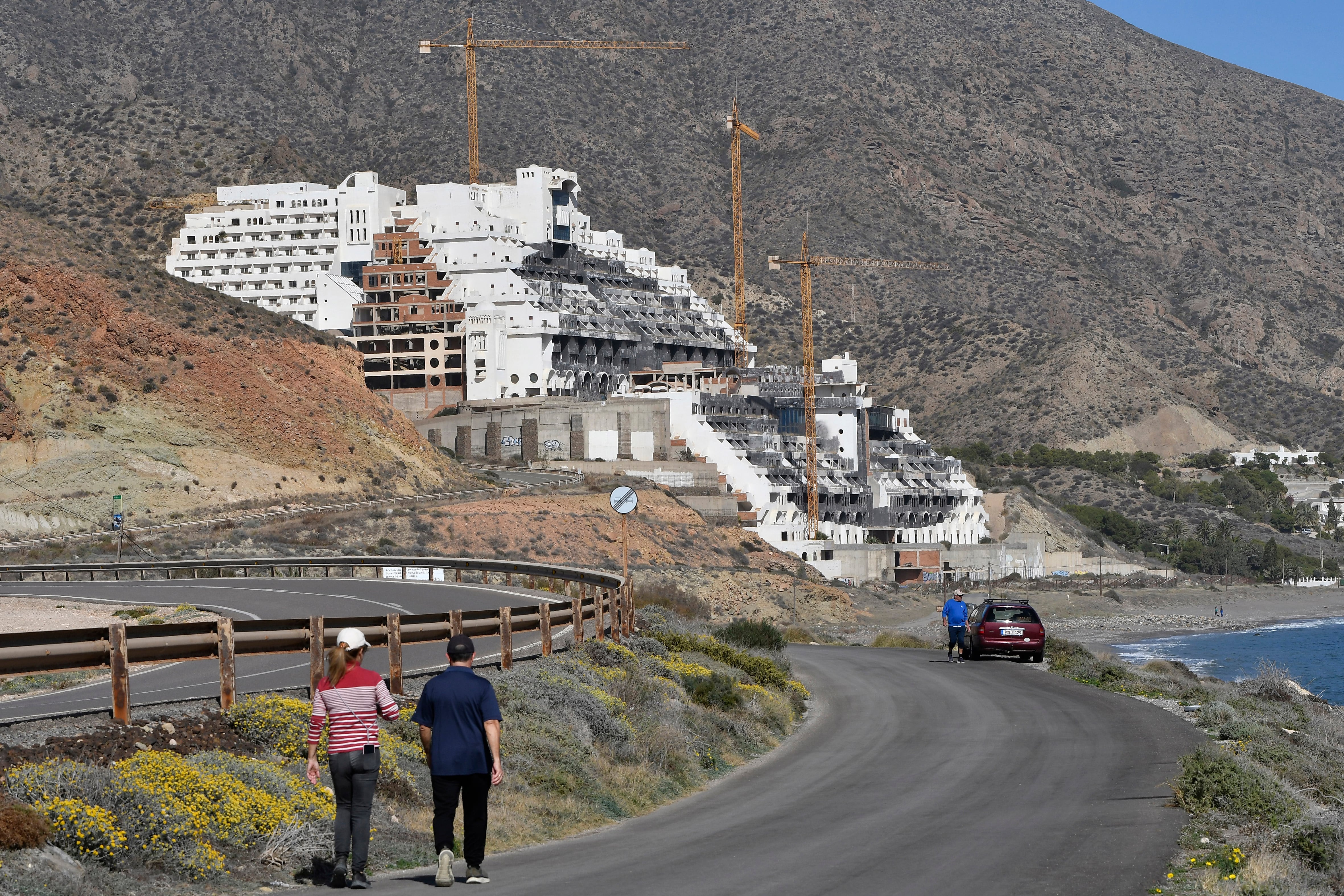
La demolición del hotel del Algarrobico, levantado en la playa del mismo nombre, dentro del Parque Nacional de Cabo de Gata, se ha convertido en el cuento de nunca acabar. Cuando este miércoles, el Ayuntamiento de Carboneras -el término municipal donde se levanta esta mole, símbolo de la especulación urbanística en la costa- debía aprobar la anulación de la licencia de obras, otorgada por el consistorio en 2003, los votos del PSOE, de una exedil del PP y de un concejal no adscrito, han determinado posponer esa decisión hasta el 22 de junio. Cansada de este juego de maniobras dilatorias, Greenpeace ha requerido al Tribunal Superior de Justicia de Andalucía (TSJA) que sea este quien dictamine esa anulación, en cumplimiento de la sentencia que ese mismo tribunal dictó en 2021. Horas después, la Junta de Andalucía se sumaba a esa petición y anunciaba que iba a solicitar al alto tribunal de la comunidad que “supletoriamente” declare la nulidad de la licencia, en lugar del consistorio. El Ministerio para la Transición Ecológica (Miteco) también optará por esta vía, siempre y cuando el consistorio carbonero no cumpla con el mandato de dejar sin efecto esa autorización, tal y como le ha instado que haga, indican fuentes de ese ministerio.
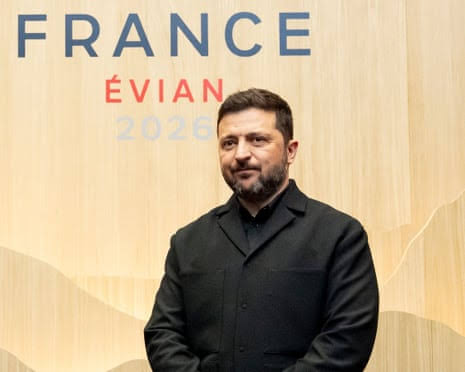
Ukrainian President Volodymyr Zelenskyy offered to meet Russian President Vladimir Putin on the sidelines of the G7 summit in Évian-les-Bains, France, but Russia did not provide a clear response, Zelenskyy told journalists on 15 June, as reported by Reuters. US President Donald Trump, who met Zelenskyy at the summit on 16 June, stated that Russia "should make a deal" with Ukraine to end the war, the Institute for the Study of War (ISW) reported on 16 June.
The offer was the latest in a series of Ukrainian proposals for high-level talks that the Kremlin has rejected or ignored. Putin had dismissed Zelenskyy's 4 June open letter proposing a bilateral leader-level meeting, and Russia's non-response to the G7 offer extended that pattern into a multilateral setting backed by both the United States and Europe, ISW reported.
G7 as a proposed venue
Speaking at the Kyiv-Pechersk Lavra, damaged in Russia's overnight attack, Zelenskyy said the United States had agreed to invite Putin to the summit. "We sent a message about readiness to meet with Putin during the G7 summit, because Trump and Macron are there, so Europeans plus America. This is a good, I think a very good, opportunity to meet all together," he said. Ukraine transmitted the invitation through US and French channels and directly to Russian counterparts, a Ukrainian official told Reuters, but received no clear answer. The Élysée Palace did not respond to a request for comment.
"Europe and the United States reached agreement, and Russia once again demonstrated that they are not ready to talk," Zelenskyy said.
US as an alternative venue
Zelenskyy said on 15 June that he and Trump had discussed on 14 June the possibility of holding peace negotiations in the United States in a format designed to be more difficult for Putin to refuse, ISW reported. On 16 June, Zelenskyy said he wants talks with Putin held in a neutral country before the start of winter 2026–2027, naming the United States as a possible venue.
Kremlin disputes the account
Kremlin Presidential Aide Yuriy Ushakov claimed on 16 June that Russia had not received any offers to organize a Putin–Zelenskyy meeting in the United States, and said the possibility was not discussed during Putin and Trump's 14 June phone call, ISW reported. Kremlin Spokesperson Dmitry Peskov separately claimed that Zelenskyy had not invited Putin to meet on the G7 sidelines.
Ukraine has repeatedly offered to arrange high-level peace negotiations with Russian officials, including Zelenskyy's 4 June open letter to Putin proposing a head-of-state meeting, which Putin subsequently rejected, ISW reported.
Both Ukraine and Russia called US President Donald Trump on his 80th birthday on 14 June, a day before the G7 summit in France, Suspilne reported. Ukrainian President Zelenskyy offered "good ideas" for peace and agreed to meet Trump at the summit. The Kremlin said Putin spoke to Trump separately and arranged for US envoys to return to Moscow, while insisting Zelenskyy should come to the Russian capital for talks.
Russia has weaponized over a year of peace talks to maintain a direct line with the US while blocking every proposed ceasefire, continuing to strike Ukrainian cities, and trying to use Washington to extract concessions from Kyiv. The Kremlin's unchanged demands amount to Ukraine's capitulation, not a negotiated peace. Trump's envoy, Witkoff, has never visited Kyiv, while his multiple trips to Moscow have yielded no tangible results.
Ukraine offers peace proposals, G7 meeting agreed
Zelenskyy wrote on Telegram that he congratulated Trump on his birthday and discussed "many key things, including of course peace" in "quite some detail." Presidential advisor Dmytro Lytvyn said the call lasted 30-35 minutes, Suspilne reported.
"I wished President Trump success, first and foremost in his efforts to end Russia's war against Ukraine. I also thanked him for all the support America provides Ukraine, and importantly, we gratefully remember every step of this support, from Javelins to Patriots," Zelenskyy said.
Explore further
Freezing the war along today’s lines is “the quickest way” to peace, Ukraine’s leader told Sky News
He added that he discussed "what can help bring peace closer now" and briefed Trump on the latest battlefield developments.
"I informed the President about the latest battlefield developments and how our position has strengthened. We agreed to discuss more during our meeting at the G7 summit. We have some good ideas that could help bring peace closer and protect lives," Zelenskyy wrote.
The G7 summit takes place in Evian, France, on 15-17 June. Both leaders attend the same working session on Tuesday.
Explore further
Britain, France, and Germany back Ukraine’s peace terms and press Putin for a ceasefire
Kremlin pushes for envoys' return
The Kremlin said Putin and Trump spoke for 55 minutes the same day. Kremlin aide Yuri Ushakov stated at a briefing that the conversation was "friendly and frank" and that Putin congratulated Trump on his 80th birthday, TASS reported. Trump allegedly told Putin he was the first foreign leader to call on his birthday.
Ushakov claimed Trump advocated for ending the war and allegedly expressed readiness to influence Kyiv and European politicians to move in that direction. They agreed that US special envoys Steve Witkoff and Jared Kushner would visit Moscow again "in the near future," Ushakov stated.
Explore further
“This war is your personal choice”: Open letter from Zelenskyy to Putin urges end to war, warns Russia faces growing strain
Ushakov also stated that Putin told Trump that if Zelenskyy wants personal negotiations, "he should come to the Russian capital himself."
Russia's demand that Zelenskyy come to Moscow is not new. The Kremlin has maintained the same position throughout over a year of US-mediated contacts, insisting on bilateral talks on Russian terms while rejecting every multilateral or European-backed ceasefire proposal.
Witkoff has visited Moscow multiple times since early 2025. None of those trips produced a ceasefire. When the US, Ukraine, and European partners put a 22-point ceasefire plan on the table in May 2025, the Kremlin snubbed it. Russia's terms have remained unchanged since 2024: Ukraine's withdrawal from four oblasts and de facto capitulation.
The calls are unlikely to produce results, just as none of the previous calls and bilateral and trilateral rounds of talks did, for one simple reason: Russia won't drop its unreasonable demands, while Kyiv will not agree to cede any territory.
A Greek fisherman greets guests with a warm smile. Credit: Greek Reporter
Greece has consolidated its status as one of the safest and most stable countries globally, climbing to 53rd place in the 2026 Global Peace Index (GPI). Moving up two places from last year’s ranking, Greece is officially categorized as one of the world’s “highly peaceful countries.”
Amid shifting geopolitical dynamics and rising international tensions, Greece’s progress reflects significant internal security, low violent crime rates, and societal stability, making it a standout performer in Southeast Europe and the broader Mediterranean region. Globally, the 2026 report marks a historic record for Iceland, which has maintained its position as the world’s safest country for nineteen consecutive years.
The comprehensive index, developed by the Institute for Economics & Peace (IEP), evaluates 163 independent states and territories based on societal safety, domestic or international conflict, and the degree of militarization.
The analysis of Greece’s standing and the global top-tier rankings for 2026 are as follows:
More than 60% of Ukrainians categorically reject a ceasefire along the current frontline if Ukraine receives no security guarantees. The same share would approve a ceasefire if European troops were stationed near the frontline and would defend Ukraine against renewed Russian aggression, according to a new Kyiv International Institute of Sociology (KIIS) poll, conducted between 7 May and 3 June 2026.
The poll quantifies the substantive Ukrainian public position on the ongoing diplomatic process: the ceasefire itself is not the disputed question, but security guarantees are.
Across the four scenarios KIIS tested, the lowest level of support (32%) is for a ceasefire without guarantees. Mid-range support corresponds to mid-range guarantees: 42% for European troops deep in Ukraine that would not fight, and 53% for security guarantees in the form of large-scale financial and weapons support.
Four scenarios in detail
Scenario 1 — ceasefire without security guarantees, money, or weapons: 61% categorically reject, 32% willing to approve (mostly reluctantly). This is the substantive Ukrainian public position on the unconditional ceasefire that Russian negotiators have repeatedly framed as a starting point: the offer falls short by roughly two-to-one.
Scenario 2 — ceasefire with European troops deployed deep in Ukraine, NOT participating in combat if Russia attacks again: 49% categorically reject, 42% willing to approve. A passive Western presence is closer to acceptance but does not yet command majority support.
Scenario 3 — ceasefire with security guarantees in the form of large-scale money and weapons supply: 37% categorically reject, 53% willing to approve. Material guarantees alone gain majority support, but with significant skepticism remaining.
Scenario 4 — ceasefire with European troops near the frontline who WOULD defend Ukraine against renewed Russian aggression: 33% categorically reject, 61% willing to approve. Active defense by European forces commands the highest support, with a clear majority in favor of a ceasefire under conditions that make Russian re-invasion materially riskier.
Methodology and coverage
KIIS conducted the survey by computer-assisted telephone interview (CATI), using random sampling of mobile phone numbers. The sample of 2,007 Ukrainian citizens aged 18 and older was drawn exclusively from territory controlled by the Ukrainian government, meaning the data does not include displaced Ukrainians abroad or Ukrainians in Russian-occupied territories.
The polling period of 7 May through 3 June 2026 covered the full month of the current phase of US-mediated diplomatic activity, during which Russia continued striking Ukrainian cities with Shahed drones and missile attacks.
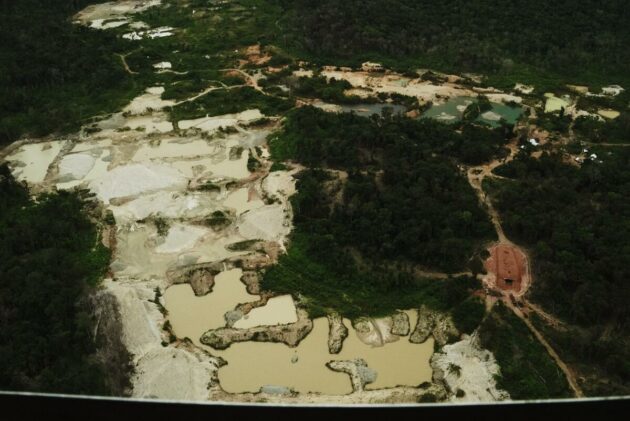
Il contesto globale di crescente instabilità geopolitica ed economica alimenta la domanda internazionale di oro, facendo aumentare la pressione sulla foresta pluviale tropicale più grande del pianeta. In Amazzonia l’estrazione illegale continua ad avanzare: in tre anni le miniere abusive hanno distrutto 100mila ettari di foreste protette. Un fenomeno reso possibile da gravi falle normative e dall’assenza di un sistema di tracciabilità efficace. Tra il 2023 e il 2025, oltre 5mila ettari di foresta sono stati distrutti dall’estrazione di oro solo all’interno di terre indigene. È quanto emerge dal report di Greenpeace Brasile “Gold Laundering in the Amazon: Anatomy of a Fraud”, che documenta come il sistema dei permessi di Lavra Garimpeira, introdotto dal governo brasiliano per consentire l’attività mineraria artigianale, venga in realtà sfruttato per riciclare oro estratto illegalmente da terre indigene e aree protette, dove questa attività è vietata dalla legge. Complice il mercato internazionale, come mostra un’indagine della Polizia Federale brasiliana che, nel 2025, ha rivelato un giro miliardario di estrazione ed esportazione illegale di oro proveniente dall’Amazzonia. Pubblicata da Repórter Brasil e diffusa in esclusiva per l’Italia da Il Fatto Quotidiano, l’inchiesta ha ricostruito il percorso di parte di questo oro illegale fino al mercato internazionale, inclusa l’Italia.
1 / 6
Field Expedition in the Kayapó Indigenous LandExpedição de campo na Terra Indígena Indígena Kayapó
2 / 6
Flyover Exposes over 500 Illegal Mining Barges in the Madeira River, BrazilGreenpeace flagra mais de 500 balsas de garimpo em sobrevoo no Rio Madeira
3 / 6
Overflight to Monitor Illegal Mining in Indigenous Lands in the AmazonSobrevoo de monitoramento de garimpo ilegal em Terras Indígenas na Amazônia
4 / 6
Illegal Mining in Munduruku Indigenous Land in BrazilMineração ilegal na Terra Indígena Munduruku (Outubro, 2021)
5 / 6
Illegal Mining in the Sete de Setembro Indigenous Land, BrazilGarimpo Ilegal na Terra Indígena Sete de Setembro
6 / 6
Overflight to Monitor Illegal Mining in Indigenous Lands in the AmazonSobrevoo de monitoramento de garimpo ilegal em Terras Indígenas na Amazônia
Come l’oro illegale entra nelle catene globali
Dal 1985 al 2022, l’estrazione illegale di oro è aumentata del 1.100%, con attività concentrate per il 91% in Amazzonia. “L’assenza di controlli efficaci da parte dell’Agenzia nazionale mineraria brasiliana e l’esenzione dall’obbligo di una preventiva analisi geologica – denuncia il dossier – hanno creato un ‘punto cieco’ che impedisce di valutare correttamente l’impatto dell’attività estrattiva e facilita il riciclaggio dell’oro illegale”. Attraverso hub di commercio, raffinazione e consumo, l’oro illegale entra così nelle catene globali di approvvigionamento e può raggiungere mercati come Italia, Svizzera, Francia, Germania, Canada e Emirati Arabi. In questi Paesi, una volta immesso nel sistema, diventa estremamente difficile da tracciare. Solo nel 2024, dal Brasile sono state esportate oltre 61mila tonnellate d’oro per un valore superiore a 3,9 miliardi di dollari statunitensi verso mercati di tutto il mondo.
La sentenza della Corte Suprema e i limiti del sistema
In questo contesto, mentre una legge del 2013 stabiliva una ‘presunzione di legalità’ basata sulla semplice autodichiarazione del venditore, a marzo 2025, la Corte Suprema brasiliana (Supremo Tribunal Federal) ha dichiarato incostituzionale questo principio della presunzione di buona fede nell’acquisto dell’oro. Una sentenza storica che punta proprio a bloccare il riciclaggio dell’oro di provenienza illecita proveniente dall’Amazzonia. “La decisione rappresenta un passo importante, ma non sarà sufficiente senza un sistema di tracciabilità realmente efficace lungo tutta la filiera” spiega Martina Borghi della campagna Foreste di Greenpeace Italia. “Finché il Brasile non introdurrà controlli rigorosi – aggiunge – basati su dati geologici affidabili e verifiche indipendenti, l’oro estratto illegalmente continuerà a entrare nel mercato globale alimentando deforestazione, violazioni dei diritti umani e distruzione dei territori indigeni. Anche l’Unione Europea e i Paesi importatori devono fare la propria parte, introducendo regole più severe sulla tracciabilità dell’oro e impedendo l’ingresso nel mercato europeo di metallo legato alla distruzione dell’Amazzonia”.
Le miniere fantasma, un fenomeno fuori controllo
L’indagine rivela inoltre la persistenza di ‘miniere fantasma’: permessi minerari attivi solo sulla carta, privi di attività coerente con i dati satellitari o con le verifiche sul campo, che funzionano come copertura legale per introdurre oro proveniente da altre aree, inclusi territori indigeni e zone protette. E i dati sono allarmanti: complessivamente, il 94% dei processi minerari analizzati da Greenpeace tra il 2018 e il 2026 è stato classificato come ‘miniera fantasma’ oppure operazione industriale incompatibile con il regime previsto per l’estrazione artigianale.
Gli impatti sociali e le terre indigene
L’estrazione illegale di oro ha anche gravi impatti sociali, che colpiscono in modo particolare le popolazioni indigene, con un aumento di violenze, sfruttamento economico e deterioramento delle condizioni di vita, soprattutto per le donne. Anche la contaminazione da mercurio rappresenta una minaccia: uno studio della Fundação Oswaldo Cruz nelle terre indigene del Popolo Munduruku ha rilevato che il 98,5% delle donne in gravidanza sottoposte ad analisi presentava livelli di mercurio superiori alla soglia di sicurezza, evidenziando un grave rischio per la salute riproduttiva e le generazioni future. Per contrastare efficacemente l’estrazione illegale di oro in Amazzonia, Greenpeace ritiene fondamentale rafforzare le misure normative e amministrative contro il riciclaggio, promuovendo al tempo stesso un processo di riconversione economica della regione e sostenendo attività compatibili con la foresta, che siano rispettose dei diritti umani e capaci di contrastare la povertà.

 Login
Login