Normal view

How the Ancient Greeks Founded Naples in Italy

12 June 2026 at 11:31
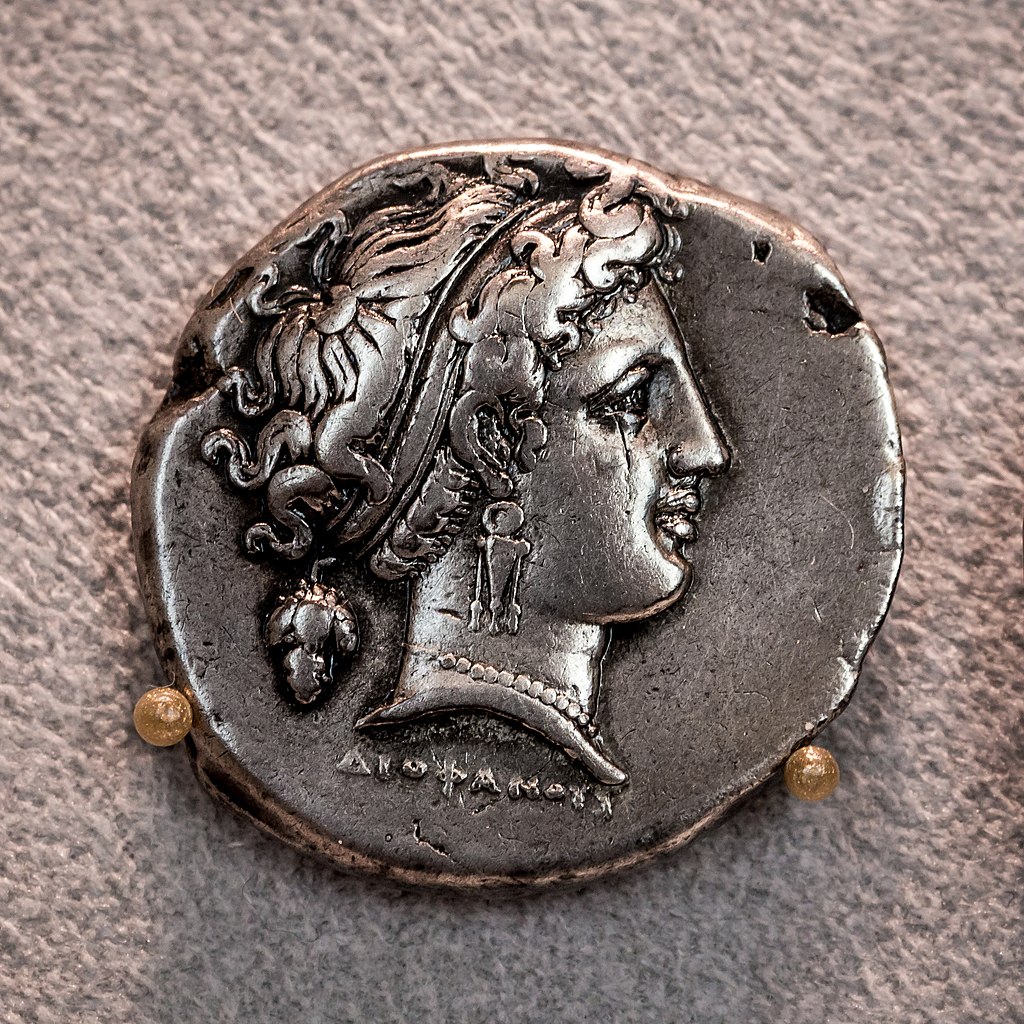
Ancient coin from Naples depicting head of Parthenope, mythical siren
Ancient Greek coin from Naples depicting the head of Parthenope, mythical siren whose body marked the future site of the city, fourth century BCE. Credit: Wikipedia Commons, cc-by-sa 4.0

The Greeks have a long and fascinating history in some of the most famous cities of Italy. One example is Naples, which is Italy’s third-largest city. The ancient Greeks founded this city well over 2000 years ago, and their influence is still felt there even today. But how did the ancient Greeks end up founding this city all the way over in Italy? We can learn the answer through ancient historical records as well as from archaeology.

The Legend of the Ancient Greeks Founding Naples

The legend of how the ancient Greeks founded Naples starts with the legend of Jason and the Argonauts. The poem Alexandra, which may have been written in c. 200 BC, records a tradition concerning Naples. It refers to a certain ‘tower of Phalerus’ already existing there in the time of Odysseus. Since Odysseus lived at the time of the Trojan War, this ‘tower’ must be named after a Phalerus who lived before then.

There is only one Phalerus who this could be – the Phalerus who accompanied Jason on his voyage to find the Golden Fleece. Other ancient sources describes this Phalerus as the founder of Gyrton in Thessaly, Phalerum in Athens, and a temple in Cyprus. Therefore, Greek legend clearly associates this Phalerus with the founding of cities. This adds even more support to the conclusion that he was the Phalerus who founded some kind of ‘tower’ in Naples before the time of Odysseus.

Therefore, the reference in Alexandra indicates that Phalerus, an Argonaut, led the ancient Greeks to establish the earliest settlement at Naples.

The Legend of the Foundation of Parthenope

The story of the ancient Greeks founding Naples also involves the legend of Odysseus. On his famous journey home from Troy after the Trojan War, he passed a group of sirens. They tried to use their enchanting singing to get Odysseus and his men to walk overboard and drown. However, Odysseus blocked his men’s ears with wax and then tied himself to his ship’s mast, thus keeping them all safe.

After defeating the sirens, one in particular, named Parthenope, threw herself into the sea in despair at her failure. She drowned, and the waves washed her body ashore at the tower of Phalerus. That location was then named Parthenope in her honor, with a city being built on the site of her grave.

This was not in exactly the same place as the later city of Naples, but it was very nearby, and it is within modern Naples. Parthenope was essentially the precursor to Naples. The two have always been so closely associated that the word ‘Parthenopean’ is a synonym of ‘Neapolitan’ even today.

What Archaeology Reveals About the Ancient Greek Foundation of Naples

Those are the legends, but how well do they match the archaeological facts? Firstly, let us consider the very earliest settlement, supposedly founded by Phalerus, one of the Argonauts. The legend about this location does not reveal where exactly in Naples the ancient Greeks supposedly established it. Nonetheless, in Naples in general, archaeology indicates that the ancient Greeks first settled there in the eighth century BC.

Whether this is actually related to the legend of Phalerus the Argonaut establishing a settlement there or not is up for debate. The archaeological evidence comes from centuries after the traditional era of the Argonauts. Nonetheless, it is possible that they lived later than usually believed.

What about the settlement of Parthenope? Archaeologists have found a Greek necropolis, or cemetery, dating to the early seventh century BC and associated with the hill of Pizzofalcone. This is further evidence that the ancient Greeks were starting settle the area of Naples at that period in history.

How the Ancient Greeks Transformed Parthenope into Naples

This settlement developed into a bustling city over the years. It became a prominent military and trading port. However, its success became its downfall. Cumae, the city from which the settlers of Parthenope primarily came, became jealous of their colony’s success. They did not want it to cause the original city, Cumae, to become abandoned. Therefore, they allegedly decided to destroy Parthenope.

There is little, if any, archaeological evidence for destruction at Parthenope dating to this time. However, whatever really happened, the evidence is clear that another settlement was then established in the Naples area, again by the ancient Greeks of Cumae. They called this city Neapolis, meaning ‘New City’. This eventually evolved into ‘Naples’, the English name for that city today.

The old settlement of Parthenope then started going by the name ‘Palaeopolis’, meaning ‘Old City’. However, it did not disappear completely. It became absorbed into the new settlement, becoming part of Naples.

Nigerian man unable to claim Italian lottery win gains residency permit

Former street seller celebrates newfound rights after debacle in claiming €500,000 scratchcard prize while undocumented

A Nigerian man who won €500,000 in an Italian lottery – but was barred from collecting his windfall because he was undocumented – said the hardship of his more than decade-long immigration journey had been eased after he was finally granted a residency permit.

“I’ve been praying for this moment ever since I arrived in Italy,” said Imagbe Ehizomwengie, 36. “It’s a huge relief. You might think it’s incredible, but receiving the permit means more to me than winning the money. I want to work and contribute to society.”

Continue reading...

© Photograph: supplied

© Photograph: supplied

© Photograph: supplied

The Forgotten Clash: How the Normans Bled the Byzantine Empire

11 June 2026 at 16:57
A digital depiction of a battle during the war between the Byzantine Empire and the Normans
A digital depiction of a battle during the Byzantine-Norman wars. Credit: Greek Reporter archive

The invasion of the Byzantine Empire by the Normans is a fascinating chapter of Roman history that is often overlooked.

Imagine descendants of Viking raiders, now known as Normans after settling in northern France, setting their sights on southeastern Europe and threatening the Eastern Roman (Byzantine) Empire. Eager to expand their influence beyond their French territories, these ambitious warriors turned their attention to the wealthy Byzantine lands. What followed was a century-long struggle that would fundamentally reshape the balance of power in medieval Europe.

The beginning of the story between the Normans and the Byzantine Empire

The first signs of trouble appeared around AD 1017, when small groups of Norman knights began turning their attention toward southern Italy, initially in search of mercenary work. The Byzantines, who still controlled significant territories on the Italian peninsula, believed these foreign fighters could prove useful in defending their holdings. After all, they needed additional manpower to deal with local rebellions as well as the frequent Arab raids originating from Sicily.

What the Byzantine administration failed to grasp early on was that the Normans came from a culture that placed extraordinary value on land acquisition above almost everything else. In Normandy, in northern France, younger sons were often left landless due to inheritance laws that favored the eldest child. Southern Italy, with its patchwork of competing communities and loosely defined borders, therefore looked like an ideal opportunity for expansion.

The Byzantines would learn this lesson the hard way. Within a few decades of their arrival, the Normans—initially seen as hired help—had begun establishing permanent bases across the region. Although Norman groups often fought one another in the early years, a more unified front gradually emerged. They would accept Byzantine payment for military service, only to use their positions to seize territory for themselves and steadily challenge Byzantine authority throughout the region.

The rise of Robert Guiscard

A man who would play a crucial role in what followed was Robert de Hauteville, better known as Robert Guiscard, “the Cunning.” This Norman was not the eldest son nor was he especially wealthy, and he was certainly not expected to carve out lands and establish his own realm. Nonetheless, he did so anyway.

Guiscard arrived in southern Italy around AD 1047 and immediately set about strengthening and consolidating Norman power. He possessed an almost uncanny ability to turn enemies into allies and allies into subjects. Through a combination of strategic marriages—a common practice at the time—military strength, and sheer boldness (which others might have called recklessness), he gradually unified the fragmented Norman factions under his leadership.

It would take until AD 1071 for Byzantine Italy to finally collapse. Guiscard captured Bari, the last major Byzantine stronghold on the Italian peninsula. For the Byzantines, the loss was deeply symbolic. For more than five centuries, the Eastern Roman Empire had maintained a presence in Italy, a living link to the legacy of the Western Roman Empire and the origins of the Roman world itself. That connection was now severed by a band of opportunistic outsiders.

Norman aggression against Constantinople

The conquest of southern Italy was only the beginning for the Normans. Robert Guiscard’s ambitions extended far beyond the Italian peninsula. His ultimate goal was Constantinople itself. In AD 1081, he launched what can only be described as one of the most audacious military campaigns of the Middle Ages.

The plan was bold in scope. Guiscard intended to cross the Adriatic Sea, establish a beachhead in what is now Albania, and then march overland toward the Byzantine capital through northern Greece. His first objective was Dyrrhachium, the critical fortress controlling access to the main route into the Greek mainland.

Emperor Alexios I Komnenos suddenly found himself confronting a nightmare scenario. The Normans had already demonstrated their ability to seize and hold territory, and now they were effectively at his doorstep, threatening the survival of the Byzantine Empire itself. To make matters worse, his army was a patchwork force of mercenaries, including (ironically) Anglo-Saxon refugees who had fled the Norman conquest of England.

The Battle of Dyrrhachium in October AD 1081 proved disastrous for the Byzantines. Guiscard’s tactical skill, combined with his son Bohemond’s aggressive cavalry charges, shattered the imperial army. The road to Constantinople lay open, and for a brief moment, it seemed as though the thousand-year-old Eastern Roman Empire might actually fall to these descendants of Viking raiders.

Desperate measures and unlikely alliances

Alexios I was many things, but he was not a man to surrender easily. Faced with the possibility of total collapse, he executed one of the most impressive diplomatic maneuvers of the medieval world. First, he effectively bribed the Holy Roman Emperor Henry IV to attack Norman territories in Italy, forcing Guiscard to divide his attention across two fronts. Then, in a move that would have lasting consequences, he granted extensive trading privileges to Venice in exchange for naval support against the Normans.

These concessions were enormous for an empire like Byzantium. The commercial rights awarded to Venice would eventually help transform the city-state into one of the wealthiest powers in Europe, often at Byzantium’s own expense. However, in AD 1082, Alexios was fighting for survival, and generosity was not a choice but a necessity.

The strategy worked—but only just. Guiscard was compelled to return to Italy to confront the German intervention, leaving Bohemond to continue the eastern campaign against Constantinople. What followed was several years of brutal mountain warfare across the Balkans, with neither side able to secure a decisive victory and both remaining locked in a tense stalemate.

The long shadow of conflict and the Byzantine Empire attack by the Normans

Although Robert Guiscard’s ambition to destroy the Byzantine Empire ultimately failed, the Norman-Byzantine conflict did not end with his death in AD 1085. A few years later, Bohemond attempted to revive the campaign in AD 1107, launching another invasion that also ended in failure. The final (and perhaps most devastating) Norman assault came in AD 1185, when a joint Norman-Sicilian force captured and sacked Thessaloniki, the empire’s second-largest city.

The events in Thessaloniki were brutal. Contemporary sources describe widespread slaughter of civilians and the systematic destruction of the city. The scale of devastation shocked even medieval observers, who were accustomed to the violence of war. For the Byzantines, the psychological impact was profound. It demonstrated that no part of the empire was truly safe from Norman ambition, as even its greatest cities could fall to such overwhelming force.

The Norman campaigns against Byzantium had consequences that extended far beyond Thessaloniki. They helped establish a powerful Catholic kingdom in southern Italy that would remain a persistent rival to the Byzantine Empire for centuries. More importantly, they drained Byzantine resources at a time when the empire was increasingly pressured by Turkish advances in the east.

The prolonged conflict also deepened the divide between the Greek Orthodox and Roman Catholic worlds, turning former Christian counterparts into bitter adversaries. The Normans saw themselves as champions of Latin Christendom, while the Byzantines regarded them as little more than barbarian raiders. This growing hostility would ultimately culminate in the Fourth Crusade, when Crusader forces turned against Constantinople itself and sacked the city.

Even today, traces of this once-forgotten conflict remain scattered across the Mediterranean. Norman castles still stand along the coastlines of southern Italy and Sicily.

Ottant’anni e non sentirli: la Vespa che ha asfaltato le mode

10 June 2026 at 09:00

Da simbolo della rinascita italiana a icona globale del design: la Vespa compie 80 anni e continua a conquistare le strade del mondo.

Dalla ricostruzione del dopoguerra a regina delle città

C’è chi a ottant’anni colleziona ricordi e chi, invece, continua a macinare chilometri. La Vespa appartiene decisamente alla seconda categoria. Nata nel 1946, in un’Europa che cercava di rialzarsi dalle macerie della guerra, la due ruote italiana è diventata molto più di un semplice mezzo di trasporto: un simbolo di libertà, stile e innovazione riconosciuto in ogni angolo del pianeta.

In un’epoca in cui l’automobile era ancora un lusso per pochi, la Vespa rappresentò una rivoluzione silenziosa. Agile, economica e dal design immediatamente riconoscibile, contribuì a cambiare il modo di muoversi degli italiani e accompagnò la trasformazione sociale ed economica del Paese. Da Roma a Milano, passando per le piazze delle città di provincia, divenne presto protagonista della quotidianità e dell’immaginario collettivo.

Icona che continua a correre

Ottant’anni dopo il suo debutto, la Vespa non mostra alcuna intenzione di rallentare. Oltre 19 milioni di esemplari prodotti e diffusi nei cinque continenti raccontano una storia industriale senza paragoni. Ancora più significativo è il dato degli ultimi dieci anni: più di due milioni di mezzi realizzati, a conferma di una vitalità commerciale che molti marchi possono soltanto invidiare.

Il segreto del successo? La capacità di restare fedele a se stessa pur evolvendosi. Design elegante, tecnologia sempre aggiornata e un’identità inconfondibile hanno trasformato la Vespa in un brand globale, amato da generazioni diverse e da culture lontanissime tra loro.

La vespa, l’unica influencer nata prima dei social

Mentre marchi e prodotti combattono ogni giorno per conquistare visibilità sui social network, la Vespa può vantare un primato curioso: essere diventata un fenomeno mondiale quando internet non esisteva nemmeno. Ha attraversato decenni, mode e rivoluzioni tecnologiche senza perdere fascino, confermandosi uno dei simboli più forti del Made in Italy.

A ottant’anni dalla sua nascita, continua a rappresentare un pezzo di storia italiana che non vive nei musei, ma sulle strade. E se il tempo passa per tutti, per la Vespa sembra valere un’eccezione: più che invecchiare, si limita ad aggiungere stile al proprio curriculum.

Una grande festa in suo onore

Sarà la voce di Ditonellapiaga ad aprire ufficialmente le celebrazioni per gli 80 anni di Vespa, in programma a Roma dal 25 al 28 giugno nell’ambito di “Vespa Roma 2026 – 80 Years of an Icon”, il grande evento internazionale dedicato allo scooter più celebre del mondo. La cantautrice romana salirà sul palco del Vespa Village, allestito all’interno del Foro Italico, nella serata inaugurale di giovedì 25 giugno. A partire dalle 21, l’artista proporrà uno showcase speciale di quattro brani, dando il via al programma musicale organizzato in collaborazione con Radio Deejay.

Reduce dal successo ottenuto al Festival di Sanremo 2026, Ditonellapiaga rappresenta una delle personalità più originali e riconoscibili della nuova musica italiana. Il suo stile, che fonde pop, elettronica e cantautorato, ha conquistato pubblico e critica, consolidando il suo ruolo di protagonista della scena musicale contemporanea.

La scelta dell’artista assume un significato particolare anche per il forte legame con la Capitale. Nata e cresciuta a Roma, Margherita Carducci – questo il suo vero nome – ha spesso raccontato attraverso la propria musica atmosfere, suggestioni e contraddizioni della città che l’ha vista crescere artisticamente. Dopo la sua esibizione, la serata proseguirà con il dj set di Molella, che accompagnerà il pubblico fino alla chiusura della prima giornata di festeggiamenti.

L’appuntamento romano si annuncia come il più grande raduno internazionale mai organizzato nella storia di Vespa, una celebrazione che unirà generazioni diverse sotto il segno di un’icona capace, dopo otto decenni, di continuare a parlare al presente

Ottant’anni e non sentirli: la Vespa che ha asfaltato le mode

L'articolo Ottant’anni e non sentirli: la Vespa che ha asfaltato le mode proviene da Affaritaliani.it.

The Breathtaking Ancient Greek Ruins Found in Italy

9 June 2026 at 20:01
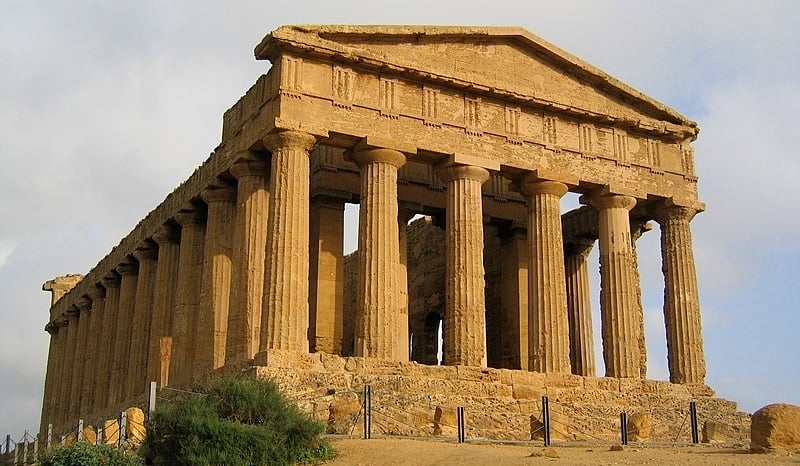
Temple of Concordia
Temple of Concordia – Agrigento, Italy. Credit: Public Domain

When you think about Italy and ruins, your mind’s eye automatically brings up scenes of the Roman Forum and the Colosseum. However, Italy is home to countless ruins which are actually ancient Greek—many of which remain in stellar condition.

The country’s mainland, as well as the island of Sicily, are dotted with Greek ruins—some of which are integrated into modern-day cities and are still even used to host events! Others can be found in isolated locations well off the beaten path.

Ancient Greek Ruins of Italy

As you travel through Italy, as you really should if you call yourself a well-traveled individual, be sure to say “Opa!” as often as you say “Mamma mia!” The following are just some of the truly jaw-dropping ancient Greek ruins which are scattered throughout the Italian countryside.

Paestum

Located in southern Italy along the coast of the Tyrrhenian Sea in what was then called “Greater Greece” or Magna Graecia, this was a major Greek city in ancient times. The ruins date back to 600 to 450 B.C. and are some of the best-preserved Greek temples in the world!

Paestum
Temple of Hera, Paestum (Poseidonia) Italy. Credit: Norbert Nagel/CC BY-SA 3.0

The three famous ancient Greek temples at this site are of the Doric type, and the ancient city walls and amphitheater are mostly intact. The bottom section of walls from many other structures are completely intact.

It is an amazing experience to be able to walk along the ancient stone-paved roads and view the buildings along the roadsides just as the ancients did. The site is open to the public, and there is a modern national museum on-site for you to check out as well.

Another plus is that this archeological site is well off the beaten path and is seldom crowded with visitors!

Locri Epizefiri

Also on the mainland of Italy, in Reggio di Calabria, you will come across the ancient ruins at Locri. The ancient city has been mostly taken over by the encroachment of the nearby towns.

Locri Epizefiri,
Locri Epizefiri, greek theater. Credit: Sandro Baldi/CC-BY-SA-4.0

However, the area is very much worth a visit because the atmosphere quiets as you pass through shady olive groves and meander along the overgrown pathways. It is here where you will inevitably, and literally, stumble across a treasure of ancient ruins.

Greek temples, amphitheaters, and the well-known Sanctuary of Persephone grace the Locri area. The magical experience is truly something you shouldn’t miss out on.

On the island of Sicily, some truly remarkable ruins are yours to explore, starting with the still-used ancient Greek Theater of Taormina!

The Ancient Greek Theater of Taormina

With the beautiful Mediterranean sea lapping at the shores below and the active volcano of Etna looming over the city, Taormina is an upscale destination, featuring cultural events, museums, and priceless antiquities—right in the middle of a bustling city!

The ancient theatre of Taormina ruins
The ancient theatre of Taormina. Credit: Public Domain

Here you will find an ancient Greek amphitheater with exquisite views of both the volcano and the sea. While there, you might even be lucky enough to see a show at the ancient theater. It was originally built in 300’s B.C. and subsequently rebuilt by the Romans in the second century B.C.

Valle dei Templi in Agrigento

In Argrigento, you will be treated to refreshing views of expansive fields and woodlands—as well as one of the most pristine ancient Greek ruins in existence in the Valle dei Templi (the Valley of Temples).

Agrigento, ruins
Agrigento, valle dei templi. Credit: Jesper2cv/CC BY-NC-ND 2.0

Many of the temples and ruins here are not fenced off, so travelers may walk inside and be transported back to the fifth century B.C., when the Greeks first built the ancient city of Akragas. One of the most well-preserved Greek temples in the world, the Temple of Concord, is in this valley.

Segesta Archaeological Site

Segesta is located only 70 kilometers (43 miles) southwest of Palermo. Fortunate travelers here can visit what is perhaps the second most well-preserved temple in the world after those in the Valle dei Templi. Segesta also boasts a beautiful amphitheater, situated atop Mount Barbaro, which is also in pristine condition.

Segesta ruins
The Doric temple of Segesta, Italy Credit: Anna & Michal/CC BY-SA 2.0

The temple dates back to the fifth century B.C. and has typical Doric architecture. Each summer the ancient amphitheater hosts a series of classical Greek dramas performed in Italian. If you’re lucky enough to visit during the summertime, be sure to catch a show.

Ancient Greek Colony in Siracusa

A favorite for all are the ancient ruins at Siracusa (Syracuse), where the ancient Greek colony dates back to the 5th century B.C. This area boasts a Greek theater and the Temple of Apollo, which dates back to the 6th century. Siracusa also has the ruins of the famous Altar of Hieron II—the largest altar from ancient Greece!

Ancient ruins at Siracusa
Ancient ruins at Siracusa Il Turista Informato/CC BY-NC 2.0

Located on the southeastern coast of Sicily and founded by ancient Greeks from Corinth, the city of Siracusa was once one of the most powerful city-states of ancient times. It was once described by the Roman orator Cicero as “the greatest Greek city, and the most beautiful of them all.”

Siracusa is so rich in historical treasures that it is listed as a UNESCO World Heritage Site.

Of course, there are many other Greek ruins that you will come across in your travels through Italy and Sicily, and we have merely scratched the surface in highlighting some of the more popular and well-preserved sites.

Be sure to work a little bit of Greek history into your itinerary on your visit to Italia!

Nemi Ships: The Ancient Floating Palaces Destroyed in WWII

9 June 2026 at 09:26
Nemi shipwrecks
The remains of the hull of one of the two ships recovered from Lake Nemi. Workers in the foreground indicate scale. Credit: Public Domain

Located in Lake Nemi in Italy, the Nemi ships consisted of two vessels constructed on orders of Roman Emperor Caligula (37 to 41 AD), known for his extravagant lifestyle.

The ships served as floating palaces, complete with intricate decorations, marble floors, and elaborate plumbing systems and demonstrated advanced Roman engineering techniques.

There is evidence of the use of waterproof concrete, complex hull designs, and innovative plumbing systems with features such as heated baths. The ships were adorned with exquisite artwork, including mosaics, marble statues, and bronze decorations.

Nemi Ships
An artistic depiction of a Nemi ship by CM Knight-Smith. Credit: Public Domain

Nemi ships were impressively large for their time

The Nemi ships were impressively large for their time. The first ship, the Prima Nave, had a length of approximately 70 meters (230 feet) with a width of about 20 meters (66 feet). The second, the Seconda Nave, was 73 meters (240 feet) long and 24 meters (79 feet) wide.

Nemi ship
The remains of a Lake Nemi ship pictured in 1929. Credit: Public Domain

Both ships were constructed with high-quality materials, including oak and pine wood, and featured advanced techniques such as waterproofing with lead sheeting and bitumen.

The sheer size and opulence of the ships reflected the grandeur and luxurious lifestyle associated with Emperor Caligula. They were likely used for leisure and ceremonial purposes, showcasing the emperor’s wealth and technological advancement of the Roman Empire.

Ships discovered and then destroyed during the Second World War

The ships were discovered in the 15th century, but serious attempts to recover them only began in the late 19th and early 20th centuries. Italian dictator Benito Mussolini ordered the draining of Lake Nemi in the 1930s, leading to their successful recovery.

Nemi ships
Benito Mussolini observes the drainage system for the emptying of Lake Nemi. Credit: Public Domain

The Nemi ships were destroyed in the final stages of World War II. On the night of May 31, 1944, a fire broke out in the Museum of Roman Ships at Lake Nemi, where the ships were housed. The fire caused extensive damage, destroying much of the wooden structures and artifacts. Most of the ships were lost to the flames.

The exact cause of the fire remains disputed. One theory suggests that retreating German forces set the museum ablaze to prevent advancing Allied troops from capturing the ships and the valuable artifacts. Another theory posits that the fire resulted from Allied bombing in the area, although there is less evidence to support this.

Furthermore, there was also the possibility of an accidental fire, possibly caused by negligence or the mishandling of flammable materials during the chaotic war period.

The remains of the Nemi ships, along with related artifacts and replicas, are housed in the Museo delle Navi Romane (Museum of Roman Ships), located near Lake Nemi in Italy.

Despite the destruction, some metal and stone artifacts survived the fire. These remnants, along with photographs and drawings made before the fire, have allowed historians and archaeologists to reconstruct aspects of the ships.

Related: Stunning Ancient Marble Bust Found at the Bottom of Italian Lake

‘Wasn’t even good’: US tourist says she was charged €44 for two ice creams in Rome

Post on Facebook received more than 900 comments, with one Italian writing that they were ‘ashamed’

A US tourist has warned visitors to Rome after paying €44 (£38) for two ice-creams in the Italian capital.

Nicole Ann, from Florida, advised fellow tourists to “avoid Don Nino”, an ice-cream parlour on a street off Piazza Navona. She claimed she had ordered two small cups of ice-cream but instead was charged for two large cones topped with trimmings that were allegedly not requested, including macarons, cannoli and panna (whipped cream).

Continue reading...

© Photograph: maroznc/Getty Images/iStockphoto

© Photograph: maroznc/Getty Images/iStockphoto

© Photograph: maroznc/Getty Images/iStockphoto

Italian rescuers recover 10 bodies after migrant boat capsizes off Malta

About 48 people rescued alive after vessel reportedly left Libya carrying about 60 passengers

Italian rescuers have recovered 10 bodies after a migrant boat capsized in waters off Malta, a coastguard statement said on Sunday.

The vessel, which had departed from Libya carrying about 60 people, overturned about 45 nautical miles east-south-east of Malta, the Italian coastguard said.

Continue reading...

© Photograph: Valeria Ferrario/AP

© Photograph: Valeria Ferrario/AP

© Photograph: Valeria Ferrario/AP

Fireworks reportedly trigger mass horse stampede through Rome streets, injuring several soldiers

1 June 2026 at 04:49

Fireworks set off without authorization in Rome reportedly triggered a mass stampede of frightened horses during a late-night rehearsal for Italy’s annual Republic Day parade, injuring multiple riders and animals.

The incident occurred late Friday near the ancient Baths of Caracalla as mounted units from Italy's armed forces and law enforcement agencies were practicing for the June 2 national celebration, Reuters reported.

Roughly 35 horses bolted through city streets following the unexpected fireworks, the outlet said. Video captured the chaotic scene, showing numerous horses galloping along Via Cristoforo Colombo as drivers recorded the scene.

The search and recovery effort reportedly continued until dawn the next day, with the last horse recovered roughly nine miles from the scene.

NEW YORK OFFICIALS CANCEL HORSE RACING AT RACETRACK OVER 'UNACCEPTABLE NOISE LEVELS' FROM NEARBY CASINO

According to Reuters, the sudden bangs began shortly before 11:30 p.m. and triggered panic among the ceremonial horses, many of which were being escorted by Italy’s Army, Carabinieri paramilitary police, and state police.

Some riders were mounted, while others were leading horses by hand when the startled animals broke free, the outlet said.

KENTUCKY DERBY HORSE SCRATCHED AFTER THROWING JOCKEY WHILE GETTING LOADED INTO STARTING GATE

During the chaos, a 22-year-old soldier reportedly suffered broken ribs and a punctured lung, though officials said his injuries were not life-threatening. At least 15 horses were also injured, though none required euthanasia, according to reports.

Italian outlet ANSA said the stampede injured three young soldiers from the Montebello Lancers and a 29-year-old policewoman.

ILLEGAL STREET TAKEOVER SHUTS DOWN BUSY INTERSECTION WITH DANGEROUS STUNTS, FIREWORKS: POLICE

Officials are reviewing how the unauthorized fireworks were ignited near the rehearsal site.

The Rome Local Police Command said four traffic police officers were involved in the incident and were reportedly near the firecrackers when the explosion occurred, ANSA said.

Officials said one of the officers allegedly lit a battery of fireworks about 200 yards from the horses, the outlet reported. The officer was identified as a 50-year-old who joined the force after passing the most recent exam.

Video footage and witness statements suggest the explosions and the horses’ escape occurred simultaneously, according to the local report.

CLICK HERE TO DOWNLOAD THE FOX NEWS APP

Rome police commander Mario De Sclavis told Corriere della Sera that the incident "discredits the image of the Corps and its officers," according to Reuters.

Sclavis added that the agency will take "necessary measures" to hold those responsible accountable, according to ANSA.

"Last night's events hit us like a tsunami," he said.

Exclusive Study! “PFIZER MASKED TOXIC SUBSTANCE inside COVID-19 mRNA VACCINE” (Video). Groundbreaking Discovery on Dangerous ALC-0315 by an Italian Biochemist G. Segalla

10 June 2026 at 15:49

by Fabio Giuseppe Carlo Carisio

ENGLISH VERSION

The Famous Italian Biochemist’s Latest Study on the Pfizer mRNA Vaccine

«ALC-0315, the ionizable cationic lipid enabling the Pfizer vaccine Comirnaty’s LNP platform, is presented in regulatory files as if its metabolic fate were straightforward and well controlled. Our analysis instead identifies a basic, consequential discrepancy that should never survive dossier assembly—let alone review: the hydrolysis product dictated by the ALC-0315 chemical structure is 2-hexyldecanoic acid (α-branched), yet key submissions by Pfizer repeatedly invoke the presence of distinct 6-hexyldecanoic isomer (not commercially available, not recognized as an analytical standard in established analytical protocols). This is a material misidentification with direct safety and compliance consequences».

In these few initial lines of his latest disruptive and groundbreaking study, we understand that on this occasion the Italian biochemist Gabriele Segalla has truly outdone himself by revealing a Sherlock Holmes-like instinct in discovering yet another sensational manipulation within the Covid-19 mRNA Comirnaty so-called “vaccine” produced by the New York-based pharmaceutical company Pfizer, perhaps the most used in the world and certainly in the European Union.

Segalla has now published his fourth scientific research paper on Pfizer’s experimental anti-Covid products (which were shown to be ineffective according to a Science study and highly dangerous according to hundreds of other medical articles) and is therefore well acquainted with the nanoparticles, which he immediately defined as “toxic” to humans, with the risk, later supported by dozens of other studies, of causing muscle inflammation, particularly in the heart, such as myocarditis or pericarditis.

A danger that Big Pharma Pfizer and Moderna themselves were then forced to include in the package leaflet by the EMA (European Medicines Agency).

THE PANDORA’S VACCINES – VIDEO. Toxic Nanoparticles inside Covid mRNA Jabs unveiled by Biochemist Segalla

Damage and Health Safety Violations from the Ghost Molecule 

Given the highly technical nature of the research published in the American specialist journal International Journal of Vaccine, Theory, Practice, and Research on May 18 (title ALC-0315 Toxic Metabolites: Pharmacokinetic and Regulatory Criticalities in a COVID‑19 “mRNA Vaccine”), we asked out friend PhD Segalla to provide a brief simplified explanation.

«At the heart of the study is a major chemical discrepancy. To track how the vaccine’s protective fat shell (the ALC-0315 lipid) breaks down in pre-clinical tests, official files relied on a “ghost” molecule called 6-hexyldecanoic acid—a substance that does not even exist in international chemical databases.  In reality, the vaccine breaks down into a completely different molecule, 2-hexyldecanoic acid, which is globally classified as highly toxic and persistent. The study defines this switch as a “technical falsification” that hid the fact that these toxic ingredients remain trapped inside human cells instead of being safely eliminated».

Indeed, the Italian biochemist so detailed the same issue in his Absttract

«The authentic metabolite, 2-hexyldecanoic acid, concealed by Pfizer and disguised as 6-hexyldecanoic acid, carries an H410 classification (very toxic to aquatic life with long-lasting effects), while the “phantom”6-hexyl isomer is lacking any hazardous classification and presented as theoretically more degradable. In a CMA (Conditional Marketing Authorization) supporting pivotal preclinical study, substituting 2-hexyl with an unclassified 6-hexyl isomer materially compromises the clearance account, traceability, and any defensible claim of GLP (Good Laboratory Pratice) grade validation for Pfizer’s vaccine».

The cover of Abstract of the research (link in the sources)

Dr. Segalla’s research demonstrates that this hidden molecule triggers a domino effect of severe biological damage:

  • Energy Blackout: It shuts down the cell’s power plants (mitochondria), draining the energy needed to repair our DNA.
  • Cell Defense Breach: Another byproduct acts like a harsh chemical detergent, stripping away the protective shield around the cell’s nucleus and risking genomic instability.
  • Protein Factory Sabotage: It causes the cell’s internal factories (ribosomes) to glitch. This “factory error” forces the body to produce deformed, unnatural proteins, which can cause the immune system to misfire and attack its own tissues, potentially leading to heart inflammation like myocarditis and pericarditis.

“Toxic Nanoforms inside Pfizer-Biontech Covid Vaccine”. Vital Study by Italian Biochemist on US Journal of Virology highlights an Alleged Crime

The expert researcher, in an exclusive interview with the editor of Gospa News (currently only in Italian), highlighted the multiple public health violations resulting from his discovery making the request to withdraw the authorization for the Comirnaty mRNA vaccine inevitable.

A Discrepancy, Undetected by Drug Regulators, That Would Have Blocked the Authorization of Pfizer’s Gene Serum

This discrepancy is not a technical detail; it directly affects analytical validation, standard traceability, toxicological assessment, metabolic clearance, and the entire regulatory framework.

That is, as Segalla explains in the video interview, if the reporting of the metabolite produced by ALC-0315 in the human body had been correct, the Comirnaty “vaccine” would never have received approval from the competent bodies responsible for overseeing the drug authorization process (FDA, EMA, AIFA, Ministry of Health, etc.).

“European Medicines Agency Knew Toxicity of Pfizer Covid Vaccine”. Bombshell Study Published in US by an Italian BioChemist on Dangers mRNA-LNPs

Not only that. The Italian biochemist is surprised that the EMA failed to detect this enormous discrepancy, but in a previous study, Segalla himself had demonstrated that the EMA could not have been unaware of the toxicity of these nanoparticles, which are highly inflammatory to the muscular system (another recent study has reiterated this) and also potentially carcinogenic.

More Dangers from Trialkanolamine, a Destabilizer of the “Cellular DNA Safe”

«The second breakdown product (a trialkanolamine, pKa ≈ 9.6) is liable to lysosomal sequestration, there by impeding clearance; however, the Pfizer dossier offers only limited substantiation of its disposition. Critically, the pharmacokinetic dataset does not adequately account for dose biodistribution and is predicated on insufficiently documented—or omitted—testing standards. Given the scale of exposure (billions of subjects) and the potential oncological and cardiological consequences placed on these Pharmacokinetic criticalities, these omissions are not merely unfortunate; they are utterly unacceptable».

As we can read in the Segalla’s new study Abstract, the second critical front concerns trialkanolamine, another degradation product of ALC-0315, described as a cationic molecule capable of remaining trapped in lysosomes, altering cellular autophagy, promoting phospholipidosis, oxidative stress, mitochondrial dysfunction and destabilization of cellular and nuclear membranes.

The Italian biochemist Gabriele Segalla

In the interview, Segalla clarifies that this substance acts as “a degreaser capable of damaging the cellular DNA vault,” causing unpredictable genomic damage, which has also been confirmed by a recent, disconcerting American study, and potentially leading to turbo-cancer consequences.

COVID VACCINES. The Most CHILLING STUDY on GENETIC DAMAGES in USA! mRNA Jabs Induced Severe, Long-Lasting Disruption Linked to Cancer and Chronic Disease


A Call to Action and Immediate Recall for “Serious Safety Failure to Perform ”

The study argues that regulatory agencies, including the EMA, failed to spot these discrepancies, invalidating the vaccine’s conditional approval.

“This is not just a minor technicality,” states Dr. Segalla. “The lack of traceability masked a critical bioaccumulation risk, exposing the public to unmonitored chronic effects.” Invoking the precautionary principle and Article 10 of the Nuremberg Code, the study demands an immediate revocation of the vaccine’s marketing authorization and calls for an urgent international review of mRNA nanotechnology safety.

«Accordingly, we call for an independent, methodologically transparent and fully auditable re-assessment of ALC 0315 metabolism and clearance, and for all regulatory decisions concerning the Comirnaty medicinal product be reconsidered in view of what appears to amount to a grave and consequential omission in verification procedures» sentenced the Abstract of the study too.

The study links these critical issues to potential long-term biological consequences, including interference with genomic stability, the inflammatory response, cardiaological mechanisms, and protein translation processes, such as ribosomal stalling and frameshifting.

Serious Inflammatory Muscular Disorders after mRNA Vaccines. Korean Study confirms Segalla and McCullough Alarms. On Heart Dangers too

Regarding these issues, Gospa News has published countless disturbing studies on the potential harms of mRNA vaccines, from February 2021 until a week ago. This is precisely why our online news outlet has been banned or blocked from all social media (even Telegram, where we have been repeatedly suspended).

Fabio Giuseppe Carlo Carisio – Founder and Director of Gospa News

HELP GOSPA NEWS WITH A FREE DONATION via PayPal or Bank

The Interview with PhD Segalla by Gospa News (Italian only)

We are sorry but at the monent the Interview in the Video below is in Italian only but we are working to translate it to add subtitles in English 


MAIN SOURCE

STUDIO SEGALLA – ALC-0315 Toxic Metabolites: Pharmacokinetic and Regulatory Criticalities in a COVID‑19 “mRNA Vaccine”

Full pdf: https://ijvtpr.com/index.php/IJVTPR/article/view/128/437


RELATED POSTS

High Toxicity Risks inside mRNA Vaccines: MODERNA Scientists confirmed Results of Segalla’s Italian Study

Debilitating Autoimmune Muscle Disease after COVID Vaccine: New Study discover an Odds Higher of 6,800 %

Exclusive – “With Covid Vaccines Risks of Pulmonary’s Serious Injuries”. Shocking Research on Nature Journal, ignored by Scientific Community, Big Pharma and Media

“mRNA VACCINES NANOPARTICLES KILL THE HEART” NATURE Study Confirms Biochemist Segalla’s Warnings Ignored by Italian Ministers and Magistrates

SCIENCE Journal: “COVID-19 Vaccines FAILURE!”. Spike Proteins Too Far Apart in SARS-Cov-2, Immune Cells Flop


On the New Foreign Tour of Indian Prime Minister Narendra Modi

22 May 2026 at 14:59
The head of the Indian government paid visits to five countries – the UAE, the Netherlands, Sweden, Norway, and Italy – between 15 and 20 May. It is noteworthy that N. Modi set off on this trip immediately after the conclusion of the BRICS ministerial meeting in New Delhi, where India, as chair this year, […]
❌