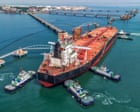
Despite US Help, Little Oil Has Gone Through Strait of Hormuz

© Reuters

© Reuters


Non solo Indopacifico e Hormuz, ma anche capisaldi della geopolitica futura come chip, IA e spazio con nel mezzo il piano d’azione strategico 2026-2030. Ricco il paniere di temi fra Italia e Repubblica di Corea: il vertice di oggi a Villa Doria Pamphilj tra Giorgia Meloni e Lee Jae Myung ha decretato una svolta fra Roma e Seul. Il bilaterale, la cerimonia di scambio degli accordi e il forum imprenditoriale di alto livello, con la partecipazione di una qualificata delegazione di aziende coreane e italiane, racconta di un’accelerazione oggettiva impressa alle relazioni fra i due Paesi.
Si tratta del terzo incontro tra il presidente Meloni e il presidente Lee in meno di un anno (dopo quelli del 19 gennaio 2026 a Seul e del 24 settembre 2025 a margine dell’Assemblea generale delle Nazioni Unite a New York) che punta forte sulla collaborazione bilaterale in ambito politico, economico, scientifico-tecnologico, culturale e nel campo della sicurezza e difesa. Quattro gli accordi siglati nel settore della cooperazione allo sviluppo, nel campo delle scienze, delle tecnologie avanzate e delle tecnologie dell’informazione e comunicazione, nella collaborazione nel campo dell’economia sociale e solidale e nel settore delle micro, piccole e medie imprese.
La delegazione italiana è stata composta dai ministri Tajani, Bernini; dai viceministri Valentini e Bellucci. Per la Repubblica di Corea presenti il vice primo ministro e ministro della Scienza e delle Tecnologie dell’Informazione, Bae Kyung Hoon; il ministro dell’interno e della sicurezza, Yun Ho-Jung; il vice ministro delle PMI e delle Start-Up, Yong-Seok Roh. La visita di Stato in Italia di Lee, che l’11 giugno è stato ricevuto al Quirinale dal presidente della Repubblica Sergio Mattarella, si inserisce all’interno dell’ampia missione del leader sudcoreano in Europa, che ha visto il 10 giugno Lee partecipare al Vertice Ue-Corea a Bruxelles.
Il Paese è caratterizzato da un interscambio commerciale con l’Italia da circa 11 miliardi di euro, rendendolo il primo mercato asiatico per l’export italiano in termini pro capite. In cima al dialogo tra i due leader ci sono stati i semiconduttori, settore nel quale la Corea è uno dei leader mondiali, senza dimenticare anche la cooperazione industriale in settori nevralgici come spazio, automotive ed energia. Nel corso del loro incontro il presidente del Consiglio e il presidente della Repubblica di Corea hanno deciso di elevare le relazioni tra le due Nazioni al livello di Partenariato Strategico Speciale e hanno concordato il Piano d’azione strategico per il periodo 2026-2030.
Si tratta di un impegno per rafforzare la cooperazione economica, promuovendo le opportunità di investimento tra i rispettivi settori privati. Verrà creato, per questa ragione, un comitato di coordinamento congiunto per i semiconduttori, le materie prime critiche e la produzione automobilistica, sulla base del Memorandum d’intesa sulla cooperazione industriale firmato il 9 novembre 2023 tra il ministero delle Imprese e del Made in Italy della Repubblica Italiana e il ministero del Commercio, dell’Industria e dell’Energia della Repubblica di Corea. Inoltre verrà data un’accelerata all’attuazione dell’accordo di libero scambio Ue-Repubblica di Corea per massimizzare le opportunità derivanti dall’accordo Ue-Repubblica di Corea sul commercio digitale e verrà consentito ai rispettivi settori privati di cogliere le opportunità comuni nei mercati terzi, inclusa l’Africa.
In questo senso saranno preziose le sinergie tra il Piano Mattei per l’Africa e le iniziative attuate dalla Korea International Cooperation Agency (KOICA) per promuovere la crescita, la prosperità e la creazione di posti di lavoro in Africa. In grande evidenza anche il XIV Programma Esecutivo sulla cooperazione scientifica e tecnologica per il periodo 2026-2028, attraverso progetti congiunti in aree di ricerca prioritarie quali: scienze ambientali e transizione energetica; fisica e scienza quantistica; materiali avanzati e nanotecnologie; patrimonio culturale; intelligenza artificiale in medicina e biotecnologia. Un’alleanza che spazierà anche alla cultura, al turismo, alla sicurezza e alla difesa.
Non solo accordi, anche l’attualità della geopolitica è stata inevitabilmente attenzionata dai leader: lo scambio di vedute è stato “sui principali dossier internazionali, riaffermando il comune impegno per la stabilità e la prosperità dell’Indopacifico e l’intenzione condivisa di contribuire agli sforzi in corso per riaprire lo Stretto di Hormuz”.


By Larry C. JOHNSON
Contact us: info@strategic-culture.su
A truly bizarre series of events off the coast of Iran today that in my opinion were entirely provoked, if not staged, by the US. It started with multiple news reports that a US Army Apache helicopter had been shot down in the Persian Gulf but the two pilots emerged unscathed. What the hell was an Apache helicopter doing?
The AH-64 Apache is a twin-engine attack helicopter primarily designed for anti-armor warfare, close air support, and armed reconnaissance. Apparently it was conducting reconnaissance. The US claims that Iran shot it down, but Iran insists it did no such thing.
I am bothered by the claim it was shot down… If the rocket or bullets had hit the cockpit or damaged the main rotor, the craft would have plunged into the water and the pilots would not have survived. So what happened? Was one of the twin engines damaged but still able to function? Was the rear rotor damaged? Those are the only two scenarios I can imagine that would not have caused a catastrophic crash. Once the helo landed in the water, the pilots had to open the canopy and jump into the water. Hopefully the main rotor — assuming it was intact when the copter hit the water — shattered on impact. Otherwise, the pilots would have been shredded trying to escape.
Coincidentally with this crash, the NY Times published a story, written by David Sanger, discussing the state of US and Iranian negotiations over Iran’s nuclear program. Sanger wrote:
In the days before the latest flare-ups of violence in the Middle East, President Trump’s aides were negotiating with Tehran on four major elements of a nuclear agreement that U.S. officials contend would grind the program to a halt for 15 years or so. . . .
According to the officials and diplomats, here are the four major points of negotiation on a nuclear agreement between the United States and Iran:
1. A lengthy suspension of uranium enrichment
The United States has demanded for months that Iran agree to conduct no uranium enrichment for at least 20 years. The Iranians have countered by offering a 10-year halt, but American officials believe they will settle for 15 years.
2. Iran’s current stockpile of enriched uranium is diluted, or “downblended”
The United States would work with the International Atomic Energy Agency, the U.N. inspection body, to dilute, or “downblend,” Iran’s stockpile of enriched uranium, according to two American officials familiar with the negotiations. American officials envision an active role in handling the nuclear material, something Iran has always forbidden. Iranian officials say the United States would serve only as an observer. . . .
3. Iran dismantles its nuclear sites
The United States has demanded that Iran dismantle its three major nuclear sites at Natanz, Fordo and Isfahan. The United States struck all three in Operation Midnight Hammer nearly a year ago, severely damaging them. Iran has discussed dismantling two facilities but insists on leaving one open, in part to demonstrate it has not surrendered what it views as a “right to enrich.”. . .
4. Iran agrees to “snap” inspections
The United States wants international inspectors to be able to conduct “snap” inspections, anytime and anyplace inside Iran. It is not clear if the Iranian government will agree. As a practical matter, many of the suspect nuclear sites are inside Revolutionary Guards military bases, where inspectors have frequently been barred at the gates.
This summary represents the US position. I doubt the Iranians will agree to an end to all enrichment… They will likely insist on retaining the right to enrich up to 20% for medical isotopes. Dismantling Iranian nuclear sites is a non-starter. The IRGC will simply not accept such a condition. I think Iran will be willing to “downblend” the 60% enriched uranium it currently possesses but that will come with a price tag: immediate lifting of sanctions and the return of frozen assets. What about “Snap” Inspections? That will depend on the composition of the international inspectors. Iran has already been burned by the IAEA inspectors who reportedly collected intelligence on Iranian nuclear scientists and passed that information to Israeli and Western intelligence agencies. That information was used in June 2025 and in the current war to assassinate Iranian scientists.
While Pakistani sources who have access to the status and substance of the negotiations remain optimistic that a deal will be struck, I remain very skeptical. Beyond the nuclear items — which Iran says it refuses to discuss until the US lifts its blockade and there is a genuine ceasefire, which includes Lebanon and Gaza — I do not believe that Iran is going to compromise on its demands: lift sanctions, release frozen assets and recognize its joint-control over the Strait of Hormuz with Oman.
I think that today’s US attack on Iran was an effort to scuttle the negotiations. While Iran struck back hard at targets in Bahrain, Kuwait, Jordan and Kurdish controlled territory in northern Iraq, it limited its retaliation. Iran apparently still believes that there is a viable accord that will end the war, not only the attacks on Iran, but also bring security to Lebanon and Gaza. The onus is on Donald Trump to force Israel to accept the terms. That has the Zionists very nervous, which explains why they are spying on Trump’s negotiators.
I think the negotiations will fail — I hope I am proven wrong — because I do not believe Donald Trump will be willing to accept the concessions demanded by Iran. We will know more by close of business Wednesday.
Original article: sonar21.com

The economic shock of the closure of the Strait of Hormuz has sparked calls to abandon fossil fuels faster. But that's the wrong lesson, says Richard Lyon – and Net Zero obsessed Britain will learn this the hard way.
The post Hormuz: The Slow-Motion Crash appeared first on The Daily Sceptic.
Brent crude falls as optimism rises that strait of Hormuz could reopen over the weekend
Global oil prices fell on Friday to lows not seen since the first week of the Iran crisis after Donald Trump claimed he was close to reaching a peace deal with Tehran.
The price of Brent crude began to tumble from about $93 a barrel in overnight trade after the US president called off further military strikes against Iran scheduled for the evening.
Continue reading...
© Photograph: AFP/Getty

© Photograph: AFP/Getty

© Photograph: AFP/Getty

© Reuters

© Arash Khamooshi/Polaris for The New York Times

© The New York Times
This blog is now closed – see our latest full report on the Middle East crisis
Iran’s official Islamic Republic News Agency (IRNA) has cautioned against media speculation about a potential memorandum of understanding to end the war, particularly on claims regarding the strait of Hormuz.
IRNA reported that Iran will not surrender its control of the strategic waterway and the US will have no role in its future management.
Contrary to some bizarre claims in the media, Iran in no way makes a commitment in this text to hand over its management or to restore the strait of Hormuz to the state before the military aggression of the US and Israel. The only point mentioned is the normalisation of transit through the strait of Hormuz upon the end of the war, the establishment of maritime security by the coastal states, the end of the illegal blockade, and the removal of threats to commercial shipping by the US and Israel. At Iran’s request, the US will have no role whatsoever in the future management of the strait of Hormuz. It has been made clear that the future administration of the strait will be based on an Iranian initiative and proposal, within the framework of a matter pertaining to the countries of the region. In this framework, discussions about the future of the strait of Hormuz will not take place even in negotiations after the signing of the agreement, and Tehran will directly resolve this issue in talks with Oman.”
Continue reading...
© Photograph: Majid Saeedi/Getty Images

© Photograph: Majid Saeedi/Getty Images

© Photograph: Majid Saeedi/Getty Images