Normal view

Received — 8 June 2026 GreekReporter.com

Battle of Granicus: Turkey’s Newest Archaeological Site

8 June 2026 at 12:47
Battle of Granicus
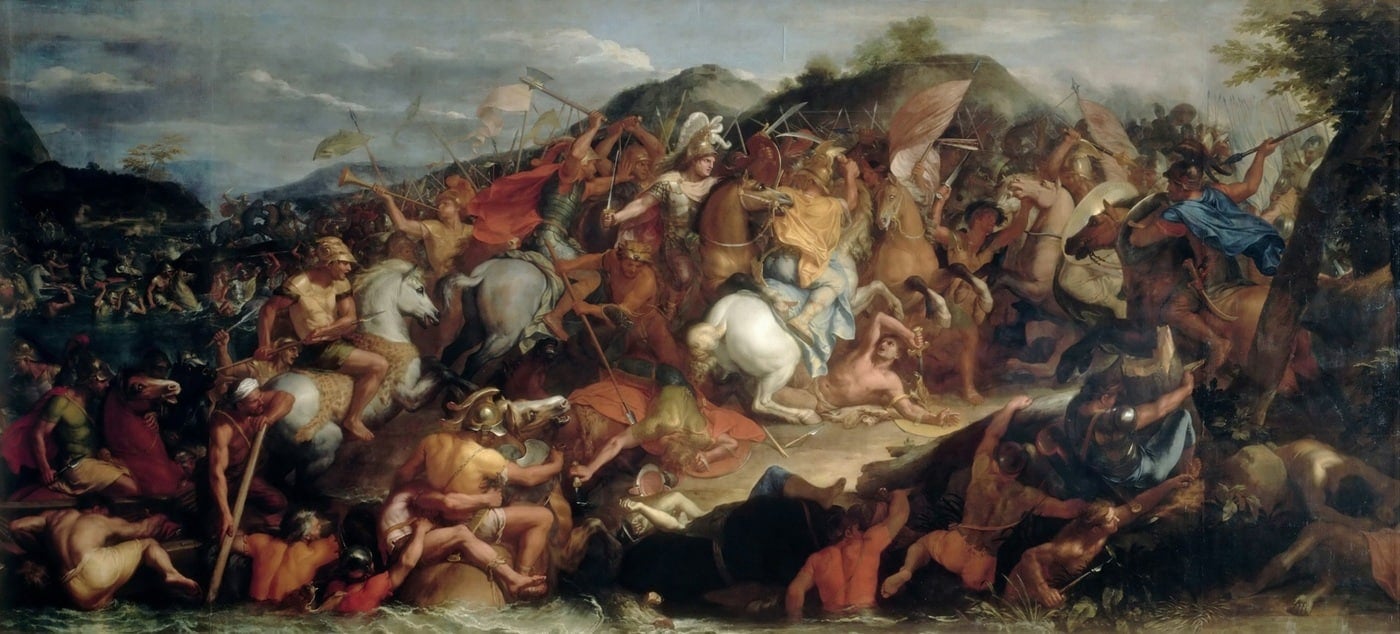
The location is one of the most iconic landmarks in military history, marking the definitive starting point of Alexander the Great’s triumph over the Persian Empire. Public Domain

The Turkish Ministry of Culture and Tourism has officially declared the Granicus Battlefield—where Alexander the Great secured his first major victory against the Persian Empire—a “protected historical and archaeological site.”

According to a ministry announcement and statements shared on social media by Culture and Tourism Minister Mehmet Nuri Ersoy, the decision was based on recent archaeological discoveries and scientific studies in the Biga district of Çanakkale (Dardanelles).

Following extensive field surveys, scientific data evaluation, and the analysis of ancient sources linked to the Battle of the Granicus, the Çanakkale Regional Council for the Conservation of Cultural Property determined that the area meets all criteria for designation as an archaeological site.

The ministry highlighted the location as one of the most iconic landmarks in military history, marking the definitive starting point of Alexander the Great’s triumph over the Persian Empire.

Battle of the Granicus: “A Turning Point in World History”

In a social media post, Minister Mehmet Nuri Ersoy stated:

“We have officially placed the grounds of a battle that reshaped world history under state protection. The Granicus Battlefield, where Alexander the Great achieved his first major victory against the Persians and paved his way into Asia, has now been designated a ‘historical site.’ Located in Biga, Çanakkale, this unique landmark is officially protected in light of archaeological finds and rigorous scientific research. We believe this crucial step will significantly contribute to historical scholarship, boost cultural tourism, and enrich our country’s cultural routes.”

The Battle of Granicus

Battle of Granicus
The Biga River, historically known as the Granicus River, near the site of the Battle of Granicus fought in 334 BC. Credit: Kizildeniz/CC BY-SA 4.0

The Battle of the Granicus, fought in May 334 BC near modern-day Biga in northwestern Turkey, was Alexander the Great’s dramatic opening salvo against the Persian Empire. Having recently crossed the Hellespont into Asia Minor with roughly 32,000 infantry and 5,100 cavalry, the 21-year-old Macedonian king confronted a combined force of local Persian satraps (governors) and highly capable Greek mercenaries.

The Persians, positioned defensively along the steep, muddy eastern banks of the Granicus River, hoped to neutralize Alexander’s aggressive tactical style by forcing him to fight from a disadvantageous position in the water. Rejecting the cautious advice of his veteran general Parmenion to delay the attack, Alexander ordered an immediate, highly risky amphibious assault in broad daylight.

The engagement quickly devolved into a chaotic, brutal melee within the riverbed and up the muddy slopes. Alexander personally led the elite Companion Cavalry from the right wing, instantly becoming a prime target due to his conspicuous, brightly plumed helmet.

The fighting was so fierce that Alexander was nearly killed; a Persian noble shattered his helmet with a battleaxe, and just as another was about to deliver a fatal blow, his captain Cleitus the Black severed the attacker’s arm, saving the young king’s life.

Once the formidable Macedonian phalanx (infantry formation) crossed the river to support the cavalry, the Persian battle lines shattered. The victory was absolute: the Persian leadership was decimated, the surviving Greek mercenaries were ruthlessly executed or enslaved, and the psychological myth of Persian invincibility was shattered, effectively throwing open the gates of Asia Minor to Alexander’s conquering army.

Related: Archaeologists Identify Location of Alexander the Great’s Battle of Granicus

3,500-Year-Old Minoan Royal Road: Europe’s Oldest Paved Path

8 June 2026 at 11:03
Minoan Road Crete
The road showcases the advanced engineering skills of the Minoans. Credits: Public Domain

The Minoan Road, over 3,500 years old, is the oldest known paved road in Europe. It connected the prominent Minoan cities of Knossos, Gortyn, and Lebena on ancient Crete.

Only small sections of the road remain intact today, but this impressive ancient route ran approximately 50 kilometers (31 miles) across Crete.

Built during the height of the Minoan civilization, around 1600 BC, the road showcases the advanced engineering skills of the Minoans, who created an infrastructure that supported both daily life and economic activity across Crete.

The road included side drains to handle water runoff, a feature that helped preserve its structure by preventing water damage. Its condition is remarkable for an ancient road.

It was constructed with a solid, 200 mm (8-inch) thick layer of sandstone blocks bound with a clay-gypsum mortar. This sturdy base layer was then topped with basaltic flagstones, providing a durable surface.

The road included defined shoulders, which may have functioned as pedestrian pathways or for animal traffic, keeping it orderly and safe for movement.

Knossos Palace
Knossos, Crete. Credit Greek Reporter

Mythical King Minos used the road to talk to Zeus

According to legend, King Minos, the mythical king of Crete, son of Zeus and Europa, set out on this road (then a mere pathway) from Knossos, covering a large part of the way to the sacred cave, to meet his father Zeus and speak with him in person. There, he would learn about the mistakes that had been made and receive oracles concerning the best legislation for the future.

He started from Knossos and ended in the stalagmite cave of Dikteon Andron, located on Mount Dikte of the Ida or Ideon mountains of Crete (the current mountain of Psiloritis).

Minoan Road a crucial link in the Minoan civilization

The Minoan Road was a crucial link in the Minoan civilization’s network, facilitating trade, communication, and cultural exchange across Crete. Knossos, one of its endpoints, was the center of Minoan political and cultural life, while Gortyn and Lebena were significant in both Minoan and later Greek periods.

This road not only attests to the Minoans’ ingenuity but also underscores the role of Crete as a cultural and commercial bridge between the civilizations of the ancient Mediterranean.

The Minoan civilization’s infrastructure, especially roads like this, laid the groundwork for the development of European trade routes and road-building techniques in the centuries that followed.

Throughout most of the Bronze Age, the Minoans were the rulers of Crete. Over the course of their civilization, they gradually built up an incredible palace complex at Knossos. This was the most powerful city on the island.

The palace complex at Knossos served temple functions and was also an administrative center.

Bodossaki Foundation Honors Distinguished Greek Scientists in the US

8 June 2026 at 09:33
Bodossaki Foundation
The honorees are preeminent theoretical computer scientist Christos Papadimitriou and internationally renowned economist Pinelopi Koujianou Goldberg. Credit: Bodossaki Foundation

The Bodossaki Foundation announced the two distinguished Greek scientists honored with the Bodossaki Excellence Award 2026 for their pioneering, internationally recognized life’s work: preeminent theoretical computer scientist Christos Papadimitriou and internationally renowned economist Pinelopi Koujianou Goldberg.

The Bodossaki Excellence Award is awarded biennially to Greeks who have dedicated their lives to science. It is accompanied by a cash prize of €100,000 (around $115,500).

In the field of Technological Sciences: The award is presented to Christos Papadimitriou, Donovan Family Professor of Computer Science at Columbia University, USA.

In the field of Social Sciences: The award is presented to Pinelopi Koujianou Goldberg, William Nordhaus Professor of Economics and Global Affairs at Yale University, USA.

The awards will be presented by the President of the Hellenic Republic, Mr. Konstantinos An. Tasoulas, at an official ceremony to be held on Thursday, 25 June 2026, at Megaron the Athens Concert Hall.

“The objective of the Bodossaki Excellence Award is twofold: to serve as our country’s most elevated scientific recognition for Greek scientists who have expanded the frontiers of knowledge, and to showcase crucial role models for the generations to come,” notes Athina Dessypri, President of the Board of Trustees of the Bodossaki Foundation.

“It is with great pleasure that we welcome Ms. Pinelopi Koujianou Goldberg and Mr. Christos Papadimitriou into the prestigious circle of the institution’s laureates.”

About the Bodossaki Foundation laureates’ scientific contributions

Christos Papadimitriou: The Limits of Computation

Christos Papadimitriou has had a decisive influence on theoretical computer science, shaping the language and tools on which modern algorithmic design is based.

Foundations of Complexity: His early research laid the mathematical foundations of computational complexity theory—the study of what computers can and cannot solve efficiently. He pioneered the study of approximation algorithms and computationally intractable problems, such as finding equilibrium points in games.

Interdisciplinary Pioneer: Over the last three decades, he has used computational theory as an interpretive tool for other sciences. He is a founder of algorithmic game theory (crucial to our understanding of the Internet) and has since expanded his research into biology, evolutionary theory, the human brain, and artificial intelligence.

Public Engagement: Beyond academia, he has popularized modern computational theory among students and the broader public through both foundational textbooks and acclaimed novels.

Academic Background: A graduate of the National Technical University of Athens and Princeton, he has taught at Harvard, MIT, Stanford, UCSD, UC Berkeley, and Columbia University. He is a full member of the Academy of Athens, the US National Academy of Sciences, and the National Academy of Engineering.

Pinelopi Koujianou Goldberg: Empirical Analysis of Global Trade and Development

Pinelopi Koujianou Goldberg is a leading researcher in the empirical analysis of global trade policy, focusing on international trade, inequality, and development.

Measuring Globalization: By combining microeconomic data with structural economic models, she has produced critical estimates regarding the impact of globalization on social well-being and the unequal distribution of its benefits both between and within countries.

Nuanced Trade Impacts: Her work has demonstrated that the effects of trade liberalization are not uniform; rather, they depend on market structures, competition, institutional conditions, and domestic policies.

Global Leadership: As Chief Economist of the World Bank (2018–2020), she enhanced research transparency and promoted evidence-based policy design. She has also served as Editor-in-Chief of the American Economic Review and President of the Econometric Society.

Current Focus: Her recent work analyzes shifts in globalization—including the US-China trade war and the resurgence of industrial policy—as well as the role of gender-based distortions in restricting economic growth.

Academic Background: She studied at the University of Freiburg and completed her Ph.D. at Stanford. She has held tenured professorships at Princeton, Columbia, and Yale. She is a member of the US National Academy of Sciences and an International Fellow of the British Academy.

Related: 10 Foundations Join Forces to Help Start-Ups, Non-Profits in Greece

Alpha Omega Council Celebrates 2026 Greek Heritage Night with Boston Red Sox at Fenway Park

8 June 2026 at 08:05
Alpha Omega Council
Approximately 5,000 Greek-Americans turned up for the Greek Heritage Night. Credit: Alpha Omega Council

The Alpha Omega Council of Boston hosted recently its 7th annual Greek Heritage Night at Fenway Park, welcoming an estimated 5,000 Greek-Americans to the stadium to watch the Boston Red Sox take on the Atlanta Braves.

The annual event serves as a major fundraiser for the Alpha Omega Council, a Greek-American organization dedicated to cultivating the ideals of Hellenism, philanthropy, and fellowship. This year’s celebration paid tribute to the memory of baseball legend Harry Agganis, nicknamed “The Golden Greek,” and raised vital funds for the Metropolis of Boston Camp (MBC). Net proceeds from a sold-out block of 2,400 tickets will directly benefit the MBC Gym Field House Project, currently underway at the St. Methodios Faith & Heritage Center in Contoocook, New Hampshire.

A Celebration of Culture on Jersey Street

Alpha Omega Council
Credit: Alpha Omega Council

Greek Heritage Night transformed Fenway Park into a vibrant celebration of culture. Prior to first pitch, a Heritage Pregame Ceremony on Jersey Street featured traditional performances from local Greek dance groups, including the Metropolis of Boston Dance Group, the Boston Lykeion Ellinidon, the Sons & Daughters of Alexander the Great, and the Annunciation Church of Brockton Dance Group.

The festive evening officially kicked off with a stunning rendition of the National Anthem by Dessa Kavrakis, a Grammy Award-winning Greek-American musician and undergraduate student at Harvard University and Berklee College of Music. The ceremonial first pitch was thrown by MBC Program Director Louis Stamoulis, followed by an on-field ceremony recognizing a distinguished group of community leaders and athletes.

Alpha Omega Council
Credit: Alpha Omega Council

“Greek Heritage Night with the Boston Red Sox has become a wonderful tradition for the Alpha Omega Council to promote Hellenism and unite thousands of Greek-Americans from across New England,” said Chairperson Christos Chrisafides. “We are blessed to use this platform to raise both awareness and funds for causes that deeply impact our community. It has been an honor to serve as Chairperson, building on the foundation laid by pioneers like Bill Galatis and the Boston AHEPA. Of course, none of this would be possible without the incredible cooperation of the Boston Red Sox organization.”

Council President Paul Tsitsopoulos added, “We are thrilled to dedicate this year’s proceeds to the new Field House and Gym Project at the Metropolis of Boston Camp. The camp is a sacred space where generations of Greek-American youth have built lifelong friendships while strengthening their roots. This new facility will expand the camp’s capabilities, allowing it to serve even more youth, especially during the winter months.”

Commemorating community heroes

Alpha Omega Council
Credit: Alpha Omega Council

During the game’s “Hats Off to Heroes” segment, Cretan-native and HELPIS founder and president Joyce Deliyiannis received special recognition. The Color Guard—featuring MBC dance group members Alexander Athanasiou, Christopher Chronopoulos, Evan Meltsakos, Nickolas Potamitis, Harry Theodore, and Paul Tsiomplikas—proudly presented the Greek, American, Massachusetts State, and Alpha Omega Council flags.

Distinguished guests in attendance included His Eminence Metropolitan Methodios of Boston, who is celebrating 40 years of spiritual leadership in New England and is the visionary behind the Faith and Heritage Center, alongside Chancellor Father Ted Barbas.

The successful event was orchestrated by the Greek Heritage Night planning committee, led by Chairperson Christos Chrisafides and Co-Chair John Mokas, alongside committee members Paul Tsitsopoulos, Costa Sideridis, Nick Rizos, John Pappas, Teddy Demitriades, George Karalis, Kosta Alexis, and Tom Gatzunis.

The Red Sox game capped off a trilogy of major 2024 sports fundraisers for the Council, following highly successful heritage nights with the Boston Celtics on March 20 and the New England Revolution on March 23.

The Alpha Omega Council

The Alpha Omega Council is a non-profit philanthropic organization based in Boston, Massachusetts. Its mission is to promote patriotism and cultivate the ideals of Hellenism by supporting scholarly, athletic, medical, charitable, scientific, literary, religious, and educational activities throughout New England and the United States.

Comprised of professionals across business, academia, medicine, law, and science, the Council has contributed over $2,000,000 to various philanthropic causes since its inception, in addition to its annual Peter Agris Memorial Journalism Scholarship Awards.

Related: Alpha Omega Council Hosts Record-Breaking 2025 Honors Gala

Greek Diaspora International Festival Returns to Kastellorizo

8 June 2026 at 07:25
Greek Diaspora International Festival Kastellorizo
With the participation of artists from Greece and the diaspora, and with the active involvement of the local community, Near & Far continues to build a new cultural tradition. Kastellorizo. Credit: Greek Reporter

On the remote island of Kastellorizo, the Near & Far Festival, the world’s only cultural event dedicated entirely to the Greek diaspora, returns for its second edition from June 25 to 28, 2026, transforming this historic island into a vibrant crossroads of cultures, people, and experiences.

Spanning four days, this multi-themed festival bridges the “Near” and the “Far,” connecting Greece with its global diaspora, the local community with international audiences, and art with society. The festival is the brainchild of Pericles Kanaris, a New York-based artist with an acclaimed international career. Driven by his vision to create a platform for Greek artists excelling worldwide, Kanaris has turned this ambitious concept into a reality.

Following its spectacular 2025 debut, which local authorities recorded as the highest-attended cultural event in Kastellorizo’s history, the festival returns even stronger, boasting a distinct identity and an expanded program.

Last year’s inaugural event was defined by the exceptional caliber of its performers, the blending of diverse musical traditions, and, most movingly, the active participation of the island’s children—a beautiful legacy that continues this year. Furthermore, a global radio broadcast via ERT’s “Voice of Greece” shattered geographical boundaries, amplifying the festival’s international reach.

In 2026, Near & Far is aiming even higher. This year, the festival aspires to livestream the entire Kastellorizo experience via real-time video to global audiences, forging new bonds with the Greek diaspora and international communities. The event proudly continues its collaboration with the Hellenic Ministry of Culture and the Ministry of Foreign Affairs (General Secretariat for Greeks Abroad and Public Diplomacy).

Concert Program: 4 Themed Nights

Thursday, June 25 | 21:00 Bridges — ERINI “Fos: An Asia Minor Story”

Greek Diaspora International Festival Kastellorizo
Credit: Kastellorizo International Festival

ERINI, based in the United States with roots from Crete and Asia Minor, presents a musical journey blending traditions and contemporary influences, in collaboration with musicians from Greece.

Friday, June 26 | 21:00 Far Voices — Mario’s Toumbas Jazz Trio “East of the Sun”

Greek Diaspora International Festival Kastellorizo
Credit: Kastellorizo International Festival

Pianist Mario Toumbas and his trio present original compositions and jazz standards in an evening that resonates with the global sound of jazz.

Saturday, June 27 | 21:00 Together — Pericles Kanaris Quartet featuring Andriana Babali, George Karavelatzis & Kastellorizo Kids

Greek Diaspora International Festival Kastellorizo
Credit: Kastellorizo International Festival

Original compositions and arrangements by Pericles Kanaris in a special collaboration with the island’s children. Joining them are beloved singer Andriana Babali and oud player George Karavelatzis, a specialist in the local musical tradition of Kastellorizo.

Sunday, June 28 | 21:00 Near Roots — Costa Latsos “Pappou’s Grammophone”

Greek Diaspora International Festival Kastellorizo
Credit: Kastellorizo International Festival

Tenor Costa Latso, born in Australia to Kastellorizian parents and based in Berlin, presents a program moving between opera, Broadway, and crossover, accompanied by accordionist Thanos Stavridis.

Workshops, activities & parallel Program of the Kastellorizo festival

The Near & Far 2026 festival expands beyond concerts, incorporating educational, experiential, and participatory activities for all ages.

Educational & Creative Workshops (Children)

Visual arts workshop with Heike Kummer (June 25, 11:00–13:00)

Music workshop with Mario Toumbas (June 26, 13:30–15:00)

Wellness & Experiential Activities

Meditation and sound healing sessions for adults (June 27 & 28, 11:00–13:00)

Lecture

Talk by Alexandros Kitroeff on the Greek Diaspora (June 27, 20:00–21:00)

A festival that connects

Near & Far is more than just a festival. It is an open platform for connection, where art becomes a catalyst for bringing people, places, and generations together. A space where Kastellorizo is not on the edge, but at the center of a global cultural dialogue.

With the participation of artists from Greece and the diaspora, and with the active involvement of the local community, Near & Far continues to build a new cultural tradition—vibrant, participatory, and outward-looking.

Treasure Hunters in Greece: Digging Through Time

8 June 2026 at 06:52
A treasure hunter in Greece
Thousands of treasure hunters look for past riches in Greece. Photo courtesy of Antonis Vlachos

Armed with metal detectors, treasure hunters roam the landscapes of Greece, where myth and history intertwine. Drawn by whispered legends, ancient texts and the promise of lost riches they delve into the mountains, islands, and forgotten ruins in pursuit of gold, relics and long-lost artifacts.

Treasure hunters are often drawn to locations of great historical significance, with the rugged mountainous regions of Greece being among their preferred destinations. These landscapes, steeped in history and mystery, have long served as silent witnesses to war, upheaval, and human resilience.

Treasure hunters in Greece target mountainous areas

During World War II and the subsequent Greek Civil War (1946–1949), many villagers, fearing for their lives and possessions, resorted to hiding their valuables in secret caches. With no access to banks or secure storage facilities in these remote areas, people buried gold coins, jewelry, and family heirlooms deep within the earth or concealed them inside natural enclosures such as caves, stone walls, and hollowed-out tree trunks.

However, the brutal conflicts claimed countless lives and many of those who had hidden their treasures never survived to retrieve them. Over the decades, these hidden fortunes have become the stuff of local folklore, fueling speculation and inspiring generations of treasure hunters to embark on daring quests to uncover the lost wealth of the past.

Even today, rumors persist of forgotten hoards waiting to be discovered, buried beneath the very ground where history was once shaped by war and survival.

Antonis Vlachos stands out among treasure hunters. Not only does he own one of the few specialized shops in Greece that sell sophisticated metal detectors, but he also collaborates closely with the police to prevent illegal activities, such as the unauthorized excavation of ancient artifacts. For him, treasure hunting is more than just a business—it’s a passion, a lifelong hobby that combines adventure with a deep respect for history and the law.

He is also the only one of the treasure hunters who was willing to speak to Greek Reporter.

“Treasure hunters are in their thousands all over Greece. Perhaps most of the activity takes place the Peloponnese, Epirus, and Northern Greece,” he says.

“People have made money out of this activity and understandably they keep a low profile. It’s like winning the lotto. Nobody wants to reveal their identity and the value of the treasure they found.”

Treasure hunters Greece
A location of a supposed treasure find that was a hoax. Photo courtesy of Antonis Vlachos

The legend of the Ali Pasha treasure

For decades treasure hunters searched for the so-called riches supposedly left behind by Ali Pasha, an Ottoman ruler of Ioannina known for his atrocities (1740–1822).

According to local folklore, Ali Pasha, anticipating his eventual fall from power, concealed vast amounts of treasure in various secret locations across Epirus, Thessaly and western Greece. His personal wealth came from heavy taxation, trade, extortion and alliances with foreign powers (including the British and the French).

Treasure hunters from all over the world began searching for his fortune to no avail. The first organized operation to find the treasure took place in 1913, with the liberation of Ioannina, by an Italian company. For five whole years its workers excavated the surrounding areas without result.

The latest highly publicized case was that of a Greek-Australian treasure hunter, Vangelis Dimas, who financed an excavation to locate the hoard in 2012 in Thessaly.

“It remains a topic of speculation among people, as historically, there is no concrete evidence that such a treasure ever existed,” Vlachos notes.

“Some believe that one of Ali Pasha’s sons took the wealth and fled, but the details of what truly happened—and how—remain unknown. Over time, numerous legends and myths have emerged, though only a small portion of them may be based on actual events,” he adds.

The legend of Ali Pasha is just one of many—“in every coffee shop in the country there is talk of a lost treasure that is supposedly somewhere nearby.”

Maps supposedly showing lost treasures in Greece

Vlachos is not prepared to divulge the value of the treasures that have been unearthed in Greece over the recent decades, but he insists that many people make a good living out of their endeavors. Some people—he says—go to the beaches at night and use metal detectors to search for jewelry lost by bathers in the previous days or even months.

Treasure hunters Greece
A map supposedly showing the location of a treasure in Greece. Photo courtesy of Antonis Vlachos

He reveals that maps of supposed buried treasures are circulating among treasure hunters. They are made in a way that makes them look old, to give the impression that they are authentic. “Various crafty people make them and sell them to naive people, from 1,000 euros. I have even heard a price of 15,000 euros.”

Vlachos also says that most gold hunters operate within a legal framework and that illegals are a minority.

To proceed with an excavation, one must have three permits. A permit to possess a metal detector, then they must obtain a research permit, issued by the Ministry of Culture and the local Antiquities Ephorates. For the permit to be issued, a process that can take from three months to a year, the proposed search area must not be located within a designated archeological site.

If any findings emerge during the search, an excavation request is submitted to the appropriate authorities.

Turkey Denies Its Jets Harassed Aircraft Carrying the Greek Defense Minister to Cyprus

8 June 2026 at 14:24
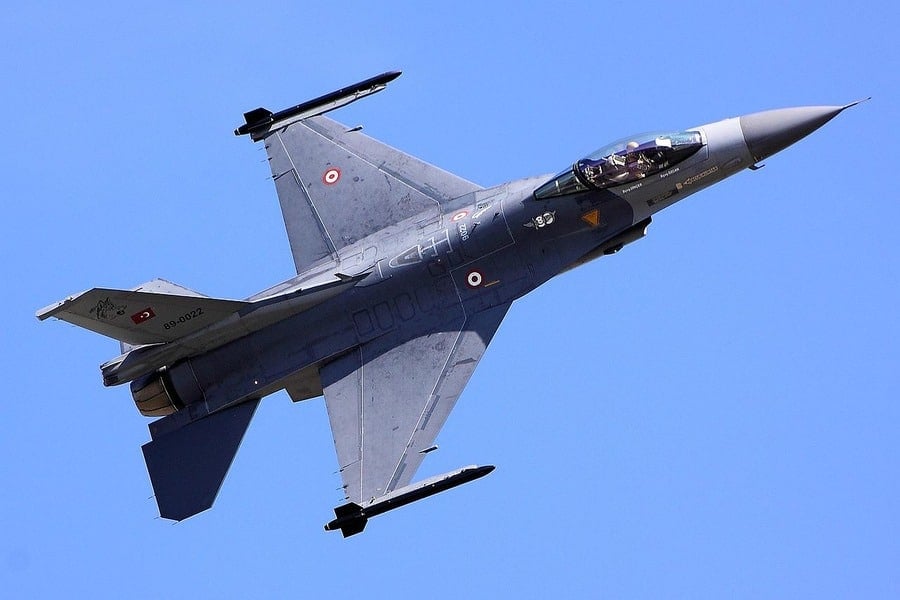
Turkish F-16s reportedly harassed the aircraft carrying Greek and other European ministers
Two Turkish F-16 fighter jets tracked the official state aircraft of the European ministers from a distance. Credit: Wikimedia Commons, Tim Felce, CC BY SA 2

Turkey denied that its jets harassed the military aircraft carrying Greek National Defense Minister Nikos Dendias and his French and Dutch counterparts to Cyprus.

Earlier, it was reported that the “control tower” of the illegal Tymbou Airport in occupied Cyprus attempted to jam the aircrafts’ communications system. Furthermore, according to Philenews, two Turkish F-16 fighter jets scrambled from Tymbou, tracking the official state aircraft of the European ministers from a distance as they headed toward Cyprus.

A statement from the Turkish Presidency said that “claims in certain news media and social media accounts” about such harassment on Sunday and about Turkish warplanes violating Greek airspace were “completely false.”

The statement said that four of the six aircraft heading from Greece to Cyprus “breached the airspace” of Turkish-occupied northern Cyprus, and as a result two Turkish F-16 fighters took off from the ethnically divided island’s north “as a precaution.”

It said the F-16s did not enter Cypriot airspace and “there was no harassment” of the four aircraft.

The incident took place just hours before France and Cyprus were set to sign a Status of Forces Agreement (SOFA) on Monday, which will allow Paris to station military forces on the island.

France and Cyprus to sign military deployment agreement

The agreement will be signed in Nicosia by French Defense Minister Catherine Vautrin and her Cypriot counterpart, Vassilis Palmas. Both ministers are scheduled to attend an informal meeting of the EU Foreign Affairs Council (Defense) on the same day.

The Turkish Cypriot side condemned the agreement as “null, void, and legally invalid.” They expressed concerns that the deal could alter the balance of power on the island, disregard Turkish Cypriot rights, and escalate regional tensions. They further argued that the Republic of Cyprus lacks the authority to sign such an agreement on behalf of the entire island.

Related: Turkey Deploys Six F-16s to Occupied Northern Cyprus

❌