
 Login
Login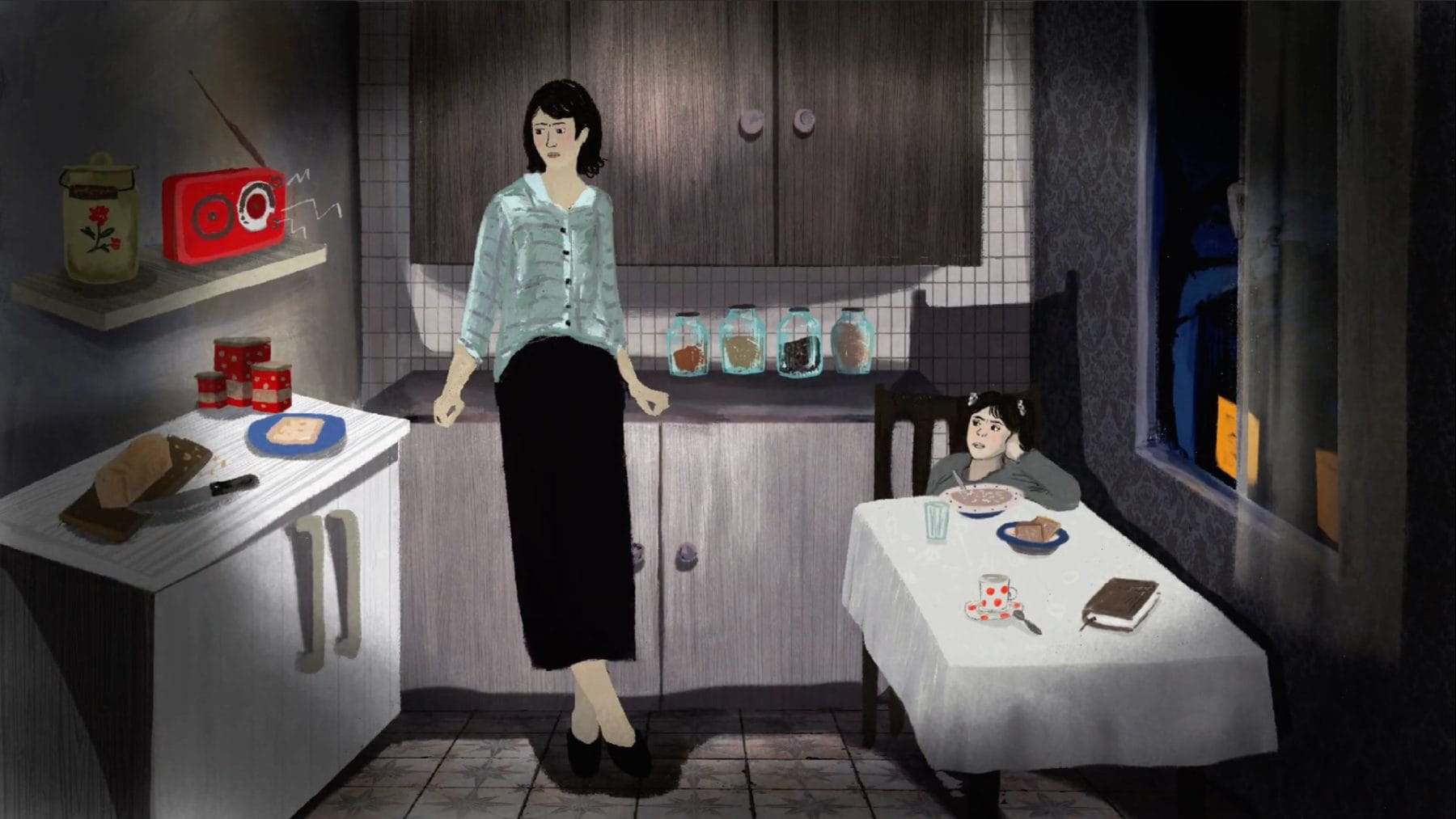

The new samizdat
Sections:
While much of the media industry focused on the churn of headlines, we became increasingly interested in the undercurrents beneath them: the hidden systems, infrastructures and ideologies shaping events across borders and over time.
Again and again, our reporting led us back to the same realization: for a long time, the struggle over information was understood primarily as a question of censorship or access. Who controls information? Who gets to publish? Who gets silenced?
Those questions still matter. But they no longer fully describe the world we live in.
Today, the struggle over information is about who builds the systems through which reality is organized, distributed and trusted. From state propaganda to algorithmic feeds, from platform monopolies to AI-generated noise, the battle is not over facts. It is over the infrastructures that determine which narratives spread, which voices are amplified and which communities remain connected.
Over the past year, these questions led to a collaboration between Coda and The Continent, the pan-African newspaper founded in Johannesburg by Simon Allison and Sipho Kings. Although our reporting emerges from very different histories and geographies, we found ourselves arriving at remarkably similar conclusions about power, fragmentation and the future of journalism in an age of informational instability.
This two-chapter essay is the beginning of that collaboration, and marks the start of a new project called The Atlas. Pilot edition is available here — please feel free to share with friends, family and colleagues, preferably in its entirety.
In Chapter One, I return to the world of my Soviet childhood: propaganda, samizdat and the search for trustworthy signals through noise.
In Chapter Two, The Continent co-founder Simon Allison presents the Parable of Sinn Sisamouth: the story of how some of the greatest songs ever written were nearly lost, and then found, and then lost again.
Taken together, these essays ask what journalism becomes in a world where information is no longer organized primarily to inform, but to capture attention, manufacture reaction and shape perception at planetary scale.
The Atlas grows out of that question.
Chapter One: Through the Static
Whenever I am asked why I decided to become a journalist, an image from my childhood pops into my head. It’s dusk. I am 10, sitting in the kitchen with my mom. She is glued to a shortwave radio. Outside, the Soviet Union is on the cusp of collapse. Georgia, where we are, is on the brink of civil war. We didn’t use the term back then, but fake news was all we got through official channels. Real news — coming from the West — felt like a lifeline. I was in awe of the crackling radio that held my mother’s full attention. I wanted to become that voice.

Years later, I got my dream job at the BBC and spent much of my adult life moving between wars, uprisings and authoritarian states. Again and again, I found myself in places where truth was contested terrain: Baghdad, Damascus, Donetsk, Sana’a. But over time I realized something fundamental had changed. Modern authoritarianism no longer relied primarily on suppressing information. It had discovered something more effective.
Information could simply be drowned out by static.
That realization became stark for me in eastern Ukraine in the summer of 2014. I arrived in a field of bright yellow sunflowers where the bodies from Flight MH17 still lay scattered across the ground. A Russian missile had blown the passenger plane out of the sky, killing all 298 people on board. Yet almost immediately, the Kremlin flooded the information space with competing explanations. It was a Ukrainian fighter jet. A failed assassination attempt on Putin. The plane had been filled with corpses before takeoff. Each theory contradicted the next, but that hardly mattered. The point was not to persuade, it was to exhaust. It was to create so much noise that truth itself began to feel unstable.
Over the following years, I watched versions of the same logic spread far beyond Russia. Social platforms transformed public conversation into a permanent stream of outrage, performance and distraction, collapsing vastly different kinds of information into the same endless feed. War footage, propaganda, conspiracy theories, journalism and gossip all began competing inside systems designed not to inform people but to capture and hold attention.
Noise became the new censorship.
And increasingly, I found myself thinking about the world of my childhood again. Not because history was repeating itself neatly, but because the emotional landscape felt strangely familiar: confusion, exhaustion, distrust, the constant sense that reality itself was becoming slippery. Back then, people searched desperately for clear signals through the static of Soviet propaganda. Today, we are drowning in a different kind of static, but the instinct, the search for clarity feels remarkably similar.
In the Soviet Union, people developed ways of navigating that confusion. Among my strongest memories from that time is the sound of my parents’ typewriter late at night. Friends would pass around copies of banned Soviet literature and my parents would sit at the kitchen table all night, retyping them page by page so they could be shared again. It was my first encounter with samizdat, although I didn’t know the word then.
Looking back now, what strikes me is that samizdat was never simply about forbidden texts. It was about building trusted alternative systems of circulation when official systems had lost credibility.
At Coda, we have spent years building journalism against the logic of noise. We slowed stories down. We followed themes instead of headlines. We built a reporting system designed to connect events across borders and over time, helping readers see patterns instead of fragments. But as our globally distributed newsroom adapted to an increasingly fractured information landscape, it became clear that journalism alone was not enough. Distribution shapes understanding as much as reporting does.
Around the same time, in Johannesburg, Simon Allison, Sipho Kings and their team were building something that challenged many of the assumptions dominating digital media. The Continent, their pan-African newspaper, spreads largely through direct sharing networks: passed from reader to reader rather than pushed by algorithms.
Different histories had brought us to remarkably similar questions. What does journalism look like when trust is collapsing, attention is fragmented and the systems that carry information have themselves become instruments of power?
Out of that convergence came The Atlas: a new publication that brings together Coda’s methodology of following systems across borders and over time with The Continent’s radically distributed model for reaching readers beyond algorithmic feeds.
The Atlas is built on a shared conviction: as fragmentation, distrust and informational overload spread across the world, some of the clearest ways through will come from places that have already spent decades navigating propaganda, instability and contested reality. Places once treated as peripheral are becoming essential to understanding the defining question of this age: how can meaning survive systems designed to overwhelm it.
Chapter Two: The second silencing of Sinn Sisamouth
Imagine if your favourite song disappeared, forever.
Almost every album I have ever loved was recommended to me by my friend An-Rui. A few months ago, he sent me a track by the undisputed King of Khmer Music, the Golden Voice, the Cambodian Elvis himself – Sinn Sisamouth.
I had never heard of him.
I didn’t respond at first, so he nudged me. That night, after the kids were asleep, I put on my headphones, sat in the garden and immediately lost myself in Cambodia’s psychedelic rock scene of the 1960s and ‘70s. I don’t know enough about music to explain exactly what I fell in love with, but within weeks I was, according to Spotify, among the top one percent of Sinn Sisamouth listeners worldwide.
An-Rui had added a note to his recommendation. “the songs are happy but since i know what his fate was and i don’t understand the words, it sounds incredibly sad to me”.
The story goes something like this: A small-town boy with an extraordinary voice moves to the big city, and conquers all before him. He writes hundreds of songs, bridging Khmer musical traditions with new western influences: jazz, rock & roll, bossa nova, blues, the Beatles, and, of course, Elvis Presley. He toured the country. He toured the world. He made music with an actual King, Norodom Sihanouk, and became Cambodia’s most beloved rockstar.
Then, in 1975, the Khmer Rouge seized power. In the course of committing a genocide, the communist regime disappeared Sinn Sisamouth, and banned his music. He has never been seen, or heard from, again.
But his music never died. It lived on brittle records, hidden for generations under floorboards. It lived on scratchy cassettes, passed hand to hand among the diaspora.
It was only decades later that his music was digitised and remastered, and made available on streaming platforms to the likes of me.
When I listen to Sinn Sisamouth, I can’t help but think about how easily we could have lost his masterpieces entirely. And I wonder what else might have been lost that we have not been able to recover.
And then it happened again.
There’s a particular track that I like to play in my car, where I can turn the bass up as high as it goes. I was driving one afternoon and looked for it on Spotify. It was gone, even though the rest of the album was there.
I looked again on my laptop at home. Nothing. Gone from Spotify. Gone from Apple Music. Gone from YouTube. Like it had never been there in the first place. I started to wonder if I had gone crazy, and maybe imagined the song entirely. And then I started to panic: What if I never heard it again?
Eventually, I found a bootleg YouTube version, using a different transliteration of the Khmer title – Kanlang Pnheu Pran, instead of Konlong Phner Bran. Before I tracked that down, I had to wade through dozens of AI-generated Sinn Sisamouth ‘cover versions’, all uploaded to YouTube within the last few months. If I had never heard it before, I would never have been able to tell which was the original.
It’s not unusual for songs to disappear from the Internet, especially when the music is from non-English-speaking countries. I’ve had similar experiences with the music of Sharhabil Ahmed, the Sudanese jazz legend, and Ethiopia’s Tilahun “The Voice” Gessesse.
In fact, it’s not unusual for other kinds of information to disappear from the internet; to be edited after the fact; or to be simply lost among all the digital noise. Digital information is incredibly precarious, and becoming more so by the day. AI slop is taking over social media platforms. Algorithms determine what information we can and can’t see, shaping our cultural and political preferences. And powerful interests are becoming increasingly bold when it comes to brazenly manipulating information in their favour – or, of even greater concern, restricting the flow of information across borders.
Amazon changes the contents of books on people’s Kindles without telling anyone. News websites quietly alter critical stories, post-publication, to remove evidence of wrongdoing (my favourite example: the Financial Express published a story critical of India’s richest family; only to replace it with a glorified press release a few days later. They neglected to amend the URL, however, which contains the original headline). Governments shut down internet access on a whim, or legislate which apps and websites are available to specific populations.
For journalism, this is an existential threat. Our job is not just to hold power to account – it is also to write the first draft of history. But if we can’t preserve that first draft, or distribute it effectively, then what, exactly, is the point?
The Continent and Coda Story are working together to try something different. We want to publish news about the world, produced and verified by humans, that cannot be edited after the fact; and to distribute it in a way that dramatically decreases our reliance on unaccountable algorithms or search engine optimisation. The Atlas — pilot edition available here — is our answer to the precarity of information online. It’s a work in progress.
Stay tuned: if we’re going to succeed, we’ll need your help. And if we do succeed, the secret of our success will be those very same transnational networks that kept the music of Sinn Sisamouth alive. Communities of like-minded people, of friends and families will always find a way to stay connected, no matter how vast the distances between them, or how great the obstacles. So what does a global newspaper look like if we design it with exactly these communities in mind?
As soon as I found that bootleg on YouTube, I ripped an MP3 copy and sent it to An-Rui on Signal. “KEEP THIS SAFE,” I told him. I don’t know what happened to the song on Spotify, or if it is ever coming back. But I can’t take the risk of never hearing that bassline again. And here it is, in case you want to hear it too.
Related Articles
Welcome to the age of exile
Captured: how Silicon Valley is building a future we never chose
The capture of journalism and the illusion of objectivity
The post The new samizdat appeared first on Coda Story.

