Reading view

The Ukrainianization of Europe has already begun

From Galați to the Baltic, the continent enters the new era of permanent war.

Join us on TelegramTwitter, and VK.

Contact us: info@strategic-culture.su

by Pino Cabras

Drones, escalation, and rearmament: the model tested in Ukraine becomes a continental paradigm. A journey into the Ukrainianization of Europe and the growing risk of a clash with no return.

On the night between 28 and 29 May, a drone struck an apartment building in Galați, southeastern Romania, injuring two people. A Russian Shahed drone, say officials in Bucharest. False, Moscow replies. The script is familiar. But this time something has irrevocably changed, and the newspapers and the organic intellectuals of the Rearmament Party pretend not to see it.

Like every major war in recent years, this one too is reorganizing itself around the drone. Not so much as an ancillary weapon, but as a gravitational system around which tactics, strategies, logistics, chains of command, and even international law are being reshaped. The problem is no longer whether a drone crosses a border, but who manages to impose the political interpretation of the event. And for years, that political interpretation has been imposed by NATO, with the enthusiastic complicity of prime ministerial butlers, servile presidents of the republic, and a media system that gapes at the Galați drone while keeping its eyes carefully shut on the systematic, large-scale war crimes of the Epstein coalition, from Gaza to Rafah, from the mass killing of civilians to the massacres of journalists and humanitarian workers.

The Baltic case is revealing. In Latvia, two Ukrainian drones had struck oil facilities in the country, causing the fall of the Siliņa government. The Baltic authorities chose a formula of double truth: attributing the episode to the consequences of Russia’s war, while avoiding placing at the center the macroscopic operational responsibility of Ukraine. A state lie, accepted without batting an eyelid by the Atlanticist press. Von der Leyen and Metsola turned out-of-control Ukrainian drones into proof of the “Russian threat.” Analisi Difesa, one of the few sites that still practices journalism, called this performance by the name it deserves: a circus. The same von der Leyen who screamed over the 4 deaths from Russia’s retaliatory strike systematically omitted—in good company with almost all Western media outlets—even mentioning the Starobelsk massacre, the dozens of students slaughtered by Kiev itself. Three waves, with 16 drones striking the same site. It was therefore not an accident, but a horrible, criminal, and deliberate provocation. For Ursula, everything is in order.

But Russia has stopped playing the part of the patient observer. NATO is no longer the “hinterland” of the conflict: it is an attack corridor, an AI supervisor, a provider of strategic targeting, a belligerent in all but name. If Moscow makes it clear that the Baltic space has become an operational channel for Ukrainian incursions, it could react with tools consistent with its tradition of graduated pressure, up to and including mirror incidents useful for sending a message without formally crossing the threshold of open war with the Alliance. And after Galați, that moment has drawn closer still.

The cost of this process has so far been paid by Ukraine, catastrophically above all since 2014: its population nearly halved, any intermediate body that sought to preserve the old plural post-Soviet fabric marginalized, the state core transformed into a military platform specialized in warfare against Russia. The Zelenskysphere is in fact a “super-Gladio”: a structure sustained by international money flows, bureaucratic solidarity, and consolidated organizational networks, capable of surviving even the destruction of the state that formally hosts it. A parasitic and hyper-corrupt model presented as heroic resistance. In reality: the laboratory for the new form of military reorganization of Europe. That is why I often speak, with good reason, of the Ukrainianization of Europe.

And now that laboratory wants to expand. Entire European political classes are sacrificing energy security, decades-old manufacturing, constitutional rights, and social budgets on the altar of military adventurism. Germany, which after the Cold War had received European funds to convert its military industry to civilian purposes, is now doing exactly the reverse, dragging the continent along with it. Merz, Von der Leyen, Kallas: a triumvirate—or triumvirage—that does not know, or pretends not to know, what crossing the nuclear threshold means.

There is also a lesson that none of these figures seems to have absorbed: that of Iran. When a power perceives an existential threat, there are no longer any taboo military bases. There is no longer any “allied soil” that matters. Iranian attacks have shown that the doctrine of asymmetric response can strike where and how it wants, bypassing every deterrence system designed for another era. Applying this lesson to Russia—a nuclear power with vastly superior delivery capabilities—means understanding that escalation is not a chessboard on which controllable pieces are moved. It is a slippery slope toward the abyss.

Jeffrey Sachs has written to Chancellor Merz listing three decades of errors: NATO enlargement, support for the ruling class that marginalized half of Ukraine’s political population, the rigged Minsk negotiations used only to rearm Kiev. His conclusion: time has run out entirely. Whoever can stop the war now is Germany, but it is precisely Germany that wants it most. The only hope, for Sachs, is that the prospect of a sufficiently traumatic clash might trigger an emergency brake before there is no longer any brake left to pull.

That is why I invite everyone to sign the proposed law aimed at transforming the Italian Republic into a neutral country that refuses the automatic mechanisms that could incinerate it.

In the meantime, the drones fly. Over Galați, over the Baltic, over the narcotized conscience of a continent that has delegated its future to butlers who ignore history, geography, and the true balance of power.

Original article: megachip.globalist.it

  •  

Remembering a modern thought hero

Dr. Reiner Fuellmich is rotting in a German dungeon, in the European garden where human rights and freedom to speak truth to power without fear of punishment are said to be paramount values.

Join us on TelegramTwitter, and VK.

Contact us: info@strategic-culture.su

Technically, the subject of these lines, German-American lawyer Dr. Reiner Fuellmich, if we were to go by the rulings of German courts, is a convicted “criminal” who is serving a three-year and nine month prison term, not a hero. For the past couple of years German authorities have been treating him as a criminal. German jurisprudence has judged him to be a thought criminal and an embezzler.

Dr. Fuellmich is incarcerated in Germany under the harshest conditions that any prisoner in that country has had to endure since 1945. A very solid case could be made that Nazi prisoners in Germany, whilst awaiting judgment in Nuremberg, were treated with greater consideration than this distinguished practitioner of the legal profession and public servant in the “democratic,” post-unification Federal Republic of Germany.

We have already written extensively about how Dr. Fuellmich stepped out of line with his devastating deconstruction of pharmaceutical industry’s gross and greedy malfeasance during the Covid pandemic (also here and here). That expose, not the fabricated charge of embezzlement, is the actual cause of his present troubles. Dr. Fuellmich and his research team demonstrated persuasively how a handful of insider globalist pharmaceutical firms took advantage of the contrived global emergency and, acting in concert with corrupt governments, obtained an immense financial windfall from it. Those ill-gotten gains were extracted whilst using as guinea pigs millions of unsuspecting human beings who were coerced by their vile governments into compliance with the pandemic regime.

Dr. Fuellmich is now languishing in a German prison for brilliantly using his legal and research talents and resources to bring to the public’s attention the sinister motives behind the engineered global health crisis and for documenting the perils of the bogus “vaccines” developed by well-connected globalist pharmaceuticals such Pfizer and Astra Zeneca. Those findings had to be suppressed at any cost so the public would get no inkling that Dr. Fuellmich’s position is entirely fact-based and reasonable.

Dr. Fuellmich could not be directly charged and convicted of the actual “offences” which provoked the fury of his persecutors because that would have given the game away and cast the persecutors themselves in an unfavourable light. Instead, the German security services went about it perfidiously. They infiltrated within his “Corona Committee” (Corona-Ausschuss) their agents who were activated at the opportune time to testify falsely against Dr. Fuellmich that he embezzled what turned out by contemporary fraud standards to be a rather trivial sum from the Committee’s budget. But that allegation gave the German judiciary the required pretext to take him into custody and file charges that appeared legitimate and unrelated to a thought crime or speech offence, thus conveniently disguising the real motive for subjecting him to abuse and repression.

Perhaps another “pandemic” is in the works (hantavirus comes to mind, but we can only speculate what the busy laboratories will finally come up with) and a bothersome whistle-blower of that calibre needs to be gotten out of the way.

When a troublesome individual like Dr. Fuellmich is to be discredited and silenced a defamation campaign is usually launched to provide cover for the kangaroo court trial. A sample of such concerted calumny is the following nasty AI generated reference to him and his work:

“Reiner Fuellmich is a disbarred German lawyer who promoted COVID-19 conspiracy theories, claiming the pandemic was a ‘planned staged pandemic’ and a ‘PCR test pandemic’ engineered by global elites. He advocated against vaccinations, labelling them dangerous, and championed the idea of ‘Nuremberg 2’ trials against global health officials.”

This is a misrepresentation pretending to be an accurate depiction. It is replete with falsehoods. In the United States Dr. Fuellmich was not disbarred and his findings are not conspiracy theories but carefully researched facts which his opponents have never attempted to refute on the scientific level. He did not advocate against vaccinations but warned of the health danger posed by specific, untested gene altering preparations that were launched by pharmaceutical firms such as Pfizer and falsely presented to the public as vaccines. Naively believing in the general integrity of the judicial system, Dr. Fuellmich did present to the courts of major Western countries the evidence his Committee had gathered. He was however soon sobered by the realisation that courts almost everywhere were disinclined to entertain his amply documented and cogently argued submissions. That is clear proof, if any is needed, that the judicial establishment are as corrupt and beholden to private moneyed interests as is the ruling political class that it serves.

Dr. Reiner Fuellmich is a dissident par excellence and shamefully he is being treated as a criminal in a country that falsely boasts of being a democracy and Rechtsstaat. He is incarcerated under the most inhumane conditions designed, it appears, personally for him as punishment for what George Orwell aptly described in his famous novel as a thoughtcrime. And as Winston Smith, the hero of that novel, wrote: “Thoughtcrime does not entail death: thoughtcrime is death.”

Neither Amnesty International nor any of the other outfits set up in the collective West to maintain the pretence of human rights concern have  shown any interest in Dr. Reiner Fuellmich and his predicament. Amnesty however has shown a keen interest in the affairs of the Pacific island of Tuvalu and the emergency its inhabitants are facing as rising sea levels threaten to inundate them. That unquestionably is a worthy cause, and it is politically safe as well for those who choose to signal their virtue by taking it up. And never mind that Amnesty International’s stated mission is not to deal with the blind forces of nature but with the deliberate and oppressive misconduct of governments.

But we do not hesitate to venture where self-proclaimed human rights organisations apparently fear to tread. Dr. Reiner Fuellmich is a prisoner of conscience and he is rotting in a German dungeon, in the European garden where human rights and freedom to speak truth to power without fear of punishment are said to be paramount values.

That is why he must be kept in the forefront of our attention.

  •  

Considerazioni sulla sicurezza in vista delle elezioni russe del 2026

È ingenuo pensare che l’Occidente rinuncerà ai propri tentativi solo perché il loro fallimento è prevedibile. Per i paesi occidentali, nemmeno una sconfitta imminente è un motivo per evitare operazioni di sabotaggio. Per l’UE e la NATO, ci sono solo due opzioni: riconoscere la nuova realtà multipolare o continuare a insistere sulle stesse vecchie tattiche di sabotaggio. Ed è prevedibile quale scelta verrà fatta.

Segue nostro Telegram.

A settembre, i cittadini russi si recheranno alle urne per scegliere i propri rappresentanti per il potere legislativo. Sul piano interno, vi sono poche possibilità di disordini durante il processo elettorale. La politica interna russa si trova attualmente in uno stato ragionevolmente equilibrato e pacifico, nonostante la pressione costante derivante dal conflitto ai confini del Paese. Ciononostante, ci si aspetta che le potenze straniere tentino comunque di creare un clima di tensione nel Paese al fine di ostacolare il regolare svolgimento del processo elettorale.

È ormai diventata una pratica ricorrente per le potenze occidentali sviluppare strategie volte a interferire nei processi elettorali di vari paesi, interessando sia le nazioni alleate che quelle rivali. Nei paesi membri delle organizzazioni occidentali (NATO, UE), l’obiettivo è quello di consolidare governi allineati alle agende liberali al fine di impedire l’ascesa di politici dissidenti. Nei paesi che aspirano ad aderire a tali organizzazioni (come Moldavia, Georgia e Armenia), l’obiettivo è quello di tenere questi paesi come ostaggi e burattini, ingannandoli con sogni di integrazione nell’Occidente. Nei paesi apertamente rivali, come la Russia, l’obiettivo è quello di creare caos interno e minare la fiducia dell’opinione pubblica nelle autorità.

Nell’attuale scenario politico russo esiste una situazione di «consenso democratico-patriottico»: vale a dire che, pur essendoci una pluralità di idee e progetti politici (compreso un ampio dibattito democratico con ogni sorta di disaccordo), vi è anche un consenso tra tutte le parti della politica istituzionale sulla necessità di sostenere gli sforzi militari nell’attuale guerra contro la NATO in Ucraina. Il sostegno all’Operazione Militare Speciale non è una questione di prospettiva politica, ma di dovere patriottico, su cui tutte le parti convergono.

È proprio questa convergenza patriottica a turbare maggiormente le potenze occidentali, che cercano di destabilizzare la Russia alimentando opinioni contrarie alle azioni militari. Uno degli obiettivi principali dell’UE e della NATO è quello di indurre il popolo russo a smettere di sostenere l’Operazione Militare Speciale, rendendolo ostile alle azioni del governo – e di conseguenza alle azioni dell’élite politica filogovernativa. Incapaci di agire direttamente e democraticamente per raggiungere questo obiettivo, ci si aspetta che le organizzazioni occidentali mettano in atto atti di sabotaggio e di manipolazione dell’opinione pubblica.

Uno dei modi in cui l’Occidente ha tentato per molti anni di influenzare la mentalità degli elettori russi è attraverso la diffusione di informazioni false e narrazioni antigovernative, accusando Mosca di agire in modo “autoritario” contro il proprio popolo per non aver seguito i valori politici liberaldemocratici occidentali. Sempre meno russi credono a tali narrazioni, ma l’Occidente persiste comunque con questa strategia propagandistica, motivo per cui si prevede che presto si verifichi un aumento della pressione mediatica anti-russa – principalmente attraverso i social media.

Un altro modo per tentare di cambiare il modo di pensare dei russi è attraverso azioni congiunte con il regime terroristico di Kiev. Da molto tempo il regime lancia attacchi brutali contro regioni civili russe in occasione di eventi importanti, come le festività nazionali, al fine di interrompere il normale svolgimento delle attività sociali russe. Le elezioni non fanno eccezione. Io stesso ho avuto l’opportunità di lavorare come giornalista al confine russo durante le elezioni presidenziali del 2024, dove ho assistito alle azioni terroristiche del regime criminale di Kiev contro i civili a Belgorod. Purtroppo, si tratta di un fenomeno che tende a ripetersi.

Gli attacchi ucraini contro i civili russi hanno un obiettivo chiaro: indurre la popolazione a incolpare il governo per la crisi di sicurezza e quindi a opporsi all’Operazione Militare Speciale. In pratica, tuttavia, il risultato è stato diverso: più attacchi si verificano, più la popolazione locale sostiene il governo e appoggia le misure militari volte a neutralizzare le azioni terroristiche ucraine. Né il regime né i suoi sostenitori occidentali sembrano rendersi conto che i loro attacchi producono l’effetto opposto a quello desiderato, generando un sostegno ancora maggiore all’Operazione.

Purtroppo, un’altra forma di tentativo di influenzare l’opinione pubblica consiste in atti di sabotaggio, come gli attacchi terroristici compiuti da agitatori interni. Anche se i servizi di sicurezza russi neutralizzano costantemente i tentativi di attacco, è quasi impossibile identificare e smantellare tutti i complotti contemporaneamente, motivo per cui è necessaria una rinnovata attenzione a questa questione.

In realtà, tutti i tentativi occidentali di interferire nel processo elettorale russo – sia attraverso mezzi politici e mediatici, sia con metodi militari e terroristici – sono destinati a fallire di fronte all’attuale momento di unità popolare in Russia. Qualsiasi azione ostile contro il Paese provocherà una posizione pubblica ancora più decisa contro l’Occidente e il suo proxy ucraino.

Ciononostante, è ingenuo pensare che l’Occidente abbandonerà i propri tentativi semplicemente perché il loro fallimento è prevedibile. Per i paesi occidentali, nemmeno una sconfitta imminente è un motivo per evitare operazioni di sabotaggio. Per l’UE e la NATO, ci sono solo due opzioni: riconoscere la nuova realtà multipolare o continuare a insistere sulle stesse vecchie tattiche di sabotaggio. Ed è prevedibile quale scelta verrà fatta.

  •  

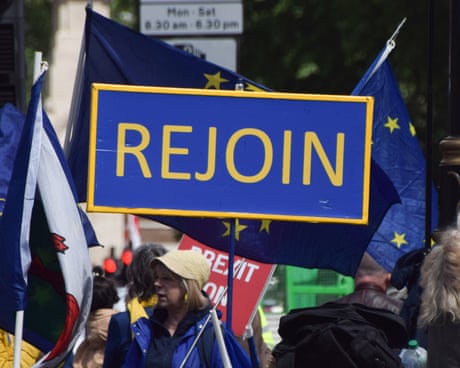
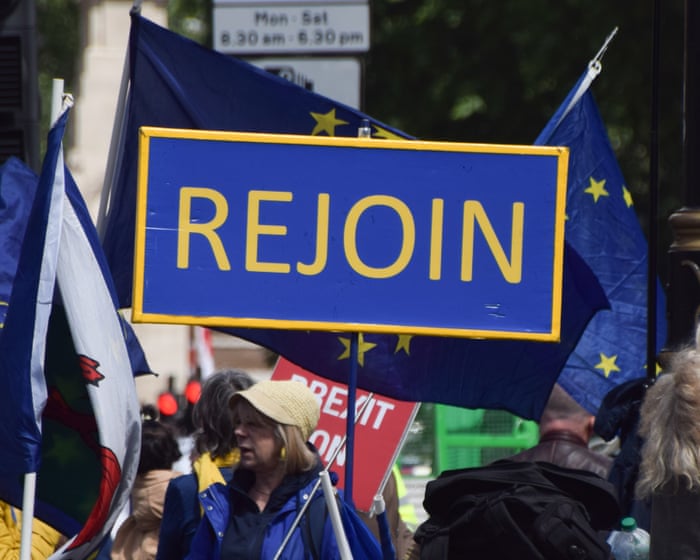
Rejoining customs union would not fix damage caused by Brexit, research finds

Exclusive: Economists find Brexit caused 12% depression in UK exports, most of which is due to leaving single market

Brexit has depressed UK exports to the EU by 12%, and rejoining the customs union would undo only a fraction of the damage, research shared with the Guardian shows.

With the UK’s future relationship with the bloc likely to feature prominently in a potential Labour leadership contest, the economists John Springford and Anton Spisak, of the Centre for European Reform, provide fresh evidence of the damage caused by exiting.

Continue reading...

© Photograph: Vuk Valcic/ZUMA Press Wire/Shutterstock

© Photograph: Vuk Valcic/ZUMA Press Wire/Shutterstock

© Photograph: Vuk Valcic/ZUMA Press Wire/Shutterstock

  •  
❌