Reading view

Germany is leading Europe toward World War III

German Soldiers are seen during a show at Bundeswehr Day on June 6, 2026 in Unna, Germany. The Bundeswehr, the German armed forces, are hosting Bundeswehr Day at locations nationwide in order to give the public insight into Germany's military capabilities. Photo by Hesham Elsherif/Getty Images.

This story originally appeared in Professor Glenn Diesen’s Substack on May 31, 2026. This transcript of his conversation has been lightly edited for clarity and is shared here with permission.

Glenn Diesen: We are joined again by Professor Jeffrey Sachs to discuss an open letter to the German Chancellor Friedrich Merz. You wrote a letter six months ago urging the Chancellor to restart diplomacy after merely four years of having minimal contact with Russia. And now you wrote yet another open letter to the German Chancellor, which has been republished in the German media. I wanted first to ask why you wrote a second letter. What do you feel has changed in the proxy war in Ukraine?

Jeffrey Sachs: To put it simply, things are worse now than they were six months ago. So that was the reason for the letter. The first time I wrote the open letter, which was December 2025, the situation was rather grim. There was warmongering and escalation. And I wrote that Germany had a special responsibility in this context as the most powerful country of Europe, the most populous country of Europe, the country that has lots of historical responsibilities regarding the issues that we’re facing right now.

And in January 2026, just a couple of weeks after that letter was published, I saw glimmers of hope. Chancellor Merz made a couple of speeches where he somewhat surprisingly said in an open way that Russia’s part of Europe, that we’re going to have to live together with Russia after this war, that we need to speak with Russia. And he and President Macron and some other leaders in Europe started to opine in January about the need for some kind of new diplomatic deployment.

And Europe, in a rather clumsy way, started publicly to look for who might serve as a diplomatic envoy. Kaja Kallas is an open Russophobe and every day hate speech comes out of her mouth, anti-Russian speech, making it not really possible for her to fulfill her job, which is to be Europe’s chief diplomat. After January and despite this rather bizarre public process of “Who could serve as our emissary? Should it be former Chancellor Merkel? Should it be former European Central Bank President Mario Draghi? Should it be former Chancellor Schröder?”—nothing has come of it.

But what has occurred is the Ukrainian attack on the girls’ school in Starobilsk with many deaths of young students, and Europe not only not apologizing for that or explaining why a missile went in the wrong direction, but actually in denial or silence about this horrible event. And in response, Russia has said through Foreign Minister Lavrov in a call to US Secretary of State Marco Rubio that Russia is going to attack the capital, Kyiv—it’s going to attack control centers and areas of operations control in the capital. And Minister Lavrov advised the Western diplomats to take care and be safe and clear out. That attack has not come yet, despite the warnings, but I think we can expect that it will.

So these are alarming days, and the response in Europe has been escalatory in rhetoric and non-apologetic for disasters that have clearly occurred. There are many mysterious events of drones in Baltic airspace and a drone hitting in Romania near the border with Ukraine that are contested, unexplained, but also raising tensions and a sense of escalation. The rhetoric out of the Baltic states about perhaps attacking Kaliningrad or being ready to be a base for drone operations into northwest Russia are all shocking. None of this is the kind of behavior that we need in a nuclear age. All of it is incredibly irresponsible, incredibly neglectful of your and my life and those of all the rest of us on the planet. It’s truly shocking.

I put the principal responsibility on Europe. It has not shown the slightest interest, the slightest capacity to engage in any kind of diplomacy except to whine when the US and Russia speak. “Why aren’t we there?” As if a union of 450 million people can’t get its act together to find someone to speak with the counterpart in Russia.

So, I wrote the letter because the situation is alarming now, not because I have any special hopes that what I say will be heeded, but because the situation is completely alarming. And just to underscore the point of the letter, the point I’m making in the letter is not only that diplomacy is correct, but that Germany has a particular responsibility. And before people jump to conclusions, I’m talking about responsibility from 1990 onward. I want to be clear—I’m talking about specifics of the events that are taking place in Ukraine.

And I happen to know firsthand: Germany has cheated on German reunification in a fundamental way, because the terms of German reunification were that NATO would not expand eastward into Central and Eastern Europe, much less to Ukraine and the South Caucasus—Georgia, another aim of this absolutely irresponsible alliance called NATO. And they cheated.

So Germany has a responsibility, given that solemn commitments were made to Germany’s advantage—promises made in February 1990 that, in the context of German reunification to end World War II (believe it or not, because there had been no treaty after 1945 until the Two Plus Four agreement in 1990), Germany would not take advantage of German reunification by moving its military and the NATO alliance eastward. And Germany and the United States cheated.

And this, to my mind, is the underlying reason why tensions rose for more than 30 years. And we saw them happening. And we saw repeated duplicity, because I mentioned six episodes in this letter where Germany did not follow through honestly in a geopolitical context that was completely harrowing.

So it’s not just general historical responsibility. It’s not only that Germany is a big and powerful country, the biggest and most powerful in Europe. It is that Germany gained advantages vis-à-vis Russia starting in 1990 with unification premised on the neutrality of the countries to the east—not extending NATO. And then time and again, Germany violated not only that promise, but many other specific commitments that it undertook.

So as Chancellor of Germany, Merz has a responsibility to know this and to act upon it before Europe is embroiled in another war. And all this chest-thumping of Europe about how saintly Europe is and how evil Russia is, and this one-sided narrative that is unending—“we’re pure, they’re evil, everything they do is unprovoked”—this is what is going to get us to complete and total disaster.

And Europe should start, first of all, by apologizing or expressing condolences for the attack on Starobilsk and for trying to understand what happened. That’s the first. When you kill young girls, whether it’s the United States doing it brutally because of this crazy AI targeting of sites in Iran that killed more than 160 schoolgirls, or what’s happened reportedly in Lugansk in the Starobilsk girls’ school—we need civility, honesty, humanity, decency, discussion, not further warmongering and hate speech.

Glenn Diesen: I tend to not just blame NATO but also see that they have a key role in resolving this, because where we’re sitting now is—I accept that Russia faces an existential threat, or at least sees it this way, with NATO’s expansion. But the ones that can solve this are the NATO countries, because we are the ones who triggered the security competition. If we go back to 2014 when we toppled the government in Ukraine, only a minority of Ukrainians wanted to be a part of NATO. And more importantly, we knew it would trigger a war. This is well documented among Europeans and Americans, and we decided to do it nonetheless. So this is my concern—that we continue to push ahead here. And it’s so interesting and ironic given what former Chancellor Merkel has just said in the last few days again, how much we knew about the provocations that NATO was making.

Jeffrey Sachs: This goes back to 2014 when the US really gave a big nudge in support of a coup that turned Ukraine from a neutral country to a very dramatically pro-NATO expansionist country. But before that coup, six years before, came the decisive moment at the Bucharest NATO summit in April 2008. George W. Bush was pushing—and especially this was because of his neoconservative gang around him, led by his Vice President Cheney—that NATO would enlarge. And the Europeans then knew that this was reckless. The Europeans were actually taken aback just before the Bucharest Summit that the United States would pull such a stunt of trying to demand an enlargement of NATO to Ukraine.

But when they got to the Bucharest Summit, the US was out in full force. George Bush said, “We will commit.” And Chancellor Merkel has written about this in detail. She says that she knew that committing to a timeline for NATO enlargement to Ukraine was tantamount to a declaration of war on Russia, that that’s how the Russians would see it. And she resisted this commitment the first day of the summit. But then the Americans wore her down. And on the second day, while the NATO summit did not commit to a specific timeline—a so-called MAP, which would lay out precisely the timeline—it committed in no uncertain terms to the enlargement of NATO. And she wrote in her memoirs that she knew that such a commitment was reckless.

The reason I say that this is ironic is that just in recent days, she said that she hopes that the war in Ukraine stops sometime within the next ten years. What? Are we so incapable as human beings that we accept a timeline of ten more years of war? Why not ten days or ten hours, understanding all of the mistakes that have been made, and come up with a formula to end this—one that has to be based, by the way, on what was, is, and remains the core issue of this war, which is Ukraine’s neutrality. The West should understand this, absolutely must, or we’ll have a war in Europe.

By the way, I think we’ve talked about it, but I’d like to discuss it in this context because the warmongering and irrationality and danger and recklessness and shallowness and immaturity of the people who lead us is something to behold.

In December 2021, when President Putin, in a final attempt to press the new Biden administration to recognize the commitment of no NATO enlargement that had been made 30 years earlier—and to stop this war that was already seven years underway in Ukraine—put a draft security arrangement between Russia and the United States on the table (I think it’s December 17, if I remember correctly, 2021). There were things that I don’t think NATO would ever have accepted, or the US would have accepted, about rolling back some of the existing placements. But what absolutely struck me as core and correct was that the United States at that point should say, “Yes, NATO’s not going to enlarge any farther into Ukraine,” much less into the South Caucasus region—which, by the way, is still in play by the CIA and the United States even as we speak right now. They’re playing games in Armenia, they’re playing games in the South Caucasus. But let me not digress.

I called the White House and I spoke to the National Security Advisor Jake Sullivan. And I had the most surrealistic conversation imaginable. We spoke for an hour. We spoke in detail. And I said, “Jake, take the deal. Say NATO’s not going to enlarge. It’s a terrible idea. It’s not in America’s interest. It’s not in Ukraine’s interest. Take the deal.” And he said to me, “Jeff, NATO’s not going to enlarge to Ukraine.” I said, “Jake, what?” “NATO’s not going to enlarge.” I said, “Fine, say it.” “No, no, we can’t say it. It’s our open door policy.” I said, “Jake, you’re going to have a war over something that isn’t going to happen?” He said, “Jeff, Jeff, there’s not going to be a war. We’re going to handle this diplomatically. Don’t worry, there’s not going to be a war.”

What can one make of this almost five years later? First, the incompetence is shocking. The brazenness is shocking. The naïveté is shocking. It’s so distressing to have conversations like that. Not one word of it made sense, yet I think that actually was American policy: NATO’s not going to enlarge, but we’re not going to say it, but we’re not going to have a war. Every premise of it made no sense and was quickly disproved.

And here we are with an ongoing war—the war has been since 2014, let’s be clear—but this escalation is since February 2022, so more than four years. And now we hear Chancellor Merkel, who I always liked, I have to say, saying that she hopes it won’t be ten more years. What is it? Is something so wrong in the European mentality that war is so normalized? Europe has been at war essentially since maybe 300 AD, since the Germanic tribes made their incursions into the Roman Empire, and since 476 when Western Europe splintered with the end of the Roman Empire. It’s never been really at peace as it should be. It’s had stretches that were much better.

But what kind of mentality? Rather than saying, “Oh my God, this could go on for another ten weeks—that’s horrible, we have to do something,” it’s “I hope that it won’t go on for another ten years.” It was a rather plaintive, complacent view that we’re just stuck by these forces of opposition and it’s just a long, hard slog. Try sitting down diplomatically. Understand all of the lies that we’ve been told.

And just to say some of the others that I mentioned that are of relevance: in the context of the coup in Maidan, on February 21, 2014, the German Foreign Minister and his French and Polish counterparts negotiated with President Yanukovych that there would be no coup, that President Yanukovych would remain in power under the constitutional order, and that there would be elections late in 2014. The next day, a violent coup came. You might think that the United States and Germany and Poland and France would say, “No, we don’t accept a violent coup. Ukraine is a constitutional democracy and President Yanukovych remains president.” Of course, they didn’t say that. The US was rubbing its hands together—“We got them. Now we’re going to go for NATO enlargement.” Immediately the post-coup regime said, “Maybe Russia shouldn’t stay in Sevastopol and Crimea. Maybe it’s time to unwind that lease for their naval base.” You saw the plot straight out. What did Germany do in that context? Nothing except go along. So that was another cheat.

And then a year later, in February 2015, when the war had already started, when people were dying in the Donbas, Chancellor Merkel and President Hollande personally negotiated an arrangement to end the war called the Minsk II Agreement. And it happened to be based on an idea of autonomy for the ethnic Russian population of eastern Ukraine. And I happen to know also, interestingly, that Chancellor Merkel viewed that as quite a good alternative because she knew about the German enclave in South Tyrol in northern Italy, which is another case of an autonomous region in Europe—at peace, but given autonomy because it’s an ethnically autonomous part of Italy. Italy had taken some territory of the Austro-Hungarian Empire at the end of World War I, a German-speaking part near Bolzano. And they now have autonomy and everything works out well.

So Chancellor Merkel said this is how to end the crisis in the Donbas: give autonomy. Germany negotiated it. Germany presented itself as the guarantor, together with France, in the so-called Normandy process. And Germany reneged on its guarantor role. The United States didn’t like it—“Ukraine should be a unitary state, we don’t want this autonomy, don’t weaken Ukraine.” In other words, don’t follow through on exactly what you’ve just signed and what has just been unanimously ratified by the UN Security Council. Because the Minsk II agreement is not only an agreement inside Ukraine, but it was an agreement endorsed by the UN Security Council and then blown off.

Years later, Chancellor Merkel said, “Yes, we didn’t really expect it to work. It was going to give time for Ukraine to build up its strength.” I actually don’t believe that was her motivation back in February 2015. I think that it’s a strange kind of ex post rationalization of events. But whatever it is, there was duplicity in the end.

All of this, Glenn, is to say: I don’t know whether Chancellor Merz knows any of this. I don’t know whether he does his homework. I don’t know whether he’s aware of history. But he is the Chancellor of Germany and he has a responsibility to all of us, actually, to behave like a responsible Chancellor of Germany. And that means knowing these events, understanding that there’s no purity of the European side, that there’s plenty to talk about for true mutual security in Europe, and that as Chancellor, he has a responsibility not to be a warmonger. He has a responsibility to pick up the phone or dial his Zoom and connect with his counterpart, President Putin.

Glenn Diesen: The lack of diplomacy has been shocking to me, though. The fact that the Germans were guarantors to this unity government in 2014, which they then walked back. The Minsk peace agreement, which they then walked back. Sabotaging the Istanbul peace negotiations, and then of course boycotting diplomacy for four years. It is something unique—this is very deliberate, the lack of willingness to find a solution.

I’m just curious—you say you recently spoke to European leaders and you often engage with them. What do they actually think? Because I know for a fact that something has changed now in Moscow, that this incremental escalation over the past four years has now crossed the line. The Europeans speaking openly about war with Russia, the goal of destroying its energy, striking military installations deep inside Russia, backing this up by mass-producing the weapons, openly saying the intent, developing the capabilities, using their territory for attacks.

Attacking Kyiv in a very brutal way is one path, but I don’t think we have the luxury anymore of just putting the Ukrainians in front of us and letting them die for us, because I think Russia is going to also increasingly deter the Europeans more directly as well. If you see the path we’ve been on for years, it’s hard to ignore that we’re heading towards a war and that we’re still not doing diplomacy. Twelve years of this nonsense, sabotaging every diplomatic path, and we’re still going to do it even now that we might fight the world’s largest nuclear power. It’s beyond insane.

Jeffrey Sachs: It is. And one wonders how this can happen in a world of open communication—our discussion, or the fact that I can still publish an open letter in an important German outlet, the Berliner Zeitung.

But what I can tell you, what we know, is our governments are in a bunker already. They don’t talk. They simply have hunkered down and operate without responsibility. It’s hard to imagine because we have all of the trappings of democracy, the trappings of accountability. But I know, because I experience it daily—you do as well—there simply is no response. If I call a senior official in the European Commission, I don’t get an answer. I don’t get a callback. They know who I am. I’ve been dealing with the European Commission for 40 years in one way or another. I’ve been dealing at a personal level with many of these people. They simply will not speak anymore. Leaders that I know will not speak. They are hunkered down. They cannot defend their position. They cannot rationalize it. All they can do is repeat the narrative.

And that is not an answer—it’s just an explanation of how we go day by day with falsehoods hanging in the air unresolved, because they don’t try to resolve them. There’s no independent look, or commissions, or responses, or answers to parliament. There’s no inquiries into anything. It’s a very, very dangerous situation because the normal processes of truth-telling or analysis—or what diplomats are especially important for, understanding how the other side thinks and explaining that straightforwardly—have broken down.

I was invited by the host country at the time, which was Indonesia, to speak to the G20 foreign ministers. And this was after the invasion. They would not speak with Foreign Minister Lavrov. So here are foreign ministers—it’s their job, that’s why they’re there—and they would not even speak to the Russian foreign minister. This is the idea: you do not engage in actual communication, much less diplomacy and negotiation.

And I don’t really understand what the motivations are. People have various explanations. We can say the publics are disgusted by this, broadly speaking. Merz’s popularity is essentially in complete collapse. Macron’s popularity is essentially in complete collapse. Starmer’s popularity is essentially in complete collapse. It’s not as if these people are expressing the will of their republics—absolutely the opposite.

So then it raises all sorts of questions. Some people say Merz is Blackrock, or he’s the German military industry. Who knows? Seems doubtful to me. I don’t find such explanations so simplistic convincing, but frankly I don’t have a better one, because the behavior is so bizarre at this point, so counterproductive and so dangerous. And we have to keep the core message to the Europeans: you said you were going to talk. You said you were going to find an intermediary. For heaven’s sake, 450 million people in the European Union—find someone and get started.

Glenn Diesen: It’s incredible. Again, we have diplomats who don’t believe in diplomacy, leaders who ignore their basic national interests and seemingly have some contempt for their own public, and journalists who think it’s their job to defend narratives. I think at the end of this, we also risk a legitimacy crisis when, as you said, they’re not actually doing their jobs.

Sources:

  •  

Programa SCRIPT abre candidaturas com 350 milhões de euros para o audiovisual e cinema

Balseiro Lopes IRS Jovem habitação jovem

O Programa de Financiamento à Indústria do Audiovisual e do Cinema (SCRIPT) abre na próxima segunda-feira, 29 de junho, as candidaturas aos incentivos a fundo perdido, num investimento global de 350 milhões de euros ao longo de quatro anos, anunciou hoje o Governo.

O novo programa, aprovado no final de fevereiro, unifica e reforça os anteriores mecanismos de apoio à produção audiovisual e cinematográfica, integrando os antigos cash rebate e cash refund num modelo “mais simples, coerente e competitivo”, com critérios de avaliação harmonizados.

De acordo com o comunicado conjunto dos ministérios da Presidência e da Cultura, Juventude e Desporto, o SCRIPT prevê 200 milhões de euros em incentivos a fundo perdido e uma linha de garantia de 150 milhões de euros para apoio ao crédito na produção audiovisual e cinematográfica.

A primeira fase de candidaturas para médias produções decorre entre 29 de junho e 13 de julho. As grandes produções podem candidatar-se a partir da mesma data, com o sistema a funcionar de forma contínua.

O programa será gerido pelo Instituto do Cinema e do Audiovisual (ICA), em articulação com a estrutura de missão #PortugalMediaLab e com o Turismo de Portugal.

“O SCRIPT pretende reforçar a competitividade da indústria audiovisual e cinematográfica portuguesa, promover a internacionalização do setor, atrair grandes produções estrangeiras e contribuir para a sustentabilidade da comunicação social”, refere o comunicado.

A medida complementa outras iniciativas governamentais, como a revisão do regime do mecenato cultural, que passa a abranger projetos editoriais de interesse cultural.

O Governo considera o SCRIPT uma “aposta estratégica” para criar condições para produzir mais, atrair investimento, gerar emprego qualificado e reforçar a presença de Portugal nos mercados internacionais.

  •  

Após problema com visto, mãe de Vozinha vai à Copa do Mundo; entenda o caso

A mãe do goleiro Vozinha, herói de Cabo Verde, poderá acompanhar o filho na Copa do Mundo neste fim de semana após uma intervenção do Departamento de Estado dos Estados Unidos e do líder da minoria democrata na Câmara, Hakeem Jeffries.

Jeffries informou em comunicado divulgado nesta quarta-feira (17) que a mãe do jogador receberá o visto a tempo de assistir à partida entre Cabo Verde e Uruguai, marcada para domingo (21), em Miami.

“Todas as taxas foram dispensadas de acordo com a política oficial”, afirmou Jeffries. “Os preparativos de viagem já estão sendo feitos para que mãe e filho se reencontrem em Miami.”

Um representante do Departamento de Estado confirmou que a equipe consular americana em Praia, capital do Cabo Verde, mantém contato direto com a mãe de Vozinha e está prestando toda a assistência necessária para viabilizar a viagem.

Mãe de Vozinha perdeu estreia de Cabo Verde na Copa

Após o surpreendente empate de Cabo Verde com a Espanha na segunda-feira, Vozinha revelou que sua mãe não conseguiu comparecer à partida por dificuldades relacionadas ao processo de obtenção do visto.

“Ela não conseguiu estar aqui por causa do visto… do dinheiro que temos de pagar pelo visto”, disse o goleiro aos jornalistas após o jogo. “Não conseguimos resolver tudo a tempo e eu gostaria que ela estivesse aqui.”

Cabo Verde está entre os 50 países cujos cidadãos, segundo regras da administração Trump, precisam pagar uma caução de até US$ 15 mil. Pela cotação atual, o valor corresponde a cerca de R$ 82,5 mil.

A exigência foi criada com base em alegações de altos índices de permanência irregular nos Estados Unidos após o vencimento dos vistos concedidos aos visitantes desses países.

  • 1 de 6

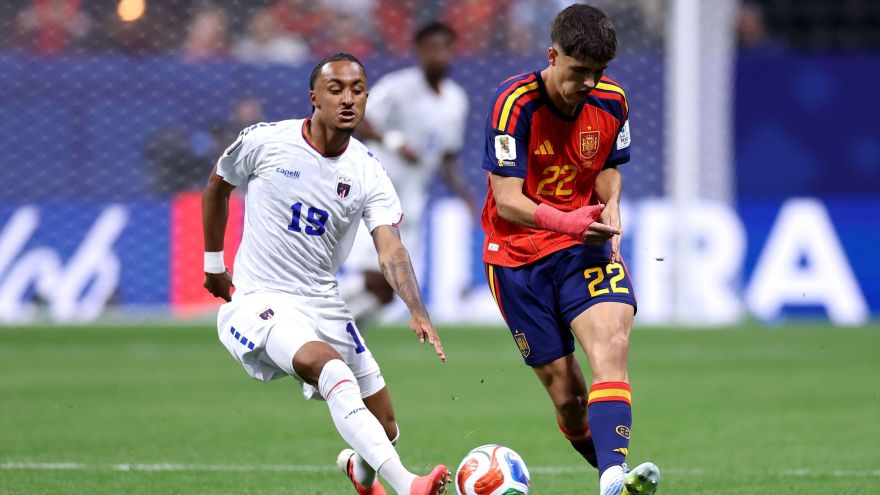
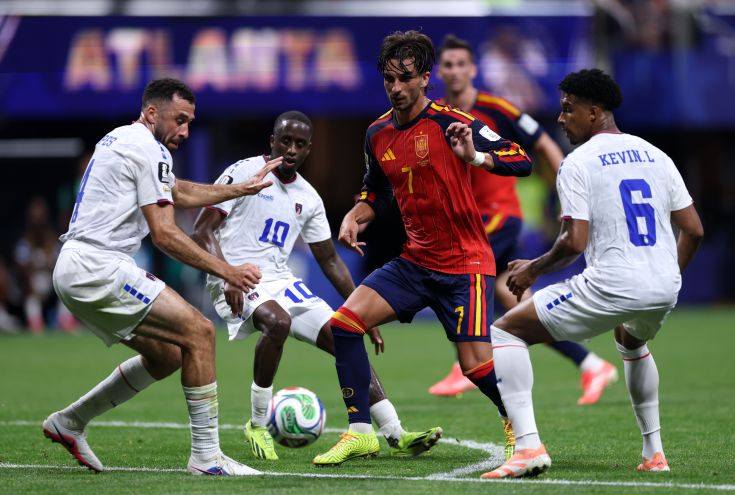
    Pau Cubarsi toca a bola em Espanha x Cabo Verde • Photo by Buda Mendes/Getty Images

  • 2 de 6

    Ferrán Torres em jogo contra Cabo Verde • Photo by Mattia Ozbot/Getty Images

  • 3 de 6

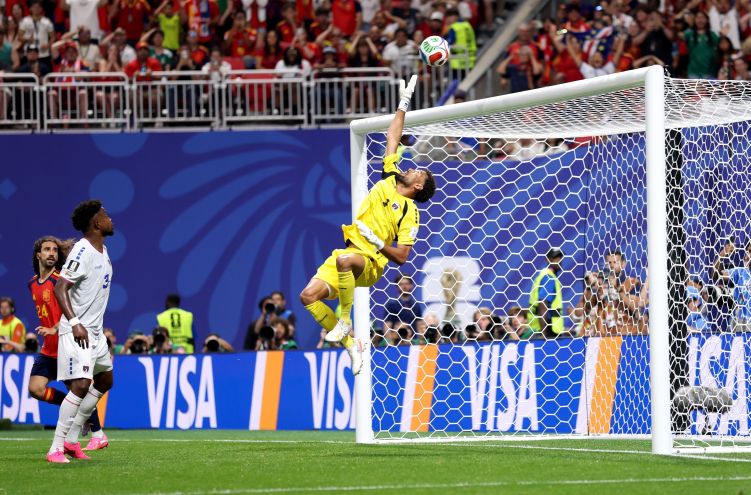
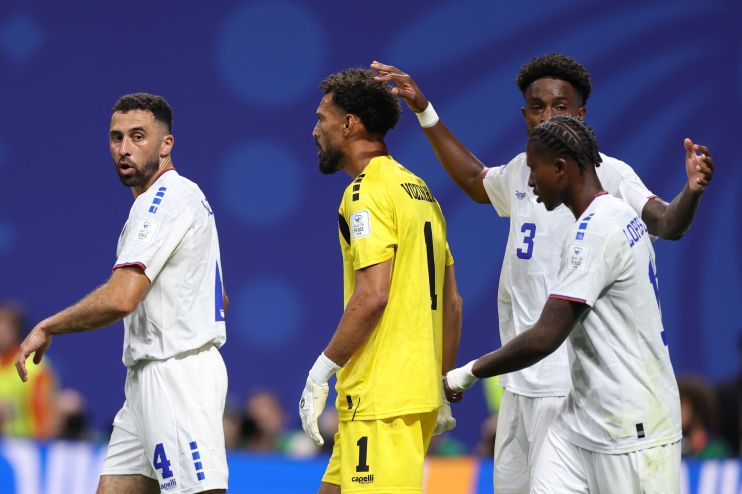
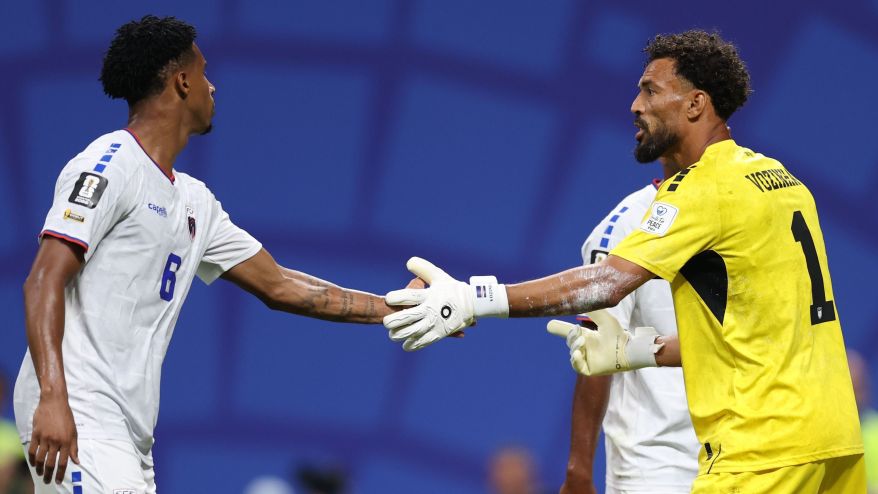
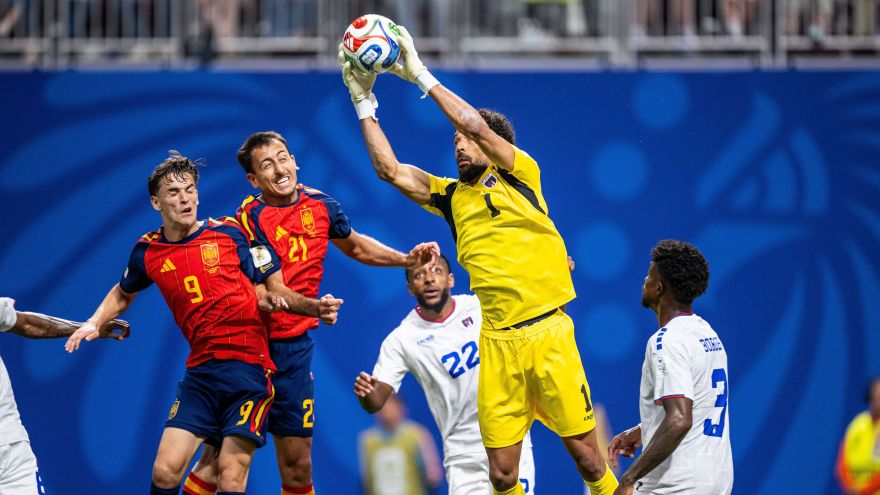
    Vozinha fez grande jogo contra a Espanha • Photo by Maddie Meyer - FIFA/FIFA via Getty Images

  • 4 de 6

    Goleiro Vozinha, de Cabo Verde, em ação contra a Espanha pela Copa do Mundo • FIFA via Getty Images

  • 5 de 6

    Goleiro Vozinha, de Cabo Verde, em ação contra a Espanha pela Copa do Mundo • FIFA via Getty Images

  • 6 de 6

    Vozinha foi o destaque da partida entre Espanha x Cabo Verde • (Photo by Marvin Ibo Guengoer - GES Sportfoto/Getty Images)

Departamento de Estado esclarece regras para familiares

Questionado sobre as declarações de Vozinha, um representante do governo americano afirmou não haver registro de um pedido de visto em nome da mãe do jogador até aquele momento.

O mesmo representante ressaltou que a exigência da caução é dispensada para familiares de atletas participantes da Copa do Mundo.

“O Departamento de Estado dos Estados Unidos não tem registro de pedido de visto dessa pessoa. Todos os familiares de jogadores têm direito à isenção da caução, e o Departamento está entrando em contato com a família para auxiliar nos serviços consulares”, afirmou.

Uma fonte com conhecimento do caso acrescentou que a mãe de Vozinha atualmente não possui passaporte válido e está em processo de obtenção do documento.

Regras da Copa do Mundo preveem isenção de taxas

Em seu site oficial, o Departamento de Estado informa que a exigência da caução não se aplica a atletas, integrantes de delegações, treinadores, profissionais de apoio e familiares imediatos de seleções participantes da Copa do Mundo de 2026.

A medida vale para cidadãos de países classificados para o torneio que comprovem cumprir todos os requisitos necessários para a emissão do visto.

A repercussão do caso aumentou ainda mais a visibilidade de Vozinha, goleiro de 40 anos que atua na segunda divisão de Portugal e se tornou um dos personagens mais comentados do início da competição.

Na estreia histórica de Cabo Verde em Copas do Mundo, o veterano realizou sete defesas diante da Espanha e foi decisivo para segurar um empate diante de uma das favoritas ao título.

Vozinha vira fenômeno após atuação contra a Espanha

Muitos esperavam uma derrota contundente de Cabo Verde, semelhante ao 7 a 1 aplicado pela Alemanha sobre Curaçao na estreia da seleção caribenha no último domingo.

No entanto, Vozinha e o sistema defensivo cabo-verdiano neutralizaram o ataque espanhol durante os 90 minutos e garantiram o resultado mais importante da história do futebol do país.

A atuação provocou comemorações em uma nação de aproximadamente 530 mil habitantes e transformou o goleiro em uma celebridade internacional praticamente da noite para o dia.

Impulsionado também por incentivo da CazéTV, o perfil de Vozinha no Instagram saltou de cerca de 50 mil seguidores para mais de 9,7 milhões até a tarde de terça-feira.

Cabo Verde volta a campo às 19h (de Brasília) deste domingo, quando enfrentará o Uruguai, em Miami, pela segunda rodada da fase de grupos da Copa do Mundo.

Com Messi no topo, veja como está a artilharia histórica da Copa do Mundo


  •  

Esposa de Militão fala de ataques durante gravidez: “Nunca vi tanto ódio”

A influenciadora Tainá Militão, 29, comentou sobre os ataques que tem recebido durante sua gravidez. O bebê é fruto de sua relação com Militão, que atualmente joga no Real Madrid.

A criadora de conteúdo abriu uma caixinha de perguntas de seus seguidores no Instagram e falou sobre os ataques de ódio que tem recebido durante a gestação. Ela refletiu que o público não precisa gostar de tudo sobre ela, mas que precisa haver limites e que os comentários maldosos se intensificaram agora que está grávida.

“Ok, você não gostar de mim, da minha pessoa, mas tem limites e muitas pessoas ultrapassam isso. Nunca vi tanto ódio contra uma criança que nem nasceu“, refletiu Tainá, e lembra que, antes de engravidar do atleta, seus outros filhos, Helena e Mateu (frutos da relação com Leo Pereira), também são vítimas de falas maldosas de internautas.

“É uma coisa que não vou mais tolerar. Tive uma reunião ontem com meu advogado, para mim ultrapassa os limites. Você pode discordar sem cometer um crime ou disseminar ódio”, acrescenta, sobre tomar medidas cabíveis para controlar a situação.

“Eu só fico pensando que, se essas pessoas têm ódio de uma criança, um anjo enviado por Deus, elas devem ter uma vida muito amarga. Elas não devem ser felizes, tenho certeza absoluta. Ficam atacando uma gestante, um bebê”, conclui Tainá.

Glória Pires tem quatro filhos de dois casamentos diferentes; conheça

*Publicada por Larissa Santos

  •  

Lula descarta drama após empate do Brasil e cita apoio a seleções africanas

Após participar da Cúpula do G7 nesta quarta-feira (17), na Suíça, o presidente Luiz Inácio Lula da Silva (PT) conversou com jornalistas e avaliou o empate da Seleção Brasileira com o Marrocos na estreia da Copa do Mundo de 2026.

Para o presidente, o resultado é compreensível por se tratar, segundo ele, da seleção mais forte do grupo do Brasil. Por isso, descartou ver o 1 a 1 como motivo de preocupação.

“Todos nós esperamos que a gente ganhe o jogo. Mas também um empate no primeiro jogo… Marrocos é o melhor time do grupo que tem o Brasil. Então empatar com o Marrocos não é nada que preocupe”, afirmou.

A seleção marroquina ocupa a sexta posição no ranking da Fifa, à frente de equipes como Portugal, Holanda e Alemanha. Esta é a sétima participação do país em Copas do Mundo, sendo a melhor campanha na edição de 2022, no Catar, quando alcançou a semifinal.

Segundo Lula, mais surpreendente foi o empate sem gols entre Espanha e Cabo Verde. Apontada como uma das favoritas ao título, a seleção espanhola teve atuação apagada e não conseguiu furar a defesa cabo-verdiana, que mostrou resiliência até o apito final.

Lula também declarou simpatia pelas seleções menos tradicionais em Copas do Mundo, especialmente as africanas. Segundo ele, é positivo ver equipes com menor protagonismo histórico dificultando a vida das favoritas.

“Toda vez que um time mais fraco faz um time mais forte sofrer eu fico feliz. A gente tem a tendência de torcer por times mais fracos, sobretudo time africano. Alguns times nunca ganharam uma Copa, outros nunca participaram. Mas vamos ver o que vai acontecer.”

Ao comentar as perspectivas da Seleção Brasileira para o restante do torneio, Lula demonstrou cautela, mas lembrou uma máxima popular sobre a equipe nacional.

“Dizem que toda vez que o Brasil sai muito desacreditado ele ganha a Copa, vamos ver”, concluiu.

Pesquisa: cresce o número de torcedores que acreditam no hexa

  •  

Nova tecnologia permite ver jogos em jatinhos em alta velocidade

Nova tecnologia de satélite em baixa órbita permite que passageiros de aviação executiva, como jatinhos de alta velocidade, acompanhem partidas de futebol em tempo real. Durante a Copa do Mundo, a tecnologia vem redefinindo os padrões de conectividade no setor aéreo. O sistema Gogo Galileo já está sendo implementado em aeronaves do Brasil e da América Latina pela Líder Aviação.

A solução permite conexão estável e de alta velocidade durante o voo, sem que haja interferência no sinal no meio das partidas. A tecnologia permite transmissões ao vivo, videoconferências, streaming de conteúdo e acesso contínuo à internet, independentemente da rota.

A busca por melhor conectividade tem sido um investimento estratégico para proprietários de aeronaves e companhias aéreas, sobretudo durante a Copa do Mundo e grandes eventos esportivos. Atualmente, os passageiros demandam a possibilidade de permanecer conectados em tempo integral, durante o voo.

O investimento para a instalação de um sistema desse tipo, segundo a Líder Aviação, gira em torno de US$ 300 mil (equivalente a R$ 1,5 milhão). O Gogo Galileo possui compatibilidade com grande parte dos modems já instalados em aeronaves brasileiras, encurtando o período de instalação, que pode levar de 15 a 20 dias.

Conheça aplicativo da Nasa que transforma nomes em imagens de satélite

  •  

What Color Is the Reflecting Pool? An Investigation. (Matt Viser/The Atlantic)

Matt Viser / The Atlantic:
What Color Is the Reflecting Pool?  An Investigation.  —  Workers on the National Mall, desperate to turn the Reflecting Pool to President Trump's preferred shade of blue, poured jug after jug of hydrogen peroxide into the water yesterday morning.  As they did so, members of the National Guard, deployed to clean up crime, looked on.

  •  

Saiba por onde anda Mick Jagger na estreia da Inglaterra na Copa

O nome do cantor Mick Jagger, 82, que ficou conhecido desde a Copa do Mundo de 2010, na África do Sul, por seu “pé-frio”, sempre volta à tona quando a Inglaterra está em campo. Apesar de sua paixão pelo futebol, o astro dos Rolling Stones sempre vê a derrota dos times que apoia quando está no estádio. Diante da fama de azarado, fãs se perguntaram onde estaria ele na estreia da seleção inglesa na tarde desta quarta-feira (17), contra a Croácia.

Na última Copa do Mundo, no Catar, os ingleses destacaram a relação entre a ausência de Jagger e a primeira vitória da seleção inglesa no torneio, em goleada por 6 a 2 contra o Irã. Desde então, a lista das equipes “amaldiçoadas” pela torcida do artista só aumenta: Argentina, Portugal e Brasil estão entre as seleções favoritas de Jagger.

Uma de suas aparições mais emblemáticas foi a semifinal entre Brasil e Alemanha. Ao lado do filho Lucas Jagger, de 26 anos, filho do cantor com a apresentadora Luciana Gimenez, ele presenciou a seleção brasileira ser goleada por 7 a 1 pelos visitantes. “Eu posso ser responsável pelo primeiro gol alemão, mas não pelos outros seis”, brincou Mick Jagger em entrevista ao The Sun na época.

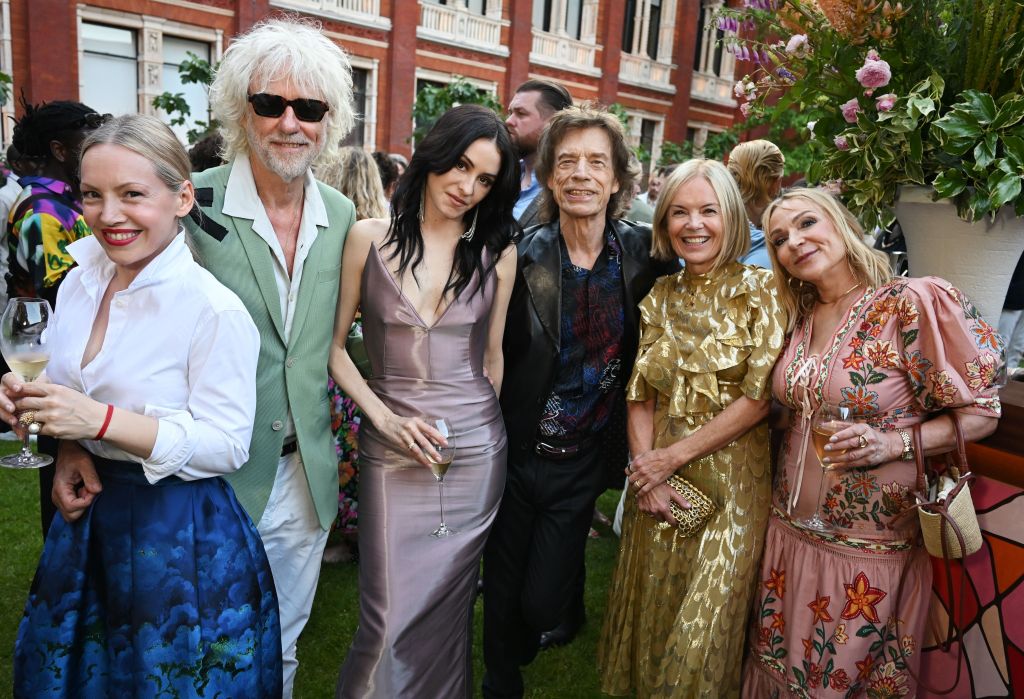
Apesar das especulações, nesta quarta (17), o cantor foi visto na 10ª edição do baile de gala beneficente, organizado pelo Victoria and Albert Museum (V&A) em Londres. De roupa social, o artista está longe de estar “caracterizado” para acompanhar uma partida de futebol.

Mick Jagger está longe dos gramados na estreia da Inglaterra na Copa

Fãs questionam presença de cantor que tem fama de “pé frio” durante estreia da Seleção Inglesa na Copa do Mundo • Dave Benett/Getty Images for V&A

Mick Jagger diz preferir doar herança à caridade em vez de aos filhos

  •  

Cristiano Ronaldo manda recado após empate de Portugal e RD Congo na Copa

Portugal, uma das favoritas ao título da Copa do Mundo de 2026, estreou decepcionando com um empate por 1 a 1 com a RD do Congo. Astro do time, Cristiano Ronaldo fez uma partida abaixo do esperado e se manifestou sobre o resultado nas redes sociais.

Em postagem, o camisa 7 português destacou que a estreia não era a esperada por eles, mas que nada está acabado e ele já mira o jogo seguinte. A mensagem buscou levantar o moral da equipe e da torcida.

“Não era o arranque que queríamos, mas isto está longe de ter acabado. Cabeça levantada e foco no próximo jogo”, publicou o craque. Portugal saiu na frente de RD Congo, mas sofreu o empate no último lance do primeiro tempo e teve pouca criatividade para buscar a vitória na etapa final.

Desempenho de CR7 e próximos desafios de Portugal

Cristiano Ronaldo foi o capitão de Portugal e atuou do início ao fim, mas não teve grande atuação. Ele pouco participou do jogo e, nas duas oportunidades de finalização, errou o alvo, demonstrando um dia atípico para o artilheiro.

Em busca do tão sonhado título Mundial, Portugal está no Grupo K da competição.

Com o resultado, Portugal e RD Congo somam um ponto na estreia e dividem a liderança provisória do grupo. Ainda hoje, Uzbequistão e Colômbia estreiam na Copa do Mundo de 2026, às 23h (de Brasília), no Estádio da Cidade do México, também pela primeira rodada do Grupo K.

VEJA OS MELHORES MOMENTOS:

Com Messi no topo, veja como está a artilharia histórica da Copa do Mundo

  •  

Danilo avalia situação física de Neymar: “Precisamos lidar com a realidade”

Danilo, lateral-direito da Seleção Brasileira, comentou sobre a atual situação física de Neymar. O atacante de 34 anos realizou sua primeira atividade com o grupo nesta quarta-feira (17), participando do trabalho de aquecimento e do bobinho após o treinamento.

Neymar não disputa uma partida há um mês. Ele sofreu uma lesão de grau 2 na panturrilha direita antes da convocação final para a Copa do Mundo. Mesmo assim, foi mantido no grupo.

A expectativa da comissão técnica é que o jogador siga o processo de transição para se recuperar 100% e ficar à disposição do técnico Carlo Ancelotti na próxima semana.

“É chover no molhado. Claro que precisamos lidar com realidade e não questões hipotéticas. O que esperamos é que ele esteja bem fisicamente, consiga se recuperar e contribua como sempre fez, seja com cinco, dez, 20, meia hora. A qualidade dele já foi provada por onde passou”, afirmou Danilo.

Dificilmente o camisa 10 entrará em campo contra o Haiti na próxima sexta-feira (19). Segundo apuração da CNN, a chance de Neymar estar à disposição na segunda rodada do Mundial é considerada baixa.

Seleção Brasileira na Copa do Mundo

O Brasil ocupa a terceira posição do Grupo C, com apenas um ponto somado. Escócia lidera, com três, e Marrocos está em segundo lugar, também com um ponto. A equipe africana se sobressai em relação aos brasileiros pelo número de cartões amarelos (2 a 0 para os sul-americanos).

Neymar tentará o título inédito na carreira em sua última disputa de Copa do Mundo. Ele disputou a competição três vezes: em 2014, no Brasil, em 2018,na Rússia e em 2022, no Catar.

A Seleção Brasileira enfrenta o Haiti na sexta (19), às 21h30 (de Brasília), no Lincoln Financial Field, na cidade da Filadélfia, nos Estados Unidos.

Veja o ranking dos elencos mais valiosos da Copa do Mundo

  •  

Trump and Vance’s spin on the Iran agreement is completely incoherent

In his appearance on the Tuesday edition of “Fox and Friends,” Vice President JD Vance had a complaint: “Iranian propaganda,” he said, is misleading observers regarding the memorandum of understanding, or MOU, signed by the United States and Iran earlier this week.

“Some elements in their society,” Vance said, “are trying to sell this deal as positively as possible to their domestic audience.”

Ironically, Vance’s complaint was an accurate description of the failing sales pitch that he and Trump have made for the deal. The White House agreed to this ceasefire extension that met none of its prewar objectives while providing enormous financial concessions to Tehran. Now, the administration is desperately trying to argue otherwise. Quite simply, Trump got played by the Iranians, and no one is buying his spin job. 

Before the conflict began, the Strait of Hormuz was open and free of charge. This agreement simply reaffirms the prewar status quo.

The most telling sign that the ceasefire deal is a dud is the White House waited until Wednesday to share the text of the MOU. It wasn’t sent to Congress; even the Israeli government, which fought alongside the U.S., struggled to get a copy. As Nevada Sen. Jacky Rosen noted, if the deal was “so great, wouldn’t the president have printed it on gold leaf paper and sent it out to all of us?”

Before finally sharing the text, the White House released a set of talking points on Tuesday that only highlighted the deal’s failings and the calamitous decision to go to war in the first place.

For example, the first talking point says, “Iran will never have a nuclear weapon. President Trump drew that line and enforced it when no other president would.” 

This language is purely aspirational, lacking any indication of how the U.S. will ensure that Iran will not have a nuclear weapons. And let’s compare that sentence with a sentence from the first paragraph of the Joint Comprehensive Plan Of Action, or JCPOA, signed by the Obama administration and Iran in July 2015: “Iran reaffirms that under no circumstances will Iran ever seek, develop or acquire any nuclear weapon.”

The key difference between that agreement and the MOU is that the JCPOA had a host of verification and enforcement provisions, to which Iran was adhering before Trump pulled the U.S. out of the deal in 2018. While the MOU allows for negotiations between the two countries on the nuclear issue, the U.S. now has far less strategic leverage. According to Vance, the MOU deal means Iran will allow nuclear inspectors back into the country. Aside from the fact that nuclear inspections were a crucial element of the JCPOA, there’s nothing in the MOU to support the vice president’s claim. Why would the Iranian government offer such a concession when its leaders can play for time, fully aware that the U.S. has no appetite for another wave of military strikes?

The White House’s second talking point was, “President Trump ended the fighting on every front, including Lebanon.” Given that Trump initiated the war with Iran, this is like an arsonist boasting that he put out the fire that he started. Moreover, one of the White House’s stated rationales for the war was to end Tehran’s support for terrorist proxies like Hezbollah. Yet, in its desperation to reach a deal, the U.S. pressured Israel to stop its attacks on Hezbollah. In fact, the MOU calls for “immediate and permanent termination of military operations on all fronts, including in Lebanon.” This is yet another win for Iran.

Unfreezing money for Iran is a reward for the regime, and a direct result of the war that the U.S. initiated.

The third talking point — “The Strait of Hormuz is open again, free of charge” — suffers from a similar problem to the second: Before the conflict began, the Strait of Hormuz was open and free of charge. This agreement simply reaffirms the prewar status quo. If anything, the war has demonstrated to Iran that shutting off maritime traffic in the Persian Gulf is an easy and highly effective way to hold the global economy hostage. That certainly could come in handy if the U.S. or Israel ever decides to attack them again.

The fourth talking point is also bogus: “Iran’s rewards come from its own frozen money, not from taxpayers, and only after it performs.” Unfreezing money for Iran is a reward for the regime, and a direct result of the war that the U.S. initiated. And according to the MOU, the U.S. and “regional partners” are committing to the creation of “a definitive, mutually agreed plan with at least $300 billion for the reconstruction and economic development of the Islamic Republic of Iran.” 

The final talking point is the easiest to dispense with: “Obama never even got a signed document. President Trump did, from strength, after dismantling Iran’s program.” Iran’s program is not dismantled, and, in fact, Obama did get a “signed document” — the JCPOA.

There is no mention in the White House talking points or the MOU about Iran’s missile program or its support for regional terrorist proxies in Lebanon, Yemen, Gaza and Iraq. When Trump announced the beginning of military strikes on Iran almost four months ago, he cited curtailing Iran’s missile arsenal and ending its support for terrorist groups as two of the key military objectives of the war. But at a press conference on Wednesday, Trump said, “Missiles aren’t the problem. Missiles, they hurt a little location, but they don’t blow up the planet.”

Make no mistake, this is a far better deal for the Iranian government than the one it negotiated during the Obama administration — the same agreement that Trump and his allies spent years deriding. To sum up, after nearly four months, Trump has made a deal that strengthens Iran’s position in the region (including its leverage over the Persian Gulf), seemingly provides the tyrannical regime with billions of dollars in reconstruction aid and unfrozen assets and does nothing to curtail Iran’s nuclear ambitions or its missile capabilities. 

It’s no wonder the White House’s spin is falling on deaf ears.

The post Trump and Vance’s spin on the Iran agreement is completely incoherent appeared first on MS NOW.

  •  

Gabi Figueiredo revela por que Gabriel Magalhães negou convocação em 2022

A influenciadora Gabrielle Figueiredo, 28, compartilhou novos detalhes da época caótica que antecedeu o nascimento de Maya, 4, sua primeira filha, fruto do relacionamento com o jogador de futebol Gabriel Magalhães, 27.

Em entrevista a Karla Felmanas, no programa “Elas que Jogam”, a modelo contou que, perto do nascimento da filha, em 2022, Magalhães havia sido convocado para a Copa do Mundo no Catar.

Em meio à tensão da possibilidade de não ter o marido por perto no momento delicado, o atleta optou por ficar junto à família e abrir mão do campeonato mundial. Na época, seria a primeira vez que o titular do Arsenal disputaria partidas pela taça com a camiseta da seleção brasileira.

“Na época era o Tite, e o Gabriel falou para ele: ‘Olha, minha esposa tá com 40 semanas, eu preciso estar aqui’. E até hoje, muita gente critica ele por essa decisão. E, coincidentemente, ela nasceu no dia em que o Brasil estava jogando. Se ele tivesse ido, ele não estaria comigo”, afirmou Figueiredo em um corte exclusivo obtido pela CNN Brasil.

A pequena Maya chegou ao mundo na noite do dia 30 de março. Na ocasião, o Brasil abriu um placar de 4 a 0 contra a Bolívia, em La Paz, pelas Eliminatórias da Copa do Mundo. 

Amizade entre WAGs da seleção brasileira

Ainda durante o bate-papo com a dona da Cimed, Gabi comentou sobre a relação entre as WAGs (Wives and Girlfriends) do elenco brasileiro. 

“Eu sou muito próxima da Isabela, do Gabriel Martinelli, porque ele joga no Arsenal e estamos sempre juntas em todas as viagens do time. Mas tem as outras meninas, tipo a Thaia [Nathalia], do Rafinha, a Duda, do Paquetá, a Ana Lídia. Temos uma proximidade desde a Copa América. Naquela época, a gente até tinha um grupo de WhatsApp, mas não falávamos muito”, confessou a modelo.

Gabi logo completou, afirmando que, embora a conversa no grupo fosse escassa, “falávamos mais no off, entre a gente direto mesmo”. Ela ainda afirmou que está animada para conhecer “as meninas dos mais novos” que estão entrando na seleção agora.

“Tem muitas meninas pra eu me aproximar ainda. E eu acho muito legal. Sou o tipo de pessoa que sempre anima a galera. Chego e falo: ‘Vamos jantar todo mundo junto, vamos fazer um almoço, vamos fazer alguma coisa'”, finalizou ela em tom bem-humorado.

Magalhães e Figueiredo se casaram em dezembro de 2023, quase dois anos após o nascimento da primogênita. Os dois se conheceram em meados de 2020, época em que o jogador estava passando por uma transição na carreira ao se mudar da França para a Inglaterra.

*Sob supervisão de Ana Beatriz Dias, da CNN Brasil

Copa do Mundo: veja as namoradas e esposas famosas dos jogadores convocados

  •  
❌