Reading view

Eratosthenes: The Ancient Greek Who Measured the Earth More Than 2,000 Years Ago
earth eratosthenes circumference
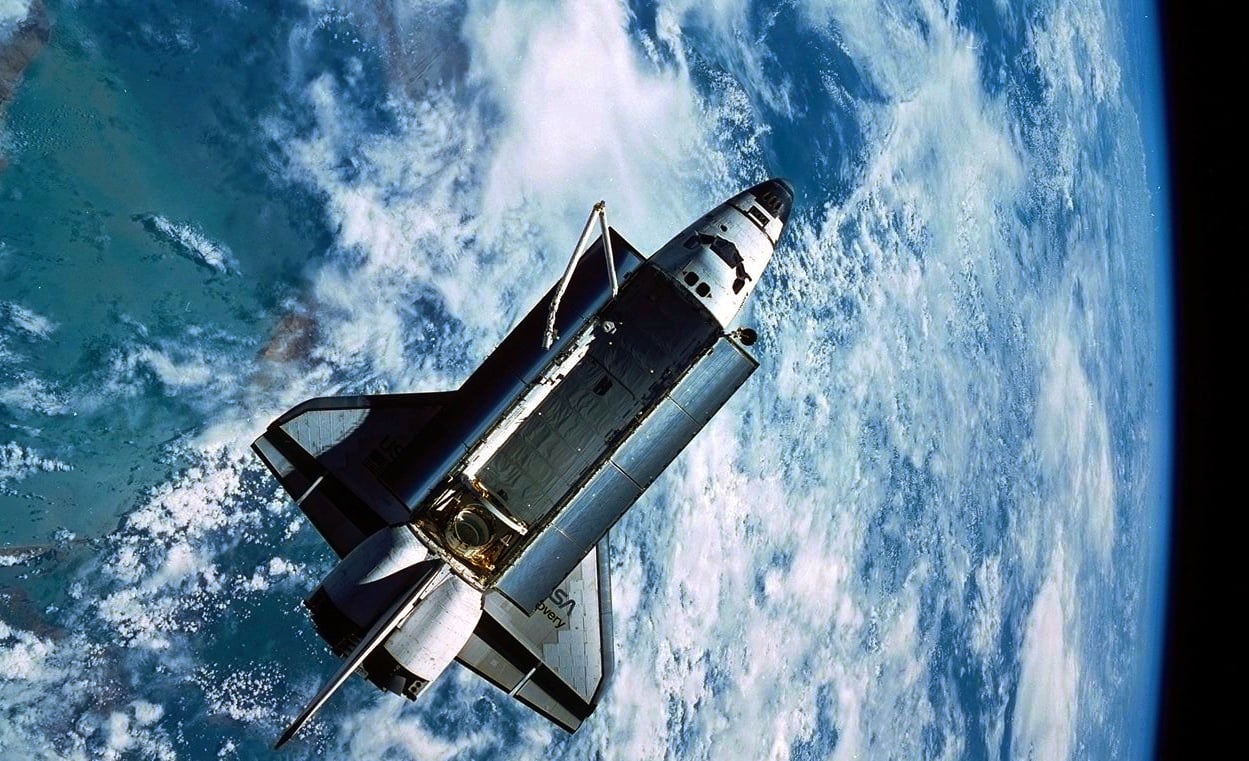
The shuttle “Discovery” orbiting the Earth. Ancient Greek mathematician, Eratosthenes, measured the circumference of the Earth in antiquity. Credit: Public Domain

Ancient Greeks made some of the most impressive astronomical discoveries in history, including Eratosthenes’ calculation of the circumference of the Earth.

It wasn’t until the mid-20th century that we managed to launch satellites into space and determine the exact kilometers of the circumference of the Earth: 40,030.2 kilometers.

But how, then, could the ancient Greek mathematician, Eratosthenes, manage to find pretty much the exact same number without having any pictures of Earth from space or even proper measuring tools?

Amazingly, Eratosthenes didn’t have much more than a stick and his brain when he made the amazing discovery.

How Eratosthenes discovered the circumference of the Earth

Born in Cyrene, an ancient Greek colony in modern-day Libya in 276 BC, Eratosthenes was a polymath, meaning that he had vast knowledge of many different subjects, including mathematics, astronomy, music theory, and poetry.

Over two thousand years ago, Eratosthenes heard that in Syene, a town south of Alexandria in Egypt, no vertical shadows were cast at noon on the summer solstice, as the sun was directly overhead.

The Greek mathematician wondered if this was the case in Alexandria, too, a few hundreds of miles to the north of Syene.

He decided to conduct an experiment. On June 21st, he went to Alexandria and put a stick directly in the ground and waited to see if a shadow would be cast at noon.

It turns out there was one, and he tried to measure it. The shadow cast measured to about seven degrees.

After conducting the experiment, Eratosthenes came to a very logical conclusion that if the sun’s rays are coming in at the same angle at the same time of day and a stick in Alexandria casts a shadow of seven degrees while the stick in Syene does not cast a shadow at all, it must mean that the Earth’s surface is curved.

Carl Sagan, the American astronomer, author, and science communicator was renowned for making difficult scientific concepts understandable to the millions; he did exactly this at the beginning of his renowned series Cosmos by explaining the thought process of Eratosthenes.

His calculation

The idea of a spherical Earth was already known by Pythagoras around 500 BC and validated by Aristotle a few centuries later.

If the Ancient Greeks before him were right, and the Earth was a sphere, Eratosthenes could use his observations to calculate the circumference of our planet.

After hiring a man to pace the distance between Syene and Alexandria, he found out that the two cities were five thousand stadia apart, which is about eight hundred kilometers.

He could then use simple proportions to find the Earth’s circumference—7.2 degrees is 1/50 of 360 degrees, so 800 times 50 equals 40,000 kilometers.

And just like that, an ancient Greek calculated precisely the circumference of our entire planet with just a stick and his brain over two thousand years ago.

Eratosthenes accomplished many feats throughout his life, including the creation of a chronology of Greek history, an algorithm to find every prime number, and the first global projection of the Earth.


  •  

Eratosthenes: The Ancient Greek Who Measured the Earth More Than 2,000 Years Ago

earth eratosthenes circumference
The shuttle “Discovery” orbiting the Earth. Ancient Greek mathematician, Eratosthenes, measured the circumference of the Earth in antiquity. Credit: Public Domain

Ancient Greeks made some of the most impressive astronomical discoveries in history, including Eratosthenes’ calculation of the circumference of the Earth.

It wasn’t until the mid-20th century that we managed to launch satellites into space and determine the exact kilometers of the circumference of the Earth: 40,030.2 kilometers.

But how, then, could the ancient Greek mathematician, Eratosthenes, manage to find pretty much the exact same number without having any pictures of Earth from space or even proper measuring tools?

Amazingly, Eratosthenes didn’t have much more than a stick and his brain when he made the amazing discovery.

How Eratosthenes discovered the circumference of the Earth

Born in Cyrene, an ancient Greek colony in modern-day Libya in 276 BC, Eratosthenes was a polymath, meaning that he had vast knowledge of many different subjects, including mathematics, astronomy, music theory, and poetry.

Over two thousand years ago, Eratosthenes heard that in Syene, a town south of Alexandria in Egypt, no vertical shadows were cast at noon on the summer solstice, as the sun was directly overhead.

The Greek mathematician wondered if this was the case in Alexandria, too, a few hundreds of miles to the north of Syene.

He decided to conduct an experiment. On June 21st, he went to Alexandria and put a stick directly in the ground and waited to see if a shadow would be cast at noon.

It turns out there was one, and he tried to measure it. The shadow cast measured to about seven degrees.

After conducting the experiment, Eratosthenes came to a very logical conclusion that if the sun’s rays are coming in at the same angle at the same time of day and a stick in Alexandria casts a shadow of seven degrees while the stick in Syene does not cast a shadow at all, it must mean that the Earth’s surface is curved.

Carl Sagan, the American astronomer, author, and science communicator was renowned for making difficult scientific concepts understandable to the millions; he did exactly this at the beginning of his renowned series Cosmos by explaining the thought process of Eratosthenes.

His calculation

The idea of a spherical Earth was already known by Pythagoras around 500 BC and validated by Aristotle a few centuries later.

If the Ancient Greeks before him were right, and the Earth was a sphere, Eratosthenes could use his observations to calculate the circumference of our planet.

After hiring a man to pace the distance between Syene and Alexandria, he found out that the two cities were five thousand stadia apart, which is about eight hundred kilometers.

He could then use simple proportions to find the Earth’s circumference—7.2 degrees is 1/50 of 360 degrees, so 800 times 50 equals 40,000 kilometers.

And just like that, an ancient Greek calculated precisely the circumference of our entire planet with just a stick and his brain over two thousand years ago.

Eratosthenes accomplished many feats throughout his life, including the creation of a chronology of Greek history, an algorithm to find every prime number, and the first global projection of the Earth.
  •  

Scientists Race to Test Treatments as Ebola Outbreak Widens

Trials are beginning on several drugs that have shown promise in preliminary studies against the virus that is causing the current outbreak.

© Arlette Bashizi for The New York Times

A health worker in the town of Mongbwalu, Democratic Republic of Congo, collecting medication for patients suspected of having Bundibugyo virus last month.
  •  

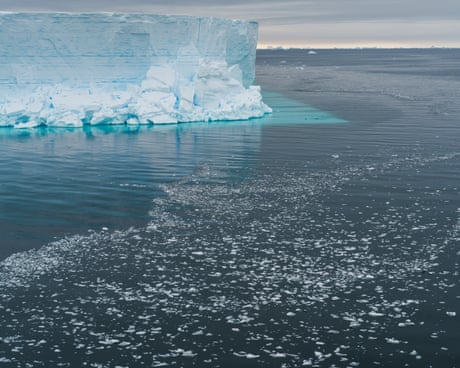
Antarctica’s west coast missing an area of sea ice the size of France as temperatures peak 20C above average

Exclusive A vast area of the Bellingshausen Sea should be covered by sea ice by now, with one expert calling the loss of ice ‘depressing’

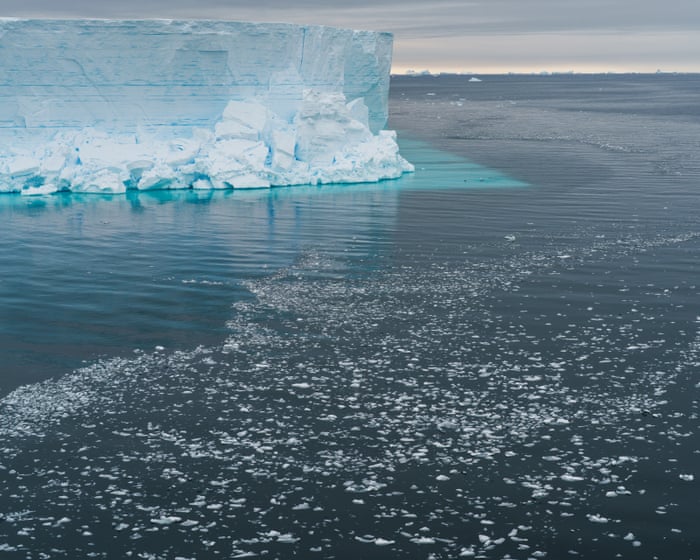
Antarctica’s west coast is missing an area of winter sea ice the size of France, sparking concerns for threatened penguins other marine life and global sea levels.

One expert said the loss of ice in the Bellingshausen Sea was “depressing” and the failure of ice to form could have intensified a heatwave over the continent’s peninsula last week that saw daytime temperatures peak at 15.4C which is more than 20C above average.

Continue reading...

© Photograph: Alex Ingle/Schmidt Ocean Institute

© Photograph: Alex Ingle/Schmidt Ocean Institute

© Photograph: Alex Ingle/Schmidt Ocean Institute

  •  

Healey showdown raises fresh questions over Starmer-Reeves power dynamic

Former defence secretary’s accusation, that PM lacks impetus and is easily swayed by chancellor’s demands, is familiar territory

One of the most scathing accusations made by John Healey in his resignation letter on Thursday was that the prime minister lacks the authority to stand up to his chancellor.

“You have been unable, and the Treasury has been unwilling, to commit the resources that the nation needs to defend the country at this time of rising threats,” the former defence secretary wrote.

Continue reading...

© Photograph: Paul Ellis/AFP/Getty Images

© Photograph: Paul Ellis/AFP/Getty Images

© Photograph: Paul Ellis/AFP/Getty Images

  •  

Autistic children injected with unapproved stem cell treatments supported by RFK Jr

Desperate US parents pay up to $20,000 a session for a procedure scientists say could be bogus

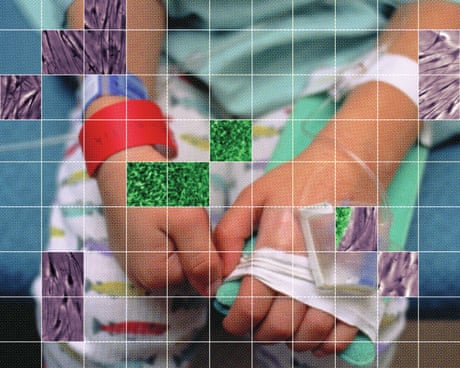
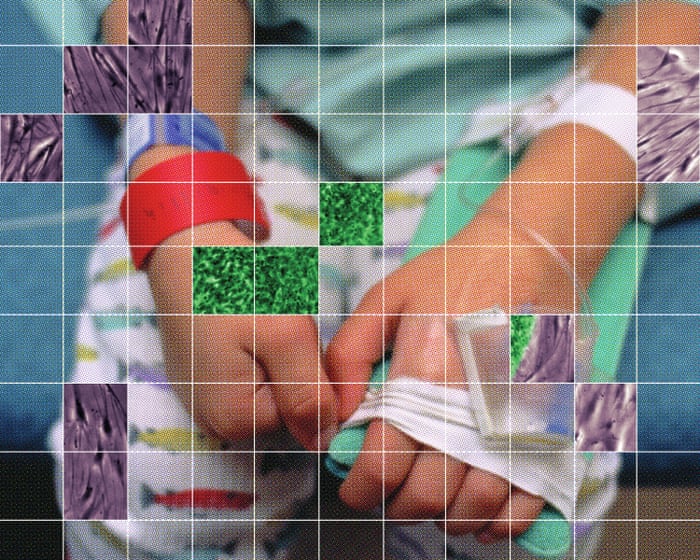
Autistic children as young as 18 months old are being injected with human stem cells derived from umbilical cords in unapproved, unproven and potentially harmful “treatments” that scientists warn are proliferating across the US under the active encouragement of the US health secretary, Robert F Kennedy Jr.

Clinics in Florida, Texas and other states are selling what they bill as “regenerative medicine” to families with autistic children who have intensive care needs. Parents who have taken their children through the process talked to the Guardian about their hopes and fears for a therapy that appears to be gaining ground in the US.

Continue reading...

© Composite: The Guardian/Getty Images/Alamy

© Composite: The Guardian/Getty Images/Alamy

© Composite: The Guardian/Getty Images/Alamy

  •  

Why is the Financial Times Encouraging Parents to Make Their Children Anxious About Climate Change?

Just who does Financial Times journalist Pilita Clark think she is, encouraging parents to ensure their children are sufficiently alarmed about the climate, asks Tilak Doshi. How far the pink paper has fallen.

The post Why is the Financial Times Encouraging Parents to Make Their Children Anxious About Climate Change? appeared first on The Daily Sceptic.

  •  

Vingt ans de SpaceX: du risque de faillite au conglomérat mêlant spatial et IA

Le 24 mars 2006, le premier vol de Falcon 1 se termine en explosion. Vingt ans plus tard, SpaceX est devenu le principal acteur privé du spatial et, depuis l’absorption de xAI en 2026, un groupe mêlant fusées, satellites, télécoms, réseaux sociaux et intelligence artificielle. Un conglomérat inédit et spectaculaire fondé par Elon Musk qui entre en Bourse ce vendredi 12 juin 2026.

  •  

Lupus patients in England in remission after pioneering NHS trial of GM therapy

Doctors say therapy that genetically modifies person’s T-cells could offer cure for chronic autoimmune disease

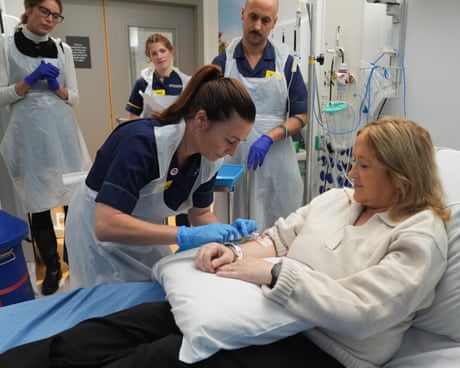
Five lupus patients in England are in remission after being treated with a revolutionary therapy that genetically modifies their own cells, in a medical breakthrough that could offer people a cure, doctors have said.

CAR (chimeric antigen receptor) T-cell therapy involves removing a type of white blood cell also called T lymphocytes, which are crucial for hunting out infected or damaged cells, and engineering them to spot and destroy disease. The T-cells are then fed back into the patient via an infusion to reset their immune system.

Continue reading...

© Photograph: Lucy North/PA

© Photograph: Lucy North/PA

© Photograph: Lucy North/PA

  •  

World Cup players challenged by dangerously hot weather

The World Cup kicked off on Thursday as South Africa squared off against Mexico, one of this year's host countries. Several American cities hosting these opening matches will be sweltering this weekend, making stadiums feel more like a sauna than a playing field. Climate Central's Ben Tracy shows us how extreme heat is changing the game in our warming world. It's for our series, Tipping Point.

  •  
❌