This article was originally published by Progressive Hub on June 11, 2026. It is shared here with permission.
This film presents a synthesis of my father’s book The Doomsday Machine. His book depicts the evil murderousness of nuclear war plans, and the particular dangers posed by ICBMS, with their first strike capability, intended to be launched on warning.
He believed that with these weapons both the U.S. and the USSR/now Russia had constructed Doomsday Machines, capable of destroying most life on earth — machines that are particularly dangerous because neither side acknowledges this reality but continue to proceed as if there were some circumstances in which it was possible to win a nuclear war.
The epigraph from Dad’s book is from Nietzsche: “Madness in individuals is something rare; but in groups, parties, nations and epochs, it is the rule.”
And I am very glad that this film expands on that particular theme with the title: “Ordinary Insanity” — ordinary, as he says, because it is so widely shared.
And that points to a theme that underlies his most recent, posthumous book, Truth and Consequence: Reflections on Catastrophe, Civil Resistance, and Hope. These reflections, drawn from notes he wrote for himself over fifty years, reflect his deep meditation on what kind of flaw in the human species makes us vulnerable to this kind of insanity.
In other words, we have to face, on the one hand, the particular danger posed by the weapons we have created and the strategies that dictate their function and use. But we also have to contend with the kind of danger posed by human beings — all of us capable of participating in projects that are evil, participating in the widest sense through our silence.
If we are to dismantle the Doomsday Machine, it will require widespread and concerted efforts to awaken from the spell of this ordinary insanity. In other words, we need to cultivate an ordinary sanity.
One of the ways of promoting that is through educational efforts such as this film, which may alert the public to the dangers we are facing. But it will also require widespread conscientious action, a kind of pandemic of courage, wisdom, enlightenment, and dedication to the survival of our planet.
Only when such sanity becomes ordinary will we have a chance of surviving the nuclear era.
My dad said that until his last breath he would continue to do everything he could to avert this peril. I am happy that through this film, even after his last breath, he may continue to plant seeds of sanity and hope.
A fragile ceasefire that many Iranians say does not feel like a ceasefire has given some people inside Iran the courage to speak out, despite what they describe as enormous personal risk.
The accounts come as President Donald Trump said from the Oval Office that the U.S. had reached what he called "a great settlement of the war with Iran," adding that the agreement was still "subject to finalization of documents" and could be signed in Europe in the coming days. The announcement followed weeks of military escalation and fragile negotiations, including U.S. strikes after Trump blamed Iran for the downing of a U.S. Apache helicopter near the Strait of Hormuz and earlier warnings that Tehran would be hit "very hard" if it failed to accept a deal.
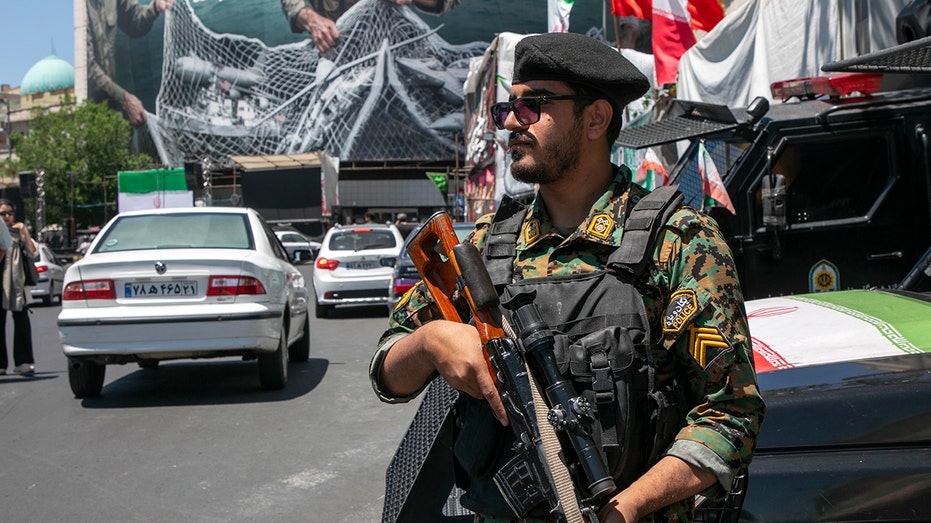
Inside Iran, three young voices described a country where repression is becoming even more visible, the Islamic Revolutionary Guard Corps is expanding its presence on the streets, and ordinary people are struggling to afford basic necessities.
All three spoke to Fox News Digital through written messages because of security concerns and internet restrictions inside Iran. Their names have been changed to protect their identities.
They described a similar reality: checkpoints across major streets, fear of the Basij, the hardline volunteer militia under the Islamic Revolutionary Guard Corps, and the Revolutionary Guards itself, renewed enforcement of hijab rules, mass layoffs, long lines outside bakeries and a growing sense among young Iranians that the future has disappeared.
‘The curtain has been pulled back'
"The influence of the Revolutionary Guards always has been present, and everything has operated within their ideological framework. Now, their interference is more obvious and easier to see," Hassan said. "Now the curtain has simply been pulled back."
"The atmosphere in cities and government offices has become much more securitized. Security forces are now visible around almost every major square and intersection, and there are numerous checkpoints throughout the cities," he said. "Individuals affiliated with the security apparatus or the Basij are increasingly being given positions of authority and influence."
At the beginning of the war, Milad said, authorities appeared to ease some social restrictions, including enforcement of hijab rules. But he said that pressure has since returned, adding that the regime is not only targeting opponents, but also silencing supporters who cross political red lines.
"For example, a group staged a sit-in protest against negotiations with the United States," Milad said. "Security forces intervened and told them that they were disrupting public security. They were warned that if they did not leave, they would be arrested."
Ali, a student in Tehran, Iran, said the Islamic Revolutionary Guard Corps control feels more open than ever.
"It can be said that if previously 80% of the country was controlled by the Revolutionary Guard and the rest by the government, now 100% of the country is in the hands of the IRGC," Ali told Fox News Digital. "When you drive through the streets and reach checkpoints, you don’t even dare look them in the eye because they can do whatever they want."
"No one dares get into trouble with people who are members of organizations like the Basij, because they can report your name and have you arrested," he added. "They have become more brutal than ever, and people know that if they take to the streets, the Revolutionary Guards can easily kill them and no one can do anything about it."
Ali said Basij members who once hid their affiliation now display it openly.
The accounts come against the backdrop of Iran’s long history of violent crackdowns on dissent.
Iran International reported that more than 36,500 people were killed during the January crackdown, while Amnesty International described January 2026 as the deadliest period of repression by Iranian authorities in decades and said deaths rose into the thousands.
Milad, who said he witnessed the crackdown, described the impact it had on ordinary Iranians.
"Before the war, we couldn’t even breathe. We couldn’t sleep at night," he said. "The conditions were very difficult for most people who had seen that massacre. After the war, we were able to sleep more easily at night, and we felt a bit more at ease. Now, even though the war is still ongoing, we continue to worry about the families of the martyrs and those who are in prison, under torture, and facing the executioner."
The new war and the U.S.-led pressure campaign that began Feb. 28 have raised hopes among some opponents of the regime that the Islamic Republic could be weakened or even collapse. But the Iranians who spoke to Fox News Digital said that, for now, the result on the ground has been a more visible security state.
The economic pressure also is being felt across daily life.
Iran already was struggling with inflation, currency collapse, corruption and sanctions before the war.
Since then, growing economic strain has been reported, with businesses crushed by high prices, supply-chain disruptions, internet blackouts and rising unemployment. Iran’s official statistics center reported annual inflation of 53.7% in April, with food inflation above 115%, according to the Associated Press.
Ali said, many young Iranians see almost no path forward.
"The economic situation has become so bad that almost all industries are on the verge of collapse and are simply trying to survive," he said. "Many companies have laid off workers, including me. Many of my engineering-student friends have also been laid off. Families can no longer financially support their children."
"I see many more older men and women than before who clearly were not garbage collectors but are now searching through trash," Ali said.
"Almost all of us young people are convinced that we have no future," he added. "At best, if there is anything left from what we earn, we can spend it on going to a café. Buying a phone or clothes has become difficult; buying a car is a dream. Prices have become so high that some days we can barely afford our two main meals and nothing else. Snacks, fruit and similar things are no longer part of life."
Milad described a similar picture, saying layoffs, unpaid salaries and rising utility bills are crushing families.
"The government is trying to collect more money from people through higher taxes. Utility bills for water, electricity and gas have become extremely expensive," he said.
He said bakeries remain crowded not only because of war fears, but because bread has become one of the only affordable foods left.
"Bread has become the main staple on many family tables," Milad said. "Medical costs are extremely high, and many people are afraid to visit a doctor because the costs of medication, tests and treatment are so expensive."
Hassan, however, said the economic pain is bearable only because some Iranians believe it could eventually help bring down the Islamic Republic.
"We believe that with the return of a government that truly represents the people, under the leadership of Crown Prince Reza Pahlavi, economic conditions will improve in the future," he said.
Reza Pahlavi, the son of Iran’s late shah, has lived in exile for decades and has increasingly presented himself as a unifying figure for Iranians seeking a post-Islamic Republic future. His supporters inside and outside Iran argue that any transition should lead to a referendum and a democratic system.
The Iranians who spoke to Fox News Digital warned the Trump administration against negotiating with the regime or easing pressure too soon.
"I would like to tell the Western world that appeasement of the Islamic Republic is futile," Hassan said. "These are dishonest and deceptive people who, according to their religious beliefs, practice taqiyya in order to deceive others and maneuver their way through difficult situations."
"These are not people who can be reformed," he added. "Appeasement of them is harmful to the entire world. It is extremely naive to believe that meaningful negotiations can be conducted with such individuals."
Ali said he believes the clerical regime would give up uranium if it allowed its leaders to stay in power.
"We only hope that the Islamic Republic falls, whether through war or through an agreement," Ali said. "The clerics are far too shameless to fight to the death over uranium. They would be willing to hand over the uranium to the United States if it meant staying in power and continuing to plunder Iran. But they are certainly careful to avoid suffering the same fate as Gaddafi."
His message to Washington was direct.
"The only message I have for the U.S. government is: save the people of Iran from the clerics and free Iran from the Islamic Republic," Ali said.
Milad said many Iranians are watching Trump closely and fear another moment when the West chooses negotiation over the people in the streets.
"Iranian people have hope that the American administration will be strong and stand on their side," he said. "We don’t want another Obama situation. Iranian people and their blood are not oil prices."
"We have one message to the president, and that is to continue," Milad said. "Here in Iran, we no longer say, ‘Obama, Obama, either with us or with them.’ Now we’re saying: ‘Trump, don’t be Obama. You are with us, not with them. President Trump, stay the course.’"
Fox News Digital reached out to Iran’s mission to the United Nations for comment.
Pope Leo XIV landed in Spain's Canary Islands, an epicenter for incoming migrants seeking entry into Europe, on Thursday just days after criticizing the country's immigration policies in a speech to Spain's Parliament.
Pope Leo will meet with 1,000 migrants on Friday to cap off his apostolic journey to Spain, the European country with the sixth largest Christian population on the continent.
Following his parliamentary speech Monday in which he took aim at Europe's immigration polices, Pope Leo landed Thursday on the island chain's Gran Canaria, according to Reuters.
On Thursday he met with migrants and leaders of international organizations that assist migrants, holding a moment of silence for migrants who died trying to reach Gran Canaria at Port of Arguineguin, a dock which made headlines in 2020 after over 1,000 migrants ended up stranded there during the Covid-19 pandemic.
Relief organizations came to call the Port of Arguineguin the "Dock of Shame" after the migrant crisis, a theme Pope Leo seemed to pick up on while speaking at the port Thursday.
"Dear migrants, before saying anything else to you, I want to bow before your dignity," the pope said. "You are not just numbers or files. You are people who have left behind families and homes. You have dreams that no one has the right to despise," Pope Leo said at the dock.
"We cannot grow accustomed to counting the dead," he added.
Located less than 100 miles off the coast of West Africa, Gran Canaria has been the destination for thousands of Africans, many of whom have lost their lives attempting to traverse the volatile waters in small boats.
Over 3,000 people died trying to make the journey in 2025 alone, according to the non-governmental organization (NGO) Caminando Fronteras.
The Canaries have seen a massive uptick in migrant entries since 2015. In 2024 the archipelago broke records with 46,843 irregular migrants compared to under 1,000 in 2015, according to Reuters.
Speaking to media at Pope Leo's event, a boat captain who assists charities and NGOs in ferrying migrants said he had personally helped save over 20,000 migrants in the last 18 years, Reuters reported.
"It's a number that makes me sick and that you cannot forget," the captain, Tito Villarmea, told Reuters. "I wish we didn't have to save anyone," he continued.
Under Prime Minister Pedro Sanchez, Spain's socialist government has liberalized the country's policies on migration, approving a plan in April to grant 500,000 undocumented migrants legal status.
Spain's conservative lawmakers, meanwhile, fired back after Pope Leo's Monday speech to Parliament.
During his address to lawmakers, Pope Leo called migration a "tragic drama" and said discrimination against people based on "national, ethnic, religious or linguistic origin, or because of their economic or social status" was a violation of the "universal principle of the equal dignity of all human beings."
But Santiago Abascal, who heads Spain's conservative Vox party, countered making a point that Vatican City has policies against illegal immigration as well.
"I like the Vatican state's migration policy. If someone enters illegally or with violence, they are fined, imprisoned and banned from entry. I would like a similar migration policy for Spain," Abascal told reporters Monday.
Google made an announcement last month that could turn the journalism world upside down, accelerating the internet’s shift toward an overwhelmingly AI-driven landscape and serving the Trump agenda of media suppression.
At its developer conference in May, the company announced the most disruptive changes to Google Search in over 25 years. Google Search will further demote its index of the web — a list of links that information-seekers can explore as they choose. Instead of prominently displaying links, it will increasingly become a destination that answers questions directly through AI, linking only to the sources it decides to reference in its overview. On the majority of our tests, the AI overview was followed by a heavy block of sponsored results and a combination of videos, short clips, trending posts, and discussions. Index links — for example, to articles on news sites and research studies — were given only a small fraction of real estate. Additionally, Google is aggressively pushing readers to use AI Mode, which completely removes the index links.
In practical terms, this means users of the world’s largest search engine will see, in response to their queries, a summary generated by an AI bot developed by a corporate behemoth with close ties to the Trump White House.
This seismic move builds upon the launches of AI Overview in 2024 and AI Mode in 2025, shifting toward nearly eliminating the user’s ability to search autonomously, and toward an overwhelmingly AI-driven experience of the internet (and therefore, for many people, of life).
We must take into account the political context in which this shift transpires. Alphabet (Google’s parent company), along with Facebook’s parent company (Meta), as well as Amazon, Apple, Microsoft, and Nvidia, were among major tech companies that donated to President Donald Trump’s inauguration. They have also consistently capitulated to Trump’s recent manipulations.
Last fall, Alphabet’s subsidiary YouTube agreed to a $24.5 million settlement in a lawsuit stemming from the platform’s suspension of Trump’s YouTube channel. The majority of the settlement will go toward Trump’s now-infamous White House ballroom. Meta, similarly, agreed to a $25 million settlement in 2025. $22 million of that sum was designated to go to Trump’s presidential library.
Meta, like Google, has long been making moves that have severely destabilized the news industry. Facebook CEO Mark Zuckerberg decided in 2018 that the platform would prioritize showing Facebook users posts made by their friends and dramatically reduce their ability to see posts made by news organizations that they had chosen to follow. In other words, due to a single algorithm change, the more than 758,000 people who had at the time eagerly signed up to receive links to all of Truthout’s articles in their Facebook feeds suddenly stopped seeing the majority of our posts. This caused a major drop in traffic across the board to news sites, many of which had been persistently encouraged by Facebook to grow their brands on the platform. At Truthout, over 90 percent of our traffic from Facebook disappeared, which decreased our overall traffic by 40 percent and, consequently, the donations we rely on to survive.
Chaotic changes at Twitter also played a role in destabilizing the journalism ecosystem. In 2022, when Elon Musk finalized his takeover of that platform, the move quickly turned the social media site into a cesspool of far right trolls, disinformation, and bot-generated content. This toxicity and disinformation spiral forced many people on the left to leave X, which decreased traffic to progressive websites from the platform.
Over the course of these changes, news organizations like ours have struggled to respond to corresponding significant declines in readership and revenue, along with our readers’ understandable loss of trust in the social media platforms and search engines that initially allowed us to grow. Sudden algorithmic changes, news deprioritization, and increased implementation of AI summaries are shaking the economic foundation of journalism itself. Meanwhile, publishers are being sold the idea that they can cut costs by replacing staff with AI.
The connections to the Trump agenda aren’t hard to see. Trump has been an outspoken critic of news organizations, particularly those that are left-leaning and critical of his administration. Facebook and Google are suppressing journalism on their platforms and weakening news organizations’ ability to hold Trump to account, while also donating to Trump and settling multimillion-dollar lawsuits in his favor.
Whether Facebook and Google are capitulating to Trump due to fear of economic retribution, shared politics, or a desire to increase their stock prices or keep up with technology, the impact is devastating for journalism and democracy.
AI is eroding journalism — and obscuring truth
We’ve already seen some corporate publishers try to jump on the AI bandwagon, arguing that AI will come for our costly but necessary industry one way or another. They frame AI as a way to solve journalism’s most intractable problem: the cost of reporting. But in reality, they’re proposing a vision of journalism resembling content without the journalists — just regurgitated slop of varying accuracy.
Take one high-profile example from last year: Just two months after the Chicago Sun-Times laid off 20 percent of its staff, the paper issued an AI-generated summer reading list sourced from a third-party company. One key problem: Several of the books on the list didn’t actually exist. Some outlets are going so far as to create AI-generated “writers,” complete with fake names and photos, to author their AI-generated articles. And in one notable case, an AI news initiative meant to provide more information in areas with limited access to local news was scrapped after it repeatedly plagiarized the local journalists actually doing that work.
The irony is that the misinformation and deepfakes created by AI make the need for journalists more urgent than ever. For example, during the height of the war on Iran, we watched AI-generated fakery wreak havoc on the sphere of public information. And it should come as no surprise that Grok, Elon Musk’s AI chatbot most known for spewing racist hate and distributing child sexual abuse material, further spreadinaccuracies when users called upon it for help with fact checking. Right now, those of us who are real human journalists are still able to act as a bulwark against AI-introduced errors. What happens when we’re taken out of the mix?
These inaccuracies are perhaps one of the reasons why people are reluctant to get their news from AI chatbots in the first place. Make no mistake — these changes are being forced upon an unwilling public. Fewer than 1 percent of Americans say they prefer getting their news from chatbots, compared to other news sources, a recent Pew Research survey found. For people who do use chatbots for news, roughly a third of them say they have a hard time determining what’s actually true, and about half say they see news from chatbots that they think is inaccurate.
They are right to be skeptical. A recent study from the AI research company Forum AI foundthat the answers that top AI chatbots provided on questions about elections were riddled with errors; more than one-third of responses included fact errors of some type. Oftentimes those errors sounded incredibly precise, the research found, giving an undeserved air of confidence to factual inaccuracies. Those chatbots also regularly pulled from commercial sources in their summaries — even using websites like firearm retailer Ammo.com to answer questions about gun control, the researchers discovered.
Trusted news outlets have policies for issuing corrections and clarifications. Publications like ours maintain policies and avenues for offering such corrections and feedback. Who can a reader hold accountable if a Google AI summary is incorrect? Matched with the likelihood of factual errors, the lack of accountability has terrifying implications.
On a deeper level, the hyperindividualization of chatbots also poses some bleak questions about the escalating fragmentation of our shared sense of reality. For years, we’ve heard media critics sound the alarm about how social media has helped false information travel far further at much quicker speeds. Additionally, Big Tech companies, understanding that their bottom line requires eyeballs to stay on their platforms as long as possible, designed the algorithms that feed us information to be as addictive as possible by sticking us in echo chambers.
Now AI could atomize us all even further. Study after study has shown that AI chatbots are sycophantic, offering users excessive praise and telling them what they want to hear. And the timing — ahead of a high-stakes election, at a moment when trust in media is at new lows, and in a period where the future of journalism itself is at risk — could not be worse.
An existential threat to journalism
As the Google Search changes take their toll, we will very likely see a new round of cost-saving measures at longstanding newsrooms. These steps will likely include massive layoffs and downsizing, more aggressively invasive revenue generation tactics, mergers, consolidation and closures. It will be harder for existing news sites to continue publishing and nearly impossible for new newsrooms to reach a large enough audience to become financially viable.
Organizations like Truthout — ones that depend on community-building and audience growth to sustain their work — will be among the most impacted.
For 25 years, Truthout has survived by publishing impactful investigative journalism and analysis; distributing full editions 365 days a year; and building a community of readers who support us with small, hard-earned donations.
Eighty percent of our $3 million yearly budget comes from small donors alone. Of those, 8,000 readers support us with monthly donations. Back in 2018, when Facebook decided to suppress the circulation of posts made by organizations, thereby cutting readers off from seeing many articles shared by the news organizations they had intentionally decided to follow, Truthout’s total traffic declined by 40 percent, as nearly all of our traffic from that platform disappeared.
The consequences of the impending changes to Google’s search engine promise to be even more explosive. Google Search is our single largest source of traffic; it’s the route by which 27 percent of our readers find us. And visitors who find us via Google Search are more likely to stay for longer, engage with our work, and donate than those who find us through social media.
If even half of that 27 percent disappears, it will have a devastating impact on our journalism.
Truthout is just one example; journalism organizations across the field will be devastatingly affected by Google’s new move, just as they were impacted by Meta’s abrupt algorithmic shift. The entire journalism ecosystem will shoulder this blow, particularly independent publishers and news sites that depend on traffic and aren’t bankrolled by large corporations.
How do we resist?
The sudden shift in Google Search presents us with a pointed question, not only about journalism, but about the future of humanity: How much of our autonomy will we cede to AI? To what extent will we adopt an “oh well!” mentality? Or will we seek creative ways to resist, even when it may feel impossible to confront the largest corporations on the planet?
We cannot allow ourselves to become mired in the trap of inevitability-based thinking.
When grappling with questions around the future of AI, it’s helpful to remind ourselves of how the people — yes, actual humans — are relating to all this. The truth is, most people in the United States are concerned about AI. In fact, in a deeply divided country, AI is something of a uniting cause. A significant majority of Americans rate the “societal risks” of AI as high, with majorities worried that AI will disrupt human connection and inhibit creativity. People in this country are overwhelmingly more worried than excited about how AI has become enmeshed in everyday life. Meanwhile, across political lines, most people in the U.S. oppose the building of data centers in their communities. This is a mobilizable base.
Why should an entirely AI-driven future be inevitable, when most people don’t really want one? Instead of assuming the die is cast, let’s imagine a world in which the onslaught of AI threats is fuel for a broad-based movement.
This movement isn’t just aspirational: It’s already begun. Some of the most hopeful organizing in recent years can be seen in local fights against data centers. Communities are pushing back against corporate giants like Blackstone, BlackRock, and xAI. And from Arizona to New York to Wisconsin and beyond, they’re often winning. According to Data Center Watch, in 2025, local opposition efforts prevented or stalled dozens of data centers, totaling around $156 billion in investment funds.
Meanwhile, we can all respond to Google’s shift toward AI with concrete steps to support independent media and reject the “inevitability” assumption.
Instead of jumping to social media or a search engine for our news, let’s return to visiting news websites directly. Each of us can maintain a list of trusted publications to visit each day. Bookmark your favorites, and return to them. Sign up for email newsletters from your trusted publications, and create filters so that those newsletters arrive in your primary inbox instead of in spam or “promotions.” Subscribe to print publications. Commit to simply reading the news.
Double down on media literacy, practicing discernment and critical thinking as you read and watch the news. In a time when mammoth corporations are attempting to literally tell us what to believe, these commitments are acts of rebellion.
Additionally, since Google Search’s overwhelming prioritization of AI will severely impact revenue for many publications, it’s time to support independent journalism with your money as well as your readership. If you can afford to give, do so, at any level. Without material support from readers and viewers, many independent journalism organizations will fall by the wayside amid the AI onslaught.
For foundations and major donors, there’s a clear mandate here: It’s time to fund our journalism organizations while we experiment and determine new ways of expanding our audiences and driving traffic. We need room to try things — to test out strategies to map an online world beyond Google.
Funding these experiments doesn’t just help one organization or even one sector: As journalism organizations figure out new methods to reach readers, we can share those strategies with other groups, expanding the potential for grassroots groups, unions, and more to connect with human beings in a manner not dictated by the whims of giant corporations’ platforms.
Truthful journalism is an essential public good, and as Google and Meta wage algorithmic warfare against it, it’s essential to protect it. Foundations, donors, and folks connected with money should prioritize journalism alongside other urgent issues, recognizing that trustworthy information is a bulwark against rising fascism.
Finally, we must all adopt a resistance mindset in relation to AI’s slippery slope. Each day, we have an opportunity to choose another way. Resist inevitability. Resist inertia.
Our ability to access facts — and to discern truth from disinformation — is at stake. How will we fight back?
This story originally appeared in Common Dreams on June 09, 2026.It is shared here under a Creative Commons (CC BY-NC-ND 3.0) license.
The Trump administration has emphasized in recent days that the New World screwworm infection found in a calf in Texas did not pose a threat to the United States’ larger cattle herd, which is at its lowest point in 75 years due largely to drought conditions—but the US Department of Agriculture is now acknowledging that cases of the parasite have been found outside the Texas containment zone and as far away as in New Mexico, as Republican officials attempt to blame the Biden administration for the outbreak.
While Democratic lawmakers are among those connecting the arrival of screwworm—a flesh-eating bug that feeds off the living tissue of warm-blooded animals and had been eradicated in the US in 1966—to cuts by President Donald Trump’s Department of Government Efficiency (DOGE) that specifically targeted screwworm monitoring programs, Agriculture Secretary Brooke Rollins doubled down on claims that an “open border policy” under the Biden administration was to blame.
“This does trace back to the last administration and the open border policy, and the movement of millions of people and their animals up from South America through Central America,” said Rollins with certainty on Monday.
As David Dayen explained at The American Prospect Tuesday, former President Joe Biden placed a ban on bison, horse, and cattle imports from Mexico in 2024, which Trump lifted in February 2025. At the same time, DOGE, under the leadership of Trump megadonor and tech billionaire Elon Musk, cut screwworm monitoring efforts and animal disease control and prevention efforts, slashing 1,300 employees from USDA’s Animal and Plant Health Inspection Service.
Rollins did reinstate the live import ban last May as screwworm cases were rising in Mexico and began funding prevention programs in Texas. But a $600 million facility for breeding sterile screwworm flies—a key component of successful eradication efforts—is not scheduled to be completed until late next year, and sterile flies that have been dispersed from a facility that opened in February at Moore Air Force Base in South Texas only amount to “about one one-hundredth of what it would take each week to eradicate the pest,” Dayen wrote.
He also noted that Rollins has attempted to blame Biden—who has not been in office since January 2025—despite the fact that the total average lifespan of a screwworm fly is 21 days.
“The more likely explanation is that an administration with an antipathy to government ignored government’s purpose until it was too late,” wrote Dayen.
The USDA established a 12-mile quarantine area around the affected area last week when the case was detected in South Texas, but on Monday the agency said another case had been found in Gillespie County, over 100 miles from where the initial case was reported.
A dog was also found to be infested in Lea County, New Mexico, more than 400 miles away.
UPDATE: New World Screwworm is no longer contained to Texas.
USDA says that the infested dog announced earlier today lives in Lea County, New Mexico and will be reclassified as the first detection in that state.
The parasite is not expected to affect food safety, as it feeds on living tissue, but the outbreak raises concerns about rising beef prices, which are already high due to the low volume of cattle in the US. The high prices of fertilizer and fuel due to the war in Iran, and of equipment and repairs due to Trump’s tariff policy, have also put a strain on the cattle industry.
“The cattle producer in the US has already been under extreme financial stress,” Joe Maxwell, president of Farm Action Fund and a farmer in Missouri, told The American Prospect. “This is serious, the screwworm outbreak. But it’s even more serious because of the financial position they were already under.”
In response to Rollins’ claims, Sen. Patty Murray (D-Wash.) said Tuesday: “Let’s be clear about what happened: DOGE cut the programs and staff that tracked dangerous outbreaks like screwworm.”
“So this has nothing to do with Joe Biden,” she said, “but Trump and DOGE definitely screwed our cattle industry.”
JERUSALEM — The International Christian Embassy Jerusalem (ICEJ) convened an emergency summit this week amid growing concern over the global rise in antisemitism following the Hamas-led Oct. 7 massacre in 2023.
The three-day conference in the Israeli capital comes at a time when social media influencers are consistently pushing antisemitic hate to their millions of followers.
"Attacking the Jews means attacking the very roots of one’s own faith. It means fighting against the people who gave us the Bible. Jesus was Jewish," ICEJ President Jürgen Bühler told Fox News Digital.
"If you don’t fight antisemitism, you are sawing off the branch you sit on. For the church to survive, we need to connect to our roots, (and) fighting antisemitism needs to be at the forefront of every pastor and every leader around the world," he added.
One of the central themes of the conference is replacement theology, a doctrine that holds the church has replaced the Jewish people in God’s plan.
"The Bible is full of God’s eternal plan, which includes the Jewish people. Paul’s statement in Romans 11 that ‘the gifts and the calling of God are irrevocable' relates to Israel. This is a doctrine that goes contrary to what the New and Old Testament are teaching and that’s why we need to have this conference," Bühler said.
"One cannot deny the Jewishness of the Bible. The most frequent word in the Bible is the name of God, and the second most used name is Israel. Jesus was born in Bethlehem, he died in Jerusalem, resurrected in Jerusalem, rose to heaven from Jerusalem, and he is coming back to Jerusalem. If you read the Bible, it is so easy to see the connection to Israel," he added.
Israel’s newly appointed special envoy to the Christian world, George Deek, addressed the meeting on Wednesday, while Foreign Minister Gideon Sa’ar and U.S. Ambassador to Israel Mike Huckabee are scheduled to attend the summit’s closing event Thursday at the foreign ministry as keynote speakers.
In a recorded message broadcast at the summit, Israeli President Isaac Herzog thanked Christian leaders for mobilizing against antisemitism.
"We are witnessing a very disturbing surge of antisemitism all over the world. This is a major challenge for humanity. This is the age-old, perhaps the oldest plague in humanity, and we have to stand up together — thought leaders and religious leaders — and say, ‘No more' and teach people about the sources of this evil and how to counter antisemitism," Herzog said.
"I believe that countering antisemitism requires a combination of three major elements: law enforcement, adjudication and education.
"You, dear leaders, have a huge capability of fighting back, and I bless you. Truly, I bless you as the president of Israel for coming here and fighting back, for coming here and discussing how to fight back," Herzog concluded.
Dr. Andrew J. Nolte, who launched Regent University’s Israel Institute in 2024, said students often repeat antisemitic claims, including the accusation that Jews killed Jesus.
"The answer from a Christian theological perspective is that we all killed Jesus. He died for our sins. There is a theological understanding of the guilt we bear for Jesus’s blood," Nolte told Fox News Digital.
While Israel has faced recent criticism over treatment of Christians — mostly at the hands of a few extremists — the country is seen as a beacon of freedom of religion in the Middle East.
According to Israel's Central Bureau of Statistics, as of December 2025, Israel’s Christian population stood at approximately 184,200, representing 1.9% of the country’s total population. The community grew by 0.7% over the previous year.
Arab Christians account for 78.7% of Israel’s Christian population and comprise 6.8% of the country’s overall Arab population.
Most Arab Christians reside in northern Israel. Among non-Arab Christians, 42% live in the Tel Aviv and Central districts, compared to 33.9% in the Northern and Haifa districts.
Nolte said that Christians in Israel hold prominent positions, noting that the provost of the University of Haifa is a Maronite Christian and that Christian communities in the country report relatively high income levels. He also said that, in most cases involving civil rights and religious freedom brought by Christians in Israel, the outcomes have been decided in their favor.
"If you are comparing Israel to any Muslim country in the Middle East, the status of Christians is much higher. As a Christian, you are better off here than anywhere else in the region," he added.
Christopher Kuehl, founder of Present Witness and co-host of the "One New Man" podcast, emphasized that biblical illiteracy among younger generations is fueling confusion about Israel.
He opened his remarks at the conference by citing a recent U.S. study on Gen Z’s alignment with biblical teachings and how closely its worldview corresponds with scripture, noting that only about 5% demonstrated strong adherence.
"Israel gets thrown into that ignorance, that biblical ignorance. Social media is what teaches children and Gen Z; they spend eight hours a day on it and go to church once a week for 20 minutes. How does one create a message in 20 minutes that will overcome spending eight hours on social media every day?" Kuehl told Fox News Digital.
Pastor Matthew Earls joined the summit as part of Eagles’ Wings Ministries’ Israel Christian Nexus program, which focuses on young Christian leaders and gives them the opportunity to experience Israel early in their careers and build a well-rounded perspective.
"We want to teach biblical truth so that the church does not look completely different in the next generation," Earls told Fox News Digital. "The greater mission is one of solidarity with the people of Israel and of equipping people with talking points in the hope that dialogue can take place and lead to greater understanding, or at least mutual respect for one another’s positions."
Sacha Roytman, CEO of the Combat Antisemitism Movement, told Fox News Digital Christians and Jews face many of the same challenges in defending their faith, history and future, adding that those who reject Jews and Zionism also reject the Christian worldview because the two are aligned.
"I’m here to share this message with Christian leaders who go back to their communities empowered with more knowledge, more energy and different tools to fight this battle," Roytman said.
As part of its research, CAM has examined how social media algorithms amplify antisemitic content and conspiracy theories.
"We discovered that the algorithms are trained to deliver engaging content that upsets people and keeps them hooked. Often, it is anti-establishment content and conspiracy theories that fuel antisemitism," Roytman said.
U.K. surveillance laws drew scrutiny from House Judiciary Committee Chairman Jim Jordan, R-Ohio, June 5 amid warnings they could expose communications of officials and American citizens, according to reports.
The concern centered on the U.K.'s use of secret Technical Capability Notices under the Investigatory Powers Act, which critics say could make U.S. companies weaken encryption or create "backdoors" that weaken encryption while preventing firms from disclosing requests without U.K. government approval.
Critics have argued this could undermine privacy, create vulnerabilities and limit congressional oversight, with one former intelligence official warning of a "standing invitation to Beijing."
"We have already seen how this ends," former Department of Defense official Andrew Badger told Fox News Digital.
"There are legitimate privacy concerns here, and those have been well aired. The less examined issue is national security," Badger said.
"A backdoor compelled by one ally becomes a standing invitation to Beijing, Moscow and Tehran. So, once one government can quietly compel access, others will demand the same, and a one-off concession hardens into a permanent vulnerability," he warned.
According to The Telegraph, a June 5 letter sent by Jordan to U.K. Home Secretary Shabana Mahmood, showed the Trump ally had called for a review.
The report said Mahmood's decision had been to deny a U.S. company permission to speak with Congress about an alleged encryption backdoor notice.
Jordan was also said to have warned that a lack of bilateral coordination raised concerns about the "trust and effective partnership between our two countries."
"Five Eyes works because every partner trusts the others not to weaken the systems they all depend on," said Badger, co-author of "The Great Heist: China's Epic Campaign to Steal America's Secrets."
"If Washington also concludes that U.K. surveillance powers could inadvertently expose Americans and American officials to espionage, it puts real strain on the relationship and makes future cooperation on intelligence and cyber harder to sustain."
On the encryption issue, Badger noted that mainstream encrypted platforms now function as "de facto infrastructure for sensitive communication well beyond the consumer market."
"Any access point built into them becomes a permanent target. It is not a private key the requesting government gets to keep to itself," he said.
U.S. and British cyber officials have also repeatedly warned that an axis of hostile states — including Russia, China and Iran — poses threats to Western security and infrastructure.
As previously reported by Fox News Digital, cyberespionage by groups such as Salt Typhoon, linked to China, has carried out operations targeting sensitive communications.
"China is actively running one of the largest state-backed cyberespionage operations ever uncovered. The Salt Typhoon campaign has targeted hundreds of organizations in roughly 80 countries and, through those intrusions, gained access to sensitive communications and networks used by senior Western officials," Badger warned.
"Chinese state hackers didn't defeat encryption. They walked straight through the lawful-intercept systems telecom providers had built, reaching the communications of senior officials and even information about surveillance targets."
Reports also surfaced that U.K. Foreign Secretary Yvette Cooper used a burner phone during a recent trip to Beijing, raising further concerns about state-sponsored espionage.
Badger noted that the episode reflects a broader pattern of Chinese targeting of British democratic institutions, including the "hacking of senior Downing Street officials' phones and an Electoral Commission breach that exposed the data of roughly 40 million voters," he said.
"The telling thing is that no one issues burner phones for a trip to Sweden or Germany," he said.
"The precaution is itself an admission of the threat environment. The working assumption — correctly — is that anything digital taken into China should be treated as potentially compromised."
The systemic vulnerability also highlights a fundamental contradiction in Western diplomatic strategy, according to Badger.
"This case perfectly underscores the contradiction at the heart of the U.K. Labour government's China policy: chasing positive economic relations and expanded trade with Beijing on one hand, while being forced to take elaborate precautions against a state whose core interests remain fundamentally at odds with its own on the other," Badger said.
"You can't simultaneously treat China as a trusted economic partner and a hostile intelligence threat. It's a fundamental contradiction. The need to use burner phones symbolically underscore this."
Colombian lawmakers are considering a proposal that would temporarily suspend President Gustavo Petro from office amid an investigation into allegations that he improperly intervened in the country's presidential election.
Gloria Arizabaleta, president of Colombia's Commission of Investigation and Accusation, filed a motion Wednesday seeking to suspend Petro from his duties through June 21, according to a document published by the commission.
The proposal stems from an ongoing probe into allegations that Petro engaged in political meddling during the campaign and cites conduct described as "extremely serious or serious."
Petro, whose four-year term is set to expire in August, has been accused of involvement in the presidential campaign of leftist candidate Ivan Cepeda, who represents Petro's Pacto Historico coalition.
Cepeda is scheduled to face conservative attorney Abelardo De La Espriella in a June 21 runoff election.
The race is being closely watched in Washington because Colombia remains one of the United States' closest security partners in Latin America and a key ally in counternarcotics efforts. The country has long been central to U.S.-backed efforts to combat drug trafficking and organized crime throughout the region.
The suspension proposal faces significant hurdles before it can take effect. Lawmakers and legal experts said the measure would first need approval from all 16 members of the Commission of Investigation and Accusation before advancing to Colombia's Senate for further consideration.
"President Gustavo Petro has not been suspended; he remains in office," commission member Miguel Silvera Padilla said in a video statement, according to Reuters.
The Commission of Investigation and Accusation, which operates within Colombia's lower house of Congress, is responsible for reviewing complaints and potential criminal or disciplinary charges against high-ranking government officials.
Petro has repeatedly faced scrutiny from political opponents during his presidency, though the latest proposal comes less than two weeks before Colombians head to the polls to choose his successor.
The runoff election between Cepeda and De La Espriella is expected to help determine whether voters continue Petro's leftist political project or shift toward a more conservative approach to security and governance.
Representatives for Petro did not immediately respond to a request for comment from Fox News Digital.
Britain is moving to give authorities sweeping new powers to target foreign state-linked groups as officials warn of growing threats tied to Iran and other hostile governments.
The National Security (State Threats) Bill introduced Tuesday would give the UK government new powers to crack down on foreign state-linked organizations involved in activities such as assassination plots, surveillance and sabotage. The legislation could potentially be used against Iran's Islamic Revolutionary Guard Corps (IRCG), though officials have not indicated whether the group would be among the first organizations designated.
The proposal comes as British intelligence officials warn of increasing Iran-backed activity inside the UK. Last year, MI5 Director General Ken McCallum said the security service had tracked more than 20 potentially lethal Iran-backed plots and recorded a 35% increase in state-threat investigations.
Under the legislation, Home Secretary Shabana Mahmood would have the authority to designate groups responsible for what the government calls "foreign power threat activity." Supporting designated organizations or accepting money from them could carry prison sentences of up to 14 years.
British authorities have also investigated possible Iranian links to several recent incidents, including arson attacks targeting Jewish sites. The UK has separately secured convictions against individuals accused of spying for or acting on behalf of Russian and Chinese entities.
The bill would create a new framework for tackling threats posed by foreign governments and their proxies, an area critics say Britain's existing counterterrorism laws were not designed to address.
Labour MP Luke Akehurst, one of Parliament's leading advocates for action against the IRGC, said the organization presents a unique challenge because it operates as part of the Iranian state.
"As well as brutally repressing freedoms within Iran, the IRGC poses a dangerous threat here in the UK, which our existing terrorism proscription regime was ill-equipped to deal with as it is a state actor," Akehurst told The Jerusalem Post.
Supporters of the legislation argue it would close gaps in Britain's ability to target hostile state-backed actors without relying solely on terrorism laws.
If approved, the legislation could take effect as soon as next month, with officials expected to make a limited number of designations during the law's first year.

 Login
Login