Reading view

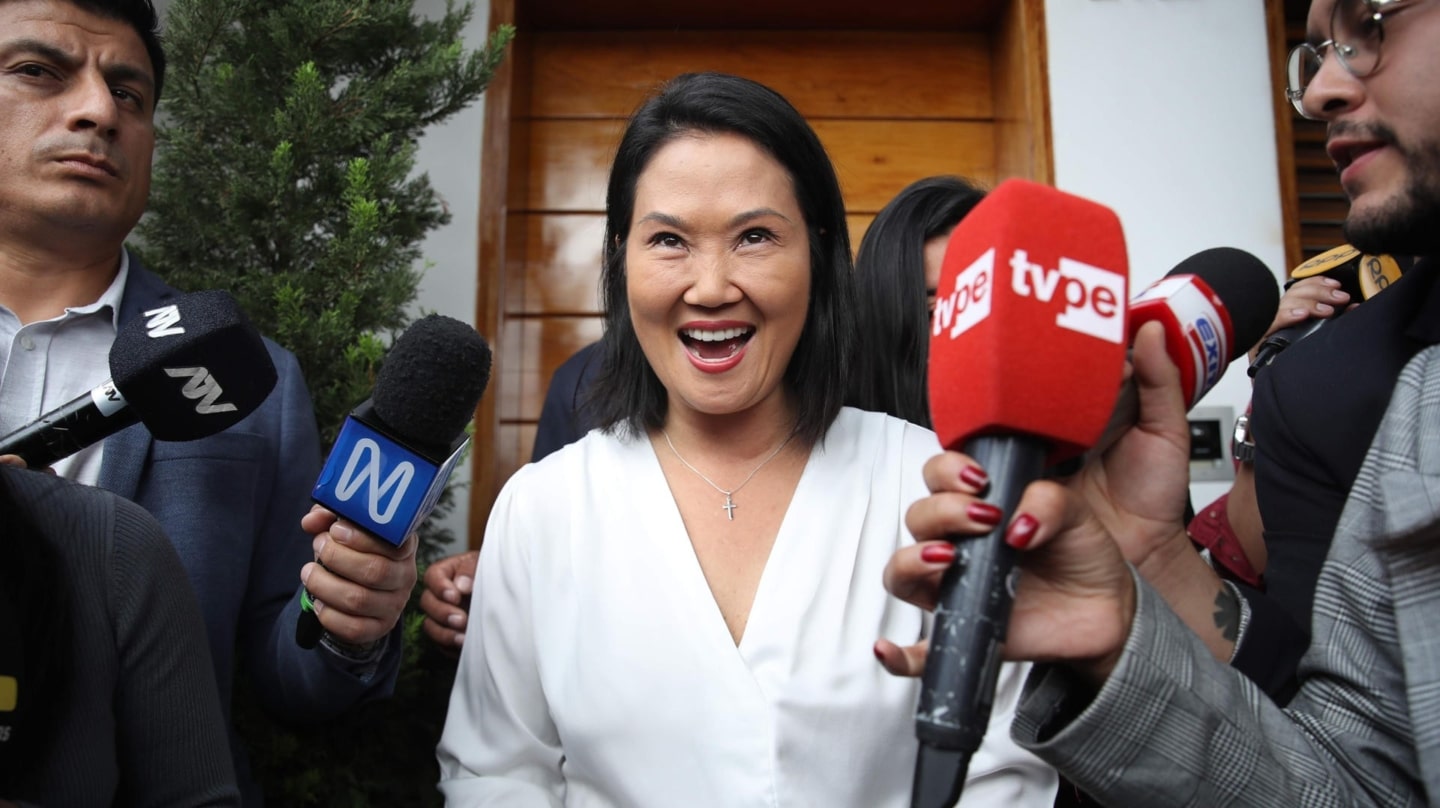
Keiko Fujimori encabeza el recuento en el sprint final en Perú

Keiko Fujimori

La candidata derechista Keiko Fujimori ha vuelto a situarse este miércoles por delante del candidato izquierdista Roberto Sánchez al alcanzarse el 98,20 % del escrutinio. La segunda vuelta de las elecciones presidenciales de Perú se celebró el pasado domingo

A falta de contar menos del 2 % de los votos, Fujimori obtiene el 50,001 % de los votos válidos al recibir 9.032.189 sufragios, frente al 49,999 % de Sánchez, que suma votos 9.031.723, lo que deja a la hija y heredera política del expresidente Alberto Fujimori (1990-2000) encaminada a ser la nueva presidenta de Perú por un estrechísimo margen.

El lunes, el candidato de Juntos por el Perú había tomado la delantera y consiguió alcanzar una ventaja de hasta 42.000 votos, pero la candidata de Fuerza Popular ha logrado revertir esa diferencia gracias al voto del extranjero, donde es la más votada.

La hija y heredera política del expresidente Alberto Fujimori (1990-2000) puede, de esa manera, lograr el objetivo que había perseguido en las últimas tres elecciones donde había sido derrotada en la segunda vuelta (2011, 2016 y 2021) y que apunta a conseguir en su cuarta candidatura presidencial.

Los votos que restan por escrutarse pertenecen a los emitidos en el exterior y a actas impugnadas, la mayoría de la capital Lima, donde en ambos casos la derechista es la más votada, lo que previsiblemente puede darle el triunfo por unos pocos miles de votos sobre su rival, que compitió en nombre del encarcelado expresidente Pedro Castillo (2021-2022).

Se trata de la tercera elección consecutiva en Perú que se va a decidir por un margen exiguo de unas decenas de miles de votos, después de que Pedro Pablo Kuczynski y Pedro Castillo derrotaran a Keiko Fujimori por apenas 40.000 votos en 2016 y 2021, respectivamente.

El probable triunfo de Fujimori en esta ocasión supondría el retorno del fujimorismo al gobierno de Perú después de 26 años de la dimisión de su padre por fax desde Japón, tras un decenio donde se afianzó en el poder con un autogolpe de Estado en 1992 y que terminó en medio de un gigantesco escándalo de corrupción.

La candidata realizó una campaña de reivindicación total del legado de Alberto Fujimori al prometer gobernar como él, quien asentó las bases de la estabilidad económica y comercial que permitieron el crecimiento del país en últimas tres décadas, a la vez que derrotó a los grupos subversivos Sendero Luminoso y Movimiento Revolucionario Túpac Amaru (MRTA).

Más de 27,3 millones de peruanos estaban convocados el domingo a las urnas para escoger entre Fujimori y Sánchez a la opción que tendrá el derecho de gobernar el país por los próximos cinco años (2026-2031), tras una década de inestabilidad política al haber tenido ocho presidentes, debido a una sucesión de destituciones presidenciales promovidas por el Parlamento.

  •  

California is suing the Trump administration to block a new ICE facility

An agricultural property a few miles from Gilroy, just south of the San Francisco Bay Area, has become the latest flashpoint in the ongoing clash between California and the Trump Administration. California Attorney General Rob Bonta and Santa Clara County filed a federal lawsuit on Wednesday seeking to stop the construction of a U.S. Immigration and Customs Enforcement (ICE) facility that local officials say could be used to temporarily detain migrants as part of the federal government’s intensified immigration enforcement efforts.

Seguir leyendo

© Tayfun Coskun (Getty Images)

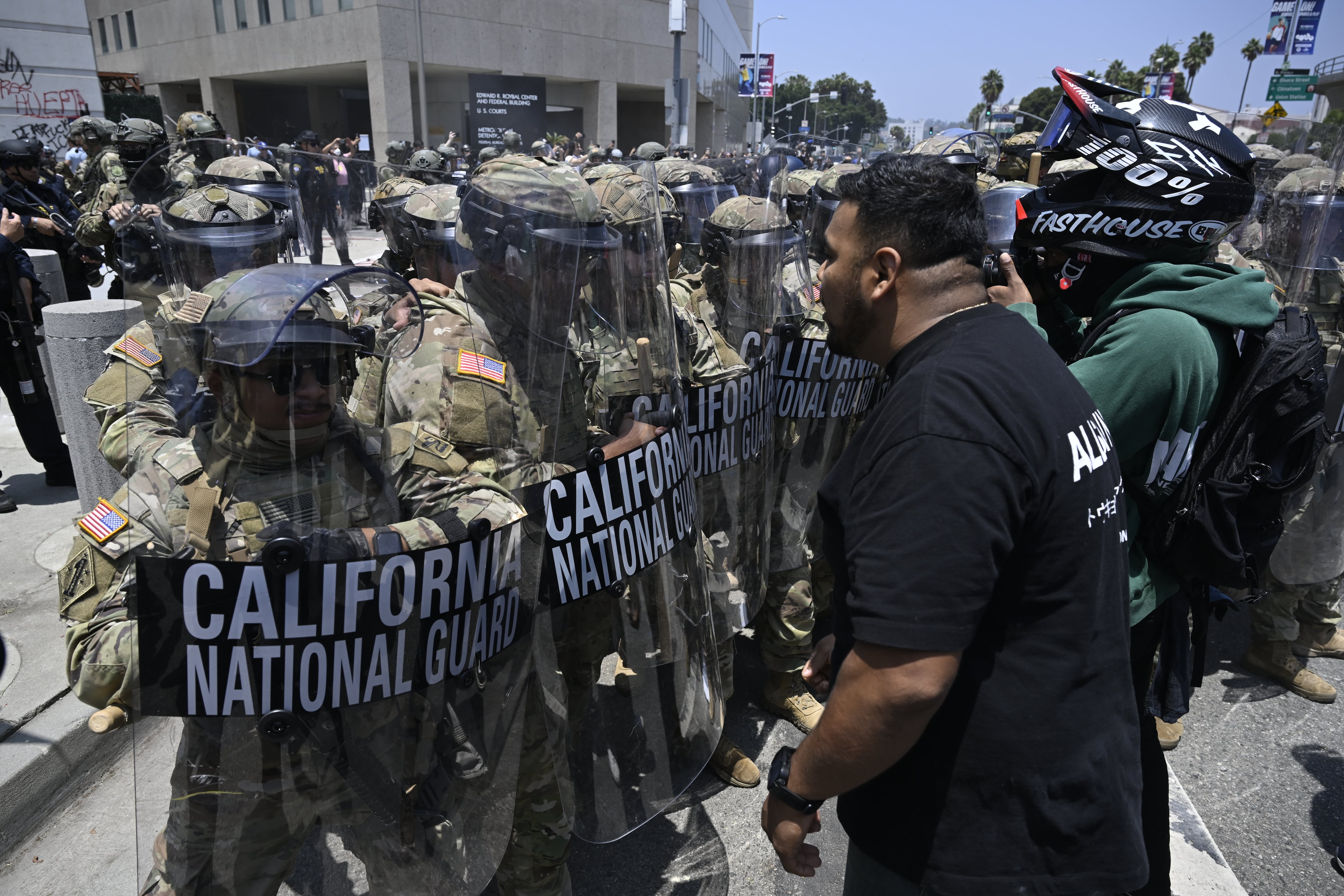
ICE agents and members of the National Guard outside the Metropolitan Detention Center in Los Angeles, California.
  •  

O «narcoterrorismo» e a possibilidade de interferência dos EUA no Brasil

Não se trata, no Brasil, de uma disputa entre um campo político anti-EUA e um campo político pró-EUA, mas de uma disputa entre dois setores políticos que querem o apoio dos EUA para governarem o Brasil.

Junte-se a nós no Telegram Twitter e VK.

Escreva para nós: info@strategic-culture.su

No dia 5 de junho de 2026, o Departamento de Estado dos EUA confirmou a inclusão das duas maiores organizações narcotraficantes do Brasil – o Comando Vermelho (CV) e o Primeiro Comando da Capital (PCC) – na lista de organizações consideradas terroristas pelos EUA. O motivo principal alegado seria o fato de que as operações de ambas organizações teriam passado a afetar os EUA e envolveriam pelo menos alguns elos estadunidenses, enquanto o objetivo com essa categorização seria facilitar o uso de mecanismos econômico-financeiros para estrangular essas organizações, especialmente no que concerne sua capacidade de lavar e movimentar dinheiro usando instituições financeiras internacionais.

Oficialmente, com essa medida, todas as instituições bancárias e financeiras dos EUA, automaticamente, congelariam os bens e recursos de quaisquer indivíduos ou empresas ligadas às organizações em questão. Simultaneamente, eles não conseguiriam transferir recursos utilizando instituições estadunidenses ou ligadas aos EUA. Ainda, os EUA passariam a ter mecanismos para pressionar instituições bancárias e financeiras estrangeiras para que, também, congelassem bens e recursos e deixassem de autorizar movimentações e transferências.

No Brasil, oficialmente, a designação é vista como, em primeiro lugar, um artifício visando legitimar eventuais interferências diretas ou indiretas (sejam de teor político, financeiro, jurídico, eleitoral, etc.) no país; e, em segundo lugar, como um equívoco teórico, já que se considera que as organizações narcotraficantes não podem ser categorizadas como terroristas, por definição, por elas estarem supostamente privadas de uma dimensão política ou religiosa. A figura do “narcoterrorismo”, assim, é vista como mera narrativa legitimadora de intervenções.

Para complicar a equação, porém, essa semana, o instituto AtlasIntel divulgou uma pesquisa que indica que 53% da população brasileira apoia a decisão dos EUA, uma parcela superior até mesmo à dos apoiadores de Bolsonaro (41,8%, conforme o mesmo instituto), o que representa um problema significativo para Lula, bem como um calcanhar de Aquiles fácil de ser explorado.

O próprio Flávio Bolsonaro reivindica, junto com seu irmão Eduardo, a responsabilidade por convencer Donald Trump e Marco Rubio a tomarem essa decisão. Se for verdade, a jogada é inteligente. Flávio Bolsonaro sofreu um impacto significativo em suas intenções de voto após revelações de uma conexão bastante próxima com o banqueiro e especulador brasileiro Daniel Vorcaro, preso ano passado e acusado de envolvimento com inúmeros esquemas fraudulentos e criminosos que movimentaram bilhões em dólares em parceria com diversos políticos (do governo e da oposição) e juízes. Mas ao transferir o foco midiático para o problema da segurança pública, Bolsonaro coloca Lula numa área na qual ele reiteradamente comete erros estúpidos e impopulares.

É que como com todos os políticos liberal-progressistas, Lula e seu partido defendem uma narrativa segundo a qual traficantes, ladrões e assassinos seriam “vítimas da sociedade”, que deveriam ser “reeducados” e não combatidos, em vez de vê-los como parasitas sociais que precisam ser extirpados da face da terra. Reiteradamente, Lula já se referiu a criminosos como “coitados” que só roubam para “tomar uma cervejinha”, e recentemente disse que traficantes eram “vítimas” dos “usuários”. Como não poderia deixar de ser, assim que soube da decisão dos EUA, Lula disse em público que estava “muito triste” pelos “nossos criminosos” serem considerados terroristas.

Para que se entenda a seriedade do problema de segurança pública no Brasil, é necessário apontar que aproximadamente 20% da população brasileira vive em territórios sob controle direto de organizações criminosas. Essa semana mesmo, num bairro de uma cidade periférica próxima ao Rio de Janeiro, membros do CV assumiram o controle de um condomínio e impuseram uma “taxa de moradia” a todos os moradores. Poucos anos atrás, na região Nordeste, uma pequena cidade inteira foi evacuada por ordem de uma organização criminosa. Massacres de comerciantes que se recusam a pagar “taxas” para os criminosos se tornaram algo corriqueiro, para não falar na violência quotidiana. Organizações como o CV cobram aluguel, taxas aos comerciantes e oferecem serviços de luz, água, internet e TV a cabo. Em alguns casos, são também responsáveis por igrejas evangélicas. No caso específico do PCC, estamos falando de uma organização num patamar ainda superior, que controla postos de gasolina, usinas de cana, fazendas, fintechs, juízes, policiais e uma miríade de outros ativos, atuando não apenas em todo o Brasil, mas em dezenas de outros países.

Claramente, independentemente da questão específica da classificação do PCC e do CV e o papel dos EUA nisso, bem como seus reais interesses, estamos falando de circunstâncias que foram toleradas pelo Estado brasileiro, que simplesmente permitiu que a situação saísse do controle. Nisso, também, é importante destacar o papel do Judiciário, educado em teses delirantes de origem europeia que levam os juízes a sempre soltarem os criminosos o mais rápido possível, bem como o papel das ONGs de direitos humanos, que atuam perseguindo policiais e defendendo criminosos.

Agora, de que maneira os EUA podem prejudicar o Brasil com essa classificação das organizações criminosas como terroristas, caso este seja, de fato, o seu interesse? Existem várias possibilidades.

A possibilidade de pressionar bancos estrangeiros abre um caminho para acusar os bancos brasileiros de cumplicidade com as organizações criminosas e, com isso, facilitar que sejam sancionados. A resposta adequada a isso é o governo brasileiro obrigar os bancos a serem mais rigorosos na fiscalização de transferências financeiras. Mas nisso tudo, uma pressão ainda maior pode recair sobre o “PIX” o sistema brasileiro de pagamentos automáticos que, hoje, é mais usado que o VISA ou o Mastercard e que tem sido constantemente criticado pelos EUA. O curioso, aqui, é que o PIX foi criado pelo próprio governo Bolsonaro…

Uma outra via de agressão contra o Brasil pode passar pelo etanol de cana-de-açúcar. Existe uma rivalidade de mais de 20 anos com os EUA nesse setor, já que os EUA também têm uma grande produção de biocombustíveis, porém baseados no milho. Considerando que uma pequena parcela da produção de etanol do Brasil (estima-se que 1-2%) seja controlada pelo PCC, todo o produto pode acabar sendo artificiosamente sancionado pelos EUA, conquistando, assim, para o etanol de milho, novos mercados.

Não se pode, porém, descartar a possibilidade de um jogo ainda mais sujo por parte dos EUA. Historicamente, organizações criminosas que são forçadas a recuar num determinado setor sempre buscam compensar as perdas através de outras operações. Um ataque coordenado e em larga escala contra as operações de lavagem de dinheiro e as movimentações do PCC, podem fazer regredi-lo para as atividades de dominação territorial e para outras formas de crime, como o roubo a bancos, sequestros, etc. Considerando, porém, que o PCC se faz presente em todo o país, estaríamos falando de um possível aumento da violência em larga escala, o que poderia, inclusive, desestabilizar o governo. Isso poderia ser não apenas uma hipótese, mas o próprio design dessa movimentação do governo dos EUA.

Engana-se, ademais, que crê que o governo Lula está se preparando para resistir. Na verdade, o governo Lula já fala em concessões para tentar apaziguar Donald Trump. A realidade é que não se trata, no Brasil, de uma disputa entre um campo político anti-EUA (Lula) e um campo político pró-EUA (Bolsonaro), mas de uma disputa entre dois setores políticos que querem o apoio dos EUA para governarem o Brasil.

  •  

Brazil: From the Vaccine Revolt to COVID-19 vaccination for babies

Instead of protesting and communicating with the people, the intermediate classes of Brazil have preferred to say amen to the government so as not to look bad.

Join us on TelegramTwitter, and VK.

Contact us: info@strategic-culture.su

In my previous article, I pointed out a certain Brazilian social conformism that sometimes prevents us from dealing with major national problems without foreign pressure. In this one, I want to nuance this issue a bit, showing the importance of the intermediate classes between the government and the people.

Let’s start with the conformist aspect: since the advent of republican propaganda, the Brazilian people, which lived under Monarchy, had a reputation for being passive. In theory, the Republic is the government of the People, while the Monarchy is the government of the nobility. With these definitions, the simple fact that the Brazilian people are not enthusiastic about the Republic already makes them foolish. And since Brazil was the only monarchy in the Americas, surrounded by Spanish-speaking republics founded on Masonic and Enlightenment ideals of freedom, the Brazilian people were especially foolish. Until the last decade, we Brazilians looked at our Argentine neighbors, who were always banging pots and pans in front of the Casa Rosada, and lamented our passivity – as if the Argentine “critical spirit” had given them a good destiny.

In 1889, with a clumsy military revolt led by a monarchist marshal, the Republic was proclaimed in Brazil in spite of the will of the people. A great Brazilian historian, José Murilo de Carvalho (1939 – 2023), used the memory of a republican militant to give a title to his book about the first years of the Republic: Os Bestializados [The Bestialized Crowd]. The people watched the proclamation of the Republic bewildered, without understanding what was happening, thinking it was a military parade. And the common people – the vagrants, the prostitutes, the capoeira fighters – were overwhelmingly monarchist in the decades following the implementation of the Republic. The Abolition of slavery made the deposed Emperor loved above all by the poor blacks of Brazil.

According to what was stated in books and pamphlets, the Republic was supposed to be the apotheosis of the People, but the people didn’t care at all. It then became usual for the journalistic class to complain about the passivity of the Brazilian people. There was a major event that made the Brazilian people show their worth – and the illiterate protesters interviewed by journalists expressed themselves in these terms. This event was the Vaccine Revolt, which took place in Rio de Janeiro in 1904.

As José Murilo de Carvalho explains, this revolt has social causes that are different from the vaccine itself, or its side effects. There is an institution that is said to be specifically Brazilian: that of the law that sticks or doesn’t stick. The government can pass a law and the law “doesn’t stick.” In the case of the slave trade, which we saw in the previous article text, the government can even pass a law with the purpose of not applying it – the law “so that the Englishman can see.” In the case of the law that doesn’t stick, there is a resistance to the government that is diffuse, tacit, and anonymous. No one openly confronts the authority, nor does anyone take responsibility. The law simply “didn’t stick,” as if it were a given of nature, a plant that could have sprouted but didn’t. Everyone says “okay” to the State, but nobody obeys. Or they only obey a bit, for five minutes, “so that the Englishman can see.” And the ruler does nothing, because he doesn’t want to become unpopular.

This explains a lot about Brazilian public life to this day: Brazilians are used to seeing the government pass crazy laws, but they don’t worry until they see that the law sticks. An example of Brazilian disregard for the law is that, from 1894 to 2025, the inhabitants of the municipality of Rio Claro, São Paulo, were illegally buying and selling watermelons. In 1894, sanitary physicians were certain that watermelon transmitted yellow fever and, in Rio Claro, they managed to pass a law prohibiting the sale of watermelon. The law was so rejected by the public that people forgot about it, and only in 2025 did a city councilor take the initiative to repeal it.

In the case of the Vaccine Revolt, the government insisted on radically imposing a law that didn’t stick at all. As José Murilo de Carvalho recounts in Os Bestializados, the Jenner vaccine, against smallpox, had been administered in Brazil since 1801. In 1831, the Empire of Brazil made it mandatory for children in its capital, Rio de Janeiro. In 1884, the vaccine became mandatory for everyone throughout the Empire; at the end of 1889, shortly after the proclamation of the Republic, the government made it mandatory for all children, and in 1903 a series of decrees expanded the vaccination requirement to a number of categories. In 1904, the sanitary physician Oswaldo Cruz drafted a bill, leaked to the press, which decreed what we called a vaccination passport during the pandemic. Even to stay in hotels or to work as a domestic employee, it would be necessary to present proof of vaccination.

There were other important social components. The people were already bothered by the intrusion of the government’s sanitary physicians. Since 1903, they had been organizing brigades to inspect the hygiene and sanitation of the homes of the poor. During the inspection, the resident was forced to wait outside and then received orders to put tiles in the kitchen, or other things. This was offensive to the people.

As the Republic was incipient and poorly organized, the positivists, who had many members in the Army, wanted to stage another coup d’état. Thus, through public speeches and newspapers, they fueled this discontent. The inviolability of the home was very important and popular. In this vein, a politician even gave a speech saying that only a Messalina would bare her arms to the health agent, never the wives and daughters of respectable people. (Brazilians are not special connoiseurs of Roman history; Messalina’s name just became a slur.) According to José Murilo de Carvalho, the opinion of the positivist newspapers even reached the old black ladies, who couldn’t read but said that it was in the newspaper that the vaccine was a naughtiness. During the revolt, the vaccination rate plummeted: the smallpox vaccine was known by the public for long, but, with its politicization and effective imposition, it began to be rejected by those who formerly took it. In the end, the popular rebels were victorious, as Oswaldo Cruz did not insist on the bill.

We can assume, then, that the greatest Brazilian popular revolt was due to a rare conjunction between popular sentiment and the instigation of powerful middle-class leaders against a government action. If the positivists had not made the issue a battle cry, it is quite possible that Oswaldo Cruz’s vaccination impetus would have had the same fate as the anti-watermelon fury in Rio Claro. Between public power and the Brazilian people, there is a dynamic reminiscent of that of the King in The Little Prince, who only gave reasonable orders: he ordered the sun to rise early in the morning and the sun to set in the evening. In the case of an unreasonable order, we have a law that does not stick.

Balance

The problem with this dynamic is that the people, in the face of the government, are always in a reactive position, never demanding anything. Public infrastructure is not delivered, public employees who don’t show up, drug trafficking dominating the cities: everything stays the same.

On the other hand, the Argentine example shows that rebelling is no guarantee of anything. To ascertain whether Brazilians are especially peaceful, José Murilo de Carvalho compared the numbers of dead and wounded in the French popular revolts to those of the Vaccine Revolt and concluded that the latter is small potatoes compared to the French ones. Now, the French still break things for more random reasons. If Brazil wins the World Cup, Brazilians celebrate. If France wins the World Cup, the French set fire to cars. Certainly, peoples have different collective psychologies, and the Brazilian people are of a much more peaceful nature than the French and Argentine people. We even tend towards conformism, except when it is within our reach to offer passive resistance.

Comparison with the Russians

A Brazilian might pick up a Soviet humor book and identify with jokes against the government, such as “they pretend to pay us, we pretend to work.” There’s so much in common in spirit that this same joke appears in the mouth of the soccer player Vampeta: “they pretend to pay me, I pretend to play.” Contrary to what the translators of the jokes intend, this doesn’t mean that Brazil lives under a regime similar to the Soviet one, but that Brazilians have a disposition similar to that of Russians when dealing with the state. After all, Russians made jokes against the Tsar before making jokes against the Soviets; they are just less well-known because there wasn’t a global anti-Tsarist propaganda, but rather an anti-communist propaganda willing to publish Soviet jokes in various languages. The anecdotes show that, instead of breaking everything like the French or banging pots and pans in the Kremlin like the Argentinians, Russians drag their feet and tell jokes, like Brazilians. I just don’t know if they have “laws that don’t stick.”

The Communist Revolution itself suggests a greater similarity between Russia and Brazil than between Russia and France. If Brazilian republicans were frustrated with the Proclamation because they had a romantic and Frenchified idea of ​​the people, Lenin, in Russia, did not nurture such expectations: he created the theory of revolution carried out by a vanguard. In Italy, Mussolini created a right-wing Leninism and also had spectacular success. It would be easier to conclude that the idealization of the people is a particularity of peoples prone to romanticism (French and Germans) and should not be universalized.

The problem in Brazil is not that the people don’t break everything nor bang pots and pans. The problem in present-day Brazil is, firstly, the poor quality of its elites, and secondly, the omission of the intermediate classes. Let’s take a concrete case: mandatory Covid vaccination for children (and babies) from 6 months of age. This is a unique case in the whole world, and can only be explained by the absolute imbecility of the Brazilian political elites. Did this law stick? No. Most parents don’t want to give this vaccine to their kids; schools, even public ones, generally don’t require it; public health centers, due to lack of demand, don’t order more vaccines, so the crazy parent who wants to give this thing to his child can’t even get it – and the TV, aligned with the government, denounces it.

Instead of protesting and communicating with the people, the intermediate classes of Brazil have preferred to say amen to the government so as not to look bad (even if they don’t get the vaccine, nor give it to their children). That’s where the biggest problem lies.

  •  

AT&T launches $3 daily iPad data pass

AT&T unveiled a 24-hour unlimited wireless data service for iPad users in the US, available to any customer regardless of their existing operator for a flat daily rate of $3.

The company claimed to be the first major US wireless provider to offer on-demand connectivity for iPad users on a pay-as-you-go basis. The service is for models with mobile and Wi-Fi connectivity capabilities, with the 24-hour data window beginning shortly after purchase.

AT&T explained it is targeting consumers who do not activate mobile connectivity on compatible iPads, pitching the benefit of short-term network access for periods where users are not in Wi-Fi range.

It highlighted ease of use, stating the service is activated in device settings without the need for a dedicated app.

The first day pass is complimentary, with subsequent purchases charged to a credit or debit card.

Josh Goodell, VP of consumer product management, said the goal is to make connectivity simple across the devices people use most.

The operator positioned the launch as part of a broader effort to simplify connectivity and provide flexible options without long-term commitments.

Model compatibility ranges from seventh-generation iPads to the latest Pro and Air models with M3 chips.

AT&T ultimately plans to expand the service to other 5G-enabled devices including Android tablets, smartwatches, laptops and drones.

Multi-day options are also planned.

AT&T noted data rates may be temporarily reduced during periods of network congestion.

The post AT&T launches $3 daily iPad data pass appeared first on Mobile World Live.

  •  

MetTel upgrades US government network infrastructure

Managed services provider MetTel completed a rapid network capacity upgrade for the US General Services Administration (GSA), equipping 11 federal offices across the country with connectivity infrastructure to support the Trump administration’s return-to-office mandate.

The project, delivered under the GSA’s Enterprise Infrastructure Solutions contract, involved the installation of 22 high-capacity network circuits alongside SD-WAN technology and VoIP services, enabling hundreds of federal employees to return to fully connected work locations.

Among the most demanding elements was a 10-gigabit circuit requiring entirely new carrier infrastructure, which was completed in under 60 days to meet the expedited timeline of a Telecommunications Service Priority order.

Don Parente, vice president of public sector at MetTel, said the mandate created an urgent, real-world test of the company’s capabilities.

“Our operations team delivered fast, reliable network modernisation, meeting the Administration’s Executive Order to return to work,” he said.

The SD-WAN architecture, which MetTel had previously deployed for the GSA, was a key enabler of the fast turnaround. The technology provides intelligent traffic management, enhanced resiliency and centralised network visibility, while high-capacity circuits were tailored to the specific needs of each site.

Bandwidth was sized for future growth, building in capacity to support evolving workforce and digital requirements without requiring additional infrastructure overhauls.

The Enterprise Infrastructure Solutions (EIS) programme under which the work was delivered, is a 15-year, $50 billion government-wide vehicle designed to help federal agencies modernise their telecommunications and network infrastructure.

US-based MetTel has held EIS contract authority since January 2020, delivering network modernisation, managed services and communications transformation projects throughout that period.

The upgrade underscores the broader infrastructure pressures facing federal agencies as the return-to-office push accelerates demand for reliable, high-capacity government networks.

The post MetTel upgrades US government network infrastructure appeared first on Mobile World Live.

  •  

Do Americans Actually Care About Soccer? The Reality Behind the 2026 World Cup Buzz

FIFA World Cup 2026 trophy
FIFA World Cup 2026 trophy. Credit: TravelQueen11 / Wikimedia Commons / CC BY-SA 4.0

As the 2026 FIFA World Cup officially kicks off across North America, a long-standing question resurfaces on the global stage: Do Americans actually care about soccer?

While traditional sports still rule the airwaves, a massive generational and demographic shift is actively rewriting the American sports landscape.

Generational and ethnic shift for soccer

Historically, soccer in the United States has struggled to compete with the domestic dominance of the NFL, NBA, and Major League Baseball. That skepticism persists among older demographics. According to a new Pew Research Center survey, 66% of American adults state they are “not too” or “not at all” likely to follow the tournament. Broadly speaking, a separate YouGov poll confirms that 54% of the overall adult population maintains zero interest in the sport. For a large share of traditional sports fans over fifty, the tournament remains an afterthought.

However, statistics show that there is a soccer boom among younger individuals. The game is rapidly becoming the sport of choice for the next generation of American consumers. YouGov data reveals that an average of 23% of Americans aged 18 to 34 now identify as avid soccer viewers. More telling is the fact that over 56% of all active soccer fans in the United States are currently under the age of 35.

This generational momentum is heavily reinforced by cultural shifts. Comprehensive market data from Numerator indicates that enthusiasm for this year’s tournament is highest among multicultural communities, with 54% of Hispanic Americans and 51% of Asian Americans planning to actively tune in to the month-long event.

Furthermore, the reality of the United States co-hosting the expanded 48-team tournament alongside Canada and Mexico has created a “host nation surge.” Overall consumer intent to watch has nearly doubled compared to the 2022 World Cup in Qatar, with 32% of all US citizens now planning to watch the matches. This enthusiasm is heavily concentrated around the eleven American host cities, including Dallas, Los Angeles, Atlanta, New York/New Jersey, and Philadelphia, where consumer interest jumps to 42%.

Despite this undeniable wave of momentum, soccer is not quite ready to dethrone America’s biggest sporting events. When stacked against domestic mainstays, the World Cup still plays catch-up. Consumer data tracking viewership intent shows that while 32% of Americans plan to watch the World Cup, 58% plan to watch the Winter Olympics, and a staggering 69% will tune into the NFL’s Super Bowl.

Will the Americans pack the stadiums for the World Cup?

Americans World Cup
Will the MetLife stadium be packed with soccer fans? Credit: SachinDaluja, CC2/Wikipedia

However, as the world’s biggest tournament returns to US soil for the first time in thirty-two years, it faces an entirely different landscape strained by corporate economics.

The 1994 World Cup in the US was a staggering, record-breaking success. It drew 3.59 million fans across 52 matches, averaging nearly 69,000 attendees per game. It remains the most attended World Cup in history.

However, speculation about whether Americans will pack stadiums like they did in 1994 has hit an unexpected snag: FIFA’s aggressive corporate pricing model. During the 1994 tournament, group-stage tickets were relatively accessible, ranging from $25 to $75. By stark contrast, FIFA’s 2026 individual match tickets see first-round seats averaging around $400, with opening match tickets starting at $560 and category-one seats scaling up to $2,735. For the United States’ highly anticipated matches, primary, and resale prices have left ordinary local families facing severe sticker shock, with select group-stage tickets soaring past $1,100.

Because FIFA now tightly controls its own resale marketplace to harvest transactional fees, prices fluctuate based on demand like airline tickets. While major marquee matches and the knockout rounds are completely sold out, ordinary American supporters have openly complained about being priced out of lesser group-stage fixtures, leaving thousands of tickets sitting on primary resale portals on the eve of kickoff.

Ultimately, the 2026 World Cup catches the United States at a historic sporting crossroads. Driven by a younger, more diverse fanbase, soccer is no longer a niche novelty in America. The interest is real, deep, and fully integrated into the culture. But while the stadium atmospheres will be electric, any empty seats seen during the opening weeks shouldn’t be blamed on an “indifferent American public”—rather, blame a modern corporate strategy that misjudged the wallet of the everyday fan.

Related: World Cup 2030 to Be Hosted in Spain, Portugal, Morocco, South America

  •  

Portugal no Mundial 2026

O campeonato do mundo de Futebol de 2026 será um dos mais históricos de sempre. Pela primeira vez, a competição contará com 48 seleções e será  organizada em conjunto com os Estados Unidos, Canadá e México. O torneio decorrerá entre…

O post Portugal no Mundial 2026 aparece primeiro no Diáspora Lusa.

  •  
❌