Mova Z70 Ultra Roller Complete è il nuovo robot aspirapolvere che porta il lavaggio dei pavimenti a un livello top


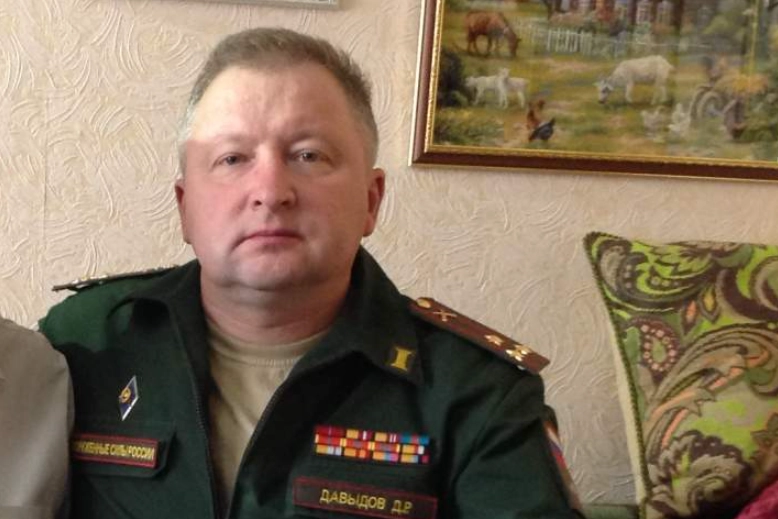
The car exploded around 5:30 am on 9 June as Davydov pulled the BMW X3 out of its parking spot on Koldunova Street in Balashikha's Aviatorov microdistrict. Bystanders pulled him from the wreckage still alive, but he died at the scene before medical teams arrived, The Insider said. The outlet published the SUV's license plate and the apartment address on Kozhedub Street, several hundred meters from the blast, to confirm the identification.
Davydov, 57, had headed the missile and artillery ammunition supply directorate within the Main Missile and Artillery Directorate (GRAU) of Russia's Defense Ministry since 2017. Ukraine's Myrotvorets database lists him as a participant in planning and organizing Russia's full-scale invasion on 24 February 2022, with operational responsibility for keeping Russian forces supplied with shells and missiles. Russia's Investigative Committee confirmed the death of one man in the blast and opened a criminal case but did not name the victim.
The improvised explosive device carried the force of up to 500 grams of TNT and was attached to the underside of the vehicle, the Russian business daily Kommersant reported. Conflict Intelligence Team founder Ruslan Leviev reviewed the footage and concluded the bomb had been hidden in a separate parked vehicle and detonated remotely as the BMW drew alongside. The Insider attributed the operation to Ukraine's Security Service (SBU) without citing further sources, and Ukrainian officials had not commented as of late Tuesday.
Hours after the Balashikha blast, a Zeekr electric vehicle caught fire in a parking lot at the intersection of Butlerova and Vvedensky streets in Moscow's Konkovo district. Bomb technicians found a device under the car and neutralized it with a controlled detonation. Around 6 p.m., Moscow police evacuated the Nebo shopping center in Solntsevo after another suspicious object was discovered beneath a parked vehicle. Russian authorities ordered mass under-vehicle inspections across the capital region.
Tuesday's killing fits a deepening pattern: the fourth senior Russian officer assassinated in the rear since late 2024. Lt. Gen. Igor Kirillov, head of Russia's chemical defense troops, was killed by a scooter bomb outside his Moscow apartment in December 2024 in an operation the SBU claimed openly. Lt. Gen. Yaroslav Moskalik, deputy chief of the General Staff's Main Operational Directorate, died in April 2025 in a car bombing 350 meters from Tuesday's blast site, also in the Aviatorov microdistrict; Russia's FSB later sentenced Ignat Kuzin, who said he worked for the SBU, to life in prison. Lt. Gen. Fanil Sarvarov, who oversaw the General Staff's operational training, was killed by a bomb planted under his Kia Sorento in southern Moscow in December 2025.
The slain officer grew up in the closed nuclear city of Penza-19, now called Zarechny, where his father worked at the Start production association, a facility that built nuclear warheads until 2002. He held patents in rocket-engine design and artillery ammunition. In 2009 he led the Central Testing Technical Bureau attached to the 51st GRAU arsenal in the Vladimir region, and bought the BMW X3 in 2024 from a businessman in that same area, the Russian Telegram channel VChK-OGPU reported. The Kremlin, the Defense Ministry, and the SBU had not commented publicly as of late Tuesday.

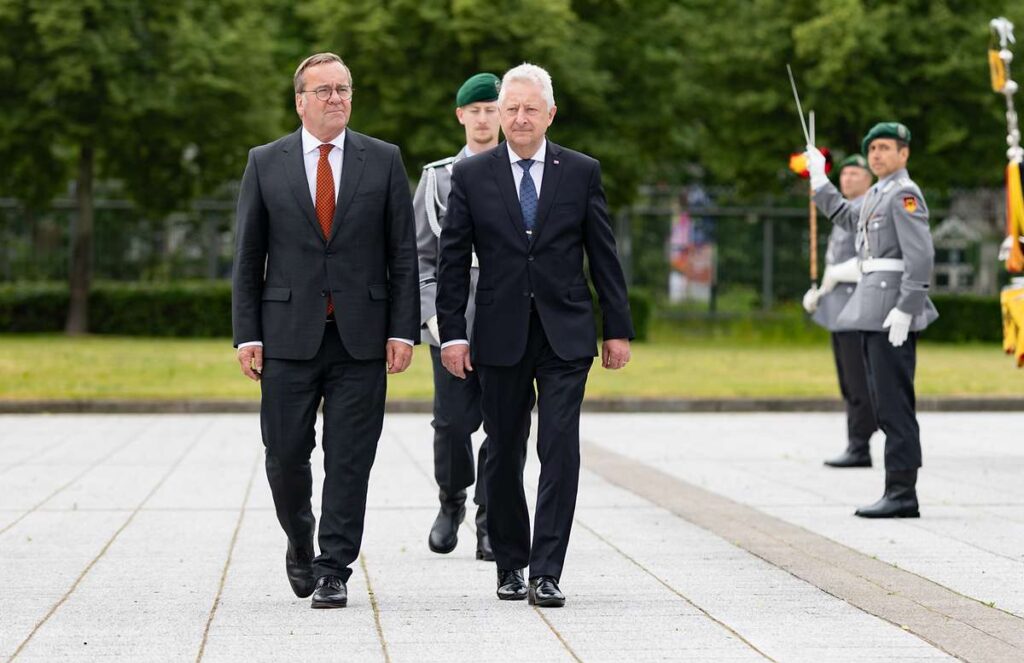
German Defense Minister Boris Pistorius announced an additional €300 million ($345 million) for the Czech-led ammunition initiative for Ukraine on 9 June 2026. The funds will purchase roughly 50,000 rounds of long-range ammunition, Pistorius said after meeting new Czech Defense Minister Jaromír Zůna in Berlin.
The pledge keeps Germany positioned as the initiative's largest foreign backer at a moment when donor numbers are thinning and Prague's new government has retreated on several other Ukraine fronts. The Czech-led channel has delivered 4.4 million large-caliber shells since early 2024 — more than half of all such ammunition Ukraine has received over that period, according to Czech President Petr Pavel.
The new commitment lifts Germany's total share of the initiative past €1.2 billion, building on roughly €900 million already disbursed. Pistorius called the Czech channel an essential contribution to Ukraine's ammunition supply and said Berlin would continue to back it.
"Germany will contribute an additional €300 million to this initiative — that's approximately 50,000 rounds of long-range ammunition," Pistorius said.
The Berlin session was Pistorius's first in-person meeting with Zůna, who took office in December 2025 as part of Andrej Babiš's coalition government. Zůna, a retired lieutenant general, was nominated for the post by the center-left SPD party.
Babiš has cut planned Czech defense spending for 2026 and secured a Czech opt-out from the European Union's €90 billion Ukraine funding package. The new government also put on ice a previously discussed transfer of L-159 combat aircraft to Ukraine.
The ammunition initiative is the major exception. Zůna confirmed in December that the channel would continue, and the Berlin meeting was his first public reaffirmation of that position to a NATO partner.
"Germany plays an important role as a supplier of military equipment and ammunition and, together with our defence industry, makes a significant contribution to European security," Zůna told reporters at the Bendlerblock.
The initiative needs €5 billion in 2026 but had raised only €1.4 billion by February, Reuters reported. Pavel said last month that the number of contributing countries has dropped.
The channel has firm contracts to deliver about 1 million rounds to Ukraine in 2026, the Czech Defense Ministry said — well below the 1.8 million delivered in 2025 and the 1.5 million in 2024. Russia continues replenishing its own stockpiles, including through North Korean deliveries that NATO officials estimate at 9 million rounds since 2023.
La noche del 23 de junio no sólo se asocia popularmente con ser la más corta, sino también, sobre todo, con la verbena de San Juan, uno de los eventos más especiales del año. Entre hogueras y deseos al fuego, celebra la llegada del solsticio de verano y se presenta como una ocasión perfecta para descorchar vinos ahumados.


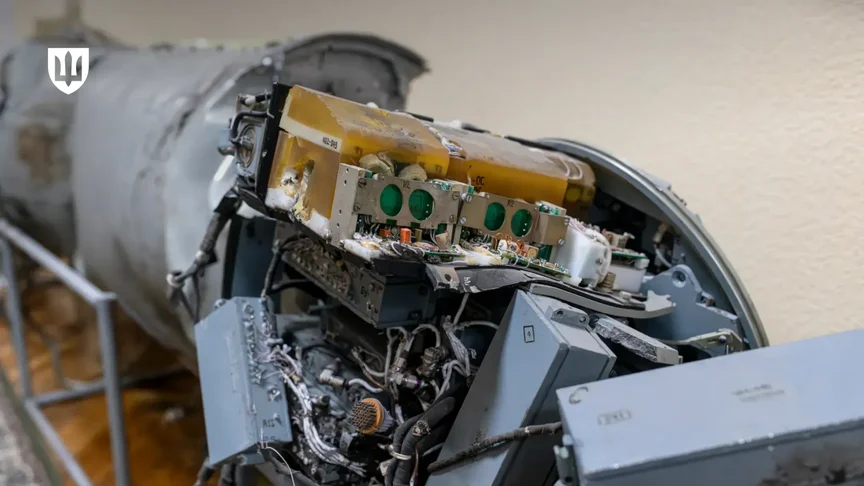
Russia has made two significant modifications to its Kalibr cruise missiles since the start of the full-scale invasion, Ukraine's Ministry of Defense reported.
The cluster payload mirrors the one Russia already uses on its Kh-101 cruise missiles, expanding the lethal radius across dispersed targets like airfields, hangars, and open positions. Russia is not a signatory to the Convention on Cluster Munitions, which 124 states have ratified.
From 2022 through early 2026, Kalibr missiles carried a fragmentation-high-explosive warhead. Researchers documented a cluster warhead for the first time on missiles shot down in spring 2026. Russia made the change to substantially increase the strike area and deploy the missile against dispersed targets, the ministry said.
The second modification concerns the missiles' onboard electronics. Between 2023 and 2024, Russia gradually shifted Kalibr production to domestic components. The attempt failed. Analysis of the onboard digital computing unit from a Kalibr manufactured in 2025 again found imported components. The homing boards are "more than 80–90% foreign-made," the ministry stated, calling it "a confirmed fact, not an estimate" — each part is marked and verified by military representatives.
The shift to domestic electronics likely degraded guidance accuracy, the MoD suggested, prompting the return to foreign parts despite sanctions exposure. A Russian Kh-101 that killed 12 people in Kyiv this May was built in the second quarter of 2026 — pointing to components still reaching Russia after 21 EU sanctions packages and years of Western export controls, President Volodymyr Zelenskyy said last month.
The ministry said it had identified all electronics manufacturers supplying Kalibr production, as well as the chief designers and managers involved. "The Ministry of Defense has established all electronics manufacturers for the Kalibrs, as well as the chief designers and managers involved in missile production. This data is being transferred for further processing within the framework of sanctions policy," the ministry stated.
The MoD has previously published technical analyses of downed Russian Kh-101 missiles and North Korean KN-23 and KN-24 ballistic missiles used against Ukraine.

Ukraine attempted a missile strike on a bridge connecting Henichesk to the Arabat Spit early on 10 June 2026, according to Vladimir Saldo, Russia's installed head of the occupied part of Kherson Oblast, who posted the claim on social media.
The strike is the latest in a series of Ukrainian attacks targeting road links between Russian-occupied Kherson Oblast and Crimea. The Chonhar bridge—the main overland route—was first struck on 7 June, after which traffic resumed in reversible mode; a second Ukrainian drone strike on 9 June halted movement again. Saldo had advised drivers to use alternative routes through Armyansk and Perekop.
Traffic across the Henichesk–Arabat Spit bridge has been temporarily closed, Saldo said, with emergency services on site establishing the circumstances.
In the same post, Saldo reported that eight municipalities were left without electricity following a separate overnight Ukrainian drone attack: Henichesk, Novotroitske, Chaplynka, Kalanchak, Ivanivka, Hornostaivka, Kakhovka, and Nova Kakhovka. Utility and emergency crews were working to restore power, he said.
Russian pro-war bloggers have in recent weeks reported an intensified Ukrainian drone campaign against military transport in southern Ukraine, Hromadske reports. On 30 May, Russian-occupied Crimea imposed limits on sales of A-95 petrol, citing drone strikes on Russian oil refineries; occupied Luhansk Oblast followed with similar restrictions shortly after.

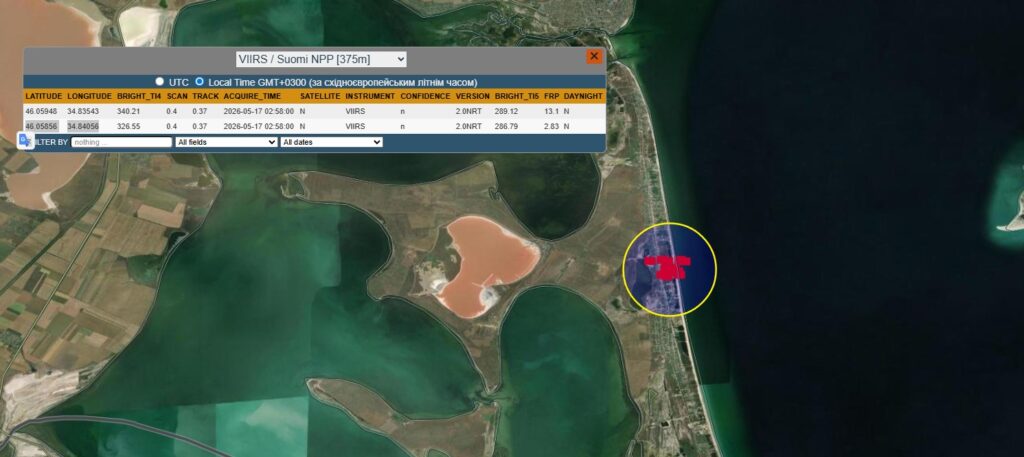
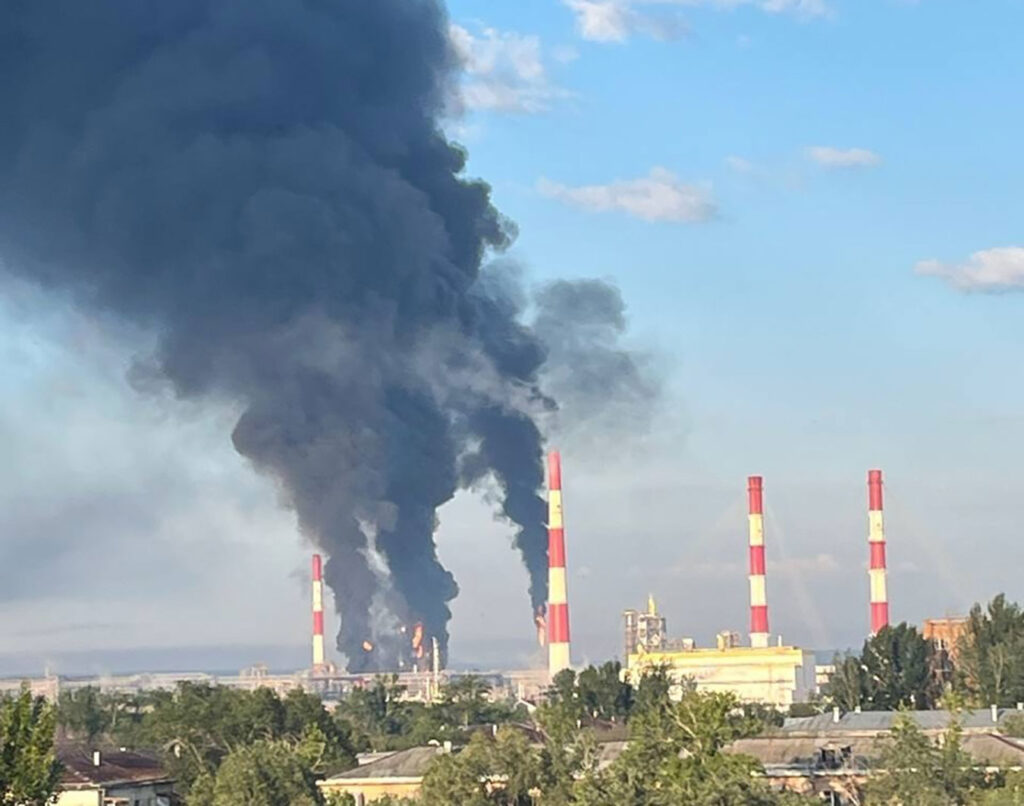
A fire broke out at the Kuibyshev oil refinery in Samara, Russia, following a drone strike on 10 June, according to OSINT analysis by Astra and Russian Telegram channels.
The Kuibyshev refinery is one of the largest oil industry facilities in the region and is part of Rosneft. The 10 June strike is the third reported attack on the plant since August 2025.
Residents of Samara Oblast reported explosions during the night of 9–10 June. The regional governor wrote of a missile threat in the oblast.
Astra said its analysis of eyewitness footage established that the Kuibyshev refinery in Samara was struck and caught fire.
The same refinery halted operations in August 2025 following a drone attack, Russian social media channels reported. It was struck again in January 2026.

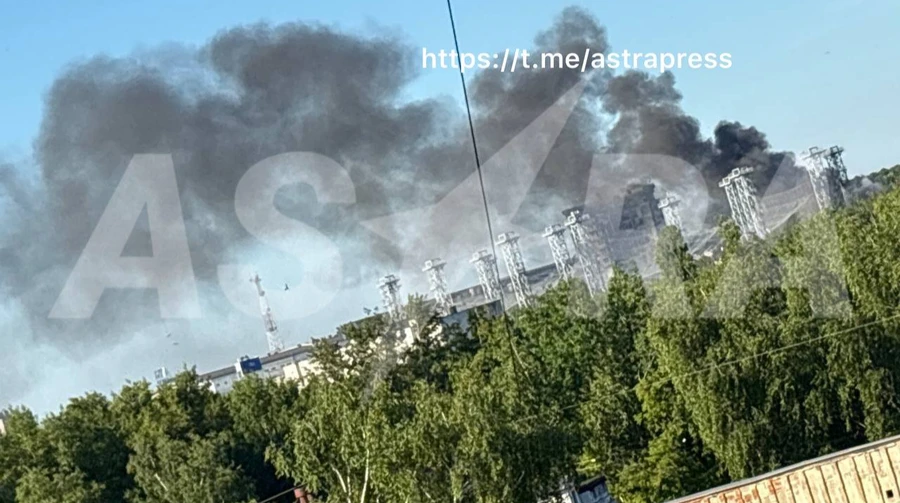
A fire broke out at what is reportedly the Progress defense plant in Cheboksary, Russia, following a missile strike on 10 June, the governor of Russia's Chuvash Republic said, according to Russian telgram channel Astra.
The incident marks the second reported strike on the same facility in under a week — on 5 May, Ukrainian FP-5 Flamingo missiles were reported to have struck the VNІIR-Progress defense enterprise in the same city, with President Volodymyr Zelenskyy confirming the attack.
Oleg Nikolaev, governor of Chuvash Republic, confirmed on Telegram that Cheboksary had come under missile attack. He did not specify casualties or damage.
Photos and video of a fire following the strike in Cheboksary were published by Russian social media channels, including footage of a missile passing over the city. According to OSINT analysis by Astra, the targeted facility is the VNIIR-Progress defense enterprise.
The plant manufactures Kometa antennas — systems designed to protect drones from electronic warfare — as well as other components used in Russian Shahed drones and Iskander-M and Kalibr missiles.
Astra analysts also noted that the VNIIR-Progress premises had been fully covered with camouflage netting following the previous strike.
Monitoring channel Exilenova+ identified the missiles used as Ukrainian FP-5 Flamingo cruise missiles. Denis Shtilerman, founder of the Ukrainian company FirePoint, which produces the Flamingo, published a photo of a launch on X on 10 June, without providing further details.
The 5 May attack on the same plant caused a large-scale fire after a missile struck the facade of one of the factory buildings, according to OSINT analysts. Zelensky confirmed the use of Flamingo missiles in that incident.

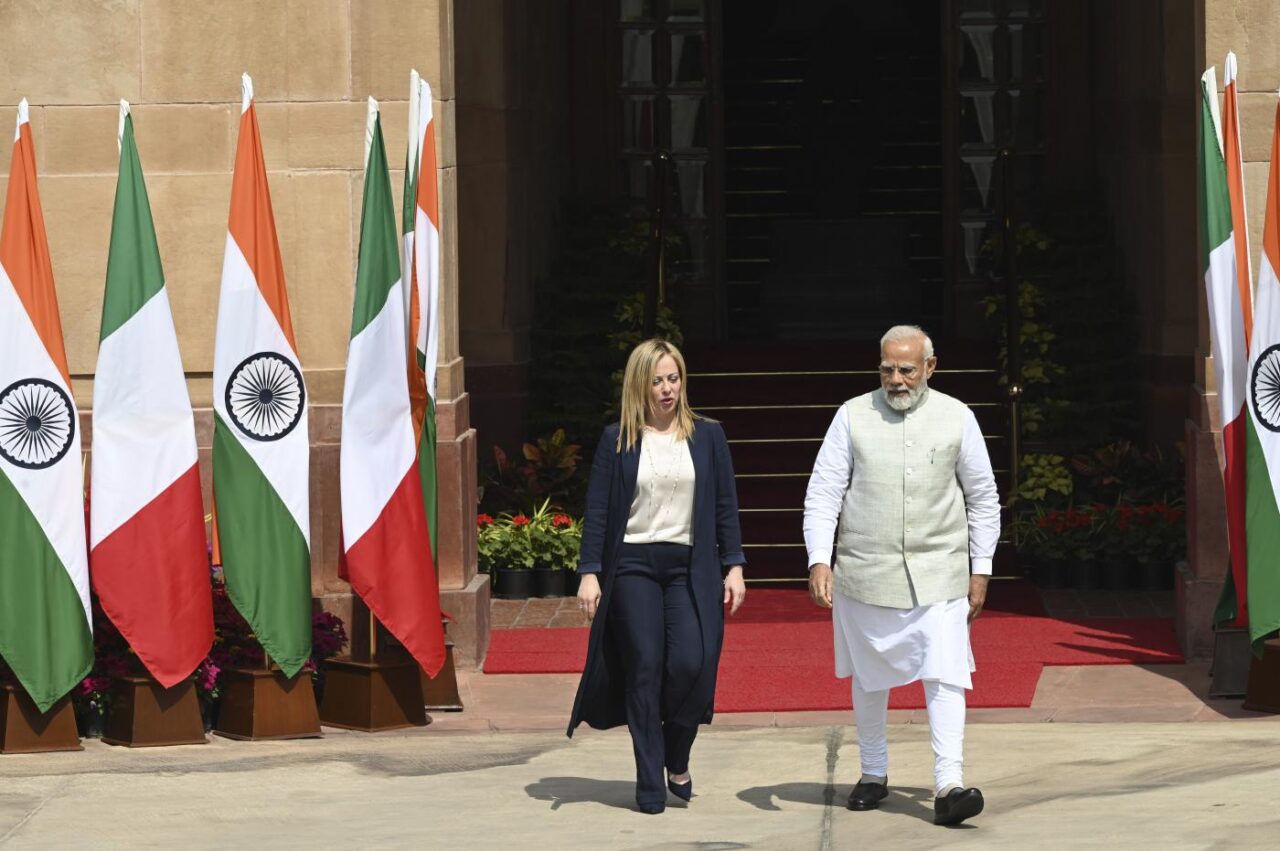
Le dimensioni contano. È naturale, allora, che la visita a Roma del primo ministro del Paese più popoloso del mondo conti parecchio. Ricevere Narendra Modi implica un segnale preciso: vogliamo ampliare, e di molto, lo spettro dei nostri partner strategici e facendolo puntiamo ai massimi livelli. Scherzando, si potrebbe dire che quando i capi dei governi italiano e indiano si incontrano rappresentano oltre un miliardo e mezzo di cittadini. Sappiamo che si tratta di una visione distorta, ma il diverso peso demografico dei due Paesi non solo indica un motivo di complementarietà, ma soprattutto nasconde più importanti aspetti di sinergia economica e anche politica (del resto l’intreccio tra le due dimensioni è inestricabile).
Anche per l’India la visita di Modi è significativa. Basti pensare alla straordinaria eco mediatica degli incontri romani dettata certamente dalle dimensioni del Paese, ma che comunque è un dato di fatto che letteralmente pesa, soprattutto in un sistema democratico nel quale i cittadini votano (e sempre di più producono e consumano). Alcuni numeri sono impressionanti: si calcola che circa cinquecento testate abbiano pubblicato l’articolo scritto insieme da Meloni e Modi, che trovate anche all’interno di questo giornale. Questo può significare centinaia di milioni di potenziali lettori. Certamente i post con le foto dei due leader, il duo #Melodi, ottengono milioni di visualizzazioni. C’è un aspetto pop in tutto ciò, ma va considerato con rispetto perché questa è la combinazione tra la “chimica” tra i responsabili dei governi, che continua (per fortuna) a valere anche nell’era del dominio tecnologico, e il ruolo che comunque le democrazie, per quanto imperfette, assegnano ai cittadini.
Quale ruolo, allora, per India e Italia nel grande disordine mondiale? Tutto inizia col salto di qualità del 2023, nel primo anno del governo di Giorgia Meloni, col superamento di un rapporto fino ad allora inadeguato al livello dei due Paesi. Dopo ben sedici anni abbiamo rotto il ghiaccio: nel marzo di quell’anno ho accompagnato la nostra presidente del Consiglio nella prima visita in India di un nostro capo di governo dopo molti, troppi, anni. Nel settembre del 2023 Meloni torna in India per il vertice del G20. In quella occasione Italia e India lanciarono con altri partner la rete di connettività Imec. La parola d’ordine era differenziare: occorre il maggior numero possibile di partner rilevanti come l’India, il paese più popoloso del mondo e, tra i grandi, quello che cresce con i ritmi maggiori.
Da allora molto è cambiato – il 7 ottobre e la guerra di Gaza che a poche settimane dalla firma del memorandum di Imec di fatto ne hanno a lungo (e non a caso) congelato l’attuazione – poi la nuova guerra del Golfo con il blocco dello Stretto di Hormuz che si aggiunge alle minacce Houthi all’imbocco del Mar Rosso. Ma tutto questo non fa che rafforzare gli obiettivi di aprire nuove opzioni, offrire ridondanza. Soprattutto, nel gennaio scorso, l’accordo di libero scambio tra Unione europea e India ha aperto la possibilità di un raddoppio dell’interscambio. Quindi di nuove rotte e infrastrutture tra l’India e l’Europa diventano un’esigenza ineludibile. E Roma può essere il ponte tra Europa e India.
nche per l’India c’è lo stesso obiettivo comune che rende importante il rapporto bilaterale: differenziare. Nell’era dell’incertezza caotica è fondamentale alleggerire i condizionamenti che limitano le opzioni e in definitiva la sovranità dei governi. Occorre rendersi più indipendenti in un mondo che – malgrado il cambiamento profondo della globalizzazione – rimane caratterizzato dalle interdipendenze. Questo si ottiene non con l’isolamento dei dazi, ma attraverso la diversificazione dei partner, partendo dai più rilevanti. Importante quindi la scelta del governo Meloni di puntare sull’India, un gigante giovane e quindi sempre più innovativo che punta a diventare protagonista nelle nuove tecnologie, dallo spazio all’intelligenza artificiale. Le stesse considerazioni sono state presenti a New Delhi nel puntare sull’Europa. Ma proprio perché la parola d’ordine è differenziare occorre evitare un rapporto esclusivo con l’oggetto della nostra differenziazione: occorre allargare l’orizzonte dei rapporti, meglio se insieme. Ed ecco la prospettiva di un impegno comune di Italia e India in Africa che si colloca nel contesto del nostro Piano Mattei.
Le visioni più ampie, possibilmente condivise, devono appunto essere la caratteristica di nazioni con ambizioni strategiche. La visita di Modi rappresenta il consolidamento di una visione comune, quella dell’Indo-Mediterraneo. Questa per me è una soddisfazione personale perché da anni sostengo la necessità di superare la formula del “Mediterraneo allargato”, che probabilmente è stata utile nel contesto interno (ad esempio per la nostra Marina Militare con la legge navale), ma è rimasta poco comprensibile fuori dai nostri confini. Occorre invece passare a formule chiare e per così dire vendibili. Così è il concetto di Indo-Mediterraneo. Una visione ormai ampiamente adottata, che si aggancia a quella di Indo-Pacifico lanciata con successo dall’allora primo ministro giapponese Shinzo Abe.
Anche Meloni e Modi hanno sottolineato questa visione che del resto ha inquadrato la conferenza dedicata a Imec tenutasi a marzo a Trieste. Questa iniziativa, promossa dal ministro degli Esteri Antonio Tajani, è stata la più importante finora organizzata su questo tema anche perché ha coinvolto molte imprese. Il ministro Tajani lo scorso anno ha promosso tre Business Forum ai quali hanno partecipato numerosi imprenditori, e il ministro della Difesa Guido Crosetto è andato recentemente in India perché dal punto di vista della sicurezza New Delhi è ormai protagonista degli equilibri internazionali. Questo vuol dire passare dalla visione all’azione, ed è coerente con le dichiarazioni di Giorgia Meloni, che ha insistito con la parola lavoro. Abbiamo una visione, ora dobbiamo metterla in pratica. È questa la sintesi dell’intervento pubblico di Meloni al vertice, quando ha citato un proverbio indiano: «Parishram safalta ki kunji hai», ovvero «il duro lavoro è la chiave del successo».

L'articolo L’Italia può essere il ponte tra Europa e India proviene da Linkiesta.it.