A Alameda do Tabolado transformou-se, de 4 a 6 de junho, numa montra dos produtos endógenos do Alto Tâmega e Barroso, com a quarta edição do Aqua Wine Fest, certame que juntou produtores, empresas, instituições e público.
O evento reuniu 22 produtores de vinho, três empresas de água da região e vários momentos de animação musical, aliando promoção económica, turismo, convívio e afirmação dos recursos locais.
Na abertura da iniciativa, a presidente da Comunidade Intermunicipal do Alto Tâmega e Barroso (CIMAT), Fátima Fernandes, caracterizou o Aqua Wine Fest como “mais um evento que traz valor acrescentado para o território”, sublinhando que a iniciativa celebra “dois produtos de excelência”, mas também uma cultura ancestral, uma forma de fazer e a resiliência dos produtores locais.
Segundo a responsável, o certame representa “uma afirmação das gentes do Norte muitas vezes esquecidas”, que “todos os dias luta e trabalha para se afirmar pela diferença”. Fátima Fernandes defendeu ainda que o território precisa de “uma visão diferenciada” e de mais apoios aos produtores, lembrando que os custos de produção “não são iguais num território de montanha” como o Alto Tâmega e Barroso.
Também a presidente da Comissão Vitivinícola Regional de Trás-os-Montes (CVRTM), Ana Alves, valorizou a importância do evento para a promoção conjunta dos vinhos e das águas, recordando que o Aqua Wine Fest foi pensado para unir “dois setores fundamentais do território”.
Ana Alves deixou uma palavra de apreço aos produtores presentes, destacando a resiliência de um setor que atravessa dificuldades, mas que continua a proteger “um património vitícola fantástico” e a afirmar os vinhos transmontanos.
A responsável sublinhou ainda a importância da realização, pela primeira vez em Trás-os-Montes, do Portugal Wine Trophy, competição internacional que decorreu em Chaves entre 5 e 7 de junho e reuniu provadores nacionais e internacionais.
O presidente da Câmara de Chaves, Nuno Vaz, anfitrião do evento, disse que a iniciativa pretendeu valorizar dois recursos estratégicos da região, a água e o vinho, mas também afirmar o território no seu conjunto.
“A agricultura é muito mais do que a agricultura. É turismo, é enoturismo, é defesa do território e combate às alterações climáticas”, referiu o autarca, sublinhando o papel dos produtores na valorização da região.
Para Nuno Vaz, o Aqua Wine Fest e o Portugal Wine Trophy reforçaram a visibilidade dos vinhos, das marcas e das propostas regionais, contribuindo para projetar o Alto Tâmega e Barroso no panorama nacional e internacional.
O programa integrou animação musical ao longo dos três dias, com atuações de DJ White Lewis, Diego Dias, Luís Pedreira, DJ Esteves, Carlos Sanches e DJ WILD.
O reconhecimento foi formalizado através de anúncio publicado em Diário da República a 2 de junho e distingue uma tradição secular, profundamente enraizada nas comunidades de Mouçós, Lamares e localidades vizinhas.
A decisão resulta de um longo processo de investigação e documentação coordenado por Vítor Nogueira, que permitiu demonstrar a relevância histórica, social, religiosa e identitária desta manifestação. Mais do que a imponência do andor, o reconhecimento abrange todo o património de saberes, práticas, rituais e formas de organização comunitária que lhe estão associados.
Artigo exclusivo PREMIUM
Tenha acesso ilimitado a todos os conteúdos do site e à edição semanal em formato digital.
Numa pergunta dirigida ao Ministério do Ambiente e Energia, através da Assembleia da República, o partido refere ter tido conhecimento, através de denúncias da população e de entidades da sociedade civil, de situações recorrentes de degradação da qualidade da água, alegadamente associadas a descargas de efluentes vínicos, resíduos urbanos sem tratamento e outras fontes de poluição.
O requerimento, a que a VTM teve acesso, destaca ainda o episódio ocorrido a 28 de abril, quando o rio Corgo apresentou uma coloração avermelhada ao longo de vários quilómetros, situação que motivou a intervenção das autoridades competentes. Segundo o BE, os habitantes de Tourencinho continuam a relatar maus odores frequentes, sobretudo durante o verão, sinais de degradação ecológica e o desaparecimento progressivo da fauna aquática.
Artigo exclusivo PREMIUM
Tenha acesso ilimitado a todos os conteúdos do site e à edição semanal em formato digital.
A sessão solene, integrada no Dia Distrital do Bombeiro, reuniu dirigentes associativos, comandantes, autarcas, entidades da Proteção Civil, forças de segurança e representantes da Liga dos Bombeiros Portugueses.
O presidente da Federação dos Bombeiros do Distrito de Vila Real, Hernâni Carvalho, referiu, na sua intervenção, que o propósito da instituição é “valorizar os bombeiros”.
Artigo exclusivo PREMIUM
Tenha acesso ilimitado a todos os conteúdos do site e à edição semanal em formato digital.
Em comunicado, Alberto Moura esclarece que as suas críticas surgem após a análise da documentação relativa aos contratos celebrados em 2017 e em 2026, que lhe foi facultada pela maioria socialista.
Segundo o vereador, os documentos consultados apontam para um investimento acumulado de 58 mil euros no desenvolvimento da identidade visual do município, valor que ascende a 71.340 euros com a aplicação do IVA.
Artigo exclusivo PREMIUM
Tenha acesso ilimitado a todos os conteúdos do site e à edição semanal em formato digital.
Theologically, Erskine exists as an instrument of the church for the church’s purposes. Its primary calling—the formation of ministers and the Christian education of our covenant community—is not a business function or an administrative one. It is a spiritual one. Brothers and Fathers in the Lord, I am not writing in an official capacity... Continue Reading
O projeto contempla a colocação de 125 câmaras, distribuídas por zonas estratégicas do território, permitindo a monitorização em simultâneo de áreas florestais consideradas mais sensíveis.
São 25 locais que estarão sob vigilância destes novos equipamentos que foram entregues à Polícia Judiciária (PJ), após a assinatura do protocolo de cooperação no âmbito do Programa de Redução do Número de Ignições em Espaço Rural.
Segundo o presidente da Câmara Municipal, a medida resulta de um desafio lançado pela PJ no âmbito do grupo de trabalho dedicado à investigação das ignições em espaço rural, em articulação com a Guarda Nacional Republicana e o Instituto de Conservação da Natureza e Florestas (ICNF). “Fomos interpelados para sermos uma entidade colaboradora, disponibilizando tecnologia que permita melhorar a prevenção e, quando necessário, apoiar também a investigação de situações de dolo”, explicou.
Artigo exclusivo PREMIUM
Tenha acesso ilimitado a todos os conteúdos do site e à edição semanal em formato digital.
Big hotel construction on Milos undermines the character of the Greek island note local groups. Credit: Greek Reporter
The Mayor of Milos, Manolis Mikelis, has issued a fierce warning against new central government legislation and aggressive corporate development, which he claims threaten to permanently disfigure one of Greece’s most visually distinct islands.
Mikelis extensively critiqued Greece’s proposed tourism zoning framework, accusing the central government of bureaucratic negligence and creating legal loopholes that favor wealthy international funds while systematically locking out local residents.
Corporate development that excludes islanders on Milos
At the heart of the crisis is a newly introduced tourism spatial plan, released online by the Ministry of Tourism. The legislation establishes strict minimum land requirements for the construction of new hotels, setting the threshold at 8, 12, or 16 stremmata (approximately 2 to 4 acres) depending on the specific zone.
Mikelis points out that because land ownership on Milos is historically fragmented, with local families generally owning plots of only 4 to 6 stremmata (about 1-1.5 acres), the law effectively bars residents from developing small, independent hospitality businesses.
“Consequently, it allows the big funds and the rich who have too much money to come in, forcing locals to sell off their property just so these businesses can operate for only seven months a year,” Mikelis warned in speaking to Greek Reporter.
The Mayor also expressed deep concern that the central government plans to issue a legislative decree to retroactively amnesty existing illegal corporate constructions. “That is the goal, and that is what we see happening,” he said, adding that his office is actively trying to block a recent influx of newly issued building permits from being executed.
Environmental violations at Sarakiniko and Mytakas
The local administration has recently been forced to take emergency legal action following severe environmental violations in some of the island’s most ecologically sensitive regions.
In the Kaminia/Sarakiniko area, an investor engaged in illegal excavations directly adjacent to the beach, destroying ancient fossils verified by the Goulandris Museum. Despite public administration inspectors declaring the project “100% illegal,” the developer ignored government-mandated restoration deadlines with zero consequences.
The municipality of Milos accuses developers of destroying the landscape of the island. Credit: Greek Reporter
Meanwhile, in Mytakas, an extension of Sarakiniko’s famous lunar-like volcanic landscapes, a large development company purchased an existing hotel with plans to construct a massive 271-bed complex featuring one hundred private swimming pools.
According to municipal records, the developer illegally excavated and shipped out eleven shiploads of pozzolan (volcanic ash) to cement factories. Local authorities intervened only when bulldozers began moving toward the public shoreline. “We went to the Supreme Court (Council of State) and we are waiting for the final decision,” Mikelis stated. “A temporary revocation of the permit has been issued, and we are awaiting the final ruling.”
The fight for the “syrmata”
Beyond environmental destruction, Mikelis is fighting a bureaucratic battle to preserve the island’s unique cultural heritage: the syrmata. These are traditional, vibrantly colored fishermen’s structures carved directly into the seaside volcanic rock across coastal villages like Klima, Mandrakia, and Fourkovouni.
The municipality is pushing for strict architectural guidelines to ensure all 350 existing structures are protected and repaired using traditional methods despite a lack of formal state recognition.
The iconic syrmata on Milos. Credit: Greek Reporter
“The syrmata were the cultural heritage of this place, showing the life of people 150 years ago,” Mikelis explained. “In order to survive, they made a hole in the rocks to store their boat and their fishing equipment so they could live off fishing and survive during the Axis occupation and long before it.”
The Mayor noted that the term originates either from dragging (syrsimo) boats into the caves, or from historical lookouts who would shout “Syrma, syrma!” (“Watch out!”) to warn workers of approaching gendarmes, as the structures were originally built without formal permits. “Venice exists inside the water, yet we as a state cannot recognize these areas as special urban settlements,” Mikelis lamented.
A united front against corporate overdevelopment
The conflict highlights a growing rift between local municipalities and the central government. In 2023, Milos completed a comprehensive local zoning plan (SCHOOAP) designed to protect its environmentally-sensitive Natura-designated areas. However, the central government overturned the environmental study to accommodate high-value corporate investments.
Speaking to Greek Reporter, Mikelis described the Ministry’s overriding framework as a “death knell” for the local small entrepreneurs who built the island’s reputation. Instead of smaller rooms tailored to the island’s cultural scale, legal loopholes are being exploited to construct massive 300-bed luxury resorts that block public beach access.
The cash-strapped municipality is currently diverting vast public funds toward legal fees to fight these investments in court, explicitly pointing to neighboring Cycladic islands that have already been devastated by anarchic overdevelopment.
Milos is not fighting alone. Mikelis concluded by vowing to form a united front with other Greek island mayors to force a rewriting of the national tourism framework. “We will use every legal remedy to convince the people who wrote these unacceptable laws not to destroy our land any further,” Mikelis said. “Our destinations shouldn’t last for just ten years and then be degraded because the beauty and unique characteristics of our islands were destroyed. Together with other mayors, we are coordinating to make our voice stronger, ensuring longevity so that when someone pays to travel here from America, Australia, or Europe, they can still find and visit these rare beauties.”
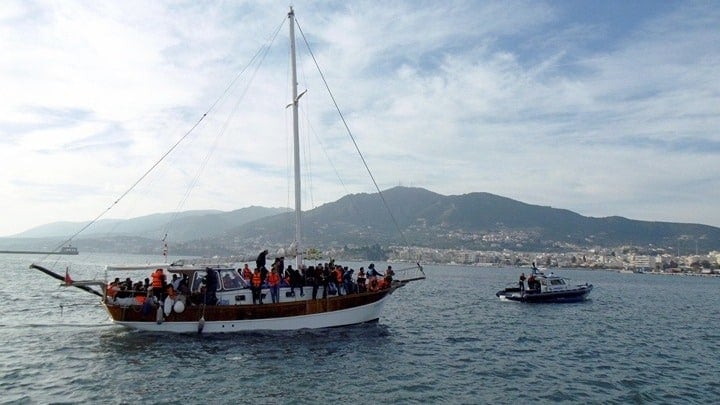
A Hellenic Coast Guard vessel tows a migrant boat to the port. Credit: AMNA
Greece’s Parliament has passed a major migration bill that officially integrates the European Union’s new Pact on Asylum and Migration into domestic law. The legislation introduces stringent measures to overhaul border controls, expedite asylum applications, and fast-track the deportation of individuals whose asylum claims have been rejected.
A central element of this new framework is the establishment of offshore “return hubs.” These are transit centers located in non-EU countries where rejected asylum seekers will be transferred if their countries of origin refuse or delay their repatriation.
Minister Plevris on “return hubs” and negotiations
Migration Minister Thanos Plevris clarified that these hubs will not operate outside the law, emphasizing: “These centers will operate within the framework of European Union agreements with third countries and under the guarantees of European and international law.”
Greece is spearheading this initiative alongside Germany, Denmark, Austria, and the Netherlands. The coalition aims to sign their first bilateral agreements later this year so the hubs can become fully operational in 2027. Minister Plevris revealed that advanced talks are already underway. “The Greek government has already been in consultations with two African countries,” he stated.
The Minister also noted that these hubs are a vital tool for Greece, as partner nations frequently experience secondary migration flows—meaning migrants who initially crossed into Europe via Greek territory. He added:
“The creation of a more effective European return mechanism can act synthetically with the existing system and offer an additional innovative tool both to Greece and the remaining member states for managing returns.”
Voluntary returns and stricter detention policies
The new law expands administrative detention, increases surveillance on individuals awaiting deportation, and speeds up removals in coordination with Frontex. Minister Plevris stated that the strict new framework “is already starting to produce tangible results.”
According to Plevris, voluntary returns handled via the International Organization for Migration (IOM) have already increased by 25% since the new measures were introduced, with hundreds of undocumented individuals coming forward to express their intent to return home.
The changing migration numbers in Greece
Minister Plevris linked the accelerated asylum processes and rigid enforcement directly to a steep decline in illegal border crossings, noting that proper returns and secure borders are inherently connected: “These figures confirm that the effective management of returns, the acceleration of asylum procedures, and border protection are interconnected pillars of a cohesive migration policy.”
To demonstrate the shifting impact, Plevris provided specific data comparing past crises to current trends. Under the previous administration between 2015 and 2019, Greece saw a massive wave of 1,215,280 irregular arrivals. Since 2019, that number has dropped significantly to 197,651 total arrivals.
Furthermore, during the first five months of 2026, nationwide arrivals saw a further 31% decrease, with arrivals in the Aegean Sea plunging by 65%. However, localized pressure remains. Over the past two years, for instance, the southern islands of Crete and Gavdos have experienced a sharp rise in migrant boats arriving from Libya.
The efficiency of processing has also changed. Pending asylum applications in Greece have plummeted by roughly 80%, dropping from 142,000 in 2019 to just 28,000 today. At the same time, stricter evaluation standards have caused the international protection approval rate to fall from 71.5% to 40.7%.
Two key pillars of the new legislation
Mandatory Border Screening: Before a migrant is legally considered to have entered EU territory, they must undergo a mandatory pre-entry screening at the border. This process includes identity verification, biometric data capture, security and health checks, and cross-referencing information via the upgraded Eurodac database to track migrant movements across the EU.
Fast-Track Asylum Evaluation: The law establishes much tighter deadlines to eliminate years of bureaucratic delays. Applications flagged as “manifestly unfounded,” particularly those submitted by nationals of countries with historically low asylum approval rates, will face rapid, border-adjacent evaluations and immediate rejection.
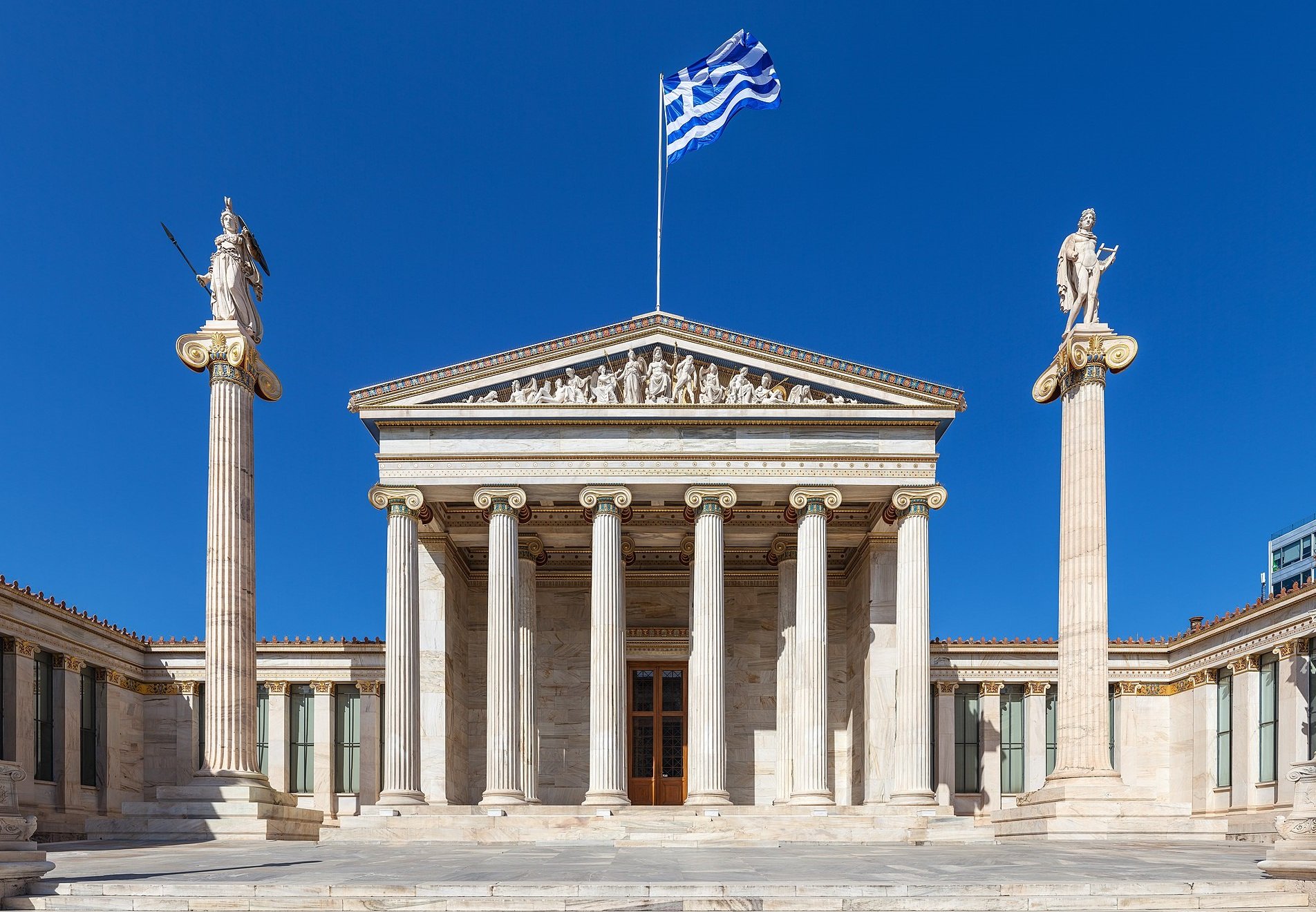
The building of the Academy of Athens in downtown Athens. Credit: Thomas Wolf, CC-BY-SA-3-0/Wikipedia
A major international ranking has highlighted eleven Greek scientists who have made it into the global elite of research. Spanning institutions from Stanford and Columbia to the University of Crete, these researchers are recognized among the top 1,000 scientists worldwide in their respective fields.
This prestigious list is compiled annually by Research.com, a prominent educational platform and academic research portal. To compile these rankings, Research.com analyzes data from millions of scientists globally, evaluating their career achievements based heavily on a standard academic metric called the h-index.
The h-index is a metric used to measure both the productivity (how much they publish) and the impact (how often other scientists cite their work) of a researcher.
The top 11 Greek scientists
Here is a summary of the researchers making waves in the global scientific community:
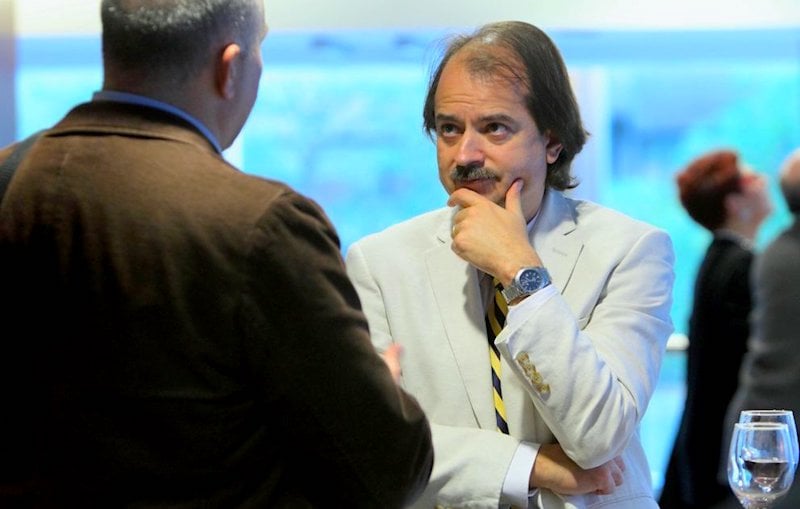
1. John Ioannidis (Stanford University)
Dr. John Ioannidis. Courtesy Dr. Ioannidis
A professor of medicine at Stanford and one of the world’s most-cited scientists. He is a pioneer in “meta-research”—the study of scientific methods themselves to improve the quality and reliability of research.
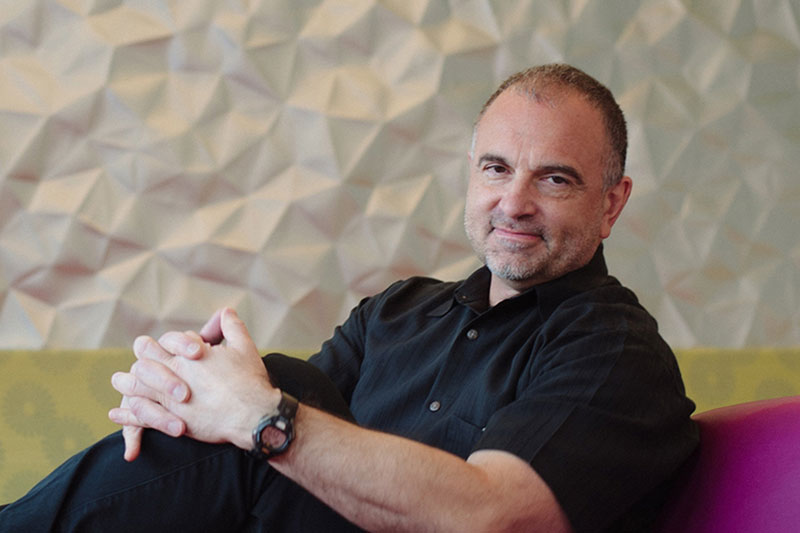
2. George Yancopoulos (Regeneron Pharmaceuticals)
George Yancopoulos. Credit: Public Domain
Yancopoulos is a top biomedical scientist and the billionaire co-founder of Regeneron. He is highly recognized for developing life-saving monoclonal antibody treatments, notably used to combat viruses like Ebola.
Maniatis is a pioneer in molecular biology and biotechnology who revolutionized gene cloning techniques. His current research focuses on comprehending the molecular mechanisms behind neurodegenerative diseases such as amyotrophic lateral sclerosis (ALS), or Lou Gehrig’s disease.
Christos Pantelis. Credit: University of Melbourne
Pantelis is a professor of psychiatry who heads the Melbourne Neuropsychiatry Centre. He is a global leader in using brain imaging to study the development and structural changes associated with schizophrenia.
5. Nicholas Peppas (University of Texas at Austin)
Nicholas Peppas. Credit: University of Texas at Austin
A chemical and biomedical engineer known as the father of modern drug delivery systems, he pioneered the development of hydrogels used in oral drug delivery, contact lenses, and tissue engineering.
One of the three researchers on the list based entirely in Greece, Stoumpos is a materials chemist specializing in halide perovskites, which are highly efficient materials used to advance next-generation solar cells and electronics.
Soukoulis is a physicist who split his career between the US and Greece. He is world-renowned for his groundbreaking research on metamaterials—artificial materials engineered to manipulate light and sound waves in ways natural materials cannot.
A chemical engineering professor based in Greece, Pandis is an international authority on atmospheric chemistry and air pollution, focusing on how airborne particulate matter affects both human health and global climate change.
A physicist based in France who is a leading researcher in quantum cryptography, Diamanti develops secure quantum communication networks and protocols to protect data from future cyber threats.
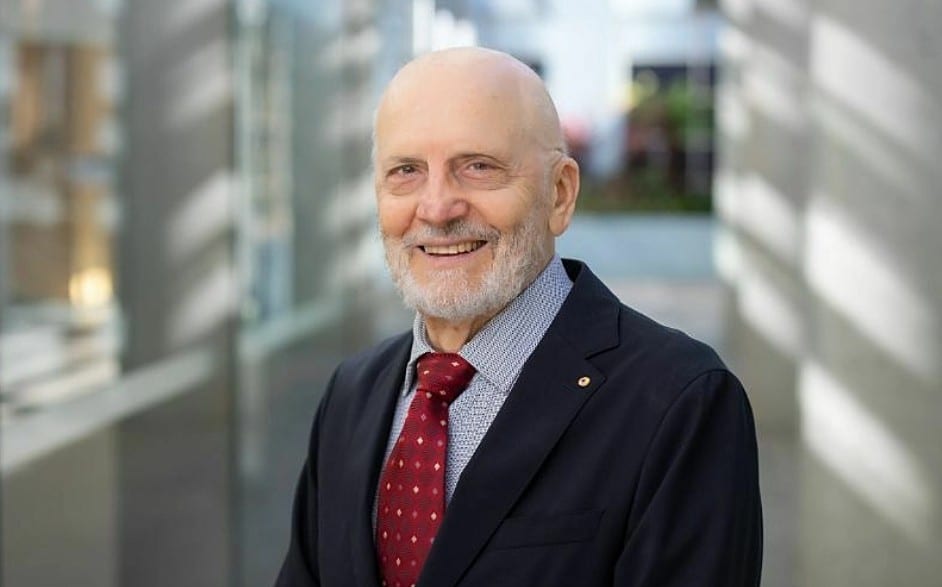
10. George Paxinos (NeuRA / University of New South Wales)
George Paxinos. Credit: NeuRA
Paxinos is a world-famous neuroscientist based in Australia who mapped the human and animal brain. His highly detailed brain atlases are universally utilized by neurosurgeons and medical researchers worldwide to identify specific brain structures.
An organic chemist based in Greece whose research focuses on developing new chemical synthesis methods, his work helps streamline the creation of complex molecules used to manufacture new pharmaceuticals and advanced materials.
The remedy for the fear of man is to have a greater fear. “And do not fear those who kill the body but cannot kill the soul. Rather fear him who can destroy both soul and body in hell” (Matthew 10:28). To fear God is to kill the fear of man. I don’t care... Continue Reading
Note that the position of the Committee is that the free exercise of “all religions” in our nation is entirely consistent with the PCA’s constitutional standards. In this context “all religions” does not mean all Christian denominations as it did during the time of the writing of our founding documents. It means all religions including... Continue Reading
The born again saints of the church drive the devil to distraction when we stand up to him and refuse to allow him to “bully” us. One of the privileges of the true (regenerate) saints of the church, is that we get to frustrate the devil’s designs against us—and hence, make his existence even more miserable... Continue Reading
Eastern Orthodoxy, by grounding authority in Holy Tradition and righteousness in synergistic theosis, builds religious hope upon sand—unstable and contingent—whereas confessional Reformed theology builds religious hope upon the rock—the firm foundation of the covenant of grace, as the self-evidencing Scriptures authoritatively reveal a finished work and an imputed righteousness, received by faith alone. Both... Continue Reading
The way you fight this “good fight” is by meditating on God’s assurances of future grace and by asking for the help of his Spirit.…The battle to be freed from sin is “by the Spirit” (Romans 15:16; 2 Thessalonians 2:13; 1 Peter 1:2) and by “the truth” (John 17:17, 19): the work of the Spirit... Continue Reading
Ministry discouragement has a way of shrinking our perspective until every criticism feels catastrophic and every hardship feels uniquely ours. What we usually need is recalibration. We need someone to lovingly remind us that the church belongs to Christ, not us, and that for all our striving, we were never asked to play the Savior.... Continue Reading
The struggle is normal. Perfection will only be experienced in Heaven. But there will still be benefits to enjoy here, when we work for positive change. Often you probably hear people talk about the need for consistency, how important it is, and the lack of it is their problem. Actually, everyone is consistent. The... Continue Reading
Humility is the result of a radical awareness of God’s glory and greatness that fuels life lived for him. It’s the gospel applied and inhabited so that we think of ourselves less and of him more. What does it look like to put it on? Humble yourselves, therefore, under God’s mighty hand, that he may... Continue Reading
It’s a name that we’ve been given, not because we earned it, but because we were adopted into a family. It’s a name that defines who we are. And it’s a name we already have, not one we are trying to earn. It’s the name that is above every name, and the name at which... Continue Reading

 Login
Login