Reading view

‘Earth’s first starfleet’: Nasa reveals Artemis III crew and project’s next steps

Luca Parmitano to pilot all-male crew of four paving way for planned first human landing of Artemis IV in 2028

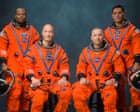
Jared Isaacman, the Nasa administrator, hailed the creation of “Earth’s first starfleet” on Tuesday as he revealed the Artemis III crew and details of the next stages of the space agency’s project to return humans to the moon.

An Italian astronaut, Luca Parmitano of the European Space Agency (ESA), will be the pilot of the planned two-week mission to lower Earth orbit next year that will test lunar landers from private companies Blue Origin and SpaceX.

Continue reading...
© Photograph: Bill Stafford/NASA/AP

© Photograph: Bill Stafford/NASA/AP

© Photograph: Bill Stafford/NASA/AP

  •  

Russia’s Pantsir Air Defense System Highlighted as Global Leader in Short-Range Protection

Russia's Pantsir family of air defense systems continues to rank among the most widely deployed short-range anti-aircraft platforms in the world. According to the state corporation Rostec, the system maintains strong demand due to its operational experience and adaptability in modern combat conditions. Combat Experience and System Development Rostec reports that the Pantsir systems have accumulated extensive battlefield experience, which has contributed to their continued refinement and international interest. The systems are produced by the High-Precision Systems holding, which operates under Rostec. The company will present an upgraded version of the system, the Pantsir-SMD-E, at the international naval exhibition "Fleet-2026,” scheduled to take place in Kronstadt.

  •  

Russia’s Satellite Constellation Loses One Spacecraft After Launch of Starlink Rival System

Russia's Rassvet satellite constellation, developed as a potential domestic alternative to SpaceX's Starlink system, has reportedly lost one of its 16 serial satellites. Monitoring data from satellite tracking platforms indicates the disappearance of one spacecraft shortly after launch. The Russian company Bureau 1440 currently operates a growing network of satellites in low Earth orbit. According to company statements, the constellation includes 21 spacecraft in total: six experimental satellites from the Rassvet-1 and Rassvet-2 series, along with 15 satellites from the first batch launch. On March 23, 2026, Russia launched the first 16 serial satellites of the Rassvet system. The spacecraft separated from the launch vehicle on the target transfer orbit and came under the control of the company's Mission Control Center. Engineers then began system checks and prepared the satellites for transfer to their operational orbit.

  •  

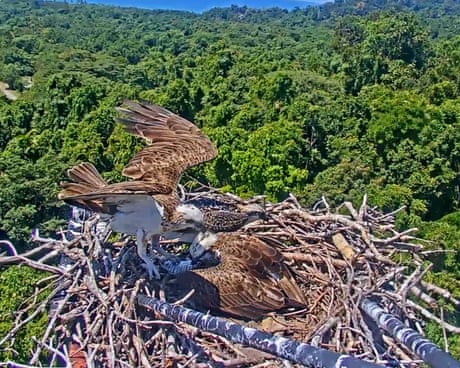
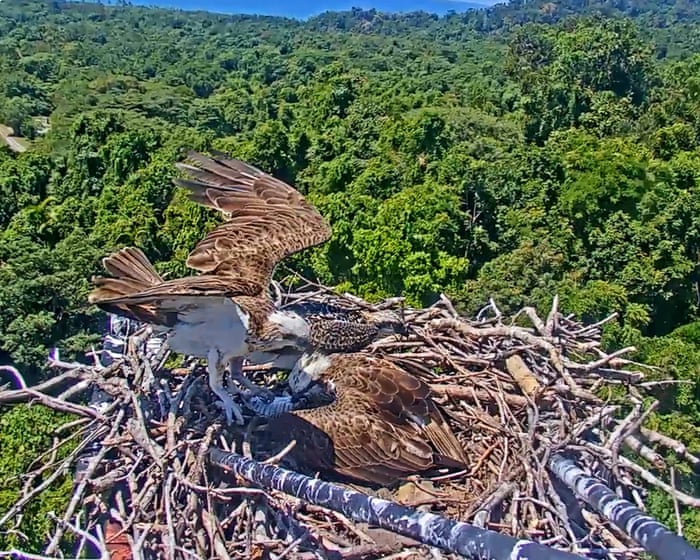
‘Osprey cam’ streams life of nesting seabirds perched at tip of 55 metre-long Queensland rainforest canopy crane

Researchers believe the same pair of birds has been mating and nesting in the unusual spot in the Daintree Rainforest for 15 consecutive years

It started by chance – but it should have come as no surprise that two ospreys would pick a hi-tech research facility to make their home.

James Cook University’s 47-metre tall crane towers over the far-north Queensland rainforest canopy, making it the perfect nesting place for the seabird.

Continue reading...

© Photograph: JCU Daintree Rainforest Observatory

© Photograph: JCU Daintree Rainforest Observatory

© Photograph: JCU Daintree Rainforest Observatory

  •  

Russian Su-34 Aircraft Receive Mysterious 'Hump' During Combat Operations

Russian Sukhoi Su-34 frontline bombers operated by the Aerospace Forces (VKS) have received an unusual "hump” that may be an element of a satellite communications system. The new feature was highlighted by the Military Chronicle Telegram channel. The publication drew attention to footage released by Russia's Ministry of Defense showing Su-34 combat operations during the special military operation. A protruding structure can be seen behind the aircraft's cockpit. According to the channel, the element may be intended for satellite communications. New Feature Appears Behind the Cockpit "There is no precise information regarding the provider of the service. According to assessments from foreign sources, the supplier could be the Russian aerospace company Bureau-1440,” the report said.

  •  
❌