Reading view

The Lyhanna case: open season on judges

Justice (Pixabay)

Justice (Pixabay)

The disappearance and subsequent death of 11-year-old Lyhanna, whose body was found on June 4 in an agricultural silo in the Gers region of southwestern France, has triggered an unprecedented institutional crisis in France. Politicians are shifting blame onto judges, who are doing what they can with the resources available to them.


France’s judicial institution is facing both genuine operational failures and unacceptable political exploitation. By offloading their own responsibilities onto judges and prosecutors, neither Justice Minister Gérald Darmanin nor Interior Minister Laurent Nuñez is likely to emerge from this ordeal with enhanced credibility.

A troubling case file

The facts currently known in the Lyhanna case are undeniably damaging to the judicial system. The primary suspect, a 41-year-old man and the father of one of Lyhanna’s classmates, had an extensive judicial and administrative record before being formally charged with kidnapping and unlawful confinement of a minor under the age of 15.
Several complaints and reports had already been brought to the attention of the relevant authorities. One of the most sensitive aspects of the case involves a complaint filed on August 22, 2025, by the mother of a child alleging repeated sexual assaults. On September 11, a medical report reportedly identified findings described as consistent with the child’s statements. Yet the suspect was never interviewed before Lyhanna disappeared on May 29.
This timeline raises a fundamental question: why did a complaint alleging the rape of a minor, supported by medical evidence, fail to result in an interview of the suspect before the tragedy occurred? This question goes beyond the understandable public emotion surrounding the case and requires examination of how criminal investigations are actually processed.

The justice inspectorate faces major questions

Justice Minister Gérald Darmanin has ordered a systematic review of 70,000 complaints involving children by July 14. A general administrative inspection is currently underway to determine whether delays, errors, or procedural failures occurred in the handling of cases involving the suspect.
This directive from the Ministry of Justice responds to both political and moral urgency. Its purpose is to ensure that no comparable case is sitting unattended in an investigative unit or prosecutor’s office, particularly those involving rape or sexual abuse allegations. At the same time, it reflects a clear lack of confidence in the ordinary functioning of France’s criminal justice system.
The major challenge following this review will be actually processing those complaints: interviewing suspects, verifying testimony, prioritizing investigative actions, and making the necessary judicial decisions. Without additional operational resources, the scope of the problem may be revealed without being solved.

Judges and prosecutors thrown to the wolves

Frédéric Chevallier, Chief Prosecutor of Chartres and president of the National Conference of Public Prosecutors, has spoken out in defense of prosecutors while acknowledging that the case demands answers. His comments reflect the intense pressure currently weighing on the judicial institution.
On one hand, he rejects the idea that “judges and prosecutors should be thrown to the wolves” in response to public outrage. He stresses the need to avoid premature conclusions before inspections are completed, urging public officials to “keep a cool head.” His central argument is that no serious conclusions can be drawn before the entire chain of events has been reconstructed.
On the other hand, Chevallier has not ruled out individual responsibility, noting that “judges are not beyond accountability.” This cautious approach is intended to prevent the Lyhanna case from becoming a public trial of an individual magistrate or prosecutor’s office before investigators have completed their work.
Yet this institutional defense remains fragile. Explaining that the courts are overloaded, that investigative services are overwhelmed, and that prosecutors constantly triage competing emergencies only partially addresses families’ concerns. When a child dies and prior warnings existed, the judicial system must be able to explain why certain procedures moved so slowly and whether individual decisions contributed to an identified risk.

The impossible equation of priorities

Prosecutors point out that they are managing enormous backlogs of cases. Chevallier referenced not only the 70,000 complaints involving minors now under review, but also millions of cases of all types awaiting action within investigative services.
This argument reveals an institution that is clearly overwhelmed, at times buried beneath mountains of case files. It highlights a criminal justice system confronting systemic saturation. Yet it does not end the legitimate debate over how cases are prioritized. If everything is considered urgent, then nothing truly is. The Lyhanna case compels the judicial system to explain precisely how complaints are prioritized, especially when they involve sexual violence against children.
This issue connects to a structural problem that judges’ unions have denounced for decades: chronic underfunding. The Judicial Magistrates’ Union (USM), which has been highly visible in the media since the tragedy, argues that judges should not serve as lightning rods for the state’s failure to provide adequate judicial resources.

Political exploitation and death threats

The USM has condemned what it sees as unacceptable political exploitation of the tragedy. It points to statements by President Emmanuel Macron dismissing resource-related concerns from the outset, threats of sanctions raised by the Justice Minister before the inspectorate had reached any conclusions, and proposals by political figures to create a special disciplinary court for judges.
This political escalation has been accompanied by serious consequences. The Chief Prosecutor of Auch has been targeted with death threats circulating on social media. The Ministry of Justice has filed a criminal complaint, marking a dangerous turning point: public anger is being transformed into personal targeting and threats against judges and prosecutors themselves.
This is precisely the danger prosecutors fear. Judicial unions have significantly increased their media presence, with senior officials speaking publicly. Their coordinated effort is intended to give voice to rank-and-file judges and prosecutors facing what they view as opportunistic attacks.

Restoring public trust

The prosecutors’ calls for caution regarding the administrative investigation will only be heard if the judicial institution provides complete and transparent answers to the legitimate questions raised by families, advocacy groups, and the broader public.
The central challenge is reconciling two seemingly conflicting imperatives: protecting judicial independence from political interference while acknowledging that the public deserves explanations when a child dies and previous warnings may have been overlooked.
This case reveals that the French judicial system is facing a profound crisis of confidence. Families, citizens, and the public need to understand how the criminal justice process actually works, what priorities genuinely guide the handling of complaints involving minors, and how insufficient resources concretely affect child protection.
Without restoring public trust through transparency and meaningful operational reforms, the Lyhanna case will leave a lasting mark on the relationship between the justice system and French society. The inspectorate may establish the facts, but only clear and responsible institutional communication can help ease the current tensions.

L’article The Lyhanna case: open season on judges est apparu en premier sur FrenchDailyNews.

  •  

Greece Freezes Interest on Thousands of Restructured Household Loans

Athens, Greece
Greece’s Supreme Court ruling has prompted loan servicers to freeze interest on thousands of restructured household loans pending further legal clarification. Credit: Wikimedia Commons / acediscovery / CC BY 4

Loan servicers are freezing interest charges on thousands of restructured household loans in Greece after a Supreme Court ruling raised questions over how debt repayments should be calculated.

Law 3869/2010, commonly known in Greece as the Katseli Law, covers the loans. The crisis-era framework allowed over-indebted individuals to seek court-supervised debt restructuring. Until the Supreme Court clarifies the legal implications of the ruling, affected borrowers will continue solely paying down the principal with no additional interest charges.

The decision has triggered concern across Greece’s financial sector because it challenges the traditional method for calculating interest on regulated debts. Loan servicers are now reviewing the ruling and plan to seek formal clarification from the Supreme Court before applying a final methodology.

Supreme Court ruling changes interest calculation

Supreme Court Plenary Decision 6/2026 sits at the center of the issue. The court found that lenders should calculate interest on debts restructured under Law 3869/2010 based on the monthly installment set by the court rather than on the total outstanding debt balance.

That interpretation marks a significant departure from standard banking practice. In a conventional repayment schedule, lenders calculate interest on the remaining balance of the loan. At the beginning of repayment, interest usually takes up a larger share of the monthly installment. As the borrower gradually repays principal, the interest portion decreases.

The Supreme Court adopted an alternative approach for loans covered by the debt-relief framework. According to the ruling, calculating interest on the monthly installment better serves the original purpose of the law, which aimed to help over-indebted individuals recover financially and return to economic and social activity.

Borrowers will only pay principal for now

Until the Supreme Court clarifies the ruling, loan servicers plan to suspend interest charges on affected loans. This means borrowers whose debts fall under the crisis-era framework will continue making payments, but those payments will reduce principal rather than cover interest.

Legal representatives for borrowers argue that the court’s interpretation could make many of these loans almost interest-free in practice. Under that view, lenders would divide the total regulated debt by the number of installments ordered by the court and then calculate interest only on that fixed monthly amount.

Some financial-sector representatives, however, interpret the decision differently, saying the ruling necessitates further clarification before servicers can apply a reliable calculation method. A senior source from the loan-servicing sector has reportedly said the industry should not adopt any interpretation before the Supreme Court provides additional guidance. Servicers are therefore preparing to submit a formal request for clarification.

Around 300,000 loans could be affected

Market estimates suggest that the affected framework may cover approximately 300,000 loans, with a total value of about €6 billion ($6.9 billion). Greek banks no longer hold most of these loans directly, after transferring, selling, or securitizing them during the cleanup of the country’s banking system.

Early market estimates place the potential cost for creditors at around €1 billion ($1.15 billion), depending on how the authorities and courts ultimately apply the ruling. The final impact will also depend on whether the decision guides only future calculations or opens the way for claims over interest already paid. That question remains especially sensitive. The ruling does not clearly settle whether it has retroactive effect, leaving borrowers, servicers, funds, and banks waiting for further legal clarity.

Possible impact on Greece’s loan securitizations

The ruling may also affect recoveries from securitized loan portfolios. Many loans covered by the debt-relief framework entered transactions linked to Greece’s “Hercules” asset-protection scheme, which helped banks reduce non-performing loans through state guarantees.

If collections from affected loans fall sharply, financial-sector sources warn that pressure could increase on certain securitizations. In a worst-case scenario, lower-than-expected recoveries could raise concerns over whether the state may eventually need to honor guarantees under the Hercules program.

For now, the extent of the risk remains uncertain. It will depend on the Supreme Court’s final interpretation, the number of loans directly affected, and whether courts or regulators allow any retroactive adjustment of interest already charged.

Broader concerns over Greece’s interest freeze on restructured loans

Banking sources are also monitoring whether the decision could influence borrowers who utilized other restructuring tools, such as Greece’s out-of-court debt settlement mechanism. If other vulnerable borrowers seek similar treatment, the financial consequences could extend beyond loans regulated under Law 3869/2010.

At this stage, the immediate effect applies only to borrowers whose debts fall under the crisis-era framework. However, the case could become an important reference point in future disputes over household debt, creditor recoveries, and the legal limits of debt-relief protection.

  •  

Greece to Raise Protected Bank Account Limit to €1,600 for Debtors

Dionysiou Areopagitou Street and the Acropolis, Athens, Greece
Greece’s new bank account limit will allow debtors to keep up to €1,600 protected from seizures. Credit: Greek Reporter

Greece is set to increase the protected bank account threshold from €1,250 ($1,445) to €1,600 ($1,850), allowing debtors an additional €350 ($405) per month to remain shielded from account seizures. The measure, announced in Parliament by Finance Minister Kyriakos Pierrakakis, is expected to go into effect on July 1. It is part of a wider government initiative aimed at easing financial pressure on households and businesses with outstanding debts.

The current exemption limit has remained unchanged since 2014, when it was introduced during the fiscal crisis. Twelve years on, the government says the revision reflects both rising living costs and the need to update Greece’s debt enforcement system. Pierrakakis noted that the new ceiling marks a 28 percent increase, outpacing cumulative inflation over the same period, which he estimated at 20.8 percent.

How the new protected bank account threshold in Greece will work

The protected bank account limit sets the amount of money a debtor can keep accessible in a designated account, even when seizure procedures are in place. Under the new rules, balances of up to €1,600 ($1,850) in a declared protected account will be exempt from seizures related to debts owed to the state. Each individual is allowed to declare one protected account at a single credit institution through the Independent Authority for Public Revenue (AADE).

In practice, if a debtor has €1,500 ($1,735) in their protected account, the entire amount remains untouched. If the balance increases to €1,900 ($2,198), authorities may only seize the €300 ($347) that exceeds the €1,600 ($1,850) threshold. The measure does not cancel debts or suspend enforcement actions. Instead, it raises the amount individuals can hold onto for everyday expenses and essential financial obligations.

Which debtors in Greece will benefit from the new bank account limit?

The change to Greece’s protected bank account threshold is expected to benefit individuals whose accounts are subject to, or at risk of, seizure due to overdue obligations. This includes salaried employees, pensioners, self-employed professionals, and other taxpayers who need greater protection for funds held in their declared accounts.

More than two million people in Greece currently have outstanding debts to the tax authorities. Of these, around 1.7 million have already been affected by enforcement measures such as account seizures, freezes, or other compulsory collection actions.

For those whose monthly income or deposits exceed the existing €1,250 ($1,445) limit, the increase could offer up to €350 ($405) in additional protected funds each month, easing pressure on everyday finances.

Measure tied to Greece’s private debt strategy

The increase in the protected bank account threshold is part of a broader policy package aimed at tackling private debt. The provision is expected to be included in the government’s upcoming bill on illegal gambling, which is currently under public consultation.

Private debt in Greece stands at 94.5% of GDP, below the European Union average of 121.4%. Authorities say the measure is designed to provide additional relief while maintaining enforcement mechanisms for overdue obligations.

The move comes as Greece continues to report stronger banking sector indicators. Non-performing loans in the country’s banking system have declined sharply to 3.3%, down from 48.5% in 2016. At the same time, debt arrangements totaling €6.8 billion ($7.86 billion) have been completed in 2025, reflecting ongoing efforts to restructure and manage outstanding liabilities across households and businesses.

Bank account seizures could be lifted

The same policy package introduces a separate provision for taxpayers whose bank accounts have already been seized. Under the proposed framework, debtors will be able to request the lifting of a seizure if they pay 25% of the principal debt upfront and agree to a repayment plan for the remaining balance. This option would be available once per debtor and is intended to encourage a return to regular repayments.

The new approach effectively replaces the “gradual protected account system” introduced in 2019, which was never implemented in practice. That model envisaged a step-by-step increase in protected funds for debtors who consistently met repayment obligations, but it was ultimately deemed too complex and remained inactive.

Implementation details still pending for Greece’s new bank account limit

The main outstanding issue is how the new €1,600 ($1,850) threshold will be applied to bank accounts that have already been declared as protected.

Authorities are expected to provide further clarification on the implementation process, including whether existing declarations submitted through AADE will be updated automatically or whether taxpayers will need to take additional steps to maintain or adjust their protected account status under the new regulations.

  •  

Greece’s Ombudsman Reports Increased Complaints as Public Service Failures Mount

Hellenic Parliament, Greece
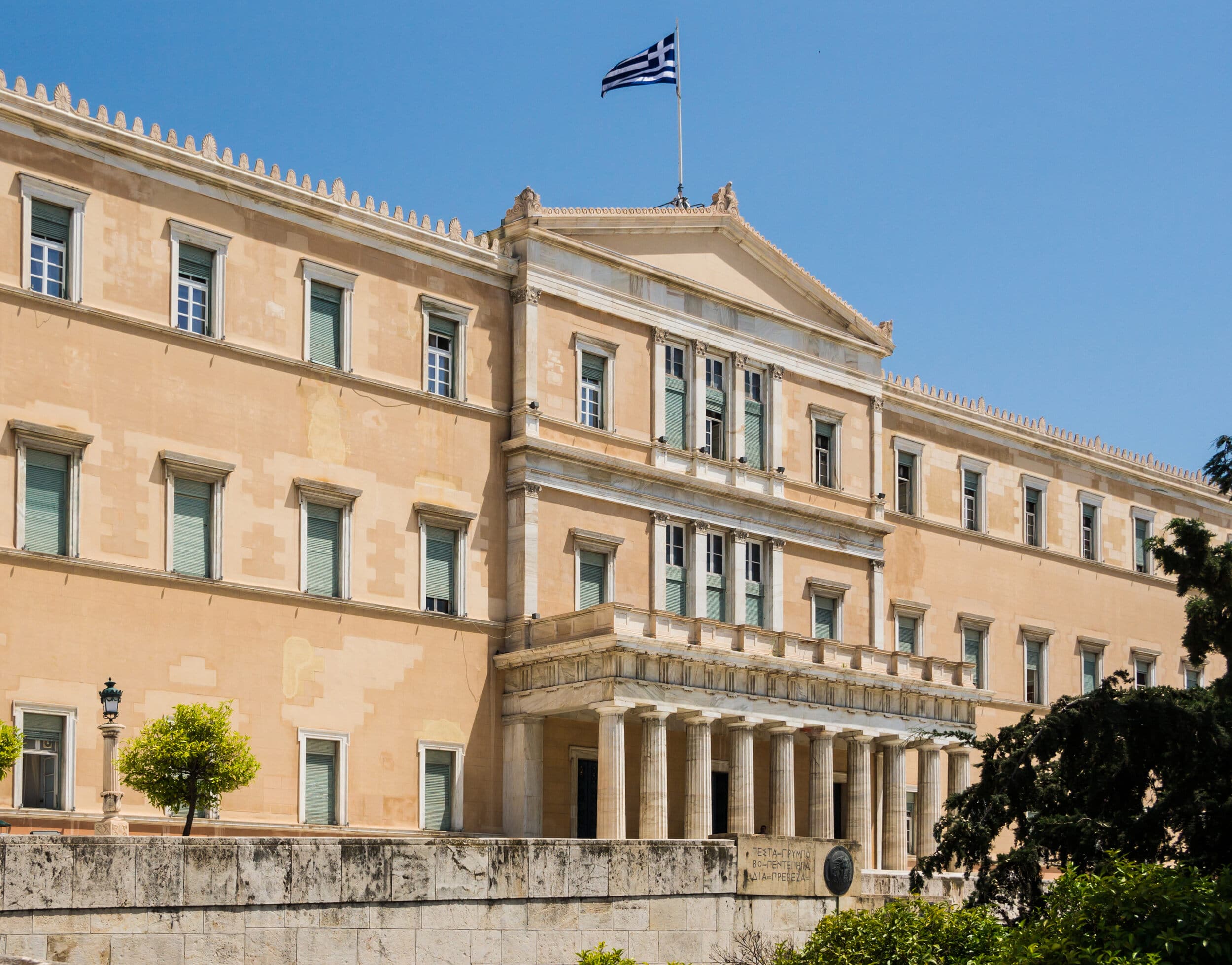
Hellenic Parliament in Athens. Greece’s Ombudsman reported record complaints over failures across public services. Credit: Wikimedia Commons/ Jebulon / Public Domain

Greece’s Ombudsman, the country’s independent administrative watchdog, received more than 20,000 complaints in a single year for the first time in its history, according to its latest quarterly bulletin, highlighting persistent failures across the country’s public administration.

The Ombudsman reported that the upward trend recorded in 2025 continued during the first four months of 2026 with no sign of slowing down. The figure underscores the strained relationship between citizens, residents, legal entities, and public services in Greece, where bureaucracy remains one of the most persistent sources of public frustration.

The bulletin, which covers January to April 2026, details cases involving social insurance, labor rights, disability certification, digital access to public services, and environmental protection.

Greece’s ombudsman acts on complaints over large family exemption

One notable case involved a large family that lost its exemption from municipal fees after some of its children reached adulthood.

The competent authority had apparently treated the exemption as temporary, although Greek law provides lifetime protection for families with four or more children, a category that carries a specific legal status in Greece. Following the Ombudsman’s intervention, the authority restored the family’s lifetime exemption.

Low-income pensioners asked to repay state errors

The bulletin also refers to the pension agency operating under the legacy structure of the former Agricultural Insurance Organization (OGA), which Greece later absorbed into the unified social security body e-EFKA. The agency attempted to recover money from low-income pensioners in order to correct errors that its own employees had made over several years.

In a separate case, a disabled citizen was expected to go through a prolonged bureaucratic process simply to have a disability assessment issued by the Army’s Supreme Health Committee converted into digital form. The conversion was necessary to obtain Greece’s Digital Disability Card.

Greece’s ombudsman intervenes in labor rights cases

Labor rights also featured prominently in the Ombudsman’s findings. The authority recommended heavy sanctions against a company that unlawfully dismissed a pregnant employee.

It also secured recognition of a 22-day special leave entitlement for two mothers of children with developmental disorders after their public-sector employers had repeatedly refused to grant the leave.

Disabled citizens report conduct of physicians

The bulletin also highlighted a pattern of complaints from disabled citizens regarding the behavior of certain doctors at KEPA, Greece’s disability certification centers, which operate under e-EFKA.

Following the Ombudsman’s intervention, the agency issued instructions for behavioral training and the adoption of a professional code of conduct.

Environmental complaints include noise, flooding, and illegal construction

Environmental issues formed another major area of concern. The Ombudsman criticized the ministries of Health and Development as well as the police over a legislative gap in noise regulation. According to the authority, the gap leaves residents living near open-air concert venues without adequate protection from noise pollution.

In two separate cases, the Ombudsman referred local government inaction to prosecutors. The cases concerned delays in flood prevention projects and the failure to demolish illegal structures in Oropos, in East Attica, and Ikaria, an island in the Eastern Aegean.

In the northwestern region of Thesprotia, the Ombudsman’s intervention also halted the illegal infilling of a stream.

  •  

Algal Bloom Once Again Turns Thessaloniki Waterfront Brown

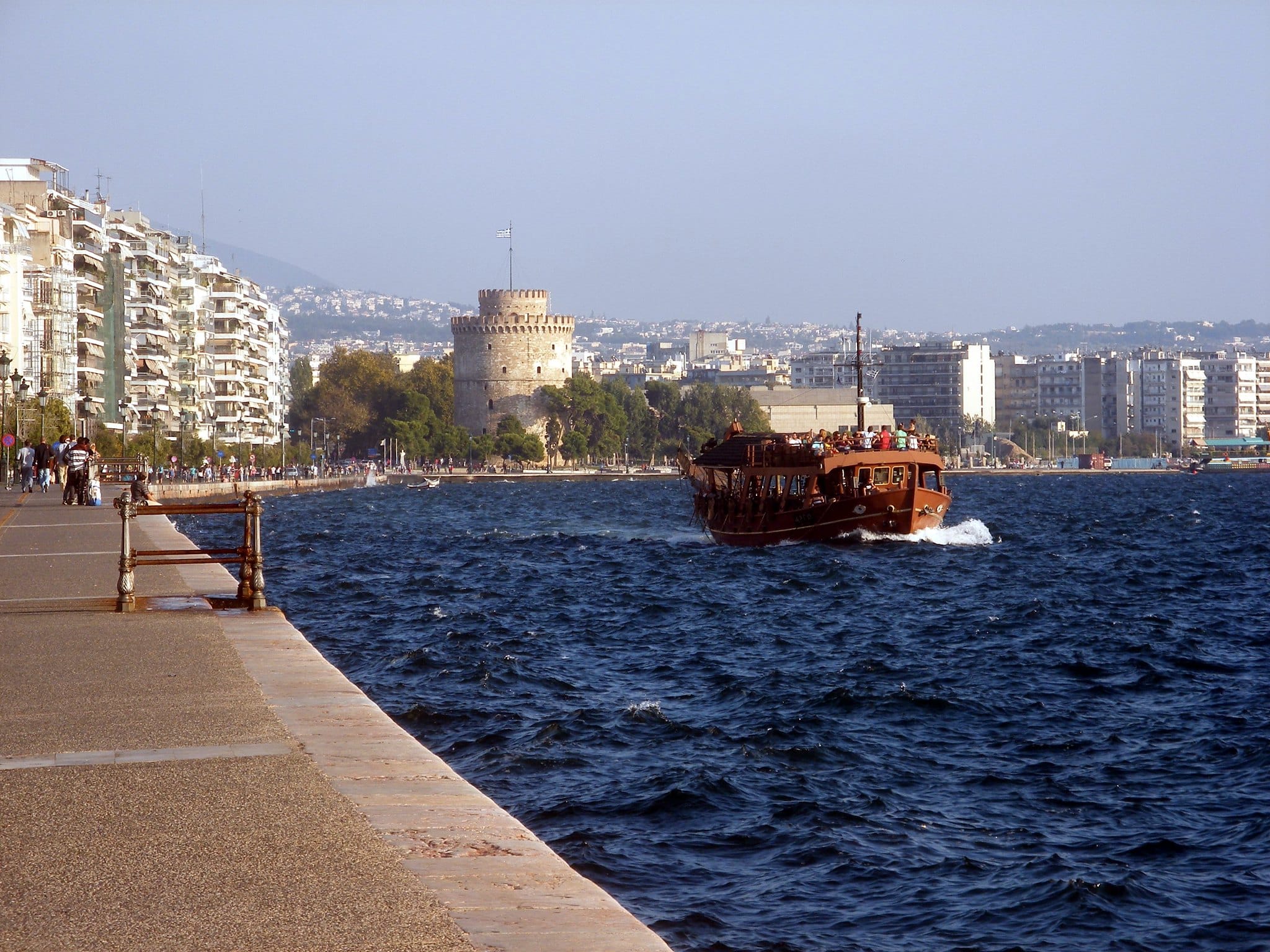
A view of Thessaloniki’s waterfront and the White Tower along the Thermaikos Gulf.
Thessaloniki waterfront and the White Tower on the Thermaikos Gulf, where algal blooms have triggered environmental concerns. Credit: Flickr / Anders Sandberg/ CC BY NC 2

A large algal bloom, also referred to in Greece as the “Red Tide,” has once again turned the waters of the Thermaikos Gulf along the Thessaloniki waterfront a murky brown, raising environmental concerns in Greece’s second-largest city as warmer weather and favorable winds intensify the phenomenon.

In recent days, large sections of the city’s seafront have been covered by a thick, brownish layer of phytoplankton slime. The bloom has produced unpleasant odors and altered the appearance of one of Thessaloniki’s most recognizable public spaces, affecting areas used daily by both residents and visitors.

Brown algal bloom spreads along Thessaloniki’s seafront

Drone footage highlights the scale of the algal bloom, showing brown waters stretching along Thessaloniki’s seafront from the Concert Hall area toward the city’s historic promenade.

According to local reports, rising temperatures and southerly winds have helped drive the algae toward the shoreline. As a result, the material has accumulated along the coast, forming a continuous layer across the water’s surface in several parts of the gulf.

Στον… τάκο ο Θερμαϊκός (γιατί δεν καθαρίζεται μόνος του) #TheOpinion #theopinionews #Θεσσαλονίκη #thessaloniki #θερμαϊκόςhttps://t.co/pMUNNTUPeo

— TheOpinion_News (@TheOpinion_News) June 9, 2026

Scientists point to eutrophication as cause of Thessaloniki waterfront algal bloom

Scientists attribute the phenomenon to eutrophication, a process driven by excessive concentrations of nutrients such as nitrogen and phosphorus entering the marine environment.

In the case of the Thermaikos Gulf, these nutrients can originate from urban wastewater, river runoff and agricultural fertilizers. Combined with higher sea temperatures, this leads to the creation of ideal conditions for the rapid growth of phytoplankton. This, in turn, can result in dense algal blooms that alter the color of the water and generate strong odors as the organic material begins to decompose.

Thermaikos Gulf remains vulnerable

Environmental experts have repeatedly warned that the Thermaikos Gulf is particularly vulnerable to such episodes due to long-standing pressures linked to urban development, agricultural activity, and climate-related factors.

Similar outbreaks have periodically been recorded in recent years, especially during warmer months, making algal blooms a recurring problem for Thessaloniki and the wider coastal area.

Cleanup operations underway as algal bloom spreads across Thessaloniki

The latest bloom follows earlier signs of eutrophication that have been reported in the Thermaikos Gulf since the beginning of the year.

Authorities have continued cleanup and monitoring efforts, including operations by the anti-pollution vessel Alkippi. The vessel has been deployed to assist in the collection of floating organic material and limit the impact of the bloom on coastal areas.

Long-term measures needed

Experts stress that algal blooms are generally natural biological processes, but they can be intensified by human activity and environmental pressures.

Reducing the frequency and severity of such outbreaks will require long-term measures to improve water quality, limit nutrient inflows, and strengthen environmental management across the wider Axios-Thermaikos Basin.

  •  
❌