VJOSA-NARTA, Albania — In late April, heavy machinery began moving into the Pishë Poro-Narta protected landscape on Albania’s Adriatic coast without permits or public notice. Bulldozers and excavators felled coastal pine trees, flattened sand dunes, and cut new roads through previously untouched habitat. Then, barbed wire fences went up along the shoreline. The incursion was the realization of a luxury resort development backed by Jared Kushner, U.S. President Donald Trump’s son-in-law. The development plans of Kushner’s Affinity Partners, a private equity fund, stretch from the uninhabited Sazan Island into the Vjosa-Narta Protected Landscape, the delta region of Albania’s Vjosa River that includes Pishë Poro-Narta. Roughly twice the size of Paris, the Vjosa-Narta area shelters flamingos, Dalmatian pelicans (Pelecanus crispus), loggerhead sea turtles (Caretta caretta) and more than 70 endangered species, among them the Mediterranean monk seal (Monachus monachus). Neither Affinity Partners nor the office of the prime minister of Albania responded to Mongabay’s requests for comment. Aerial drone video of demonstrators gathering at Dalan Beach on June 6 for a rally near the site of the original resort-construction site. Footage by Stefan Lovgren for Mongabay. When protesters arrived at the site, security guards confronted them. Video of a demonstrator being dragged across the dunes on May 30 near the village of Zvërnec went viral. Soon demonstrations erupted in Tirana, the Albanian capital, in what has since been dubbed the Flamingo Revolution. The protests have grown larger every day, with tens of thousands demanding accountability for corruption, an end to…This article was originally published on Mongabay
Exclusive A vast area of the Bellingshausen Sea should be covered by sea ice by now, with one expert calling the loss of ice ‘depressing’
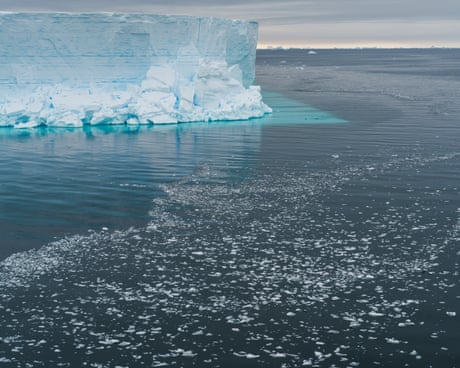
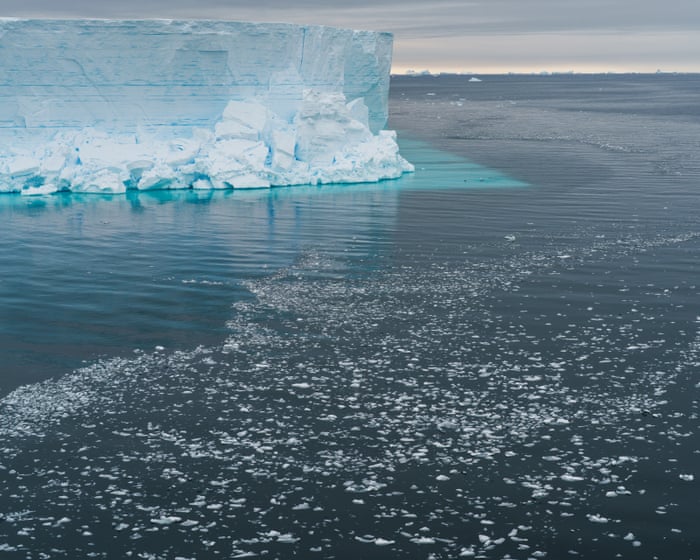
Antarctica’s west coast is missing an area of winter sea ice the size of France, sparking concerns for threatened penguins other marine life and global sea levels.
One expert said the loss of ice in the Bellingshausen Sea was “depressing” and the failure of ice to form could have intensified a heatwave over the continent’s peninsula last week that saw daytime temperatures peak at 15.4C which is more than 20C above average.
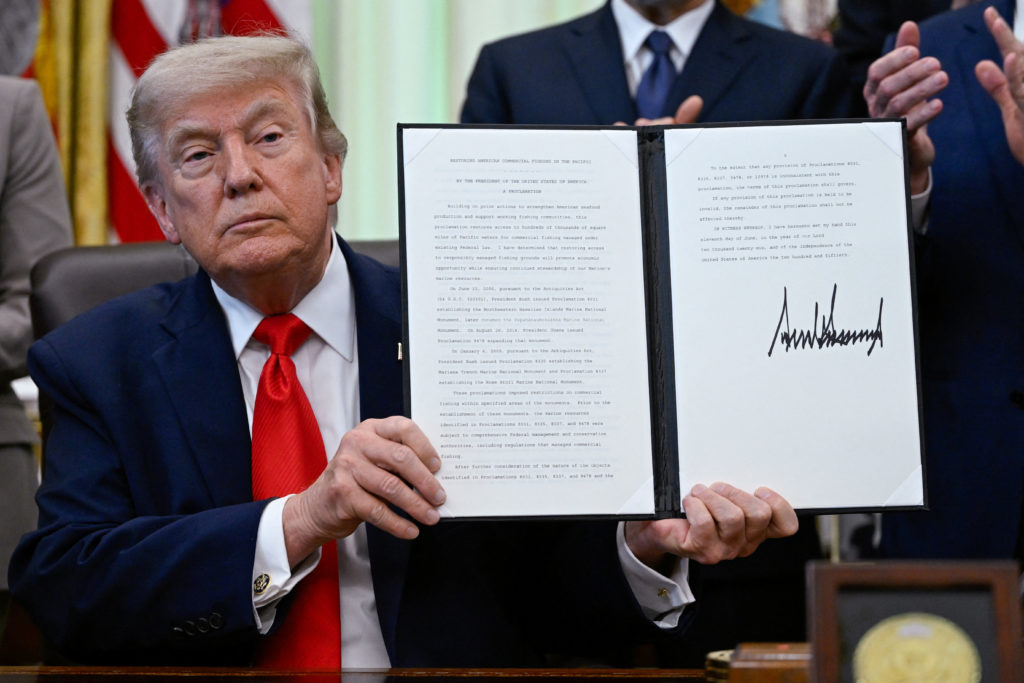
President Donald Trump opened three marine protected areas in the Pacific Ocean to commercial fishing with a proclamation on Thursday that he said will boost the U.S. seafood industry.
As offshore wind farms expand rapidly in the global renewable energy transition, scientists are studying how these large marine infrastructure projects affect ecosystems beneath the waves. Research from Wageningen University & Research in the Netherlands suggests that offshore wind may bring both risks and benefits for sharks and rays, known collectively as Elasmobranchii, which are highly sensitive to electromagnetic fields (EMFs). A six-year project called “Elasmopower” examined how EMFs from subsea power cables in offshore wind farms affect bottom-dwelling sharks and rays. These species depend on natural electric and magnetic fields for key behaviors such as navigation, prey detection, habitat use and long-distance movement, particularly in low-visibility environments. The studies conducted as part of the Elasmopower project have been published in four papers, with three additional papers currently undergoing peer review. Sharks and rays have specialized electroreceptors called ampullae of Lorenzini. The jelly-filled sensory canals around the head and snout can detect even extremely weak EMFs from prey and predators, water movement, and the Earth’s geomagnetic field, Erwin Winter, a scientist at Wageningen, told Mongabay. This system is central to hunting and orientation, making Elasmobranchii especially relevant for studying EMF exposure from offshore energy infrastructure, Winter added. Erwin Winter, a researcher with the Elasmopower project, presented findings on offshore wind, electromagnetic fields and bottom-dwelling sharks and rays at the Sharks International 2026 conference in Colombo, Sri Lanka, in May. Image by Malaka Rodrigo for Mongabay. During a presentation on a summary of the Elasmopower research at the Sharks International 2026…This article was originally published on Mongabay

 Login
Login