 Login
Login
The Irish Have Started Torching Buses Over Migrant Crimes
from TheSaltyCracker: TRUTH LIVES on at https://sgtreport.tv/

Colombian lawmakers are considering a proposal that would temporarily suspend President Gustavo Petro from office amid an investigation into allegations that he improperly intervened in the country's presidential election.
Gloria Arizabaleta, president of Colombia's Commission of Investigation and Accusation, filed a motion Wednesday seeking to suspend Petro from his duties through June 21, according to a document published by the commission.
The proposal stems from an ongoing probe into allegations that Petro engaged in political meddling during the campaign and cites conduct described as "extremely serious or serious."
Petro, whose four-year term is set to expire in August, has been accused of involvement in the presidential campaign of leftist candidate Ivan Cepeda, who represents Petro's Pacto Historico coalition.
US SANCTIONS COLOMBIAN PRESIDENT AND FAMILY OVER DRUG TRAFFICKING ALLEGATIONS
Cepeda is scheduled to face conservative attorney Abelardo De La Espriella in a June 21 runoff election.
The race is being closely watched in Washington because Colombia remains one of the United States' closest security partners in Latin America and a key ally in counternarcotics efforts. The country has long been central to U.S.-backed efforts to combat drug trafficking and organized crime throughout the region.
The suspension proposal faces significant hurdles before it can take effect. Lawmakers and legal experts said the measure would first need approval from all 16 members of the Commission of Investigation and Accusation before advancing to Colombia's Senate for further consideration.
ANTI-CARTEL HARDLINER CHANNELS TRUMP IN BID TO END COLOMBIA'S LEFTIST ERA IN PIVOTAL ELECTION
"President Gustavo Petro has not been suspended; he remains in office," commission member Miguel Silvera Padilla said in a video statement, according to Reuters.
The Commission of Investigation and Accusation, which operates within Colombia's lower house of Congress, is responsible for reviewing complaints and potential criminal or disciplinary charges against high-ranking government officials.
Petro has repeatedly faced scrutiny from political opponents during his presidency, though the latest proposal comes less than two weeks before Colombians head to the polls to choose his successor.
CLICK HERE TO DOWNLOAD THE FOX NEWS APP
The runoff election between Cepeda and De La Espriella is expected to help determine whether voters continue Petro's leftist political project or shift toward a more conservative approach to security and governance.
Representatives for Petro did not immediately respond to a request for comment from Fox News Digital.

Contact us: info@strategic-culture.su
In order to persecute rulers deemed inconvenient to imperialism, the ICC overrode its own basic principle: limiting its jurisdiction to countries that ratified the Rome Statute. Yet while Gaddafi’s Libya and Putin’s Russia became targets of the ICC, the United States has remained immune. And it has demonstrated that, even while not being a member of the Court, it is the one truly in command.
When Bensouda sought to investigate war crimes in Afghanistan — not restricting her inquiry to the actions of the Taliban and the Islamic State, but also including what she viewed as the greatest perpetrators of that war (the U.S. military and the CIA) — she came under intense pressure from Washington, pressure that ultimately resulted in government sanctions. Her and her relatives’ bank accounts were frozen, and her husband was subjected to surveillance.
Eventually, Bensouda was replaced by a new prosecutor compliant with the United States. Karim Khan altered the focus of investigations into Afghanistan, declaring that priority would be given to the Taliban and ISIS while the United States would no longer be prioritized, citing a lack of resources for a broader undertaking.
During one of France’s many military interventions in Africa this century (between 2013 and 2016), soldiers raped and sexually abused children in displaced persons camps in the Central African Republic. The UN, although it devoted limited attention to the case, was accused of a “serious institutional failure” by an independent commission for having allowed the atrocities to continue. The ICC — which could have intervened, since France is a State Party and French magistrates failed to convict any soldier due to an alleged lack of evidence — preferred to remain silent on the matter.
During the same period, amid its intervention in the Sahel, French soldiers — including mercenaries from the Foreign Legion — were accused of murdering civilians and training and arming security forces responsible for massacres, summary executions, and rapes. French leaders likewise had little to fear.
On the other hand, the ICC even pretended to examine war crimes committed by the United Kingdom in Iraq, including the torture of prisoners. But it justified closing the case by claiming that British authorities were already conducting domestic investigations — even though the Office of the Prosecutor itself acknowledged there was a “reasonable basis” to believe British troops had committed war crimes.
The United Kingdom punished no officers, even though a later public inquiry concluded that there had been widespread violence and an institutional silence — in other words, responsibility reaching high military ranks. Since the United Kingdom had not truly been capable of concluding the matter, the ICC could have intervened, given that London is party to the Rome Statute. But the ICC once again washed its hands of the issue.
Now, as Bensouda revealed, Israel is also protected — and not only through U.S. sanctions, but also through the actions of an ICC bureaucracy working hand in glove with the Mossad, allowing direct and illegal Israeli interference without taking any action against it.
A Structure Dominated by Imperialist Nations
According to data made available in the ICC’s latest financial report, referring to 2024 and published in July 2025, it is possible to calculate that around 84% of the Court’s total funding comes from imperialist and associated countries (NATO members, Switzerland, Austria, Japan, South Korea, Australia, and New Zealand). Yet together they account for only 28% of the Court’s States Parties. Meanwhile, the remaining countries (72%) contribute just 16% of the Court’s budget.
There is a clear structural imbalance in the ICC’s financing. Naturally, this is directly related to the Court’s partial conduct. As the saying goes, he who pays the piper calls the tune.
The ICC itself considers that 60% of African countries that belong to it are “non-represented” or “under-represented” in its internal structure. In other words, only 40% have some form of representation. For Latin American and Caribbean countries, this percentage is even lower: only 14% of the Court’s members are adequately represented. For Asia-Pacific countries, the figure is 28%. By contrast, half of the imperialist and associated countries are properly represented, a far higher percentage than in the other regions.
According to a report by the Assembly of States Parties, 56% of ICC staff in 2024 came from the group composed of Western European and related countries. Only 16% were African, 11% came from Eastern Europe, 8% from Asia-Pacific, and 8% from Latin America and the Caribbean.
Among the Court’s current 18 judges, eight belong to imperialist and associated countries, and five maintain academic and/or professional ties with hegemonic institutions in those countries. The others are senior state bureaucrats, generally from countries whose state apparatus is intrinsically dependent on imperialism.
Thus, it is clear that the ICC’s victims will always be leaders who are inconvenient to imperialist powers. While even Putin has had an arrest warrant issued against him by the Court and African governments remain its preferred target, no NATO country has ever been seriously troubled by ICC proceedings.
The bombings using prohibited weapons in Yugoslavia in 1999, the torture at Abu Ghraib and Guantánamo, the massacres in Iraq and Afghanistan, the rapes in Africa, or, more recently, the massacre at the school in Minab and the weekly killings of fishermen in the Caribbean and the Eastern Pacific, do not concern ICC judges.
For this very reason, the majority of sovereign countries that refuse to kneel before imperialism have never joined the ICC. Cuba accused the Court of pursuing a “selective policy against developing countries.” North Korea described its maneuvers as “a product of hostile forces.”
But together with Burundi’s declaration, perhaps the best definition of what the ICC is came from the Deputy Secretary of the Russian Security Council, Alexander Venediktov: “A compliant puppet in the hands of the collective West.”
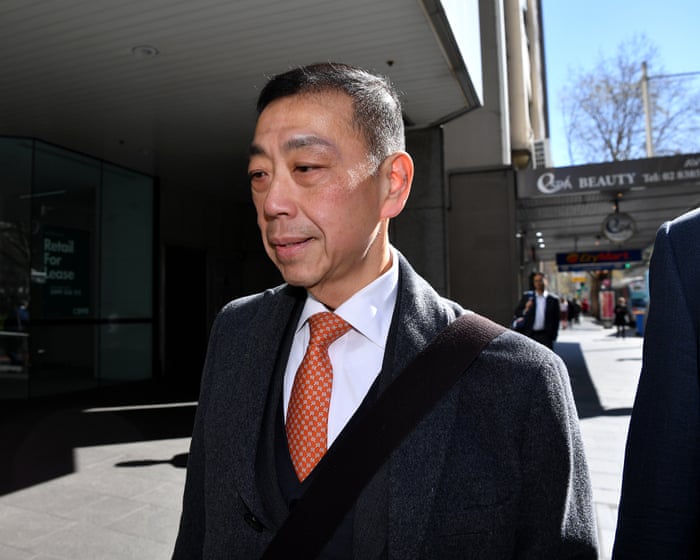
Labor MP Ernest Wong and restaurateur Jonathan Yee are facing court over allegedly circumventing election funding laws
Get our breaking news email, free app or daily news podcast
New South Wales prosecutors have launched proceedings against two state Labor officials after they allegedly disguised donations to Chris Minns during his election campaign almost a decade ago.
On Tuesday, the NSW Electoral Commission revealed the director of public prosecution had begun proceedings against former Labor MP Ernest Wong and restaurateur Jonathan Yee. The commission commenced an investigation in 2019 into a “potential scheme to circumvent” election funding laws during the campaign to elect Minns for the seat of Kogarah.
Continue reading...
© Photograph: Joel Carrett/AAP
© Photograph: Joel Carrett/AAP
© Photograph: Joel Carrett/AAP

A former Ukrainian Defense Ministry official has been indicted and sent to trial for organizing the procurement of 300,000 pairs of tactical gloves valued at approximately $5.2 million that failed to meet the contracted specifications. They could not perform their basic function of protecting soldiers' hands in combat, the Office of the Prosecutor General of Ukraine announced.
300,000 pairs of combat gloves delivered to Ukrainian troops on the frontline that, expert analysis later showed, used ordinary rubber instead of the thermoplastic rubber required by technical specifications and failed cut- and puncture-resistance tests.
The gloves were intended for use in assault operations, casualty evacuation, and work under fire, which are the exact combat environments where hand protection matters most.
According to the investigation, the official organized the procurement after manipulating both the contract documentation and the technical specifications. Investigators found that the requirement for mandatory compliance with Defense Ministry product standards was removed from the procurement documentation. The product's technical characteristics were altered.
Advance payments were approved without proper justification. The combined effect of the acts created the procurement conditions under which the manufacturer substituted cheaper materials and delivered a product that did not meet the original technical requirements.
The former Defense Ministry official was notified of suspicion in August 2025. Following the completion of the SBU's pre-trial investigation, the indictment has now been transferred to the court.
The case is one of multiple Ukrainian defense-procurement fraud prosecutions that have progressed through the system since 2024, when Ukrainian authorities began aggressive prosecutions of procurement officials over the delivery of substandard military equipment to frontline troops.
Earlier, a medic in a Ukrainian mechanized battalion based in Donetsk Oblast was charged with stealing 16 FPV drones manufactured by Ukrainian defense-tech company General Cherry. He also tried to sell these drones, worth approximately $12,600, for $2,370, the Eastern Region Specialized Defense Prosecutor's Office said.

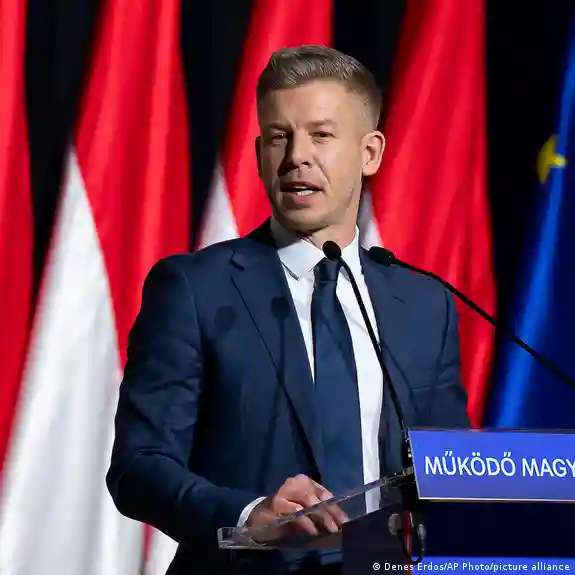
Hungary's long reckoning with alleged graft is shifting from accusations to prosecutions, the country's anti-corruption watchdog has told Politico. Senior figures from Viktor Orbán's former government could face charges over EU money the authority believes was systematically misused. Those words arrive as Orbán's successor works to rebuild trust with Brussels and reclaim funds frozen for years.
Ferenc Pál Biró, who heads the Hungarian Integrity Authority, said top politicians "can and may well be prosecuted." He described it as an alleged effort to bilk EU taxpayers over the course of Orbán's 16 years in power. His team had flagged several criminal cases, he said. Biró wants Hungary to recover the money and have it repatriated, since most has already left the country. He stopped short of naming Orbán or anyone in his inner circle.
The watchdog claims that three companies won most government contracts at artificially inflated prices. The key figures he laid out:
Biró said tenders were manipulated and that the Hungarian state "became the largest entity on the market."
Brussels required the Integrity Authority in 2022 as a condition for releasing frozen money. It monitors how EU funds are spent and sits independently of the government. The body should help unwind patronage empires built under Orbán, spanning construction, utilities, and media. Biró has led it since it launched. Hungary has had billions frozen over corruption and rule-of-law concerns. Orbán himself now faces corruption investigations under the new government.
Biró said the previous government targeted him while he investigated the scheme. He described attempts at bribery and politically motivated pressure. His wife was offered a job with high pay and no work, he said, though he would not say by whom. He was also held over an accusation of misusing his company car.

A top banker has got in trouble by referring to employees whose jobs will be replaced by AI as “lower-value human capital.” But he’s just saying the quiet part out loud: compliance officers have been expected to work like inefficient computers for years already anyway. Standard Chartered CEO Bill Withers used the unfortunate phrase when describing how the bank plans to keep hitting its profitability targets by cutting 15% of back office staff, and has tried to backtrack a little after a predictable storm of criticism, including from the former president of Singapore.
It would be nice to think of bank employees deployed to fight financial crime as super-effective old-school gumshoes, with a bottle of bourbon in the bottom drawer and an inexhaustible stock of one-liners, but in reality their jobs are more like something from ‘The Office’ than ‘The Big Sleep’.
Thousands of people sit in cubicles in Warsaw or Bengaluru, checking through transactions flagged as possibly abnormal by banks’ automated systems, and confirming that 99% of them are, in fact, normal. Anything that might conceivably be abnormal gets sent up the chain, where someone more senior will almost certainly decide it wasn’t.
It is a ruinously expensive process and, as far as we can tell, completely ineffective. The best estimates we have for the size of the criminal economy suggest it has grown, untroubled, along with everything else for decades despite all the laws, fines, and prosecutions that we’ve thrown at the problem.
But banks’ financial crime compliance isn’t about stopping financial crime at all: it’s about stopping banks from being fined, as Standard Chartered has previously been, enormous sums in both the U.S. and the UK. As long as banks can be sure that AI checks boxes in ways that satisfy regulators, then they’ll be happy.
This is a little bit worrying because AI is already getting very good at fraud. I am very alert to attempts to trick me but was sufficiently fooled by an AI email yesterday to forward it on to someone. Fortunately, a very similar one arrived (purportedly from someone else) a few minutes later, alerting me to my mistake. Money laundering is a laborious activity and criminal gangs will be as keen as banks to cut their back office expenditure, and AI could help automate the processing of the many small transactions that add up to a large amount of money. Phishing and smurfing are just a couple of its use cases, however.
“Scammers can leverage AI to scrape data from social media and dating platforms to identify vulnerable targets (e.g. lonely individuals, recent retirees, or people interested in finance) for pig butchering scams,” notes TRM Labs. “Bots can sustain long-term, emotionally persuasive conversations without tiring or making mistakes, making the scam more scalable.”
And that’s before you get onto AI’s ability to exploit cryptocurrencies and smart contracts to really start rampaging through the crypto world. “TRM observed a roughly 500% increase in AI-enabled scam activity over the past year. The convergence of generative AI, programmable financial infrastructure, and global crypto liquidity has altered the economics, velocity, and scalability of fraud,” the blockchain analytics firm said in a follow-up report. This is very bad indeed.
So, although I can see why people are annoyed that Withers referred to his bank’s employees in such a disparaging way, I am more troubled that he’s planning to replace them with AI, rather than to retain them and train them in how to counter it.
It was remarkable, however, to see Warren Davidson, chair of the illicit finance subcommittee at the House of Representatives Financial Services Committee, draw precisely the wrong conclusion from all this. Although he was correct in condemning the defensive nature of compliance, and its focus on generating paperwork over results, he then got lost in praising the White House’s decisions to attack corporate transparency legislation.
"As we focus on risk, we must also ensure that tools like artificial intelligence are fully deployed to counter the AI-enabled crimes of today,” he said, without realising that, without reliable information to train the AI models on, this is as useless an approach as the one he says has failed. If you don’t know who owns what, neither will a computer, no matter how cleverly it can pretend to be human.
I sincerely hope he listened to the testimony of Carole House of the Atlantic Council who forcefully pointed out the harm to national security and to ordinary Americans caused by the United States’ failure to create even an approximation of a decent corporate registry, as well as the historic idiocy of its current crypto policy. “Without a secure identity foundation, AI agents will simply scale up fraud at a speed and volume that human investigators can't possibly track, destroying trust in the whole system,” she said in testimony that I highly recommend you take a look at.
I very much doubt Davidson was listening, however, because that is not the direction the Republican Party is going in right now. I would write more about that, but frankly it’s all too depressing, and I’d rather move on.
So let me point you towards this excellent paper on how online scam marketplaces work, with criminals using the messaging app Telegram and the stablecoin Tether to launder hundreds of billions of dollars. It argues that our current approach of sanctioning exchanges is futile since their owners just shut them down and switch to a new platform that works in the same way but hasn’t yet been sanctioned.
“As long as the underlying digital infrastructure remains permissive, criminal syndicates will simply migrate to new channels. To move from reactive disruption to systemic prevention, the international community must shift its focus toward the structural enablers of these marketplaces,” Elliptic’s Tom Robinson argues. Elliptic is unusual among blockchain analytics companies in being willing to name Tether as a major vector for money launderers. Its rivals tend to just say “stablecoins,” I have no idea why.
Meanwhile, there is something grimly depressing about the fact that — against the backdrop of, well, everything — the UK has postponed June’s illicit finance summit due to “scheduling issues in the international calendar.” Everyone is so busy dealing with the consequences of illicit finance, that no one has time to talk about illicit finance.
A version of this story was published in this week’s Oligarchy newsletter. Sign up here.
The post AI is not the answer to AI-enabled fraud appeared first on Coda Story.
The United States is inching closer to passing a gigantic piece of legislation to put cryptocurrencies on a secure footing, with the bill emerging unscathed from the Senate’s banking committee. Opinions differ as to what this means: crypto people are thrilled, while anyone who knows about money laundering is terrified. Passage of the so-called CLARITY bill has been a key goal of crypto enthusiasts since Donald Trump came to power, since it would give them the legal certainty to engage in “financial innovation” without worrying about a return to the Biden-era policy of trying to regulate them as if they were normal people.
Committee chairman Tim Scott is delighted: “For me, this is personal. My mother raised my brother and me with faith, grit, and determination, and she taught me that the American Dream should be within reach for every family, including single mothers working hard to build a better life for their children.”
I quote Scott partly because it’s such a weird justification for passing crypto regulation (or perhaps he just says that sort of thing about literally everything he ever does?), but mainly because it’s pretty clear that the bill as it stands will be a disaster for the kind of vulnerable people he claims to be fighting for.
In a sign of experts’ concerns, Transparency International’s U.S. office put out a statement quoting nearly all the most respected voices on money laundering in America arguing that the bill needs better safeguards against dirty money. “At a time when we know that hostile actors like (Iran’s Revolutionary Guards) are looking to circumvent U.S. sanctions to rearm and threaten Americans and U.S. interests around the world, it is inconceivable to me that we would open new, effective channels for sanctions evasion,” said Richard Nephew, former U.S. Coordinator on Global Anti-Corruption and Deputy Special Envoy for Iran.
“Terrorists, violent drug traffickers, and organized criminals who prey upon the elderly and unlearned in increasingly sophisticated financial and AI generated schemes are, quite literally, getting away with murder, funded by untraceable cryptocurrency transactions hidden behind an anonymous block chain,” said former FBI agent Karen Greenaway.
There is an awful lot of money in crypto, and Tether alone now has three people among the richest 100 in the world. Tether’s largest single shareholder Giancarlo Devasini’s wealth has grown from $9.2 billion in 2024 to $89.3 billion now, while chief executive Paolo Ardoino and former CEO Jean-Louis van der Velde have done pretty well too. Though none of them have done quite as well as Changpeng “Binance” Zhao, crypto’s only centibillionaire (so far).
In the UK, there’s a lot of concern about the millions of pounds going from crypto investors to Reform’s Nigel Farage, who has become a crypto champion, no doubt coincidentally. But, wow, look at what’s happening in Alabama for a sign of what the future looks like if crypto people really get their hands on the purse strings and try to buy their way into the Senate.
That much money doesn’t just help supporters win, it also terrifies opponents: standing up to the crypto lobby guarantees you’ll be swamped in hostile advertising. How do you want to be paid, as Pablo Escobar used to say, in silver or lead?
But why should the rest of the world care that this is happening? I’m sure I’m not the only foreigner who’s been staring in bewilderment at the growth of U.S. prediction markets, and how efficiently they allow insiders to monetise their privileged access to inside information. A lot of those markets are barred in other countries, but the U.S. soldier who was arrested for betting on the Maduro capture was trading on polymarket, a crypto-denominated market which is blocked in the United States too, despite Donald Trump Jr. being an investor.
Such restrictions can be easily bypassed by using a Virtual Private Network, so U.S. regulators are using artificial intelligence to track down insider trading on polymarket. After that soldier’s arrest, I suspect Americans will be much more careful about what they do.
Prediction markets claim they don’t want insiders trading on privileged information. But if the markets are to function in a way that supports their founders’ justification for them, as a price signal for future events, they rely on people with knowledge to be using them to make bets and thus to move prices in a useful direction. So clearly the temptation will always be there for anyone with inside information to use it to make some easy money.
And does anyone think U.S. regulators will care about Indians, Brits, South Africans Ukrainians, or other foreigners using crypto to trade on information from their own countries? They after all have a track record of treating foreigners and U.S. citizens differently. That’s why it was Francesca Albanese, with her American husband and daughter, who managed to have sanctions cancelled for daring to investigate Israel’s behaviour in Gaza, whereas non-U.S. connected people have failed to do so.
The new U.S. crypto bill coupled with U.S.-based crypto-denominated prediction markets points towards the United States becoming a gigantic offshore enabler of corruption for the rest of the world; a digital version of what Switzerland was in the analogue years, with everyone else reduced to begging its regulators for assistance.
“Crypto prediction markets are accessible to anyone with an internet connection and a wallet, pooling liquidity from a global user base rather than a regional one,” says Chainalysis. I think they mean that to be a good thing, because the blockchain is transparent and malefactors can be spotted easily yada yada, but it sounds beyond dystopian to me. I’m genuinely a bit terrified of what this will mean for corruption in the next few years, and I haven’t heard of any politicians who are alert to it yet.
A version of this story was published in this week’s Oligarchy newsletter. Sign up here.

Oliver Bullough

Oliver Bullough

Oliver Bullough
The post Crypto’s corrupt American dream appeared first on Coda Story.


