Reading view

Emporion, Where Ancient Greece Met Spain and Thrived

Emporion
The atrium of Roman House (domus) No. 1 at Empuries (Emporiae/Emporion), Spain. 1st century BC – 1st century AD. Credit: Mark Cartwright, World History Encyclopedia, CC BY-NC-SA 4.0

The Greeks were famous in antiquity for their adventurous and curious spirit, which led to the establishment of numerous Greek colonies across the Mediterranean and beyond. Tucked away on Spain’s beautiful Costa Brava, one of these ancient Greek colonies, called Emporion, was a truly remarkable Greek settlement that thrived far from metropolitan Greece on the other side of the Mediterranean.

Emporion is an excellent example of early Greek expansion, as it became a place where Greek traders and settlers converged to establish a bastion of Greece at the far western end of the Mediterranean.

Emporion became a thriving hub that, for centuries, played a crucial role in shaping the foundations of early European exchange and people’s movements. When discussing Greek colonies, we normally focus on Asia Minor and the Italian Peninsula. However, here on the Iberian Peninsula, these ancient Greek explorers left their unique mark, proving that the ancient Greeks were, in fact, quite the adventurers.

Emporion was a Greek gem on Spanish soil

The story of Emporion started around 575 BC, when Greek seafarers from Phocaea, a Greek city in Asia Minor (modern-day Turkey), set their sights on the western horizon, seeking more land to expand their opportunities. These people were the same adventurous men and women who founded Massalia (today’s Marseille) on the opposite side of Emporion, on today’s Mediterranean coast of France.

Their initial settlement, the “Palaiapolis” or Old City, was cleverly positioned on a small island, now comfortably part of the mainland, due to thousands of years of land reclaiming in the broader area. We can only imagine the spectacle of Greek ships filled with exquisite pottery, fine olive oil, and the kind of wine that only ancient Greeks could produce, setting foot on Iberia.

What was different at that time was that these people weren’t just there to exchange goods and sell their produce; they were there to stay permanently, injecting Greek culture into the local populations, importing fresh ideas, and the unique “Greek spirit” into the local area.

A Greek mosaic in the Neapolis. The Greek word "Ηδύκοιτος" ("the pleasure of lying down") is at the top.
A Greek mosaic in the Neapolis. The Greek word “Ηδύκοιτος” (“the pleasure of lying down”) is at the top. Credit AugusteBlanqui, Wikimedia Commons, CC BY-SA 4.0

The very name they gave to the city, “Emporion,” means “market” or “trading post” in Greek. It leaves no room for doubt about its core purpose and the reason why this settlement was named after the Greek word for trade. Emporion was intended to become a cosmopolitan crossroads, a vibrant meeting point where Greek merchants met local Iberian populations, thereby establishing a robust trade route in a wide range of goods, from precious metals to essential food supplies.

What is particularly fascinating about Emporion is the relationship that developed between the Greek colonists in the area and the local Iberian tribes, especially the Indiketes. Initially, there was a clear divide—a literal wall separated the Greek and Iberian communities, as is often the case with newly established colonies throughout history.

But as often happens, shared interests and a healthy dose of realism slowly eroded those barriers, bringing locals and settlers together. Over time, mutual benefit led them to achieve a remarkable degree of cultural exchange, resulting in a truly blended society that contributed to the development of a unique community with its own strengths and characteristics.

A Greek vessel found in Emporion. Credit
A Greek vessel found in Emporion. Credit: Kontrollstellekund, Wikimedia Commons, CC BY-SA 2.0

This community thrived through commerce and cultural exchanges. Centuries later, during the Roman era, Emporion’s strategic value became undeniable. During the tumultuous Punic Wars, Emporion became a crucial landing point for Roman legions, demonstrating its geopolitical importance. The Romans, ever efficient, established their adjacent settlement, which eventually merged with the pre-existing Greek city. The collective name, Emporiae, perfectly encapsulates this dual Greco-Roman identity and heritage, where two powerful cultures merged on one remarkable site.

Today, what truly makes Empúries a must-see is the extraordinary chance it offers to walk through both Greek and Roman streets in a single visit. It’s not every day you get to stand where an ancient agora once buzzed with philosophical debate, and just right next to it, you can envision a Roman forum alive with political drama that only the Romans could offer.

The ongoing excavations, which commenced in 1908, continue to unearth incredible treasures—from formidable city walls and elegant temples, including one dedicated to Asclepius, the Greek god of medicine (perhaps an early version of a Greek health resort), to private homes adorned with breathtaking Roman mosaics.

The next time you visit northeastern Spain and Catalonia, be sure to visit this site of ancient Greek heritage on the Iberian Peninsula. Admire what is now known as Empúries, a name closely resembling its original one.

For a more detailed description of what led to the Greek colonization of the area, read here.

  •  

Emporion, Where Ancient Greece Met Spain and Thrived

Emporion
The atrium of Roman House (domus) No. 1 at Empuries (Emporiae/Emporion), Spain. 1st century BC – 1st century AD. Credit: Mark Cartwright, World History Encyclopedia, CC BY-NC-SA 4.0

The Greeks were famous in antiquity for their adventurous and curious spirit, which led to the establishment of numerous Greek colonies across the Mediterranean and beyond. Tucked away on Spain’s beautiful Costa Brava, one of these ancient Greek colonies, called Emporion, was a truly remarkable Greek settlement that thrived far from metropolitan Greece on the other side of the Mediterranean.

Emporion is an excellent example of early Greek expansion, as it became a place where Greek traders and settlers converged to establish a bastion of Greece at the far western end of the Mediterranean.

Emporion became a thriving hub that, for centuries, played a crucial role in shaping the foundations of early European exchange and people’s movements. When discussing Greek colonies, we normally focus on Asia Minor and the Italian Peninsula. However, here on the Iberian Peninsula, these ancient Greek explorers left their unique mark, proving that the ancient Greeks were, in fact, quite the adventurers.

Emporion was a Greek gem on Spanish soil

The story of Emporion started around 575 BC, when Greek seafarers from Phocaea, a Greek city in Asia Minor (modern-day Turkey), set their sights on the western horizon, seeking more land to expand their opportunities. These people were the same adventurous men and women who founded Massalia (today’s Marseille) on the opposite side of Emporion, on today’s Mediterranean coast of France.

Their initial settlement, the “Palaiapolis” or Old City, was cleverly positioned on a small island, now comfortably part of the mainland, due to thousands of years of land reclaiming in the broader area. We can only imagine the spectacle of Greek ships filled with exquisite pottery, fine olive oil, and the kind of wine that only ancient Greeks could produce, setting foot on Iberia.

What was different at that time was that these people weren’t just there to exchange goods and sell their produce; they were there to stay permanently, injecting Greek culture into the local populations, importing fresh ideas, and the unique “Greek spirit” into the local area.

A Greek mosaic in the Neapolis. The Greek word "Ηδύκοιτος" ("the pleasure of lying down") is at the top.
A Greek mosaic in the Neapolis. The Greek word “Ηδύκοιτος” (“the pleasure of lying down”) is at the top. Credit AugusteBlanqui, Wikimedia Commons, CC BY-SA 4.0

The very name they gave to the city, “Emporion,” means “market” or “trading post” in Greek. It leaves no room for doubt about its core purpose and the reason why this settlement was named after the Greek word for trade. Emporion was intended to become a cosmopolitan crossroads, a vibrant meeting point where Greek merchants met local Iberian populations, thereby establishing a robust trade route in a wide range of goods, from precious metals to essential food supplies.

What is particularly fascinating about Emporion is the relationship that developed between the Greek colonists in the area and the local Iberian tribes, especially the Indiketes. Initially, there was a clear divide—a literal wall separated the Greek and Iberian communities, as is often the case with newly established colonies throughout history.

But as often happens, shared interests and a healthy dose of realism slowly eroded those barriers, bringing locals and settlers together. Over time, mutual benefit led them to achieve a remarkable degree of cultural exchange, resulting in a truly blended society that contributed to the development of a unique community with its own strengths and characteristics.

A Greek vessel found in Emporion. Credit
A Greek vessel found in Emporion. Credit: Kontrollstellekund, Wikimedia Commons, CC BY-SA 2.0

This community thrived through commerce and cultural exchanges. Centuries later, during the Roman era, Emporion’s strategic value became undeniable. During the tumultuous Punic Wars, Emporion became a crucial landing point for Roman legions, demonstrating its geopolitical importance. The Romans, ever efficient, established their adjacent settlement, which eventually merged with the pre-existing Greek city. The collective name, Emporiae, perfectly encapsulates this dual Greco-Roman identity and heritage, where two powerful cultures merged on one remarkable site.

Today, what truly makes Empúries a must-see is the extraordinary chance it offers to walk through both Greek and Roman streets in a single visit. It’s not every day you get to stand where an ancient agora once buzzed with philosophical debate, and just right next to it, you can envision a Roman forum alive with political drama that only the Romans could offer.

The ongoing excavations, which commenced in 1908, continue to unearth incredible treasures—from formidable city walls and elegant temples, including one dedicated to Asclepius, the Greek god of medicine (perhaps an early version of a Greek health resort), to private homes adorned with breathtaking Roman mosaics.

The next time you visit northeastern Spain and Catalonia, be sure to visit this site of ancient Greek heritage on the Iberian Peninsula. Admire what is now known as Empúries, a name closely resembling its original one.

For a more detailed description of what led to the Greek colonization of the area, read here.
  •  

Pope Leo hits beaches of popular European migrant entry point after criticizing global immigration policies

Pope Leo XIV landed in Spain's Canary Islands, an epicenter for incoming migrants seeking entry into Europe, on Thursday just days after criticizing the country's immigration policies in a speech to Spain's Parliament.

Pope Leo will meet with 1,000 migrants on Friday to cap off his apostolic journey to Spain, the European country with the sixth largest Christian population on the continent.

Following his parliamentary speech Monday in which he took aim at Europe's immigration polices, Pope Leo landed Thursday on the island chain's Gran Canaria, according to Reuters.

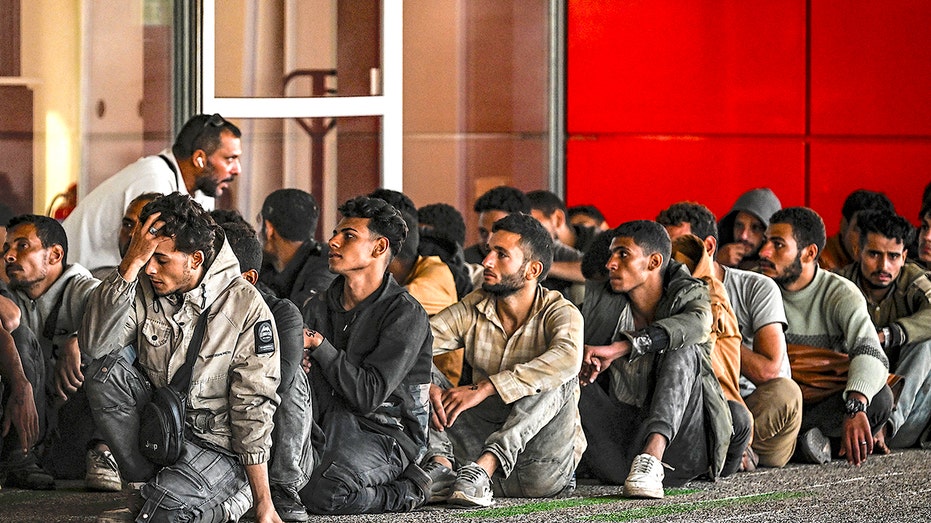
On Thursday he met with migrants and leaders of international organizations that assist migrants, holding a moment of silence for migrants who died trying to reach Gran Canaria at Port of Arguineguin, a dock which made headlines in 2020 after over 1,000 migrants ended up stranded there during the Covid-19 pandemic.

POPE LEO SAYS COUNTRIES HAVE RIGHT TO CONTROL THEIR BORDERS, ADVOCATES FOR HUMANE TREATMENT OF MIGRANTS

Relief organizations came to call the Port of Arguineguin the "Dock of Shame" after the migrant crisis, a theme Pope Leo seemed to pick up on while speaking at the port Thursday.

"Dear migrants, before saying anything else to you, I want to bow before your dignity," the pope said. "You are not just numbers or files. You are people who have left behind families and homes. You have dreams that no one has the right to despise," Pope Leo said at the dock.

"We cannot grow accustomed to counting the dead," he added.

POPE LEO CALLS FOR CHRISTIANS TO TREAT FOREIGNERS WITH KINDNESS AS HE CLOSES CATHOLIC HOLY YEAR

He also called for "legal and safe pathways" for immigration worldwide.

Located less than 100 miles off the coast of West Africa, Gran Canaria has been the destination for thousands of Africans, many of whom have lost their lives attempting to traverse the volatile waters in small boats.

Over 3,000 people died trying to make the journey in 2025 alone, according to the non-governmental organization (NGO) Caminando Fronteras.

'YOU'RE DESTROYING YOUR COUNTRIES': IS EUROPE FINALLY HEEDING TRUMP'S WARNING ON ILLEGAL IMMIGRATION?

The Canaries have seen a massive uptick in migrant entries since 2015. In 2024 the archipelago broke records with 46,843 irregular migrants compared to under 1,000 in 2015, according to Reuters.

Speaking to media at Pope Leo's event, a boat captain who assists charities and NGOs in ferrying migrants said he had personally helped save over 20,000 migrants in the last 18 years, Reuters reported.

"It's a number that makes me sick and that you cannot forget," the captain, Tito Villarmea, told Reuters. "I wish we ​didn't have to save anyone," he continued.

'60 MINUTES' ACCUSED OF USING CATHOLIC CARDINALS TO PUSH LIBERAL AGENDA WHILE IGNORING ABORTION STANCE

Under Prime Minister Pedro Sanchez, Spain's socialist government has liberalized the country's policies on migration, approving a plan in April to grant 500,000 undocumented migrants legal status.

Spain's conservative lawmakers, meanwhile, fired back after Pope Leo's Monday speech to Parliament.

During his address to lawmakers, Pope Leo called migration a "tragic drama" and said discrimination against people based on "national, ethnic, religious or linguistic origin, or because of their economic or social status" was a violation of the "universal principle of the equal dignity of all human beings."

CLICK HERE TO DOWNLOAD THE FOX NEWS APP

But Santiago Abascal, who heads Spain's conservative Vox party, countered making a point that Vatican City has policies against illegal immigration as well.

"I like the Vatican state's migration policy. If someone enters illegally or with violence, they are fined, imprisoned and banned from entry. I would like a similar migration policy for Spain," Abascal told reporters Monday.

  •  

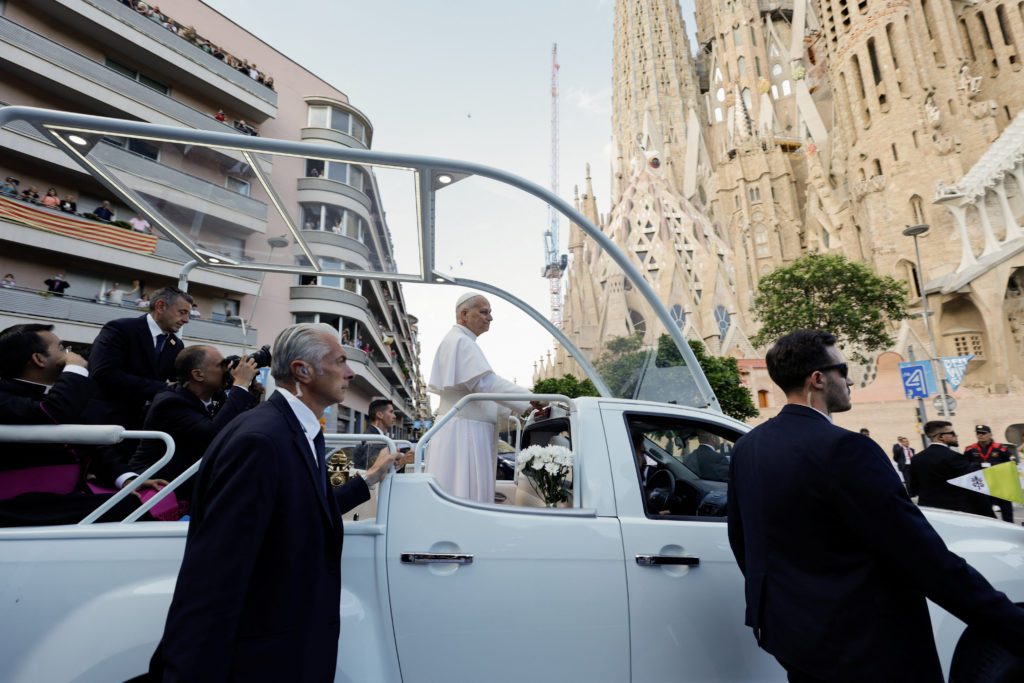
PHOTOS: Pope Leo honors Gaudi's Sagrada Familia masterpiece in Barcelona

Leo called Gaudí's unfinished temple, one of the world's most visited monuments, a "sign of unity and harmony for all of Spain," an ongoing building project like the lifelong journey all Christians make to find God.

  •  

'Disappointing' — Russian Arctic LNG imports to EU rise despite ban as loophole persists

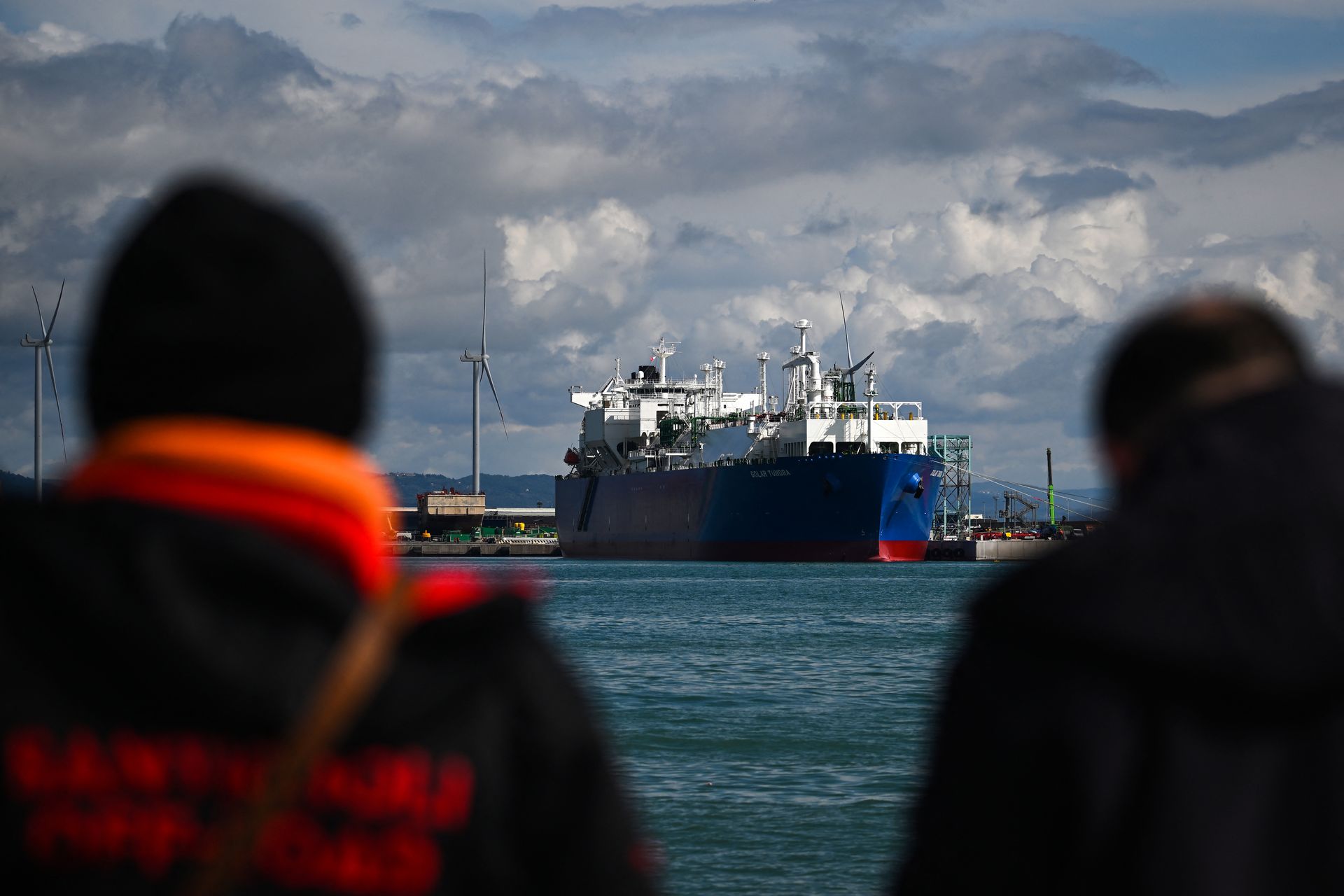
EU imports of Russian liquefied natural gas (LNG) from the Yamal project increased by nearly 18% in the first five months of 2026, according to a report by environmental and sanctions-monitoring NGO Urgewald shared with the Kyiv Independent.

The figures show the challenges facing EU's effort to end

  •  

22,000-Year-Old Jewelry Reveals Ice Age Social Networks in Spain

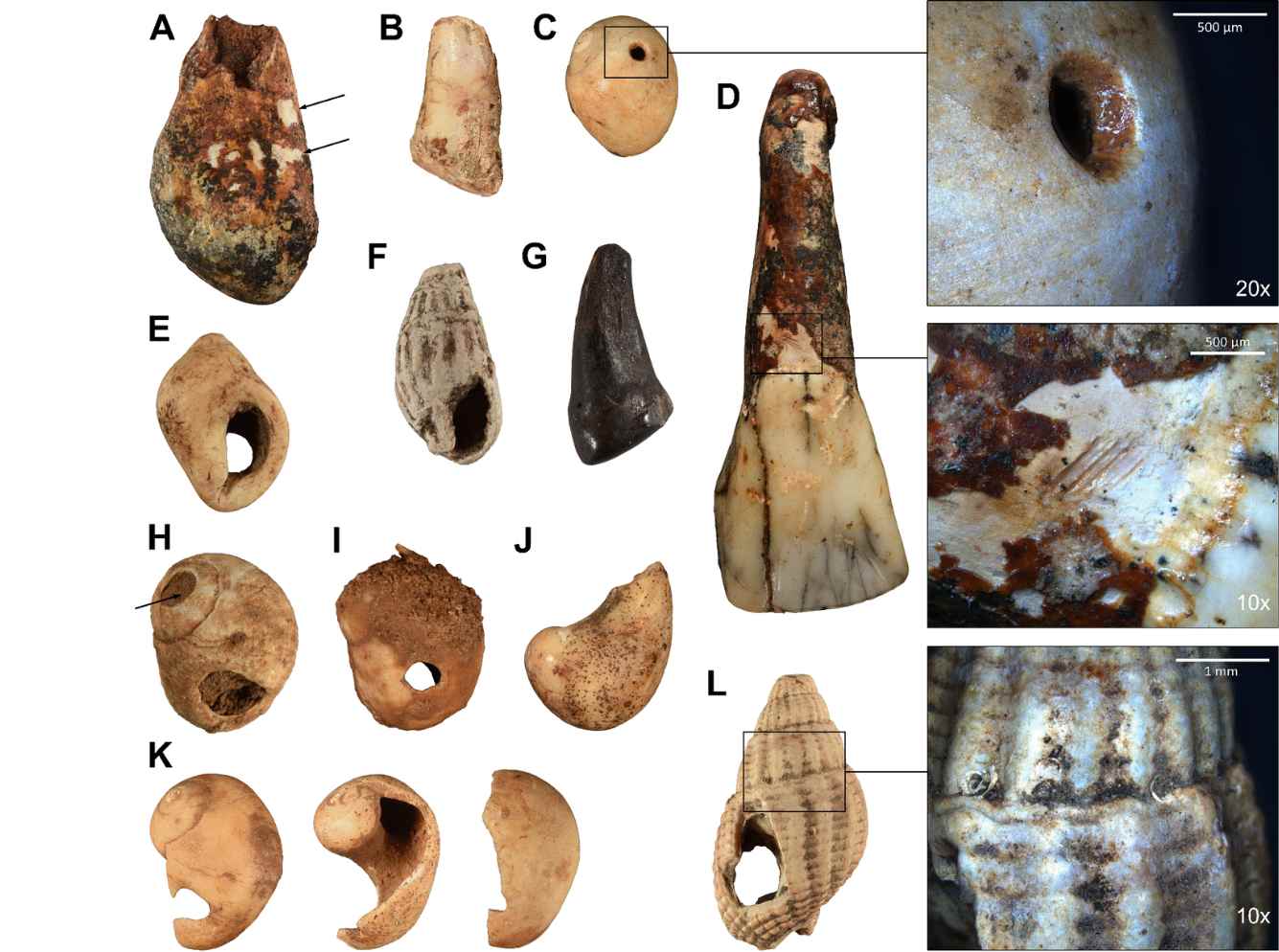
Selected personal ornaments from Llonín Cave in northern Spain
Selected personal ornaments from Llonín Cave in northern Spain. Credit: Daniel Pérez-García de los Salmones et al. / CC BY 4.0

A collection of 22,000-year-old jewelry discovered in northern Spain is offering new insights into how Ice Age hunter-gatherers expressed identity, exchanged ideas, and maintained social networks across vast distances.

Researchers found that people living in and around Llonín Cave used shells, animal teeth, bones, and even fossils to create personal ornaments over thousands of years, revealing changing patterns of social life during the Upper Paleolithic.

The study, led by Daniel Pérez-García de los Salmones and published in PLOS One, analyzed 271 ornaments recovered from Llonín Cave in northern Spain. The cave preserves a long archaeological sequence dating from roughly 23,500 to 11,000 years ago, covering several major cultural periods of the Late Ice Age.

A cave filled with symbolic objects

The ornaments included marine shells, red deer teeth, fish vertebrae, bone fragments, and a fossilized tube worm. Most were intentionally modified and worn as pendants or beads. Researchers identified at least 17 genera and 15 species used in their production. Marine shells made up the largest share of the collection, while red deer canine teeth were the most common animal-derived ornaments.

Microscopic analysis showed that many pieces had been worn for long periods. Friction from cords, clothing, or skin leaves polish marks, grooves, and rounded edges around perforations. More than 90% of the analyzed ornaments displayed signs of use.

A new study from Llonín Cave in northern Spain suggests Ice Age hunter-gatherers used shells, animal teeth, bones, and fossils to create ornaments that expressed identity, marked social ties, and connected communities across long distances.#Archaeology #IceAge #Jewelry #Spain pic.twitter.com/DXcBNuubUJ

— Tom Marvolo Riddle (@tom_riddle2025) June 9, 2026

Researchers also found evidence that some ornaments were made inside the cave. Unfinished deer tooth pendants and partially worked animal teeth suggest that people crafted jewelry on site rather than simply acquiring finished pieces from elsewhere.

Long-distance connections across Ice Age Iberia

One of the most striking discoveries involved shells that likely originated from the Mediterranean coast. The species Tritia mutabilis does not naturally occur along the Cantabrian coast of northern Spain, where Llonín Cave is located.

Its presence suggests that people exchanged objects or maintained contact networks stretching hundreds of kilometers across the Iberian Peninsula.

The cave occupied a strategic position between the Atlantic coast, the Ebro Valley, and routes leading toward the Pyrenees. Researchers argue that these pathways helped facilitate the movement of materials, ornaments, and cultural traditions between distant groups.

From individual identity to group identity

The study found that ornament styles changed over time. During the Upper Solutrean period, around 23,500 to 22,000 years ago, jewelry showed great diversity in materials, manufacturing methods, and designs. Researchers believe these ornaments likely served as markers of individual identity and personal expression.

Later, during the Middle Magdalenian period, ornament production became more standardized. Shell beads were more uniform in size and style, and many appear to have arrived at the cave already finished.

Researchers suggest that this shift reflects larger social gatherings where ornaments may have been used to signal group membership or strengthen alliances among different communities.

A window into Ice Age society

The findings suggest that personal ornaments were far more than decorative objects. They helped communicate identity, social relationships, and cultural connections during a time when hunter-gatherer groups were spread across changing Ice Age landscapes.

According to the researchers, Llonín Cave stands out as an important site for understanding how prehistoric people used jewelry to navigate both everyday life and wider social networks. The collection shows that even 22,000 years ago, people were connected through systems of exchange, shared traditions, and symbolic communication that stretched far beyond their local communities.

  •  

'You're destroying your countries': Is Europe finally heeding Trump's warning on illegal immigration?

Earlier in June, the European Union appeared to finally react to concerns raised by President Donald Trump and many European voters over illegal immigration by introducing tougher border entry rules for the 27-nation bloc.

The EU agreed on new, stricter rules regarding migration and asylum. The laws are specifically designed to ensure that illegal/undocumented migrants who enter the bloc are processed and, where necessary, quickly sent to deportation centers in countries outside the EU.

People seeking asylum will be screened for identity, security, and their health before even entering any asylum system. The border officials will now track and record non-EU citizens entering and exiting the bloc. Plus, it will use biometric data such as fingerprints and facial recognition. And all member states must now help one another and share information.

The Associated Press reported that the provisional deal struck by the EU's three main institutions is expected to go to EU lawmakers and governments, where approval is expected.

EUROPEAN NATIONS DEMAND POWER TO DEPORT ILLEGAL IMMIGRANTS WHO COMMIT CRIMES

Alan Mendoza, founder and executive director of the Henry Jackson Society, told Fox News Digital that "The EU’s demography is changing Europe’s culture. We are now having to deal with people who are not integrating with the local customs." 

While the U.K. is not part of the EU, he said, "Britain’s efforts are behind the new EU rules." Noting the country has "not managed to have offshore migrant holding centers, which would make sure Britain is not seen as a soft touch."

Other experts say the longer countries take to fix the problem, the harder it will be to deal with. Some say it’s already too late.

While Europe’s workaday men and women have clearly seen the problems of illegal immigration for years, their leaders are only just getting the message. 

President Donald Trump told world leaders about the damage caused by a flood of undocumented migrants into Europe during his speech to the United Nations General Assembly last year. "You’re destroying your countries," he said. "Europe is in serious trouble; they’ve been invaded by a force of illegal aliens like nobody’s ever seen before."

JD VANCE'S WARNING ON EUROPE'S FUTURE SHINES SPOTLIGHT ON CONTINENT'S GROWING LIST OF PROBLEMS

Just last week, Vice President JD Vance commented on the stabbing death of the 18-year-old British man who was stabbed to death. 

In part, Vance posted, "Henry Nowak died the same way a civilization dies: abandoned, handcuffed by authorities who neither trusted nor cared for him, and accused of hate crimes he did not commit. His murder is as tragic as it is enraging. He should still be alive today, and he would be if the last few generations of European elites had stood their ground against the politics of self-hatred and the mass invasion of migrants, many of whom despise the West and the people who love it."

Secretary of War Pete Hegseth also made reference to the topic during a speech to commemorate D-Day in France on the weekend. "Sadly, today, different European beaches are stormed by different dangerous ideologies. Beaches in Spain and Italy and Greece and Bulgaria, boats and men arrive. When will European capitals do something about that invasion? Or is it too late? I pray not, and I believe not," he said.

Elsewhere in the EU, Spain seems to have broken with the rest of the bloc on its new stance on undocumented immigration. The country decided to legalize half a million undocumented migrants.

"When undocumented migrants arrive, they get papers, and they get social security," Javier Negre, owner of the La Derecha Diario newspaper, told Fox News Digital. He says a lot of the push to house migrants has come via nongovernmental organizations. "NGOs had a big business, and they promoted illegal immigration," he says.

Another problem is that many undocumented migrants don’t choose to integrate into their new domicile. "They don’t have the same values," Negre said. "We import a lot of people, and some realize they can steal iPhones and wallets," he said, commenting on the rise in crimes.

CLICK HERE TO DOWNLOAD THE FOX NEWS APP

Critics of the move mostly came from the European left and NGOs. Mélissa Camara, from the French Green party, said the deal was "a historic setback" for human rights in the bloc," the Associated Press reported.

"The legalization of return hubs outside the European Union, the green light for the detention of minors, home visits inspired by ICE practices: the legal arsenal serving a xenophobic ideology is now complete," she said.

The Associated Press contributed to this report.

  •  
❌