Login
Login
Are Ukrainian Mirage 2000s Now Flying Air-To-Ground Strike Missions?
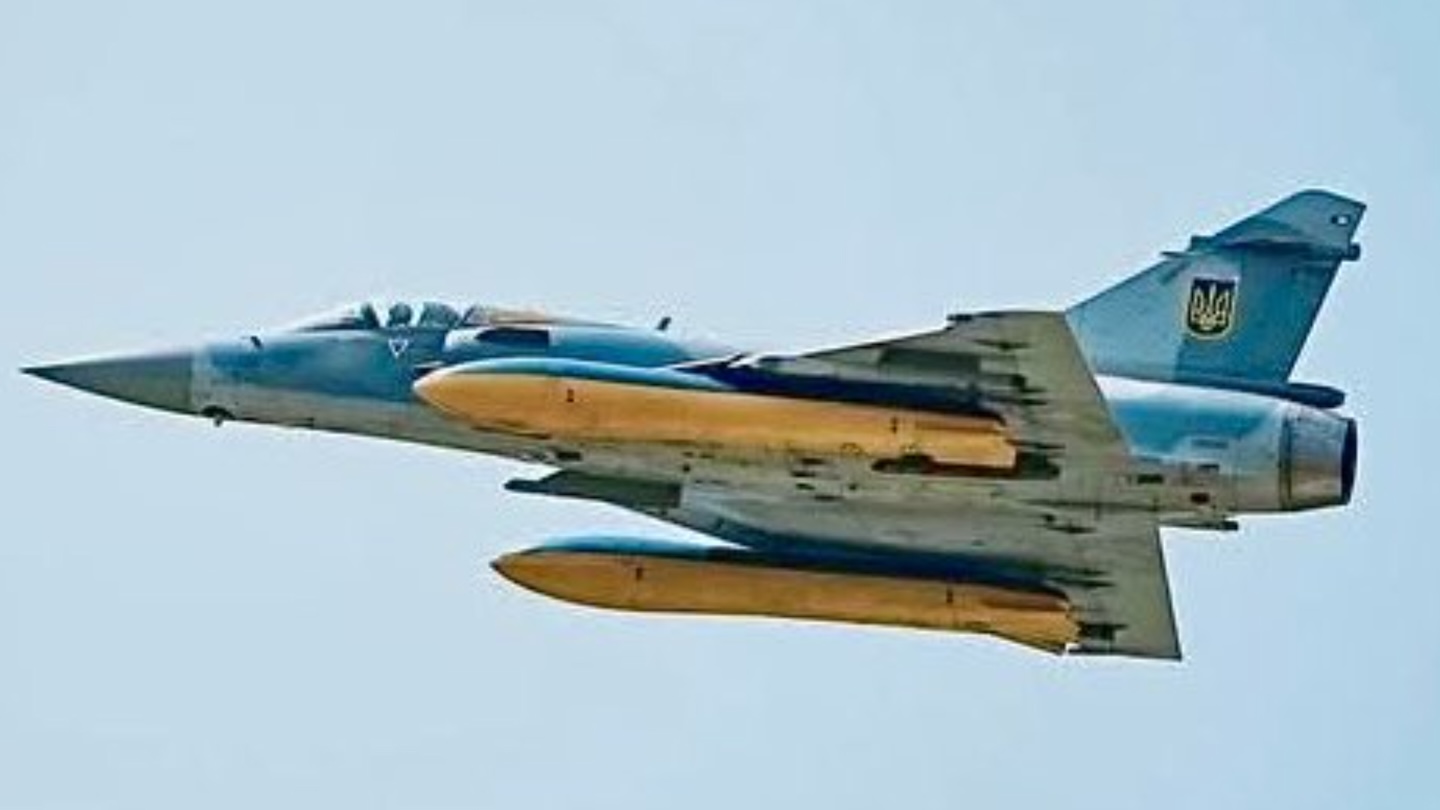
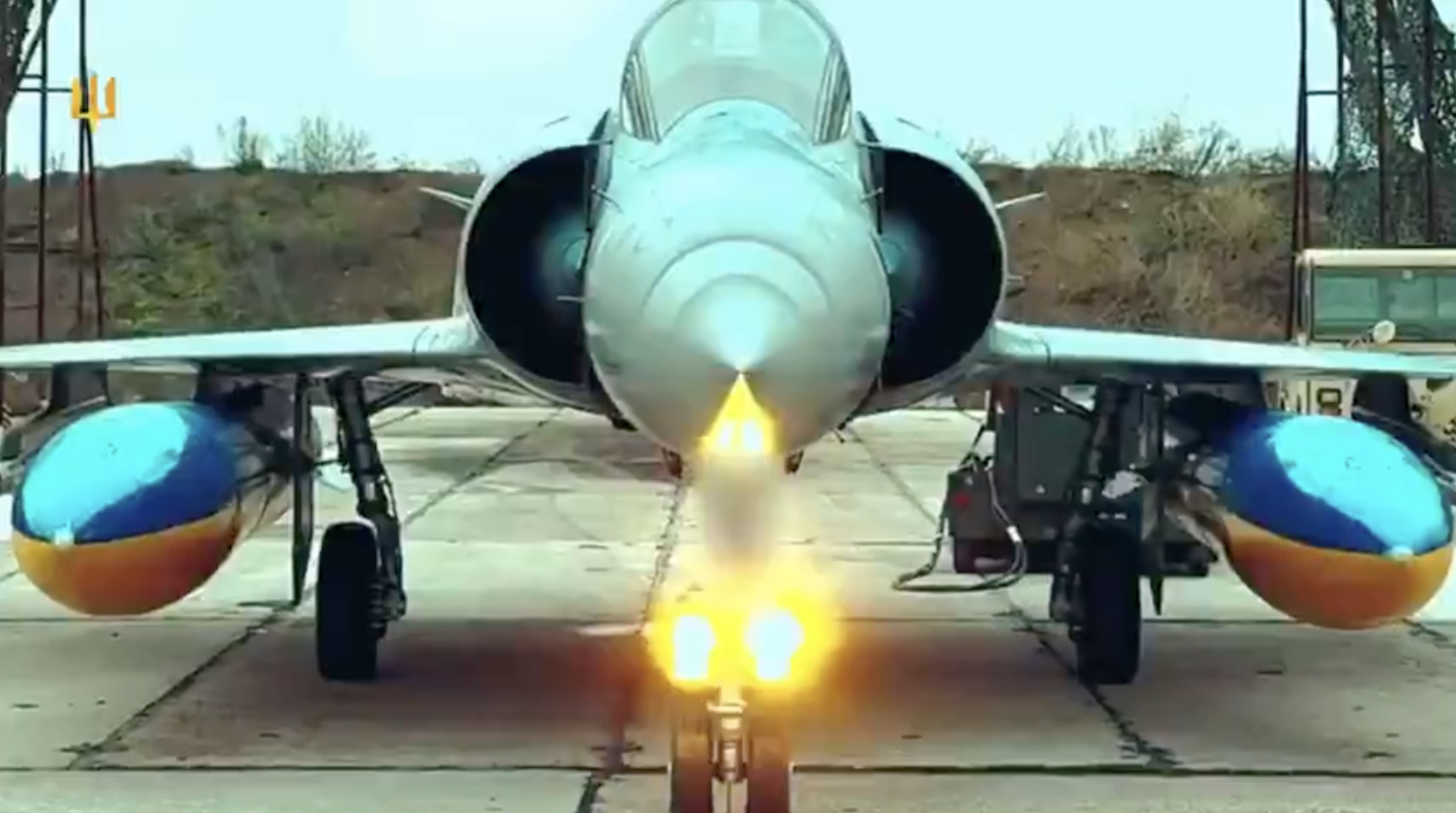
A French-made Mirage 2000-5F, streaking low over Ukraine in a newly emerged video, provides a relatively rare glimpse of the fighter in Ukrainian Air Force service. Compared with the more numerous F-16 fleet, Ukrainian Mirage operations are much less widely seen. Until now, accounts and imagery have shown the delta-wing fighters being used for air-to-air missions, primarily in the fight against Russian long-range attack drones and cruise missiles. The latest footage may suggest that they now have started to embark on air-to-ground sorties, too.
Some of the first footage of a French-supplied Mirage 2000-5F in Ukrainian service conducting a strike mission on the eastern frontline.
— OSINTtechnical (@Osinttechnical) June 2, 2026
Seen here screaming just a few dozen feet over the ground before tossing its load of bombs (likely French AASMs) at a Russian target. pic.twitter.com/EEHgNxIxUg
The footage, taken from a ground position possibly close to the front lines, shows a Mirage flying at a very low-level along a tree line, before pulling up into a steep climb. Potentially, the jet was engaged in an air defense patrol before pulling up to transit outside of the ground-based air defense threat ‘umbrella,’ but this exact maneuver is one we have frequently seen for air-to-ground weapons releases from other platforms.
While the moment of weapons release is not visible, the flight profile is consistent with toss bombing attacks. In particular, the French-made AASM-250 Hammer rocket-boosted munition, associated with the Mirage, has often been seen delivered by other platforms using this technique, which is exactly how the weapon was designed to be used, among other modes of delivery.
Footage reportedly showing Ukrainian MiG-29 fighter jet firing French-supplied AASM-250 Hammer guided bombs at a target in Belgorod Oblast of Russia.
— Status-6 (War & Military News) (@Archer83Able) June 27, 2024
Notice the very low altitude from which the munitions are being launched.
Geolocated impact point: Nekhoteevka border crossing,… pic.twitter.com/mGGuqRAmyK
A video of the moment of release of two French-supplied AASM-250 Hammer guided bombs from a Ukrainian MiG-29 fighter jet.
— Status-6 (War & Military News) (@Archer83Able) August 14, 2024
The pilot of this particular airframe, 27-year-old Captain Oleksandr Myhulia, perished while performing a combat mission on August 12, 2024.… pic.twitter.com/yNEbbaFUPt
After all, toss bombing is a key way to help mitigate the risks to combat jets over the battlefield, specifically ground-based air defenses. Russia’s surface-to-air missile umbrella is well layered and penetrates far beyond the front lines.
“Obviously, the lower you are, and the further away from the surface-to-air missiles that can detect you because of the curvature of the Earth” affect how far the bomb can travel, U.S. Air Force Gen. James Hecker, head of U.S. Air Forces in Europe (USAFE), as well as NATO’s Allied Air Command and U.S. Air Forces Africa (AFAFRICA), explained back in 2023. Hecker was speaking about Ukraine’s use of unpowered JDAM-ER glide bombs, but the same applies to Hammer. “There are tactics where you can go in low and do some things… and get back,” Hecker added.
The toss/lofted technique does not reduce the accuracy of the Hammer or the U.S.-supplied JDAM-ER, which both come as standard with GPS-assisted inertial navigation system (INS) guidance packages that allow them to zero in on set coordinates even when employed indirectly.
Additionally, the Hammer can offer multi-mode guidance options with either imaging infrared or semi-active laser homing added in, which enables the engagement of moving targets and helps improve overall accuracy. This also offers alternative guidance options in GPS-degraded environments against some targets. So far, however, only the GPS/INS version has been positively identified in Ukrainian service.
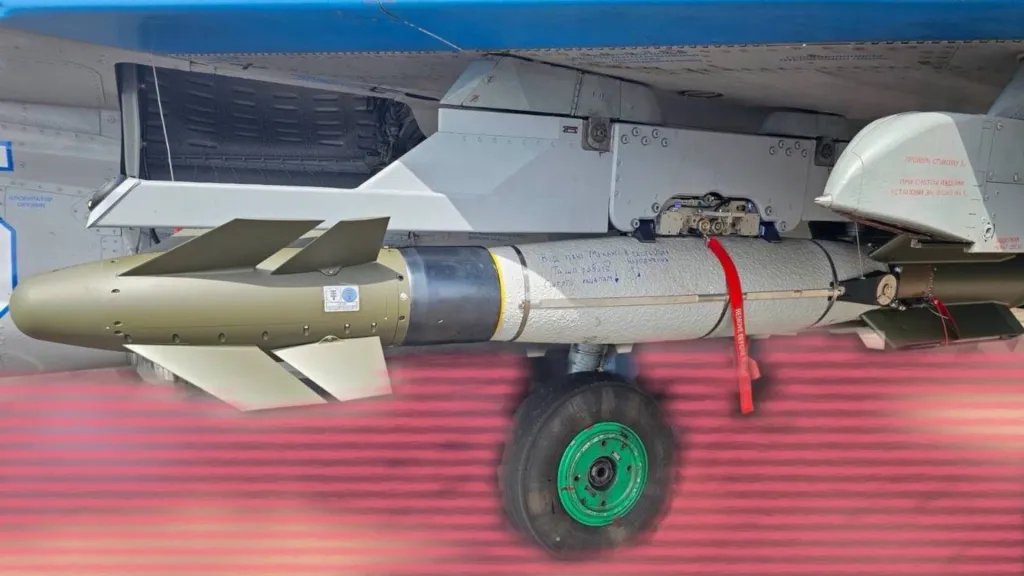
Hammers come in a variety of sizes, but Ukraine is understood to have received 250-kilogram (551-pound) class types, also sometimes referred to as AASM-250s.
To date, the Hammer has been seen in use on Ukrainian Air Force MiG-29 Fulcrums, which appear to be the service’s primary launch platform for the munitions, at least so far. Ukraine has also integrated the French-made bombs onto its Su-25 Frogfoot attack jets.
Low pass by a Ukrainian Air Force MiG-29, armed with a French-supplied AASM 250 HAMMER extended-range guided bomb. pic.twitter.com/FlibJ9VZfm
— OSINTtechnical (@Osinttechnical) March 15, 2024
Hammer’s solid-fuel rocket booster also gives the bomb unique benefits. The manufacturer, Safran, says the AASM-250 version can still hit targets at least up to nine miles away (15 kilometers) when released from low altitude. This can increase to around 43 miles (70 kilometers) when launched from higher altitude.
In its original form, the Mirage 2000-5F was not cleared to use the Hammer, reflecting the fighter’s primary air defense mission in French service. However, in March of last year, France confirmed that the Mirages being transferred to Ukraine would have Hammer compatibility. In the past, the Mirage has been tested in France with a six-Hammer load-out.
Today, France confirmed that Ukrainian Air Force Mirage 2000-5Fs will be outfitted with AASM extended-range guided bombs, giving Ukraine another capable strike platform.
— OSINTtechnical (@Osinttechnical) March 10, 2025
Previously, a French Mirage 2000-5F was tested with a massive loadout of up to 6 AASM-250s. https://t.co/qSPdQ5GLHR pic.twitter.com/g2mB8WEpVr
Earlier this year, the Ukrainian Air Force published a video including brief interviews with a Mirage pilot, as well as two members of the ground crew. The unnamed Mirage 2000 fighter pilot came to the delta-wing jet after serving on the Soviet-era Su-27 Flanker.
“Now I pilot the Mirage 2000, and my impressions of this aircraft are extremely positive,” he explained. “I trained in the French Republic together with French fighter pilots for about six months. I learned to fly and employ weapons on the twin-seat Mirage 2000B. Later, we transitioned to the single-seat version, the very aircraft I am flying now.”

Two Ukrainian Air Force fighter jet technicians, David and Dmytro, shared their experiences of day-to-day combat operations with the Mirage.
“Right now, we’re at a forward operating airfield, our third one this week,” David pointed out, indicating the missile-armed Mirage behind him. “The enemy constantly tries to destroy our aircraft and equipment. Our forward team keeps relocating from site to site.”
Ukraine’s F-16s also routinely operate from dispersed locations around the country, supported, among others, by a fleet of vehicles dedicated to helping maintain them, as you can read about here. Moreover, these kinds of operations, and the challenges of generating air combat power under the constant threat of Russian attack, are something that is being keenly felt in the U.S. military. After all, the Pentagon is planning to operate crewed and uncrewed aircraft from distributed forward locations in future high-end fights, such as one against China in the Pacific. These concepts of operations would also be relevant in the event of a major conflict elsewhere in Europe.
Dmytro added: “During our last combat mission, we came under fire [from Shahed-series long-range one-way attack drones] and missiles, but fortunately, we managed to evacuate the aircraft and save our lives.”
The pilot and technicians praised the Magic 2 infrared-guided air-to-air missile that appears to be the primary air-to-air armament of the Ukrainian Mirage.
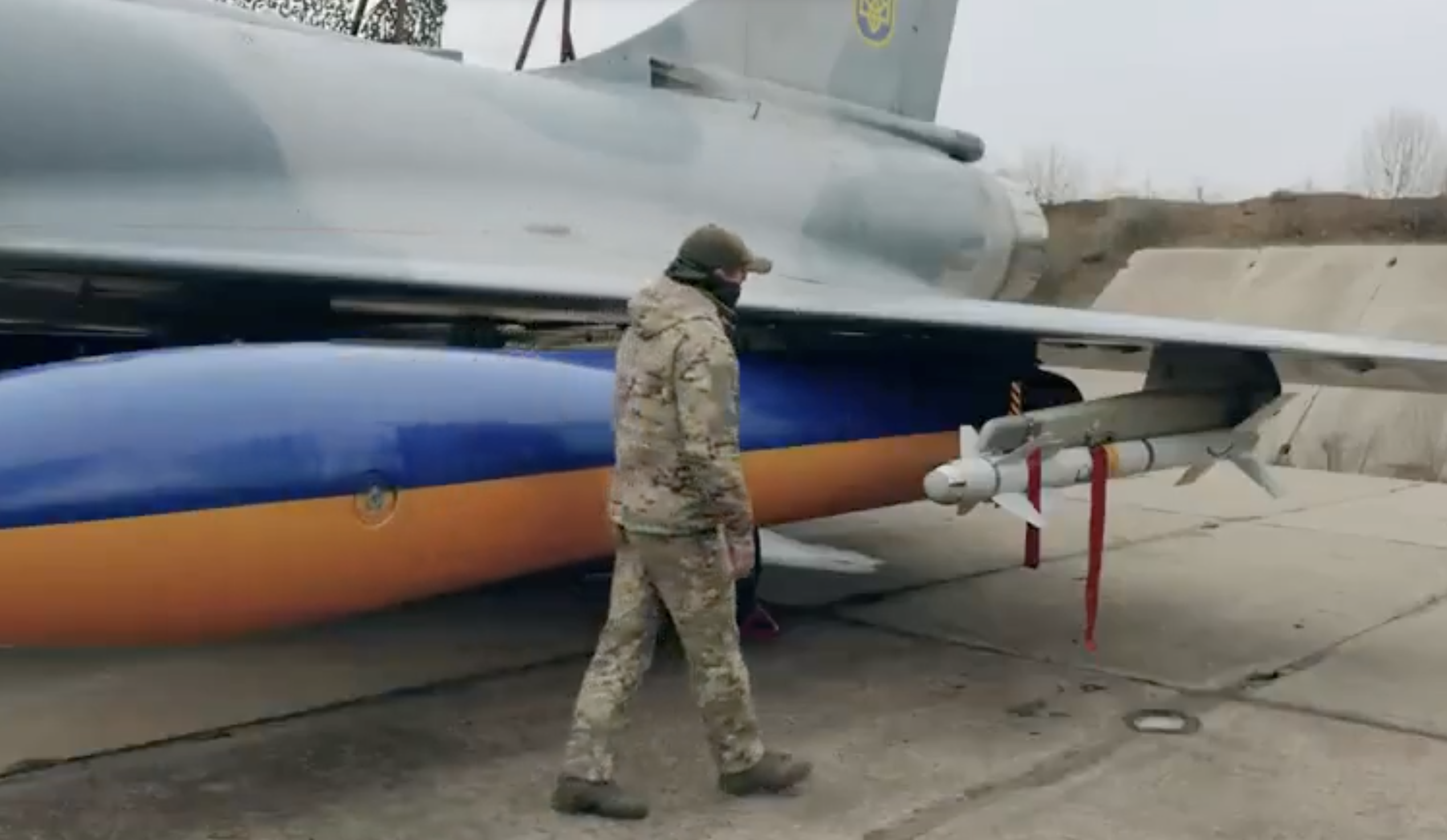
“It has performed exceptionally well,” one technician said, before claiming that it has a kill probability of “practically 100 percent.”
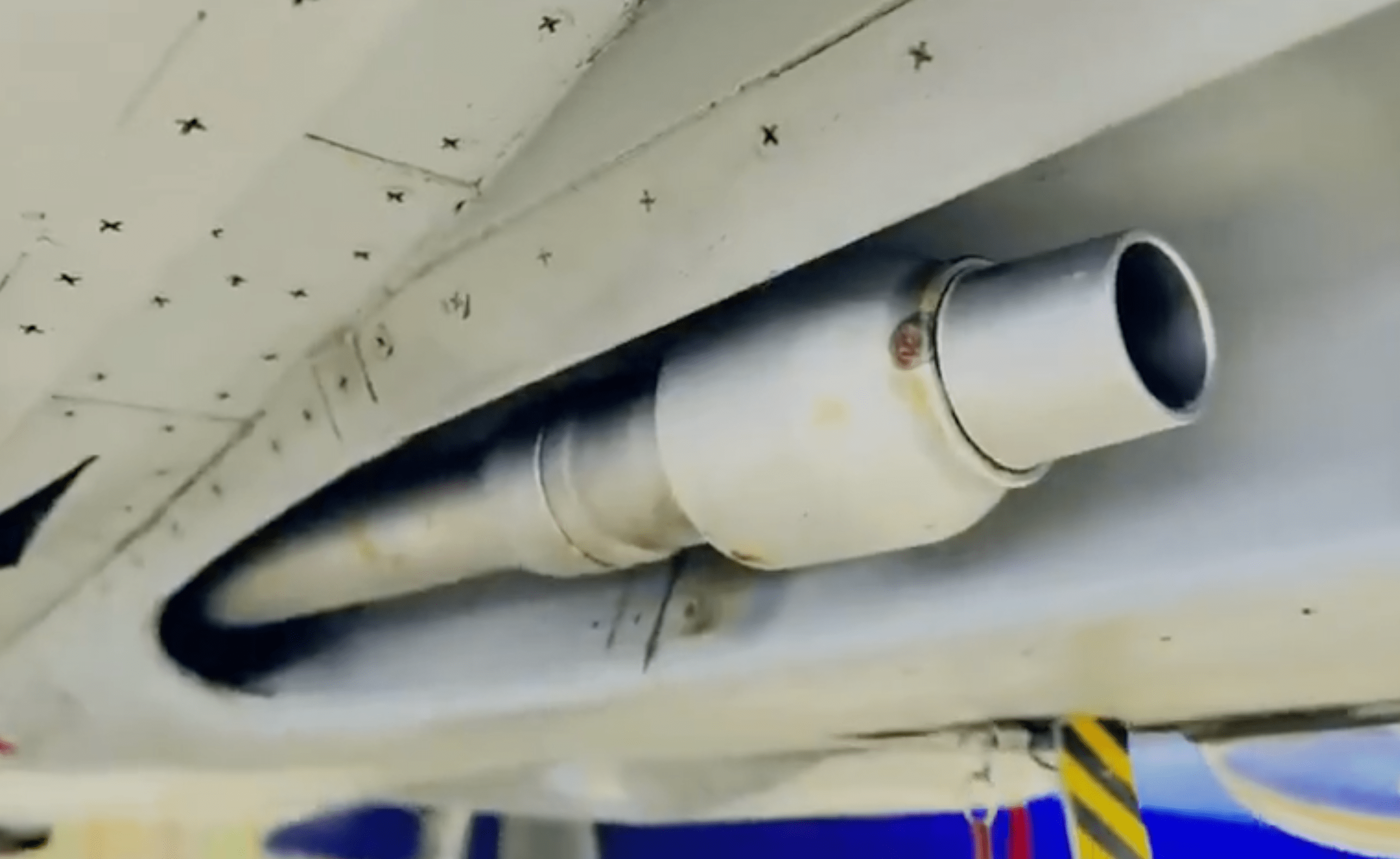
The pilot further added that the kill probability against enemy drones and cruise missiles stands at 98 percent. No mention was made of the Mirage’s twin onboard 30mm cannons, although these are shown in detail in the video.
As regards air-to-air kills, the particular Mirage seen in the video from earlier this year is marked with six silhouettes denoting Russian Kh-101 air-launched cruise missiles.
However, as the ground crew points out, another six still needed to be added to the same jet.
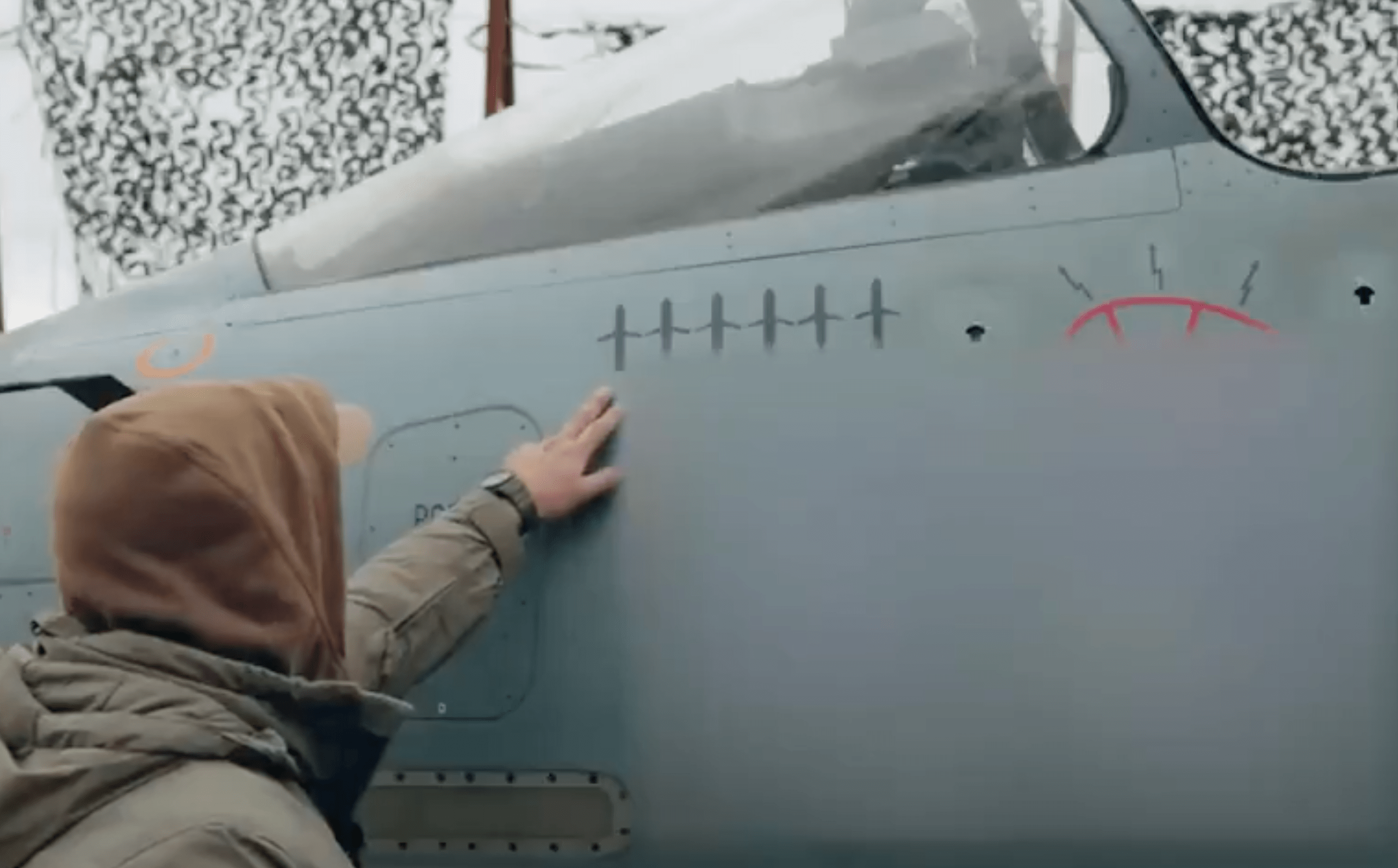
The prosaic reason behind this: “We don’t always have stencils with us at forward airfields… Sometimes we simply don’t have the time to apply all the markings.”
The reason the Mirage is less frequently seen in Ukrainian hands is chiefly due to numbers.
It’s unclear exactly how many Mirages have now been pledged to Ukraine by France. At first, France offered six, but last October, French President Emmanuel Macron said he would offer more. At least one has so far been lost in Ukrainian service.
On the subject of improving the combat potential of the Ukrainian Air Force, the pilot made a call for continued development, including “more modern aircraft [and] more modern weapons to counter the horde threatening us.” The appearance of the Hammer would provide evidence that this aspiration is being, to some extent, met.
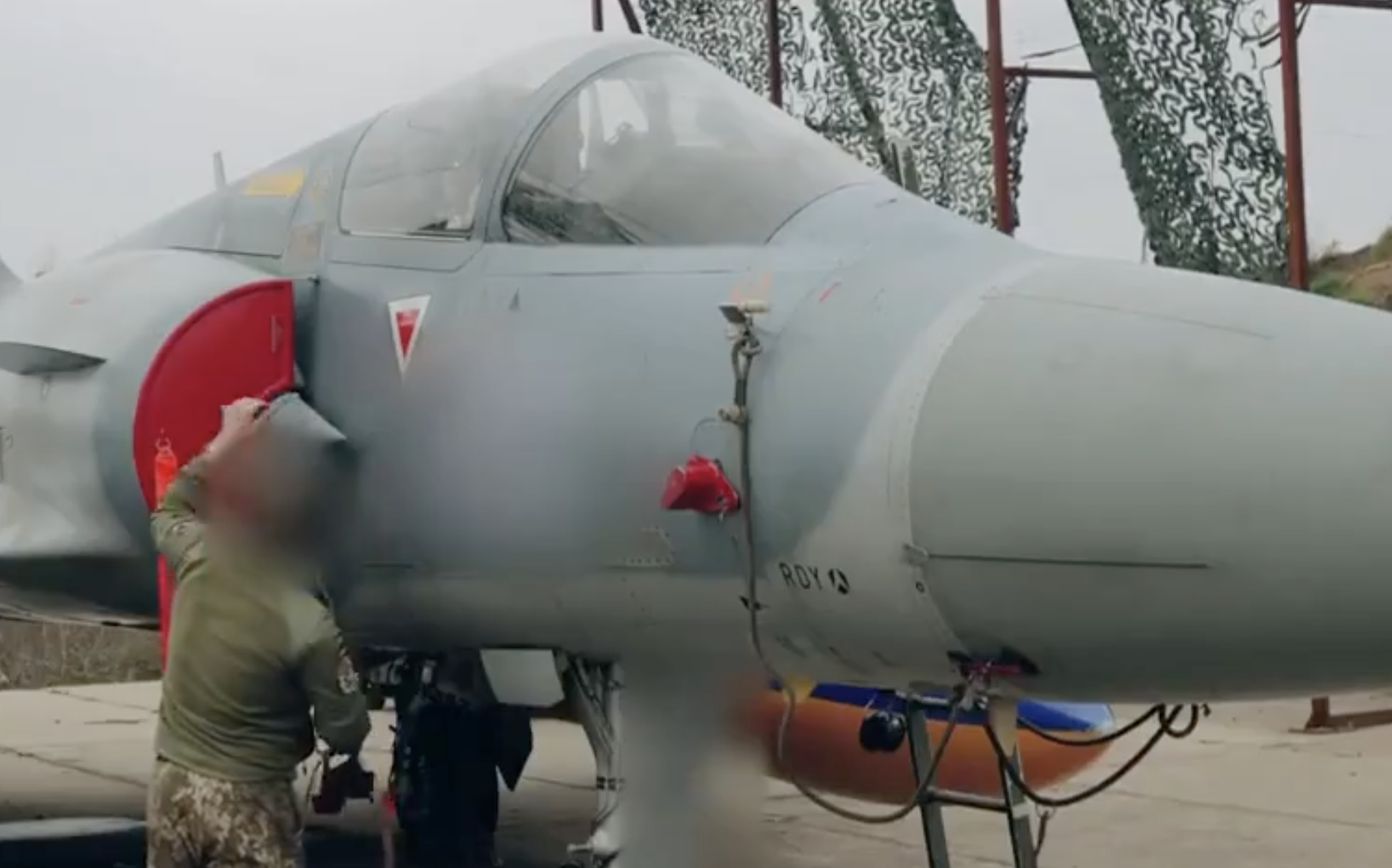
As regards the particular deficiencies of the Mirage, the pilot said: “In my opinion, and in the opinion of my fellow pilots, this aircraft lacks longer-range air-to-air weapons.” He called for a weapon that represents “something in the middle ground between efficiency and cost so that we can engage the massive number of enemy aerial threats we face.”
It’s unclear if the pilot in question was including the more modern and capable MICA air-to-air missile within this assessment.
The first imagery of Ukrainian Mirages showed the jets exclusively armed with a pair of Magic 2 missiles, broadly analogous to the AIM-9L Sidewinder, rather than the MICA that the aircraft can also carry. At the start of this year, however, the MICA also began to appear on the fighters.
Ukrainian Mirage 2000 fighters have been equipped with French MICA medium-range air-to-air missiles to counter Russian air targets. https://t.co/AuliNF5G7i pic.twitter.com/y5zXa9vgKQ
— Special Kherson Cat(@bayraktar_1love) January 5, 2026

Unusual for a modern Western beyond-visual-range AAM, the MICA can be fitted with either an active radar seeker or an infrared seeker head. When using the latter option, the seeker can act as a ‘poor man’s’ infrared search and track system and provide target detection indication in the pilot’s head-up display (HUD).
The MICA uses a thrust-vectoring motor for improved agility and has a reported maximum range of around 37 miles, far superior to the roughly nine-mile range of the Magic 2.
Despite the arrival of Western-supplied equipment, Ukraine continues to rely heavily on its Soviet-era fighters. The entirety of its combat fleet — Mirages and F-16s included — is in the latter stages of its service life and needs to be replaced before too long. With that in mind, Kyiv is planning to bolster its air force with more modern equipment.
“If I had the opportunity to transition to another aircraft superior to the Mirage, I would probably choose the Rafale,” the pilot continued. “It’s from the same country, and retraining for the Rafale would be much faster than transitioning to aircraft from other nations. The Rafale can also carry the Meteor, a missile with very long reach.”
Thanks to its ramjet motor, the Meteor’s all-important ‘no-escape zone’ is much larger than for comparable weapons. This means the enemy’s chance of evading the missile at the endgame of the engagement, using high-energy maneuvering, is considerably reduced. Another advantage of being able to throttle the motor is that the Meteor’s autopilot can calculate the most efficient route to the target for very long-range shots. Ukraine now looks set to receive the Meteor to arm its first Gripen C/D fighters, now scheduled to arrive next year.
Last November, Ukraine signed a letter of intent to buy up to 100 Rafale F4 multirole fighters from France over the next 10 years. The agreement came less than a month after Sweden and Ukraine unveiled a plan to export as many as 150 Gripen E fighters to Kyiv — last week, it was confirmed that Kyiv plans to buy an initial batch of 20 of the new-generation Gripens.
While the Rafale and Gripen E/F would be the most advanced combat aircraft in Ukraine’s inventory, there remain glaring questions about whether the acquisition of one of these aircraft types, let alone two, is actually feasible, especially in such numbers, as we discussed at the time.
Today marks a significant moment, truly historic for both our nations – France and Ukraine. Together with Emmanuel Macron, we signed a Declaration of Intent on Cooperation in the Acquisition of Defense Equipment for Ukraine. This document enables Ukraine to procure military… pic.twitter.com/0qzG41IsnP
— Volodymyr Zelenskyy / Володимир Зеленський (@ZelenskyyUa) November 17, 2025
At the same time, the Mirage pilot would be happy to get his hands on any kind of modern Western-made equipment.
“If I were offered something like the F-35, Rafale, or Gripen, I would gladly, without hesitation, transition to that platform.”
The possibility of Ukraine using Mirage 2000-5F fighters in an air-to-ground strike role would mark an important expansion of their combat role. If the aircraft are now contributing to both defensive and offensive operations, they will be further enhancing Ukraine’s steadily growing Western-origin air capabilities.
Contact the author: thomas@thewarzone.com
The post Are Ukrainian Mirage 2000s Now Flying Air-To-Ground Strike Missions? appeared first on The War Zone.