Reading view

Trump Eyes Jerusalem Patriarch as Potential Mediator in Russia-Ukraine Conflict

Jerusalem Patriarch Theophilos meets Trump
President Donald Trump is reportedly considering Patriarch Theophilos III of Jerusalem as a potential mediator in Russia-Ukraine peace efforts. Credit: Jerusalem Patriarchate

In a novel diplomatic development, US President Donald Trump has reportedly approached the Greek Orthodox Patriarch of Jerusalem, Theophilos III, to act as an informal mediator to help de-escalate the war between Russia and Ukraine.

According to reports from Israeli media, including Ynet, and Greek news outlet iefimerida, the proposal was discussed during a recent forty-minute meeting between Trump and the Patriarch at the White House. Sources close to the Patriarchate reveal that Trump asked Theophilos III to leverage his long-standing communication channels with Moscow—and specifically with Russian President Vladimir Putin—to explore avenues toward a ceasefire.

Jerusalem Patriarch: A religious intermediary?

Theophilos III is widely regarded as a figure of immense moral and religious authority, largely viewed as free from direct political alignment. Crucially, the Jerusalem Patriarchate has maintained close ties with the Russian Orthodox Church and has notably abstained from recognizing the autocephaly (independence) of the Ukrainian Orthodox Church, which was granted by the Ecumenical Patriarchate in 2019. This stance, combined with Moscow’s historical interest in protecting the Holy Sites in Jerusalem, gives the Patriarch unique diplomatic leverage with the Kremlin.

Furthermore, the Patriarch is no stranger to sensitive diplomacy. He previously assisted in securing the release of Israeli citizen Naama Issachar from a Russian prison. Trump is reportedly eager to utilize these open channels to demonstrate swift progress in resolving the conflict, especially as official diplomatic avenues remain heavily strained.

Mixed reactions and official caution

A meeting between Patriarch Theophilos III and Vladimir Putin is already scheduled for later this month. While no official mediation proposal has formally been presented to Kyiv, a Ukrainian government source generally welcomed the initiative. “Why not? The more mediators there are, the more responses we will get from Russia showing that Putin wants to keep fighting,” the source stated.

However, ecclesiastical sources in Athens have expressed deep skepticism regarding the feasibility of the endeavor, questioning whether Ukraine will ultimately accept a mediator with such close ties to Moscow.

Diplomatic talks shift to Athens
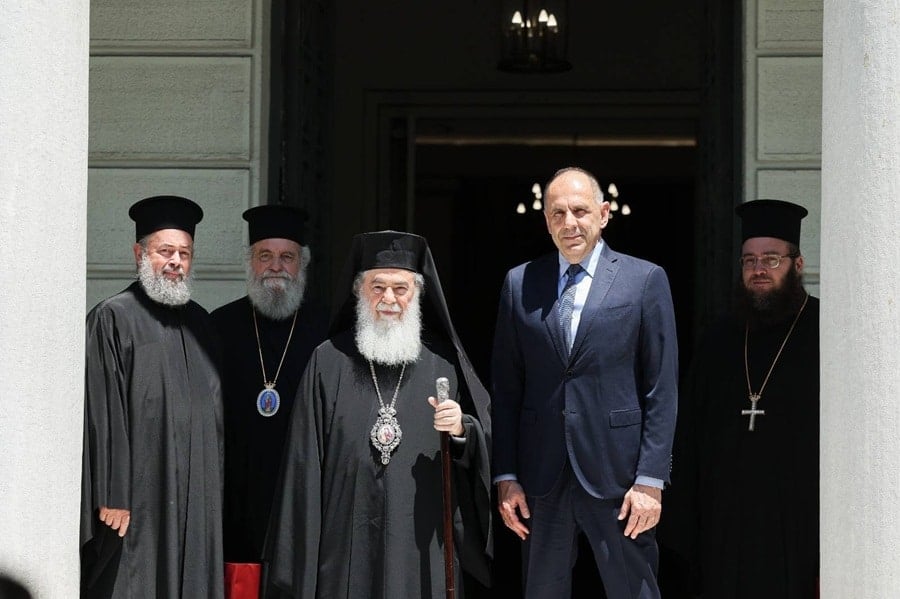
Patriarch Theophilos III in Athens
Greek FM Gerapetritis welcomes Patriarch Theophilos III in Athens. Credit: Greek Ministry of Foreign Affairs

Amid these backstage diplomatic maneuvers, Patriarch Theophilos III arrived in Athens for an official visit, where he met with Greek Foreign Minister George Gerapetritis. While the Greek Ministry of Foreign Affairs focused on regional stability, Gerapetritis reaffirmed Greece’s unwavering support for the Patriarchate and the protection of Christian populations in the volatile Middle East.

The meeting concluded with the signing of a Memorandum of Cooperation between the Greek Ministries of Foreign Affairs and Culture and the Patriarchate to preserve the Holy See’s cultural heritage. Gerapetritis also underscored the vital importance of maintaining the historical Status Quo of Jerusalem, emphasizing the unity required among the ancient Eastern Patriarchates during this highly complex geopolitical era.

  •  

Greek Gaza Flotilla Activist Exposes Alleged Israeli Torture

Gaza flotilla carrying a Greek activist as well
The Greek activist was aboard a vessel aimed at breaking the naval blockade of Gaza. Credit: Global Sumud Flotilla

Greek activist and academic Antonis Vradis shared his harrowing experience after being detained by Israeli authorities in international waters alongside fellow Freedom Flotilla activists.

Speaking to Al Jazeera, Vradis revealed that he was held for 52 hours aboard an Israeli vessel before being transferred to Israel and ultimately deported. He alleges that he was subjected to brutal torture by Israeli commandos during his detention.

As a member of the Global Sumud Flotilla, a fleet of over fifty vessels aimed at breaking the naval blockade of Gaza to deliver humanitarian aid and stand in solidarity with Palestinians, AntVradis was aboard the La Sirena when it was intercepted by Israeli forces in international waters near Cyprus. The passengers were detained at gunpoint and transferred to the Nahshon, a ship he describes as a “floating prison.”

“I began calculating how many minutes on my knees I would trade for just a few seconds inside the torture container. It felt like we were kneeling for an eternity,” Vradis recalled. “A drone hovered overhead, and a nationalistic song blared continuously from the loudspeakers in an exhausting, repetitive loop.”

Greek flotilla activist alleges torture by Israelis

Greek activist Israel torture
Antonis Vradis is a professor of human geography at the University of Oslo and a reader at the University of St Andrews. Credit: University of St Andrews

The activist detailed accounts of beatings, electric shocks, and humiliation. He noted that he was held in metal containers with dozens of other activists and deprived of food, water, and medical care. This experience, he said, helped him truly understand the depth of sumud—the steadfastness and resilience that characterizes Palestinians.

Upon arrival at the Israeli port of Ashdod, Vradis claims he faced further violence and was threatened with a knife, all while being denied medical attention.

“During the fingerprinting and photographing process inside a large registration tent, two guards dragged me into a small, isolated area behind a curtain,” he described. “One of them lunged at me with a folding knife. The blade was aimed at my stomach, but I instinctively moved, and it struck my arm instead, leaving a bleeding, four-centimeter gash.”

Vradis’ allegations are now the subject of legal proceedings in Greece. Reflecting on the ordeal, he warned that his experience reflects practices that have reportedly been inflicted on Palestinians for decades. “They put us in a black box stripped of all rights,” he stated, describing the incident as an act of “state piracy.”

RelatedIsrael Exploits Greece to Advance Regional Hegemony, UN Special Rapporteur Warns

  •  

Thousands of Albanians Protest Jared Kushner-Linked Coastal Resort Project

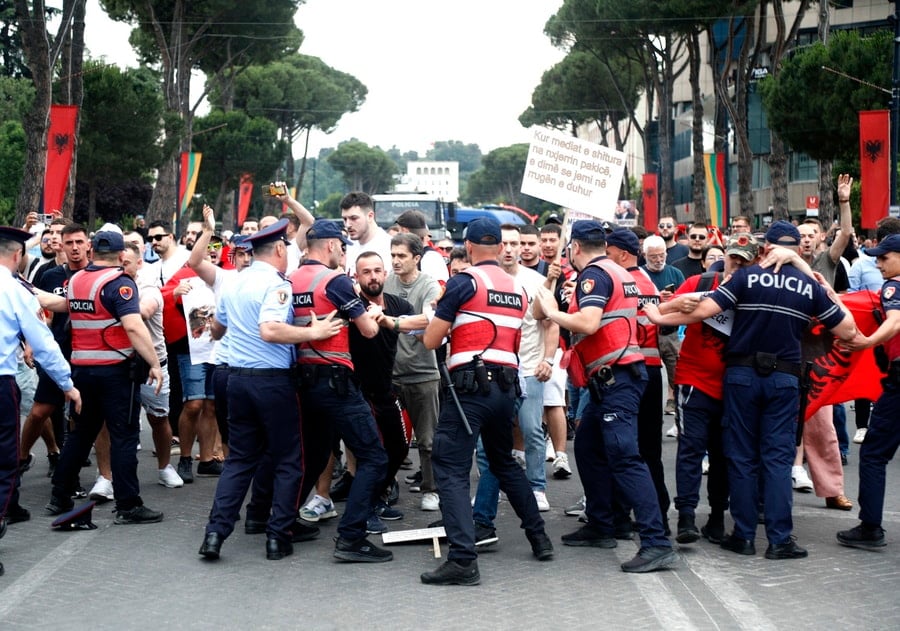
Albanians and police officers face each other during a protest in Tirana over a proposed coastal resort development.
Albanians clash with police during a protest in Tirana against a Jared Kushner-linked resort project in a protected coastal area. Credit: Malton Dibra/EPA/AMNA

Albanians have joined a growing wave of protests against a major coastal resort project linked to Jared Kushner’s investment firm, Affinity Partners. The demonstrations began near the proposed development site in Zvernec, close to the protected Vjosa-Narta coastal area, before spreading to the capital, Tirana, where protests continued for several days.

Chanting “cancel the project” and carrying banners reading “Albania is not for sale,” demonstrators demanded that the government block the resort plans. The project includes luxury tourism development on the uninhabited island of Sazan and in the Vjosa-Narta protected landscape, a wetland area near the southern community of Zvernec. The region is known for its biodiversity and is home to flamingos, seals, and sea turtle nesting sites.

Environmental groups, local residents, and civil society activists say the development could cause irreversible damage to one of Albania’s most sensitive coastal ecosystems. They have also raised concerns over transparency, land ownership, and possible corruption.

Albanians protest coastal resort after beach access blocked

The latest wave of demonstrations began after fencing and barbed wire appeared near the proposed development area, blocking access to the beach. Residents and environmental activists gathered in Zvernec, where tensions escalated.

Private security guards reportedly attacked and injured several protesters during the gathering. Following the incident, authorities suspended several police officers and revoked the licenses of two private security companies.

The unrest then moved to Tirana, where protesters rallied outside government buildings, including the office of Prime Minister Edi Rama. Demonstrators used inflatable flamingos as a symbol of the protected wetland and held signs reading “Nation is not for sale” and “I don’t want Albania like Dubai.”

Anti-corruption prosecutors open inquiry

The protests intensified after Albania’s Special Prosecutor’s Office against Corruption and Organized Crime (SPAK) opened an inquiry into issues surrounding land titles, sales to investors, and changes affecting the protected status of the area. It has not been confirmed whether the land surrounded by barbed wire has been purchased by Affinity Partners.

Kushner first presented plans for development projects in Albania two years ago. According to those plans, Sazan, a former secret communist-era military base, would be transformed into a luxury tourist destination. The development has been estimated at around €1.4-1.6 billion ($1.62-1.86 billion). Luxury hotels were also planned for Zvernec, near the Vjosa-Narta protected area.

Albanians holding flags and banners during a protest in Tirana against a coastal resort project linked to Jared Kushner.
Albanians protest in Tirana against a Jared Kushner-linked coastal resort project near the protected Vjosa-Narta wetland. Credit: Malton Dibra/EPA/AMNA

Environmental groups warn of serious damage

In January, around forty environmental organizations called for the suspension of the resort plans, warning that the project could threaten biodiversity in a coastal zone of major ecological significance. “We want all construction to halt and heavy machines out of the protected area,” said Joni Vorpsi, an ecologist with PPNEA-BirdLife Albania. “This would be a new city with around 10,000 rooms and it will completely destroy that wild region.”

Environmentalists argue that the scale of the project is incompatible with the protected status of the area. They say the development could disrupt bird migration routes, damage habitats, and permanently alter a largely undeveloped stretch of coastline.

Albanians protest as Rama rejects calls to halt coastal resort project

Prime Minister Edi Rama invited protesters to choose a delegation of about twenty people to discuss possible solutions, but the protesters rejected the proposal. Rama has publicly defended the investment, arguing that Albania must remain open and fair toward foreign investors.

“It is very important that we remain welcoming, that we remain fair, and that under no circumstances do we receive the stigma of being a country where investors are met with hostility,” Rama said in a statement shared with Reuters. “There is absolutely no chance that the investment will stop as long as I am here.” His comments have further angered opponents of the project, who say the issue is not hostility toward investment but the protection of public land, natural heritage, and the rule of law.

  •  

Patriarch of Jerusalem Urges Trump to Protect Middle East Christians

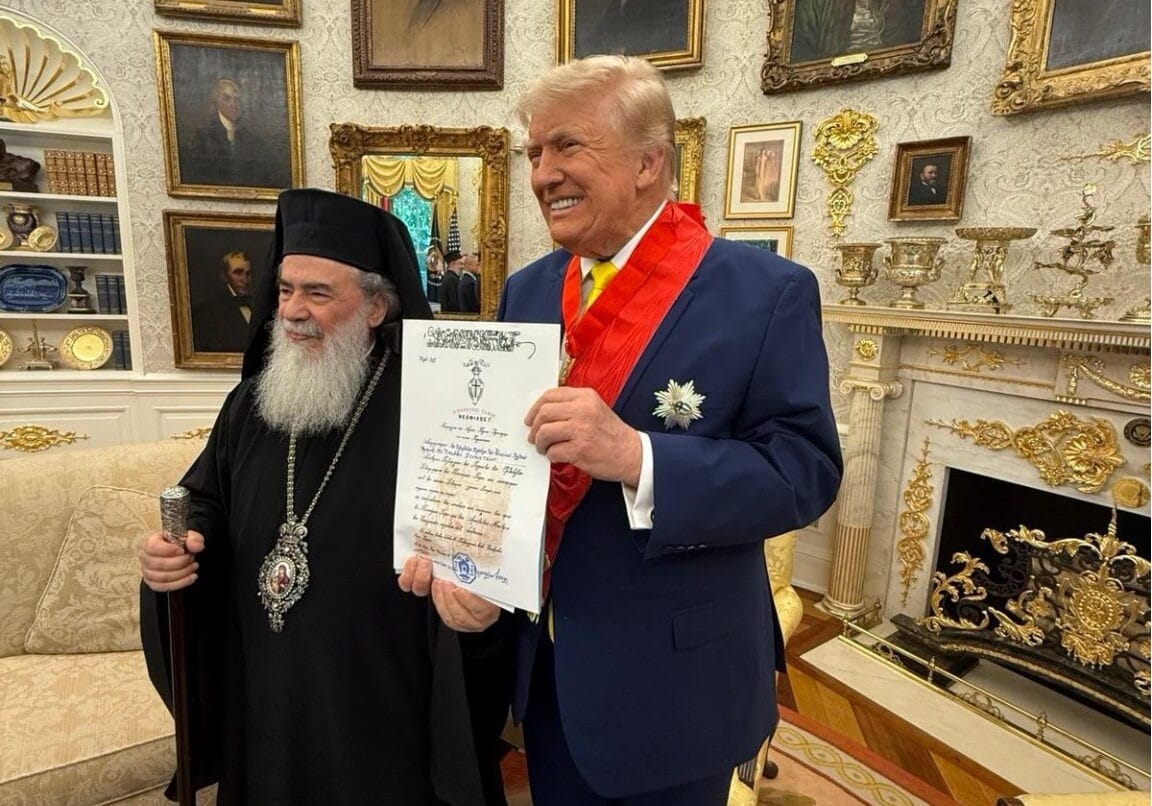
Patriarch of Jerusalem Theophilos with Donald Trump
Patriarch Theophilos expressed deep concern over the vulnerability of the Christian communities. Credit: White House

Patriarch Theophilos III of Jerusalem met with US President Donald Trump at the White House on Thursday afternoon, June 4. The forty-minute discussion focused heavily on protecting Christian communities across the Middle East and safeguarding freedom of worship in the Holy Land.

The meeting comes at a time of severe regional instability, as Christian populations in Lebanon, Syria, and the Holy Land face mounting pressures and security challenges. During the talks, Patriarch Theophilos expressed deep concern over the vulnerability of these communities, emphasizing that their protection is vital not only for religious reasons but as a cornerstone for regional stability, coexistence, and peace.

“In recent years, Christian communities in the Middle East have faced a harsh reality of instability, growing threats, and rising pressures,” the Patriarch of Jerusalem stated in an official release. “We see ancient communities asking for something fundamentally basic: to continue living in safety, to preserve their faith, and to protect their freedom of worship.”

Safeguarding religious freedom

Addressing President Trump, His Beatitude noted that “safeguarding religious freedom and maintaining open access to the Holy Land is more than a spiritual matter; it is a prerequisite for stability, coexistence, and peace throughout the entire region.”

During the encounter, Patriarch Theophilos honored Donald Trump with the “Grand Cross” of the Order of the Knights of the Holy Sepulchre, one of the highest distinctions bestowed by the Greek Orthodox Patriarchate of Jerusalem.

According to the Patriarchate, the meeting builds upon the established relationship between the Patriarch and the Trump family, serving as a continuation of the US President’s landmark 2017 visit to Jerusalem and the Church of the Holy Sepulchre.

As one of the world’s oldest Christian institutions, the Greek Orthodox Patriarchate of Jerusalem holds a historic role in guarding holy sites, including the Church of the Holy Sepulchre in Jerusalem and the Church of the Nativity in Bethlehem. Patriarch Theophilos III, who has held the patriarchal throne since 2005, has frequently been involved in global religious events, including the consecration of the holy oil used in the coronation of King Charles III.

Related: Millions of Christians Face Persecution, Violence Worldwide: Holy See

  •  

Secretary of State Rubio Says US Law Blocks Turkey’s Return to F-35 Program

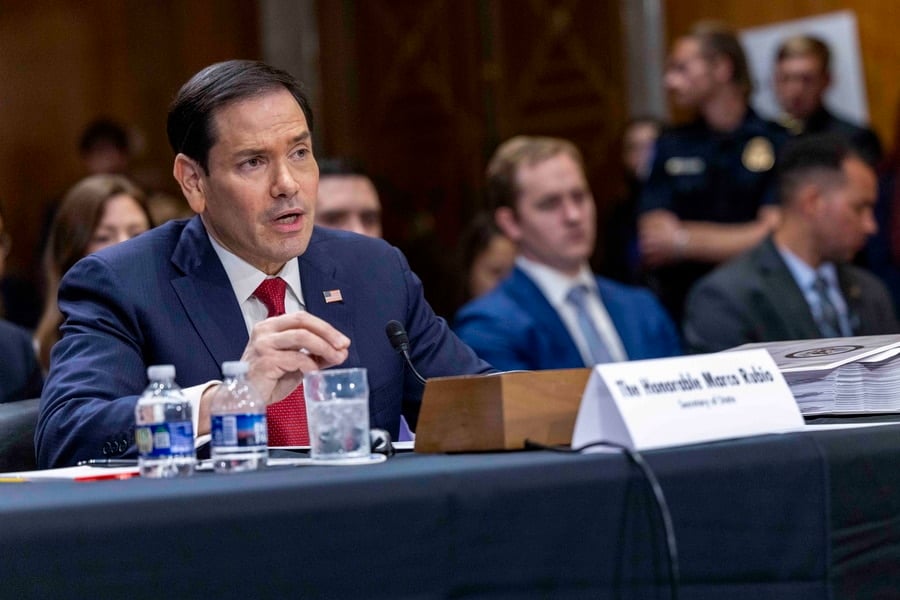
Marco Rubio, US Secretary of State
Secretary of State Marco Rubio says Turkey’s return to the F-35 program is blocked by US law over Ankara’s S-400 purchase. Credit: Shawn Thew / EPA via AMNA

US Secretary of State Marco Rubio said the Trump administration currently lacks the legal authority to restore Turkey to the F-35 fighter jet program, citing statutory restrictions linked to Ankara’s acquisition of Russia’s S-400 air defense system.

Rubio made the remarks during a House Foreign Affairs Committee hearing after Representative Dina Titus questioned him about recent comments by US Ambassador to Turkey Tom Barrack. Barrack had suggested that Washington should allow Turkey back into the F-35 program. Titus said that position appeared to conflict with existing US law and long-standing American policy.

Titus asked whether Turkey could receive advanced US fighter jets, including F-35s, under the current legal framework.

Rubio says Turkey’s F-35 return is blocked by law

Rubio said Turkey had originally participated in the F-35 program before Washington removed Ankara over its purchase of the Russian-made S-400 missile defense system.

“The reason why they can’t get them is because they purchased the S-400 system from the Russians,” Rubio said.

Turkey’s acquisition of the S-400 has remained a major source of tension in US-Turkey defense relations. Washington argues that the Russian system conflicts with NATO defense architecture and could create security risks for the F-35 platform.

Rubio points to NDAA restrictions

Titus noted that Turkey still possesses the S-400 system and remains subject to mandatory sanctions. Rubio acknowledged the point, saying existing US law controls the issue and limits the administration’s discretion.

Rubio said the administration currently lacks the authority to make such a decision because US law restricts the matter, including provisions of the National Defense Authorization Act.

His remarks underscored that any potential change in Turkey’s access to the F-35 program would require action on legal restrictions imposed by Congress. Those restrictions stem from Ankara’s S-400 acquisition and broader US sanctions policy toward major defense transactions with Russia.

  •  
❌