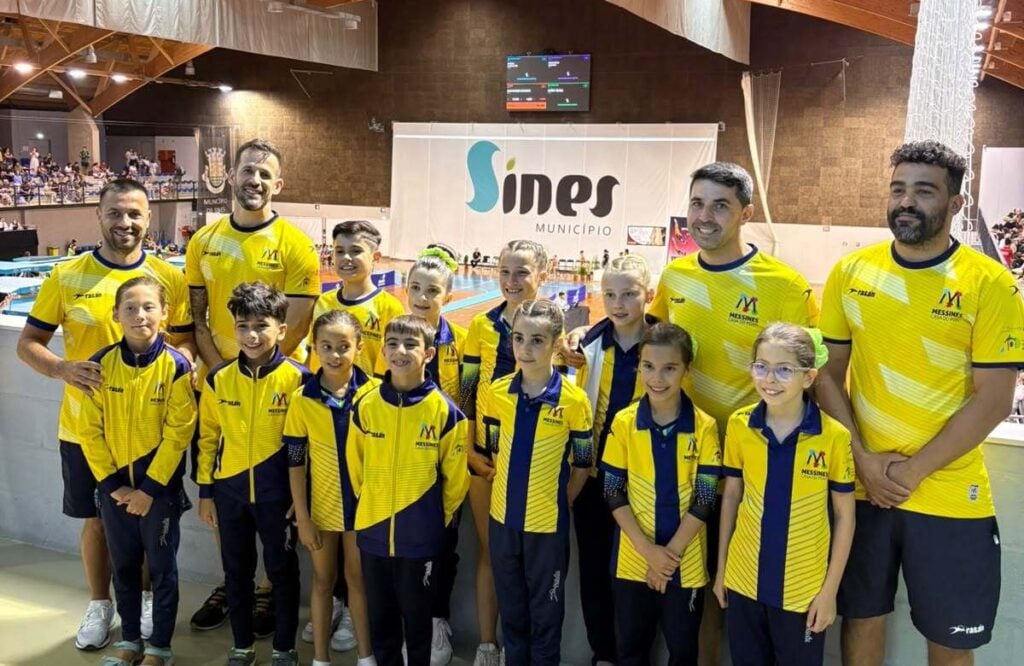
A Casa do Povo de São Bartolomeu de Messines alcançou um feito histórico no panorama da ginástica nacional ao conquistar quatro títulos nos Campeonatos Nacionais, realizados nos dias 6 e 7 de junho, em Sines. A instituição algarvia garantiu ainda um total de nove títulos de campeão nacional no escalão de Infantis, naquele que é o melhor registo da sua história em competições desta natureza.
Os ginastas messinenses estiveram em evidência tanto no Campeonato Nacional de Infantis como no Campeonato Nacional de Níveis, confirmando a evolução sustentada da modalidade no clube.
Entre os principais resultados destaca-se Gonçalo Damas, que se sagrou campeão nacional individual em Tumbling no escalão de Infantis Masculinos. O atleta integrou ainda a equipa campeã nacional na mesma especialidade, juntamente com Édi Neves e Simão Cuiça.
No setor feminino, a Casa do Povo de Messines somou vários títulos e pódios. Em Trampolim, a equipa infantil feminina composta por Céleste Devaux, Diana Peres, Laura Calado e Margarida Pinto conquistou o título de campeã nacional, com Céleste Devaux a assegurar também o segundo lugar na competição individual.
No Duplo Mini-Trampolim, a equipa formada por Diana Peres, Lara Moura, Laura Calado e Gaia Correngia voltou a subir ao lugar mais alto do pódio, reforçando o domínio da instituição nas provas coletivas.
Já no Campeonato Nacional de Níveis, o destaque vai para Matilde Emídio, que conquistou o terceiro lugar em Trampolim Individual no Nível 1 feminino.
Em comunicado, a Direção da Casa do Povo de S. Bartolomeu de Messines sublinha que “estes resultados históricos são o fruto do esforço conjunto, do talento e da dedicação dos atletas, dos treinadores, da estrutura diretiva e, de forma muito especial, das famílias, cujo apoio permanente tem sido determinante antes, durante e após cada competição”.
A instituição expressou ainda o seu público agradecimento ao Município de Silves pelo “apoio prestado nesta deslocação, nomeadamente através da disponibilização de transporte”.
O Núcleo do Sporting de Olhão (NSO) esteve em destaque no Campeonato Nacional de Duplo-Mini-Trampolim e Tumbling, realizado nos dias 6 e 7 de junho, em Sines, ao conquistar quatro títulos de campeão nacional e vários resultados de relevo numa das principais competições da modalidade.
Segundo a nota de imprensa, perante um elevado nível competitivo, os ginastas olhanenses demonstraram “talento, dedicação e espírito de superação, confirmando a qualidade do trabalho desenvolvido ao longo da época”.
Os principais destaques da participação do NSO foram Diego Paz, David Lazar, Lia Silva e Matilde Carvalho, que se sagraram campeões nacionais nas respetivas categorias de Tumbling.
A prestação da equipa ficou ainda marcada pela conquista da medalha de prata por Tomás Silva, que alcançou o título de vice-campeão nacional, e pela medalha de bronze obtida por Marta Rodrigues.
Em competição estiveram igualmente os ginastas Vasco Rapazote, Lia Gonçalves, Ariana Ramos, Marieta Máximo, Isabela Gonçalves, Maria Inês Rocha, Leonor Moreira, Alicia Viegas, Margarida Ribeiro e Júlia Lelis, que evidenciaram um elevado nível técnico, contribuindo para a prestação coletiva da equipa.
Mais do que os resultados alcançados, a participação do NSO ficou marcada pela “atitude exemplar dos seus ginastas, que demonstraram compromisso, espírito de equipa e orgulho em representar o clube e a cidade de Olhão“, pode ler-se na nota do clube.
Com este desempenho, o Núcleo do Sporting Clube de Portugal de Olhão regressa de Sines com quatro títulos nacionais, uma medalha de prata e uma de bronze, resultados que refletem o trabalho desenvolvido por atletas e equipa técnica e deixam perspetivas positivas para o futuro.
O Município de Tavira assinala o Dia da Cidade a 24 de junho com um programa comemorativo que inclui cerimónias oficiais, homenagens, atividades culturais e o concerto da banda portuguesa Delfins, que sobe ao palco da Praça da República às 22h00.
As celebrações têm início às 10h30, com o hastear das bandeiras nos Paços do Concelho, seguindo-se, às 11h00, a sessão solene no Teatro Municipal António Pinheiro. Durante a cerimónia serão atribuídas distinções municipais, incluindo uma medalha de bons serviços e dedicação grau prata (30 anos de serviço) e 14 medalhas grau cobre (20 anos de serviço) a funcionários da autarquia.
Será igualmente prestada homenagem a cidadãos e entidades locais com a atribuição de medalhas de mérito municipal grau prata e cobre, reconhecendo o contributo de diferentes personalidades para a comunidade.
O ponto alto das comemorações acontece à noite, com o concerto dos Delfins, que irão interpretar alguns dos seus maiores êxitos, como “Sou Como Um Rio”, “Baía de Cascais”, “Aquele Inverno”, “Um Lugar ao Sol” e “Saber Amar”.
A Lenda da Moura Encantada, o espetáculo piromusical, a marcha de São João (Todos a caminhar sob as estrelas) e os arraiais dos Santos Populares completam o programa de festividades.
Entre os dias 20 e 28 de junho, pelas 21h00, a Rua do Cais e o Jardim do Coreto voltam a receber os tradicionais arraiais promovidos pela Câmara Municipal, com animação musical assegurada por vários artistas e grupos locais. O programa arranca a 20 de junho com o Grupo Gerações, seguindo-se, no dia 21, a atuação de Ruben Filipe. No dia 23 sobem ao palco Nelson Campos e, pelas 22h00, o Rancho Folclórico de Santo Estêvão.
As festividades prosseguem a 24 de junho com Silvino Campos, a 27 de junho com Cristiano Martins e encerram a 28 de junho com Hélder Reis.
Para além do Jardim do Coreto decorrem, um pouco por todo o concelho, num ambiente de festa, diversos arraiais que prometem alegrar as primeiras noites de verão.
Na noite de São João, o Castelo de Tavira acolhe a encenação da “Lenda da Moura Encantada”, seguindo-se, à meia-noite, o espetáculo piromusical na Ponte dos Descobrimentos. A programação prolonga-se até à madrugada, com a marcha “Todos a caminhar sob as estrelas”, dinamizada pelo Município de Tavira em colaboração com a Casa do Povo de Santo Estêvão.
As comemorações incluem ainda animação popular, decoração das ruas, sardinhadas e outras tradições associadas aos Santos Populares, integrando-se na programação cultural do mês de junho.
Uma pessoa morreu e outra ficou gravemente ferida na sequência do despiste de uma viatura em Castro Marim. O acidente ocorreu ao início da tarde de hoje.
De acordo com o Comando Regional de Emergência e Proteção Civil (CREPC) do Algarve, o alerta foi dado às 13h02, tendo o despiste ocorrido no Itinerário Complementar (IC) 27, via rodoviária que liga os concelhos de Castro Marim e Alcoutim.
Segundo a Arenilha TV, entre as vítimas está uma mulher grávida, sendo que a outra é um homem que foi encontrado em paragem cardiorrespiratória, depois de a viatura ter caído do viaduto, acabando por falecer no local apesar da assistência médica.
A GNR está a investigar as circunstâncias em que ocorreu o despiste.
No local estiveram operacionais dos bombeiros, elementos do Instituto Nacional de Emergência Médica (INEM) e militares da Guarda Nacional Republicana (GNR), apoiados por várias viaturas e um helicóptero.
Três das detenções estão relacionadas com suspeitas de tráfico de estupefacientes e uma resultou do cumprimento de um mandado de detenção internacional.
A primeira ocorrência teve lugar no dia 5 de junho, em Mirandela, onde agentes da PSP deram cumprimento a um mandado de detenção internacional emitido por suspeitas da prática de um crime de roubo ocorrido no Brasil. A detida é uma mulher de 54 anos, que será presente ao Tribunal da Relação de Guimarães para os procedimentos legais subsequentes. A operação contou com a colaboração da INTERPOL, através do Departamento de Investigação Criminal da PSP e do Núcleo de Investigação Criminal do Comando Distrital de Bragança.
No dia seguinte, 6 de junho, a Divisão Policial de Bragança deteve um homem, de 50 anos, por suspeitas de tráfico de droga. Durante a intervenção policial foram apreendidos 11,41 gramas de cocaína, 1,07 gramas de heroína e 4,81 gramas de haxixe.
Já no dia 7 de junho, em Mirandela, foi detido um homem, de 52 anos, no âmbito de uma investigação em curso relacionada com tráfico de estupefacientes. Na sua posse foram encontradas e apreendidas 501,33 gramas de haxixe, 26,24 gramas de cocaína e 14,4 gramas de heroína.
Ainda nesse dia, na cidade de Bragança, a PSP deteve outro homem, de 57 anos, também por suspeitas de tráfico de droga. A operação resultou na apreensão de 12,07 gramas de cocaína.
Os três suspeitos detidos por tráfico de estupefacientes serão presentes às autoridades judiciárias competentes para primeiro interrogatório judicial e eventual aplicação de medidas de coação.
Em comunicado, o Comando Distrital da PSP de Bragança reafirma que “continuará a desenvolver ações de prevenção e combate à criminalidade, em articulação com as autoridades competentes, no cumprimento da sua missão de garantir a segurança pública”.
Roderick Carmo, do Grupo Desportivo de Alcoutim, sagrou-se Campeão Nacional em K1 Infantil B masculino, no fim de semana em Gemeses, durante o Campeonato Nacional de Esperanças de canoagem, alcançando o 11.º título da sua carreira.
O jovem atleta voltou a destacar-se ao conquistar o primeiro lugar na sua prova, somando mais um título ao seu percurso desportivo e confirmando o seu estatuto como uma das promessas da canoagem nacional.
Além do triunfo de Roderick Carmo, o Grupo Desportivo de Alcoutim esteve em grande evidência ao longo da competição, com vários atletas a alcançarem classificações de relevo e a contribuírem para um resultado coletivo muito positivo.
João Dias também subiu ao pódio, ao conquistar o 3.º lugar em K1 Iniciado A masculino, garantindo mais uma medalha para a equipa alcouteneja. O clube terminou ainda no top-10 coletivo, alcançando um brilhante 9.º lugar entre cerca de meia centena de clubes participantes.
Os restantes atletas do Grupo Desportivo de Alcoutim registaram igualmente prestações de destaque em Gemeses: Nynke Woudenberg foi 5.ª classificada em K1 Iniciada B feminina, enquanto Adam Msyah terminou na 15.ª posição em Infantil A masculino. Leonor Cabral foi 9.ª em Infantil A feminina e Leonor Dias ficou em 5.º lugar em Infantil B feminina.
Em K2, Maria Lopes e Marta Pereira alcançaram o 4.º lugar em Infantil feminino, enquanto Daniel Madeira e Francisco Figueira foram 5.º em Infantil masculino. Martim Barros e Dries Woudenberg terminaram na 6.ª posição, e Bruna Pereira e Leonor Santos fecharam o lote com o 9.º lugar em Infantil feminino.
Annihilationism dethrones Christ’s sufficiency to satisfy God’s wrath at the same time that it questions the integrity and goodness of God’s law. If, as annihilationists will eventually have to say, God’s wrath is harsh and unmerciful, then no one needs the blood of Christ to satisfy it. Annihilationists pose man as more merciful than God. ... Continue Reading
Is such language to be no longer permitted when discussing serious matters with meaningful consequences? As all adults should know, the ability freely to engage in sometimes difficult discussions with one another—especially peers—is part-and-parcel for a society in which civil and religious liberties exist and thrive. The recent decision of the PCA’s Rio Grande... Continue Reading
Rich and poor have this in common: The Lord is the Maker of them all (Prov 22:2). Nowhere does the moral demand of justice require economic equality. The very sense of justice that all humans have results from being created in God’s image. His nature is the source of all true understanding of justice. Yet,... Continue Reading
As polyamory gains exposure, other mainline denominations have begun to confront their stance on it. At least three Episcopal priests have renounced their ordination vows due to tensions between their church roles and family structures, and in 2024 the Episcopal Church considered, but did not advance, a resolution intending to study diverse family structures. The... Continue Reading
Being gracious does not mean backing down and shutting up when something needs to be said. At the very least, you’d think God might have considered it wise to have taken down many of the verses in the canon which might cause offence to the delicate ears of future generations? God, it seems, doubles down... Continue Reading
In good times, give thanks, but put your confidence in the God behind the blessing, not the blessing itself. In tough times, stay strong, because even if you can’t see it, God is always helping, always working, and always keeping his promises. From Abraham to Elijah to Paul to you, the thread of his faithfulness... Continue Reading
Christians must never underestimate the power and importance of the one body of Messianic signs. Why so? Because, as we learn from reading the Acts and the Epistles, the Spirit of God is pleased to use these Christ-centered signs—which display the evidential unity of the Bible—to draw God’s people to himself. They stand as a... Continue Reading
Your size does not determine your worth. It does not determine whether God sees you. It does not determine whether He cares for you or will work through you. The church at Colossae was small. And God wrote them a letter that the whole universal church still reads. The metric of success that the world... Continue Reading
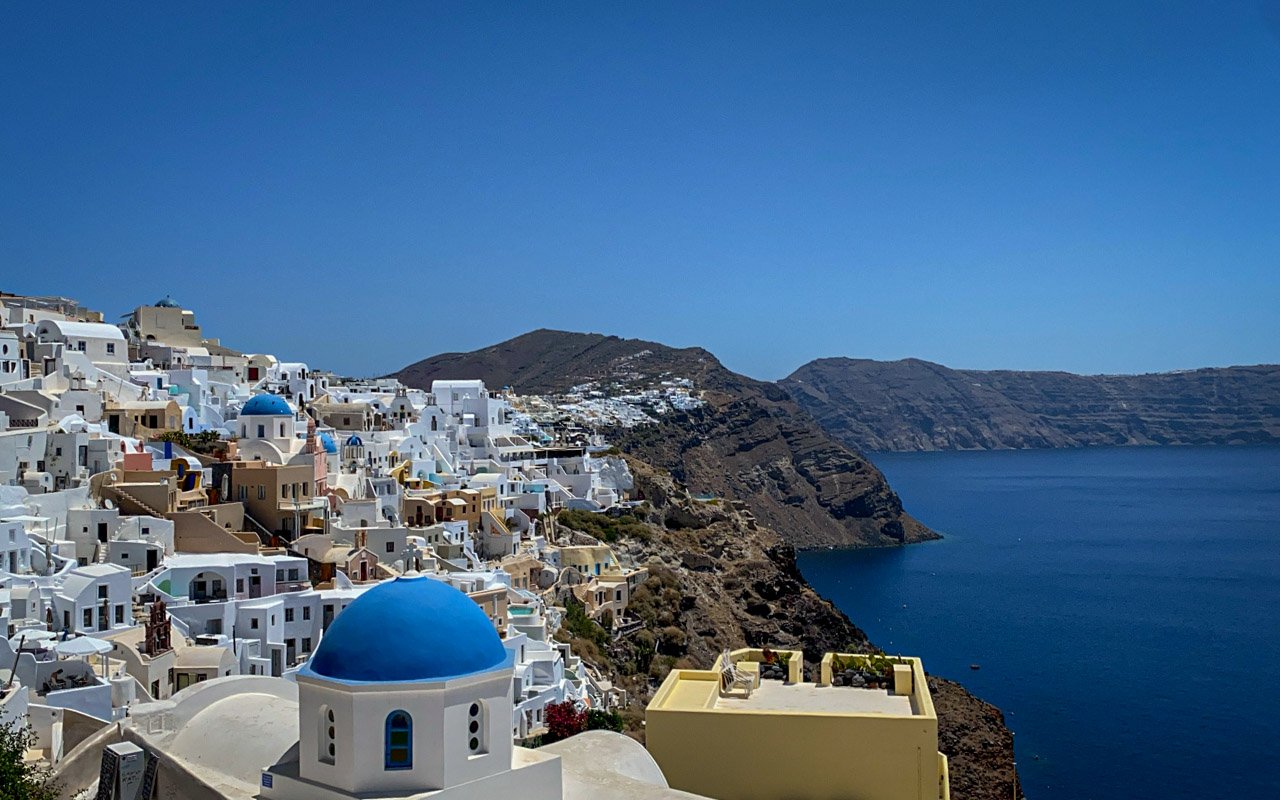
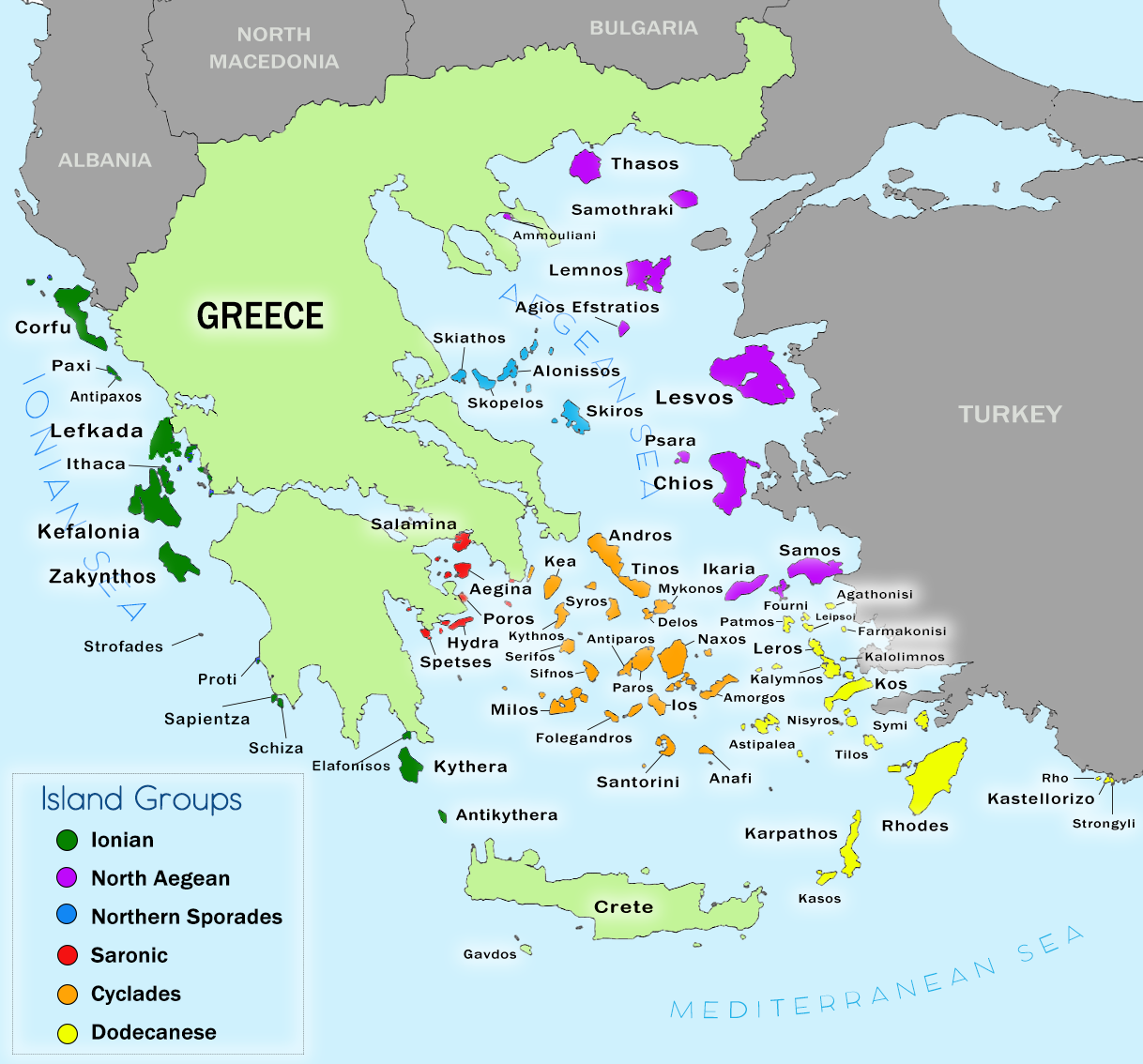
Greece has about 6000 islands, 230 of which are inhabited. Here is a map explaining all of the Greek island groups. Image: Santorini, part of Cyclades Island Group. Credit: Dimitra Damian/Greek Reporter
You have probably seen the postcard of whitewashed houses gathered together overlooking the endless blue waters of the Aegean Sea countless times, and rightly so. Greece is known for its abundance of unique islands, which every summer offer visitors a chance to unwind like nowhere else in the world.
Greece has more than 6000 islands and islets under its name. Of these islands, 227 are inhabited. All of them, nevertheless, are clustered in the Greek island groups.
Each has its own character. Some reflect a unique history or influences from antiquity to the middle ages, to modernity. Others combine Greek tradition with a sophisticated atmosphere. Yet most have bewitching beaches, coastal caves and world class cuisine. Without a doubt therefore, the Greek islands are the most unique on earth.
The main Greek island groups
There are six island groups in Greece to keep in mind:
The Cyclades, the Sporades, the Ionian islands, the Dodecanese, the Saronic Islands and the North Aegean Islands.
Each of these groups is unique in character, architectural style, influences and things to do.
Map of Greek Island Groups. Credit: Dimosthenis Vasiloudis / GreekReporter
The most famous Greek islands are the Cyclades, known as the jewel of the Aegean Sea
The Cyclades group is in the center of the Aegean Sea and is well-known for the iconic white houses and churches with blue domes that adorn its architecture.
This island group is comprised of around 220 islands. The main ones are Amorgos, Anafi, Andros, Antiparos, Delos, Ios, Kimolos, Kythnos, Milos, Mykonos, Naxos, Paros, Folegandros, Serifos, Sifnos, Syros, Tinos, Thera or Santorini, Irakleia, Koufonisia, Schoinousa and Donousa.
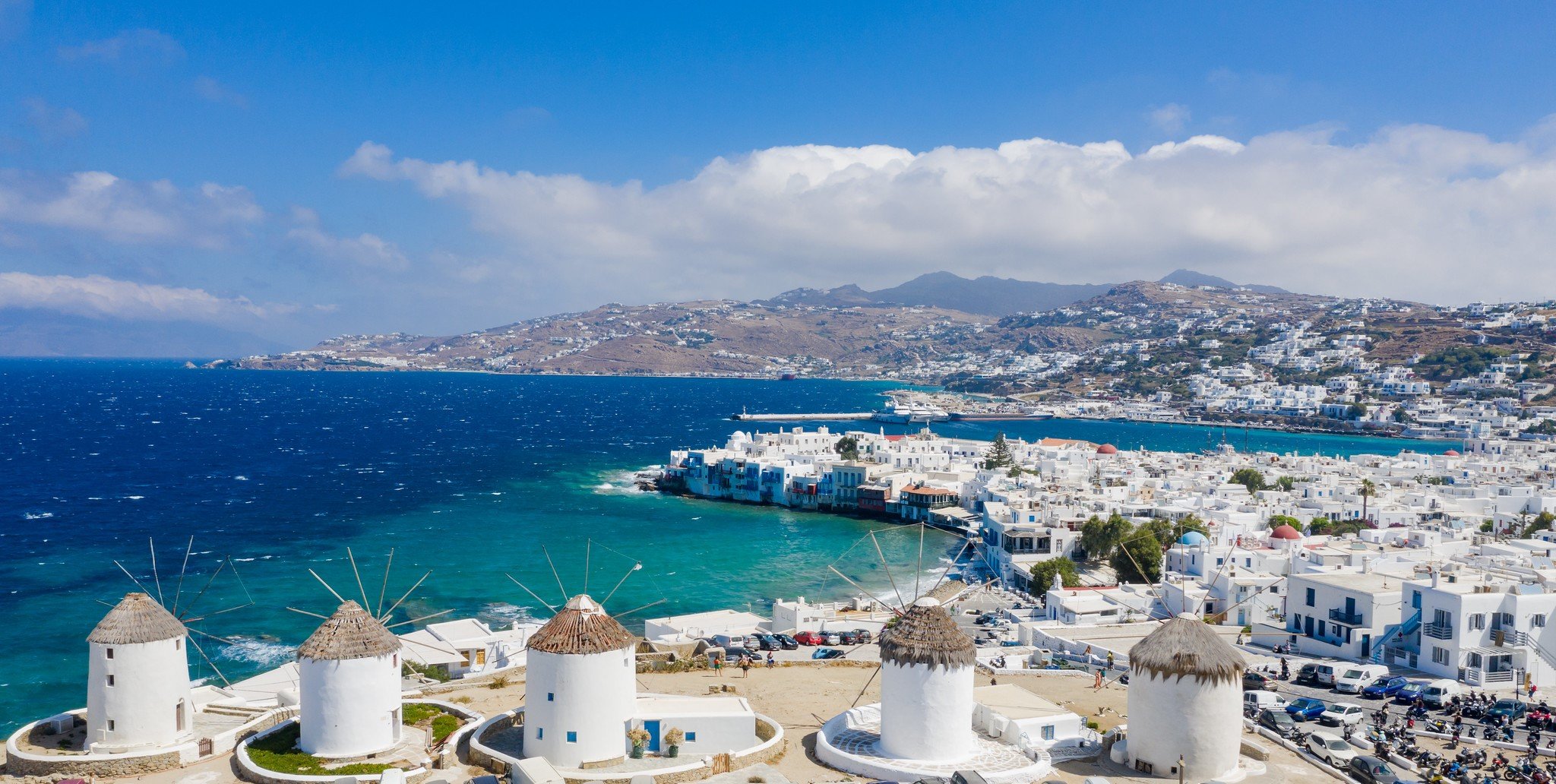
The perfect way to explore the region is through ”island hopping”. That is because the islands are close together, even if distinct in character. Mykonos, for example, is a cosmopolitan island globally famous for its party vibes and modern hospitality businesses. On the other hand Tinos, only a hop, skip and jump away, offers a religious feel. Despite the differences however, everyone who visits succumbs to the island’s peace and tranquility.
A blend of mythology and adventure
The name “Cyclades” refers to the islands forming a circle (the name in English means: “circular islands”) around the sacred island of Delos.
For the history and culture lovers, Delos , which is in its entirety a UNESCO World Heritage site, is a living archaeological museum, with the ancient temple of Apollo well worth visiting!
The island, referred to as “the sacred island of Delos,” is where, as Greek mythology tells it, Leto gave birth to Zeus’ twins Artemis and Apollo. Mythological history has it that because of Hera’s jealousy of Zeus and Leto, she ordered all lands to shun Leto, making it difficult for her to find a place to give birth. Zeus however asked Poseidon to find a secret, safe place for Leto to give birth. To that end, she sought out the island of Delos, where she was able to ensure the life of her twins, Artemis and Apollo.
In view of this, the small, rocky island was declared by Callimachus in the third century BC to be “the most sacred of all islands” of Ancient Greece, and was dedicated to Apollo.
One of the most popular islands of the Cyclades is Santorini. This popular destination is known for its colorful volcanic stone backdrops and its white houses and winding streets climbing the cliffs, leading you to villages and breathtaking views.
For the adventurous at heart, something you want to be sure to check out is a tour of the volcano and caldera. Another tip for those visiting is to hike the path between the main towns Fira and Oia, and of course visit the Red Sand Beach that looks like a landscape on Mars.
Much can also be said about the Cycladic cuisine, of course. The San Mihali cheese of Syros or the Naxos version of gruyere are world famous, while the fava of Santorini is a unique local delicacy, as are the mouthwatering fried tomato balls of the island. Mykonos has great sausages, while the xynotyri (sour cheese) of Ios is not to be missed.
The Sporades islands: the ”scattered” islands
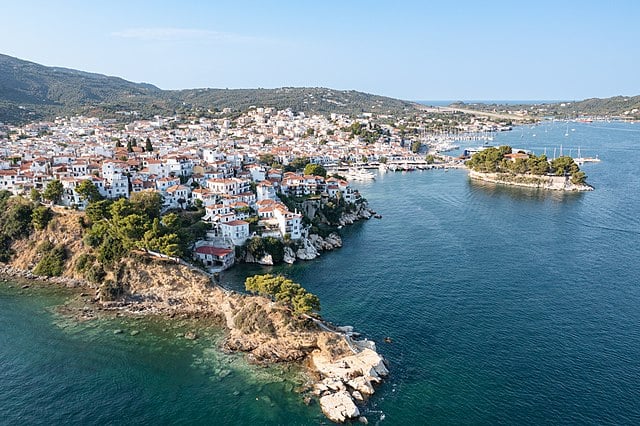
Skiathos old town. Credit: dronepicr / CC-BY-2.0 / Wikimedia Commons
The name Sporades translates to “scattered”, which can broadly be applied to all islands outside of the Cyclades. The group is in the north-east of the Aegean.
This particular group consists of 24 islands. Four – Alonnisos, Skiathos, Skopelos and Skyros – are permanently inhabited.
Vast pine forests, huge olive groves and tall cypresses cover the small islands. According to legend, the islands were formed after the brothers Otus and Ephialtes of the Titans threw rocks.
Skiathos and Skopelos: the most popular
Two of the most well-liked islands in this group are Skiathos and Skopelos.
Skiathos is only 4 miles wide and no more than 7 miles long. Still, there are over 60 beaches to explore in that small space, the most popular being Koukounaries and Lalaria. The island is easily accessible, in contrast to the others, thanks to its small airport.
Another, Skopelos, is one of the many places across Greece that have never failed to enchant visitors throughout the decades. With its hilly, verdant landscapes and sparser crowds, it is a perennial draw for travelers from all over the world.
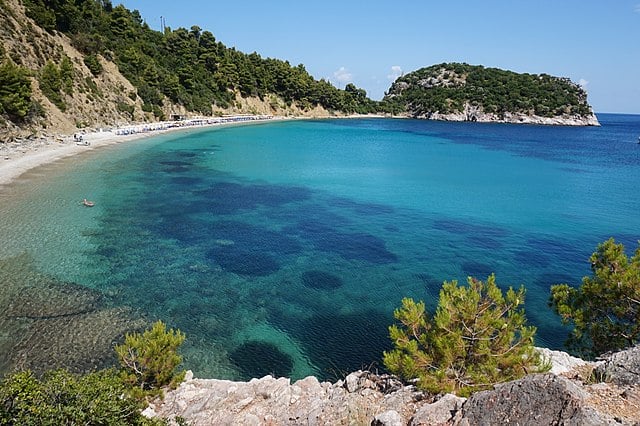
A beach on the stunning island of Skopelos, where the blockbuster movie Mamma Mia was filmed. Credit: Long lasting memories / Wikimedia Commons / CC BY-SA 4.0
Skopelos is full of the traditional architecture of Greece, with whitewashed houses, terracotta-tiled rooves, blue-hued shutters and wooden balconies. Among its loveliest beaches are Kastani, Stafilos, and Panormos, all easily reachable from Skopelos Town.
This stunning Greek retreat was also the setting for one of the most engaging films of the last few years, “Mamma Mia!.” The universally beloved movie, with an iconic soundtrack by the band ABBA, turned it into the fictional island of “Kalokairi” for the original film in 2008.
The Greek Islands Of The Dodecanese
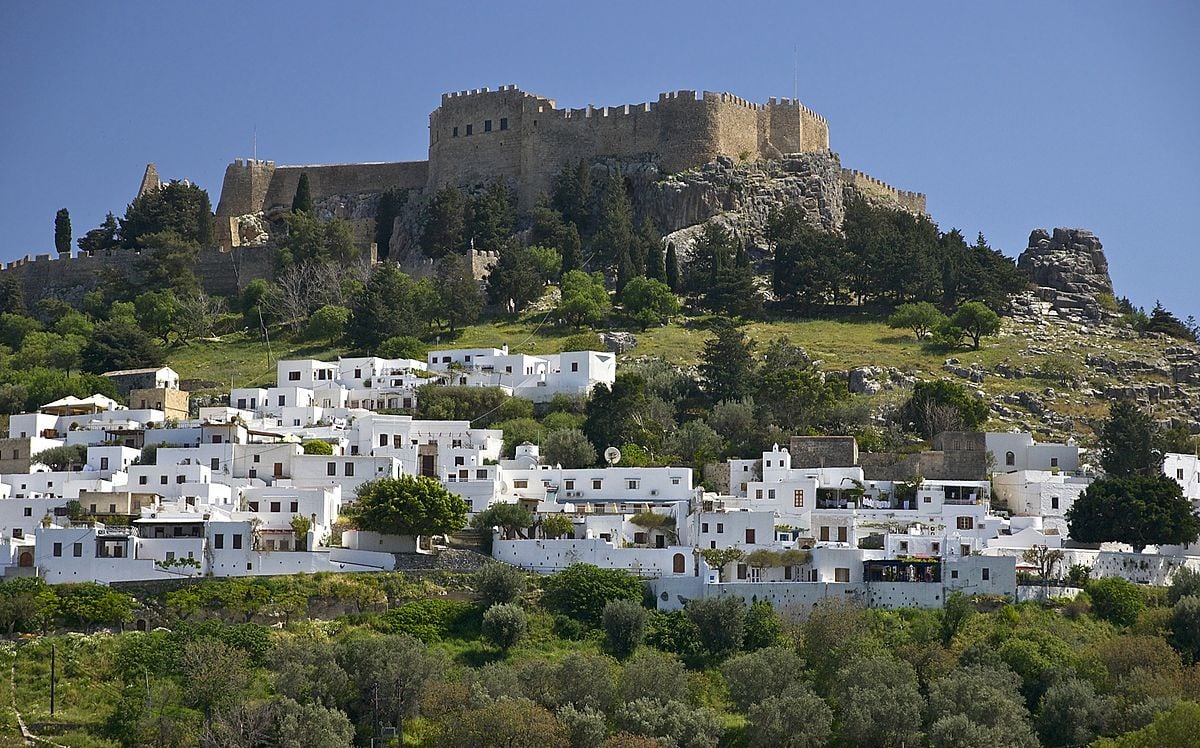
Lindos, Rhodes. Credit: Jebulon / Public Domain
The Dodecanese island group is in the south-east of the Aegean, between the Cyclades and Turkey. It consists of 165 large and small islands, of which 26 have permanent residents.
The Dodecanese serve as a bridge between the East and the West, as the islands are very close to the Turkish coast. They have long, dry summers and lots of sunlight all year round.
The major islands in the group are Agathonisi, Astypalaia, Chalki, Kalymnos, Karpathos, Kasos, Kastellorizo, Kos, Lipsi, Leros, Nisyros, Patmos, Rhodes, Symi and Tilos.
Medieval architecture, romance and history
These islands are famous for medieval architecture, as well as their blend of history and romance, which permeates their small alleys.
Rhodes is the “medieval island” of Greece best known for its fortified port, seven gates, characteristic stag statue, and palace of the Grand Master. The Old Town lies inside ancient walls, but once outside them, you will find a more modern town which has cosmopolitan restaurants, shops, and bars.
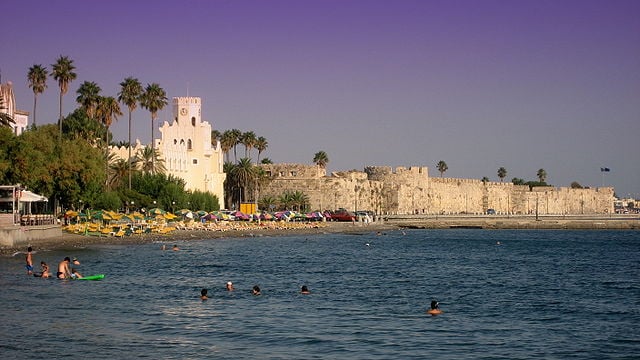
Kos is also famous for its medieval architecture. On this island full of history, you can visit the ancient plane tree under which Hippocrates, the father of western medicine, used to teach. It is one of the oldest trees in Europe at more than 2500 years of age.
The castle of Kos island, Greece. Credit: Chris Vlachos / CC-BY-3.0 / Wikimedia Commons
Patmos is a smaller and less busy island, though of great historical and religious importance. St John the Apostle was exiled here, and it is where he wrote the Revelation of Jesus Christ, the final book of the Bible.
Kalymnos, Prerimos and Karpathos are paradise islands, with beautiful beaches, seaside villages and breathtaking vistas. They each offer unforgettable hiking adventures, and picturesque villages that will take visitors on a journey back in time.
Saronic islands: the most sophisticated of all Greek island groups
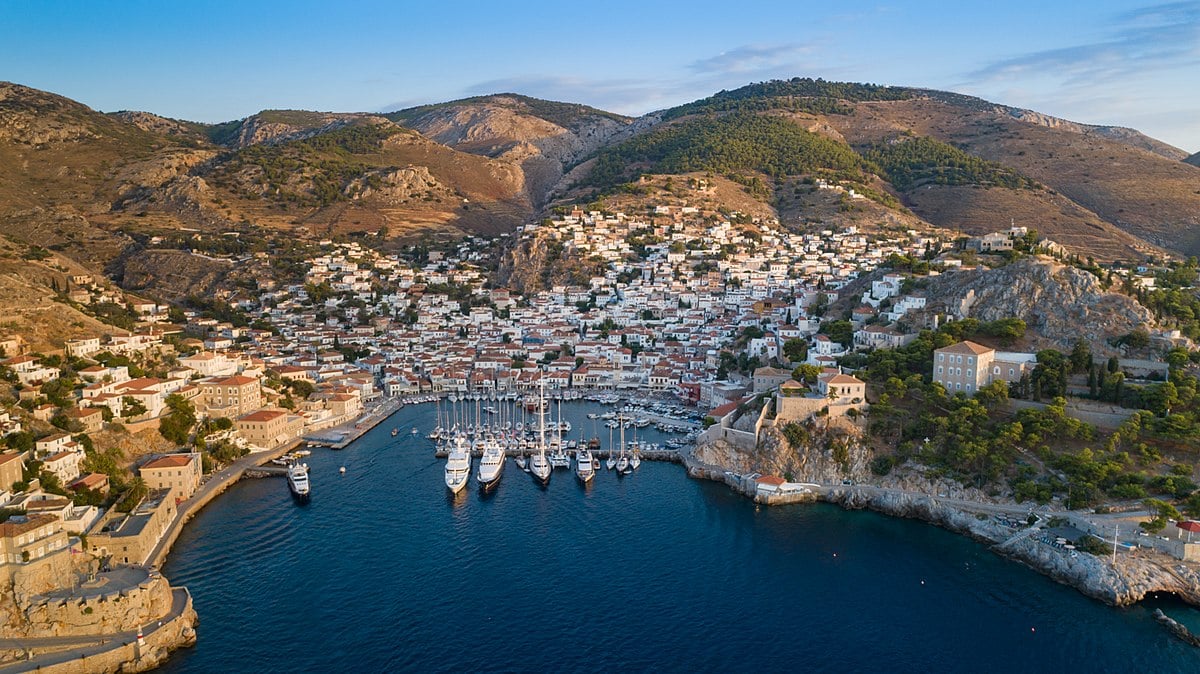
Hydra, where the Modern Greek Merchant Marine began. Credit: dronepicr/ Wikimedia commons CC BY 2.0
This Greek island group is the most accessible from Athens. Many wealthy Athenians as well as Greek and international artists prefer to visit the islands of this group. Hydra, in particular, is a famous sanctuary for poets, writers and filmmakers, including Leonard Cohen and Axel Jensen. This group consists of the islands of Aegina, Salamina, Poros, Hydra, Spetses, Agistri, and Dokos.
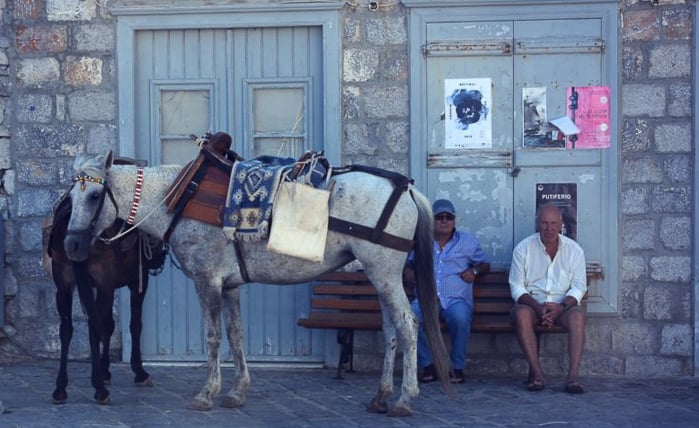
One of the best thing about them is that they’re untouched by mass international tourism. That is perhaps because places like Hydra, for example, is car-free. Everyone who visits gets around by boat, on foot or even by mule, giving you a truly old-fashioned feeling. It provides one with the opportunity to escape the hustle and bustle of modern everyday life.
Mules at Hydra port. Credit: Gabi Ancarola
Quaint alleys and 18th and 19th-century mansions typify the architecture, and the islands offer many beautiful bays and stunning beaches.
Hydra: where poets go to write
Hydra has been the most popular destination of the group since the 1960s. During that time, the island became a hub for international artists. One reason is that it combines elegance with a slow-paced lifestyle in a traditional setting. It was also the muse and longtime home of poet and songwriter Leonard Cohen.
Without a doubt, Hydra’s port is ideal for history lovers. Many of the critical battles of the War of Independence in 1821 occurred there. In fact, scars from some battles are still visible in the architecture.
Hydra’s beaches make it a great destination for summer trips, but its natural beauty and cosmopolitan town, filled with artisans’ shops, museums, and boutiques, make it the perfect spot for a short trip throughout the year.
Similarly, Spetses attracts visitors who seek to immerse themselves in the elegant and traditional setting of the island.
Ionian islands: the tropical islands
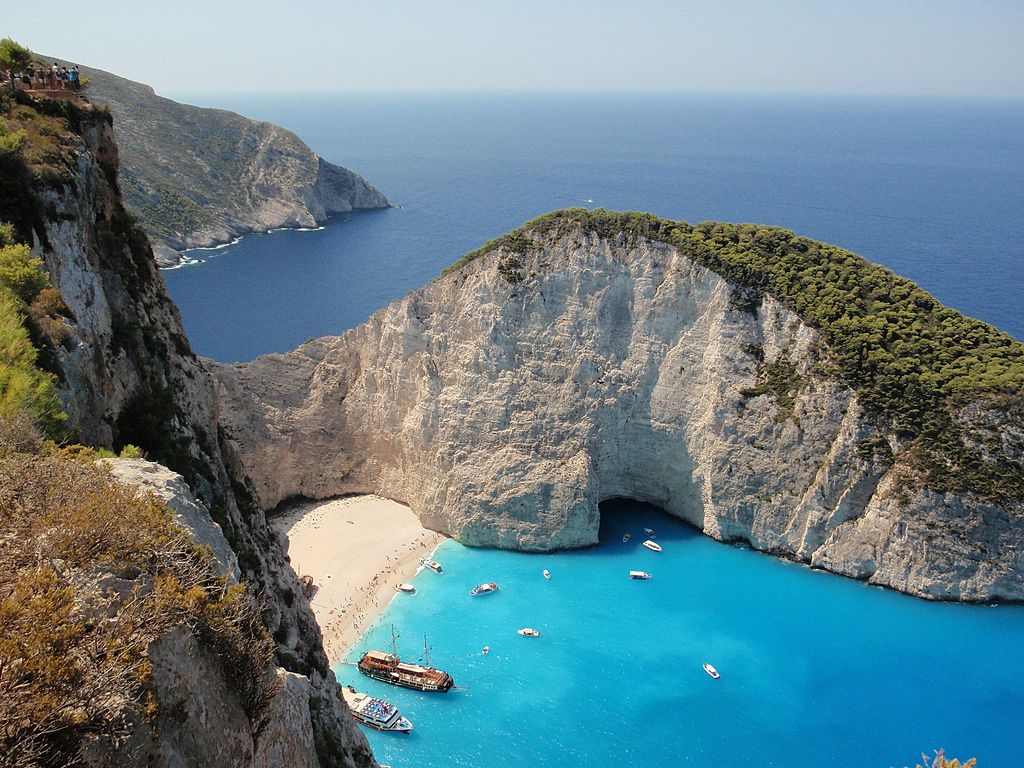
Zakynthos’ famous Navagio beach. Credit: Jimzoun Wikimedia Commons
This group consists of Corfu, Zakynthos (Zante), Kefalonia, Lefkada, Paxos
Kythira, ithaki (Ithaca).
Their natural setting is the main factor that makes the islands of the Ionian completely different from any of the other Greek islands. Here, the rich greenery blends harmoniously with the turquoise of the sea and the blue of the sky, creating beautiful natural scenery reminiscent of a painting.
The most photographed beaches in Greece
The beaches are characterized by limestone rock formations, sand and smooth pebbles. Visitors who have traveled extensively around the world say that the turquoise, cool, crystal-clear waters beat those of the Caribbean. While the beaches are surrounded by pine trees rather than palm trees, one could still say that these are the “tropical islands” of Greece.
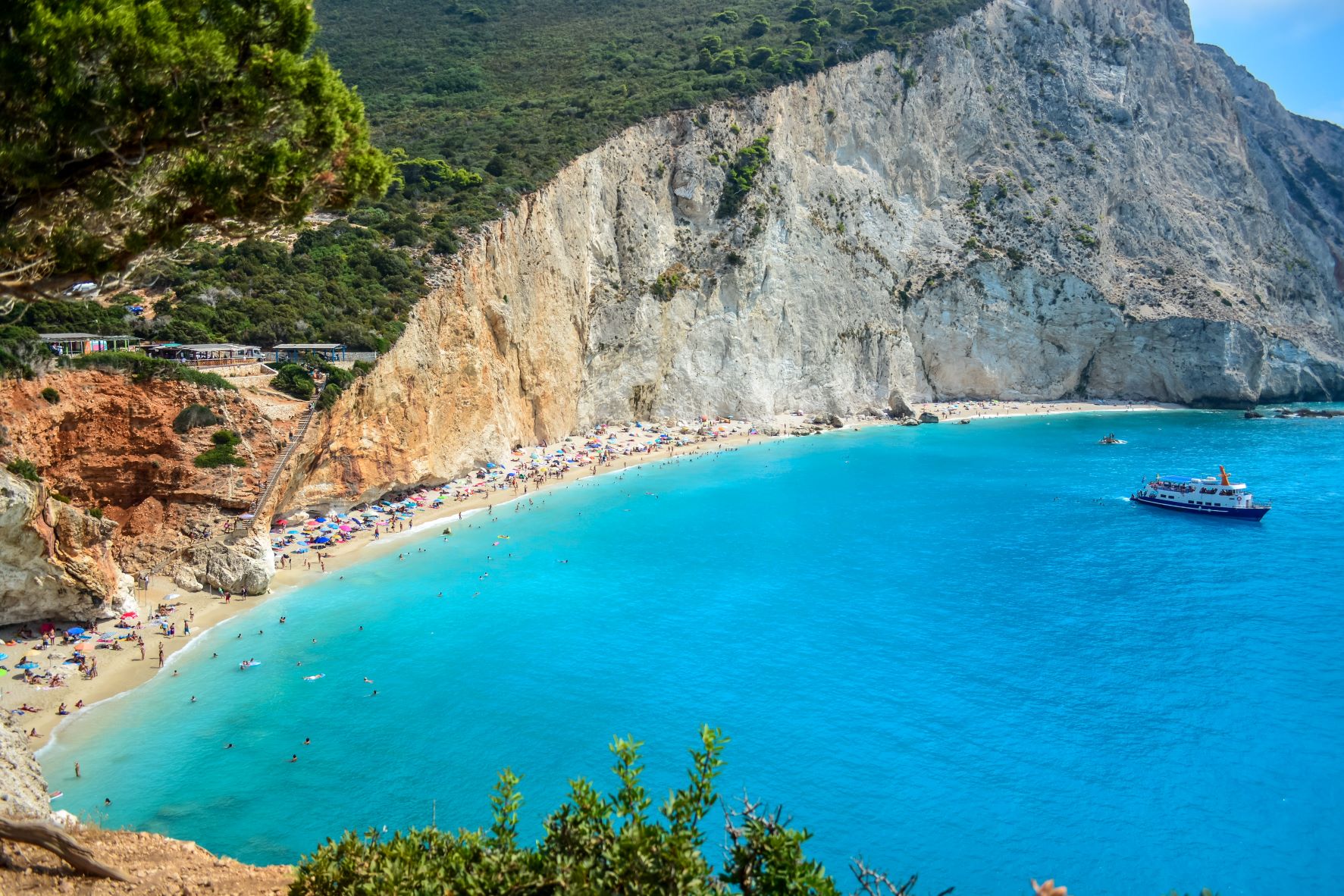
The Ionian Sea’s beaches are numerous and have been photographed countless times. Shipwreck Beach on Zakynthos, the impressive Egremni Beach, the turquoise Porto Katsiki Beach of Lefkas, and Myrtos Beach of Kefalonia, are just some of the sandy stretches of heaven that make a holiday here unforgettable.
Porto Katsiki, Lefkada, Ionian Inslands. Credit: Antone Adi / Pexels
Yet there is more, of course. For example, the unbelievable “white” waters of Antipaxos, the lush greenery of Paxos with the little-known beaches of Ithaca that were the subject of Homer’s Ulysses. In addition, there is Marathonissi in the bay of Laganas on Zakynthos. Those are just a few of the sites that most deserve mentioning.
Strong Venetian influence
Another great characteristic of the Ionian islands is the Venetian presence in the architecture, the mellifluous speech of many locals, the musical influences, and even the food. For centuries, the islands of the Ionian belonged to the Venetians, and the western Mediterranean influence is still strong.
In terms of food, the Corfu pastitsada and sofrito are memorable dishes along with the island’s famous kumquat liqueur. Overall, all Ionian islands have cuisines influenced by their Venetian ancestors.
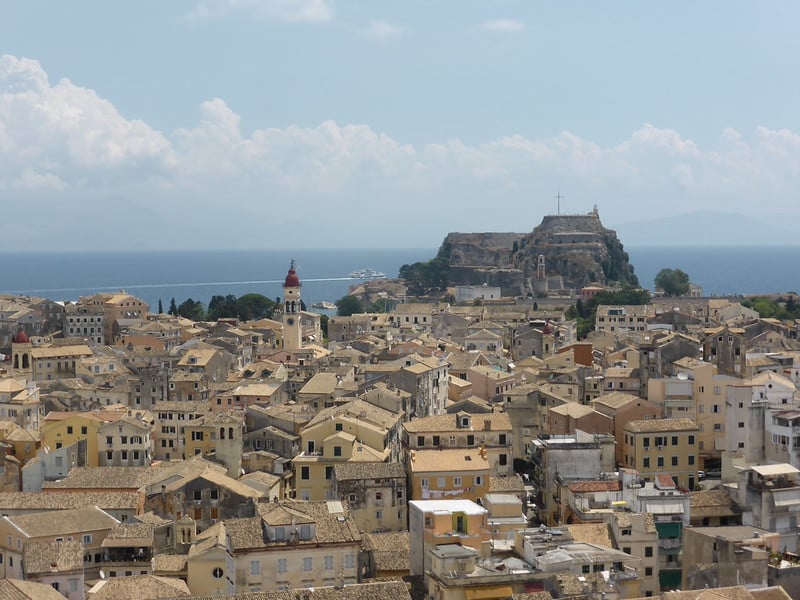
Corfu is one of the most famous islands, and it has a lot of history to its name. The old Corfu Town that is a World Heritage site is one of the most sophisticated towns in the Ionian island group.
Old Town of Corfu credit: metrogogo/Flickr CC BY-NC-SA 2.0
Locals call the island Kerkyra, perhaps because according to mythology, it was the home of Kerkyra, the daughter of Asps, the river God. Kerkyra gave birth to Poseidon’s child, and from then, the Phaeacian race was born. Nevertheless, there is more to Corfu than mythology. Its history and architecture are also worth discovering.
Ithaca is another island that is famous for its mythology. This is reputed to be the birthplace of Odysseus, but it also has impressive beaches.
North Aegean islands: Stunning beaches, strong local flavors
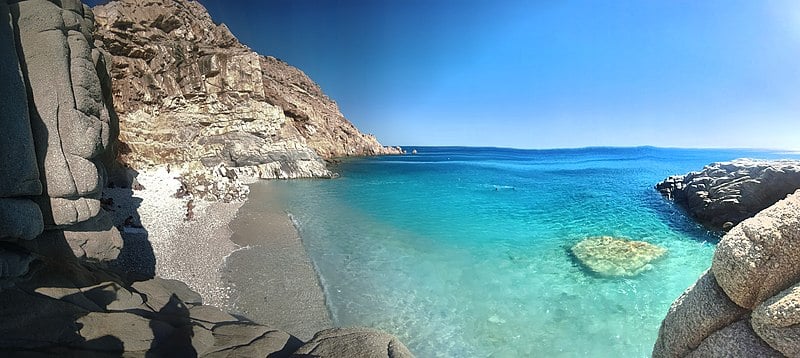
Seychelles beach, Ikaria, Greece. Credit: Leeturtle/Wikimedia Commons/CC BY-SA 4.0
The North Aegean island group includes Thassos, Lesbos, Samos, Lemnos, Chios, Samothrace and Ikaria. They make up some of the largest islands in Greece. Many visitors skip these islands because of their distance, which helps them to retain a strong local character and tradition.
Chios, Ikaria and Samos are the most visited. Chios is popular for its unique cultivation of “Mastica” (Greek: μαστίχα) a gummy resin that seeps out of the Pistacia lentiscus tree. The island is also home to an abundance of traditional villages.
For the adventure seekers, Lemnos is an excellent spot for hiking and biking. Worth seeing is the rugged Terran, a volcanic island which, according to legend, is the Walden belonging to Hephaestus, the God of fire.
Ikaria belongs in the Blue Zone list, a collection of spots around the world where people are said to live longer and healthier lives.
Another island worth visiting is Lesbos, in particular for fans of the popular Greek drink Ouzo, as it is the home of the spirit.
Finally, we can’t leave out Samos, a picturesque location which is ideal for history and culture lovers as it is birthplace of Pythagoras, the famous Ancient Greek philosopher and mathematician. The island is also home to many traditional taverns and provides visitors with traditional local dishes to die for.
Crete: a Greek island group on its own
The spectacular harbor of Heraklion, Crete. Credit: Greek Reporter
Crete is Greece’s biggest island and one of the largest in the Mediterranean.
There are many unique things to enjoy in Crete, from two beautiful pink-sand beaches (out of the less than twelve that exist in the world) to ancient cities, medieval castles and culinary experiences.
Crete is famous for its ancient Minoan palaces of Knossos and Phaistos. Yet various other sites and museums also depict the island’s rich history.
The island also offers to visitors a delicious local cuisine to experience. It revolves around olive oil, special herbs and local cheeses, and grilled seafood and meat.
Heraklion, the capital of the Greek island of Crete, is an ancient city that perhaps is under-appreciated for its many attractions for the international traveler. From first-rate hotels with swimming pools and rooftop bars that look out over the city and the many villages around the ancient city, the Heraklion area has much to offer.
Perhaps best known for its stunning cathedrals, picturesque old towns, and first-class restaurants and boutiques, Crete is in the midst of the sea and at the heart of Greece’s ancient history. This was the place where the Minoan civilization flourished, and it boasts traditions that go back into time immemorial.
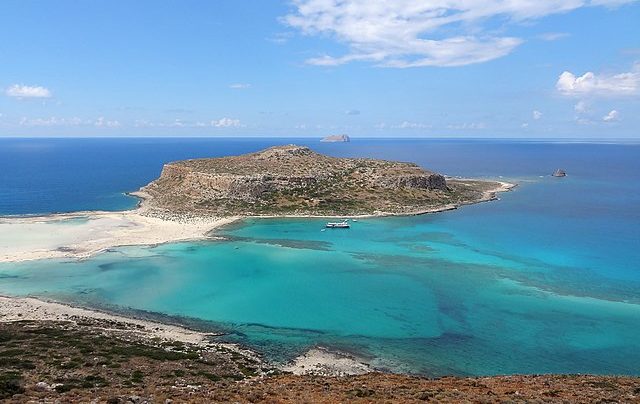
Balos beach, Crete. Credit: Olaf Tausch / CC-BY-3.0 / Wikimedia Commons
Europe’s oldest known civilization, which flourished on Crete between 2,700 BC and 1,450 BC, served as a trading center for gold, ceramics, and the precious spice and dye saffron.
The Koules (Greek: Κούλες) or Castello a Mare, (“Fort on the Sea” in Italian) a fortress located at the entrance of the old port of Heraklion, is another must-see place for anyone who visits this ancient city. It was built by the Republic of Venice in the early 16th century, and is still in good condition today.
Finally, anyone who visits Crete can experience its folklore and traditions, as performances of local dances take place all year round, as well as festivals and cultural events lasting for days.
Foi através das redes sociais que a Câmara de Santa Marta de Penaguião, liderada por Sílvia Silva, deu conta dos atos de vandalismo que aconteceram esta noite.
De acordo com a publicação, “vários sinais de trânsito na ligação entre São João de Lobrigos e Santa Marta de Penaguião foram danificados, entortados e até arrancados”.
Na mesma nota, a autarquia condena este tipo de comportamentos, sublinhando que a destruição de equipamentos públicos “revela uma profunda falta de respeito pela comunidade e pelo património que pertence a todos”, lembrando que “os sinais de trânsito existem para garantir a segurança das pessoas. Quando são destruídos, colocam em risco condutores, peões e todos os que utilizam as nossas estradas”.
“Uma sociedade evoluída constrói, preserva e respeita os bens comuns. Não os destrói. Estes comportamentos não são dignos de quem vive em comunidade nem de quem valoriza a sua terra”, vinca a autarquia, revelando que “os serviços municipais já estão a proceder ao levantamento dos danos para repor a normalidade o mais rapidamente possível”.
Entretanto, e em articulação com as autoridades competentes, “serão desenvolvidas todas as diligências possíveis para identificar os responsáveis e apurar as respetivas responsabilidades”, informa a autarquia.
“Chega ao fim um ciclo que me deixa orgulhoso, não apenas pelos resultados alcançados, mas sobretudo pelas pessoas com quem o partilhei.” Foi desta forma que Vítor Gamito anunciou o fim da sua ligação ao Rebordosa, colocando um ponto final numa passagem de duas temporadas no comando técnico da equipa sénior.
Numa longa mensagem de despedida, o treinador deixou palavras de agradecimento à direção, ao staff, ao departamento de formação, à sua equipa técnica, aos sócios e simpatizantes, reservando uma menção especial aos jogadores, que considerou os “verdadeiros protagonistas deste percurso”.
“Que grupo! Que forma de competir!”, escreveu Gamito, destacando o facto de o Rebordosa ter sido a única equipa pós-laboral presente na Fase de Subida do Campeonato de Portugal. Para o técnico, esse feito reflete “o caráter, a ambição e o compromisso” demonstrados pelo plantel ao longo da época.
Apesar do percurso positivo, o treinador reconheceu que a equipa não alcançou o objetivo pretendido. “Não terminámos a época com o objetivo que pretendíamos alcançar. Assumimos essa responsabilidade. Poderíamos e deveríamos ter feito mais e melhor”, admitiu, referindo à tão ambicionada subida à Liga 3.
Na despedida, Vítor Gamito evocou ainda os ensinamentos do falecido treinador Vítor Oliveira, lembrando que “os finais de época são passageiros. Os vencedores terão de provar novamente o seu valor. Os vencidos terão a oportunidade de redefinir objetivos e voltar a competir”, acrescentando que “Rebordosa é valente. Vai seguir em frente.”
Do lado do Rebordosa, a direção fez saber, em comunicado, que a decisão partiu do próprio treinador e aproveitou para agradecer o trabalho desenvolvido ao longo dos últimos dois anos.
“O seu compromisso foi fundamental para o crescimento, desenvolvimento e profissionalização do clube e da sua estrutura”, lê-se na nota, publicada nas redes sociais.
“O seu compromisso foi fundamental para o crescimento, desenvolvimento e profissionalização do clube e da sua estrutura. Foram 65 jogos, 35 vitórias e momentos inolvidáveis, desde o apuramento para os oitavos de final da Taça de Portugal, à presença na fase de subida à Liga 3, bem como ao recorde de invencibilidade no Campeonato de Portugal”, destaca o clube, aproveitando para desejar a Vítor Gamito “e a toda a sua equipa técnica os maiores sucessos pessoais e profissionais, com a certeza de que esta será sempre a vossa casa”.
Recorde-se que o Rebordosa ficou em 1º lugar da série B, com 58 pontos. Na fase de subida a equipa ficou aquém das expectativas. Em seis jogos, somou apenas quatro pontos e falhou os lugares de acesso à Liga 3.
Segundo fonte do Comando Sub-Regional de Emergência e Proteção Civil do Douro, a colisão em São Martinho de Anta ocorreu na Estrada Nacional 322, a pouco menos de três quilómetros da sede de concelho. Envolveu um veículo ligeiro de passageiros e um motociclo, com o alerta a ser dado às 10h41.
Do acidente resultou uma vítima em estado grave, um homem, de 35 anos, ao que apurou a VTM, socorrido pelos Bombeiros Voluntários de Sabrosa, que receberam o apoio dos meios do Instituto Nacional de Emergência Médica (INEM) após a confirmação da situação. Além destes operacionais, esteve presente a Guarda Nacional Republicana (GNR), que está agora a investigar as causas da colisão.
Dada a gravidade dos ferimentos da vítima, foi necessário ativar o helicóptero do INEM estacionado em Macedo de Cavaleiros para fazer o transporte para a unidade hospitalar. Desta forma, o homem foi helitransportado para o hospital de Vila Real, a unidade mais próxima da ocorrência.
A detenção ocorreu na passada terça-feira, na sequência de uma denúncia que dava conta de agressões no interior de uma habitação. Quando chegaram ao local, os militares da Guarda Nacional Republicana encontraram a vítima com lesões na zona da cabeça, alegadamente provocadas durante uma discussão entre o casal.
Segundo a GNR, as diligências realizadas permitiram apurar que a mulher estaria a ser alvo de violência física, verbal e psicológica de forma continuada. A investigação revelou ainda a existência de comportamentos de controlo, insultos e humilhações dirigidos à vítima.
O suspeito foi detido em flagrante delito por militares do Posto Territorial de Macedo de Cavaleiros, com o apoio do Núcleo de Investigação e Apoio a Vítimas Específicas (NIAVE).
Presente ao Tribunal Judicial de Macedo de Cavaleiros para primeiro interrogatório judicial no dia seguinte à detenção, foram-lhe aplicadas as medidas de coação de proibição de contactos com a vítima e de aproximação à mesma a uma distância inferior a 200 metros. Ficou ainda sujeito a termo de identidade e residência.
A GNR relembra que a violência doméstica é um crime público e apela à denúncia de todas as situações de que haja conhecimento, através das autoridades competentes ou das linhas de apoio disponíveis.

 Login
Login