Reading view

The Ring of Legendary King Minos: A Tale of Intrigue and Deception
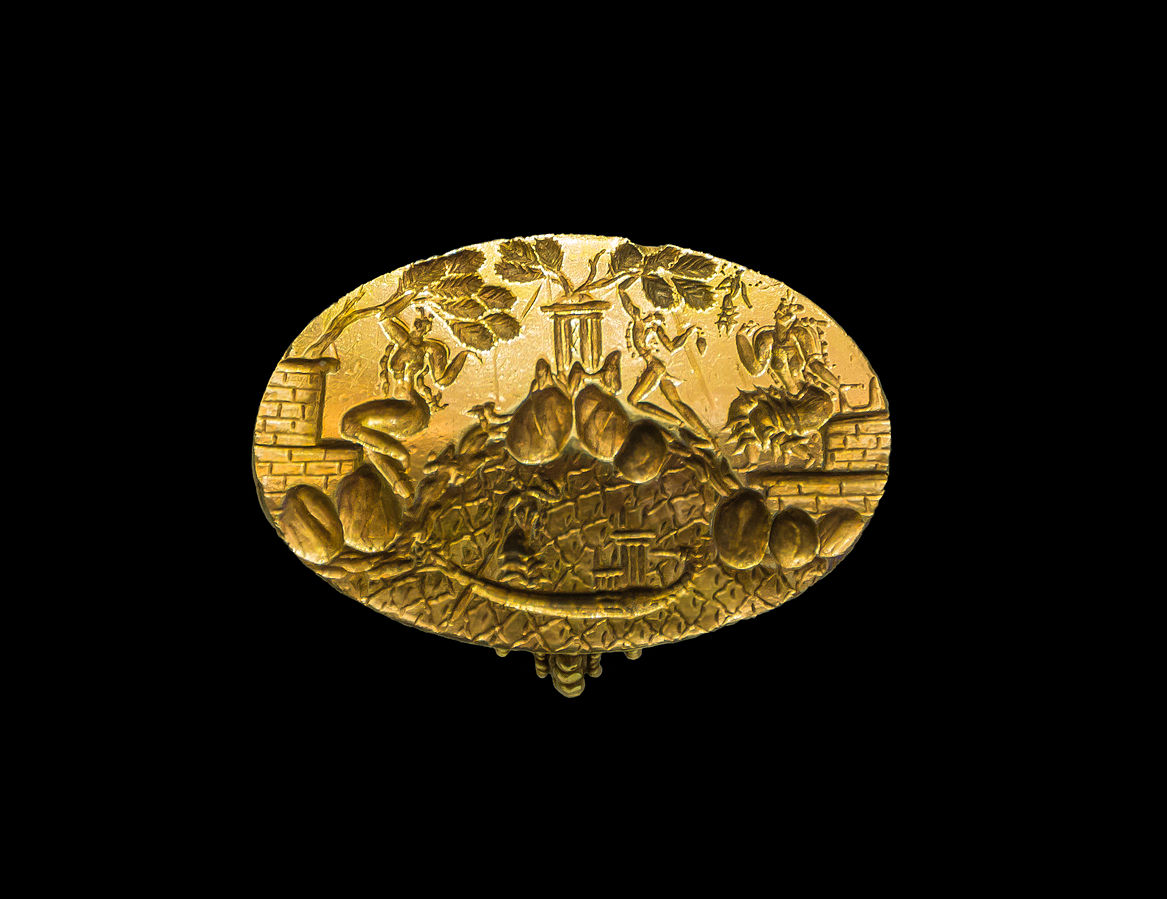
Ring King Minos
Ring of Minos Heraklion. Credit: Wikipedia/Jebulon/Public domain

The story of the ring known as the “Ring of King Minos” sounds like a tale made in Hollywood. It is a mix of ancient Greek history, mythology, and a plot involving a poor boy, a cunning priest, an English archaeologist, and hidden treasure.

The story begins in 1928, when a boy, Michalis Papadakis (1918-1974), accidentally found a ring at the archaeological site of Knossos. The place of discovery alone meant that the ring certainly had a very long history attached to it probably even going back to the Minoan civilization.

Indeed, several decades later, the shiny, gold, seal ring proved to be 3,500 years old (1,500 to 1,400 BC), as archaeologists assured him, and his was the most significant discovery of Minoan Civilization.

The boy’s father, a destitute farmer named Emmanouil, for some unknown reason, hid the ring from his wife and, for another unknown reason, two years later, he handed it over to the village priest, Father Nikolaos Polakis. Yet, before giving it away, he carved a line on the ring with his knife in order to mark its originality.

Father Polakis initially presented it to English archaeologist Sir Arthur Evans with the intention of selling it. However, there was no deal struck between the two since the priest demanded an astronomical amount of money.

In 1933 or 1934, Father Polakis decided to take the ring to the Heraklion Museum. At the time, the distinguished archaeologists, Nikolaos Platon and Spyridon Marinatos, were on the staff of the institution. Platon decided that the ring was genuine while Marinatos believed the ring was a fake.

Since the two archaeologists could not come to an agreement, they decided it was best to return the ring to the priest.
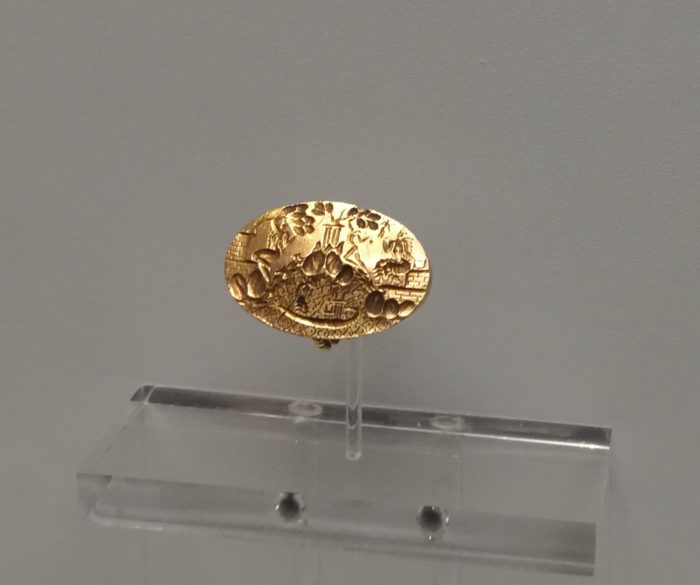
Ring King Minos
The King Minos Ring at the Heraklion Archaeological Museum. Credit: Twitter/Bokeras

However, Platon kept a copy of the ring by casting it in plasticine. The cast was later located in Platon’s archive. Several years later, he manifested a new interest in the ring and returned to the priest to ask for it. Father Polakis told him that he had given it to his wife for safekeeping, but she had lost it.

Minos ring depicts three themes

Platon wrote a treatise on the ring saying that it depicts three themes: the Minoans’ rule of the seas (“thalassocracy”), tree worship (dendrolatry), and a goddess descending from heaven to earth and getting into a row boat.

There are other, more recent interpretations of the depictions of the ring including the worship of goddesses, such as Mother Dimitra, and offerings to the Great Mother Rhea and the Great Mother Artemis.

For some time, the ring remained lost. The only information about the ring came from the copies that had been made and a number of archaeological reports which were associated with those copies.

Many years later, when Father Polakis was in his final days, he felt great regret about the “disappearance” of the precious ring. He called Evangelia Papadakis, the wife of the farmer Emmanouil, and apologized for lying to her family. He admitted that he had actually sold the ring to Evans, the English archaeologist, for 100,000 drachmas back in 1938.
However, that was one last lie by the cunning priest. What he had actually sold to Evans was a fine replica of the ring.

Evans had returned to England with the belief that he had bought the actual ring, along with a copy, and donated both, along with other precious artifacts, to the Ashmolean Museum. Today, two replicas of the legendary ring continue to be exhibited at the Ashmolean.

The story of the ring was forgotten for decades, but in the early 2000s, Giorgos Kazantzis, a retired police officer, inherited the house of the priest who was the last person in Greece who had had possession of the priceless artifact.

During renovation work, Kazantzis found a jar hidden inside the wall next to the fireplace. Inside the jar was a ring, which indeed proved to be the original Ring of King Minos. It even had the scratch made by Papadakis over seventy years ago.

Kazantzis delivered the precious artifact to the state, and in 2002, the Central Archaeological Council and a panel of expert archaeologists confirmed the authenticity of the ring. The actual monetary value of the ring was estimated to be €400,000 although its cultural value is incalculable.

Yet, for finding the ring and promptly delivering it to the appropriate authorities, Kazantzis was given a measly finder’s fee of €440.

Today, the priceless, gold Minoan ring is exhibited in all its splendor at the Heraklion Archaeological Museum.

  •  

3,500-Year-Old Minoan Royal Road: Europe’s Oldest Paved Path

Minoan Road Crete
The road showcases the advanced engineering skills of the Minoans. Credits: Public Domain

The Minoan Road, over 3,500 years old, is the oldest known paved road in Europe. It connected the prominent Minoan cities of Knossos, Gortyn, and Lebena on ancient Crete.

Only small sections of the road remain intact today, but this impressive ancient route ran approximately 50 kilometers (31 miles) across Crete.

Built during the height of the Minoan civilization, around 1600 BC, the road showcases the advanced engineering skills of the Minoans, who created an infrastructure that supported both daily life and economic activity across Crete.

The road included side drains to handle water runoff, a feature that helped preserve its structure by preventing water damage. Its condition is remarkable for an ancient road.

It was constructed with a solid, 200 mm (8-inch) thick layer of sandstone blocks bound with a clay-gypsum mortar. This sturdy base layer was then topped with basaltic flagstones, providing a durable surface.

The road included defined shoulders, which may have functioned as pedestrian pathways or for animal traffic, keeping it orderly and safe for movement.

Knossos Palace
Knossos, Crete. Credit Greek Reporter

Mythical King Minos used the road to talk to Zeus

According to legend, King Minos, the mythical king of Crete, son of Zeus and Europa, set out on this road (then a mere pathway) from Knossos, covering a large part of the way to the sacred cave, to meet his father Zeus and speak with him in person. There, he would learn about the mistakes that had been made and receive oracles concerning the best legislation for the future.

He started from Knossos and ended in the stalagmite cave of Dikteon Andron, located on Mount Dikte of the Ida or Ideon mountains of Crete (the current mountain of Psiloritis).

Minoan Road a crucial link in the Minoan civilization

The Minoan Road was a crucial link in the Minoan civilization’s network, facilitating trade, communication, and cultural exchange across Crete. Knossos, one of its endpoints, was the center of Minoan political and cultural life, while Gortyn and Lebena were significant in both Minoan and later Greek periods.

This road not only attests to the Minoans’ ingenuity but also underscores the role of Crete as a cultural and commercial bridge between the civilizations of the ancient Mediterranean.

The Minoan civilization’s infrastructure, especially roads like this, laid the groundwork for the development of European trade routes and road-building techniques in the centuries that followed.

Throughout most of the Bronze Age, the Minoans were the rulers of Crete. Over the course of their civilization, they gradually built up an incredible palace complex at Knossos. This was the most powerful city on the island.

The palace complex at Knossos served temple functions and was also an administrative center.

  •  

What Was the Ancient Name of the Minoans?

Bronze Age Minoan inscriptions written in Linear A from Phaistos
Bronze Age Minoan inscriptions written in Linear A from Phaistos. Credit: Wikimedia Commons, Zde, CC-BY 4.0

The Minoan civilization was a rich and relatively advanced culture centered on ancient Crete during the Bronze Age. However, they did not refer to themselves as the Minoans. This is a modern name coined by British archaeologist Sir Arthur Evans in the early 20th century. What was the ancient name of the Minoans? What did they call themselves, and what did other nations call them?

Ancient Greek name for the Minoans

There are no Greek historical texts which describe the Bronze Age Minoan civilisation. However, texts from the Archaic Period, such as Homer’s Odyssey, mention a people on Crete called the Eteocretans.

This name means ‘true Cretans’. Later writers, such as the historian Diodorus of the first century BCE, viewed them as the native inhabitants of Crete. Therefore, it is likely that the Eteocretans were the descendants of the Minoans.

The foundation of this term can be traced back to the Bronze Age. A Linear B inscription from Pylos dating to c. 1300 BCE refers to Crete as ‘Ke-re-te’, reconstructed as ‘Kretes’.

Given that this dates from long after the Mycenaean Greeks had conquered Minoan Crete, this cannot be used to show what the Mycenaean Greeks called the Minoans, nor what they called their island.

The Bible’s name for the Minoans

Let us now consider what the Bible calls the Minoans. In the Book of Genesis, the tenth chapter contains the famous Table of Nations. This shows the genealogy of the world’s nations. Included among this list is a reference to Caphtorim, one of the sons of Mizraim.

Mizraim, according to his name and family members, is considered the forefather of the Egyptians. His son Caphtorim is meant to be the forefather of a nation that resided in a place called Caphtor in the Hebrew Scriptures.

Biblical references to Caphtor make it an island and the homeland of the Philistines. Archaeological evidence clearly shows that the Philistines originated from the region of the Aegean Sea.

This is further supported by the fact that the Bible associates the Philistines with a nation called the Cherethites. The latter ethnonym appears to be synonymous with ‘Cretans’, since the Greek Septuagint translated it as such.

Therefore, given this information, it is evident that the island of Caphtor in the Bible is Crete. Therefore, the Caphtorim, or people of Caphtor, is the Bible’s name for the Minoans. Since the reference to the Cherethites only appears in accounts set after the Mycenaean Greeks had conquered Minoan Crete, it is impossible to say whether ‘Cherethites’ is another name for the Minoans or a name for the Greeks of Crete instead.

What other Middle Eastern nations called the Minoans

Were the ancient Hebrew Scriptures of the Bible alone in using this term, Caphtorim, for the Minoans? The evidence shows that they were not. We find variations of this ethnonym in the records of several other Middle East nations.

An 18th-century BCE document from the city of Mari in Syria refers to the island as Kaptara. It uses this term in various contexts, including referencing “Caphtorite fabric.” This suggests that the island was well known by that name in the 18th century BCE, at least within Syria.

However, was this just the name of the island itself? One of the records in the Mari Tablets uses this term referring to a certain man’s ethnicity. This suggests that the ancient inhabitants of Syria, just as in the Bible, used this term for the Minoans as a people, and not merely as the name of the island.

In later centuries, the same term appears in Assyrian records, dating long after the fall of the Minoans. This shows that it was not limited to one particular civilization. Rather, it seems to have been used (at least among some nations) for the inhabitants of Crete regardless of ethnicity.

Egyptian records

In Egyptian records, we find the name ‘Keftiu’ used about Minoan Crete. This is used for Crete in general, even long after the Mycenaean Greeks had conquered it. The fact that this was the term for Crete is clear from the itinerary lists found in Egypt in the New Kingdom period.

Amenhotep III directly associated Keftiu with the place names ‘Knossos‘ and ‘Amnissos’, two of the most prominent cities on Bronze Age Crete. This leaves no doubt that Keftiu was the Egyptian name for that island.

The name ‘Keftiu’ is very similar to ‘Caphtor’ and ‘Kaptara’. The only substantial difference is the absence of the ‘r’ at the end of the Egyptian version. Nevertheless, this Egyptian form is so similar to the others that most scholars recognise that they must be cognate with each other.

In other words, ‘Keftiu’ is the Egyptian spelling of the same word recorded in the Bible as ‘Caphtor’ and in other Middle Eastern records as ‘Kaptara’.

What did the Minoans call themselves?

Unfortunately, we cannot be completely sure what the Minoans called themselves. The reason is that Minoan records use a script called Linear A. Linguists have not yet been able to decipher it, meaning that we cannot read the Minoan inscriptions.

This does not mean that there is no indication as to what they called themselves. The fact that nations as far apart as Egypt and Syria used a form of the same term for Crete is highly significant.

This strongly suggests that Keftiu/Capthor/Kaptara was not a name invented for Crete by any one of those outside nations. Rather, to account for this consistency across that part of the world, it seems far more likely that this came directly from the Minoans’ name for themselves.

When we consider the Egyptian evidence more closely, it becomes more likely that the Egyptians correctly preserved the name of the island. As previously noted, Egyptian records link Keftiu with the place names ‘Knossos’ and ‘Amnissos’, which were the Minoan names for those sites on Crete. If the Egyptians were able to maintain the names of those sites, it is plausible that they similarly preserved the name of the island as a whole.

Therefore, although we cannot be completely sure, it does seem very likely that the Minoans called themselves something similar to the Bible’s ‘Caphtorim’ or ‘Caphtorite’.

  •  

Did the Mycenaeans Encounter the Rare Dwarf Elephants of the Aegean?

Fossil skull of the dwarf elephant species Palaeoloxodon falconeri showing its small size and distinctive features.
Dwarf elephants once inhabited the Aegean Islands and influenced Mycenaean culture through the use of their fossil remains. Credit: Ninjatacoshel, Wikimedia Commons, CC-BY-SA 3.0

The dwarf elephants of the Aegean Islands represent a fascinating intersection of paleontology, archaeology, and environmental history, yet their significance during the Mycenaean period remains insufficiently explored.

These now-extinct, insular-adapted elephants provide a critical look into evolutionary biology and human-environment interaction in Bronze Age Greece.

Insular dwarfism: Evolutionary mechanisms and island biogeography

Dwarf elephants of the Aegean, such as Elephas creticus on Crete and Palaeoloxodon tiliensis on Tilos, exemplify insular dwarfism, an adaptive response to island isolation characterized by limited resources, absence of large predators, and ecological shifts.

Morphometric analyses of fossilized remains at the Department of Genetics, Evolution and Environment of the University College of London demonstrate a marked reduction in body size, skeletal robustness, and changes in dentition compared to mainland proboscideans.

These evolutionary modifications likely occurred over tens of thousands of years, culminating well before the Mycenaean era, with the last populations vanishing at the close of the Pleistocene or early Holocene. The islands’ geographical isolation, combined with fluctuating sea levels and climatic conditions, further influenced the survival and adaptation of these populations.

Archaeological correlations: Mycenaean awareness and utilization

Boar's tusk helmet, like the one Homer describes Odysseus as using
Mycenaean Boar’s tusk helmet, similar to the one worn by Odysseus in Homer’s account. Credit: Wikimedia Commons, Doreio, CC-BY-3.0

A probable descendant of the large straight-tusked elephant (Palaeoloxodon antiquus), scholar George Theodorou claimed it walked the Earth as recently as 3,500 years ago. This is based on preliminary radiocarbon dating completed in the 1970s, which would make it the youngest surviving dwarf elephant as well as elephant in general in Europe.

Archaeological evidence suggests that Mycenaean societies were aware of—and possibly exploited—remnants of these creatures. Elephant molars and teeth, discovered in Mycenaean contexts across mainland Greece and the islands, appear to have been repurposed as raw materials for crafting tools, ornaments, or ritual objects.

The provenance of these elephant teeth is debated. They may have been derived from fossilized remains of dwarf elephants embedded in island deposits. The Mycenaeans scavenged these for durable ivory-like materials. The studies of Mycenaean artifacts employing elephant ivory or tooth, for instance, demonstrate distinct wear patterns and sourcing signatures, implying a sophisticated interaction with paleontological resources.

In an early form of “cultural paleontology,” this is evidence that megafauna contributed materially and symbolically to Bronze Age material culture. However it’s not unreasonable to suggest that the Mycenaeans may have seen living dwarf elephants, especially on remote islands such as Tilos.

Even if rare, their presence could explain the cultural reuse of elephant teeth—not just as fossil curiosities,but as materials from an animal still within human memory or possibly even within living contact. Such use is also indicative of a level of knowledge or at least recognition of these animals’ past presence, perhaps integrated into local lore or ritual symbolism.

Fossil of the extinct Palaeoloxodon creutzburgi elephant species that subsisted on the island of Crete.
Fossil of the extinct Palaeoloxodon creutzburgi species that subsisted on the island of Crete. Credit: G.M. Woodward, Wikimedia Commons, Public Domain.

Ecological impact and anthropogenic factors in extinction

The extinction of dwarf elephants in the Aegean is often attributed primarily to natural climatic shifts. Sea-level changes following the last Ice Age also had a significant impact. However, the intensification of human activity during the Neolithic through Mycenaean periods likely accelerated their disappearance.

Deforestation, habitat fragmentation, and hunting pressure from early agricultural communities would have placed additional stress on already vulnerable island populations. Analyzing sediment cores and pollen records in conjunction with archaeological site data indicates significant environmental transformations. These coincide with the expansion of Mycenaean influence.

Although most dwarf elephant species went extinct well before the Mycenaean period (ca. 1600–1100 BC), there is credible evidence that some may have survived into that time, potentially overlapping with early Mycenaean society.

Mycenaean ivory cosmetic duck.
Mycenaean ivory cosmetic duck. Credit: Ade, Wikimedia Commons, CC-BY-SA.40

Analytical implications: Reassessing Mycenaean interaction with prehistoric fauna

The presence of elephant teeth in Mycenaean material culture challenges traditional dichotomies separating natural history from human history. It invites reconsideration of this society’s environmental perception. Mycenaeans were not merely exploiters of living fauna but also curators of a landscape layered with prehistoric memory.

Further multidisciplinary research combining paleontology, archaeozoology, and geochemical sourcing is necessary to clarify the extent and nature of Mycenaean engagement with these extinct species. The analysis of wear patterns, isotopic signatures, and contextual associations of elephantine artifacts can yield insights into trade networks, symbolic systems, and resource utilization strategies.

Moreover, integrating the study of dwarf elephants into the broader narrative of Mycenaean civilization enriches understanding of how ancient societies conceptualized and incorporated their environmental heritage. It reveals a nuanced picture of cultural continuity and ecological awareness, bridging deep time with Bronze Age lifeways.

  •  

Hamas Suspect Arrested in Crete Over Alleged Israeli Cruise Ship Bomb Plot

Anti-terrorism unit
The 37-year old Palestinian was arrested in Agios Nikolaos, Crete. File photo. Credit: AMNA

Greek authorities arrested a 37-year-old Palestinian man in Agios Nikolaos, Crete, on Saturday, preventing an alleged plot to detonate explosives on a cruise ship carrying Israeli tourists. The suspect is accused of being an operative for Hamas. He was apprehended in a highly classified joint operation by Greece’s National Intelligence Service (EYP) and the Anti-Terrorist Unit.

Intelligence officials moved quickly to detain the man just days before the targeted cruise ship was scheduled to dock in Crete on Tuesday. While the suspect reportedly claimed during interrogation that he had planned an attack but ultimately backed out, Greek authorities remain unconvinced and are treating the threat as exceptionally serious.

The connection of the Hamas associate in Greece to Cyprus

The success of the Greek investigation originated from a coordinated intelligence effort with Cyprus. Approximately two weeks ago, Cypriot authorities arrested four individuals suspected of planning strikes against Israeli interests in the European Union, allegedly motivated by the ongoing conflict in Gaza.

During the investigation in Cyprus, intelligence officers analyzed mobile phones belonging to the suspects. A specific phone number surfaced as a critical link, leading Greek counter-terrorism units directly to the 37-year-old in Crete.

Security services in Greece noted that the suspects in both countries received specialized training at a camp outside the Gaza Strip. This training specifically focused on manufacturing improvised explosives using chemical substances. Officials in Nicosia consider the group found in Cyprus deeply concerning, noting that two of the arrested individuals had lived in Cyprus for years and had reportedly even managed to obtain Cypriot citizenship. One of the suspects in Cyprus has already admitted to planning attacks against Israeli targets.

The suspect in Crete

The man arrested in Crete arrived in Greece approximately one year ago and filed an active asylum application. He integrated quietly into the local workforce, taking a seasonal job at a hotel in Agios Nikolaos. Local reports indicate he had no family on the island and intentionally maintained a low profile to avoid arousing suspicion.

Following his arrest on Saturday afternoon, Greek counter-terrorism officers raided his current residence in Crete, alongside a property he previously occupied in the Patissia neighborhood of Athens. Investigators confiscated several items that could be used as evidence against his plot. Among them, Greece’s anti-terrorism unit found chemical substances and laboratory measuring equipment, a number of mobile phones, laptops, and USB data storage drives, as well as bank cards and financial documents.

Law enforcement did not find assembled explosive devices or firearms during the raids. Intelligence assessments indicate the suspect was in the final stages of preparation for the plot but was intercepted before he could formally order the final explosive components.

The 37-year-old remains in custody and is scheduled to appear before a public prosecutor. Greece’s EYP and the Anti-Terrorist Unit are actively tracing his movements, communications, and potential local contacts to verify whether he operated alone within Greece.

  •  

Top Mythological Sites in Greece

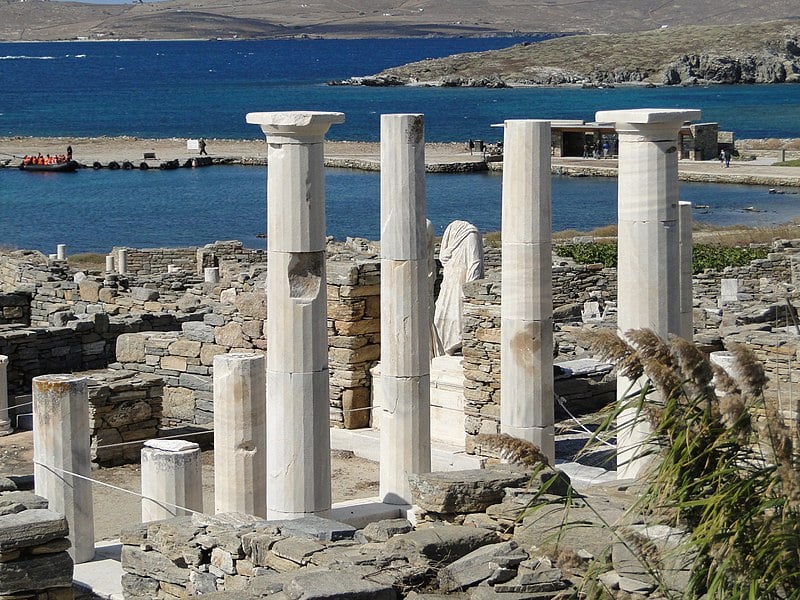
House of Cleopatra, Greece
Mythological sites in Greece. Credit: Bernard Gagnon / Wikimedia Commons/CC BY-SA 3.0

There is something about Greece that sets it apart from many other holiday destinations across the globe; its mythological sites.

Many ancient societies had different beliefs and myths, but none are more prominent in modern-day life than that of the Greeks. Their creatures have become legends, their tales inspiration for great fiction and their gods immortalized through the continued retelling of their conquests and trials.

Delos: an ancient mythological site in Greece

Matched only by the Acropolis of Athens, Greek mythological site the ruins on the island of Delos are an unmissable location for anybody interested in ancient Greek culture. One of the best-preserved examples of an ancient Greek civilization, the island is completely unblemished by modern architecture and as such, allows its visitors to delve deep into history.

However, it is not just a site of great historical importance, but a mythological one too. It was on this island that both gods Artemis and Apollo are said to have been born. As a result, the island became a sacred place. Sanctuaries and temples sprung up across its hillsides as people from across Greece came to the island’s shores to worship the deities.

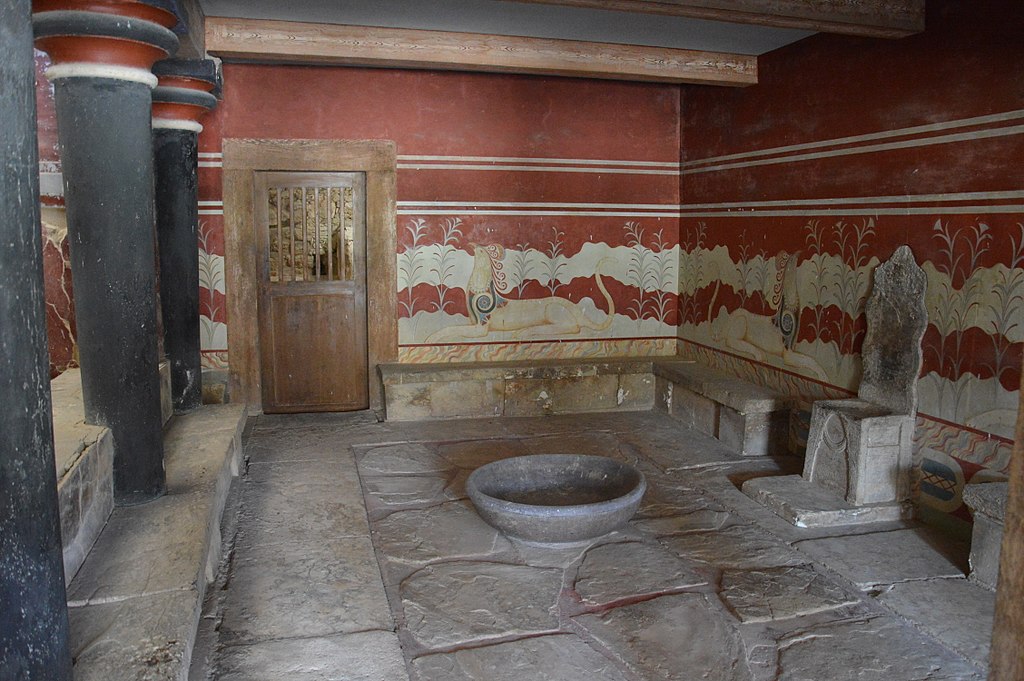
Greek Mythological sites
Throne room of the Minoan Palace in Knossos, Crete Credit: Annatsach – Wikimedia Commons / CC BY-SA 4.0

The Labyrinth, a famous site in Greek mythology

One of the most famous and exciting stories of Greek mythology is the tale of Minos, Theseus and the Minotaur. Minos was a powerful king, ruler of Crete and the son of Zeus, but after he betrayed Poseidon, he was cursed to raise a son with the body of a man and the head of a bull. Using this curse to his advantage, however, Minos built the fabled Labyrinth and trapped the Minotaur within it. He would then send victims to their deaths until Theseus, prince of Athens, ventured into the Labyrinth and slayed the beast.

While there are no Minotaur bones for you to see, there are two possible Labyrinths to explore. First is the likely home of King Minos, and therefore the most plausible home for the labyrinth, Kommos. Located along the southern coast of the island, Kommos is a great place to visit, with spectacular ancient ruins and beautiful ocean views.

However, if you venture deep enough into the ruins of this ancient city, you will find many maze-like corridors and walkways that may have been the Minotaur’s home; or at least the inspiration for its tale. However, just down the road you will also find Gortyn, a site of great archaeological importance to Crete and another suspected home of the Labyrinth. Further away from Minos’ home, these ruins bear a much similar resemblance to the maze of mythology. Perhaps then, it is best to visit both Greek mythological sites and decide for yourself.

The Island of Ithaca: an ancient Greek site and holiday destination

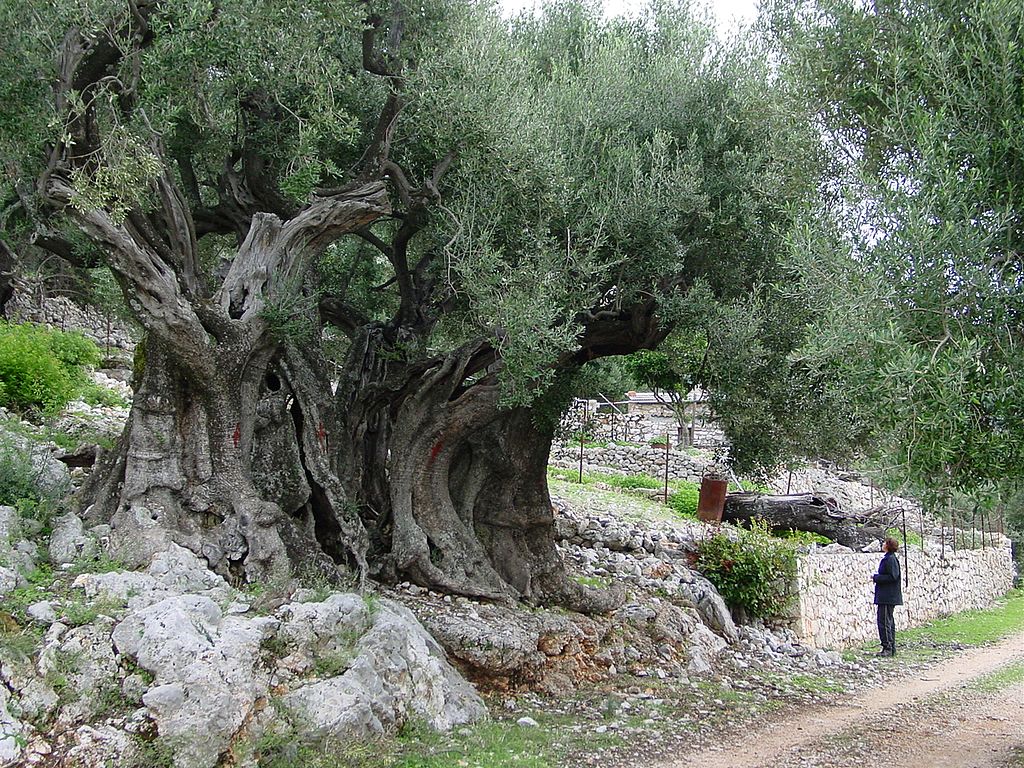
olive
An olive tree on Ithaca that is thought to be 1,500 years old. Credit: Wikimedia Commons

Ithaca, a well-known Greek mythological site for a holiday destination, is a place with a very interesting mythological past. Most notably, it was home to the legendary trickster Odysseus, the island’s greatest king and the brains behind the trojan horse.

Odysseus was also the protagonist of Homer’s “Odyssey.” His decade-long struggle to return home after the war is the source of many of the most enduring Greek myths.

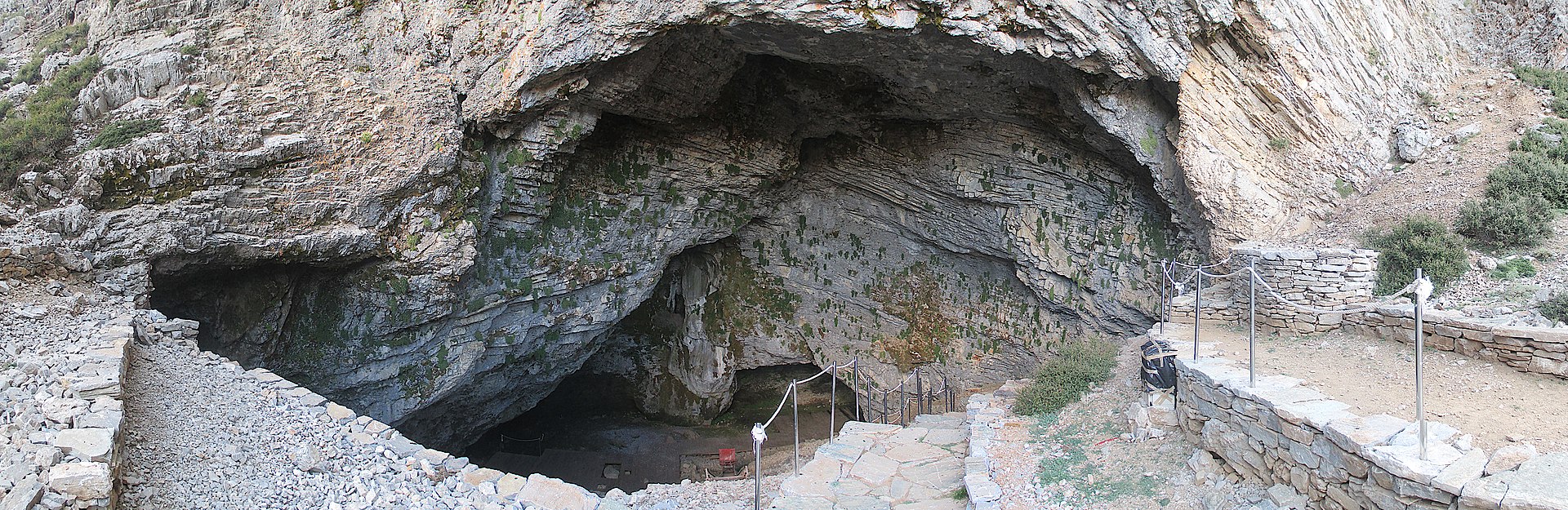
The famous Cave of Zeus on the Greek island of Crete

Greek Mythological sites
Cave of Zeus in Crete, Greece Credit: Tomisti / Wikimedia Commons / CC BY-SA 4.0

Hidden away on the island of Crete is an extraordinary piece of Greek mythological history. Within a cave beneath Mount Ida, it is said that the King of Gods, Zeus, was born and raised.

The Cave of Zeus is a beautiful location, with one entrance leading into a network of caves filled with stunning rock formations and underground pools. It does indeed seem a fitting place for the beginnings of the greatest god Greek mythology has ever known. However, it was not by choice he was raised here but by necessity.

His father, the titan Cronus, was set on devouring all of his progeny to ensure that they could never contest his power. However, unbeknownst to Cronus, Zeus’ mother, Rhea, hid him within the cave so one day he could return to overthrow his tyrannical father; which, according to legend, he did.

Mount Olympus: Home of the Greek gods

Greek Mythological sites
Mount Olympus. Credit: Maylett/ Wikimedia Commons / CC BY-SA 3.0

Along the eastern coast of the Greek mainland, you will find one of the most well-known natural landmarks in the world; Mount Olympus. This legendary and iconic Greek mythological site is an awe-inspiring sight, however, there is more to it than meets the eye.

In Greek mythology, Olympus was created after the gods defeated the titans in the battle of Titanomachy; otherwise known as the War of the Titans. Atop its peak they then built the Pantheon, where Zeus sat upon his throne as King of Gods and the rest of the deities would convene to discuss matters of the world below and survey the world of men.

Seeing all these incredible mythological sites can be tricky, unless you charter a course aboard Deep Blue Yachting’s luxury sailing boat, the Glaros. It is a private vessel, you can set your own course and visit every site on this list, all in one trip.

By Cliff Blaylock

  •  

Crete Remembers the Razing of the Village of Kandanos by the Nazis

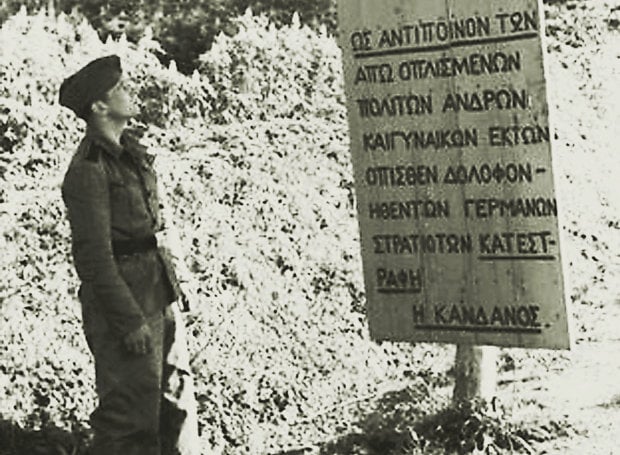
A German soldier in front of one of the signs in Greek erected after the razing of Kandanos, Crete by the Nazis.
A German soldier in front of one of the signs erected after the razing. The text reads: “Kandanos was destroyed in retaliation for the bestial ambush murder of a paratrooper platoon and a half-platoon of military engineers by armed men and women.” Credit: Bundesarchiv, CC BY-SA 3.0 de/Wikipedia

The village of Kandanos on Crete was burned to the ground, and Nazi troops massacred all 180 residents on June 3, 1941 during the years of the German occupation.

It was one of the worst atrocities committed by the occupiers and has haunted Crete and Greece for decades.

Battle of Crete

The Battle of Crete began on May 20, 1941, with Germany employing 750 glider-borne troops, 10,000 paratroopers, 5,000 airlifted mountain soldiers, and 7,000 seaborne troops. It was the first occasion when German parachutists were used en masse and the first mainly airborne invasion in military history.

It was also the first time German soldiers had encountered mass resistance from a civilian population, and they suffered unexpectedly large numbers of casualties.

The outnumbered Greek soldiers, along with the Allied forces based on Crete, fought bravely but were vastly outnumbered. Cretan civilians joined the battle with whatever weapons were at hand—mostly kitchen knives, but rakes, clubs, and even walking sticks were used in desperate hand-to-hand combat for their homeland.

German parachutists were often knifed or clubbed to death as they landed on fields of Crete. In one recorded incident, an elderly Cretan man clubbed a paratrooper to death with his walking cane before the German could even disentangle himself from his parachute.

In another incident, a local priest and his son broke into a village museum, took two rifles from the Balkan War era, and sniped at German paratroops as they landed. The Cretans also began to use small arms from captured German soldiers as the battle continued.

However, this courage came at a terrible cost, as the Germans retaliated as soon as they managed to gain control of Crete.

The temporary German commander of the island, Kurt Student, ordered a series of brutal reprisals against the local population immediately after the surrender of Crete on May 31, 1941.

Kandanos Crete Nazi
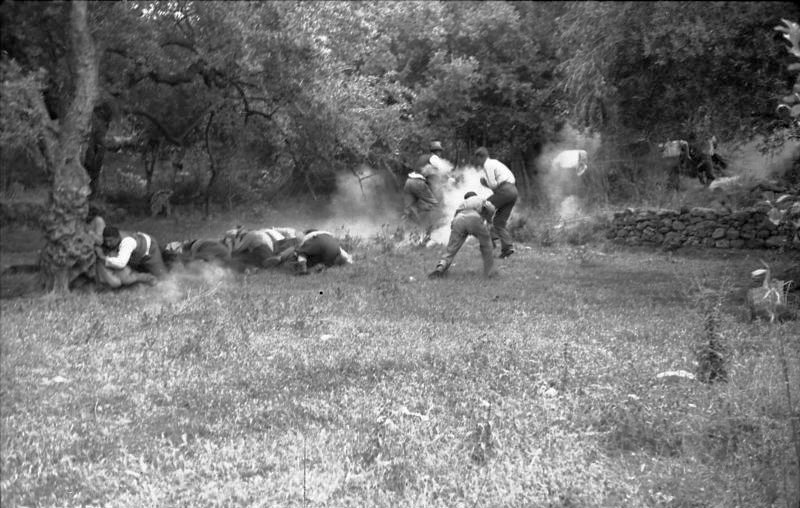
The Nazi occupying forces massacred civilians on Crete. Credit: Bundesarchiv, CC BY-SA 3.0 de/Wikipedia

Every last resident of Kandanos, amounting to a total of 180 men, women, and children, were brutally massacred, and their ancient village was burned to the ground.

Nazis order for the destruction of Kandanos

Below is the order of the German commander:

“It is certain that the civilian population including women and boys have taken part in the fighting, committed sabotage, mutilated and killed wounded soldiers. It is therefore high time to combat all cases of this kind, to undertake reprisals and punitive expeditions which must be carried through with exemplary terror. The harshest measures must indeed be taken and I order the following: shooting for all cases of proven cruelty, and I wish this to be done by the same units who have suffered such atrocities. The following reprisals will be taken:
1. Shooting
2. Fines
3. Total destruction of villages by burning
4. Extermination of the male population of the territory in question
My authority will be necessary for measures under 3 and 4. All these measures must, however, be taken rapidly and omitting all formalities. In view of the circumstances the troops have a right to this and there is no need for military tribunals to judge beasts and assassins.”

After the surrender of Germany, General Kurt Student was captured by the British. In May 1947, he came before a military tribunal to answer to charges of mistreatment and murder of prisoners of war by his forces on Crete.

Greece’s demand to have Student extradited was declined. Student was found guilty of three out of eight charges and sentenced to five years in prison. However, he was given a medical discharge and was released in 1948. Student was never tried for crimes against civilians.

Today, Kandanos has been rebuilt and is the seat of the eponymous municipality. Reproductions of the somber Wehrmacht signposts commemorating the village’s destruction are displayed on a local war memorial.

Related: Greek Scientists Identify Nazi Victims Executed 83 Years Ago in Crete

  •  
❌