
Reading view

Greek Army Begins New Era as First Women Volunteers Report for Service

Women in Greek military uniforms stand near a monument and the Greek flag during an armed forces ceremony.
Women volunteers in Greece’s armed forces during a military ceremony. Credit: Screenshot / Hellenic Army General Staff video.

Greece’s armed forces will welcome the first women volunteers for military service this week, marking a significant shift in the country’s defense recruitment policy.

The first female volunteers will report for duty on Thursday as part of the Hellenic Army’s 2026 second conscription intake, which began this week and will continue through June 5. They will train at an army base near Lamia, a city in south-central Greece.

Women in Greece join voluntary military service

Under the new program, women aged 20 to 26 can apply for voluntary military service if they meet the required military fitness standards and have no felony convictions.

They will serve for 12 months, under the same duration, obligations, and conditions that apply to male conscripts in Greece.

The initiative opens a new path for women to take part more directly in national defense. In Greece, military service has traditionally remained compulsory for men, while women have not faced the same obligation.

Same benefits for women volunteers in Greece’s armed forces

Female volunteers can also join the selection process for reserve officer training, under the same criteria that apply to male conscripts.

They will gain access to military hospital services and receive additional points in certain public-sector hiring procedures. The state will also recognize their period of service as professional experience, giving the program potential value beyond the military.

Officials have presented the initiative as both a contribution to national defense and an opportunity for women to gain training, experience, and qualifications that could support their future careers.

Greece expands recruitment amid defense reforms

The launch of voluntary military service for women comes as Greece pushes ahead with broader reforms to modernize the armed forces, improve readiness, and strengthen recruitment and retention.

Ahead of the launch, the Hellenic Army General Staff carried out a public information campaign encouraging women to apply. The campaign described voluntary service as a way for women to contribute to Greece’s defense while gaining educational and professional benefits.

The arrival of the first female volunteers marks an important test for Greece’s new model of military participation, as the country seeks to broaden the pool of potential recruits and adapt its armed forces to changing defense needs.
  •  

Greece Expands Drone Fleet for Aegean Surveillance Missions

Greece drones
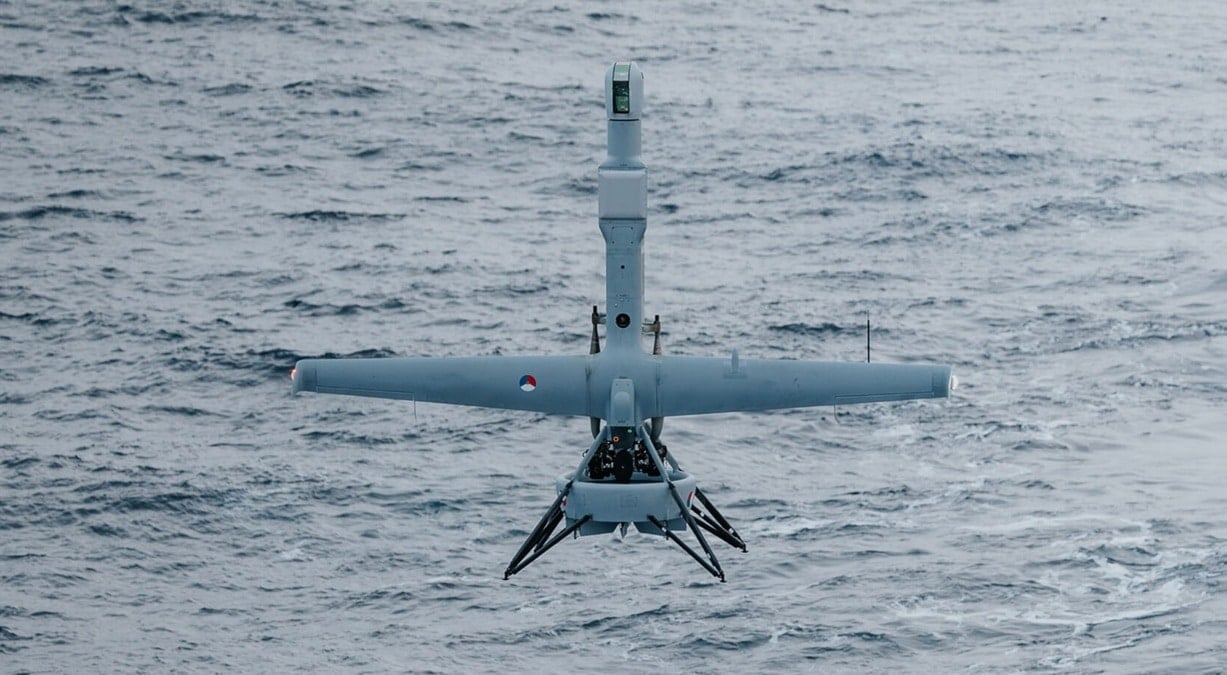
The V-BAT can launch from ship decks or small island clearings without a runway. Credit: Shield AI

Greece has signed an agreement to expand its fleet of Shield AI V-BAT unmanned aerial systems for maritime surveillance operations across the Aegean Sea, the American company announced June 2.

The deal deepens an existing partnership that has already seen the Hellenic Army deploy these advanced drones for intelligence and reconnaissance missions.

Concluded between Shield AI and the Hellenic Army, the agreement bolsters Greece’s existing V-BAT fleet. The company says that the agreement will enhance the nation’s capacity to maintain persistent situational awareness over hundreds of islands, remote coastlines, and contested maritime approaches.

Company says drone is ideal for Greece’s needs

The V-BAT can launch from ship decks or small island clearings without a runway, fly for over 12 hours on a single sortie, and operate seamlessly despite aggressive electronic warfare attempts to disrupt its navigation and communications.

“V-BAT is exceptionally well-suited for operations in Greece, where forces operate across dispersed islands, remote coastlines, deep valleys, mountain ranges, and complex maritime environments,” said James Lythgoe, Shield AI’s regional director for Eastern and Southeast Europe. “V-BAT has proven itself in combat operations in Ukraine, including in GPS- and communications-denied environments, and was built for exactly these kinds of operational realities.”

Combat-proven resilience

In Ukraine, the V-BAT has successfully operated amid intense Russian electronic warfare, where GPS signals are actively jammed and drone communications are disrupted. This proven resilience against satellite spoofing and signal jamming ensures the system remains operational against sophisticated adversaries, rather than falling out of the sky.

Classified as a NATO Class I unmanned aircraft (weighing under 330 pounds), the V-BAT acts as a highly tactical asset deployable by ground units and small naval vessels without requiring massive support infrastructure. Its twelve-hour flight endurance allows a single aircraft launched at dawn to maintain continuous coverage through the entire day. This enables crucial “pattern-of-life” analysis to reveal suspicious maritime activity.

By expanding its V-BAT fleet, the Hellenic military strengthens its layered early-warning architecture across the Aegean, giving commanders the vital reaction time needed to respond to maritime intrusions before situations escalate.

RelatedClassified US Stealth Drone Makes Rare Appearance in Greece

  •  

The US Military Is Ending Its “Climate Change Crap”

by Rhoda Wilson | The Exposé Hundreds of billions of dollars have been spent by the US military on unsuccessful initiatives such as the Navy’s Great Green Fleet programme. Now, it is coming to an end. Defence Secretary Pete Hegseth believes that climate change mitigation efforts have no measurable effect on global temperatures and do not improve military readiness.  “The Dept of Defence does not do climate change crap. We do training and warfighting,” he said. The new policy is to redirect funds to strengthen the US military.  “So begins a new age of realistic military policy and an end […]
  •  

The Japanese Defense Minister visited Indonesia and the Philippines

A significant event in the formation of both Japan’s postwar foreign policy and the situation in the critically important Southeast Asian subregion was Defense Minister Shinjiro Koizumi’s tour to Indonesia and the Philippines in early May. Japan is once again “moving southwest.” It should be emphasized once again that one of the central components of […]
  •  

Sanae Takaichi, Three Months after Her Triumph: Challenges amid Political Dominance

Following its landslide victory in the February 8 election, the Liberal Democratic Party (LDP), in close cooperation with the Ishin no Kai party, is promoting initiatives to increase Japan’s military capabilities. At first glance, nothing has changed after the Diet elections, and the LDP continues to dominate politics. While this is largely true, several details […]
  •  

A Security Pact in the Middle East, Behind America’s Back Part 2

The four most militarily powerful Muslim-majority nations—Saudi Arabia, Türkiye, Pakistan, and Egypt—are aligning based on strategic calculation rather than religious affinity. This development signals the emergence of a weaker America in the Middle East and a reordering of the great-power competition between the U.S. and China. Barry Buzan asserts that security is inherently regional, as […]
  •  
❌