El presidente de Rusia, Vladímir Putin, y el líder de China, Xi Jinping, mantuvieron este miércoles una ronda de conversaciones que concluyó con la firma de un amplio conjunto de…
«¿Podrán China y Estados Unidos superar la llamada ‘trampa de Tucídides’ y forjar un nuevo paradigma para las relaciones entre grandes potencias?», dijo el presidente chino Xi Jinping en la…
El presidente norteamericano, Donald Trump, se ha reunido este jueves en Pekín con su homólogo chino, Xi Jinping, para sus esperadas conversaciones sobre el comercio, la venta de armas estadounidenses…
UNITED NATIONS — When Jeff Bartos appeared before the Senate Foreign Relations Committee in 2025 for his confirmation hearing, he was warned that the job he was seeking might not exist.
The Pennsylvania businessman, former political candidate and endurance athlete had been nominated by President Donald Trump to serve as U.S. ambassador for United Nations Management and Reform — a title that has long sounded aspirational in a building famous for bureaucracy.
During his confirmation hearing, Bartos recalled being greeted with a dose of skepticism.
Less than a year later, Bartos believes the impossible is beginning to happen.
In an exclusive interview with Fox News Digital, the Trump administration official laid out an ambitious campaign to reshape an institution critics say has become bloated, inefficient and increasingly disconnected from its founding mission.
The effort comes at a pivotal moment for the United Nations. The stakes extend well beyond budgets. As the U.N. confronts a cash crunch, prepares to choose its next secretary-general and faces growing scrutiny from the administration, the debate over reform has become a battle over the institution's future: whether it remains on its current course or undergoes its most significant restructuring in decades.
Secretary-General António Guterres has repeatedly warned of a growing liquidity crisis as the organization struggles with delayed member-state payments, including billions owed by the United States. At the same time, the Trump administration has made clear that future funding and support will be increasingly tied to reforms.
Bartos argues that pressure is already producing results.
Sitting at the U.N. headquarters, he points to what he calls historic achievements: roughly $570 million cut from the U.N.'s regular budget and 2,900 positions eliminated through negotiations among all 193 member states.
"Again, never happened before in 80 years," Bartos said.
"$570 million cut to the regular budget, approximately 3,000 posts cut. Unanimity. That's by consensus. All 193 countries had to come together."
For Bartos, the achievement is particularly striking because many diplomats viewed meaningful reform as impossible.
"I promised you we wouldn't let you down," he recalled telling Senate Foreign Relations Committee Chairman Jim Risch months after his confirmation.
The reforms represent only what Bartos describes as a "down payment." The next phase is already underway.
As member states negotiate peacekeeping budgets for the coming year, the administration is pushing to reduce spending, streamline missions and eliminate programs it believes no longer serve their intended purpose.
One example, Bartos said, involves changing how the U.N. reimburses countries that contribute equipment to peacekeeping missions.
Previously, reimbursement was largely based on whether equipment was present.
"The methodology that the U.N. used to reimburse troop-contributing countries for equipment was: 'Is it there?'" Bartos said.
The United States pushed for a simple change: "You get reimbursed when the equipment is put into action to do work."
The reform could save roughly $30 million annually, according to U.S. estimates.
For Bartos, however, the dollar figure matters less than what it represents.
"It's a culture change," he said. "Being efficient, being respectful of every dollar, thinking about the taxpayers who fund all this."
That mindset is driving the administration's next major targets: employee compensation and pensions.
Bartos argues that the U.N.'s pension system and benefits structure consume resources that could otherwise be directed toward humanitarian operations.
Not everyone at the United Nations agrees with Bartos' assessment. U.N. officials argue that many of the reforms predate the Trump administration and were already being pursued under Guterres.
"From day one, the secretary-general has been committed to reforms," U.N. spokesman Stéphane Dujarric told Fox News Digital. "A few days ago, on 28 May, the secretary-general told member states that they need to act on structural reform, saying, ‘Genuine reform requires tough choices. This is no time for complacency, self-interest, or foot-dragging.’"
The UN80 initiative is Guterres' flagship reform effort, aimed at cutting duplication, reviewing mandates and making the U.N. system more efficient.
Still, Bartos argues the pace and scope of reform changed dramatically once the United States began applying pressure through budget negotiations and funding discussions.
"The U.N. is at a decision point," Bartos told Fox News Digital.
The debate comes as the organization faces mounting financial pressure. Dujarric said Guterres remains deeply concerned about ongoing liquidity challenges caused by delayed payments from member states, including the United States.
"Unlike a government, the U.N. cannot borrow or print money," Dujarric said, warning that the organization is expected to execute programs with funds it has not received while also returning unused funds at the end of the year.
Earlier in 2026, Guterres urged member states either to pay their assessed contributions in full and on time or overhaul the U.N.'s financial rules to prevent what he described as the risk of financial collapse.
The reforms are unfolding as the U.N. begins preparing for one of the most consequential transitions in years: the search for a successor to Guterres, whose term expires at the end of 2026.
According to Bartos, reform has become a central topic in discussions with prospective candidates.
The administration hopes the next secretary-general will embrace efforts to reduce bureaucracy and return the institution to what Bartos repeatedly describes as a "back-to-basics" approach.
The challenge, he acknowledges, is enormous.
Yet Bartos insists the experience has prepared him in unexpected ways.
Before entering government, he completed two Iron Man triathlons while balancing work and family life.
"It's discipline, planning, prioritization," he said. "It's not dissimilar to budget negotiations."
The comparison may sound unusual, but it reflects how Bartos views the job: not as a sprint but as an endurance race requiring patience, persistence and long-term thinking.
After two unsuccessful statewide campaigns in Pennsylvania — first as the Republican nominee for lieutenant governor in 2018 and later as a candidate in the state's 2022 Republican Senate primary — Bartos said he had largely stepped away from politics before returning to public service following the Oct. 7, 2023, Hamas attacks on Israel.
Bartos recalled his wife urging him to get involved: "You've spent your life working on these issues. You need to do something."
He ultimately joined efforts to help elect Trump and later accepted the U.N. role.
Now, after tackling what many considered the first impossible mission — reforming the United Nations — Bartos is preparing for what may prove an even harder challenge.
Bartos said he was recently tasked by U.S. Ambassador to the U.N. Mike Waltz with helping lead efforts to combat what the administration views as entrenched anti-Israel bias across the U.N. system, including agencies, special rapporteurs and investigative bodies.
The debate intensified following the publication of the U.N. secretary-general's annual report on conflict-related sexual violence, which added Israeli security forces to the report's blacklist of parties credibly suspected of patterns of sexual violence in armed conflict. Israel rejected the allegations and announced it would suspend engagement with Secretary-General António Guterres' office.
Responding to the report, Waltz told Fox News Digital the U.N. has failed to address what he described as a longstanding pattern of institutional antisemitism.
"The U.N. was built in the wake of World War II and the Holocaust, and yet, remarkably, it continues to be weaponized against the Jewish people and Israel," Waltz said. "Whether it's a U.N. official regularly referencing Israel as a 'stain on humanity' and attacking American companies for doing business with Israel, or reports that spread misinformation and propaganda, this antisemitism is completely unacceptable.
"It's been over a year since the secretary-general signed off on an 'action plan' to fight antisemitism at the institution. It would be nice if the institution actually used it."
Bartos argues that anti-Israel bias has become embedded across multiple U.N. bodies and says the administration is working to dismantle what he calls that infrastructure through diplomacy, funding decisions and engagement with the next generation of U.N. leadership.
"There is not a day that goes by that we're not working on that," Bartos said.
The United Nations rejects accusations that it has ignored antisemitism within its ranks.
Dujarric told Fox News Digital the secretary-general launched a formal Action Plan to Combat Antisemitism in January 2025 aimed at tracking antisemitism within U.N. structures and evaluating whether the organization's policies and actions are effectively addressing the problem.
Dujarric also disputed suggestions that Guterres directly controls some of the U.N. bodies most frequently criticized by Israel and its supporters.
"The U.N. mechanisms that you allude to, including human rights mechanisms, are created by and accountable to member states," Dujarric said. "The secretary-general has no authority over them.
"It is very important for member states to actively engage in these mechanisms if they have concerns about their content and tone.
"The U.N. is at a decision point."
Whether the institution changes enough to satisfy its largest financial contributor remains one of the most consequential questions facing the organization, and the man charged with answering it insists the work is only beginning.
A Sherpa guide whose family had already begun funeral rituals after he vanished on Mount Everest was found alive and crawling toward base camp nearly a week later, surviving alone on the world's highest peak without food, water or supplemental oxygen in what rescuers called "nothing short of a miracle."
Dawa Sherpa, 52, disappeared around May 29 while descending Everest after turning back short of the summit with a Polish climber he was guiding. The client made it safely to base camp, but Dawa had not, triggering fears that he had died on the mountain.
A cleanup crew from the Sagarmatha Pollution Control Committee found him Thursday morning crawling through the treacherous Khumbu Icefall, one of the most dangerous sections of Everest, just above base camp, Pemba Sherpa of 8K Expeditions told The Associated Press.
Rescuers carried him to safety, gave him food and water, and flew him by helicopter to a hospital in Kathmandu, where his wife and daughter were waiting.
His teenage daughter, Mendo Lhamu Sherpa, told the outlet that relatives were in the middle of funeral rites when news of the rescue broke.
"When we first heard about it (the rescue), we could not be sure if that person was indeed our father," she said. "So to be certain we asked for photos to be sent and then only we were sure and very happy."
His wife, Damu Sherpa, added that the family learned he was alive through local news reports and phone calls from friends.
"We first heard that he was still alive on the local news and from a person we know who called with the news that ... he is being brought down," she said.
Dawa was still wearing his climbing jacket when rescuers found him. His family said he is being treated for frostbite and other complications but is conscious and able to speak.
"He recognized me … is good and speaks," his daughter told Reuters. "We are happy."
The Nepal Mount Everest hiking company called his survival extraordinary.
"Dawa survived alone for nearly a week without food, water, or supplemental oxygen navigating the treacherous Khumbu Icefall (even after the fixed ladders were removed for the season)," the company said in a social media post. "This is nothing short of a miracle."
It was unclear how Dawa became separated from his client during the descent or why there was a delay in launching a search team when he went missing last week. Helicopters were eventually dispatched but failed to locate him.
His rescue came at the end of a record-breaking Everest climbing season. More than 1,000 climbers and guides reached the summit this year after Nepal issued a record 494 permits.
Indigenous Peoples in Voluntary Isolation and Initial Contact (PIACI) in the Yavarí-Tapiche Territorial Corridor, one of the largest contiguous, intact forests in the Amazon and home to the world’s highest concentrations of PIACI, are under threat by extractive and large-scale industrial activities, which pose an existential threat to its inhabitants and the ecosystems they depend on. This is according to a new report co-authored by Earth Insight, the Regional Organization of Indigenous Peoples of the East (ORPIO), the Coordination of the Indigenous Organizations of the Brazilian Amazon (COIAB) and the Interethnic Association for the Development of the Peruvian Rainforest (AIDESEP). The report finds that oil and gas blocks overlap with 10% of the 16-million-hectare (39.5-million-acre) corridor, including almost 1.7 million hectares (4.2 million acres) of intact tropical moist forest, 907,000 hectares (2.2 million acres) of Key Biodiversity Areas and 713,000 hectares (1.8 million acres) of protected areas. “Pressure from hydrocarbons is increasing on the Peruvian side of the Yavarí Tapiche corridor,” Edith Espejo, senior program manager at Earth Insight and author of the report, told Mongabay over WhatsApp messages. “Our report serves as a warning for the irreversible harm that could take place if these oil blocks move into this corridor. Mining concessions within and on the peripheries of the corridor also pose a threat of encroachment and contamination of waterways.” A critical corridor for ecosystems and Indigenous communities The Yavarí-Tapiche Corridor covers Brazil’s western border states of Amazonas and Acre and Peru’s Loreto and Ucayali departments in the Amazon…This article was originally published on Mongabay
The Logitech G512 X 98 lets you swap between mechanical and analog switches in an attempt to achieve the best of both worlds. Unfortunately, its solution isn't as well thought out as I’d hoped.
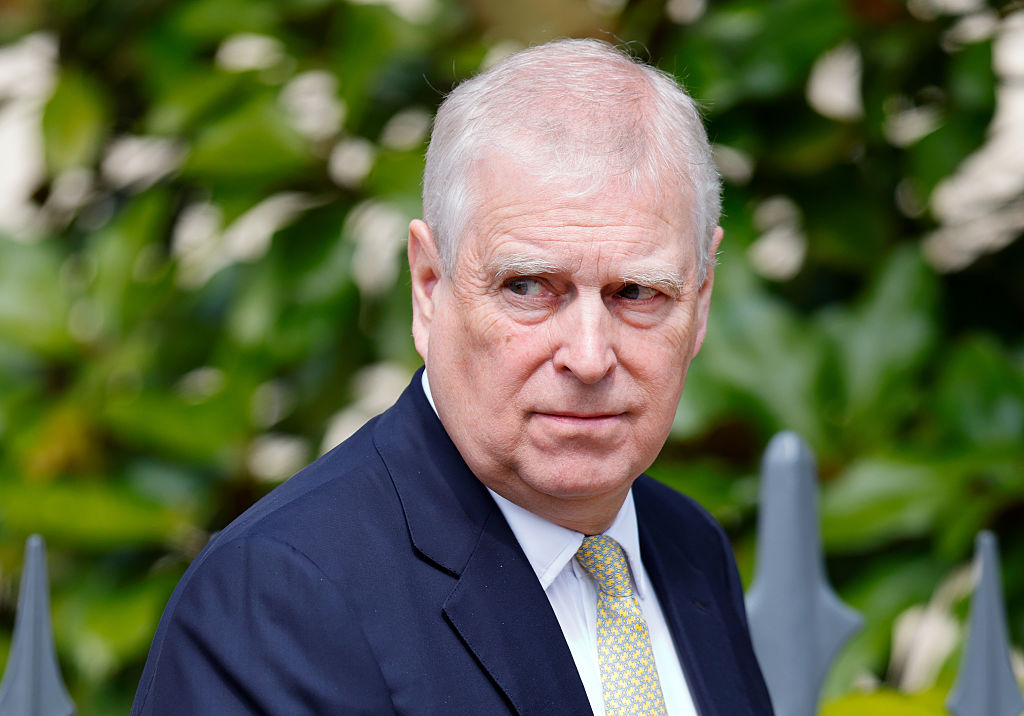
A National Audit Office report said Mountbatten-Windsor had received income from renting out three cottages on the Royal Lodge estate, his former home near Windsor Castle.
A National Audit Office report said Mountbatten-Windsor had received income from renting out three cottages on the Royal Lodge estate, his former home near Windsor Castle.
BANGKOK — Seven hundred days after activists from the environmental group Mother Nature Cambodia were imprisoned on charges widely regarded as retaliatory for their activism, 73 international and Cambodian civil society organizations have renewed calls for their unconditional release. After a trial lasting just over a month, 10 activists from Mother Nature Cambodia were sentenced on July 2, 2024, to between six and eight years in prison. Only five of the defendants attended the hearings, which saw Long Kuntha, 28, Ly Chandaravuth, 26, Phuon Keoraksmey, 25, and Thun Ratha, 34, each sentenced to six years behind bars for plotting against the government; fellow activist Yim Leanghy, 36, received an eight-year sentence for both plotting against the government and insulting the king. The five activists who did not attend the trial were sentenced in absentia. The appeals hearing for all 10 convicted activists was slated to take place on June 2, but has been postponed indefinitely by the Phnom Penh Court of Appeals. “The MNC5 are incarcerated in prisons in overcrowded and harsh living conditions, separated from each other and spread out all across Cambodia, hundreds of kilometers away from their families and legal counsel,” wrote the 73 NGOs in an open letter addressed to Prime Minister Hun Manet. “The … NGOs who have signed this letter sincerely request you take immediate action to ensure the unjust convictions of these five activists are reversed either prior to or at their upcoming appeals court hearing in Phnom Penh, and that their freedom…This article was originally published on Mongabay
Many of the games are taking places in cities with high temperatures and humidity, such as Guadalajara and Monterrey, Mexico, as well as Los Angeles, New York and Atlanta.
Many of the games are taking places in cities with high temperatures and humidity, such as Guadalajara and Monterrey, Mexico, as well as Los Angeles, New York and Atlanta.
The Sherpa man was spotted by a cleaning crew crawling down Mount Everest's snow-capped slopes a week after he went missing as was presumed dead by his family.
The Sherpa man was spotted by a cleaning crew crawling down Mount Everest's snow-capped slopes a week after he went missing as was presumed dead by his family.
Incidente senza passeggeri a bordo per un aereo Lufthansa all’aeroporto di Francoforte, dove il carrello anteriore di un Boeing 787-9 Dreamliner ha ceduto mentre il velivolo si trovava fermo al gate. Le immagini diffuse sui social media mostrano il muso dell’aereo abbassarsi improvvisamente fino a toccare il suolo, lasciando il velivolo inclinato in prossimità dell’area di imbarco. Il gestore aeroportuale Fraport ha confermato il “guasto” che ha coinvolto un aereo della compagnia tedesca. Secondo quanto riportato, al momento dell’incidente non erano presenti passeggeri a bordo. Lufthansa ha fatto sapere di aver attivato un’unità di crisi per chiarire le cause dell’accaduto. L’aereo coinvolto è un Boeing 787-9 consegnato alla compagnia solo all’inizio dell’anno. Le immagini mostrano danni visibili al Dreamliner, identificato con la sigla D-ABPQ. A seguito dell’incidente è stato cancellato il volo LH450 diretto a Los Angeles previsto per oggi.
“Il carrello di atterraggio anteriore dell’aereo si è ripiegato inaspettatamente mentre era parcheggiato”, ha dichiarato un portavoce di Lufthansa alla Dpa. Al momento dell’incidente, a bordo si trovavano membri dell’equipaggio e personale di terra, ha aggiunto il portavoce. “Diversi dipendenti sono rimasti feriti e stanno ricevendo cure mediche”. Le foto mostrano il Boeing, che prende il nome dalla città tedesca di Herne, adagiato sul piazzale del terminal con il carrello di atterraggio ripiegato. Il velivolo stato costruito nel 2025 ed è entrato in servizio solo nel febbraio 2026. Il Boeing può ospitare fino a 440 passeggeri in tre classi e ha un’autonomia di circa 15.000 chilometri. Secondo Bild, il carrello di atterraggio del 787 Dreamliner è prodotto da Safran Landing Systems. È composto da due unità principali del carrello di atterraggio, ciascuna con quattro ruote, e da un carrello anteriore a due ruote. Non è ancora chiaro se l’incidente sia stato causato da un errore umano o da un guasto tecnico.

 Login
Login