In 2018, when the Democratic Republic of the Congo (DRC) experienced a severe Ebola outbreak, more than 30 experts from the Centers for Disease Control and Prevention (CDC), close to 20 disaster-response specialists from the U.S. Agency for International Development (USAID), and 120 additional USAID staff were on the ground attempting to manage the outbreak, according to estimates from Friends of USAID, an advocacy organization mainly made up of ex-USAID staffers. With that level of staffing in 2018, by and large, they succeeded in limiting the extent to which the disease spread.
This year, as a particularly virulent strain of the Ebola virus — the Bundibugyo strain, against which there is no approved vaccine and for which there are no medicinal cures — runs rampant in the Democratic Republic of the Congo, Friends of USAID estimate there is only one CDC staffer on the ground there, along with five additional State Department personnel. There are of course no USAID workers present, since the Trump administration dismantled USAID during the purges led by the so-called “Department of Government Efficiency” (DOGE) in 2025, summarily firing local health care contractors around the world, including in countries with extreme poverty rates such as the Democratic Republic of the Congo.
The consequences have already been devastating. In past Ebola outbreaks, even before mass testing of disease victims got underway, the CDC and USAID were able to tell when an epidemic was picking up steam based on on-the-ground medical observations and data about excess mortality figures. And, in response, they were able to position medical resources effectively.
In the current outbreak, the decimated remnants of the CDC were caught unawares, only finding out about the outbreak once hundreds, and possibly thousands, of people had already been infected — thus making it far more likely that this outbreak will prove particularly difficult to corral.
Because so many experts have been fired over the past 16 months, and because political overseers have been limiting what the remaining scientists can say and write, “the CDC is not really functional anymore,” Angela Rasmussen, professor of virology at the University of Saskatchewan in Canada, told Truthout. Rasmussen, who also serves as science chair for the Save America Movement, a nonpartisan organization that works to stop ongoing assaults on public health, added that the administration was no longer bothering to consult remaining CDC experts when making policy to respond to the outbreak. “It used to be an evidence-driven process and now it’s a political-driven process,” Rasmussen said.
“I equate it to having the mayor’s office taking on a fire without having a fire department or a fire hose,” Demetre Daskalakis, former director of the CDC’s National Center for Immunization and Respiratory Diseases, told Truthout. Daskalakis, who resigned last August because he was so concerned about the direction that the Department of Health and Human Services was taking under Robert F. Kennedy Jr.’s leadership, says that when faced with grave public health challenges, the administration is simply resorting to “a lot of posturing, with, I think, bad consequences.”
I equate it to having the mayor’s office taking on a fire without having a fire department or a fire hose.
Faced with the twin public health emergencies of the Ebola virus outbreak in the Democratic Republic of the Congo and Uganda, alongside the hantavirus outbreak on a cruise ship from which people disembarked to the four corners of the Earth, the Trump administration’s response has been, at best, ad hoc. Instead of implementing expert-driven protocols, it has leaned on its nativist instincts to simply attempt to lock the virus out. That attempt proved a colossal failure during the early days of the COVID-19 pandemic. And, according to Rasmussen and Daskalakis, the signs are not auspicious for it being a successful strategy against the global health crises of 2026.
For U.S. residents exposed to hantavirus, the Trump administration has ordered mandatory 42-day quarantines in a secure facility in Omaha, Nebraska — despite the fact that experts say the virus doesn’t spread easily and that home quarantine would be just as effective. For U.S. residents exposed to the Ebola virus in Africa, the response has been to refuse them entry back into the United States and to instead have them isolated and, if need be, treated in Kenya — a situation that Rasmussen and other experts say makes little sense given the huge investments made over the past decade in secure biocontainment units in the U.S. “They’re throwing evidence-based risk assessment out the window, and are trampling people’s 14th Amendment rights,” Rasmussen told Truthout. “If we’re going to take Americans’ freedom away, there should be a real basis for that — and there’s not.”
It took so long for the CDC to say anything about hantavirus or to hear from the DRC about Ebola. Relationships that took decades to build have simply disappeared.
Telling people in the U.S. that if they get exposed to the Ebola virus, they won’t be allowed back into their home country for months is, experts believe, a surefire way to discourage U.S. doctors and public health professionals from heading to Africa to try to contain the outbreak. In other words, it is a strategy all but guaranteed to make a bad situation worse.
At the same time, African victims of the disease, who could certainly benefit from access to the treatment center being established in Kenya, are being deliberately excluded from it. “There’s an equity issue,” Daskalakis says of this policy. This, too, will end up hurting public health, as the Ebola patients denied access to the Kenyan facility will, in all likelihood, end up spreading the disease further in their communities or in poorly resourced medical facilities to which some eventually may turn.
Aryn Backus, a CDC employee who has been on administrative leave for more than a year since her job was targeted by DOGE, and who is now deputy executive director of the National Public Health Coalition, told Truthout that the ham-handed U.S. response to the outbreak overseas makes it more likely that the disease will ultimately find its way to the United States. “Diseases don’t understand borders,” she said. And, without detailed international coordination, the likelihood of their spreading far and wide grows.
“We are seemingly not at the table anymore,” Daskalakis added, as he detailed the myriad ways that the U.S.’s role as global public health leader has been corroded. “It took so long for the CDC to say anything about hantavirus or to hear from the DRC about Ebola. Relationships that took decades to build have simply disappeared.”
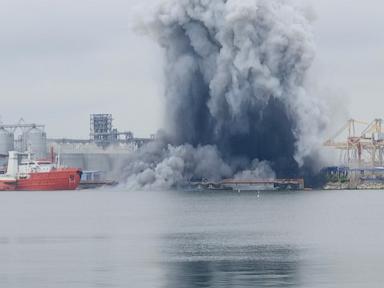
A Ukrainian maritime drone has exploded at a Black Sea port in Romania, with three others self-detonating outside the port, according to Romanian authorities
A lawyer has told an Australian court that a woman accused of enslaving a Yazidi teenager in Syria would agree to electronic monitoring and religious counseling if she were freed on bail
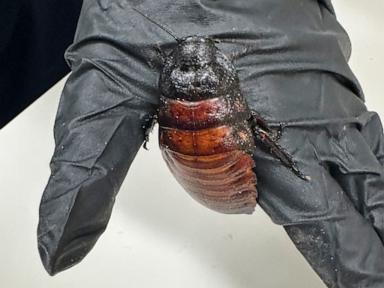
Australian officials say they confiscated more than 100,000 illegal live cockroaches from a breeder in May in the country's largest-ever seizure of exotic invertebrates
May 29 - June 5, 2026
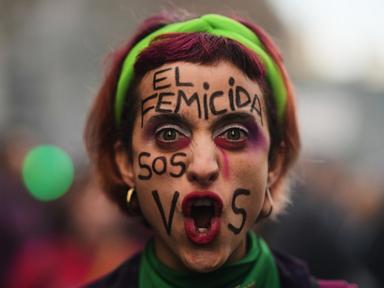
Thousands protested femicide in Buenos Aires, Argentina. Seniors called for better health and pension conditions in the Venezuelan capital, Caracas. Teachers demanded higher pay in Mexico City and students in Chile clashed with police during protests against proposed cuts to the education budget.
Colombians voted in the first round of a presidential election, while Peruvians prepared for a runoff. Mexico geared up to host the 2026 FIFA World Cup.
This gallery was curated by photojournalist Marco Ugarte based in Mexico City.
___
AP photography: https://apnews.com/photography
AP News on Instagram: https://www.instagram.com/apnews
This story originally appeared in Common Dreams on June 03, 2026.It is shared here under a Creative Commons (CC BY-NC-ND 3.0) license.
Raucous applause erupted in the House of Representatives on Wednesday after US lawmakers passed a war powers resolution aimed at ending Donald Trump’s illegal war of choice against Iran—although skeptics cautioned that the measure will likely have little impact on the actions of a president who has habitually shown utter contempt for the rule of law.
House lawmakers voted 215-208, with 7 legislators not voting, in favor of H.Con.Res.86, introduced in April by Rep. Gregory Meeks (D-NY) and cosponsored by Reps. James Himes (D-Conn.), Adam Smith (D-Wash.), Gabe Amo (D-RI), Maggie Goodlander (D-NH), and Thomas Massie (R-Ky.).
Every Democrat present voted for the resolution, while three Republicans—Reps. Tom Barrett (Mich.), Warren Davidson (Ohio), and Brian Fitzpatrick (Pa.)—broke ranks with their GOP colleagues and joined Massie in voting to approve the measure, which directs Trump to “remove United States armed forces from hostilities with Iran.”
“We are trapped in a war that won’t end because an incompetent president launched it thinking of only his own ego while failing to prepare for the consequences,” Meeks, the ranking member on the House Foreign Affairs Committee, said during floor debate ahead of Wednesday’s vote. “Diplomacy is the only exit from this, not more bombing, not more bluster.”
The War Powers Resolution of 1973—also known as the War Powers Act—requires the president to notify Congress within 48 hours of committing troops to military action and limiting such action to 60 days, with a 30-day withdrawal period, unless lawmakers declare war or issue an authorization for the use of military force.
It’s been 95 days since the US and Israel launched their war on Iran, which followed last summer’s separate bombing campaigns by both allies. Since then, more than 3,400 Iranians—many of them civilians—have been killed and over 26,000 others wounded by airstrikes, while Iranian counterattacks have killed 13 US troops, 26 Israelis, and over 20 people in Gulf Arab states aligned with the US.
House lawmakers had tried and failed to pass Iran war powers resolutions on three previous occasions. Last month, after four US SenateRepublicanshelped Democrats advance one of the resolutions, GOP leadership in the House canceled two subsequent votes on the measure.
“Since President Trump’s illegal war of choice on Iran began, I have been extremely clear over and over again that Congress alone has the power to declare war,” Rep. Pramila Jayapal (D-Wash.)—who did not vote Wednesday because she was in India due to a family health emergency—said in a statement. “This war has had disastrous effects for the American people and for the world in the nearly 100 days since Trump began it without congressional approval.”
Jayapal continued:
“Waged with absolutely no imminent threat and no endgame, this war has already killed 13 US service members and injured many more; killed thousands of civilians in Iran and Lebanon, and displaced millions more; wasted billions in US taxpayer dollars that should have been spent on lowering healthcare and housing costs for Americans; and all while causing gas prices and grocery costs to skyrocket.
“The simple truth is that the American people are paying the price for Trump’s lawlessness,” Jayapal added. “Every day that this war continues is a violation of our Constitution.”
The House just passed the Iran War Powers Resolution 215 to 208. We should have done it 2 months ago when @RepThomasMassie and I proposed it. But now we are finally closer to bringing this disastrous war to an end. pic.twitter.com/sFJbUvMqxV
Rep. Yvette Clarke (D-NY) asserted that “our victory—while monumental—does not change the truth that this war never should have began, and never would have began, had the president not disgraced America and our laws to ensure that it did.”
Rep. Mark Pocan (D-Wis.) said on social media: “The American people are tired of presidents abusing their power by spending billions of our taxpayer dollars on unnecessary wars. I urge the Senate to quickly pass this bill to end Trump’s illegal war in Iran.”
Civil society groups opposed to the war applauded Wednesday’s vote, which Medea Benjamin, co-founder of the peace group CodePink, called a “total rebuke of Trump.”
People power works. ✊
The House just passed a War Powers Resolution opposing Trump’s unauthorized war with Iran. A major rebuke to another endless war fought without congressional approval.
This victory didn’t happen by accident. It happened because people across the country… pic.twitter.com/bZ5b0RBoT3
“After 95 days of illegal war, Congress is finally enacting the will of the people, who overwhelmingly oppose President Trump’s disastrous war on Iran,” Eric Eikenberry, government relations director at Win Without War, said in a statement.
“While congressional action is welcome, it is woefully late. Congress should not have taken over three months to pass a resolution that would force Trump to end this war,” he continued. “Their delay has left millions of people struggling amidst unnecessary, unacceptable human and economic consequences.”
“Lawmakers who’ve placed their loyalty to Trump over acting to determine when and whether the United States goes to war have failed both their constituents and their constitutional duty,” Eikenberry added.
At long last, Congress has remembered its constitutional duty in matters of war and peace. It is good news for our Constitution that both chambers have now voted to invoke the War Powers Resolution and halt Trump's reckless, illegal, and unconstitutional war against Iran. https://t.co/2lTIgBuLcD
— Defending Rights & Dissent (@RightsDissent) June 3, 2026
Naveed Shah, political director of the veterans’ group Common Defense, said following the vote, “Veterans understand the costs of war better than most Americans, which is why we commend the Republicans who joined Democrats on this vote and showed the kind of courage and independence this moment demands.”
“This was an important step toward ending a dangerous war and ensuring that the American people have a voice through their elected representatives,” Shah added. “It is long past time to put guardrails on this brazen president, who launched us into an illegal war with Iran.”
Alix Fraser, vice president of advocacy at Issue One, a group dedicated to reducing the role of money in politics, said in a statement that “today’s vote is a huge win for the Constitution and for the American people.”
“The House finally had the political willpower to stand up to the president’s unconstitutional war,” Fraser added. “Americans should celebrate this massive victory, but have every right to feel frustrated that it took this long for Congress to work on behalf of the people. That must change. Our democracy will not survive if Congress fails to uphold its responsibility to check executive power at this critical juncture.”
“Every day that this war continues is a violation of our Constitution.”
Some observers noted that Wednesday’s vote is likely to be largely symbolic, pointing to Trump’s veto—and the Senate’s failure to overturn it—of a 2019 bipartisan war powers resolution directing him to end US military support for the Saudi-led war in Yemen.
Still, lawmakers and advocates urged the Senate to pass the Iran resolution to uphold the rule of law and force Trump’s hand.
“Ending this war is a moral imperative,” said Rep. Don Beyer (D-Va.).
Rep. Ayanna Pressley (D-Mass.) implored upper chamber lawmakers to “immediately follow suit and act to end this war.”
Rep. Melanie Stansbury (D-NM) posted on Bluesky: “Now it’s time to pass the Senate. The power to declare war has been with Congress. Now let’s get it done and end this war!”
Benjamin said: “Now it’s time for the Senate to act. Let’s keep the pressure on and send this resolution to Trump’s desk. No more illegal wars. No more blank checks for militarism.”
The U.N. nuclear watchdog has been unable to inspect nuclear facilities in Iran affected by the war last June, according to a confidential report by the U.N. nuclear watchdog
Authorities in Jamaica have charged a police officer with murder after he was accused of fatally shooting a 45-year-old woman in a case that has riled the island
 Login
Login