Ukrainian President Volodymyr Zelenskyy has written an open letter to his Russian counterpart Vladimir Putin, urging him to attend a meeting between the two leaders at a neutral location to agree an end to the war.
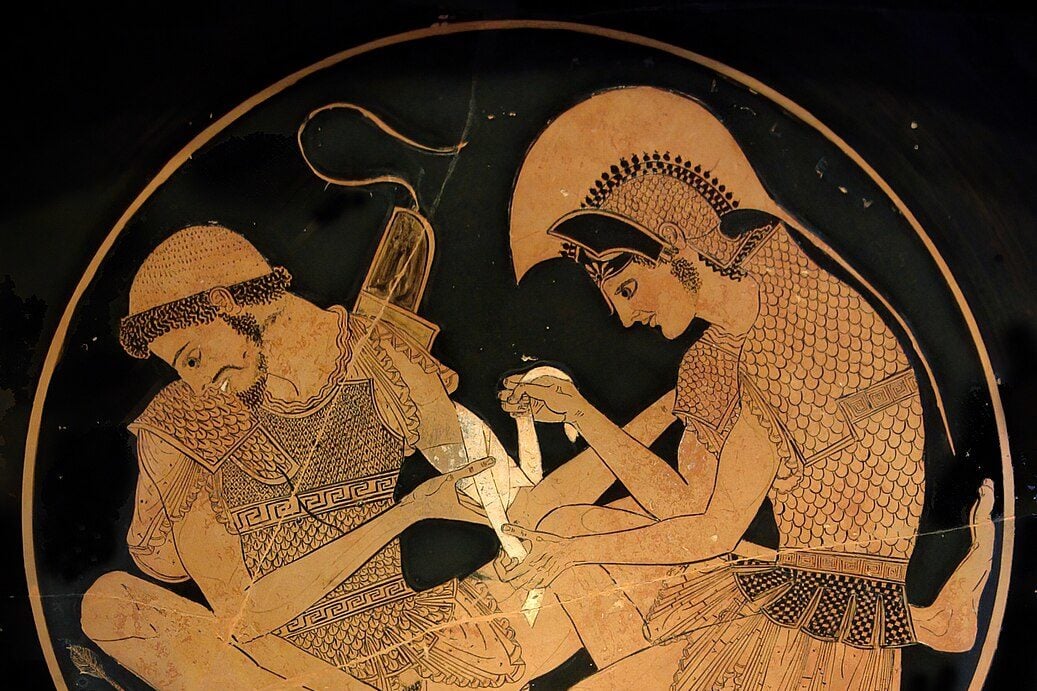
Ancient Greeks and Romans used spiderwebs in medicine, believing their natural fibers could stop bleeding and protect wounds from infection. Credit: Wikimedia Commons, public domain
Among the most intriguing practices in Ancient Greek medicine was the use of spiderwebs—and even live spiders—in healing treatments. Ancient medicine often surprises modern readers with remedies that seem unusual at first glance, yet many of these traditional approaches contained a practical logic beneath layers of symbolism and inherited belief.
Greek and Roman physicians placed particular emphasis on controlling bleeding, especially in the context of warfare and surgery. Soldiers frequently sustained deep wounds from swords, spears, and arrows, while physicians had no access to modern antiseptics or advanced surgical instruments. In response, healers continuously experimented with natural materials that could help stop blood flow and protect exposed tissue. One of the more unusual solutions they turned to was spiderwebs.
Ancient Greek and Roman medical writers do, in fact, refer to the use of spiderwebs in medicine. Spider silk was observed to have properties that made it unexpectedly effective for wound care. Physicians noted its ability to absorb blood, cover injuries, and support the clotting process. While they lacked any understanding of modern biochemistry, their meticulous attention to such effects often led them to surprisingly effective medical practices.
Pliny the Elder and natural remedies, such as the use of spiderwebs, in the medicine of Ancient Greece and Rome
The Roman author Pliny the Elder offers some of the clearest references to spider-based medicine in his encyclopedic work Natural History. He describes a range of remedies involving both spiderwebs and actual spiders, noting that the former could help stop bleeding and support healing when applied directly to wounds. He also made mention that spiders were believed to serve as effective remedies for a variety of diseases and injuries in antiquity.
For Ancient Greek healers, spiderwebs appeared naturally suited for wound treatment. Their soft, fibrous texture allowed them to cover cuts with ease, while their adhesive qualities helped seal damaged tissue and protect it. Ancient warfare produced particularly severe injuries. Greek hoplites and Roman soldiers fought in brutal close combat, where swords and spears regularly tore flesh open. Even relatively minor wounds could turn fatal due to blood loss or infection. Physicians accompanying armies therefore required treatments that acted quickly and could be easily carried onto the battlefield.
The use of spiderwebs among the Ancient Romans and Greeks provided several practical advantages in medicine. They were lightweight, widely available in nature, and naturally adhesive when applied to skin. Healers thus collected cobwebs and preserved them for medical use, and soldiers are sometimes described as carrying small containers filled with spiderwebs during military campaigns.
Long before the development of modern antibiotics, healers frequently relied on natural substances that appeared to reduce infection risk and support faster healing.
Galen and Ancient Greek traditions in medicine
The great Greek physician Galen likewise discussed spider cobwebs in his work On the Powers of Simple Remedies in which he refers to their Ancient Greek medicinal applications in the treatment of injuries and the control of bleeding. Because gladiators suffered frequent injuries, Galen gained extensive experience treating wounds and preventing infection. Greek medicine placed strong emphasis on observation and practical effectiveness, so physicians often tested remedies repeatedly under real and demanding conditions.
This connection makes historical sense. Ancient doctors valued materials that combined absorbency, flexibility, and ease of application. Spider silk possessed all three qualities. Furthermore, physicians in antiquity often preferred natural substances that were readily available in military environments, where medical resources were limited.
Modern science helps explain why ancient healers valued spiderwebs. Spider silk is composed of strong protein fibers capable of forming protective coverings over wounds. The silk also absorbs moisture effectively and creates a temporary barrier against dirt and contaminants. Additionally, spiderwebs may exhibit mild antiseptic properties due to natural compounds present within the silk. Although ancient physicians could not observe bacteria, they recognized through experience that some treatments reduced infection more effectively than others.
Many people also associate spiderwebs with clotting because webs can contain traces of vitamin K from insect remains and environmental material. Vitamin K is a nutrient that contributes to blood coagulation in the human body. Most importantly, however, the web itself functions physically as a mesh. When pressed against a wound, the fibers help gather blood and support clot formation.
Modern medicine even studies spider silk for advanced surgical materials due to its exceptional strength and biocompatibility. Ironically, contemporary science now investigates properties that ancient healers observed intuitively thousands of years ago. Thus, ancient healers may have developed practical wound-care techniques through centuries of observation rather than theoretical science.
Galen, the pioneering Greek physician who influenced Western medicine through the 1700s. Portrait by Pierre-Roch Vigneron. Credit: Wikimedia Commons Public Domain
Ancient medicine and empirical knowledge
The use of spiderwebs highlights a central feature of ancient medicine, namely that Greek and Roman physicians often relied on empirical observation rather than formal scientific theory. They closely observed which remedies appeared effective and preserved those methods within medical tradition.
Greek physicians, in particular, placed great value on careful observation. The Hippocratic tradition encouraged doctors to study symptoms, environments, diets, and physical responses in detail. As a result, treatments survived not because they were theoretically justified but because they produced visible and consistent results. In this context, spiderwebs were valued because their silk fibers formed a natural covering over wounds while also helping to control blood flow. Folk medicine across many cultures likewise used cobwebs as anti-fungal and antiseptic remedies for cuts and open injuries.
Spiderwebs likely entered medical practice through precisely this kind of experiential process. Healers observed reduced bleeding and improved healing following their application, and over time, the practice spread across regions and generations. Cobwebs were part of a much broader landscape of natural medicine in antiquity. Ancient healers regularly used honey, wine, herbs, oils, vinegar, and minerals in wound care and general treatment.
Many of these substances also possessed genuine antibacterial or medicinal properties. Honey, for instance, inhibits bacterial growth and is still used in certain modern wound treatments. Wine and vinegar functioned as early disinfectants due to their alcohol and acid content. Within this framework, spiderwebs would not have seemed unusual to ancient physicians. Instead, they represented another readily available natural material with observable healing potential. Greek and Roman medicine thus consistently explored the relationship between nature and health, making use of natural resources, including even something so peculiar to modern eyes as spiderwebs.
Honey was used by the Ancient Greeks in medicine as well. Credit: The Drug Users Bible, CC BY SA, 2.0
The symbolic dimension of spiderwebs and their silk in Ancient Greece
Ancient cultures attached rich symbolic meaning to spiders and the act of weaving, and in Greek tradition, these associations carried particular weight. Mythology linked weaving to intelligence, fate, and skilled craftsmanship through figures such as Athena and Arachne, embedding it within a broader cultural framework that connected material creation with order, skill, and even divine influence. Spider silk itself likely appeared mysterious and almost otherworldly, given its delicate structure and surprising strength—qualities that blurred the boundary between natural substance and something almost magical.
This symbolic dimension may have reinforced confidence in cobweb-based remedies, since ancient medicine often operated at the intersection of practical treatment and cultural meaning. In battlefield contexts especially, where speed and improvisation were essential, surgeons had to remove arrows, close wounds, cauterize bleeding, and stabilize fractures under extreme conditions with limited equipment, relying heavily on whatever materials were immediately available. Spiderwebs fit this environment well, both practically and symbolically, as soldiers or assistants could gather them quickly from camps, caves, or buildings, requiring no preparation and allowing for rapid application under pressure.
Even when cobwebs were not perfectly effective, they could still provide a basic protective layer that was often better than leaving wounds exposed, which would have only allowed dirt and uncontrolled bleeding to pose immediate risks to survival. In many cases, this simple barrier alone may have made a meaningful difference in outcomes. Today, the same material that once carried symbolic and practical value in antiquity is again attracting scientific interest, as researchers explore spider silk for potential applications in surgery, tissue engineering, and regenerative medicine.
Latvia's eastern region of Latgale is adjusting to a new reality of air raid alerts after several drones crossed into the country's airspace in recent weeks. The warnings have raised concerns about safety in communities near the borders with Russia and Belarus.
Hungarian and Ukrainian diplomats reached a deal on Hungarian minority rights late on June 3, allowing Ukraine and Moldova to finally start de facto accession talks with the European Union later this month, after two years of Budapest vetoing this step under its previous government.
A number of European Union member states are pushing the European Commission to put forward legislation that makes it easier to deny tourist visas to Russian citizens over Moscow's full-scale invasion of Ukraine.
These wine sacks were favoured by nomads and travellers because they were lightweight, durable, and flexible. To prevent the wine from seeping through, the leather was traditionally lined with pine
Dass in der heutigen Ukraine ein Regime herrscht, das seine Wurzeln im deutschen Nationalsozialismus hat, ist keine russische Propaganda. Dass der Nazi-Kollaborateur Bandera in der Ukraine als Nationalheld verehrt und gefeiert wird, ist allgemein bekannt. Aber die Heldenverehrung umfasst noch weit mehr Kriegsverbrecher, die an der Seite der Nazis gekämpft und Massaker in der Zivilbevölkerung […]
Dass die Ukraine für ihre Drohnenangriffe auf die russische Region St. Petersburg die Lufträume Polens, der baltischen Staaten und Finnlands nutzt, ist längst kein Geheimnis mehr, wird im Westen offen zugegeben und war schon oft Thema auf dem Anti-Spiegel. Die Angriffe ukrainischer Drohnen der Nacht auf Mittwoch, bei denen zum ersten Mal auch Ziele in […]
As Russia struggles to replace soldiers being killed in high numbers in the fifth year of its full-scale invasion of Ukraine, these is mounting evidence of the military returning men to the war despite severe injuries and, sometimes, medical findings saying they are not fit for further service.
Am 22. Mai hat die Ukraine in der Ortschaft Starobelsk im Gebiet Lugansk das Schülerwohnheim einer Berufsschule angegriffen, in der Erzieher ausgebildet werden. Dabei wurden 21 junge Menschen, zumeist Mädchen, getötet und fast 50, zum Teil Minderjährige, verletzt. Da der Westen das ukrainische Kriegsverbrechen bestritten hat und da die Ukraine behauptet, es habe sich dabei […]
Russian military vehicles painted in patterns resembling WWI-era dazzle camouflage can potentially hide them from Ukrainian drones, but AI experts say any vivid pattern has a short shelf life.
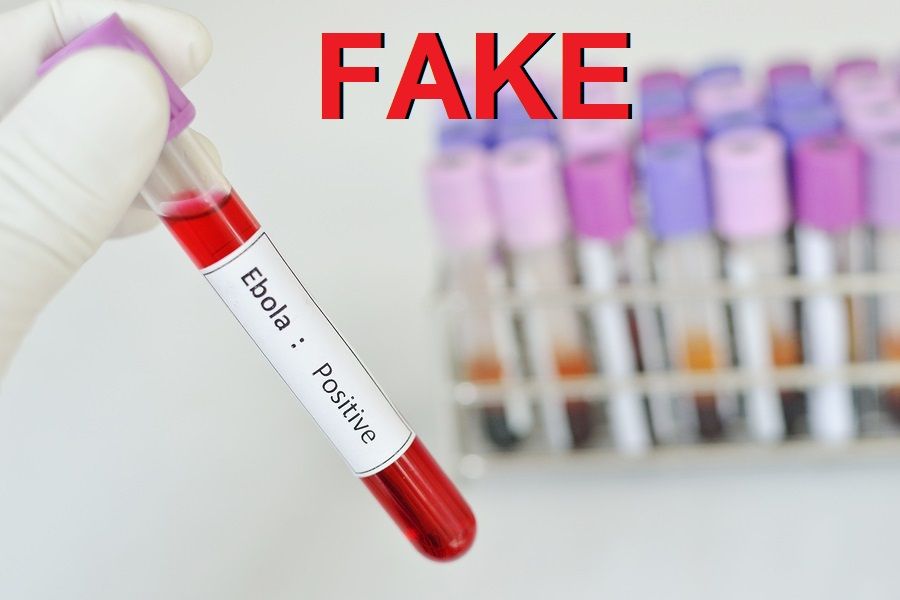
Efforts to create enough fear over new strains of the mythical COVID “virus” have been largely ineffective by the Pharmaceutical Cartel, so they are rolling out a re-run of another fake virus, the “dreaded Ebola virus” in a lame effort to create fear and roll out new vaccines and products.
Their most successful attempt to sow fear into the American public over a mythical Ebola “virus” was in 2014, over a decade ago. We covered it then, and if you search for “ebola” on Health Impact News, you will get a search result of over 100 articles.
Who could forget this scary picture of a nurse returning from Africa who was treating Ebola patients as then NJ Governor Chris Christie forced her to be locked up like a caged animal for 21 days?
New Jersey Governor Chris Christie forced a nurse returning from Africa where she was treating Ebola patients to be quarantined like a prisoner for 21 days back in 2014, even though she had no symptoms and posed no danger to the public according to medical experts. She lived in a tent with no running water. Story here.
This fear was used during the Obama Administration to roll out new CDC rules for quarantine, and began laying the groundwork for a future “pandemic” that we all know now was the COVID scam of 2020:
Dr. Cyril Broderick, a Liberian scientist and professor, penned an editorial piece about the African’s perspective of the cause of Ebola back then in 2014, and it is probably just as true today as it was 12 years ago when we published it.
He does start from the premise that there is an actual pathogen, but that it was created by the U.S. military.
I have read a number of articles from your Internet outreach as well as articles from other sources about the casualties in Liberia and other West African countries about the human devastation caused by the Ebola virus.
About a week ago, I read an article published in the Internet news summary publication of the Friends of Liberia that said that there was an agreement that the initiation of the Ebola outbreak in West Africa was due to the contact of a two-year old child with bats that had flown in from the Congo.
That report made me disconcerted with the reporting about Ebola, and it stimulated a response to the “Friends of Liberia,” saying that African people are not ignorant and gullible, as is being implicated.
A response from Dr. Verlon Stone said that the article was not theirs, and that “Friends of Liberia” was simply providing a service. He then asked if he could publish my letter in their Internet forum.
I gave my permission, but I have not seen it published.
Because of the widespread loss of life, fear, physiological trauma, and despair among Liberians and other West African citizens, it is incumbent that I make a contribution to the resolution of this devastating situation, which may continue to recur, if it is not properly and adequately confronted.
I will address the situation in five (5) points:
1. EBOLA IS A GENETICALLY MODIFIED ORGANISM (GMO)
2. EBOLA HAS A TERRIBLE HISTORY, AND TESTING HAS BEEN SECRETLY TAKING PLACE IN AFRICA
3. SITES AROUND AFRICA, AND IN WEST AFRICA, HAVE OVER THE YEARS BEEN SET UP FOR TESTING EMERGING DISEASES, ESPECIALLY EBOLA
4. THE NEED FOR LEGAL ACTION TO OBTAIN REDRESS FOR DAMAGES INCURRED DUE TO THE PERPETUATION OF INJUSTICE IN THE DEATH, INJURY AND TRAUMA IMPOSED ON LIBERIANS AND OTHER AFRICANS BY THE EBOLA AND OTHER DISEASE AGENTS.
5. AFRICAN LEADERS AND AFRICAN COUNTRIES NEED TO TAKE THE LEAD IN DEFENDING BABIES, CHILDREN, AFRICAN WOMEN, AFRICAN MEN, AND THE ELDERLY. THESE CITIZENS DO NOT DESERVE TO BE USED AS GUINEA PIGS!
The term “seed oils” in recent times has become a negative term in the natural/organic food industry.
The term appears to have originated in 2018, and then became popular in 2020 after a Joe Rogan program with Paul Saladino. (Source.)
This term became even more popular last year, in 2025, when HHS Secretary Robert F. Kennedy made it a part of his “Make America Healthy Again” slogan.
Until recently, most Americans had never heard the term “seed oils,” even though they’ve likely cooked with and consumed them for decades.
It’s the catchy description coined by internet influencers, wellness gurus, and some politicians to refer to common cooking oils — think canola, soybean, and corn oil — that have long been staples in many home kitchens.
Those fiery critics refer to the top refined vegetable oils as “the hateful eight” and claim that they’re fueling inflammation and high rates of chronic diseases like obesity and diabetes.
Robert F. Kennedy Jr., the new health secretary, has said Americans are being “unknowingly poisoned” by seed oils and has called for fast-food restaurants to return to using beef tallow, or rendered animal fat, in their fryers instead.
What Are Seed Oils?
Simply put, they are oils extracted from plant seeds. They include eight commonly targeted by critics: canola, corn, cottonseed, grapeseed, soybean, sunflower, safflower, and rice bran. (Source.)
I totally agree with their “eight commonly targeted” seed oils of “canola, corn, cottonseed, grapeseed, soybean, sunflower, safflower, and rice bran” as being highly toxic, and unhealthy.
These polyunsatured oils have only been in the human food chain for a short time, since World War II when we developed expeller-pressed technology to extract oils from crops we never did before that time. They are not shelf stable, and need to be highly processed to make them so, which creates many health problems.
However, to state that these toxic oils should only be replaced with animal fats, such as beef tallow, is very short-sighted, because there are many seed oils that have been used to extract edible oils and that have nourished populations for thousands of years, which I will highlight in the rest of this article.
And while animal fats such as tallow and lard have also been used for thousands of years to nourish populations, the quality of those fats has to be considered based on how the animals have been raised.
If those fats are extracted from animals that are raised on CAFOs (confined animal feeding operations), where the animals never graze on grass and only eat animal feed derived from the very same seeds that make up the “seed oils” in the “dirty eight” that are condemned and are primarily GMOs full of herbicides and pesticides (corn and soy are the main ingredients in most cattle feeds), how healthy is the fat from these animals?
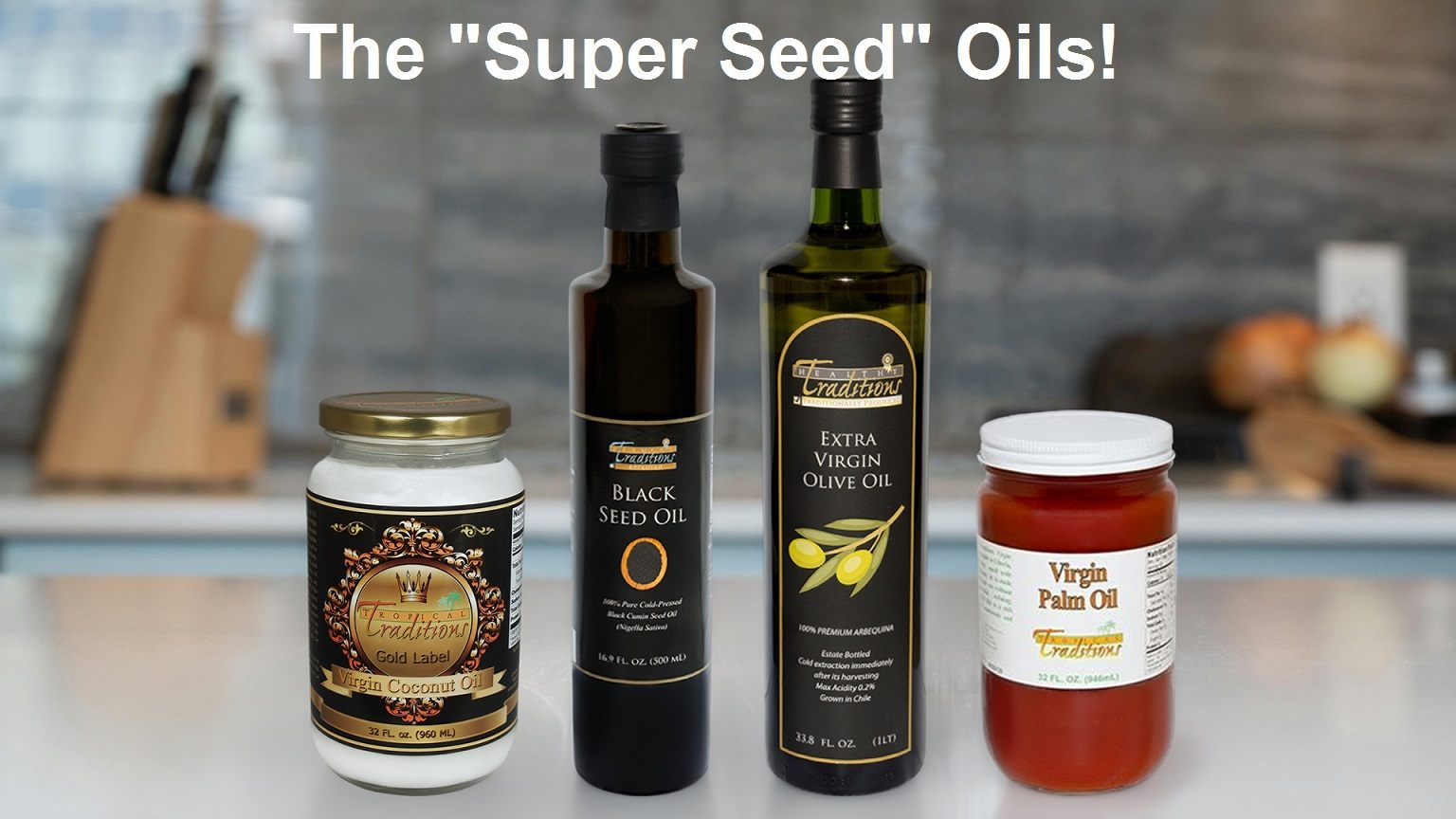
A far better alternative to animal fats from the American agricultural system are the “super seed” oils, which are not only safer and have nourished populations for thousands of years, they also contribute to your health and help your immune system fight diseases, proving what the father of the Hippocratic Oath once said: “Let food be your medicine.”
The Super Seed Oils
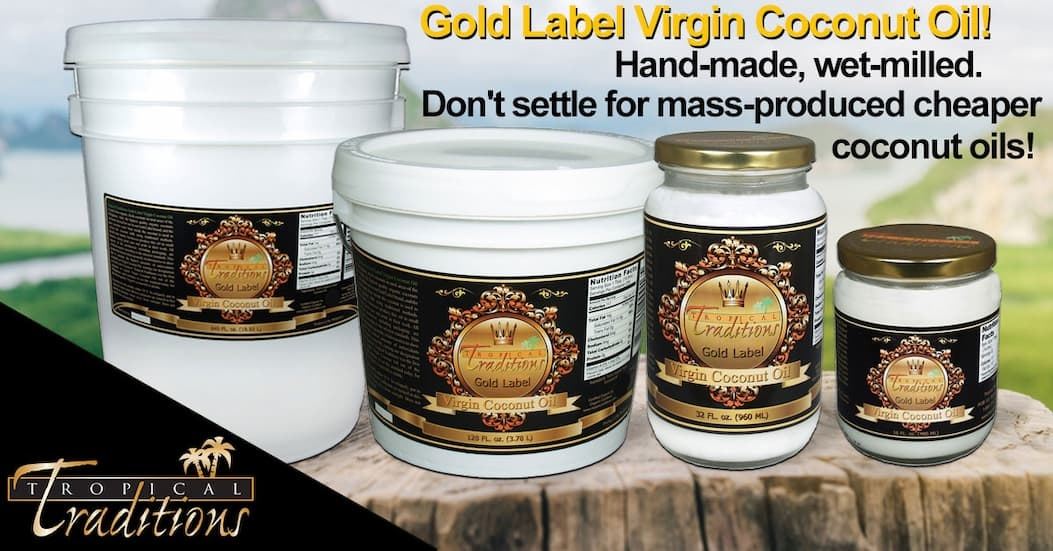
Coconut Oil
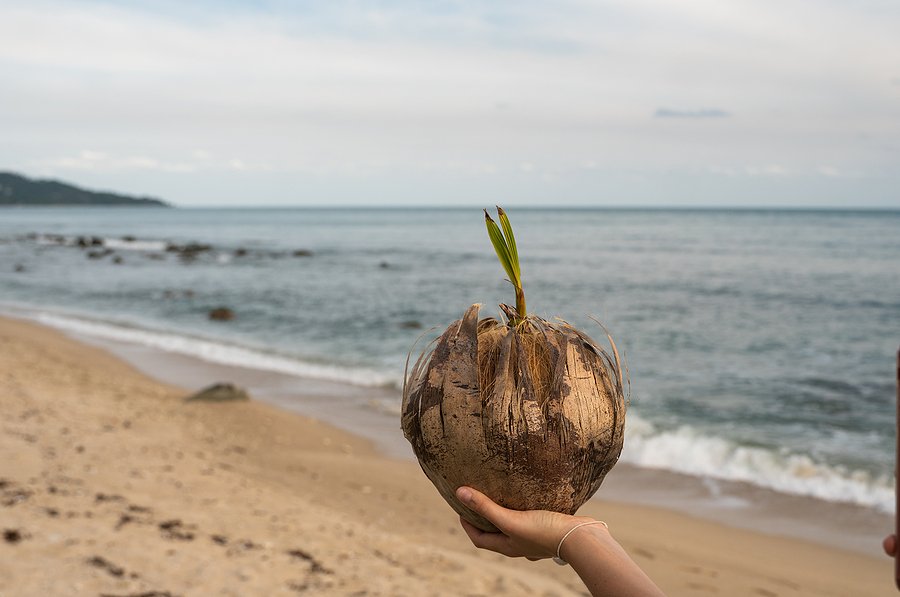
Coconuts are seeds. Coconut trees grow from coconuts that are planted into the ground.
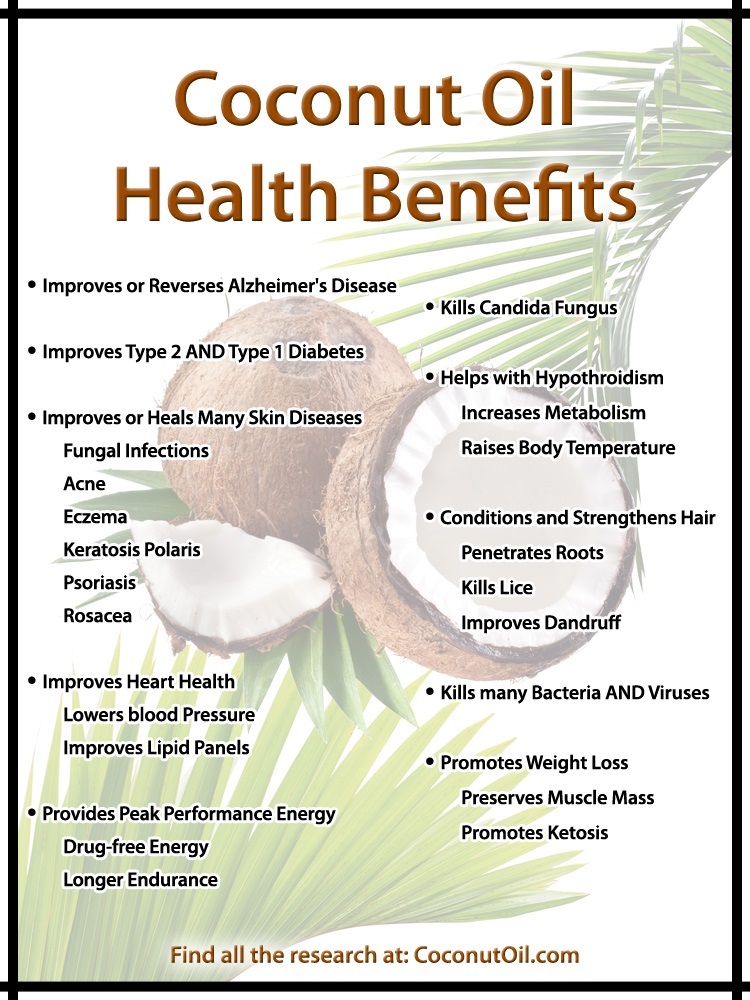
I have spent almost 30 years educating the public on the health benefits of coconut oil, after having lived in the Philippines for many years. I own the website CoconutOil.com, where you can review all the peer-reviewed research showing just how healthy coconut oil is.
When we came into the market in 2002 with the first “virgin coconut oil” imported into the U.S. from the Philippines, there was not a single grocery in the U.S. that sold coconut oil, because the U.S. Government for years, even up through today, lies to the American people and tells them that coconut oil is bad for them.
I decided to tell Americans the truth through the new communication medium called the “Internet” at that time, and today you can walk into any grocery store chain and buy coconut oil.
You’re welcome America. I paid a high price to bring that truth to you, and it almost cost me my life.
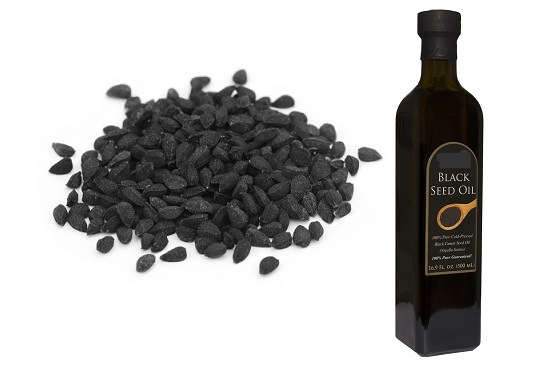
Black Cumin Seed Oil
The Muslim prophet is quoted as saying that Black Seeds and the oil from them are the “cure for everything except death“. It is not a dietary oil that is well-known in the U.S., but it is in the Middle East, and I sell it in my store, sourced from Turkey, a country I lived in for many years of my young adult life.
A search for “Black Seed Oil” on Health Impact News will turn up over 60 articles of research on the health benefits of this “seed oil.”
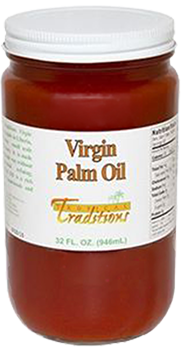
Virgin Palm Oil
Virgin Palm Oil, also known as “Red Palm Oil”, comes from the palm nut which is also a seed that will grow into a palm tree if planted.
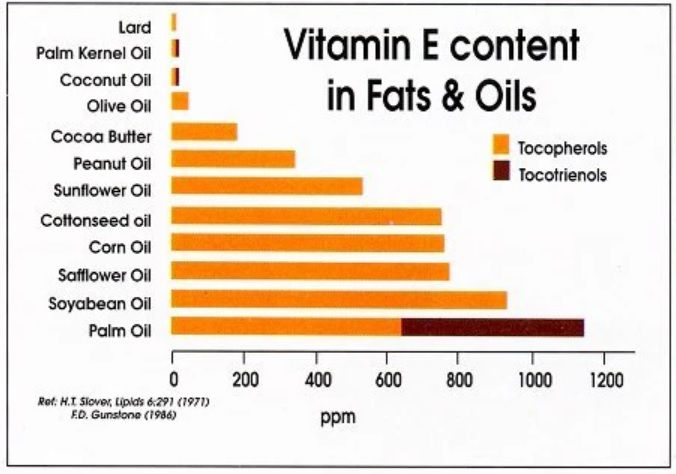
It probably has the highest concentration of antioxidants than any other plant oil, including the full range of carotenes (precursors to Vitamin A) and tocotrienols (Vitamin E).
Palm oil is the most consumed dietary oil in the world, outside of the U.S., where soybean oil is #1, although most of the palm oil consumed is not red palm oil, but a refined version.
Palm oil has received bad press in modern times, due to the destruction of rain forests in Sumatra to plant palm fruit trees. But palm fruit trees are not native to Southeast Asia, where mainly only huge plantations grow that need a constant supply of herbicides and pesticides to continue growing.
It is native to the tropical places in Africa, where they still consume it in its natural, unprocessed red form. The taste is strong, and the red oil can stain fabric, so it is not very popular in the U.S., accept among African populations and those who feed exotic, tropical birds who love it.
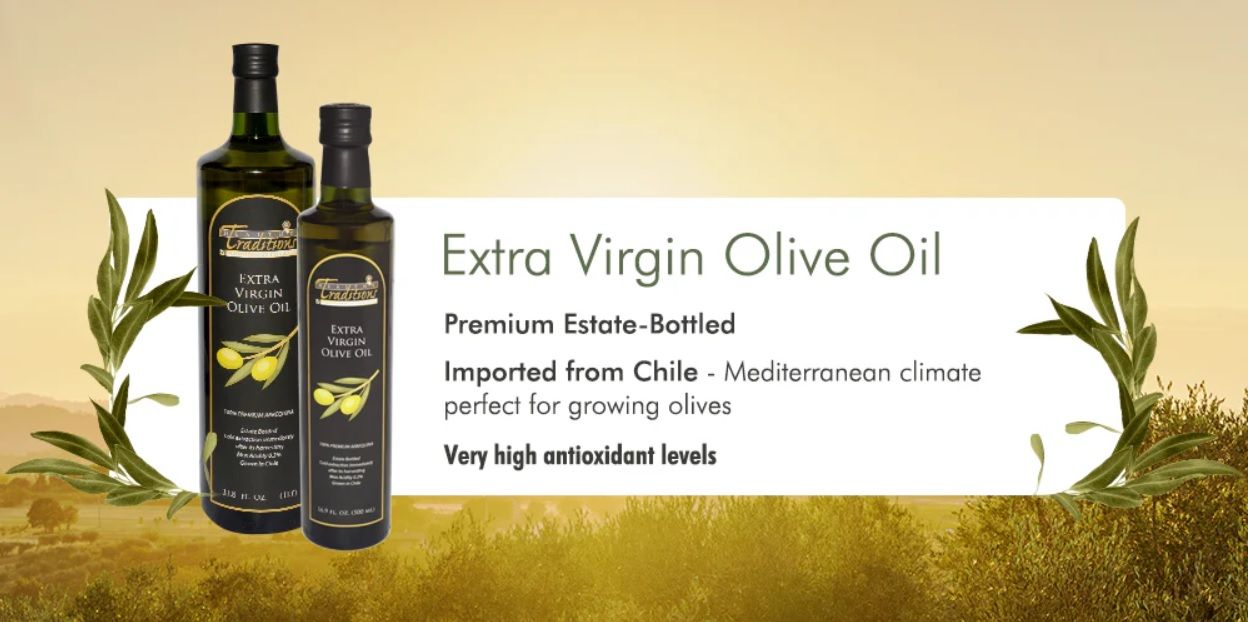
Since olive oil is so well-known in a positive way in the U.S., the new “seed oil” bashers were forced to call olives a “fruit” to try and get around their condemnation of all seed oils in favor of animal fats.
But guess what happens when you plant an olive? It grows into an olive tree. That makes it a “seed” by my definition of “seeds”.
If you search in PubMed for “olive oil cancer” you will get over 1,400 results, and they are not all related to cancer, but also includes autism, muscle health, and many other diseases that olive oil can help fight.
It is truly a “super seed oil”, and if it is “extra virgin” olive oil, it is so rich in antioxidants that it is perfectly fine to fry with, combating a common myth among Americans that olive oil should never be used to fry food.
The problem with that myth is that the Italians have been doing it for thousands of years. See:

 Login
Login