A operação, agora finalizada com a compra dos 49,9% que permaneciam nas mãos da TAP Air Portugal, foi aprovada pelo Tribunal de Contas e marca um novo capítulo na estratégia de expansão da multinacional britânica em Portugal.
Após ter adquirido uma posição maioritária de 50,1% em 2024, a Menzies passa a deter o controlo integral da SPdH, empresa responsável por mais de 100 mil movimentos de aeronaves por ano nos principais aeroportos do país — Lisboa, Porto, Faro, Funchal e Porto Santo. A companhia presta serviços de assistência em escala e carga aérea a várias transportadoras internacionais, desempenhando um papel central na operação aeroportuária portuguesa.
A decisão surge num momento em que o setor da aviação continua a recuperar e a adaptar-se a um contexto de crescente procura e exigência operacional. Com esta aquisição, a Menzies pretende acelerar a execução do seu plano estratégico em Portugal, apostando na modernização tecnológica e na qualificação dos seus mais de 3.500 trabalhadores no país.
“Este é um passo natural na nossa estratégia de longo prazo para Portugal”, afirmou Hassan El-Houry, chairman executivo da Menzies Aviation. “Ao assumirmos a totalidade do capital da empresa, reforçamos a nossa capacidade de investir, inovar e assegurar elevados padrões de serviço num mercado que consideramos estratégico.”
Também o CEO da empresa, Philipp Joeinig, sublinhou o impacto da operação na agilidade da gestão e na relação com clientes. “Esta aquisição permite-nos avançar com maior rapidez na implementação da nossa estratégia e reforça a nossa posição como parceiro de confiança das companhias aéreas e dos aeroportos em Portugal”, afirmou.
A multinacional, que opera em 347 localizações em mais de 65 países, vê no mercado português um ponto-chave para o seu crescimento europeu, num contexto em que o turismo e a conectividade aérea continuam a ser motores essenciais da economia nacional. A aposta reforçada na SPdH reflete, assim, uma visão de longo prazo para o setor, com foco na eficiência operacional, segurança e sustentabilidade.
Num setor altamente competitivo e dependente de infraestruturas críticas, o controlo total da operação em Portugal permite à Menzies alinhar decisões estratégicas e investimentos, num momento em que os aeroportos enfrentam desafios crescentes de capacidade e qualidade de serviço. A empresa assume agora a responsabilidade integral por uma das principais operadoras de assistência em escala no país, consolidando a sua posição como um dos maiores players globais do setor.
Sobre a Menzies Aviation
A Menzies Aviation é líder mundial de serviços para aeroportos e companhias aéreas operando em seis continentes, em mais de 347 aeroportos localizados em 65 países, prestando apoio a mais de 5,3 milhões de voos por ano e movimentando mais de 2,4 milhões de toneladas de carga.
Apoiando-se numa equipa de mais de 65.000 profissionais altamente qualificados, a empresa fornece serviços de assistência em escala complexos e críticos, incluindo serviços a passageiros, lounges e placa; serviços de carga aérea, incluindo assistência, armazenagem e agenciamento de carga; bem como serviços de combustível, incluindo gestão de parques de combustível e abastecimento de aeronaves.
A Menzies Aviation é amplamente reconhecida no setor pela prestação de serviços seguros e sustentáveis, adaptados às necessidades dos seus clientes, desempenhando um papel essencial para garantir a circulação contínua de passageiros, aeronaves e carga, 24 horas por dia, todos os dias do ano. Com sede em Londres, a Menzies Aviation tornou-se, desde a sua fundação em 1833, no maior grupo mundial de serviços de aviação em número de países, aeroportos e movimentos de aeronavesassistidos.
A truly bizarre series of events off the coast of Iran today that in my opinion were entirely provoked, if not staged, by the US. It started with multiple news reports that a US Army Apache helicopter had been shot down in the Persian Gulf but the two pilots emerged unscathed. What the hell was an Apache helicopter doing?
The AH-64 Apache is a twin-engine attack helicopter primarily designed for anti-armor warfare, close air support, and armed reconnaissance. Apparently it was conducting reconnaissance. The US claims that Iran shot it down, but Iran insists it did no such thing.
I am bothered by the claim it was shot down… If the rocket or bullets had hit the cockpit or damaged the main rotor, the craft would have plunged into the water and the pilots would not have survived. So what happened? Was one of the twin engines damaged but still able to function? Was the rear rotor damaged? Those are the only two scenarios I can imagine that would not have caused a catastrophic crash. Once the helo landed in the water, the pilots had to open the canopy and jump into the water. Hopefully the main rotor — assuming it was intact when the copter hit the water — shattered on impact. Otherwise, the pilots would have been shredded trying to escape.
Coincidentally with this crash, the NY Timespublished a story, written by David Sanger, discussing the state of US and Iranian negotiations over Iran’s nuclear program. Sanger wrote:
In the days before the latest flare-ups of violence in the Middle East, President Trump’s aides were negotiating with Tehran on four major elements of a nuclear agreement that U.S. officials contend would grind the program to a halt for 15 years or so. . . .
According to the officials and diplomats, here are the four major points of negotiation on a nuclear agreement between the United States and Iran:
1. A lengthy suspension of uranium enrichment
The United States has demanded for months that Iran agree to conduct no uranium enrichment for at least 20 years. The Iranians have countered by offering a 10-year halt, but American officials believe they will settle for 15 years.
2. Iran’s current stockpile of enriched uranium is diluted, or “downblended”
The United States would work with the International Atomic Energy Agency, the U.N. inspection body, to dilute, or “downblend,” Iran’s stockpile of enriched uranium, according to two American officials familiar with the negotiations. American officials envision an active role in handling the nuclear material, something Iran has always forbidden. Iranian officials say the United States would serve only as an observer. . . .
3. Iran dismantles its nuclear sites
The United States has demanded that Iran dismantle its three major nuclear sites at Natanz, Fordo and Isfahan. The United States struck all three in Operation Midnight Hammer nearly a year ago, severely damaging them. Iran has discussed dismantling two facilities but insists on leaving one open, in part to demonstrate it has not surrendered what it views as a “right to enrich.”. . .
4. Iran agrees to “snap” inspections
The United States wants international inspectors to be able to conduct “snap” inspections, anytime and anyplace inside Iran. It is not clear if the Iranian government will agree. As a practical matter, many of the suspect nuclear sites are inside Revolutionary Guards military bases, where inspectors have frequently been barred at the gates.
This summary represents the US position. I doubt the Iranians will agree to an end to all enrichment… They will likely insist on retaining the right to enrich up to 20% for medical isotopes. Dismantling Iranian nuclear sites is a non-starter. The IRGC will simply not accept such a condition. I think Iran will be willing to “downblend” the 60% enriched uranium it currently possesses but that will come with a price tag: immediate lifting of sanctions and the return of frozen assets. What about “Snap” Inspections? That will depend on the composition of the international inspectors. Iran has already been burned by the IAEA inspectors who reportedly collected intelligence on Iranian nuclear scientists and passed that information to Israeli and Western intelligence agencies. That information was used in June 2025 and in the current war to assassinate Iranian scientists.
While Pakistani sources who have access to the status and substance of the negotiations remain optimistic that a deal will be struck, I remain very skeptical. Beyond the nuclear items — which Iran says it refuses to discuss until the US lifts its blockade and there is a genuine ceasefire, which includes Lebanon and Gaza — I do not believe that Iran is going to compromise on its demands: lift sanctions, release frozen assets and recognize its joint-control over the Strait of Hormuz with Oman.
I think that today’s US attack on Iran was an effort to scuttle the negotiations. While Iran struck back hard at targets in Bahrain, Kuwait, Jordan and Kurdish controlled territory in northern Iraq, it limited its retaliation. Iran apparently still believes that there is a viable accord that will end the war, not only the attacks on Iran, but also bring security to Lebanon and Gaza. The onus is on Donald Trump to force Israel to accept the terms. That has the Zionists very nervous, which explains why they are spying on Trump’s negotiators.
I think the negotiations will fail — I hope I am proven wrong — because I do not believe Donald Trump will be willing to accept the concessions demanded by Iran. We will know more by close of business Wednesday.
Franco-German combat aircraft programme collapses after years of disputes, showcasing the difficulty with military cooperation within the EU.
Rumours had been circulating for many months, but it was confirmed on Monday, June 8th: France and Germany have decided to abandon the core joint fighter plane component of their joint Future Combat Aircraft System (FCAS) project. With it goes a project that symbolised ambitions for deeper military cooperation between the two countries.
The project was launched in 2017 on the initiative of French President Emmanuel Macron and then-German Chancellor Angela Merkel. Its aim was to replace, by 2040, the French Rafale and the German-Spanish Eurofighter. After months of stalled progress, Chancellor Friedrich Merz and President Macron agreed that the main industrial partners involved in the project—Dassault Aviation on the French side and Airbus Defence and Space on the German-Spanish side—were clearly unable to work together because of diverging interests.
It was one of Europe’s largest military programmes, with an estimated total cost of €100 billion. The technological ambition was highly advanced: more than just a fighter jet, the system was to integrate combat drones, connected sensors and a next-generation digital network, thereby forming what was described as a ‘combat cloud.’
Disagreements between the industrial parties have multiplied in recent months, centring on the sharing of industrial responsibilities, intellectual property, and the governance of the project. In the spring, Macron was still insisting he believed in it, but progress remained elusive.
For defence expert Jean-Dominique Merchet, the programme had in fact been “on life support” for several months, and the German decision to formalise the end merely confirmed a shared recognition of irreconcilable industry positions rather than a unilateral move. The fact that the announcement came from Berlin—without a joint statement from partner countries France and Spain—confirms the major political setback for Macron, who has been the project’s main champion since its launch in 2017. According to Merchet, the announcement definitively confirms the now insurmountable disagreements between Dassault Aviation and Airbus over the development of the fighter plane intended to form the core of the programme. The analyst is now questioning the future of the other components of the FCAS, notably the combat cloud, the engines, and the support drones. This failure could undermine another major Franco-German project, the future European battle tank, which is itself already facing numerous difficulties.
For both countries, the failure tests their ability to advance next-generation capabilities.
For France, the failure of the FCAS will test the national defence industry’s ability to bounce back. France must now consider the possibility of a new-generation programme that it would lead alone or in cooperation with other potential partners such as Sweden, Italy, India or the United Arab Emirates. Germany is expected to consider options including additional F-35 acquisitions or interest in alternative collaborative frameworks.
The failure of the FCAS is highly symbolic at a time when, under American pressure, Europe was seeking to assert its strategic autonomy. The programme, which symbolised Europe’s ability to carry out its major armaments projects autonomously in the face of the United States and China, illustrates above all the persistent difficulties European states face in effectively coordinating their industrial, strategic, and national interests.
U.S. Special Operations Command (SOCOM) has confirmed that it has no plans for a direct replacement for the U-28A Draco, which is primarily used for intelligence, surveillance, and reconnaissance (ISR). The command had previously said it was exploring requirements that might lead to a successor to the U-28A, as well as its MC-12 surveillance planes. America’s special operations community now increasingly looks to be getting entirely out of the business of flying dedicated crewed ISR aircraft, which were a staple during the Global War on Terror era.
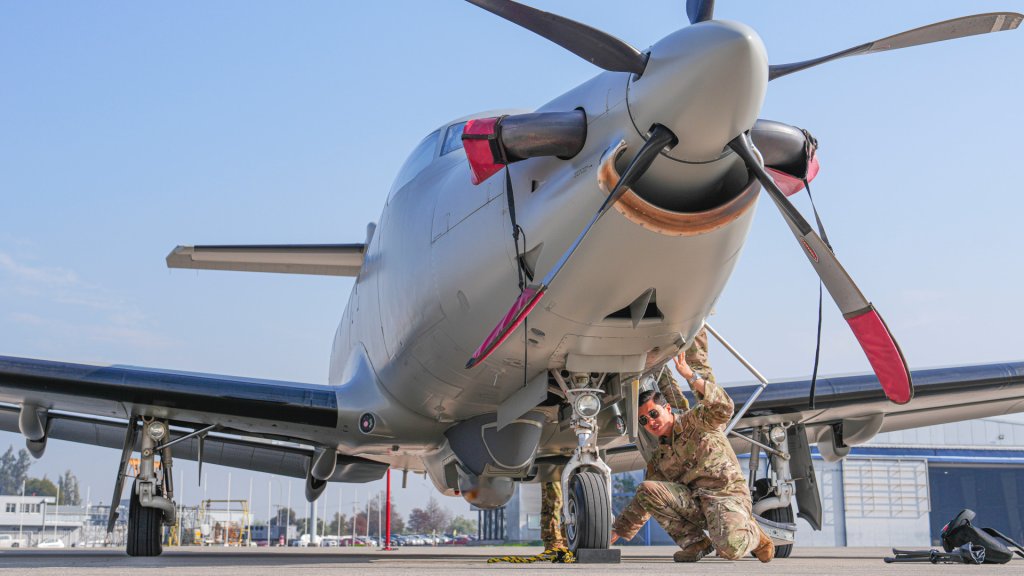
At least publicly, all of the remaining U-28s in service today are assigned to units under Air Force Special Operations Command (AFSOC). The U-28 is a militarized version of the Pilatus PC-12 single-engine turboprop that carries a variety of sensors, including electro-optical and infrared cameras and a signals intelligence (SIGINT) suite. It can also be used, if required, as a light utility aircraft. AFSOC currently has around 30 U-28s in its inventory.
A member of the 27th Special Operations Wing performs preflight checks on a U-28 during Exercise Southern Star 25 in Chile. USAF
“USSOCOM will retire 8 U-28A intelligence, surveillance, and reconnaissance aircraft in FY [Fiscal Year] 2027 as part of its phased plan to divest all manned ISR platforms by 2029,” according to an annual force structure report the Pentagon released last month. “These retirements align with evolving mission requirements and reflect the scheduled drawdown of aircraft that have reached or exceeded their expected service life.”
Similar language has been included in past iterations of this report since 2024, but it appears to have gone largely unnoticed. Aviation Week was first to report on the contents of the newest version of the document last week. TWZ subsequently reached out to SOCOM for further clarification and more information about this decision.
“SOCOM previously announced a decision to divest the U-28 platform in 2020,” a spokesperson for the command told us today. “There are no plans to replace this ISR platform.”
TWZ has reached back out to confirm whether or not SOCOM currently expects crewed aircraft to be part of the special operations aerial ISR ecosystem at all after the U-28 leaves service at the end of the decade.
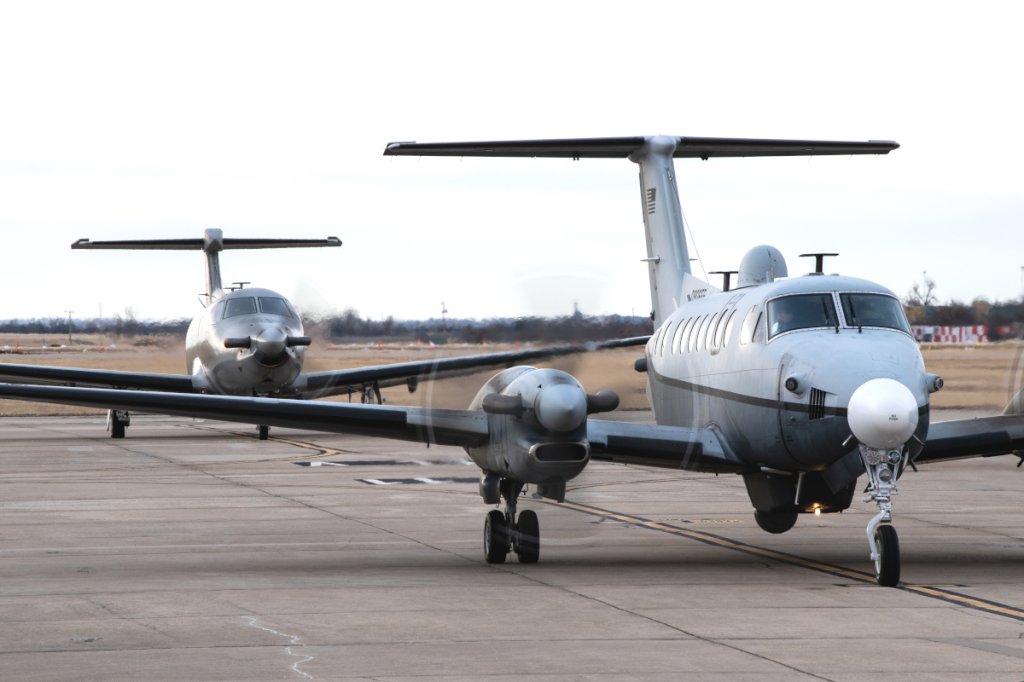
It is true that SOCOM’s plans to retire the U-28s, along with its MC-12 fleet, are well established at this point. The command completed divestment of the last of its MC-12s in 2025. This designation has been used to refer to a variety of ISR-configured variants of the Beechcraft King Air twin-engine turboprop. Special operations versions have also sometimes been referred to by the program name Javaman.
A special operations MC-12, in front, seen together with a U-28, behind. Air National Guard Andrew LaMoreaux
“The command is rapidly modernizing, to include ISR infrastructure,” Col. Justin Bronder, head of SOCOM’s Program Executive Office for Fixed Wing (PEO-FW), told TWZ and other outlets when asked about what could follow the U-28 and the MC-12 at a roundtable at the annual SOF Week conference in May 2024. “We’re working very closely with our counterparts in G2 [SOCOM’s top intelligence office], AFSOC, JSOC [Joint Special Operations Command], etc, to help both identify what the real requirements are” and “how to get after new capabilities” as “we divest and move on from some platforms that serve admirably where we were for the counter-VEO [violent extremist organization]/ Crisis Response fight in the Middle East for 20 years.”
“SOCOM has not taken steps to plan for, or add, critical ISR capabilities provided by soon-to-be divested aircraft,” the Government Accountability Office (GAO), a Congressional watchdog, said in a report published in September 2024. “Also, SOCOM has not addressed risks associated with the loss of these capabilities if the new aircraft does not provide them.”
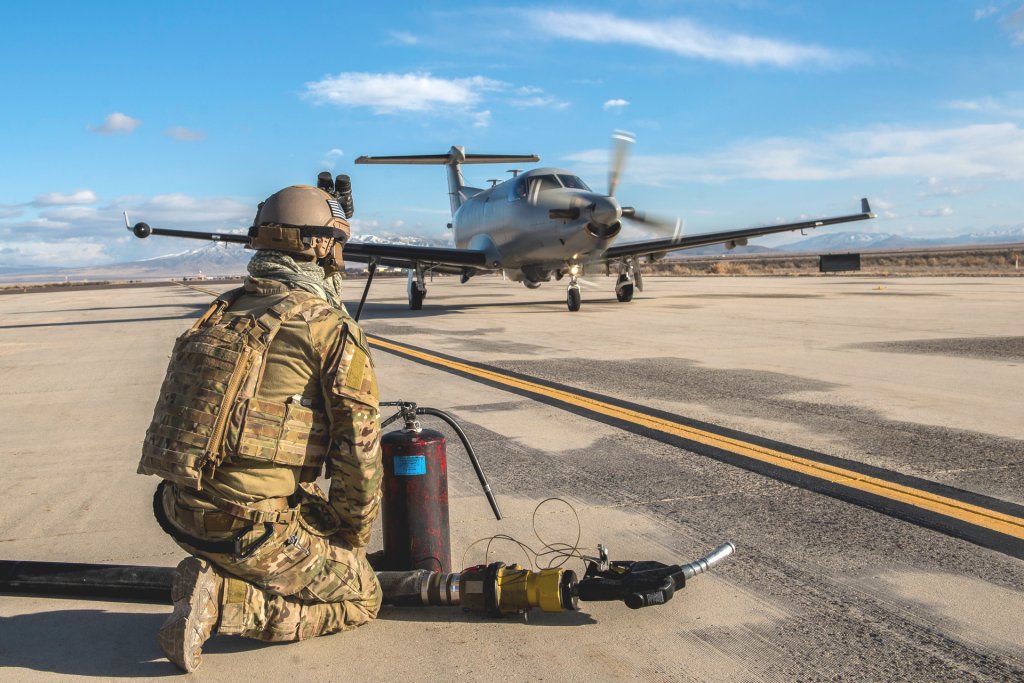
A U-28A at a mock Forward Area Refueling Point (FARP) during an exercise. USAF
However, GAO’s report did not explicitly say that SOCOM had no intention of filling those gaps, even in part, with a new crewed platform.
“SOCOM told us that their decisions about Armed Overwatch occurred separate from their decisions to divest of existing aircraft,” a GAO spokesperson told TWZ directly at that time when asked for more information. “We are separately conducting a classified assessment of SOCOM’s process for how it decided to divest of ISR aircraft.”
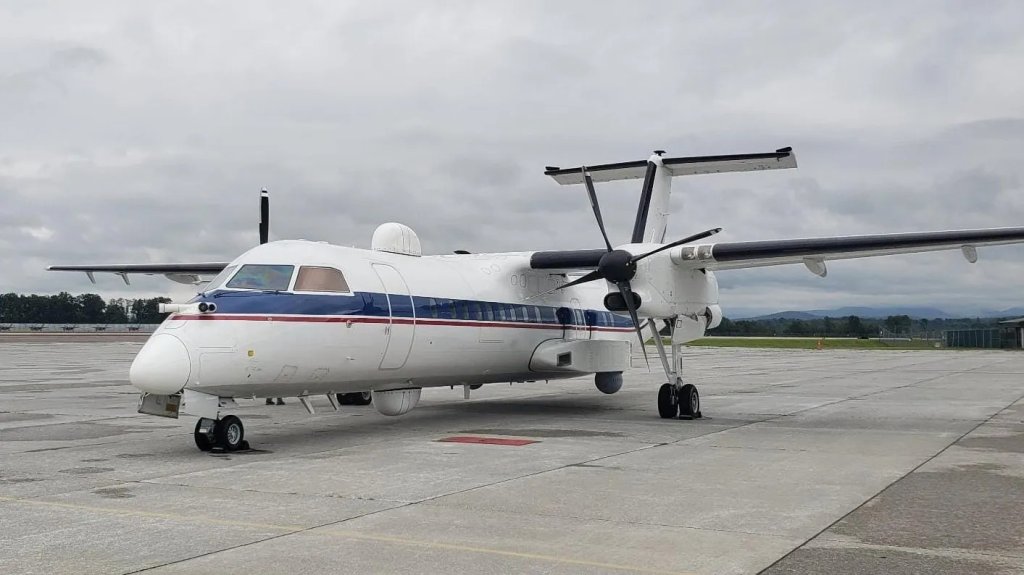
There were some signs at this year’s SOF Week conference that the forthcoming retirement of the U-28 could be more of a final coda for dedicated crewed ISR aircraft within the U.S. special operations community. A representative of PEO-FW told TWZ and others at the gathering that all of the secretive SOCOM Tactical Airborne Multi-Sensor Platform (STAMP) aircraft would be transferred somewhere within the Air Force. Whether or not it will make its way under AFSOC’s umbrella is not clear, though it seems likely. How long those aircraft will remain in service at all is also unclear. The STAMP fleet, which we were first to report on years ago, has included types based on the De Havilland Canada DHC-8, or Dash 8, and the Beechcraft King Air over the years.
A STAMP fleet Dash-8. US Army
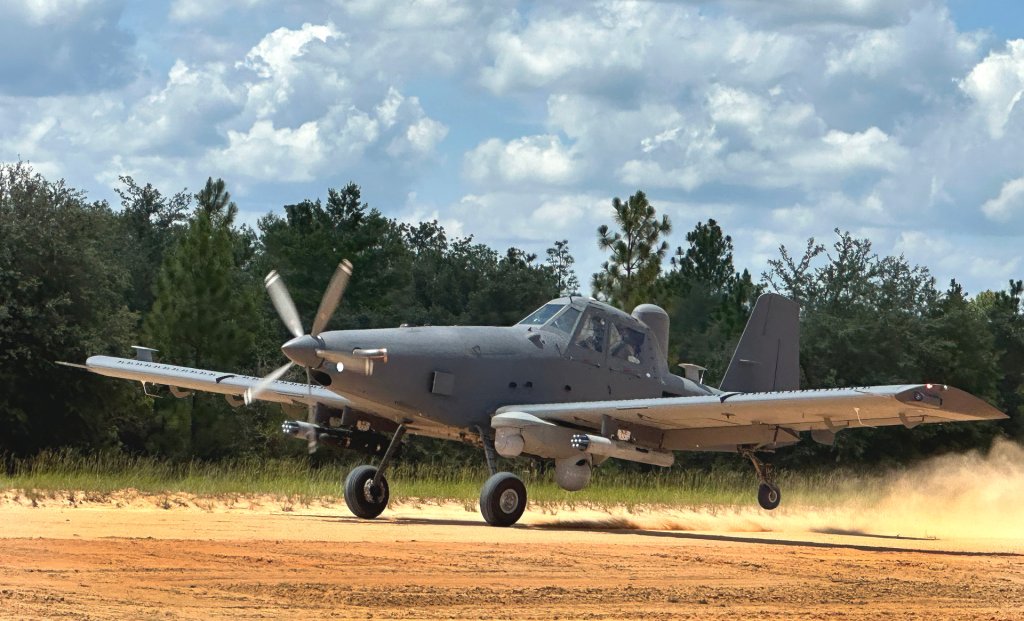
“Just a reminder that OA-1K is not a replacement for U-28,” Col. Bronder also said again at this year’s SOF Week conference. “Certainly, it can do some ISR functions, but again, [it] meets a close air support strike requirement.”
How SOCOM expects to fully make up for ISR capacity gaps left by the retirement of its existing crewed ISR aircraft remains to be seen. The U.S. special operations community does already operate a variety of drones capable of performing surveillance and reconnaissance missions, including Air Force MQ-9 Reapers and U.S. Army MQ-1C Gray Eagles. Further uncrewed capabilities will certainly be part of the equation, especially to help mitigate the threats posed by ever-more capable enemy air defense systems in contested environments.
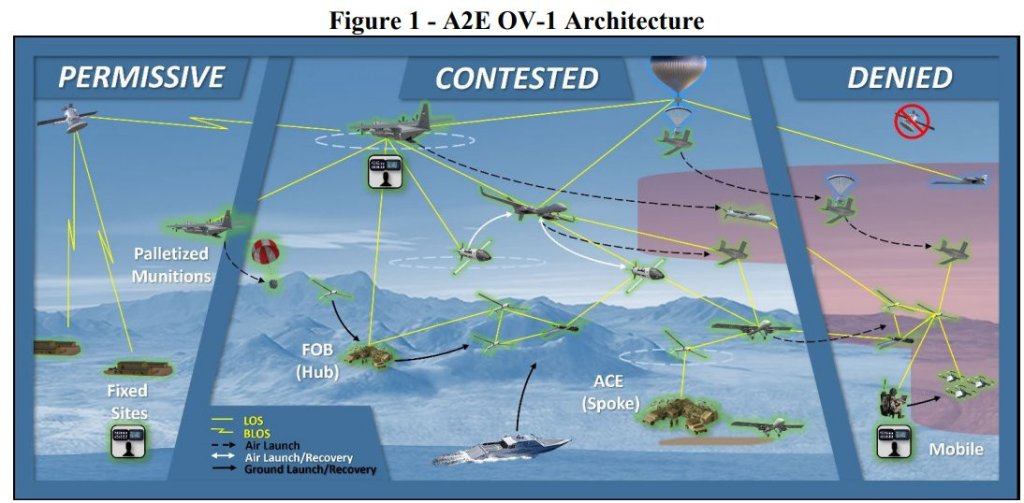
AFSOC has already been heavily investing in what it calls the Adaptive Airborne Enterprise (A2E). This is an overarching concept of operations centered on increasing deployability by reducing personnel and logistics footprints, as well as the collaborative employment of capabilities. The vision for A2E includes heavy use of air-launched drones, loitering munitions, and other systems that are increasingly lumped together under the umbrella of so-called “launched effects.” It also extends to collaboration with friendly crewed and uncrewed assets in the ground and maritime domains.
A graphic depicting an “operational vision” (OV) for the Adaptive Airborne Enterprise (A2E) involving collaboration between platforms and forces across permissive, contested, and denied areas. USAF
As an aside, it is also worth noting that the U.S. Army finished divesting dozens of turboprop crewed ISR aircraft in December 2025 as part of a broader modernization push. That service is now in the process of acquiring a far smaller number of ME-11B High Accuracy Detection and Exploitation System (HADES) surveillance and reconnaissance planes based on the Bombardier Global 6500 business jet, which you can read more about here.
For the U.S. special operations community, all of this comes amid something of a watershed moment for crewed fixed aircraft operations, in general. In recent years, there has been reorientation across America’s armed forces toward preparing for future major conflicts, especially one against China in the Pacific, after decades of focus on counter-terrorism missions. This, in turn, has prompted questions about the continued relevance of many platforms, including the new OA-1K, which is very much geared toward low-intensity conflicts.
Outlays in SOCOM’s budget request for the 2027 Fiscal Year only show plans to acquire 53 OA-1Ks. This is down from the plans to procure 62 Skyraider II aircraft that had been previously presented in the command’s proposed budget for the 2026 Fiscal Year.
Earlier this year, SOCOM told Air & Space Forces Magazine that this was a reflection of “the strategic reallocation of resources to support [SOCOM] evolving priorities.” However, the command also insisted that it still expects to eventually acquire 75 OA-1Ks as originally planned.
SOCOM has also stressed that American special operations forces will still be called upon to provide support to counter-terrorism missions and in other low-intensity conflicts for the foreseeable future despite the pivot toward preparedness for high-end fights. The command has said this continues to justify the acquisition of the OA-1K. How the Skyraider II, as well as other fixed-wing crewed special operations aircraft like the AC-130J gunship, might provide support on the edges of a future major conflict is also something SOCOM and AFSOC are actively exploring.
Whatever the future of crewed fixed-wing special operations aviation looks like, a direct replacement for the U-28 is off the table, and crewed ISR aircraft may be increasingly absent from that equation entirely.
From July 25 to August 2, 2026, the Chambley Planet’Air airfield will host the inaugural edition of Chambley Air Passion. More than just an airshow, the event aims to become Europe’s premier gathering for light aviation and a meeting point for ultralight pilots from across the continent.
A new aviation event
For nine days, Chambley Planet’Air will come alive with aircraft departures, pilot gatherings, and aerial activities. With Chambley Air Passion, organizers are introducing a new format that differs significantly from traditional airshows focused on a few hours of flight demonstrations.
The objective is clear: to put Chambley back on the map of major European aviation events and transform the airfield into a vibrant destination where pilots, aviation enthusiasts, and the general public can gather from morning to evening.
“We want to create a true aviation gathering—a place where people come to fly, connect, discover new things, and share a common passion,” the organizers explain.
Bringing together every aviation discipline
The event will showcase the full range of aviation activities based at Chambley. Fixed-wing ultralights, weight-shift trikes, gyroplanes, powered paragliders, sailplanes, paragliders, skydiving, model aviation, and hot-air balloons will all be featured throughout the week.
Mass hot-air balloon launches at sunrise and sunset are expected to be among the highlights of this first edition. Flight demonstrations and aircraft presentations will also help shape the daily program.
Visitors will have access to exhibition areas, the opportunity to get up close to aircraft, and the chance to interact directly with pilots and crews. Flight simulators, educational workshops, aviation training exhibits, and introductory activities will allow attendees to immerse themselves in the world of aviation.
Military units, fire and rescue services, and the French Gendarmerie will also participate by showcasing their equipment and missions.
Making Chambley the summer’s rremier ultralight gathering
Beyond attracting the general public, Chambley Air Passion is primarily designed for pilots themselves. The Lorraine airfield offers several unique advantages: extensive infrastructure capable of accommodating a large number of aircraft, ample parking and camping areas, favorable airspace, and a central location in the heart of Western Europe.
Throughout the event, crews arriving by ultralight aircraft will be able to park on-site, take part in activities, and experience the event from within the aviation community. Organizers hope to create a genuine hub for light aviation enthusiasts.
Within aviation circles, some are already referring to the concept as a future “French Oshkosh” dedicated to European light aviation. The comparison reflects the ambition to recreate a major pilot gathering where camaraderie is just as important as flying itself.
The Ultimate Air Challenge: the event’s centerpiece
The highlight of the inaugural edition will undoubtedly be the official start of the Ultimate Air Challenge 2026, scheduled for August 1 following several days of qualifying rounds held at Chambley.
This European ultralight competition is based on an original concept inspired by offshore yacht racing. Teams must reach sixty checkpoints spread across more than twenty European countries while choosing their own routes.
Navigation, weather management, fuel consumption, regulatory requirements, and strategic decision-making will all be critical factors for competitors hoping to win.
Thanks to a real-time tracking system, spectators at Chambley will be able to follow competitors’ progress throughout the challenge.
A catalyst for regional development
Beyond its sporting and entertainment value, Chambley Air Passion is also intended as a regional development initiative. The event aims to highlight the capabilities of the Chambley Planet’Air facility, attract visitors from across the Grand Est region and neighboring countries, and promote aviation careers and training opportunities.
In a region that hosts relatively few major public events during the summer season, organizers hope to establish the gathering as a permanent fixture on the event calendar. The presence of the Ultimate Air Challenge immediately gives the event a European dimension and international visibility.
A bold vision
With Chambley Air Passion, the Lorraine airfield is doing more than launching another aviation event. It is openly pursuing the goal of becoming, for nine days, the place where Europe’s pilots most want to gather.
As a crossroads, meeting place, and showcase for light aviation, Chambley may well host in the summer of 2026 the event that the French-speaking ultralight community has been waiting for for many years.

 Login
Login